The Shape of Ideas: Creativity Unveiled

“What is nice is knowing that there is a fount of ideas – and even if many ideas seem taken, there is always a variation in the workings of the human brain to make it different.” 

“It is astounding – the volume of work produced.”

The husband and I were taking an evening walk discussing creativity, imagination and the origin of ideas. He was talking about one of the musical maestros of Tamil cinema  and their seemingly eternal bouts of inspiration. 

“I wonder if they worry about it running out on them, though.” I said, looking contemplative as I admired nature’s work around me. No lack of inspiration there! Every tree a different shape, every plant a different marvel, every soul a different temperament. 

“I suppose they would have the same trepidation or initial hurdles when they set out to create, and then obviously their levels of genius means that the ideas that do come to them are a class apart, but I suppose they must have their moments of doubt. “ said the husband looking thoughtful.

I hmm-ed at this. I do feel that just like the intelligence factor, there is an ingenuity factor (You have what you have and then those who work with it, sit with their abilities, nourish it, develop it, and try to wrangle it into industry reap the benefits). 

When I saw this book, The Shape of Ideas – An illustrated exploration of creativity –  by Grant Snider , in the library, I picked it up. Partly because I expected it to be whimsical but also because the origin and nature of ideas has always intrigued me.

The Shape of Ideas: An Illustrated Exploration of Creativity: Snider, Grant: 9781419723179: Amazon.com

51kUrTbxX0L._SY522_

How many of us have wondered about the origin of ideas? It is marvelous when we are graced with an idea. Especially one bursting with imagination, but for all the good and bad ideas humanity has come up with, we don’t really know the origin or the process to generate more of them. It is almost as if the unknown is bordering on the magical.  

Sometimes, we need a chock full of ideas to pull out a good one. Sometimes, it is the joy of an do-nothing day that gives you an idea that makes you smile.

This book is a marvelous read – it is full of whimsical ideas, endearing comic work, and neatly classifies the different areas that the shape of ideas tread: Inspiration, Perspiration, Improvisation , Aspiration, Contemplation, Exploration, Daily Frustration,Imitation, Desperation and Pure Elation.

As an example of the kind of art you can expect to see in the book – here is one on Drawing the Moon 

img_3666

We have all heard or understood various versions of the inspiration vs perspiration speech from our teachers, mentors and parents. 

On some level, we understand that being smart or talented or intelligent means nothing unless you are also granted opportunity, have perseverance and cultivate intellectual development.

But how do each of us use all of this to create a rich inner life that translates to one of beauty and enriches the life of those around us? 

“The most regretful people on Earth are those who felt their own creative power restive and uprising, and gave to it neither time nor power.” – Mary Oliver

Read Also: What is Your Friend

Emotion in Art: Unveiling the Power of Creativity

Art is about capturing a feeling 

T’was a few days before the Inside Out 2 movie was released. The husband was making me watch a thought-provoking interview. (He knew the distractions at hand on a beautiful summer evening. I needed to watch bees flit, deer graze, geese squawk, herons fish, dogs bark. As I cradled my evening cup of tea wondering when to get out on my evening walk, he swooped in. “Won’t take longer than the time it takes to gulp your tea” he said cheerfully and I gave him a skeptical look. I do not take ½ an hour to drink tea.)  

image-2

Anyway, in the interview, they spoke of suffering and how one needed that pain in order to emote well as an artist. It is not a new sentiment. I remember listening to an interview by J K Rowling or Stephen King (I don’t remember which) that one needs to have had a sufficiently terrible time as a teenager if they were to write anything worth writing at all. 

Problems Are Steady

I am not sure I agree with that. Suffering can be acute, agonizing and astonishing in its effects even as adults. In fact, much like our boggarts tend to change through life, so too does our ability to imagine and empathize, don’t they? Also, for many of us, problems tend to be a steady stream in life – we get jittery and nervous if there aren’t any. Can it really be that we are having a perfectly peaceful time – do you think something awful is going to happen? This can’t be true. Maybe I should call the children, see if they are okay.  Oh – what about the old parents, the siblings, the nieces, the nephews, our friends, colleagues, neighbors? Work? No? All well – is this really so?

Then, you tend to the heart like an overwrought bee in summer and soothe it down. “Yes my dear – there really are flowers everywhere! Believe it or not, managing plenty is as much work as managing long distances for some nectar. Just relax, will you?!” Problems like to steadily hum along like background music. We all need problems at some level, do we not? At least that’s what I tell myself when things get a bit clammy. 

Does Art Capture Emotion?

So, does art need to be about capturing emotion – whether through direct suffering or empathetic suffering? I thought Starry Night by Vincent Van Gogh was brilliant because it captured the frenzied anxiety of the artist’s mind. But, was that what everyone thought? How about those moments of bliss, joy, anger, disgust, repulsion, serenity, contentment, love, and all the ones that Pandora so generously released from her little box of troubles. Hope?

Screenshot 2024-06-29 at 3.32.19 PM

A couple of days later when we went to watch Inside Out 2, we sat spellbound as the movie captured Anxiety’s frenzy so perfectly in this animated movie. How Riley’s imagination spewed up every little thing that could go wrong and let her sense of self develop into a skewed sense echoing, “I am not good enough!” was tragic and Oh! So Well Done!

Screenshot 2024-06-29 at 3.28.31 PM

When you observe a piece of art, do you concentrate on how it makes you feel? Or do you appreciate it for the skill of the artist? 

P G Wodehouse on Art

What’s a post on Art without one of my favorite quotes by P G Wodehouse – only I feel a little like Bertie Wooster himself writing this – it has something to do with a painting looking like ‘summer blew up in your face’ – but I cannot remember it. Gemini threw up its hands and said: P G Wodehouse is not an art critic, but an humorous writer, without a trace of irony. I did spend an enjoyable few hours since then

(a) looking for the quote and reading several good ones on the internet,

(b) perusing my own PG Wodehouse collection opening books at random looking for the quote

Which is to say that I had a marvelous time, but still not find the quote. If anyone remembers it, please let me know. But the art of remembering the quote and imagining the painting itself made me laugh, made me feel joyous, so by that standard, it is already a piece of art. What do you think?

I would love to hear all the different ways in which you appreciate Art.

Shark Splashers & Bear Growlers Creativity Index

“Why would I punch a shark in the nose?” I said swiping the phone with my hand as it rang on our evening walk.

The husband who had probably called with a view to getting a sane opinion mopped his brow on the other side. Was this really a good idea? He seemed to ask himself. After a second of stunned silence he said, “What did the poor shark do to deserve being punched in the nose by you two jobless folks out on a walk?” 

The son & I laughed. We were on our evening walk and the fellow was telling me a little story he had imagined the whole afternoon when I had droned on in one meeting after another. The thrilling tale involved Benjamin Franklin, Samuel Adams, the Boston Tea Party, and somehow as I nodded along, the tale had an inexplicable presence of trained sharks by the British Army going after the American Revolutionaries. The revolutionaries, on their part, weren’t quiet either. They had trained bears. How the bears fought the sharks with the humans aboard made for a loud, raucous tale with lots of noise and action. I was a confused, if slightly inattentive audience. For one, the day’s meetings were not yet pounded of the system, and for another, a marvelous spring sunset was in progress. The egrets, ducks and geese were making a fumble of noises, and the son’s story did not quite hold my attention till the sharks and bears fighting sequence made an appearance.

I double tracked and asked questions not letting on that I had let my mind wander over the past mile. He gave me a swift look, and said, “I know you haven’t been listening. Fine! I’ll explain again.” And off he went from the beginning again. This time, the story was even wilder than I imagined while half listening. 

I shuddered a bit at the high moments of battle between creatures.

That night I did chuckle to myself on the sharks vs bear theme to the American Revolution.

It also led me to think of the Torrance Studies for Creativity (in the book, In Praise of Wasting Time – By Alan Lightman) where they studied the different aspects of imaginative story telling in children and had an independent body of panelists rank the ingenuity, creative elements, and nuances to the story telling in primary school going children. The study apparently shows a drastic reduction of the creative elements somewhere around 1990. The correlation is plain. It is around the same time that the usage of the Internet and screen time soared.

The study is here:

The Creativity Crisis: The Decrease in Creative Thinking Scores on the Torrance Tests of Creative Thinking – By Kyung Hee Kim, School of Education, The College of William and Mary

It does make me wonder how many marvelous tales we will be missing with the advent of more advanced technologies. Even brilliant ideas such as code generators, image generators can either be used actively by us to better ourselves or passively used to distract and stop us from doing the hard work of utilizing our talents. Which way will we choose? 

I do hope the shark splashers and bear growlers continue to use their imagination to better this world.

Antheia’s Gifts

April has the whiff of spring about it. Fresh green leaves, and flowers bursting forth everywhere. 

I could not help thinking of William Blake’s ‘heaven in a wild flower’ as we made our way through the trails. Really! I am in awe of poets – how do they think up these things? 

“Who was the Greek god of flowers? Persephone?”

“Nope! Persephone was agriculture, you know when she comes out of the underworld, she brings Spring with her and the world blooms again. She was the one who was abducted by Hades.”

“Ah yes. There should be one for flowers though. Or is it just nymphs?”

She shrugged – “There is a minor goddess. I forget.”

I looked it up as I sat down this morning after sniffing a couple of roses in the garden. Antheia is the greek goddess of flowers.

I was out walking with the daughter on a trail. She was telling me about a fascinating piece of fan fiction she read about the lives of Remus Lupin and Sirius Black in the Harry Potter series. Told from the perspective of Remus Lupin, it was truly amazing. A deer grazed in the river bed now overgrown with shrubbery, while the stream-like river played host to herons and geese. It was fitting setting for the story of The Marauders who first made their appearance in The Prisoner of Azkaban.

I stooped to sneeze. “You know? I think you deserve this!” she said, looking severe. That child has the heart of Minerva McGonagall. Her lips looked thin and her eyes had just a hint of a smile that could not be displayed for wanting to look stern.

“Do you really have to sniff every flower when you know you have allergies?”

“But I do! Just see this my dear. A spider has patiently woven its web within the petals of a narcissi bloom. What is that story of the Ariadne challenging that Greek goddess?”

“You mean Arachne challenging Athena.”

“Yes…really how perfect these spider webs are! As an engineer, I admire the tensile strength, as a artist, I love the clean nature of their work, as a minor creepy crawlie phobe, I want to squeal, and as a clean freak,  I know I clean out cobwebs, but it makes me wonder every time about the nature of work. The constant doing and undoing of it all. It all seems so haphazard, but nature is so intensely productive in its being, no.” I said and then told her about the book I was reading just then.

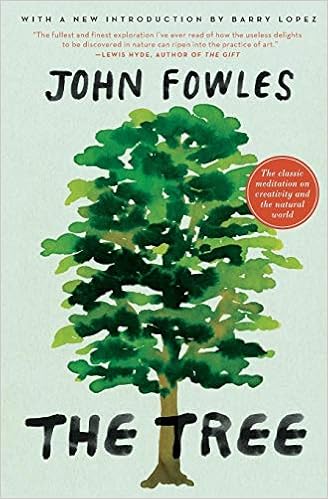
Titled The Tree, it is part meditation on nature, part autobiographical detailing the relationship with the author and his father, and their differing views of nature. His father was quite the productive fruit producer in his narrow strip of land in the city, while the author’s love for trees bloomed away from the structured fruit producing expectations – in the wilder countryside.

On the walk, in the meanwhile, I pointed out the resourcefulness of the vine that can jump fences and leap between trees, the flowers that think nothing of scenting the world as they go about blooming, the humming bees, and the humming birds darting about all of this with a purpose of their own. “I suppose one could spend all day thinking about these things without any sort of cogency huh?”

“Yep! Like you are doing now? You know this is where some folks really surprise me. I mean, they regularly write and put out a chapter of fan fiction every week, to this brilliant story of Lupin and Sirius I was telling you about. ”

“Yes and look at humankind’s imagination through the ages. All those myths and stories of nymphs turning into rivers, and running through worlds and sprouting off into geysers. ” We walked back in admiration of writers and poets. Oscar Wilde, the daughter’s favorite poet and his life, William Blake, Greek myths, her re-reading of The Song of Achilles, Harry Potter characters all contributed to a magical spring-time saunter.

Imagination and Creativity are always enthralling themes to engage in. How do you cultivate it – are we born with a natural gift that we then need to prune and cultivate like the trees the author’s father looked after or does it thrive and bloom like Antheia’s flowers in the wild?

No fruit for those who do not prune; no fruit for those who question knowledge; no fruit for those who hide in trees untouched by man; no fruit for traitors to the human cause. – John Fowles, The Tree

The Creative Mind

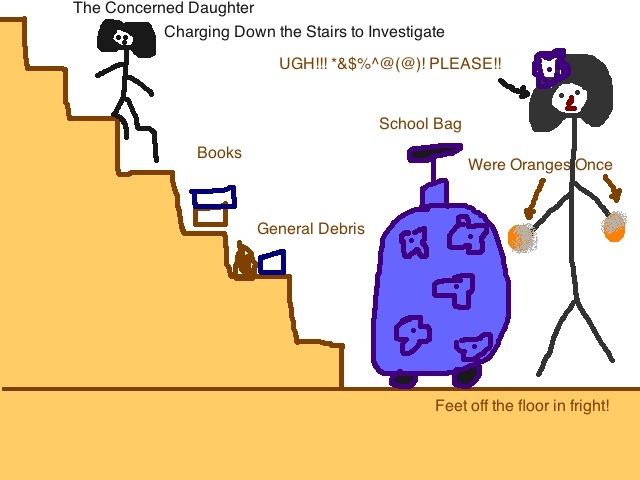
T’was the end of the Christmas holiday, or if you prefer the politically correct version: T’was the end of the Holiday Season holiday , and the family was quietly going about the business of getting back to business. That is, we yelled across staircases for missing tiffin boxes, wondered aloud why things that were to be done during the luxurious break were still undone, books landed with a thump on the stairs, socks pushed under the sofa were retrieved and shoes frantically scoured the home for their partners. Folks wandering past the home may have been pardoned for thinking there was a nursery inside, but there! It was a typical end-of-vacation-day.

I opened the daughter’s backpack, put my hand in and let out a strangled yelp. I may have heard snapping inside, but I also felt like I was holding a fur ball. Judging by the smell, it could have been a marmalade-smeared rat or an orange-scented skunk. I felt around a bit more and there was another such monster.  There was nothing to be done. I bit down the nausea brought on by eating too many cookies, remembered the brave deeds of my father while tackling rats in our childhood home, squared my shoulders for the onslaught and plunged my hand in with a grim determination to retrieve whatever monster the bag held.

There was no cat or rat to let out of the bag. It was just a couple of sad looking oranges that had long ago passed its ‘Best by’ date. Judging by the fungi on it, it may be long past the ‘Fling without spattering’ date as well. I moaned a sound that started out as ‘Ugh’, pitched up to a holler of her complete name, and squeaked down at ‘please’.

The School Bag
The School Bag

“Let’s clean it up.” I said becoming the stern taskmaster.  We trooped up the stairs with the foul smelling bag and its 100 pound contents. I kid you not, that bag weighs about 100 pounds – I don’t know what is in there, for every child I see pulls this mini-suitcase-like bag along bursting at its seams with books it seems, and yet when it is time to buckle down to a piece of homework or an assignment, I see a fair bit of telephoning and neighbor hopping to ‘see if my friend has the book to finish the assignment’ happening. Sigh.

It was a good few minutes later, and the techniques of deep breathing successfully applied gave me the glowing answer. I let her deal with the bag with the able assistance of her father. There was still some bag-related noise upstairs, but it had mellowed to a gurgle with occasional spurts of “But Appa! I need that. It is for Moon-city.” (their play patch is christened something-city)  This dash-city is home to some willow trees and a large grass patch. Lodged in blah-city is a variety of treasures ranging from pine cones to balls made of pencil shavings. (I have a series of blogs on pencil shavings that will make entertaining reading when I sit down to writing about it).  It looked like a large layer of the general debris in the schoolbag was for Sun-city.

I like these glimpses into her childhood that I get. I hope this is the kind of thing that she will throw her mind back to when she thinks of her childhood. As a child I was best amused when left to my own devices and swinging on a tree trunk still tickles the endorphins in me. I agree with Bertrand Russell when he says that “The pleasures of childhood should in the main be such as the child extracts from his environment by means of some effort and inventiveness.”

http://www.brainpickings.org/2015/01/21/bertrand-russell-boredom-conquest-of-happiness/

This illustration by Maurice Sendak gets it: <Everybody should be quiet near a stream and listen>

Everybody should sit by  a little stream and listen
Everybody should sit by a little stream and listen

http://www.brainpickings.org/index.php/2013/07/25/ruth-krauss-maurice-sendak-open-house-for-butterflies/

Anyway, back to the bag. Judging by the level of debris in her bag, she may be one of the most creative persons I know. For there is this study that says folks with the messiest desks are the most creative.

http://mic.com/articles/103954/the-science-of-why-the-most-creative-people-have-the-messiest-desks

I like the tone of this article. I now don’t have to castigate ourselves as a messy household, but paint ourselves as a creative household. Nice!