Weather Monsters

“Have you gotten your bags ready?” my friends’ voices piped over the phone. 

“Uh – not yet. Got a bag down from the loft – will get to it.” I said shuffling my feet as I said so.

“Well..what are you doing now?”

“Writing about the weather over the past week.” I said somewhat sheepishly, and a loud laughter emanated from the other side. 

We toodled off with the sentiment of “Well Nero fiddled, I write!” but I am not going to lie. I was rattled, and went off to pack the emergency kit. The wildfires were too close for comfort – the air has been thick with smoke.

Exactly a week ago:

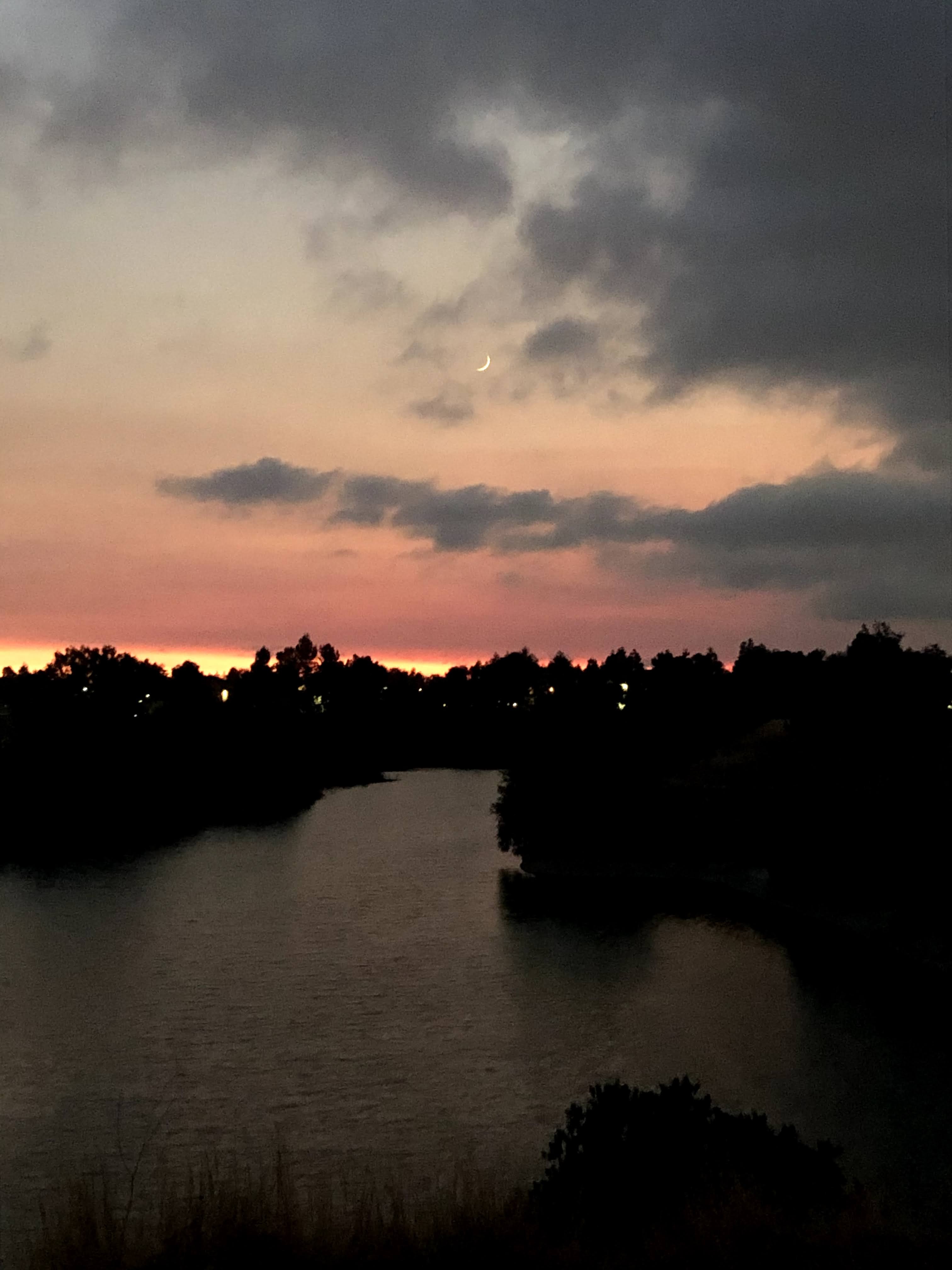
The days had been stifling in the heat wave that gripped the land. Oppressive waves rose from the shimmering hills nearby, and the eyes squinted for respite after the briefest strays outside. Some evenings had a splattering of clouds giving rise to splendid sunsets, and while I swooned my way through the evening walk, I yearned for a bit of rain, if nothing but to smell the parched sizzling earth cooling off a little bit. 
img_9485

I may have wished too soon.

For the very next day, I was looking at the most improbable of sights. I had set a whimsical alarm to rouse me at 5:30 a.m on that Sunday rearing for a hike before the sun started beating down on us. 

While I am always crooning about Nature and talking about it being the greatest soother of all time and all that, I often forget nature’s fury. I live in California where we pay a weather-tax. For the most part, the weather conditions are soothing, flowers bloom the year around, and though I yearn for more rains, it is a mellow nature that greets me most days. But that morning, I listened astounded as thunder rumbled overhead and the noise penetrated the double-paned windows, and then in the darkness the whole house stood illumined for a few seconds. I glanced unwittingly towards the sleeping children, and I stood awed.

We have easily gone more than two decades without thunder and lightning storms of this magnitude in this area. What was going on? 

I whispered to the husband – “Wow! Rain was not even in the weather forecast huh?” and stood mesmerized by the window wondering whether a walk was still on the cards if not a hike.

The husband looked at me and said, “Are you nuts?! Who goes out in this weather? Hiking at that. Nothing doing – if this is you wanting to watch the rain, pull up a chair and sit by the window!”, and he went right back to bed.

So, I did just that – I woke the son and showed him the lightning and the rain pelting down. It made for a magical morning, but I hadn’t completely realized the harm a storm of this magnitude can unleash on an already dry and parched Earth. In under 6 hours, there were more than 10,000 flashes of lightning starting over 300 fires that continue to rage across the Bay Area.

Time Lapse based off Satellite images of the Lightning strikes and subsequent fires in the area.

In just a few days we had experienced everything from heat waves to lightning and thunder storms – all in the midst of a pandemic no less. The air quality deteriorated significantly as the fires raged and fire fighters poured in from everywhere to contain the fires. 🔥 The sheer magnitude of the fires 🔥 they were dealing with had simple folk like me blanching, but these teams had strategy and they were working tirelessly. The tenacity for a job like that! 

In our skies, an angry sun shone through when it could through the smog.

img_9484

One week later:

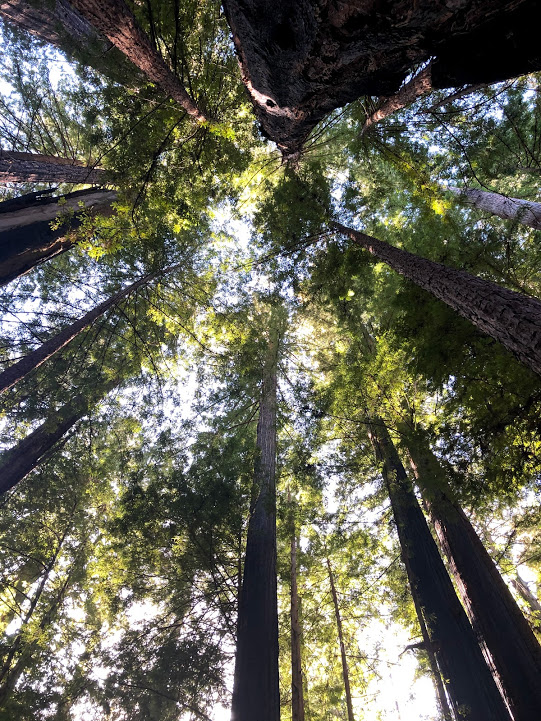
Wildfires continue to rage over thousands of acres of land. Beloved forests and mountains ranges that have provided solace and comfort to millions of people over the years have been lost to the fires. My heart caught at the news that Big Basin Redwoods were damaged badly. Though redwood trees are supposed to be extraordinarily resilient to fires  and would probably make it past these fires, I grieved. Every time I visited these forests, I have come back not just refreshed, but spiritually in a better place as have thousands of tree huggers over the years. A true space for forest bathing or shinrin yoku as the Japanese call it.
trees_komerabi

It has been a week since the lightning strikes. 1 week in which more than 60,000 acres of land have been burnt, with ominous statistics of 5% fire contained, fire alerts etc.

California Redwoods 

2020 seems to be determined to make its mark.


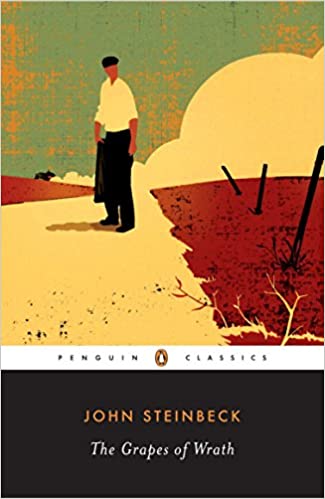
The Grapes of Wrath

We were driving through the countrysides of rural America. Vast landscapes stretched on all sides reminding us once again of the beautiful and vast nature of this country. The countryside baked in the hot Californian sun as we made our northward. We drove past fields and small towns that reminded me of the areas featured in the Grapes of Wrath by John Steinbeck in more ways than one.

img_9393

The Grapes of Wrath evoked a sense of economic ruin, human struggles, and the helplessness of it all. I walked around for weeks pulled down by the plight of the millions of Joad families who had to survive post the Great Depression. 

You see, I was prepared to see a certain level of isolation. Covid-19 has changed the landscape unimaginably with the service sector and the retailing industry in hiatus. What I was not prepared for, was the eerie and pervasive shadow of desolation and ruin. The divide between the haves and have-nots a deep chasm yawning wide and deep. 

https://www.bls.gov/opub/ted/2016/employment-by-industry-1910-and-2015.htm

The husband and I were in a somber mood as we made our way back, and fell to discussing the nature of work and how it is has changed so drastically in the past century. Just under a century ago, there was a good percentage of the population working farming jobs, then factory jobs. So, there still was a dream for a middle-class life – a life that promised reasonably good education for the children, relatively good health care, a decent home, and food on the table. It seemed the only jobs left for people to work in these small towns were in the service sector or the retail industry. With both these sectors impacted so heavily with Covid-19, it was a terrifying sight. 

“There ain’t no sin and there ain’t no virtue. There’s just stuff people do.”

John Steinbeck, The Grapes of Wrath

If the elections bring the current president to power again, he will find a way to make things much worse – maybe even go to the extent of inciting riots and civil unrest. If another president takes the reins, I do not envy the poor president-elect – what a mess to unravel and what a huge responsibility to the citizens. 

How would the world get back on its feet? 

“But how on earth is the stock market holding up?” I asked, for wasn’t that supposed to be an indicator of the economic conditions on the ground?

There – right there, is what is called a mystery. Anthropologically, mankind has been through worse survived more, but there is no doubt about it  – we have rough times ahead of us post-corona. As children, when we sang the hymns in our school, we liked some, loved the lyrics of others, and some stayed on with us through the ages. The first song that came to me that day was this one:

“We shall overcome .. We shall overcome…We shall overcome…Some day….”

After all:

“Muscles aching to work, minds aching to create – this is man.”

John Steinbeck, The Grapes of Wrath

grapes_of_wrath

The Joys of Walking

There are places where walking is no longer allowed. Especially in densely populated areas where the coronavirus is raging and ravaging the population. Talking to my parents the other day, the father sounded strangely dull. A little prodding revealed that the evening walk was cut from his list of allowed activities for a few days, and I felt keenly for him. I, like him, enjoy nothing more than tying my hands behind my back (unladylike as my mother often said when I was growing up), and taking in the sights, smells and sounds of the air around me. Often, I don’t remember where all my mind has wandered during these walks, but I always come back strangely uplifted, the day’s conundrums a little clearer, and life’s perspectives a wee bit sharper.

I sympathized with the father and told him that all we could do was to make the best of the situation. For instance, I told him,  I had not enjoyed tea in my backyard for all this time. My work spot is a good 50 miles away from where I live, and I spent many an hour getting to and from work. Silently sipping my tea in the backyard before the day at work began the other day, I felt strangely grateful for this time – the time that I would ordinarily have been rattling to work on a crowded train. But that morning as I sat under the cypress trees, watching the sycamore sway in the breeze outside, I slowly raised my head upwards and was dazzled at the most beautiful blue that greeted the eyes.

The father lightened up at this little piece of my day that I shared with him, for he enjoys our backyard too when he visits, and spoke fondly of the squirrels. The squirrels really are admirable as a means of entertainment. They titter, run and make merry all day long in the fruit trees, and before you know it, a pleasurable time has been had by the entertainers and entertained alike. 

Walking makes philosophers of us. How many times have I admired the mallard ducks and the geese for their spirit? All these little creatures that we share the Earth with have to be the most engaging lesson-givers in the world. Squirrels, cats, butterflies, dogs, geese, ducks, and blackbirds – they are all marvelous teachers to the philosopher willing to take in lessons.

We fell into discussing the joys of walking, and he spoke of Thoreau and a number of writers who were known for their musing during their daily walks. We laughed at how some of our best ideas after hours of walking were nothing short of ordinary, while these authors of whom he spoke so highly had truly world-changing ideas at the end of theirs. One day at the end of a long walk, I came back with an epiphany about ducks, I said, and I wasn’t joking. 

ducks

T’was one evening after a nice long walk, I sat by a lake. The waters were clearly more than 20-30 feet in depth, and I remember wondering whether ducks felt any qualms about plunging into waters that deep. Do they examine their toes studying the webbing and decide to swim? Do they stretch their legs knowing it is waddle-worthy? I have watched the ducks hatch their little ducklings countless times in the spring, and watched them teach their young to take to the waters. But how do they know their capabilities? Do they stretch their wings knowing it is intended for flight?  Ducks have to be the most admirable creatures for they adapt to any medium with ease, and seem to enjoy  it. They waddle, swim and fly with ease. 

How about that? 

“Anyway, why don’t you watch what you eat since your daily walks are also cut?” I said taking a large dollop of ice-water and pouring it over his igloo.

The mother came hissing into the phone like a queen bee in-charge of delivering the daily news updates to the BBC at this, and said, “As if! Now, because he is bored, he eats almost continuously from 4-8 p.m!” . We all landed up laughing at this. 

“Must see how these ducks control their diet Appa. But now that I got the chance to observe squirrels, I don’t think they control their diets very much. Munching on fruits all day long, and talking bites out of them and flinging them to the ground without even properly polishing them off!” I said.

And on this note, we said toodle-oo to each other. I continued on a walk grateful that I could indulge in this activity though my mask made me feel sweaty and hot. He went to make himself some coffee to go with his mid-morning snack. We both pondered on life.

A Philosophy of Walking

Moon Magic

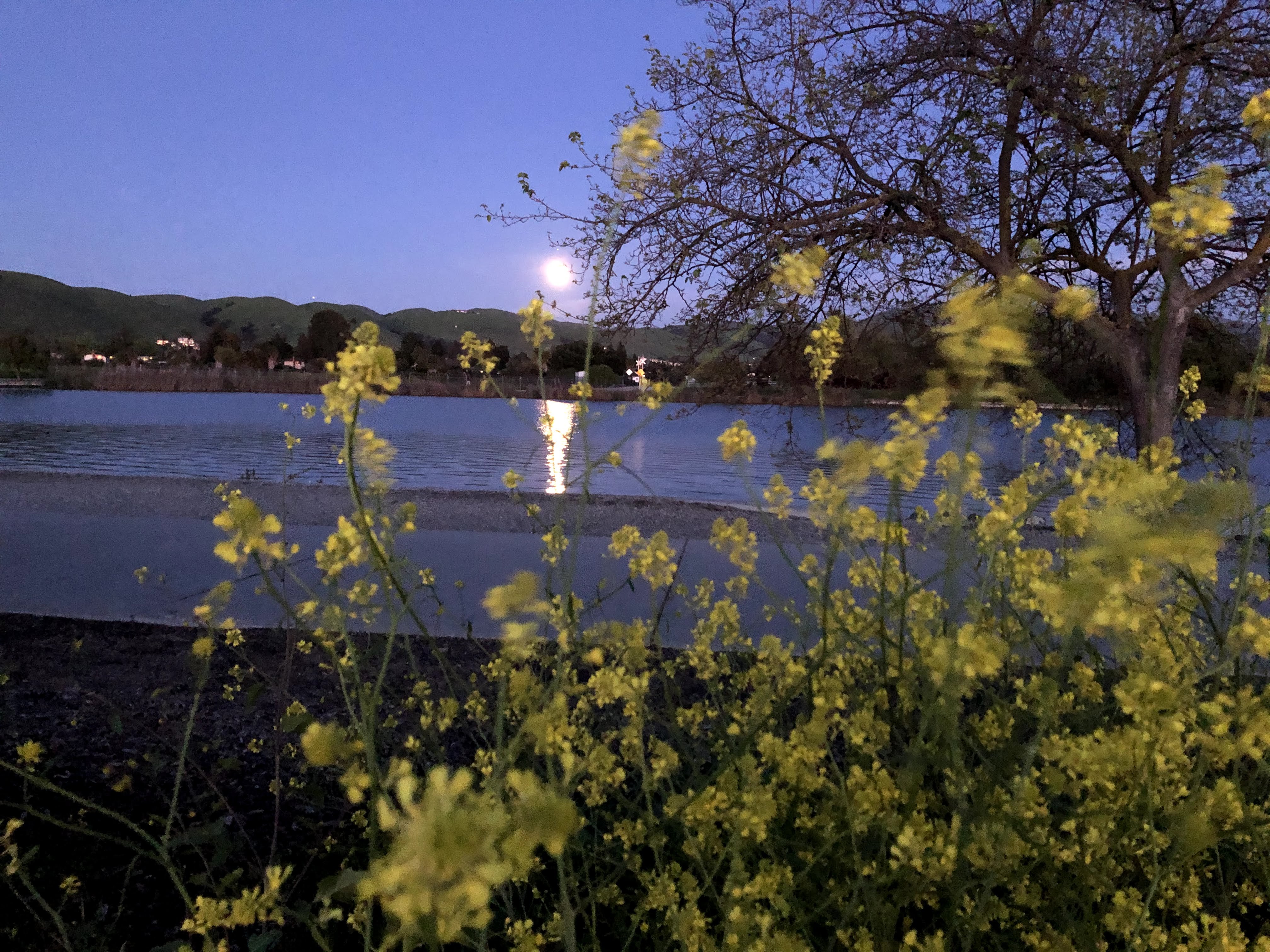
A few weeks ago, I got the incredible chance to see the full moon rise along with the sunset. One of those serendipitous things that the Covid-19 shelter-in-place has given me. I did not realize that it was the golden moon – the day the 🌝 moon comes closest to the Earth, and maybe  it was better that I hadn’t prepared for it. For, out on the walk, I stood mesmerized as  I saw the moon rise slowly in the East, as the sun set slowly in the West.

A better time or combination of light I could not imagine. A golden orb that rose from behind the green hills, and bathed the beautiful Earth with its benevolent beams, while the glittering sun bowed out graciously throwing pinks, oranges and purples with abandon against the blue skies. I watched the geese fly on over, ducks swim against the moonbeams on the lake, squirrels stopping to take in the surrounding beauty, and blackbirds swarming low over the lake waters. 

img_7899

I turned around to share  the beautiful marvel of the time with my  fellow beings when I realized I was quite physically distant from my fellow beings – human or otherwise. Do other sentient beings feel the same overwhelming sense of being at moments like these? Do dolphins take the time to gaze at the full moon like we do, do polar bears and penguins do the same from their respective poles? What a great unifying experience we all have with the celestial shows the universe throws at us?! 

Oh! To quiver with excitement with the Earth’s beauty has become my wont. 

The blue skies turned inky, and the golden moon turned silver, and  yet I could not pluck myself from the beauty of the evening. 

The giant glittering orb slowly peeked out from behind the green hills, and then rose steadily in a few minutes. We stood a few feet from a lake, socially distancing ourselves. How many times I have felt my heart flutter by catching a glimpse of the moon unexpectedly in the skies? How many lovers have gazed at the moon wistfully, dreamily, lovingly or yearningly through the ages? What a great unifying experience we all have across the pages of time?! 

I am so glad for our  nearest cosmic neighbor – I remember a few years ago when  we were moon-gazing awestruck at the beauty of the reflected sunlight, the son said, “Can you imagine how beautiful nights  on Jupiter must be? Imagine looking up and seeing 64  moons in the sky!

I was taken aback at the statement, but also thankful for the one moon we do have. 

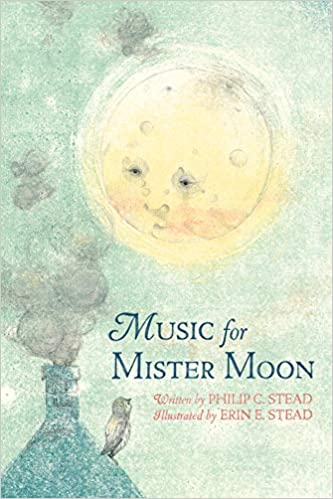
A known Selenophile if there was one, I picked up the book Music for Mister Moon by Philip Stead with a song in my heart that evening.  The beaming moon has always attracted me, whether it is catching a fleeting glimpse of it as it appears and reappears amidst scudding clouds, or the waxing and waning of it during its reliable moon cycles or even when I catch an unexpected glimpse of it when the sun is bright and high above in the sky. 

mistermoon

The story of  a shy young girl who plays her instrument for no one but herself gently tugs us along for a ride as she accidentally pulls the moon right out of the sky. The moon’s revelation to know what it must be  like to float on the waters it is always reflected upon brings a little smile to your own lips, and slowly, but surely  you cheer for the little shy girl who opens her talent up to share with the moon.

The book does its  best to capture the magic of the moon, but probably the best gift of all is the dream I had after writing this post: I woke up thinking I was on a boat mesmerized by the floating moon near me.

🌙 🌝 Moon Magic. ✨ ✨

That is the Earth!

“Do you know what this is?”

“That is the Earth! From the moon.” said the son matter of factly. “I saw it before!” he said in response to my awed expression.

We were looking at the back jacket of a book, that I flipped to the last page first.

this_is_earth

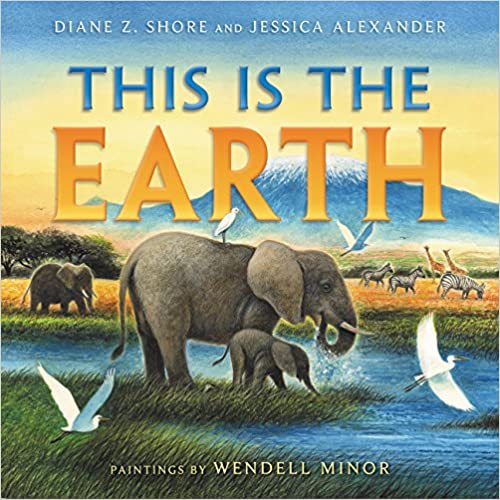
This is the Earth, by Diane Z Shore & Jessica Alexander with paintings by Wendell Minor.

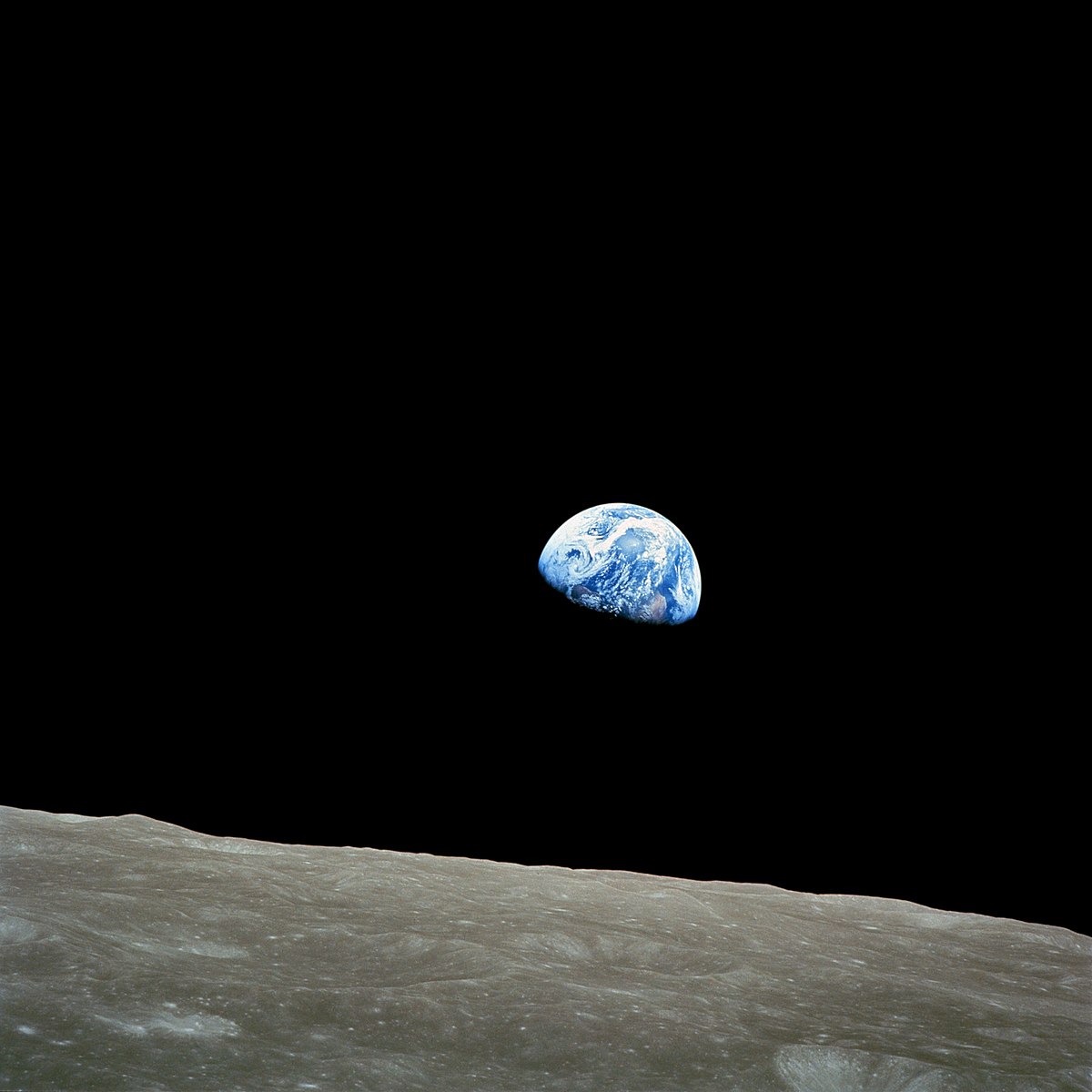
It was a picture of the Earth rising on the Moon’s horizon.

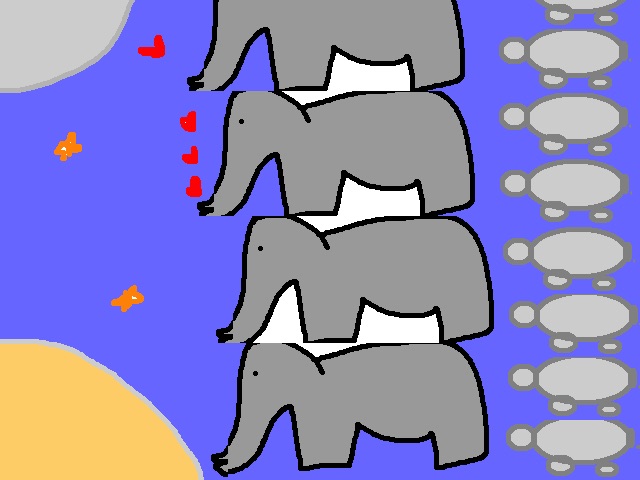
A picture that generations of humans for millennia could only have imagined, and never really gotten close to the sheer beauty of it. Our myths are at once rich and limiting in its reach. They have imagined Earth as being elephants on elephants, turtles on turtles all the way down, flat discs, imagining heavens above and hells below.  

earth_myth


The picture was taken by an astronaut, Bill Anders, aboard the Apollo 8 spacecraft in 1968. I looked on mesmerized at the picture.

1200px-NASA-Apollo8-Dec24-Earthrise

Bill Anders / Public domain

But this picture is truly astounding. The pale blue dot when seen from the Moon is a brilliant, blue orb, suspended in space, intriguingly spattered with clouds, oceans, landmasses, not really depicting the billions of lives it fosters, or the number of ecosystems it has in its fragile balance. 

Bill Anders said: “We came all this way to explore the moon, and the most important thing is that we discovered the Earth.”

What a lovely statement that is, and together with his Earth Rising image, contributed to the concerns around Planet Earth that led to founding of Earth Day in 1970.

50 years later, we have made rocky starts and gains towards conservation. But this April 2020, 50 years later, purely coincidentally, Covid-19 has the world on lockdown, not just imagining a life of bare necessities but embracing it for the social good. We, the people, now have the time to observe our fellow inhabitants.

Heart warming tales of peacocks making its foray into the deserted cityscapes of Mumbai; turtles coming ashore to hatch in the beaches along the Bay of Bengal; seeing the Himalayas from a 100 miles away once the smog fog lifted; deeming the waters of the Ganges near Rishikesh fit for human consumption again without all the factories along the way dumping its wastes into the flowing water;or bears enjoying their natural habitats unhindered by human presence in Yosemite National Park, are surfacing, and it has my heart lifting again. I have often enough lamented on this blog about the poor attention we pay to the Planet that nurtures our fragile selves and egos. 

Watching the even more fragile ego of the stock market indices, it seems to me that we can very well have the world function this way, by having a month off every year in which everything stops but essential services. An Earth Month every year to reflect, slow down, plan and recoup our staggering impact to the environment. After all, the stock market seems to have a life of its own and seems only to want some stolidity in its expectations. So, we anticipate a month with no major events, no excessive or unnecessary travel, and only essential services operating. The notion isn’t that far-out either. 100 years ago, no one thought we could have 5 day work-weeks. Yet, here we are, in state where it is the norm now. 

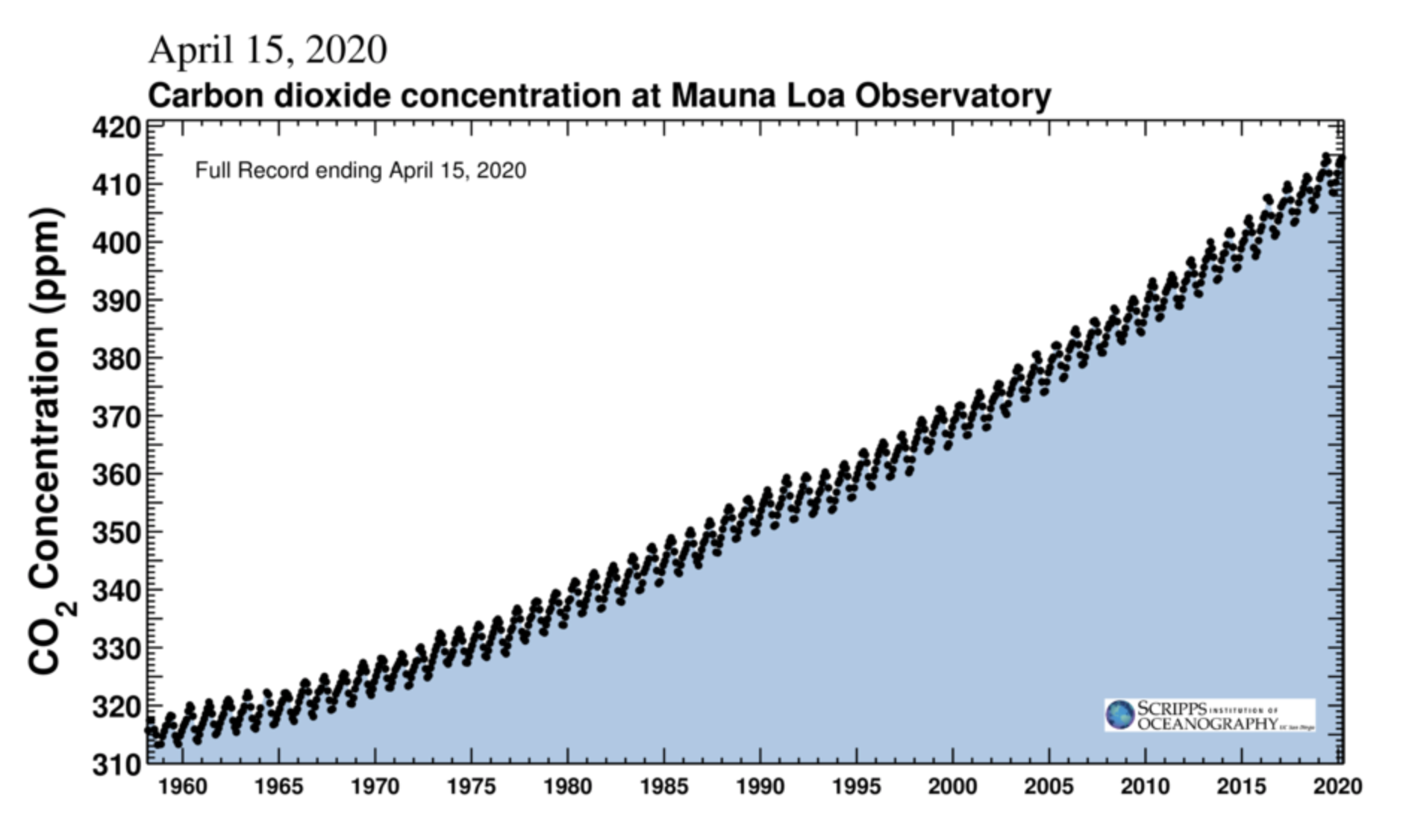
Maybe this could be the measure we take for Earth Day to slow the rise of Carbon Dioxide levels in the atmosphere.

Screen Shot 2020-04-16 at 6.33.29 PM

Please go this site to see the curve over 2 years and over 200  years Keeling Curve – Scripps UCSD

If you look at the extrapolated curve from the 1700’s, it has risen exponentially. It is probably too soon to see the effect of Covid-19 on CO2 levels in the atmosphere.

Could, Earth Month become the new normal for us. So children matter of factly accept that Earth Month as essentials month in the coming generations?

The Rings of Life

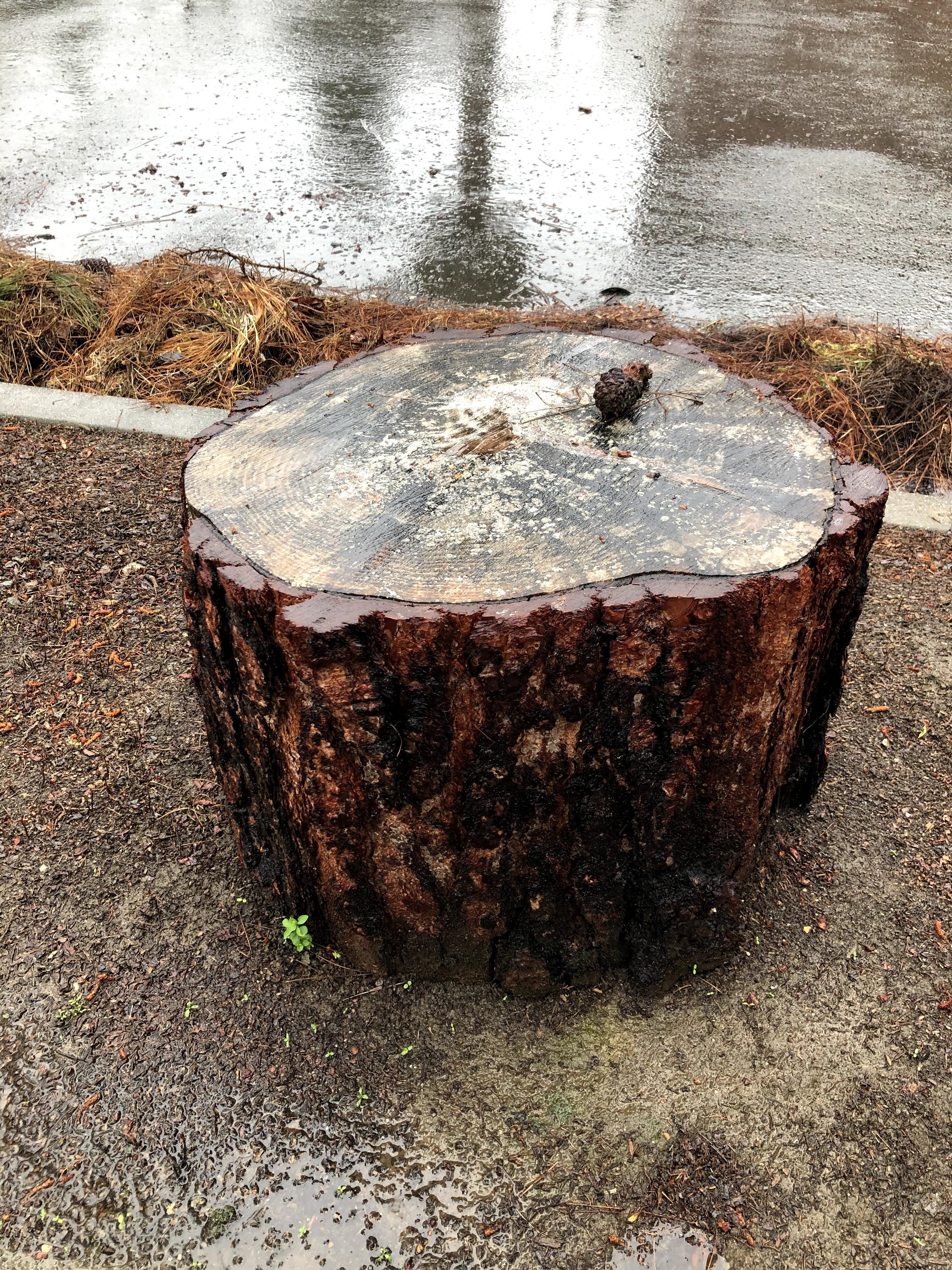
We were walking a familiar route through our neighborhood, stopping to see some of the felled trees as we do every so often. The rings in the pine trees show they must have been at least 80 years old.

img_7820
For an impatient flitter such as myself, trees are truly sentient beings. Beings that teach me about holding still, of being sentient beings for the small time we spend on this beautiful planet. Like a butterfly flitting through the Earth for a day. You can replace tree for a star in the quote below and it would still hold when one sees redwood trees, sequoia trees and old banyan trees.

“From the point of view of a mayfly, human beings are stolid, boring, almost entirely immovable, offering hardly a hint that they ever do anything. From the point of view of a star, a human being is a tiny flash, one of billions of brief lives flickering tenuously on the surface of a strangely cold, anomalously solid, exotically remote sphere of silicate and iron.”

― Carl Sagan

As I was reading Life in the Garden by Penelope Lively, I stopped to relish the section on trees. Though the book is largely about gardens, she does make a foray into trees briefly:
“Tree rings are wonderfully eloquent; here is time stated, time recorded, time made manifest. Dendrochronology- the scientific method of dating based on the analysis of tree rings-can determine past climates, or the age of a building, it can be used to calibrate radiocarbon dating, or by art historians to determine the date of a panel painting. And all because a tree grows slowly, systematically, but laying down each year a memory of what that year was likes – usually wet, dry cold, hot-whether the tree flourished and grew, or held back, and how many years have passed. And the more I think about it, the more I have come to the conclusion that this is why trees invite anthropomorphism. They are sentient in a way that a building cannot be.”

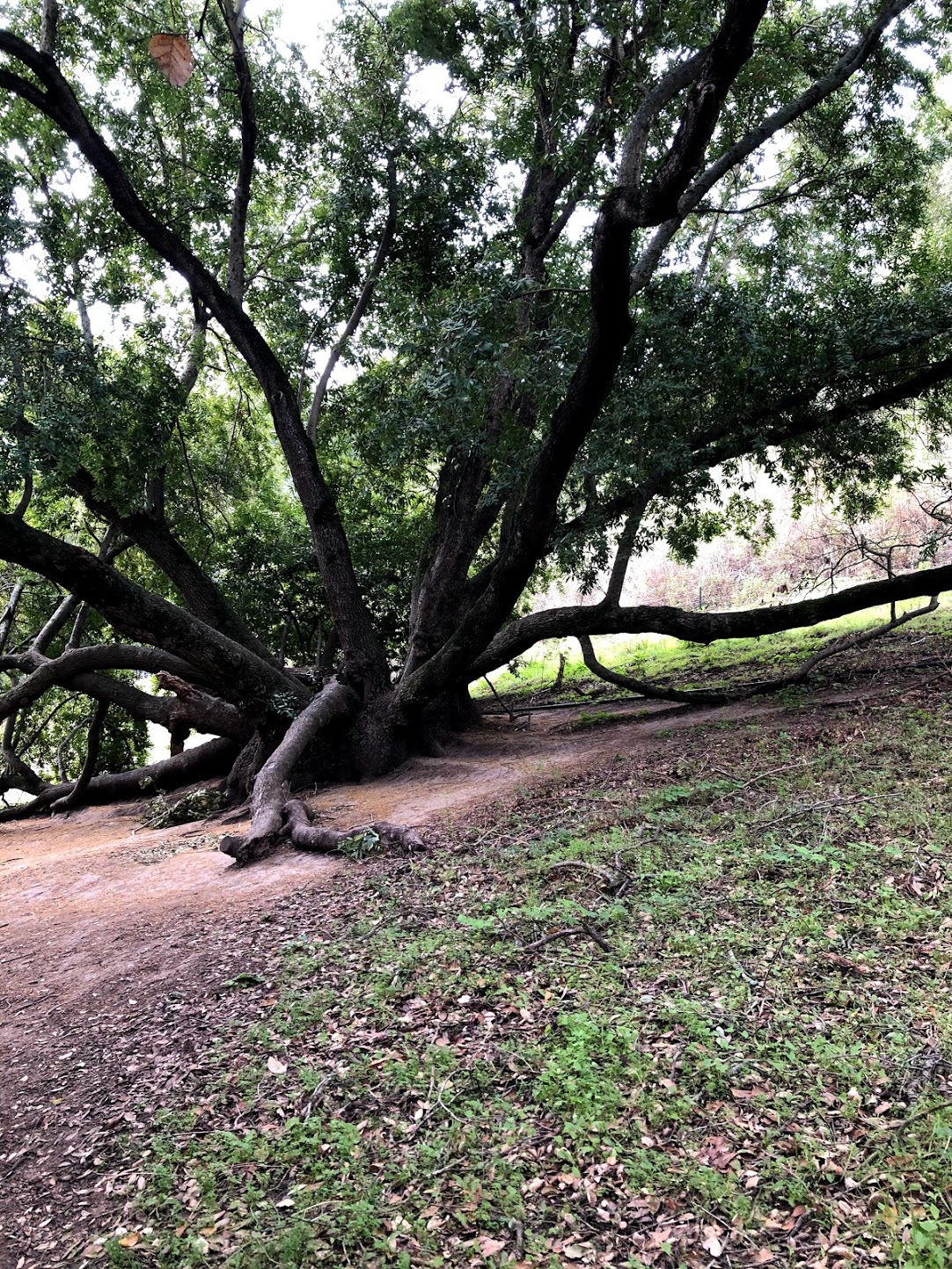
octopus_tree

When I read this piece in Life in the Garden by Penelope Lively, I thought to myself, that Covid-19 would not register in the life of trees, would it? Droughts, wildfires, these may, but Covid-19 would not. The human suffering is acute – there is no doubt about it. The true heroes are the front-line workers, such as doctors, nurses, water and essential service providers, cleaners, mailmen, supply chain workers for groceries and medication who are braving the outbreak to keep society functioning as best as it can, while the virus takes it toll. The human toll is one thing, Covid-19’s economic ramifications is quite another, reminding us of the tottering pile we have built our societies upon: Stock markets indices, economies, international boundaries, – everything that a virus can thwart on a whim.

3D_medical_animation_coronavirus_structure

What would Covid-19 imprint in our psyches? It can be a time of transformation. A time of reflection. A time to prune the unnecessary, a time to nurture the necessary, a time to get to know ourselves and our loved ones better. A time to think of needs vs wants.  A time of quiet.

We may never have taken pandemic preparedness seriously. Covid-19 is teaching us about the importance of these things. What would we need to do for far more severe outbreaks, with water-borne or air-borne diseases in the future? I am sure these will never be treated with the same levity ever again.

“Nature is always more subtle, more intricate, more elegant than what we are able to imagine.”
― Carl Sagan, The Demon-Haunted World: Science as a Candle in the Dark

The more I think about it, the more I want to believe that we shall embrace Science as a Candle in the Dark. Many children will take up research in microbes. I hope we shall, from now on, invest in our infrastructure, in our research, in our general preparedness, and appreciate the fragility of life and our social ecosystems itself. Our rings in time will bear out the wisdom in the coming years if only we learn from it. One dark circle reverberating it’s learnings outward, and spreading light in the subsequent rings afterward.

“In its encounter with Nature, science invariably elicits a sense of reverence and awe. The very act of understanding is a celebration of joining, merging, even if on a very modest scale, with the magnificence of the Cosmos. And the cumulative worldwide build-up of knowledge over time converts science into something only a little short of a trans-national, trans-generational meta-mind.”
― Carl Sagan, The Demon-Haunted World: Science as a Candle in the Dark

References:

  • Life in the Garden – By Penelope Lively
  • The Demon-Haunted World: Science as a Candle in the Dark – Carl Sagan

A Rose is a Rose

We were out hiking one day in mid February. The son and I eagerly packed our snacks, water bottles and headed off as the sun rose. It was a golden day in which we stood under trees listening to the blackbirds trilling overhead. Squirrels scuttled past with their duties, while woodpeckers drilled in the trees above. New born calves stood demurely by their mothers. We stopped to sniff at the flowers every now and then, looking indulgently at the buds waiting for the spring bloom. A thousand smells rent the air, and I said “How marvelous it must be to be a flower in spring time?”

He laughed – the sort of tumbling laughter that children have, and we adults can do with from time to time. His words tumbled out between his giggles, and he said, “Did you know? That a flower 🌹 comes up when its ovaries burst open?” 

I gasped dramatically and the little botanist went on to explain what his teachers must have told him in school. I listened enamored, wondering not for the first time why we ever grow out of schooling, and the shoshin of childhood.

Anyway, there we stood with the beauty of spring all around us. The rains had made the hills green, and in this verdure, it was hard to imagine anything but positivity and beauty. It was hard to imagine that in less than 2 weeks, the world would be reeling under the influence of a virus.

Talking to my colleagues & friends over virtual calls, and phone, reading what people have to say over Social Media, I feel a general sense of overwhelm, gloom and what-next overpowering some. Some seem to have taken to the new normal, doing the best they can with the new set of circumstances, others not so much. The relentless news cycles have been pounding us with streams of news that reminds me of Oogway. 

Oogway, the wise turtle: “There is no good news or bad news, there is only news!”

Master Shifu: “But Tai Lung has escaped” (But Corona has escaped!)

Oogway, the w turtle: “Oh, That is Bad News!”

Oogway & Shifu

As human-beings, we are always forward looking. We want to set forecasts for corporations, we want to predict & measure, and when all of these things are fluid, it is understandable to feel unmoored. 

We want to know we are in control of things, only rarely do we realize that Control is an Illusion. 

Walking past rose bushes one evening during this time, we stopped to admire the buds ready to bloom. I thought about the beautiful poem by Mary Oliver. A poem I often think of when the human calls of productivity and being busy beckon. 

Roses, 🌹🥀  Late Summer – Blue Iris 

 – By Mary Oliver

I would be a fox, or a tree

full of wing branches

I wouldn’t mind being a rose

in a field full of roses.


Fear has not yet occurred to them, nor ambition.

Reasons they have not yet thought of.

Neither do they ask  how long they must be roses, and then what?

Or any other foolish question

rose


The Dream Within The Dream

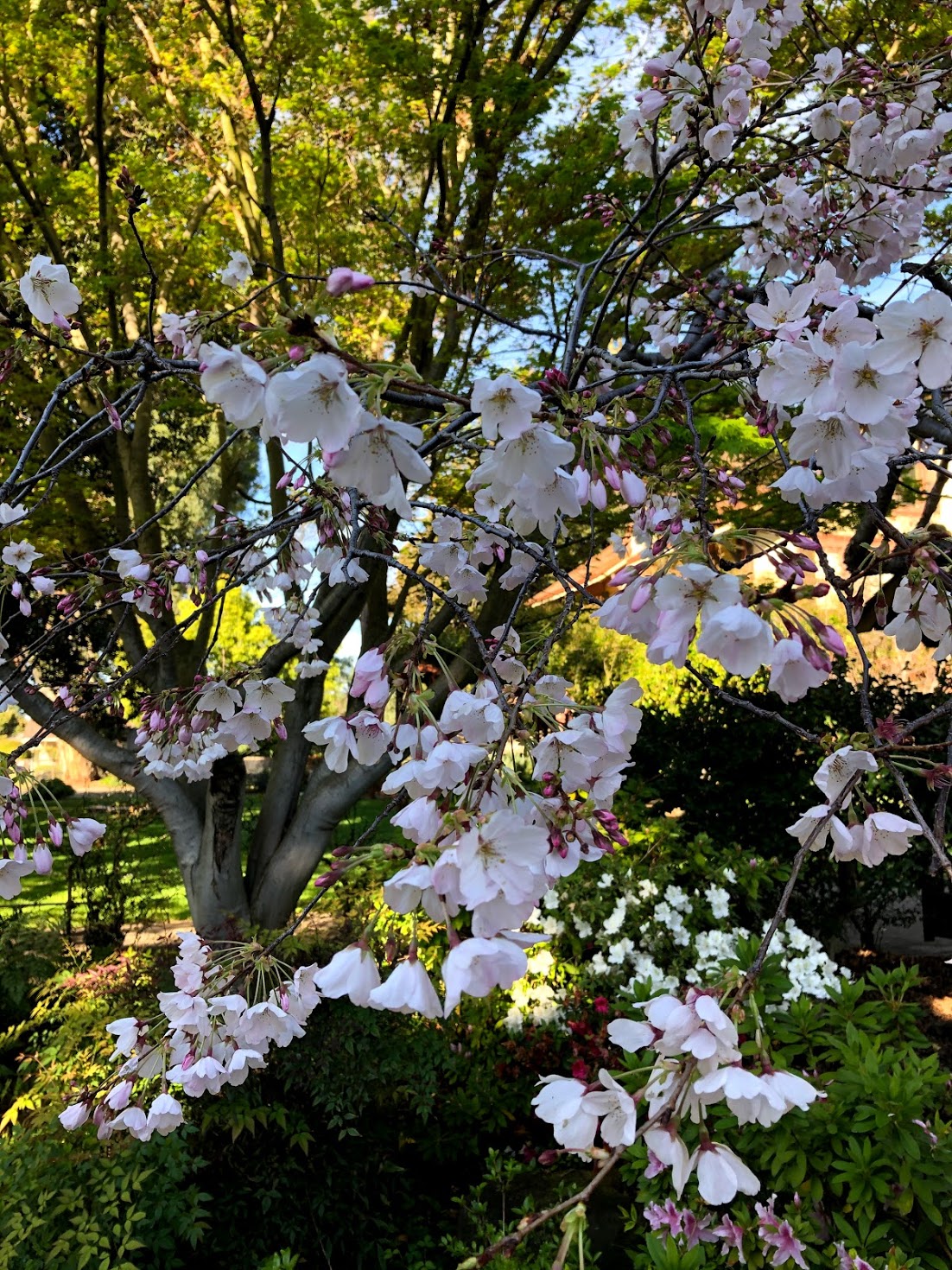
It was Saturday morning. I got up, convinced I had come back to the real world. The world outside looked beautiful. The dew drops on the cherry blossoms glinted in the morning sunshine . A Californian blue jay was sitting on one branch and pecking at the flowers – such a beautiful sight is to be seen to be believed.

cherry_blossom

Was that a really vivid dream or what? Covid-19 did feel surreal – what a dream?!

I sat on my bed the previous Friday evening exhausted. It was the first week of large scale disruptions – schools, offices, and malls had closed; crazy grocery shopping was behind us; and while I was grateful for being to work from home during all of this, I also realized that I was enervated.

That was how, you found me on Friday evening, determined to not think of the Corona Virus anymore at least for the night. I put it resolutely from my mind. I eyed the stack of books near my bed. I retreated to simpler times in an English village with Miss Read, I read about gardening, and I read about the life and times of Jane Austen in the 1800s.

The daughter was happy to not Coronaspeak anymore, and magnanimously offered to sit and watch Little Women with me. By the time, I went to bed, I had restored the mind to a semblance of normal.

Maybe the preceding Coronaweek was in my version of The Lathe of Heaven after all.

The Lathe of Heaven is a marvelous book written by Ursula K Le Guin. The book examines a scenario where a young man is gifted with the ability to make his dreams come – his psychiatrist realizes this, and uses his condition to his advantage. He attempts to change the world by offering to guide the young man. While under hypnosis, he makes suggestions and leads his mind into conjuring up dreams. One such dream reminds me of this scenario the most.

lathe_of_heaven
He dreams for World Peace and for all of humanity to be united.

When he gets up, his dreams are realized. Humanity is united. United against the face of an alien attack. The aliens are already positioned on the Moon and are poised to strike Earth soon. Suddenly, Earthly borders and barriers melt away. All of humanity is united against the threat of green-belted aliens on the Moon

The psychiatrist tries making amends from them on, but the patient realizes what is happening and tries to distance himself. He is scared, vulnerable and refuses to fall asleep.

Could Covid-19 be a version of a dream playing out? It certainly feels like that at some times.

But if this were a dream, how would we know? I went and stood outside below the Cherry tree, and the cherry blossoms flitted down and landed gently all around me. The California blue jay was still there having a blissful breakfast as it let the petals float to the ground below. One petal settled on my hair, and I felt it. It was solid and soft. It was real. That settled it – the preceding week of Covid-19 must have been a dream.

Slightly shivering with the morning cold, I traipsed into the kitchen and opened the refrigerator. It was full: stacked with extra cans of milk, vegatables and 2 cans of soup – so, we were in the Covid-19 reality. That wasn’t a dream.
The blue jay was confirming what with me exactly? That this too was a reality?
That our realities have a tendency to get warped?

I related this the daughter and son as they walked into the kitchen looking sleepy and exuberant respectively. The husband said, it did feel very much like a scenario in the movie Inception. The Dream within a Dream. That is how we always depicted it in our dumb-charades games.

The day wore on. As Saturday ticked into Sunday, I saw the digital clock in the microwave glow 11:59 – a moment in time that the young son loves to see. Maybe this was a reality within a reality too.

I am going to bed. After all, this version of reality does have some aspects that I dreamt about too:

  • I did hope to get a month to spend with the children at home.
  • I did hope to be able to spend at least time together without external demands on our time, to hear the clock tick in the quiet of the home.

I can understand why the whole thing seems so surreal. While some problems certainly unite humanity like Climate Change and our effect on the Planet, none seems to be as urgent and visceral as the Covid-19 reaction. It is happening, it is real, it is what it is.

This week seems less surreal than the week before. We have settled in to new realities of life. The life in which the simple, bare necessities of life will come to you. They’ll come to you!


Fascinating Hidden Worlds

The son sat next to me one evening as I was typing out this article and looking up the picture of the Corona Virus.

3D_medical_animation_coronavirus_structure

Image By https://www.scientificanimations.comhttps://www.scientificanimations.com/wiki-images/, CC BY-SA 4.0, https://commons.wikimedia.org/w/index.php?curid=86436446

We both sat looking at the image that showed up and he said, “Wow! Is this really the virus? It looks so lovely, doesn’t it?” I had to agree.

The unimaginable beauty of the microscopic world is so rarely stopped and admired. Who knew a blade of grass could be this spell-binding?

img_7653

This particular virus has caused such unimaginable disruption world over, it is humbling to see the world buckle on its knees against the onslaught of this virus. While, viruses and bacteria often come to the spotlight in scenarios such as these, the truth is that we need a multitude of them to survive on a daily basis. There are studies linking gut bacteria  to mental well-being for instance.

Theodor Rosebury, a microbiologist, wrote in 1928, during his research that:

“The knowledge that micro organisms can be helpful to man has never had much popular appeal, for men as a rule are more preoccupied with the danger that threatens their life than in the biological forces on which they depend. The history of warfare always proves more glamorous than accounts of co-operation.”

The Corona Virus has brought the rich world of microbes to the forefront for the world. To give us an appreciation of how many microbes we regularly thrive on for our living, consider these figures: There are an estimated 100 Trillion microbes in our bodies. The estimated number of stars in our galaxy is around 100 billion.

Many children growing up in these times may well be awed by the power microbes, bacteria and viruses exert on us, and go on to study Microbiology and change our understanding of the worlds within us in unimaginable ways.

The microscopic world is a marvelous one. Revealed to us 350 years ago by the talented man often hailed as the Father of Microbiology, Antony von LLeuwenhoek, his letter about animalcules was published by the Royal Society in London. As Ed Yong says in his book, I Contain Multitudes, his letters were published by the Royal Society in “an extraordinary monument to the open-minded skepticism of science“. LLeuwenhoek had no background as a scientist, yet he applied the scientific method to sampling and studying the world around him. In 1680, the draper cum businessman, whose curious mind and hobby led to the revelation of Microbiology was elected a Fellow of the Royal Society.

I Contain Multitudes – Ed Yong – Article from Brain Pickings

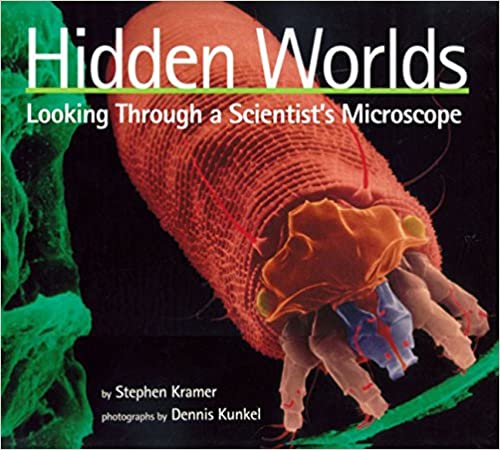
For those of you wanting a quick, fascinating glimpse into a Universe within our Universe, please check out the book, Hidden Worlds by Stephen Kramer with photographs by Dennis Kunkel.

hidden_worlds
Hidden Worlds

While Lleuwekhoeks early microscopes could only magnify upto 260 times, the images revealed in the book, Hidden Worlds magnify images by upto 1000,000 times. The resulting images are breath-taking.

The images revealed are only black-and-white by the microscopes. Scientists then use computer modeling to color in the images and the stunning pictures are better than works of Art. For instance, the picture below shows some common allergens and pollens that cause so many to sneeze all Spring.

The book briefly explains about SEM and TEM microscopes, the work that scientists typically do to prepare their specimens.

  • Transmission Electron Microscopes: TEM can magnify images by 1000,000 times
  • Scanning Electron Microscopes : SEM can magnify images by 10 – 300,000 times

Looking through the pictures in the book, we realize how marvelous life is, and what a fragile ecosystem we have to thrive in.

Covid-19 has also made us realize the importance of our normal lives. The gratitude to be alive and healthy, to be able to do the work that interests and moves the world forward, to be able to revel in the beautiful companionship of our friends and family.

“As the years pass, I am coming more and more to understand that it is the common, everyday blessings of our common everyday lives for which we should be particularly grateful. They are the things that fill our lives with comfort and our hearts with gladness — just the pure air to breathe and the strength to breath it; just warmth and shelter and home folks; just plain food that gives us strength; the bright sunshine on a cold day; and a cool breeze when the day is warm.” 
― Laura Ingalls Wilder, Writings On Wisdom and Virtues

References:

Is It Only Tuesday?!

I don’t like to go on about First World problems when the world is grappling with the stifling effects of the Covid-19 lockdown, but as a chronicler of the Nourish-N-Cherish household, my job is a tough one. There is much to write – my list of unwritten posts grows by the day.

In the latest news, I had to shoo out protestors before my meeting started. The protestors were noisy, marched with placards and while their motion held merit, I could not allow protests of this nature to carry on into my meeting slot, plus they did not have the critical mass of individuals required to ban the protest altogether.

img_7534

The morning had started with the son asking “Is it only Tuesday?” and we laughed.

“Yes it is only Tuesday my child – only the second day since school closed! I hear you!” I said. The daughter was singing the Disney song “When will my life begin?!” and looking forlorn before her day started. Covid-19 has us all in Shelter-in-place mode, and that has thrown all of us in a loop.

While we are grateful for the ability to be able to work from home during these times, it also makes for an interesting dynamic in the home. Do we wear gloves and arm wrestle for the office space? The daughter has online classes and is therefore quite happy to be holed up in her own room.

In what is a low move, the Television in the house has decided to go into social distancing and is sheltering-in-place. When asked to glow and sing, and generally make merry, the television has decided to go mute and shut down with a satisfying click.

The daughter, when she heard of it, moaned and said
“What?! Oh my goodness! Do you really think we can spend all that time together without TV and not drive each other nuts?” I laughed and said that I was touched she thought that way of her kind family. She rolled her eyes. “You know what I mean!”

The son rallied as best as he could and said it would be lovely since he has never spent a summer with parents with all of us at home through the day. I was touched, and also glad to see the silver lining. He, too, did not take the TV blow stoically, however.

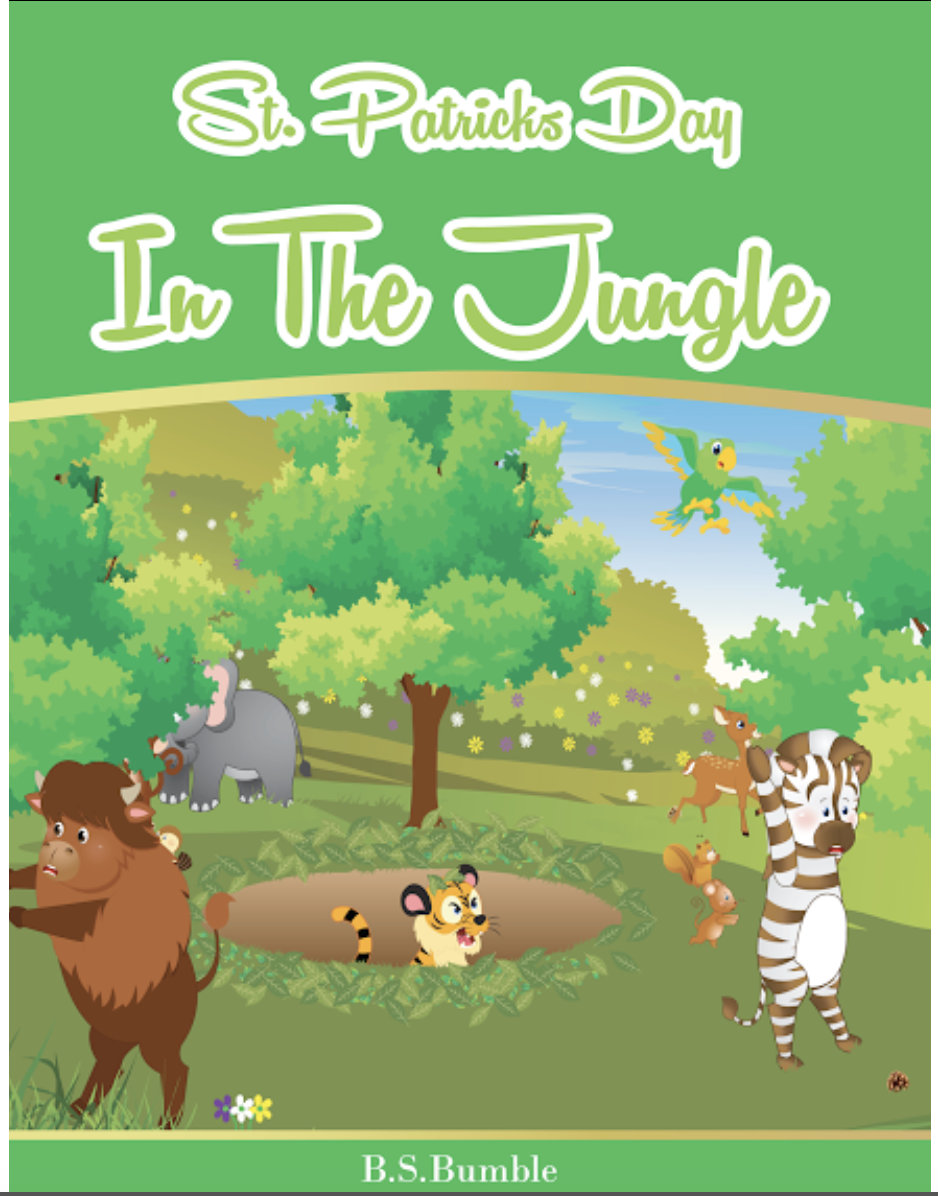
That is how I found the pair of them crouching and writing up protest slogans on a piece of cardboard, which in happier times would have been used for making traps for St Patricks Day. patricks_day_ij-v1

Screen Shot 2020-03-17 at 11.57.17 PM

They came marching noisily protesting for the TV and I found myself laughing.

I was reminded of the New York Times article that a friend shared with me a while ago, “Let Children Be Bored”. One thought in that article particularly spoke to my heart, As children, we rarely complained of boredom, because we knew where that would get us. It would get us the task of cleaning our room, or cleaning up our clothes cupboard, or worse yet, the haunted, “Why don’t you study?” refrain. It was vastly better to draw five hundred versions of a snowflake than to concede your boredom to an adult.

Thich Nhat Hanh said, We have more possibilities available in each moment than we realize.

Life is boring and the sooner we learn to keep ourselves occupied, the better for us. We learnt that lesson quickly did we not? So, why do we feel the obligation to whip out a form of entertainment for the children or feel the need to engage them in anyway? By doing so, are we not starving the creative self in some way? The eternal self , as Mary Oliver calls our creative self, needs solitude, it needs boredom to whip up an imaginary world, a novel game or a piece of Art.

Three days of no television, shelter-in-place mandates, no school, and continuing work will quickly have me begging for the Television, but for now, I have a list of chores ready.

“Come children – let’s start dinner! While you put away the dishwasher, why don’t you help me with the vegetables?” I said in my best head-chef voice humming loudly – “When will my life begin!?”

I heard the daughter say, “Is it only Tuesday?!”

Read also: