The Time For Scrunch Parties

I wonder when we stop skipping on our way, when we stop reading children’s books: tales of magic and myth and splendor, when we start looking weird for having crunch parties in the scrunchy leaves of fall, but it is a time we must take a knuckle and give ourselves a good knock on the head, and cut it out!

“Please! Just come with me for a walk! “ I said to the children.  November is the month of Scrunch Parties, and the month I can be seen begging the children to come on walks with me, even if they look and act like Hawks and Pandas. I still remember the day I came tottering into the home, my confidence in the true tra-la-la  of the world shaken. 

I had stepped out without the children after they had both called me ‘Nuts’ for wanting to go for a walk when the time could be spent inside the house on the couch instead. I gave them a withering look, and told them that I shall ascend to higher levels with my stint in the fresh air, where nature shall nurture my spirit and enhance my being, and they were going to miss all that. I threw in a quotation or two, gave them a sprinkling of philosophy, and a hint of lavender from my coat pocket to entice them into coming. I straightened my shoulders, and delivered the pep talk that Generals could take notes from. 

general_pep_talk

I don’t know how these Generals must have felt when they spread themselves liberally on the pep-talk, so they can leave pronto to acquire the next kingdom, only to have the troops say, “Nay, it is better if we camp here for a month. The Biriyani is particularly aromatic and spicy here!” But that is how my pep-t was received. They lolled on the couch, gamboled lazily in the warm, fuzzy throws like lambs in springtime, and continued watching whatever-it-is that amuses them so much. 

I told them they shall soon see a reformed person and made my way out, my back registering disapproval at this lack of enthusiasm for nature-walks, but my front eagerly galloping towards the joys awaiting me outside.  

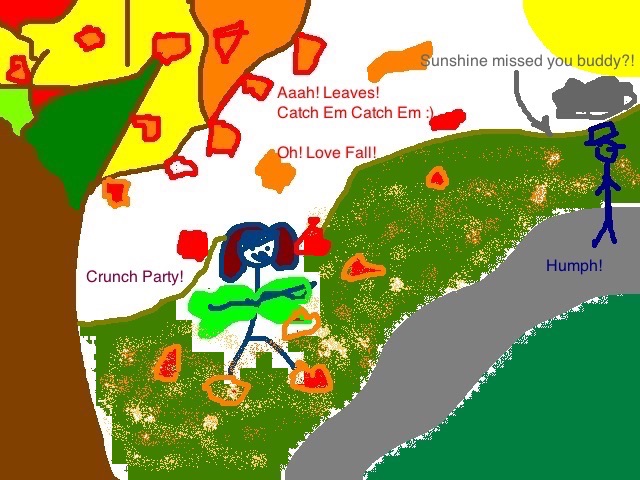
A few minutes later as I stood looking up at the sunlight filter through the trees, a stiffish breeze started up. The mesmerizing sound of the the wind rustling through the trees caught my attention (There is a fascinating word for this – Psithurism). The wind rustled a special tune sending beautiful waves of ripples through the leaves. Standing there with the sunlight illuminating the waves was magical, the wind was also sending hundreds of leaves dancing their way down to the Earth. My face lit up with happiness, and I charged left and then right trying to catch one of these beautiful leaves on their way down.

My arms felt like the wings of a butterfly spread wide, my leaping from one side to another left me feeling catlike. I clasped at thin air as the leaves fluttered past me. I don’t think my performance would have landed me a spot on the International Cricket team for fielding, but no one could fault my enthusiasm. My face was happy, and it was then that I caught the eye of a gentleman out on a walk too. 
scrunch_party

He looked at me like I needed to have my head examined. A small twitch of his bulbous nose indicated disapproval of this entirely whimsical and childish act of catching falling leaves, his round head shook like he could not believe I was let loose on the streets and he made his way again with an exaggerated dignity. His figure exuded the unmistakable message: I was an adult in a world where we do not show happiness by ourselves, was I not? We do not skip, we certainly do not run like lumbering sea-whales going after fish, we are prim, and we must be proper, and we must never forget that we live in a world where there are many problems waiting to be solved.

I tried to shake the wet geezer off, but the scrunch had gone out of the scrunch party. I went back home, an altered soul. Seeing my less-than-exuberant spirits slink back into the house, the children wanted the low-down. I usually come back from my November walks bearing gifts of colorful leaves, or tales of butterflies and chirps of birds; not the slumping shoulder and the lack-luster shrug. I poured my heart out, and revived under the sympathetic brow swiftly giving way to gushing laughter. 

“You must’ve looked such a goofus Amma, running after leaves and scrunching leaves by yourself.” They cackled, and I smiled. 

Some inelegant demonstrations of my chasing the leaves were given to much mirth, and I felt happy at being able to spread joy in this stern world, even if it was at my expense. I mean I did not really think this little wet sop episode deserved rolling on the floor and laughing so hard, it was hard to stop.

I wonder when we stop skipping on our way, when we stop laughing out loud at Dr Seuss books, when we stop reading children’s books: tales of magic and myth and splendor, when we start looking weird for having crunch parties in the scrunchy leaves of fall, but it is a time we must take a knuckle and give ourselves a good knock on the head. 

When Seuss-isms Save Your Spirit

“Oh my gosh! You have to write about this!”, said the daughter laughing, and the son looked pleased with himself. He had uttered a Seuss-ism that just made the whole lot of us laugh out loud. I dilly-dally-ed on writing up the little anecdote and the incident has now slipped my mind. It had something to do with a packet of chips, some fellows playing on the street, some elephants and a circus. Something that reminded me of these two books by Dr Seuss:

If I Ran The Circus &

And To Think That I Saw It On Mulberry Street


I tell you a writer in the nourishncherish household has a full plate, and as a chronicler of sorts in the household, I tend to miss out on a lot of things, such as the tale of the water hose and the tulip bulbs, or the cartwheel aspirer whose tales of the leaping t-shirt kept us all enthralled, or the time the husband walked in to find a boy and his tiger entertaining the rest of us in the bedroom to chuckles and guffaws.

So, I hurried and wrote this down now before it too joins the nebulous places where thoughts and memories go: the duper pin lot of thunderbolt crate.

UUUUGGGGHHHH! This day sucks! GAAAAAHHHHHH!” I said exasperated. My family’s dinner, carelessly prepared, but tastefully done with the freshest of vegetables and the spiciest of spices lay in an orange goo splattered all over the kitchen. Like someone exploded a sunset on the ocean reef floor, only not as pretty.

It had been one of those days when I had dropped the daughter at Drombasollu, and picked the son at Pickabolou, then shopped for groceries at the Packed Aisles of Drabaloo, only to run an errand to the wasted lands of Grimes via the packed streets of Trafficity, before heading back to Drombasollu – all of this after a long working day on the grimiest streets of the city of the Somaridden, and back after a ride on the silver caterpillars of Mushart, not to mention 10 phone calls to co-ordinate who did what-s, where-s and when-s – with curt replies when the conversations veered to the how-s and why-s. I had run low on energy, even lower on patience and the ability to see the fun side of things was off hiding till I ventured to find it again.

The son came over, gingerly stepped around the splattered muck that I had intended to call dinner, and said, “Oh thank goodness you are not one of the engineers who work on the bridge of Bunglebung Bridge across Boober Bay – they have things falling from everywhere!”

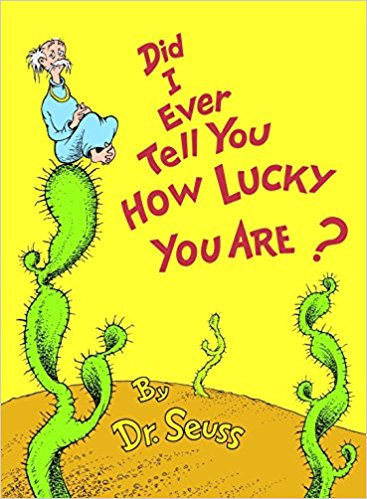
This was from the book, Did I Ever Tell You How Lucky You Are – By Dr Seuss

lucky

He then gave me a hug from the back, and in a minute my tensions splattered too. I laughed at the genius of it, and hugged the little fellow. “Always read Dr Seuss my dear. Always! When you are ten, don’t forget them, when you are twenty, remind yourself to read them, and then go on reading them when you are thirty, forty and with tea, it will always be …. gah I can’t rhyme this anymore now!” I said, but the smile was back on my face.

“But it was pretty good!” said the little fellow encouragingly.

Within minutes, we had laughed and cleaned up the kitchen floor and were rummaging the shelves for another slap-a-dash dinner. When the husband and daughter came back from wherever their drombasolu, pickabolou route had taken them, we had a semblance of dinner ready again. Our spirits much revived by a Seuss-ism were smiling and happy again.

I doubly appreciate Dr Seuss, because I had never read his books as a child. But I get to enjoy them now, as I read them with the children – one of the many joys of immigration. It makes me a whimsical child again, and grateful for reading them at time when it is lovely to remind ourselves of the sunny days of youth again.

Like Graham Greene said of his famous work, The Wind in the Willows, which I thoroughly enjoyed reading every now and then:

“A book of youth, and so perhaps chiefly for youth and those who still keep the spirit of youth alive in them; of life, sunshine, running water, woodlands, dusty roads, winter firesides, free of problems, clear of the clash of the sex, of life as it might fairly be supposed to be regarded by some of the wise, small things that ‘glide in grasses and rubble of woody wreck’.”


Mermish Dreamish

“Ohhhwwwnn! What do you want us to get you from the labally?”, the son’s voice wafts upstairs to his teenage sister. She cannot make it to the library and her little brother feels bad for her, like she has been denied candy on Halloween. 

“Anything on Mermaids dobucles! From the Teen section.” 

The son and I exchange knowing smiles. 

“Okay!” 

I watch amusedly as the half teen swells with self importance: Oh! The glory of being given the esteemed task of picking out books for his teenaged sister from the teen section. 

“Mermaids! Really? Again? Still?” I ask, and I get a “Yessss!” accompanied by an eye roll, that I cannot see but can imagine, in response as we head off. 

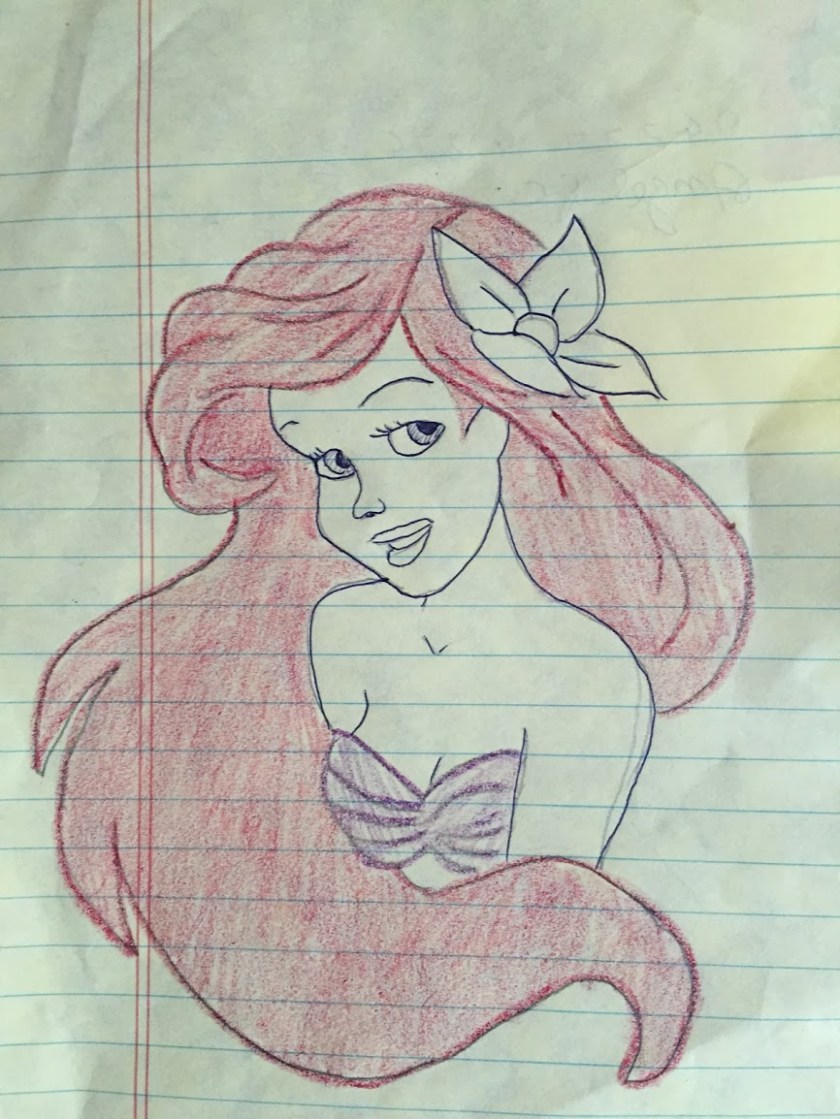
keena_mermaid_doodle
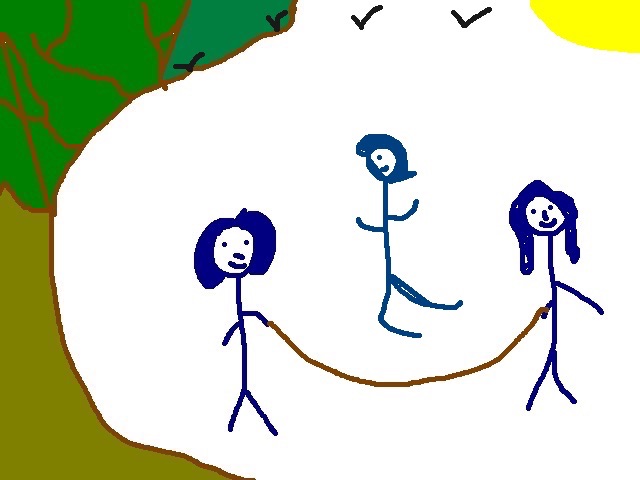
A random doodle by the daughter when she was knee-high

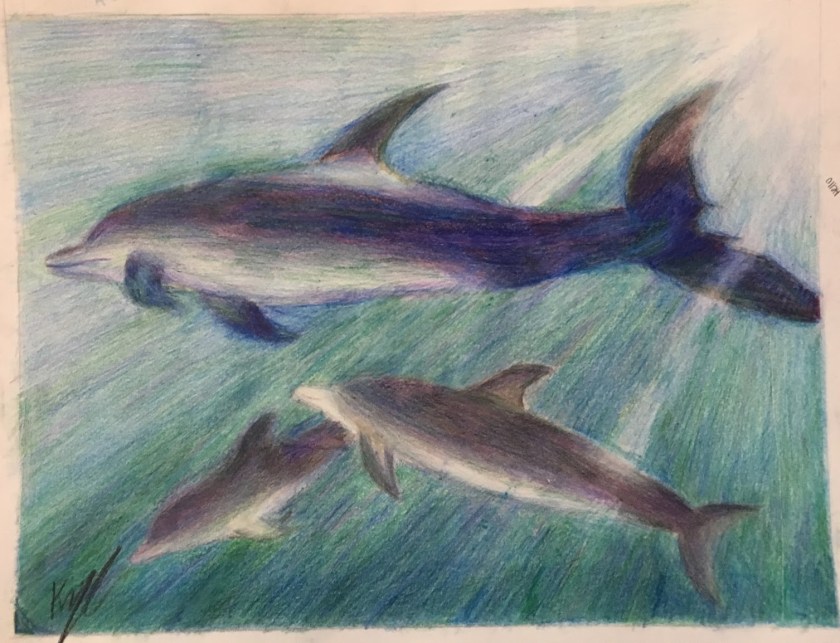
The oceans and seas enthrall her, they exert an influence on her like no other. And it started young. Thousands of viewings of Finding Nemo, hundreds of The Little Mermaid later, her first choice for drawing anything is still marine. 

Keena_drawing

I can hardly blame her, I find the oceans fascinating myself.
Gerald Durrell’s Enchanted World Essay
Carl Sagan’s Essay on his interactions with Elvar The Dolphin
Epic of Whalayana – Carl Sagan

I have been seeped in books on Whales of late. Ever since I read Carl Sagan’s beautiful notes on these gigantic, intelligent and curious creatures, I have become half mermaid myself. I see the allure that sets the daughter’s heart beating. Regular readers know that I have often described that child as one who should have been born a mermaid.

Nick Pyenson : Spying on Whales:

Astronomy and Paleontology are sibling fields really: they take human imagination to places where no person has ever been.

Some writers have the knack of saying the most profound things in passing. 

It is true isn’t it? The reason we gaze longingly at the night skies, charting out the constellations, having myths that surround them is the same reason we have stories of oceanic splendor. The reason we listen in awe about Noah’s Ark, Mastya avatar, Kurma avatar and myths of a milk churning ocean coughing up ambrosia for things that seemed nigh impossible like immortality is the same reason we imagine The Great Big Hunter going after the seven sisters. It is magnificent and unimaginable.  

“This must be something to do with the Sea. It has the word Tempest on it and there is a mermaid like thingy on the front. “, said the little fellow handing me the book he had picked out for his sister. 

“Should we get one or two more just in case?” 

We agreed and off we went looking for mermaid like ones, oceanic tales. I fell back upon Twenty Thousand Leagues Under The Sea by Jules Verne in case all else failed. That was the choice that earned me a loving “MOM!” look.

We needn’t have worried, the little fellow was given glowing tributes for selecting the best mermaid book, and we all settled down to read that evening. 

Taking a deep breath we dived deep into the rich oceans. 

I was trying my best to keep up with Nick Pyenson and his colleagues as they tried to find and relocate some of the largest whale fossils on record. More than 2 million whales had been lost to Whaling in the beginning of the 20th century, and only about 200,000 remained. What have we done? Another silent lament in my mind that will not have an answer. 

The son had a thoughtful crease after reading his book, A Symphony of Whales by Steve Schuch. I could well imagine his feeling. It is one of those books that in ten flips of the page leaves you wondering and marveling at so many things – the climatic conditions because of the geography of the story, the sounds of nature surrounding the little village, and the sounds of the living in the churning waters calling out to little Glashka who is a little girl blessed with the ability of hearing different frequency voices like the song of the whales stranded in the bay and iced in. Accompanied by illustrations that take you to the little Arctic village, this book was the perfect marine choice for the little fellow.


Little yawns appeared on our faces and we smiled sleepily. When we resurfaced from the waters, feeling refreshed after a cool dip in the oceans, we slept dreaming the dreams of the unimaginable. It was marvelous.

The sea is as near as we come to another world. – Ann Stevenson


Recess The Basis of Culture

This article was published in The Hindu (Open Page) dated 14th October 2018.

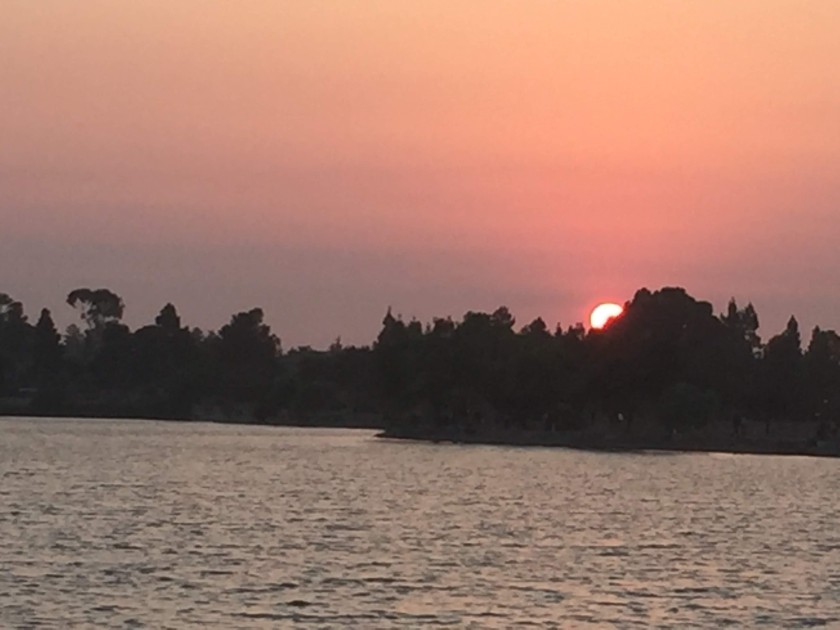
There is a beautiful park that is frequented by many in our suburban area. The geese, gulls, squirrels, grebes, mallards and pelicans are a constant source of joy, and I feel much refreshed when I spend an evening there. One day over the week-end, off I went to the park for a brisk workout. It was particularly crowded as people were enjoying the last few weeks of sunshine before the fall and winter cold set in.  

img_0111

I found myself in several places having to slow down and take it easy, thus enabling me to listen to what people were saying from time to time. One time I found myself listening to a couple of women talk about the malady of modern times – the over-scheduled child’s life. The women were discussing the schedules of their 5th grade children.

As soon as he comes back from school, he has to go for Taek-wondo for 2 hours, then, violin class, and then his Math or English classes. I also want him to play basket-ball, so, the week-ends, he has Bala Vihar (the equivalent of Sunday school), swimming and basket ball. He asks me, – Amma, when can I do my homework? Poor fellow! I told him to skip his recess times, and just finish his homework during recess so that he need not be stressed about finishing it.

I turned around to see if they were joking, but they weren’t. They were genuinely worried about the children’s activities and wanted to solve the problem of finding homework time.

My heart went out to both the worried mothers and the harried children. 

I thought of how much I loved recess as child, and how much the children love recess now. I love listening to the recess games, and recess tales. I like to watch the elementary school children at play while dropping off the son to school in the mornings. It is a heartening sight to see the children find their friends, their faces breaking out into slow, wide smiles, and a spring in their step as they bound off to play.  

A few girls play the jump-rope. They stand on either side of the jump rope and swish the rope up and down while the person in the middle tries to jump as the rope comes under their feet. Every time one child trips, she smiles and good-humoredly lets go, while her friends cheer her on with their own smiles.

recess.jpg

In just a few weeks, I see the children have gotten much better at the game too.

The days I am able to see the children play the jump-rope I feel as though a lovely light permeated my soul, and whispered to me that all would be well. These children will be the new leaders in a few years after all. If they know how to encourage each other and work together to lift everyone up, we will be fine, won’t we? 

Most days when I ask about school, I get recess-tales. The best lessons in life are those imparted at recess: The strength of companionship, the solidarity of friendship, the simple choice of being present for one another, and so much more.

Read here about a German philosopher who said Leisure is the basis of culture – from Brain Pickings

The daughter, I remember, used to describe in marvelous detail about how they transformed the playground into an underwater coral reef, and played a game called Sharks & Minnows. (That child should have been born a mermaid!) The son shows me his callused hands from attempting the monkey bars and the various shenanigans possible with this simple play structure.

jelly_2

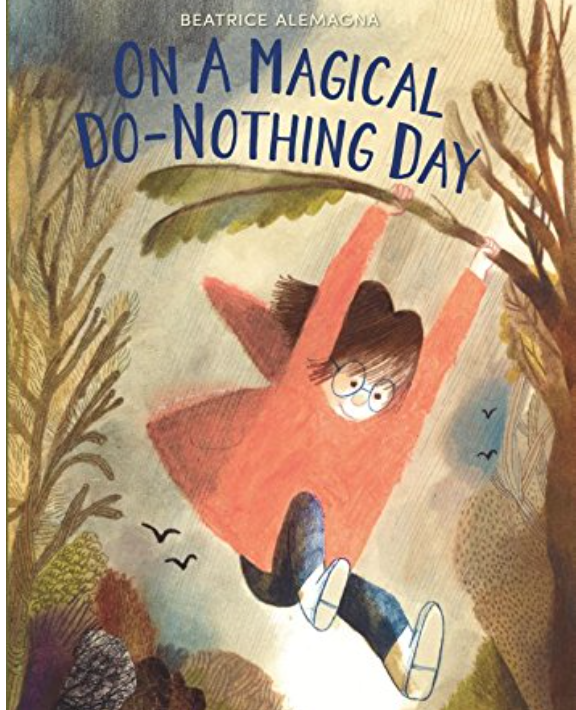
I pondered on the solution the mother gave her child to skip recess and finish homework instead. Often we find ourselves in spots like this, where we are trying to solve a problem without changing any of the variables. But it was an important lesson to me, maybe sometimes we need to see what variable can be changed – in this case, what activity can be let go. Or schedule in a Magical Do-Nothing Day Or Magical Do-Nothing hours.

Screen Shot 2018-03-01 at 4.14.21 PM

After all, like Socrates said, “Beware the barrenness of a busy life.”


Radiance of a Thousand Suns

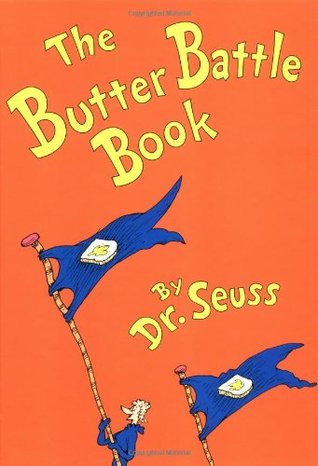
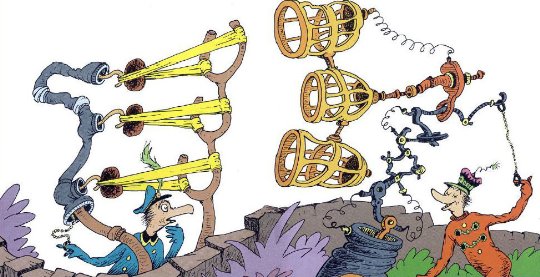
The children and I were reading the Butter Battle Book, by Dr Seuss again: A marvelous book that never fails to enlighten : the bigociously atrocious weapons we are capable of creating, how littlyfully small-minded we are when we come to self righteousness,  and the idiotic ends to our means. It makes me want to take our brains apart to see where bravado and ego reside and short circuit them, to see if it results in a fuzzy ice-cream show in the pupils. 

butter_battle


Written in 1984 this book is a simple parody of the nuclear arms race, and is chillingly relevant today.

The book is about Yooks and Zooks: The Yooks eat their bread with the butter side up, while the Zooks eat their bread with the butter side down. This leads to escalating differences and a long curvy wall is built between the two lands.

butter_battle_2

Soon, both sides start fighting by using weapons of increasing grandeur and magnitude starting from the Tough Tufted Prickly Snickle Berry Snitch to the Eight Nozzled Elephant Toted Boom Blitz. The book finishes with the Yooks and Zooks sitting on either side of a wall threatening to drop the Bitsy Big-Boy Boomeroo, signifying the nuclear threat.

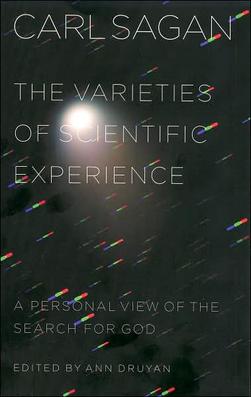
Around the same time that Dr Seuss came out with this brilliant book for children, another one of my favorite writers delivered  a series of Gifford Lectures. Titled ‘The Varieties of Scientific Experience : A Personal View of the Search for God’ , Carl Sagan goes on to explain in one lecture how we fail to comprehend the true magnitude of the nuclear problem ahead of us. 

The_Varieties_of_Scientific_Experience
By Source, Fair use, https://en.wikipedia.org/w/index.php?curid=28513011

Quote:

The bombs that destroyed Hiroshima and Nagasaki – everybody’s read about them, we know something about what they did-killed some 1/4 million people … The planet Earth today has 55000 nuclear weapons, almost all of which are more powerful than the bombs that destroyed Hiroshima and Nagasaki and some of which are, each of them, a thousand times more powerful.* Some twenty to twenty-two thousand of these weapons are called strategic weapons, and they are poised for as rapid delivery as possible, essentially halfway across the world to someone else’s homeland.

*By 2006, the world nuclear arsenals had been reduced to about 20,000 weapons-still roughly ten times what would be necessary to destroy our global civilization. the principal reductions since 1985 were due to the 1993 Start II Treaty between the United States and Soviet Union.

“Twenty thousand strategic weapons in the world is a very large number. For example: lets ask how many cities there are on the planet Earth. If you define a city as having more than 100,000 people in it, there are 2,300 cities on the Earth. So the US and  Soviet Union could, if they wished, destroy every city on the Earth and have eighteen thousand strategic weapons left over to do something else with.

These lectures were delivered in 1985, the numbers have definitely been revised from thereon. A number of countries have also harnessed the power of nuclear weapons, even though there have been treaties and agreements to restrict its use. 

Robert Oppenheimer, credited as being the ‘father of the atomic bomb’, when he witnessed the test of the nuclear bomb over the desert in New Mexico was supposedly reminded of a text in the Bhagawad Gita.

If the radiance of a thousand suns
Were to burst at once into the sky
That would be like the splendour of the Mighty One…
I am become Death,
The shatterer of worlds.

With the rise of autocracy the world over, what would it take for us to save ourselves this time around? For all our brilliance in developing the bomb, we have yet to develop sound defenses against it.


Our Rainbow Colored Hearts Can Sing

The elementary school going son and his friends were proudly showing off their art work at the open house. It always makes my heart sing when I see the beauty of effort. Tables that looked like flattened zebras, zebras that looked like striped platypuses, and platypuses that looked like duck bills were all being open to interpretation. I was admiring everything and the artists around me were very proud of themselves. They puffed their chests out and competed with each other to show off one another’s work. 

img_8684.jpg

The teenaged daughter tugged my hand to show me a particularly fetching piece of art done by her brother. “Oh beautiful!” I coo-ed, though I could not really make out what it was. But to paraphrase Ursula Le Guin, a potter’s job is not to explain a pot, but to make the pot. It is upto us to use that pot as we will. In her fascinating collection of essays or blog posts, No Time To Spare, she deplores this tendency in Modern Art museums for the artist to explain their work.

Screen Shot 2018-06-04 at 4.57.22 PM

An artists work, she says, is open to interpretation and mean different things to different people at different points in time. It is a sentiment that I agree with, and I relished her way of putting it into words. Something that I have always admired in Ursula Le Guin’s work. Of course, she put it far more elegantly than I have attempted to here. 

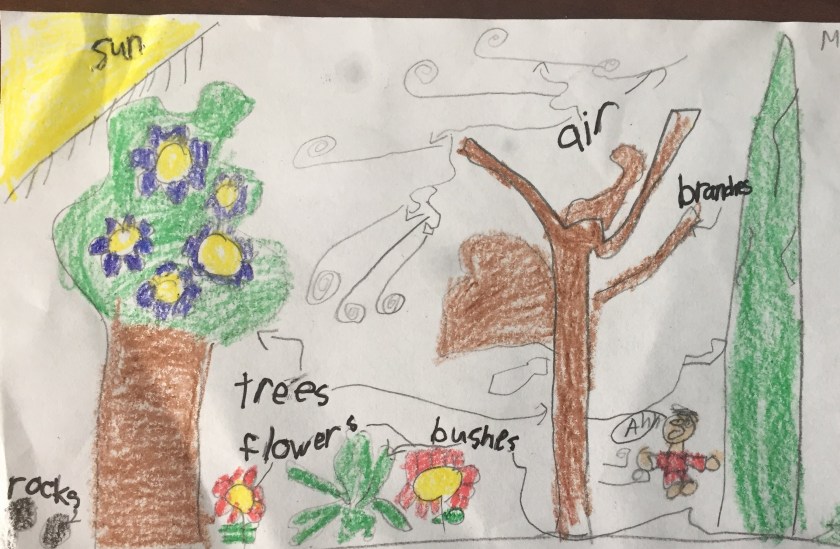
Please read this earlier post on the daughter’s drawings as a child.

Anyway, I admired the son’s work, and then the daughter pointed to the bunch of people in the picture. Peering closely, I noticed they had rainbow colored faces. I asked the son why the folks in his drawing looked like rainbow trout in the sunshine.

He said, “Oh my teacher said to the class, to put in some colored people.”

I turned to the teacher, and she said she did say that for Diversity and Inclusion. I smiled at her, and thanked our stars for all the lovely things teachers teach the children.  Half the adults seem to have difficulty remembering these simple lessons in these sad times. All the more reason why we should all attend a year of Kindergarten every decade.

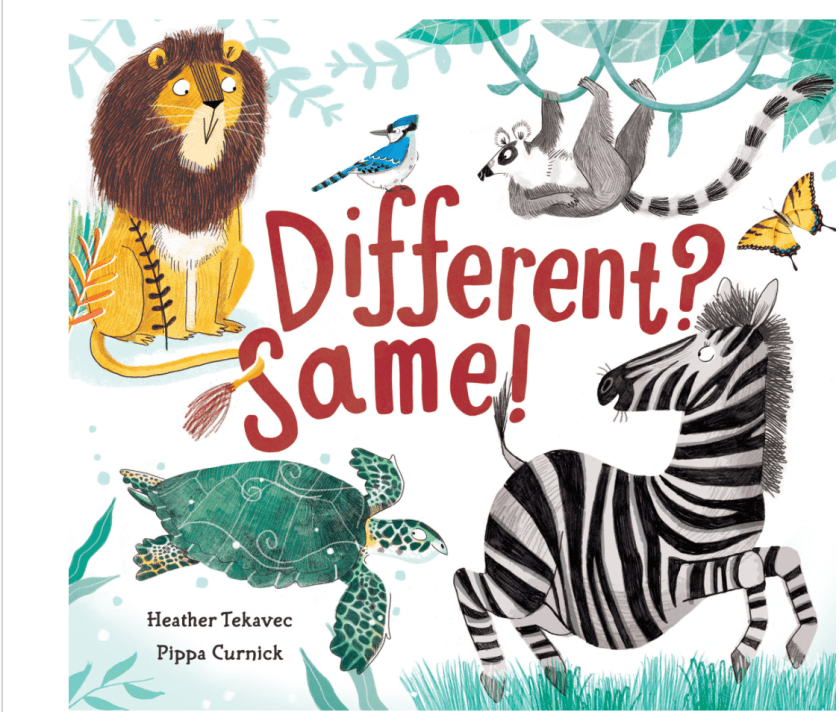
I looked again at the rainbow colored people and thought how beautifully untainted and open minded we are before we learn our little prejudices along the way. To think how much we obsess on skin color makes my rainbow colored heart very sad. It was, therefore, with utter joy that I picked up the book, “Different? Same!” Written By Heather Tekavec and Illustrated by Pippa Curnick.

Screen Shot 2018-06-04 at 5.22.25 PM
Different?Same! By Heather Tekavec, Illustrated by Pippa Curnick

In this beautiful book, we are reminded of how each of us are so different and yet similar. How is a Zebra similar to a bumblebee? Or an Elephant and a Narwhal? 

The book finishes on a beautiful note that can make our rainbow colored hearts sing: If you look closely enough, it soon becomes clear … we’re not as different as we first appear.

Cephalopods

The husband had an amused expression on his face as he walked into the kitchen and saw me reading while making dinner. His eyes were set to roll, and his lips had already started on the journey to upward curvature that results in an indulgent smile. I told him so.

“Your neurons, it seems, are all controlled by one brain – tut tut! Not the case with Cephalopods. Take octopi or octopuses for example. They have neurons tingling all over their many arms, and each arm can function almost independently of another. Severed arms have been known to collect food on their own you know?”

“What are you reading now?”, asked the husband.

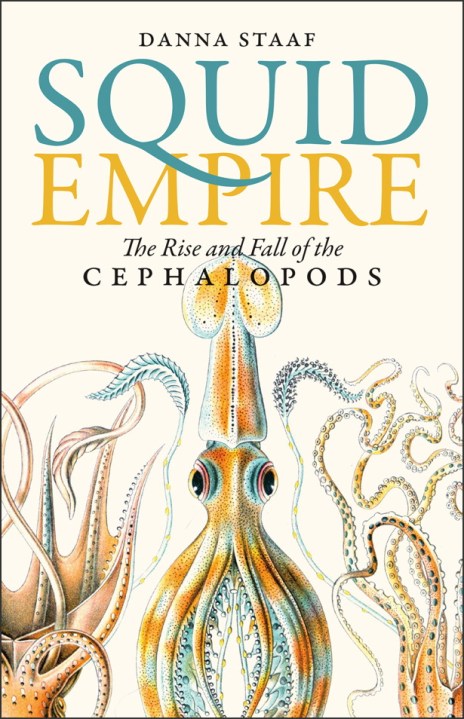
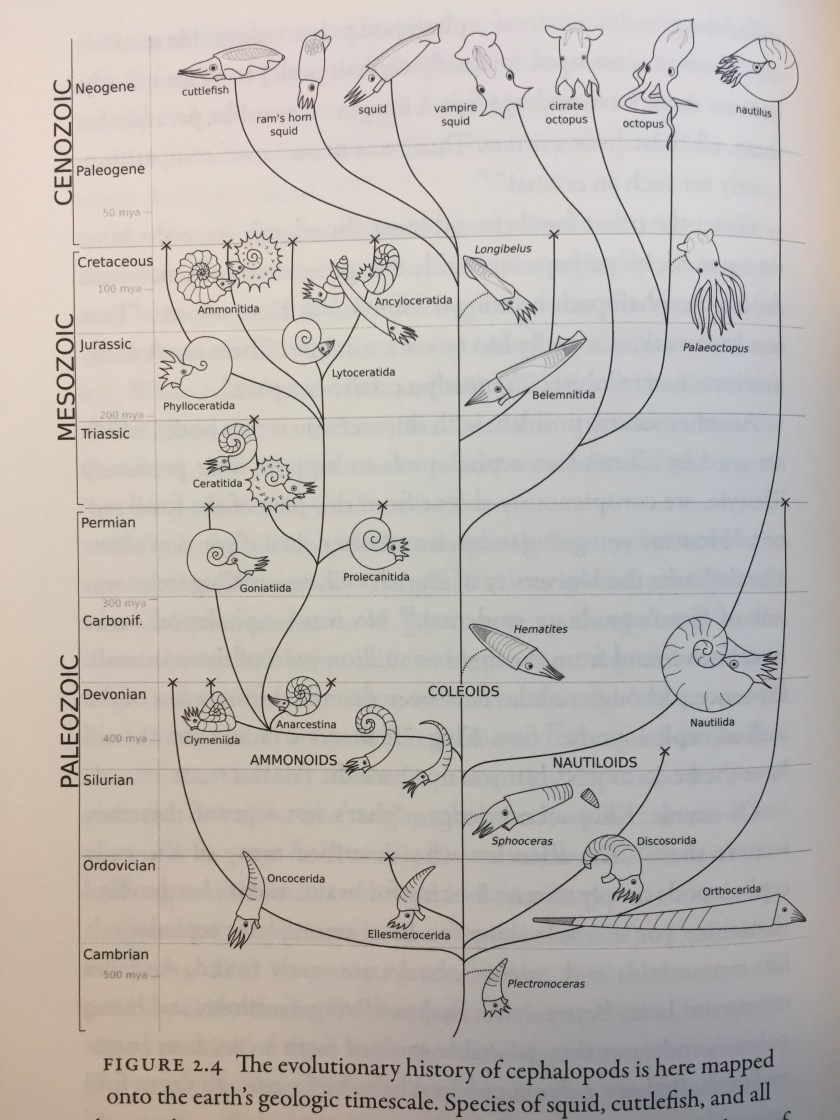
“Squid Empire by Danna Staaf. It is a book about squids, octopuses, and some other creatures called nautiluses and ammonoids, coleoids and cuttlefish and god-knows-what-else. Apparently, they are all called Cephalopods.” I said beaming happily, while slowly roasting the dinner. It made me feel like an eight armed goddess myself just reading about these fascinating creatures, and cooking at the same time. Never mind that I was making the most gawd-awful hash at both these tasks.

SquidEmpireCover

“Did you know? The humble garden snail is descended from the ammonoids and squids?” I said.

“Well….I will leave you to it then.” said he squiggling out of the kitchen like an octopus out of a tank.

I went back to the book and though I was at times confused by the various scientific terms, I enjoyed the read. It yanked me through the ages, and took me to a time in Earth’s history well before dinosaurs or life on land had started. It was intriguing to see how they formed shells, and how those very shells helped them move from the ocean floor to the central zones of the ocean where they could swim and live with no apparent threat till the whales and larger fish evolved to eat them. The shells secreted a liquid less salty than the surrounding sea water, and this helped them float and remain buoyant instead of being brought down by the heavy shells.

IMG_8046.jpg
The Evolutionary History of Cephalopods from the book, Squid Empire

Why did I pick up a book on Squids?

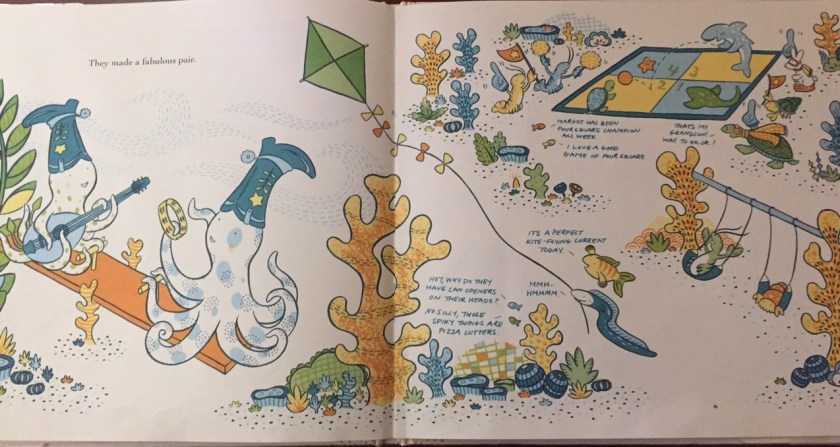
I don’t really know, except that I loved the children’s book, Octopus and Squid by Tao Nyeu. A book that the son and I read every now and then for its beautiful friendship between two seemingly different creatures.

Imagining
Squid and Octopus by Tao Nyeu

Then, a few months ago, I read The Soul of an Octopus by Sy Montgomery

Cosmic Nature of Living:

Quoted from The Soul of an Octopus by Sy Montgomery:

Cambridge Declaration on Consciousness asserts that “humans are not unique in possessing the neurological substrates that generate consciousness”, and that “nonhuman animals, including all birds and mammals and many other creatures, including octopuses also possess these neurological substrates.”

Now, I felt it was time to get acquainted with Squids. I don’t distinctly remember a squid – I must have seen them at the Monterey Bay Aquarium.  Their evolution is fascinating. The book is written by a genuine marine lover (Danna Staaf’s site is here: cephalopodiatrist), and her love for these creatures shines through in the book. I only wish the book had more pictures. I had to keep looking up pictures on the internet. Pictures of nautilus, cuttlefish, squid and octopus obtained from Google search below:

I had never used the word, Cephalopod, before, and I was glad to learn so much about another way of life, even if I may never fully comprehend what it means to have consciousness so permeable, so distributed, and yet co-ordinated.

If there is magic on this planet, it is contained in water. Loren Eiseley

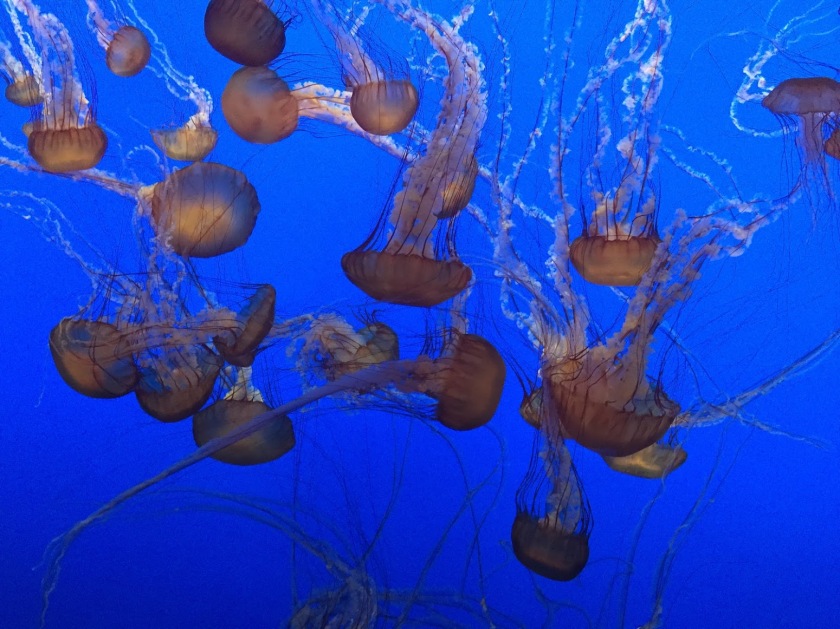
jelly

President Squid

I get the feeling that the Universe potters around jotting down whether things are going the way they are supposed to and so on, and then stops and sees me having a good time, and says to itself. ‘That half-wit there seems to be enjoying herself. Catch her, and put her up for a Leadership course or something. Do something with her! Something!” So, in my unguarded moments, I have been bunged into courses on Leadership.  Barely do I totter out of one, when another beams at me touting the title, ‘Effective Leadership’, and the moment I finish that up, ‘Most Effective & Beneficial Leadership’ (Beneficial to whom?)

I have no problem with these blokes whose job it is to tell you to polish your pencils and sharpen your brain and what-not, but I find the whole thing irksome and tedious. So much better to take my Leadership course. My course is fun. Titled, Butter Battle Course, it is being substantially boosted up with these gems.

Skip several tomes on Leadership, and read up: Hope this helps the squids, squirrels and sheep too.

President Squid – a witty book that enthralls and amuses.

Screen Shot 2018-02-12 at 12.14.54 PM.png

Giant Squid has a very important realization. No giant squid has ever been a president before. He looks for qualities to be a President and surprise of surprise – he already has them all.

Qualities of a President:

  • He wears Ties
  • He has a large house (The Titanic!)
  • He is famous
  • He does ALL the talking
  • Big & bossy


IMG_7854

President Squid is as loud and rambunctious as ever. He is convinced that he the Best President Ever!

One day as a President, he unwittingly does some work, and then being a President doesn’t seem like fun anymore.

IMG_7856
President Squid: Book by Aaron Reynolds

The book also provides a solution for those unfortunate Presidents who became Presidents and then realized it is not all as gassy as a cup of beans.

IMG_7857
President Squid: By Aaron Reynolds

Complement this with the equally endearing and hilarious books on leadership:

King Hugo’s Huge Ego : By Chris Van Dusen

Loius I, King of the Sheep – By Oliver Tallec

Who was it who said that there is nothing that cannot be learnt from good children’s books? I heartily agree.

Children are actually the best (and worst) audience for literature because they have no patience with pretence.Orson Scott Card

The Purloining of Prince Oleomargarine

Days were blurring into weeks, and I had a flustered feeling. When days like these rear their heads, I reach for a children’s book to read. I’ve said it before, and I shall say it again, and again: Children’s book authors and illustrators are the true custodians of the human spirit. 

I had picked up a book left unwritten by Mark Twain, and finished by another author of today, Philip Stead. The book’s title is a mouthful, and its contents a mindful:  The Purloining of Prince Oleomargarine: By Mark Twain & Philip Stead (Illustrated by Erin Stead)

IMG_7473.jpg
The Purloining of Prince Oleomargarine

Apparently, Mark Twain, after a long day’s work, was asked by his children for a story using a picture as a prompt everyday, and this story was told to the little girls in France. He liked it enough to jot it down, but did not quite finish it.

When a book like that comes along, it feels like perfect cure for the cold winds whipping the Californian hairlines. The narrative voice makes you sit up and wonder how brilliant it is, and brilliance in simplicity is rare indeed. The book suffuses you with enough warmth to get you going through the windy, cold days.

The story starts off with a simple note from the Author explaining the circumstances and getting us to believe that Mark Twain told him the story about our hero, Johnny, while sipping tea and coffee overlooking a lake on Beaver Island. This simple note then sets the tone for two unreliable narrators in the story, and the book chugs on towards the hinterlands of imagination giving us a healthy dose of incredulity, hilarity and thought.

IMG_7487.jpg

Our Hero, Johnny, lives a miserable life on a farm with his miserable grandfather and hen named, Pestilence & Famine.  One day, he is sent off by his grandfather to sell the hen, and off goes Johnny with Pestilence & Famine. 

IMG_7489.jpg

A Jack & Beanstalk-y bit later, Johnny finds himself with an kind, old lady who trades him the hen for some old blue seeds, with the promise that if tended to properly, a plant will rise, and “when a flower comes up, eat it, It will make you full and you will never feel emptiness again –

“I tell you this”, Twain said to me, raising his teacup in the air, “there are more chickens than a man can know in this world, but an unprovoked kindness is the rarest of birds.

“So, did the hen die?” asks the Author of today, and Mark Twain says yes, while the author today believes that the hen and old woman are living happily.

“Your version lacks credibility”, said Twain. “Surely the old woman is dead. “

“And it should be noted”, he added, “that if Charles Darwin taught us anything, it is this: The chicken is dead too. And, lucky for her, because there are many unflattering ways to leave this world, but none quite so unflattering as being forced to live in it.

The blue seeds turn out to yield the Juju flower, and Johnny finds himself hungry and desperate even after eating the Juju flower. He walks to the edge of the forest, and falls feint only to look up and find a skunk, Susy. After nearly losing his mind Johnny says to Suzy, the skunk: “How is it that you can talk?”

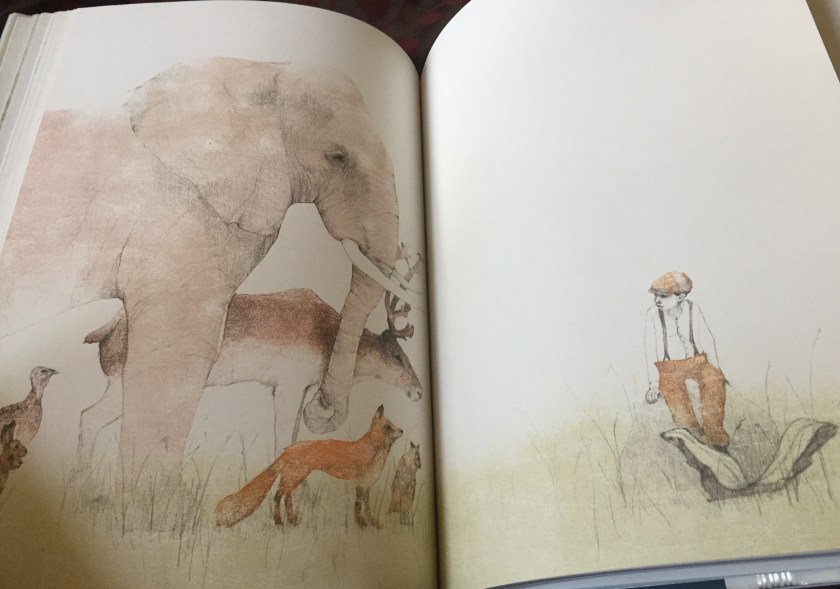
“All animals can talk! … A lion can speak to a squirrel can speak to an owl can speak to a mouse. A camel can spend to a pig who can speak to an elk can speak to an elephant. A whale can talk to a gull. A giraffe can speak to a hermit crab. It is only humans that no one can understand. It is why they are so ignorant and backward and lonely and sad – they have so few creatures to talk to” Susy added. “But I do not mean to offend, You do not seem ignorant or backward.”

“But you understand me?” asked Johnny.

“Yes”, answered Susy, “for evidently you have eaten the Juju flower. It is rarely given to anybody.”

img_7486.jpg

Please read the rest of the book to see what happens to Johnny and how he finds himself going to the King of the land.

Mark Twain’s words are still prescient:

“Terrible things are always happening to Kings. It makes you wonder why anyone would want the job at all.”