Once Upon a Goat

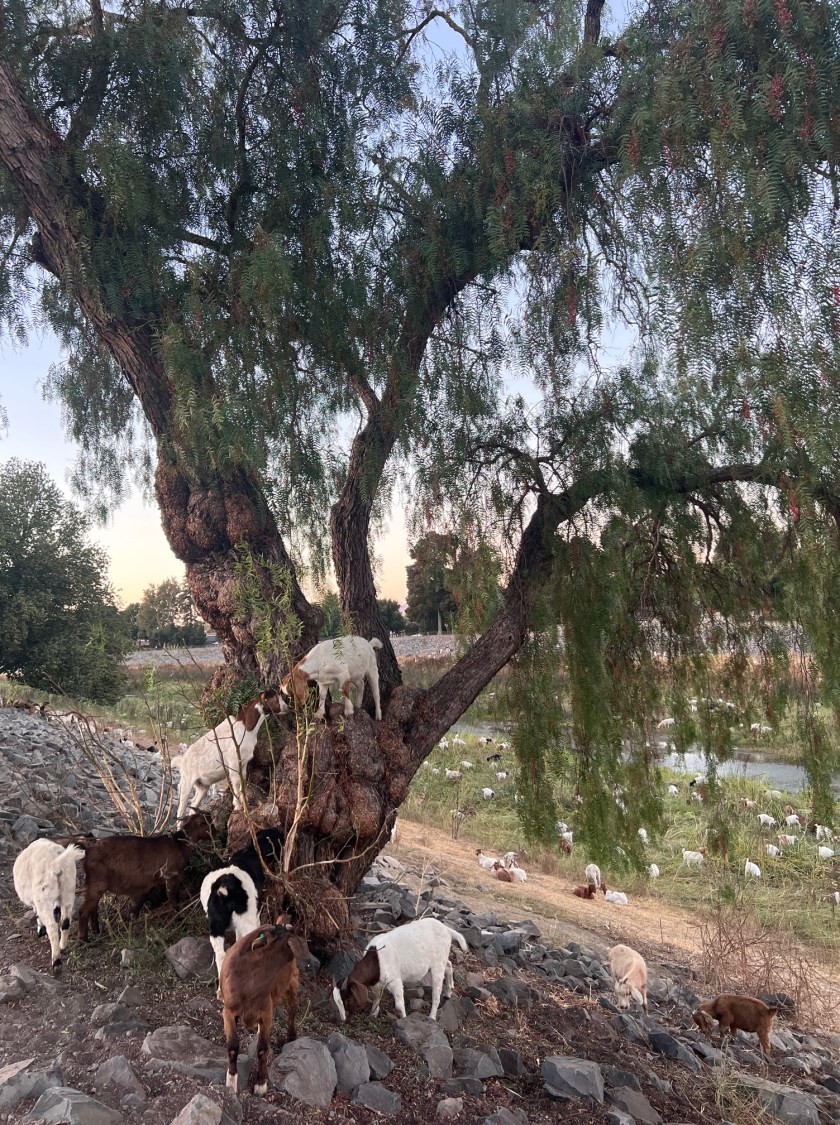
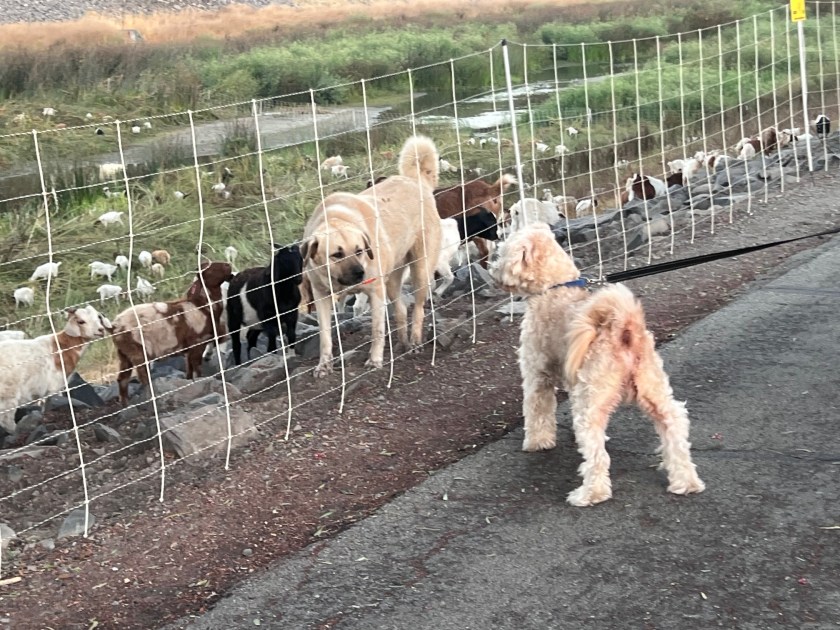
The son and I stood by the river bed near our home once more gazing upon the goats in the riverbed. An endlessly fascinating pastime, we always return smiling and shaking our heads fondly at the kids and goats, and a little awe at the sheep dog whose job it is to herd them all.

75AA2498-E9FE-4C9F-B211-BFFB9F499459

One evening, we saw two dogs gaze into each others eyes with an understanding that seemed to acknowledge their respective roles in life, while the goats gathered around looking curiously at the new dog behind the fence.

5E935F80-BB6D-40C3-8DE6-667BFCC5A791

“Hmm – maybe you should write about the goats huh?!” Said the son one day after we had spent a few minutes chuckling at their antics. I agreed. I had written a rather serious post by my standards, and I was in the mood for something light, something that shows the lightness of being, joie-de-vivre and all that. Goats seemed like a good option.

As luck would have it, the first book I had to read that evening was a children’s book on goats. I picked it off the shelf, and the son chuckled approvingly. “Oh – this is such a good book, right?”

“Yep! I love it too!” I said grinning too.

Children’s books are such a reliable source of light. Where else in this world would you be able to find as unalloyed a source of whimsy, fun, and a sheer exaltation of the nonsensical?

This book seemed to tick all of the above.

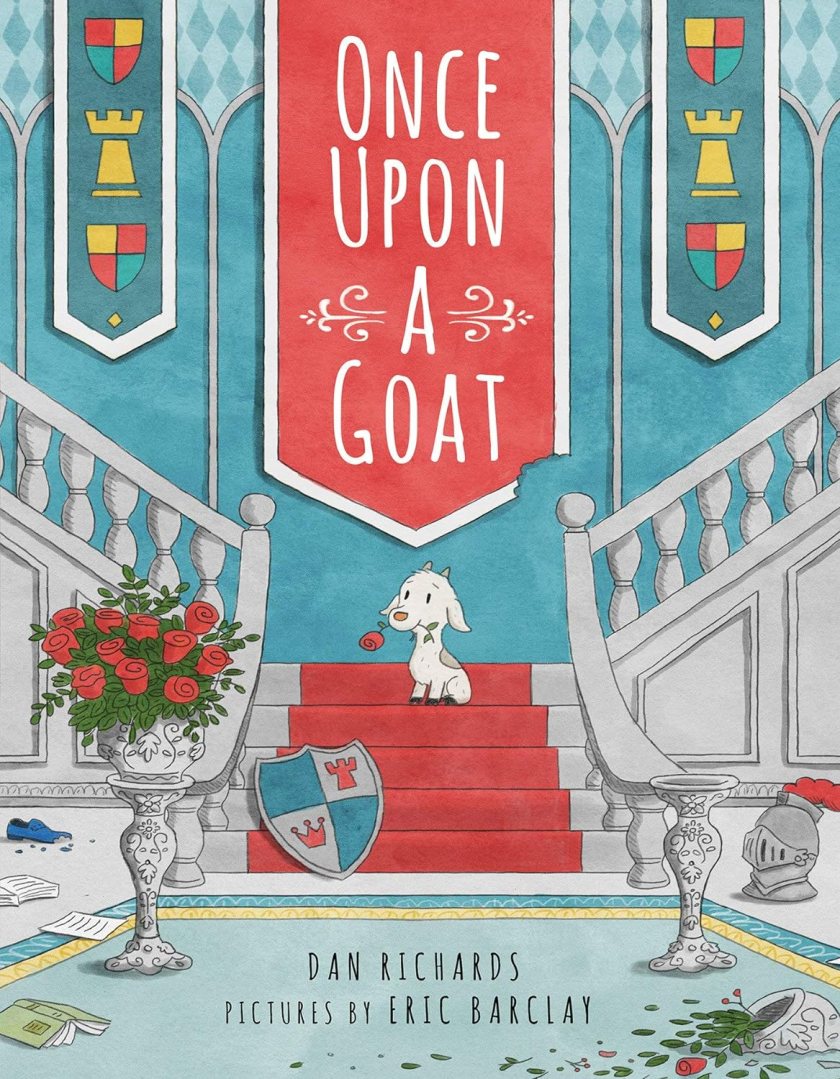
Once Upon a Goat – By Dan Richards, illustrated by Eric Barclay

once_upon_a_goat

A king and a queen want to start a family and ask the fairy godmother for a kid who has “glowing skin, bright eyes and hair like ocean waves”.

I did wonder how they arrived at this combination to ask for in lieu of a hundred other qualities, but remember this is a fairy godmother asking them what they’d want. I suppose I’d be flustered too. What would you ask for?

Anyway, the fairy godmother, busy with hundreds of wishes like these I hope, grants them a kid with just these qualities. Only it is a goat kid and not a human one. The king and queen are flabbergasted, but go on to accept and love the goat kid anyway. Their lives are more messy than they’d have liked perhaps, and their rose bushes suffer a bit maybe, but otherwise, they are a happy family.

It is when the fairy godmother stops by to check on how the little family is faring, that she realizes her folly. In the meanwhile, a human baby is being raised by goats in the countryside. 

What follows makes for a hilarious take on families, and acceptance.

Hint: A large heart makes for great joy and from generosity of spirit stems more happiness.

Who knew goats would play such a big part in our laughter that day?

Rainbow Colored

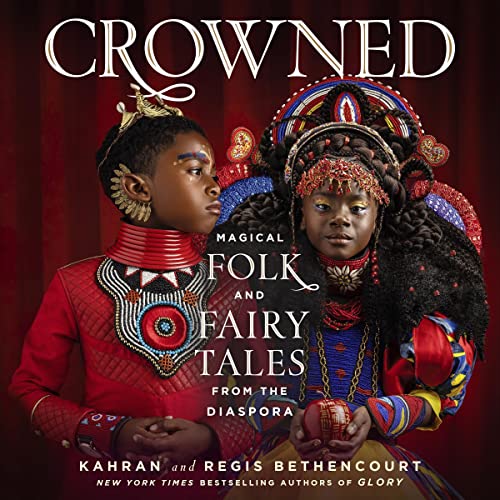
I picked up two books on separate trips to the library and enjoyed reading them. The first was a book of fairy tales retold in the African diaspora: Crowned. A book of fairy tales is always enjoyable, and one that has a good smattering of classic fairy tales combined with some myths from the African heartlands are a joy. 

The children shown as the princesses and princes are the best. The costume designs and makeup are exemplary, as are the re-imaginings of their origins. Most books illustrate Cinderella and Snow White as fair-skinned princesses, and it is refreshing to see these pictures.

The second book was: The Dark Fantastic – By Ebony Elizabeth Thomas

Race and the Imagination from Harry Potter to the Hunger Games

The Dark Fantastic is a book of essays exploring the absence of color in fantasy. The author starts off the book with Vernon Dursley’s famous saying in Harry Potter and the Philosopher’s Stone: “There is no magic.”.

She then goes on to explain her upbringing in working-class Detroit in the 1970s. 

“The existential concerns of our family, neighbors, and city left little room for Neverlands, Middle-Earths, or Fantasias. In order to survive, I had to face reality. “

A few sentences on, though the author states:

“In the realm of the fantastic, I found meaning, safety, catharsis - and hope, Though it eluded me, I needed magic.”

I identified with this statement of needing magic. Humanity’s need for magic is evident in our myths and epics from thousands of years ago. 

  • Was there a flying carpet? A pushpak vimana?
  • Are there heavens and hells?

Yet, for thousands of years, we have told ourselves increasingly fantastical stories to keep our spirits alive, and our imaginations intact.

“I like nonsense. It wakes up the brain cells. Fantasy is a necessary ingredient in living.” Dr Seuss. 

A common thread emerging from lack of diversity in books, is that children don’t see enough of themselves in the books. I lay the books down musing on this. I, like many in my generation, grew up surrounded by the fairy tales of snowy white princesses, and the fantasy worlds of Enid Blyton. Yet, I don’t think I ever wondered whether I would be able to climb up the Magic Faraway Tree to have adventures, or swish away on the Wishing Chair to magical places.  The protagonists were all British children, but it did not seem to make the slightest difference to a middle class brown skinned Indian child. Maybe I was just lucky that it never occurred to me. But did it occur to my friends? If it did, I am not sure we discussed it. 

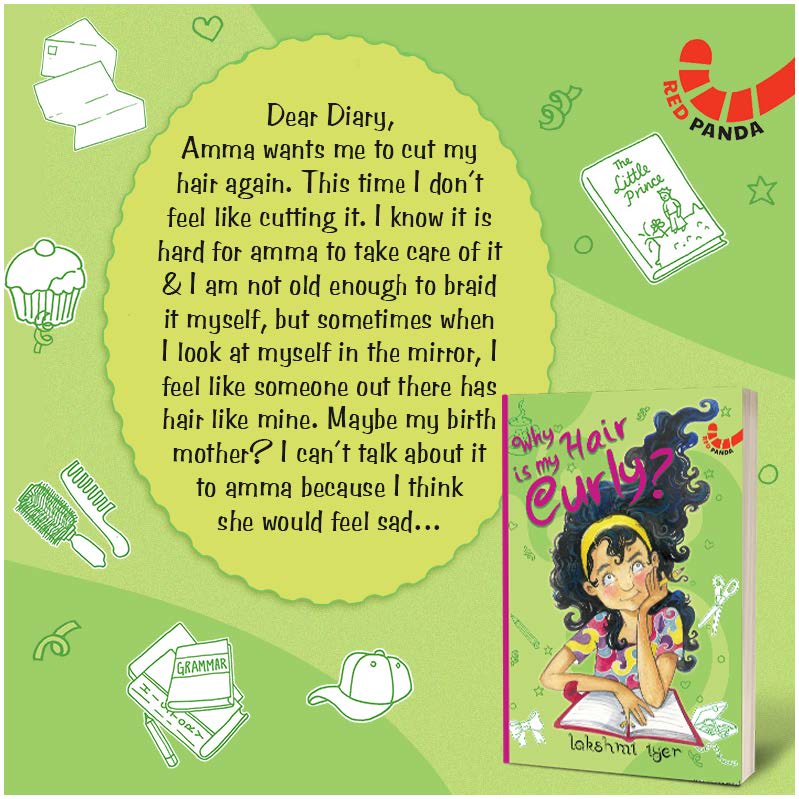
That sort of limitation in thinking only came as we grew up and saw for ourselves the inequity of opportunities. I am grateful, of course, to see a book in which a child refers to their mother as ‘Amma’ as we do at home. (Why is my Hair Curly – by Lakshmi Iyer)

Or see that picnics can involve rotis and potato curry, and not just sandwiches. But I am more grateful for the reach of fairy tales. They provided a much-needed element of magic and hope. 

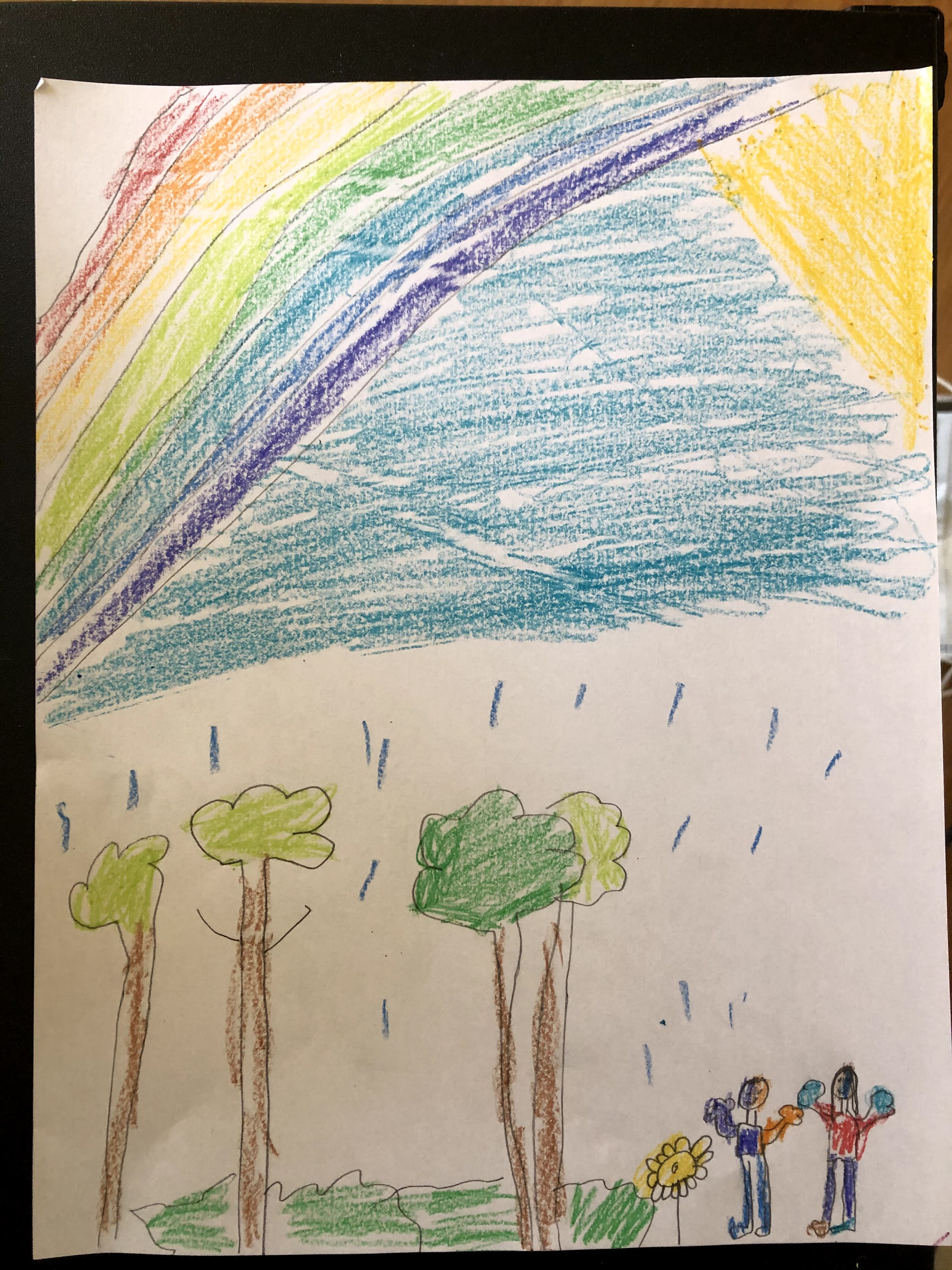
As children, the inhibitions of things like race, creed and color are not there. I fondly remember the picture drawn by the son in kindergarten when his teacher had told all children to have more colored people in their illustrations. He had drawn all their faces rainbow-colored 🙂 

The Egg That Got Back Up!

Every now and then, a children’s book arrives that makes one sit up and relish the simple genius of it. 

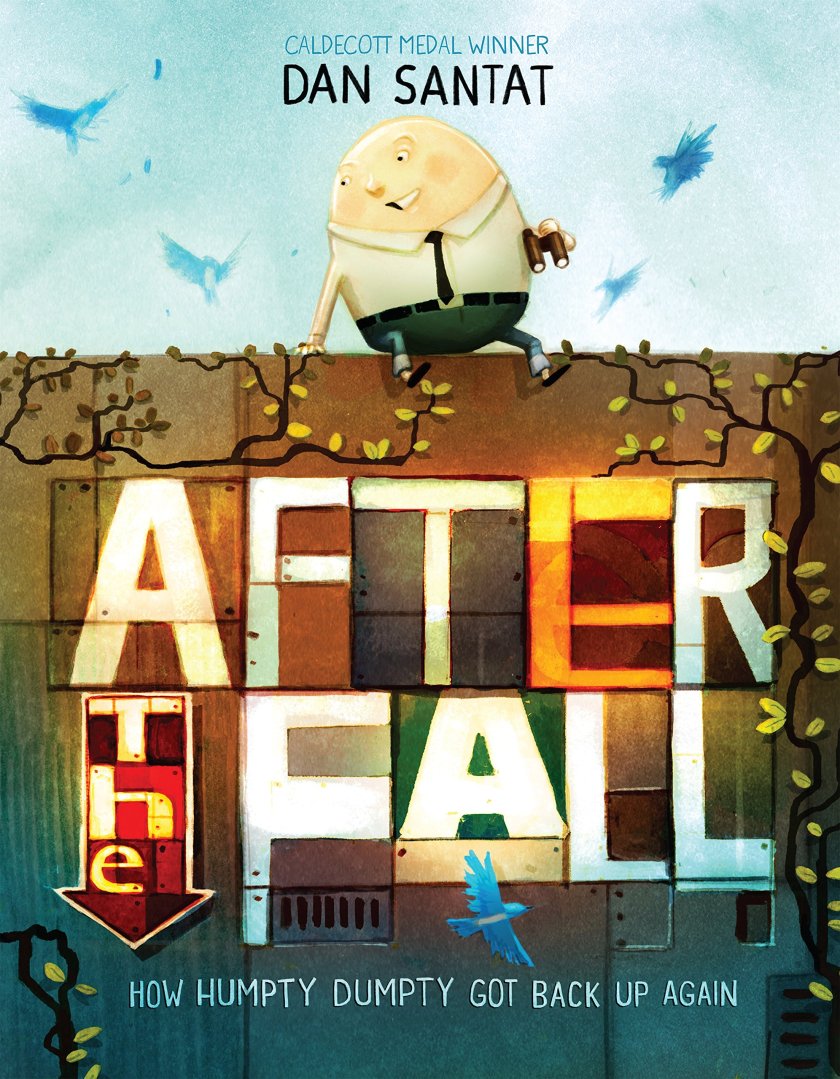
“After the Fall : how Humpty Dumpty got back up again” is one such. Written by Dan Santat, it went on to win the Booklegger Award.

humpty_dumpty

We all know Humpty Dumpty sat on a wall

We all know Humpty Dumpty had a great fall

But ….

Do We all know that all the king’s horses and all the king’s men 

Did put Humpty Dumpty together again?

The book starts off with the ‘Great Fall’ that poor Humpty Dumpty is famous for.

But something happened to the Humpty Dumpty who was put together again. He developed acrophobia (a fear of heights)

The illustration accompanying this is brilliant. Notice the cereal boxes in the bottom shelf? Bo-rings, Cardboard, Grown-Up Food, Bland 

humpty_dumpty_1

Compared to the all-so smile inducing Choco Duck, Rainbow Bites and Pirate Crunch occupying the higher shelves.

But one day, Humpty Dumpty is inspired – if not to fly himself, at least to design a paper plane that can fly like his dreams.

But accidents happen as Humpty Dumpty knows, and how Humpty Dumpty overcomes his fear of heights to morph into The Egg Who Got Back Up and realized far more than he had ever expected is a story that will leave you inspired and smiling.

humpty_dumpty_2

A sublime change, and a very relatable tale of living:  living with fear, and living with hope, and living with the faint possibility of overcoming our fears is what the book is all about. And isn’t that enough?

Isn’t that all we all yearn for in our lives?

That hope that we can overcome our own selves and go on to inspire ourselves beyond our wildest dreams?

humpty_dumpty_3

🐶🐾🐕 Spot Goes Splash! 🐶🐾🐕

“Don’t even think about it!” I said almost casually. I had the son in my peripheral vision as I took in the gorgeous sunset, played (s)word volley with the daughter, and screwed up my face at the husbands unnecessarily loud enjoyment at the latest the daughter had said. 

“Oh my gosh! Did you see that? She totally knew what he was going to do!” The daughter laughed half-admiring, half-worried.

“Like it’s a big surprise. Sprinklers going off and spraying cold water on the lawns, and your brother loping towards it as if without a conscious thought?! Right.” I drawled.

“I mean – look at him, I bet he’s still going to try.”, she said and I laughed. 

The subject in question, meanwhile, was wracked between playing the rebel and getting himself wet or making a joke and having a comfortable walk the rest of the way. It was a lovely summer evening – this close to the summer solstice, everything is a joy and the daughter agreeing on coming for a walk clinched the evening. So there we were.

“How’d you know he was going to try and run into the sprinklers?”, she pressed.

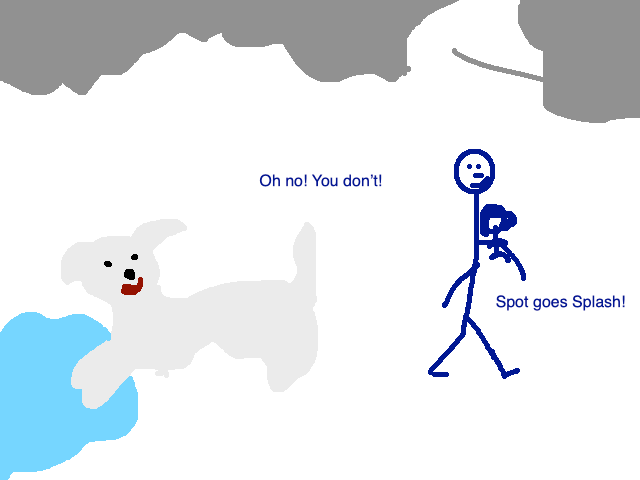
“Well – I raised you, remember? “ Then, looking at the husband, I shuddered a bit and said “Remember that New York trip? What was that book we’d read to her? Spotty loves the rain? Or Spot like to go Splashing? Spot Goes Splash! That’s the one.

spot

“A book about a little pup that loves to splash about in rain puddles. It rained for the entire duration we were in New York that visit and you were two years old! You thought you were too big to sit in a stroller, and we knew you were too heavy to carry around. Still – I had only 1 pair of shoes for you. Appa carried you on his shoulders almost the whole time to save us all the trouble. His shoulders have never been the same!” I said giving him a squeeze and a look that said, “My Hero!” 

spot_goes_splash

“Gosh! Now there are some parenting gaffes I’ll keep away from!” Said the daughter. She prides herself on being – well whatever teenagers who think they are better than their parents pride themselves on. 

The husband rolled his eyes and guffawed at this so loudly, that a pair of doves took flight squawking alarmingly. That got us all laughing, and he said, “Ha! Just for this – we’ll accompany you when you have your little ones and just stand around and laugh pointedly instead of helping.”

“I’ll write it all down so we remember to do that!” I said laughing helplessly as well.

Her brother, in the meanwhile, had opted for a compromise between running full-pelt into the water sprinklers and had splashed in the water puddles nearby instead and was trying to hide how uncomfortable wet sandals were. 

The summer solstice made for an elongated sunset and we took the time trying to see how a thread from the past could stretch into the present and be used in beautiful circle of life years later.

Spot Goes Splash!

Life is Elementary

It is when I look back upon the past few years as an adult that I realize how much I have enjoyed the elementary school years of the children. The immigrant experience enriched this time in my childrens’ life for me. I am also extraordinarily grateful for the fact that the schools allowed us to volunteer in the PTA, classrooms and as chaperones during field trips. It gave me a glimpse of their lives with their friends. A chuckle, a phrase filled with colloquial nuance, or just jokes that don’t mean anything to anyone but themselves were all welcome windows into their lives. 

I have had a wonderful 12 years of elementary school to enjoy thanks to the age gap of the children. My younger one finished elementary school this year, and now, I feel bereft. There is a little part of me that wants to cling to the innocence and optimism of elementary school. I have always been a clinger – to good memories, to possibility, to energy. 

I am also constantly trying to reach for that infinite sense of possibility and curiosity of children. Even if it is hard. Especially since it is hard. Maturity is all very well – but I am not sure I like its jaded companions: caution and realism / pessimism, very much.

Even though the son’s elementary school years were fragmented and bizarre – thanks to the Covid years in  between, the children themselves adapted beautifully.  

It is in elementary school that the children were happy to see their parents volunteer in their classroom, come on fields trips with them etc, and I loved it. I took every opportunity to interact with young minds and always came far more refreshed than I expected. It is especially easy when the children’s teacher is around, for the children listen to their teachers and behave marvelously. All one has to do then is show up and take in the joys. 

image

I got to read stories, articles, and excerpts from books to the children, and these have been some of my happiest memories in the classroom. I shall be forever grateful to it. Even as a teenager who taught in school during my summer holidays, this story-telling aspect of it has been a joy. I pray that I continue to get these opportunities.

“You aren’t just given happiness, you have to pick it up here and there all through the day.” 

Miss Read, Fresh from the Country

🌲 A Nemophilist’s Booklist🌲

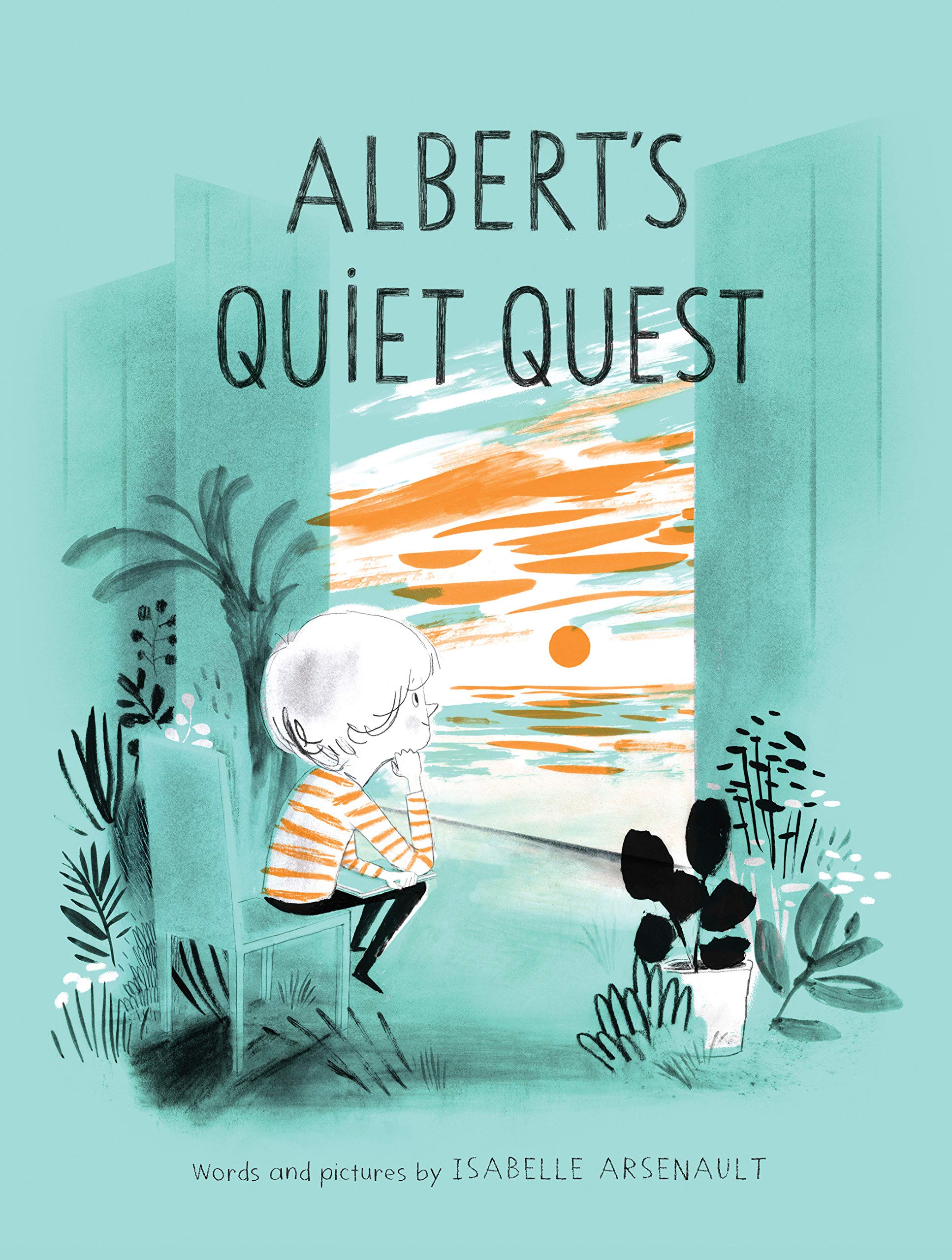
One quite understands Albert in his quest for quiet. The poor fellow leaves his noisy house, goes to the beach, but people follow him everywhere. He has pups to keep an eye on, friends who want him to help build a sandcastle, but all Albert wants to do that day is read quietly. Finally, he does get all his furry and non-furry friends to join him in his reading, and he gets his quiet read after all.

916T1yLB95L

The preceding week the son captured the feeling perfectly when he said, “Wow! It is only Tuesday! I thought it was Thursday.” 

As the week wore on, I thought wistfully of that half marathon run through the forest a couple of weeks ago. Was it only a few weeks ago? Why hadn’t I walked the whole way – enjoying the new shoots of ferns, the ring of trees, the fresh green leaves against the older darker leaves? Still,  it was easy to remember the forest, and immersion in a forest seemed like a wonderful option. I said as much to the son and he rolled his eyes, but agreed that it would be a wonderful idea. 

img_5125

So when the week-end finally rolled around: we did the next best thing: went to the library and picked up a few children’s books that could get us a peek into their leafy pages. 

There truly is nothing that can come close to actually being in the forest. 

Enjoying the breeze – that unique sense of air molecules that just passed the canopy above flutter past you

Admiring the community – that feeling the interconnectedness of the ecosystem that holds the forest together, the mycelia, fungi, birds, squirrels, insects

Being in the presence of creation – that feeling of awe that only the artistry of creation can bring

All of that is part of the old magic of the forests.

Some authors manage to capture a tiny part of these aspects through their illustrations, words, and phrases. 

  • A Whiff of Pine and a Hint of Skunk -by Deborah Ruddell, Illustrated by Joan Rankin
  • Redwoods – by Jason Chin
  • In the woods – by David Elliott ; illustrated by Rob Dunlavey 
  • The perfect tree – by Chloe Bonfield 

The last book, The Perfect Tree was really a perfect book if one wanted to lose oneself in beautiful thoughts of trees. How does one find a perfect tree? The woodpecker thinks the perfect tree is his own, while the squirrel finds his own tree filled with his secret stash of berries and nuts is the perfect one. A soft smile spread across my face as I flipped through the pages. 

Screen Shot 2023-05-24 at 4.59.08 PM

To spend time in a forest is to spend time with your soul. To see the blues, greens, yellows and browns merge together in that trick of light (Komerabi : the phenomenon of sunlight through filtering through the leaves above) is to experience luminescence.

木漏れ日: tree (木), shine through (漏れ), and sun (日): Komerabi

Hummingbirds’ Magic

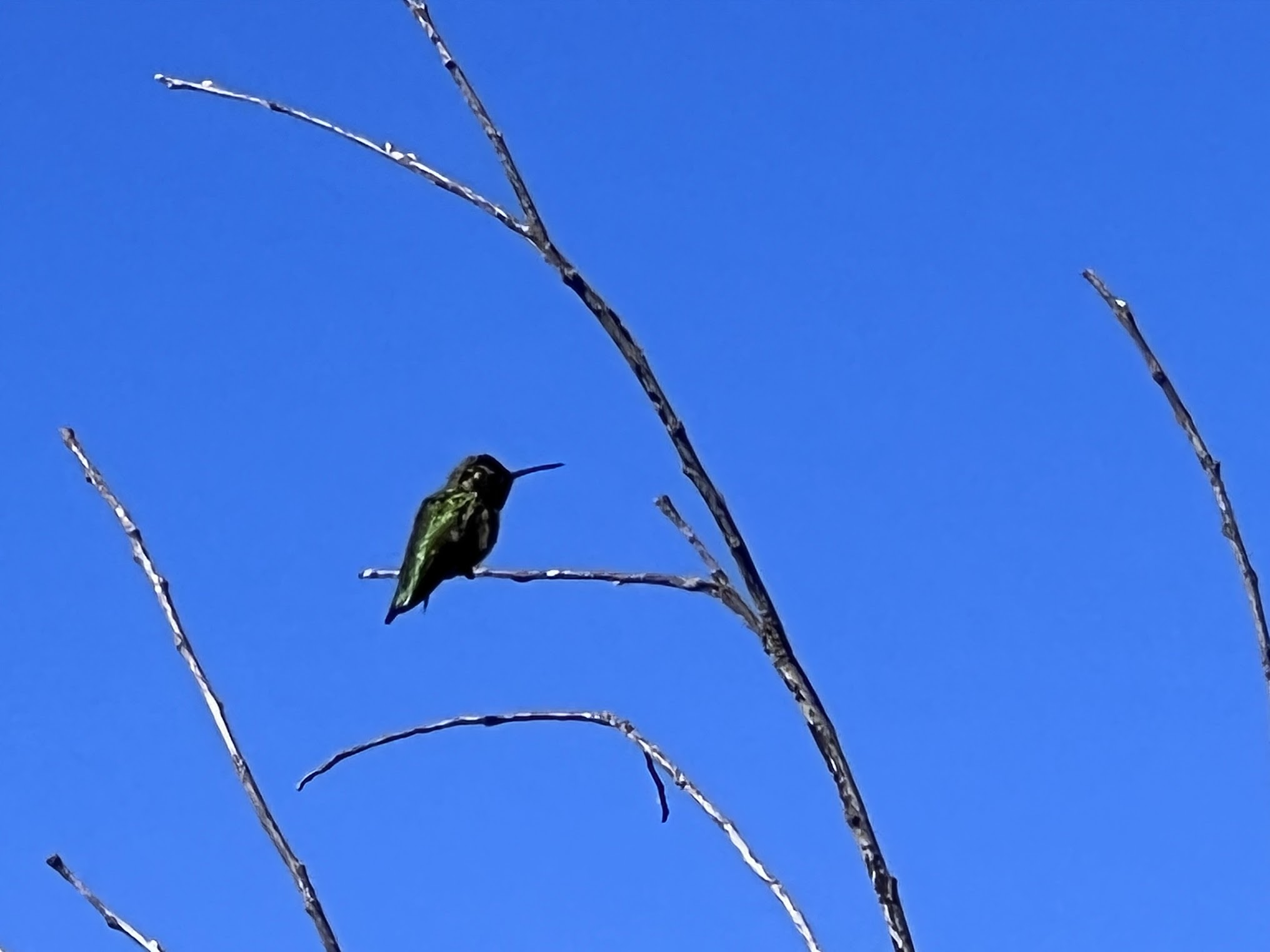
I was rushing to the car – needed to be somewhere. But the little hummingbirds stopped me for just a moment yet again. We have a few of them hovering over our lovely little lavender patch in the garden. The little bright flurries of beauty never fail to enthrall me. There is at least 1 red ruby throated hummingbird and several Anna’s hummingbirds gleaming in the sunshine with their green plumage catching the light of the day in brilliant angles. 

I am eternally grateful – both for the fact that I have these little visitors and for the ability to stop and appreciate them. 

IMG_0421

I have now stopped trying to photograph them while they flit for I find I am barely ever able to capture them with my iPhone, and my friends are far better photographers. This way, I get to enjoy the brilliant pictures and the momentary flashes of joy unencumbered by the effort of trying to capture it. 

Able to flap their wings upto 200 times a second, they are incredible long-distance flyers too. The ruby throated hummingbirds can fly 500 miles non-stop across the Gulf of Mexico during their fall and spring migration seasons.

The hummingbirds weigh only about 3 grams and therefore the term ‘more than their weight in gold’ doesn’t mean much. What they are able to accomplish with that body weight is phenomenal. Apparently, they can consume half their body weight in pure sugars and eat upto 5-8 times an hour. 

More fascinating hummingbirds facts here:

https://nourishncherish.org/?s=hummingbird

That metabolism doesn’t come easy for the little ones are hardly ever sedentary, They take a maximum of 90 seconds per break and flit almost all day long. Gathering nectar, feeding their littles ones, building their nests, and generally making the world a more happening place. 

If hummingbirds fascinate you as much, try reading this book:

My Tiny Life by Ruby T Hummingbird – written by Paul Meisel. It is a beautiful book that captures the life of hummingbirds. The book is a Theodor Seuss Geisel Honor winner and is a lovely informative little book.

0823443221.01._SCLZZZZZZZ_SX500_

🪺On May 15th a tiny hummingbird hatches from its egg, and thus starts our marvelous journey with the little bird as it learns to fly, mature, meet and greet its fellow humminbirds and eventually enhance the circle of life by having its own little family to nurture and nourish.

🕊By June first week, the little ones in the nest are ready to fly with their mother, in a flurry of wings, and a soaring of tips. 

“Up, down, backward, forward!” 

🪷 By the first week of July, the bird is getting territorial and fending off its fellow hummingbirds. (Pic from the book, My Tiny Life – by Paul Meisel)

img_4021

🚁 By the last week of September the birds are getting ready to migrate before they return in March, sometimes flying upto 18 hours non-stop to get back home where its journey started a year ago.

The illustrations and content is marvelous and once again, I am enamored by artists able to capture the magic of light and movement in art. (Sample pic inserted above to get a feel of the beautiful imagery in the book)

Paint the Wind

Paint the Wind – By Pam Munoz Ryan

The book starts off like most children’s books do, by taking the parents conveniently out of the way. In this one, the parents are killed off in a freak accident and the child, Maya, we meet at her paternal grandmother’s house leading a dull, orderly life in which there is no place for frivolity, laughter or joy. Her grandmother dies and the young child finally gets to see her maternal side of the family who were held in such disdain by her pat. Gran that she does not have any recollections of them.

Of course, all this is meant for us to feel for Maya and hope her life turns around and she gets to enjoy life in her time. She does. 

I don’t know why books do that. But they do. 

The book is a story of how Maya finds herself while finding the horse her mother adored a decade ago. The horse, Artemisia, is now a wild stallion who broke free from her aunt’s ranch and joined a stud stallion, Sargent, and became the leader of the herd. Some wisps of wisdom offered up here and there make the sweet story likable. 

🐎 “With horses, it’s not the biggest or oldest who is the lead. It’s the horse who has the confidence to guide the family in times of danger, who has knowledge of the land and knows the routes to safety, who is herd smart and can make alliances with other mares and keep peace. Some mares have the ability. Others don’t. Think about great human leaders. They have many of the same qualities.”

Pam Munoz Ryan – Paint the Wind

🐎 “When the horses run against the wind with their manes and tails flying, I think they look like fleeting brushstrokes of color.” 

Pam Munoz Ryan – Paint the Wind

I have never had the opportunity to photograph a field of racing horses, but I have admired them. Their power and strength seeming to include the environment around them. I remember pulling over on a whim in Iceland where a field full of Icelandic horses offered us their manes to pat. It was easily the highlight of the trip for the daughter. I hope she remembers the way her face lit up when one nuzzled up next to her. 

I have to admit I chose the book because I saw Artemisia on the blurb. That was the name my daughter wanted to name her horse who was secretly a unicorn, and only reveal itself to her. I miss the innocence of her beliefs and the determination with which she loved her book horses. She read American Horse Diaries, watched My Little Pony, though her favorite was The Secret Unicorn. 

So many little tidbits that I’d listened to with fascination when the daughter as a little girl told me came back: #horsemagic

🐎 The color of horses: Audubon (light tan) dun, bay (red-brown) 

https://horseracingsense.com/12-common-horse-colors-patterns-pictures/

🐎 The different strides and their names: trotting, canter, gallop , lope

🐎 Horsing vocabulary such as Remuda: a herd of horses on a ranch

All in all, it was a wild journey into the canyons with a little girl and her horse. We all belong on Earth and there are so many ways in which we can find that feeling. Our attraction to nature, this planet’s nature, is one of them. 

We, The People; On This, Our Earth

One evening, the son and I were milling around the kitchen making dinner. It was one of those rare evenings for no reason. Like a short pause between tides. The winter months fading and yawning before waking into energetic spring. The son was working on a school project on Egypt on the dining table while I pottered around with the onions and spices chattering of this and that. 

These are some of my favorite times. 

Finally, the curry simmering on the stove, I went and sat by him at the dining table peering into his notes for the project. 

He had done a sincere job, researching diligently and writing more notes than was required. That made me proud of him and I said so. He smiled and then it turned into a grin, and asked, “Shall we watch TV today then? Just today – you know as a gift?” The little rascal!

I threw my head back and laughed, almost ready to yield. What else was there to do? It was rainy and dark outside. School work done, just the two of us at home. But I caught myself in time. Somehow, it did not feel like a good time to zone out in front of the Television. This rare, quixotic feeling of solitude in each other’s company. So, I shook my head and said no. I saw the twinge of disappointment in his face anticipating indulgence just a moment ago, and said, “How about we read something interesting and funny out to each other?” I said pointing to The Thrifty Guide to Medieval Times – A Handbook for Time Travelers – By Jonathan W Stokes.

He agreed enthusiastically – and I loved him for it. A petulant fuss would’ve ruined the evening. This carefree acceptance of an alternate plan was amazing.

I started reading about Doctors in Medieval Europe and we both shuddered a bit. The book was written in a manner that was just enough gruesome and just enough brevity to stave off utter misery, and a good deal of humor where you least expect it. So, we had a good time rotating dismay, shock, horror and laughter in turns. 

On our recent trip to Europe, there was many a time when the mind wandered back a few centuries to Medieval Europe. While we stood there admiring the relics and artifacts saved from those truly Dark Ages, I remember thinking how we were able to passively look at the best of the Dark Ages through a museum visitor’s lens. Setting aside the utter misery of the times. Art truly did pull humankind through those times if only by a shred. 

I remember a passionate History teacher from our school days who told us about the Dark Ages, Crusades, the endless years of disease and religious warfare. As children these were disturbing. But they were also distant echoes from the past in a geography barely imaginable by school children in the South of India at the time. Many of us had never traveled past our own country or state. 

But as life went on, I understood more and more of the horrifying acts of evil that humankind is capable of: the Dark Ages become a euphemism for unspeakable things. We had heard of witch hunting but when one finds out that Pope Innocent was responsible for making it a bloody sport and sent 1000’s of innocent women to their shrieking deaths, what excuse is there really for religion or piety or righteousness?

A Handbook for Time Travelers – By Jonathan W Stokes

medieval_times

Over the next few evenings, we followed a similar routine. We read about 

  • Jeanne de Clisson – the French pirate nicknamed the Lioness of Brittany, who you definitely want to steer clear of, if invited to dinner at her place.
  • The brutality of Genghis Khan – there truly are no words, though there are thousands of words written about him.
  • Marco Polo and his explorations that gave many people a breath of fresh adventure and unheard of places – a little bit of magic in their otherwise terrible lives. 
  • The ferocity of Attila the Hun
  • The deadly female fighters of the Middle Ages
    • Blance of Castile, Queen of France
    • Countess Pertonilla of Leicester
    • Nicola de la Haye
    • Empress Matilda
    • Melisende, Queen of Jerusalem
    • The Order of the Hatchet 

It sometimes takes books such as these to journey to another horrible time and space in order to appreciate what we have now. I was grateful for that. 

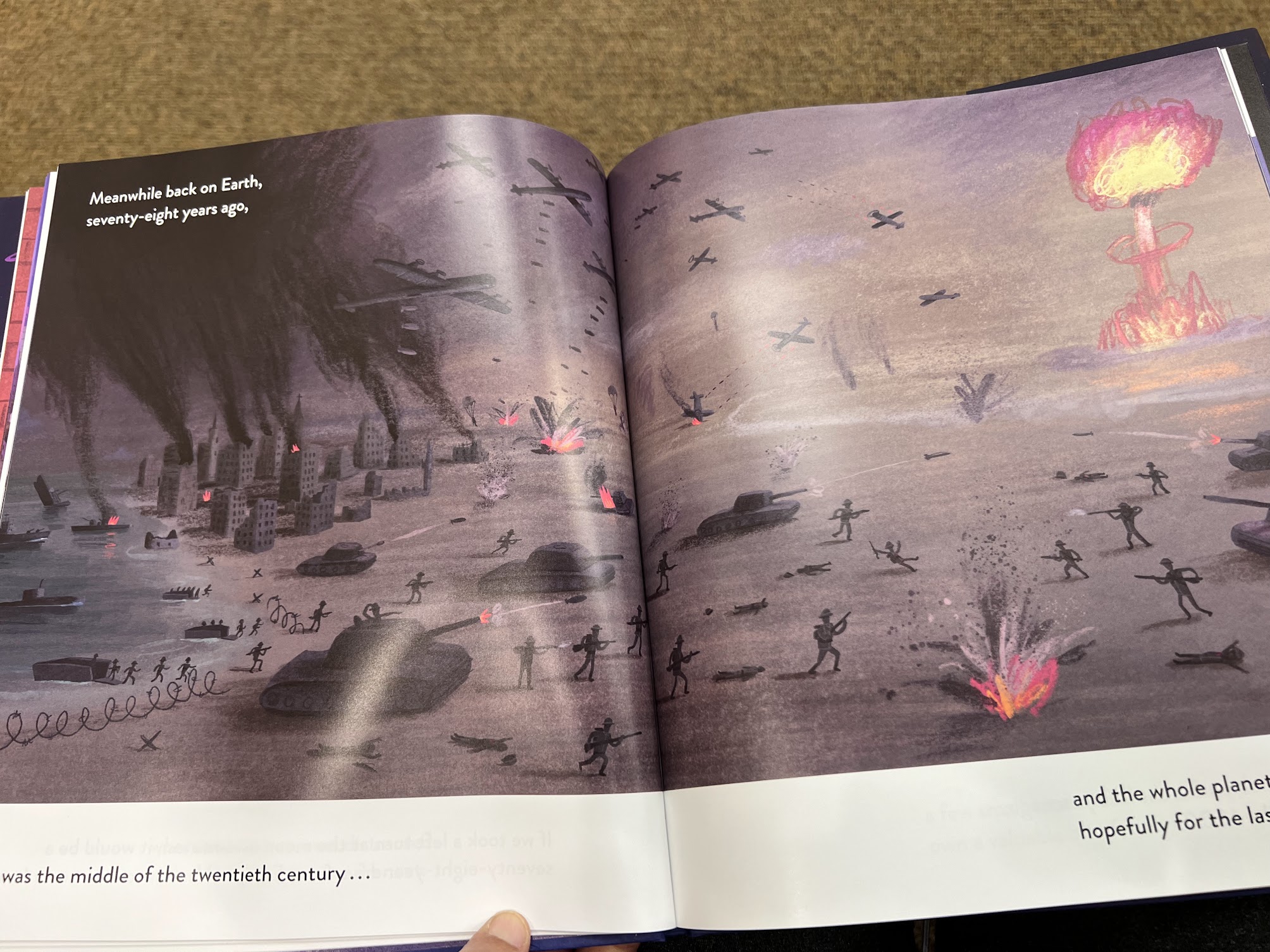
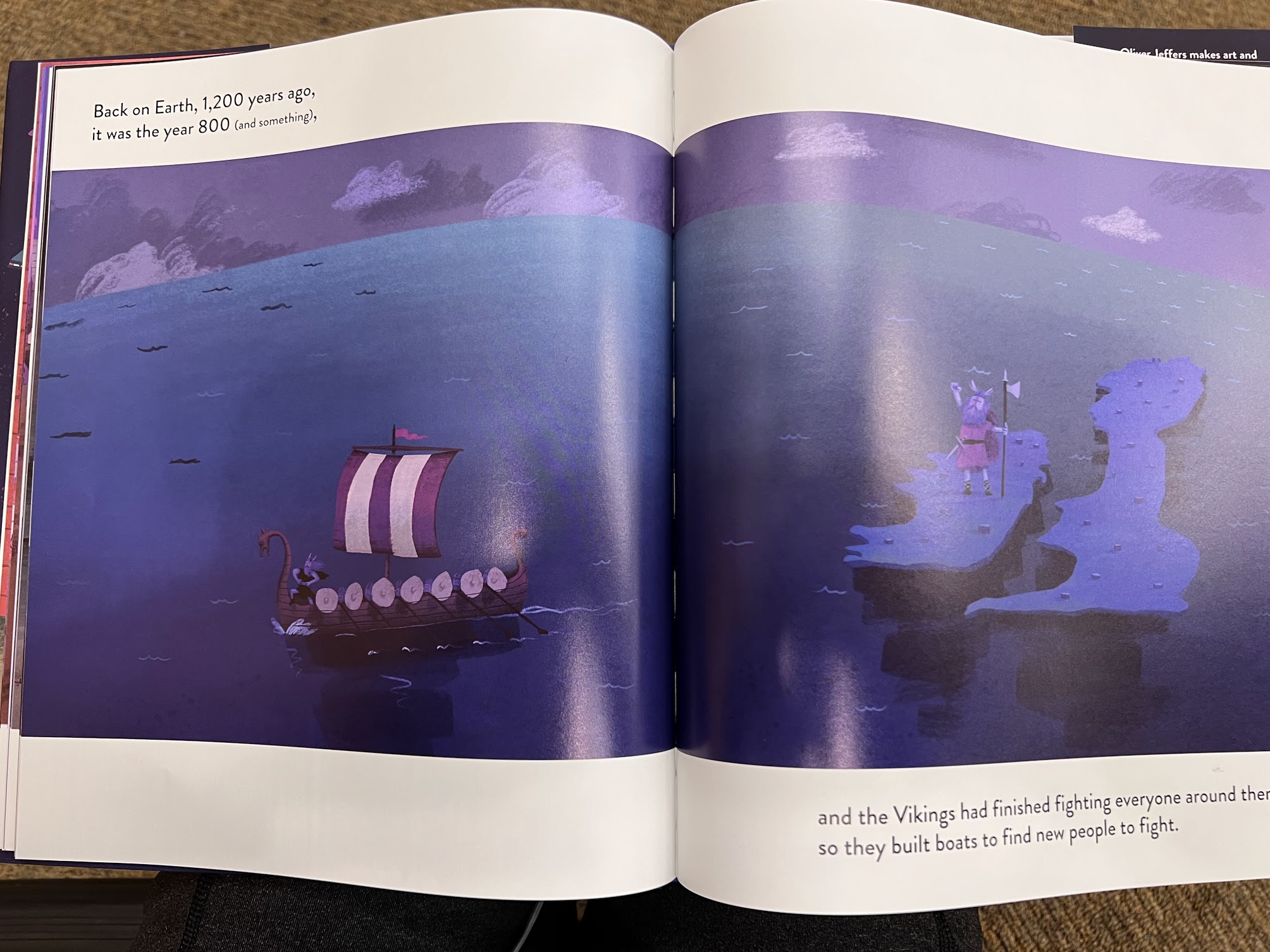
It also reminded me of the children’s book, Meanwhile Back on Earth . . .: Finding Our Place Through Time and Space

back_on_earth_cover

  • 1000 years ago – when there was a conflict between x and y
  • 500 years ago – war between rats and zebras
  • 100 years ago – war between everyone

The history of our planet in conflict. It makes for sobering reading, but along with Oliver Jeffers’ artwork, a required reading too.

back_on_earth_2back_on_earth

“Nice to see what all we did in spite of all the fighting huh?” , said the son, pointing to his project on Egypt, and pulling me back from my thoughts. He had written about the culture, ways of life and the many achievements of the ancient Egyptian civilization, and I nodded. We truly are a species worth studying. The sheer potential for good. The very qualities of good fanning our bad:  ambition for instance. 

How do we constantly remind ourselves that we are remarkable in our creative quests, and not use it for anything destructive? But don’t they go hand-in-hand? I peered at the dancing Nataraja statue in the home symbolizing just that, and felt very humble indeed. Nothing new. We are all just discovering and learning. Just figuring out how to belong on our Earth.

The Heart As a Compass 🧭

My heart is a compass – By Deborah Marcero

Screen Shot 2023-02-07 at 6.40.40 PM

Here is a book that spoke to the very depths of the child in me. I am sure many of us have spent time with just this sort of activity, and may be not with such fantastic results to show for it. 

I distinctly remember :

 ❅ ❄️❆  Drawing snowflakes of every shape I could fathom ever since I learnt that every snowflake was different. Considering I had never seen snow, that seems like a pretty bold endeavor, but that right there is the charm of childhood and imagination. I am not sure if I would like to find those pages of doodles now – the memory of those warm afternoons is more beautiful than anything I could’ve conjured up. 

🍃🍀🍁The shapes of all the different leaves. The leaves themselves dried and carefully preserved within the pages of books. All that remains now is the memory of this precious activity and of course the inestimable happiness of afternoons spent drawing the beautiful shapes into notebooks, after the glorious wind swept mornings collecting them.

🌷🌺🪷The nosegay bouquet of wildflowers plopped into brass vases that spotted the house. How could one not look at that and remember the ladybugs clinging to the leaves, the spider webs wet with dew, the scents of eucalyptus that decades later can still send one back to the beautiful countrysides scented with the fresh rain against the eucalyptus trees?

It is always a marvel to me how our mental maps form around these seemingly innocuous objects. The raspberry bushes by the little cave, the eucalyptus trails by the deserted bridge. If only, we had the foresight to etch these into little maps like the lovely little girl in My Heart is a Compass does. What a treasure that would have been?

The book starts off with a young girl wanting to show her most precious innovative unique possession for show-and-tell. But what is it?

Could it be a trip to the stars?

Or a dive into the wonders of the ocean?

Or a marvelous hike through the enchanted forests?

Screen Shot 2023-02-07 at 6.41.01 PM

Pic from her preview on Amazon

By the end of the book, Rose wants to showcase the very best things in life for her friends to see. So she comes up with a marvelous map with the most wondrous her imagination can come up with. (Which can be the most beautiful or the most terrifying, and in this beautiful book is nothing but intriguing and promising)

I set the book down and wondered again why that beautiful feeling of childhood curiosity and the tendency to look at the world as a magical mystical place wanes with time. The imaginary overtaken by reality, knowledge overtaking intuition, logical vs emotional. Our heart is a compass, and in an ideal world should lead us towards happiness. 

In the long journey of life, if only there was a tonic to never lose that wonder, but constantly add to it, how marvelous the adventure of living would be!