The Curious Curvy Trees

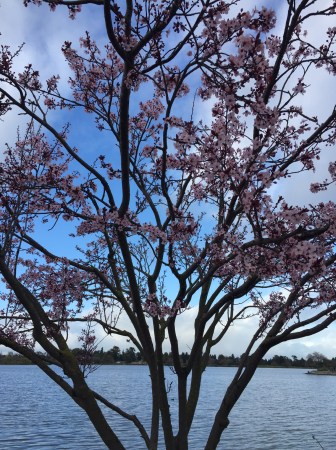
Regular readers know that I enjoy reading children’s books. Recently, I read one called, A Curvy Tree, that examines the problems of being different and lonely. In the book, a curvy tree soothes the feeling of a lonely child being teased for being different by taking its own example, and how being different saved its life, for loggers could not find a use for twisted wood, and therefore left it alone. When the girl asked whether the tree felt lonely, the curvy tree lifted her up high on its branches to show her other curvy trees in the distance all left alone by loggers, and on top of these trees were other children probably equally lonely who only need to find each other for company.

Screen Shot 2016-12-06 at 1.49.20 PM.png

Looking at the bristlecone forest, it seems that the Bristlecone trees, followed a similar path for survival. Hardy beings that only thrive in harsh climatic conditions, there is yet another lesson from nature in these forests: It is okay to be different.

https://en.wikipedia.org/wiki/Bristlecone_pine

As the car nosed its way up to the Bristlecone National Forest, I was peeking into a copy of ‘Into Thin Air’. It was snug inside the car, though the temperatures outside were steadily climbing down as the car climbed up. Reading about the Himalayan expedition to climb the Mount Everest that went awry was humbling and an apt read at high altitude.

inyo_bristlecone.JPG

No amount of pictures or descriptive writing can do justice to the feeling of being among the oldest known living beings in the World.  Looking at the shapes of each of these trees, it was easy to let our imaginations run in wild directions. Each tree was shaped like a fantastic creature and one could well imagine them lending support to each other and sustaining their lives through the fury of nature and the upheavals of time. Each one probably gets themselves up every now and then and transforms their shapes, and each has a spirit of their own that lends a character to their surroundings. Maybe these are the hieroglyphics of the universe that hold answers to the questions deeper than mankind can ever think off, and we don’t yet know. Even in our wildest imaginations, we are constrained by our limited intelligence and the expanses of our problems, including those we manage to create for ourselves.

curvy_bristlecone.JPG

The walk amidst the ancient bristlecone forest was our first high altitude hike as a family – The toddler son was wearing his new snow boots, and was behaving like John Muir in them. He thumped up and down exploring the hauntingly beautiful bristlecone trees, looking curious and wondering how they could be older than his grandfather. “Not just your grandfather little Dobucles, “, said his older sister in a tone of voice she uses to enlighten her lil brother of the ways of the world, “but your grandfather’s grandfather’s grandfather’s grandfather’s grandfather’s grandfather’s….”

I let him wander on looking amused, till some gusts of wind buffeted us.  On a high mountainside, a gush of wind is enough to topple toddlers as I well know from experience. I was not even a toddler when I was blown off by the wind, I was in a respectable third grade when that happened. I injected a note of caution into the proceedings by reigning the toddler in only to have the daughter scoff that adults are paranoid. This is where ‘Into Thin Air’ helped me. I told her about how many people have gone within 300 m of the great Himalayan peak only to return because the elements would not allow them to proceed. I tried my best to describe how nature can be awe-inspiring but how in one moment we can be reduced from arrogant, competent, self sufficient humans to ones thrown about at the behest of nature. I don’t think I succeeded very much, and so nature decided on showing us herself the very next day.

Somehow, with the sun throwing brilliant purple, orange and pink patterns into the sky, the wind gently rustling the hair peeking out from under our caps, and the bristlecone trees lending an almost immutable background, the scenario of a snow storm seemed far-fetched, almost ludicrous. If this is high altitude, how bad can Everest be? seemed to be the general consensus.  That night, we bravely attempted hikes at 21,000 feet, safe in the comforts of modern housing while eating hot biriyani.

Oh Snap!

I attended a conference last week, a vast sprawling area brimming with people having an analytical bent of mind, or at least that is what they do for a living.

It was wonderful, for many reasons: It not only provided a good change of pace for me, but it also helped me cope with the post election disbelief by observing vast numbers of people from different parts of the country.

Before one of our trainings, our instructor put up a hashtag on the screen and requested everybody to tweet with that hash tag, so we could analyze the data coming in for that hashtag for the exercise.

For our convenience, he was also streaming the tweets as his code picked them up. For a hall containing at least 200 people, the tweets were trickling in. 5 and then 10 and then a plateau. After some time, another few.

The instructor then showed us how he was going to analyze this data and when he tried to pull up the dashboard he had created for the purpose of the training, the server went down. As it turns out, the instructor was embarrassed, obviously, that his carefully prepared presentation ran into a glitch in this uncharacteristic manner, but he had a Plan B, and going by the way he conducted his training, probably had Plan C, and D. Competence and Determination. He took a derogatory stab at himself, got a laugh, and moved on. He chose instead to recreate the dashboard from scratch, so we all get to see how it is done, instead of showing us the finished product.

The person right next to me, pulled out his phone though, and tweeted the hashtag almost instantly saying “#Hashtag Demo not working. Not Cool.” I was sitting right next to him , so I could see his tweet. I also remembered that he had not tweeted when the instructor asked us all to tweet so that he could get a dataset, but when it came to calling someone’s failures out, he was more than willing to do so.

That is human nature. We all suffer from it. So, I am not blaming this person by any chance, but rather hoping to use this as a call to introspection. Are we so quick to judge that we are losing our ability to empathize just because we now have the power to quickly voice our opinions? That could have been us fumbling when the server went down unexpectedly, couldn’t it?

I was reading an article in which President Obama warned us in a similar manner about snap judgments that social media enables us to make:

Obama, without directly naming Trump, appeared critical of the political discourse in the United States, saying social media has made it easier “to make negative attacks and simplistic slogans than it is to communicate complex policies.”

Obama-Merkel issue joint rebuttal to the coming era of Donald Trump

Every tool has its place, but if we attempt to mow the lawn with a kitchen knife, it will not work. I cannot help thinking of our gardeners, who in my mind have magical abilities, get things done quickly and efficiently, while I blubber and fly rudderless because I do not use the right tools for the job. (Divine Intervention of the Gardening Gods)

mow_the_lawn

Now is the time for all of us to tap the critical thinkers in us, to read extensively, to seek the truth and take up the job of providing a voice of reason. All of us know how distorted our consumption of information can be. Sites like Snopes.com have their work cut out for them in the age of social media.

Snopes.com Check Facts!

P.S: I loved Angela Merkel’s measured response to Trump’s victory:

Angela Merkel in her note to Trump offered cooperation reiterating that cooperation should be based on “a common platform of democracy, freedom, advocacy for human rights all over the world and championing the open and liberal world order.”

After all, we all may have to pack up and go to different planet soon (in which case we are all in the same boat regardless of race, creed or gender.)
Stephen Hawking’s prediction that humans have at best 1000 years in which to find another planet to inhibit

If

We had been to the East coast to gulp in the beauty of the fall colors before the trees were stripped bare for the Winter. I marveled at the beautiful tapestry that nature had laid out for us. The greens, golds, yellows, rusts, oranges, reds and browns blended together beautifully to please the eye. The same patch of forest looked beautiful in the different lights of day. The color of the skies above, the intensity of the sunlight, the shadows of the scudding clouds above, all painted marvelous pictures and nature soothed in a way that it has always done.

A forest is beautiful to look at. A forest in fall colors is brilliant to look at. The diversity in colors is mind boggling, and it all pieces together beautifully in a marvelous tapestry. It is the differences in color that make it glorious.

An artist’s palette is made more vibrant with different shades.

As much as we all like everyone to be like us, it is the fact that we are different that makes the world a beautiful place. It is the disappointments that should propel us forward.

I am distraught at the person America has chosen as its President elect. I am trying to find solace in the words of Carl Sagan on Earth:

Look again at that dot. That’s here. That’s home. That’s us. On it everyone you love, everyone you know, everyone you ever heard of, every human being who ever was, lived out their lives. The aggregate of our joy and suffering, thousands of confident religions, ideologies, and economic doctrines, every hunter and forager, every hero and coward, every creator and destroyer of civilization, every king and peasant, every young couple in love, every mother and father, hopeful child, inventor and explorer, every teacher of morals, every corrupt politician, every “superstar,” every “supreme leader,” every saint and sinner in the history of our species lived there-on a mote of dust suspended in a sunbeam.

screen-shot-2016-11-14-at-1-56-32-pm

Now, more than ever before, is the time for all of us to come together and become heroes in our own ways. I felt this was the right time to read Rudyard Kipling’s poem ‘If’ to the children.

If you can keep your head when all about you   
    Are losing theirs and blaming it on you,   
If you can trust yourself when all men doubt you,
    But make allowance for their doubting too;   
If you can wait and not be tired by waiting,
    Or being lied about, don’t deal in lies,
Or being hated, don’t give way to hating,
    And yet don’t look too good, nor talk too wise:
If you can dream—and not make dreams your master;   
    If you can think—and not make thoughts your aim;   
If you can meet with Triumph and Disaster
    And treat those two impostors just the same;   
If you can bear to hear the truth you’ve spoken
    Twisted by knaves to make a trap for fools,
Or watch the things you gave your life to, broken,
    And stoop and build ’em up with worn-out tools:
If you can make one heap of all your winnings
    And risk it on one turn of pitch-and-toss,
And lose, and start again at your beginnings
    And never breathe a word about your loss;
If you can force your heart and nerve and sinew
    To serve your turn long after they are gone,   
And so hold on when there is nothing in you
    Except the Will which says to them: ‘Hold on!’
If you can talk with crowds and keep your virtue,   
    Or walk with Kings—nor lose the common touch,
If neither foes nor loving friends can hurt you,
    If all men count with you, but none too much;
If you can fill the unforgiving minute
    With sixty seconds’ worth of distance run,   
Yours is the Earth and everything that’s in it,   
    And—which is more—you’ll be a Man, my son!


When the materialistic society around us automatically glorifies money, we can use the moment to say that money does not equal dignity, money does not beget culture, money may earn you servitude, but not loyalty.

And point to the example in The White House.

Who Am I Revisited

I have been featured in The Times of Amma.
The editor , Shweta Ganesh Kumar, an author and a former CNN correspondent, sent me a questionnaire in interview format to fill out – all very official and intimidating it was, till I applied my usual tactics.
Parts of this ‘Who Am I’ answer is also there in my Who Am I ? post which was easily accessible before I changed the blog format in a stroke of brilliance.
The Times of Amma says: Today we feature Saumya Balasubramanian who blogs on Life, Humour, Books, Nature, Children, Adventures and Travel.
She also sent me one of the most interesting bios, I have read when I asked her for one. I usually edit bios when they come in the first person, but this was written so engagingly that I am publishing it here, as is.

Isn’t life a quest in finding who you really are?
Sometimes, I am a nefelibata and a pluviophile and a bibliophile and a logophile. There are dreams, passions and words floating up there in my mushroom shaped head. I love my family and friends, so when someone asks me who I am, I can barely stop myself from having this conversation:So what do you do?

Self: I think, I write, I play, I dance in the kitchen/fields/lawns/woods, I enjoy nature, I exercise, I plan, I am not scared of using my imagination, I analyze data, I code and design in the ever-changing software world, I teach, I experiment, I cook, I enjoy the company of family and friends, I sometimes talk to myself, I laugh and smile a lot.

I mean what do you do for living?

Self: I breathe. Try it. It is very good. One deep breath, fill your lungs and exhale and empty your stomach. Now try again.

I mean what do you do for A living? One thing please.
Me beaten: Fine. I am a Software Engineer and a Writer and a * Person loses interest and walks away *

I smile again.

There is always a state of flux and a number of articles, novellas, novels, children’s books in progress. It is what keeps me going, and if you are interested in reading anything of more length, please get in touch with me.I hope my readers enjoy my writing as much as I enjoy the process of writing them.

Please visit http://www.timesofamma.com/single-post/2016/10/14/Moms-Who-Blog-Featuring-Saumya-Balasubramanian for the complete interview.

Interview with Times of Amma posted here: 

1. What was it that prompted you to become a blogger?
Ans: I have always liked writing. I loved writing letters, essays, and when blogging came along, it gave me a platform and I joyfully went along. 
 
2. Which has been your most memorable post to date and why?
Ans: That is a very difficult question as I genuinely enjoy writing my posts. Some I could think of:
 
3. What has the most memorable comment on your blog been so far?
Ans: It was one of the emails one of the readers sent me after reading The Little Blue Train. The post was about the Nilgiri Mountain Railways and how we sometimes yearn for a tranquil life. In it, I mention that the train driver used to wave to my mother as she rushed down the slope to catch her train. This reader actually helped me track down the kind train driver who might have been the person who waved to my mother all those years ago. That truly touched my heart. 
 
4. Have you ever been trolled? How did you handle it?
Ans: I have been lucky enough to have a very supportive set of people and e-people around me. I will want to follow Michelle Obama’s advice though if I happen to be trolled “When they go low, you go high!”
 
5. Have you ever started to write a post and then abandoned it? Why?
Ans: More than half the time. I have a bulky document with half written posts, posts with potential and sometimes just links that I think can be used in a post.
 
6. Do you stick to a regular posting schedule or do you post whenever inspiration strikes? Do you have a writing routine?
Ans: I try to post approximately once a week, though there are some productive weeks in which the posts tumble out more often. 
 
7. Do you find it hard to get your voice heard in the crowded blogosphere? 
Ans: Yes I do. But to be honest, I have not really tried very much to have my blog publicized. I write for the joy of writing and writing has become the mode of Art I turn to to make sense of the world around me. 
 
8. Many say that blogging is dead thanks to other micro-blogging avenues like Twitter, Snapchat and others. As the owner of a traditional blog, how would you respond to that?
Ans: I would like to say that though there are more demands on people’s attention, long form reading is still relished and will continue to have its place. The human brain is remarkable and can adapt to multiple ways in which to keep it challenged and occupied. As long as the world has voracious readers, and diligent writers, the blogosphere will thrive is my hope.
 
9. Do you see your blog as a stepping stone to something else? Do you see yourself wearing the tag of ‘blogger’ five years down the line?
Ans: There are moments when I wish that the gems from my keyboard will find a magical outlet – who doesn’t? But I also know that it is a small, crazy thought. 
 
The true magical moments happen when I am swirling an idea in my head, reading about different things, connecting the dots and drawing up my little illustrations to go with the narrative. Those are the special moments that make me come back to this art form over and over again. Since I write a lot of humor based blogs, I find myself developing a muscle for it – when things are less than ideal, I think: I am going to get a funny story out of it. I find myself laughing wholeheartedly at my own foibles and troubles and if that isn’t a gift, I don’t know what is. 
 
So, to answer your question, I sincerely hope to continue writing for as long as I can.
 
10. What tips do you have for other Indian Mom bloggers? 
Ans: I hardly feel the sort of person to be doling out advice to others, let alone competent mothers. Well, if I absolutely must, then: Enjoy the journey, stay interested in life, and things will fall in place.
 
I also need a 200 word bio about you. An individual picture of you, a picture of you with your kid(s) and a screenshot of the blog. 
 
Isn’t life a quest in finding who you really are?
 
Sometimes, I am a nefelibata and a pluviophile and a bibliophile and a logophile. There are dreams, passions and words floating up there in my mushroom shaped head. I love my family and friends, so when someone asks me who I am, I can barely stop myself from having this conversation:
 
So what do you do?
 
Self: I think, I write, I play, I dance in the kitchen/fields/lawns/woods, I enjoy nature, I exercise, I plan, I am not scared of using my imagination, I analyze data, I code and design in the ever-changing software world, I teach, I experiment, I cook, I enjoy the company of family and friends, I sometimes talk to myself, I laugh and smile a lot.
 
I mean what do you do for living?
 
Self: I breathe. Try it. It is very good. One deep breath, fill your lungs and exhale and empty your stomach. Now try again.
 
I mean what do you do for A living? One thing please.
 
Me beaten: Fine. I am a Software Engineer and a Writer and a * Person loses interest and walks away *
 
I smile again🙂
 
Some of my writings have become children’s books:
 
 
Some have made their way to leading publications as articles:
 
 
There is always a state of flux and a number of articles, novellas, novels, children’s books in progress. It is what keeps me going, and if you are interested in reading anything of more length, please get in touch with me.
 
I hope my readers enjoy my writing as much as I enjoy the process of writing them.

The Cry of Natural Symphonies

Regular readers of this blog know what a pesky cricket I can be when it comes to babbling about nature. If I see one of those news articles about hippos dwindling in number, I grieve.  The day I saw a ninety foot tree logged in our neighborhood, I grieved. I had seen the number of birds that roosted in the tree every evening as dusk fell, and I felt that we lost out on all that natural chitter for no good reason.

I moon about hills and flop around pictures of beautiful Mother Earth and all that in spite of negligible botanical and zoological knowledge. Ducks and Canadian Geese I will bucket as one, hippos and rhinos I draw about the same (one with a horn and one without).

I am also one for natural sounds – I like to listen to the cascading brook or the patter of the rain. I like to be able to say, “Coo! Did you hear that blue kingfisher? Easily distinguishable by that rich guttural sonic burst.” So, one can readily imagine why I picked up a book called ‘The Animal Orchestra’ by Bernie Krause. I must say the book was a revelation of sorts.

screen-shot-2016-10-06-at-8-48-46-am

Most of us have an idea about the damage we are wreaking on Earth. We are aware of over population, we are aware of shocking deforestation and we are aware of global warming. What this book gives us is another perspective to the problems that face Earth.

Bernie Krause is a musician who has since turned to recording the natural sounds around him. He has recorded the forest areas before and after selective logging operations, he has dipped his receivers into a coral reef to hear the natural sounds, he has recorded in the depths of the rain forest, and the great barren deserts and the frozen tundra.

I have written about Biophony before with a link to Bernie Krause’s recording on NPR before: https://nourishncherish.wordpress.com/2015/01/14/cacophony-for-biophony-socialization-for/

Recording:listen-as-a-california-forest-grows-quiet-over-time/

Birds
Birds

What Bernie Krause finds with his recordings is that the human touch affects biophony in unimaginable ways. You can hear some of his recordings at thegreatanimalorchestra.com. Even if unable to read the book, please try to listen to some of the sound tracks on the site. It makes for an enriching experience.

There are a number of passages in the book that I can go back to re-read any number of times. One such passage is the one where he refers to a beaver recording. In a remote lake in Minnesota, some wardens of the preserve, blew up a beaver dam killing most of the beaver young and females. The recording was taken later that evening, and describes the sounds of the grieving beaver male. He says that to date it is the most heart-rending sound he has ever heard made. A poignant sadness to it that the most heart-rending human music cannot even come close to.

Or of the time he describes the sonic variances between the sounds of orcas in captivity and the sounds of the pod from which the orcas were captured in the wild. The ones in the wild were always “filled with energy and vitality”. While the captive vocalizations were “palpably lethargic and slow”.

He talks off a recording he took where a logging company resorted to selective logging i.e. deliberately taking a few trees here and there so as to not disturb the ecosystem much. However, the sounds recorded before the logging operation and after have perceptibly changed. The pictures taken later show a fairly decent rebound of the wilderness, but the biophonic recordings  give us a different perspective – the more disturbing and truthful perspective. Though the area looked wild enough, the great natural symphony never bounced back.

From a BBC program titled ‘A Small Slice of Tranquillity‘: There were certain sounds such as breathing, footsteps, a heartbeat, birdsong, crickets, lapping waves, and flowing streams that people described as tranquil. Researchers demonstrated that such sounds stimulate the limbic system in the brain, resulting in the release of endorphins and a feeling of serenity. The program says that tranquillity is an elemental acoustic foundation upon which we can rest our mental processes.

By definition a tranquil area is one that is this many miles from the nearest road, away from the sonic boom of aircraft etc. In the 1960s UK had more than 40 tranquil areas, now there are less than 5.

Bernie Krause concluded that  the book on a note that I cannot help agreeing with. He says that he is asked almost at the end of every lecture what we can do to help preserve our remaining natural environments. He says: “It’s easy: leave them alone and stop the inveterate consumption of useless products that none of us need.”

9/11 Fifteen Years Hence

On a recent vacation to the Middle East, I chose from my sister’s pile of books, an intriguing book titled, ‘Growing Up Bin Laden’. It is a book about Osama Bin Laden as told to the author, Jean Sasson, by Osama Bin Laden’s fourth son, Omar Bin Laden, and his first wife, Najwa Bin Laden. From accounts of his first wife and fourth son, Osama seems to have been a kind husband to Najwa, and a strict, tyrant of a father to his children.

I have always felt sympathetic towards children of tyrants. Given that tyrants aren’t particularly loved by their subjects, this opens the children to endless persecution not to mention the harrowing experience of living with the tyrant themselves. If one does not agree with any part of their philosophy, how can a young child carve out an ideology for themselves? When it isn’t easy to fall out with a parent as an adult, it must be phenomenal to do so as a teenager, especially in the Arab world where obedience and respect are weaved into the culture for good or for bad.

The Bin Ladens lived a sheltered, rich, privileged existence with little knowledge of Osama bin Laden’s activities in Saudi Arabia. When they moved to Sudan, it was evident his fortunes were waning. By the time they were in Sudan, Osama Bin Laden was banished from Saudi Arabia, and his anger at the West was already seething. It is interesting to see the genesis of Osama Bin Laden’s hatred towards the West. Ironically, it was Saudi’s reluctance to continue to parade him as a war hero (after his efforts against USSR in Afghanistan), and take US help with the Iraq-Kuwait issue that seemed to have finally caused the rift. It was during the period that the family lived in Sudan that Omar bin Laden as a growing teenager first got whiffs of his father’s nefarious activities. The hectic activity, feverish planning and the subsequent euphoria in his father’s camps after the US embassy bombings in 1998 were his first clues.

As for Najwa Bin Laden, I must say that she sounds like a phenomenal lady. Her calm and un-quavering mind seems to have been the one place of security for the children. Probably the reason that none of them as adults sought to follow their infamous father in his footsteps. Hers is a sheltered and domestic life that few can imagine. A mother to 11 children of Osama, she was also his first cousin and first wife. Osama went on to marry 5 times in his lifetime, one ended in divorce. As the eldest wife, it was Najwa’s lot to maintain harmony: between wives, between her children and between the children of the various wives. She seems to have done so with her characteristic grace and charm. Osama went on to have 23 children, and towards the end of the book the author tries to figure out the fate of each of them. It was thanks to the persistent Omar bin Laden who had broken away from his father at 19, that Najwa left him mere weeks before the 9/11 attacks with her last three. Neither of them had any idea as to what was planned, just that something bad was going to happen.

The book does not condone any act nor do I. The truth is extremism has no rationale. Why do certain buy into extremism? No one knows.

It is a common malady of the West to try to bring everyone to their view of thinking. Often times, it is done with little understanding of the cultural forces in these places and that results in enmity and animosity that is quite baffling to the West. It is why I find it fascinating to read about other cultures. Diversity in reading. The conviction that different people bring to their way of life, the belief that works for them.

img_3444

I am now following up with two books that offer food for thought:

  • Al Qaeda, The Jihadist State and the Islamist State by Daniel Byman &
  • The Audacity of Hope by Barack Obama.

The Audacity of Hope was written by Barack Obama when he was a Senator in 2006. While some of the chapters are pedagogical, one chapter that is worth reading is the one titled ‘The World Beyond Our Borders’.

There are some questions that are worth pondering about through they are not the mainstay of the chapter. Why did US invade Iraq and not North Korea? Why intervene in Bosnia but not in Darfur? What about countries that are liberalizing economically but not politically like China?

Daniel Byman is an academic with a focus on Middle Eastern policies and his book analyzes the organization Al Qaeda to see how the organization profiles its recruits. But it is baffling to the point of no coherence. Students in western universities who feel alienated are just as good candidates as a rich businessman’s son in Europe. How this ideology appeals to people no one knows. How they drift towards extremism, no one knows.

The truth is that our actions are too complex. The ripples of our action interweave too intricately with other ripples to determine one cause and one action. Having the humility to know that we know not what the consequences are is worth cultivating.

The Dalai Lama’s world view in this article could possibly help us.
https://www.brainpickings.org/2015/06/09/pico-iyer-the-open-road-dalai-lama/

Quoted from the article: Book by Pico Iyer on The Dalai Lama and how he erupts so often into his famous giggles:
Seen from the vantage point of one who meditates several hours a day, traveling to the place where everything is connected, much of our fascination with surface or with division seems truly hilarious.

An Asian Reading Fest

Regular readers of the blog know that we recently returned from an Asian vacation. Every time I take a vacation with the sister in the Middle East, she has a set of books ready for me to read. The books she had laid out for me this time included books written by Jean Sasson, who happens to be one of her favorite authors. Jean Sasson  was a nurse by profession and spent a little more than a decade working and living in Saudi Arabia. One of the princesses of the Al Saud family solicited Jean’s help in telling the inside story of a Saudi princess’s life. She has since written eleven books dealing with various problems faced by middle eastern women.

This time, the book I chose from her pile was ‘Growing Up Bin Laden’. It is a book about Osama Bin Laden as told to Jean Sasson by Osama Bin Laden’s fourth son, Omar Bin Laden and his first wife, Najwa Bin Laden. She uses their alternating voices in the book to tell the story of his life. It is the first book of the kind and is an interesting read.

I am following up this book with two books that I hope to write about soon in conjunction with Growing Up Bin Laden:
Al Qaeda, The Islamist State And The Jihadist War by Daniel Beaman &
The Audacity of Hope by Barack Obama

I suppose I expect to get a glimpse of the view from within Bin Laden’s family, from a professor on Middle Eastern Affairs and a President who finally caught Bin Laden, but is abetted by a world that is still host to a variety of terrorist organizations.

Serious fare thus far you will agree, so I followed it up with delightful fare.

What better mode to release those endorphins than by paying a visit to Malgudi?

IMG_3150

I fell in love again with R.K.Narayan and his writings. Every time I read one of his books, I am amazed at how simply, how nonchalantly he takes you on a stroll along the Sarayu river after passing through the tantalizing wares on Market Street or on quieter days muse and saunter along Vinayak Mudali Street, passing Albert Mission College on the way. The charm of Malgudi never stales. I have come back and scoured the local library for books on R.K.Narayan and find very few.

Note to self: Buy some books by this great writer and donate to the library the next time I visit.

IMG_3304

While I visited the hills of Dehradun with Ruskin Bond, or Malgudi with R.K.Narayan, the husband took off on his own into the Tamil world of Sujata.

Blissful are the days when one is visiting another world while sipping tea in a cool room.

Counting Hadadas in East Africa

For as long as mankind could dream, birds and flying have held a fascination for us. But the kind of flying we do in airplanes that start with a roar like a hadada, is far from the soaring of the soul that the birds seem to enjoy.  Fascinating creatures, birds. Every time I set out on a walk, my ears pick up trilling and cooing and cawing of the birds. One evening, I gazed upon two pretty swallow-like birds with maroon plumage on their chests. Such beautiful little things, and yet when they trilled, I could not believe the volume that emanated from them. I also realized, to my dismay, that I could not identify them. When I do identify birds, I seem to get them wrong quite cheerfully and confidently. Like the last time I called a Canadian Goose a Duck. Both species took umbrage, not to mention fellow human beings.

I needed to rectify these aspects, I thought to myself severely.  That is why you would have seen me with my beak buried in a book called ‘A Guide to the Birds of East Africa’ by Nicholas Drayson. I see your puzzled expr. Why East Africa? Why not America. Well, for one, the book cover looked better, and for another, I thought why not East Africa? I might visit Kenya one day, and that time, I shall be prepared to dazzle and stun all with my ornithological knowledge.

guide_birds_east_africa

As it turns out, the book turned out to have quite a few bird names, but little to identify species. It was, however, a thoroughly delightful tale about an upper class club boasting members of the rich Indian community in Kenya, called the Asadi Club. In the book, Mr Malik takes the bird-watching tour every Tuesday morning with Ms Rose Mbikwa, after his doctor ordered him a hobby if he wished to spare his old heart an attack. That is how efficient, quiet and sincere Mr Malik learns to enjoy bird watching, and his guide to bird-watching Ms Rose Mbikwa.

I feel I must tell you the short tale of counting hadadas to entice you to read further or not, depending on your sense of humor. Some people like that kind of thing, some others screw up their noses, look dignified and turn away with a disdainful look on their face.  Neither can thrive while the other survives.

In the book, the members of the Asadi club are reading the newspaper which carries a research article that states on average man farts 101 times a day. This fact is hugely debated by members of the club. Member #1 cannot understand how that is possible purely from a mathematical point of view, since that amounts to 4.208 farts an hour, and he is pretty sure he has not let off 4.208 farts just in the past hour alone.

Valid point.

Member #2 feels that an average takes the high frequency hours with the low frequency hours and the past hour cannot be a reliable indicator.

Also valid point.

Enter Mr Singh, a retired magistrate, and the betting vein is tapped. Mr Singh gets the bets going, and sets terms and conditions to decide the condition. Since one cannot count the flatulence levels or fart frequency during sleep, all parties agree that a count during a 12 hour period should suffice. If a member is able to notch up 51 in 12 hours, Member #2 wins, if not, Member #1 wins. As they look around for a reliable person for the actual counting, poor sincere Mr Malik is roped in. Everybody agrees that if it has to be an unbiased outcome, it has to be vetted by someone with the efficiency and sincerity of Mr Malik’s calibre.

So it was that Mr Malik’s help in the house, a lad from a nearby village, is assigned the task of noting down the farts. To spare the boy the details, Mr Malik, an ardent birdwatcher tells the boy that he will tell him every time he sees a hadada, an ibis like bird that makes a loud noise haa-daa-daa hence the name, that is native to the African savannah. The boy dutifully notes it down, though seriously wondering how on earth Mr Malik saw several dozen hadadas, when he himself saw at most 4 or 5.

hadadas

It is a tale with many diversions and one thing leads to another and before he knows it, Mr Malik is up against Harry Khan, in a bird watching competition to see who can ask Ms Rose Mbikwa’s hand for a ball, and the hadada-counting boy from the village lends Mr Malik a hand (As it turns out, the boy has superior ornithological knowledge by virtue of growing up around plenty of birds).

A delightful read, if you don’t wish to exercise the bean much, and one in which you get to know the names of many birds even if you cannot identify them. As you amble along with these characters, you get to take a peek into Kenyan culture and life.

Also, Counting Hadadas is a useful euphemism to employ in public. You are welcome.

Stephen Curry Comes To Play

T’was the NBA finals – San Francisco Giants vs Cleveland Rainbows or something. There was much excitement in the neighborhood, entire families were agog watching the match. Pizzas were ordered in, for though the athletes themselves had to keep fit, there were no such demands on the audience. Some Indian neighborhoods went all out and had samosas, chaat and tea for basketball viewing. Living in California, I could take a walk, far from television, and still figure out the direction of the match when I took a walk. Loud cheers meant SF Giants basketed a ball, and moans meant the C Rainbows did the same.

The last few minutes of the match was tense judging by the tension emanating from the Television areas to the street. Right enough, I headed home to find a certain clamoring for my presence. The children’s faces were shining with excitement and so it was that I got to watch the final 5 minutes of the match. What with the replays and the fouls and the drama and the penalties, the final 5 minutes took a goodish twenty minutes to watch.

After the match was done with, commentators tripped over each other in rehashing the match, the personalities that drove the players, the flaws that seemed to have surfaced. I moved off towards more pressing demands on my time like watering the garden, getting dinner going etc, musing all the while on the whole game viewing experience.

I was never one who enjoyed being plopped passively in front of the television, and spent a good part of my childhood not knowing the difference between a 4 and a 6 in Cricket. Blasphemy. I know. All I knew was that there was a major din every time there was a 4 or a 6, and since this happened multiple times during the day, and for several days at once, I did not really see the point. The brother did his best, since he spent many mornings lovingly polishing his cricket bat. He shook his head at my cricket-ry ignorance, but loved me all the same. What is with boys and cricket?

The basketball match seems to have left a mark on the toddler in the house too. After the match was done, there he was, using his blue football and trying his best to throw it into the clothes hamper. Not just that, I noticed a certain skip in his step, and every move was complicated by the ducking and falling in vague angles that seemed critical to the ball-into-hamper process. The commentators seemed to have made an imprint too. For there was a live commentary going on, and I was pleasantly surprised to find that Stephen Curry, far from calling it a night after an exhausting match came to the old home to play with the son.

basketball

When Stephen Curry passed the ball, the son took it and on the way to the clothes hamper skirted a chair, deftly avoided me walking to the kitchen, dunked the ball into the hamper and then fell spectacularly.

His doting grandmother congratulated him on scoring a goal.

“You don’t score a goal in basketball Paati. “ he said shaking his head at such foolishness as he picked up his blue football again.

Mockery Bird In Zenkali

I sat in the garden in my backyard, relishing the mild breeze after a hot day. I looked up to see that my fruit trees looked green, and played host to plenty of animals still, but the fruits were no longer there. Could the trees have lived past their prime? I do not know. My botanical knowledge is excruciatingly narrow for one who enjoys nature so much. I watched squirrels scurry up and down on the very trees I was looking at, with a sense of purpose. How sincere, how single minded in their pursuit and yet, how completely at ease on the trees they were and how beautifully they fit into the complex pattern of life and their place in the food chain?

Colors

As I looked at the little creature who was mildly peeved at finding me in my own backyard, I realized with a shock that in spirit he knows and accesses the fruit trees far more than I do, and he probably helps the trees in my backyard by seeding them elsewhere.  Then I think about how little I do know about the complex interdependencies of species. We all learn, while young, about the food chain and all that, but we need something to remind us about these marvels every now and then.

Sometimes that gentle reminder comes in the form of a marvelous book. Every once in a while you stumble upon a book that you wish you can thrust upon everybody and have them read it. But they don’t.  Do you give up? No! You write about it, you read snippets out to them in the hope that they will relent and read the book.

TheMockeryBird

Image: First Edition Cover Art by Hanife Hassan

There is nothing quite so lovely as observing nature and seeing how we are all interdependent species within this planet. Mockery Bird by Gerald Durrell is one of the most endearing books I have ever read. It is a beautiful tale of man’s ignorance and greed. Set in the picturesque fictional island of Zenkali, the book is humorous and satirical to the point of wanting to read it back to back again. It shows us how we are all part of an ecosystem – trees, flowers, insects, birds and man.

In The Mockery Bird, I sat amongst the Ombu & Amela trees, and took in the exotic scents of the tropical island, immersed in the world of Kingy, Peter Foxglove, the tribes, the side sweeps at religion, the absurdity of greed, and the twisted aims and means of the media. The book sparkled with laugh out loud moments. Like the one and only newspaper of the Island run by Damiens, that contains so many typesetting errors, it is a beauty it functions at all.

“Poor old Damiens is like that. he threw the nursing fraternity into a rare state of confusion some time ago with his article on Florence Nightingale entitled ‘The Lady with the Lump’.”

The Mockery Bird, became extinct due to the culinary prowess of the invading French colonies some years prior. The Mockery Bird is the God to one of the tribes on the island, and obviously they were not happy with the extinction of the bird. It turns out that the Ombu trees survived only because the Mockery Birds ate the fruit of the Ombu tree and not being able to digest the seed, germinated them elsewhere. Now with the Mockery Birds gone, there was only one surviving Ombu tree on the island. Plans to have an ugly airstrip through the dense forests in the island are thwarted when Peter and Damien’s daughter accidentally see that 30 Mockery birds are still alive deep in the forest amongst a long lost patch of Ombu trees. This throws the island into a state of chaos, and the ruler, Kingy, is stretched to find a solution that satisfies the international community, the locals and the environment.

Zenkali

Does anyone remember Lorax? Written by Dr Seuss, in which he shows us what greed and ignorance can do, and made into a lovely movie? Now imagine a similar theme, written with endearing characters, a brilliant sense of humor and an exceptional setting? That is Mockery Bird.

It is a pity this book was not made into a movie. If you can read the book, please do.