The Birds of Heaven

“Do you think we’d have seen at least fifteen species of birds?” the husband said, huffing and puffing beside me on his bicycle. 

We had biked up a little hillock, and even though it looked like the sort of thing we’d have torn up while playing hide-and-seek as ten year olds, it proved to be a huffer just a few decades later, Curious how life reminds you about the passage of time and all that right?

“Easily!”  I said, and started listing them off.

  • Hawaiian stilts
  • Terns
  • Avocets
  • Pelicans
  • Geese
  • Ducks (green necked, wood ducks)
  • Quails
  • Egret
  • Heron
  • Green heron
  • Blackbirds
  • Turkeys
  • Turkey vulture
  • Red tailed hawks
  • Grebes
  • Cormorants
  • Coots

The huffing and humming had stilled, and I turned around to see what had happened. The husband grinned sheepishly – “Oh! Yes – might’ve stopped listening after you started listing the birds.”

I laughed. 

It was a beautiful ride by the bay. The colors of the bay combined with the golden light of the evening made for a fantastic setting for all these birds. There was a time when the soft cooing of the birds, the lapping sounds of the waters around us and the flapping of wings was all that could be heard for miles. If there was a heaven, would these birds be there too? I would hope so.

img_2249

The Tales of Birds

I am sure the falcons and the avocets have the stories of their lives. That pesky crow that annoys the hawk must have their heroic tales. With their enhanced senses, I have often wondered the world through their lenses.  

In any case, we were racing against the sunset, and time was showing it’s presence with every passing minute. 

The elongated shadows of our bikes finished as my long-nosed shadow hit the garage entrance. “Made me think of all the long-beaked friends we saw today.” I said laughing.

It was true – especially down by the bay where we see many birds fishing, long beaks seem the norm: avocets, terns, pelicans, curlews, herons, egrets. They all have sharp beaks that give them decisive looks. I wonder every time I look at them what goes through their mind as they hunt for their food, look after their young and build their nests. This is, after all, what most of the lifeforms on Earth do. And yet, each does so differently, unique to their species, unique to their abilities, and unique to their habitats.

The last birds I stopped to admire in our race against the sunset were the Hawaiian stilts (curiously these birds were once on the endangered list, but have since made a comeback and I am so glad. ) They are a joy to watch in the sunset’s glorious light, with their pink legs, their sharp beaks, and the black-and-white contrasts.

img_2264

Time is a Curiosity

Each of these birds surveys the life beneath the waters differently, and with the deft skills of an archer plunges in for their kill. Their groups merging and reforming with the bay’s tides. Time is a curiosity in these settings, and one can spend hours in these environs, filling the soul.

The trail we are lucky to have access to is beautiful, and every time we set out to catch a little ride by the waters come back more peaceful, filled with gratitude at the marvelous forms of life we share the planet with. I have tried describing rides like this and come up with no one word that can capture it all. Maybe a feeling of abundance? Serenity? In our human existence of intense craving, the ride and what it offers pales in comparison. It is slow, it is present, and it somehow exemplifies your horizons. 

“When we go down to the lowest of the low tide lines and look down into the shallow waters, there’s all the excitement of discovering a new world. Once you have entered such a world, its fascination grows and somehow you find your mind has gained a new dimension, a new perspective — and always thereafter you find yourself remember[ing] the beauty and strangeness and wonder of that world — a world that is as real, as much a part of the universe, as our own. “

– Rachel Carson

The Birds of Paradise

The World Around Us

I don’t remember when exactly we start noticing birds and animals around us as being separate from human-beings. If there is a conscious point in time when we say:

This is us, that is a bird.

Don’t eat those – they’re mosquitoes &

Keep away from man-eating tigers – they want to eat us. 

Keeping the neuroscience behind it all aside, the world around us is fascinating. Even if you see a bird everyday, the little chirp, and the flutter of its wings cannot help but take us out of ourselves for a bit can it? 

What is it about this diversity of life that is so appealing? 

I was sitting one afternoon engrossed in books. Books on beautiful beasts and fantastic features of the creatures we share our planet with.

img_1575

As I flipped through the colorful pictures and the accompanying text in the book, Astonishing Animals – Extraordinary Creatures and the Fantastic Worlds They Inhabit. – By Tim Flannery & Peter Schouten, I couldn’t help being drawn to the birds of paradise in the book.

Rarely do we stop and just admire the beauty and precision of a bird’s structure. The birds themselves are flighty. Our attention spans are even more so. Plus, these birds are all in exotic places. But it made me wonder – even the less exotic birds around us, how long and how often do we study them? Ornithologists do. Bird photographers do. But otherwise? Those of us who love nature stop to notice them. The rest of us are too busy to notice. 

Birds of Paradise

I was admiring the different birds of paradise illustrations in the book, and I felt myself drawn to the Himalayan Satyr as much as the blue bird of paradise.

The blue bird of paradise is illustrated beautifully in the book – long side up taking up two pages and you can see why:

blue_bop

he dances upside down, hanging from a branch. As he begins his display, he flexes, sending waves of blue and violet shimmering through his feathers. At the center of his chest is a dark oval patch lined on its lower margin with red. This is rhythmically expanded and contracted so that it resembles a huge, slowly expanding eye whose effect, even on humans, is hypnotic. All the while the performer’s own eyes are closed, revealing white eyelids, which lend him an unearthly air.

Like a little opera singer, dancing on the stage. How marvelous!

The Satyr Tragopan, another beautiful Himalayan bird, drew me for another reason.

img_1563

It is often the case among birds that a gorgeous cock is a poor provider. Beautifully adorned males may put on a wonderful courtship, but all too often contribute nothing to the raising of the chicks, leaving that duty to the dull hen-birds. The satyr tragopan is a stand-out exception here, for not only is he dashingly handsome but he seems to be monogamous and a dutiful father as well. … The father contributes equally to the upbringing and care of the young.

The Himalayan Monal, and other birds of paradise are equally dashing.

Split into beautiful sections about creatures who live in the ocean, tree dwellers, mountains dwellers, the book journeys across continents, landscapes, ocean surfaces and deep surfaces. The artwork, though, is spell-binding. 

One cannot help feeling like the world is beautified and expanded just a little after an hour just looking at these beautiful creatures and reading about their curious lives.

Recommended Books:

Summer Serenity: Embracing Being Over Doing

Being Vs Doing

Summer’s beautifully long days are here. The other day, I came upon a saying by Thich Nhat Hanh, and decided that embracing his wise words may be the making of our summer. 

“We have a tendency to think in terms of doing and not in terms of being. We think that when we are not doing anything, we are wasting our time. But that is not true. Our time is first of all for us to be. To be what? To be alive, to be peaceful, to be joyful, to be loving. And that is what the world needs most.”

  • Thich Nhat Hanh 

School holidays have started, and in the spirit of being, the son and I lounged under a maple tree in the afternoon. The deep green of the leaves above with the sun shining piercing through the leaves above making us pleasantly drowsy. Hmm, “We should do this once in a while huh? Lie under a tree on the green grass and read a book!” I said, and he agreed.  

Komerabi

The Japanese have a beautiful word that captures this feeling, Komerabi. (木漏れ日 ) To see the blues, greens, yellows and browns merge together in that trick of light (Komerabi : the phenomenon of sunlight through filtering through the leaves above) is to experience luminescence.

木漏れ日: tree (木), shine through (漏れ), and sun (日): Komerabi

img_1471

We weren’t there long. But it was long enough to notice life around us. We saw the little wrens hiding place amidst the flowering bushes as it hopped in and out between breaks during the day, the lazy dragonfly whose shimmering blues in the hazy afternoon was strangely soporific, and the brisk yellow butterflies who were showing the other two how it’s done.

That evening we took out our bikes on a longish ride along the river. Watching the curlews, avocets, harriers enjoying the evening was surreal. The avocets spend hours pirouetting in the winds, and dipping into the waters, the curlews, cranes and herons wait patiently for their food. We didn’t hear them moan – not once. We listened to the blackbirds trilling symphonically, shrilly and still sounding soothing somehow.

Later at night, we sat companionably together – each doing our little things as darkness fell around us. We were acutely aware that the feeling of night is short lived, and therefore the cocoon of darkness created by the warm lights in the home seemed doubly welcome. 

The post would, I hope, remind us of the simple joys of being in the summer, and the pics would show up every now and then as memories. But that feeling of peace – how does one capture that? How does one find the words for saying, “The world’s worries are all still there, they shall still be there tomorrow, and the day after that. For now, let them be.”

The Fascinating Behavior of Songbirds: A Morning’s Musings

It was one of those mornings in May – clear skies, the sun’s rays dancing through windows, and replacing moans quickly with sharpness and dedication.

I stood there wondering how it was so thoroughly that we transition from a supine, sleepy form to an alert, going-about-the-day form. The demands of the clock are relentless indeed. 

For an instant, I stopped to hear the beautiful voice of the songbird on our garden fence. It was trilling and beautiful, and I could have sworn just a little inspired – that last note a little higher than a human would have envisioned for that piece. 

It was as I was musing thus, that I noticed the son charging down the driveway to get to school on time – a sock hanging in one hand, a school project in another, and off we went. The songbird flew from my mind as we navigated the traffic, spoke of this-and-that, and chose music for the ride there. 

When I came back, the songbird was still flitting about here and there. I stood mesmerized by the little flashes of movements that my phone camera would not be able to capture anyway, and listened as it chirped, and went about gathering its breakfast.

I remembered a book that I had from the library – patiently waiting its turn.

A Songbird Dreams of Singing – By Kate Hosford, Illustrated by Jennifer M Pottersongbird

I flicked open the book. The poem about the songbird was there:

Other birds may dream of worms 

Or flower beds or thunderstorms 

But every night this bird performs 

A concert in his mind.

How marvelous to imagine a songbird rehearsing and getting better at its craft subconsciously – every night.

The book goes on to talk about research made about sngbirds:

In the case of songbirds, scientists at the University of Chicago have done studies on zebra finches demonstrating that the males practice and refine their songs while dreaming, adding little flourishes to make their version of the song unique. Zebra finches are diurnal birds who rest in the afternoon and sleep for about ten hours a night. Like many other songbirds, when they awake in the morning, they sing with particular enthusiasm in what is known as the dawn chorus.

Children’s book illustrators are so wonderful at their craft. This book too has beautiful illustrations, color schemes, and an overall look and feel of a book that is all set to send us to our worlds of dreams too.

So, what should we dream about, and subconsciously try to get better at?

A disruption of ducks

There is a curious rhythm to the days after our India trip. The usual things still occupy our time – school, work, projects, commutes, the changing landscapes of nature, and all the rest of it. Maybe it is the throes of a winter season, or the fact that after the intense ceremonies of the beginning of the month, the quiet is disconcerting, but we felt on edge.

Like the hedgehog, we found ourselves peeking out of our hidey holes to see if life is normal, and finding that it is, were somewhat taken aback. Do you mean to say that we must plan to prune the roses? 

Oh well, all right. If you insist, I suppose.

One morning, the son and I finding ourselves at a loose end decided to take a bike ride to dissipate some of this energy. img_9439

“Amma! Look – I just saw a hedgehog peep out.”

“Oh nice! It is close to February, so it must be checking.”

“I didn’t see if it saw its shadow though – we were going too fast!” said the son.

It was a lovely day – the feel of wind against our cheeks, the gentle cumulus clouds overhead, and the bay hosting a large variety of birds. We stood there taking in the beautiful sights when hundreds of birds took flight all at once, and then, as though nothing had happened, flocked back to their original place a few moments later. The son and I had a number of ideas as to what caused the disturbance, each more juvenile and silly than the next, but left us cackling all the same. 

No one could deny the beautiful shared experience of the disruption – the birds heaving in one smooth cacophony and the humans ashore fumbling quickly to capture the sudden movements and failing miserably. 

It reminded me of the book I was reading the previous day, On Duck Pond – By Jane Yolen Pictures by Bob Marstall.

on_duck_pond

As I walked by the old Duck Pond

Its stillness as the morning dawned

Was shattered by a raucous call:

A quack of ducks both large and small …
img_9453


An understanding quickly dawned:

We’d shared a shock, and now a bond

And I was feeling very fond,

Of everyone on old Duck Pond.

As always the day out in nature surrounded by the fabulous clouds, the sun’s rays, the beautiful lights of the ocean, the stories the son and I swapped on our ride, the birds, first signs of spring in the wildflowers by the bay, had weaved its magic, and we returned home refreshed in mind and spirits.

img_9442-effects

P.S: A group of ducks, as Jane Yolen mentions in her book, are known by a number of names:

A raft of ducks

A paddling of ducks

A badelynge of ducks

Also, bunch, grace, gang or team.

🕊️🍁 🦅 Hawkish Power? 🐦‍⬛🍁 🦅

As soon as I came home, the words rattled in me 

To capture the moments when joyous and noisy, turned to eerie and silent.

The terrifying sound of all the birds leaving at the same time

The fluttering of a thousand wings – away, away to safety.

The ecstatic beauty of standing under a tree 

With thousands of leaves fluttering gently down.

The ears pricking up with the joy of 

Listening to hundreds of little birds chittering above.

All gone with the arrival of one regal hawk

The birds all flew, while the hawk gawked.

Without the rustling of the birds

Even the leaves stopped falling.

Of what use was this power?

When there was no one to exert it on?

It was a show of power so instant, so terrifying and so alien to the beautiful wintry surroundings, that I shuddered in spite of myself.

My thoughts swirled with dictators and their absolute clawing for this kind of power. Do people in power not want a happy, joyous populace? I thought of the happy chittering and camaraderie of the birds from moments ago and stood under the tree not making any noise,  content to enjoy the sounds of life overhead. 

As I walked back home from this eerie setting, my mind wandered to all the fittings of power and its lure over mankind. It doesn’t look like it will abate. Countries continue to go to war, and though countries may win or lose, the people involved always only seem to lose – their trust, their security, their loved ones, their hopes, their peace.


Navigating by the Starlight

Navigating by the Starlight – Listen on Spotify

Rest, nature , books, music, such is my idea of happiness.

– Leo Tolstoy

I sat looking out at the lake, with a book on life in the Oceans by Sylvia Earle in my hand. I was not exactly reading. That in itself was worth musing about: with a book in a quiet spot, but not reading. Usually I can zone into a book within seconds. It is a source of being teased in the home. But that day, I found thoughts fleeting, the mind elsewhere: it’s this pace of life, I told myself sagely. Not much time for nourish-ing and cherish-ing. I chuckled at that (I know! )

I had been on a brisk walk at the campsite a few hours from where we lived. The drive up there was relaxing in itself.  The long, solitary drive gave me the space to make a few phone calls, listen to some music and an audiobook. It was perfect. This kind of solitude is rarely available and I was determined to enjoy it.  

Where was I? Yes – sitting and doing nothing but taking deep breaths and looking lazily out at the lake in front of me. 

img_7039

The Eye of the Earth quote playing on my mind. Looking across the lake, I saw a bush of greenery that reflected so beautifully in the lake as so resemble a human eye. Some boys were skipping stones lazily across the lake, and faint music was heard elsewhere. 

Later that night, the skies opened up. At first the faint light did not reveal the nightly glory – the cosmic dance that plays out every night. But by 11 p.m., there was no escaping the stage of the heavens. In our heavily populated urban areas we rarely see this skies like that:  The Milky Way in all its glory. There was the international space station circling the Earth, and thousands and thousands of stars, with familiar shapes of the constellations that our ancestors mapped over the ages.

At one point, I had to walk from point A to point B, and found that I had lost my way amidst a thicket of trees. I felt a strange sense of unease – How did birds migrate by the starlight? I looked up, enthralled, my breath stolen from me in a gasp of wonder, but also acutely aware navigating by the stars is tougher than it looks.

I read a while ago, that birds align with the electromagnetic patterns of Earth and then use that to orient and navigate against the stars. From the magical birds who sense the Earth’s magnetic field for their migration journeys to the fish who are able to navigate by the position of the stars from deep under the ocean, we each have our own unique way of living. Of Life.

In Dr Oliver Sack’s book, Musicophilia, he says:

“Every act of perception, is to some degree an act of creation, and every act of memory is to some degree an act of imagination.”

Oliver Sacks, Musicophilia: La musique, le cerveau et nous

https://www.nytimes.com/1958/10/17/archives/study-finds-birds-guided-by-stars-migrating-flocks-are-led-by.html 

All this may be fine. But how was I to get back? My electromagnetism wasn’t helping, and the stars seemed to be twinkling and having their little joke up high in the skies. It is then I caught glimmer of the starlight reflected in the lake down below, and like a thirsty wildebeest pushes towards the water, did the same, urging the body to orient itself with the lake and the paths around it like I had done earlier during the day.

One day, I shall have to take lessons from the birds and learn to navigate by the stars instead. “Stop using the GPS while driving first!” said a little voice of truth, and I chuckled. Yes – baby steps. Driving first, and then flying. 

⚡️💨⛈ Oh! To be a cloud! ⚡️💨⛈

Time spent in a beautiful meditation of clouds, is time well invested in one’s soul. I am convinced of it. 

The past week had me sighing and exclaiming at nature’s shows. The multi-layered clouds rolled in, and treated the populace to extraordinary shows of the skies. 

At times, it would be the shades of gray against the white fluffy clouds as a backdrop. 

img_5011

At others, it would be the inevitable beauty of the setting sun’s rays as it used the clouds as a canvass for their light based shows.

img_5001

Sometimes, I would find myself after a late night meeting simply looking at the moon flit in and out of the marvelous multi-layered curtains in the sky, to the orchestra of the winds through the trees outside. 

img_5009

One such time, I found myself picking up two beautiful children’s books and flipping through them with contented sighs. If only one could bottle up these little moments, there wouldn’t be angst or turmoil in the world.

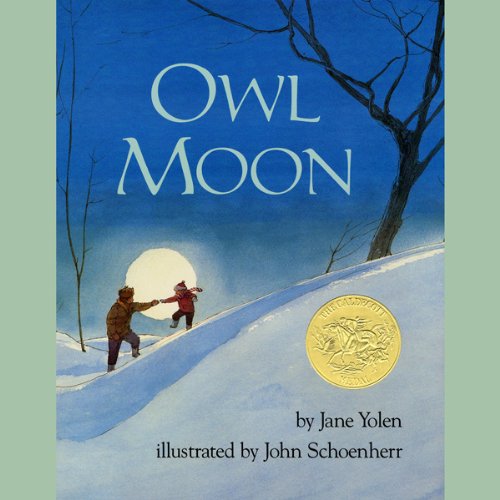
Owl Moon : By Jane Yolen

Owl Moon

The Boy and the Blue Moon: By Sara O’Leary, Illustrated by Ashley Crowley

Both books managed to capture the beauty of the moon’s rays so perfectly. 

I wonder whether the animals we share the planet with enjoy the cloudy days. They seem to be. One morning on a beautiful morning when thoughts of gratitude flitted in and out, much as light seem to be flitting through the scudding clouds overhead, I stopped in awe at the birds. This season, I noticed many more birds – maybe a bounteous winter made for a marvelous nesting season for the birds as well, who knows?

But the blackbirds, geese, herons, storks, pelicans, wood-ducks, grebes, hawks, turkey vultures, bald eagles, harriers, thrush, sparrows, robins, woodpeckers, avocets, yellowlegs, hummingbirds, and so many species that I can’t identify, have been flitting and filling the air with beautiful characteristic sounds.

img_5037-collage

Life seems busy as the conscientious parents take care of their newly hatched young. 

img_5016

As I write this, a mild rain is falling outside – so gentle there is no discernible sound of the rain. The only sounds  are those of chirping birds like a soothing backdrop to the drama in the skies: The grays against the greens and the multicolored flowers a unique kind of meditation. 

#Nephophilia : a lover of clouds

“How sweet to be a cloud. Floating in the blue!”    

– A. A. Milne

Pluvial Pleasures

It had been one of those week-ends that started off with a weather report that issued a Hydrological warning.

The son & I exchanged looks. In the wake of a spelling bee at the son’s school, the word gave us no amount of pleasure. It must be exciting being a lexicologist.

Water bodies could swell? A torrent of moisture could swoop in? What magical things could a hydrological warning bring in its wake? Atmospheric rivers? Our own stream-like river could swell into a proper river?

river

“Hmm – maybe we should check out the riverbed nearby. And for good measure, I think I also shall take a bike ride and check out the dried out lake beds from a few weeks ago”, I said. 

The children shook their heads. 

“This! This is why people call you a nature kook, amma!” , said the son.

The daughter took a stronger stance:“No going biking in the rain Mother!”

“If you are going biking, try to be back by 3 p.m. – that’s when the rains are supposed to start. So, don’t go off all over the place, and forget the time. Watch the clock and get back!”, said the husband. 

Now there was a man who knew a lost cause when he saw one.

Accordingly, off I went. I whistled as I biked along the sparkling Earth. The birds stopped their squabbling and looked to see how an asthmathic milk-cooker took to biking (in my mind, I was whistling ‘These are a few of my favorite things’ song), and I smiled back at them. Wasted of course. Hydrological warning or not, geese do not smile, the wrens are joyous but don’t care much about you, the pelicans are barely curious. The wood ducks – they stop enough to see where you are going.This musing got me thinking about one little curious bird that we had seen on an off-roading adventure with the brother. I’d like to name the little thing, Birdingger Coothwart.

He (the brother I mean, not the bird) had jaunted us off to a hilltop somewhere south of Bangalore, and the world was soaking in freshly squeezed north-east monsoons. 

Now, there was a hydrological warning if ever there was one. Lakes overflowed, rivers leaped, streams gurgled, rivulets flowed, and the rains lashed down.

This little bird, no bigger than a wren, with a bright green and beige plumage followed the car. We had first noticed it as it swooped joyously over the tree-tops while his x cylinder, 4 tyre all-wheel drive terrain vehicle with XD pumps or whatever-it-is the nephew tells me about slowly muddled its way down the steep muddy grade. 

“Going down is harder than going up see?” , said the brother, and we nodded. None of us could drive that thing down that hill anyway, so what was the point in knowing how fast it could go, and long as it went?

The little birdie, however, wanted to know. It dived alongside the car peeking to see what kind of animal it was, and how it rumbled along on the road. Was it because this little one, whose flight range was probably far from the bustling city of Bangalore did not get many combustion engine visitors or was it because it craved the company of its occupants? Seeing that rhinoceroses were scant in this part of India, and there were no elephants in the vicinity the car must’ve been one of the largest moving things it had seen. 

As one can imagine, I had taken a dozen useless photographs with little luck. Ornithologists and bird photographers have my immense respect – for I got a great many pictures of boughs, (zoomed in, not zoomed in), tree trunks, branches, and even bushes, but not one of the little bird. I am not even aware of the kind of bird it is. Usually, I rely on Google’s image recognition software to help me with bird names (Those ML/AI engineers have no idea how much joy their little model brings me). But even Google draws a blank if you don’t have a picture. Maybe wildlife photographers in Bannerghetta region could help me out. At one point, seeing how persistent I was, the brother stopped the car and tumbled out himself to try to get a picture, but the bird had had enough. It was one thing to see a great big animal rumbling along peacefully, quite another to see other animals come out from this one, and it flew off. However, we caught sight of the little thing just a few hundred meters later. I swear there was a laughter in its flight, and I would like to be a bird like Birdingger Coothwart one day: joyous, free-spirited, curious, and prudent within limits.

These beautiful musings bought me to the dried lake beds on the opposite side of the Earth, and I was happy to see that the rains had at least filled one of the lake beds. 

vintage_point

I cycled back home, keeping a sharp eye on the clock, and I must say, had I not stopped to take that brilliant photograph of that tree, I might’ve made it before the rains started. As it was, I made it to the neighborhood and the sharp, pelting droplets as they plopped all over me really made admire those who predict the weather. I mean they said 3 p.m. the rains would come and one could’ve set their clock by their predictions. 

Hmm. In one bike ride, I’d wanted to be a bird, a whistler, an ornithologist, a wildlife photographer, a botanist, and a climatologist (or whoever predicts the weather). A day’s work done, I piled into the house. Birdingger Coothwart may not have craved tea, but I did after those vigorous musings, and the fresh, cold air against my face. 
Tweet Talk

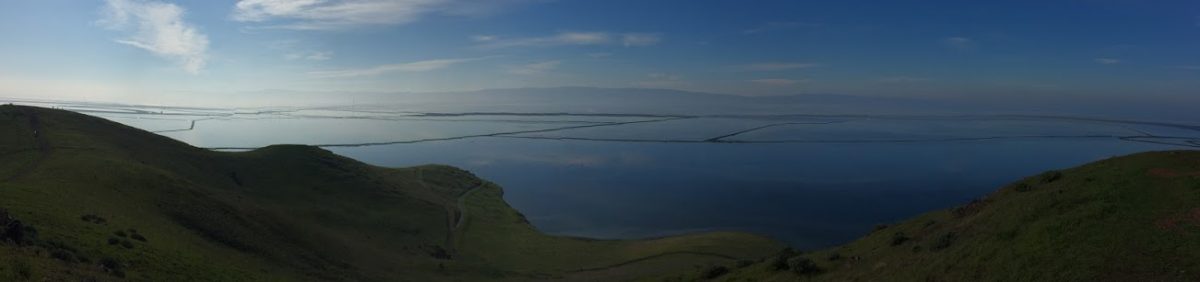
The cheery morning had us all chirping – much like the world around us. A beautiful, bright, sunny November morning around the time of Thanksgiving is always a special time. The glorious world around us transformed into multi-colored hues, and the auditory world rich with the orchestra of birds made our human companions on the trail more friendly as well. Every single one of them cheerily greeted one another on what a lovely morning it was. The world seemed to be in harmony.

Geese lifted out of their slumbering fields and flew squawking great big messages to one another as they splashed down into the lakes and rivers nearby. The blackbird murmurations overhead trilled and flew flashing their streaks of red in marvelous patterns overhead. The californian blue jays swooped among the marshes and the trees, their brilliant azure feathers twinkling and shining in the rays of the sun. The great blue herons and egrets stood waiting in their great cloaks of grey and white, relishing their solitude and just being part of the great lovely world around them. 

I read somewhere that people who were among many birds were generally less stressed in life, and I could readily imagine why. The joyous chirps, blending together in a great, harmonious orchestra along with the swift usage of wings to fly up and above, taking one’s spirits with you is enough to reduce the stress. 

I sniffed rapturously and we walked on. The ponds in the marshes seemed perfect for reflection, and the mind wandered. I took some pictures: not too many, and certainly not of great quality for posterity. There were talented photographers  for that. I have several friends whose photographs have that essence of transcending the current space and time and tranporting you to that very moment they captured. How they manage to catch the birds in flight is beyond me. I said as much to the son, who gave me an amused look at yet another blurry picture I took of a nesting heron in the marshes. 

Seeing how enamored I am with our winged companions in this world, the daughter got me a book titled Bird Cottage – by Eva Meijer for my birthday. I look forward to reading it. I looked at the son as we walked on in companionable silence, and told him so.

“Now, I am reading a book on hummingbirds.” 

“I am sure you are!” He said with a smile on the corner of his lips.

“Less sass young man. It is a fascinating book. “

“That’s what I meant. You would like to read a whole book on hummingbirds. What’s it about?” he said indulging me as he walked on.

I was proud of the fellow. He had been promised a short, zipping bike ride with the wind blowing against his face. Instead, here he was on a long walk. On the trudge back, he said, “I think I am going to go home and replace my legs with another pair. They hurt!”, and he laughed raucously at his own joke.

“It would be nice to fly on home, wouldn’t it? Become a hummingbird so we can fly swiftly and purposefully home every few minutes if you so wish!”

I told him about this person who lives in Marin County who takes on orphaned hummingbirds and nurses them back to life. “They need to be fed every 20 minutes all day every day till they are strong enough to be released into the wild.” I said.

“Wow. Why do they eat so much? They are so tiny!”

“Well! They are tiny and almost fully lungs – so you have to give them tiny portions every few minutes, so they can survive and thrive. A hummingbird mother is a very busy one. She has to fly in and out of the nest every few minutes feeding, and looking after her little ones, till they are strong enough. Just like most babies.” I said. He looked confused and awed. I addressed that look and said, “Even human babies need to be fed every couple of hours throughout the day for the first few months. You know that?”

He had a vague idea until then that babies were work, but he had no idea they needed to be fed every 2 hours.

He was quiet for a few moments digesting this piece of info. I swooped in, and gave him what the early days of human baby care looked like. I rounded it off saying, “Yep! You do all that, and what do they do? Sass you on walks, and roll their eyes when they are teens!” He laughed raucously frightening a goose nearby, and we spoke of this and that, the great web of life, and the fantastic nature of living.