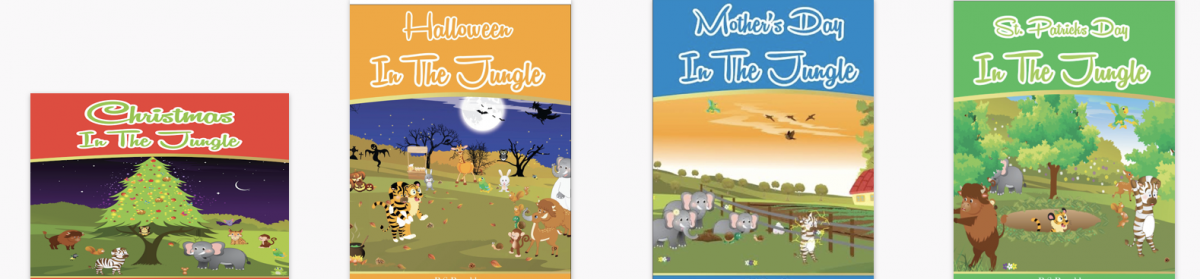
The Three Selves

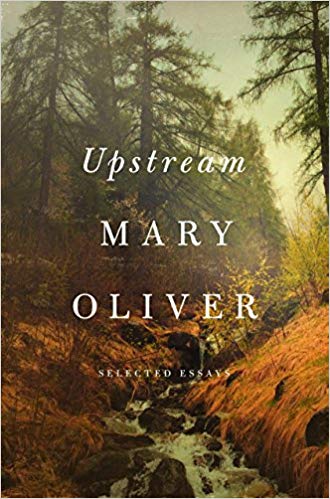
Mary Oliver’s, Upstream, is a book of many marvelous essays. One in particular stood out: Of Power and Time. This one is about the three selves in many of us:

  • The Child Self
  • The Social Self &
  • The Eternal Self.

upstream

Reflecting upon the piece, I realized we should know this by now, and we probably do at some level, but it takes a clairvoyant writer to set it out so neatly.

The Child Self is in us always, it never really leaves us. I completely identify with that. I am decades away from my childhood, but I can dip into it like I only just grew up.  Everything felt keener and sharper as children, and that is part of the reason why The Child Self never really leaves us, I suppose. (Probably the reason why I forget the name of the person I met yesterday, but remember the names of my friends from when I was 5 years old : What is Time?)

While young, I yearned to grow up, and in the words of L M Montgomery realize that growing up is not half as fun as it is purported to be.

“That’s the worst of growing up, and I’m beginning to realize it. The things you wanted so much when you were a child don’t seem half so wonderful to you when you get them.”
― L.M. Montgomery, Anne of Green Gables

The second self is the Social Self. This is the do-er, the list maker, the planner, the executer. The one, in short, that most of us find ourselves trapped in for the most part of our lives. This is “the smiler and the doorkeeper” as Mary Oliver so elegantly puts it. This self I am familiar with: metaphorically the whirlpool, the swift horses of time, the minute  keeper.

“This is the portion that winds the clock, that steers through the dailiness of life, that keeps in mind appointments that must be made. Whether it gathers as it goes some branch of wisdom or delight, or nothing at all, is a matter with which it is hardly concerned. What this self hears night and day, what it loves beyond all other songs, is the endless springing forward of the clock, those measures strict and vivacious, and full of certainty.”

The social, attentive self’s surety is what makes the world go around as she says.

Then, there is the third self: The Creative Self, the dreamer, the wanderer.
“Certainly there is within each of us a self that is neither a child, nor a servant of the hours. It is a third self, occasional in some of us, tyrant in others. This self is out of love with the ordinary, it is out of love with time. It has a hunger for eternity.”

The essay goes on explain the regular, ordinary self in contrast to the creative self. The Creative Self – the one that is out of love with the ordinary, out of love with the demands of time or the regular routines of life, is concerned with something else, the extraordinary. This is the self, she says, that makes the world move forward.

“The extraordinary is what Art is about. No one yet has made a list of places where the extraordinary may happen and where it may not. Among crowds, in drawing rooms, among easements and comforts and pleasures it is seldom seen, It likes the out-of-doors. It likes the concentrating mind. It likes its solitude.”

img_1781-effects

The essay was eye-opening in many ways. For I know many, including myself, have to fill our days with the demands of the clock. It is also easier to be the do-er, so that we may not have to enter that difficult place of teasing, figuring and wrestling the extraordinary out; to give shape to the nebulous clouds skirting in the recesses of the brain.

There is nothing wrong with succumbing to the demands of the clock, but it is a valuable lesson to teach ourselves to take our brains for a tease and see what results, isn’t it? We may land up surprising ourselves if only we give it the chance.

The essay ended on this note:

“The most regretful people on Earth are those who felt their own creative power restive and uprising, and gave to it neither time nor power.”

What do we do to ensure that there is enough time in our lives to ensure the nurturing of the Eternal Self? (Read: The Art & Charm of Shoshin) I don’t know the answer yet, but when I do, I shall hop on social media and share it right away.

Note:

A version of the essay is found here: 

Mary Oliver: The Artist’s Task 

Brain Pickings – The Third Self

The Touch of the Eternal

The daughter came hurtling into the room bursting with something to share, her brother in quick pursuit. I was sprawled on my stomach across the bed surrounded by a bunch of books.  She looked surprised at finding me indoors instead of hustling people to come and enjoy the outdoors, and said “How come you aren’t flitting with the butterflies?” 

The skies were blue, the air pure, the trees outside looked splendid and inviting, the first shy cherry blossoms were peeping out, the first of my tulip shoots were making their way out of the ground much to my delight.

I snorted and said, that just because the day looks awesome outside does not mean that I have to ‘flit like a butterfly’. Besides, it was perfect Gluggavedur weather. (Gluggavedur is a delightful Icelandic word that signifies, ‘Window weather’ – beautiful from the inside, but too cold to go outside.)

I know I have yearned for the right word many times. (A word for the cool breeze that hits your face when you run down a mountain for instance: Zephyr Tales) This book, What a Wonderful Word, taps into that feeling with words from many cultures across the world.

Book: What a Wonderful Word – By Nicola Edwards & Luisa Uribe

Anyway, where was I? Oh yes: I looked dignified and mature. It is done by setting the chin at an awkward angle, and giving the impression of one finding a skunk when one lifted the bushes to find a squirrel.

“A mature adult can do many things!” I said.

“Like reading children’s books?” said she.

I laughed hard and she joined in. Mature indeed! 

One time she found me doing Yoga with a beautiful Children’s book open, and checking out the illustrations from various angles. This act of whimsy earned me the loving and coveted label that teenagers award rarely, “You are SO weird! That is such a you-thing, why am I not even surprised?”

Much later when I read Upstream by Mary Oliver, I was glad to see that I was doing something right – the whimsical part at least.

“You must not ever stop being whimsical. And you must not, ever, give anyone else the responsibility for your life.” 

― Mary Oliver, Wild Geese

Some of my favorite things to do is flip through children’s books. The illustrations on some of them made me admire the books on wholly different levels.

How an artist comes up with conceptualization, the drawings themselves, and the whole process that goes into making children’s books is amazing. Every book is a testament to creativity, teamwork, solidarity, the calling of the eternal, and so much more. When asked to critique a piece of Art, I would trip up on a few things like techniques, styles, brush strokes, paint colors, paint directions, canvas quality etc. But I can appreciate good Art when I see it, and describe it with the word, Beautiful.

I was book-flitting like butterflies, very happy with the set of books I was flitting through.

“See! See this book – how can people even conceptualize a piece like this? Hmm…what would we do without Children’s books?”

I was surprised she had no snarky comeback – it is seldom so. Blessed as she is with sharp wit, it is usually me that has Espirit D’Escalier episodes. I looked up, and saw her immersed in the beautiful drawing in the children’s book I showed her. She spends a good amount of her time doodling and definitely with more success than Yours Truly. 

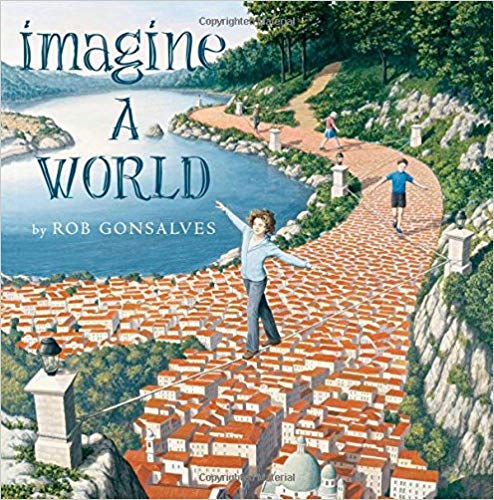
Rob Gonsalves book, Imagine A World, was definitely mesmerizing. The almost seamless transitions within the Art that hid multiple layers and concepts was work of genius. A sample piece shown below  – you can also head on over to his site that has more Art work. 

img_1863
Rob Gonsalves work Book: Imagine a World

The book reminded me of Mary Oliver’s Quote:

“Keep some room in your heart for the unimaginable.” 

― Mary Oliver

Magical Realism is Gonsalves’ speciality, and I am so glad to have picked up the book. It is easy to see the pictures over and over again – being immersed in them over again.

imagine_a_world

I am the first to admit that I am no Art Critic, just a child admiring the work of artists whose touch of the eternal we are blessed to see. 

Also read: Dr Seuss’s Art

Existential Angst or Gelato?

Every block of stone has a statue inside it and it is the task of the sculptor to discover it.
“Michelangelo Quotes on BrainyQuote”

As we walked past the thousands of statues displayed in the Roman corridors and roadsides, it is astounding and humbling to see the thousands of hours of creative labor that survives. The Vatican alone houses so many art forms and pieces of art, that we were quite naturally hurrying along if we did not wish to spend a good decade in there admiring every piece.


The Roman Empire is probably the most famously chronicled and studied empires in the world. The human condition across millennia has sought peace, temperance, a cultivation for the finer aesthetics even while battling the evils of war, famine and barbaric practices, and nowhere is that more apparent than in Ancient Rome.

Many portraits and statues were commissioned by the noble wanting to cast a sliver of their mortal presence into the immortal. The legacy of their lives as they might have seen it. But in works such as these, who endures? The person whose statue was carved, or the work of the sculptor whose ability enabled it? (See this picture drawn by my friend, of a statue)

Is it the Artist or the Object of the Art who endures?

head_bust_suresh
Image by Suresh (SureshSketches)

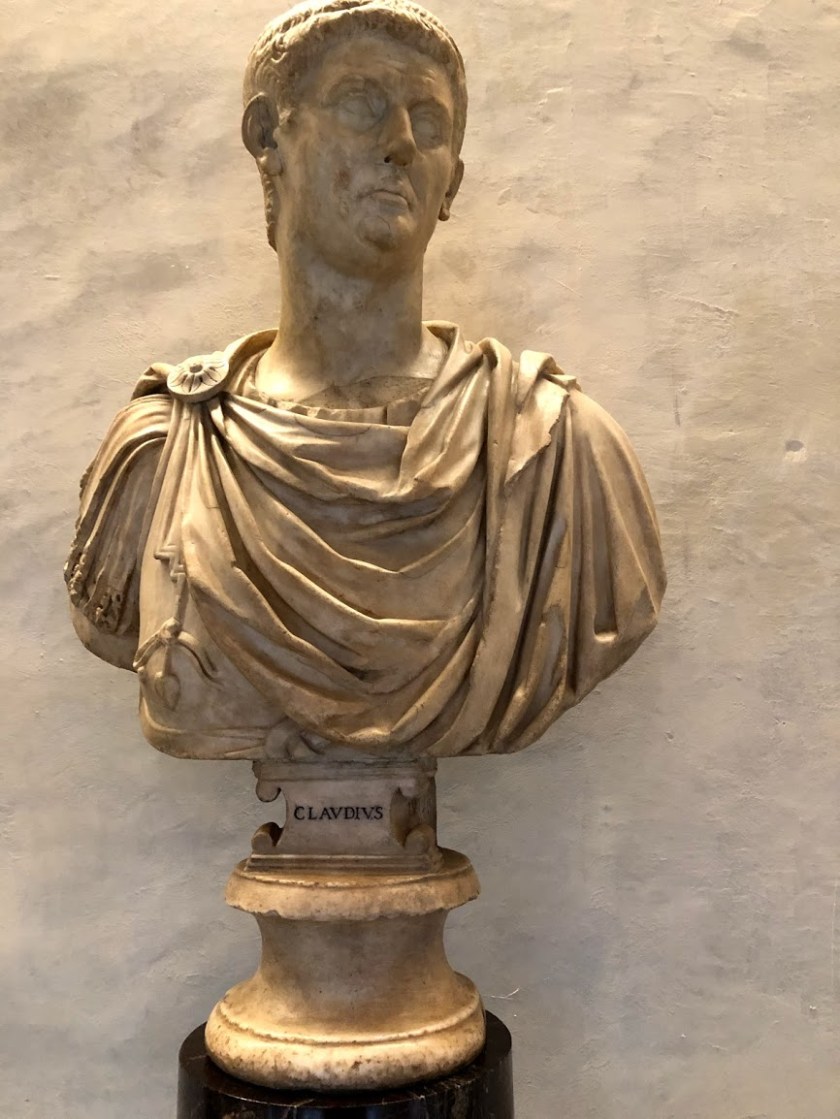
It isn’t hard to imagine the artist with a philosophical bent of mind when one sees the thousands of head busts carved out of stone. The busts themselves may be of emperors and powerful men, but they were carved by the skilled artisans who were not all famous. I’d like to imagine that the artisan who carved Caligula’s head had his laugh by secretly carving a statue of Caligula’s favorite horse, Incitatus. (Incitatus was made a senator, and was granted a place at the royal dinner table. ) Claudius, the one everyone assumed to be the local fool turned out to the successor to Caligula in the end. His head bust stands right next to Caligula’s in the hall of head busts in the Uffizi gallery.

claudius_bust

So, who endures and who doesn’t? It was Claudius’ writing that showed us all about the dangerous, mad tyranny of Caligula after all. ( The book, I, Claudius by Robert Graves is an excellent peek into Ancient Rome)

Walking past the arrays of the head statues, I could not help thinking of the Tamil poem by Bharathiyar that the husband quotes often:

Pirappal pala pizhaigal seidhu …
narai koodi kizhaparuvam eidhi …
Verum kootrukku eraiyagum pala vedikkai manidharai polae
Naanum vizhuvaen endru ninaithaayo?

“பிரப்பால் பல பிழைகல் செய்து
நரை கூடிக் கிழப்பருவ மெய்தி
கொடுங் கூற்றுக் கிரையெனப்பின் மாயும்
பல வேடிக்கை மனிதரைப் போலே
நானும் விழுவேன் என்று நினைதாயொ?”

Loosely translated it means:
Did you think I too would live the life that wracks ordinary human beings?
That I would sport grey hair, grow old, be small enough to talk pettily about people, and fall at the hands of fate?

The angst that has wracked mankind for centuries is apparent in the poem, and in the head busts and portraits by which I was surrounded. So, what is it we hope to leave as our legacy and for whom? We should aspire to be a thread holding the tapestry of life together while alive, but beyond it, what do we crave?

After the 160th picture of non-smiling faces, 100 head busts, and the n-th depiction of the crucifixion and the nativity scene, I knew what we craved for: Gelato.

“Before we go though, let’s go to the next floor. There is a gallery of musical instruments of the time.” said the husband. The children groaned, but I was intrigued. Music is a beautiful anthropological constant. We even sent a recording of whale song, Beethoven, Bulgarian folksongs and so much more on  the Golden Record  when we sent it out into space aboard the Voyager. NASA did not want to waste the space, but Carl Sagan, saw the poetic touch to it. The need for space exploration was to learn and connect, and what better mode to connect than through music?

cd

The image of a man playing the harp in a city square, as people walked by tingled in my brain, and I rose happily, urging the children on. “That man playing a harp could be from the 12th century or the 16th or the present. How beautiful is that?” I said to musical groans.

man_harp_today

After we climbed up the flight of steep stairs, however, we found ourselves peeking into another floor of more paintings. I looked around confused. The husband pointed to the sign there: Piano Secondo:

piano_level

‘Piano’ in Italian means ‘Floor’, and not a collection of pianos. He looked sheepish, but happy to be the person who relieved the tension, and off we went in an indecent hurry looking for gelato. Anthropological musings and existential angst can wait, Gelato cannot.

Una buona immagine

“Amma – you were sleep talking so much last night – it was hilarious!” said the daughter. The children and the husband giggled. In my defense, it had been a rather long few days. Roaming around in Rome had taken the wind out of my sails.

“I must have been tired!” I said. “ I had dreams of the weirdest nature. I dreamt the horses ran out of the picture, and out into the gardens that had the whomping willow type of tree.” (Pitti Palace & Boboli Gardens which are perfectly delightful to behold: A lovely spot of nature in Florence)

“Yes we know. And you sat up in bed sending Sabrina to get the horses back! Poor lady doesn’t have enough work in the reception, you have to send her galloping behind horses!”  I laughed with them. Sabrina had saved us considerable time by getting us a slot of time to visit the Uffizi Gallery.

I was trying to extricate the strands of weave from the coagulated mess in the brain. A number of galleries collapsed in the various chambers of the brain leaving the paintings smushed together. Waddling through the galleries with a coat hanging off one hand, a child off another and a bag on my shoulders, I wandered through the works of Leonardo Da Vinci, Michelangelo and Raphael – entire galleries devoted to Renaissance artists. I naturally gravitated towards pictures featuring the rich myths, with a whiff of the beautiful Italian countryside in the background. The Birth of Venus, Primavera et al were as beautiful as everybody said, and had I known the nuances of art could have enjoyed it more.


I felt like one of those canvases that inspired the starry night by Van Gogh. All the different colors flowing into each other, forming a confused mess of colors, but having a unique kind of beauty in itself.

Art can never exist without naked beauty displayed - William Blake.

The first time we spotted a picture featuring a nude, the son tugged at my hand, and giggled, “Why isn’t he wearing any clothes?”

I giggled with him. Do you think this is what William Blake had in mind? The renaissance era with its developments in the anatomy and study of the human figure really did go overboard on the whole human body thing. Considering that it was winter in Italy, there we were dressed in thermals, sweaters, jackets, caps, gloves and socks, looking upon the stone cold statues of apparently virile, strong men with muscles exploding out of their bodies, and not a thread of clothing on them. It was amusing, and the pair of us giggled like children in the pristine halls of the museums.

statues

Standing outside a fountain on the way from one gallery to another, I posed for a photograph. I smiled and asked if the picture was okay. Apparently, it wasn’t.

The teenaged daughter took a deep breath and with the air of explaining basics to an idiot child started instructing me on the best method to pose for a photograph. Apparently, smiling like I am happy to be in the photograph is out.
“Go for this look.” she said, and looked morose, angry, pensive all at once. “And those shots of you standing in front of a place is so third century! Look at this one, “ said she showing me a picture of a person with a sharp nose in a red coat overlooking a ruin.

If it weren’t for the fact that she was looking stylish in my coat, I could barely have recognized her, and that, she said, was the angle you have to go for.

I am not sure I will get it entirely. I come from a generation that saw as many people crowded together in one frame as possible, and all of us smiled at the the count of three – with at least one blinking at the opportune moment. From there to this sort of “Don’t even show your best face, and please don’t smile” slide is a bit quick.

But after looking at the numerous pictures in the galleries across Rome, Florence & Venice, I can see the impulse. I mean this trend probably came from too many pictures. It is probably why Madonna looks apathetic holding a babe Jesus in her hands, who displays no curiosity in his surroundings or joy or mischief. It was quite disquieting to see picture after picture like this with frozen expressions. Was the smile frowned upon so much? I can understand the looks of anguish in the scenes of the crucifixion, but even in the more joyous pictures of Madonna and Child, can one not introduce a motif of joy?


That’s what our million pictures must look like isn’t it? Frozen expressions  “capturing the moment”. If we are capturing frozen expressions, I don’t mind jumping on those galloping horses out into the gardens from the painting with a wild look of freedom and joy on my face any day.

So that brings me back to the basic question of what constitutes a good picture (una buona immagine). Does every picture need to tell a story? Why is Mona Lisa so famous, and not the beautiful pictures of these ladies?


Please recommend books on the art of appreciating Art.

Mermish Dreamish

“Ohhhwwwnn! What do you want us to get you from the labally?”, the son’s voice wafts upstairs to his teenage sister. She cannot make it to the library and her little brother feels bad for her, like she has been denied candy on Halloween. 

“Anything on Mermaids dobucles! From the Teen section.” 

The son and I exchange knowing smiles. 

“Okay!” 

I watch amusedly as the half teen swells with self importance: Oh! The glory of being given the esteemed task of picking out books for his teenaged sister from the teen section. 

“Mermaids! Really? Again? Still?” I ask, and I get a “Yessss!” accompanied by an eye roll, that I cannot see but can imagine, in response as we head off. 

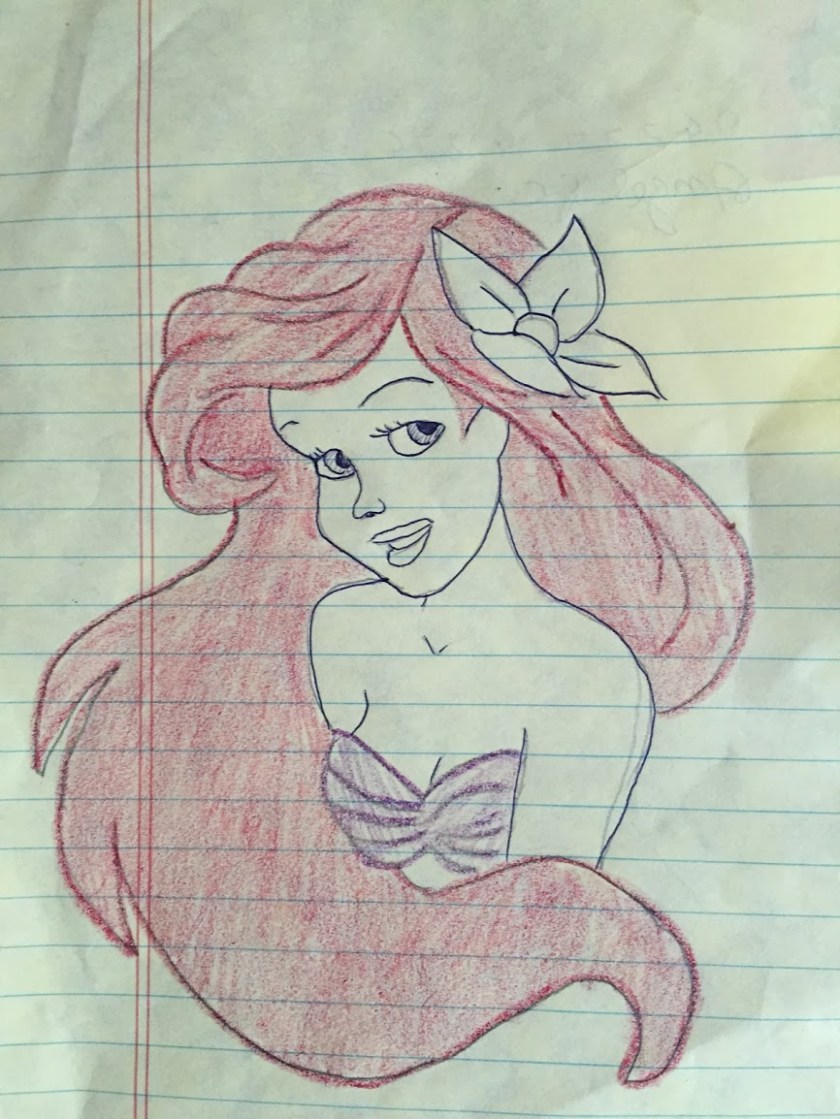
keena_mermaid_doodle
A random doodle by the daughter when she was knee-high

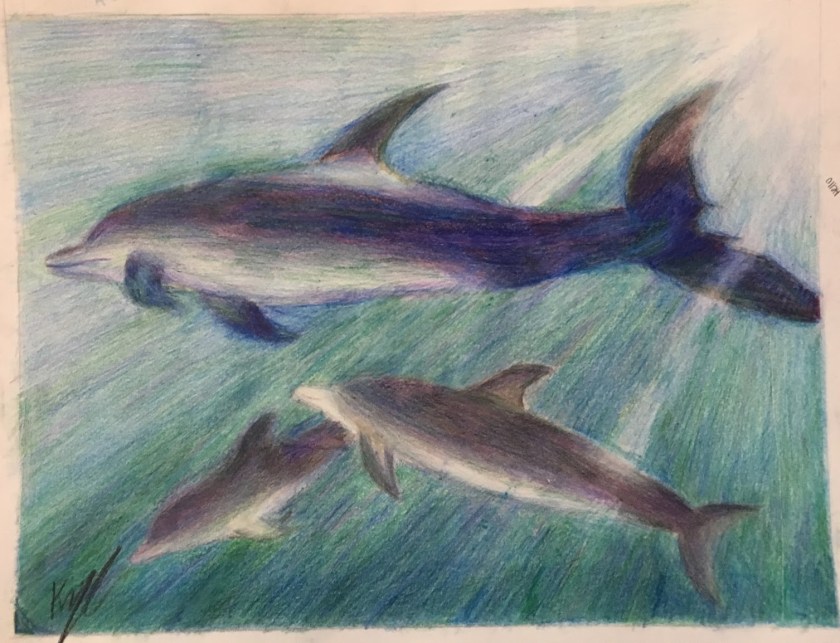
The oceans and seas enthrall her, they exert an influence on her like no other. And it started young. Thousands of viewings of Finding Nemo, hundreds of The Little Mermaid later, her first choice for drawing anything is still marine. 

Keena_drawing

I can hardly blame her, I find the oceans fascinating myself.
Gerald Durrell’s Enchanted World Essay
Carl Sagan’s Essay on his interactions with Elvar The Dolphin
Epic of Whalayana – Carl Sagan

I have been seeped in books on Whales of late. Ever since I read Carl Sagan’s beautiful notes on these gigantic, intelligent and curious creatures, I have become half mermaid myself. I see the allure that sets the daughter’s heart beating. Regular readers know that I have often described that child as one who should have been born a mermaid.

Nick Pyenson : Spying on Whales:

Astronomy and Paleontology are sibling fields really: they take human imagination to places where no person has ever been.

Some writers have the knack of saying the most profound things in passing. 

It is true isn’t it? The reason we gaze longingly at the night skies, charting out the constellations, having myths that surround them is the same reason we have stories of oceanic splendor. The reason we listen in awe about Noah’s Ark, Mastya avatar, Kurma avatar and myths of a milk churning ocean coughing up ambrosia for things that seemed nigh impossible like immortality is the same reason we imagine The Great Big Hunter going after the seven sisters. It is magnificent and unimaginable.  

“This must be something to do with the Sea. It has the word Tempest on it and there is a mermaid like thingy on the front. “, said the little fellow handing me the book he had picked out for his sister. 

“Should we get one or two more just in case?” 

We agreed and off we went looking for mermaid like ones, oceanic tales. I fell back upon Twenty Thousand Leagues Under The Sea by Jules Verne in case all else failed. That was the choice that earned me a loving “MOM!” look.

We needn’t have worried, the little fellow was given glowing tributes for selecting the best mermaid book, and we all settled down to read that evening. 

Taking a deep breath we dived deep into the rich oceans. 

I was trying my best to keep up with Nick Pyenson and his colleagues as they tried to find and relocate some of the largest whale fossils on record. More than 2 million whales had been lost to Whaling in the beginning of the 20th century, and only about 200,000 remained. What have we done? Another silent lament in my mind that will not have an answer. 

The son had a thoughtful crease after reading his book, A Symphony of Whales by Steve Schuch. I could well imagine his feeling. It is one of those books that in ten flips of the page leaves you wondering and marveling at so many things – the climatic conditions because of the geography of the story, the sounds of nature surrounding the little village, and the sounds of the living in the churning waters calling out to little Glashka who is a little girl blessed with the ability of hearing different frequency voices like the song of the whales stranded in the bay and iced in. Accompanied by illustrations that take you to the little Arctic village, this book was the perfect marine choice for the little fellow.


Little yawns appeared on our faces and we smiled sleepily. When we resurfaced from the waters, feeling refreshed after a cool dip in the oceans, we slept dreaming the dreams of the unimaginable. It was marvelous.

The sea is as near as we come to another world. – Ann Stevenson


Blooming Time?

A version of this post was published in the Nature Writing magazine: When The Kurinji Blooms

In a small corner tucked away from the hectic panting of the world lives a small ecosystem,  nestled in a range of hills that is fast losing its unique beauty to ‘progress’. It is the place I was lucky enough to call home when I was growing up.

Jasminum_mesnyi.jpg
Primrose jasmines – Image by Wouter Hagens[Public domain], from Wikimedia Commons
The thought of flowering lupines takes me to Iceland; lotuses to a temple tank surrounded by trees with the breeze rippling the tank waters; primrose jasmines and Kurinji flowers back to the Nilgiris.

One of the marvels that is highly unique to the Nilgiris is the flowering of the Kurinji.

These flowers only bloom once in 12 years, and when they do, they are a joy to behold. I have only seen them once, and I remember thinking that for all this drama of blooming once in a dozen years, they should be, more grandiose, more robust, a trifle less ephemeral. But that is the thinking of an ignoramus, and I sensed the idiocy of the sentiment even then.

The flowers were beautiful, and the fact that there is a plant that knows the time to bloom when the rest of the world needs alarms and clocks to rise and shine is nothing short of marvelous. We need apps, calendars, schedulers, reminders and alarms to go about our daily business of living, and yet these unassuming flowers go about their act of procreation, maturing and enthralling the world without any such aids. What is more beautiful than that?

The kurinji flowers were in bloom last month, and I lived vicariously through a few friends of mine who live in the beautiful Nilgiris and posted the pictures. Entire hillsides clothed in royal robes of purple, swaying and billowing in rainy wind splattered skies, or waving and tossing their crowns to the blue skies with the scudding clouds.


The beauty of a functional model like a flower is a joy to behold. Imagine my joy then, when I opened the book, What Do You Care What Others Think – By Richard Feynman and the very opening of the book spoke straight to my kurinji-flower yearning heart.

I have a friend who’s an artist and has sometimes taken a view which I don’t agree with very well. He’ll hold up a flower and say “look how beautiful it is,” and I’ll agree. Then he says “I as an artist can see how beautiful this is but you as a scientist take this all apart and it becomes a dull thing,” and I think that he’s kind of nutty. First of all, the beauty that he sees is available to other people and to me too, I believe…

I can appreciate the beauty of a flower. At the same time, I see much more about the flower than he sees. I could imagine the cells in there, the complicated actions inside, which also have a beauty. I mean it’s not just beauty at this dimension, at one centimeter; there’s also beauty at smaller dimensions, the inner structure, also the processes. The fact that the colors in the flower evolved in order to attract insects to pollinate it is interesting; it means that insects can see the color. It adds a question: does this aesthetic sense also exist in the lower forms? Why is it aesthetic? All kinds of interesting questions which the science knowledge only adds to the excitement, the mystery and the awe of a flower. It only adds. I don’t understand how it subtracts.

Ode to a Flower – By Richard Feynman. This brain pickings article links to the beautiful animated video made by Fraser Davidson based on his ode to a flower.


I could not see the Kurinji flowers this time. I know many hillsides that were carpeted with these marvels have now become home to resorts and hotels. So, I wrote to the San Francisco Conservatory of Flowers requesting them to try and obtain a sample of this marvel: a tiny piece of magic tucked away for generations to behold. I hope they can.

To see a World in a Grain of Sand
And a Heaven in a Wild Flower
– William Blake


We Belong on Earth – Part 2

One sunny day, I felt a surge of happiness to find the latest book by Khaled Hosseini, Sea Prayer. I heard it was like none of his other books, but just as poignant. The moment of realization came a moment after the surge of happiness – how could I be happy to find the book that drove home the sad truth of refugees – of that child whose dead body floating in the sea inspired the book?

Child name: Alan Kurdi

sea_prayer

Was I really ready to have my heart wrung out as I am sure it will be when someone as competent as Khaled Hosseini wields their pen on the sad plight of refugees? I picked up the book late that night, long after the moonlight had transformed the late summer landscape into a luminous wondrous land.

I always hesitate to start a book of such deep issues, and for good reason. I was in a flight once, and delved into my book. I was about halfway in when tears started streaming down my face. A co-passenger asked me if everything was alright and I pointed to the book, feeling sheepish, but she replied that she had cried after reading that particular book too, and I felt like I had met a kindred spirit. Like P. G. Wodehouse said, “There is no surer foundation for a beautiful friendship than a mutual taste in literature. “ .

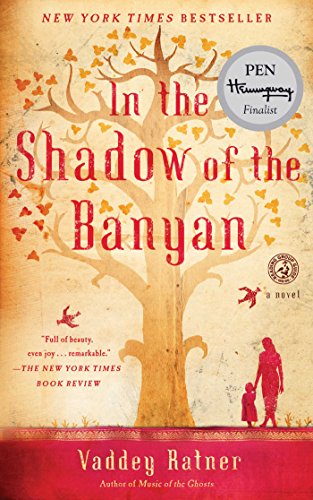
The book was In the Shadow of the Banyan, by Vaddey Ratner.

in_shadow_banyan

Vaddey Rattner writes of the child trapped in the horrendous events of the Khmer Rouge regime in Cambodia. I said it before and I shall say it again: There never is an upside to War. The worst affected are the children, and we have no excuse to maim their psyches thus. I read the book more than 5 years ago, and yet it stays in my mind. Vaddey Ratner draws you into the human experience through the suffering so beautifully that words fail me.

The book made me realize what it must have been like for an old colleague of mine.

I remember the shock with which I realized she was a refugee from Vietnam. We were both heavily pregnant with our first-borns and often traded tummy-tales. We were hallway buddies. I wished her a Happy Birthday, proud of myself to have remembered, and she gave me a rattling wholesome laugh in response. Then, with her characteristic good sense, she told me about how someone took a look at her and assigned her an age when she got off the boat. “They said I was 5 then. Looking back, I see I was given 3 years of my life to live again. “

I did not know what ‘got off the boat’ meant at the time. I looked at her quizzically for she said, “Oh, because I was pretty sure I was 8 then, but I did not know English, and I did not know that when they pointed at me, they were estimating my age and they gave me a birthday too. With the war I was malnourished, bones sticking out, and I am short too, so I suppose I could easily be mistaken for a 5 year old when I came here. I don’t really know my birthday, so I just celebrate this day that was given to me. “

Over the course of our pregnancies, she told me tidbits here and there about how she had escaped Vietnam as a refugee and came to the United States.

The fast flowing rivers of my consciousness, combined with the changing people-scapes around me, meant that I thought about her every now and then even though I lost touch. I am fairly sure that she must be enriching the world around her somewhere. For her, this life was too much of a gift to throw away and not live and contribute to the fullest.

Who was it who said, that we affect the world around us simply by being, or some such thing? Just thinking of her gave me the courage to read Sea Prayer. I opened the book and was transported to the town of Homs in Syria.

Sea Prayer is more of a poem in the form of a short letter written from father to son. A few words is all that is necessary for him to take you into a grandmother’s hut where the child played.
“We woke in the mornings
to the stirring of olive trees in the breeze,
to the bleating if your grandmothers goat,”

IMG_0456
A sample of the artwork by Dan Williams

A few strokes of the brush is all takes for the artist, Dan Williams to set the tone for ‘The skies spitting bombs. Starvation. Burials.”

It is a very short book, and not like Khaled Hosseini’s other works, but it is a book that reminds you to think of the human condition. The book finishes on this note.

”Sea Prayer was inspired by the story of Alan Kurdi, the three-year-old Syrian refugee who drowned in the Mediterranean Sea trying to reach safety in Europe in 2015.

“In the year after Alan’s death, 4,176 others died or went missing attempting that same journey.”

Where do we belong? To Earth surely.

Read also: Do We Belong On Earth?

Hero-Worship, Nicomacean Ethics & Baloney Detection Kits

I have heard friends rave about Dune by Frank Herbert many times over the past few years. I finally got to read the book, and I feel richer in mind and thought for it. The book was long and at times hard to keep track of (especially in the beginning). This is one of those times when I realize how my mind flutters with attention spans that drive calm butterflies to frenzy. But slowly, steadily, I settled into the book, and there were multiple moments when I felt like I must grab a pen and start writing (but that stern butterfly gave me a look, and kept me at my the task of reading). This, is probably the reason I have forgotten half the things I wanted to write about (This is where I glare back at the butterfly guardian who kept me reading)

Dune-Frank_Herbert_(1965)_First_edition
First Edition Cover – Image from Wikipedia

One of the many things that appealed to me in the Dune was the fact though there were vague references made to technology and the number of technological devices used by those living at the time, it is not a mainstay.

The book is a multi-layered piece of literature with over-arching themes of ecology, the art of war, religion, philosophy and politics. There is a particular quote that stuck with me in the Prologue written by Brian Herbert, Frank Herbert’s son, about the dangers of hero worship.

Quote:

As Liet Kynes lay dying in the desert, he remembered the long ago words of his own father: “No more terrible disaster could befall your people than for them to fall into the hands of a Hero.”

Having studied politics carefully, my father believed that heroes made mistakes…mistakes that were simplified by the number of people who followed such leaders slavishly.

In many ways, hero worship is what leads people to choose leaders who then turn into despots and dictators. Adulation affects everyone, and those with fragile egos are the most prone to its lure.

Towards the end of the book, Paul Atreides recognizes that he is being hailed as the Messiah and regardless of his acceptance of the title, there is a holy jihad in his future. He can either lead to the best of his abilities like his able and excellent father, Duke Leto or simply be the mascot of a movement that has already gathered momentum – a force that is much larger than him. This sort of trusting faith in one human being is never a good sign, and is a malady that has affected us for centuries. 

I quite agree with how Aristotle describes the nobility required of politicians: he opines that politicians should take an oath, almost as sacred as a Hippocratic oath, to remain fair and mete out justice. From the Nicomachean Ethics – By Aristotle. 

The lecture on Aristotle and Socrates on How Does One Live The Good Life? From 36 Books That Changed The World (Chapter 8) is an excellent listen.


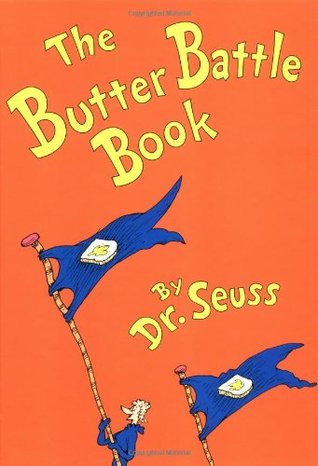
There are no initiation courses for politicians. No training. Though, I have a suggestion to have every politician complete the Butter Battle Course, it is unheeded. (The Butter Battle Course is an excellent course consisting of childrens’ books not more than a few pages each, and should only take a few moments of every leader’s time):

butter_battle

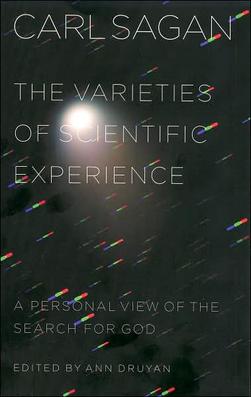
However, till politicians start taking their careers to truly be in service of humanity, we need to equip ourselves with Carl Sagan’s excellent Baloney Detection Kit from the book: The varieties of scientific experience : a personal view of the search for God / Carl Sagan ; edited by Ann Druyan. This book contains the Gifford lectures given by Carl Sagan in 1985.

The_Varieties_of_Scientific_Experience
By Source, Fair use, https://en.wikipedia.org/w/index.php?curid=28513011

When someone asked Carl Sagan after his lecture what we can do when the governments do not act in our best interests, he advised us to have Baloney Detection Kits handy.

Quote:

“I would say that the first thing to do is realize that governments, all governments, at least on occasion, lie. And some of them do it all the time – some of them do it only every second statement-but, by and large, governments distort the facts in order to remain in office.

And if we are ignorant of what the issues are and can’t even ask the critical questions, then we’re not going to make much of a difference. If we can understand the issues, if we can pose the right questions, if we can point out the contradictions, then we can make some progress. There are many other things that can done, but it seems to me that those two, the baloney detection kit and use of the democratic process where available are at least two things to consider.”

This seems to be age old wisdom: our oldest myths write about flaws in heroes, what brings about the downfall of the most powerful tyrants  etc; and yet, the reminder for our own Baloney Detection Kits is a timely one.
Books:

  • Dune – Frank Herbert
  • Varieties of Scientific Evidence  – Carl Sagan 
  • Nicomachean Ethics – Aristotle
  • 36 Books That Changed The World – Lectures on Great Courses
  • Butter Battle Book – Dr Seuss

Our Rainbow Colored Hearts Can Sing

The elementary school going son and his friends were proudly showing off their art work at the open house. It always makes my heart sing when I see the beauty of effort. Tables that looked like flattened zebras, zebras that looked like striped platypuses, and platypuses that looked like duck bills were all being open to interpretation. I was admiring everything and the artists around me were very proud of themselves. They puffed their chests out and competed with each other to show off one another’s work. 

img_8684.jpg

The teenaged daughter tugged my hand to show me a particularly fetching piece of art done by her brother. “Oh beautiful!” I coo-ed, though I could not really make out what it was. But to paraphrase Ursula Le Guin, a potter’s job is not to explain a pot, but to make the pot. It is upto us to use that pot as we will. In her fascinating collection of essays or blog posts, No Time To Spare, she deplores this tendency in Modern Art museums for the artist to explain their work.

Screen Shot 2018-06-04 at 4.57.22 PM

An artists work, she says, is open to interpretation and mean different things to different people at different points in time. It is a sentiment that I agree with, and I relished her way of putting it into words. Something that I have always admired in Ursula Le Guin’s work. Of course, she put it far more elegantly than I have attempted to here. 

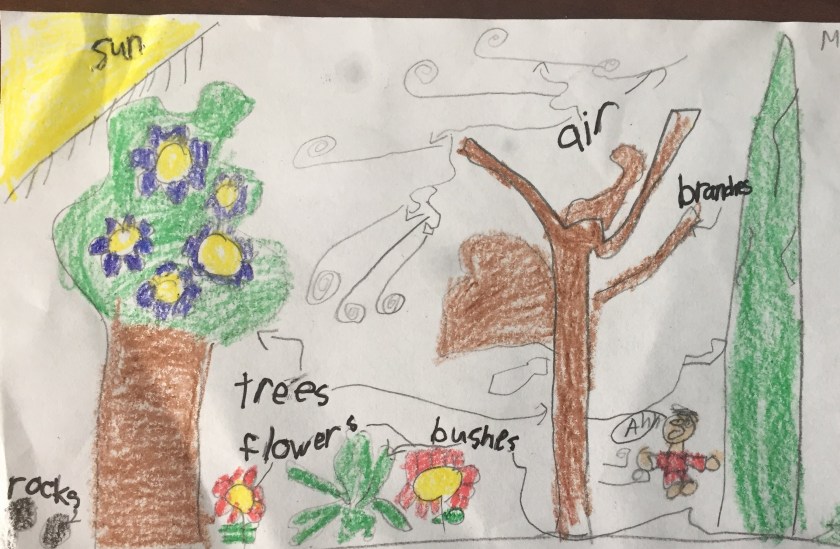
Please read this earlier post on the daughter’s drawings as a child.

Anyway, I admired the son’s work, and then the daughter pointed to the bunch of people in the picture. Peering closely, I noticed they had rainbow colored faces. I asked the son why the folks in his drawing looked like rainbow trout in the sunshine.

He said, “Oh my teacher said to the class, to put in some colored people.”

I turned to the teacher, and she said she did say that for Diversity and Inclusion. I smiled at her, and thanked our stars for all the lovely things teachers teach the children.  Half the adults seem to have difficulty remembering these simple lessons in these sad times. All the more reason why we should all attend a year of Kindergarten every decade.

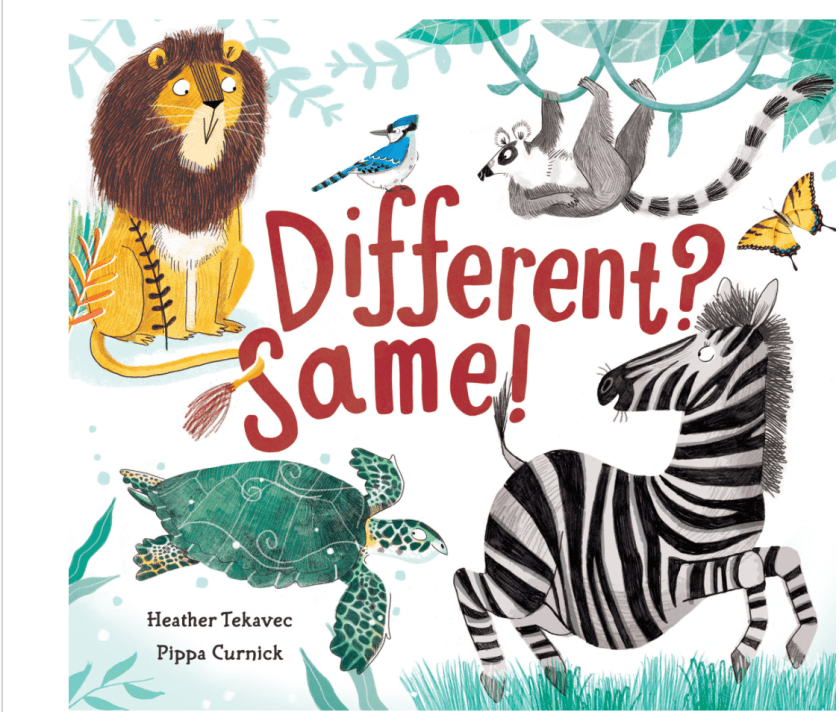
I looked again at the rainbow colored people and thought how beautifully untainted and open minded we are before we learn our little prejudices along the way. To think how much we obsess on skin color makes my rainbow colored heart very sad. It was, therefore, with utter joy that I picked up the book, “Different? Same!” Written By Heather Tekavec and Illustrated by Pippa Curnick.

Screen Shot 2018-06-04 at 5.22.25 PM
Different?Same! By Heather Tekavec, Illustrated by Pippa Curnick

In this beautiful book, we are reminded of how each of us are so different and yet similar. How is a Zebra similar to a bumblebee? Or an Elephant and a Narwhal? 

The book finishes on a beautiful note that can make our rainbow colored hearts sing: If you look closely enough, it soon becomes clear … we’re not as different as we first appear.

The World of Pure Imagination

The daughter pranced into the home one evening a few months ago, her eyes agog with excitement. She had auditioned and been cast as Willy Wonka, the eccentric chocolate factory owner in Willy Wonka Jr (the musical based on Charlie and the Chocolate Factory). They say Art is Transformative, and it is true. Every time I see the children pull off something spectacular, my heart soars. 

Come with me and you’ll be 

In a world of pure imagination

We’ll begin with a spin 

Traveling the world of my creation

What you’ll see will defy explanation

IMG_8469.jpg

As she sang her songs from Willy Wonka around the house, there was a pleasant hum in my brain too. I remember reading the little book with her when she was in elementary school. The years in between have smudged into a blur in which I remember doing a lot of things, cherishing a few memories, and before I knew it, my little girl towered over me in height and ability. 

In a world of pure imagination: how would that world be? It must be a world in which all things vile are wished away, and only pleasant striving has a place. A canvas on which the best is to be painted and awaits the strokes of our creation. Maybe that is how we must view life. Every aspect of ours a stroke on our canvas – the true nature of the painting ever changing to be revealed to us as we go along, giving us a subtle choice here and there on whether to put in that jarring, wrong stroke or a mellow, right one.
There are many marvelous things that I can attribute to imagination (and immigration). One that ranks highest is the fact that I get to read American Children’s literature as an adult. As a child, in the lovely hills of South India, I loved curling up with Enid Blyton’s books, and often escaped into fairy lands on wishing chairs and ran into magical forests. It was easy imagining an adventure, while swinging on tree trunks that had fallen in the last storm. We had plenty of time, and had no one but ourselves to rely on for entertainment. State television made its entry a few years later, but it was agreed fact that our own flavor of entertainment was far superior to what we saw on Television. I sometimes played alone, but not once did I feel lonely. There were always imaginary friends who’d drop in for a cup of tea and we’d bake some scrunchy scones and whip up some tea cake, though I had never seen the inside of an oven. 

The Indian comic books, Amar Chitra Katha, Chandamama added flavor and beans to the curry pot of imagination. It was a wonderful time in the head. The pressures of wanting to make something of oneself had not yet begun to exert itself, the only lures were those of nature as it enclosed us. The trees were friends and frequently doubled up as props in our adventures. Many a scraped knee was soothed away with scratches from brambles. 

I entered my teenage years, and my imagination left some of its whimsy behind. The teen years and the early twenties were dedicated to much serious reading, and I spent a good portion of my time striving and wondering what to make of myself.

“That’s the worst of growing up, and I’m beginning to realize it. The things you wanted so much when you were a child don’t seem half so wonderful to you when you get them.”

L.M. Montgomery, Anne of Green Gables

Then, I realized that all those years that I had spent wondering what to make of myself had actually made me. Just like that, I could embrace all that happened to me. It was liberating, and then the more whimsical side of my imagination swooped in once more. I took tentative steps into Wonderland when I became a mother in the United States, and indulged the child in me with my growing children. 
 

Dr Seuss graced our tongues and teased the brain (What if I had duck feet? Did the elephant hatch the egg finally, will Zooks and Yooks ever become friends?), we sang poems by Robert Louis Stevenson set to the tunes of the old hymns in our school hymn book (To be written), we giggled with Bernstein Bears, hoo-hoo-haa-haa-ed with Curious George, and marveled at the friendship between Frog & Toad. The children and I read Charlotte’s Web when I was in my thirties, but I enjoyed it even more than I would have as a child.  

dr seuss

For a long time, I had meant to read Anne of Green Gables, but for some reason, did not. The daughter had not shown inclination towards this series, and there was no one to tell me how I absolutely must read it. Then, one day I read a quote from Anne of Windy Poplars, and I was intrigued. I have always loved that style of uplifting writing weaving the tendrils of imagination with subtle humor: the gentle breeze of the soothing powers of nature to nurture our soul wafting through every page. It is why I like Miss Read’s writing so much.

I identified keenly with how much Anne prized the gift of imagination. Somehow, we lose that streak of imagining as we grow older, much like we forget to skip while walking.  I now have that pleasurable thrill of reading all the remaining books by Lucy Maud Montgomery. It is a sustaining thought.  

Margarita Engle’s poem:

No giant or dragon

Is bigger or stronger

Than the human imagination

P.S: If you have not already listened to J K Rowling’s commencement speech, it is definitely worth listening to: The Importance of Failure and Imagination