Themes of Friendship and Cooperation in Hail Mary

Hail Mary by Andy Weir

We decided to read Hail Mary by Andy Weir in our book club, prior to the movie’s release early next year in 2026. This book proved to be delightful pick for all the different discussions we could have:

There were many fascinating areas in which our discussions went:

The grandeur of microscopic life

The Microscopic Wonders in Hail Mary by Andy Weir

It takes enormous creativity and brilliance to pull off a face-off between his microscopic light warriors that he christens, astrophages, vs taumoeba who are the only known predators of the astrophages. 

Encountering friendly alien-life

Encountering alien life and making it a friendly encounter, instead of the usual fear of an alien takeover is a bold move. As humans, we think of conquering and owning the next available world – so why would aliens be any different? Yet, in this tale, the first Eridian he encounters isn’t antagonistic, simply curious, and our messenger from Earth reciprocates. 

A tale of cosmic cooperation is uplifting and it led us to a wistful wish about having more uplifting literature to read too. Why are we this enamored by war and angst?

Eridian Art & Culture 

The alien-life encountered in the movie comes from a civilization where their planet is enveloped by an atmosphere that is 29 times thicker than the one that protects Earth. This results in a life-form evolving without sight since light is not a viable input source for them. They rely rather heavily on sound.

Of course, for a culture like that, I am curious to hear their music. Will their tonal variations be the same? Can their music encompass the range of hearing of whales and dogs? Or more?

Absence of Light

Towards the end of the book, I couldn’t help wondering how much we would miss light and its effects , if we were to live on a planet like Erid. It isn’t that I have a ritual singing praise to Ra, The Sun God, Surya, etc, but I do love sunlight. Especially the periods of transformation – the sunset and sunrise. Even this evening I sulked unduly because the sun sets so early these days, and I had barely time to close up my laptop when the day was gone. 

We all loved the book, and of course, saw the trailer at the end of it all. The choice of one of my favorite songs, The Sign of the Times, by Harry Styles is already promising.

What do you look forward to in the movie?
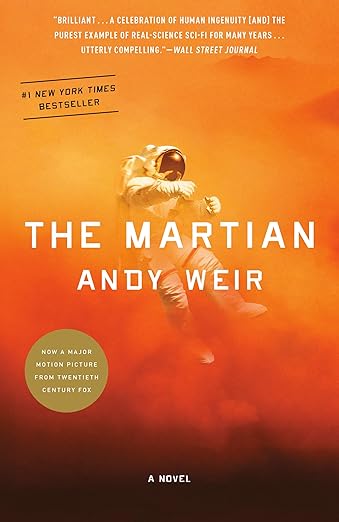
Hail Mary & The Martian: Potato Love

As part of our book club, we decided to take up interplanetary themed works by Andy Weir. Hail Mary releases next year in March, and it seemed like a really cool idea to get a little astrophage love beforehand. 

So, we started off with Martian, watched the movie, then moved on to read Hail Mary. 

This led to many interesting outcomes. The first was more primal in nature. 

🥔The scenes where the protagonist, Mark Watney set up and farmed potatoes on Mars, appealed to all of us. Far fetched, but so is almost everything humanity has achieved up to this point isn’t it? Who doesn’t love to see a little potato pant sprout in a red and dusty planet?

We developed a new appreciation for potatoes and all the ways in which we make it. Poori sagu, potato fry, kaara curry, mashed potatoes, baked potatoes, dum aloo, french fries, potato chips, hash browns, cream of potato soup. 

Every time I pick up a potato these days, I gaze at it with awe. The other day, I watched a little sprout from one of it’s eyes, and the son gave me an eyeroll. 

“If potatoes could save medieval Europe from starvation, they could do anything, couldn’t they?”

“Yes – I love this new honey roasted szechuan style potato that you made for me the other day, so I can’t really complain about this new potato love can I?” said the wise fellow, and I laughed. Honey roasted s.style potatoes it is.

🧑‍🚀One of the many things that occurred to me as I was reading the Martian book was to see which of my friends were best suited for the different roles in the book. Who would be best suited for Mark Watney (not as a replacement for Matt Daemon of course!), but from an engineering and problem solving perspective. I am an engineer, and am surrounded by engineer friends after all. Who would be the best Dr Venkat Kapoor driving things from the NASA side? Who would be the scientist diplomat who works with the Chinese team? Fascinating exercise. 

👭One of the many things I liked about the book is how Andy Weir goes out of his way to show the bond between the astronauts on the Martian crew. Selecting a top notch team is a hard enough task without having to consider the effect they would each have on the other in a closed space for extended periods of time. What psychological tests must they have to figure out friendship, respect, and trust among the crew after/before all the obvious things related to technical competency are taken care of? 

💫Let me play a song I said the day after we watched the Martian movie. The son groaned. “No – I want something fun – not melodious today.’ he said. 

“I think you’ll like this one!’ I said with a confidence that stems from knowing the pull of the cosmos on the son’s psyche. 

There’s a starman waiting in the skies.” David Bowie’s song filled the car and the pair of us bobbed to it startling folks in neighboring cars at rush-time.  

I already like the song by Harry Styles in the Hail Mary trailer. It’s one we listen to often. “Stop your crying it’s a sign of the times

The movie, Hail Mary, is slated for release in Mar 2026, and we are looking forward among other things to see how the Eridian, Rocky will be visualised. Any of you looking forward to the movie?

Also, what did you think of the Martian book and movie?

Exploring The Anthropocene: Life Between Cosmic Events

The Anthropocene by John Green

In the book, The Anthropocene by John Green, there is an essay in which he he mentions Mark Twain’s life being sandwiched between the two appearances of Halley’s Comet 76 years apart. He was born the year it was born, and he wrote famously the year before his death that he hoped to go out with it, and he did.

When I read that the first time, I felt sorry for him. He was born in 1835, and died the day after its perihelion in 1910. I hope he got to see the second occurrence. Imagine being alive for 2 appearances and not being able to see them both times. I suppose there is a poetic beauty to being born and dying between the spectacular cosmic events. But then, plenty of people did not see Halley’s comet even when it was visible in their lifetimes, so what’s the big deal?

Halley’s Comet

I remember being excited about Halley’s Comet in 1986. I was thrilled at being included in the viewing party – it was for my older sister’s classmates, and they had agreed to let her little sister tag along. 

I remember peering through the telescope. I cannot say with any conviction that I remember the comet itself. Some blurry recollection is all that remains. But the feeling of the evening remains. The excitement at being included in an elite group of senior students, the protective aura of having my older sister and her friends look out for me, and the cold temperatures of the night. That cup of Bournvita before bed was enough. 

Astrophilia

Nights and stars seem to have similar experiences ever since. The feeling more important than the viewing itself. For a star is a star. A celestial object – a celestial object – nothing more. Yet spectacular enough to be other-worldly. To tap into the possibilities of a vast universe. 

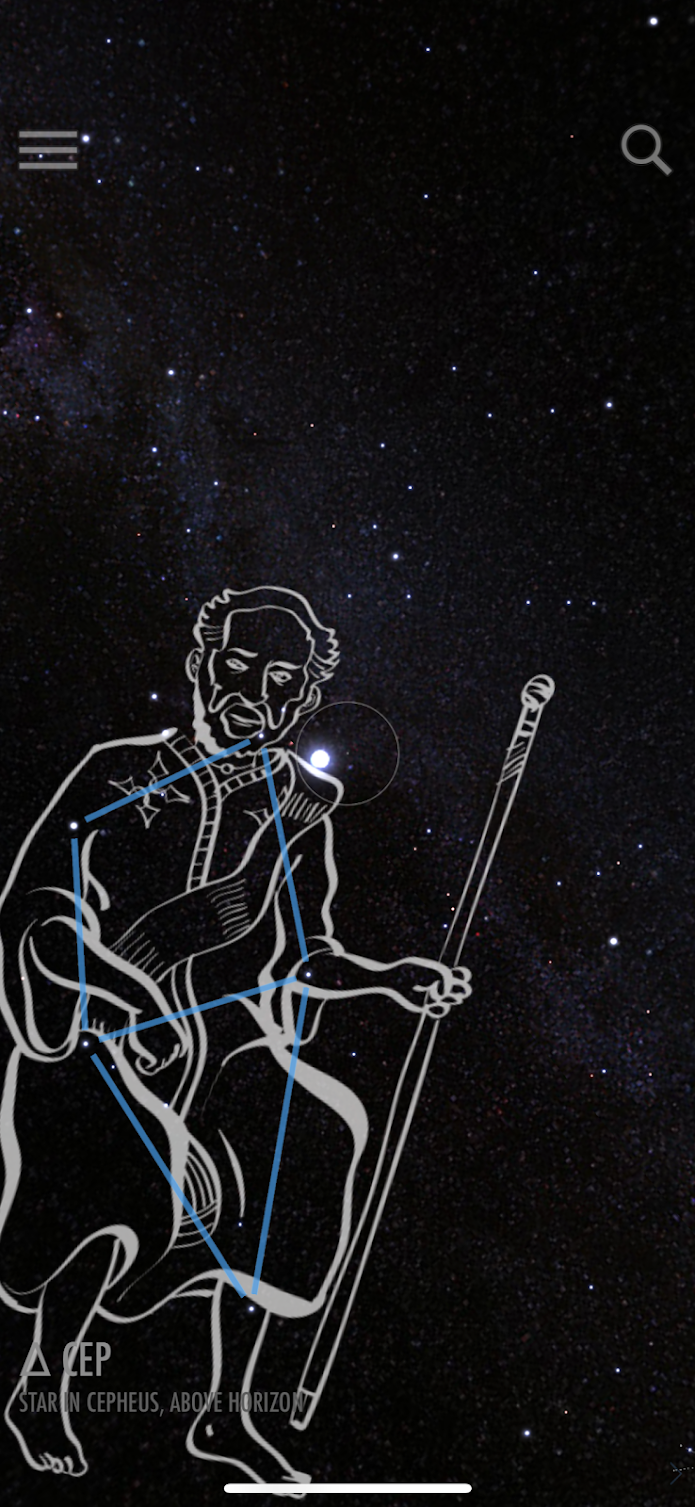
One night, we were out looking for a star system, Delta Cep in the Cepheus constellation, and I could not help wondering what their Delta-rise and Delta-set looked like on the planets in that star system. Did they have moons beaming the reflected lights of the stars to them? Were there any microscopic creatures willing its way into rudimentary life? Life seems to be so hardy and resilient and willing to thrive, it seems a little surprising that we have yet to discover traces of life elsewhere. 

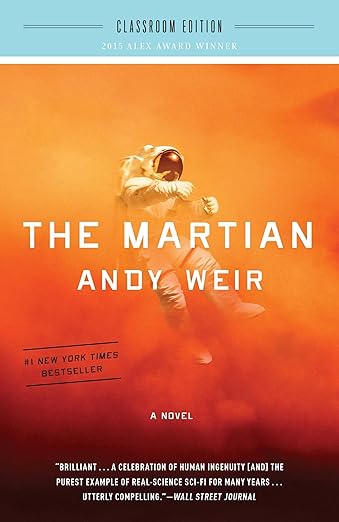
The Martian by Andy Weir

We were reading The Martian by Andy Weir for our book club, and thoughts of life elsewhere held all the more appeal. One only had to peer at the way weeds take root and crack through pavements, to see how resilient life can be. (It is another matter altogether that the plants I do try to grow on purpose seem to fizzle out on me, and routinely droop and call it a day, but that is a post for another day. ) 

In any case, it got us all thinking about all the things that enabled a planet full of sentient life, and how we sometimes forget to marvel at the sheer beauty of it. Wrapped up in our worries, anxieties, and livelihoods. 

The son is doing a science experiment in which they are experimenting to see how microbial colonies develop in  slice of bread under different conditions. In a fit of whimsy, he spoke and sang to the bread (gave it lectures on George Washington – his latest obsession, sang a Hamilton song) – to get the microbes on the slice, and has placed them in airtight containers in different conditions throughout the kitchen – in the dark, in perpetual light, and in freezing cold conditions. It will be interesting to see where life can thrive. 

That life had a starter kit is miracle enough, but the fact that it thrived enough to produce the kind of beings we find on this planet is astounding, and, yet, we forget it everyday. 

We are reminded periodically about the miracle of our lives through celestial objects, meteorites, the beauty of a full moon, the blooming of the kurinji flowers every 12 years, the cicadas coming to life every 17 years and so on. Still we forget. We forget to stop and marvel. We forget to stop and think.

The book of essays in The Anthropocene Reviewed by John Green is an interesting read. For it each is an essay about a different topic – short but through provoking. Covid-19, geese, Halley’s comet. Combined with the kind of scientific and regimented problem solving that a book like Martian makes you think about, the possibilities to keep oneself occupied is manifold – like the possibility of life itself.

Mine Eyes Have Seen The Glory

I have always been fascinated to see the world through another’s eyes. Maybe one of the reasons I am drawn to Fiction. It does seem to be an innate trait too. Obviously when I read the book, Eye By Eye – Comparing How Animals See – By Sara Levine, illustrated by T S SpookyTooth, it brought the eye fascination back in full force.

img_2088

I closed my eyes after reading – it was well past midnight – I had probably read 3 or 4 different books and I really needed to sleep if I had to be a functioning adult the next day. So I did. I closed my eyes – wondering about eyes.

If there is one overused trope in fiction, it is the eyes being the mirror of the soul. It is . Please don’t get me wrong. Expressive eyes are amazing. But I do find it over-used. How the eyes turned flat and gray, how the eyes were blue with excitement (Can eye color really change like that?) Also can the eyes show everything happening in another’s soul? The pupils dilated, the eyes red. 

In reality, how often do we sit and observe another’s eyes? I am reminded of this experiment by Sheldon & Penny of Big Bang Theory fame

The Big Bang Theory – Penny and Sheldons love experiment S08E16 [1080p]

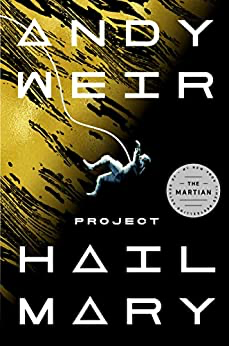
However, it is beautiful that we have an organ that allows us to experience our world in such a wonderful manner. In Andy Weir’s book, Project Hail Mary – he meets an alien species, from Erid in the Tau Ceti star system 12 light years from Earth, who do not perceive light. That made for an interesting premise – for they were an advanced civilization able to design space travel etc without sight.

image-3

https://en.wikipedia.org/wiki/Project_Hail_Mary

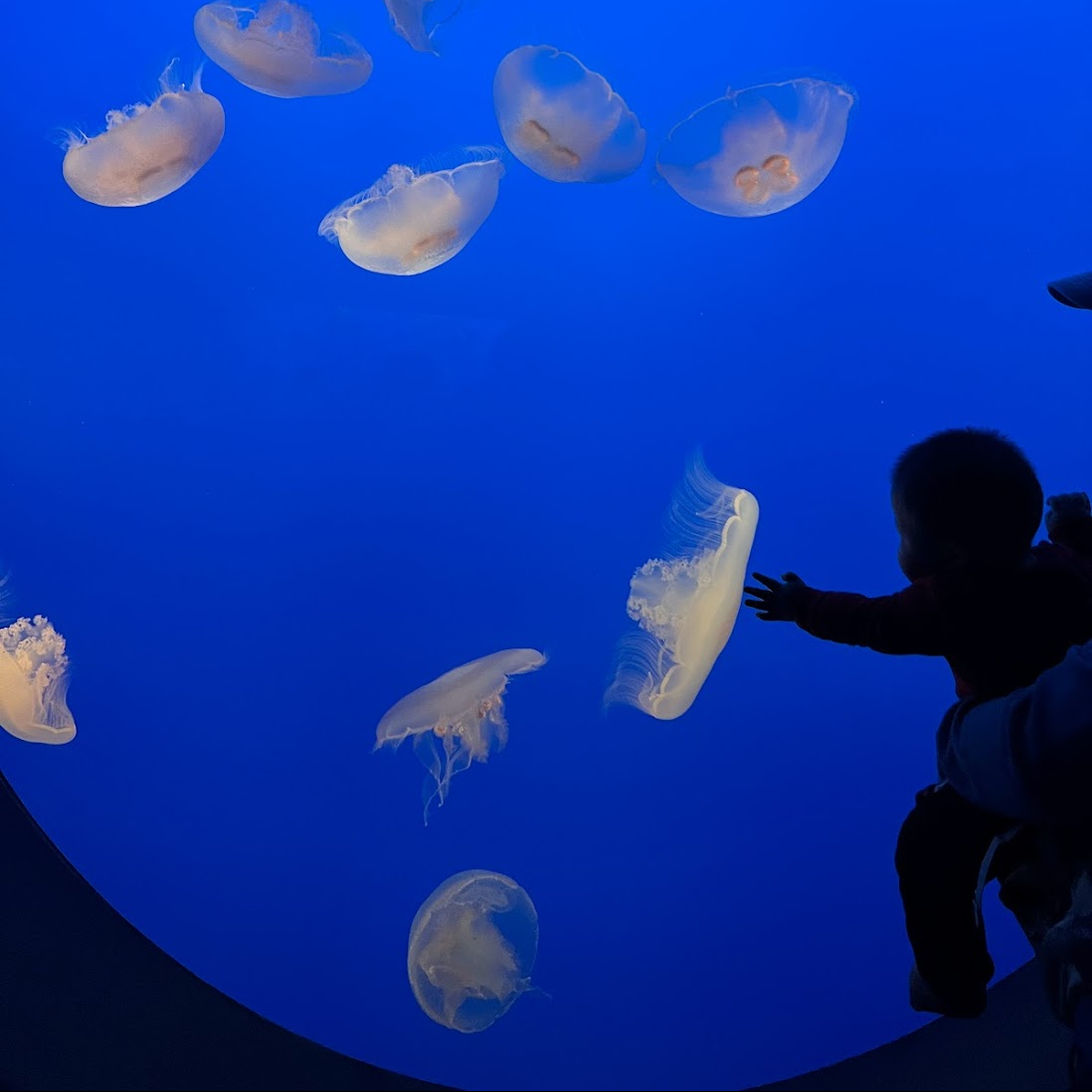
Anyway, where I’m going with all this meandering about light and sight is that, I was shocked to read that some underwater creatures do not perceive the color blue, and navigate a gray world instead. It made me sad for some reason – the blues are all we think of when we think of oceans and the lives it nurtures. How many shades do we have to describe the blues? Cerulean, Turquoise, Teal, Cyan, Aqua, Sky Blue, Royal Blue, Light Blue, Navy Blue and all the shades in between, and yet some creatures of the deep sea see none of that. Starfish, for instance, only perceive light as a vague form of light – they do not perceive differences in wavelength. 

cropped-img_5618

Cuttlefish, with their pupils W-shaped – what do they perceive? 

Seeing the world through another creature’s eyes can be rewarding, interesting and will make us more empathetic and passionate towards caring for our environment and preserving all the different kinds of life, would it not?

I might have made the goat whose eyes I stared into on my walk very nervous. You see? Ever since I read that goats have rectangular pupils, I am drawn to them. They allow me a moment to observe their pupils, then turn away bored. Interested in getting to that low-lying branch to eat. 

One goat even gave me an amused look – I did not detect amusement in the eyes if that is your question, I saw the face quirking up differently and moving away as though shaking its head.

Books:

Our quaint cosmic neighborhood!

Everywhere on social media and news platforms were images from the James Webb telescope magnifying in glorious detail sections of the universe billions of light years away. The universe has enlightened us all and reminded us of our humble place in it once again. In the midst of all this chaos, and enormous gas clouds is a tiny planet where our particular kind of life evolved capable of acquiring these images. 

If, along with these images, and the equally glorious full moon, one has not caught a whiff of shoshin, I urge you all to do so. I also have the resident astronomer of the house on summer vacation, so I am constantly being given statistics along with the images. 

It is fortune indeed to, purely by chance, be immersed in starlight myself even in the reading world.

The beautiful images in the children’s book: The Stuff of Stars – Illustrated by Ekua Holmes, Written by : Marion Dane Bauer 

The Stuff of Stars by Marion Dane Bauer Illustrated by Ekua Holmes

I just finished reading Bewilderment by Richard Powers last week. Bewilderment: the book and the feeling

I am now reading Project Hail Mary by Andy Weir.

After a walk under the stars, our corner of the universe seems sanguine – the countryside of the cosmic arena. In our suburban areas, not too many stars are visible, and the gas clouds in the James Webb photographs seem surreal. The universe is a happening place – stars and galaxies being born every day, yet the rise of our faithful moon glowing rose-gold in the early evening makes for a satisfying adventure enough in the cosmos. 

“The laws that govern the light from a firefly in my backyard as I write these words tonight also govern the light emitted from an exploding star one billion light-years away. Place changes nothing. Nor does time. One set of fixed rules runs the game, in all times and places. That’s as big a truth as we Earthlings have discovered, or ever will, in our brief run.” 

Richard Powers, Bewilderment

With images such as these, we are perhaps closer than ever to finding another planet that is capable of harboring earth-like lifeforms. 

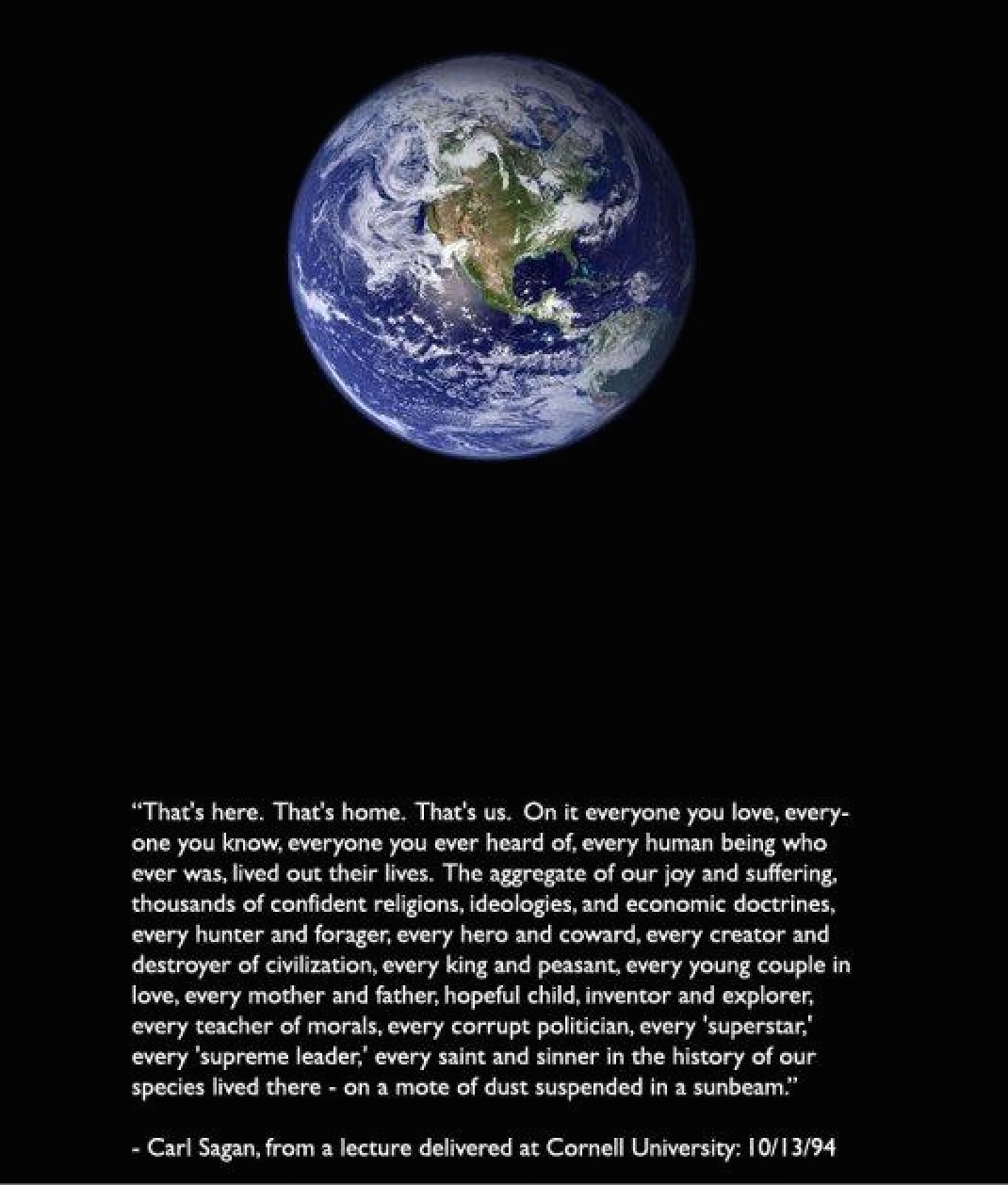
But till then, Carl Sagan’s words hold true: