The Past, Present and Future of Jobs

“So, you work at a job that essentially takes away your own job?”, said the son.This is the kind of meta stuff that he finds exciting.

The Thanksgiving week-end was rife with conversations about the corporate drama that in yester years could be equated to the coups of thrones. Would the CEO go? Would the Board of Governors go? Would they both go? Who would be their replacement?

Last year the world popped their popcorns and watched the unfolding drama of an unraveling Twitter with Elon Musk and his hostile takeover of the company, now rechristened X, though the URL still points to twitter.com because the TFE team was probably let go.

This year, it seems much of the dramatic action came from OpenAI CEO, Sam Altman. In modern day Wall Street wars, CEOs, (or C-Staff) and the Boards of companies provide for much of the action. Will the market hold? Will the Sensex drop?

What happens to the interest rates?

One of our friends was explaining to the children about their own roles – technical roles in which they enable AI to be utilized intelligently. One was working on images, another on code frameworks itself. A niece who was majoring in biology told me how they were already being encouraged to use ChatGPT to generate code for them. They only needed to see the results of the datasets fed into the model.
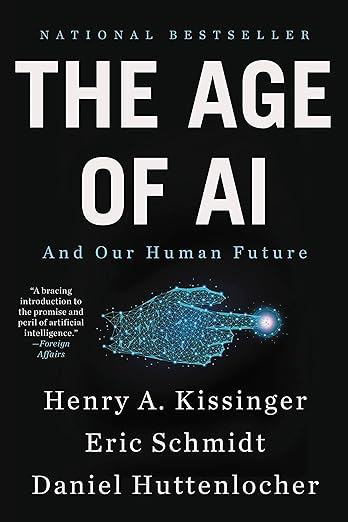
age_of_ai

Fascinating as it all was, I was left musing on the future of work. It seems a rather recurring theme of late. There are image generators to replace artists, code generators for software engineers, of course plenty of writing that can be replaced with intelligent prompting. So, why not the design and maintenance of these systems too?

I picked up the book from my recent library pile:

The Worst Children’s Job in History – Sir Tony Robinson
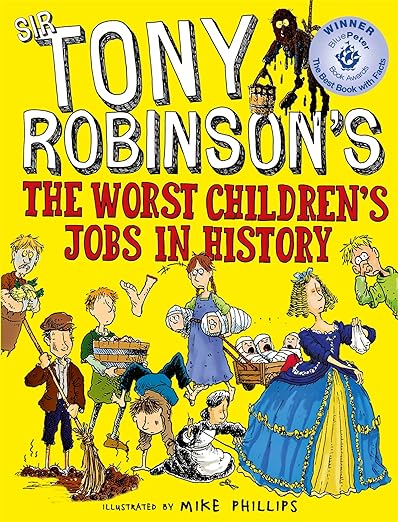
worst_jobs

The book was truly horrific and true. If anyone was wondering about the future of jobs and feeling glum, they could actually be grateful that the past nature of our jobs are well behind us.

Every job not only held misery, but a generous helping of walloping, not enough food, abysmal conditions, no thought for safety etc. Compared to those jobs, the present day conditions of occupying ourselves and our children seems fantastic. I only hope this trend continues for, our current nature of jobs is about to upended again.

It seems with the speed of technological challenges, the cycles with which our jobs are upended seems to be quicker and quicker.

A couple of generations ago, seamstresses, tailors, knitters, bat makers, ball makers, farmers, equipment handlers all saw their jobs upended by mechanization.

Then the next generation saw people’s fortunes needing more specialized skillsets such as coding, scientific knowledge etc.

Recently, call center jobs, desk phones, phones that were in the family room all went away, to be replaced by cell phones. Those of us who remember having to take a friend’s call in the living room with three uncles, five aunts, three cousins of varying age and maturity levels, two grandparents and a maid, will forever envy the children of today who quietly buzz out of vicinity taking their phone calls mysteriously with them. 

The next wave of AI seems to be disrupting industries that I’d hoped would not be. Creative industries that are already hard to make a living in: storytelling, image generation, writing, etc

Will our grandchildren read books about us in this era and feel sorry for us that we had to slave in front of our computers all day long to accomplish certain things, spend days getting tests done in medical labs to determine what was the matter with us?

What would the future of our jobs look like?

More importantly, in this quest for bettering the use of our time, do we hope to become at peace with who we are without being defined by what occupies our time? If so, maybe we should start equipping ourselves towards that, shouldn’t we?

Let me know your thoughts.

Books:

  • The Worst Children’s Jobs in History – Sir Tony Robinson
  • The Age of AI – Henry Kissinger

Write an ode to my wife, my life

“So, will I be getting my romantic poem then?!” I teased the husband who was looking sheepish. I giggled at his obvious discomfort. He is the sort of fellow who relishes the sentiment behind  P G Wodehouse’s statement:

I once stayed at the residence of a newly-married pal of mine, and his bride had had carved in large letters over the fireplace in the drawing-room the legend: ‘Two Lovers Built This Nest’, and I can still recall the look of dumb anguish in the other half of the sketch’s eyes, every time he came in and saw it.

  • P G Wodehouse

We had been gurgling on about some rom-com movie, a rather touching spot of sentimentality that clinched the deal between the love-birds and all the rest of it. Which led to me to ask for my romantic poem. It is an old joke between us: we both know he is no poet, I am no queen, and so it goes. 

I needn’t have worried though. If ever the man is discomfited, it is but a fleeting sensation. For he leaps into problem solving mode almost instantly. A few minutes later, the cocky fellow strode into the room looking pleased with himself. 

“Check your WhatsApp messages!”, he said. 

I did, and burst out laughing. He had done it. He had sent me a horrendous poem full of lines from 1980’s Hallmark cards, all culled together.

“Oh my goodness! Did you search up the first “romantic poem for my wife” and send it? I asked. I was laughing now, and he disappeared again looking even more pleased, and a sentence thrown to the winds, “The poem doesn’t speak of your particular gifts you are right. One minute.”

Then. A few minutes of deep thinking could be heard – the brain whirring probably and he said: “Check now!” 

I must say it was much more than I expected. After seeing the previous attempt, I braced for a cheesy omelet. 

My love, my life, my wife,

You are a woman of many talents

You are funny and witty.

And your writing is wonderful

The “poem “ went on in this vein for 3 more paragraphs.“Really?! You wrote this? I didn’t quite slot you as a loquacious poet, but good job! “ I said. The husband puffed out his chest and looked proud of himself. Too proud in fact, and that gave me pause. I narrowed my eyes x-raying the man’s soul and saw all. The twitching of the smile that gave it away, the hearty thanks, and I said incredulous, “Oh my goodness! Did you use ChatGPT for these?”

He nodded looking so proud of himself that I clutched my sides laughing barely able to breathe.

“Pretty good right? I asked it to write a poem for a loving wife who is also a funny writer.”, he said.

I beamed at the problem solver. I suppose all poetically challenged lovers can now relax. They can get help. 

We had been talking about the ways in which this new technology can change things for us. Just as with every new piece of technology, there are pros and cons. I had been reading two books simultaneously :

  1. The Age of AI and Our Human Future: By Eric Schmidt, Henry Kissinger and Daniel Huttenlocher 
  2. Impromptu: Amplifying Our Humanity Through AI : By Reid Hoffman

Excerpt from Impromptu:

“Mintz immediately integrated the new tool into his decades-old teaching methods. Within months of ChatGPT becoming public, Mintz started requiring his seminar students to write their essays collaboratively with the new tool. As homework, they bring the ChatGPT prompts they tried and the responses they received for class discussion. They must turn in their final papers with a log of changes to the machine’s output.

As a great teacher, Mintz chose to use ChatGPT not as a source of answers and authority, nor as a replacement of his or his students’ work, but as a tool to help his students learn individually and together.”

ChatGPT: Threat or Menace?: By Prof Steven Mintz

Steven Mintz is professor of history at the University of Texas at Austin.

The book goes on to compare the use of calculators in Mathematics teaching a few decades ago:

“In 1970, the typical calculator was too pricey for wide- spread use in schools, but they hit a tipping point in the mid- 1970s. Many parents and teachers were alarmed at the influx of new tools; they worried that math skills would atrophy and students would simply cheat. 

By 1980, however, the National Council of Teachers of Mathematics recommended that “mathematics programs [should] take full advantage of calculators . . . at all grade levels.” Today, most math instructors consider calculators to be a critical part of math instruction, and many states mandate calculator use with certain tests. “

It is curious to see how human intellect is ever ready to thrive and adapt and hopefully stay abreast of these. There are now jobs being created for Prompters for those who can get the ChatGPT/ OpenAI platforms to coax the AI platform into  answering particular queries.

There are cautionary stances to be taken and our laws may not always evolve fast enough to keep abreast of technology. The buzz of AI is the most fascinating challenge thus far, and I am rooting for our species to master its use as humanely as is possible. Use it for the good of the world – climate, healthcare  (physical and mental), food production, education and so much more.

But now, I am going to savor the husband’s poem. After all, it did say:

Thank you for being you.
You make the world a better place.

Professor Mintz would’ve been proud of the poem 🙄