Homo Incredulitatis

For the past few years, we have not watched any of the Harry Potter movies in the home because we did not want to ruin the Harry Potter stories for the little sponge in the household. So, we waited patiently till he read Harry Potter and The Sorcerer’s Stone. He read some of it, had some of it read to him, and he discussed the whole of it with his Harry Potter wise sister. (Please check out the latest edition with illustrations by Jim Kay. His illustrations are beautiful as if he lived and breathed in the story himself.)

Screen Shot 2018-02-05 at 12.27.47 PM

He only had the last chapter left, and savored the thought like the last piece of cake. The pair of us snuggled up one day with the rain pattering the windows and read. I read in the low rumbling voice of Albus Dumbledore:
‘As for the Stone, it has been destroyed.’
‘Destroyed?’ said Harry blankly. ‘But your friend – Nicolas Flamel – ‘

Dumbledore smiled at the look of amazement on Harry’s face.
‘To one as young as you, I’m sure it seems incredible, but to Nicolas and Perenelle, it really is like going to bed after a very, very long day. After all, to the well organized mind, death is but the next adventure. You know, the Stone was really not such a wonderful thing. As much money and life as you could want! The two things most human beings would choose above all – the trouble is, humans do have a knack of choosing precisely those things which are worst for them.”

I could not agree more. Fresh from my readings of Homo Deus: A Brief History of Tomorrow, I was already uneasy with our hideous choices for progress:
An economy built on everlasting growth needs endless projects – just like the quests for immortality, bliss and divinity.

The husband had spent the afternoon watching a movie with some very interesting sound effects. A sci-fi crime thriller of one who had moved his consciousness into the ether and could possess bodies at will. “Something like Voldemort, only he could find one horcrux at a time and keep going.” said the husband.

Living for ever, resurrecting species back from the dead?

Why? A few years ago, we played a game in the car with the children where we asked the children which animal they would bring back from extinction, to great hilarity (Dodo, Dragon, Dinosaur Dis-apparitions) . This had such an impossible Sci-Fi feel to it, and that contributed to the thrill of the game. I mean you cannot bring back Dodos can you?

In less than two years, I read a book titled ‘Woolly: Bringing the Mammoth Back to Life’ by Ben Mezrich. I only read the book now, but work on that front has been going ever since we learnt to sequence a genome, and cloned a sheep. If pressed on the benefit of this move, I suppose mankind would say, “This will help reduce global warming by ensuring the Tundra permafrost is packed in with the stomping of large beasts.”

Screen Shot 2017-10-27 at 4.37.00 PM

I am not so sure. If anything, we use our considerable creativity to find grand purposes.

I was intrigued by the husband’s movie discussion on immortality in the form of storing one’s thoughts elsewhere. I have been looking at my thoughts ever since this discussion, and I got to tell you: There isn’t much going on up there. No future generation in the 25th century will benefit from my great wisdom. In fact, the number of times I resist eating chocolate, and then meekly give in, might be the greatest wisdom there is.

Projecting the future is a crummy business. An excerpt from the book, Homo Deus by Yuval Noah Harari:
While some experts are familiar with developments in one field, such as AI, nanotechnology, big data or genetics, no one is an expert on everything. No one is capable of connecting all the dots and seeing the full picture. Different fields influence one another in such intricate ways that even the best minds cannot fathom how breakthroughs in artificial intelligence might impact nanotechnology or vice versa. Nobody can absorb all the latest scientific discoveries, nobody can predict how the global economy will look in 10 years, and nobody has a clue where we are heading in such a rush.

Screen Shot 2018-01-26 at 3.31.08 PM

Why does the unknown scare us? If that is the case, isn’t tinkering with immortality even more of an unknown than death?

Our tales and myths are full of warnings against this very wish. From Bhasmasura, Ravana and Hiranyakashipu to Grindelwald, and Voldemort, we have read and ingested that immortality is not such a sweet bunch of grapes as it is made out to be.

Homo Sapiens seem to have forgotten that Happiness is only important when we have unhappiness to compare it against. Life is only good because we know it is finite, and we strive to make it a full, worthwhile one. Would I cherish every moment and live in the present and all that lark, if the present is all there ever is? It was a sobering thought.

Really Homo Sapiens are Homo Incredulitatis!

Books: 
   Harry Potter & The Sorcerer’s Stone: J K Rowling 
   Homo Deus: Yuval Noah Harari
   Woolly: Ben Mezrich
Movie: Mayavan
Myths: Bhasmasura, Ravana, Hiranyakisapu

My Dearest K-Nearest-Neighbor

One evening over dinner, we were swapping stories of the day when I told the daughter that she must sit up and pay attention in class, and not ‘droop like a plant in the desert’.

“If the teacher has deemed it important and relevant for you, you must pay attention”, I said ticking off a box on the Parenting list, and hoping my guardian angel was paying attention.

What had happened was, their History teacher had made them watch a documentary on the Civil rights movement. As far as documentaries go, this particular one seems to have been one of those glacier drifter-paced ones with soothing lambs-bleating-on-distant-hills sound effects. The class had fallen into a stupor, and the daughter’s friend had told her she saw her ‘wilt’ in her seat.  With many giggles, she assured her that she had seen her go from sitting straight backed to ‘drooping like a plant in the desert’. Whether these children imbibe any lessons in History or not, they certainly seem to have picked up a thing or two on the poetic touch.

Their teacher also noticed the supine trend in fashion, and quizzed them to see what they had managed to learn, only to be greeted with blank stares. So, he set them an essay to wake them up. The sleepy heads heard him mumble, “I want an essay, hand-written, not typed, on Edgar Evans’. Those who had not heard were helpfully enlightened by their fellow snorers, and they set about writing about Edgar Evans,  all the while wondering why their teacher, usually sound in the head, would set them an essay on a Vietnam war veteran when they were being woken up in a Civil war lesson.

k-nearest

After the busy pens had scratched for 10 minutes, one genius decided to ask the teacher Why Edgar Evans? To which the surprised gentleman fell off his seat, and said Medgar Evers(https://en.wikipedia.org/wiki/Medgar_Evers) – the Civil rights activist hero, not Edgar Evans.

The poor teachers!

‘Sleeping in class – tut tut!’, I said ticking the daughter off, though I had to admit the Edgar Evans gaffe was sound stuff.

In other news, you may have noticed that the New Year rolled around, and January whisked past. Resolutions were obviously taken with earnest in January.

The husband has resolved to read more. Now this is a resolution that has far reaching consequences, and we were not entirely sure we were ready to deal with it. What is the problem you ask? No? You did not ask? Well, never mind, I will tell you. It will be a good thing to get off my chest.

The husband is one of those people who beam at charging sockets and wi-fi connectivity in airplanes. While beaming, if you catch his eye by mistake, you can be treated to a most helpful dissertation on how wi-fi over the Arctic tundras should set your senses tingling. His engineering brain marvels and explains. If ever there was one who should’ve been a teacher, there he is readymade. So, of course, we groaned at his resolution. We know what that means.

Right enough, one day, as I was finishing up with the last dregs of cleaning up after a long, arduous day, the daughter came running to me , and said something had to be done about it. “He is boring me with sentiment analysis and K-N-N algorithms and stuff Amma.”

The husband said that the K-Nearest-Neighbor algorithm was most fascinating, and that we must show more curiosity, and showed every inclination to get started on K-N-N 101 right away.

https://en.wikipedia.org/wiki/K-nearest_neighbors_algorithm

I raised my eyebrows, and shoo-ed them both away – where were those noise canceling headphones when you needed them? A while later, the moon had said Good night, the books read, and I was ready to drift to that beautiful ocean where the spindle of dreams spins, and embrace that soother of souls, Sleep, when the husband traipsed in all set to deliver K-N-N 101 Lecture #2. Evidently, the daughter had firmly put her foot down, and sent him to explain elsewhere. I groaned and let him patter on.

k-nearest_1

I have often observed this during my college days as well. All I needed was a professor to lecture on topic-dear-to-his-heart and the mind would most suitably wander. I could see the senses quiet down, almost like I am paying a spiritual homage to the lecturer. The glazed eye has been mistaken for sleep, but it is a homage really. I found the intervening decades have done little to stop this trend, and I found myself pleasantly drowsy as his soothing voice explained depths in trees and coefficients. Mozart and Brahms could not have done better.

I could hear my guardian angel scratch furiously in the margin, the unsavory word: ‘Hypocrite!’

I assured the husband that I wanted only him to be my dearest K-nearest neighbor in the tree of life for many long years together yet, but would he mind very much if I listened with my eyes closed instead of open?

He guffawed loudly at this waking me out of my reverie most rudely and said,’TCHAH!’, and stormed out of the room in mock protest. It seemed like an apt teenage reaction to our teenaged marriage.

“Amma! Sleeping when Appa is explaining? Tut Tut! When knowledge is being shared, you must focus, concentrate and absorb it Amma, not sleep.” said the smart-mouthed scholar drooping like a plant in the desert.


Are We To Become Lab Rats?

‘Let’s watch something together Amma.’ , said the children one Friday evening. It is officially our movie night. Watching something that suits all of us is a true test of Democracy (An Email From Mars) The littlest fellow is the easiest to appease, and also the fellow you want to most watch out for. He sits there like a sponge absorbing everything: tilting his head to one side, looking through the corner of his eyes, this child seems like the ideal companion. But, his inappropriate quips at opportune moments have chastened us and we no longer welcome him saying, “Oh – he is too little to know.” He knows!

So, the debate raged – which show can we watch that everyone will enjoy?

Everybody Loves Raymond, Cosmos, Big Bang Theory? How about Lab Rats? 

A resounding cheer went up for Lab Rats.

‘Isn’t that show for Teens?’

‘Well…yes but this little dobukins watches it all the time with me.’ said the daughter tousling her little brother’s hair lovingly.

‘Really?’, I said turning around towards the fellow with my hands on my hips.

‘Yes….but Lab Rats is fine….not teenagie stuff.’ he said chuckling merrily.

Like he knows what teenagie stuff is.  Maybe he does and should that worry me? The daughter now tells me things are inappropriate for us to watch. I wonder what rules she uses.

tv_show

Lab Rats is a show about a family where the children have Bionic superpowers – Bree the girl can run free, Adam the hulk can lift a truck, and Chase the fellow whose name sounds like he must run after Bree, instead is the one with superior intellect. They live with their non-bionic stepbrother, Leo.

Like most Television shows these days, they had aced the humor, characterization and it was an enjoyable show. All the same, it left a niggling after-taste in me.

This show captured human desires in a nutshell. We all want to be better. Better than the rest, better than we ever were, better, faster, stronger, smarter. Better to do what?  And where does this betterment stop? We know how any concept can be twisted by thwarted minds to suit themselves as was evident in the sad state of Eugenics.

I am reading Homo Deus: A Brief History of Tomorrow by Yuval Noah Harari, and the same vein popped up again.

The modern economy needs constant and indefinite growth in order to survive. An economy built on everlasting growth needs endless projects – just like the quests for immortality, bliss and divinity.

Screen Shot 2018-01-26 at 3.31.08 PM

Human kind, when we set ourselves on the path to development, most probably do so with good intentions. The problem is once we fix the problems, it seems we can use these very technologies to make things better for those who do not need it. Like  plastic surgery for instance:

Modern plastic surgery was born in the First World War, when Harold Gillies began treating facial injuries in the Aldershot military hospital. When the war was over, surgeons discovered that the same techniques could also turn perfectly healthy but ugly noses into more beautiful specimens. Nowadays, plastic surgeons make millions in private clinics whose explicit and sole aim is to upgrade the healthy and beautify the wealthy.

In Homo Deus, the author goes on to point out this trend in bionic legs, Viagra and memory treatments:

When you develop bionic legs that enable paraplegics to walk again, you can also use the same technology to upgrade healthy people. When you discover how to stop memory loss among older people, the same treatments might enhance the memory of the young. 

No clear line separates healing from upgrading. Medicine almost always begins by saving people from falling below the norm. but the same tools and know-how can then be used to surpass the norm. Viagra began life as a treatment for blood pressure problems. To the surprise and delight of Pfizer, it transpired that Viagra can also overcome impotence. It enabled millions of men to regain normal sexual abilities; but soon enough men who had no impotence problems in the first place began using the same pill to surpass the norm, and acquire sexual powers they never had before.

(Bolding my own)

Growth is a wonderful thing. For the first time in the history of mankind, we are able to self regulate our belligerence, spend our resources towards ending disease and poverty, and feed our growing numbers. Science and Capitalism have enabled this wonderful state. But what next? This relentless growth has led to an inordinate strain on the one planet we have. Previously, we could look forward to discovering new lands, but now we have mapped every ounce of the Earth, and we know no Middle Earth or Earthsea is hidden anymore. We have tapped them all. Our only hope is to find a parking garage planet close by so we can continue to expand at the rate we are now.

no_garage

We need to change course for a sustainable future of our planet, and Capitalism with its growth needs seems to be ill-suited to call for such changes.

The recently deceased author, Ursula K Le Guin, said in a speech once:

“We live in capitalism,” said Le Guin, “Its power seems inescapable. So did the divine right of kings.”

I am sure our intense need to survive will push us towards self-regulation and conservation.

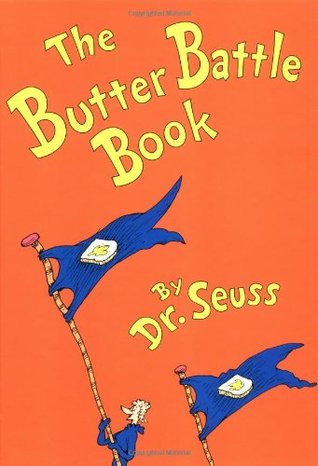
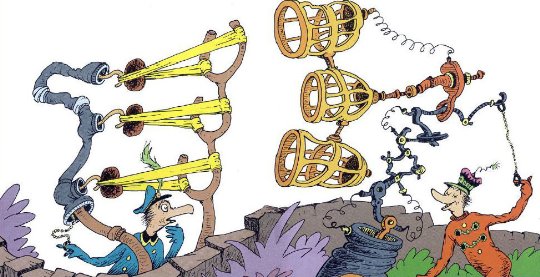
With immortality, bliss and divinity projects, are we not Gods capable of solving anything? But, we are also a species who can make the Butter Battle Book by Dr Seuss a sad reality.

Are we to become our own Lab Rats? What would our super-powers be? More importantly, will our shortcomings be even more apparent with our strengths magnified, or will our shortcomings be magnified too?

The Green Belt Movement

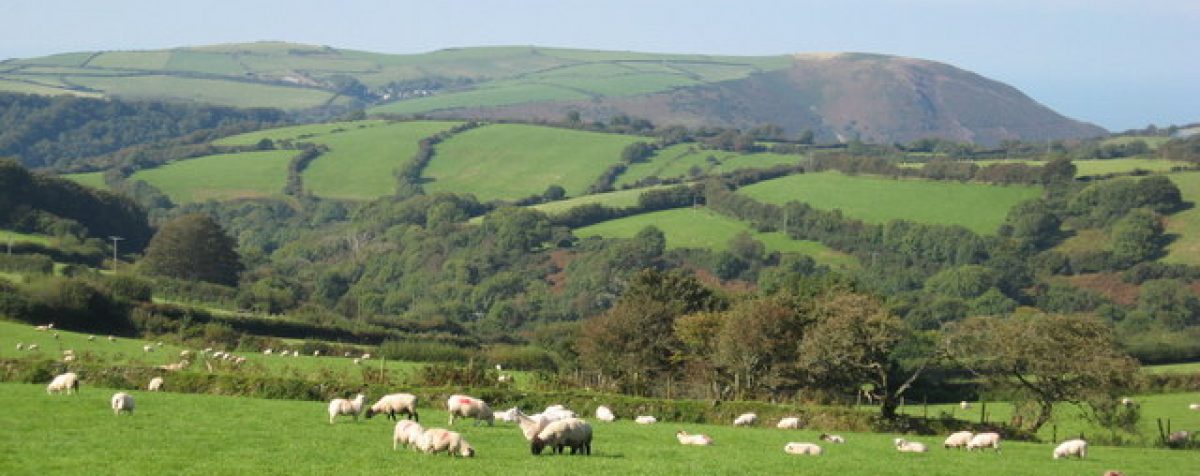
It was a beautiful day, and the children had been very good on a hike together. We had chuckled our way through the muddy paths still damp with the recent rains, attempted to climb a tree, looked out for robins, thrushes and hawks.  Cows on these hillsides were minding their own business and grazing. Calves of all sizes made a welcome sight. A couple of pups were frolicking on the trail, and made for great hilarity. There is something alluring about the fresh outlook of the young and we enjoyed the hike taking in these heartening glimpses of life thriving around us.  The children, puppies and calves on the trail that day were bursting with the fount of youth.

IMG_7682.jpg

From up above, we could see the tiny houses lined up like toys on glimmering silver ribbons. The Earth around us was clothed in marvelous hues of Green, and peace seemed to hail. ‘Did you know? All those areas down there were fruit orchards with thousands of trees.  Apparently, these hills too were more like forests about 50-60 years ago. Then they cut down the trees so the cattle could graze, but now the ranchers have gone, and we don’t really need all these hills for pasture, but the trees are gone too.’, I said sadly.

The children looked appalled at this, and we set about discussing how important and beautiful trees are. “I wish we could replant all those trees!” said my little environmentalists wistfully, and I heartily agreed.

The Green Belt Movement

A few days later, I was grazing in the library, when my eyes fell upon the beautiful book,  Planting the Trees of Kenya, by Claire A Nivola, The Story of Wangari Maathai. I picked it up intrigued, for I love to read about that beautiful continent.

Planting the trees of Kenya - Wangari Maathai
Planting the trees of Kenya – Wangari Maathai

Wangari Maathai was the first woman to win the Nobel prize from the continent of Africa. She was awarded the Nobel Peace Prize in 2004 for making the connection between natural environments and the well-being of the people.

Wangari Maathai – Nobel Peace Prize winner in 2004. First woman from Africa.

The book started off with the beautiful page depicting the Kenyan countryside when Maathai was a little girl. Kenya was clothed in its ‘dress of green’ when she was a little girl.  Fig trees, olive trees, cornets and flame trees covered the land, and fish filled the pure waters of the streams.

The Fig tree was considered sacred, and it was one of her favorite trees.

Planting the trees of Kenya - Wangari Maathai
Planting the trees of Kenya – Wangari Maathai

Maathai then went to the US to study with the Benedictine nuns where she imbibed the lessons of doing more than you receive and to make a larger impact on Earth.

Planting the trees of Kenya - Wangari Maathai
Planting the trees of Kenya – Wangari Maathai

She returned to Kenya, full of hope, only to see the landscape completely transformed. Even the fig tree was gone, the streams had run dry and large-scale farming had take over the individual farmers needs. Food was more expensive and she was shocked to see that ‘economic progress’ had left behind a sickly, weak, and much poorer populace.

She was the first person to make the link between people and nature living together in harmony. 

Why not plant trees?

As can be expected, she was faced with opposition and setbacks at every turn. Her nursery did not thrive, the governments did not embrace the program, but none of that deterred her. She encouraged the women to take up tree planting. She visited schools and gave the children saplings to plant and nurture trees and even taught them how to make their own nurseries.


She, and this is my favorite, appealed to the gun-bearing soldiers with the slogan : Gun in your righthand and a tree seedling in your left. She said to them that if their goal was to save Kenya, both aspects are equally important.

Ever since Wangari began her Green Belt Movement in 1977, tree by tree, person by person, 30 million trees have been planted in Kenya, and the planting has not stopped.

Planting the trees of Kenya - Wangari Maathai
Planting the trees of Kenya – Wangari Maathai

http://www.greenbeltmovement.org/wangari-maathai

What can we do?

When I look at the hills near where I live clothed in its rich shade of green in the rainy season, my heart sings. But I know this is a short-lived season before we have signs saying ‘Brown is the new green’, and the summers dry out the landscape bringing with it the threat of wildfires.

Last year, the very places that were most damaged by the wildfires were also affected by devastating flooding in California. These are nature’s wake-up calls.

SoCal – same areas affected by fires now devastated by storms

Every year roughly the size of the country of Costa Rica is being lost to deforestation.

UN Deforestation Statistics

Wangari Maathai died in 2011, but her lessons for us need not.  What will it take for a similar program to take root all over the world, so we can save ourselves and our beautiful planet?

The Purloining of Prince Oleomargarine

Days were blurring into weeks, and I had a flustered feeling. When days like these rear their heads, I reach for a children’s book to read. I’ve said it before, and I shall say it again, and again: Children’s book authors and illustrators are the true custodians of the human spirit. 

I had picked up a book left unwritten by Mark Twain, and finished by another author of today, Philip Stead. The book’s title is a mouthful, and its contents a mindful:  The Purloining of Prince Oleomargarine: By Mark Twain & Philip Stead (Illustrated by Erin Stead)

IMG_7473.jpg
The Purloining of Prince Oleomargarine

Apparently, Mark Twain, after a long day’s work, was asked by his children for a story using a picture as a prompt everyday, and this story was told to the little girls in France. He liked it enough to jot it down, but did not quite finish it.

When a book like that comes along, it feels like perfect cure for the cold winds whipping the Californian hairlines. The narrative voice makes you sit up and wonder how brilliant it is, and brilliance in simplicity is rare indeed. The book suffuses you with enough warmth to get you going through the windy, cold days.

The story starts off with a simple note from the Author explaining the circumstances and getting us to believe that Mark Twain told him the story about our hero, Johnny, while sipping tea and coffee overlooking a lake on Beaver Island. This simple note then sets the tone for two unreliable narrators in the story, and the book chugs on towards the hinterlands of imagination giving us a healthy dose of incredulity, hilarity and thought.

IMG_7487.jpg

Our Hero, Johnny, lives a miserable life on a farm with his miserable grandfather and hen named, Pestilence & Famine.  One day, he is sent off by his grandfather to sell the hen, and off goes Johnny with Pestilence & Famine. 

IMG_7489.jpg

A Jack & Beanstalk-y bit later, Johnny finds himself with an kind, old lady who trades him the hen for some old blue seeds, with the promise that if tended to properly, a plant will rise, and “when a flower comes up, eat it, It will make you full and you will never feel emptiness again –

“I tell you this”, Twain said to me, raising his teacup in the air, “there are more chickens than a man can know in this world, but an unprovoked kindness is the rarest of birds.

“So, did the hen die?” asks the Author of today, and Mark Twain says yes, while the author today believes that the hen and old woman are living happily.

“Your version lacks credibility”, said Twain. “Surely the old woman is dead. “

“And it should be noted”, he added, “that if Charles Darwin taught us anything, it is this: The chicken is dead too. And, lucky for her, because there are many unflattering ways to leave this world, but none quite so unflattering as being forced to live in it.

The blue seeds turn out to yield the Juju flower, and Johnny finds himself hungry and desperate even after eating the Juju flower. He walks to the edge of the forest, and falls feint only to look up and find a skunk, Susy. After nearly losing his mind Johnny says to Suzy, the skunk: “How is it that you can talk?”

“All animals can talk! … A lion can speak to a squirrel can speak to an owl can speak to a mouse. A camel can spend to a pig who can speak to an elk can speak to an elephant. A whale can talk to a gull. A giraffe can speak to a hermit crab. It is only humans that no one can understand. It is why they are so ignorant and backward and lonely and sad – they have so few creatures to talk to” Susy added. “But I do not mean to offend, You do not seem ignorant or backward.”

“But you understand me?” asked Johnny.

“Yes”, answered Susy, “for evidently you have eaten the Juju flower. It is rarely given to anybody.”

img_7486.jpg

Please read the rest of the book to see what happens to Johnny and how he finds himself going to the King of the land.

Mark Twain’s words are still prescient:

“Terrible things are always happening to Kings. It makes you wonder why anyone would want the job at all.”

Drunk Koala Dreams

The tale below yanks one through time, hangs out with koalas on Eucalyptus branches and yearns for hibernation like the grizzly bears do. Bear with me: I hope it is a tale worth your time.

Modern living can be fast. Cars zip down freeways, flights jet down runways, and people charge down escalators. We were set to do them all to get home from the quiet, beautiful Bryce and Zion national parks. We had had an enjoyable trip, and were going home again.

Nature does not hurry, yet achieves everything – Lao Tzu

Mankind hurries and achieves nothing – Drunk Koala

We looked at each other and glowed in spite of those pesky hunger pangs gnawing at the stomach. It had been a busy morning with nothing much to eat, and we now had time to tuck in before the flight. We had arrived at the Las Vegas airport earlier than expected.

The husband looked at me and said, “We have a whole hour before boarding time. Maybe we can go and relax in the lounge, eat something, and stretch ourselves a bit before heading back to board the flight. “

relax

My deer like senses tensed: I can sniff lounge trouble like the best sniffers on the priarie.

“But you heard the fellow – he said that lounge is 3 terminals away. Terminal A to Terminal D!” I said in case one had difficulty counting 1.2.3.

“Yes…but we can relax.” said the fellow who would ask Relax if he has ever had the pleasure of meeting him before. Relax indeed. Hummingbirds relax more while flying.

This is where I need to yank you folks through time a bit:

The day I heard the husband coo like a love struck dove on the phone to me from Bangalore airport, I knew that trouble lay ahead. A few years ago, the husband had been overseas on an official trip. One cold, bright day, I picked up the phone to hear his voice from the airport before he boarded the long flight back to the USA.

“I ate masala dosas! Hot, masala dosas!” he cooed. No brisk got-to-go-s, no frenzied recap of trip to the airport, nothing: just the musical sound of dosas. A surprisingly passionate tone of voice for food given that any trip to Incredible India involves grande servings of food.
“At 1 in the morning?” I asked incredulous that one felt like stuffing masala dosas at that time of the circadian rhythm.
Not one to be discouraged that easily, he said, “Why not? They also had a make-your-own omelet bar. “
“I’ll make sure I keep a salad and a crouton ready for you when you land.” I said.

drunk_koala1

The excesses at the Bangalore airport were due to the fact that he had access to a lounge area. Ever since, every time we set foot in an airport, I know that his mind is ticking with masala dosas and make-your-own-omelet bars: The dosa dream never fades.

This time we had hardly stepped foot in the Las Vegas airport on our flight back from Zion and Bryce, when the lounge itch got him. I diagnosed it in the eyes. Fervent enquiries told us we had to cross 3 terminals, hop onto a train, jump onto an elevator, skip on and off three walk-a-lators, before getting to the lounge.

The husband with the food gleam is like a koala high on eucalyptus sap. He has the same fuzzy look, and his companions have the same urge to give in to the sloshed fellow on the grounds of compassion for the dulled mind. It is the idea of food, nothing else. He’ll be fine soon, we tell ourselves and solicitously pat him on his back.

In the meanwhile, in his brain, the Sober Animal Trainer part tries reasoning with the Drunk Koala part:
Drunk Koala: Lounge! Drool. Food! Juice! Relax, enjoy! Masala dosas – hmm!
Sober A T: Yes yes, I know, but there are restaurants here
Drunk Koala: But Free food?
S.A T: Not at all, you pay for the lounge.
D.K: I know. But we already pay for the lounge.
Wise Sober .Animal .Trainer.: Stop harking back to Bangalore airport masala dosas! You know perfectly well, your wife is right. She always is, remember? Good. Never forget that. Anyway…point is: you are not going to get good food at the lounge here.

With this sound reasoning, the drunk koala in his mind won, and the rest of us jogged behind him as the man on a mission set off for the lounge in Terminal D. Every 5 minutes the sober animal trainer would cause him to pause, and say, “Do you think we should turn back?”, but D.K drummed his chest again, and off we went.

We arrived at the lounge looking like baby bears during spring time standing upstream for the salmon to come jumping up. Eager for the food in the other words.

The hospitality industry requires extensive human resources in order to thrive. A resource that the United States is not burgeoning on, in general. An irritated lady sat behind the counter and eyed us beadily, as if daring us to approach her. Her cold welcome did nothing to the hunger pangs.

The children and I left her presence to go peering around the refreshment nooks. Close inspection revealed 3 chips packets, 2 sad bananas, and 1 dehydrated apple peering out from a fruit holder. Next to that lay a tray with two flasks (coffee, hot water) and a plastic cane to stir the creamer and sugar. The feast was done. We peeked under the table to see if trays of burritos and sandwiches, heaps of salads and pastas were hidden there. Nothing. Hide and seek can be a depressing game sometimes.

I helped myself to a watery tea, the children swamped on chips, and the husband moodily bit into his apple. “We could leave early so we can eat somewhere?” he said.
The children stomped this down with the logical, “But we just got here!” argument.
15 minutes later, we started on our journey back to Terminal A.

drunk_koala2

As the flight made for liftoff, a low rumble was heard. It was our stomachs growling like grizzly bears. If ever you see little bears with their papa bear standing upstream with their tongues hanging out for the salmon, try breaking it to the bear cubs that the salmon this year had decided to swim downstream again instead of jumping upstream, and let me know what happens will you? In our case, Drunk Koalas may not know what to do, but grizzly bears fresh with the memory of hibernation do: even if they growl and kick their feet to do so. We promptly fell asleep.

The rest of the journey home is a blur best skipped for brevity. Two long hours later, when finally the glow of home-cooked food in our stomachs suffused us with a warm glow, the husband said, “That lounge idea wasn’t so great huh?”

I disagreed. I got a long walk, and a blog out of it. The lounge idea was marvelous.

Playing Aeronautic See-Saw with Lions

Have you thought about how an airplane crew feels with respect to their dress?  I look at the air hostesses tottering up and down the aisles wearing heels, tight fitting skirts, berets and what-have-you, and give them commiserating smiles when they look forlorn at the way their wards on the plane are attired.

The poor blighters look like they are dressed for one of those high brow diplomatic commissions where they stop countries from throwing tomatoes at each other. Just a moment, hold on – I feel like Archimedes in the bath-tub. I am not bathing, I mean, I feel one of those Eureka moments coming on: Maybe they are dressed for the part.  I have seen these stellar folks walk up to people and tell them to stop throwing tomatoes, or to refrain from kicking the passenger’s seat in front of them, though better judgement tells them, ‘To blazes with the tomatoes. D’ya think tomatoes can ruin that attire. Tchah!’

eureka

We had seated ourselves toward the back of the plane, and it proved to be an excellent vantage point to observe one’s fellow passengers scramble aboard. In sharp contradistinction to the crew, we seem to have rapidly climbed the comfort curve and equally rapidly slipped down the presentation curve. Some of the folks on that plane! I am not sure they would have been allowed to lounge in their own rooms in the days of Victorian clothing, let alone poke their heads out to observe traffic. Yet, here they were, looking rather pleased with their debonair sense of fashion taking their seats on an airplane headed to Las Vegas. Oh well.

“I should be used to the way Americans dress when traveling, yet it still manages to amaze me. It’s as if the person next to you had been washing shoe polish off a pig, then suddenly threw down his sponge saying, “Fuck this. I’m going to Los Angeles!” 

David Sedaris, Let’s Explore Diabetes with Owls

When everyone was strapped in, and the flight buzzed with the excitement of school children on a field trip, the flight attendant came up in front of the audience.  I settled down to watch a stellar production of how-best-to-fasten-the-seat-belts when I was met with a bizarre announcement instead.

The flight attendant seemed to feel the same way, for she came up this time, braced herself for some of that iron resolve that lions summon up before roaring, and asked for a passenger to volunteer to move to the back of the aircraft. ‘We need the lift to be more evenly balanced’, she mumbled.

None of that confident button-your-seat-belt attitude. Here was no lion, here was a caterpillar that was quite willing to poke its entire self back into the folds of a flower.

The thing smacked of euphemisms. Lift to be balanced indeed.

One appetizer bite sized lady gallantly stood up, and said she’d go. She was one of those svelte beauties that could have dotted these beauty magazines when young, and probably filled up on half a lettuce leaf. Mouse-like about summed up her appearance.

I could see the flight attendant struggle. I mean, how do you break it gently to the appetizer that laudable as the effort was, the entree is what the doctors prescribe for tummy rumbles? Lions educated in modern thought resist the urge to laugh at mice who offer help. Summoning up her L.courage again, and praying none of this would get tweeted and bandied about the internet, she tried again. ‘Thank you very much Ma’am. But, maybe, some one who can help the frontal pressure be eased, so we have sufficient lift for take-off. You can come back after the flight takes off.’

lion_see_saw

We could have helped the poor things by calling out, “She is looking for someone stouter on the scale folks!”, but the same modern education seemed to restrain us all, and we watched as a brave spirit stood up looking sheepish. He towered impressively, looking like a football player who could mow three lions when stirred. The airplane clucked approvingly, and gave the fellow admiring looks. I don’t think his mother could have looked on the fellow more lovingly when he tucked into his sausages. He followed her looking like Mary’s little lamb to the back of the aircraft, while she squeaked, “Thank you thank you sir. You may come back after the flight takes off.”

I suppressed the uneasy image of an airborne see-saw bravely, and pretty soon, we were airborne.

I wonder often about the life of a flight crew. They must have their moments of getting-back as they march smartly down aisles dressed like Napoleon at battle, trying to herd a lazy bunch of bovine swatters lounging around in yoga pants, and flannel night-suits. I like to think they attend black-tie events in pajamas just to get even with the world.

I wasn’t mistaken.

Just as soon as one calmed those take-off butterflies somewhat, the smart officer came on saying something to the effect of,  “Good evening all. We are cruising at 33,000 feet and a cool 23 F outside. Please relax and enjoy your flight.

I saw the impressive gentleman (the one whose mother lovingly … never mind. 3 paragraphs above) make his way back to the front of the air-plane, and I wondered how cold it is to be playing on the see-saw.

see-saw

Cosmic Nature of Living

We have several friends who are whiz-kids behind the lens, and rise before larks to photograph that first ray of sunlight through the crevice of the rock and so on. We are grateful to their creative labors, for the pictures show the artist behind the lens, and one needs only look at them to get an instant nature spa. We, on the other hand, forget to take cameras, or if we do, leave them behind in the car before getting out. Plans for sunrises are often derailed by the low trick the sun plays on us by beaming on us and waking us up with his rays before we beat him to it.

So, it is no doubt that armed with nothing but our cellphones, we had no method of capturing the brilliance of the Milky Way galaxy.

star_trails
Star Trails of the Milky Way Galaxy

Every time we have the luxury of traveling out of our urban areas swathed in artificial light, we try to step out at night to indulge in star gazing. The winter skies over Zion national park did not disappoint. The wisps of cloud that had floated in during the sunset to show us a more resplendent sunset had flitted away obligingly so that we may take in the iridescent brilliance of the Milky Way galaxy unobstructed.

A friend most kindly took a picture of the husband gazing up at the skies that had me yearning to see the sky like that.

milky_way_shree

Photographers will tell you something about shutter speed, and exposures and frames per second: Lark that always has me looking like a glazed doughnut at t+2 of the discourse. Therefore, I produce slightly alarming results that has physicists going back over their calculations to see how the focal length with the curvature and the light ray divided by exposure rate gave rise to the image that I seem to have obtained. (Just a moment: f/1.4 should blur that background, how did it blur the subject?)

I meander as usual. The point is: I thought we required post processing and superior photographic techniques like make-up on a set to be able to see that night sky. However that night at Zion national park, we had no need to resort to these advanced techniques to see the nebulous cloud of the Milky Way. The skies split open, and the stars poured their celestial brilliance upon us. If this was the show our ancestors enjoyed every night, it is no wonder that we have such wonderful myths and shapes in the ‘ever changing panorama of the skies’ (James Woodforde Parson).

As we looked up, we could not help wondering how the desert beauty in the canyons was so different from the beauty of the seaside and yet so unlike the snowy mountain plains. If this many vagaries of nature could exist on one planet, the mind boggles on what exists in the vast cosmos out there. We rarely stop to think of the skies in any color than the ones we are blessed with. It takes children to imagine that. I remember the childrens’ essays in first grade where they were asked to imagine another world, and their skies looked nothing like ours. They opened our minds to the possibility of having rust colored night skies, with swirling colorful gusts of wind and rainbow colored days. When asked to imagine extra terrestrial life, we are so limited by our imaginations that we seldom look beyond the slightly changed human form.

Yet on this very planet, we know that octopuses have a level of consciousness radically different from our own.

For a long time, we thought that being conscious was something unique to human-beings, then Jane Goodall paved the way for several scientists to study animals and not fear being accused of anthropomorphizing their subjects. Finally, in the 1970’s, Jennifer Mather’s work was acknowledged.  Quoted from The Soul of an Octopus by Sy Montgomery:

Once overlooked or dismissed outright, Jennifer’s work now is respected and cited by cognitive neuroscientists, neuroanatomists, and computational neuroscientists so that the Cambridge Declaration on Consciousness asserts that “humans are not unique in possessing the neurological substrates that generate consciousness”, and that “nonhuman animals, including all birds and mammals and many other creatures, including octopuses also possess these neurological substrates.”

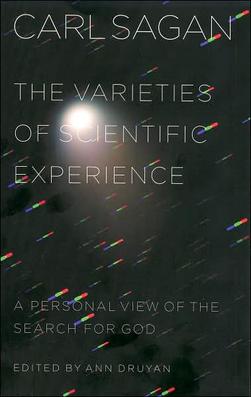
Days filled with the daily business of living truly and fully demand our attentions so that we often forget the vibrant universe in which we float. The night view from our planet, ‘ a tiny mote of dust suspended in a sunbeam’ as Carl Sagan so elegantly put it, is the best cure for arrogance there exists. Instead of taking our place among the harmonious orchestra of the universe, if all our dictators are fighting over, is a small patch in this tiny speck on a remote planet, we must feel sorry indeed for ourselves.

Sunset In The Queen’s Garden

In what was an impressive track record for last minute booking, the husband booked a trip, that flew us into Las Vegas and from there onto the beautiful sights in Utah. In one week, we had been in 4 states: California, Nevada, Arizona and Utah.

Sitting in the car that bright morning as we drove past Zion national park into Bryce Canyon national park, I felt the familiar stirrings of wonder. Nature often has this effect on me. The magnificence, brilliance and grandeur of nature never fails to instill awe. Always partial to trees, rivers and mountains when it comes to scenery, I could not help thinking how nature had once again jostled me out of my familiar likes and dislikes and opened my mind to appreciate beauty so different and so breath taking.

As Johannes Kepler says in his book, Mysterium Cosmographicum

The diversity of the phenomena of Nature is so great, and the treasures hidden in the heavens so rich, precisely in order that the human mind shall never be lacking in fresh nourishment. 

Buddha in Lotus?
Buddha in Lotus?

We had driven past Zion national park early enough in the morning to go on to Bryce Canyon National Park. We received the first glimpse of hoodoos in Dixie national forest. Set against the bright blue sky, they looked like statues from another world sent here to evoke an art that stuns and astonishes. We were listening to a Harry Potter audio book: a series that nudges even the most reluctant thinker into imagination, so it was no wonder that my mind buzzed with actors from another world setting the stage for the impressive hoodoo theatre.

“What should we do at Bryce?” asked the husband

“Well… the Queen’s Garden trail comes highly recommended, so that and a few other trails ought to do it.” I said vaguely, and continued musing.

Would the Queen’s Garden be as poetic as its name?  Would there be any hoodoos?  Little was I to know that Bryce Canyon hosted an entire amphitheater of them, and that we would be able to walk amidst them.

IMG_7300.jpg

One of the things I like best about road trips through the National Parks in the USA are the poetic names every point is given. Take for instance the Queen’s Garden. Instead of saying Rock Point or Hoodoo Lookout, the trail was given a mystifying  and satisfying name: Fairy Loop through the Queen’s Garden in the Amphitheater. Who wouldn’t want to do that? Apparently, one of the hoodoos resembled Queen Victoria in the setting sunlight’s shadow.

Could there really be a weird coincidence of having one’s silhouette set in stone that gives us a clue as to which human beings live on in name and fame? Or do we only assume likenesses to those already living on in name and fame?  Hoodoo musings are quixotic.

The day at Bryce Canyon was beautiful and as other-worldly as it is possible to get in so short a span of time.

Meandering through the park, we found ourselves washing up near the Queen’s Garden trail towards day’s end. The trail itself looped from Sunrise Point dipped via the Queen’s Garden and came back up near Sunset Point. If the point had not been named Sunset Point, would we have stopped to take in the grandeur of the sunset over the Amphitheater like setting of the valley? I am not sure. I do not think the sunset is any more spectacular here than at any other point in the Canyon, but simply by naming a point Sunset Point, we were encouraged to wait for the hues of the setting sun to unleash its marvelous palette of colors across the skies, thus bathing the amphitheater before us in surreal colors.

The setting sun took its time. It first peeked behind a hoodoo and then cast its fading light slowly upon the horizon.

As we stood there bundled up bracing for the sudden dip in Winter temperature after the sun sets, I could not help thinking of Ray Bradbury’s thought on the Happiness Machine in the book, Dandelion Wine: A Sunset is only beautiful because it doesn’t last forever.

While it lasted though, it was magical.

IMG_4979.jpg

“Doesn’t it make you feel poetic?”, I said gazing mesmerized at the hoodoos in the amphitheater before us.  “This Queen’s Garden hike reminds me of Alice’s trip down the rabbit hole. This is a Wonderland. The gargantuan arches of orange and pink beauty beckon!”, I said theatrically, flourishing my hands wide and raising my face heaven-wards. It is imperative at moments of impetuousness such as this to ignore teenagers inserting the practical note into life.

“It is just erosion.”, said the daughter bringing me back to Earth in a thud, but I saw her smiling happily and taking in the horizon.

Without art, science would be as useless as a pair of high forceps in the hands of a plumber. Without science, art would become a crude mess of folklore and emotional quackery. The truth of art keeps science from becoming inhuman, and the truth of science keeps art from becoming ridiculous. -Raymond Thornton Chandler 

http://www.zionnational-park.com/bryce-canyon-trails.htm Quote below:

The Queen’s Garden Trail leads hikers past wonderful rock formations, including Gulliver’s Castle, the Queen’s Castle and many that are unnamed. Man-made bridges are scattered throughout the trail. At the end is Queen Elizabeth’s garden and the Queen herself, standing on a backward facing camel, calling out orders to the ships in the garden. The queen can also be seen from Sunrise Point.

Standing there under the rays of the setting sun, waiting to unleash another cold night, before rising again, the daughter and I imagined the place as it would have been millions of years ago, with underwater life teeming in its depths, crafting the very hoodoos for us to delight in today.

“Nature does not hurry, yet everything is accomplished.” — Lao Tzu

If only, we let Nature go on its course without hurrying to leave our indelible imprint on the canvas, I am sure something even more remarkable can be handed down to generations after us.

The Quixotic Birthday Gift

Family and friends enveloped me with love and showered their kindness on me for my birthday. In the words of Oliver Gold Smith, I often think our lives are lived out in what is called the ‘vale of obscurity’, but this essence of living and giving bathes me in gratitude. This Thanksgiving, I counted my blessings with joy, thanked everyone for enabling a fruitful life and continued to ponder on the mysterious power of love.

I don’t care what physicists have to say about it, or whether the teenagers in my life roll their eyes, it is love that makes the world go around.

“So, what do you want as a birthday gift?”, asked the children dancing around me excited. I had seen and marveled their cards, and they looked on expectantly as I struggled to find a wish they could fulfill.

IMG_7166.jpg

Finally, I said,  “Sometime this year, I want to go a national park I have never been to before.

“Ugh! I don’t want to go another national park!”, moaned the daughter.

“Well…thank you for that marvelous gift my dear. Like Jane Austen says: They are much to be pitied who have not been given a taste for nature early in life. ”, I said.

She had the grace to blush and said, “Good job at the sarcasm Amma! But another nature themed vacation? Seriously?”

I nodded unabashed at this less than enthusiastic response. I had my eyes set on two national parks that I had been planning and dropping for the past 10 years: Zion National Park and Bryce Canyon National Park.

“Why? It will be lovely, we can go hiking, running and playing.”, said her little brother skipping at the prospect of the great open.

“Oh please!” was the only response she deigned to grace us with. Not one to mince words, she made it clear that she was a reluctant camper, and that I had pulled a low trick in asking for a National Park trip as a birthday gift. I chuckled. A grunt told me that the matter was under consideration, and I left the matter to rest for the time being.

The next morning we scrambled to school in the usual fashion. One snack pack lay forgotten on the kitchen counter, two clean socks had flown through the car window hitting the car-driver squarely in the cheek (Appa! Duck your head, Socks incoming!) , and three sheets of loose paper trailed the way to the car. I tootled cheerfully as the car left the garage, ‘Have a nice day! Remember – next week is off!’

Leaving For School
Leaving For School in the morning

That evening, the daughter came back beaming benevolently. Nibbling on a cheese sandwich of her own making, she said, “You know? It might be lovely in Zion national park this time of the year. “

The son and I exchanged quizzical looks at this volte-face.

Apparently, one of her close friends in school had said that the national parks in question were beautiful and that she would love an opportunity to go back there again. That evening, the banal national-parks-again tune had changed to a vibrant symphony of Zion-is-beautiful, but Bryce-is-much-prettier. I smiled to myself. Oh! The beauty of friendship. I only hope she continues to have level headed and smart friends, was my private thought.

The daughter’s friend was right: Zion had a majestic grandeur to it,  while Bryce Canyon can only be described as breath-takingly beautiful. I had never imagined sparse vegetation and sheer rock face to be this splendid.  I have always been more a lover of trees, and streams. But Zion and Bryce made me think of beauty in a whole other manner. It was as if in one short trip across 4 states(CA, NV, AZ & UT), we had been transported to another planet.

IMG_4979.jpg

A land where hoodoos made magnificent shapes against the blue sky, 

A place where bristlecone trees cling to cliffs

Towering over the abyss of erstwhile marine trenches, 

Where overhead, peregrine falcons swoop swiftly upon their prey 

Hundreds of feet below in the rust colored labyrinths. 

It is a vibrant diorama sparkling underneath the weak wintry sun in the desert

An ecosystem that has seen it all, and still persists.