The Degree of Shoshin

I wonder sometimes how the brain works. I mean, some references make us link to something else across the bridges of time and space where no ostensible link exists. Was astronomy the link? But that seems weak given that I ogle at the stars every opportunity I get. Could the 12 degree landing of Insight be the link? But the slopes that my mind linked to were at a 11 degree incline. And we were very proud that our little corner of the world could provide just the right 11 degree slope too – that is why I remember the incline so clearly.

Ignorant men raise questions that wise men answered a thousand years ago. Johann Wolfgang von Goethe

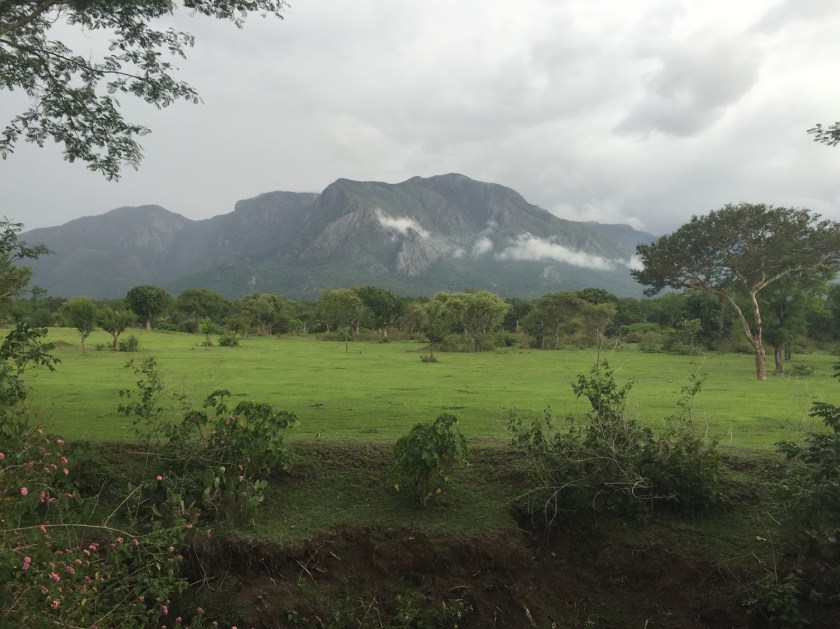
Maybe it was something to do with the specific angle at which the Insight can land on Mars that brought back memories of a trip to the Radio astronomy center in Mutthorai in Nilgiris – who knows?  The radio astronomy telescope on the slopes of the Nilgiris was magnificent and awe-inspiring. It still is. I remember hearing that the Tata Institute for Fundamental Research (TIFR) had scoured plenty of slopes in India and this humble village was deemed just the right one to capture radio waves. It had the right level of incline(11 degrees), minimum light pollution at nights, and we were proud of our unassuming Nilgiri hills for providing such a marvelous slope.

By Own work – Ooty Radio Telescope, CC BY 3.0, https://commons.wikimedia.org/w/index.php?curid=7463023


I remember going to visit the center with the father one rainy afternoon during the monsoon season. We often piled onto his scooter that the kids had lovingly nick-named Street Hawk given it tore through the streets with a ear shattering noise, even if we could run beside it. (I often wonder how it must feel for someone who goes to India for the first time from a country like the US or Canada, and sees a family precariously making their hazardous way through the haphazard traffic – obviously uncomfortable, but looking joyous and confident. Even cars here seem so cranky – “departing lane, departing lane” it goes on like a parrot on caffeine. Fine – relax! Talk about sticking to the straight and narrow path – sheesh kababs.)

Anyway that is how we toured the Nilgiris during our school holidays. We would start out on a supposedly clear day, the brother standing in front, his feet making sure not to come under the brakes foot pedal, the sister on the pillion seat, and self squashed between the driver’s seat and the pillion seat, my face turning a ninety degree angle to make sure I could breathe, and off we would go on our adventures. Sometimes, our Street Hawk could not quite pull up the intense slopes of the Nilgiris such as the Katteri falls, and we would all good-naturedly pile off, let the pater go up the slope on 1st gear, trudge up there, and pile on again. What was life without these little pleasures?

street_hawk

Invariably midway through our trips somewhere, the skies would attempt a volte-face: the sun would dip behind the clouds, a brisk wind would start around us, and the first raindrops would start. Sometimes, if the downpour got heavy, we would shelter at a random farm or village and nibble into the ample snacks packed for the trip, and head out again after the fierce downpour stopped. The dubious weather reports then were listened to with the amusing attitude of one indulging a child, and if it all went towards building the weather reporters’ confidence, it was time well spent was the general attitude. Ours was a forgotten corner of the world, and we loved it just the way it was. 

Off I went meandering around the countryside when I should have been sticking to the Radio astronomy tower as usual. The point is, I remember thinking as a child standing on that steep incline with the monsoon winds buffeting us from all directions, struggling to stay upright, and thinking for the first time how we must be standing at all. We are spinning on a very fast ball after all, gravity is all very well, but what would happen if Earth decided to just let us go for one instant? It was a terrifying thought, I clung a little harder to the pater’s solid hands and redoubled my wonder at how we exist at all. 

That is the beauty of space exploration isn’t it? It rekindles wonder. If retaining wonder in our day to day living is the mark of a meaningful existence to paraphrase the German philosopher, it is no wonder that we marvel childhood with its fresh perspectives, and its great capacity for wonder. The beauty of #Shoshin

“The highest goal that man can achieve is amazement.” ― Johann Wolfgang von Goethe

To All Astrophiles

“Did you know, the Voyager Insight is going to land on Mars tomorrow?” said an excited son. T’was the night before school reopened after a joyous 10 day Thanksgiving break, and the night before the much anticipated Insight landing on Mars. I looked at his shining face when it should have been a sleepy one.  The sparkle in his eyes did not smack of eyes wanting to make the journey into the Land of Nod any time soon. So, I sat down next to him and said, “Really? How do you know?”

That’s better, his posture seemed to indicate, and said, “Yes…Appa told me. It has to land at an 12 degrees angle it seems.”

“Why 12 degrees?” I asked intrigued. 

Space.com article : Mars Insight Landing

Quote from article:

“InSight hit the thin Martian atmosphere at about 12,300 mph (19,800 km/h), nailing its entry angle of exactly 12 degrees. If the lander had come in any steeper than that, it would have burned up; any shallower, and it would have skipped off the atmosphere like a flat stone across a pond.”

After chatting a little more on the impressive Mars voyage, I asked the little fellow if we should read a book on Space exploration. He nodded. Anything to keep from falling asleep.

So, we picked up the sweet little children’s book, “Also an Octopus” or “A Little Bit of Nothing” 

also_an_octopus
Also an octopus : or, A little bit of nothing / Maggie Tokuda-Hall ; illustrated by Benji Davies

Also an octopus : or, A little bit of nothing / Maggie Tokuda-Hall ; illustrated by Benji Davies

The book is about an octopus who plays the ukulele, and wants to get on a purple spaceship. Who can help it build one though? Why a rabbit scientist of course!


We laughed as we read the book. As different as it was from Counting on Katherine by Helaine Becker, Illustrated by Dow Phumiruk, it stretched one’s imagination in a thoroughly whimsical manner that made us giggle at the very thought of the Octopus on the spaceship. If ever we need to convince ourselves of the diversity of life that we seem to be threatening, we need look no further than the impressive marine life we host on Earth. 

counting_on_katherine
Counting on Katherine – by Helaine Becker, Illustrated by Dow Phumiruk

All space lovers should definitely read the beautifully illustrated children’s book, Counting on Katherine. Based on the scientists featured in Hidden Figures, Counting on Katherine illustrates the love for Mathematics and its application to space travels in the most endearing fashion. A child who has the inclination towards numbers cannot help deepen their fascination with them, and hopefully, those who do not share that fascination, will develop a curiosity towards them. I have always loved the look of a blackboard with neatly written mathematical formulae and calculations: this book captures the aesthetic beauty of the blackboard beautifully.

img_0287
Counting on Katherine – by Helaine Becker, Illustrated by Dow Phumiruk

Anyway back to Voyager Insight I said, “Do you think we can watch it land?” 

“Yes….it will be on You-tube.”, said the little fellow, positive that the image transmission from the Insight landing on another planet can make it to the nebulous internet without any trouble at all.

Here is a video link prepared by LockHeed Martin in collaboration with NASA’s JPL:

Automatically, my mind harked back to the old times when an image was work, precious work, with days in between clicking the pictures and getting them developed. When they came out, you saw the lighting could have been better the framing better, the shake a little less, and solemnly swore that you were up to no good, and waited it out till the next film roll proved it. 

I still marvel at any photographs we receive from Space. 

Human minds can adjust to improvements so easily – if only, we had the sagacity to adjust just as quickly to hardship.

Unicorn or Werewolf, I am Grateful

The day leading up to Thanksgiving has been a beautiful, beautiful day indeed. I cannot say I was calm and collected when I got up to see the earth scented with the first rains of the season. Even with the weather channels setting our expectations and all that, it was simply marvelous. I am a pluviophile and when we have gone this long without so much as a drizzle, I really cannot be blamed for a little overzealousness, can I? 

IMG_0726

The air quality over the past few days has been pegged down to ‘very poor air quality’. As a result of which, schools have closed early. The daughter has been rattling off statistics that the Air Quality Index indicated that it is the equivalent of inhaling 6 cigarettes a day or 8 cigarettes a day, leading to the most intriguing discussions between her and her elementary school going brother about smoking, second hand smoking, smog, and lung cancer. When I saw their faces one evening refusing to come out, I decided enough was enough and told them about how some children in highly polluted cities in China and India think the blue skies are some sort of poetic license, since they have never seen a clear blue sky. A smog-ridden world is not a beautiful one, I told them, but that doesn’t stop people from living, and finding joy; but only means we have to work towards finding a way to fix the problems.

Today, however, all of that was gone. We took deep breaths of the moisture filled air, looked afresh at the fall-colors – everything seems to be enhanced in its beauty. The earth seems cleaner, we can finally smell the pines and eucalyptus trees. I took the son out to play in the drizzle, inhale deeply and take a walk around the neighborhood.  The husband shot me indulgent looks, while the daughter gave me commiserating ones even as she patted my head, and said, “I know you love the rains Amma. Fine! I’ll come for a walk with you.” Sometimes, I really wonder who the child is.

img_0725

We spent the late afternoon in a golden daze (actually more of a silvery haze). As we headed home, the moon peeping through the scudding clouds made us all sigh once again, and I said I felt like a unicorn with all the magic in the air. The son, looked up at the skies, and said, “Don’t you mean a werewolf? It is a full moon remember?”

Werewolf or Unicorn, as long as we can enjoy the magic and feel grateful for all we are blessed with, I am happy. There is a reason Thanksgiving is one of my favorite holidays (the history of it aside), Gratitude is such a wonderful sentiment to celebrate. 

Happy Thanksgiving everyone.

When Seuss-isms Save Your Spirit

“Oh my gosh! You have to write about this!”, said the daughter laughing, and the son looked pleased with himself. He had uttered a Seuss-ism that just made the whole lot of us laugh out loud. I dilly-dally-ed on writing up the little anecdote and the incident has now slipped my mind. It had something to do with a packet of chips, some fellows playing on the street, some elephants and a circus. Something that reminded me of these two books by Dr Seuss:

If I Ran The Circus &

And To Think That I Saw It On Mulberry Street


I tell you a writer in the nourishncherish household has a full plate, and as a chronicler of sorts in the household, I tend to miss out on a lot of things, such as the tale of the water hose and the tulip bulbs, or the cartwheel aspirer whose tales of the leaping t-shirt kept us all enthralled, or the time the husband walked in to find a boy and his tiger entertaining the rest of us in the bedroom to chuckles and guffaws.

So, I hurried and wrote this down now before it too joins the nebulous places where thoughts and memories go: the duper pin lot of thunderbolt crate.

UUUUGGGGHHHH! This day sucks! GAAAAAHHHHHH!” I said exasperated. My family’s dinner, carelessly prepared, but tastefully done with the freshest of vegetables and the spiciest of spices lay in an orange goo splattered all over the kitchen. Like someone exploded a sunset on the ocean reef floor, only not as pretty.

It had been one of those days when I had dropped the daughter at Drombasollu, and picked the son at Pickabolou, then shopped for groceries at the Packed Aisles of Drabaloo, only to run an errand to the wasted lands of Grimes via the packed streets of Trafficity, before heading back to Drombasollu – all of this after a long working day on the grimiest streets of the city of the Somaridden, and back after a ride on the silver caterpillars of Mushart, not to mention 10 phone calls to co-ordinate who did what-s, where-s and when-s – with curt replies when the conversations veered to the how-s and why-s. I had run low on energy, even lower on patience and the ability to see the fun side of things was off hiding till I ventured to find it again.

The son came over, gingerly stepped around the splattered muck that I had intended to call dinner, and said, “Oh thank goodness you are not one of the engineers who work on the bridge of Bunglebung Bridge across Boober Bay – they have things falling from everywhere!”

This was from the book, Did I Ever Tell You How Lucky You Are – By Dr Seuss

lucky

He then gave me a hug from the back, and in a minute my tensions splattered too. I laughed at the genius of it, and hugged the little fellow. “Always read Dr Seuss my dear. Always! When you are ten, don’t forget them, when you are twenty, remind yourself to read them, and then go on reading them when you are thirty, forty and with tea, it will always be …. gah I can’t rhyme this anymore now!” I said, but the smile was back on my face.

“But it was pretty good!” said the little fellow encouragingly.

Within minutes, we had laughed and cleaned up the kitchen floor and were rummaging the shelves for another slap-a-dash dinner. When the husband and daughter came back from wherever their drombasolu, pickabolou route had taken them, we had a semblance of dinner ready again. Our spirits much revived by a Seuss-ism were smiling and happy again.

I doubly appreciate Dr Seuss, because I had never read his books as a child. But I get to enjoy them now, as I read them with the children – one of the many joys of immigration. It makes me a whimsical child again, and grateful for reading them at time when it is lovely to remind ourselves of the sunny days of youth again.

Like Graham Greene said of his famous work, The Wind in the Willows, which I thoroughly enjoyed reading every now and then:

“A book of youth, and so perhaps chiefly for youth and those who still keep the spirit of youth alive in them; of life, sunshine, running water, woodlands, dusty roads, winter firesides, free of problems, clear of the clash of the sex, of life as it might fairly be supposed to be regarded by some of the wise, small things that ‘glide in grasses and rubble of woody wreck’.”


The Cranes of Hope

Late one night, I read Sadako’s Thousand Paper Cranes by Eleanor Coerr. The book is based on the true story of a little girl called Sadako who contracts Leukemia ten years after the bombs were dropped on Hiroshima and Nagasaki. My heart attached itself to the lively, petite, friendly, active Sadako. Her energy is infectious and it leaps out of the pages and wants to make you skip too as you navigate the stairs and walk to school.

Sadako was two years old when the atom bomb was dropped in Hiroshima and Nagasaki. Ten years later, her body is wracked with the unmistakable signs of Leukemia, a disease her family knows as the ‘Atom-Bomb’ disease. Her friend gives her hope and says when she makes a thousand paper cranes, she will become better. Sadako’s older brother offers to hand the paper cranes for her and pretty soon, the soaring cranes of every hue and size adorn her hospital room.

Wiki Link: Sadako and the Thousand Paper Cranes

According to the book, she is on her 644th crane when she dies, but her brother says she really made 1400 paper cranes and some of her paper cranes are still available for viewing as a message for Peace. It is a poignant story, and just writing the summary brought back the details of a lively spirit forever taken from the world, and I was shaken.

sadako

The nuclear threat is ever there. Read: Butter Battle Book by Dr Seuss. Mindless tweets on the subject by dictators leave me in an uneasy state of mind: We have on Earth right now the power to annihilate all lifeforms and spread widespread suffering. How many Sadako’s does humanity have to lose before we embrace all encompassing peace? Isn’t One Sadako too many?

Compellingly told, it is a light book with a heavy message. Oh! How heartless is warfare and why oh why did humanity have to develop nuclear weapons? I said aloud – a loud lament with silence as an answer.

In a mutinous mood, I stormed into the concluding essay on the Value of Science in Richard Feynman’s What Do You Care What Others Think? book. What possible excuse had he for his work on the Nuclear bomb. (The essay doesn’t directly allude to his work on the atom bomb, but on the general value of Science.)

Much as I wanted to storm and rage, I found myself reading the whole essay. He started the essay with something he had heard from a monk in a Buddhist monastery once:

To every man is given the key to the gates of heaven; the same key opens the gates of hell.

It is a valuable essay and well worth reading. It reminded me of the beautiful saying by Ursula Le Guin in the Earthsea books,

“To light a candle is to cast a shadow…”


https://www.youtube.com/watch?v=kbh_6tQ6nm8

The value of science is similar – while it is hugely important for understanding our universe, solving medical problems etc, there is also the troubling underbelly of Science using the same understanding with mal-intent or certainly unintended intent. (Problem with the Like button?)

Troubling? Yes.

But did you know, said a small voice in my brain, paper cranes are a symbol of hope and peace in Japan? We can hope and have faith in our uncommon knack to find solutions even as we create more problems. (The Wizard & The Prophet)

The Secret To Blooming Like a Flower

I gabbled on about the beautiful Kurinji flower over a distinctly sub-par dinner one night. Sometimes the rhythms of cooking are too frequent. “Do we really need to eat every few hours?!” I said drowning out the sound of “You haven’t cooked in 3 days!”

The children listened – one with ardent curiosity bursting with questions and the other cloaked in teenage blasé that belies the true interest behind the flowers. ( “Cool!” – only a little wag of the ear indicating possible interest).

“Can you believe the Kurinji blooms without alarms and clocks to set store by? Every 12 years like clockwork!”

The questions that followed were better than the answers:

  • Do all of them bloom at the exact same time?
  • What about plants that grew later, won’t they all flower at different times?

My answers are not answers that would have pleased Charles Darwin perhaps, but if he wanted to answer right, he should’ve been there, not let me field them is my stout reply to this.

Interesting aside:
The River of Consciousness by Oliver Sacks starts off with an essay on Darwin and the Meaning of Flowers.

river_sacks

I could see why Darwin liked his flowers so much. This was long after his magnum opus, The Origin of Species, was completed. He actually spent the last decades of his life pottering about his green house, setting the children in his life to chart the course of the bees, studying orchids and their flowering patterns etc, and was therefore immensely better prepared than yours truly.

His joy was evident in his letters:

“You cannot conceive how the Orchids have delighted me .. What wonderful structures! … Happy man, he [who] has actually see rows of bees flying around Catasetum, with the pollinia sticking to their backs! .. I never was more interested in any subject in all my life than in this of Orchids.”

He went on to write the book with the fascinating title: On the Various Contrivances by Which British and Foreign Orchids Are Fertilized by Insects

Meanwhile, the kurinji flower was still blooming in the home: the river of questions on What Is Time flowed on:
What is Time when you are a flower?
What is Time when you are a squirrel?

The husband had a bemused and half-exasperated expression on his face, as he heard me talk about alarms, time and biological clocks. He watched me squirm and the urge to tut came to me. I knew what was going on in that optimistic mind of his. He hopes I will have the sense of a Kurinji flower someday.

I feel bad for the old boy.

The thing is, I set beautiful poetic alarms, replete with soothing ringtones to go with it, place them on his side of the bed, and then proceed to sleep like a blessed bear in the winter.

If we need to get up at 6 a.m., I set the alarm for 5:30 a.m. thereby allowing me to snooze a few times, and then go back to dozing the doze of the blessed. It is marvelous to get that snooze time, and some of my best snoozes are at this time. This vague time of day between wakeful consciousness and blissful unconsciousness.

If everything in the universe follows a pattern, how do we determine what ours is, without the aid of all our poetic alarms? There is a beauty to seeing the natural things around us, for they soothe us in ways quite unknown to our hectic way of life.

I was reading Village Diary by Miss Read for the n-th time (like a flower knows when to bloom, I know when it is time for a Miss Read re-read), and I admired yet again the simple way in which she had set a truth about humanity in her beautiful language.

village_diary

Quote:

As I ironed, I amused myself by watching a starling at the edge of the garden bed. He was busy detaching the petals from an anemone…

This short scene, I thought as I pressed handkerchiefs, is typical of the richness that surrounds the country dweller and which contributes to his well-being. As he works, he sees about him other ways of life being pursued at their tempo – not only animal life, but that of crops and trees, of flowers and insects – all set within the greater cycle of the four seasons. It has a therapeutic value, this awareness of myriad forms and varied pace of other lives.

So, maybe that is the secret to blooming like a flower. Set our patterns to the natural rhythms of the world around us rather than to the dictates of productive days.

“Hmm … when would you naturally feel like doing stuff? Like cooking! Just asking!” said the teen rolling those eyes of hers. The loud guffaws that accompanied this were appreciation enough for a chef.

I think I will take after that Kurinji flower after all.

Books:

  • River of Consciousness – by Oliver Sacks
  • Village Diary – by Miss Read
  • Origin of Species – Darwin
  • On the Various Contrivances by Which British and Foreign Orchids Are Fertilized by Insects – Charles Darwin

Blooming Time?

A version of this post was published in the Nature Writing magazine: When The Kurinji Blooms

In a small corner tucked away from the hectic panting of the world lives a small ecosystem,  nestled in a range of hills that is fast losing its unique beauty to ‘progress’. It is the place I was lucky enough to call home when I was growing up.

Jasminum_mesnyi.jpg
Primrose jasmines – Image by Wouter Hagens[Public domain], from Wikimedia Commons
The thought of flowering lupines takes me to Iceland; lotuses to a temple tank surrounded by trees with the breeze rippling the tank waters; primrose jasmines and Kurinji flowers back to the Nilgiris.

One of the marvels that is highly unique to the Nilgiris is the flowering of the Kurinji.

These flowers only bloom once in 12 years, and when they do, they are a joy to behold. I have only seen them once, and I remember thinking that for all this drama of blooming once in a dozen years, they should be, more grandiose, more robust, a trifle less ephemeral. But that is the thinking of an ignoramus, and I sensed the idiocy of the sentiment even then.

The flowers were beautiful, and the fact that there is a plant that knows the time to bloom when the rest of the world needs alarms and clocks to rise and shine is nothing short of marvelous. We need apps, calendars, schedulers, reminders and alarms to go about our daily business of living, and yet these unassuming flowers go about their act of procreation, maturing and enthralling the world without any such aids. What is more beautiful than that?

The kurinji flowers were in bloom last month, and I lived vicariously through a few friends of mine who live in the beautiful Nilgiris and posted the pictures. Entire hillsides clothed in royal robes of purple, swaying and billowing in rainy wind splattered skies, or waving and tossing their crowns to the blue skies with the scudding clouds.


The beauty of a functional model like a flower is a joy to behold. Imagine my joy then, when I opened the book, What Do You Care What Others Think – By Richard Feynman and the very opening of the book spoke straight to my kurinji-flower yearning heart.

I have a friend who’s an artist and has sometimes taken a view which I don’t agree with very well. He’ll hold up a flower and say “look how beautiful it is,” and I’ll agree. Then he says “I as an artist can see how beautiful this is but you as a scientist take this all apart and it becomes a dull thing,” and I think that he’s kind of nutty. First of all, the beauty that he sees is available to other people and to me too, I believe…

I can appreciate the beauty of a flower. At the same time, I see much more about the flower than he sees. I could imagine the cells in there, the complicated actions inside, which also have a beauty. I mean it’s not just beauty at this dimension, at one centimeter; there’s also beauty at smaller dimensions, the inner structure, also the processes. The fact that the colors in the flower evolved in order to attract insects to pollinate it is interesting; it means that insects can see the color. It adds a question: does this aesthetic sense also exist in the lower forms? Why is it aesthetic? All kinds of interesting questions which the science knowledge only adds to the excitement, the mystery and the awe of a flower. It only adds. I don’t understand how it subtracts.

Ode to a Flower – By Richard Feynman. This brain pickings article links to the beautiful animated video made by Fraser Davidson based on his ode to a flower.


I could not see the Kurinji flowers this time. I know many hillsides that were carpeted with these marvels have now become home to resorts and hotels. So, I wrote to the San Francisco Conservatory of Flowers requesting them to try and obtain a sample of this marvel: a tiny piece of magic tucked away for generations to behold. I hope they can.

To see a World in a Grain of Sand
And a Heaven in a Wild Flower
– William Blake


We Belong on Earth – Part 2

One sunny day, I felt a surge of happiness to find the latest book by Khaled Hosseini, Sea Prayer. I heard it was like none of his other books, but just as poignant. The moment of realization came a moment after the surge of happiness – how could I be happy to find the book that drove home the sad truth of refugees – of that child whose dead body floating in the sea inspired the book?

Child name: Alan Kurdi

sea_prayer

Was I really ready to have my heart wrung out as I am sure it will be when someone as competent as Khaled Hosseini wields their pen on the sad plight of refugees? I picked up the book late that night, long after the moonlight had transformed the late summer landscape into a luminous wondrous land.

I always hesitate to start a book of such deep issues, and for good reason. I was in a flight once, and delved into my book. I was about halfway in when tears started streaming down my face. A co-passenger asked me if everything was alright and I pointed to the book, feeling sheepish, but she replied that she had cried after reading that particular book too, and I felt like I had met a kindred spirit. Like P. G. Wodehouse said, “There is no surer foundation for a beautiful friendship than a mutual taste in literature. “ .

The book was In the Shadow of the Banyan, by Vaddey Ratner.

in_shadow_banyan

Vaddey Rattner writes of the child trapped in the horrendous events of the Khmer Rouge regime in Cambodia. I said it before and I shall say it again: There never is an upside to War. The worst affected are the children, and we have no excuse to maim their psyches thus. I read the book more than 5 years ago, and yet it stays in my mind. Vaddey Ratner draws you into the human experience through the suffering so beautifully that words fail me.

The book made me realize what it must have been like for an old colleague of mine.

I remember the shock with which I realized she was a refugee from Vietnam. We were both heavily pregnant with our first-borns and often traded tummy-tales. We were hallway buddies. I wished her a Happy Birthday, proud of myself to have remembered, and she gave me a rattling wholesome laugh in response. Then, with her characteristic good sense, she told me about how someone took a look at her and assigned her an age when she got off the boat. “They said I was 5 then. Looking back, I see I was given 3 years of my life to live again. “

I did not know what ‘got off the boat’ meant at the time. I looked at her quizzically for she said, “Oh, because I was pretty sure I was 8 then, but I did not know English, and I did not know that when they pointed at me, they were estimating my age and they gave me a birthday too. With the war I was malnourished, bones sticking out, and I am short too, so I suppose I could easily be mistaken for a 5 year old when I came here. I don’t really know my birthday, so I just celebrate this day that was given to me. “

Over the course of our pregnancies, she told me tidbits here and there about how she had escaped Vietnam as a refugee and came to the United States.

The fast flowing rivers of my consciousness, combined with the changing people-scapes around me, meant that I thought about her every now and then even though I lost touch. I am fairly sure that she must be enriching the world around her somewhere. For her, this life was too much of a gift to throw away and not live and contribute to the fullest.

Who was it who said, that we affect the world around us simply by being, or some such thing? Just thinking of her gave me the courage to read Sea Prayer. I opened the book and was transported to the town of Homs in Syria.

Sea Prayer is more of a poem in the form of a short letter written from father to son. A few words is all that is necessary for him to take you into a grandmother’s hut where the child played.
“We woke in the mornings
to the stirring of olive trees in the breeze,
to the bleating if your grandmothers goat,”

IMG_0456
A sample of the artwork by Dan Williams

A few strokes of the brush is all takes for the artist, Dan Williams to set the tone for ‘The skies spitting bombs. Starvation. Burials.”

It is a very short book, and not like Khaled Hosseini’s other works, but it is a book that reminds you to think of the human condition. The book finishes on this note.

”Sea Prayer was inspired by the story of Alan Kurdi, the three-year-old Syrian refugee who drowned in the Mediterranean Sea trying to reach safety in Europe in 2015.

“In the year after Alan’s death, 4,176 others died or went missing attempting that same journey.”

Where do we belong? To Earth surely.

Read also: Do We Belong On Earth?

Do We Belong On Earth?

I envy these people who can quote things in passing with confidence. I have not that kind of eidetic memory. But I remember reading somewhere a few years ago that one of those great philosophers of yore, Socrates or Plato or one of their ilk, said something to the effect of the worst thing humankind has ever thought of was the concept of countries. I heartily agree. For what is a country boundary if not a line in the sand?

I was in a taxi a few years ago heading from somewhere to somewhere in the madness of Bay Area’s evening traffic. The driver looked at me in the rear view mirror and asked me if I came from India or Pakistan.

He then went on to say that he had just dropped someone who came from Pakistan. He loved the Biriyanis in the Indian and Pakistani restaurants. What delightful spices, he said and the conversation moved towards the role of spices in the world economy. He taught Economics in a small college in Greece before the country collapsed and he managed to move to the United States and he now drove taxis for a living.

While there are multiple things to spin out from this little interaction, I would like to draw the attention to a little thing said almost in passing. He thought India and Pakistan were one and the same, and I have often experienced the same sentiment and kinship whenever far away from the Indian subcontinent.

IMG_0280
Image from The Night Diary – By Veera Hiranandani

It has always been something refreshing to note – especially given the continuing tensions in the region ever since the partition in 1947. It amuses me and gives me hope when I see how Pakistanis and Indians bond over a common culture, similar culinary traditions etc outside the Asian subcontinent, but within the sub continent the tensions continue to simmer.

A friend had recommended Veera Hiranandani’s book, the Night Diary. One of the largest human migrations in Human History at the time took place during the Indian independence from the British Raj. The India-Pakistan segregation is fraught with gore, bloodshed and the unfathomable rivalry that can be brought about by politically divisive acts.

night_diary

The book itself is lucidly narrated – a twelve year old introverted child, Nisha, writes in her diary to her late mother as often as she can. She is lovingly cared for by her father, their paternal grandmother who lives with them and the cook, Kazi, who has been with the family for a long time. Her best playmate is her twin brother Amil.The mother, who passed away when the children were young, was Muslim, and the father is Hindu. It is heart-rending to read the way, the twins Nisha and Amil puzzle over what would have been the case had their mother been alive. Would they have to leave her and go to the Indian side?

“I had never wondered about being safe before. I just thought I was.”
― Veera Hiranandani, The Night Diary

I thrust the book in my mother’s hands to read, for I knew she would appreciate how cooking forms the bond between Nisha and their cook, Kazi.

Image from Wikipedia on Indian Spices:

Spices_in_an_Indian_market
This image was originally posted to Flickr by judepics at https://www.flickr.com/photos/43546466@N00/409841087. It was reviewed on by FlickreviewR and was confirmed to be licensed under the terms of the cc-by-2.0.

The spices as they pass through the hands of Kazi and how Nisha derives a sense of creation and wholeness is captured as only one who loves the art of creation can. The feel of the dals and the peppers in the hands, the smell of the saffron in the rice and the whole time in the background a tension is brewing, a rift simmering when one night it is upon them – the pressure bursts, and the little family has to flee.

“I needed all the feelings to stop boiling like a pot of dal and be cool enough for me to taste them.”
― Veera Hiranandani, The Night Diary

Millions of people fleeing Pakistan, and millions making it into Pakistan in the opposite direction. Mobs ready to inflict violence at the slightest opportunity.

War is meaningless, and it is particularly unfair to the children.

14 million people were displaced in those few months of turmoil and over 2 million killed during the partition. One line in the sand that suddenly determined belonging or the lack of it.

One would think one learns from these events, but look at the numbers.

In the world today, there are currently more refugees than ever before. The rise of populism and nationalism means that the situation is deteriorating everyday. As of Jun 2018, an unprecedented 68.5 million people around the world had been forced from their homes. Among them are nearly 25.4 million refugees, over half of whom are under the age of 18. There are also 10 million stateless people who have been denied a nationality and access to basic rights such as education, healthcare, employment and freedom of movement.

Screen Shot 2018-09-28 at 10.41.49 AM
Screenshot from http://www.unhcr.org/en-us/figures-at-a-glance.html – Jun 2018 figures

Source: UN Refugee Agency

We belong on Earth, do we not?

A Planet of Wizards & Prophets

I was reading The Wizard & The Prophet by Charles E Mann on a crowded train one evening, and a pair of young girls shared the seat with me. The name of the book is a highly appealing one especially to little girls, and it piqued their interest too.

One of them was probably in the 1st or 2nd grade, and showed a precocious interest in my reading material. Her curly hair was made into numerous tiny plaits, and her eyes shone with a curiosity that would make her teacher’s heart sing. Her mother’s heart though, quailed. She said, “Now…now don’t bother the nice lady there, let her get on with it. “ I looked up at the mother, and told her that I love reading to children, and though this particular book sounds pedantic when read to children, I did it anyway. It taught me never to under-estimate children – the child soaked in everything, and asked the most engaging questions.

wiz_prop

I saw a certain amount of editing would need to be done if I were to sustain the interest of a 6 year old. The book is a non-fiction tome going strong at 678 pages – pages richly adorned with facts and figures, and life histories of all the people involved. I had already been through about 300 pages, so I knew the interesting bits, I knew the bits where a child’s wonder can be kindled. For the rest of the hour, I told her about wheat strains, water tables, and climate change.

The Wizard & The Prophet is a marvelous title because it encapsulates the polarity of our thinking so beautifully, and in this sense, they are both required for us to thrive. The Wizard in the book is Norman Borlaug, who is credited with leading the way for GMO strains of wheat production that along with stalwarts in the field such as Dr M.S. Swaminathan saved billions of people from hunger and starvation. 

William Vogt is the Prophet, who during his study in the Mexican coastal areas observed how we are stretching our natural resources and the effects it has on things as far-flung as bird migratory patterns and climate. In many ways, he is the one who set up the first bells of Global warming and Climate Change. He is the Prophet.

Do you believe in Climate Change? asked the girl wide-eyed.

I told her I did not need to believe Climate Change at all, and the experiments were here to show me how we are changing the air around us, and I showed her the pages outlining the experiment where humanity managed to pin down Carbon Dioxide as the problem-maker in the first place. 

I cannot deny that global warming and climate change has always intrigued me. Carbon Dioxide only accounts for 0.03 % of the atmospheric gases, a remarkably small proportion for it to be causing global warming on such a scale as to change weather patters and cause severe climatic catastrophes, is it not? 

In The Wizard & The Prophet, the author outlines the experiments used in determining that it is indeed carbon dioxide that is the culprit and how our industries are directly contributing to its increase. The correlation between carbon-dioxide levels increasing and global warming followed. I found it a fascinating experiment and one that school laboratories can demonstrate I hope. 

Keeling_Curve
By Scrippsnews [CC BY-SA 4.0  (https://creativecommons.org/licenses/by-sa/4.0)%5D, from Wikimedia Commons
https://en.wikipedia.org/wiki/Keeling_Curve

(During the spring, there are dips because the Arctic tundra sprouts plant life and plants absorb Carbon Dioxide from the atmosphere. )

Looking at the worried expression in the child’s face, I asked her, Did she know what we can do to reduce the carbon dioxide?

Trees? she said, and I nodded yes.

I went on to tell her about the excellent example set forth for us by the Kenyans in The Green Belt movement, and how a person called Dr Wangari Maathai helped the Kenyans plant millions of trees over the past 30 years.

Planting the Trees of Kenya, by Claire A Nivola, The Story of Wangari Maathai

Planting the trees of Kenya - Wangari Maathai
Planting the trees of Kenya – Wangari Maathai

She glowed at the simple solution thought of by Dr Wangari Maathai, but her stop had come, and she stepped off the train with her mother who was now listening to her daughter talk to her about The Wizard & The Prophet.

As I reflected on the chat with her, I realized that the narrative around Climate change and Global warming is quite confusing.  It is no wonder that the child framed her question as – “Do you believe in Climate Change?” The prophets in this case are doing their job, but the question of : “How does one realize when an extreme storm or flood is part of a natural occurrence and when it is a direct result of our tampering with the delicate balance of the climate?” is a vexing one.  

The Prophets have sounded the alarm bell often enough, and the Wizards have yet to think of a sustainable solution to it. But there is hope: I am glad to read that China proposes to plant and nurture a forest the size of Ireland to reduce carbon emissions and improve air quality. 

China to create new forests covering area size of Ireland

cropped-shasta_forest.jpg