The Statues of Liberty

I have had the luxury of traveling and reading the past few days. I read and watched the following in one glorious spurt:

I preferred the books and movies with animals & the magic of our thriving universe in them over the ones with just humans in this lot though.

  • Forgotten Beasts  – by Matt Sewell 
  • 100 animals to see before they die
  • Ice Walker – A Polar Bear’s Journey through Fragile Arctic – James Raffan
  • Birds, Beasts & Relatives – by Gerald Durrell
  • The One & Only Ivan – by Katherine Applegate
  • The Seven Husbands of Evelyn Hugo – By Taylor Jenkins Reid
  • Back from the Brink – Documentary at the Boston Science Museum
  • Moons: Worlds of Mystery – Documentary at the Boston Science Museum
  • Kung Fu Panda – 2 – Dreamworks Animated Movie

Granted that the 7 Hs of Evelyn H was a fast read. The narrative style pulled us along with just a hint of intrigue keeping us going till the very end. The story itself appeals because it is a story of someone trapped in the endless trap of fame and glory, and the constant insecurity of ratings and popularity. It is, though, a reminder of the things valued by plenty of humankind, and the reminder of love in a tumultuous world. The interest in another’s life, is a never-ending case of human interest, and the story does justice to that indeed. There are several well-written lines in there on human nature. I must say I have never been enamored by the Kardashian-type of celebrity life shows, so my review is somewhat lukewarm for this one.

The heart-lifting tale of The One & Only Ivan was up next – the gorilla who saves his little elephant friend Ruby, after making a promise to an older elephant friend, Stella. Based on a true story, this is the kind of story that tugs at heart strings. Katherine Applegate’s writing is a class apart. I have been a fan ever since I read The Tale of Despereaux. 

I wonder, sometimes with a tinge of envy I admit, about how animals, birds, and marine creatures live without the trappings of economics and finances, and social influences and so on. They navigate by the cosmos as much as we do – In Ice Walker, the author, James Raffan follows the life of a polar bear, Nanu, as she grows, hunts, mates, and raises her young in the polar ice caps. How surely she knows the changing seasons, and the direction in which to lead her cubs for food and sustenance, is beautifully written and portrayed. The bright stars that we peek at, is so much more for these creatures. How far we have come as humans, and how much more left to go? Nanu is killed by humans, and her surviving cub is forlorn. 

On the way to view the Statue of Liberty, we stopped and watched plenty of statues of liberty along the way. Boston Public Gardens hosts the marvelously made statue of Make Way for the Ducklings by Robert McCluskey. 

New York’s Central Park hosts many statues : Alice in Wonderland & Hans Christiaan Andersen with a swan are marvelous reminders of life and the marvelous influences of imagination. I wonder how many people worried about the economics and finances of the economies, their lives, and their jobs stopped to take deep breaths and believe in magic once again as they make their way past these statues of liberty.

It seems only fitting to finish this marvelous post on the different things that sustain human minds and lives with a Seussism or two.

And Always Remember

And will you succeed?

Yes! You will, indeed!

(98  and 3/4 percent guaranteed) 

KID, YOU’LL MOVE MOUNTAINS 

Oh the Places You’ll Go – Dr Seuss

Or this one?

Expand Your Horizon

The more that you read, 

The more things you will know,

The more that you learn,

The more places you’ll go

– I Can Read With My Eyes Shut – Dr Seuss

Is This Bohemian Chic?

We have been gallivanting across Boston and New York the past few days. 

I remember reading a children’s book a long time ago about the country mouse who came to visit his cousin who lived in the town. Not surprisingly, I commiserated with the little country mouse who was dazzled and sprazzled by the city. 

I felt the same way when I first visited Bombay, now known as Mumbai, as a little girl. From the hills of Nilgiris, where bus drivers stopped so we could safely straggle across while learning to ride the bicycle, and train drivers stopped for the mother running to the station, to Bombay, where no one, it seemed, stopped for anyone or anything else, was a long journey – 2 days and 2 nights by train to be precise. I clutched my father’s hand, the whole time in Bombay, and never let go, especially on the electric trains. Maybe, some of those calluses on his old hand, are from that trip. 

I have the same feeling in New York. The city sprawls in all directions. The people, the subway, the sights, the movements feel too fast for a country mouse. There is so much to do – the energy exhilarating and enervating at the same time. 

I said as much to the children, and they gave me pitying looks. “What you need is some Bohemian Chic!”, said the daughter diagnosing me with a severe expression on her face.

I had no idea what that meant, but told her we would do our best to find Bohemian Chic.

We had great fun running in one direction, only to find the little GPS dot turning slowly away from where we were supposed to go, and then charged back again. “Is this Bohemian Chic?” I asked.

One time, we stood looking diffident and muddled when a pair of flamboyantly dressed gentlemen stopped and asked us directions to get to some square. We told them we were new to the city too, and agreed that it was best to ask someone else. A good twenty minutes later, we had boarded the train in the wrong direction, gotten down at the next station and came back riding the train in the correct direction, and found the gentlemen boarding the train too. I swear they tipped their bohemian hats and winked!

I splashed into bed after 2 hectic days in New York City, and felt spent. I had no idea how much we had walked. We had spent so many hours and days in the city, soaking in sights and the sounds of traffic, that I yearned to see the moon rise over the hills, the ducks squawk and geese fly. I had no idea how much these things refreshed me. 

Subconsciously, I think, I had selected for my reading during this time of city-living, the book:

Birds, Beasts & Relatives by Gerald Durrell.

Birds, Beasts and Relatives (The Corfu Trilogy Book 2) by [Gerald Durrell]

A sequel to My Family & Other Animals, it is the second set of autobiographical tales by naturalist Gerald Durrell set in the beautiful sun-lit island of Corfu near Greece. After the hurried, panting days of New York, I bathed in the refreshing days of Corfu and the young author’s adventures ranging from rearing sea-horses and hedgehogs, to bear-dancing, and donkey-riding. It was all that was necessary. 

“Coming from the calm, slow, sunlit days of Corfu, our arrival in London, late in the evening, was a shattering experience. So many people were at the station that we did not know, all hurrying grey-faced and worried.”

Gerald Durrell – Birds, Beasts & Relatives

I remember feeling a similar kind of gratitude to Peter Matthiessen’s Snow Leopard on a similar long urban trip to the crowded cities of South Asia.

Today, we decided to walk around Brooklyn and not much more. The day was sweltering: the children wanted a bookstore-day, and we ducked into a couple of them with gratitude. After a cool few hours, we staggered out with books, and very pleased expressions on our faces. 

Do you have any books by Gerald Durrell? I asked the lady at the counter, and she looked it up, and said, “I have My Family & Other Animals!”. I have the book, have bought it several times to gift it to others, but I still felt a strange sense of calm at this. 

Is this Bohemian Chic? If so, I like it!

To See The World

I remember the first excitement at seeing the bubble maps of population vs GDP for countries around the world, and how they changed across a span of a century. If one could have their mind blown, that chart was it. Then, a few years on, I saw the TED Talk by Hans Rosling in which he explained Large Families/Low GDP Vs Small Families/High GDP, and this time the wonder grew.

In the intervening years, the power of big data and visualization grew by leaps and bounds, and there never was a dearth of graphs, or data analysis. Causal analysis, correlations, search engine optimizations, ad targeting, and numerous other concepts entered the lingo of the normal person. As early as 2012, Target could predict when a woman was expecting a baby even before her family knew.

Daniel Kahneman & Amos Tversky changed our perceptions by introducing the world to a whole new world of Behavioral Economics.

The Undoing Project: A Friendship That Changed Our Minds by [Michael Lewis]

So, when I picked up the book, How I Learned to Understand the World, I thought I would find about more interesting statistics about the world, but I was in for a pleasant surprise.

In the book, How I Learned to Understand the World, written by Hans Rosling and his daughter-in-law, Anna Rosling, it is Dr Hans Rosling’s journey that is written. The book isn’t written in the style of can’t-put-it-down. Instead of a compelling narrative that is keeping one’s interest, it is the genuine interest in the human being who was instrumental in changing the way we think of global health and economies. His journey to help humankind starts off with being a doctor in a impoverished nation, but moves on to much more than that. This is an inspiring sketch of what is possible when we think outside the box. That varied interests and knowledge-seeking is never wasted: they truly do come together in myriad ways.

The book starts as most biographies do, with a character sketch of the good doctor’s parents, grandparents, and his modest upbringing in Uppsala in Sweden.

He goes on to study medicine, and then travels to lesser developed countries hoping to do good work. His perception of developing countries such as India undergoes a transformation as he studies and travels there. It is here that he gets an appreciation for public health. The Indian Government at the time was battling one of the largest public health initiatives of the time ( possibly polio vaccinations – I forget). It is a humbling experience for him. He realizes, for instance, that medical facilities were not as backward as he assumed, medical knowledge was quite on par, or better, where it was available. The true problems were scale, population and outreach. 

After his return to Uppsala in Sweden, he goes on to begin work as a doctor in Impala. Where is Impala? Nacala? The joy of studying a map for these places is half the joy.

Here, in the coastal region of Nacala, he settles into his work as a doctor with his wife and children. Faced with less than ideal facilities, low budgets, and even less trained people to work with, he slowly learns the areas in which he can make a difference. He learns the importance of cultural awareness, and his humility for people’s knowledge and way of living, helps him reach the people he is attempting to serve. Without this realization he might never have been able to understand the devastating Konzo (‘Konzo’ means tied leg referring to the paralytic symptoms) disease that was paralyzing children in rural areas.

His work in Nacala, and his researches around the paralytic disease, konzo, led him to a life in research after his medical practicing days. The cassava plant is a staple diet in these areas. The cassava root is treated to a long, and arduous process of preparation before being made fit for human consumption. For example, the cassava is dried in direct sunlight for more than 8 weeks, to remove bitterness coming from a cyanide like substance that causes partial paralysis in human-beings (The long process is usually sufficient to remove the amounts of cyanide, but during times of drought, the plant produces more of this chemical content). Dr Rosling was the person to identify this link between the food process and the paralysis in his patients, and it was because he made the effort to understand the way of life in these areas. In times of food crises, the cassava plants are the only source of nutrition, and the results are devastating for those affected: their disability spiraling them further into poverty.

His ability to reach dictators, elected officials, and private industry for the sake of public health is remarkable.

His book, Factfulness, is the next one on my list to be read. In this one, he outlines the state of the world in terms of actual numbers. Is our world as bad as we think it is, or are we progressing better than we give ourselves credit for? I am waiting to read this one.

Factfulness: Ten Reasons We're Wrong About the World--and Why Things Are Better Than You Think by [Hans Rosling, Anna Rosling Rönnlund, Ola Rosling]

A Dip into another Dimension

The July 4th long week-end is always a special one. It comes panting along after the first half of the year has whizzed past in a blur of life. The northern hemisphere goes on as it always has with winter transforming into glorious spring that gradually melts into summer haze.

School finishes with a flurry for the children and their long, luxurious summer holidays are there to stay, while those of who belong to the sterner corporate world have no such long, idle, ideal, vacations to look forward to. But the infectious joy of doing nothing is catching, and by the time this long week-end rolls around in the summer, there is an itch for the magical that is too strong to ignore.

So, we gave in. Going in to the long week-end, I took a long resolute sigh to not work over the weekend, and what was more, I kept my word. I only worried about the deadlines, and the nagging problems  a few times. For instance, I firmly pushed away worries about work when I was trying to be an otter, when I was gazing marvelously at the anchovies swimming beautifully in the forests of kelp, and while taking a long deep sigh at the deer grazing by a pod of pelicans in a lake nearby. 

We started the week-end to a marvelous romp to the library in which I picked out books like a hungry child at the candy store. I sat that evening looking contented and happy after a long-ish bath and read one children’s book after another. I admired Maya Lin’s Vietnam War Memorial, I sat up and had a couple of mind-blowing life’s lessons from Seussisms by Dr Seuss, while admiring the grit and tenacity of Helen Keller and her marvelous life with her teacher, Anne Sullivan. 

Helen Keller’s writings about absorbing the life around her was truly fascinating.

The next day, we set off to peek into another dimension altogether. It has been almost 2 years since we visited the Monterey Bay Aquarium thanks to the pandemic. But this week-end, in our resolve to make it magical, we went over there. You do have to get an appointment slot now, but once inside, all of the old magic stirs in your heart, and you feel lost without fins and scales.

I remember harking back to the book, Flatland by Edwin Abbott. Technically, watching the sea creatures in an aquarium setting does not constitute traveling to another dimension, but it feels like it. Every time. The tentacles of the octopus, the slow mesmerizing motion of the jellyfish, the all-encompassing tales of the ocean whisper and roar with every peek.

One instant, I remember looking at the manta-rays and the hammer-head sharks scattering the schools of fish as they lazed around their huge tank, and wondering where the turtles were, when a large one swept past me. Turtles aren’t particularly fast, but the wonder and excitement of seeing one swimming that close is enough to get your adventurous heart all a-swishing. 

Reading the assorted jumble of books this week-end, combined with the therapeutic effect of a peek into oceanic life, constitutes a dip into another dimension in my book, and I wish it with all my heart for all of you.

For as Helen Keller says:

The best and most beautiful things in the world cannot be seen or even touched – they must be felt with the heart.

Helen Keller

Books:

Cerulean Chatter

“Ta-da-da! Let’s go!” I said dramatically closing the laptop and toppling the relaxed summer vacationers from their comfortable positions on the couch.

“Ouch! Must you really be this dramatic?”, said the son, who is fast learning to use the tone of a teenager in these matters.

I said with my hands firmly upon my hips , “YES! I have a long week-end approaching and I intend to enjoy it. Come on now!” 

A low moan like a donkey stuck with its foot in a can was heard, and I turned towards the distressing noise. It was the daughter. I was surprised at this. “I thought you have been pandering on about that Cerulean princess book all week! Don’t you want to go to the library?”

“I told you! It isn’t available in the library yet.”

I ran an amused look over her appearance. She looked like an indoor plant with no desire to be planted outdoors. The child’s loose clothing, lazy groans, and the fact that she had made lunch for the family seeing how busy I was that morning melted my heart, and I said, “Fine! Either you come to the library with us, or you read Persepolis. Your choice.”

She willingly picked the latter, and I wondered why I had not resorted to this technique before. I have been begging her to read the book for at least a year now, and have been met with vague shrugs and the you-don’t-know-teen-taste mantra. It was very perplexing. I knew she would enjoy the book. The comic strips had humor, striking visuals, and a highly engaging take on the history of Iran. I knew her women’s rights part of the brain would itch and she would want to find out more.

Persepolis – By Marjane Satrapi

So, off the son & I went. We were celebrating freedom and these long summer evenings seemed just the way to go about it. We grazed along the aisles, less leisurely than we’d have liked, but very glad to be there all the same. I found that book on the Cerulean skies or whatever it is the daughter was looking for, and was wondering how to show her my smugness at finding it in the library when a text chime interrupted us. 

I finished it finally!

“Sooo…..what did you think of it? Interesting that it took you less than an hour!”

Something tells me you look smug right now. It was very good.”

I grinned in spite of myself. If I looked smug – what of it? Life doesn’t often give us the chance to feel that way.

That evening on a walk, we talked of this and that before we meandered back to Persepolis

“Ever wondered why the book was called Persepolis?” said the husband. She shrugged, and we gave her the little secret: Iran was known as Persia. The Persian empire, a grand old civilization etc.

She stopped in her tracks, and said, “Oh! That makes so much sense now. I mean not just for this book, but a ton of other stuff just clicks now. I always wondered about references to Persian this and Persian that in songs and stuff.”

I pressed into action. 

“What is it with teenagers not accepting our life’s wisdom huh? If you had read Persepolis before, you could’ve been armed with this superior knowledge – just saying. You know? We were perfectly angelic children, who listened to everything our parents said!” I said.

She chuckled and said, “You do realize paati and thaatha (grandma and grandpa) are just a WhatsApp message away and are always willing to dish the dirt on you right?”

I laughed and changed tracks. “By the way. Please be ready to eat your hat once again. I found the Cerulean Princess book in the library.”

She turned and giggled. I saw the book you picked out. It isn’t the one I was looking for. The one you got is the fourth and last installment in a series. I cannot read that just because you saw Cerulean in the title!”

Huh! How many new fiction books in the teen section would have the word Cerulean in them?

The sky above was looking beautiful. The sun would set soon ushering in a whole plethora of colors. “Never mind then. The sky looks beautiful, and we can resume our chatter under the cerulean skies!”, I said and laughed.

The Music of Rose-Scented Winds

Roses are blooming everywhere. The white, saffron, yellow, pink, corals and red roses are a real treat to behold. Watching the breeze gently take the rose essences and waft off into the neighborhood reminded me of an old Tamil song. “Rojavai thalaattum thendral…” a few weeks ago, and I hummed it as I went about my day. Loosely translated, it means a breeze that caressed the roses. 

“Dei! One more time, you sing that song……” said the husband. 

His tone of voice reminded me of my elementary school friend all those decades ago, when I sang something continuously, wrongly and unknowingly at times. 

Particularly prone to these brain-itches or ear-worms, I am not particularly fond of them either. I thought life was full of them, till I noticed my friends seemed to be able to enjoy a song, hum it a bit and then move on with their lives, without the annoying thing being stuck in their heads for weeks at a time. 

The curious case of not being very good at picking the lyrics out in a song also means that I am singing garbled nonsense, and often just snippets of them as I go about the house. 

I don’t know how folks live with me, for I want to box my ears every time  ‘rojavai thaalattum thendral ‘loops on in the old brain. Apparently, the song itself has a good enough lyrical quality, but I would not know anything about it for I have never been great at catching the words in a song. I sing

Rojavai thalaatum thendral, poon thendral, yen mandral (No meaning). 

Un nenjil porattangal hohoho (Santa Claus>!), rojavai thalaatum thendral…”

I am sick of the song, but luckily not of the roses. 

For one prone to brain-itches such as these, the modern world can be quite the problem. There are catchy songs on television, in cars, radio stations, not to mention gas stations, almost everywhere. It is only recently that I found listening to instrumental music helps since it allows me to listen to music without having garbled phrases stuck in my head on an endless loop.

“Many people are set off by the theme music of a film or television show or an advertisement, This is not unusual for they are catchy tunes” says Dr Oliver Sacks, in his book, Musicophilia (Read the essay titled “Brainworms, Sticky Music and Catchy Tunes”)

He writes of his friend,Nick, who had fixated on the song, “Love and Marriage”and was ‘trapped inside the tempo of the song’. 

I nodded along fervently as he wrote of his affliction:

“With incessant repetition, it soon lost its charm, its lilt, its musicality and its meaning. It interfered with his schoolwork, his thinking, his peace of mind, his sleep.”

Originating from the literal translation of the German term Ohrwurm, an earworm can go on for weeks, or in some cases months.

When I read about this phenomenon in Oliver Sacks’, Musicophilia, I hummed the broken piece. I wish I could’ve written to the wise doctor and asked him whether he had come across any cases where the patient was stuck in a song with lousy garbled words in the correct tune, and how their marriage with a man who could not hold a tune but could ace the words would function. (Read: The Noetic Touch to the Poetic Muse

Alas! Dr Oliver Sacks is no longer alive to share his insights with us.

Mothers and Calves

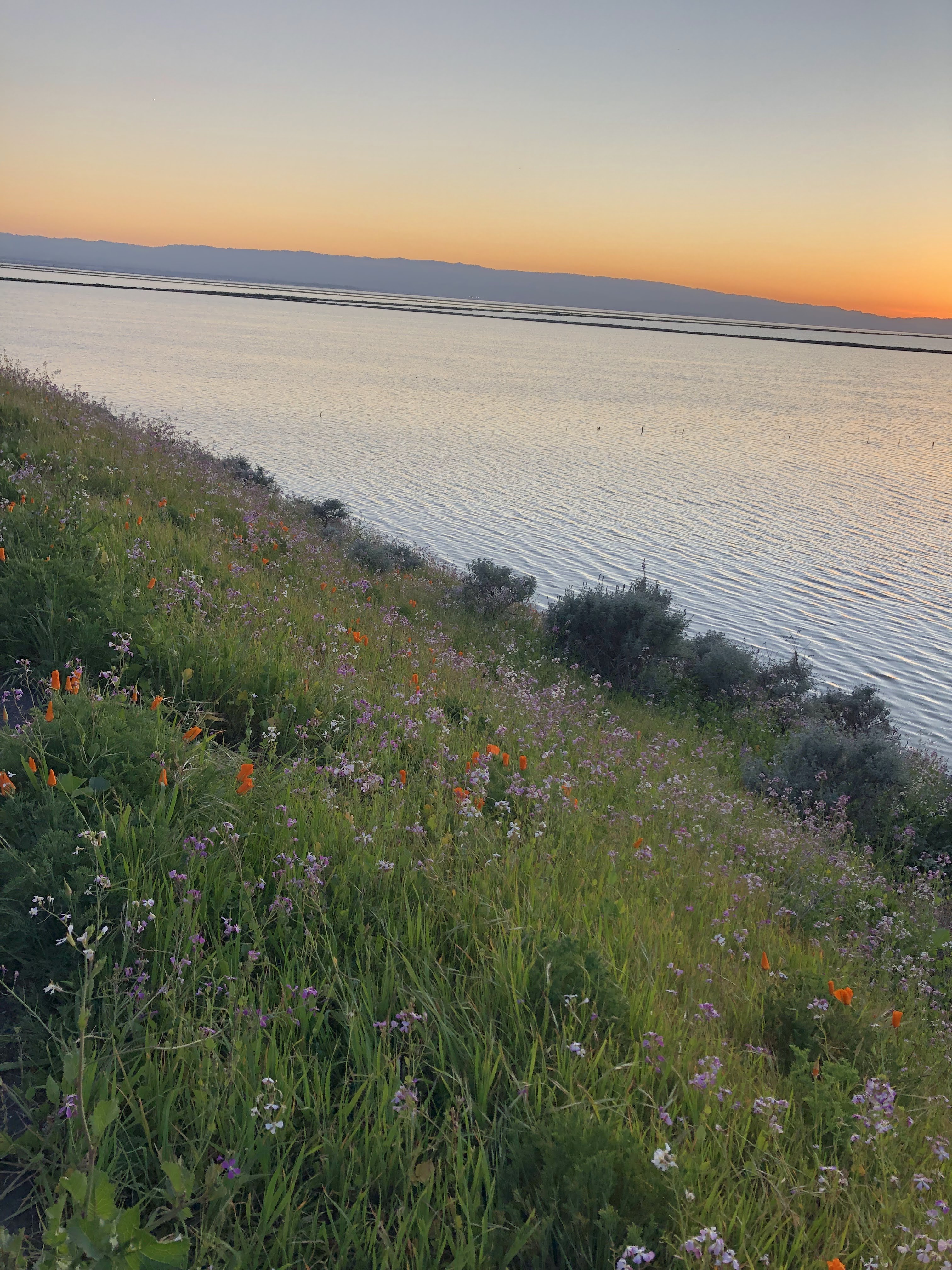
During the few months of spring and early summer, the bay area resembles fairy land itself. The mustards are blooming alongside the lupines and golden poppies forming a profusion of yellows, violets and oranges against the lush green backdrop of the grassy hills.

img_1677

As I made my way through the green hills with my friends, who unwittingly agreed to a walk on a Friday evening, I chirped on happily. A few minutes in, there we were stalled in our tracks, faced with a herd of happy cows who didn’t seem too happy to see us. Right across our path they stood clustered around holding a conference of sorts, while one calf decided that the best place to drink mother’s milk was the pathway. This was one of the few places on the trail where a steep ravine drops on one side, and a rather incline presents itself on the other.

So, we stood, patiently awaiting the calf to finish drinking milk. Looking at my friends’ faces – not to mention the cows’ faces, I realized that this may not be the best time to tell them heartwarming stories of the elephant calf drinking milk on the Bandipur highway. (Galactic Plumes) So, I cheesed it, but here it is:

Along the roads from Karnataka towards the Nilgiri Hills are thick forests on either side. The Bandipur and Mudumalai national forests lie on this path. A drive through these roads is picturesque and can grant many marvelous views. Bison, spotted deer, and elephants are only a few of the marvels along this road. One such time when I had taken the night bus home, the bus stopped with its headlights off, and did not budge. The whole bus was awake within minutes and all of us were starting to get excited in those loud tones when the bus driver and conductor shushed everyone vehemently and told us to quieten down. It was apparent from their faces that there was potential trouble. Peering out into the road, we realized, they were indeed correct. There, in the middle of the road – on a national highway no less, stood an elephant mother, and her calf, who had decided to drink milk at 2 a.m. 

img_3588

While this may seem a trifle dramatic, the one thing elephant mothers do not tolerate is being disturbed when their infants are feeding. There have been several instances of a mother elephant losing it, and sending vehicles tumbling down ravines if disturbed. So, we waited. The waiting vehicles snaked for miles on each side, while the calf drank peacefully in the glow of the moonlight, and the headlights dimmed out of courtesy. How no one honked is beyond me, for Indian traffic is not known for its patience. Maybe, the road only attracted regulars, and they knew the ways of the forest creatures well. In perfect silence, the hundreds of vehicles waited on either side, quietly, patiently. Finally after 45 minutes, the calf had had its share, and the mother sagely moved to the forest. The drivers let out a perceptible sigh and slowly revved their engines on again, before proceeding. 

Where am I going with this? Well, replace the elephant with a cow, and add a herd of them in the middle of the road, and that was the situation facing us. We stood there, carefully waiting for the calf to finish its evening snack. Whoever termed the phrase ‘Mama bear’ got it right. Mamas aren’t to be messed with especially when they are in Mothering mode. It was a fitting lesson for Mothering day. (In the UK, Mothering day, different from Mother’s Day, is celebrated close to Easter.) 

I don’t know if you have ever walked through a herd of cows and calves before. If you haven’t let me assure you, it isn’t easy. It isn’t that the cows are going to do anything. Like the son said fairly during the wait, “We are in its home. So, it is better we wait!”, but the weight of even a calf is enough to send us tumbling down, and no one wants a stampede of cows. 

Anyway, we stood there feeling braver and looking dafter every passing minute. Funny how the braver we felt, the farther we seemed to be inching away from the cows. The cows seemed to be enjoying every minute of the predicament too. There were amused glances and tittering amongst them, I swear! Pretty soon, a cyclist came buzzing down and just parted the herd as he made his way past them. This seemed to give us courage, and we made our way too, though I must say I almost wet myself when the calf and mother gave me a warning as we passed. 

In ‘The Road To Little Dribbling‘, Bill Bryson writes of encountering cows in his walks. I couldn’t help thinking of the book at several points in the walk.

You know how we anthropologize our fellow creatures? I think this particular cow was messing with us. Probably make for a hilarious retelling at the water hole later on. You see, there she was, grazing on the hillsides, and just as she saw us coming, she turned a quiet eye towards us mocking us, and shuffled onto the road. There was simply nothing for us to do, but for us to scramble on to the hillsides ourselves while she looked on amused. The setting sun on one side, and a bright full-ish moon on the other, this picture is truly priceless. If only I could share it with the cow, so it lends her tale credence at the water hole! 

img_1691

People sometimes ask me what it is I find so enthralling in nature that I rave about it so much. Well: This is just it.

“I like being in a country where when cows attack, word of it gets around. That’s what I mean when I say Britain is cozy.”
Bill Bryson, The Road to Little Dribbling: More Notes from a Small Island

The Joy-o-meter

“I read the book like Appa watches a movie! Done in 15 minutes, but got the gist. “ I said to general laughter. When the Spring cleaning bug bites, the family scuttles, and shy away from me like a horse that choked on plastic flowers once, and whinnies at the fresh wildflowers in the fields. 

“Really Amma! You too?” said the children

I admit I usually do not resort to the skimming technique. But this time, I read the Marie Kondo book on The Magic of Tidying Up.  “Well …. You know how some books have all they need to say in an article, but make books and songs out of them? That was this book. In essence, the table of contents should suffice, but if you want the nub of the thing, it is: If something doesn’t spark joy discard it!” 

“So, why are you still here?” Came the answer pat. Really! The speed of the repartee, I will never learn I tell you. I just walk into traps, and then goggle like a famished gargoyle, with these smart-alecks in the home. 

I sniffed a haughty sniff, and continued. “Anyway, I am going to apply the concept to the whole house. So, if something sparks joy in you, keep it, else junk it. Spring cleaning starts tomorrow!” I said in my best energetic cleaner voice. Dark looks were exchanged, some mutterings were heard, and talk was ripe of hoping that I would head out into those long walks that have me famished by the end of it all, so I spare the lot the anguish of losing things. The problem is of course that the things the children are passionate about and the things I am passionate about, are not an intersecting set. Consequently, the last time, I threw away a cardboard box, I spent a trying afternoon with the son who behaved like a gladiator losing his arena. I have since learnt my lesson, and they are given a warning. 

cardboard_box

I started the morning with my closet feeling like Mole spring cleaning his home in The Wind in the Willows.

The Mole had been working hard all morning spring cleaning his little home.

I must tell you. How do you mean ‘spark joy’? Some clothes you see are out of fashion, have some problems, faded etc. But mostly I seem to have clothes that I liked. So, how to deploy the joy-o-meter by them? 

Almost all my ethnic clothes evoked memories – does that count as sparking joy? For instance, I picked up the pink skirt bought in a bazaar in Jaipur. The blue hand-drawn elephants were not exactly life-like, but I could not stop the memories from marching in. The sister-in-law and I had had a tete-a-tete with the skirt vendor, and we landed up enjoying tea, pakoras, and a long chat on local artisans and design techniques, while the husband stood nearby sounding like a cooker letting out impatient steam.

Or the carefully hand woven and fabric painted dupatta that I had decided was too much to buy in Delhi’s Chandni Chowk bazaar, and settled for more utilitarian lunch boxes.  Imagine my glee then, only to find that the lovely dupatta was bought for me by the loving family on a subsequent shopping trip seeing how much I liked it. If that isn’t love, I don’t know what is.

peacock_dupatta

Or the dancing saree that captured my spirit? The one with ballet dancers and Bharatnatyam dancers printed on them in unison – East-West collaboration at its saree best. 

The only ones I could apply the rule to, seemed to be the mass produced mall clothes bought in ‘Sale’ sections, which wasn’t much.

If there was a usage ratio to apply, almost all of the ethnic clothes can be set aside. If there was a cost to the environment ratio to be applied, one must keep these clothes till we use them at least a few times before discarding them. Over this, one must apply the cultural umbrella of using new clothes for every occasion, and the result is a sorry state of affairs.

I wonder if joy-o-meter designs can use all these variables. 

I looked pityingly at the disappointing results of the morning scourge. Feeling a bit of a hypocrite, I told the children to save anything they liked, and almost instantly regretted it, for the son ran for the largest cardboard box set for the recycling bin and said – “Dibs! I want this in my room!” 

No wonder the Mole preferred to scurry outside into the beautiful spring rather than finish spring cleaning his home.

“The joy of living and the delight of spring made him jump into the air, and he raced across the meadow ….” – The Wind in the Willows

The Joy-O-Meter swung to the right, and all was well with the world.

Spring Fever

“Why do goats looks so stern? I thought they are happy especially now in spring-time. Like lambs in spring-time could also mean like goat-kids in spring-time, no?”

The children exchanged looks. They knew to diagnose my bout of Spring Fever. I am seen scuttling off to sniff the air and marvel at life sitting up and stirring from its sleepy winter state. I head into the house looking flushed and happy. By evening, I am tired, but refuse to reduce the dose of spring bounding. But still this talk of stern looking goats had them worried.

“Ma?! You okay? Why are we talking of goats now?” said the daughter a mock-solicitous look in her eye, and I laughed out loud, and told them the context of the goat-ish tale.

“Well, it all started like this. Do you remember last Friday evening being  particularly beautiful? So, I shut the laptop with a whim, and headed out into the sunset. The hills were alive with the magic of spring. I told myself poetically that I could not bear to be a cell in a spreadsheet anymore. I wanted to be a newly sprouted leaf on a tree, a whimsical flower fluttering away in the mild breeze, or a Finnish fainting goat chewing thoughtfully at that latest blade of grass.

“Not for me the confines of mankind! Get rid of the shackles, and head out! “ I said.

” Uh-hm – someone would think you have a mission you are fighting for. How many times will you take pictures of the cherry blossoms and the clouds, and the sunset, hmm?” said the children but I waved these things away. Days like this are not meant to be wasted indoors arguing about the wisdom or lack thereof of going outdoors.

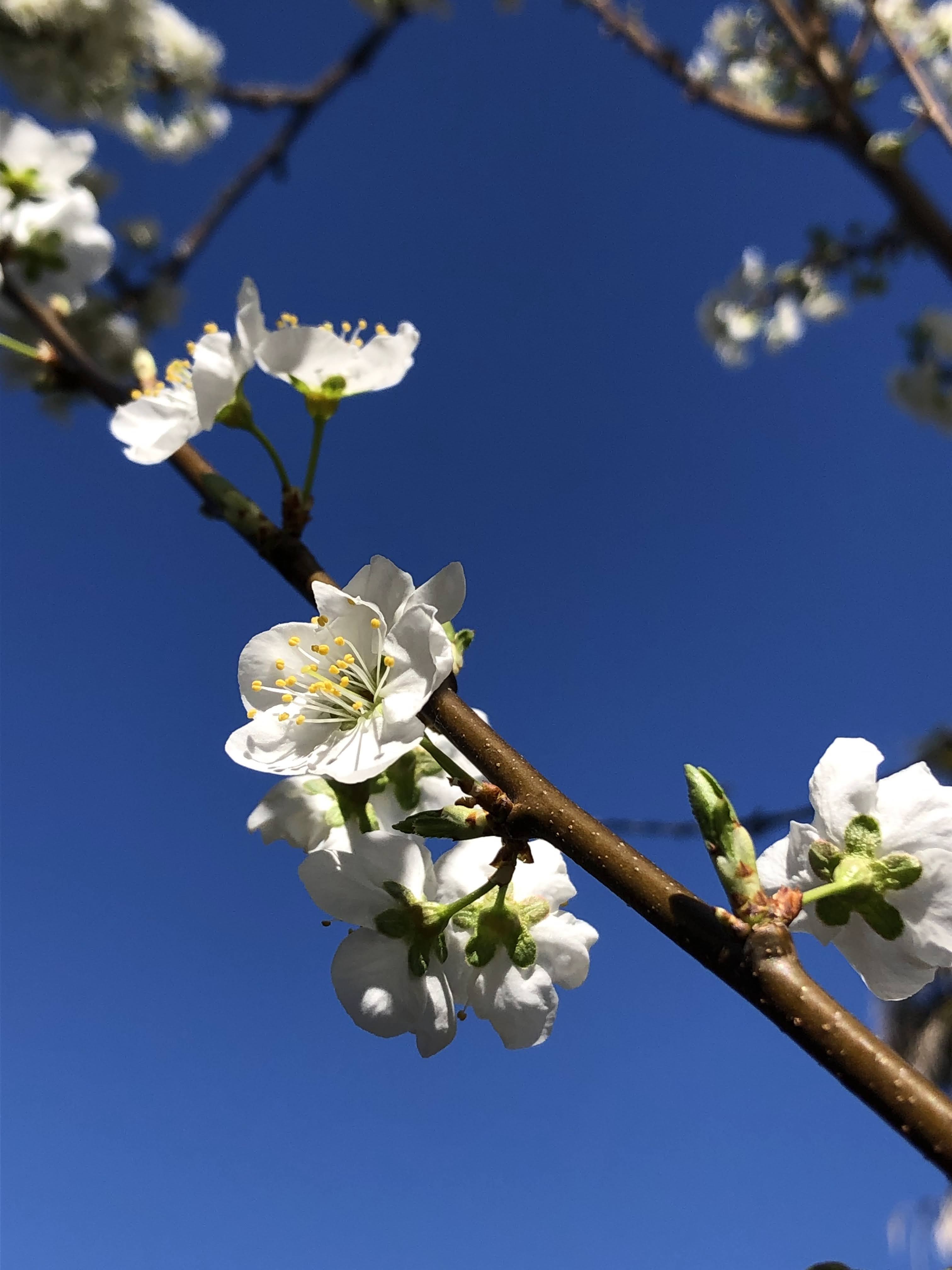
For a few months of the year, our neck of the woods resembles fairy lands, or the lands of the gods, or maybe heaven itself. The occasional rains, the burst of wildflowers, and the sunsets are all glorious. So much so that I find myself wandering around the countryside apparently lost, but really just finding the inner self. At least it is what I tell myself when that pile of laundry needs washing or that closet needs cleaning. Marie Kondo urges me to better myself, but Early Spring is more inviting. 

The fox squirrels atop the plum blossoms look naughty, while the fainting goat looks stern, the horse in the pastures peaceful, and the sunset glorious.

Where was I? Yes, on the stern looks of Finnish fainting goats. I had often wondered while reading the Three Billy Goats Gruff why the author went in for Gruff, but I see the choice of the word as I stood there admiring the serene setting against which the Finnish Fainting goat stood in its patch of farmland.

“Anyway, ” I said getting back to the point of stern goats, “I suppose if I had foul folks like me boggling at their spot of residence in that manner just because it is Spring, I would be gruff too! But the goat has a manner that is at once endearing, sober and majestic. The clump of fur on its chin growing away like a goatee (Get it? Get it? Goats have goatees!) made it look wise, and the green grass it chomped on made the world look a sweeter place.”

The children moaned not unlike the goat, and said, “Why not just call it a goat, why this fancy Finnish Fainting Goat?”

img_1352

“That is easy my dears. Google assures me that the picture I took of the goat is a Finnish Fainting Goat. And in any case, I doubt you would have listened patiently if I said I would tell you a story about a goat. No you would not have. But a Finnish Fainting Goat got your attention, did it not?” I said feeling clever.

“Ma?!” said the daughter, clenching her teeth. “You haven’t told us the story of the goat. You told us about the goat…you know what?! Never mind!”

“Yes…Never mind.” I said using that conciliatory spring-time tone, and said, “I will take you hiking there to see the old fellow. I am sure you all will like him. Looks like a satyr of your Greek myths. There is your story! Percy Jackson stuff on our next hike! ”

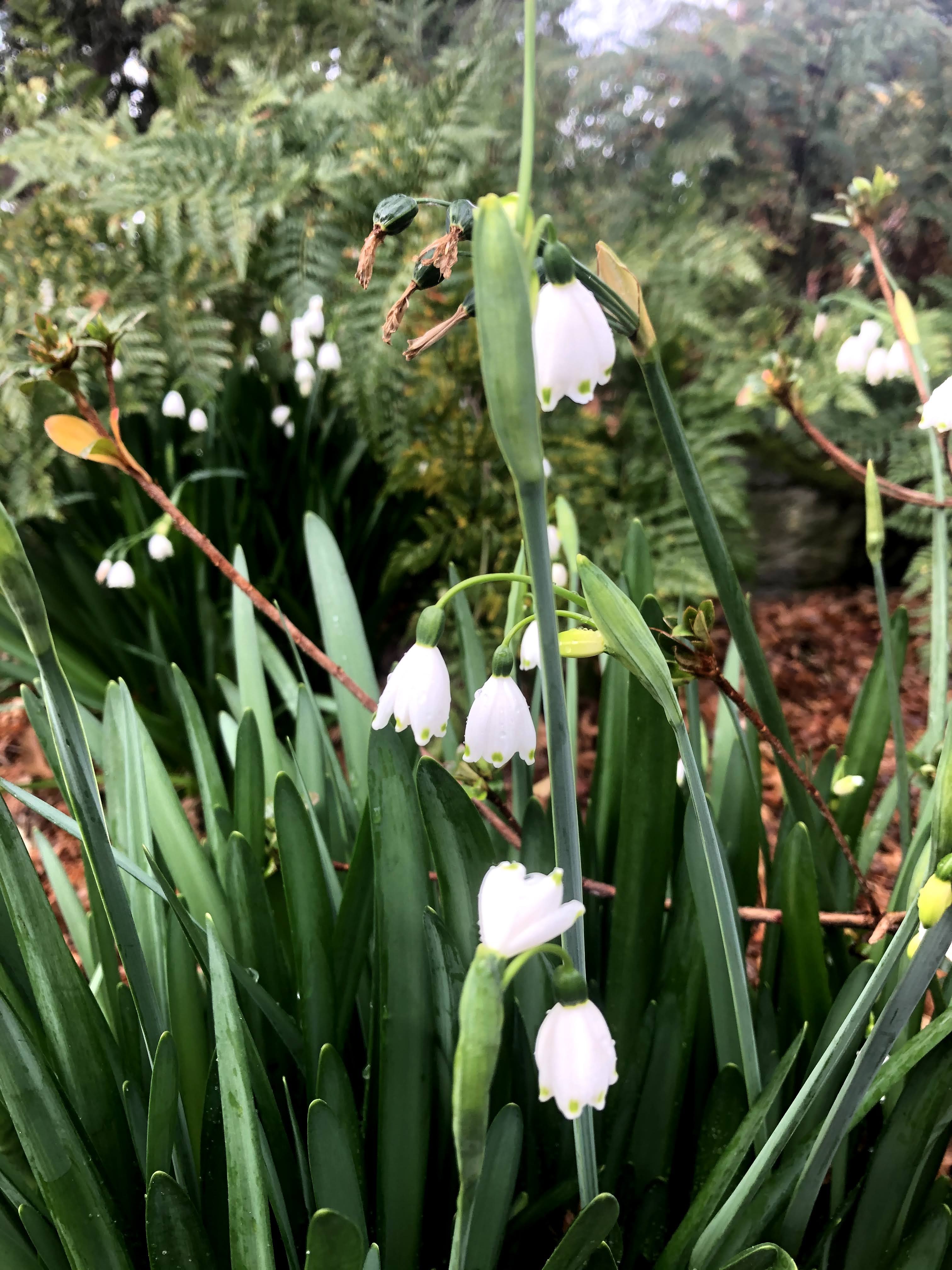
I ignored the ensuing groans. The fainting goat satyr and narcissus blooms will help.

The Pandemic Year

“Why don’t you pick out a children’s book from the ones stacked there?” I said nodding at the pile from the library.

The son picked out Our Great Big Backyard for us to read together. Written by Laura Bush and Jenna Bush Hager, and illustrated by Jaqueline Rogers, the book extols the beauty of the natural world around us. It is about a girl, Jane whose family takes a wonderful road trip across the United States making several stops along the way at the magnificent national parks. Jane is very reluctant at first, and fights with her brother missing her friends back home initially. But as the family makes their way from Everglades National Park in Florida to Yosemite National Park in California, Jane’s appreciation of the natural world expands.  She cannot wait to share the wonders of the natural world with her friends back home in their own backyard.

“Can you imagine last year this time, we were traveling all over the world?” I said, expressing shock at how soon our world changed for the n-th time since Covid-19 started

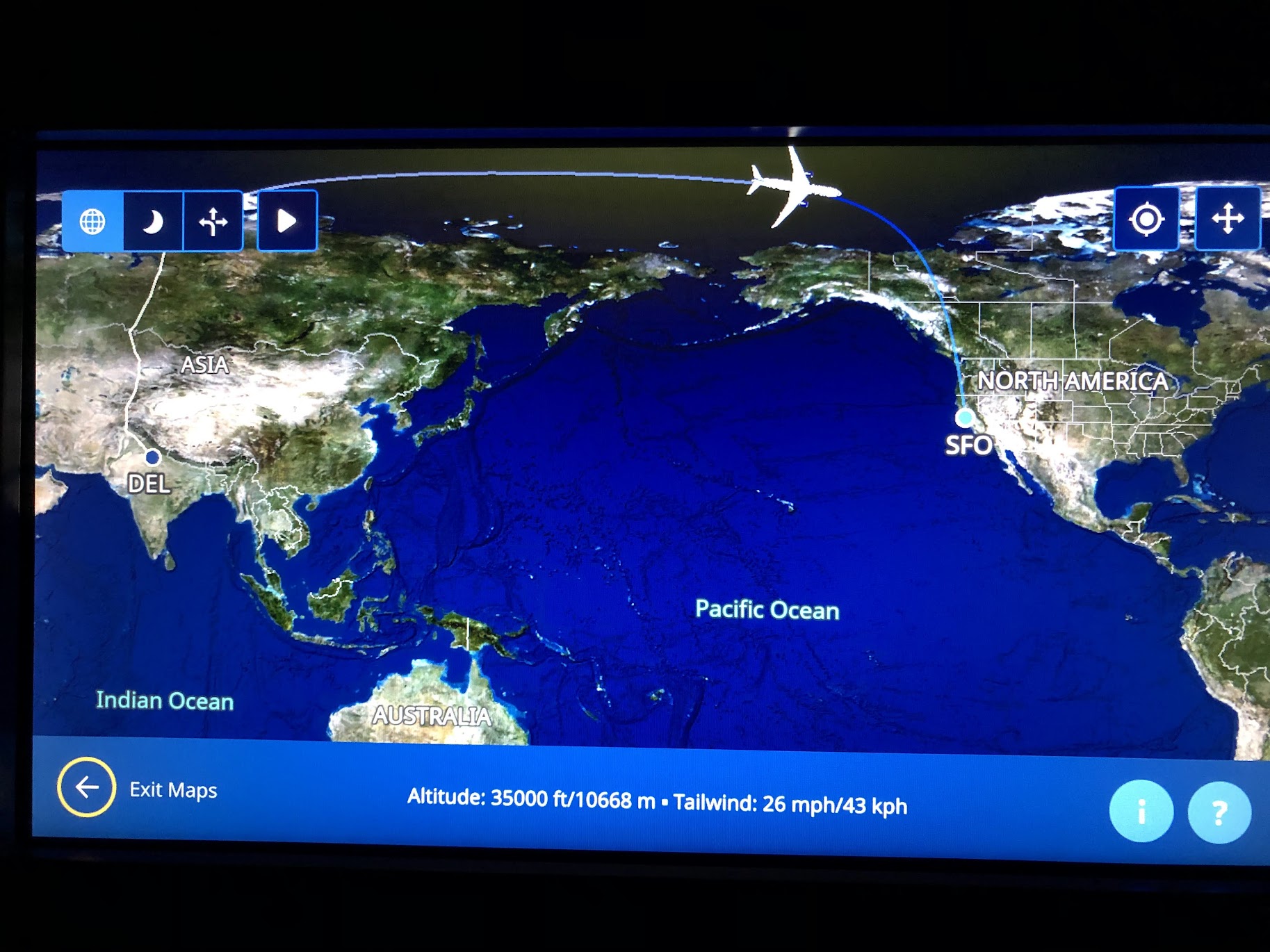
It was true. I had made several trips back to back in December 2019, and early January 2020. I remember feeling unmoored from Earth, somewhat dizzy in my speed of movement around the globe, and had felt a strange sense of being connected to the earth when I saw the spider’s web glinting in the winter dewdrops after the hours of flying. (I call it Tao)

It is a whole year since the World Health Organization declared Covid-19 a pandemic. A year in which some people adjusted admirably to their changed circumstances, while many others found it much harder.  Life everywhere was shaken out of its steady state. 

The past year was the year in which we morbidly looked at the death rates on a daily basis, and adjusted to losses of family members, and friends to Covid-19. It was also the year in which humanity astounded us by developing a vaccine before the year was out

The vaccines are being rolled out to older populations and front-line workers, teachers etc. While there are variants of the virus, there is already talk of returning to work, normal functioning etc. Many schools have resumed in-person instructions. 

This past year, Covid-19 has made everyone take pause and tread slower. Travel plans are seldom made, and even then, hopefully, are made considering crowds, infection and exposure. Most folks I know have turned an appreciative eye to what lies close by though. How many years the trees near us have had the same flowering in spring and fall, only to be barely noticed by us? Yet these past few months, the enjoyment of it has been greater. 

I feel like a renewed appreciation for Thoreau as he observed the intricacies of nature in Walden Pond. For this long, I hadn’t noticed how the moon rises later and later during the waning period, and earlier and earlier during the waxing period. (Or just the changes in when we see the moon) 

Full Moon Rising – March 2020

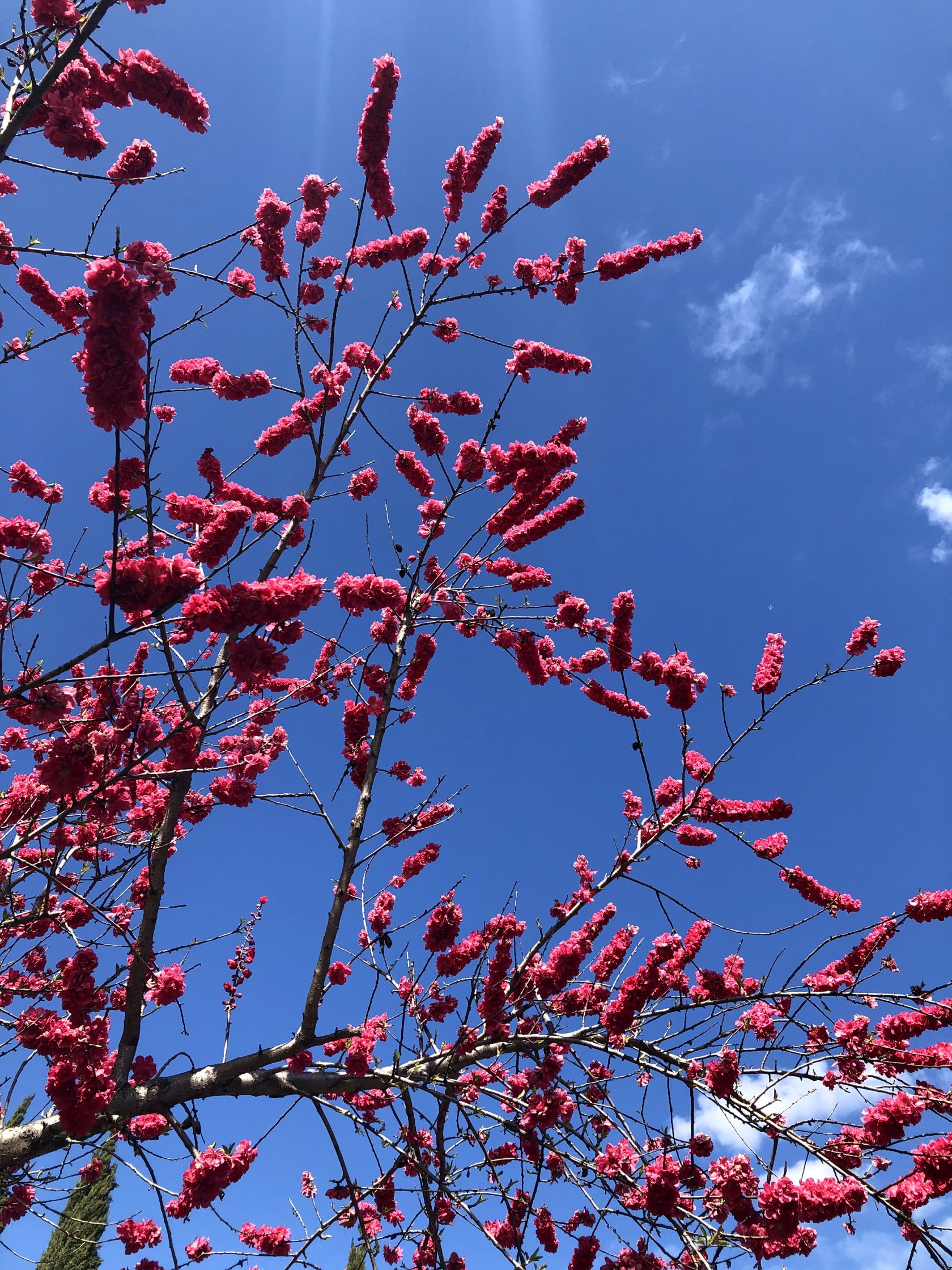
The Spring equinox means the days are getting longer, the cherry blossoms are in full bloom, and the leaves are sprouting everywhere. I remember one night when I was wakened by the sound of the pelting rain. I watched the rain for sometime, but wascompletely awed the next day, for the rains had ushered in the leaves on the trees overnight. I swayed around the trees wondering how  it would have been to watch the leaves grow overnight. 

Like Jane, the protagonist in Our Great Big Backyard , many of us realized, maybe for the first time, the many wonders of the natural world around us. 

As the vaccines are rolled out, and life limps back to normal, I hope we put the trying period behind us, but also remember the good things of this phase. The CDC announced that those who have been vaccinated can now gather indoors safely.