Spring Yodelers

It was a beautiful spring day and the senses were rebelling against the small act of staying indoors. So, I took myself to the seat by the window and lifted the windows. A slight chill came in – like a little river of spring amidst the cozy indoor air. But along with that something else came in too – I call it Spring Yodeling and I smiled despite myself. There, in the park nearby, sat a man who couldn’t stop himself singing at the top of his voice – bass tones and high spirits make for an enjoyable combination. I’ve heard of bards mention ‘song bursting forth’ and have heard the robins bursting with song on a spring morning and all that, but witnessing it is a whole lot better. It was joyous to behold.

If I knew the song, I would’ve joined in – but alas I did not.

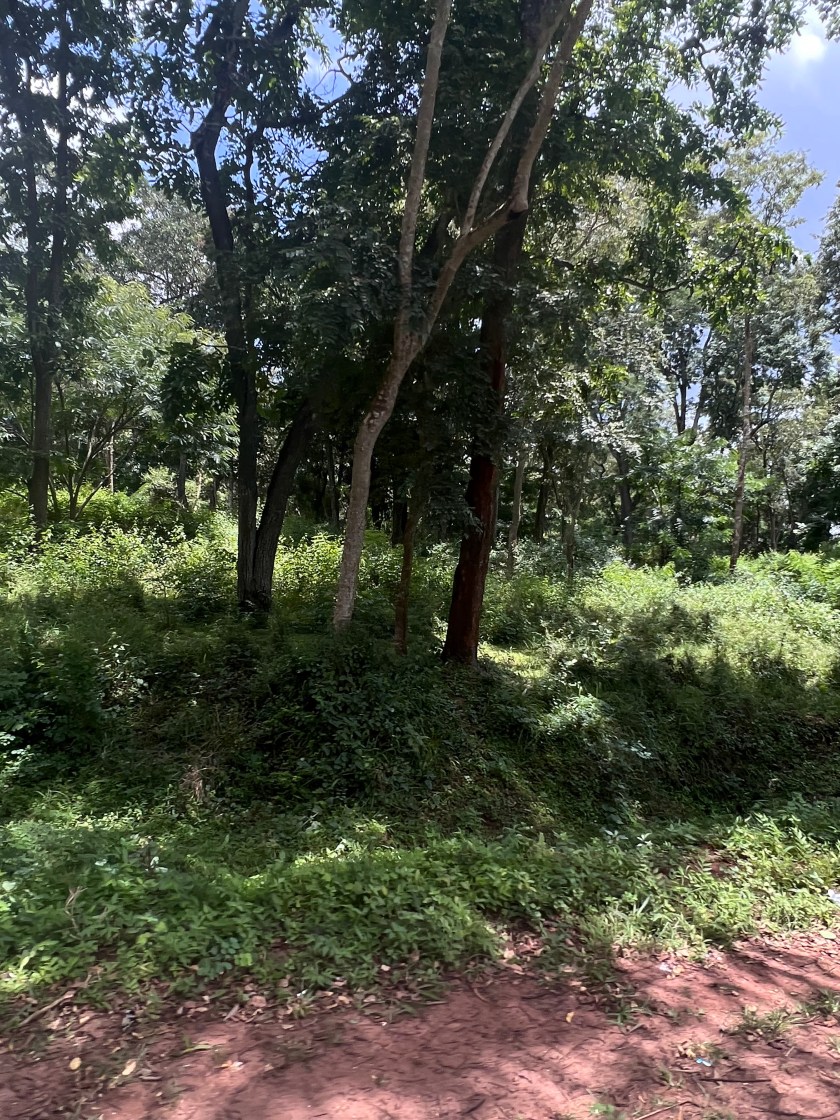
I might’ve written it off as exuberant spring spirits, if it weren’t for the fact that I got to listen to another yodeler the same day while on an evening walk. It was a cold day with a promise of the rain and the clouds scudding obligingly to make way for some rays of the setting sun. I was walking along a river bed, and on the opposite side was a yodeler, this time with a high pitch and a wobbly track, but spring yodeling nonetheless.

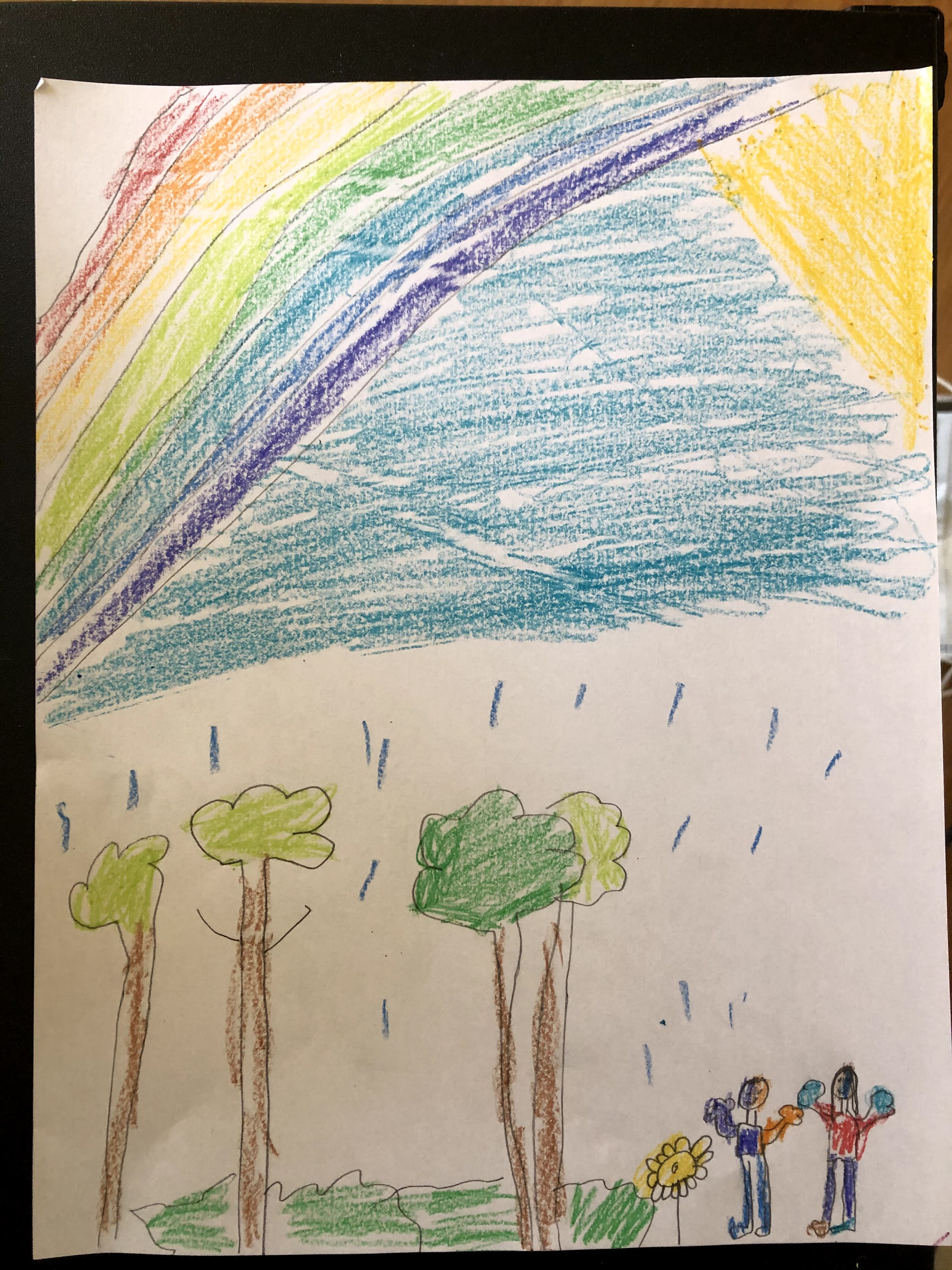
When two spring yodelers show you how it’s done, a little spring humming cannot be far behind can it? And so, it was, that the son and I hummed to a tune, (completely out of tune obviously but joy and music-correctness are two different things). Afterward, after several glances to ensure no human company was nearby and inviting honks from the geese, we yodeled too. It was out of tune, true, but joyous and glorious all the same. We even got a rainbow to peek out at us at the very end. That must count for something right?!

IMG_3920-COLLAGE

Of course, as I sat by the window ledge writing out this piece, I looked for suitable quotes and this one tickled my musical fancy:

“Blessed are those who yodel – for they shall never be troubled by offers of work.” 

Billy Connolly, Windswept & Interesting: My Autobiography

I threw my head back and laughed – yes, the hummers of that Spring evening shall not be troubled by offers of work in that department, and didn’t that make it all the more enjoyable?

Hummingbirds’ Magic

I was rushing to the car – needed to be somewhere. But the little hummingbirds stopped me for just a moment yet again. We have a few of them hovering over our lovely little lavender patch in the garden. The little bright flurries of beauty never fail to enthrall me. There is at least 1 red ruby throated hummingbird and several Anna’s hummingbirds gleaming in the sunshine with their green plumage catching the light of the day in brilliant angles. 

I am eternally grateful – both for the fact that I have these little visitors and for the ability to stop and appreciate them. 

IMG_0421

I have now stopped trying to photograph them while they flit for I find I am barely ever able to capture them with my iPhone, and my friends are far better photographers. This way, I get to enjoy the brilliant pictures and the momentary flashes of joy unencumbered by the effort of trying to capture it. 

Able to flap their wings upto 200 times a second, they are incredible long-distance flyers too. The ruby throated hummingbirds can fly 500 miles non-stop across the Gulf of Mexico during their fall and spring migration seasons.

The hummingbirds weigh only about 3 grams and therefore the term ‘more than their weight in gold’ doesn’t mean much. What they are able to accomplish with that body weight is phenomenal. Apparently, they can consume half their body weight in pure sugars and eat upto 5-8 times an hour. 

More fascinating hummingbirds facts here:

https://nourishncherish.org/?s=hummingbird

That metabolism doesn’t come easy for the little ones are hardly ever sedentary, They take a maximum of 90 seconds per break and flit almost all day long. Gathering nectar, feeding their littles ones, building their nests, and generally making the world a more happening place. 

If hummingbirds fascinate you as much, try reading this book:

My Tiny Life by Ruby T Hummingbird – written by Paul Meisel. It is a beautiful book that captures the life of hummingbirds. The book is a Theodor Seuss Geisel Honor winner and is a lovely informative little book.

0823443221.01._SCLZZZZZZZ_SX500_

🪺On May 15th a tiny hummingbird hatches from its egg, and thus starts our marvelous journey with the little bird as it learns to fly, mature, meet and greet its fellow humminbirds and eventually enhance the circle of life by having its own little family to nurture and nourish.

🕊By June first week, the little ones in the nest are ready to fly with their mother, in a flurry of wings, and a soaring of tips. 

“Up, down, backward, forward!” 

🪷 By the first week of July, the bird is getting territorial and fending off its fellow hummingbirds. (Pic from the book, My Tiny Life – by Paul Meisel)

img_4021

🚁 By the last week of September the birds are getting ready to migrate before they return in March, sometimes flying upto 18 hours non-stop to get back home where its journey started a year ago.

The illustrations and content is marvelous and once again, I am enamored by artists able to capture the magic of light and movement in art. (Sample pic inserted above to get a feel of the beautiful imagery in the book)

Talking about the Weather

I have no idea what people mean when they say talking about the weather is mundane. The disdain of, “Just talking about the weather!”, “I mean why not talk about the weather to kill time?” 

Apparently, Oscar Wilde said: “conversation about the weather is the last refuge of the unimaginative.”

It isn’t. It is marvelous. 

No two days are exactly the same, see? 

In any case, I would much rather talk about the sunsets and moonrises, fluffy happy cirrus clouds and stormy heavy cumulonimbus clouds, than about any other foul thing wracking humanity. 

In the Spring, I have counted 136 different kinds of weather inside of 24 hours.

– Mark Twain

It’s been a curious winter for those of us spoilt by our usually mild Californian winters. This winter saw us receive unusually large amounts of rain, our mountains are swollen with snowcaps, and our rivers are welling up and rushing into our oceans, the winds, when they came, ripped treetops, and crashed onto roads & homes and showed us how powerful nature is. One house on my regular commute route had a 100 ft tree crashed straight through – I can only hope the inhabitants weren’t present in the house when the tree fell, for it would most certainly have caused injury or worse.

Having grown up in the mountains where extreme weathers were not unheard of, and blackouts a way of life, I would’ve thought recent weather events would not have surprised me so much. But I suppose it still did. My heart leaped as a huge tree branch crashed right behind my car as I drove home through a particularly windy day. I think I held my heart in in my mouth to keep it from leaping out and flying off with the gale for a full 5 minutes. 

The quickly changing weather has us all philosophising too. More than we usually do.

Do the weather related moods signify something as drastic as the impermanence of our existence? Or is it just that – vagaries of nature to be borne, witnessed and experienced? Could it signify our emotions flitting in and out of our systems, lapping like little waves against our psyche, shaping, reshaping and muddling our coastlines ever so subtly, the cumulative effect of what we allow to feel weighing in?  Like weather patterns, we could change. After all, like one of our favorite songs often reminds us: Behind the clouds, the sun is shining. We can only appreciate a good day when we have days in which stepping outside is hard. 

For those of us spoilt by the consistency of the sun and the brilliance of our days and the glows of our sunsets and sunrises, this is a time for philosophy. Unabashed but lovely philosophizing. 

IMG_3920-COLLAGE

I quite agree with this quote that I found attributed to John Ruskin:

Sunshine is delicious, rain is refreshing, wind braces us up, snow is exhilarating; there is really no such thing as bad weather, only different kinds of good weather.

John Ruskin

Lives of Musicians and what the Neighbors Thought!

Lives of the Musicians – Good Times, Bad Times (And what the Neighbors Thought) is a fantastic book of the lives of musicians. 

Page 1

Some of the more famous musician’s stories we may have heard before, but the book had enough that are not as well known. Written with a look at their personalities, the book talks about the idiosyncracies of some of the musicians too. For instance, did you know?

🎼 Antonio Vivaldi had a job teaching violin at the Pieta orphanage for girls in Italy? Orphaned children were taken in and given a musical education so they may go forth into the world and spread their gifts. What a marvelous thing to be remembered for?! The girls’s orchestra was apparently one of the best disciplined of the times and though people never saw them perform (they were hidden away), they received accolades and recognition for their sheer talent.

🎹 Johann Sebastian Bach was boorish and stubborn. Once he wanted to quit a job, and the Duke would not hear of it, and threw him in prison instead. During the month he spent in jail, Back wrote 46 pieces of music that is still listened to today 300 years later.

🎻 Wolfgang Amadeus Mozart was probably the “most-kissed little boy in Europe” given his grueling performance schedule starting at the tender age of 6. Mozart had a strange childhood – he could be whimsical, superstitious. At the time of his death, he owned 6 coats, 3 silver spoons, and 346 books. His most expensive possessions were his piano and pool table. If you are fascinated by Mozart, and haven’t read this hilarious book, please do so. 

Young Mozart – By William Augel. It is in comic book format and is a joy to read.

Screen Shot 2023-03-13 at 5.06.28 PM 

🎶 Guiseppe Verdi – lived a simple life on a farm with his beloved animals, amusing himself with poetry and history. He was a successful farmer, a senator, and cared very little for what critics said about his music, but his music pleased his audience most of the time too.

It is humbling to see how many of these great musicians’s eternal glory came after their lifetimes. Many of them were well known in their lifetimes too, but had no idea of the kind of imprint they would leave on the musical scene centuries later.

The book only looks at the loves of western musicians – a similar book of eastern musicians would be just as welcome. It would be nice to read about the lives of Muthuswamy Dikshitar and Annamacharya in a similar format: We continue to be enthralled with their compositions centuries later.

Hovering 🚁 & Pondering 💭

The world as I see it, can be wondrous at times, and full of traffic jams at others. One such glorious day when the clouds were scudding and meandering in turns with the weight of moisture, I sat gloomily in the car, wanting more than ever to join the clouds above. The signals had all been acting up and I waited as cars patiently stopped and proceeded at a pace that is entirely unsuited for modern life. There were at least ‘n’ slack messages, ‘m’ voicemails and the gods-knew how many emails that had come up in that time for all the inhabitants in their little cars during this time. I mused, and let out a satisfied laugh that this is life. It is meant to have ponderous moments of quiet. 

I have often wondered about the ways in which we choose to traverse physical spaces and ensure our presence. In the magical world of Harry Potter, people apparate and disapparate, materialize with floo powder out of chimneys, fly on broom sticks, charm motorcycles and cars to fly, send messages via owls, patronus charms and so much more. The world of science fiction loves wormholes and time tesseracts. Any solutions that don’t come up with the limitations of the speed of light, against the physical ache of distances to traverse. 

img_6283

While we we may be faster that we ever were before, the human imagination is still active and thriving to do more. The stars and galaxies await, do they not? The next thrilling step in our glorious adventures forward?  

In our world, I looked around, what problems would arise if we were all to lift off into the air. The same as it would be on the roads for sure, if thousands of cars took to the air at the same time. Not to mention the hovering charms required to keep them hovering in mid-air traffic signals. A little dragonfly is capable of such magnificence! Feats as hovering that we find ourselves thinking about obsessively. 

The idle mind harked back to the section on how birds evolved for hovering in the Flights of Fancy book by Richard Dawkins. Size being against them, they still managed a variety of ways in which to achieve it – whether it was in the way their wings spread out to absorb the thrust from the winds, or reverse flapping to counter the surge of propulsion, it was obviously one of the evolutionary hacks that spurred life on earth (birds as nectar seekers and life spreaders).

Screen Shot 2023-02-24 at 11.41.25 AM

“Forward propulsion by wings is achieved by a kind of rowing through the air. Hummingbirds go to the extreme of a rapidly buzzing (humming), sculling movement, in which the wing is turned almost upside down during the upstroke. The wing works almost as efficiently on the upstroke as the downstroke, and it enables hummingbirds to hover like a helicopter and fly backwards, sideways and even occasionally upside down. Hovering was an important evolutionary discovery for birds. Previously, insects had a monopoly in nectar because they could perch on flowers. Birds were too heavy until they finally invented hovering.”

A couple of days later, as we went walking around the green hills with the waxing moon on one side, the setting sun on the other, lupines, golden poppies and cranes glowing in this unique combination of light and moisture in the air, I found a hawk hovering. I stood mesmerized by all things light and wonderful. The shadows cast by the hovering bird, the winds changing speed, and the birds’s intuitive adjustment to its environmental influxes. 

4BDFCF33-6917-43FA-A2B2-298A413D4C7C

‘Imagination will often carry us to worlds that never were, but without it we go nowhere.’ – Carl Sagan 

A low rumbling in the distance indicated a flight coming into land at a nearby airport, and the spell was broken. I did not want to apparate out- I wanted to amble back towards reality.

The Infinite in Us

This week-end was extremely well suited for cozy pursuits. 

Rain slashed down, our surrounding hills sported snow caps and we proudly reveled in the rare beauty of green hills, snow capped peaks, gushing rivers, brimming lakes, rains that sometimes lashed down, other times, lulled and drizzled. In fact, one afternoon, we saw the sun light illuminate the clouds in so many different ways: there weren’t words to describe the crepuscular wonders anymore. The infinite ways in which watery sun and waxing moon can dazzle white, gray and thunderous clouds, is entertaining enough. 

vintage_pointimg_3557

But as evening crept in, we found ourselves wondering whether a cozy family movie night might do the trick instead. 

So, we settled down on both week-end nights to watch two movies that we knew would fascinate the son:

The man who knew infinity – a movie about Ramanujan Srinivasan, the mathematics prodigy. Thomas Hardy , a mathematician at Cambridge who helped Ramanujan publish his works. Ramanujan eventually was elected as a Fellow of the Royal Society. The movie, while it had its good moments also felt oddly fragmented in parts. 

The Man Who Knew Infinity (film).jpg

The life of Ramanujan for a person of Indian origin is fairly well known. The poor man who lost his health and vigor to tuberculosis and died at the age of 32 leaving a younger wife behind is tragic.

It is also unnerving to see how hard belonging is. Our immigrant experience is so vastly different from the one Ramanujan braved a century ago. Yet, some of the questions remain: Do we belong to a geography? A culture? Or with like-minded human-beings?

Human kind’s need for social connections is a fascinating aspect (introverts, extroverts, families, friends, colleagues, the importance of whimsy, the energy of youth, and the wisdom of those wiser – every aspect seems to play a part in the worlds we construct around us)

None of this seems easy, and in that struggle lies the beauty of messy human lives.

🚀 Hidden Figures – the movie depicting the lives of 3 African American women who worked at NASA and were stalwarts in their respective fields. 

The official poster for the film Hidden Figures, 2016.jpg

As we sat watching the movies, there were places where we stopped to thank the stars that things seem to have improved for the better. Progress is never easy and the ones who braved the struggles placed in their path with resilience, hard work and good humor, are truly inspirational. The movie was also a good reminder of the human spirit and its capacity for the impossible. With computers having far less than the computing powers in our cell-phones, humankind was able to leave Earth’s atmosphere, orbit the planet, land on the moon and launch space vehicles to explore the solar system. 

The movies were good reminders of a philosophy that is often not given as much importance as other aspects of philosophy: the pursuit of happiness via the pursuit of knowledge is tough, but endlessly rewarding. The truths we come to understand, the worlds we get to unravel are all gifts that keep on giving. 

Sitting with Uncertainty

As sheepishly mentioned before, I have been apparating between the muggle and magical world over the past few weeks. Therefore, when I saw a book on Philosophical essays in the Harry Potter World, I picked it up to read almost instinctively. The book was not a mind-blowing one, but the chapter on Prophecies and Destinies had me thinking.

Much of the Harry Potter series hinges on the prophecy made by Professor Sybil Trelawny. As Professor Dumbledore reminds us in Harry Potter and the Order of the Phoenix, the prophecy only came true because Lord Voldemort decided to set store by it. If he hadn’t killed Harry’s parents and marked Harry in the process, it would’ve been another prophecy sitting in the room of prophecies and nothing more.

There is also the moment in Harry Potter and the Order of the Phoenix where Harry finally accepts what he must do in order to defeat the most evil wizard of the times. Not a resigned acceptance of his destiny, but a blazing recognition of his role. That truly is the turning point.

When destiny comes to a man from within, from his innermost being, it makes him strong, it makes him into a god.

– E E Cummings

harrypotter

That week-end, we were sitting and deciding on what movie would be a good one to watch. A humongous decision in our household. But that Friday night, it was easy. Kung Fu Panda -2. The Kung Fu Panda series is an all time favorite in the nourish-n-cherish household, and is one of the best written movies. We watched the movie hinge on the prophecy made by a goat, that the peacock decided to act on.

kungfupanda

My mind wandered to the essay regarding Prophecies and futures in the Harry Potter philosophies book. Many epics or stories spin off from prophecies in almost all mythologies. Lord Krishna’s story for instance – the evil king Kamsa was supposed to be killed by his sister Devaki’s eighth child. In the story, the eighth child is switched out in the middle of the night to a Sri Lakshmi incarnate born in the little village across the Yamuna river. Kamsa kills the child anyway not wanting to take any chances, and goes on in his path of brutal domination. But Devaki’s child was growing up to be a formidable opponent in the village across the river and ultimately killed Kamsa.

KRISHNA_KILLS_KANSA

By Martadas Pirbudial -Pic Courtesy Public Domain, https://commons.wikimedia.org/w/index.php?curid=22395572

As Professor McGonagall says to Harry: Divination, is a woolly discipline.

But it is an intriguing one – primarily because we are a forward looking species.

Forward looking: This is an admirable trait in many ways and has contributed to our growth. We moved from being hunter-gatherers to a settled agrarian way of living due to this very trait, didn’t we? But like everything else, this too has a negative aspect: does destiny clash with free will or do they help shape each other lucidly?

On the trip to Delphi in Greece, our tour guide was telling us many myths and stories along the way. The story of Oedipus for instance. Apparently it was foretold that Oedipus would kill his father and marry his mother. So, the king Thebes and his wife set the child to sail on a river as soon as he was born, and Oedipus was raised by a loving shepherd family. Years later, when Oedipus traveled to Delphi to learn about his future, he was told the same thing: he would kill his father and marry his mother. Not wanting to hurt the kindly parents who had raised him with love and care, Oedipus ran away from his home. If he could do anything to avoid marrying his mother and killing his father, he would do it.

But like Oogway says in the Kung Fu Panda movie,

One often meets his destiny on the road he takes to avoid it. – Oogway, Kung Fu Panda movie

Oedipus landed up killing the King of Thebes in the forests and married the Queen who was trying to hold the kingdom together after learning of her husband’s death. The kingdom itself was under the spell of a sphinx and Oedipus saved the kingdom from its terrible clutches. He then married the Queen. Of course, he had not realized that they were his birth parents at the time.

In so many instances in folklore, there is the underlying current of choosing what to act on makes us who we are. But as Dumbledore says so beautifully,

The consequences of our actions are always so complicated, so diverse, that predicting the future is a very difficult business indeed.” – Albus Dumbledore

Yet, astrology continues to be a fascinating area for many.  From the days of Delphi, to today’s astrological predictions, humankind has been trying more than ever to get a handle on what they need to be prepared for.

Sitting with uncertainty is one of the hardest things. How do you turn the worries of a nebulous future into an adventure worth exploring? 

We, The People; On This, Our Earth

One evening, the son and I were milling around the kitchen making dinner. It was one of those rare evenings for no reason. Like a short pause between tides. The winter months fading and yawning before waking into energetic spring. The son was working on a school project on Egypt on the dining table while I pottered around with the onions and spices chattering of this and that. 

These are some of my favorite times. 

Finally, the curry simmering on the stove, I went and sat by him at the dining table peering into his notes for the project. 

He had done a sincere job, researching diligently and writing more notes than was required. That made me proud of him and I said so. He smiled and then it turned into a grin, and asked, “Shall we watch TV today then? Just today – you know as a gift?” The little rascal!

I threw my head back and laughed, almost ready to yield. What else was there to do? It was rainy and dark outside. School work done, just the two of us at home. But I caught myself in time. Somehow, it did not feel like a good time to zone out in front of the Television. This rare, quixotic feeling of solitude in each other’s company. So, I shook my head and said no. I saw the twinge of disappointment in his face anticipating indulgence just a moment ago, and said, “How about we read something interesting and funny out to each other?” I said pointing to The Thrifty Guide to Medieval Times – A Handbook for Time Travelers – By Jonathan W Stokes.

He agreed enthusiastically – and I loved him for it. A petulant fuss would’ve ruined the evening. This carefree acceptance of an alternate plan was amazing.

I started reading about Doctors in Medieval Europe and we both shuddered a bit. The book was written in a manner that was just enough gruesome and just enough brevity to stave off utter misery, and a good deal of humor where you least expect it. So, we had a good time rotating dismay, shock, horror and laughter in turns. 

On our recent trip to Europe, there was many a time when the mind wandered back a few centuries to Medieval Europe. While we stood there admiring the relics and artifacts saved from those truly Dark Ages, I remember thinking how we were able to passively look at the best of the Dark Ages through a museum visitor’s lens. Setting aside the utter misery of the times. Art truly did pull humankind through those times if only by a shred. 

I remember a passionate History teacher from our school days who told us about the Dark Ages, Crusades, the endless years of disease and religious warfare. As children these were disturbing. But they were also distant echoes from the past in a geography barely imaginable by school children in the South of India at the time. Many of us had never traveled past our own country or state. 

But as life went on, I understood more and more of the horrifying acts of evil that humankind is capable of: the Dark Ages become a euphemism for unspeakable things. We had heard of witch hunting but when one finds out that Pope Innocent was responsible for making it a bloody sport and sent 1000’s of innocent women to their shrieking deaths, what excuse is there really for religion or piety or righteousness?

A Handbook for Time Travelers – By Jonathan W Stokes

medieval_times

Over the next few evenings, we followed a similar routine. We read about 

  • Jeanne de Clisson – the French pirate nicknamed the Lioness of Brittany, who you definitely want to steer clear of, if invited to dinner at her place.
  • The brutality of Genghis Khan – there truly are no words, though there are thousands of words written about him.
  • Marco Polo and his explorations that gave many people a breath of fresh adventure and unheard of places – a little bit of magic in their otherwise terrible lives. 
  • The ferocity of Attila the Hun
  • The deadly female fighters of the Middle Ages
    • Blance of Castile, Queen of France
    • Countess Pertonilla of Leicester
    • Nicola de la Haye
    • Empress Matilda
    • Melisende, Queen of Jerusalem
    • The Order of the Hatchet 

It sometimes takes books such as these to journey to another horrible time and space in order to appreciate what we have now. I was grateful for that. 

It also reminded me of the children’s book, Meanwhile Back on Earth . . .: Finding Our Place Through Time and Space

back_on_earth_cover

  • 1000 years ago – when there was a conflict between x and y
  • 500 years ago – war between rats and zebras
  • 100 years ago – war between everyone

The history of our planet in conflict. It makes for sobering reading, but along with Oliver Jeffers’ artwork, a required reading too.

back_on_earth_2back_on_earth

“Nice to see what all we did in spite of all the fighting huh?” , said the son, pointing to his project on Egypt, and pulling me back from my thoughts. He had written about the culture, ways of life and the many achievements of the ancient Egyptian civilization, and I nodded. We truly are a species worth studying. The sheer potential for good. The very qualities of good fanning our bad:  ambition for instance. 

How do we constantly remind ourselves that we are remarkable in our creative quests, and not use it for anything destructive? But don’t they go hand-in-hand? I peered at the dancing Nataraja statue in the home symbolizing just that, and felt very humble indeed. Nothing new. We are all just discovering and learning. Just figuring out how to belong on our Earth.

The Fullness of a Bare Winter Scene

The past few weeks in California have been a pluviophile’s heaven. The atmospheric rivers bringing moisture to a state hardened by drought is very welcome.

I spent hours listening to the music of the rain, enjoying the gurgle of the water-butts, and the suction-like sound of the rain waters receding into the drains. We made paper boats and watched them gently sway along with the waters, we released driftwood stuck near drains, we empathized with fauna and realized what fragile creatures we are. These are the images of a happy childhood, and they warmed my soul as I shared these pleasures with the son.

rainriver

Out on a walk in the pouring rain one day, I felt at peace with the Earth around me. There were scarcely any humans about, and this in itself was refreshing. Without the banter of words, the language of Earth was so soothing. 

The river near our home has a name that invites teasing given the amount of water that usually flows in there. It is called the Niles river.

When one nears its banks, there is a sign warning folks against swimming, diving and fishing in the river. Only for almost the entire time we have been acquainted with the river, it has hardly boasted a flow enough to sustain more than a few paddling ducks and geese. Mostly the deer graze inside the riverbed, and its bed is home to many creatures: foxes, raccoons, deer, cats, water rats, squirrels and of course a whole multitude of birds: geese, avocets, gulls, grebes, ducks, herons, egrets. The trees nearby are home to California bluejays, thrushes, blackbirds, woodpeckers, hawks, owls and turkey vultures. 

I love our gentle stream that calls itself a river. But the past few weeks thanks to an uncharacteristic atmospheric river that bears moisture into the dry state of California, it had swollen into a respectable river and I found myself standing and gazing longingly at the waters moving towards the bay. The ducks seem to be enjoying themselves getting in with the drifts and floating along swiftly and then flying back several feet just to be able to do it all over again.

The deer seemed to be having a tougher time of it all. They are the ones who enjoyed the river-bed the most, and the swollen waters meant that their natural feeding grounds were no longer available for them. That afternoon in the pouring rain, the deer were on the trail since the riverbed they usually take refuge in was filled with water, and my heart went out to them. Luckily for them, the trail that is usually filed with humans was near empty. Like the children say, not everyone is kook-enough to walk in this storm. Slowly, but purposefully, I gave them the space on the trail so they may go towards a patch of greens nearby. The pouring rains did not seem to bother the creatures as much as it bothered us humans. 

deer_in_rain

All this musing brought back into sharp focus what nitpicking creatures we are. We are scared to step out without umbrellas, raincoats, shoes and socks. We need our body temperatures just within this particular narrow range (97 F (36.1 C) and 99 F (37.2 C) ). We need our food prepared just so, and our lives orchestrated just so, and in spite of it all, have managed to create lives that are just so-so. (It has been so long since I used this term) 

The trees around us with their bare branches (abscission as shedding leaves is known) still remind us that the wintering season is not over. This is still the time to rejuvenate ourselves and trim down our commitments so we may sprout forth in glory during spring. But human beings seem to march to a different rhythm – a rhythm driven by financial earnings reports, calendars, the vague baying drum of stock market indices that demand more, a sadistic and almost schadenfeudic clamoring for layoffs, incessant profits etc. 

A month into the new year, the world has marched on from one grim news to another.

My mind harked back to the statue in Athens. The busy man statue in Athens, created by artist Costas Varotsos , it is a fitting statue for our times.

Screen Shot 2023-01-28 at 10.48.51 AM

Our lives have become more like the running man depicted in Athens. Despite all the world philosophers practically giving the secret to happy living away for free (Buddha, Plato, Socrates) , we manage to avoid the difficult work of being at peace with ourselves and choose the easy world of busy work(including yours truly).

A rain droplet trickled on to my nose. I came back to the fullness of a bare winter surrounding me and I took in a deep gasp of air to savor these moments. 

deer_trail

Omafeit – Amsterdam Fietsen (Bikes)

After that hectic trip to Europe, we came back happy and content with all the marvelous experiences we had the opportunity to take in, and also intensely happy to be back to our suburban heaven in California. It was a beautiful rainy day when we landed and the day after, an even more beautiful sunny day. So, off the son & I went on a bike ride through the beautiful trails by the swollen creek that we can now call a river. It was as we were happily talking to each other and biking that we took to discussing the bikes of Amsterdam. The beautiful, haphazard bikes by the canal.

bikes

There are images, and there are special ones. The ones that you have no time to take, but remain imprinted on your brain. The whizzing fleeting ones that sear themselves in some cozy part of the brain, associating with some feeling or aroma or words. The mystical ones.

“Remember that man with his kid on his shoulders riding the bike?”

“Oh- and that lady who had a cabin baggage sized suitcase hanging from her handlebar as she biked off to catch her train or plane!”

“Oh – that grandpa with his suit and lovely grand-daughter sitting in a basket seat in the front dressed like a princess tootling off for a Christmas service or lunch somewhere!”

biking_amsterdam

While walking by the canal in Amsterdam on Christmas Eve can be an experience in itself, it doesn’t quite prepare you for the chaotic beauty that is Amsterdam. I’ve heard folks talk about Amsterdam not being like other European cities. I’ve seen pictures of bikes by the canal on social media. But I was truly taken aback by the sheer joy and the haphazard manner in which the bikes were strewn against the canal as folks went about their business. There was a hustle and bustle, a gaiety, a chaotic joy to the whole atmosphere that was wholly unique to Amsterdam. It seemed like everything was possible with a bike. What an empowering sensation that must be! 

We were besotted by the warmth and quirks of the locals, and fellow gawkers such as ourselves alike.

The markets! The open air market near LinderGracht was a charm. Nowhere had I seen such a jolly throng of folks.About the only orderly thing is the statue of Dutch writer and educator Theo Thijssen, teaching one of his pupils.  The son & I chuckled as we made our way on a cold morning walk the next day and saw a bike propped against the statue as if the student was in a rush to get to his master, and had to get there on bike and dash it by the statue.

bike_market

This was Christmas morning, and many folks seemed to be making their way to church or for a meal with friends and family on their bikes, and we wished them all a merry Christmas as they biked past. The fact that they all waved back, returned the greeting or said something clever and witty tickled us to no end.

“You know I understand now what my colleagues meant when they said they missed the biking of Amsterdam when they moved to the US!”, said the husband as he watched a father and son whiz past us to somewhere. The baby sat safe and content in the front basket, while the father biked him to where he needed to be, while the wind whipped their faces with holiday cheer. “This is a whole different level of mobility and swift action.” 

A dozen geese squawking overhead flicked me back from Christmas time in Amsterdam to a cold January day in California in a jiffy. Who said we haven’t invented time travel and wormholes?

“Isn’t it so much easier to bike here on the trail though?” said the son as another biker courteously informed us that he was approaching us on the left, and sped past us with a wave of his hand as moved out of his way.

I agreed. 

ca_bike

While it was enchanting to watch all these bikers wiggle their way through the crowds, it takes a certain debonair attitude I think to be able to bike suavely in Amsterdam, and for that they had our admiration. We amateurs were safer on a biking trail for now.