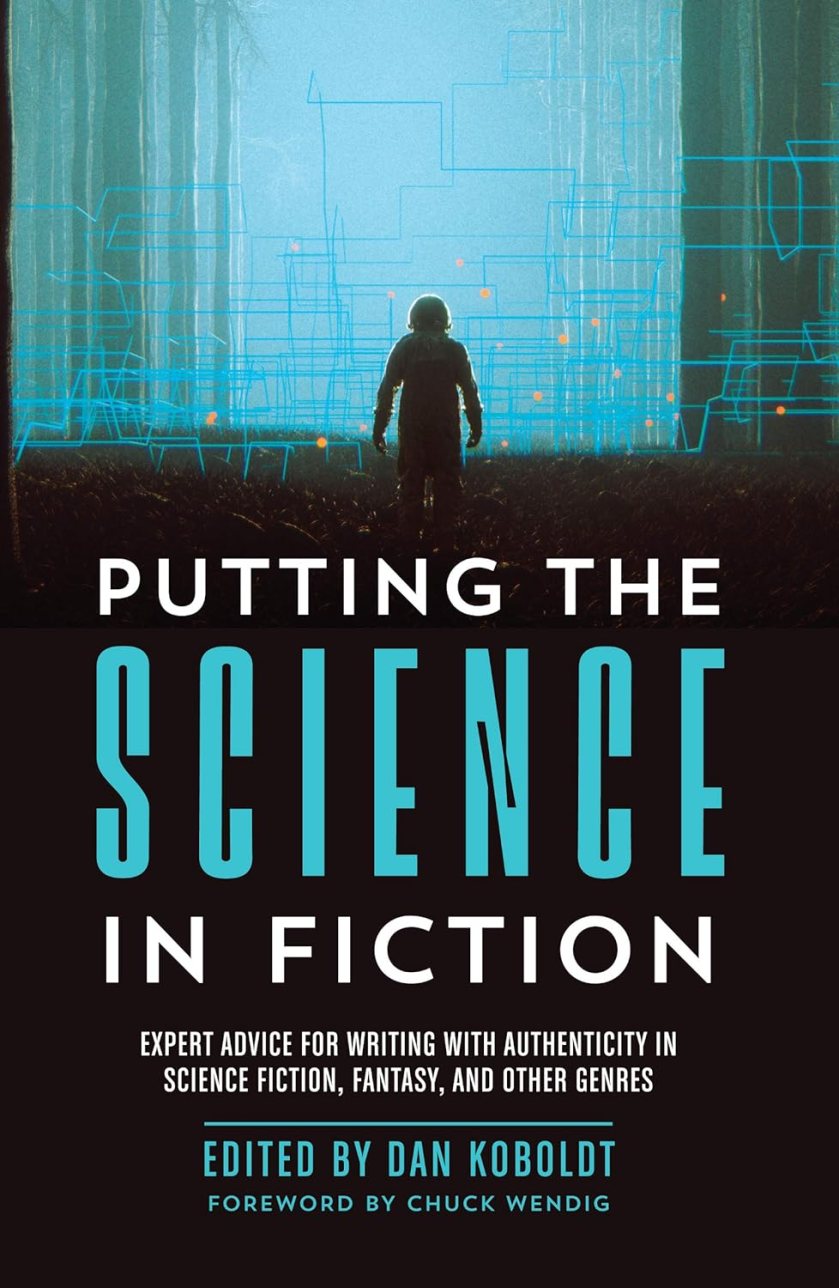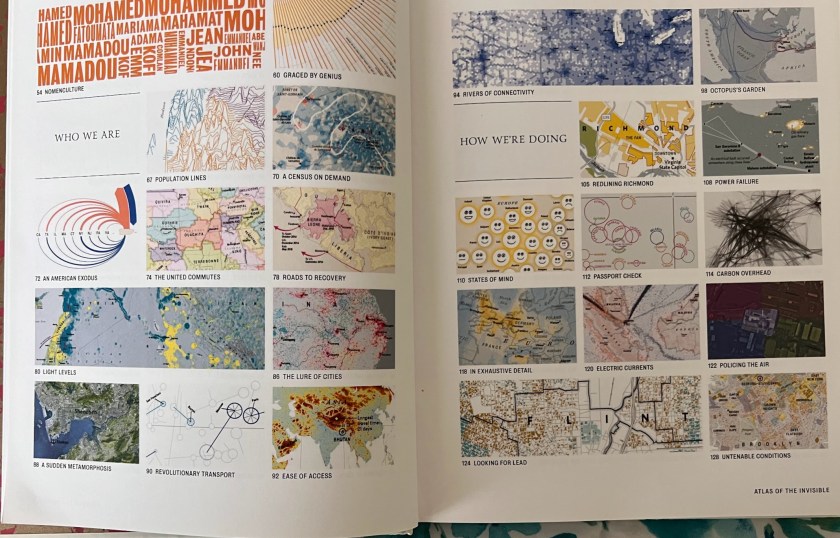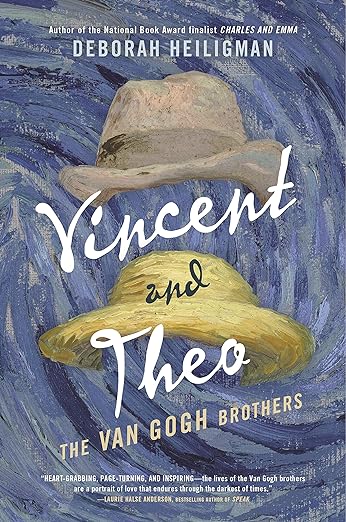
How Daughters Protect Planets

The daughter is home, brimming with chatter and tales from college. I cannot deny that we have been counting down days to have her come home. The house feels different, quieter somehow without her, and I listened happily as she jabbered on a few miles a minute, and gushed and laughed with her little brother. I sat there letting all the flurry blanket me, and smiled. 

“What are you smiling about?”, she said.

I said ‘something soppy’ about being happy that she is home again. She looked at me appraisingly and said, “Oh Amma! Look at you. You’ve mellowed into this sad thing who is ‘just happy to have her her daughter home’! What happened to you? What happened to the fierce woman who flew about the place?” 

“I am still fierce!” I said. 

“Nah! These days – I think she is going to just say something sharp, and she takes a deep breath and shrugs! She really does miss you!”, said her little brother, and I gave him a reproachful look. 

A few hours later, she had convinced us to settle down to a week-end movie night of Our Planet II – a Netflix documentary on the state of the planet, narrated by David Attenborough. It is an excellent program of course, and this particular episode veered from the whale sharks in the Persian Gulf to the wildebeest and zebras in the Savannah to the bees in search of their home with equal ease. We sat there mesmerized by the images, occasionally commenting on how hard it must’ve been to capture some of these shots. It had apparently taken 4 years to film and we could well understand why. 

“But think about it! Most species are absorbed with staying alive – finding food, reproducing and life resets, for the next generation, right?” I yawned sleepily.

“Yes – Amma & I were talking about that. I mean, if you are a duck: have ducklings, feed yourselves and them, and make sure they are safe. That’s it. That’s their whole life.”

“Yeah!”, the daughter said, laughter ringing in her voice, “Low-key simple, but also every day is just survival! Dog-eats-dog-world. I mean look at us. Tucked into our blankets on reclining couches, watching this on TV, and popping chips into our mouths.”

“We are a spoilt species.  “ I agreed. “But I am also glad that we have sentience and energy enough to ponder on more than survival, don’t you think?” I yawned again, ready to head up to a comfortable bed, and thought about that. This extra brain power is probably a double-edged tool. If we hadn’t this extra bandwidth, would we have been happy with survival, and learned to shake down down with our cohabitants better, or can we use this extra bandwidth in ways other than what we have done thus far? Maybe there has to be another leap in our understanding and way of life to truly protect our home and those we share it with. 

IMG_5618

Documentaries, and books certainly help us along that path, I mused, but a true awakening and action? I yawned another jaw splitting yawn, and decided that my brain power just then had about enough to contemplate sleep and relish in the thought of getting up to no alarms the next day (a rare gift in our busy lives). 

As I drifted off to sleep, I thought of the likes of Jane Goodall, Sylvia Earle, Rachel Carson, Gerald Durrell et al, who are voices that help us see the importance of ecosystems. I thought of the question that Sylvia Earle brings up in her book on Oceans: She was asked by a journalist as she stood staring into the vast ocean on the Australian shores, “What would happen if the oceans were to just dry up?”

Flabbergasted, she attempts an answer of the all-encompassing need for the oceans for our survival. Wouldn’t we go the way of lifeless and barren Venus and Mars without the waters of our beloved oceans and its ability to nurture life?

But all of us cocooned in our daily lives of earning our living, and living our lives, and raising our children do not stop to wonder why the jellyfish, and whale sharks are important to us do we? 

That is why we need daughters to come home from college. To ponder on the beauty of life, and what we must do to sustain and protect our lovely home: Earth. 

In the oceans of wonder

T’was the time to plan one of our trips to another dimension, and we were excited. For this time, we also had the company of our family friends who came in from India, which meant that we had planned both a trip to the Monterey Bay Aquarium and the beach nearby afterward for a sumptuous picnic. 

At Monterey Bay Aquarium, we can be assured of being grateful to our marvel-filled planet for all its resplendent forms of life: the staggering variety of it, and the true meaning of diversity. For all our time in our daily lives, we seem to devote little of it to ponder the wonders of the world. So, taking a day in which we see nothing but life other than our own, so often so different than our own – with exactly the same conditions to develop is not just wondrous, but necessary.

IMG_5616-COLLAGE 

There were a few moments in that day that stood out:

🐟 Standing in an entryway where thousands of sardines swam overhead, the son and I noticed that there were a few – very few maybe 5 in all, who were determined to swim in the opposite direction. It seemed to be by choice, since they were edged multiple times in the opposite direction by the other fish. They were packed like sardines after all.

IMG_5615

Maybe, every society does need those few who swim against the tide and make their own way – hard as it seems, I thought philosophically. Though, I am the first to admit that I have never studied sardine behavior to corroborate this. It simply seemed like a comforting anthropomorphizing thought at the time. I was feeling contrarian at the moment and these little fishes making their way against the rest of their crowd made it seem like those feelings were valid. 

🐟 I have almost identical pictures of the jellyfish exhibit from my multiple visits to the aquarium, but this one was different. The picture of a baby silhouetted against the glass and longingly touching the glass housing the jellyfish caught my attention. Had my more photographically inclined friends been there, I am sure they would have captured an award worthy photograph. What I got was this. I love this picture because it seems to capture that essence of wonder innate in all of us, that we forget to cultivate and nurture.

IMG_5618

🐟 Later that day at the picnic at the beach and on a walk by the waters looking at the profusion of wildflowers I could not help staring into the ocean waters. The home to all these grand creatures we had just seen. Their habitats and life in the waters had been beautiful, but so was ours. The tiny wildflowers on either side of the trail were reminders of that. Even if a tiny part of me resented the fact that my attempts at growing these wildflowers had come to naught for so many years and yet here there, able to thrive with no help from mankind. 

img_5716

There is something marvelous about being in the beach on a warm day at the end of May. It isn’t as crowded with the summer sunbathers yet, and the waters are neither warm nor cold: perfect for a game of guess-the-wave -lines (this game is a complicated game where we point to a wave and try to stand as close to the wave on the shore without it actually touching your feet. So the person closest to the wave before it starts receding wins) 

I have with me a book on the oceans titled: Sea Change: A Message of  the Oceans by Sylvia Earle and plan to wrap myself in the wonders of that world over the week-end. 

Time For a Spot of Time Travel?

It was time for a spot of time-travel. We just hadn’t realized it at the time, but what started as a movie took us into marshes of history, and from there on to speculative adventures, voyages into books and interesting chats on walks under the moonlight dancing through the clouds alongside the setting sun’d rays. If that doesn’t constitute ingredients for a magical time, I don’t know what does.

We had been out to watch Ponniyin Selvan – 2. Set in a time period in South India a whole millennia ago, the movie had already captured the imagination and attention of Tamil fans with its first installment. Political intrigue, love, betrayal, loss, treachery, assassinations, alongside the brilliant imagery of the sets, the costume design and so much more. I enjoyed the foray into 1000 A.D – I had not read the books that were equated to the (Harry Potter books in our generation) for (Tamil readers a generation ago), and the movie was still transformative in its set designs and plot. Within minutes, we forgot the popcorn and the theatre, and were instead watching mesmerized as the young princes and princess sorted through the messes their lives had become.

Days later, we were discussing all of this, when our discussions turned to the lack of historical writing and documentation in India through the ages. Egypt had the great Alexandria library, and though India was known for its universities and advances in many fields, historical documentation is scant. It is apparent to this day. As quickly as India has grown in the past few decades since Independence, and seeing that the constitution adopted many tenets of freedom, secularism and democracy, it still did not plan to make room for public libraries accessible to one and all. Most advanced nations have free public libraries. (Including the ones that out influenced the early days of India: United Kingdom & United States).

Education has always been hugely valued by the Indian subcontinent seeing that Saraswathi as a goddess of learning and Buddhism as a means to ‘know thyself’ as practically tenets of the culture. To date, there are bookstores and the publishing industry is a thriving one in India. So, the lack of libraries is truly baffling. 

I digress, but the point is that historical fiction was and continues to be an interesting genre for this ability to time-travel, to try and unravel the mysteries of a time gone by. We fell to talking about the city of Poompuhar in the Cauvery Delta close to where the Ponniyin Selvan movie takes place, and the husband told us about the fact the funds to find out what happened to the city that was submerged many centuries ago. The South Indian Archaeology department itself was only started in 2005. We do not know when the city was submerged.

Here lies the thrill of the discovery though. With modern techniques, notes from that age, relics and artifacts, so many things could be pieced together. 

The son and I read the book, Case Closed? Nine Mysteries Unlocked by Modern Science – Written by Susan Higher and Illustrated by Michael Wandelmaier together. 

1554533627.01._SCLZZZZZZZ_SX500_

In mysteries spread across the world, the book tries to unearth (pun unintended) what happened. Take the case of the missing city of Ubar in the Arabian peninsula. Situated in the Rub’ al-Khali desert, it existed possibly 5000 years ago:  a supposedly thriving city on the trade route between Greece, Rome & China, it was last seen in 300 CE.

img_5462

The Mystery of Ubar was solved in a rather anticlimactic fashion though. It may have been that Ubar was an important port with a fort for protection that was destroyed by an earthquake and sank into the sands, but it may have grown into a city in legend, and retellings of a dramatic nature. However, as historians, archaeologists, documentary movie producers, and space cadets looked through the lenses of time to find out what happened, the journey towards discovery could have been a tale in itself.

How many mysteries like The Atlantis of the Sands are out there?

There will be a time in the future when stories of our time period will be fascinating and what they find about us will be intriguing, though we will never know. That is the thrill of it too. Will our granite slabs tell the story of our technical prowess as well as our internet revolutions?

🪷Happy 18th Birthday 🍀

May is the beautiful month of beauty, warmth , work, and birthdays (including the blog’s birthday) 

The nourish-n-cherish saga is now officially an adult in the muggle world (18 years of age) 

Over 1080 posts in, the blog seems to have had its own growth.

In the beginning , it was a place for short anecdotes on family and children. 

Over time, as it neared school going age, I suppose the blog grew too

It started showing interests in varied subjects: gravitating towards science and nature based subjects for sure, but also retaining that shy curiosity about life and a sense of humor as we navigated the vicissitudes of life. 

It isn’t as personal as a diary, so I doubt it will serve as a pensieve, but it serves as a cup of joy from which to sip when in a reminiscing mood.

🧘🏼‍♀️There were times when I could philosophize, contemplate, marvel in safety.

IMG_20200404_153332

Whatever it’s purpose was while starting out, I think I can safely say that it has helped along several dimensions (like a snowflake) 

When first I started moving out of only personal anecdotes to writing a thing or two on a book I read etc, it seemed to have opened a door to innate curiosity. 

Suddenly, I was more interested in varied topics, trying to understand different perspectives, open my mind to areas that I otherwise might not have had the opportunity to, etc. Inevitably, with all this fodder came the benefits of cross pollination, the joys of thinking through things, or the rewards of quiet contemplation. 

In short, what started as a hobby soon became a source of such gratification, learning and joy that I could not help sharing with my friends (who, for their part have been nothing short of spectacular with reading, inspiring and encouraging me) 

There have been times I’ve wondered what it all amounts to.But then I realize that it already has amounted to magnitudes more than I thought possible (sometimes human imaginations are limited.) 

IMG_4302-COLLAGE

⚡️Those moments when I am spinning ideas in my head, and have to stop mid-stride when a thought strikes.

⛈The magic of writing, re-writing and re-rewriting to get a piece right.

👻The frustration of unfinished pieces from a decade ago because of lack of time.

∫ The joy of tucking a good memory away so it can replenish us in written form later.

🪷The thrill of creativity as new ideas come in – the long list of children’s books ideas waiting to be written (also novellas & short stories) I have wisely given up on the idea of a novel given the constraints of time – but one never knows!

To all of you who have joined me on this journey, whether gamely taking it in your stride when featured, or given me things to think about as part of our stimulating conversations, or inspired me to try new things, or just being there in my life: Thank You! 

A Redwood Run

It has been a few years since we attempted a destination run. The type where we run for the scenery, the physical gravitas of one’s surroundings, and the joy of camaraderie among one’s fellow runners. As we ran through the redwood forests, I thought to myself how marvelous it was to run and run like a true child of the Earth without urban buildings, construction noise, and piles of concrete. Even the gray road through the forest felt poetic and somehow attuned to its surroundings. (Well, maybe the double yellow lines were a bit jarring, but the gray road didn’t feel quite so intrusive) 

img_5125

After a chaotic start to the half-marathon, it took some time for us to settle into the run. The traffic jams were horrendous – the husband’s implacable optimism about making it to the start line on time was a bit misplaced, especially when we could see other runners leap out of their cars and run to the start line (adding a good mile to their already long runs). Our group  of runners were split between two cars and by the time the bibs were collected and we started the race, it was a good 20 minutes past the race start. To make matters worse, the officials were adding to the confusion yelling to all in the vicinity that they would be removing the starter mats that record time. We were thoroughly frazzled as we ran across – not at all sure it had recorded our run, but we ran anyway. 

The son ran a 10K, while the husband and I ran the half-marathon. The son having age and weight on his side flew on, while we huffed and puffed behind him trying to keep up. This resulted in a shin injury for the husband (which, he told me later, almost had him wondering whether he should do a 10K instead. Coming from the sun-is-shining husband, this must’ve been a serious enough injury) However, some stretches and slow miles later, he seemed to be in a better shape. 

As we ran on and on, deeper into the forest, there was tranquillity there. A meditative pulse to running through trees that started life when humanity was still contemplating  the merits of civilized living. Physical gravitas takes on a new meaning in the redwood forests. Young shoots and ferns, the young greens against the textured markers hues of the older trees, the sunlight poring through the branches high above. I thought of the books on redwood trees – Richard Power’s Overstory – the best one I could think off: powerful in its imagery and cathartic to think about just then.

“This is not our world with trees in it. It’s a world of trees, where humans have just arrived.” 

– Richard Powers, The Overstory

Between the 7th and 8th mile, I thought I’d missed the mile marker somehow. It seemed interminably long. My leg seemed to have just given up, and I found myself looking up into the tall redwoods begging for strength. To drink from the infinity that seemed to stretch among those majestic trunks. It helped. The depths of the forest tends to speak to the depths of the soul, and I prodded on, careful not to tell the husband about the injury like saying it out loud would somehow make the injury worse. I stretched, grimaced, and plodded on. Each mile excruciatingly long. 

img_5114

I thought of the gray road cutting the mycelium web underground that sustained these trees for millennia and felt a strange stab of remorse : would the web have found a way to continue underneath the gravel to sustain the trees on either side? I’d have to check. 

Cosmos episode for: The Search for Intelligent Life on Earth : narrated by Neil DeGrasse Tyson, written by Ann Druyan & Carl Sagan

But yet again, the forest helped. 

Whenever the body felt drained and the pain in the right leg flared up, it felt grounding to remind myself that running this course was one of the best things to happen. For the redwoods were calm, the mists rolling in mystical, and the pattering of fellow runner’s feet grounding. There was a strange other worldliness to running through the redwood forests. Pain (possibly ITB) the only reminder that this was not a dream.

I cannot tell you how marvelous it felt to run the last mile and arrive at the finish line – famished yes, but we had managed to finish! Between our injuries, and a clatter of a start, a horse-wallop of a run, we had finally finished. The son was there cheering us on and all was well.

Having a wonderful set of friends on the journey is always helpful, and though we were scattered throughout the race, and didn’t see much of each other – the glimpses and cheers we did get was hugely inspiring.

31cd5c30-3b9c-4241-95e1-a5e263e1fbab

color_pop

Write an ode to my wife, my life

“So, will I be getting my romantic poem then?!” I teased the husband who was looking sheepish. I giggled at his obvious discomfort. He is the sort of fellow who relishes the sentiment behind  P G Wodehouse’s statement:

I once stayed at the residence of a newly-married pal of mine, and his bride had had carved in large letters over the fireplace in the drawing-room the legend: ‘Two Lovers Built This Nest’, and I can still recall the look of dumb anguish in the other half of the sketch’s eyes, every time he came in and saw it.

  • P G Wodehouse

We had been gurgling on about some rom-com movie, a rather touching spot of sentimentality that clinched the deal between the love-birds and all the rest of it. Which led to me to ask for my romantic poem. It is an old joke between us: we both know he is no poet, I am no queen, and so it goes. 

I needn’t have worried though. If ever the man is discomfited, it is but a fleeting sensation. For he leaps into problem solving mode almost instantly. A few minutes later, the cocky fellow strode into the room looking pleased with himself. 

“Check your WhatsApp messages!”, he said. 

I did, and burst out laughing. He had done it. He had sent me a horrendous poem full of lines from 1980’s Hallmark cards, all culled together.

“Oh my goodness! Did you search up the first “romantic poem for my wife” and send it? I asked. I was laughing now, and he disappeared again looking even more pleased, and a sentence thrown to the winds, “The poem doesn’t speak of your particular gifts you are right. One minute.”

Then. A few minutes of deep thinking could be heard – the brain whirring probably and he said: “Check now!” 

I must say it was much more than I expected. After seeing the previous attempt, I braced for a cheesy omelet. 

My love, my life, my wife,

You are a woman of many talents

You are funny and witty.

And your writing is wonderful

The “poem “ went on in this vein for 3 more paragraphs.“Really?! You wrote this? I didn’t quite slot you as a loquacious poet, but good job! “ I said. The husband puffed out his chest and looked proud of himself. Too proud in fact, and that gave me pause. I narrowed my eyes x-raying the man’s soul and saw all. The twitching of the smile that gave it away, the hearty thanks, and I said incredulous, “Oh my goodness! Did you use ChatGPT for these?”

He nodded looking so proud of himself that I clutched my sides laughing barely able to breathe.

“Pretty good right? I asked it to write a poem for a loving wife who is also a funny writer.”, he said.

I beamed at the problem solver. I suppose all poetically challenged lovers can now relax. They can get help. 

We had been talking about the ways in which this new technology can change things for us. Just as with every new piece of technology, there are pros and cons. I had been reading two books simultaneously :

  1. The Age of AI and Our Human Future: By Eric Schmidt, Henry Kissinger and Daniel Huttenlocher 
  2. Impromptu: Amplifying Our Humanity Through AI : By Reid Hoffman

Excerpt from Impromptu:

“Mintz immediately integrated the new tool into his decades-old teaching methods. Within months of ChatGPT becoming public, Mintz started requiring his seminar students to write their essays collaboratively with the new tool. As homework, they bring the ChatGPT prompts they tried and the responses they received for class discussion. They must turn in their final papers with a log of changes to the machine’s output.

As a great teacher, Mintz chose to use ChatGPT not as a source of answers and authority, nor as a replacement of his or his students’ work, but as a tool to help his students learn individually and together.”

ChatGPT: Threat or Menace?: By Prof Steven Mintz

Steven Mintz is professor of history at the University of Texas at Austin.

The book goes on to compare the use of calculators in Mathematics teaching a few decades ago:

“In 1970, the typical calculator was too pricey for wide- spread use in schools, but they hit a tipping point in the mid- 1970s. Many parents and teachers were alarmed at the influx of new tools; they worried that math skills would atrophy and students would simply cheat. 

By 1980, however, the National Council of Teachers of Mathematics recommended that “mathematics programs [should] take full advantage of calculators . . . at all grade levels.” Today, most math instructors consider calculators to be a critical part of math instruction, and many states mandate calculator use with certain tests. “

It is curious to see how human intellect is ever ready to thrive and adapt and hopefully stay abreast of these. There are now jobs being created for Prompters for those who can get the ChatGPT/ OpenAI platforms to coax the AI platform into  answering particular queries.

There are cautionary stances to be taken and our laws may not always evolve fast enough to keep abreast of technology. The buzz of AI is the most fascinating challenge thus far, and I am rooting for our species to master its use as humanely as is possible. Use it for the good of the world – climate, healthcare  (physical and mental), food production, education and so much more.

But now, I am going to savor the husband’s poem. After all, it did say:

Thank you for being you.
You make the world a better place.

Professor Mintz would’ve been proud of the poem 🙄

🪷An Anthophile’s Angst🪷

The Earth in spring is filled with ephemeral beauty. If only there was a way for us to shore up these stores of promise and beauty to dip into on long, drab days when hope isn’t shining out of every pore, life would be set. 

Last week-end, one of my best friends whisked us from our homes to a place where Earth, as Ralph Emerson Waldo, so clairvoyantly says, laughs in flowers. I had seen pictures of tulips from Netherlands, and from Oregon and Washington states as well. It is hard to miss these photographs on social media. But it has helped build the yearning to visit these flower fields in the peak of spring. Who says dreams do not come true? They do, and often, in ways you do not expect, adding a delicious twist of serendipity to the experience. For this time, it came in the form of a girls’ trip to one of my best friends’ home. The exemplary hostess that she is, we came back feeling like queens, glowing in the warmth of laughter and love she enveloped us in, and smiling secret smiles filled with tulips, daffodils, fields, lakes, clouds and the sound of the twinkling camaraderie between friends.

Walking in and out of these flower fields, I stopped to see the different ways in which we sought to preserve these memories for ourselves. The photographs were fast and furious. Some folks, like ourselves, tried silly photographs, and some others were trying their best to obscure the pictures and their angles so as remove the other people around them. I quite understood the yearning, but also felt a bit cheated (though I was guilty of the same thing). You see? I had expected to see endless fields of tulips stretching far into the horizon as far as the eye could see. What I saw instead was a finite field of flowers. They were brilliant, but not endless. The angle of photography can be misleading indeed.

IMG_4722-COLLAGE

The ones most appreciative among us were a couple of dogs that stopped to sniff the blossoms reminding me of the dog in Mary Oliver’s poem that loved to sniff flowers.

“I had a dog
who loved flowers.…

she adored
every blossom

not in the serious
careful way
that we choose
this blossom or that blossom

the way we praise or don’t praise –
the way we love
or don’t love –
but the way

we long to be –
that happy
in the heaven of earth –
that wild, that loving.”

Mary Oliver

Maybe the dog caught a whiff for their sense of smell is far sharper than ours, but we shall never know what the dog smelled. I shall however remember the satisfied contented look in its eyes. There was another child who sniffed at the tulips and looked up questioningly. I understood the confusion in the child’s face for it mirrored mine from a few moments ago: the tulips weren’t fragrant exactly  – they simply had no smell. 

dog_flower

As I stood there surrounded by tulips first and then daffodils in another farm, I thought longingly of the patch in my front garden. For two years now, I have been trying to get it to bloom. But like a trichologist (Trichology is the scientific study of hair) battling a particularly persistent bald man’s patch, it has so far resisted. A shining bald patch in the middle of the yard, simply refusing to burst forth and shine in the spring time. How these horticulturists managed to get this many plants to bloom altogether, and not one of them a dud, is beyond me. #EarthMagicians.

In any case, I thought to myself as I sniffed a flower, I take inspiration from the dogs in spring time bounding about with energy and a bubbling happiness trying to capture infinity in flowers. An anthophile’s (lover of flowers) angst is easily remedied in the ephemeral beauty of every blossom. No rose stops to think of its purpose in life does it?

“Wild roses,” I said to them one morning.
“Do you have the answers? And if you do,
would you tell me?”
The roses laughed softly. “Forgive us,”
they said. “But as you can see, we are
just now entirely busy being roses.”
– Mary Oliver , Roses

🪷🍁🍀🍇🌴The Power of Plants🪷🍁🍀🍇🌴

Around the World in 80 Plants – Jonathan Drori Illustrated by Lucille Clere

80_plants

Reading about plants and how they shaped our lives is a fascinating endeavor. How little we stop to think when we sprinkle turmeric, or asafoetida in our foods? Turmeric and Asafoetida by themselves are used so ubiquitously in Indian cooking that we quite forget the journeys from farm to consumption.

Starting off with plants that I have heard of in the magical context such as Myrtle, Wormwood, Clovers, Mandrakes, the book makes its way through plants that influenced our  civilizations in different parts of the world. 

The amount of information packed into a 200-page book is amazing and warrants a place in the reference section. 

We are mostly aware of the fact that we have not even scratched the surface when it comes to the potential of plants and their medicinal uses. There are around 380,000 plant species in the world, and we do not know how many are not catalogued yet. Even the ones in popular use, we do not yet know their potential. Take the Mexican Yam for the instance. It grows like a vine and produces its tubers.  

Yet, when I read about the Mexican Yams (Dioscorea Mexicana), I was blown away. The humble vegetable has a substance called diosgenin. Diosgenin, it turns out, is a vital starting ingredient for the manufacturing of steroids. Steroids are used to treat asthma, rheumatoid arthritis and autoimmune diseases. 

“The use of steroids expanded in the 1940s, but the drugs, derived from animals and even humans, were hideously expensive. At one time, it took forty oxen to provide the cortisone to treat one arthritic patient for a day. “

– Around the World in 80 Plants – Jonathan Drori

How many times have I applied the cortisone ointments to relieve eczema for the children, without considering how we came by it?

As if this weren’t enough, they are also used in the production of sex hormones progesterone and testosterone. 

“The biggest boom of all came from the use of yam-derived progesterone and other hormones to trick a woman’s body into acting as if it was pregnant thereby inhibiting ovulation. The contraceptive pill was born.”

– Around the World in 80 Plants – Jonathan Drori

Our lives as we know it today, have been forever changed thanks to this humble vegetable. 

“It is fitting that a plant with splendidly heart-shaped leaves should have had such a profound effect on the well-being and love lives of millions of people.”

– Around the World in 80 Plants – Jonathan Drori

img_4603

Spring in the Sierra Nevada

The yearning for adventure was astir. Yodeling by the river was not enough, huffing and puffing like penguins in the Atlantis marathon was not enough. Luckily, spring time in California never disappoints the strider in the hills. So, off we went traveling to the Sierra Nevada mountains. 

Driving up to the mountains, we passed by the green hills, greener pastures, and entire meadows, and hillsides covered in lupines, daisies, poppies, milkweed, and little yellow flowers (So many varieties!). If ever any one needs their worries and woes to flee, a drive like this is all it would take.

“In every wood, in every spring, there is a different green.” – J R R Tolkien

 Yosemite National Park is probably one of the most explored parks in the world. 

🪨Every major boulder is given an impressive (sometimes humorous) name: El Capitan, Half Dome, Cathedral Rocks. 

💦Every major perennial waterfall carefully charted – yet every year in spring with the snow melt, the number of little creeks and waterfalls that arrive and vanish before the summer’s heat is like trying to estimate how many chips a kid would eat out of a fresh packet. 

🏞 Every picturesque spot named – there is even a week dedicated to photographing a waterfall – that week the rays of the sun at sunset make the waterfall look like a volcanic lava flow. Photographers spend hours waiting for that wondrous shot.

Of course in spite of everything been catalogued and charted, nature finds a way to impress and astonish. High up in the Sierra Nevada mountains, we expected to be cold.

But, Spring in the Sierra Nevadas felt like winter left in a huff one evening. No lingering farewells, no tears, no gloom, no fussing. Just packed its bags and left.

Spring pranced in, as though waiting back-stage secretly shooing winter off for a bit of shine in the spotlight,  and all the world suddenly brightened and lit up in the sunshine. We were so shocked to have two days without needing thermals, or jackets and just listening to the snow melt from the peaks whooshing down the rivers.

As we walked through the forests of Yosemite, poetic phrases bubbled up. Why oh why does this happen, and how oh how does the world know April is Poetry Month?

So we bubbled along, squirting out our little phrases. The ones that came and the ones we contrived to fit the ones that came.

  • Earth, River, Forest, Light
  • Green, Blue, Brown, Yellow
  • Pristine ponds reflecting these sights.
  • img_4460
  • River rapids, 
  • Birds chitter, 
  • Breeze mellow.
  • img_4557
  • Pine wood, 
  • Gnarled roots, 
  • Bulky boulders.
  • img_4551
  • Puddles in the middle
  • Rugged rocky cliff faces
  • Moss clinging to these spaces.
  • img_4584

This has probably been the most generous winter I have witnessed in the past two decades in California. I felt bad for the number of trees that were felled due to the extraordinary winds and rains coming after years of near-drought, but overall, I was grateful. 

Wherever we turned in the massive valley – rivers and waterfalls surrounded us. It is truly a beautiful time. When the power of Earth makes you feel humbled, grateful, and joyous, is there a better retreat? 

yosemite

Lessons in Spring Time

I sat one spring morning feeling a kinship that felt very Wind in the Willows, Frog & Toad, or any other sweet animal story that comes to mind. I thought fondly of the animal characters in my Festivals in the Jungle series (My own characters Oby Elephant, Jenny Rat, Biso Bison et al ). 

Spring in the world means that a whole world sits up and takes notice. At least schools still honor this joyous season with a Spring Break. I am happy (and just a little jealous) to see the story book tucked under the son’s arm as he nestles into his reading nook in the mid-morning with his City Spies book, followed by a vigorous hour of television watching on the couch.

While most white-collar job humans have created have schedules and tasks quite divorced from the natural world outside, the bulk of the creatures that we share our planet with, have not fallen to this folly. 

So, it is with glee that I stop typing to peer outside the window to see a bunch of squirrels fooling about and squealing – having fun while chasing each other and gearing up for the year ahead. It is with a surge of protectiveness that I look at the thrushes who are building and fortifying their nest in our patio. It is with pride that I look up and see a crow carry a long string in its beak for its own nest. It is with joy that I wait for the ducklings and goslings to hatch so I may see these stellar parents at work showing us a thing or two about parenting.  

The other day, the husband & I went on a hike nearby – out on the rolling hills. Hearts a-flutter, toes a-flying, spirits a-singing, water-bottles a-swinging. We prattled on as we ascended the green hills bursting with wildflowers an all sides. The misty air was enhanced by the scents of eucalyptus and pine. The cows and calves grazing in the hillsides are always a joy to watch in spring time. As we neared one particularly narrow path in the trail, a large cow – or rather an extra-large cow obstructed our path. If I had been in the sub-Saharan areas of Africa instead of the lush green hills of California, I might’ve mistaken it for a hippopotamus. Gentle creature as it was, the husband and I exchanged quizzical looks and waited patiently. The poor animals seemed to have an itch and, having no other option, had scrambled up some steep hillsides to get to the fallen tree by the wayside and was scratching itself against the trunk. 

img_4302

We waited. The cow scratched.

We waited some more. The cow turned and scratched some more.

After some more minutes of this thrilling action, we decided to give the poor animal some space and started walking away the way we came. 

Had this not happened to us, I might never have believed. But within a few steps of us going in the opposite direction, the cow called out to us. As if to say, “I am almost done. You can come along now.” Some more quizzical looks later, we doubled back. Right enough, the cow turned to look at us, and then ambled away. Slowly on the path, body language saying- come along now, don’t be silly. Of course you can carry on in your little amble beside me.

One time, I remember, a cow calling out to her calf in unmistakable tones of warning as it came close to us. The calf, like most little ones, was curious to see what was happening. The mother gave a warning, and some time later, as more people ambled up the path, called out, “Come here!” – Not in English of course, but in Moo-in-ese, and the calf thought about ignoring her, but then acquiesced, and agreeably went back to its mother only to get a gentle reward of some suckling. 

The language of understanding is so marvelous to behold. The world in the spring-time is a place to soak in all these lessons with a beginners mind #Shoshin. 

“In the spring, at the end of the day, you should smell like dirt.”
Margaret Atwood, Bluebeard’s Egg