Our Invisible World Made Visible

I pulled Atlas of the Invisible from the library shelves looking pleased. Here was another book straight from the dream shelf. As I thumbed through the pages, I felt a familiar flutter of anticipation. I could already visualize the happy hours spent looking into the different maps and visualizations to help understand the world around us better. 

Many of us have heard of the map Dr John Snow drew up of the cholera epidemic in London as he went about his duties as a doctor. With the aid of his map, he was able to isolate and identify the contaminated water pump from which the water-borne disease was spreading. 127 people died in 3 days and over 600 people died within a month. Here was a groundbreaking example of multiple skill sets coming together to identify and problem solve. 

Of course, data and its importance has only increased in the intervening century and a half since. In Dr Hans Rosling, Anna Rosling & Ola Rosling’s book, Factfulness: Ten Reasons We’re Wrong About the World–and Why Things Are Better Than You Think , examples of data collection, sampling, analysis and visualizations help us think of the world in eye-opening ways. The progression of populations from under-developed to developing to developing is fascinating and gives hope for a future that has solved many of mankind’s problems. 

life-on-4-levels

<Infographic from Factfulness book mentioned above.>

Now, several leading newspapers such as the New York Times commission data analysts to present their findings and even have visualization teams to help with the most succinct presentation of data. 

Atlas of the Invisible – By James Cheshire and Oliver Uberti is a treat for those who enjoy analytics. 

atlas_invisible

Example charts – to see if you like the book:

IMG_8034

We are all data points in this world. I chuckled as I read about the folks who revealed a high security defense location in the middle of the desert simply by turning on Strava to keep track of their daily activities. A good reminder that like many of our inventions, this penchant for data tracking and analysis too will bite us in unexpected ways.

I hope you enjoy the books as much as I did.

Recommended Reading on this subject:

The Storms of Vincent

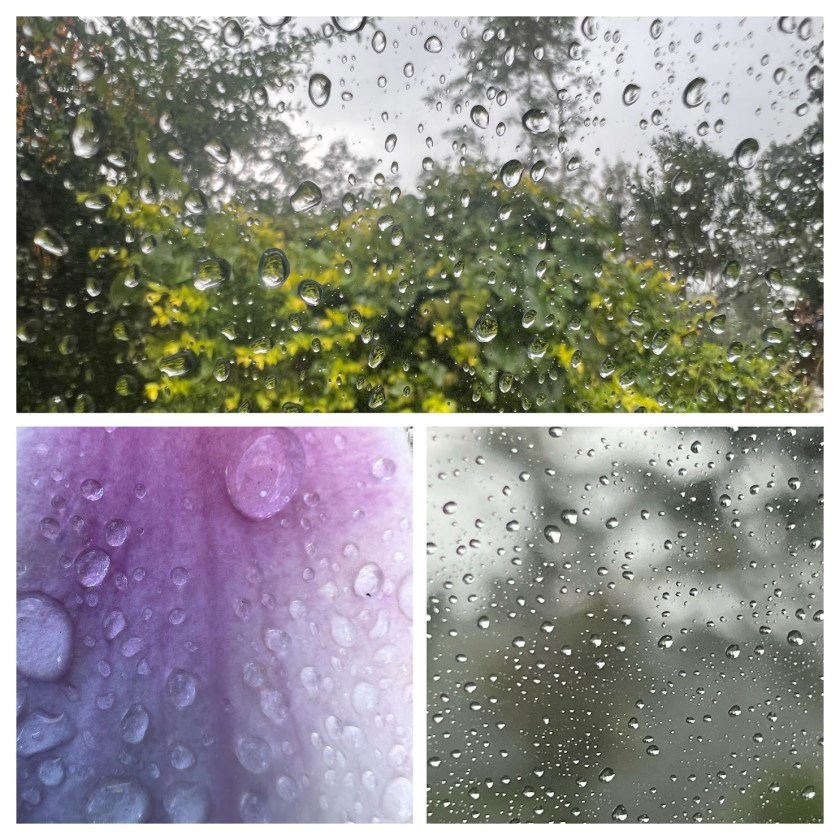
Regular readers know that I am a pluviophile (one who loves the rain). On my recent visit to India, I was out walking around the apartment complex our family lived in one night, and found myself caught in the most brilliant and relentless rain they’d had in months apparently. 

I was delighted. 

rain

I was on a late night phone call to the family back in the US, and I rushed to the building in the center taking refuge there and looking stupendously happy for someone who had no idea how to get back home in the rain, or if the door would be open for me when I did get back. None of that mattered just then. Living in the present and all that. I poked my tongue out to catch a few raindrops.

“Hello!” said a neighbor, and I gulped feeling foolish. She smiled and I smiled back sheepishly, hoping she hadn’t seen. 

“I don’t think this is going to stop just yet. I am just going to run for it. “ she said and gave me one of her dazzling smiles, and plopped off through the rain. 

I stood transfixed by the pouring sheets of rain. It would have definitely been classified as ‘a storm’ in California.  Lightning lit up the skies, and thunder rumbled. It was beautiful.

I don’t know how long I stood there gawking like that, but soon I realized that the downpour was not stopping any time soon, And it was close to midnight. Unless I wanted to spend the whole night outside, I would have to run through the rain. So I did. I splashed into the house – luckily the daughter was still awake, chatting with her friends on the phone and she opened the door. She gave me a disapproving cluck and said “Oh my gosh – let me get you a towel.”

As I watched the rain pour itself out, the little rivulets of water sliding down the building walls, and the flashes of lightning illuminating the cityscape every now and then, I found I could not sleep and picked up the Vincent and Theo book by my bedside, and flipped to the part where Vincent likes painting storms.

vincent_theo

Excerpt:

It’s been stormy and stormily beautiful to Vincent in Scheveningen lately, and into the squalls he goes. He is just starting to paint with oil and is not used to them yet, but he takes oil paints into the storm to paint the beach, the waves crashing one after the other, the wind blowing, the sea the color of dirty dishwater. He makes one of his first oil paintings, View of the Sea at Scheveningen, with a fishing boat and several figures on the beach. The wind is fierce, kicking up the sand. Sand sticks to the thick, wet paint.

Vincent loves capturing the turbulence of a storm. “There’s something infinite about painting”, he tells his brother. “I can’t quite explain – but especially for expressing a mood, it’s a joy.”

A few days later, on a quieter day, he sketches the beach. Sending the sketch to Theo, he describes a “Blond, soft effect and in the woods a more somber, serious mood. I’m glad that both of these exist in life.”

Wild and somber. Room for both. Room for all.

https://ontrafel.vangogh.nl/en/story/167/traces-of-a-nasty-little-storm

Please check out the View of the Sea painting and further details here

Screenshot 2023-09-25 at 2.35.11 PM

Vincent’s life was a stormy one too. He was not an easy person to live with and this caused many rows with his family, though he was intensely dedicated to all of them: his parents, siblings (especially Theo), uncles etc.

I looked out of the window again. We all live through the storms in our lives. But, the good thing is that no storm lasts forever. Not all living beings would have the luxury of drifting off to sleep like that, and that made me very grateful for a warm bed and dry clothes.

“There is peace even in the storm”

― Vincent van Gogh, The Letters of Vincent van Gogh

raindrops

The Joy of Effort – A Sense of the Infinite?

I was reading the book, Vincent and Theo – the Van Gogh Brothers by Deborah Heiligman. There are many aspects of the book that appeal to me. The narrative style, short chapters, clear language, not withstanding, it also touches upon difficult temperaments and the strain on relationships, Vincent van Gogh’s mental health, and his subsequent descent that led to the accident of cutting his ear off. 

vincent_theo

To Vincent van Gogh, portrait painting became an almost urgent need to master – just before his spiral towards insanity started. Uncle Cent, after whom he was named, was the closest uncle to him, though he was disappointed in Vincent, and left him with no legacy or inheritance. He left it all to his brother, Theo, instead. Still it moved Vincent at the time. He was in the process of prolific creation, and thoughts of mortality made him think of portrait painting with a sense of urgency.

This is a self portrait of Vincent van Gogh made in 1887. This portrait is on display in the Rijksmuseum in Amsterdam.

Screenshot 2023-09-18 at 10.43.48 PM

“Uncle Cents death makes him think more than ever about mortality – and immortality. Maybe there is an afterlife, maybe not. But if he paints someone well, that person is alive forever.

In the time he will spend in Arles – 444 days- he’ll make two hundred paintings and one hundred drawings, a huge number for an artist. He’ll paint landscapes, still lifes, scenes of cafes at night, furniture, rooms, flowering trees, flowers-he is about to begin painting his favorite again, sunflowers. But painting portraits is the thing that moves him most deeply, that gives him “a sense of the infinite”.”

I put the book down and thought about the meaning of effort in our existence. For many artists art gives a sense of meaning. To capture the infinite as Vincent van Gogh says. 

What has happened to portrait painting as a venue since photography came in? Maybe, photographers tend to capture the infinite. 

I thought of all the different mediums slowly replaced by a quicker technology. 

  • Writing  & Editing – ChatGPT, Grammarly and ProWritingaid are all quickly gaining traction for this hobby. 
  • Painting – there are tools available to take any picture and make it look like a painting. You can even choose the style you’d like your photograph transformed into
  • Knitting & Embroidery – almost lost to mechanization and mass production 

While newer and quicker mediums are welcome, I wonder about the appeal of the slow and steady. After all, half the joy is in the effort. I know I enjoy mulling and aching over my words – whether it is a short article, a children’s book, a novella, short story, or larger book. But I do also enjoy using my laptop – the ease and speed far enhanced from the days of penning my thoughts in notebooks as I used to do. 

I am sure all of our tools will lead to different hobbies and pursuits – after all, human imagination can rarely remain idle. I only hope the newer ones provide as much satisfaction in the effort.

The Boiler of Milk

I was on a visit to the old homeland. After the fond welcomes, and affectionate enquiries about all our friends, I was tasked with boiling the milk packets. I took to the task with enthusiasm and surprised myself.

How many of you have boiled milk? I realize that this bit of cooking is something that I do not miss living in the United States. The vessels are always a nightmare to scrub afterwards, and the milk itself has a cruel sense of humor. It would sizzle, and nuggle and miggle without actually boiling over, for ages. The entire time you are there alone pondering on the n-different things you could be spending your time on, nothing happens. Images from the poignant movie, The Great Indian Kitchen juggle with the forced quiet and calm of the post-dinner boiling milk time. The house is finally quiet. The milk is quiet too. Like a volcano. Dormant and slumbering. Rumbles from time-to-time, but slumbers all the same.

Then, the moment you decided to flick an eyelash out of your eye, the whole thing would come pouring out, making a mess. It is also curious that it seems every adult in the vicinity is peculiarly attuned to the sound of the hissing milk gushing out of the vessel. No sooner than this happens that the hitherto empty kitchen gathers distinguished guests. 

  • The old grandmother, who minutes ago complained of knee aches and the inability to stand for a few minutes, comes prancing into the kitchen to offer advice. 
  • The older grandfather hears this sound when one has to otherwise yell into his hearing aid to eat his tablets. He hobbles out of bed to see what the fuss is about. 
  • The children – oh the children. You can spend entire evenings calling their names to come and finish their tasks, but this. They jaunt in to get in on the action with no invitations!
  • The man of the house looks amused at all the fuss, and wonders why the woman of the house looks petulant. It is just a packet of milk!

The boiler of milk, in the meanwhile, has nowhere to go – the results of her ineptitude spooling out helpfully for all to see and revel in.

Just a packet of milk. 

Really, adulthood is very trying!

Still, it just goes to prove that time is a great healer and all that. All milk-related trauma seemed laughable just then, and I headed into the kitchen to boil a packet, looking like an angel in a night-suit. Patience oozing from my every pore, I smiled back as if to tell everyone present that I have it handled. My guardian angel or gatekeeper os whoever else keeps score, had better be jotting this down, I thought to myself as I stepped into the kitchen.

milk

I had no idea it was a task of such a technical nature. 

India launched Chandrayaan-3 and managed to safely land the space vehicle on the less explored side of the moon with less instructions.

  • Don’t use the aluminum vessel. No, no, not that one. We need that to boil milk in the morning.
  • Take the packets to the left of the tomatoes in the bottom shelf of the refrigerator. Not the tomatoes in the middle shelf. 
  • Keep the flame between sim and high. Not that low. No no…not that high. It could have been instructions for my blood pressure. 
  • Don’t use that ladle – use the milk ladle
  • Why do you need a ladle?
  • No need to stir – are you making theratti-paal (milk peda) 
  • Better to stir it every now and then, so you know what to expect.

I took a deep breath, and shot back that I knew how to boil milk – thank you very much, and would everybody turn away from the kitchen please? 

I felt my guardian angel scowl. 

I stood there, meditatively stirring every now and then, watching the bubbles form and gather as the milk began to boil. Just as I stood watching, and switched off the gas, the milk hissed over anyway. 

“Forgot to tell you that this is a thick copper bottomed vessel that conducts heat. You need to switch off a few seconds prior to it actually boiling over.” said a gleeful voice. “I was going to tell you but you seemed to be so impatient for no reason.”

The Magic of Malgudi

Maybe it was the fact that we visited the home of R K Narayan after the opulence of the Mysore Palace, or the fact that while all of rural Karnataka seemed to have decided on Mysore Palace, nobody had thought of R K Narayan’s abode, but the author’s bungalow on a quiet residential street was like a little cocoon of quiet and peace. A lovely setting in which to imagine the most magical tales of small-town Malgudi.

It isn’t a humble abode – it is a beautiful house set in an upper middle class neighborhood. White and two-storeyed, it is a lovely home and while inside, I couldn’t help remembering his own notes on how he had acquired the piece of land on which it was built. 

rknarayan

Book: The Grandmother’s Tale – By R K Narayan.

Far away from the town center as it was then, the realtor had promised him that it would be the bustling center of town one day. He left his noisy abode in Vinayak Street, and moved to this one – with the railway tracks to one side, the lilting hills and the then empty lands stretching between the home and the Mysore Palace.

img_7457

With his characteristic wit, he wrote of his gardener, Annamalai, who helped maintain the land around his house. Annamalai, like most men of the soil, intuitively knew how to clean and maintain lands.

I stooped to look at the plants for a brief moment before entering the home and remembered Annamalai’s classification: “This is a poon-chedi” (flowering plant) and chuckled to myself. 

“If he liked a plant, he called it poon-chedi and allowed it to flourish. The ones he did not like, he called “poondu” (weed), and threw over the fence.”

  • R K Narayan –  The Grandmother’s Tale (Story: Annamalai)

Annamalai was no horticulturist but seems to have taken care of the great man’s lands well enough.

Inside the house, it was largely quiet and the lady who stood at the entrance was happy enough to receive us. She was diminutive, and oddly neither welcoming nor dismissive. She surveyed us as if mildly annoyed with herself for being interested in us. She sometimes followed us as we entered the household and read the quotes off the walls. When it was obvious that we were in awe, and really happy to be in the place where R K Narayan wrote his gentle tales of Malgudi, she turned into a hesitant hostess and urged us to explore the rest of the house too. “Go upstairs and see the bedrooms. That’s where he slept.” she said, and I had to resist chuckling. 

I wondered what the master literary giant would have to say about her. It would be an insightful description no doubt and one tinged with the gentility and charm that he saw humanity with. That much was certain. 

The thing is: going to this quiet house tucked away in a residential locality in Mysore was comforting, and I thanked the brother profusely for showing me this gentle giant’s house. 

“Do you realise how few ever really understand how fortunate they are in their circumstances?”

– R K Narayan

img_7473

Rasipuram Krishnaswami Iyer Narayanaswami, the author and Rasipuram Krishnaswami Iyer Laxman, the cartoonist together enthralled the world with the spontaneity, humor and joy of Indian life. 

img_7468

Also read: 

Mysore Palace

In what was a whirlwind trip to India, I was fortunate to fit in a day to visit Mysore, or Mysuru as it is now known. The Mysore Palace was bursting at its seams. I don’t know whether the Wadiyar family was that popular even at the peak of its glory, but that Sunday morning, we had the distinct feeling that the entire populace around Mysuru had woken up with the singular thought of having a nice picnic day out at the palace. Crowds bustled, feet shifted, and more importantly, the sun rose in the skies above Mysuru. 

Image source: Wikimedia Commons: Photographer: (Muhammad Mahdi Karim/www.micro2macro.net)

We shuffled our way through the palace taking in the art work and the opulence. Every palace designer and acquirer of artifacts has this to contend with: in opulence lies plenty, and in plenty, even the rare loses its lustre. How often have we been to art galleries and been too awed by the hundreds or thousands of art pieces, to notice the subtlety that would otherwise be studied with awe?

For instance, I am quite sure that if I’d seen any one of those doors by itself, I’d have been bowled over. After all, how often does one see ivory inlays in teak doors, and entire pictures carved out in the ivory?

img_7453

How often do we see the portraits of South Indian royal princesses from 100 years ago? But when one passes through 50 stately doors, and 500 paintings, surrounded by 5000 people, it suddenly becomes overwhelming. 

Even so, we couldn’t help admiring the artwork, the beautiful portraits, the marvelous turquoise green and blue themes, and the beautiful cultural themes of South India. 

I remember visiting Mysore Palace as a young girl – maybe around the age the daughter is now, and while I remember the night lights at the palace with awe, the rest of it seems to have mushed in with plenty of other palaces – I may have confused the Buckingham Palace,the Jaipur Ajmer Fort Palace, and Fatepur Sikri in one grand ballroom in the head.  

The Mysore Royal Family

Like every royal family across the globe, the Mysore Royal Family also has seen its share of news mongers, myth propellers and the like. Apparently, the Mysore Royal Family was cursed so that naturally born heirs could not beget their own heirs and would have to be adopted. They were also rumoured to be the descendants of Lord Krishna. If that is not pressure, I don’t know what is.

It must be exhausting to live in the public eye for generations. 

Royalty is completely different than celebrity. Royalty has a magic all its own.

Philip Treacy

As we bustled out of the palace, I found myself grateful for our quiet, ordinary  lives, but also appreciative of the art that the rich had a taste for. Thank goodness for patrons of art over the years. 

Imagine what our lives would be without Art?

The Sounds of Cricket

India has always been host to the resounding sound of cricket. The game and the insect. Television crews lose no time in covering the game non-stop, while the sound of crickets in the hills don’t seem to warrant coverage. Though, there is just as much excitement there if you ask me. 

We had gotten away from the immediate hustle and bustle of the city, and were thus allowed the luxury of listening to the sounds of nature. We shushed each other with rather more vigor and noise than was necessary and finally, the room quieted down. The sun was setting outside. Combined with the excellent company, the warm conversations reminiscing some of our pleasant times together, the beautiful light filtering into the room,  and the thrumming of crickets all around us, it all made for a surreal calm setting. I could imagine what people meant when they said ‘ports from the storm’ in that setting.

img_7377

I had no idea how many crickets would be required to produce a racket like that, and filed the question away for another time. That is the sort of the thing that the son would find amusing to find out. In the meanwhile, my friend was telling me about she noticed that at 7 o’clock sharp, the sound of crickets just died down. This was curious. So it wasn’t at sun-down. It was a few minutes past sun-down. 

The act of producing the sound is called stridulation, it meant that the thrum buffeting us in the hills was the sound of vibrant life finding a way to thrive in its environs. Much as the hum of entertaintment in the form of games, music and televised stories in our cities is a sign of thriving life of humans. 

The sounds of a species do have a story to tell – though I envisioned this line of thought quickly devolving to burps and farts, and wisely held my tongue. Just as my friend said, the clock ticked from 6:59 p.m. to 7:00 p.m. and the sounds instantly died down. An eerie quiet filling the void in its space. 

Later that night, after we had played a game of cards and quietened down for the night, a few minutes after lights were out, the sounds of our whispered conversations, the giggles of the children, and the admonishments of the older folks all died out. Just as sudden and just as deafeningly as the crickets earlier that evening.  

I smiled, and clearly exhausted drifted off to sleep myself, the lack of sound a cocoon for which I was grateful. 

Do Active Menaces Travel or Vacation?

She shook her head, as though explaining things to a dim-witted troll.

“We are on vacation – yes. In the sense, that you’ve taken time off and we are traveling. But we are not vacationing, we are traveling.”, said the daughter. It was during our trip to Alberta, Canada. We had been enjoying the joy and grandeur of the Rocky mountains, and trying to see as many lakes and blues in the waters and hikes as possible. The long summer days combined with the splendor of the Rocky Mountains make for pleasurable days – even if physically tiring ones after 3 days of non-stop activity, and that was the reason for the conv.

IMG_6497-COLLAGE

“My friends are wondering why I can’t pick up any calls from 6 in the morning till 10 at night, and I am telling them it is because we aren’t in any place with connectivity, and they wonder what I am talking about!” she said wringing her hands as teenagers tend to do when trying to explain things to parents.

“But, don’t they go on vacations?” , I’d asked in response to which I got the spiel on traveling vs vacationing. 

“Most people, when they go on vacations, stick to the place they booked – a resort maybe, and stay there. With excellent pools, televisions and the like. Not that I am complaining – I like the way we travel. I like seeing the places, hiking and having a wonderful time. Just saying that what we do is traveling, and what they do is vacationing!”

“Hmm!” I said thoughtfully, “But these days, we do add a day of rest, or a day we have a late start here and there don’t we?”

“Yes and those days are appreciated Mother, believe me! But it is not vacationing. When you vacation, you spend all the days everyday doing nothing.” 

I nodded. It did sound nice. I’d like to try something like that. Though I am not sure the husband would be able to take it. He is a do-er, and would by the end of day two have me climbing palm trees in the nearby oasis. I said so, and the man laughed – guffawed actually, chuffed at this, though it clearly wasn’t meant as a compliment. Sigh. 

The daughter, meanwhile, gave me a diagnostic glance up and down, and said, “Yes! Yes! We all know pops is like that, but you are an active menace too. ”

I drew myself up haughtily. An active menace?

“I mean did we really have to do all the hikes near Lake Louise on one day?  30,000 steps Mother. Some of my friends don’t do that much in a week!”

“Aren’t you proud though, my dear? Aren’t your spirits refreshed and rejuvenated?” I asked.

She took a moment to answer. A faraway look in her eyes as if contemplating the joys of traveling, and said, “I like it. I like traveling and I like our trips filled with places to see, hikes to do, and all that. Just making you realize that vacationers have different expectations. “

I conceded: “Fair point. “

Rainbow Colored

I picked up two books on separate trips to the library and enjoyed reading them. The first was a book of fairy tales retold in the African diaspora: Crowned. A book of fairy tales is always enjoyable, and one that has a good smattering of classic fairy tales combined with some myths from the African heartlands are a joy. 

The children shown as the princesses and princes are the best. The costume designs and makeup are exemplary, as are the re-imaginings of their origins. Most books illustrate Cinderella and Snow White as fair-skinned princesses, and it is refreshing to see these pictures.

The second book was: The Dark Fantastic – By Ebony Elizabeth Thomas

Race and the Imagination from Harry Potter to the Hunger Games

The Dark Fantastic is a book of essays exploring the absence of color in fantasy. The author starts off the book with Vernon Dursley’s famous saying in Harry Potter and the Philosopher’s Stone: “There is no magic.”.

She then goes on to explain her upbringing in working-class Detroit in the 1970s. 

“The existential concerns of our family, neighbors, and city left little room for Neverlands, Middle-Earths, or Fantasias. In order to survive, I had to face reality. “

A few sentences on, though the author states:

“In the realm of the fantastic, I found meaning, safety, catharsis - and hope, Though it eluded me, I needed magic.”

I identified with this statement of needing magic. Humanity’s need for magic is evident in our myths and epics from thousands of years ago. 

  • Was there a flying carpet? A pushpak vimana?
  • Are there heavens and hells?

Yet, for thousands of years, we have told ourselves increasingly fantastical stories to keep our spirits alive, and our imaginations intact.

“I like nonsense. It wakes up the brain cells. Fantasy is a necessary ingredient in living.” Dr Seuss. 

A common thread emerging from lack of diversity in books, is that children don’t see enough of themselves in the books. I lay the books down musing on this. I, like many in my generation, grew up surrounded by the fairy tales of snowy white princesses, and the fantasy worlds of Enid Blyton. Yet, I don’t think I ever wondered whether I would be able to climb up the Magic Faraway Tree to have adventures, or swish away on the Wishing Chair to magical places.  The protagonists were all British children, but it did not seem to make the slightest difference to a middle class brown skinned Indian child. Maybe I was just lucky that it never occurred to me. But did it occur to my friends? If it did, I am not sure we discussed it. 

That sort of limitation in thinking only came as we grew up and saw for ourselves the inequity of opportunities. I am grateful, of course, to see a book in which a child refers to their mother as ‘Amma’ as we do at home. (Why is my Hair Curly – by Lakshmi Iyer)

Or see that picnics can involve rotis and potato curry, and not just sandwiches. But I am more grateful for the reach of fairy tales. They provided a much-needed element of magic and hope. 

As children, the inhibitions of things like race, creed and color are not there. I fondly remember the picture drawn by the son in kindergarten when his teacher had told all children to have more colored people in their illustrations. He had drawn all their faces rainbow-colored 🙂 

The Humanity of Humans

It has been a month since we visited Banff in Canada. On the flight back, my mind buzzed with the possible posts to write about the place. 

The wonderful conversation we had with one of the locals in a coffee shop before we started off on our long drive to Jasper was one such. These are some of my favorite moments while traveling. Usually, we are on a tourist loop, and meet fellow tourists from different parts of the world, which is just as enjoyable. (The Elephant Keeper) But interacting with people who live and experience the very place that we go to, to make our magical memories is something else.

Living in a tourist attractive spot has its disadvantages. (We pay in terms of parking permits for instance. ) But it also has gifts galore. Knowing that what you get everyday is something people plan and take time out to enjoy is a gratitude pill hidden in plain sight. 

On those days when the routine banality of life throws us a particularly unstimulating day, it is marvelous to take an evening walk along a lake that people literally get on planes, trains and automobiles to get to. To know that within one drive over the week-end, we get to a world famous spot is mind-boggling even if we do take these things for granted a bit. 

That day, as we spoke to Jack in the coffee shop, we asked him what it was like living in Banff. He smiled, tentatively, wanting to be polite at first, but then went on to talk about how much he enjoys winter sports in the Canadian Rockies. One couldn’t help smiling listening to that thrill of adrenaline I am sure he feels as he skis down those steep mountains. You could hear the gush of the arctic winds in the rush of his voice. 

IMG_6497-COLLAGE

As our chat meandered, his wry sense of humor surfaced, and he asked us where we were from, and how we met etc. We told him about our arranged marriage and his reaction was as swift a time-travel capsule as ever there was. I was whisked twenty years into the past when our colleagues gawked at us the same way. He smiled and said what many showed us in their looks all those years ago. “Hmm…yet you folks seem to be alright!” 

The husband and I threw our heads back and laughed exchanging a quick look of understanding between us, while the children rolled their eyes. 

As we sat there, swapping stories, and the days of our lives, I was reminded of how the world is always trying to show us how we are different from one another, but really, we are no different from one another (trying to find the exact quote with little luck). The humanity of our being human is never more evident than in the simplest of things like enjoying a relaxed cup of coffee before starting the week-end.