20 Years of Blogging: Cherishing Ordinary Lives and Moments

Two Decades of Writing

Some gifts are marvelous in how they keep giving. Writing is one such gift: a gift that enables us to find light and joy in our lives. Just like that, this month marks two decades of my blogging journey. 20 years or 1040 weeks in which I wrote 1-2 posts a week, every week. (#syzygy)

Read also: Why do I write?

Two decades in which the husband and I filled our lives with children, grandparents, aunts, uncles, friends – young and old, colleagues, mentors and mentees. Many of whom made an appearance on the  blog in some form or another. (#MyFamilyandOtherAnimals) I am always grateful for this journey of love, joy, friendship, and learning. The blog is a reminder for me that our extremely ordinary lives are filled with extraordinary moments and people.

A Tall Order

Chronicling all our lives is a tall order given the chaos and activity surrounding our modern lives. Yet, this little place in my mind always looked and mined for moments of reflection, growth, joy, and laughter, to record in my little blog. In recording these moments, I felt we were reliving these moments of beauty, and savoring them over again.  Even as we worked, grew, read, wrote, painted, danced, traveled, hiked, biked, ran, walked, enjoyed the eternal gifts of nature, and relished the spots of solitude that came our way, we were growing older. 
I spent a beautiful walk one evening reflecting on some of the extraordinary things that life has taught us, and that I learnt through the art of reflection, reading, and writing. 

When finally the epiphany came, a startled blue jay squawked and gave me a baleful look before taking off to saner pastures. 

Want to hear it?

As young adults, we are conditioned to crave fame, money, looks etc. But during the past two decades, we have all come to realize that working towards their less glamorous cousins: renown, wealth, and well-being are the secrets to happiness. Building habits around lasting happiness meant that indulging in the steady and sure work of building relationships, gaining education and experience, generating wealth, and focusing on mental, physical and spiritual well-being were the secrets.

We have enjoyed living in a time of relative international peace and cooperation thus far. I don’t know what the coming decades will hold for all of us. The world order is changing after all. But through it all, I hope the quiet reassuring ways in which we have led our lives thus far will help us. I hope the finer aspects of living will continue to enthrall us, give us hope, make us resilient, and do the best by those around us. 

Thank you to my readers

Of course, the whole journey might’ve sizzled out if not for those of you read what I wrote. Many of you sent me further reading materials, or told me hilarious anecdotes knowing it is blog-worthy material.

To all of you who not only acknowledged, but also encouraged  my efforts – thank you. I am eternally grateful – please continue to encourage me with your greatest gift of attention.
A Lament for Short Stories

Give me short stories over real news or fake news any day

The clouds are wondering whether or not to drizzle. It is the perfect weather for musing and meandering thoughts.

I wonder how I meander to the thoughts on short stories – maybe a recent conversation. But I feel the short story is one of the most poignant losses of literary fiction. As children, magazines were filled with short stories and the thrill of finding a short piece contained in and of itself providing the nourishment of the soul was brilliant. What happened to short stories these days?

Give me short stories over real news or fake news any day. Please.

Stories in their natural length: stream, or rivulet, or tributary, or river

I’ve read stories stuffed into tweets – threatening to spill over, and bulging in all the wrong places.

And Then.

I’ve read stories watered down and stretched into novels. The original essence there, somewhere perhaps, but too watered down like homeopathic medicine.

What I’d like is a story – at its length. No fluff. No dilution. Just essence.

If a story is meant to dance and spurt joyously like a stream, let it. If it settles in, and flows like a river, let it. If it is a tributary and wants to join the main river, let it. If it is vast and encompasses depth adn breadth and expands into an ocean, let it.

Kindle Singles came up with the idea – I wonder what happened to it. They fizzled out.

There are anthologies – but they are few.

Reading the first half of The Overstory by Richard Powers made me yearn for short stories again. I think it is time to revisit Golf stories by P G Wodehouse or a little visit to Malgudi to reacquaint myself with all the characters. Tales from a Village School would be welcome too, wouldn’t it? Miss Clare Remembers is a wonderful book of short stories all woven around the fallen giant – the elegant, thin, straight-backed kind teacher, Dolly Clare.

Give me short stories when my attention is wandering. Enough to keep me stimulated, and wanting more.

Recommendations Please

Are we losing another art-form altogether? What would Somerset Maugham say, what would Alice Munro say? I remember the thrill of liking an author’s story, and then finding a whole book written by them. How marvelous it would be to crack open any magazine and find short stories there?

If you do read short stories, which magazines do you get your source from? Apart from The New Yorker I mean.

P.S: I have written a collection of short stories of my own too – both singles & themed collections. Written to its natural length, and savored from time to time by Yours Truly, but otherwise waiting – wondering where they can be published. So, if you have any recommendations of publications for short stories, please let me know.

Hum of Chitter-Chatter

I’d had a trying sort of morning – my attempts at speaking had come to nought. I was speaking English, folks around me were not. I asked for chips, they told me it was several hours for nightfall. I asked for honey, I was given a shrug and a look reserved for the village fool. I left the chips and honey – life is great without chips and honey, thank you.

So, I veered off civilization and went off to moon in the woods.

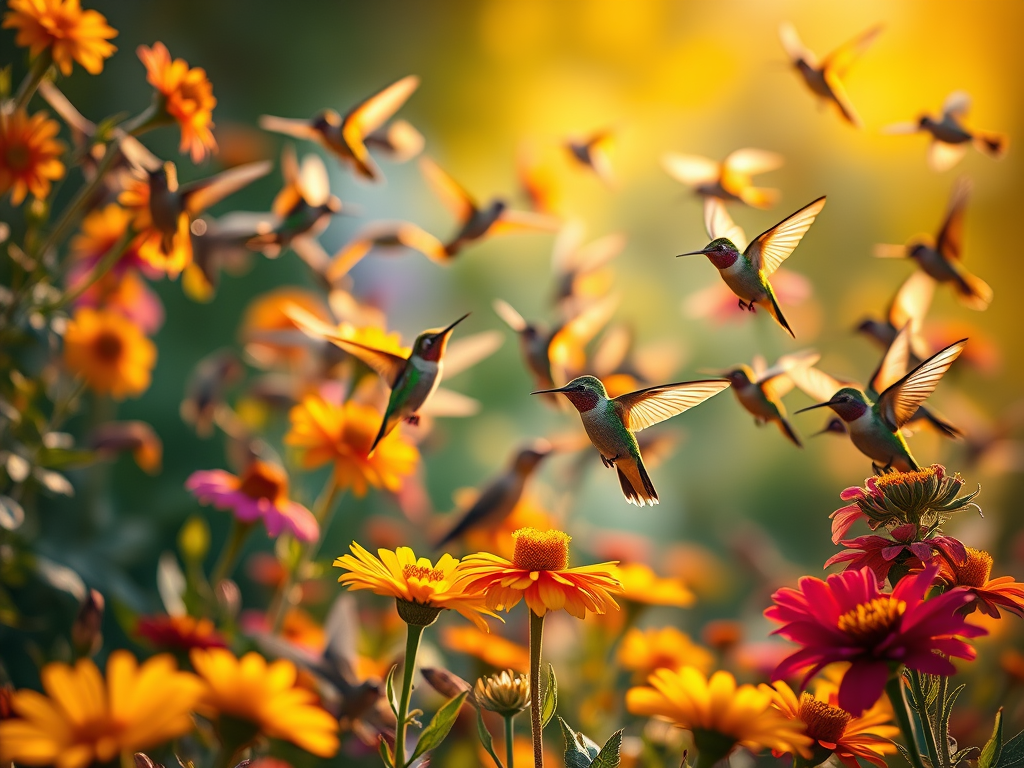
It isn’t often that we stop to revel in the orchestras of everyday life. That morning I did. When I did, I found myself transported. I had rarely seen this many hummingbirds together in one place and the noises they were making chittering together was music. What were they saying to one another? Were they discussing plans for the day? 

I smiled and reluctantly moved on – human beings had meetings of their own didn’t they? 

A few days later, I stopped listening to the chatter of the crickets starting up in the evening, even as the sun dipped into the horizon bathing the skies in robes of pink and orange. The deer grazing glowed, the blackbirds fluttered while singing, but the crickets were the loudest of them all. Enough to make you stop and wonder what they must all be saying to one another.

I exchanged glances with the son who’s come on a stroll with me, and we headed back musing.

Later we had a frenzy of celebrations planned – gatherings and people. I stopped to listen to the chatter around me. It was a feeling – not voices that I heard. It was a festive occasion, so all I heard was a pleasant hum – interest, friendship, camaraderie, laughter. 

What is it about communication that enthralls us so much? I remember reading a short story by Louisa May Alcott a while  ago in which a young girl acquired the ability to understand animals and birds for a short period of time. She is baffled to realize that they can actually communicate amongst themselves as well as amongst other species. A woodpecker could talk to a squirrel and understand each other perfectly. So, they could unite and we wouldn’t have a clue.

It was a beautiful touching story, for it helped me laugh once again at our own follies. It would serve us right if that was truly the case – too smart for our own good, but all the time being pitied by the wiser creatures of the Earth. Between all the languages we’ve managed to create as humans, it is truly humbling if that were the case. (No mishaps with honey and chips I assume.) 

It also made me stop and wonder what animals hear when they us jabbering. Many times on my walks, I come across people talking shop – serious talks on finance, technology trends (I live in the Bay Area – it is a way of life – you can’t throw a stone in any which direction without someone yelping ‘AI’ – whether as an expletive or not), movies, music, other people, offices, sports, etc.

What must they make of it? I wonder.

The Ease & Malaise of Literature

The Literature Malaise

There was a strange sense of malaise and I could not put my finger on it. It had nothing to do with the body – a blood test could’ve told you that. It had something to do with the literature I was reading.

I have felt like this many times in the past – especially when reading some writer who has the gift of ripping our hearts out, crushing it, and then putting the raw, bleeding thing in gingerly again. You gasp to regain control over the poor organ again, and soothe it back into action: “Never mind – that was just a book!” and the heart contracts, beats, pumps and does its thing again. How the writers themselves write it, I do not know.

Then, there are books that take one particular theme: shame, guilt, horror, anxiety, or grander themes like social injustice, and play on the heart-strings. J M Coetze’s Disgrace comes to mind.

That was how this particular book was. The narrative tone is never upbeat. It is  wrought with anxiety.  The reader is quite caught up in the frenzy of the social media world, its harsh realities of unraveling reputations, and the fate of the protagonist in YellowFace – by R F Kuang. ‘The mechanics behind the popularization’, as she puts it in her novel. The world of popularity has always been a high-stakes game (Or at least as far as I’ve read about. I wouldn’t know.) It is interesting to see the publicity stakes in the publishing industry . The book says something to the effect of : Best sellers are chosen long before they make it to the stores.

The illusion of an image built up through social media engagement can be a frightening monster indeed. For how do you find the imaginary?

I had decided to dedicate the week-end to catch up on some reading, and was I reading?!

After a few hours, I stepped outside. The world outside was basking in the summer sunshine. The bees were buzzing around my shaggy lavender patch. The patch needs trimming, but right then, the faint smell of lavender was soothing, and oddly endearing. It was a tug to reality, a reality in which not everything felt so grim as in the book. That was grounding – I took charge.

bee_in_roseroses

I made a cup of tea, and shook myself like a dog after a swim. Literally – I went for a swim and shook myself as I got out of the water. I had been drowning in the book all morning, and the cool swim in the hot sunshine worked wonders.

The Joy in Literature

I mused to the husband. “It is like Nobel Prize winning literature. You have to be serious-minded, have plenty of  suffering and drama. You cannot bung in humor and hope and write about light and all that and expect to find literary acclaim, can you? “

Why can’t people write like P G Wodehouse? I said forlorn. What was it that P G Wodehouse said on Writing?

https://claremontreviewofbooks.com/frivolous-empty-and-perfectly-delightful/

“I go in for what is known in the trade as ‘light writing’ and those who do that – humorists they are sometimes called – are looked down upon by the intelligentsia and sneered at.” – P G Wodehouse

So what is it about taking ourselves so seriously that appeals to humankind so much? I’d like a serious response please.

The book was critically acclaimed -a lot of serious books are, you’ll notice. It is like the world is looking to see – “Ahh – this particular kind of anxiety and loneliness, let’s see which writer can crush the essence of that most succinctly.”

So, I did what I do best:  I bull-dozed through the book, sitting up till 4 in the morning, finishing the book, before soothing the heart to sleep. I refused to put myself through another day with that feeling.

Something Fresh – By P G Wodehouse

The next evening, I resolved to do the opposite. I picked up books where the overpowering mirth or joy of the writer exudes from the pages and envelopes the reader in a warm, cocoon. A trip to Blandings Castle seemed nice

“This is peculiarly an age in which each of us may, if he does but search diligently, find the literature suited to his mental powers.”

P.G. Wodehouse, Something Fresh

 I laughed, and I grinned at the turn of phrase. I anticipated the next laugh – because I had read the book several times of course, and I still hung on. Laughing – matching the glorious summer outside. Later that night, the son & I thumbed through an illustrated copy of a favorite book as the silvery light of the full-moon filtered in through the night. 

All was well. Knowing all will be well in a book is a wonderful feeling. It is why I turn to authors like Miss Read, P G Wodehouse, R K Narayan, Alexander McCall Smith, Jacqueline Winspear etc like plants turn towards the sunlight.

Recommendations Please

Please recommend some authors you turn to for light, joy, hope, optimism and magic.

🐘🐘🐘🐘🐘 The Tusks of Extinction 🐘🐘🐘🐘🐘

The Mammoth Tale

Few passages capture the bane of consumerism like this one does. It is from the novella, The Tusks of Extinction by Ray Nayler.

The premise of the book is an intriguing one. 

  • It is set in a future when mankind has figured out how to upload one’s consciousness into the cloud. A manner of immortality. This is very much in the realm of possibility.
  • It is also set in a time where the Siberian mammoths have been resurrected. This has already transcended realms of possibility into reality

The wooly mammoth is being resurrected – being cross bred from the genetic remains frozen in the Siberian Tundra with  the Asian elephants (because they are gentler than African elephants). 

Thus, begins the tale of a doctor whose life was hacked from him moments after he uploaded his thoughts and knowledge to the web. This man, Dr Damira, was a passionate naturalist, a man who studied the African elephants and their ways. He fought for their conservation but failed. This is set in a future where the last of the elephants no longer roam the Earth. 

tusks_extinction

The resurrected mammoths in Siberia are facing difficulty thriving in the wild. They have all been bred in captivity, and do not understand how to survive the demands of living by themselves, caring for each other, and forging paths so they can forage and live through the cruel winters. They are thus being killed by poachers in a cry that reminds scientists of how the elephants were all killed off one by one. 

In an attempt to give them a chance at life, the doctor’s consciousness is uploaded to a mammoth – a matriarch by the name of Damira. 

Bane of Consumerism

There are several aspects of this novella that can appeal to us, but one in particular stood out to me, and that was how our consumerist culture alienates us from the natural world. For we buy things, we want things, we accumulate, we hoard – who is it hurting? I am earning and I am buying. It is all helping the economy is it not?

Extract:

In offices-a tusk in a case, beautifully carved, transformed into a world of its own, worked by human hands into a chain of elephants walking trunk to tail. Beautiful, lifeless elephants carved from the destruction of an elephant, hacked into what had once been a part of a body, a tooth, a tool. A part of a life.

“Among the skyscrapers, there were also older places-little streets of cramped shops, survivors from another Hong Kong. Marginalia that had been missed by the eraser of progress. And there, in the shop windows, so crammed with clever things, there it was. My eyes found it over and over again. Ivory. Ivory jewelry, ivory stamps used to sign decrees that were meaningless now, ivory game pieces of every kind. Ivory turned into useless gewgaws, dripping with the blood in my home. It could be carved into any lovely shape they wished, but all of it began in killing. No-more than that all of it began in killing that took place far away. That took place somewhere the people who thought of ivory as a material could not see. Killing that took place in an extraction zone.

I remember the horror I felt when I first learnt that certain types of leather were obtained from the skin of crocodiles and were thus priced higher. 

Cities like Hong Kong and New York and London at the center, vortexes into which the currents of trade accelerated, into which goods from all over the world were pulled. Places where things became materials. Where things became commodities.

Many of us rarely stop to think of the source of all the things we use as part of our daily lives. In all honesty it is overwhelming to do so. How does the kidney bean come to be in its packet in the grocery store? Once we start down that road though, what about the almond flour, the diamond ring, the leather handbag, the silk scarf, the perfume, the spice, the watch, the gold ring, the ceramic jug? Everything has its tale, its journey, its place in the human chain of wants and needs. 

What Can We Do?

In reality, we cannot give in to an almost paralyzing analysis of source-to-table for everything we consume. Is there economic exploitation along the way, unscrupulous practices, inhumane treatments? Would we be happy to know it all and make informed decisions – yes, (I am hoping that humans have enough humanity to make the right choices if we do), but can we do so? Not always. 

I spent a pleasurable few hours at the mall the other day, and found my fellow human beings doing the same. Glancing around at the happy faces of those of my fellow humans that morning, I did not see malice or greed – I simply saw folks at a mall on a rainy week-end. 

I like that mass production has made life easier, the jobs it has created, alleviating entire nations from poverty. I like that poor children can have new clothes, and that horizons have expanded thanks to the general prosperity of nations. I do not, however, like the ever-increasing pressure to produce and consume more. 

Is the economy to be weighed against the Earth’s resources at every step in the mall? Or just more more meaningful consumption? I do not know.

Sarees for Mothers

A Sari for Ammi

It is Asian Heritage Month, and the library is vibrant. I saw this book, A Sari for Ammi – Story by Mamta Nainy illustrated by Sandhya Prabhat. 

I thought I’d write about this for Mother’s Day, for it is a heartwarming tale. 

The young children of sari weavers watch in awe as their parents work on their arts of creation every day. Dyeing the threads, working the looms, selling their brilliant creations at the local market. Their beautiful mother, who creates magical saris can seldom wear a sari -she usually wears the practical and old salwar kameezes she owns – for she can neither afford the sairs she weaves, nor can anyone buy these for her. They are Kota Doria fabric weavers, and many generations ago moved to the Rajasthan area from Mysuru in South India at Rao Kishore Singh – the then ruler in Rajasthan.

Sari_ammi

The children decide to buy a sari for their mother: One she particularly liked, and one of her own creations. Of course, they realize that they do not have enough to buy a sari, and the heartwarming tale pushes on. 

Buying a sari for a mother is a special joy – one that Indians know and appreciate. For many years, I felt sorry that I could not indulge in this simple pleasure when my mother or mother-in-law came to stay with us in the USA. Luckily, now we have a few stores, and online options, but that was not always the case. 

A simple book that taps into the simple joys of buying your mother figures a saree.

Happy Mothers’ Day to all the wonderful mothers and mother-figures in your life.

Rainbow Colored

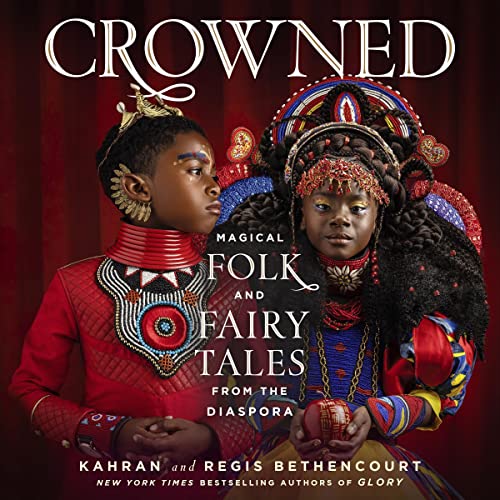
I picked up two books on separate trips to the library and enjoyed reading them. The first was a book of fairy tales retold in the African diaspora: Crowned. A book of fairy tales is always enjoyable, and one that has a good smattering of classic fairy tales combined with some myths from the African heartlands are a joy. 

The children shown as the princesses and princes are the best. The costume designs and makeup are exemplary, as are the re-imaginings of their origins. Most books illustrate Cinderella and Snow White as fair-skinned princesses, and it is refreshing to see these pictures.

The second book was: The Dark Fantastic – By Ebony Elizabeth Thomas

Race and the Imagination from Harry Potter to the Hunger Games

The Dark Fantastic is a book of essays exploring the absence of color in fantasy. The author starts off the book with Vernon Dursley’s famous saying in Harry Potter and the Philosopher’s Stone: “There is no magic.”.

She then goes on to explain her upbringing in working-class Detroit in the 1970s. 

“The existential concerns of our family, neighbors, and city left little room for Neverlands, Middle-Earths, or Fantasias. In order to survive, I had to face reality. “

A few sentences on, though the author states:

“In the realm of the fantastic, I found meaning, safety, catharsis - and hope, Though it eluded me, I needed magic.”

I identified with this statement of needing magic. Humanity’s need for magic is evident in our myths and epics from thousands of years ago. 

  • Was there a flying carpet? A pushpak vimana?
  • Are there heavens and hells?

Yet, for thousands of years, we have told ourselves increasingly fantastical stories to keep our spirits alive, and our imaginations intact.

“I like nonsense. It wakes up the brain cells. Fantasy is a necessary ingredient in living.” Dr Seuss. 

A common thread emerging from lack of diversity in books, is that children don’t see enough of themselves in the books. I lay the books down musing on this. I, like many in my generation, grew up surrounded by the fairy tales of snowy white princesses, and the fantasy worlds of Enid Blyton. Yet, I don’t think I ever wondered whether I would be able to climb up the Magic Faraway Tree to have adventures, or swish away on the Wishing Chair to magical places.  The protagonists were all British children, but it did not seem to make the slightest difference to a middle class brown skinned Indian child. Maybe I was just lucky that it never occurred to me. But did it occur to my friends? If it did, I am not sure we discussed it. 

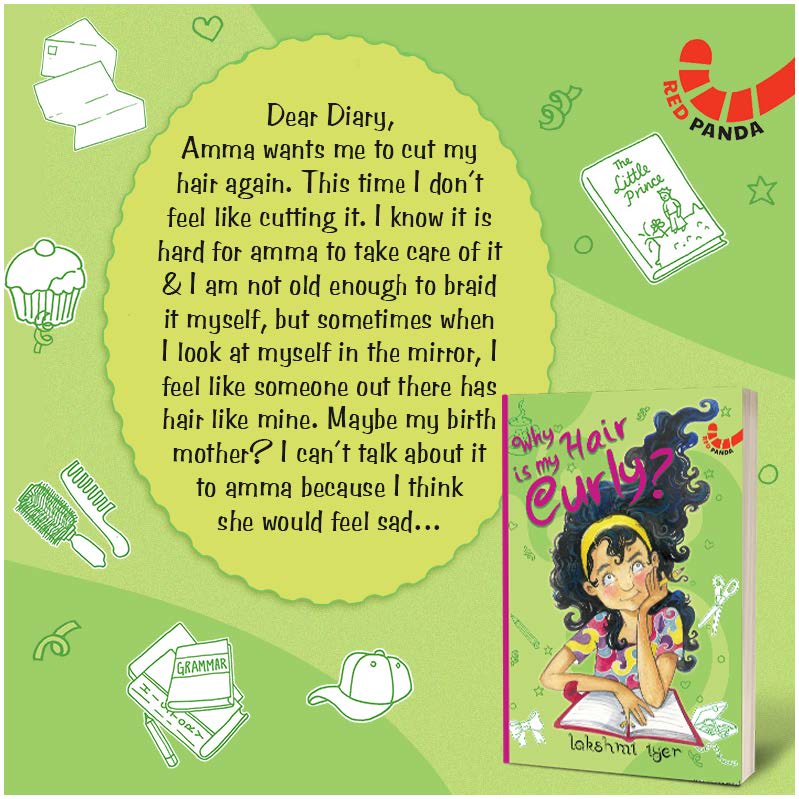
That sort of limitation in thinking only came as we grew up and saw for ourselves the inequity of opportunities. I am grateful, of course, to see a book in which a child refers to their mother as ‘Amma’ as we do at home. (Why is my Hair Curly – by Lakshmi Iyer)

Or see that picnics can involve rotis and potato curry, and not just sandwiches. But I am more grateful for the reach of fairy tales. They provided a much-needed element of magic and hope. 

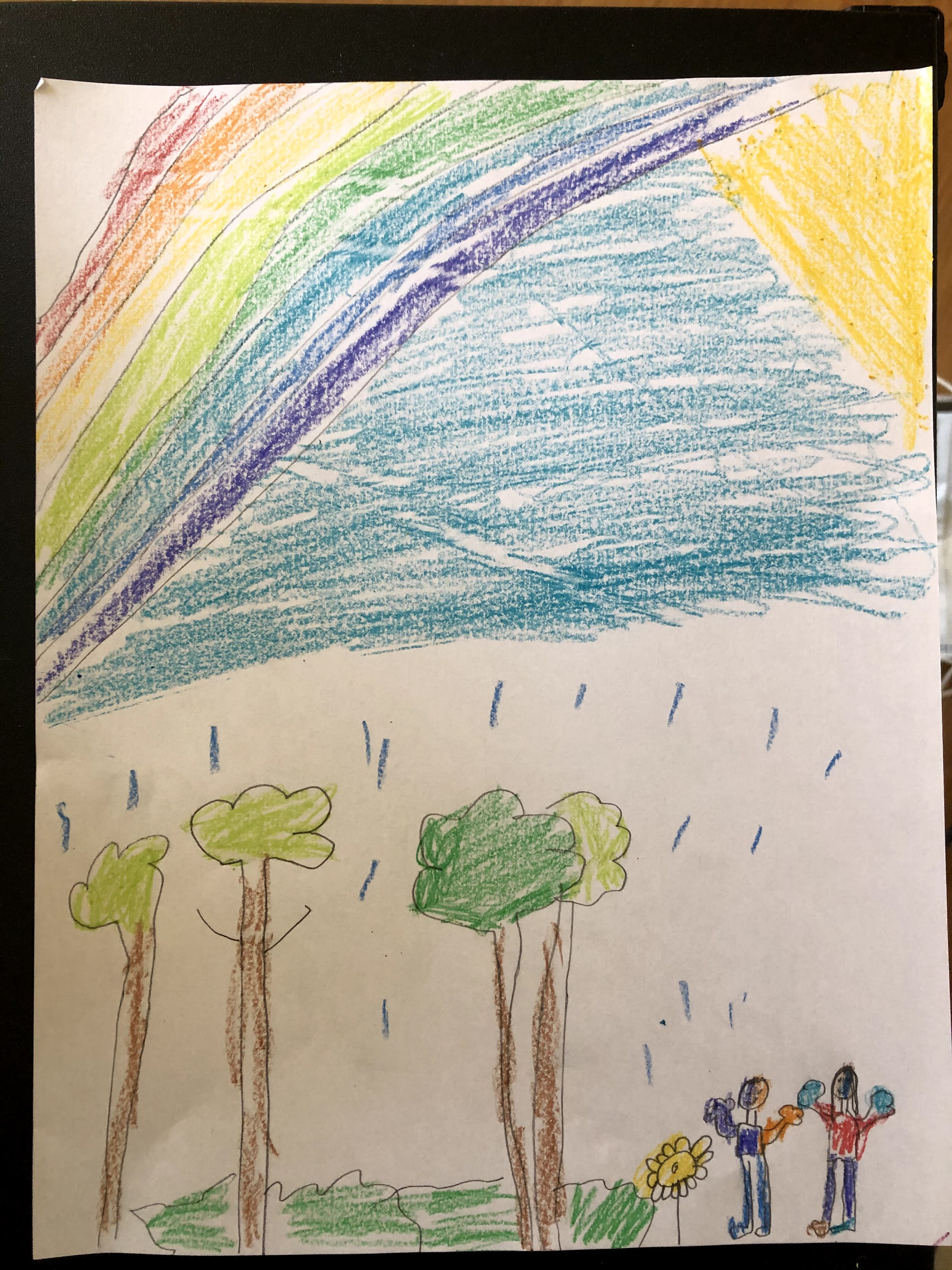
As children, the inhibitions of things like race, creed and color are not there. I fondly remember the picture drawn by the son in kindergarten when his teacher had told all children to have more colored people in their illustrations. He had drawn all their faces rainbow-colored 🙂 

🐘🐘🐘What Elephants Know 🐘🐘🐘

The book starts with the Zen teaching: 

Sooner or later we have to see that what we do and what happens to us are the same thing.

A curious saying that, I am sure, has a fair number of interpretations. I was not sure I liked the ones that came to my mind seeing that I was thinking about agency, free will, and opportunities from a few different angles over the past few days. 

Intrigued, I ploughed on, and read the first sentence:

“My mother is an elephant and my father is an old man with one arm. Strange, I know, but true.” 

– What Elephants Know – By Eric Dinerstein

For a few paragraphs, I could not help but wonder: was the protagonist an elephant or a human? Either would’ve made sense of course: it is a children’s book after all. 

elephants_know

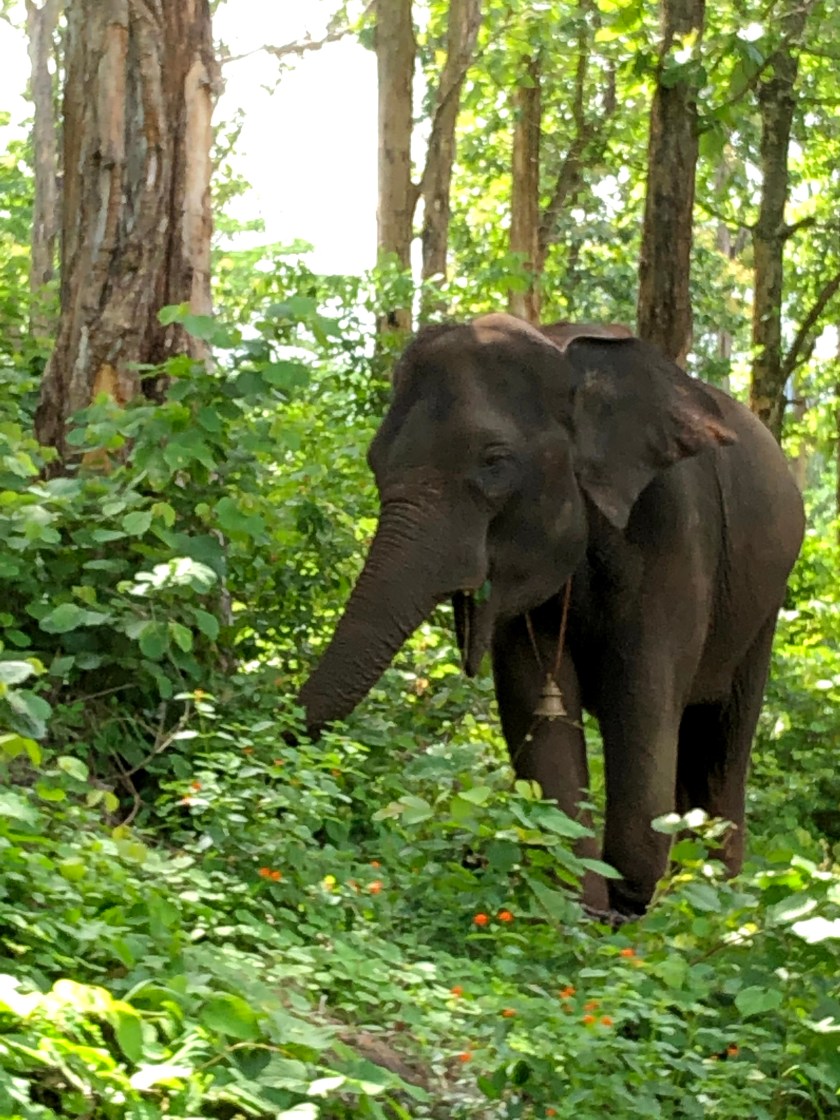
Elephants have always occupied a special kind of love among beings for me. The home is littered with tiny elephant figurines, and soft toys. Hailing from the Indian subcontinent, this is not peculiar or unheard of. It is, in fact, quite common. Intelligent, empathetic, wise, loving beings with a range of emotions, and wisdom, I feel lucky to share the planet with these gentle giants of the land. So obviously, when I saw the book What Elephants Know written by Eric Dinerstein, with glowing reviews from none other than Jane Goodall herself, I picked it up. 

I am so glad I did. 

Set in the beautiful borderlands of Nepal, this book is told from the first person POV of a young child, Nandu, whose mother is Devi Kali, the benevolent matriarch of the royal stables of the King of Nepal, and father is Subba Sahib, the head of the royal elephant stables. Devi Kali, is the elephant who found the child, Nandu, abandoned in the forests. Nandu was taken in, and raised by Subba Sahib. Thus, begins a gentle lilting story of a magical childhood. The child has his perspectives broadened by education, his keen natural senses honed by a naturalist who collects specimens and conducts research for the Smithsonian museum. 

It is a rare pleasure to be able to relate to a young boy, and feel his love for the nature surrounding him. How Nandu manages to save the elephant stables from closure forms the rest of the tale. 

img_3588

Most importantly though, this book evoked a sense of having spent time amidst nature ourselves. That is the biggest achievement of the book – for several times in the week following, I found myself sighing and bringing up the imagery of the thick forests of Nepal. Something that not even the best documentaries manage to do. Maybe it is something to do with the slow creation of the imagery in our minds as we conjure up the descriptions and a version of the forestlands, but it is a worthwhile read.

The creatures of the land, the many birds, and life of naturalists is gently shown to us.

🪷Happy 18th Birthday 🍀

May is the beautiful month of beauty, warmth , work, and birthdays (including the blog’s birthday) 

The nourish-n-cherish saga is now officially an adult in the muggle world (18 years of age) 

Over 1080 posts in, the blog seems to have had its own growth.

In the beginning , it was a place for short anecdotes on family and children. 

Over time, as it neared school going age, I suppose the blog grew too

It started showing interests in varied subjects: gravitating towards science and nature based subjects for sure, but also retaining that shy curiosity about life and a sense of humor as we navigated the vicissitudes of life. 

It isn’t as personal as a diary, so I doubt it will serve as a pensieve, but it serves as a cup of joy from which to sip when in a reminiscing mood.

🧘🏼‍♀️There were times when I could philosophize, contemplate, marvel in safety.

IMG_20200404_153332

Whatever it’s purpose was while starting out, I think I can safely say that it has helped along several dimensions (like a snowflake) 

When first I started moving out of only personal anecdotes to writing a thing or two on a book I read etc, it seemed to have opened a door to innate curiosity. 

Suddenly, I was more interested in varied topics, trying to understand different perspectives, open my mind to areas that I otherwise might not have had the opportunity to, etc. Inevitably, with all this fodder came the benefits of cross pollination, the joys of thinking through things, or the rewards of quiet contemplation. 

In short, what started as a hobby soon became a source of such gratification, learning and joy that I could not help sharing with my friends (who, for their part have been nothing short of spectacular with reading, inspiring and encouraging me) 

There have been times I’ve wondered what it all amounts to.But then I realize that it already has amounted to magnitudes more than I thought possible (sometimes human imaginations are limited.) 

IMG_4302-COLLAGE

⚡️Those moments when I am spinning ideas in my head, and have to stop mid-stride when a thought strikes.

⛈The magic of writing, re-writing and re-rewriting to get a piece right.

👻The frustration of unfinished pieces from a decade ago because of lack of time.

∫ The joy of tucking a good memory away so it can replenish us in written form later.

🪷The thrill of creativity as new ideas come in – the long list of children’s books ideas waiting to be written (also novellas & short stories) I have wisely given up on the idea of a novel given the constraints of time – but one never knows!

To all of you who have joined me on this journey, whether gamely taking it in your stride when featured, or given me things to think about as part of our stimulating conversations, or inspired me to try new things, or just being there in my life: Thank You! 

Paint the Wind

Paint the Wind – By Pam Munoz Ryan

The book starts off like most children’s books do, by taking the parents conveniently out of the way. In this one, the parents are killed off in a freak accident and the child, Maya, we meet at her paternal grandmother’s house leading a dull, orderly life in which there is no place for frivolity, laughter or joy. Her grandmother dies and the young child finally gets to see her maternal side of the family who were held in such disdain by her pat. Gran that she does not have any recollections of them.

Of course, all this is meant for us to feel for Maya and hope her life turns around and she gets to enjoy life in her time. She does. 

I don’t know why books do that. But they do. 

The book is a story of how Maya finds herself while finding the horse her mother adored a decade ago. The horse, Artemisia, is now a wild stallion who broke free from her aunt’s ranch and joined a stud stallion, Sargent, and became the leader of the herd. Some wisps of wisdom offered up here and there make the sweet story likable. 

🐎 “With horses, it’s not the biggest or oldest who is the lead. It’s the horse who has the confidence to guide the family in times of danger, who has knowledge of the land and knows the routes to safety, who is herd smart and can make alliances with other mares and keep peace. Some mares have the ability. Others don’t. Think about great human leaders. They have many of the same qualities.”

Pam Munoz Ryan – Paint the Wind

🐎 “When the horses run against the wind with their manes and tails flying, I think they look like fleeting brushstrokes of color.” 

Pam Munoz Ryan – Paint the Wind

I have never had the opportunity to photograph a field of racing horses, but I have admired them. Their power and strength seeming to include the environment around them. I remember pulling over on a whim in Iceland where a field full of Icelandic horses offered us their manes to pat. It was easily the highlight of the trip for the daughter. I hope she remembers the way her face lit up when one nuzzled up next to her. 

I have to admit I chose the book because I saw Artemisia on the blurb. That was the name my daughter wanted to name her horse who was secretly a unicorn, and only reveal itself to her. I miss the innocence of her beliefs and the determination with which she loved her book horses. She read American Horse Diaries, watched My Little Pony, though her favorite was The Secret Unicorn. 

So many little tidbits that I’d listened to with fascination when the daughter as a little girl told me came back: #horsemagic

🐎 The color of horses: Audubon (light tan) dun, bay (red-brown) 

https://horseracingsense.com/12-common-horse-colors-patterns-pictures/

🐎 The different strides and their names: trotting, canter, gallop , lope

🐎 Horsing vocabulary such as Remuda: a herd of horses on a ranch

All in all, it was a wild journey into the canyons with a little girl and her horse. We all belong on Earth and there are so many ways in which we can find that feeling. Our attraction to nature, this planet’s nature, is one of them.