🍁Sauntering🍁,🍁Strolling🍁, 🍁Scrunchfesting 🍁

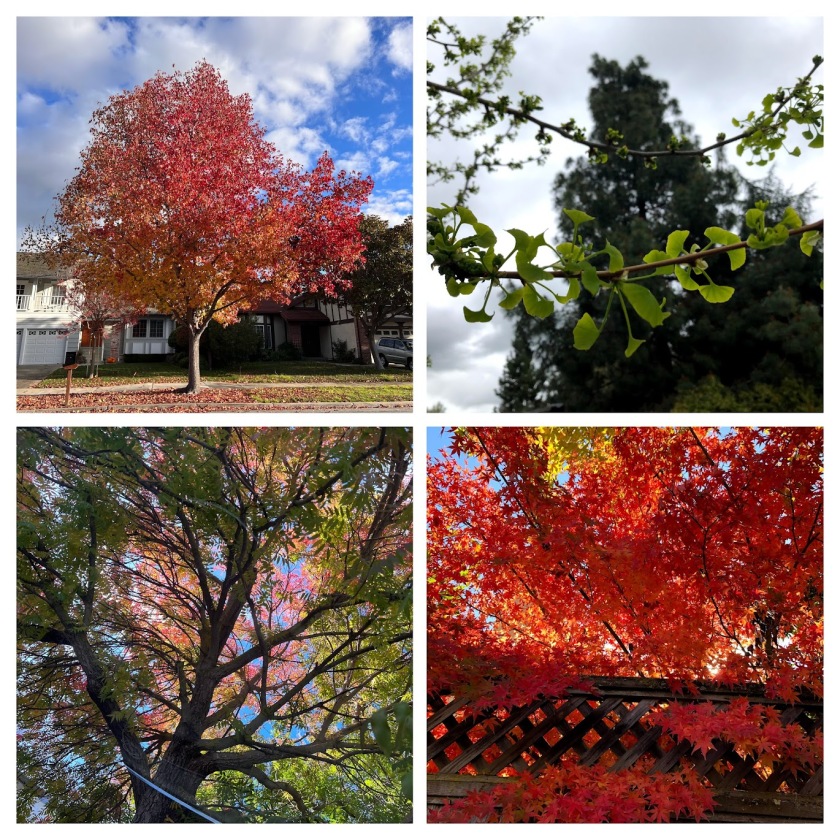
The son and I pranced into the house with our bouquet of fall leaves. We went for a walk to feel the nippy November air on our faces. While out there, we ran after leaves fluttering down in the winds, and indulged in the inevitable scrunch party. 

“No one saw us jump and scrunch in the leaves, Appa!” he said entering the house wind-blown and happy.

“Are you sure?” said the husband, accepting the beautiful bouquet of fall leaves from us, and giving it right back to me with a flourish.

“ I saw some neighbors scuttle inside looking dubious at the activity outside. You sure it wasn’t you two?” 

The son guffawed loudly at that. I scrunched up my face – but was too happy to care. Who could when you’ve just been able to look at views like this?
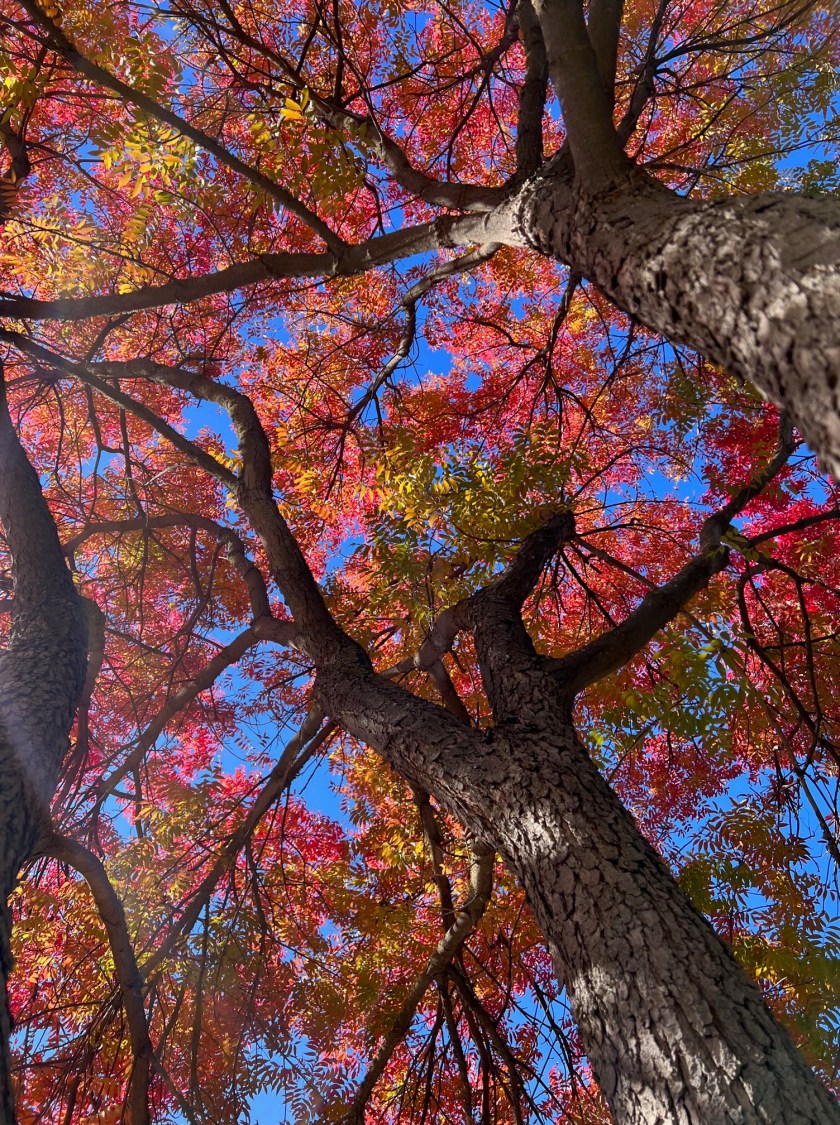
IMG_0506

Seems only yesterday we were ushering in 2023 and now we are already looking at the final curtain calls of the splendid trees before the closing of the year. As usual, if I throw my mind back the year felt differently at different points in time. Bleak, dreary, joyous, hectic ,the travails of aging with parental figures, friends, events, work, school, volunteer work and so much more.

There is a book called the Secrets of Infinity in my library – Edited by Anonio Lamua, it is a gorgeous book. It gets taken out and seen every now and then just for the sheer brilliance of the topics and the range of topics in them. But there is one thing the book doesn’t quite put the finger on: the feeling of infinity in the repeating seasons of the Earth, the different joys of each month. 

The Tibetan Infinity Knot and the Ouroboros come close in their symbolism – but one of more to do with our actions and therefore Karma and the other a destruction/creation paradigm. 

“So, how do the leaves turn color?”, I said with a flourish revealing the book Summer Green to Autumn Gold – By Mia Posada. The book’s illustrations managed to capture the natural beauties outside, and we settled in to read the book contentedly. 

We flipped the pages comparing the leaves we had in our precious bouquet to the ones in the book. The final reveal of the pigment colors gave us the different colors.

🍁Carotenids : the pigments for the orange and yellow colors

🍁Anthocyanins: the pigments that are responsible for the purples and reds. 

🍁Tannins: responsible for the brown color.

“Trees must be beings of infinity!” , I said sighing happily and the son rolled his eyes.

☀️ Energy Sources 🗺️

The son and I were discussing this and that when we hit upon one of our favorite topics of discussion: energy sources. The fellow has been very happy that we now have a solar roof.

“And now – we generate more solar power than we use. Isn’t that awesome?!” he piped up as we were out on a walk one evening after a particularly hot October day. (I wondered if the solar energy could be bounced off our heads too, and that earned a weak chuckle and an eye-roll.) Of course, this led to an interesting discussion on energy sources and we got talking on the recent articles or books we’d read.

“There is one place where they take your steps and convert that into energy. Like you step on the floor and that becomes stored energy. Cool right?”

“Cool!” I agreed, and screwed up my face at the nearby freeway noise. “I am sure if we can just figure out a way to take all that wasted energy from all the fast and noisy cars on the freeway, and use it to power the cars behind them, that would be even better – you know get off gasoline altogether? ”

“They are already working on it somewhere. Life is so exciting in these energy fields!”. he said.

Later that night, he bellowed that he’d left me an interesting article to read on my bedside table on Energy Sources. 

August 2023 Issue of OYLA – Energy All Around Us- Generating Electricity from Dance Floors, JellyFish and more

#33 AUGUST 2023

If I haven’t raved about OYLA before, allow me to. The magazine is a gem of science and mathematical tidbits . I was enthralled by the article and read it all agog, exclaiming at the right intervals. It pleased the son.

  • A thoroughly fascinating article in which the different types of energy sources are briefly touched upon. Piezoelectricity – the technique of using our movements to power energy. 
  • The many ways in which sound vibrations can be turned into electricity (apparently a new generation of architects are working on powering skyscrapers powered with noise energy – so the hustle and bustle of the city, the blaring sirens, freeway noise everything is actually used to power the building – isn’t that brilliant?)
  • In another section, it says nanoantennas are more efficient than conventional solar cells and they have a ‘good chance of displacing conventional solar panels’.

All highly exciting possibilities. I was especially thrilled to read this bit about jellyfish and their green fluorescent proteins. 

Quote: (from the Bioelectricity section) 

“Some jellyfish glow in the dark. This is due to the green fluorescent proteins (GFP) that are present in their cells. Such an element may not need sunlight at all and could instead “feed” on bioluminescent radiation (like in fireflies) and ultimately they might be used in nanodevices.”

It must be wonderful being a jellyfish or a firefly. Were there some jellyfishes who glowed more than others, the same way some human beings are more energetic than others? 

Individual energy levels is a common topic of discussion in our household as we are surrounded by friends and family who seem to be made up of inexhaustible sources of energy and positivity. ‘How do they manage it?’ we say as we admire these folks, but it is something I’d love to gain an understanding about.

Would it make the difference between glowing, glowing less, or glowing more?

Also Read : Life’s Determinants

Source: August 2023 Issue of the OYLA Magazine. Article: Every Volt Counts 

\

Successful Transitions

Reminders of time passing are all around us. It is there in the first drizzle of October nights, in the nippy mists of November mornings, and the frigid temperatures of the freezing winter months, as much as it is in the growth of hope and new leaves in spring.

IMG_7697-COLLAGEYet, even after a few years of these cycles, we still do not comprehend the effects of time as effectively as when we see those around us age, or loved ones lose their vigor. It has been a hard lesson and one everyone goes through in life. But the past few trips to India have really brought this to us with increasing clarity and sadness. Sadness, not for the coming of the inevitable, but for our own reluctance in accepting it.
It is hard seeing once vibrant aunts and uncle lose their vigor and charm. Precious few hold on to their good graces as they age. Many lapse into complaining about their lot. Still others, refuse to accept their diminishing physical prowess, and insist on being in-charge even in situations where they are clearly past it.

What will our folly be?

The more I saw of the aging and the elderly, the more I wonder whether there is an easy way for us to move towards acceptance. I understand first-hand the shock of it. I remember thinking with shock when my daughter’s friends called me ‘Aunty’ for the first time all those years ago. When had I become an ‘aunty’? But now, I love it when the friends of my children call me ‘Aunty’ – it is a word that fills me with joy.

This is also a reason I find myself attracted to books by authors like Miss Read. (Jacqueline Winspear was recommended to me recently and I like the style and wisdom in her writings as well). Fictional and functional characters such as Miss Clare and Mma Ramotswe of the No 1 Detective Agency come to mind. They bring to life the kind of people we admired through our childhoods: normal people living life with grace, common sense and love for those around them. It is comforting to read that practicing these apparently simple tenets lead to a good life.

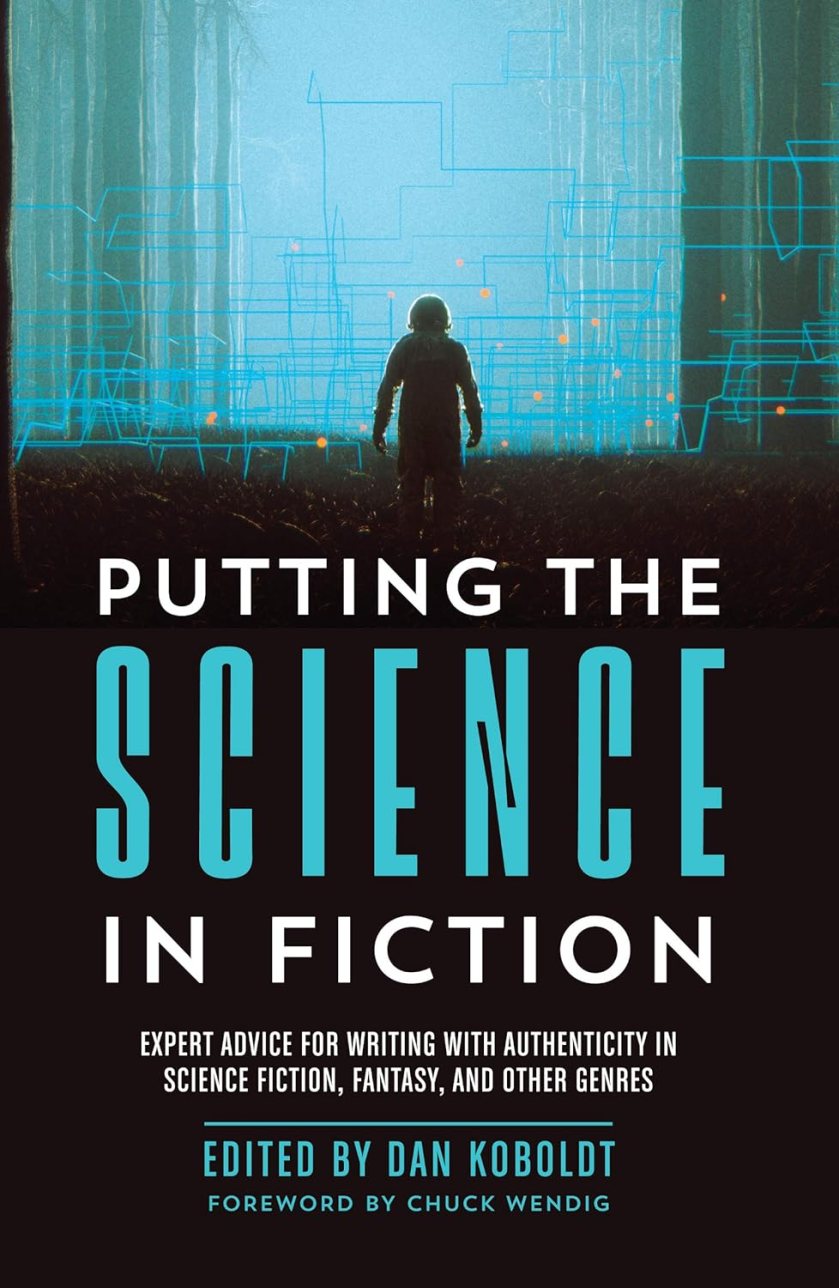
As I read the essay on psychosocial intelligence in the book: Putting the Science in Fiction – Collated by Dan Koboldt , I could not help nodding along at the bits of writing related to our lifespans as outlined by the essayist Maria Grace. Maria Grace is a psychologist and a curious observer of the human condition. In it, she says that

🍀”Psychosocial development encompasses the changes in an individual as they manage various societal expectations across the lifespan.”

While there are many books that guide us through adolescence (now more than before) , I am constantly looking for good books that guide us through the middle and later stages of our lives. There are always philosophical works – the wisdom of humankind through the ages distilled in our myths, fairy-tales, vedas, religious texts, fables and epics. Philosophers such as Seneca, Aristotle and Buddha who have given us a peek. 

When we are children, we rarely understand what adults mean when they say childhood is far easier. I don’t think I ascribe to that theory. Those of us lucky enough to have people looking after us certainly have things to be grateful for, but adolescence is also a period of great uncertainty and angst.

However, I understand now what teachers and parental figures meant when  they said childhood was easier, for adulthood brings with it a whole host of different challenges. The expectations of our roles in society, the ability to care for different generations – older parents, our siblings, colleagues and peers, and younger children ( our own, niblings, friends children, those in our care).

🍀”In addition to the tasks of preparing older progeny for launch into the world and managing the increasing needs of older parents, individuals at this stage of the lifespan are also expected to step into social leadership roles. A commitment to lifelong learning and growth marks a positive resolution to this stage, whereas Ebenezer Scrooge-like preoccupation with self and comfort mark an unsuccessful one.”

As I read on to the late adulthood sections of the essay, specifically, navigating the travails of old age and its associated ailments. She goes onto say:

🍀“Those who manage this transition (late adulthood) successfully do so by recognizing the worth of their previous and continued contributions to their society and future generations. Depression, despair and giving up mark unsuccessful transitions.”

I have yet to read any books by Maria Grace, but her essay on psychosocial development in the Putting Science in Fiction book is an excellent one. (Essay: Character Development Beyond Personality Quirks)

science_in_fiction

Our Invisible World Made Visible

I pulled Atlas of the Invisible from the library shelves looking pleased. Here was another book straight from the dream shelf. As I thumbed through the pages, I felt a familiar flutter of anticipation. I could already visualize the happy hours spent looking into the different maps and visualizations to help understand the world around us better. 

Many of us have heard of the map Dr John Snow drew up of the cholera epidemic in London as he went about his duties as a doctor. With the aid of his map, he was able to isolate and identify the contaminated water pump from which the water-borne disease was spreading. 127 people died in 3 days and over 600 people died within a month. Here was a groundbreaking example of multiple skill sets coming together to identify and problem solve. 

Of course, data and its importance has only increased in the intervening century and a half since. In Dr Hans Rosling, Anna Rosling & Ola Rosling’s book, Factfulness: Ten Reasons We’re Wrong About the World–and Why Things Are Better Than You Think , examples of data collection, sampling, analysis and visualizations help us think of the world in eye-opening ways. The progression of populations from under-developed to developing to developing is fascinating and gives hope for a future that has solved many of mankind’s problems. 

life-on-4-levels

<Infographic from Factfulness book mentioned above.>

Now, several leading newspapers such as the New York Times commission data analysts to present their findings and even have visualization teams to help with the most succinct presentation of data. 

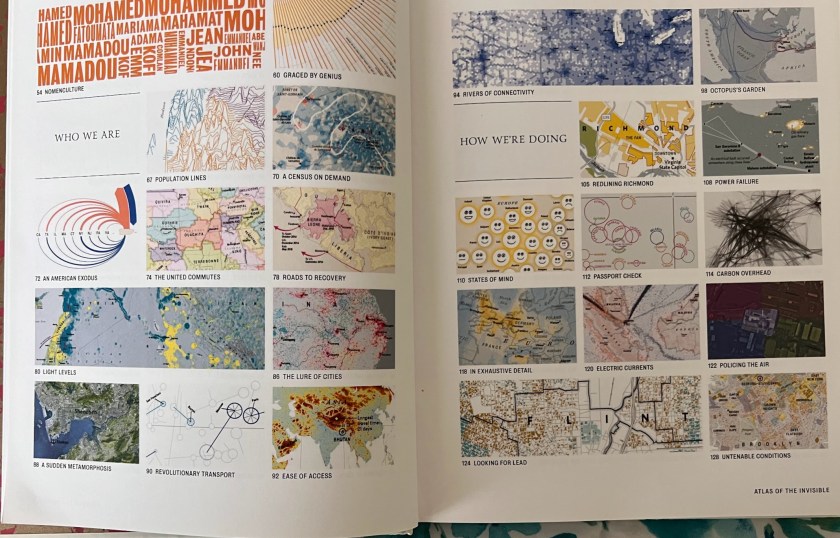
Atlas of the Invisible – By James Cheshire and Oliver Uberti is a treat for those who enjoy analytics. 

atlas_invisible

Example charts – to see if you like the book:

IMG_8034

We are all data points in this world. I chuckled as I read about the folks who revealed a high security defense location in the middle of the desert simply by turning on Strava to keep track of their daily activities. A good reminder that like many of our inventions, this penchant for data tracking and analysis too will bite us in unexpected ways.

I hope you enjoy the books as much as I did.

Recommended Reading on this subject:

The Sounds of Cricket

India has always been host to the resounding sound of cricket. The game and the insect. Television crews lose no time in covering the game non-stop, while the sound of crickets in the hills don’t seem to warrant coverage. Though, there is just as much excitement there if you ask me. 

We had gotten away from the immediate hustle and bustle of the city, and were thus allowed the luxury of listening to the sounds of nature. We shushed each other with rather more vigor and noise than was necessary and finally, the room quieted down. The sun was setting outside. Combined with the excellent company, the warm conversations reminiscing some of our pleasant times together, the beautiful light filtering into the room,  and the thrumming of crickets all around us, it all made for a surreal calm setting. I could imagine what people meant when they said ‘ports from the storm’ in that setting.

img_7377

I had no idea how many crickets would be required to produce a racket like that, and filed the question away for another time. That is the sort of the thing that the son would find amusing to find out. In the meanwhile, my friend was telling me about she noticed that at 7 o’clock sharp, the sound of crickets just died down. This was curious. So it wasn’t at sun-down. It was a few minutes past sun-down. 

The act of producing the sound is called stridulation, it meant that the thrum buffeting us in the hills was the sound of vibrant life finding a way to thrive in its environs. Much as the hum of entertaintment in the form of games, music and televised stories in our cities is a sign of thriving life of humans. 

The sounds of a species do have a story to tell – though I envisioned this line of thought quickly devolving to burps and farts, and wisely held my tongue. Just as my friend said, the clock ticked from 6:59 p.m. to 7:00 p.m. and the sounds instantly died down. An eerie quiet filling the void in its space. 

Later that night, after we had played a game of cards and quietened down for the night, a few minutes after lights were out, the sounds of our whispered conversations, the giggles of the children, and the admonishments of the older folks all died out. Just as sudden and just as deafeningly as the crickets earlier that evening.  

I smiled, and clearly exhausted drifted off to sleep myself, the lack of sound a cocoon for which I was grateful. 

Dinosaurian Thoughts

“You look excited!” said the children eyeing me suspiciously. I identified that wary look and chuckled. Usually it means an additional hike or a walk, or something done ‘together – as a family!’.

I could feel the eye-roll coming on.

As a teenager, the daughter has a reputation to maintain, and as her loyal side-kick, her brother is torn between wanting to humor his mother and learn how to become the cool teen. 

“Relax! I am just waiting to start a new book tonight. It is about the era of the dinosaurs!” I said with a grand sweep of my hands featuring the landscape that just a few million years ago could’ve been home to tyrannosauraus rexes or brontosauruses. 

“Looking at the animals here, my bet would be on the runts of the species!” said the husband.

“We do have the great descendants of the velociraptors here in plenty!” I said eyeing the birds in the riverbed.

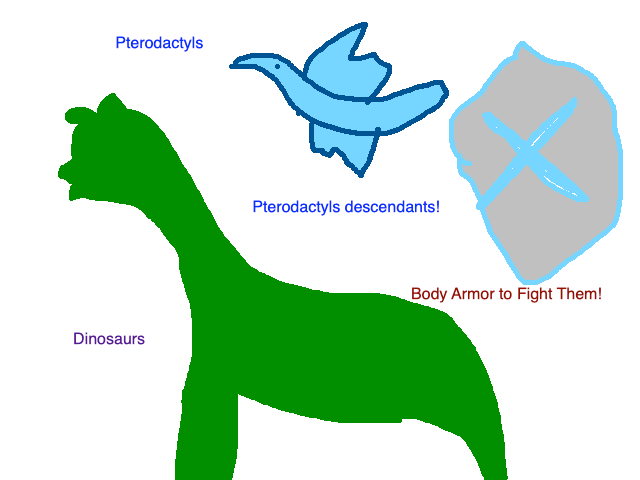
That led to an interesting discussion on dinosaurs, and how the dinosaur bones could probably have been the inspiration behind the legends of dragons. While paleontology as a discipline of study and research may be relatively recent, digging and unearthing relics of the past isn’t and neither is human imagination. From there, we somehow landed up discussing the best designs for helmets and body armors while fighting dragons and dinosaurs, and had a good time anyway. 

dinosaur

Later that night, glad to have a night free of late night meetings, I swished away to sit by the window sill taking in the full moon rising outside and pondering on the lives of dinosaurs of long ago perceiving the moonlight, and the millions of years in which mammals have been fascinated by the same. 

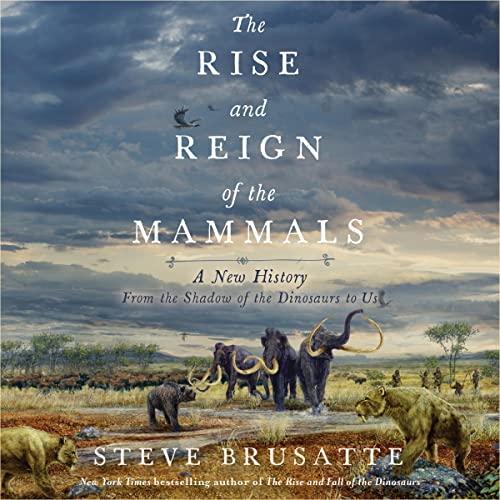
It turns out the book I had in my hand was not one on dinosaurs but on the history of mammalian life from the shadows of the dinosaurs. Oh well!

Book: The Rise and Reign of the Mammals – A New History – From the Shadown of the Dinosaurs to Us

By Steve Brusatte (Author of BestSelling The Rise and Fall of the Dinosaurs)  

51zcbWeULeL

Honestly, book covers these days are the most illuminating ( award-winning, best selling, top researching, nominated for best selling lists!) 

Nevertheless, I had a quiet few moments reading before a call interrupted the quiet of the night, and I had to set the book aside. 

The Dinosaurs seem to have gone millions of years without needing any of these to live their quiet lives on Earth. 

Does anyone miss snail post?


The Biochemistry of Attraction

“What are you reading?”, asked the daughter. 

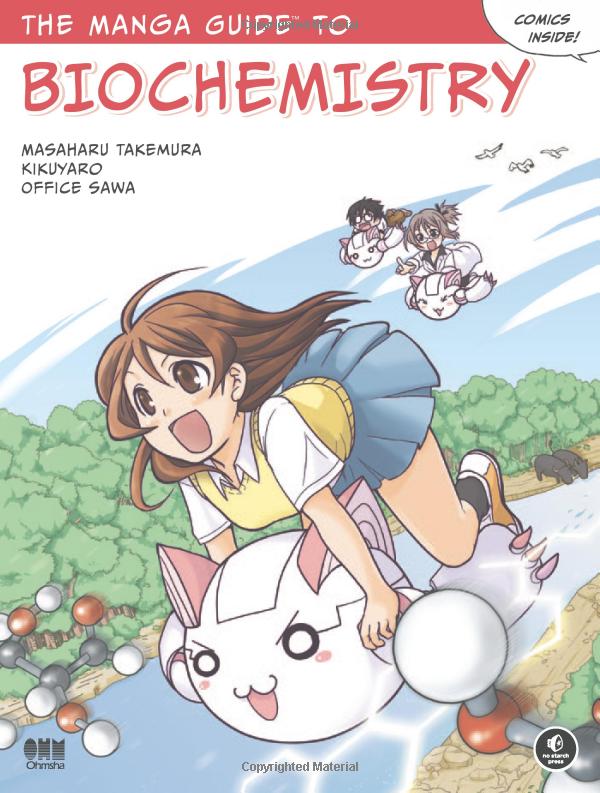
The pair of us found ourselves enjoying a quiet Saturday morning and we were determined to make the best of it. I had been reading the Manga’s Guide to Biochemistry with little luck. Try as I might the fascinating area remains a mystery. Cellular structures and how they interact, how they power our bodies. The concepts are explained well enough. But it still did not seem to answer the fundamental questions of energy disparities among people. How is it some of us are bursting with energy and others not? How do healthy doses of sleep and diet help with these biochemical processes and our own system?

 I am sure many eighth graders know it all well enough, and they’d roll their eyes at my interest in these matters. 

The Manga Guide to Biochemistry by Masaharu Takemura , Kikuyaro, et al.

1593272766.01.S001.LXXXXXXX

‘The Manga Guide to Biochemistry’ , I said lifting the book helpfully to show her. 

She swirled her eyes – not just rolled them. 

“Who spends their Saturday mornings reading about Biochemistry?”, she said.

“Those who didn’t spend enough time in school reading about Biochemistry!” 

“Ah ha! So you accept you weren’t a saint in school!” I laughed. I admit I may have written myself out to be a Mary Sue when I wanted to talk myself up to the children. A Mary Sue, I learned recently, is a form of wish fulfillment by authors when they write idealized versions of themselves as characters in the story. 

Quote from wikipedia:

A Mary Sue is a character archetype in fiction, usually a young woman, who is often portrayed as inexplicably competent across all domains, gifted with unique talents or powers,…, unrealistically free of weaknesses, …, innately virtuous, and/or generally lacking meaningful character flaws.

“Guilty as charged. But really though: I like this book. I am not even sure I understand half of it, but it is still nice to try!” I said. 

She gave me an indulgent look and said, “Fine! But no doing that thing you do and reading out interesting bits of it out to me, understand?” I nodded. 

“And may I ask the same of you my dear? I am not sure I want to know how the count’s first kiss felt on her cold cheeks or whatever it is you are reading now.”

She snorted, but had the decency to look abashed at the evident enjoyment of her little rom-com : It’s in His Kiss by Julia Quinn. “It is now a TV series – Bridgerton. Actually, you may like it. “ she said, and I perked up. I had heard the series was very good. 

“Oh amma! How quickly you go from disdain to curiosity?!” 

“Maybe I will understand the biochemical processes associated with attraction first huh?” I said laughing.

Love, Actually: The science behind lust, attraction, and companionship

Hemlock Hitch

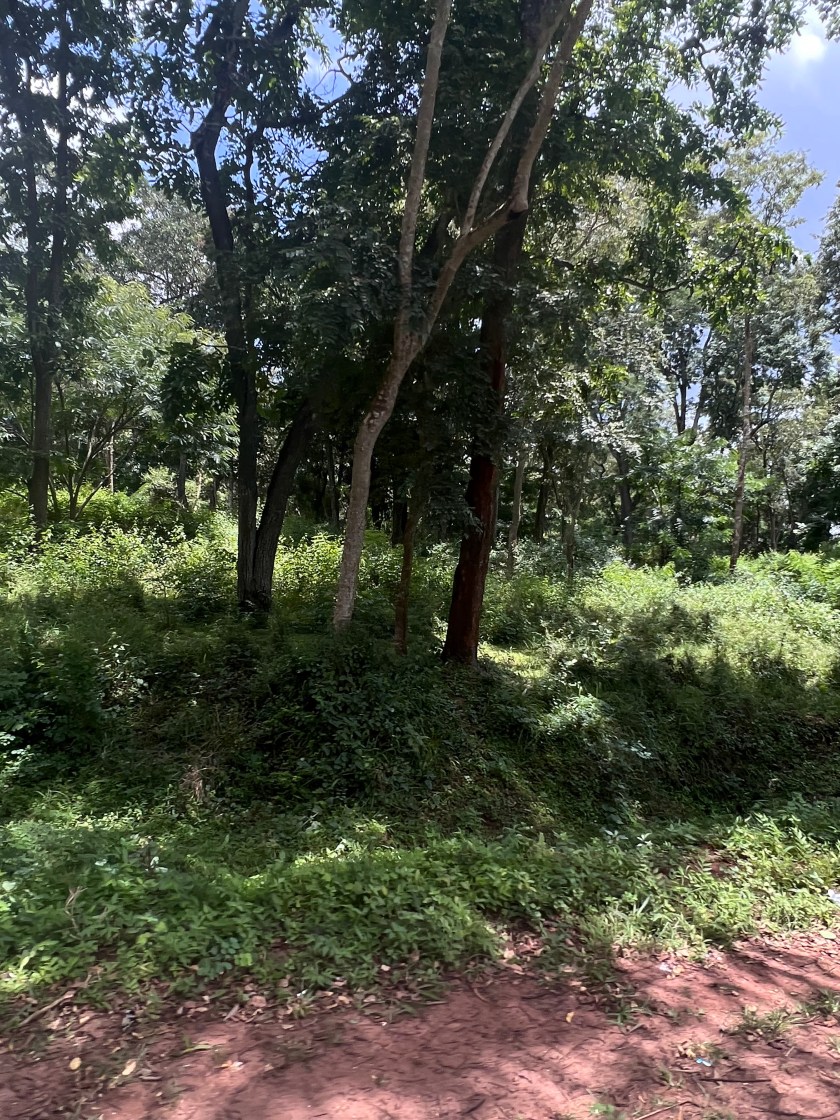
I squinted as I walked through the summer grasses – browning in places, laced against the relentless green of the hemlock. I did not know it was hemlock of course. I just admired the beautiful shapes of its flowers and the structure of its leaves. 

img_6114

“What plant is this?”, asked the husband and I found out. It was the hemlock. They must be a favorite of the bunny rabbits in the vicinity – since I see them hopping in and out looking very pleased with themselves as they do so. 

“Did you know Hemlock was what was used to poison Socrates?”, asked the husband and I was curious to hear that. Obviously, my horticultural knowledge is nothing to bet a chocolate on, but still to see that the innocuous, gentle and beautiful looking hemlock was capable of such treachery to the human system was shocking. 

It was true. It was one of the oldest secrets of humankind by the looks of it. Only they seem to have forgotten to whisper it in my ears when I grew up. I may have eaten those leaves – I said shocked, earning me a stern glance from the husband. “That is why, you do not eat wild plants. Go to a store, and buy what you need.” 

“The tried-and-vetted”, I sighed. Yes – but where was the sense of adventure in having a beautiful tale to tell? “Are you sure though? The hemlock?”

So, I rushed home and saw that Elizebeth Blackwell in her extremely well researched book on Botany lists out Hemlock too. 

https://en.wikipedia.org/wiki/Conium_maculatum

“Imagine! The rabbits may eat them!”, I said still a bit shocked at how ubiquitous the plants were. But then I stopped and wondered – I had never seen the little ones eat them. They would hop in and out of the bushes, but never have I seen them munching their leaves or nibbling at the carrot like roots.

Curious.

How Daughters Protect Planets

The daughter is home, brimming with chatter and tales from college. I cannot deny that we have been counting down days to have her come home. The house feels different, quieter somehow without her, and I listened happily as she jabbered on a few miles a minute, and gushed and laughed with her little brother. I sat there letting all the flurry blanket me, and smiled. 

“What are you smiling about?”, she said.

I said ‘something soppy’ about being happy that she is home again. She looked at me appraisingly and said, “Oh Amma! Look at you. You’ve mellowed into this sad thing who is ‘just happy to have her her daughter home’! What happened to you? What happened to the fierce woman who flew about the place?” 

“I am still fierce!” I said. 

“Nah! These days – I think she is going to just say something sharp, and she takes a deep breath and shrugs! She really does miss you!”, said her little brother, and I gave him a reproachful look. 

A few hours later, she had convinced us to settle down to a week-end movie night of Our Planet II – a Netflix documentary on the state of the planet, narrated by David Attenborough. It is an excellent program of course, and this particular episode veered from the whale sharks in the Persian Gulf to the wildebeest and zebras in the Savannah to the bees in search of their home with equal ease. We sat there mesmerized by the images, occasionally commenting on how hard it must’ve been to capture some of these shots. It had apparently taken 4 years to film and we could well understand why. 

“But think about it! Most species are absorbed with staying alive – finding food, reproducing and life resets, for the next generation, right?” I yawned sleepily.

“Yes – Amma & I were talking about that. I mean, if you are a duck: have ducklings, feed yourselves and them, and make sure they are safe. That’s it. That’s their whole life.”

“Yeah!”, the daughter said, laughter ringing in her voice, “Low-key simple, but also every day is just survival! Dog-eats-dog-world. I mean look at us. Tucked into our blankets on reclining couches, watching this on TV, and popping chips into our mouths.”

“We are a spoilt species.  “ I agreed. “But I am also glad that we have sentience and energy enough to ponder on more than survival, don’t you think?” I yawned again, ready to head up to a comfortable bed, and thought about that. This extra brain power is probably a double-edged tool. If we hadn’t this extra bandwidth, would we have been happy with survival, and learned to shake down down with our cohabitants better, or can we use this extra bandwidth in ways other than what we have done thus far? Maybe there has to be another leap in our understanding and way of life to truly protect our home and those we share it with. 

IMG_5618

Documentaries, and books certainly help us along that path, I mused, but a true awakening and action? I yawned another jaw splitting yawn, and decided that my brain power just then had about enough to contemplate sleep and relish in the thought of getting up to no alarms the next day (a rare gift in our busy lives). 

As I drifted off to sleep, I thought of the likes of Jane Goodall, Sylvia Earle, Rachel Carson, Gerald Durrell et al, who are voices that help us see the importance of ecosystems. I thought of the question that Sylvia Earle brings up in her book on Oceans: She was asked by a journalist as she stood staring into the vast ocean on the Australian shores, “What would happen if the oceans were to just dry up?”

Flabbergasted, she attempts an answer of the all-encompassing need for the oceans for our survival. Wouldn’t we go the way of lifeless and barren Venus and Mars without the waters of our beloved oceans and its ability to nurture life?

But all of us cocooned in our daily lives of earning our living, and living our lives, and raising our children do not stop to wonder why the jellyfish, and whale sharks are important to us do we? 

That is why we need daughters to come home from college. To ponder on the beauty of life, and what we must do to sustain and protect our lovely home: Earth. 

In the oceans of wonder

T’was the time to plan one of our trips to another dimension, and we were excited. For this time, we also had the company of our family friends who came in from India, which meant that we had planned both a trip to the Monterey Bay Aquarium and the beach nearby afterward for a sumptuous picnic. 

At Monterey Bay Aquarium, we can be assured of being grateful to our marvel-filled planet for all its resplendent forms of life: the staggering variety of it, and the true meaning of diversity. For all our time in our daily lives, we seem to devote little of it to ponder the wonders of the world. So, taking a day in which we see nothing but life other than our own, so often so different than our own – with exactly the same conditions to develop is not just wondrous, but necessary.

IMG_5616-COLLAGE 

There were a few moments in that day that stood out:

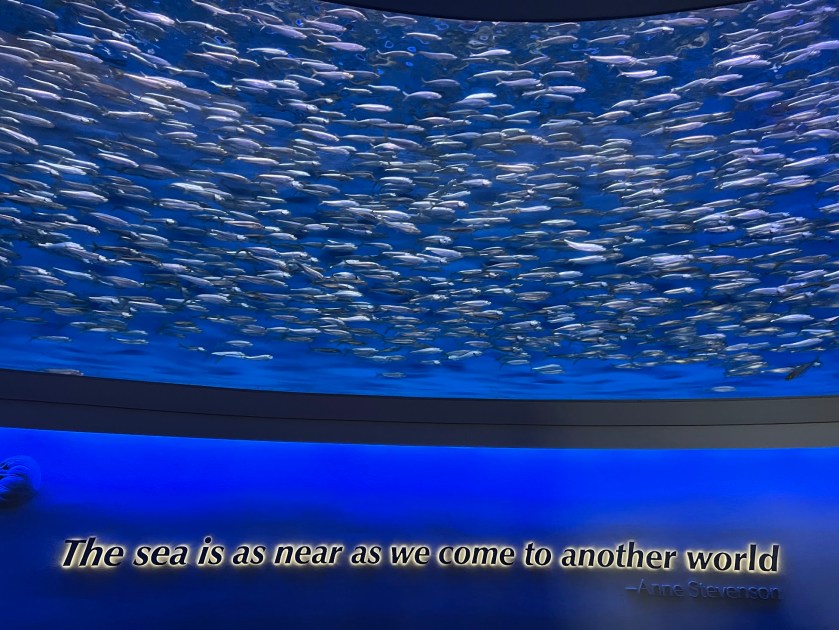
🐟 Standing in an entryway where thousands of sardines swam overhead, the son and I noticed that there were a few – very few maybe 5 in all, who were determined to swim in the opposite direction. It seemed to be by choice, since they were edged multiple times in the opposite direction by the other fish. They were packed like sardines after all.

IMG_5615

Maybe, every society does need those few who swim against the tide and make their own way – hard as it seems, I thought philosophically. Though, I am the first to admit that I have never studied sardine behavior to corroborate this. It simply seemed like a comforting anthropomorphizing thought at the time. I was feeling contrarian at the moment and these little fishes making their way against the rest of their crowd made it seem like those feelings were valid. 

🐟 I have almost identical pictures of the jellyfish exhibit from my multiple visits to the aquarium, but this one was different. The picture of a baby silhouetted against the glass and longingly touching the glass housing the jellyfish caught my attention. Had my more photographically inclined friends been there, I am sure they would have captured an award worthy photograph. What I got was this. I love this picture because it seems to capture that essence of wonder innate in all of us, that we forget to cultivate and nurture.

IMG_5618

🐟 Later that day at the picnic at the beach and on a walk by the waters looking at the profusion of wildflowers I could not help staring into the ocean waters. The home to all these grand creatures we had just seen. Their habitats and life in the waters had been beautiful, but so was ours. The tiny wildflowers on either side of the trail were reminders of that. Even if a tiny part of me resented the fact that my attempts at growing these wildflowers had come to naught for so many years and yet here there, able to thrive with no help from mankind. 

img_5716

There is something marvelous about being in the beach on a warm day at the end of May. It isn’t as crowded with the summer sunbathers yet, and the waters are neither warm nor cold: perfect for a game of guess-the-wave -lines (this game is a complicated game where we point to a wave and try to stand as close to the wave on the shore without it actually touching your feet. So the person closest to the wave before it starts receding wins) 

I have with me a book on the oceans titled: Sea Change: A Message of  the Oceans by Sylvia Earle and plan to wrap myself in the wonders of that world over the week-end.