The Role of Seaweed in Reducing Methane Emissions

The Odds of Our Survival

I was listening to a podcast by Yuval Noah Harari (How humans came to rule the world) and he was saying that if he were to draw odds of survival in the wild against a lion or a zebra, he would not rate himself too highly at being in the race at all as much, but as a species we do seem to have gone above and beyond. It is true. While human-beings can be extremely frustrating , what humanity is capable of achieving is truly astonishing. The eradication of so many life-threatening diseases such as small-pox, continuing medical advances including the recent covid vaccination, and so much more.

Humanity never does seem to have a dearth of problems to solve too. Maybe it was one of the things that came out of Pandora’s Box too. This ability for every solution we create, we seem to have more problems to solve. The industrial revolution led us to climate change, increased technology and reliance on over-stimulation with social media etc is leading to increasing mental health problems. But still we persevere on. When industrialization swept the globe, many feared the end of meaningful work, but the nature of work has morphed and morphed into something our ancestors can hardly recognize as work. 

Climate Change

Take for instance all the ways in which we set about solving the climate change problem (after having caused it in the first place – true true! ) 

While talking to college going young adults, one of the majors that keeps popping up is environmental science, ecological preservation, green engineering – all fascinating fields related to tackling the increased effects and problems of climate change.

That is the redeeming quality too of our sometimes frustrating species. 

This piece of news make me rejoice in the capabilities of human-beings, and the beauty of our planet earth all at once. 

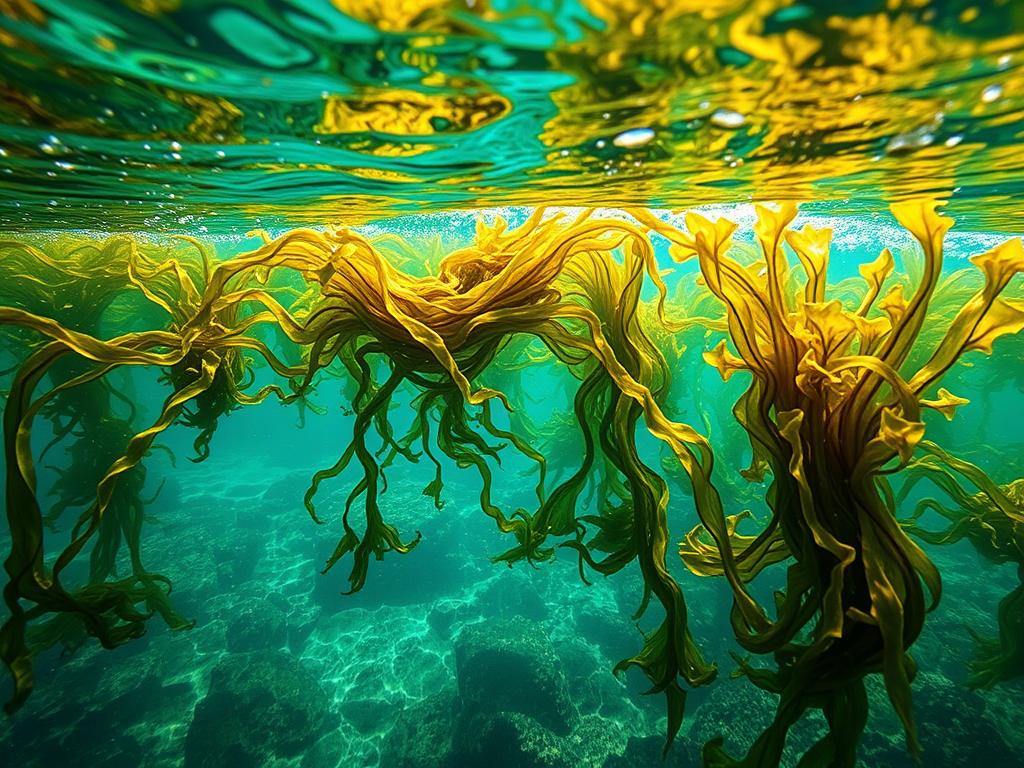
Feeding seaweed to cattle reduces their methane emissions by upto 40%. Considering that 40% of methane emissions are from cattle fodder, this is a huge step in the right direction indeed.

https://www.anthropocenemagazine.org/2024/12/scientists-just-took-one-step-closer-to-a-climate-friendly-cow/?utm_source=substack&utm_medium=email

The oceans coming to our aid again! Seaweeds – truly if there are deities in the universe, the ocean would have to be ours. 

Methane production from live fodder constitutes 40% of greenhouse gases, and if feeding cows seaweeds reduces that by 40%, we may very well have a significant dent on the problem (16% reduction in methane will be a significant dent if all cows are able to get on a seaweed diet.) 

I want a beautiful word for the interconnected-ness of the universe

Seaweeds 🙂 The beauty of it is astonishing and the more I think of all the wonders that bound us together on this small planet, the more I am astounded by it. The interconnectedness of it all sometimes has me breathless in awe. How did we get to call this planet home? 

I ramble, but it may well be tipping point for the planet.  If the doomsayers are to be believed, the breakthrough comes as a critical moment.

The Ocean Deities Defy Pandora

It is as if the ocean deities are having a laugh and teasing Pandora with this win, and and with wins right now – we should take all the logical and sensible ones while we can.

The Oldest Trick in the Book

Flittable Flipperbits

It was one of those days when I felt speed and productivity were playing a cruel joke on me. It bonked me from chore to meeting to event to missed messages, and by the end of it all, I had a vague sense of all the things that didn’t feel quite right because the important had been muddled in with the unending stream of the banal.

In all the melee of rushing about the day, I realized that I had missed an important piece of communication, which, had I picked up at the right time might have saved me about two hours of turmoil, but there you are. 

Later that night, I felt foggy. Nebulous clouds, misty and mysterious as they seemed, I knew I needed to sit and stew for a bit for them to take shape. But then, of course I was too stimulated to do that – flittable flipperbits!  I marveled yet again at the highly energetic, always-on-top-of-things folks we meet in our daily lives. They sparkle with busyness, and seem to be happy about it too. I felt that strange longing to be like them just for a day perhaps! 

By the end of the day, the world seemed to laugh at me, and I had no choice but to join in. So, I did. 

The husband gave me a curious look and said, “Well – you just did get a day like that, and you seemed to have managed pretty well – you were busier than you wanted to be – a day filled with things to do, and jobs to get done, buzzing about. You seem to have missed out on some important things, but you took care of them. And you seem to be laughing at the end of it, so what’s wrong?”

I gave the poor fellow a look that I usually reserved for poorly cooked cabbages, said he wouldn’t understand, and swished off to bed. I felt like a cooked cabbage myself, how was that any good? 

Dreamy Strawberries

It was all made clear to me the next morning when I awoke from what seemed to be one of the strangest dreams that even I have had in a while. It involved marriage halls with catchy music, social situations that I fervently hope and pray I shall never find myself in, and feeling like I was run over by a truck that had strawberries in them with flowing taps of chocolate (but not dark chocolate – for some reason, this seemed like an important thing for the brain to remember the next day) 

So I decided to meditate today – the diagnosis was clear: this was an over-wrought brain. Nothing else. I shall meditate and all shall be well. By the time things pick up in a few hours, I shall have the world in control again, I said, and sat down to it. The oldest trick in the book really, but the most effective.

How did we muddle it all up?

I thought of all my wonderful yoga and meditation teachers, and invoked their calming voices. They floated up, and did their job, and I spent the next few minutes thinking about a conversation I had with my friend – who is a poetic soul brimming with love, and we had chuckled about it. How the world of remuneration is all inverted. The ones who really should be the best compensated are the ones who teach us to spend time with ourselves, taking what is available and trying to help us shape ourselves into something far more beautiful – our teachers, coaches, mentors, yoga, art and meditation teachers – and yet, the world has somehow played a cruel joke by compensating those who make the very algorithms and enable the lifestyles requiring these things to dance to the bank, and not the other way around.

I thought, I’d share this video though – for it says a lot of what I’d like to say – only a lot more cogently:

Rory Sutherland – Are We Now Too Impatient to Be Intelligent? | Nudgestock 2024

“Let’s let go of all stray thoughts – acknowledge them, but tell them, you’ll come to it.” said my meditation teacher’s voice in my brain – forgiving yet insistent, and I chuckled. How did she know where I had gone off to – even when I was only bringing her up as a figment of my imagination?

Meditation done, I felt like I could begin the dance of a new day with fresh energy, and rather looked forward to seeing how I would muddle it all up again. Somehow, that felt right.

Halloween’s Influence: Understanding Fear in Stories

“Arrgh!” 

“Gosh! Dude! You scared me!”, I said, leaping neatly into the path of a bewildered looking biker on the trail. His eyes grew wide, and he wobbled spectacularly before regaining his poise and balance, and then smirked. 

I suppose it was funny. A scrawny fellow like the son is hardly the sort of fellow to make their mothers leap out of trail paths with their scary stories. But it is nearing Halloween and we were discussing the themes of horror in their English Literature class. 

“What are the elements of a horror story?” I asked.

His answer made me jump, leap into biker’s path, earn b.look from biker as he regained balance and then a smirk for additional points etc. 

I must admit that when it came to quakey finds, horrors take the biscuit. Stephen King is all very well in the daytime, with soothing cups of tea, warm music etc. But otherwise, no thank you! I still prefer the glow of humor, the comforts of friendships and love, good old fashioned topics like (science, nature, history, psychology, travel), and mild adventure in my reading fare.

Horror in Literature

What made the class interesting was their discussion on not just horror, but how it affected the different parts of our brains. The amygdala (the small pea sized piece of our brain) is known for the fear response – that is the piece we share with reptiles, he went on to say and I listened in awe. Our prefrontal cortex is where we process what the amygdala sends us, to appropriate a response. 

“I think you should research it up a bit more before quoting me though!” he said, giving me a stern look.

“What if I wrote that you asked me to research it, so folks know it isn’t the Gospel of NeuroScience instead?” I said, rolling my eyes, and he laughed at that and agreed. So here goes, folks: please research this piece on your own. 

How interesting to sit in a class, watching a 90’s cartoon show about Courage, The Cowardly Dog in the Chicken From Outer Space. 

Then to analyze how the different parts of the brain were affected by the fear response? I can’t think of a better way to spend a Wednesday afternoon. I would have loved to be a fly on the wall in that class (risking a horrified teenage set of kids screeching and swatting at flies notwithstanding), and I was full of admiration for their teacher who had taken the trouble to come up with a lesson like that close to Halloween.

Boggarts & Dementors

The whole conversation on fears and the horrors of our psyche reminded me of another conversation from a few days ago on boggarts and what shape each of ours would take. Harry Potter and the Prisoner of Azkaban has always been one of my favorite books – it addresses so many themes – how not to judge someone based on first impressions, how the truth can be life-altering, the importance of friendships, conscience, etc etc. But this book specifically addresses fear and our worst experiences in the form of boggarts and dementors.

This YouTube video on the SuperCarlinBrothers Channel on Why It Is Wise to Fear Fear is an amazing one in this context:

Harry’s WORST FEAR Explained | Harry Potter Film Theory

Halloween is the one time we acknowledge fear as a society. It also comes with a good antidote to fear: the ability to allow for whimsy and creatively live our lives.

We turned around after our walk, and the biker, much fortified after his own little fright, gave us a wan smile as he made off in the opposite direction too.

Exploring Happiness: Is It in Our Genes?

In what was an intriguing chat with the son last evening, we poked around the ethics of genetic modification. Apparently, that had been an area of discussion in their classroom, and the son was keen – the novelty of a discussion with multiple viewpoints at that age is amazing. I smiled and listened to him talk offering a question here, a hum there, an insight elsewhere.

“What do you want to do with human-beings if we are smarter?” I asked him.

“We could fly.”

“Cool! But then what?”

I took a deep breath and said as casually as I could. “Everyone wants to be smarter, for things to come more easily to them. So we wouldn’t have to spend so much time figuring things out. But – the thing is, if everything came easily, we would not know what to do with all the time we have on our hands. What do they say? An empty mind is a devil’s workshop? I don’t know – I think it could lead to more mental health issues – what do you think?”

He pondered this for a while, and said it was an intriguing thought. 

Who Survives?

It reminded me of another chat the husband and I had a few months ago – on the larger theme of the future of humanity. With smarter, faster, stronger, what would happen to humans? The husband took a moment to gather his thoughts, and said, “Well – it will come back to good old basics then, wouldn’t it? Survival of the fittest. Those humans who can learn to be peaceful with themselves will ultimately win out – that is the strain that will survive.”

I was impressed – yes, no matter what we had, it ultimately came down to temperament, attitude, and the ability to be happy, didn’t it?

Generosity by Richard Powers: The Happiness Gene

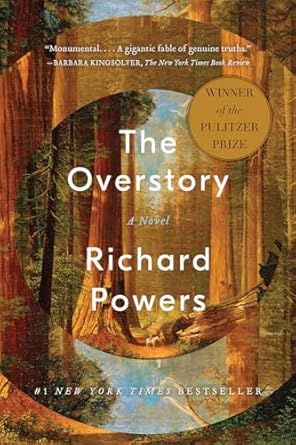
Incidentally the book I am currently reading: Generosity by Richard Powers, talks about a variation of this: The Happiness Gene.

The story tries to figure out the reason for Thassa’s happiness. Thassadit Amswar is a refugee who has fled the Algiers region. Her brother is still under house arrest in a totalitarian regime, her parents are dead after years in which they were stuck in the midst of a civil war that raged around them, and any which way you look at it, she should be morose, sad – not chirpy, cheerful, and full of light.

The whole set up reminded me of one of Rumi’s sayings that have been making its way around the instagram world: something to the effect of:

When the world around you is dark, you could very well be the light.

Rumi

In any case, somehow Thassa’s ability to be happy attracts attention – first from local friends, then a policeman, a local news report diagnoses her as having ‘Hyperthymia’ – a condition of overwhelming happiness, and goes on to attract those who want to auction and buy her eggs, decode her DNA, figure out the happiness gene. She finds herself unmoored by how people feel bad because she is happy, and having to navigate the horrors of fame.

In Essence

  • Is there a genetic component to being happy?
  • If so, can that be picked and chosen for our offspring in the not-so-distant future?
  • What issues would that create for mankind? For just as sure as we are of creating solutions, so too can we be sure for creating problems for ourselves, isn’t it?

Sunrises and Sunsets: An Opacarophile’s Notes of Magic

Every time we go on vacation, I proclaim proudly the first night, “I am going to go for a sunrise walk in the morning. Do not look for me!”

It is old hat by now. The children and the husband exchange amused looks and say, “Sure! Of course!” Followed by a chortle of such mirth that it should offend me. But vacations and all that – I let it slide. You see? I am rather a slow starter in the mornings. The caffeine tries, the shower tries, the folks around me try. But it takes a good hour or so before the spirit can rise and shine and birds chirping can become song to my ears and all that.

This time though, I surprised everyone including myself.

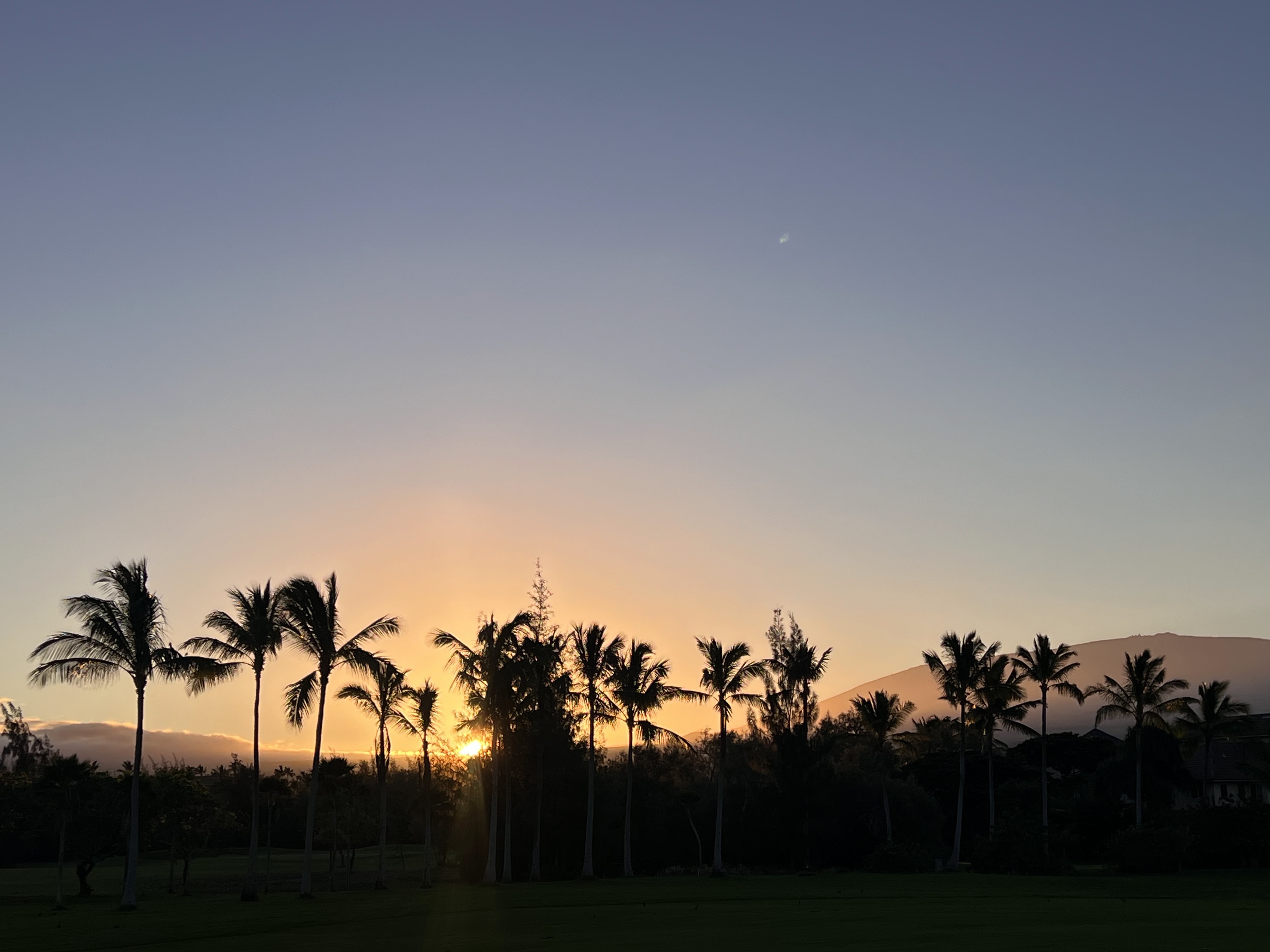
I set off on my sunrise, sunset and starry strolls every day I was there. It was marvelous – one morning, I sat trying to discern all the hues and colors in the sunrise, the shapes of the clouds, the fast disappearing mists that were clinging not a moment ago, making way for the humid day ahead of us.

img_2710img_2747

I could hear my heart rise in song without emitting a single chirp – trying to keep in tune with the little palm warblers, and the mynahs reminding me of a silly rhyme we would chant as school children, giggling ourselves silly every time.

One for success

Two for a toy

Three for a boy (giggle, giggle)

Four for a girl (giggle, giggle)

Five for a letter (we were in a boarding school)

Six for something (can’t remember)

Seven for a secret (Secret Seven By Enid Blyton must’ve inspired that one!)

And on and on, it would go.

I smiled thinking of that rhyme – something I hadn’t chanted in three decades, and yet, it came to me that morning looking at the little birds hopping about the island. The brain really is marvelous. Scents, images, words, phrases can all evoke associative memory – it truly is powerful.

Taking in the slow way in which the island is drenched in its beauty, I walked back to our cozy lodgings, feeling very smug, and proclaiming that all those who missed the sunrise .. well, missed the sunrise.

“The sun will rise again tomorrow, Mother.” the children chorused looking gobsmacked that I had taken a sunrise stroll. 

I somehow managed a sunrise stroll every day that we were there. On the last day, the husband joined me, and the island, to show us how special that was, even greeted us with a rainbow by the Buddha statue overlooking the ocean.

We were quiet for sometime wondering how a simple play of light and moisture can produce something as beautiful as that. Even the birds seemed to have fallen silent. Then the birds chirped, and the husband chattered again. 

img_2923img_2934

An opacarophile is a lover of sunrises and sunsets

A solist is one who loves events of the sun (sunrise, sunset, eclipse) etc

A heliophile is who loves the sun

A photophile is a lover of light

I feel the importance of this quote – for both sunset and sunrises

“Never waste any amount of time doing anything important when there is a sunset outside that you should be sitting under.” – C Joybell.C

Ooh! The 🐟🐠 O’opu Alamo’o 🐟🐠 & 🌴🎋 The Ohia Lehua 🌴🎋

Shoshin in Hawaii

Friends and regular readers of the blog know the immense peace and satisfaction I derive from the creatures around us. Creatures whose different characteristics serve them well. Some that evolution has equipped them with in order to live and thrive. Patience, perseverance, the ability to soar high while zoning on in the details when required, the ability to look out for one another as a group – as geese do on their long flights, or pelicans on their migrations. To work and play like dolphins and squirrels.

I could go on and on.

Going to a different ecosystem makes us sit up and take notice of all the things that are special to that place. Polynesian islands, or any islands, for that matter have this ethereal quality to their beauty. It is in the tropical colors, the unique flowers that greet us almost as soon as we land in the airports (plumeria in the case of Hawaii), the scents of the island – at once putting a great distance between the mainland and the islands. Floating by themselves in the middle of the Pacific Ocean, these islands, have been written about, explored almost completely, and still holds enough wonder and astonishment for the traveler with shoshin in their eyes.

Shoshin: is a Japanese concept that roughly translates to a Beginner’s Mind, meaning a mindset in which one is eager to explore, learn and stay curious in the world around you.

🐟🐠 O’opu Fish : Stellar Climbers 🐟🐠

Who knew that the humble o’opu fish would take me into streams of new words like: diadromous, anadromous, euryhaline?

Take for instance the o’opu fish. As far as fish go, they are fish enough – they have fins, they swim, and they can fix you with a glassy stare. But then, just when you’re ready to classify them with thousands of other fish in the oceans, they surprise you. They are not just fish in the ocean.

They are also fish in the freshwater streams in Hawaii.

Belonging to a small group of fish with this capability, they are known as diadromous fish – meaning they are comfortable in both saltwater oceans and freshwater rivers and streams. The O’opu aren’t just diadromous fish, they are also anadromous  ( the more famous anadromous are the salmon) – meaning they swim upwards to the fresh waters to breed their young.

Screenshot 2024-09-12 at 3.36.36 PM

The O’opu fish have the remarkable ability to adapt to different salinities in water conditions. They also, and this is where I stood transfixed, can scale waterfalls of 400 feet upwards – we saw the waterfall they go upstream of (Akaka Falls) from a distance, and it took my eyes a few seconds to take the height of the waters in.  These little goby fish, manage to scale these falls by sticking to the slippery rocks faces behind the waterfalls, in order to lay their eggs and ensure the next generation of  ‘O’opu ‘alamo’o are born.

Now, I am not sure how different this is from, say: a gobi desert dweller living and thriving in the tropical rainforests of the amazon, but it seems like a pretty good comparison to make.

🌴🎋 Ohia Lehua Trees : The Resilient Pioneers 🌴🎋

The next day, we found ourselves huffing and puffing up a small-ish hill to take in the crater of the Hawaiian volcanoes national park. (It is not a steep climb if you’re wondering). As a small group of tourists jostled around the forest ranger to listen to her talk about the volcanic national park, another unlikely specimen grabbed our attention. The short, stubby, but thoroughly resilient Ohia Lehua trees. These trees are apparently the first ones to seed life post a volcanic event. Given that volcanic ash can be quite the problem to a breather,  if you’re wondering how the little trees breathed, it is because they have the unique ability to close their  stomata for up to two weeks.

Screenshot 2024-09-12 at 4.56.11 PM

Quote from the website:

https://www.usgs.gov/observatories/hvo/news/volcano-watch-lava-loving-ohia-lehua-a-pioneer-plant-peril

The tree has a superior capacity for extending its roots vertically and can grow efficiently in cracks and fissures. ‘Ōhi‘a also have the capability to close their stomata, or breathing pores, so the trees can “hold their breath” when toxic volcanic gases are blown their way.

The Ohia Lehua trees and the O’opu Alamo’o fish are the stuff of Hawaiian legends.

Nature truly is a wonder marvel!

Reference links:

Existential Angst & The Creation of Meaning

The son and I were listening to a podcast called Philosophize This on the Creation of Meaning series. Stephen West’s voice filled the kitchen while the week-end cooking was being done by Yours Truly, and a history project was being colored in by the son.

Many of us are familiar with the Existential Quest of mankind. In the absence of knowing exactly what animals think, we assume that as a species, we are uniquely gifted with existential angst. Does a whale worry about it? Do octopuses? Sheep?

Existential Angst

We all feel it at some point in time – some more keenly than others. Some for more prolonged periods in time.

https://www.philosophizethis.org/search?q=creation%20of%20meaning

“Hmm…” we said almost together, and laughed. We were both thinking of that beautiful night a week ago. We were driving towards the middle of nowhere, in search of a parking lot, wide enough to allow us to glimpse the marvels above us, and far away enough from urban settlements to truly allow the darkness of the night to creep in and enclose us. It was during the preceding waxing moon phase, which meant that the skies were moonlit past midnight. So, we started driving past midnight and reached a suitably dark spot at about 3 a.m.

As we gazed up at the stars that summer night leading up to the August full moon, we were filled with this sense of awe. A sense of gratitude for being a part of this incredible universe, and for being able to play a small part in it.

Screenshot 2024-08-26 at 11.54.57 AM

One of my favorite quotes from Ursula K Le Guin from the Lathe of Heaven is:

“Things don’t have purposes, as if the universe were a machine, where every part has a useful function. What’s the function of a galaxy? I don’t know if our life has a purpose and I don’t see that it matters. What does matter is that we’re a part. Like a thread in a cloth or a grass-blade in a field. It is and we are. What we do is like wind blowing on the grass.”

― Ursula K. Le Guin, The Lathe of Heaven

The Perseid meteor showers were supposed to peak around dawn and we yawned our way through a steaming cup of tea to keep us company during the wait. In time, one or the other of us would yell, “There!”, and the others would moan. Till then, we gazed upwards, our eyes acclimatizing to the dark.

Whether we saw the meteors brightly enough or not, we did land up seeing the Milky Way -cloud-like stretch out and yawn in the canopy above. Lazily strewn – intensely bright in spots, and each star shining to its own capacity.

The Creation of Meaning

Huddled up watching the stars like that lulls the brain into the universe. With a slow sense of serenity and awe pervading your being, I found myself wondering about meaning.

Without meaning to, we attach an awful lot of meaning to many things.

Back in the kitchen, the son & I snapped back, and agreed that as far as meaningful experiences go, stargazing was at the top of the list.

“At what point do we decide that being us is all that is expected of us? Be a planet, be a star, be a galaxy, be an elephant or a human-being. There is nothing else. Why do we keep wanting to do meaningful things?” I asked.

The husband gave me an amused look, and said, “Huh Hmm! Pesu!” (You can Talk!)

I had the grace to laugh.

“But really – why not move to an obscure part of the planet, watch the stars at night and just live a happy life?”

“Why not indeed?“ He said, barely hiding the laughter in his voice.

“If more of us could do that, then existential angst would not be a thing, and without that, are we human-beings? That is how we come full circle or spiral into non-being! Get it? Get it?” I said chuckling. “Even the galaxy’s shape looked like we needed an artist’s rendition to show us the rest of the picture of the spiral. “

Screenshot 2024-06-29 at 3.32.19 PM

The daughter, who’d come yawning downstairs, said, “Thank goodness I wasn’t here for that meaningless lark. You’d have woken me up, and Euuuhh”, she shuddered and peered into the simmering contents of the stove. “Ahh – all my favorite things today! Thanks Ma!”

“The Creation of Meaning! Ladies & Gentlemen! “ I said with a flourish, and she laughed.

Question for you:

Life’s meaning to each of us is different and it is different at different stages in life. What are some of the things that you think give meaning to life?

Rediscovering the Art of Play: Exploring the Wonders of the Solar System

I vividly remember one Science class in which my teacher explained the solar system, our place in it, and how fast we were traveling through Space. It is an incredible concept, and when explained well, can spark interest and curiosity in a young child. I remember being flushed after that Science class, maybe because I was chosen to be the Earth. I had to rotate and spin around one of my best friends who was the Sun. What greater joy could there be?

man_in_stars

 As interesting as the lesson was, what sealed the memory in my mind is the fact that the chosen sun that day was exuberant, the chosen earth was joyous, and the rest of the class giggly and slightly jealous that they weren’t the ones to be given the chance to get up from their seats. The latter point gave way to some accusations about being picked by the teacher  “How come you both were picked? Sitting right next to each other too?”

I saw their point. Usually, teachers are careful about picking volunteers or nominees from opposite ends of the classroom. These little dramas are part of what makes our time together memorable.

The little upset may have dampened our spirits somewhat, but we were quick to regain lost ground. To children who generally liked the joy of spinning, the morning lesson was a gift indeed. To those of you who have not experienced the heady giddy sensation of going round-and-round  recently, please try it again. It is marvelous. If you can find a giggly companion, young at heart, please do so, and it enhances the experience in no small manner. 

Hypothesis, Conclusions, Fact-Checking & Collaborations

I remember it was during our little spin-ney-spin-ney sessions that one of us had a question as to why we feel giddy when we spin. Science is full of people who came up with their hypotheses and then set out to prove it. Our little band of scientists was no less committed. I came up with a perfectly wrong explanation for the phenomenon and it shows the sturdy nature of my friends that no one laughed at me that day. Instead, they indulged me in an experiment. 

“Maybe the Earth is already spinning and when we spin in the opposite direction, it makes us feel dizzy.”  

There were some thoughtful nods at this – “Then we should be able to spin even faster if we were to go the same direction right? “ said one. There was only one way to check – spin in both directions and find out for ourselves if this was the right theory.

 “Which direction does the Earth spin – do you know?” A collective wave of shoulders shrugged at the same time, but little things like this do not deter the determined. Someone said we will just time each other for 10 spins in each direction, adjust for right-handed, left-handed, ambidextrous, null-i-dexterous (the opposite word for being equally clumsy with both hands is called ambisinister, but I think null-i-dexterous sounds kinder) and we would be set.

That’s what we did. The exercise resulted in loud laughter, and the sound waves brought the earlier complainants to the fold wanting to join in the game too. All recent rancors forgotten, the experiments were done with rigor, encouragement and accuracy.

the_world_playground

While we are always in awe of the creative thinkers who take us a leap forward with their works, I have always wondered how each moment came to be: how Thinking Man figured so much out. This is one of the best ways in which I have seen the sentiment expressed.

 Excerpt from The Book That Nobody Read – Chasing the Revolutions of Nicholas Copernicus by Owen Gingrich

“The greatest of scientists have been unifiers, men who found connections that had never before been perceived. Isaac Newton destroyed the dichotomy between celestial and terrestrial motions, forging a common set of laws that applied to the Earth and sky alike. James Clerk Maxwell connected electricity and magnetism, and showed that light was electromagnetic radiation. Charles Darwin envisioned how all-living organisms were related through common descent. Albert Einstein tore asunder the separation between matter and energy, linking them through his famous E=mc^2 equation.”


Scientists do not always know what to expect and can sometimes be surprised at the results. That is what happened to us. The results were inconclusive and resulted in:

* One of us falling to the ground laughing heartily

* Another banging their head against a conveniently placed pole nearby 

* Another giving off an inaccurate imitation of a drunkard, which was impressive given that this was happening prior to the Internet or Cable Television, and the child’s parents were teetotallers

* Two subjects crashing into each other mid-orbital, resulting in tummy aches and headaches together 

 Our motley band of scientists had by this time dissolved into a fit of giggles. Good naturedly, we shrugged off the theory, accepting with grace that it may be an erroneous hypotheses and moved on to the next thing to play together. Consensus, criticism, fact checking, and collaborations had been achieved with the greatest of unity and hilarity. 

The Art of Play

In every problem, creativity and imagination are our solid allies. The simple act of playing together and collaborating to solve problems, keeping each other true is now more valued than ever. Today to see that school recess times have come down; children do not play out on the streets in free play mode anymore, but are rather being ferried up and down to supervised, classes with rigid rules of social conduct usually in the presence of adults; and the playgrounds in our neighborhood have become safe havens for spiders to spin their webs. 

Could we add in structured unstructured time – so we can all benefit from free spirited Play once again?

Those who were never exposed to Play may not miss it, but those who know the beauty of it, will always feel the richer for it. Much like Art, Play is Art, and I pray we do not lose the Art of Play.

The Birds of Heaven

“Do you think we’d have seen at least fifteen species of birds?” the husband said, huffing and puffing beside me on his bicycle. 

We had biked up a little hillock, and even though it looked like the sort of thing we’d have torn up while playing hide-and-seek as ten year olds, it proved to be a huffer just a few decades later, Curious how life reminds you about the passage of time and all that right?

“Easily!”  I said, and started listing them off.

  • Hawaiian stilts
  • Terns
  • Avocets
  • Pelicans
  • Geese
  • Ducks (green necked, wood ducks)
  • Quails
  • Egret
  • Heron
  • Green heron
  • Blackbirds
  • Turkeys
  • Turkey vulture
  • Red tailed hawks
  • Grebes
  • Cormorants
  • Coots

The huffing and humming had stilled, and I turned around to see what had happened. The husband grinned sheepishly – “Oh! Yes – might’ve stopped listening after you started listing the birds.”

I laughed. 

It was a beautiful ride by the bay. The colors of the bay combined with the golden light of the evening made for a fantastic setting for all these birds. There was a time when the soft cooing of the birds, the lapping sounds of the waters around us and the flapping of wings was all that could be heard for miles. If there was a heaven, would these birds be there too? I would hope so.

img_2249

The Tales of Birds

I am sure the falcons and the avocets have the stories of their lives. That pesky crow that annoys the hawk must have their heroic tales. With their enhanced senses, I have often wondered the world through their lenses.  

In any case, we were racing against the sunset, and time was showing it’s presence with every passing minute. 

The elongated shadows of our bikes finished as my long-nosed shadow hit the garage entrance. “Made me think of all the long-beaked friends we saw today.” I said laughing.

It was true – especially down by the bay where we see many birds fishing, long beaks seem the norm: avocets, terns, pelicans, curlews, herons, egrets. They all have sharp beaks that give them decisive looks. I wonder every time I look at them what goes through their mind as they hunt for their food, look after their young and build their nests. This is, after all, what most of the lifeforms on Earth do. And yet, each does so differently, unique to their species, unique to their abilities, and unique to their habitats.

The last birds I stopped to admire in our race against the sunset were the Hawaiian stilts (curiously these birds were once on the endangered list, but have since made a comeback and I am so glad. ) They are a joy to watch in the sunset’s glorious light, with their pink legs, their sharp beaks, and the black-and-white contrasts.

img_2264

Time is a Curiosity

Each of these birds surveys the life beneath the waters differently, and with the deft skills of an archer plunges in for their kill. Their groups merging and reforming with the bay’s tides. Time is a curiosity in these settings, and one can spend hours in these environs, filling the soul.

The trail we are lucky to have access to is beautiful, and every time we set out to catch a little ride by the waters come back more peaceful, filled with gratitude at the marvelous forms of life we share the planet with. I have tried describing rides like this and come up with no one word that can capture it all. Maybe a feeling of abundance? Serenity? In our human existence of intense craving, the ride and what it offers pales in comparison. It is slow, it is present, and it somehow exemplifies your horizons. 

“When we go down to the lowest of the low tide lines and look down into the shallow waters, there’s all the excitement of discovering a new world. Once you have entered such a world, its fascination grows and somehow you find your mind has gained a new dimension, a new perspective — and always thereafter you find yourself remember[ing] the beauty and strangeness and wonder of that world — a world that is as real, as much a part of the universe, as our own. “

– Rachel Carson

Mine Eyes Have Seen The Glory

I have always been fascinated to see the world through another’s eyes. Maybe one of the reasons I am drawn to Fiction. It does seem to be an innate trait too. Obviously when I read the book, Eye By Eye – Comparing How Animals See – By Sara Levine, illustrated by T S SpookyTooth, it brought the eye fascination back in full force.

img_2088

I closed my eyes after reading – it was well past midnight – I had probably read 3 or 4 different books and I really needed to sleep if I had to be a functioning adult the next day. So I did. I closed my eyes – wondering about eyes.

If there is one overused trope in fiction, it is the eyes being the mirror of the soul. It is . Please don’t get me wrong. Expressive eyes are amazing. But I do find it over-used. How the eyes turned flat and gray, how the eyes were blue with excitement (Can eye color really change like that?) Also can the eyes show everything happening in another’s soul? The pupils dilated, the eyes red. 

In reality, how often do we sit and observe another’s eyes? I am reminded of this experiment by Sheldon & Penny of Big Bang Theory fame

The Big Bang Theory – Penny and Sheldons love experiment S08E16 [1080p]

However, it is beautiful that we have an organ that allows us to experience our world in such a wonderful manner. In Andy Weir’s book, Project Hail Mary – he meets an alien species, from Erid in the Tau Ceti star system 12 light years from Earth, who do not perceive light. That made for an interesting premise – for they were an advanced civilization able to design space travel etc without sight.

image-3

https://en.wikipedia.org/wiki/Project_Hail_Mary

Anyway, where I’m going with all this meandering about light and sight is that, I was shocked to read that some underwater creatures do not perceive the color blue, and navigate a gray world instead. It made me sad for some reason – the blues are all we think of when we think of oceans and the lives it nurtures. How many shades do we have to describe the blues? Cerulean, Turquoise, Teal, Cyan, Aqua, Sky Blue, Royal Blue, Light Blue, Navy Blue and all the shades in between, and yet some creatures of the deep sea see none of that. Starfish, for instance, only perceive light as a vague form of light – they do not perceive differences in wavelength. 

cropped-img_5618

Cuttlefish, with their pupils W-shaped – what do they perceive? 

Seeing the world through another creature’s eyes can be rewarding, interesting and will make us more empathetic and passionate towards caring for our environment and preserving all the different kinds of life, would it not?

I might have made the goat whose eyes I stared into on my walk very nervous. You see? Ever since I read that goats have rectangular pupils, I am drawn to them. They allow me a moment to observe their pupils, then turn away bored. Interested in getting to that low-lying branch to eat. 

One goat even gave me an amused look – I did not detect amusement in the eyes if that is your question, I saw the face quirking up differently and moving away as though shaking its head.

Books: