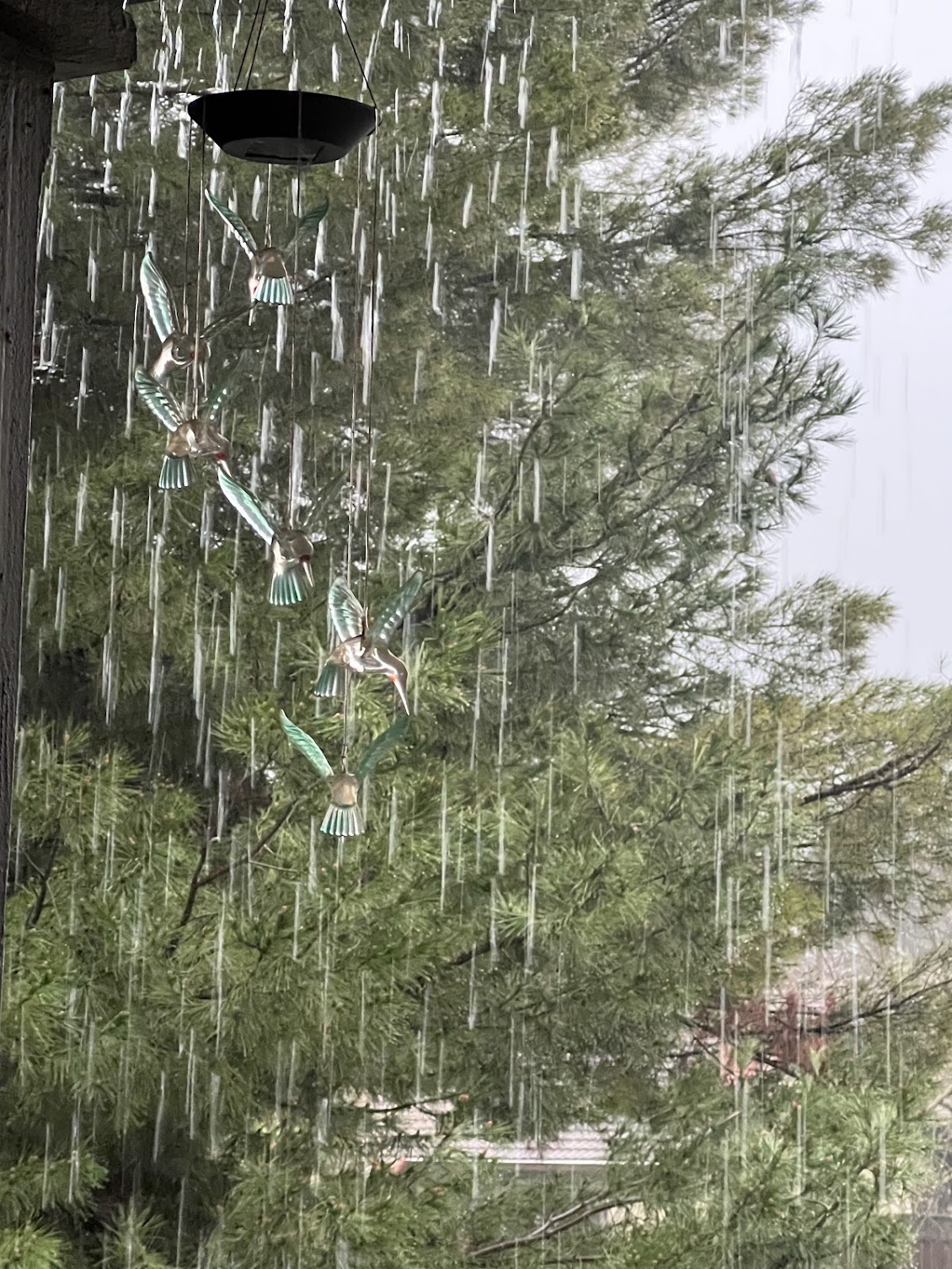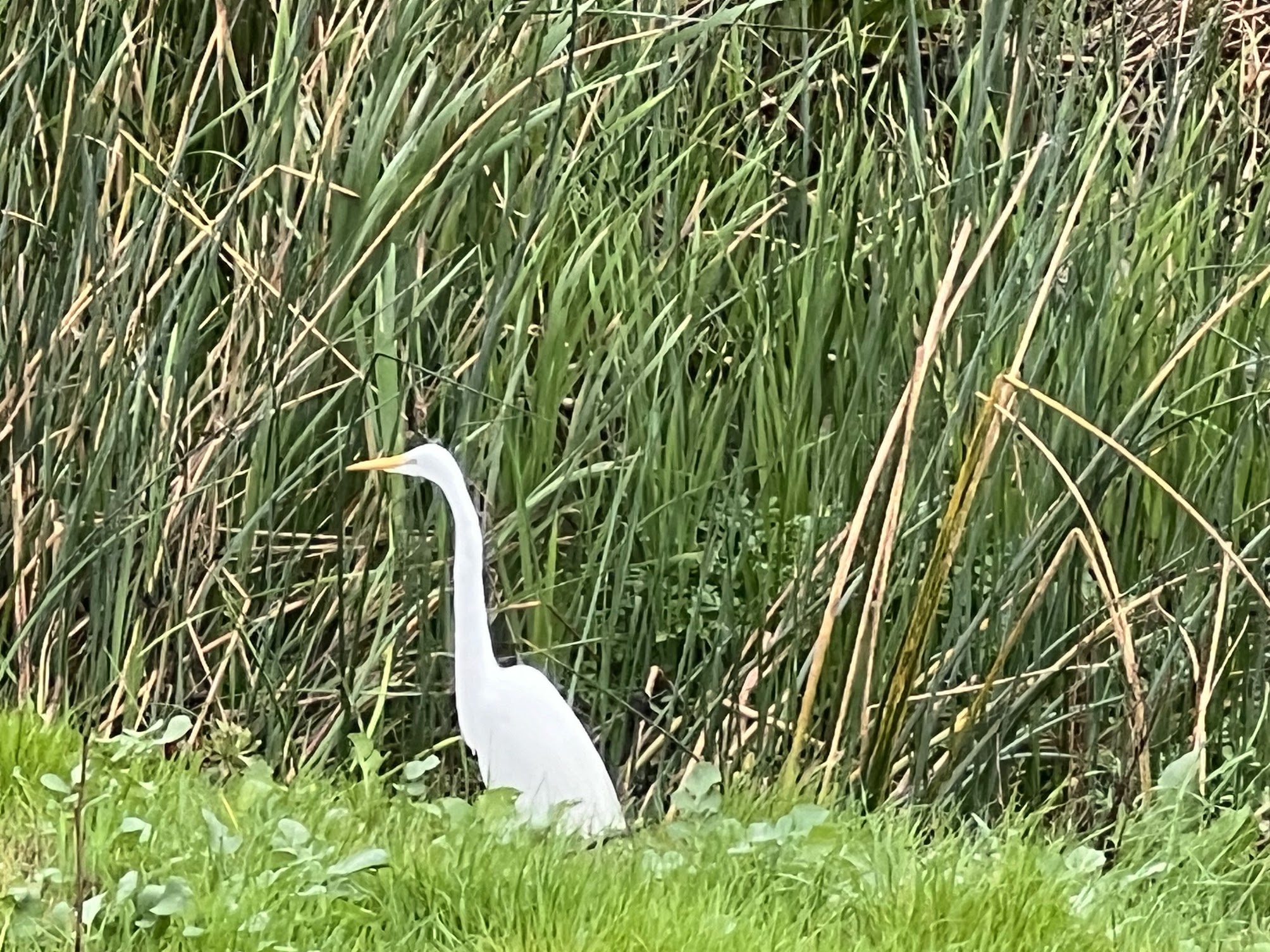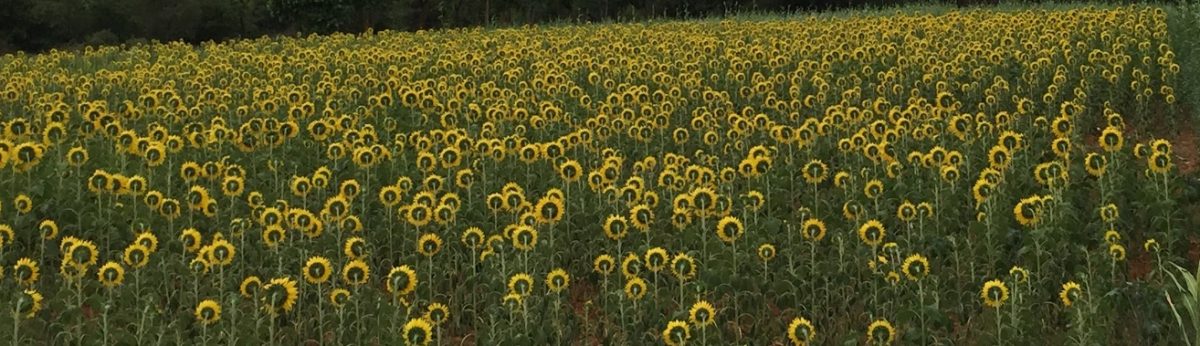
Peeking out after the rains

Novembers in the Bay Area are beautiful. It is the time when the world around us turns colorful – assures us that the seasons are turning. The fall colors, never as resplendent as in the East Coast, are inviting, and the son & I spent more minutes walking gleefully into crunchy leaves in the past few days than was necessary. We also gazed upwards into maple trees – the greens, yellows, reds and maroons like a beautiful artist’s palette in the world around us. 

Regardless of how we started out, we’d come back smiling widely and happy to be out in the world. The days drawing in closer also means that we had to really try to catch all of this in a narrow window before the skies draw the screens on them. That sense of urgency adds to the thrill. 

“She had always loved that time of year. The November evenings had a sweet taste of expectation, peace and silence.

And she loved most of all the quiet of her house when the rain fell softly outside.”

– Louisa May Alcott’s, Little Women.

The squirrels, deer, water rats – they all seem to be more at ease with the time-change than we are. Probably because they don’t peer at the clocks before heading out for a walk. They rise with the sun, and rest with the dark. There is a profound kind of philosophical simplicity there.

img_3794img_3793

Yesterday was Veteran’s Day and a holiday for schools. So, we decided to make a song-and-dance of it, and headed out for a walk after lunch. The rains had lashed down all morning – the first rains in November in the Bay Area always make me feel warm and special. By afternoon, the clouds were scuttling away, leaving a delicious moist, clean Earth behind. We walked around a lakeside – watching the pelicans, sanderlings, geese and ducks catch the sunshine after the rains too. 

There is a strange solidarity amongst creatures in that simple act. Peeking out after the rains.

img_3797

Multi-Generational Family Sagas

Multi-Generational Family Sagas

I read two family sagas this year spanning multiple generations, and several decades each. 

Both were highly acclaimed books, and written well. However, both of them suffered from meandering plots, and unnecessary diversions. Making them swollen at least by a few hundred pages. 

“It was a bit like listening to my father tell a story about some character in his village. He’d tell me all about this character, his relatives, his relative’s friends, and the marriages that made the whole thing impossible to untangle, and so much more. By the time he finished the story, you’d be wondering what the point of it was.” I said to my friends after finishing The Covenant of Water. 

I understand too how that can be a daunting task. The mother had seven siblings, the father nine. Their parents, I am not even sure, for I might have switched off in between.

The Covenant of Water – By Abraham Verghese

The writing is beautiful – lyrical, and his characters have endearing qualities to them – resilience, love, grace, flaws. Abraham Verghese is also a doctor by profession, and therefore the details of all the medical terms made for a depth even if the average reader does not need as much information (ex: how a particular surgery was being performed, or how the stent would have served better from a particular perspective) 

Set in Kerala, South India, the book spans the family of Big Ammachi (the matriarch of the family) between  1900 and 1977.

covenant_of_water

It would also have been nice to know a little bit more about the living conditions and life in that time period. For instance, there is a character, Uplift Master, who derives his purpose from getting the village around Perambil (the ancestral village in which the whole saga takes place) developed and to march into the twentieth century in style. Knowing the problems Uplift Master faced in terms of discrimination by the British Raj, or bribery would have been useful. 

Casteism is touched upon, the perils of life as a leper is well depicted. 

The plot itself could have been condensed. That apart, it is a good book.

Pachinko: Min Jin Lee

Pachinko is set in a similar time period in Japan(1910-1989). It outlines the generational problems existing between Koreans and Japanese. 

The story also spans multiple generations and revolves around the life of Sunja – a poor Korean who moves to the city with her husband, Baek Isak, and child from a previous tormented relationship.

pachinko

Reading about the effects of racism, poverty and war is never easy. Writing about them keeping the humanity of the characters intact is even harder. Min Jin Lee manages to do that with ease. It would have been nice to see how things were changing as the century progressed, but we do not see too much of it. 

The Tides of Humanity

The tides of humanity are apparent even if there are literally oceans separating the stories.

  • The Covenant of Water is set in Kerala, South India(1900-1977).
  • Pachinko is set in Japan(1910-1989)

They both deal with matriarchal characters (Big Ammachi alias Mariamma & Sunja) who do their very best by their kith and kin in difficult times. Providing love, trust, and hard work as tenets to a good life.

I think this line from Noa (Sunja’s firstborn) in Pachinko,  outlines the angst of humanity pretty well: 

Noa didn’t care about being Korean with anyone. He wanted to be, to be just himself, whatever that meant; he wanted to forget himself sometimes. She could not see his humanity, and Noa realized that this was what he wanted most of all; to be seen as human.

– Min Jin Lee, Pachinko

There is plenty to be learnt in life as a human, wherever one lives.

In the Covenant of Water, Philipose (Big Ammachi’s son) says it best:

“Ammachi, when I come to the end of a book and I look up, just four days have passed. But in that time I’ve lived through three generations and learned more about the world and about myself than I do during a year in school. Ahab, Queequeg, Ophelia, and other characters die on the page so that we might live better lives.”

Abraham Verghese, The Covenant of Water

Halloween’s Influence: Understanding Fear in Stories

“Arrgh!” 

“Gosh! Dude! You scared me!”, I said, leaping neatly into the path of a bewildered looking biker on the trail. His eyes grew wide, and he wobbled spectacularly before regaining his poise and balance, and then smirked. 

I suppose it was funny. A scrawny fellow like the son is hardly the sort of fellow to make their mothers leap out of trail paths with their scary stories. But it is nearing Halloween and we were discussing the themes of horror in their English Literature class. 

“What are the elements of a horror story?” I asked.

His answer made me jump, leap into biker’s path, earn b.look from biker as he regained balance and then a smirk for additional points etc. 

I must admit that when it came to quakey finds, horrors take the biscuit. Stephen King is all very well in the daytime, with soothing cups of tea, warm music etc. But otherwise, no thank you! I still prefer the glow of humor, the comforts of friendships and love, good old fashioned topics like (science, nature, history, psychology, travel), and mild adventure in my reading fare.

Horror in Literature

What made the class interesting was their discussion on not just horror, but how it affected the different parts of our brains. The amygdala (the small pea sized piece of our brain) is known for the fear response – that is the piece we share with reptiles, he went on to say and I listened in awe. Our prefrontal cortex is where we process what the amygdala sends us, to appropriate a response. 

“I think you should research it up a bit more before quoting me though!” he said, giving me a stern look.

“What if I wrote that you asked me to research it, so folks know it isn’t the Gospel of NeuroScience instead?” I said, rolling my eyes, and he laughed at that and agreed. So here goes, folks: please research this piece on your own. 

How interesting to sit in a class, watching a 90’s cartoon show about Courage, The Cowardly Dog in the Chicken From Outer Space. 

Then to analyze how the different parts of the brain were affected by the fear response? I can’t think of a better way to spend a Wednesday afternoon. I would have loved to be a fly on the wall in that class (risking a horrified teenage set of kids screeching and swatting at flies notwithstanding), and I was full of admiration for their teacher who had taken the trouble to come up with a lesson like that close to Halloween.

Boggarts & Dementors

The whole conversation on fears and the horrors of our psyche reminded me of another conversation from a few days ago on boggarts and what shape each of ours would take. Harry Potter and the Prisoner of Azkaban has always been one of my favorite books – it addresses so many themes – how not to judge someone based on first impressions, how the truth can be life-altering, the importance of friendships, conscience, etc etc. But this book specifically addresses fear and our worst experiences in the form of boggarts and dementors.

This YouTube video on the SuperCarlinBrothers Channel on Why It Is Wise to Fear Fear is an amazing one in this context:

Harry’s WORST FEAR Explained | Harry Potter Film Theory

Halloween is the one time we acknowledge fear as a society. It also comes with a good antidote to fear: the ability to allow for whimsy and creatively live our lives.

We turned around after our walk, and the biker, much fortified after his own little fright, gave us a wan smile as he made off in the opposite direction too.

The Shape of Ideas: Creativity Unveiled

“What is nice is knowing that there is a fount of ideas – and even if many ideas seem taken, there is always a variation in the workings of the human brain to make it different.” 

“It is astounding – the volume of work produced.”

The husband and I were taking an evening walk discussing creativity, imagination and the origin of ideas. He was talking about one of the musical maestros of Tamil cinema  and their seemingly eternal bouts of inspiration. 

“I wonder if they worry about it running out on them, though.” I said, looking contemplative as I admired nature’s work around me. No lack of inspiration there! Every tree a different shape, every plant a different marvel, every soul a different temperament. 

“I suppose they would have the same trepidation or initial hurdles when they set out to create, and then obviously their levels of genius means that the ideas that do come to them are a class apart, but I suppose they must have their moments of doubt. “ said the husband looking thoughtful.

I hmm-ed at this. I do feel that just like the intelligence factor, there is an ingenuity factor (You have what you have and then those who work with it, sit with their abilities, nourish it, develop it, and try to wrangle it into industry reap the benefits). 

When I saw this book, The Shape of Ideas – An illustrated exploration of creativity –  by Grant Snider , in the library, I picked it up. Partly because I expected it to be whimsical but also because the origin and nature of ideas has always intrigued me.

The Shape of Ideas: An Illustrated Exploration of Creativity: Snider, Grant: 9781419723179: Amazon.com

51kUrTbxX0L._SY522_

How many of us have wondered about the origin of ideas? It is marvelous when we are graced with an idea. Especially one bursting with imagination, but for all the good and bad ideas humanity has come up with, we don’t really know the origin or the process to generate more of them. It is almost as if the unknown is bordering on the magical.  

Sometimes, we need a chock full of ideas to pull out a good one. Sometimes, it is the joy of an do-nothing day that gives you an idea that makes you smile.

This book is a marvelous read – it is full of whimsical ideas, endearing comic work, and neatly classifies the different areas that the shape of ideas tread: Inspiration, Perspiration, Improvisation , Aspiration, Contemplation, Exploration, Daily Frustration,Imitation, Desperation and Pure Elation.

As an example of the kind of art you can expect to see in the book – here is one on Drawing the Moon 

img_3666

We have all heard or understood various versions of the inspiration vs perspiration speech from our teachers, mentors and parents. 

On some level, we understand that being smart or talented or intelligent means nothing unless you are also granted opportunity, have perseverance and cultivate intellectual development.

But how do each of us use all of this to create a rich inner life that translates to one of beauty and enriches the life of those around us? 

“The most regretful people on Earth are those who felt their own creative power restive and uprising, and gave to it neither time nor power.” – Mary Oliver

Read Also: What is Your Friend

Numinous Navarathris

Navarathri

The Navarathri season is behind us. That is to say, the garba dances, the spontaneous bursting into carnatic music, classical dancers getting their Vijayadashami classes, the crowded shamiyana’s with pujo crowds, the golu hoppers, and the first wave of festive wear for the fall season is all behind us. The statues that got to come out and get put on display are all wrapped up, and put away in their cozy confines for another year.

There are many golu aspirants who raise the bar every time. One particular household we enjoy has a side-show gleaming with inventive playfulness. In every golu display there are stories jostling on the orderly steps waiting to be told, but skipped over – possibly waiting for the next year. For there is too much going on for dolls and their stories to be told and listened to. I can imagine and appreciate the whimsical nature of life wanting to be preserved as tradition. Then again, for a country such as India, there is rarely the time for slow pursuits such as mythical story telling sessions over long evenings these days. What was earmarked for that, has morphed into rushed sessions, oodles of food, music and dance bursting at every corner, and like life itself the dolls with the good stories sit quietly – watching, waiting their turn. Ready to amuse, educate and entertain if asked, but purely on stand-by.

img_3393

The Golu Tradition

Golu – as the tradition of the display of dolls is known, is rumored to have started in the 14th Century during the height of the Vijayanagara empire. The royal families of the era particularly around the Thanjavur region were taken in by the opportunity to display their dolls, host gatherings, etc. Slowly, they had musicians and dancers from the local temples over for performances, and it became a time when children were initiated into the Arts. Vijayadashami  became a day of artistic beginnings and blessings. 

In many of the homes we visit, we hear stories of the dolls being passed down from generation to generation. One friend told me that her vegetable set came from her great grandmother – handed down to her grandmother, who brought it to the US in the 60’s, and then passed it to her mother and how she plans to give it to her own daughter one day. I peered at the misshapen vegetables and felt a stirring for why the tradition appeals to so many. There were no perfectly preserved, larger models there. The vegetables had warped surfaces much like the farmers of the time might have produced them, and an artist had rendered them with the best clays and paints available to them. The greens were greener than the vegetables could achieve, and the reds made them look like they were blushing. Very fetching.

img_3493

Why tradition settled on 9 days for Navarathri, I am not sure. But I presume it had something to do with the agricultural cycles of the time. A lull in the work periods between harvest and planting cycles when the plants were at their strongest, and therefore a time for a bit of fun.

What I Wish It Could Be

As a child, I longed to take the golu dolls down from their shelves to play with. But of course, we weren’t allowed to do so. My own grandmother had given them to my mother. It seemed so pointless to have this many dolls all sitting there, waiting to be played with, but out of reach. This many stories waiting to be enacted. We were only ever to touch them the day they were taken out, or the day they were wrapped back in old newspaper and stowed away. A touch of pathos about the way they’d have to nestle back into the wooden crates in the old garden shed about them.

It has been a dear wish of mine to one day make a puppet based theatrical show of this. You know – properly make the dolls come alive, hop off their little shelves, and have them enact their stories. Vishnu’s avatars don’t need another year of standing there – they need to be out there telling you how much one ought to be doing in the face of evil vying and holding power. So what if you have to impersonate half a lion or a fish or turtle for noble purposes? That would be an apt election-time story wouldn’t it?

Make a funny skit or two about how the demon Ghatodgajjan ate his way through the season, or the din to wake Ravana’s brother, Kumbhakarna from his 6-month slumber to fight the war in the Ramayana. Enact the wars with paper mache swords, and bubblegum shaped missiles that could be eaten afterward. That would be cool.

A silly song about the cricket playing Ganesha statues maybe?

Wrap the session with all the Lakshmis being totally brave, daring, intelligent and charming. That would be brilliant.

Exploring Happiness: Is It in Our Genes?

In what was an intriguing chat with the son last evening, we poked around the ethics of genetic modification. Apparently, that had been an area of discussion in their classroom, and the son was keen – the novelty of a discussion with multiple viewpoints at that age is amazing. I smiled and listened to him talk offering a question here, a hum there, an insight elsewhere.

“What do you want to do with human-beings if we are smarter?” I asked him.

“We could fly.”

“Cool! But then what?”

I took a deep breath and said as casually as I could. “Everyone wants to be smarter, for things to come more easily to them. So we wouldn’t have to spend so much time figuring things out. But – the thing is, if everything came easily, we would not know what to do with all the time we have on our hands. What do they say? An empty mind is a devil’s workshop? I don’t know – I think it could lead to more mental health issues – what do you think?”

He pondered this for a while, and said it was an intriguing thought. 

Who Survives?

It reminded me of another chat the husband and I had a few months ago – on the larger theme of the future of humanity. With smarter, faster, stronger, what would happen to humans? The husband took a moment to gather his thoughts, and said, “Well – it will come back to good old basics then, wouldn’t it? Survival of the fittest. Those humans who can learn to be peaceful with themselves will ultimately win out – that is the strain that will survive.”

I was impressed – yes, no matter what we had, it ultimately came down to temperament, attitude, and the ability to be happy, didn’t it?

Generosity by Richard Powers: The Happiness Gene

Incidentally the book I am currently reading: Generosity by Richard Powers, talks about a variation of this: The Happiness Gene.

The story tries to figure out the reason for Thassa’s happiness. Thassadit Amswar is a refugee who has fled the Algiers region. Her brother is still under house arrest in a totalitarian regime, her parents are dead after years in which they were stuck in the midst of a civil war that raged around them, and any which way you look at it, she should be morose, sad – not chirpy, cheerful, and full of light.

The whole set up reminded me of one of Rumi’s sayings that have been making its way around the instagram world: something to the effect of:

When the world around you is dark, you could very well be the light.

Rumi

In any case, somehow Thassa’s ability to be happy attracts attention – first from local friends, then a policeman, a local news report diagnoses her as having ‘Hyperthymia’ – a condition of overwhelming happiness, and goes on to attract those who want to auction and buy her eggs, decode her DNA, figure out the happiness gene. She finds herself unmoored by how people feel bad because she is happy, and having to navigate the horrors of fame.

In Essence

  • Is there a genetic component to being happy?
  • If so, can that be picked and chosen for our offspring in the not-so-distant future?
  • What issues would that create for mankind? For just as sure as we are of creating solutions, so too can we be sure for creating problems for ourselves, isn’t it?

Stories Meant for the King

The husband was narrating life in his humble abode as a child to the children. “My ‘room’ ” he said, picking the quotes like the children do, “was under the steel cot. I was the Hero there. If my brother decided to join – then We Were Heroes There, or We Were Devils There. But it was all good fun.’ 

The children guffawed with laughter. This narrative was a familiar one, and I smiled. I remembered those steel cots. Appalling things they were – with steel rods painted dark green with apparently no aesthetic appeal. They were sturdy – I’d grant you that. They were the mainstay in almost every middle class home in India in the 80’s. As children, we had stress tested them by leaping on to them from cliffs on high cupboards, using them as rafts from oceans of swirling creatures below etc, and they did not break. Steel, you know? 

How we carve out space for ourselves when there isn’t any can be a problem. But children seem to find solutions to this problem in the most creative manners possible. 

The husband’s abode growing up was a small house – children did not have separate rooms. “Just the reality!” he shrugged when the children looked at him surprised. 

“Under the bed is a spacious place for a small boy, you know?” he said.

The daughter and son exchanged glances.

The daughter said, “We love having our room!”

“Decorated just the way we want too!” said the son.

“Our room under the bed was too – we had cobwebs in the east-facing courtyards, and well, lizards on the south-facing side. Beat that!” said the husband to his awed audience. 

Raja Kadhais : Stories meant for the King

The husband was reminiscing about his ‘room’ under the steel cot, “In there we listened to all sorts of ‘Tea’ (teenage slang for hot-off-the-stove spicy news). Things we should not be listening to. Things that we should, we ignored of course. Your grandmother was particularly adept at noticing when one ear would dance for the juicy tales. I tell you, she could see the ears squirm, and she would send us out to play  – “This isn’t for you – Raja Kadhai. (Meaning stories meant for the King )” she’d say. Well, she didn’t receive the memo about my kingdom under the bed I suppose! Anyway, those Raja Kadhais were the best!” said the husband grinning from ear to ear. 

I always like the way the daughter finds her space wherever we travel. In the cramped space of a car, she’d make her ‘room’. In a shared hotel room, she’d put up a sheet like a tent and make her ‘castle’. Her ‘room’ is not always a room, but she manages to make it so. Her space.

When AirPods Snuffed out Stories Meant for the King

That day, though, I was annoyed at her for not listening in. Here we were discussing things that would’ve been amazing for her to know, and she had plugged her ears in with noise-canceling headphones, pulled a blanket in the back-seat and gone on to tune us all out. Raja Kadhais, Tea – nothing. 

“Is this how life is going to be with these blasted devices? In one room, yet so far away?”I ranted to the husband later.  

“Leave her be! She is a teenager, and teenagers require space.” he said, taking his daughter’s side (as usual).

I rolled my eyes at this. “Isn’t receiving this kind of input critical while growing up. How many stories we’d heard in this manner? Not explicitly told to us, but enough to give us an idea of the world around us.” 

“They’ll find ways to get it – social media?”

“Instead of stories from adults in hushed tones?” 

Imagine my surprise then when I saw these Japanese headphones that promised to pop the bubble of silence : Popping the bubble of noise canceling headphones. These headphones are supposed to let background noise in, so we can still receive sensory information.

I admit, I rolled my eyes like a teenager at this. Really – all this progress. I wonder when we reach a point of diminishing returns and have to return to the tried and tested good old fashioned ways. You know? Go back to fiddling the knob on the rusty old radio with one channel to tune into.

https://www.newyorker.com/culture/infinite-scroll/popping-the-bubble-of-noise-cancelling-headphones

Which of the current technology trends do you think will bear the test of time? I thought noise-canceling headphones were the thing – but apparently not.

Books that Challenge Perception

A Stranger to Ourselves  – Unsettled Minds and the Stories that Make Us – by Rachel Aviv. 

I opened the door and welcomed the girls in. I had clutched in my hands the book , A Stranger to Ourselves  – Unsettled Minds and the Stories that Make Us – by Rachel Aviv. 

The daughter and her friend had completely different greetings – but the tones were likable enough, and I smiled broadly.

“So, whatchu reading now?”

“Ooh! That sounds heavy Aunty!” 

I told them. 

This book outlines the lives of six different people across different cultures and timelines, and their struggle with mental health.

Given all of our advances in health, mental health still has a long way to go. The unseen frontiers of the power of our minds, the terrifying depths to which it can plumb us, the giddying heights to which it can make us soar, the ruts from which no tow truck could extricate us – they are all true.

We chatted about this-and-that and other book recommendations.

“Oh Aunty! You should totally read Piranesi!” said the daughter’s friend, her eyes widening when she realized that I’d taken her suggestion and read a teenage angst novel. “You like mythology – well, I don’t want to give too much away – but you’ll like it.”

Piranesi – By Suzanna Clark

Piranesi is a book that I found vague and disconcerting in the beginning. Then, a book I wondered about long after I’d finished reading it. What did it mean exactly? The premise is that a person is stuck in an alternate reality – a large palace-like place with corridors lined with statues, flooding basements where the ocean tides creep in, and large, open spaces in which to ponder life about. But that is it. There are no other creatures – save a visiting raven or two – and one other person called the ‘Other’.

How to make sense of a reality like that?

I read these two books together a few months earlier. I had them jotted down somewhere to be written about. Given the flurry of posts and things to write about, I thought I would leave these out.

But I found that I couldn’t.

For these books both lodged themselves for different reasons. 

Piranesi makes one think of all the palaces we construct in our minds – which ones are escapable from? Which ones serve as prisons?

Stranger to Ourselves makes one wonder about what a narrow path normalcy is. 

“I think, therefore I am.”

– Rene Descartes

The next time I saw the girls together, I asked them what they thought of the books, and we went on to have an inspired discussion on how our thoughts shape our reality and so on.

Books References:

  • Piranesi – Suzanne Clark &
  • Strangers to ourselves – Unsettled Minds and the Stories that make us – Rachel Aviv

Hum of Chitter-Chatter

I’d had a trying sort of morning – my attempts at speaking had come to nought. I was speaking English, folks around me were not. I asked for chips, they told me it was several hours for nightfall. I asked for honey, I was given a shrug and a look reserved for the village fool. I left the chips and honey – life is great without chips and honey, thank you.

So, I veered off civilization and went off to moon in the woods.

It isn’t often that we stop to revel in the orchestras of everyday life. That morning I did. When I did, I found myself transported. I had rarely seen this many hummingbirds together in one place and the noises they were making chittering together was music. What were they saying to one another? Were they discussing plans for the day? 

I smiled and reluctantly moved on – human beings had meetings of their own didn’t they? 

A few days later, I stopped listening to the chatter of the crickets starting up in the evening, even as the sun dipped into the horizon bathing the skies in robes of pink and orange. The deer grazing glowed, the blackbirds fluttered while singing, but the crickets were the loudest of them all. Enough to make you stop and wonder what they must all be saying to one another.

I exchanged glances with the son who’s come on a stroll with me, and we headed back musing.

Later we had a frenzy of celebrations planned – gatherings and people. I stopped to listen to the chatter around me. It was a feeling – not voices that I heard. It was a festive occasion, so all I heard was a pleasant hum – interest, friendship, camaraderie, laughter. 

What is it about communication that enthralls us so much? I remember reading a short story by Louisa May Alcott a while  ago in which a young girl acquired the ability to understand animals and birds for a short period of time. She is baffled to realize that they can actually communicate amongst themselves as well as amongst other species. A woodpecker could talk to a squirrel and understand each other perfectly. So, they could unite and we wouldn’t have a clue.

It was a beautiful touching story, for it helped me laugh once again at our own follies. It would serve us right if that was truly the case – too smart for our own good, but all the time being pitied by the wiser creatures of the Earth. Between all the languages we’ve managed to create as humans, it is truly humbling if that were the case. (No mishaps with honey and chips I assume.) 

It also made me stop and wonder what animals hear when they us jabbering. Many times on my walks, I come across people talking shop – serious talks on finance, technology trends (I live in the Bay Area – it is a way of life – you can’t throw a stone in any which direction without someone yelping ‘AI’ – whether as an expletive or not), movies, music, other people, offices, sports, etc.

What must they make of it? I wonder.

Nyctinasty Flowers’ Lessons

I could barely stay indoors. You see? The day had started off with a mild drizzle. After what felt like months of sunshine, a little bit of moisture felt amazing. I stood outside peering up at the clouds – in itself a rarity now given how parched things get during Californian summers in the Bay Area. Even with summer flowers blooming and vegetable gardens flourishing, I yearn for the simple pleasures of marvelous sunsets, clouds, a pattering of rain, some breeze.

That is perhaps one of the things I miss most about the Nilgiris – the western ghats in South India where the rain drops and eucalytpus provided the backdrop for magic and mysticism. The rains, the clouds, the winds – how in one day you can experience so many different climes and you have to be prepared for it all, and still go about your day.

Nature is Transformative

That evening I said, “Well – come on then! “  hustling everyone out to see the glorious sunset. The clouds had scattered during the course of the day, but there were enough of them still there –  enough to provide crepuscular glory with the rays of the setting sun. Some clouds looked like an artists reluctant brush stroke jostling right alongside the weightier ones. How every evening a different painting is rolled out to us continues to be a source of wonder.

img_3068

Art is transformative – so is nature.

It transforms ordinary days into extraordinary ones.

It assures you that normal is numinous.

Nyctinasty flowers

That evening, I took in the deer grazing near the river banks, the rising full-moon swollen, resplendent and beautiful against the setting sun orangish-red and bright. I don’t have to be a naturalist to know that the birds felt it, the deer felt it, the frisky fox felt it, the fish in the river felt it, the  flowers felt it. I stopped to admire everything – especially those that are classified as nyctinasty flowers :nyctinasty flowers like the evening primroses or gardenias  close up for the night. They show you the importance of closing and resting in order to bloom and spready one’s beauty for the next day.

If ever there is an appointment to keep, it is with nature in those moments in the golden hour when all the world is settling in for a quieter pace.

img_3069