Do We Belong On Earth?

I envy these people who can quote things in passing with confidence. I have not that kind of eidetic memory. But I remember reading somewhere a few years ago that one of those great philosophers of yore, Socrates or Plato or one of their ilk, said something to the effect of the worst thing humankind has ever thought of was the concept of countries. I heartily agree. For what is a country boundary if not a line in the sand?

I was in a taxi a few years ago heading from somewhere to somewhere in the madness of Bay Area’s evening traffic. The driver looked at me in the rear view mirror and asked me if I came from India or Pakistan.

He then went on to say that he had just dropped someone who came from Pakistan. He loved the Biriyanis in the Indian and Pakistani restaurants. What delightful spices, he said and the conversation moved towards the role of spices in the world economy. He taught Economics in a small college in Greece before the country collapsed and he managed to move to the United States and he now drove taxis for a living.

While there are multiple things to spin out from this little interaction, I would like to draw the attention to a little thing said almost in passing. He thought India and Pakistan were one and the same, and I have often experienced the same sentiment and kinship whenever far away from the Indian subcontinent.

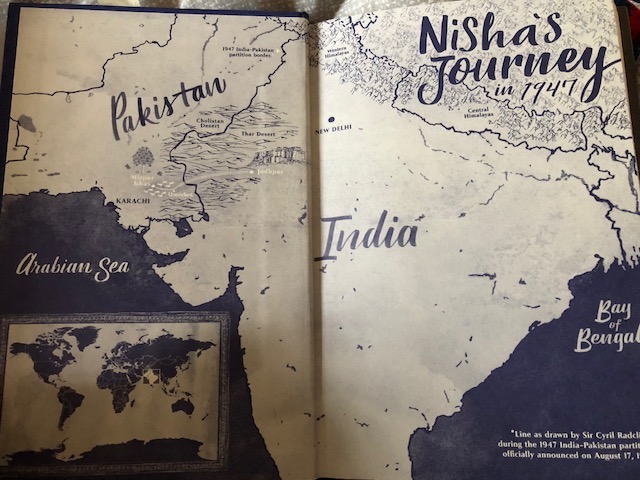
IMG_0280
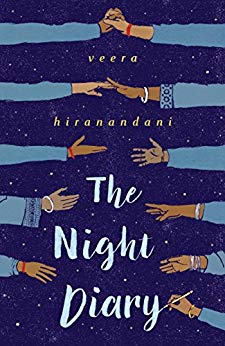
Image from The Night Diary – By Veera Hiranandani

It has always been something refreshing to note – especially given the continuing tensions in the region ever since the partition in 1947. It amuses me and gives me hope when I see how Pakistanis and Indians bond over a common culture, similar culinary traditions etc outside the Asian subcontinent, but within the sub continent the tensions continue to simmer.

A friend had recommended Veera Hiranandani’s book, the Night Diary. One of the largest human migrations in Human History at the time took place during the Indian independence from the British Raj. The India-Pakistan segregation is fraught with gore, bloodshed and the unfathomable rivalry that can be brought about by politically divisive acts.

night_diary

The book itself is lucidly narrated – a twelve year old introverted child, Nisha, writes in her diary to her late mother as often as she can. She is lovingly cared for by her father, their paternal grandmother who lives with them and the cook, Kazi, who has been with the family for a long time. Her best playmate is her twin brother Amil.The mother, who passed away when the children were young, was Muslim, and the father is Hindu. It is heart-rending to read the way, the twins Nisha and Amil puzzle over what would have been the case had their mother been alive. Would they have to leave her and go to the Indian side?

“I had never wondered about being safe before. I just thought I was.”
― Veera Hiranandani, The Night Diary

I thrust the book in my mother’s hands to read, for I knew she would appreciate how cooking forms the bond between Nisha and their cook, Kazi.

Image from Wikipedia on Indian Spices:

Spices_in_an_Indian_market
This image was originally posted to Flickr by judepics at https://www.flickr.com/photos/43546466@N00/409841087. It was reviewed on by FlickreviewR and was confirmed to be licensed under the terms of the cc-by-2.0.

The spices as they pass through the hands of Kazi and how Nisha derives a sense of creation and wholeness is captured as only one who loves the art of creation can. The feel of the dals and the peppers in the hands, the smell of the saffron in the rice and the whole time in the background a tension is brewing, a rift simmering when one night it is upon them – the pressure bursts, and the little family has to flee.

“I needed all the feelings to stop boiling like a pot of dal and be cool enough for me to taste them.”
― Veera Hiranandani, The Night Diary

Millions of people fleeing Pakistan, and millions making it into Pakistan in the opposite direction. Mobs ready to inflict violence at the slightest opportunity.

War is meaningless, and it is particularly unfair to the children.

14 million people were displaced in those few months of turmoil and over 2 million killed during the partition. One line in the sand that suddenly determined belonging or the lack of it.

One would think one learns from these events, but look at the numbers.

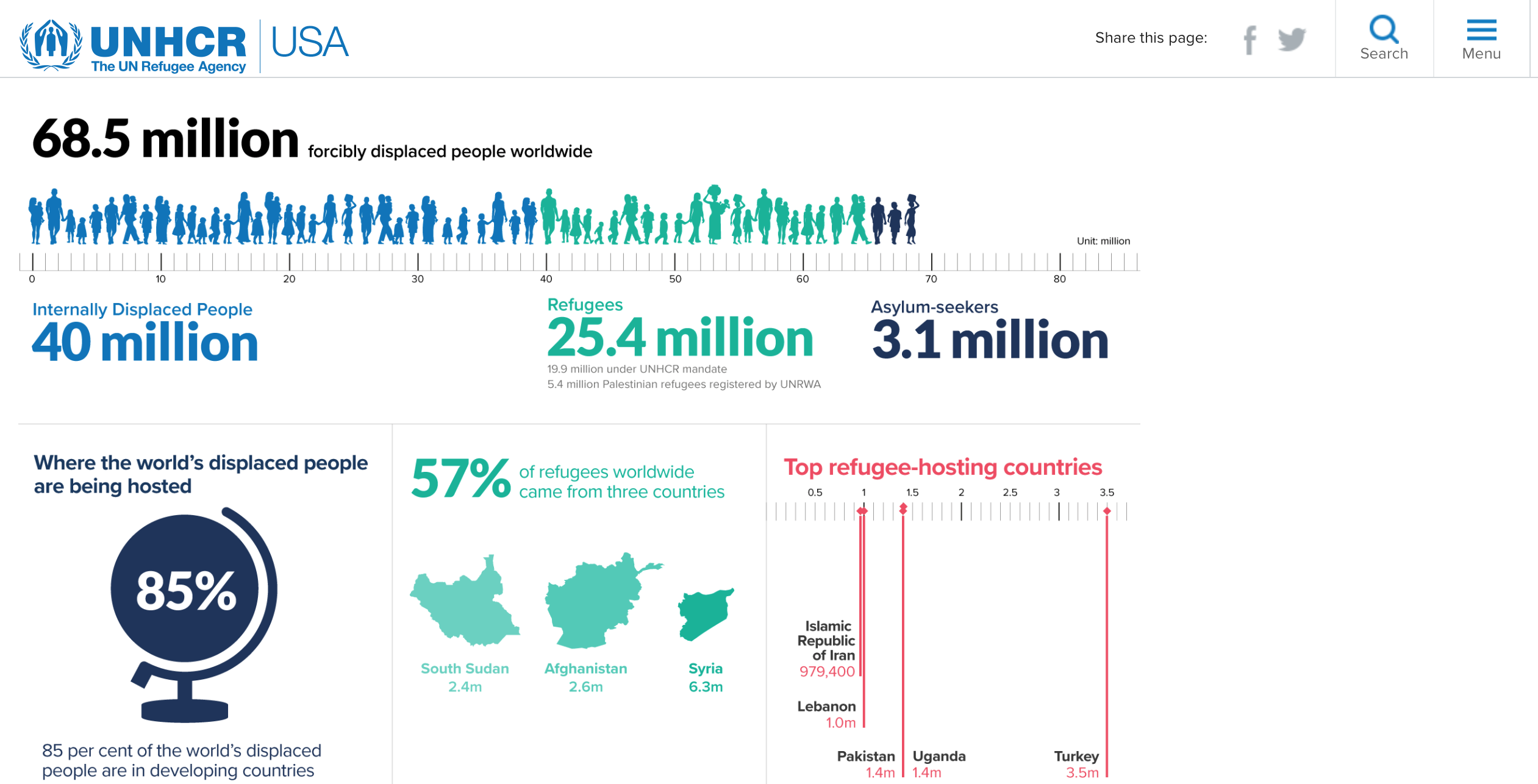
In the world today, there are currently more refugees than ever before. The rise of populism and nationalism means that the situation is deteriorating everyday. As of Jun 2018, an unprecedented 68.5 million people around the world had been forced from their homes. Among them are nearly 25.4 million refugees, over half of whom are under the age of 18. There are also 10 million stateless people who have been denied a nationality and access to basic rights such as education, healthcare, employment and freedom of movement.

Screen Shot 2018-09-28 at 10.41.49 AM
Screenshot from http://www.unhcr.org/en-us/figures-at-a-glance.html – Jun 2018 figures

Source: UN Refugee Agency

We belong on Earth, do we not?

Fiction Inspire Non-Fiction?

While reading a good piece of fiction, I often wonder about the inspiration behind the writing.  Dune, for example, is a book that immediately lets you know the author must be a personality of prodigious learning. The ecological angle, I was delighted to read in the note by his son, had its origins in Frank Herbert’s work for an an Op-Ed on the Shifting Sands in Oregon. The government was toying with the idea of planting grasses that could help with stopping the sands from shifting and collapsing onto roads and rivers. 

Dune-Frank_Herbert_(1965)_First_edition

Quote: 

In 1957, Dad flew to the Oregon coast to write a magazine article about a US department and Agriculture project there, in which the government had successfully planted poverty grasses on the crests of sand dunes, to keep them from inundating highways. He intended to call the article “They stopped the Moving Sands” but soon realized that he had much bigger story on his hands

Dune is a modern-day conglomeration of familiar myths, a tale in which great sandworts guard a precious treasure of melange, the geriatric spice that represent, among other things, the finite resource of oil. The planet Arrakis features immense, ferocious worms that are like dragons of lore, with “great teeth” and a “bellows breath of cinnamon”.

Planetology is a marvelous word for taking in the intricacies of a life sustaining planet (Dune makes reference to planetologists for figuring out survival strategies),  and the effects of our consumption of finite resources. 

I would love to study Planetology.We know that we are stretching the Earth’s resources – National Geographic came up with a simple number: we are currently using 1.71 times Earth’s resources every year and it is increasing. The effects are everywhere.

A friend and I were discussing the lack of tree cover in a country like Iceland for instance. Blessed with enormous natural beauty, the lack of tree cover is quite unnerving. Everywhere you turn is green because it rains a lot, but there are no trees. Apparently, excessive logging first got rid of them, and replanting did not take root as intended for sheep grazing ate away the saplings and the seedlings before they had a chance to sprout. 

horse

This too is not a new phenomenon. World over there are examples of over-grazing that edged out forest cover( Ireland, England, Mauritius are all examples of how our lifestyles has altered the ecosystem drastically). In the book Golden Bats & Pink Pigeons by Gerald Durrell, the author is on a mission to collect endangered species from Mauritius so he can bring them back to the Conservation Center for breeding and releasing into the wild. He writes about Round Island and how the simple act of introducing goats, sheep and rabbits into the ecosystem by humans has eroded the tree cover irreparably. 

IMG_0210
From Golden Bats & Pink Pigeons by Gerald Durrell – Round Island

While reading this book, I realized the inspiration behind his fiction book, Mockery Bird. This hilarious fiction book, Mockery Bird – was based on a story doing the rounds in Mauritius surrounding the Dodo bird and the loss of certain trees. The knowledge gave me immense pleasure. How lovely to see the inspirations behind good fiction.


Just as fiction draws its inspiration from reality, reality too can draw its inspiration from fiction.

In the Dune universe, the planetologist, Kynes, shares the visionary dreams for the planet Arrakis – a vision outlining a glorious self sustaining future for the planet that will take three or maybe four generations to come to fruition. We can derive our inspiration from fiction and set ourselves on a similar path working towards setting aside half the planet for forest cover to reverse global warming, sustenance etc. (News item : here)


A Planet of Wizards & Prophets

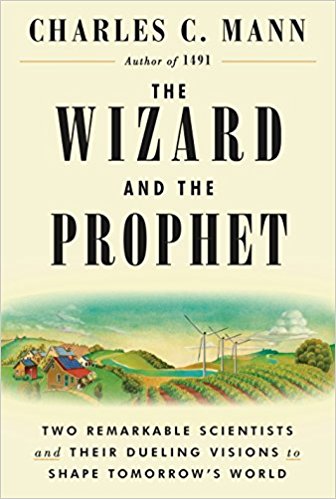
I was reading The Wizard & The Prophet by Charles E Mann on a crowded train one evening, and a pair of young girls shared the seat with me. The name of the book is a highly appealing one especially to little girls, and it piqued their interest too.

One of them was probably in the 1st or 2nd grade, and showed a precocious interest in my reading material. Her curly hair was made into numerous tiny plaits, and her eyes shone with a curiosity that would make her teacher’s heart sing. Her mother’s heart though, quailed. She said, “Now…now don’t bother the nice lady there, let her get on with it. “ I looked up at the mother, and told her that I love reading to children, and though this particular book sounds pedantic when read to children, I did it anyway. It taught me never to under-estimate children – the child soaked in everything, and asked the most engaging questions.

wiz_prop

I saw a certain amount of editing would need to be done if I were to sustain the interest of a 6 year old. The book is a non-fiction tome going strong at 678 pages – pages richly adorned with facts and figures, and life histories of all the people involved. I had already been through about 300 pages, so I knew the interesting bits, I knew the bits where a child’s wonder can be kindled. For the rest of the hour, I told her about wheat strains, water tables, and climate change.

The Wizard & The Prophet is a marvelous title because it encapsulates the polarity of our thinking so beautifully, and in this sense, they are both required for us to thrive. The Wizard in the book is Norman Borlaug, who is credited with leading the way for GMO strains of wheat production that along with stalwarts in the field such as Dr M.S. Swaminathan saved billions of people from hunger and starvation. 

William Vogt is the Prophet, who during his study in the Mexican coastal areas observed how we are stretching our natural resources and the effects it has on things as far-flung as bird migratory patterns and climate. In many ways, he is the one who set up the first bells of Global warming and Climate Change. He is the Prophet.

Do you believe in Climate Change? asked the girl wide-eyed.

I told her I did not need to believe Climate Change at all, and the experiments were here to show me how we are changing the air around us, and I showed her the pages outlining the experiment where humanity managed to pin down Carbon Dioxide as the problem-maker in the first place. 

I cannot deny that global warming and climate change has always intrigued me. Carbon Dioxide only accounts for 0.03 % of the atmospheric gases, a remarkably small proportion for it to be causing global warming on such a scale as to change weather patters and cause severe climatic catastrophes, is it not? 

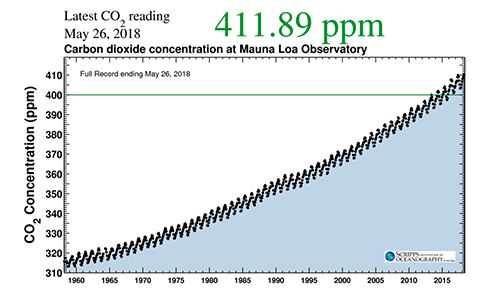
In The Wizard & The Prophet, the author outlines the experiments used in determining that it is indeed carbon dioxide that is the culprit and how our industries are directly contributing to its increase. The correlation between carbon-dioxide levels increasing and global warming followed. I found it a fascinating experiment and one that school laboratories can demonstrate I hope. 

Keeling_Curve
By Scrippsnews [CC BY-SA 4.0  (https://creativecommons.org/licenses/by-sa/4.0)%5D, from Wikimedia Commons
https://en.wikipedia.org/wiki/Keeling_Curve

(During the spring, there are dips because the Arctic tundra sprouts plant life and plants absorb Carbon Dioxide from the atmosphere. )

Looking at the worried expression in the child’s face, I asked her, Did she know what we can do to reduce the carbon dioxide?

Trees? she said, and I nodded yes.

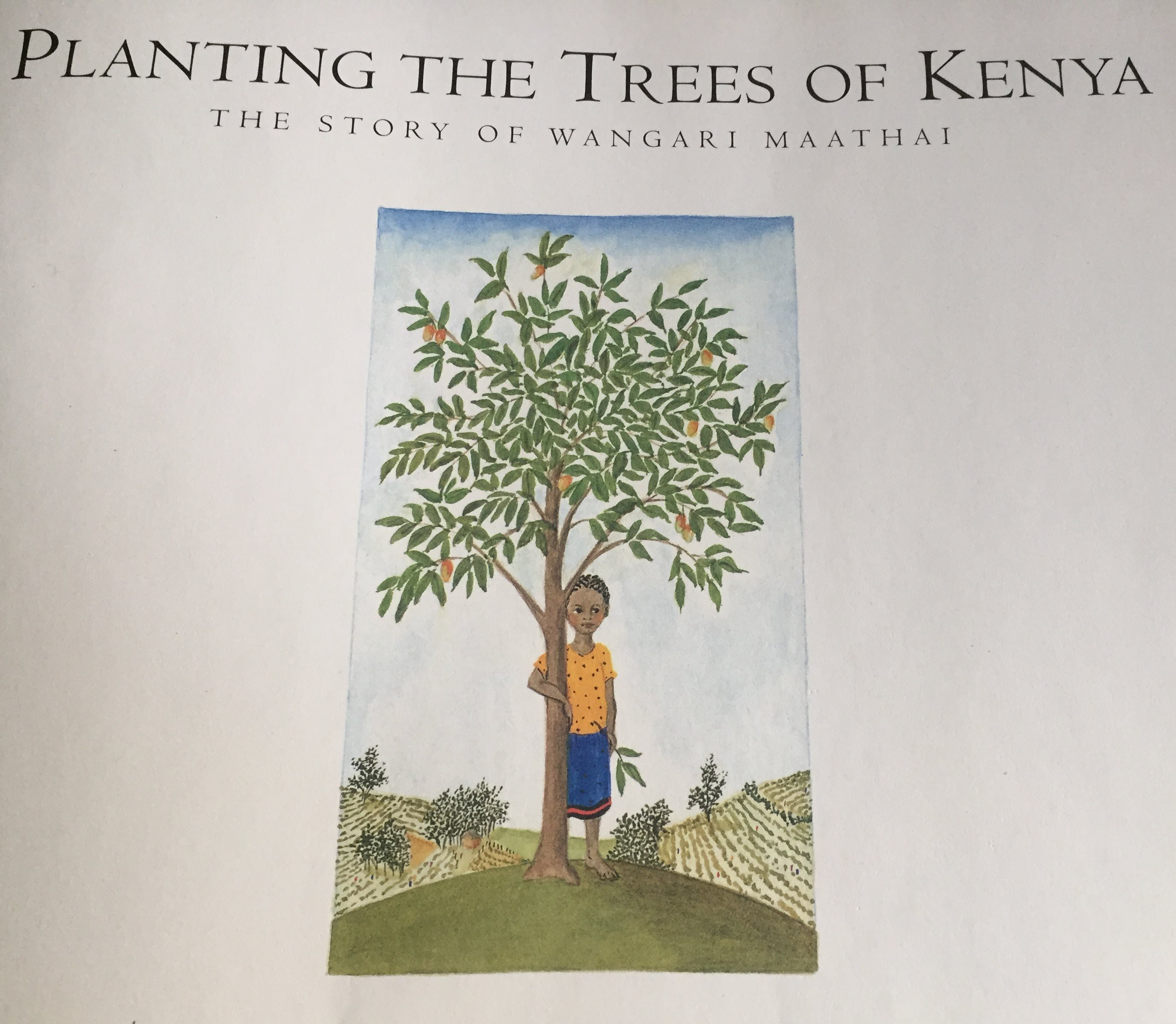
I went on to tell her about the excellent example set forth for us by the Kenyans in The Green Belt movement, and how a person called Dr Wangari Maathai helped the Kenyans plant millions of trees over the past 30 years.

Planting the Trees of Kenya, by Claire A Nivola, The Story of Wangari Maathai

Planting the trees of Kenya - Wangari Maathai
Planting the trees of Kenya – Wangari Maathai

She glowed at the simple solution thought of by Dr Wangari Maathai, but her stop had come, and she stepped off the train with her mother who was now listening to her daughter talk to her about The Wizard & The Prophet.

As I reflected on the chat with her, I realized that the narrative around Climate change and Global warming is quite confusing.  It is no wonder that the child framed her question as – “Do you believe in Climate Change?” The prophets in this case are doing their job, but the question of : “How does one realize when an extreme storm or flood is part of a natural occurrence and when it is a direct result of our tampering with the delicate balance of the climate?” is a vexing one.  

The Prophets have sounded the alarm bell often enough, and the Wizards have yet to think of a sustainable solution to it. But there is hope: I am glad to read that China proposes to plant and nurture a forest the size of Ireland to reduce carbon emissions and improve air quality. 

China to create new forests covering area size of Ireland

cropped-shasta_forest.jpg

Hero-Worship, Nicomacean Ethics & Baloney Detection Kits

I have heard friends rave about Dune by Frank Herbert many times over the past few years. I finally got to read the book, and I feel richer in mind and thought for it. The book was long and at times hard to keep track of (especially in the beginning). This is one of those times when I realize how my mind flutters with attention spans that drive calm butterflies to frenzy. But slowly, steadily, I settled into the book, and there were multiple moments when I felt like I must grab a pen and start writing (but that stern butterfly gave me a look, and kept me at my the task of reading). This, is probably the reason I have forgotten half the things I wanted to write about (This is where I glare back at the butterfly guardian who kept me reading)

Dune-Frank_Herbert_(1965)_First_edition
First Edition Cover – Image from Wikipedia

One of the many things that appealed to me in the Dune was the fact though there were vague references made to technology and the number of technological devices used by those living at the time, it is not a mainstay.

The book is a multi-layered piece of literature with over-arching themes of ecology, the art of war, religion, philosophy and politics. There is a particular quote that stuck with me in the Prologue written by Brian Herbert, Frank Herbert’s son, about the dangers of hero worship.

Quote:

As Liet Kynes lay dying in the desert, he remembered the long ago words of his own father: “No more terrible disaster could befall your people than for them to fall into the hands of a Hero.”

Having studied politics carefully, my father believed that heroes made mistakes…mistakes that were simplified by the number of people who followed such leaders slavishly.

In many ways, hero worship is what leads people to choose leaders who then turn into despots and dictators. Adulation affects everyone, and those with fragile egos are the most prone to its lure.

Towards the end of the book, Paul Atreides recognizes that he is being hailed as the Messiah and regardless of his acceptance of the title, there is a holy jihad in his future. He can either lead to the best of his abilities like his able and excellent father, Duke Leto or simply be the mascot of a movement that has already gathered momentum – a force that is much larger than him. This sort of trusting faith in one human being is never a good sign, and is a malady that has affected us for centuries. 

I quite agree with how Aristotle describes the nobility required of politicians: he opines that politicians should take an oath, almost as sacred as a Hippocratic oath, to remain fair and mete out justice. From the Nicomachean Ethics – By Aristotle. 

The lecture on Aristotle and Socrates on How Does One Live The Good Life? From 36 Books That Changed The World (Chapter 8) is an excellent listen.


There are no initiation courses for politicians. No training. Though, I have a suggestion to have every politician complete the Butter Battle Course, it is unheeded. (The Butter Battle Course is an excellent course consisting of childrens’ books not more than a few pages each, and should only take a few moments of every leader’s time):

butter_battle

However, till politicians start taking their careers to truly be in service of humanity, we need to equip ourselves with Carl Sagan’s excellent Baloney Detection Kit from the book: The varieties of scientific experience : a personal view of the search for God / Carl Sagan ; edited by Ann Druyan. This book contains the Gifford lectures given by Carl Sagan in 1985.

The_Varieties_of_Scientific_Experience
By Source, Fair use, https://en.wikipedia.org/w/index.php?curid=28513011

When someone asked Carl Sagan after his lecture what we can do when the governments do not act in our best interests, he advised us to have Baloney Detection Kits handy.

Quote:

“I would say that the first thing to do is realize that governments, all governments, at least on occasion, lie. And some of them do it all the time – some of them do it only every second statement-but, by and large, governments distort the facts in order to remain in office.

And if we are ignorant of what the issues are and can’t even ask the critical questions, then we’re not going to make much of a difference. If we can understand the issues, if we can pose the right questions, if we can point out the contradictions, then we can make some progress. There are many other things that can done, but it seems to me that those two, the baloney detection kit and use of the democratic process where available are at least two things to consider.”

This seems to be age old wisdom: our oldest myths write about flaws in heroes, what brings about the downfall of the most powerful tyrants  etc; and yet, the reminder for our own Baloney Detection Kits is a timely one.

Books:

  • Dune – Frank Herbert
  • Varieties of Scientific Evidence  – Carl Sagan 
  • Nicomachean Ethics – Aristotle
  • 36 Books That Changed The World – Lectures on Great Courses
  • Butter Battle Book – Dr Seuss

Radiance of a Thousand Suns

The children and I were reading the Butter Battle Book, by Dr Seuss again: A marvelous book that never fails to enlighten : the bigociously atrocious weapons we are capable of creating, how littlyfully small-minded we are when we come to self righteousness,  and the idiotic ends to our means. It makes me want to take our brains apart to see where bravado and ego reside and short circuit them, to see if it results in a fuzzy ice-cream show in the pupils. 

butter_battle


Written in 1984 this book is a simple parody of the nuclear arms race, and is chillingly relevant today.

The book is about Yooks and Zooks: The Yooks eat their bread with the butter side up, while the Zooks eat their bread with the butter side down. This leads to escalating differences and a long curvy wall is built between the two lands.

butter_battle_2

Soon, both sides start fighting by using weapons of increasing grandeur and magnitude starting from the Tough Tufted Prickly Snickle Berry Snitch to the Eight Nozzled Elephant Toted Boom Blitz. The book finishes with the Yooks and Zooks sitting on either side of a wall threatening to drop the Bitsy Big-Boy Boomeroo, signifying the nuclear threat.

Around the same time that Dr Seuss came out with this brilliant book for children, another one of my favorite writers delivered  a series of Gifford Lectures. Titled ‘The Varieties of Scientific Experience : A Personal View of the Search for God’ , Carl Sagan goes on to explain in one lecture how we fail to comprehend the true magnitude of the nuclear problem ahead of us. 

The_Varieties_of_Scientific_Experience
By Source, Fair use, https://en.wikipedia.org/w/index.php?curid=28513011

Quote:

The bombs that destroyed Hiroshima and Nagasaki – everybody’s read about them, we know something about what they did-killed some 1/4 million people … The planet Earth today has 55000 nuclear weapons, almost all of which are more powerful than the bombs that destroyed Hiroshima and Nagasaki and some of which are, each of them, a thousand times more powerful.* Some twenty to twenty-two thousand of these weapons are called strategic weapons, and they are poised for as rapid delivery as possible, essentially halfway across the world to someone else’s homeland.

*By 2006, the world nuclear arsenals had been reduced to about 20,000 weapons-still roughly ten times what would be necessary to destroy our global civilization. the principal reductions since 1985 were due to the 1993 Start II Treaty between the United States and Soviet Union.

“Twenty thousand strategic weapons in the world is a very large number. For example: lets ask how many cities there are on the planet Earth. If you define a city as having more than 100,000 people in it, there are 2,300 cities on the Earth. So the US and  Soviet Union could, if they wished, destroy every city on the Earth and have eighteen thousand strategic weapons left over to do something else with.

These lectures were delivered in 1985, the numbers have definitely been revised from thereon. A number of countries have also harnessed the power of nuclear weapons, even though there have been treaties and agreements to restrict its use. 

Robert Oppenheimer, credited as being the ‘father of the atomic bomb’, when he witnessed the test of the nuclear bomb over the desert in New Mexico was supposedly reminded of a text in the Bhagawad Gita.

If the radiance of a thousand suns
Were to burst at once into the sky
That would be like the splendour of the Mighty One…
I am become Death,
The shatterer of worlds.

With the rise of autocracy the world over, what would it take for us to save ourselves this time around? For all our brilliance in developing the bomb, we have yet to develop sound defenses against it.


The Lure of NorEaWesSou

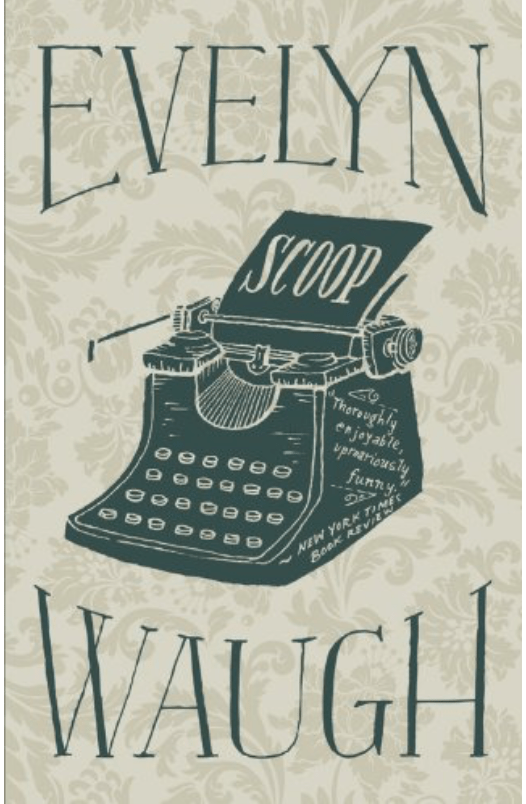
I picked up a light hearted book that outlined how journalism was done 100 years ago: Scoop By Evelyn Waugh. Written in the 1930’s, the book deals with how newspapers made do with telegrams from remote locations to fill newspaper columns: How they decided ahead of time on the stance to take, the line to pitch. Journalism was and is a series of Scoops. Which nugget gets scooped by whom?

Screen Shot 2018-03-08 at 9.20.36 AM.png

The book is based on William Boot, a thoroughly good-natured hedgehog type of fellow, who writes the nature column about life in the English countryside. One week his column writes of the country mouse, and the next week about thriving lobelias. Up in high brow London, he is mistaken for a dashing up-and-coming novelist, also Boot, and asked to go to Ishmaelia, a fictional country in Africa to cover the news. Given no choice, he embarks on the journey, and learns a thing or two about journalism from his journalist pals.

Corker looked at him sadly. “You know, you’ve got a lot to learn about journalism. Look at it this way. News is what a chap who doesn’t care much about anything wants to read, and its only news until he’s read it. After that, its dead. We’re afraid to supply news. If someone else  has sent a story before us, our story isn’t news.”

William Boot is not only ignorant of the scoop business, but distinctly inept at keeping his bosses in the know. His telegrams read like stories; and lack buzz and content. When asked by his head office to send regular updates, Boot replies, that nothing much is going on, and that the weather continues to be fine.

The sort of missive that drives his editor mad. “How am I to fill a column based on the weather being fine?

The dilemma is real. Nobody wants to know when things are going well, and the weather is fine. The populace wants sensational news, and if there isn’t any, they have no qualms about creating some.

Purely by accident, William Boot uncovers a plot to overthrow the powers in the country. When he is composing the telegram with his first real piece of news, he receives the sack from the head office.

Telegram by William Boot:

Nothing much has happened except to the president who has been imprisoned in his own palace by revolutionary junta …. but governess says most unusual lovely spring weather …. bubonic plague raging.

He got so far when he was interrupted. Frau Dressler brought him a cable: your contract terminated stop accept this stipulated months notice and acknowledge stop beast.

William added to this message, Sack received safely thought I might as well send this all the same.

The book is not as engaging and funny as its critics claim, but the premise of the book makes for a charming plot. It is amusing to see how little things have changed since the days of the Telegram: our telegrams arrive almost instantly via tweets, but the essence is the same.

In the current era of news, and fake news, how does one discern truth, and in which cases does one have to bother to do so?

bus_stand

I remember being about a decade old, traveling in South India, when I saw the headlines from a local daily: “Prime Minister resigns”. I gasped, and tugged at my father’s arm, and showed him the headline. Apparently, he had resigned from the milking committee of a farm or some such thing.

That is my earliest recollection of questioning the sanctity of print. Up until then, I read anything printed with a wholesome innocence assuming purity of thought and intent. The father noticed my shocked expression, and we went on discuss the nature of the Scoop, and the thrill of Sensationalism. Television had not yet entered into every home, and one waited every morning for the newspaper to bring us news of the wide world. A whole day in which to ruminate on what one read.

Aristotle apparently wrote, It is the mark of an educated mind to be able to entertain a thought without accepting it. 

Did he really say that? We don’t know.

Sensationalism and Scoop-ism have steadily chipped away at the hallmark of ruminating and discerning narratives having a semblance of truth.

President Squid

I get the feeling that the Universe potters around jotting down whether things are going the way they are supposed to and so on, and then stops and sees me having a good time, and says to itself. ‘That half-wit there seems to be enjoying herself. Catch her, and put her up for a Leadership course or something. Do something with her! Something!” So, in my unguarded moments, I have been bunged into courses on Leadership.  Barely do I totter out of one, when another beams at me touting the title, ‘Effective Leadership’, and the moment I finish that up, ‘Most Effective & Beneficial Leadership’ (Beneficial to whom?)

I have no problem with these blokes whose job it is to tell you to polish your pencils and sharpen your brain and what-not, but I find the whole thing irksome and tedious. So much better to take my Leadership course. My course is fun. Titled, Butter Battle Course, it is being substantially boosted up with these gems.

Skip several tomes on Leadership, and read up: Hope this helps the squids, squirrels and sheep too.

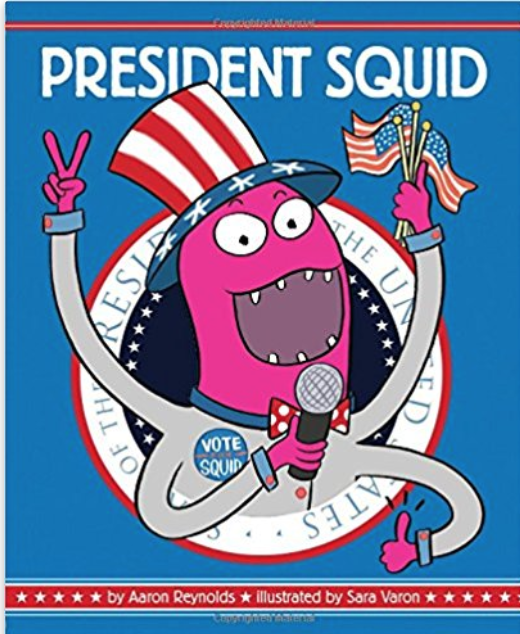
President Squid – a witty book that enthralls and amuses.

Screen Shot 2018-02-12 at 12.14.54 PM.png

Giant Squid has a very important realization. No giant squid has ever been a president before. He looks for qualities to be a President and surprise of surprise – he already has them all.

Qualities of a President:

  • He wears Ties
  • He has a large house (The Titanic!)
  • He is famous
  • He does ALL the talking
  • Big & bossy


IMG_7854

President Squid is as loud and rambunctious as ever. He is convinced that he the Best President Ever!

One day as a President, he unwittingly does some work, and then being a President doesn’t seem like fun anymore.

IMG_7856
President Squid: Book by Aaron Reynolds

The book also provides a solution for those unfortunate Presidents who became Presidents and then realized it is not all as gassy as a cup of beans.

IMG_7857
President Squid: By Aaron Reynolds

Complement this with the equally endearing and hilarious books on leadership:

King Hugo’s Huge Ego : By Chris Van Dusen

Loius I, King of the Sheep – By Oliver Tallec

Who was it who said that there is nothing that cannot be learnt from good children’s books? I heartily agree.

Children are actually the best (and worst) audience for literature because they have no patience with pretence.Orson Scott Card

Homo Incredulitatis

For the past few years, we have not watched any of the Harry Potter movies in the home because we did not want to ruin the Harry Potter stories for the little sponge in the household. So, we waited patiently till he read Harry Potter and The Sorcerer’s Stone. He read some of it, had some of it read to him, and he discussed the whole of it with his Harry Potter wise sister. (Please check out the latest edition with illustrations by Jim Kay. His illustrations are beautiful as if he lived and breathed in the story himself.)

Screen Shot 2018-02-05 at 12.27.47 PM

He only had the last chapter left, and savored the thought like the last piece of cake. The pair of us snuggled up one day with the rain pattering the windows and read. I read in the low rumbling voice of Albus Dumbledore:
‘As for the Stone, it has been destroyed.’
‘Destroyed?’ said Harry blankly. ‘But your friend – Nicolas Flamel – ‘

Dumbledore smiled at the look of amazement on Harry’s face.
‘To one as young as you, I’m sure it seems incredible, but to Nicolas and Perenelle, it really is like going to bed after a very, very long day. After all, to the well organized mind, death is but the next adventure. You know, the Stone was really not such a wonderful thing. As much money and life as you could want! The two things most human beings would choose above all – the trouble is, humans do have a knack of choosing precisely those things which are worst for them.”

I could not agree more. Fresh from my readings of Homo Deus: A Brief History of Tomorrow, I was already uneasy with our hideous choices for progress:
An economy built on everlasting growth needs endless projects – just like the quests for immortality, bliss and divinity.

The husband had spent the afternoon watching a movie with some very interesting sound effects. A sci-fi crime thriller of one who had moved his consciousness into the ether and could possess bodies at will. “Something like Voldemort, only he could find one horcrux at a time and keep going.” said the husband.

Living for ever, resurrecting species back from the dead?

Why? A few years ago, we played a game in the car with the children where we asked the children which animal they would bring back from extinction, to great hilarity (Dodo, Dragon, Dinosaur Dis-apparitions) . This had such an impossible Sci-Fi feel to it, and that contributed to the thrill of the game. I mean you cannot bring back Dodos can you?

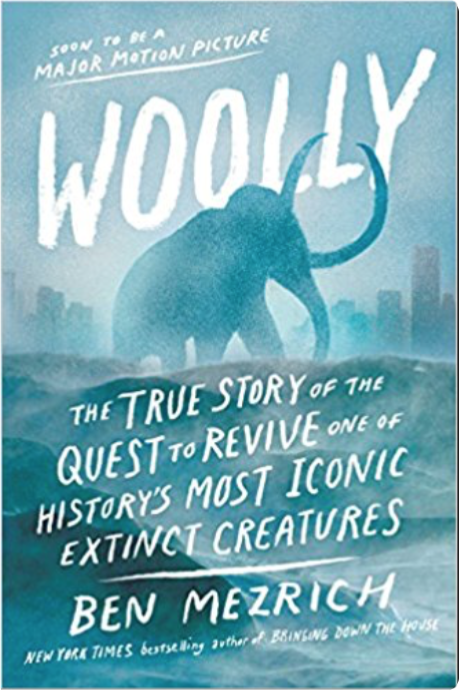
In less than two years, I read a book titled ‘Woolly: Bringing the Mammoth Back to Life’ by Ben Mezrich. I only read the book now, but work on that front has been going ever since we learnt to sequence a genome, and cloned a sheep. If pressed on the benefit of this move, I suppose mankind would say, “This will help reduce global warming by ensuring the Tundra permafrost is packed in with the stomping of large beasts.”

Screen Shot 2017-10-27 at 4.37.00 PM

I am not so sure. If anything, we use our considerable creativity to find grand purposes.

I was intrigued by the husband’s movie discussion on immortality in the form of storing one’s thoughts elsewhere. I have been looking at my thoughts ever since this discussion, and I got to tell you: There isn’t much going on up there. No future generation in the 25th century will benefit from my great wisdom. In fact, the number of times I resist eating chocolate, and then meekly give in, might be the greatest wisdom there is.

Projecting the future is a crummy business. An excerpt from the book, Homo Deus by Yuval Noah Harari:
While some experts are familiar with developments in one field, such as AI, nanotechnology, big data or genetics, no one is an expert on everything. No one is capable of connecting all the dots and seeing the full picture. Different fields influence one another in such intricate ways that even the best minds cannot fathom how breakthroughs in artificial intelligence might impact nanotechnology or vice versa. Nobody can absorb all the latest scientific discoveries, nobody can predict how the global economy will look in 10 years, and nobody has a clue where we are heading in such a rush.

Screen Shot 2018-01-26 at 3.31.08 PM

Why does the unknown scare us? If that is the case, isn’t tinkering with immortality even more of an unknown than death?

Our tales and myths are full of warnings against this very wish. From Bhasmasura, Ravana and Hiranyakashipu to Grindelwald, and Voldemort, we have read and ingested that immortality is not such a sweet bunch of grapes as it is made out to be.

Homo Sapiens seem to have forgotten that Happiness is only important when we have unhappiness to compare it against. Life is only good because we know it is finite, and we strive to make it a full, worthwhile one. Would I cherish every moment and live in the present and all that lark, if the present is all there ever is? It was a sobering thought.

Really Homo Sapiens are Homo Incredulitatis!

Books: 
   Harry Potter & The Sorcerer’s Stone: J K Rowling 
   Homo Deus: Yuval Noah Harari
   Woolly: Ben Mezrich
Movie: Mayavan
Myths: Bhasmasura, Ravana, Hiranyakisapu

Can Mammoths Stop Thawing Arctic Permafrost?

“Let’s not watch this – it is depressing, and some of that stuff makes my blood curl.”, I said as the daughter suggested some gothic fiction. It was the week-end before Halloween, and we were picking our Friday evening entertainment. Never an easy task.

“Fine! What do you want to watch?”

Cosmos” I said without flipping a heart beat. (Watch the you-tube video introducing Cosmos here)

To her eye-roll, I said “No really! You see, there are so many things in there that I wanted to understand as a student.  I plodded along to the library and I got to admit, the Physics books in there. “ I gave a shudder here, and I fully meant it. “I suggest you curl up with one of those tomes in our library looking jaundiced, pale, and excellent cures to Insomnia. I thought some of them needed vitamins, sunshine and exercise to regain what Doctors call a healthy glow. “

geek_world

So, we sat together and watched a Cosmos episode by Neil deGrasse Tyson on global warming. In his slow, sure voice, he rumbled like the volcanoes on Venus that set the poor planet into an irreversible green house cycle.

The World Set Free (Cosmos: A Spacetime Odyssey)

http://channel.nationalgeographic.com/cosmos-a-spacetime-odyssey/episodes/the-world-set-free/

We have twenty years at the current rate to stop us from going into an irreversible state like Venus.

The daughter gave me a significant look .I gave her a more sig. look, and we sat there looking like stuffed frogs with s. looks etched on our faces digesting the info. “How could you think this was okay to watch, but that movie was too scary. This is the scariest thing I have ever seen. How do you think it will all end?” said the daughter sounding worried, and deeply stirred.


A few days later, I read out a passage from the book I was reading. Woolly: The True Story of the Quest to Revive One of History’s Most Iconic Extinct Creatures. (Related post: Mankind trying to resurrect the woolly mammoth by impregnating Asian elephants with mammoth genes.)

Screen Shot 2017-10-27 at 4.37.00 PM

Pleistocene park  – Using 160 square kilometers of Siberian Tundra given to him by the Russian government, Zimov’s goal was repopulating the area with modern equivalents of prehistoric animals that had adapted to Arctic conditions (moose, Yakutian horses, Finnish reindeer and even North American bison.) … To re-create the effects of the Woolly Mammoths on the land, he’d bought in a World War II tank …. Punching holes in the snow, … , using the tank treads to mimic the continual stomps of Mammoth feet, he’d worked the land, year after year. And along the way, he’d accumulated data that were staggering in their implications.

Within his 16- square kilometers refuge, he had lowered the permafrost temperature by an average of fifteen degrees. 

We change the world just be being. I remember watching a video by National Geographic in which they chronicle how 41 wolves introduced in the Yellowstone park, changed the ecology and even the physical structure of the park.

Introducing Wolves in YellowStone National Park – National Geographic Video

If that was the case with 41 wolves, what would introducing Mammoths do? Would it save us from the brink of extinction or introduce problems of the kind we hardly envisioned?

We never know the ramifications of our creations. I mean we are a species who has unintended consequences from a ‘Like’ button on Social Media.

Teapot Spirituality

Sheesh kababs! What is with Amma – is she tired and cleaning again?” said the daughter, when I acted like a teapot sliding off my tea spout.

I whistled my protest with as much dignity as a teapot sliding off the tea-sp. could when caught in the act. “There is nothing wrong with me. Merely that a lot of work needs to be done, and I cannot come and play a game of Life now. I have Life to deal with now.” The queenly dignity sounded overdone like these actresses who act for 10 dollars when paid 3. I waved my hands impressively at the surrounding environs.

It was true, at least in my mind. Pots and pans needed washing, the floors needed scrubbing, the ….

“You said you are tired at the end of the week, and it has been a tough week. You just said we escaped a fire, and we should just be thankful for Life huh? Get it. Get it? Come on now.”

teapot

I could not argue, and after a flimsy protest, waved down by the children who helped me get the kitchen to a state of relative cleanliness, we sat around playing the game of Life. There was a serendipitous beauty to it. The evening had made me nervous and jumpy, more conscious of the gift of Life, and as usual the children had led me to the calm instead of the frenzy, with their customary élan.

Northern California had been reeling from the effect of wild fires. After an unnaturally hot summer, calamity struck too close to home for comfort. This time, it was people we had lunches with, people we holler out to when we catch a glimpse of them in crowded places. People who will slowly extend that quizzical look into a slow, wide smile as they recognize you, these were the folks asked to evacuate.

Luckily the fires had been contained, and I felt like we could look forward to a quieting down. I had spoken too soon.  That evening, flames leaped higher than trees behind our home, and smoke billowed from nearby. The bags were packed in the car: documents, some cash, a change of clothes, laptops, water bottles, snack bars, and a few pictures. When it comes to it, that is all there is, isn’t there?  Nothing else matters.

That night, everything felt keener. The comfort of putting away the dishes, the joy of playing a board game, the delight of being ordinary, the familiarity of the mundane, the contentment of a bedtime story, the gratitude for the simple act of breathing.

“I just got twins Amma.” said the son after rolling his dice.

“There goes your quiet retirement!” said the daughter, and the children went into peels of laughter, and I joined in noticing how much better it felt to laugh with abandon. I felt the 17 facial muscles work as the laughter gripped me. I observed the act of laughing together as if I was perched atop the roof, looking at us having a good time. Is this what consciousness is?

I finished the piece on resurrecting the Woolly Mammoth using genetic samples obtained from the pristine Arctic Tundra, and impregnating an Asian elephant with the questions on consciousness, and whether or not there is a Soul. I love it when a work of fiction explores the questions posed by futuristic Science, and I finished the post by tying it up with Never Let Me Go, By Kazuo Ishiguro.

Everyone knows, teapots are far from spiritual, and my understanding could make a teapot sing. If you were to explain the concept of consciousness, conscience and soul, how would you do it?