A Hopeful Future

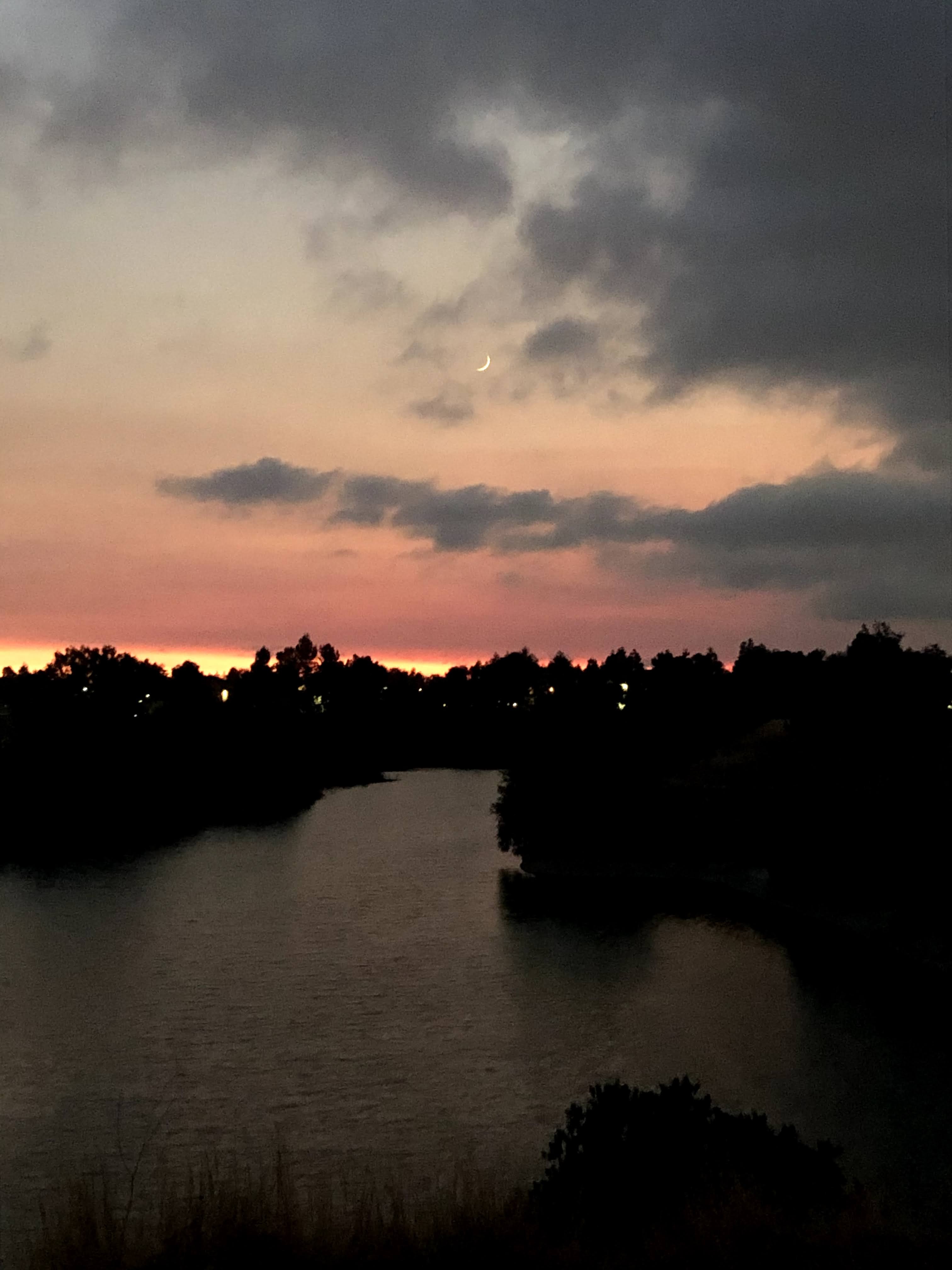
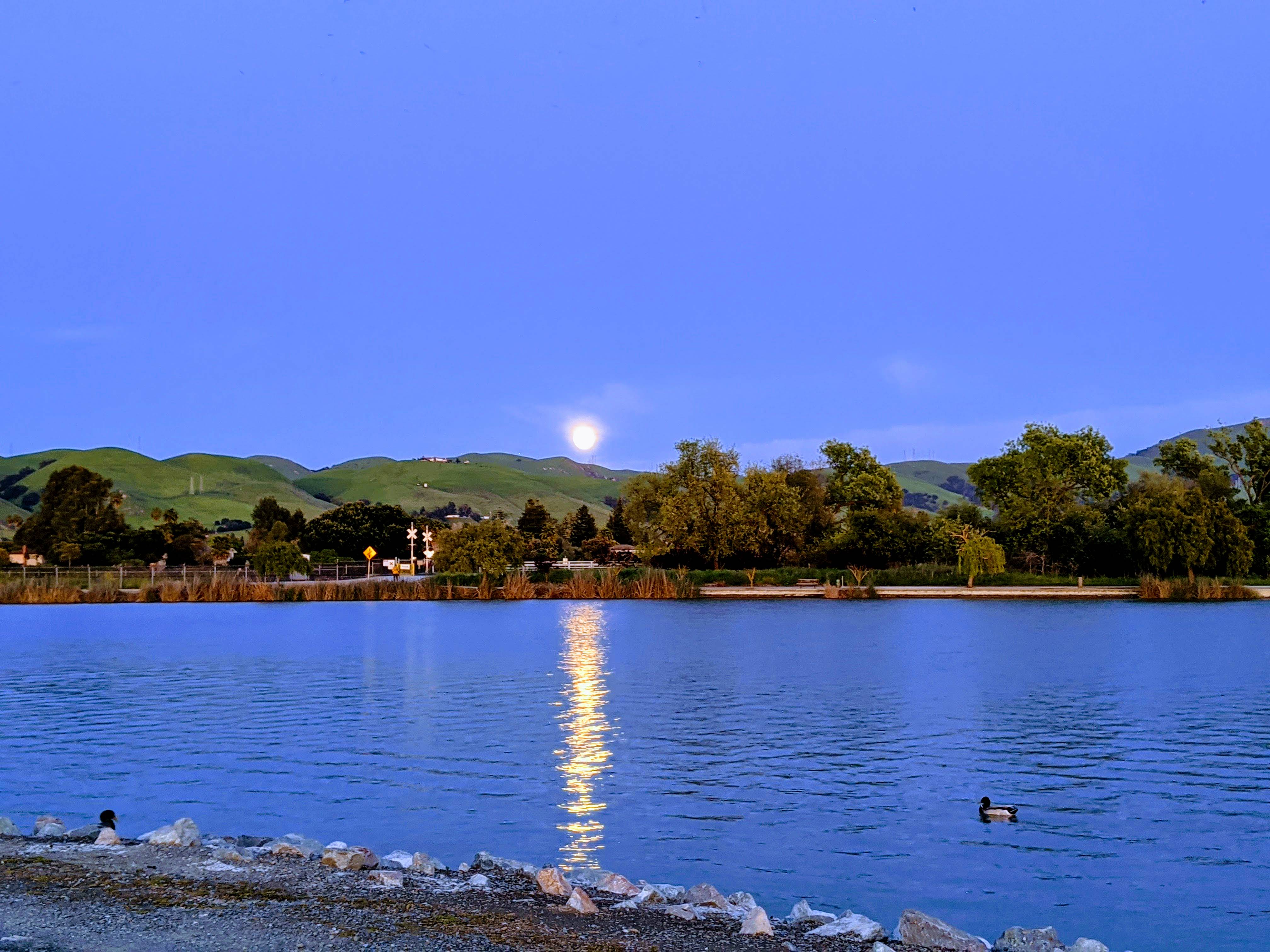
There is nothing quite as special as walking in nature after a long day or week. Every step seems to take one tiny bit of stress away, and replace them with happy endorphins  dancing to a beat in the body. As the eyes lift their gaze towards the skies, the clouds, trees, and birds seem to join in on one harmonious orchestra together welcoming the soul to relax and rejoice in the moment of being, and participate in the steady march of time. Hummingbirds, bluebirds and the occasional butterflies flit overhead, while the ravens and geese noisily make their way home.

Summer is creeping in, the jacaranda trees are in bloom in the neighborhood, the gingko leaves have come in fully, and though the world around us is in shambles, confused, anxious and worried, Mother Nature seems to have no such problems. She brought on Summer just in time.

The park near where we live has a steady smattering of high school students social distancing as best as they can and taking graduation pictures. In little knots of 2s & 3s, they cluster around giggling and looking hopeful. I stop at a distance admiring the high schoolers celebrating their graduation day with pictures in gowns. The smiles of confident youth look just as marvelous as the summer blooms they stand amidst, and their perfumes amidst the heady scent of the flowers is heaven itself. There is no doubt about it: The summer evenings seem doubly enjoyable and bright because of the young talent making their way out into the world.

These children did not get the graduation party like their seniors did, or their juniors will, but they seem to be coping with grace. A few photographs with their best friends would have to do. I hear loud peals of laughter puncture the evenings as they decide on how to take their pictures. I hope every child in these uncertain times has good friends. The laughter rings in the obvious: everything seems to be manageable with the right set of friends.

“Hope” is the thing with feathers –
That perches in the soul –
And sings the tune without the words –
And never stops – at all –

Emily Dickinson

In other news,
Trump Rally Registered Million Attendees but Actual Count 6000!

Thousands of teens registered for Trump’s rally , after his initial Juneteeth rally was moved to Sunday, and then didn’t show up. What’s more? They deleted their tik-toks soon after!

Standing there that evening with the world on pause from the Corona virus, and the city’s curfew just ended due to the Black Lives Matter movement, I felt hope stir again. The angst and idealism of youth was intact. These young adults saw us flounder at a critical moment in their lives, and the exuberance with which they are eager to take the torch makes me hopeful.

“For life goes not backward nor tarries with yesterday.” Kahlil Gibran

What Does It Mean to be Human?

I  struggle to write about the past week of events for two reasons.

(1)  I have not read enough of Black History in my adopted country to know the depth and breadth of the problem. (A shortcoming, I hope to rectify to the  best of my ability in the coming months.) All I  know is that the Black Lives Matter movement is long overdue. 

(2) The other is that the blatant nature of the cold killing of George Floyd flabbergasted me. How could a man sent sprawling to the ground with his hands handcuffed  behind him be such a threat, that a policeman felt he needed to put his knee on his neck in addition to everything else? How could he not let up when he felt the man go limp under his knee? How could .. why did he…could he not have instead…a million questions that will remain unanswered. The killing is a chilling realization of the moment when our humanity deserted us collectively.

We Belong on Earth  is a strong theme in my blog as regular readers know. 

Do not hate in the plural is another strong theme on my blog. 

The Black Lives Matter movement very strongly aligns to both these causes.

As I  mutely witnessed the events and absorbed the weight of the movement, my heart stirred and yearned for only one  thing: that the civil rights movement is long overdue is an understatement; what I wanted more than anything else is for the awareness to be translated  into action. 

So, what does it mean to be  human? 

If a person, racist or not, is  in need of a blood transfusion or an organ transplant, do they, even for a moment, think about the race of the donor? I don’t think so.

I thought the Corona virus reminded us of what it means to be human. In spite of borders, and diatribes about immigrations, and the numerous ways in which  we find ways to divide ourselves, the virus proved to us without a doubt that we are human and are therefore susceptible.

In the words of Seneca: 

Dum inter homines sumus, colamus humanitatem

“As long as we are human, let us be humane.”

Additional Reading:

What does it mean  to be human?

The Biology of Skin Color (The link between human evolution over time; the ability to adapt to different levels of UV  radiation in the tropics vs the poles; and its correlation with absorption of Vitamin D is explained in this video)

Maria Popova in her Brain Pickings blog had written a sentence on a meditation of the human condition, and I had jotted it down, for it was such a powerful sentence. I quote:

“At a time when the need to celebrate both our shared humanity and our meaningful differences is all the more painfully evident, the question of what makes us human becomes not one of philosophy alone but also of politics, justice, identity, and every fiber of existence that lies between.”

That is the Earth!

“Do you know what this is?”

“That is the Earth! From the moon.” said the son matter of factly. “I saw it before!” he said in response to my awed expression.

We were looking at the back jacket of a book, that I flipped to the last page first.

this_is_earth

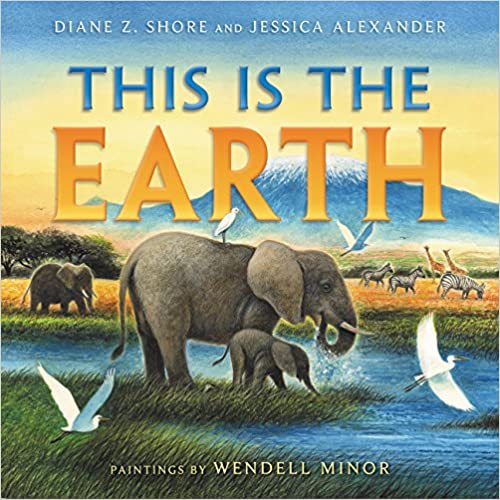
This is the Earth, by Diane Z Shore & Jessica Alexander with paintings by Wendell Minor.

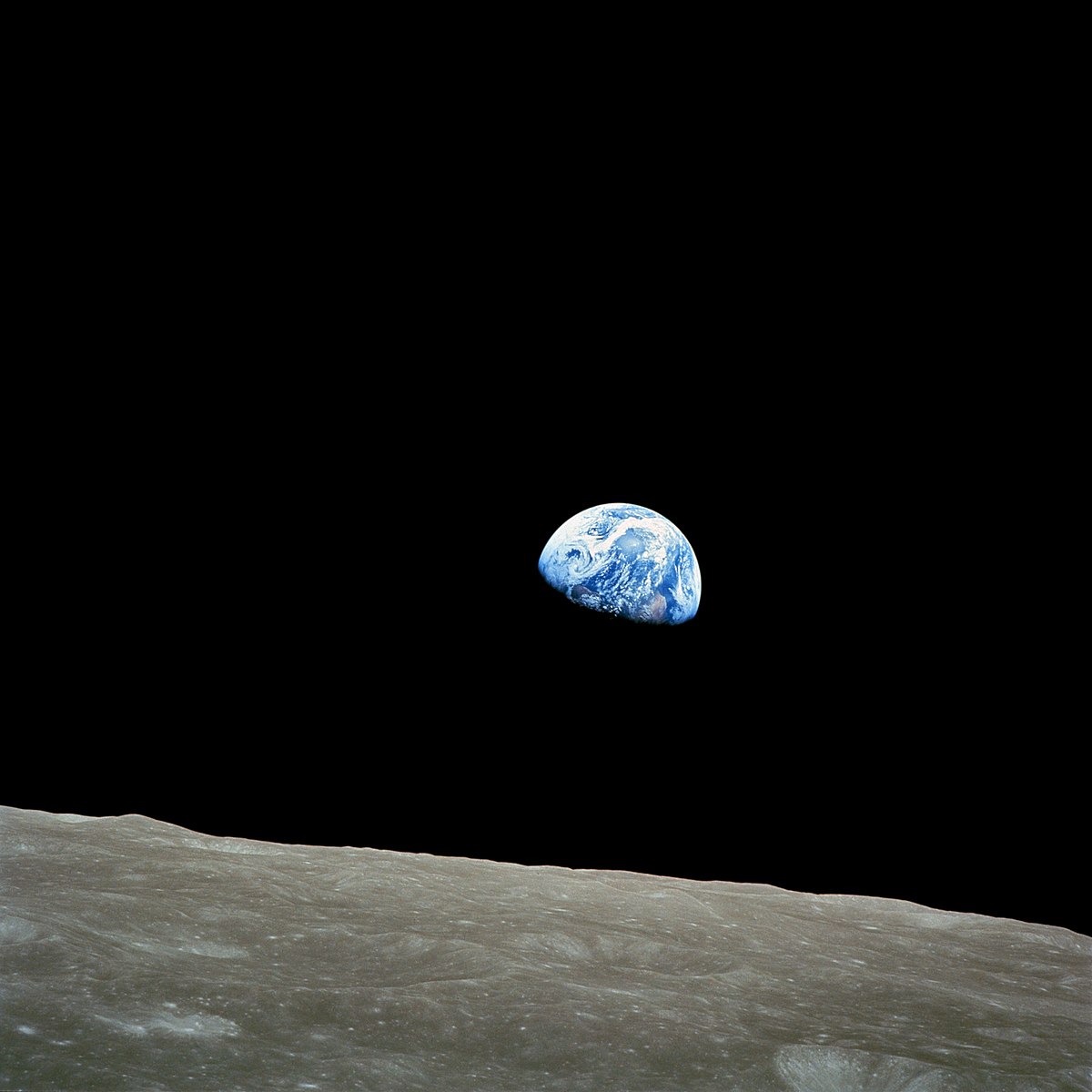
It was a picture of the Earth rising on the Moon’s horizon.

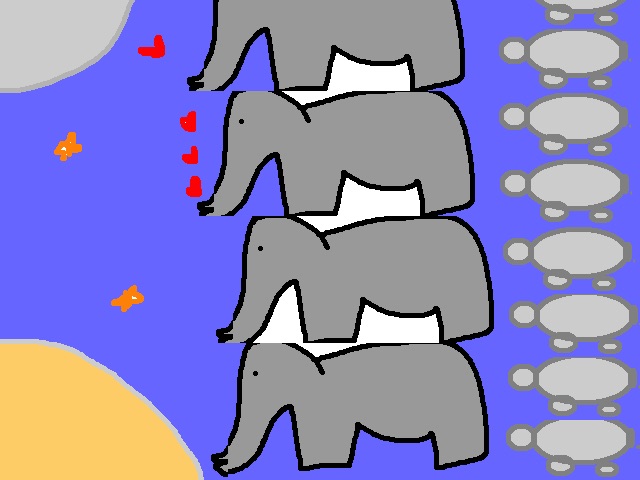
A picture that generations of humans for millennia could only have imagined, and never really gotten close to the sheer beauty of it. Our myths are at once rich and limiting in its reach. They have imagined Earth as being elephants on elephants, turtles on turtles all the way down, flat discs, imagining heavens above and hells below.  

earth_myth


The picture was taken by an astronaut, Bill Anders, aboard the Apollo 8 spacecraft in 1968. I looked on mesmerized at the picture.

1200px-NASA-Apollo8-Dec24-Earthrise

Bill Anders / Public domain

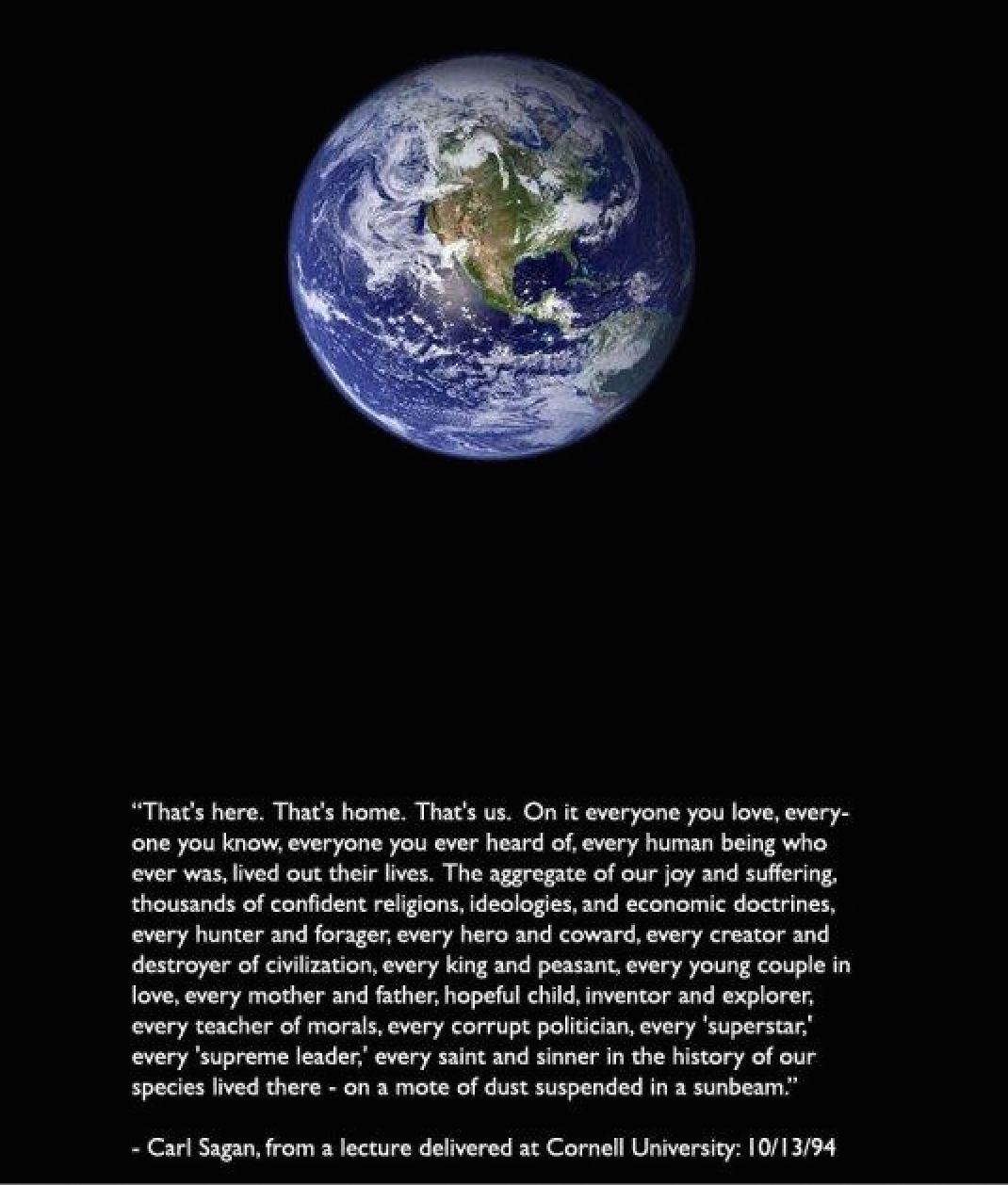
But this picture is truly astounding. The pale blue dot when seen from the Moon is a brilliant, blue orb, suspended in space, intriguingly spattered with clouds, oceans, landmasses, not really depicting the billions of lives it fosters, or the number of ecosystems it has in its fragile balance. 

Bill Anders said: “We came all this way to explore the moon, and the most important thing is that we discovered the Earth.”

What a lovely statement that is, and together with his Earth Rising image, contributed to the concerns around Planet Earth that led to founding of Earth Day in 1970.

50 years later, we have made rocky starts and gains towards conservation. But this April 2020, 50 years later, purely coincidentally, Covid-19 has the world on lockdown, not just imagining a life of bare necessities but embracing it for the social good. We, the people, now have the time to observe our fellow inhabitants.

Heart warming tales of peacocks making its foray into the deserted cityscapes of Mumbai; turtles coming ashore to hatch in the beaches along the Bay of Bengal; seeing the Himalayas from a 100 miles away once the smog fog lifted; deeming the waters of the Ganges near Rishikesh fit for human consumption again without all the factories along the way dumping its wastes into the flowing water;or bears enjoying their natural habitats unhindered by human presence in Yosemite National Park, are surfacing, and it has my heart lifting again. I have often enough lamented on this blog about the poor attention we pay to the Planet that nurtures our fragile selves and egos. 

Watching the even more fragile ego of the stock market indices, it seems to me that we can very well have the world function this way, by having a month off every year in which everything stops but essential services. An Earth Month every year to reflect, slow down, plan and recoup our staggering impact to the environment. After all, the stock market seems to have a life of its own and seems only to want some stolidity in its expectations. So, we anticipate a month with no major events, no excessive or unnecessary travel, and only essential services operating. The notion isn’t that far-out either. 100 years ago, no one thought we could have 5 day work-weeks. Yet, here we are, in state where it is the norm now. 

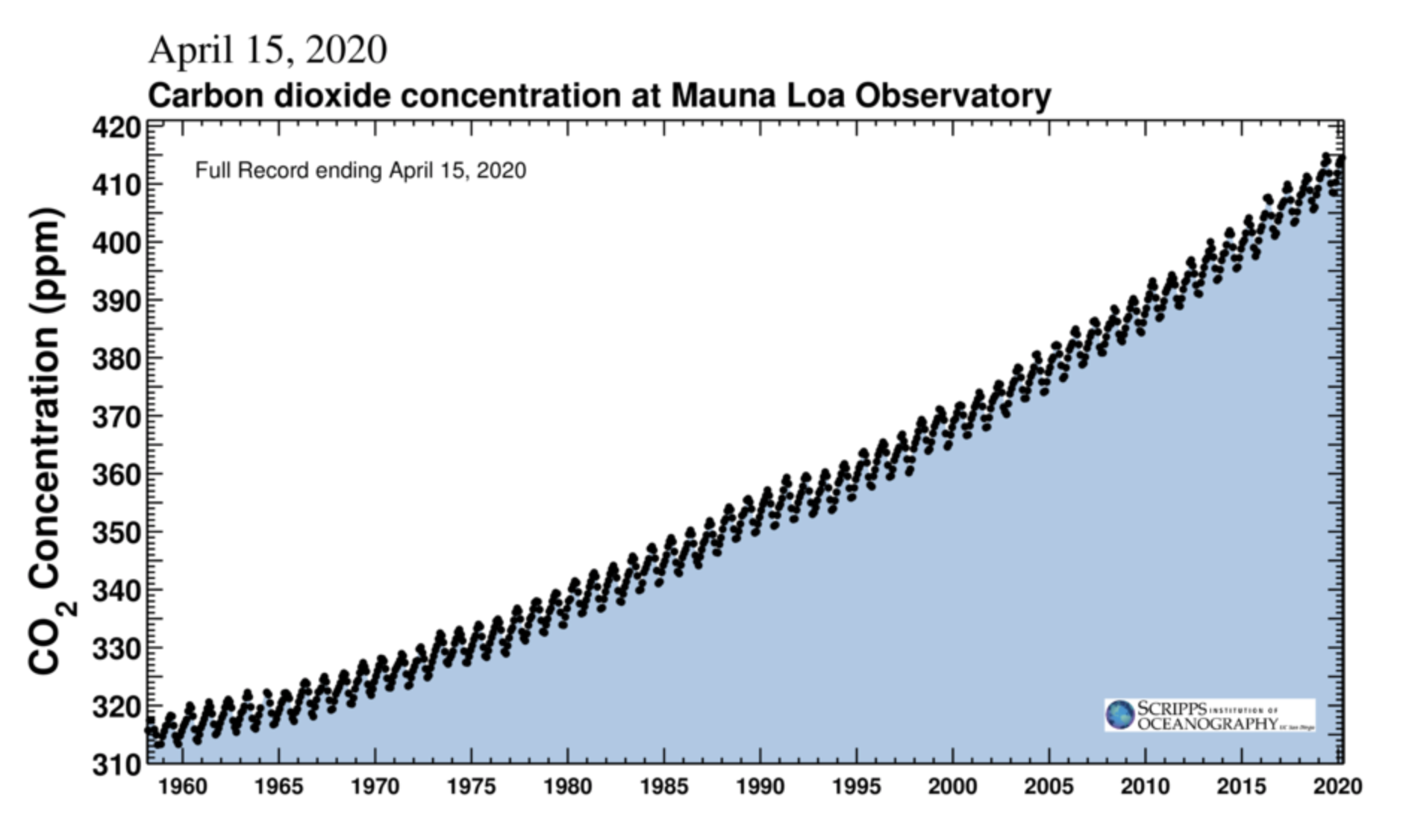
Maybe this could be the measure we take for Earth Day to slow the rise of Carbon Dioxide levels in the atmosphere.

Screen Shot 2020-04-16 at 6.33.29 PM

Please go this site to see the curve over 2 years and over 200  years Keeling Curve – Scripps UCSD

If you look at the extrapolated curve from the 1700’s, it has risen exponentially. It is probably too soon to see the effect of Covid-19 on CO2 levels in the atmosphere.

Could, Earth Month become the new normal for us. So children matter of factly accept that Earth Month as essentials month in the coming generations?

Let’s care a whole lot!

T’was family movie night. An evening fraught with decisions, and everyone’s voice and opinion clanged over the dishes and sizzled over the noise from the stove.
Suggestions rose, opinions swelled and movies quelled.

“Uggghhh! No way!”
“That again?”
“What are you? A kid? Oh wait! Yes you are a kid! Okay never mind!”
“Nope! Too much for Amma! “
“What do you mean? It isn’t too much for me?!”
“You bawled last time for a movie that wasn’t even a tear-jerker, nope! How about this?”
“Star Wars!”

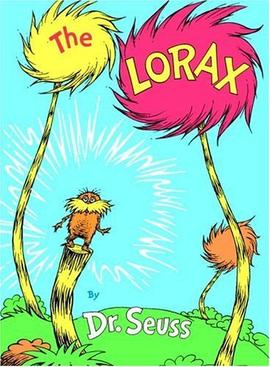
A collective moan went up. Finally, it was revealed that the youngest member of the family had no recollection of the Dr Seuss movie Lorax. He has read the book multiple times, and so we all settled in to watch Lorax.

The_Lorax

Dr Seuss is an inspiration, of course; but just how insightful his take on humanity is uncanny. From fresh air as a commodity, to a land without trees, to surveillance at every pore, his far sighted vision has so much to nod your heads at.

The Thneeds, created by the Once-ler, in his story are made from Truffle trees. Thneeds were fashion statements – doubling up from head scarves to sweater vests and shawls. (“But even he, it seems, could not envision a future where ripped jeans were fashion trends!”,  I said and drew a grudging chuckle from the teen with the ripped jeans. ) Eventually, of course, the Once-ler’s greed led to decimation of trees, habitat loss and a devastated landscape is all that is left.

“Wow – that was such a good movie Amma – though the movie had scenes that the book didn’t have.” was the verdict of the youngest.

“Really! Humans are impossible!” said the teenager, and discussion turned to conservation, Greta Thunberg and some you-tuber who talks about going green.

“Did you know the Lorax was banned in some schools in California because loggers felt it was not friendly to the ‘foresting industry’. ” I said.

I looked at their agonized faces with awe – how is it children get these things, and adults don’t; and I felt a surge of hope.

lorax

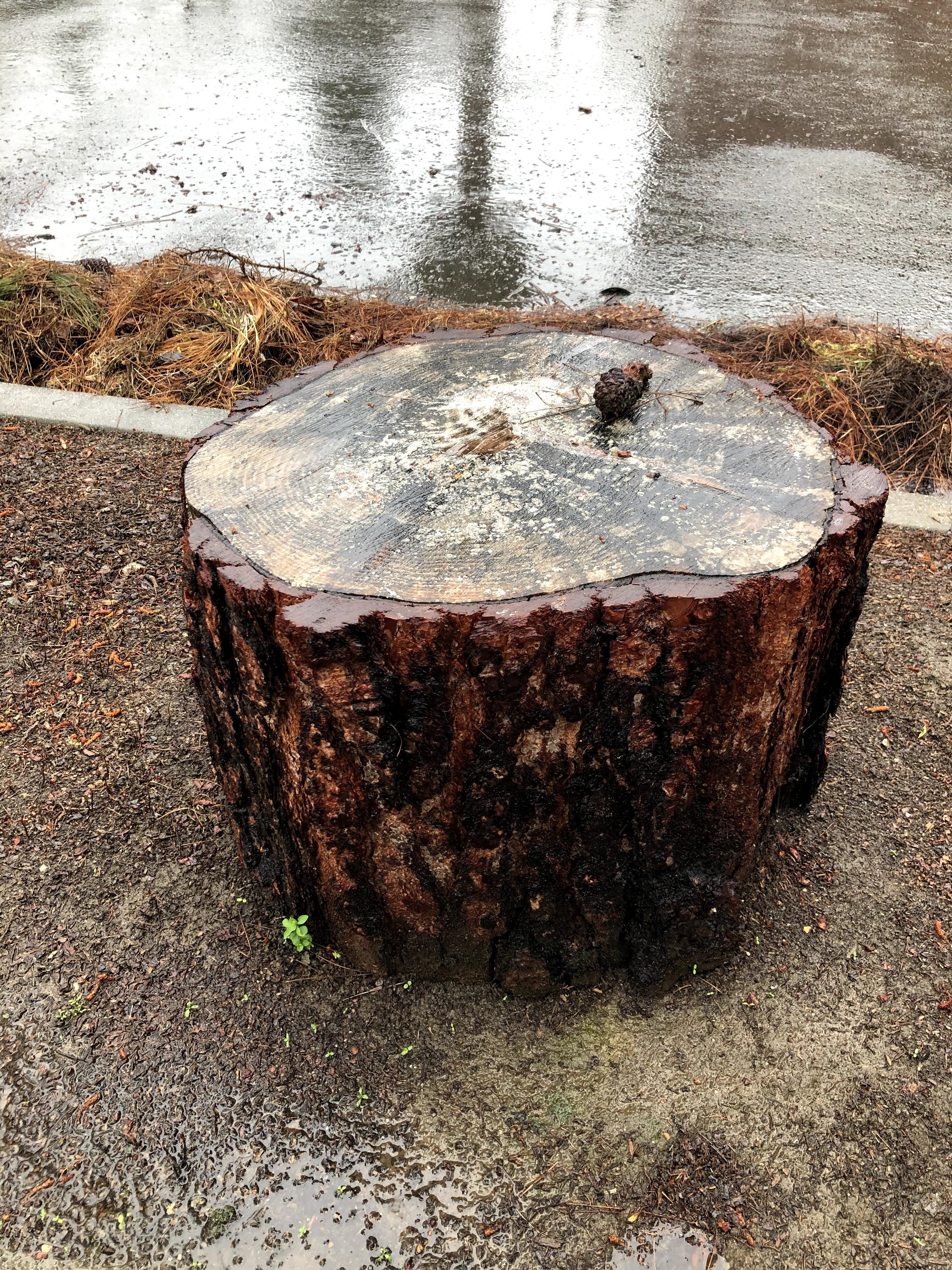
We were walking a familiar route through our neighborhood a few days later, stopping to see some of the felled trees as we do every so often. The rings in the pine trees show they must have been at least 80 years old, and to see the forlorn stumps reminded of the beautiful book, The Giving Tree.

img_7820

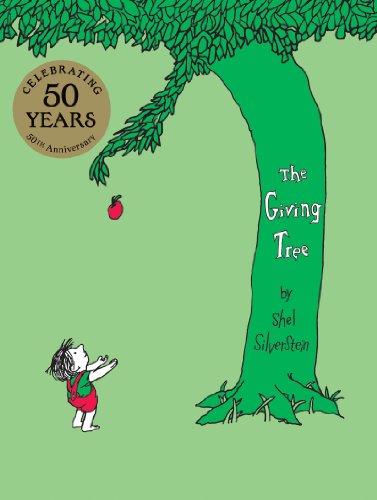
The book starts with friendships between a young boy and an apple tree. The boy plays and swings on the tree’s branches, but as he grows older demands more and more from the tree. He needs her apples to make money, cuts her down to build himself a house and a boat, and finally comes back tired and spent with life, when all the poor tree can offer is the stump to rest.

The Giving Tree, can be interpreted and discussed in many different ways. Givers & Takers, Need & Greed, Selfish & Selfless, but the most beautiful one is the simple one, the one where your children make a sad face at the end, and say, “Why doesn’t this boy/man/grandpa ever feel sorry for what he’s done?”

giving_tree

The boy reminds us of human’s relationship with nature. The human species can be broadly classified as takers: from the planet, & from our co-habitants on this planet. You might have seen this video clip of Man’s greed By Steve Cutts:

The Giving Tree too was banned interestingly for sending sexist messages – the tree was female and the little boy continued to take from her without ever giving back.

I just finished a book called Losing Earth – by Nathaniel Rich. The book, deals with the science, politics and action of climate change.

losing_earth

Despite humanity having the science locked down more than 50 years ago, little action has resulted. The closest we came to getting everyone to agree on unified action was the Paris Agreement where all countries agreed to work towards keeping emissions such that we not go above the 2 degree increase of temperatures world-wide. The largest emission offender for decades, United States, pulled out of the agreement when Donald Trump became President.

I was shocked to find that Climate Change as a topic has been banned in certain schools, skirted around in others and given a miss altogether elsewhere. The science behind Climate Change and the effect of our industries were long proved – as far back as 1970.

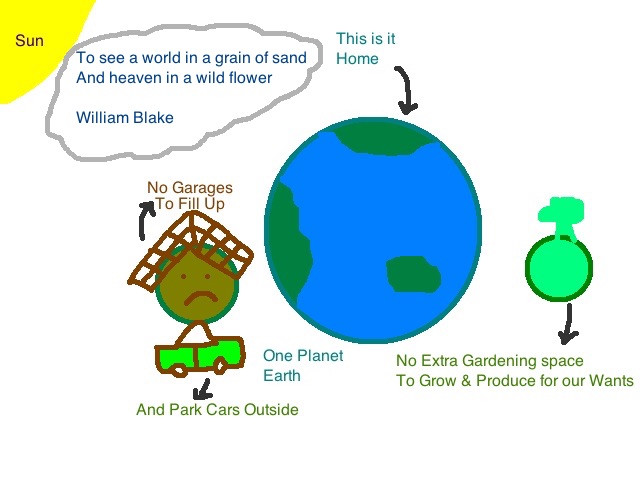
This April 22nd is the 50th anniversary of Earth Day with a special onus on Climate Action. Maybe this Earth Day, we can renew our commitment to the only pale blue dot that will harbor us. Let’s care a whole lot about our planet before all we are left with is the word ‘Unless‘ like in the Lorax story, or the tree stump in The Giving Tree.


no_garagepale_blue_dot

Read also: Are we to become Lab Rats?


The Rings of Life

We were walking a familiar route through our neighborhood, stopping to see some of the felled trees as we do every so often. The rings in the pine trees show they must have been at least 80 years old.

img_7820
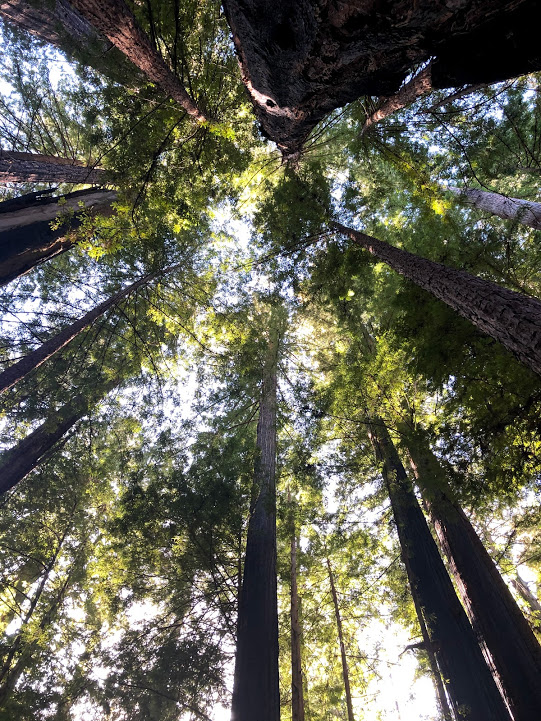
For an impatient flitter such as myself, trees are truly sentient beings. Beings that teach me about holding still, of being sentient beings for the small time we spend on this beautiful planet. Like a butterfly flitting through the Earth for a day. You can replace tree for a star in the quote below and it would still hold when one sees redwood trees, sequoia trees and old banyan trees.

“From the point of view of a mayfly, human beings are stolid, boring, almost entirely immovable, offering hardly a hint that they ever do anything. From the point of view of a star, a human being is a tiny flash, one of billions of brief lives flickering tenuously on the surface of a strangely cold, anomalously solid, exotically remote sphere of silicate and iron.”

― Carl Sagan

As I was reading Life in the Garden by Penelope Lively, I stopped to relish the section on trees. Though the book is largely about gardens, she does make a foray into trees briefly:
“Tree rings are wonderfully eloquent; here is time stated, time recorded, time made manifest. Dendrochronology- the scientific method of dating based on the analysis of tree rings-can determine past climates, or the age of a building, it can be used to calibrate radiocarbon dating, or by art historians to determine the date of a panel painting. And all because a tree grows slowly, systematically, but laying down each year a memory of what that year was likes – usually wet, dry cold, hot-whether the tree flourished and grew, or held back, and how many years have passed. And the more I think about it, the more I have come to the conclusion that this is why trees invite anthropomorphism. They are sentient in a way that a building cannot be.”

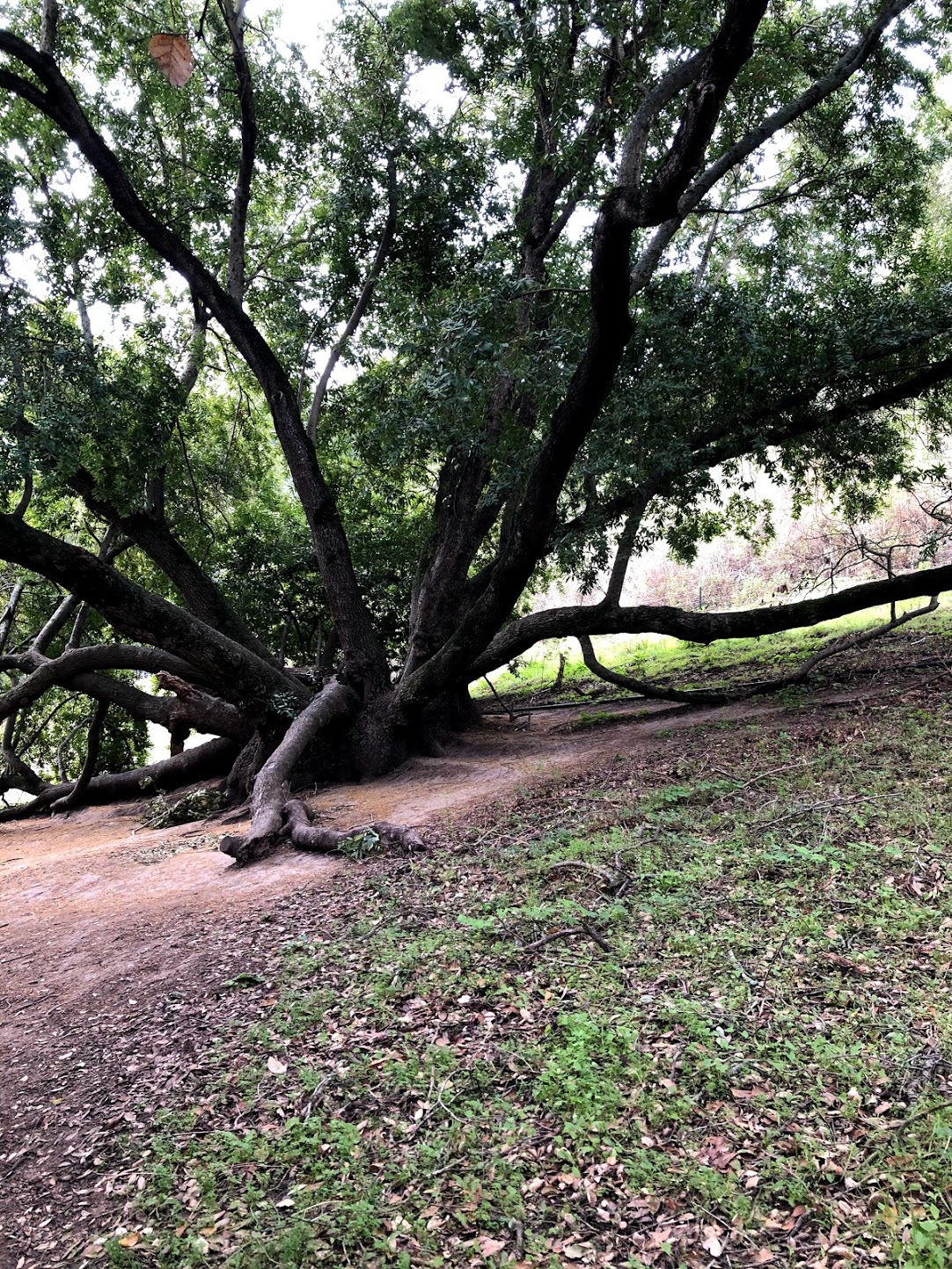
octopus_tree

When I read this piece in Life in the Garden by Penelope Lively, I thought to myself, that Covid-19 would not register in the life of trees, would it? Droughts, wildfires, these may, but Covid-19 would not. The human suffering is acute – there is no doubt about it. The true heroes are the front-line workers, such as doctors, nurses, water and essential service providers, cleaners, mailmen, supply chain workers for groceries and medication who are braving the outbreak to keep society functioning as best as it can, while the virus takes it toll. The human toll is one thing, Covid-19’s economic ramifications is quite another, reminding us of the tottering pile we have built our societies upon: Stock markets indices, economies, international boundaries, – everything that a virus can thwart on a whim.

3D_medical_animation_coronavirus_structure

What would Covid-19 imprint in our psyches? It can be a time of transformation. A time of reflection. A time to prune the unnecessary, a time to nurture the necessary, a time to get to know ourselves and our loved ones better. A time to think of needs vs wants.  A time of quiet.

We may never have taken pandemic preparedness seriously. Covid-19 is teaching us about the importance of these things. What would we need to do for far more severe outbreaks, with water-borne or air-borne diseases in the future? I am sure these will never be treated with the same levity ever again.

“Nature is always more subtle, more intricate, more elegant than what we are able to imagine.”
― Carl Sagan, The Demon-Haunted World: Science as a Candle in the Dark

The more I think about it, the more I want to believe that we shall embrace Science as a Candle in the Dark. Many children will take up research in microbes. I hope we shall, from now on, invest in our infrastructure, in our research, in our general preparedness, and appreciate the fragility of life and our social ecosystems itself. Our rings in time will bear out the wisdom in the coming years if only we learn from it. One dark circle reverberating it’s learnings outward, and spreading light in the subsequent rings afterward.

“In its encounter with Nature, science invariably elicits a sense of reverence and awe. The very act of understanding is a celebration of joining, merging, even if on a very modest scale, with the magnificence of the Cosmos. And the cumulative worldwide build-up of knowledge over time converts science into something only a little short of a trans-national, trans-generational meta-mind.”
― Carl Sagan, The Demon-Haunted World: Science as a Candle in the Dark

References:

  • Life in the Garden – By Penelope Lively
  • The Demon-Haunted World: Science as a Candle in the Dark – Carl Sagan

Time in the Garden

Regular readers know how much I enjoy nature and gardens. It is one of life’s ironies that my plants only thrive despite my loving care, and  many is the time I have made bloomers in the little patch I tend to. However, never one to shy away from blooming from the bloomers, I picked up this book, Life in the Garden, By Penelope Lively. 

life_garden

Lively begins by examining the gardens in Literature starting with the Garden of Eden, and working  her way through other fantastical gardens in the books, The Secret Garden, Alice in Wonderland and the beloved gardens of dear, absent-minded Lord Emsworth’s at Blandings castle. 

She examines the writing and finds out which of the writers are gardeners themselves and which of them have merely picked up the scenery from a gardening catalog. She teases the co-ordination of colors, the seasonality of the plants themselves in the landscapes and has given me an entirely different appreciation of gardens. 

Some passages are especially endearing and made me want to read them again. Especially her meditations on time, the gardener and the garden itself. 

I quote from her book: 

“To garden is to elide past, present and future; it is a defiance of time. You garden today for tomorrow; the garden mutates from season to season, always the same, but always different. … In autumn, I plant up a pot of “Tete-a-Tete” daffodils, seeing in the minds eye what they will look like in February. We are always gardening for a future we are supposing, assuming, a future. I am doing that at eighty-three; the hydrangea paniculata “Limelight” I have just put in will outlast me, in all probability, but I am requiring it to perform while I can still enjoy it.”

“The great defiance of time is our capacity to remember – the power of memory. Time streams away behind us, and beyond, but individual memory shapes for each of us, a known place. We own a particular piece of time; I was there then, I did this, saw tear, felt thus.”

She goes on to say, 

“A garden is never just now; it suggests yesterday, and tomorrow; it does not allow time its steady progress. “

Certainly, for me, part of the appeal of gardening is this ambivalent relationship with time; the garden performs in cycles, it reflects the seasons, but it also remembers and anticipates, and in so doing takes the gardener with it.”

As I look out the window at my clover-filled backyard with some foxgloves looking happy amidst the narcissi blossoms and the newly sprouted cherry leaves after their spectacular show of cherry blossoms, and the rose buds ready to burst forth in a few weeks,I cannot help feel the lessons nature is teaching us. Be forward looking – always, nurture what is important, and enjoy the passage of time. One moment at a time. Every flower has its chance to bloom and fade.

do-nothing-garden_1

Gardens are enduring lessons in hope. I cannot tell you the number of times, I have planted something in October and been surprised when they bloom in April, or the number of times, I have been pleasantly surprised that something  thrived  at all. 

“Hope” is the thing with feathers –

That perches in the soul –

And sings the tune without the words –

And never stops – at all – 

Emily Dickinson – Hope

I am lackadaisical at best with my gardening and it shows. I have a minuscule patch that seriously  has more air-time on the blog than the square feet it occupies. Yet, it gives me immense pleasure, peace and calm. Spurred on by the book, I went outside to take a more active role in the tending of my plants. I have been admiring the sweet peas plants that have sprouted in the garden. Some time ago, I got a packet of sweet  pea seeds from our local library. Thrilled at finding them, I scattered them by the apricot tree and forgot about them. The plants are thriving now, quite tall, and seem to be sagging. So, I went – “Coming dears! Here I am to take care  of you!”, I said, in my best nurturing voice and tried to prop up the plants as best as I could, in the process, breaking off one of the plants’ main stems.

If the plants in my patch could talk, they would’ve chorused – “Go inside – we know you  love us, just let us thrive! Breaking off our stems indeed!”

Fascinating Hidden Worlds

The son sat next to me one evening as I was typing out this article and looking up the picture of the Corona Virus.

3D_medical_animation_coronavirus_structure

Image By https://www.scientificanimations.comhttps://www.scientificanimations.com/wiki-images/, CC BY-SA 4.0, https://commons.wikimedia.org/w/index.php?curid=86436446

We both sat looking at the image that showed up and he said, “Wow! Is this really the virus? It looks so lovely, doesn’t it?” I had to agree.

The unimaginable beauty of the microscopic world is so rarely stopped and admired. Who knew a blade of grass could be this spell-binding?

img_7653

This particular virus has caused such unimaginable disruption world over, it is humbling to see the world buckle on its knees against the onslaught of this virus. While, viruses and bacteria often come to the spotlight in scenarios such as these, the truth is that we need a multitude of them to survive on a daily basis. There are studies linking gut bacteria  to mental well-being for instance.

Theodor Rosebury, a microbiologist, wrote in 1928, during his research that:

“The knowledge that micro organisms can be helpful to man has never had much popular appeal, for men as a rule are more preoccupied with the danger that threatens their life than in the biological forces on which they depend. The history of warfare always proves more glamorous than accounts of co-operation.”

The Corona Virus has brought the rich world of microbes to the forefront for the world. To give us an appreciation of how many microbes we regularly thrive on for our living, consider these figures: There are an estimated 100 Trillion microbes in our bodies. The estimated number of stars in our galaxy is around 100 billion.

Many children growing up in these times may well be awed by the power microbes, bacteria and viruses exert on us, and go on to study Microbiology and change our understanding of the worlds within us in unimaginable ways.

The microscopic world is a marvelous one. Revealed to us 350 years ago by the talented man often hailed as the Father of Microbiology, Antony von LLeuwenhoek, his letter about animalcules was published by the Royal Society in London. As Ed Yong says in his book, I Contain Multitudes, his letters were published by the Royal Society in “an extraordinary monument to the open-minded skepticism of science“. LLeuwenhoek had no background as a scientist, yet he applied the scientific method to sampling and studying the world around him. In 1680, the draper cum businessman, whose curious mind and hobby led to the revelation of Microbiology was elected a Fellow of the Royal Society.

I Contain Multitudes – Ed Yong – Article from Brain Pickings

For those of you wanting a quick, fascinating glimpse into a Universe within our Universe, please check out the book, Hidden Worlds by Stephen Kramer with photographs by Dennis Kunkel.

hidden_worlds
Hidden Worlds

While Lleuwekhoeks early microscopes could only magnify upto 260 times, the images revealed in the book, Hidden Worlds magnify images by upto 1000,000 times. The resulting images are breath-taking.

The images revealed are only black-and-white by the microscopes. Scientists then use computer modeling to color in the images and the stunning pictures are better than works of Art. For instance, the picture below shows some common allergens and pollens that cause so many to sneeze all Spring.

The book briefly explains about SEM and TEM microscopes, the work that scientists typically do to prepare their specimens.

  • Transmission Electron Microscopes: TEM can magnify images by 1000,000 times
  • Scanning Electron Microscopes : SEM can magnify images by 10 – 300,000 times

Looking through the pictures in the book, we realize how marvelous life is, and what a fragile ecosystem we have to thrive in.

Covid-19 has also made us realize the importance of our normal lives. The gratitude to be alive and healthy, to be able to do the work that interests and moves the world forward, to be able to revel in the beautiful companionship of our friends and family.

“As the years pass, I am coming more and more to understand that it is the common, everyday blessings of our common everyday lives for which we should be particularly grateful. They are the things that fill our lives with comfort and our hearts with gladness — just the pure air to breathe and the strength to breath it; just warmth and shelter and home folks; just plain food that gives us strength; the bright sunshine on a cold day; and a cool breeze when the day is warm.” 
― Laura Ingalls Wilder, Writings On Wisdom and Virtues

References:

In 1 Week! – Covid-19

I had written this to be posted on last Monday: I then decided to not post it since everyone was worried about the Coronavirus. It is an eerie reminder of how quickly things can change.  How drastically they can change. 

Due to the pandemic of Covid-19, Bay area was issued a Shelter-in-place mandate.

It had been a regular, noisy midweek day. The trains tattled and battled their way through to the city. Cars whizzed around on roads & freeways. In the city, planes, trains and automobiles honked and blared their way through the streets. Ambulances and fire trucks screeched by.  The elevators and public transit announcements were incessant and usefully useless to the point of comic relief. 

“Elevator F, F as in Foxtrot, opening doors, closing doors, Elevator F, F as in Foxtrot. ”

“Now arriving at Bay Fair.  Doors are opening. Doors are closing. Now departing Bay Fair”. 

Even at the gas station, it seemed the world was intent on tugging my attention towards world events – a screen blared CNN news in the few minutes it took to fill the gas tank. By the time I made it back to the home, I was craving for some quiet. But the bustling urban noises went on – humming and drumming out the quiet. 

We have become such noisy inhabitants of this planet. I would like to hear how we sound in outer space – I hope our atmosphere provides for a decent enough insulating layer. 

Quiet

I then went on to write about a book that calls out the different kinds of Quiet in the world, but I shall save it for another day. Quiet – By Deborah Underwood

Like everyone around us, I am still in a state of shock at the rapid change in world affairs. Where last week, I wrote about the noises in the environment, this week I am writing about the eerie feeling that links us all together – the lack of noise on roads, the lack of noise from the joyous parties with happy people singing into the night, the lack of laughter even. The world has become a sober place.

Our street has not looked this empty since the time I went for a walk during Super Bowl. People are scurrying with their heads bent in worry and hands full of supplies to calm anxious minds in the stores that do remain open. Shelves are empty.  We have so many doom sayers, we need more doom slayers. 

Never has so much changed so rapidly and this drastically in my lifetime. It truly makes me appreciate the delight of the ordinary. Social media has given me a bad case of wanting to read about anything else – 10 things to consider before buying soap anyone? What happened to those posts?

“It is like that David Vs Goliath story huh Amma? You know the virus against humans?” said the little fellow the other day, and I smiled at the analogy.

It’s true: Covid-19 has created ruckus. If ever we thump our chests on how high and mighty we are as a race, the humblest virus is there to bring us down to size.

When I started writing the piece above, I did not anticipate in my wildest dreams that such a scenario would pan out, and yet it did in 1 week. In the past week, the World Health Organization classified Covid-19 as a Pandemic, and world-wide countries started responding with varying levels of success to contain the spread of the disease. This post reminds me of the normal then, and the new normal we are adapting to. Everyone is worried by the effect of the virus on us; on hospitals, nurses and doctors; on the infrastructure and economy.

3D_medical_animation_coronavirus_structure

Image By https://www.scientificanimations.comhttps://www.scientificanimations.com/wiki-images/, CC BY-SA 4.0, https://commons.wikimedia.org/w/index.php?curid=86436446

Please watch: TED Talk By Bill Gates in 2015 where he says that our next big catastrophe to prepare for is not missiles but microbes.


United in Social Distancing

This post was published in The India Currents magazine: Unity in the face of the Virus-that-must-not-be-named

“This is the Ministry of Magic all over again!” I said.

The Ministry of Magic, as Harry Potter fans know completely botched up the rise of Voldemort – they were in denial, then went on a campaign of outright lying with false facts, bravado, and then a rude reckoning of the truth. The Order of the Phoenix, is one of those books that really opens our eyes to incompetent leaders.

order_of_phoenix

We were discussing the United States’ handling of the Corona virus, COVID-19 health threat.

Everywhere on social media there was information – some true, some untrue, some alarmist, some pacifist, many telling us not to worry, but worrisome all the same. Our President, it seems, has not yet arrived at the true reckoning of the situation, and continued his bravado. The President blundered on about his building walls to stop the spread, his biggest problem seemed to be the Stock market index.

Meanwhile, the CDC did not have enough testing kits ready, so we do not know how pervasive the situation really is.

Vox article: here

We all pass through these phases of denial, a state of holy-moly, and a surreal settling in to things. (I had been vacillating between astonished denial & mild panic, up until the 1st week of March in California). We do the best we can. We see the terms quarantine & social distancing, and try to come to terms with this new mode of functioning. We are social animals now united by the need for social distancing.

Our company announced an ‘Encouraged to WFH policy’ like many other tech companies. That has now been upped to a ‘Mandatory work from home’. I know many of us used the public transit systems to get to the office, so we were obviously grateful to be told thus, and to have the kind of jobs that can be done remotely for a short period of time. It was not lost on me that a great many people did not have the same luxury.

Covid-19 is unprecedented for many of us. People who had lived through the SARS outbreak 18 years earlier are probably the ones who have seen something similar in their lifetimes. For the vast majority of us though, this is new territory. How do we determine the best sources of information?

How do we learn lessons from the countries who are already dealing with the situation? Taiwan, China, Singapore. How did Italy quarantine their entire populace?

Humanity always comes together in the best & worst of times. When our leaders do not provide timely guidance, our collective reasoning can, and much like the Wizarding World united in the face of Voldemort, I am sure we shall do the same this time around: by collectively, voluntarily, distancing ourselves socially, being responsible, and putting the greater good ahead of us.

Read also:

Blame the Toxos

Good Food Mood

Click to access 2019-ncov-factsheet.pdf

The tiniest virus it seems brings us closer to the human condition than any other thing can. We are human and are therefore at risk.

 Books: 

  • Harry Potter and the Order of the Phoenix – J K Rowling
  • We Contain Multitudes – Ed Yong


Tick-Tock Tick-Tock

“October 29th, 1969 is the day the internet was born did you know that?” said the husband. I have seen pups don that look when out and about in sunny meadows with a new bone to boot.

“Google icon huh?!”

I suppose life has taught him to take in his leaping enthusiasm with our barely noticeable uh-huh with equanimity. “Hey! Let’s try again. Today is the birthday of the internet!”

“No….just fun fact. Oct 29th, 1969 – The first-ever computer-to-computer link is established on ARPANET, the precursor to the Internet. And then in 1974, the first protocol for communicating over the Internet was conceptualized. T-C-P – tada! Finally, in November 1977, the internet was functional as the ARPANET for the Defense.

“It wasn’t until the late 1980’s and 1990’s even that the internet was functional the way we know it!”, he said awe dripping from him. “I suppose in a way we were the perfect generation to see the wave take off.”

“So you guys are as old as the internet?! Oh my gosh – that is so old!” quipped the little fellow, mentally slotting us with the dinosaurs. “How did you guys live without the internet? ” , said he puzzled. He has taken to asking Google Home all sorts of things during the day:

“Okay Google – what is the atomic number of Boron?”
“Okay Google -what is the time right now?”
“Okay Google – tell me a Halloween joke.”

“Well – we lived quite well I suppose.” said I, throwing in a bit of philosophy about the simple life needing few things other than sustenance for the body and the mind. “We did not need the internet to entertain ourselves. We played outside, made forts out of mud, ran around, and had fun all the same. No battles on that game of yours – Clash Royale is it?!  We battled it out with sticks and stones.” I said, and the more I talked about our lives pre-internet, the more I realized that humanity had truly passed a technological milestone. It was like the power of electricity – it changed our lives forever, and though life is possible without electricity, it has become so much harder to sustain without it. Looking at the children born after the age of the internet, I realized that connectivity is much the same for these children.


tangled_web

“You want to know what I did with the Internet today?” asked the teenage daughter.

“I’ll show you!” she said in her effusive tones. There was then a rather jerky video of her popping into her mobile phone’s camera from various angles – one upside down and by the sounds of it rather clumsily, for we heard a dull thud followed by an “oww”.

“Not my best video – but how about this one? ” She then went on to show us another jumpy jerky video with some sort of a meme thrown in for good measure. I groaned.

“What is this?! Does anyone even see stuff like this? Tick tock is it?” I looked appallingly at her, and said, “Oh goodness child! You don’t tell me you actually posted this!”

I feel it is worth noting here that the App is called TikTok, not Tick-Tock as I thought up until a minute ago when I went looking for the wikipedia entry – sigh! I am as old as the Internet I suppose!

“For your information Amma, tons of people see this stuff. It is original see? This is the one that is going viral now. Already 30,000 likes and 100,000 views.”, she said, proud of herself.

My jaws dropped. “For this?!”

“Supportive. Mother. Supportive – remember?”

“But I’ve seen plenty of videos – even your own that are much better than this – even the one you showed us before where you banged yourself on the floor by the sound of that dull thud had a comical quality to it. ” I said, and she laughed hard, agreeing wholeheartedly.

“Fame doesn’t need merit Mother.”

“Fame is a fickle friend Harry!” said I in a brilliant imitation of Professor Lockhardt from Harry Potter and the Chamber of Secrets.

“Fame is as fame does!” said she, and we all laughed.

“Just goes to prove that all our inventions and resources take on a life of their own, and that is what will keep us busy as a race I suppose.” I said.

“All the brilliant protocols developed and conceptualized for dumb Tick-Tocks like this to go viral. What is the world coming to?” said the husband.

“What a tangled web we weave when we choose to connect?” I said paraphrasing not Shakespeare as it turns out, but William Scott in the poem Marmion, and looking around proudly for acknowledgement. Completely lost on the group of course. I sighed and continued – there are times when you explain your jokes and times you don’t. Not when something viral is competing for attention.

“Poor appa! Let’s throw him a bone and listen to him about the philosophy of the internet dears. ” said I, and we listened to him as he explained – his own fascination overtaking him, about how the internet developed and (d)evolved into what it is today.

Here is an interesting video with all the leading websites over time.

More videos here : Data is Beautiful

How we will continue to evolve is anybody’s guess, which leads me to a wonderful essay I read by Ursula Le Guin on the different types of fantasy. (coming up next)