9/11 Fifteen Years Hence

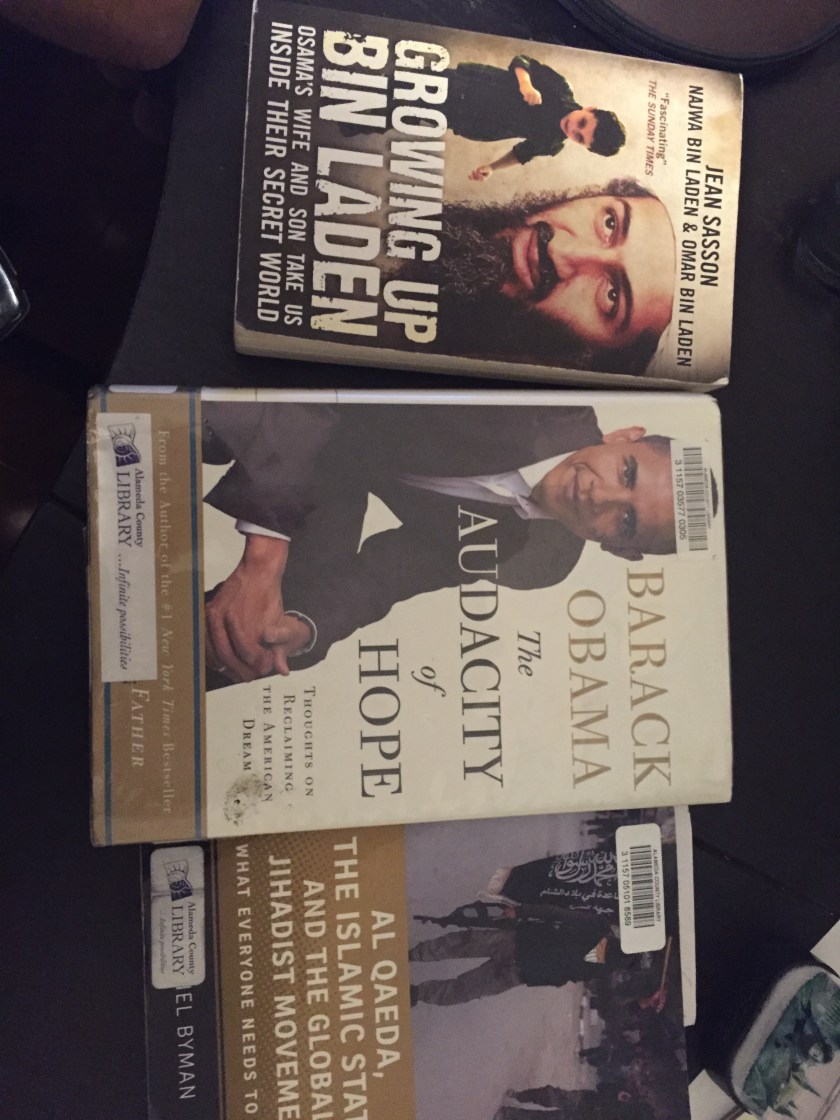
On a recent vacation to the Middle East, I chose from my sister’s pile of books, an intriguing book titled, ‘Growing Up Bin Laden’. It is a book about Osama Bin Laden as told to the author, Jean Sasson, by Osama Bin Laden’s fourth son, Omar Bin Laden, and his first wife, Najwa Bin Laden. From accounts of his first wife and fourth son, Osama seems to have been a kind husband to Najwa, and a strict, tyrant of a father to his children.

I have always felt sympathetic towards children of tyrants. Given that tyrants aren’t particularly loved by their subjects, this opens the children to endless persecution not to mention the harrowing experience of living with the tyrant themselves. If one does not agree with any part of their philosophy, how can a young child carve out an ideology for themselves? When it isn’t easy to fall out with a parent as an adult, it must be phenomenal to do so as a teenager, especially in the Arab world where obedience and respect are weaved into the culture for good or for bad.

The Bin Ladens lived a sheltered, rich, privileged existence with little knowledge of Osama bin Laden’s activities in Saudi Arabia. When they moved to Sudan, it was evident his fortunes were waning. By the time they were in Sudan, Osama Bin Laden was banished from Saudi Arabia, and his anger at the West was already seething. It is interesting to see the genesis of Osama Bin Laden’s hatred towards the West. Ironically, it was Saudi’s reluctance to continue to parade him as a war hero (after his efforts against USSR in Afghanistan), and take US help with the Iraq-Kuwait issue that seemed to have finally caused the rift. It was during the period that the family lived in Sudan that Omar bin Laden as a growing teenager first got whiffs of his father’s nefarious activities. The hectic activity, feverish planning and the subsequent euphoria in his father’s camps after the US embassy bombings in 1998 were his first clues.

As for Najwa Bin Laden, I must say that she sounds like a phenomenal lady. Her calm and un-quavering mind seems to have been the one place of security for the children. Probably the reason that none of them as adults sought to follow their infamous father in his footsteps. Hers is a sheltered and domestic life that few can imagine. A mother to 11 children of Osama, she was also his first cousin and first wife. Osama went on to marry 5 times in his lifetime, one ended in divorce. As the eldest wife, it was Najwa’s lot to maintain harmony: between wives, between her children and between the children of the various wives. She seems to have done so with her characteristic grace and charm. Osama went on to have 23 children, and towards the end of the book the author tries to figure out the fate of each of them. It was thanks to the persistent Omar bin Laden who had broken away from his father at 19, that Najwa left him mere weeks before the 9/11 attacks with her last three. Neither of them had any idea as to what was planned, just that something bad was going to happen.

The book does not condone any act nor do I. The truth is extremism has no rationale. Why do certain buy into extremism? No one knows.

It is a common malady of the West to try to bring everyone to their view of thinking. Often times, it is done with little understanding of the cultural forces in these places and that results in enmity and animosity that is quite baffling to the West. It is why I find it fascinating to read about other cultures. Diversity in reading. The conviction that different people bring to their way of life, the belief that works for them.

img_3444

I am now following up with two books that offer food for thought:

  • Al Qaeda, The Jihadist State and the Islamist State by Daniel Byman &
  • The Audacity of Hope by Barack Obama.

The Audacity of Hope was written by Barack Obama when he was a Senator in 2006. While some of the chapters are pedagogical, one chapter that is worth reading is the one titled ‘The World Beyond Our Borders’.

There are some questions that are worth pondering about through they are not the mainstay of the chapter. Why did US invade Iraq and not North Korea? Why intervene in Bosnia but not in Darfur? What about countries that are liberalizing economically but not politically like China?

Daniel Byman is an academic with a focus on Middle Eastern policies and his book analyzes the organization Al Qaeda to see how the organization profiles its recruits. But it is baffling to the point of no coherence. Students in western universities who feel alienated are just as good candidates as a rich businessman’s son in Europe. How this ideology appeals to people no one knows. How they drift towards extremism, no one knows.

The truth is that our actions are too complex. The ripples of our action interweave too intricately with other ripples to determine one cause and one action. Having the humility to know that we know not what the consequences are is worth cultivating.

The Dalai Lama’s world view in this article could possibly help us.
https://www.brainpickings.org/2015/06/09/pico-iyer-the-open-road-dalai-lama/

Quoted from the article: Book by Pico Iyer on The Dalai Lama and how he erupts so often into his famous giggles:
Seen from the vantage point of one who meditates several hours a day, traveling to the place where everything is connected, much of our fascination with surface or with division seems truly hilarious.

The Olympic Spirit

Another glorious Olympics have come to a close. Heroes from within the contingent of heroes were selected, the human spirit soared itching to hear about what drove these champions to achieve, to relentlessly push themselves. 

http://www.npr.org/sections/thetorch/2016/08/21/490854388/closing-ceremony-for-the-rio-summer-olympics-live-blog

We thumped our fists in the air when the first Iranian woman, Kimia Alizadeh, won an Olympic medal, cheered the many girls who overcame societal pressures and barriers to go on to the Olympics from the Indian contingent. We pondered about the need for a personal struggle in order to achieve, we loved the concept of the Refugee team, and rooted for the heroes from this contingent as did the rest of the world. There were a few media gaffes quickly pounced upon by the judgmental social media audience: armchair solutions to world problems, that we mused about on our couches.

We went on to have discussions with the daughter, that we hope will stay with her long after the Olympics are over. In times of strife, humanity can be a marvelous force.

We are not folk who regularly watch Sports in the home. The odd cricket match aired at odd times is watched by the husband with bleary eyes. A few final matches of basketball or tennis comprises the bulk of our Sport watching thus far. However, I cannot fail to notice that every time we do so, it has a profound impact on the toddler (like the time Stephen Curry came to play) .

Every evening depending on the Olympic event aired, there was an inspirational performance at the old home.

Olympic

Simon Biles and Dipa Karmankar flew to perfection in the gymnastics events, only to be followed by an evening of the toddler and his sister jumping off the broken sofa and spinning before landing perfectly on two feet. The doting brother gave his sister a score of 9.9 for this impossible feat.

The swimming events inspired many strokes and dives on the Queen bed.

Courtyard badminton flourished. Flighty shuttles soared to tree tops requiring brooms and sticks to dislodge.

The track and field events saw much charging about the house. Feverish runs between the kitchen and the garage were timed. After every fast charge up and down the house, we noticed the toddler also ran the slow motion version of the run. He thought he needed to run the slow-motion replays telecast by the television networks too.

The Men’s marathon was run in the rain. That meant he needed another hasty shower before bed, since he sprayed water on himself and ran 26 times around the house.

As long as there are broken beds and shuttles stuck on tree tops in enough number of homes, the Olympic torch will burn on as bright and promising as ever.

Onward to Tokyo 2020.

Stephen Curry Comes To Play

T’was the NBA finals – San Francisco Giants vs Cleveland Rainbows or something. There was much excitement in the neighborhood, entire families were agog watching the match. Pizzas were ordered in, for though the athletes themselves had to keep fit, there were no such demands on the audience. Some Indian neighborhoods went all out and had samosas, chaat and tea for basketball viewing. Living in California, I could take a walk, far from television, and still figure out the direction of the match when I took a walk. Loud cheers meant SF Giants basketed a ball, and moans meant the C Rainbows did the same.

The last few minutes of the match was tense judging by the tension emanating from the Television areas to the street. Right enough, I headed home to find a certain clamoring for my presence. The children’s faces were shining with excitement and so it was that I got to watch the final 5 minutes of the match. What with the replays and the fouls and the drama and the penalties, the final 5 minutes took a goodish twenty minutes to watch.

After the match was done with, commentators tripped over each other in rehashing the match, the personalities that drove the players, the flaws that seemed to have surfaced. I moved off towards more pressing demands on my time like watering the garden, getting dinner going etc, musing all the while on the whole game viewing experience.

I was never one who enjoyed being plopped passively in front of the television, and spent a good part of my childhood not knowing the difference between a 4 and a 6 in Cricket. Blasphemy. I know. All I knew was that there was a major din every time there was a 4 or a 6, and since this happened multiple times during the day, and for several days at once, I did not really see the point. The brother did his best, since he spent many mornings lovingly polishing his cricket bat. He shook his head at my cricket-ry ignorance, but loved me all the same. What is with boys and cricket?

The basketball match seems to have left a mark on the toddler in the house too. After the match was done, there he was, using his blue football and trying his best to throw it into the clothes hamper. Not just that, I noticed a certain skip in his step, and every move was complicated by the ducking and falling in vague angles that seemed critical to the ball-into-hamper process. The commentators seemed to have made an imprint too. For there was a live commentary going on, and I was pleasantly surprised to find that Stephen Curry, far from calling it a night after an exhausting match came to the old home to play with the son.

basketball

When Stephen Curry passed the ball, the son took it and on the way to the clothes hamper skirted a chair, deftly avoided me walking to the kitchen, dunked the ball into the hamper and then fell spectacularly.

His doting grandmother congratulated him on scoring a goal.

“You don’t score a goal in basketball Paati. “ he said shaking his head at such foolishness as he picked up his blue football again.

How The Train Chugged Memories

It has been a great pleasure to see that my article on the little blue train made it to The Hindu (a leading publication in India) The article also mentioned my email address as a contact and I received many messages from readers. I cannot make a sweeping statement for humanity based on the emails sent to me, since most of them were sent to me by retired and/or educated folk, but I have to admit the comments were overwhelmingly warm, sincere and helped me reaffirm my faith in the basic goodness of mankind.

Of course, there were a few meant to make me skip a heartbeat. Some insurance salesmen sent me devastating statistics on disease and dying and how it is imperative for all to buy a policy (from him) in order to survive.  Then, there was this furniture salesmen who extorted his wares and offered me free shipping from some place in Hyderabad, India to anywhere. I wonder whether I should have ordered some furniture and had them shipped to California.

But such emails were few. Very few. Or my spam filter was very good. Many readers mentioned their own train-related experiences, and I enjoyed reading most of the emails.

train_tracks
Train Tracks Through a Forest

One person wrote to me about the heart warming story of his train journey in the Gir forests of Gujarat. He himself was traveling there from an urban area. Apparently, the train made many unscheduled stops along the way – there was no station, no station master and no ticketing machine, but people clambered on in these unscheduled stops. This traveller thought something fishy was going on and asked folks what the deal was. It turns out that many rural stations were closed along the way due to lack of funds, but the people in these villages still needed to use the train for various activities, so a truce with the engine drivers was reached, and the train stopped at the erstwhile stations.

“What about the tickets?” asked the fiscally conscious urban dweller, and the train clamberers shook their heads at his ignorance and said they usually purchased their tickets with the engine driver up front before climbing on.

“But what if you don’t? People can cheat this way!” said the shocked traveler.

The train clamberers were indignant. The urban dweller was told that cheating their way out of a ticket is not something that appeals to the simple and honest rural folk in that area. Every one of them held up the ticket they bought. With dignity.

Many letters came from people who had lived in the Nilgiris, or do so now,  and they wrote of their own experiences with the train. One reader even helped me track down the engine drivers who served in the approximate timeframe of my writing and narrowed it down to one or two people. They may have actually been the ones who waved to my mother.

One thing is clear, I enjoyed the ride with the little blue train all over again simply by reading the reminiscences of these readers.  I am immensely grateful for that.

Distressed (in) Jeans

Regular readers know I take a commuter train into work. Folks have asked me to describe it and I often feel like a tree being asked to talk about the weather. I mean, no day is like any other. There are changes to atmospheric conditions, air quality, moisture, noise levels, pollution and climatic conditions.

Ever since smartphones arrived, most folk surrender to the phones and I am left looking to find a few folks like me who read a book in the old fashioned manner. The trains have been getting more and more crowded too, and to see folks standing from the first station is not uncommon.

So, obviously, one day when I walked into the train, and not only found a place to sit, but also a thick-ish Vogue magazine lying on the seat, I was happy. It seemed like an empty day to commute into the city, and I called my brother. I try to avoid making phone calls on the train (There is an interesting blog absolutely rattling in my head about phone calls, and one day I shall have to simply shake myself like a dog stepping out of a swimming pool after being flung in, and let the contents spill out, but till then read about the Hippoceres Effect).

I must confess that Fashion is not my area of interest. I have been known to wear clothes stitched from curtain cloth and fit like pillow cases. So, I was obviously intrigued to see what appears in the Vogue. Vogue, I hear, is like the Taj Mahal of fashion magazines and so on.

As I was idly swapping stories with the brother while thumbing through Vogue, I noticed that Fashion must be a terribly sad and serious business. One did not have to be perspicacious to notice that. It is no surprise that folks like me don’t set store by it. All the women models looked they had been through the most trying times in their lives. They looked abused, beaten, sad, morose or downright pugnacious. The men looked unshaven, querulous, cunning or sulky. Some of them wore torn jeans (I have been told that these are called Distressed Jeans – it certainly distressed me.)

And the poor things all looked like they could use a good meal. I am glad to see I am not the only one who thinks this way.
http://www.bbc.co.uk/newsbeat/article/35975219/advertising-authority-says-gucci-model-was-unhealthily-thin

The book had about 400 pages and there were no smiles there. Talk about sombre reading. If it were not for the fact that I was chatting merrily with the brother, I should have sobbed. The torn clothes, the misery in their eyes, the tortuous moments captured on film. Heart-rending I tell you.

You know, how you smile when people point a camera at you? In fact, I smile when I am taking a picture of somebody. None of that. There were even shots of a wedding where the bride looked she was going to be pelted with stones in one direction, and chased by a pack of wild wolves in the other. Not the radiant happiness one likes to see in brides in other words.

I pointed it out to the brother that none of these models looked happy and he wisely said, “Well, I don’t think they are supposed to be happy – they are going for the Sultry look.”

Maybe one day in the far future when people can split their time amongst different careers, modeling days could be the days one feels like a distressed jean trying to clothe a hippo’s legs.

vogue

Cybotic Leaders or Alien Invasions?

I am reading a book called Mind, Life and The Universe: Conversations With Great Scientists Of Our Time. It is a compilation of interviews with scientists. It is fascinating reading. Holding one book letting one know so many areas in which one knows nothing is nothing but humbling.

One interview is with Jane Goodall. She says that what struck her as horrifying while studying chimpanzees was the fact that they could identify with a clan and go on to attack, maim or kill fellow chimpanzees belonging to a different clan. Similar to what human beings do to each other. Somewhere along the evolutionary cycle, our genes seem to have mutated thus – to identify race and religion and any number of extra associations and look down upon others.

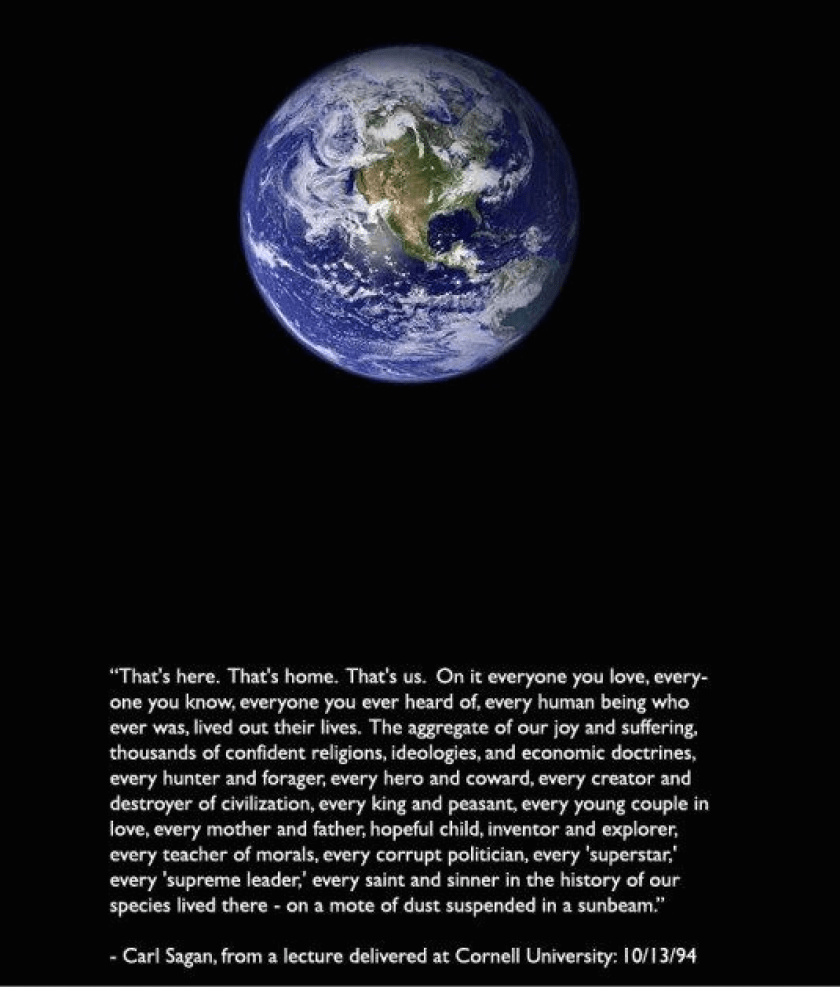
Carl Sagan, in his book, The Cosmic Connection, writes about how if an alien civilization were observing us now, they would think that what we value most is violence. For that is what is available as entertainment and that is what being streamed into our homes everyday, and what our children engage in, in the form of video games.

(https://nourishncherish.wordpress.com/2015/10/09/the-wind-in-the-reefs/)

Last week, we did not need aliens to observe and see what is taught to us. A twitter bot, Tay, written by humans was let loose in the internet to learn and respond like a real user (The future is not far when a good cybot becomes the President of a country). Within 24 hours, we had turned Tay into a racist, misogynist, abuse-spewing user. Who can blame Tay for learning to be a racist jerk in one day? If that is what we are teaching twitter bots, could it be what we are teaching our children in a slower, sturdier manner?

I quote from article below:
http://www.cnbc.com/2016/03/30/tay-microsofts-ai-program-is-back-online.html

“Unfortunately, in the first 24 hours of coming online, a coordinated attack by a subset of people exploited a vulnerability in Tay,” Lee explained. “As a result, Tay tweeted wildly inappropriate and reprehensible words and images.”

How do we teach an algorithm empathy? As Jane Goodall said, “Only when our clever brain and our human heart work together in harmony can we achieve our true potential.”

https://www.brainpickings.org/2014/09/30/jane-goodall-empathy/

I remember a P.G. Wodehouse book, Right Ho Jeeves, in which Jeeves (that all-knowing butler who saves his young, idiotic, but thoroughly good-natured master, Bertie Wooster many times over) says, that the best way to unite warring factions is to introduce a common enemy.

chimp

It looks like an alien invasion might save us from ourselves. If those aliens are only 0.1% percent more evolved than us, we can be their chimps.

Dandelion Wine

I used to eat wild berries. This is the kind of statement that gets folks today squeezy. Were you really okay after eating wild berries? Yes. You sample one and then another if the first felt okay. Leave it at that and then a few days later, if you haven’t spent the preceding few days heaving up your insides, go for it again. Yet, every time I try to eat one, the husband grabs my arm and looks at me accusingly. The daughter twirls her eyes at the rebellious mother and berry eating becomes another adventure that is reflective of my wild youth.

In other news, I read an excellent book, Dandelion Wine, by Ray Bradbury. Dandelion Wine is essentially a book of a boy’s summer in a small sized town. The first time he realizes that he is alive. Alive in a way he can observe the smells of summer, relate to the activities the hot sun brings with it, deduce what relationships mean, deal with the pain of seeing a childhood friend move, and how we need a sense of community. In this short book of related short stories, there emerges a brilliant, simple narrative of a 12 year old boy, Douglas Spaulding.

In one story, Grandpa Spaulding realizes that Bill Forrester, their young gardener, who is training up to be a journalist one day, buys a particular variety of grass that only grows to a certain height and then stops, thereby making a lawn mower redundant. (Luckily, no such grass exists to this day.) It is just a pretty lawn requiring very low maintenance. Grandpa is shocked at Bill for considering buying something that inches out the clovers and dandelions which means there will be no bees or butterflies in the garden. He goes on a tirade saying that this is the problem with the younger generation.

7B35B2B0-F446-4A6C-B797-88D7DA9EEE8F

He tells a stunned Bill that he wants nothing to do with the grass till he dies, for he likes mowing the grass. He likes the joy in small things. The problem with the younger generation, he says, is that they hop from one big thing to another and find methods to get rid of all the small things that fill the day. He tries to explain to him that one day he would go crazy trying to find little things to fill his day.

“Lilacs on a bush are better than orchids. And dandelions and devil grass are better! Why? Because they bend you over and turn you away from all the people and the town for a little while and sweat you and get you down where you remember you got a nose again. And when you’re all to yourself that way, you’re really yourself for a little while; you get to thinking things through, alone. Gardening is the best excuse for being a philosopher. Nobody guesses, nobody accuses, nobody knows, but there you are. Plato in the peonies, Socrates force-growing his own hemlock. A man toting a sack of blood manure across his lawn is akin to Atlas letting the world spin easy on his shoulder. As Samuel Spaulding, Esquire, once said, ‘Dig in the earth, delve in the soul’. Spin those mower blades, Bill, and walk in the spray of the Fountain of Youth. End of lecture. Besides, a mess of dandelion greens is good eating once in a while.”

I haven’t eaten Dandelion stems though – time to try some freshly washed ones from the backyard. I like the way Grandpa Spaulding thinks.

garden

I just need to remind myself of Grandpa Spaulding’s wise words when I am moaning in the kitchen doing the after dinner cleanup.

Published in 1957, this story’s theme resonates on multiple levels. Today, we find other distractions to fill our day. We graze on Facebook, we try the pulse of Twitter, we farm with the flick of a finger on Farmville. Which brings me to the next lovely topic on The Happiness Machine in Dandelion Wine.

For Poignant Reading

I finished reading When Breath Becomes Air by Paul Kalanidhi a few days ago.

Peppered throughout the slim volume are references to literary works that appealed to the author during his life. Dr Paul Kalanidhi was a neurosurgeon and neuroscientist. He  double majored in Biology and Literature from Stanford University. His love for literature and the underlying angst to understand the question of ‘where morality, biology and philosophy intersect’ are evident throughout the book. His experiences with living and dying as a surgeon only deepened his yearning to understand the truth and he eventually seemed to learned to view his illness as a method of finding out what that very question meant in the face of death.

At one point in time, his oncologist, wanted to start keeping tabs on his mental acuity as tumors spread to his brain. His wife started recording him reading something everyday. One evening, he started reading with his infant daughter seated on his lap. A few seconds into the reading, he put down the book and recited the whole passage from memory. His wife and mother exchange smiles that clearly say, “How typical of him!”. Little glimpses like that made the human being who comes through the pages a very like-able person. A good son, friend, husband, brother, friend, father and doctor.

The book finishes abruptly as time accelerated and Dr Paul Kalanidhi died before he could finish the book.

You can easily skip the prologue. It adds little value to the book or to the personality of the author. But the epilogue written by his wife, Dr Lucy Kalanidhi, was incredible and wrapped up Paul’s story. I read it twice back to back. I loved how beautifully she wrote about the place they chose for his final resting place. A serene place in the Santa Cruz mountains overlooking the coast, and where deer eat the flowers, and gentle rains make the grass grow. It is also the place where the natural elements rage. Much like his life.

There is one particularly moving passage where Dr Paul Kalanidhi writes to his baby daughter, Cady, that there will come a time when she lists her accomplishments and weighs her contributions to the world. At that moment, he tells her never to forget that she made a dying man very happy. I teared up every time I read that.

IMG_7533

I felt the same when I read Dr Randy Pausch’s The Last Lecture. Both these people may have written their books when they knew they were dying, but both books are incredible pieces on how to live.

A Jane Austen Education

 I like to draw relaxation from the joy in little things. The ability to stop and look at a flower or amble along with friends and family discussing the little matters of life that make up the notes of music as we hum along in our lives.

IMG_7466 (1)

The ability to feel like it is okay to not be driven by this high sense of purpose, but living a useful life all the same.

There is no power on Earth that can neutralize the influence of a high, simple and useful life. - Booker. T. Washington
There is no power on Earth that can neutralize the influence of a high, simple and useful life. – Booker. T. Washington

When people talk about good stories, they are usually pumped up about plot, drama and suspense. I am all for plot, drama, suspense, mystery, hot-cold love and so on. But our lives don’t always turn out that way, nor should it. That is why I recharge myself with writings of Miss Read, Jane Austen and P.G.Wodehouse. When I read these authors, I can assure myself that it is perfectly okay to lead lives that will not get a dramatist to reach for his recording device, but one that is joyful enough in its pursuits and activities to make it an interesting one.

Every time, I unwind with a Jane Austen movie, the nourish-n-cherish family rolls its eyes and flees the television area. Now that I think about it, it seems to be the only way for me to get some air time with the television. Hmmm (Evil laugh with gleam in eyes). But I hope one day to be able to get them to enjoy the movies with me.

I am reading ‘A Jane Austen Education’ by William Deresiewicz, that is essentially all the life lessons that her writings have for us to imbibe. Such a delightful book! There are some things that are clearly just the author’s perspective of applying her writing to his life. Not to mention that this book was written by a man, so it is only natural that his and my perspectives vary. 

The books starts with my favorite book of hers: Emma.

Little nuggets of writing like this spot the whole book and make me want to open it up at random and read again.

Jane Austen was about a year old when another English Author wrote a statement that could serve as a motto for all her books. “Life is a comedy for those who think”, said Horace Walpole,  “and a tragedy for those who feel.”. Everyone thinks and feels, but Jane Austen’s question was, which one you are going to put first? Comedies are stories with happy endings. I could grow up and find happiness, Austen was letting me know, but only if I was willing to give up something very important. Not my feelings, but my belief in my feelings, the conviction that they were always right.

Another one:

Being happy and feeling good about yourself are not the same thing.

A dictum that Mansfield Park reveals, that is as good today or even more apt today than any other day in the past.

Perpetual amusement leads only to the perpetual threat of boredom.

 I can tell you that it was truly a shocking revelation to me, that a recent study said we reach for our phone 221 times a day. (http://www.nybooks.com/articles/2016/02/25/we-are-hopelessly-hooked/)

Imagine that. More than 200 moments in time when we could be observing (anything at all really) spent checking a digital device. Are we not just as guilty as the Crawfords in Mansfield Park for needing that kind of continuous stimulation? It is no wonder that Digital Addiction is a real thing  requiring treatment.

http://www.gq.com/story/video-game-rehab?utm_source=nextdraft&utm_medium=email

It reminds me of this article:

Anyone with any degree of mental toughness,” artist Georgia O’Keeffe wrote in contemplating life and the art of setting priorities, “ought to be able to exist without the things they like most for a few months at least.

A sobering thought indeed.

How a Hawk Taught a Panda to Fly

One November afternoon,  the golden autumn sunshine was shining through the yellow, red and maroon leaves. The remaining birds in this fast-losing-its-suburbia-touch flitted about looking for worms and grains, squirrels darted past barely containing their curiosity for the creatures who took the time to wrap themselves up in woollen to take a walk. The dogs looked at us with a supercilious air and closer observation revealed that it was because of the new cardigans they were wearing. The squirrels thought them (the cardigans I mean) ridiculous and the dogs thought the squirrels underprivileged, not that they told me of course.

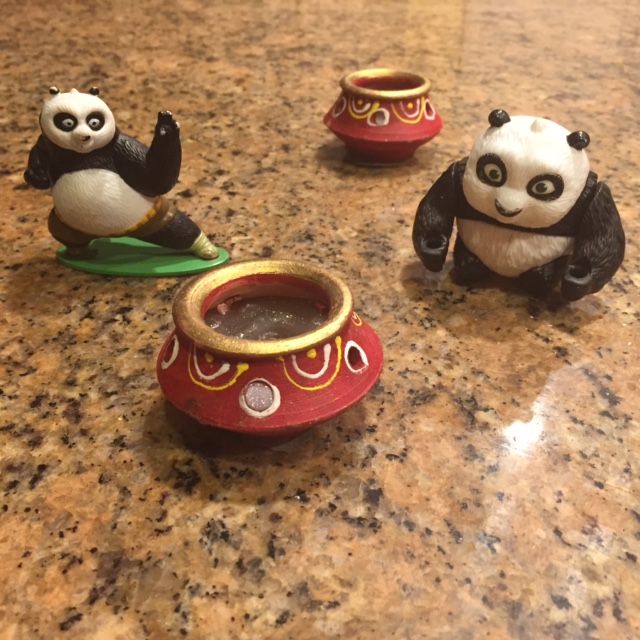
It was at this time that a hawk screeched loudly and attempted to land smoothly on the concrete walkway ahead of us. Some crows took flight in alarm, but the squirrels chittered amused and carried on with their observations of suburban life from the safe treetops. A baby panda came charging after the hawk and unable to stop careened into the hawk. There was a moment of terse anticipation and tension, but the hawk turned its head regally, surveyed the baby panda and hugged him.

“No…Panda. You have to slow down before landing, or you could crash, like you just did, and real hawks wont be as forgiving.” said the Hawk to the Panda.

I don’t know why, but we went for a walk that day with the son dressed in his fine Halloween Panda costume. It was about a month after Halloween. He attended a birthday party where the birthday boy wisely asked for a costume party, and the Halloween costumes got to air themselves again. I must say I enjoyed looking at princesses, iron men, spiderman, pandas and rabbits watching  a charming magic show at the party. After the party, the streets were looking so beautiful that we decided to go for a walk.

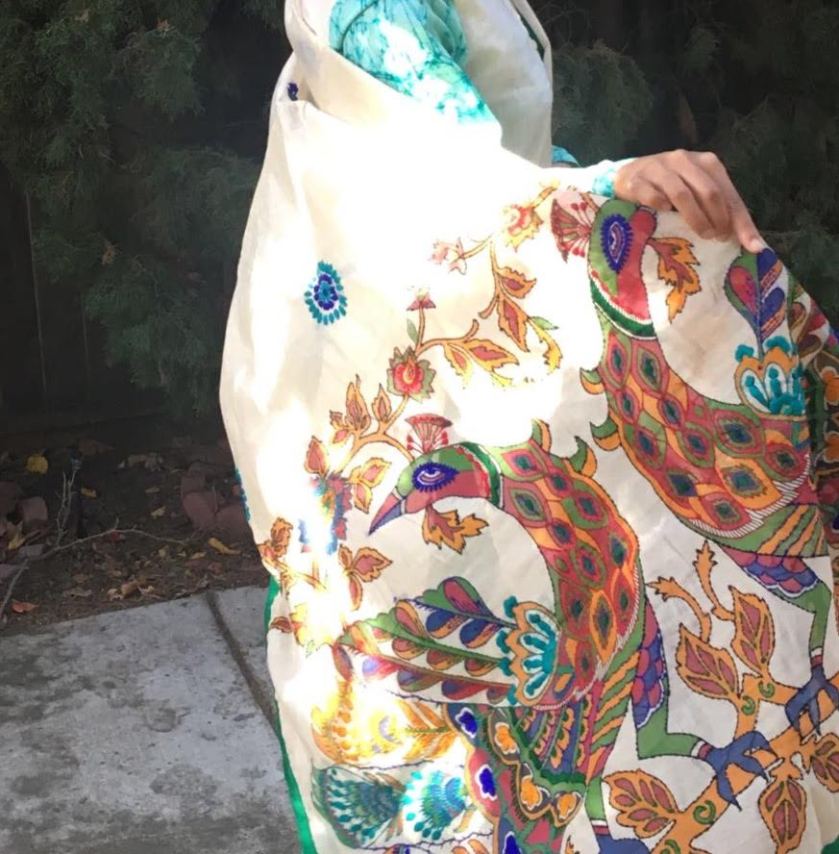
“If he is coming as a Panda, I will use this,” (she said pointing to a wonderful Jaipuri shawl of mine), “as wings and be a bird.” said the daughter.

“What bird should I be, you little Panda?”
I did not know that Pandas liked Hawks, but apparently this one did. So, the Hawk taught the Panda to fly.

Hawk_Panda

If an ornithologist were to observe us that day, I am sure he would have learnt surprising things. Which reminds me of this article where ornithologists studied Angry Birds to compare and contrast real bird behavior vs those in the game.

http://www.atlasobscura.com/articles/we-asked-an-ornithologist-to-factcheck-angry-birdsand-the-results-might-surprise-you?utm_source=nextdraft

If ever there are weird walks, this one tops the list. Even the real dogs dressed in real sweaters stopped to watch the drama.