The Concept of Conscious Conscience

“Appa got me the Cheetos”, said the daughter sounding gleeful over dinner.

Cheetos, I had explained to her that morning, was full of food coloring, and therefore not a good idea.

“You went and asked him for that after everything I explained to you this morning? Carcinogens. You know what? I think you should look up Mammoth DNA sequences and compare and contrast it with the genome of an Asian elephant.”

“That is the world’s worst punishment ever!” she said pulling an impressive teenage affront with ease. “I don’t think anyone has been given that.”

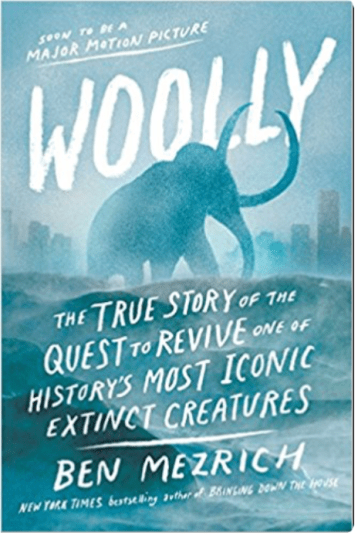
“Well..there are several reasons you are being given that, “, I said. “One: I am reading the book that is all about resurrecting the woolly mammoth by impregnating an Asian elephant with mammoth genes. Two: Did you know that the elephant, that large an animal as it is, does not suffer from cancer? Maybe there is something in it’s genetic makeup that prevents malfunctions during cell reproduction.” I said giving her my Idiot’s Guide to Genetics lecture.

It’s true. I had just finished reading the book called “Woolly – Bringing a woolly mammoth back to life” by Ben Mersich. For someone who does not know the first thing about genetics and genome sequencing and such, this is a good book to read. It is written like a fast paced novel, moving between the lives of reclusive scientists, Sergey and Nikita Zimov in the Russian Tundra and Jy Minh’s work in Hwang Woo-Suk’s Sooam Laboratories in South Korea to George Church’s lab work in Harvard. All these efforts are working towards resurrecting the woolly mammoth using DNA samples obtained from mammoths preserved in pristine conditions in the Arctic Tundra.

Screen Shot 2017-10-27 at 4.37.00 PM

If that feels like Jurassic Park, it is, though the book explains why it is not exactly like Jurassic park, but sort of. It is Pleistocene Park – a concept that beat Jurassic Park by 2 years in conception.

If you are looking for a scientific explanation of techniques, and theory, this isn’t the book. The book is to be made into a movie, and is written as such: I can imagine the scenes leaping off the pages. Following the Russian scientists on a quest to resurrect life in the Arctic life makes a thrilling tale. Combining that with the race by Korean scientists to engineer and reverse engineer life, and scenes from a research laboratory down in Harvard makes for brilliant movie scenes. Only as the book assures you, it is not fictional. It is true. You will pause and think of ramifications, of the evil that can be wrought when powers like this fall into wrong hands, of political leaders with no qualifications dictating the genome factory.

Life from life, Minh thought, as he moved past the implantation table. Still, he couldn’t shake the chills he felt as he thought of those 3 dogs, lying supine, tongues hanging to the side around the breathing tubes, as the surgeons did their work. He chided himself for his own backward thinking: of course, futuristic science always seemed unnatural – until it became routine.

The discussion that evening over supper bleated over to the world’s most famous sheep, Dolly, who had been cloned in 1995. Sheep, Mammoths and Dogs make good cloning subjects for they do not yet touch the uncomfortable topic of human cloning.

http://www.businessinsider.com/sooam-biotechs-is-bringing-back-the-mammoth-2015-9

Human cloning, however, is a topic you can rely on authors to explore.

The thought provoking work by Kazuo Ishiguro, Never Let Me Go is worth a read in this context. The book talks of a future in which clones are generated from a master copy, and are raised separate from mainstream society, just so that they can function as ‘givers’ and ‘carers’ – a euphemism for organ donations. It is a heart rending read, as it centers around three young people, who have the same feelings of love, jealousy and friendship that ‘mainstream’ people do. Their art work is collected by a lady, who is trying to petition the state against this barbaric practice as Art shows the soul, and clearly the ‘spares’ have souls.

Never_Let_Me_Go
By Source, Fair use, https://en.wikipedia.org/w/index.php?curid=15168925

Human beings are tinkerers – we always have been. What have we in store this time?

  • Is there a concept of the Soul that is separate from the engineered parts of cells, muscle, tissue and genes?
  • Is Consciousness something that can be engineered?
  • What role does our conscience play while tinkering consciously?

Related read: Of Dinosaurs, Genes & Aliens

Sailing The Solar Winds

“So, you are saying that we have no method of seeing the images on the CD now?”

“Not without a Windows machine. We have an external CD drive that we can mount, but if you do not have a Windows machine, you cannot install the software to load those particular images – yes.”

The husband looked sheepish. He is the tech enthusiast between the pair of us – a mellow one compared to some of our friends, I will grant him that. But I felt sorry for the fellow as he said we will not be able to install and retrieve the images on the disk. He is the one who feels elated when a new breakthrough happens that will disrupt storage as we know it, and all that lark.

I was holding a CD that contained some images that could be retrieved by the software also on the CD. I had been given the disc in 2017, and I was attempting to see the images in 2017. I could not. I live in a home spotted freely with software engineers. We trip over cables, hunt for laptops and so on.

I looked at the CD disc in my hand, and burst out laughing.

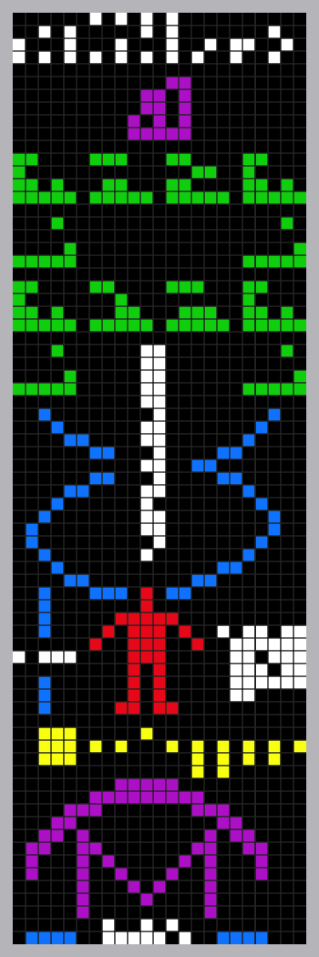
To think that we sent the Arecibo message to a star cluster some 25,000 light years away hoping that extra terrestrial life will receive and interpret it. Carl Sagan and an impressive set of folks came up with a message that showed humans, a double helix, numbers, elements and so much more. Read all about it here:

Arecibo Message

Arecibo_message.svg
Image attribution: By Arne Nordmann (norro) – Own drawing, 2005, CC BY-SA 3.0, https://commons.wikimedia.org/w/index.php?curid=365130

How confident we are that if intelligent beings do receive some radio messages, they will have the technology to extract it in the format we sent it to them in forty years ago. Just for fun, I’d like to see what would happen if that dratted message were to flop back onto Earth because of a series of mis-bumps along the way. We would first drive ourselves into a tizzy that beings of another planet reached out to us, and then I am not sure we would be able extract our own message.

I was reading an article recently about human beings sending a probe to our nearest galactic neighbor, Alpha Centauri.

$100-Million Plan Will Send Probes to the Nearest Star

The article talks about using “light sails” to ride those beams to other stars. I quote:

Although they have no mass, the photons in a sunbeam do carry momentum. In sufficient numbers they can push objects around in the vacuum of space. Bounce enough photons off a large reflective spacecraft and light alone can continuously accelerate it without the need for any onboard fuel, much like a sailboat catching a ride on the wind. Such spacecraft are called “solar sails.” This elegant idea goes back more than 400 years, to the German astronomer Johannes Kepler, who noted that a wind seemed to blow comet tails away from the sun, and that it might someday be harnessed to push a celestial vessel through the “heavenly air.”

The explanation makes my head swim somewhat. They plan to send the probe that will zoom past Alpha Centauri in 20 years time, and hope to see images of an earth-like planet orbiting the star.

But hopefully we catch something worth catching, since as Stephen Hawking so elegantly put it:

Stephen Hawking explained his support for the project as less about science and more about survival. “Earth is a wonderful place, but it might not last forever,” Hawking says. “Sooner or later, we must look to the stars. Breakthrough Starshot is a very exciting first step on that journey.”

Now what took me on this interstellar, intergalactic quest you ask me. This is where you see me scratching my head, looking goofy, and mumbling something about googling on how to see images in a CD that I hold in my hand.

cd

Hola Amigos! Tres Bien Nachos

This article appeared in The Hindu’s Open Page Section dated 15th October 2017

“Hi Amma. Konichiwa!”, said the little fellow as he pranced home from school.

Konichiwa?”

“It means Hola! Hello in Japanese.” said the fellow beaming.

“Oh that’s nice. Konichiwa. It sounds like a tinkling windchime. Koni-chiwa. “

Ni Hao is Hello in Chinese.” said the Hello expert.

“How did you know these things? Did they teach you in school?” I asked.

He pulled out a beautiful children’s book called ‘Say Hello’ by Rachel Isadora, and said he picked that from the library that day. That night we snuggled into bed with the Say Hello book. I must say that it is a most beautiful inclusive book and includes illustrations as a little girl walks through town saying Hello to the various people she meets.

The Shalom Aleikkum, Ni Hao and Konichiwa-s roll out with ease, before she finally finds her Abuela and says ‘Hola!’

The daughter sometimes joins us for story-time, and this time the two minute read turned into a twelve minute reminiscence into what is lovingly known as the Hola Snafu At Cancun.

The fellow at the gates to the resort in Cancun was looking morose, and wondering whether there was any purpose in going on sitting at the resort gates like this. There were folks inside going about their duties sipping a whisk of margarita as they were preparing some for the guests at the bar inside, while he had an iced water bottle that had long since melted the ice and left a puddle around it. Our van pulled up after a day’s trip to Chichen-Itza, and I poked my head out.

Hola! Uno nuevo nuevo deux.” I said and smiled. I gave him the room number allocated to us at the resort, so he could let us pass. It had been a long day with dinosaurs, asteroids, nuclear warfare by aliens from another galaxy, hobnobbing with the spirits of those who built the pyramids centuries ago.

The fellow chuckled to himself and looked uplifted in spirits. Just for this performance of Spanish, it was well worth giving up the spot to work at the bartenders backyard. He waved us in cheerfully, and I said in perfect Spanish. “Thank you Amigos. Have a tres bien day!

I turned around to see the daughter who incidentally learns Spanish up at the school rolling in the aisles and laughing with her little brother. “Did you just think you spoke Spanish?” she gurgled when I asked her what the matter was.

Our van was trundling in toward the resort, so I must have said all the right things, I said Oui with confidence.

“Have a tres bien day! Tres Bien is French Amma, not Spanish!”

It sure was. I had not considered the possibility that French and Spanish occupied the same area in the old brain. Amazing what all happens inside the walnut isn’t it?

“Well Spain is near France, so I am sure they will understand. “, I said miffed that my marvelous attempt at Spanish was being given the rip down by the children.

Screen Shot 2017-10-05 at 10.44.52 AM.png

“Yes! But Mexico isn’t near France. If I were him I would have asked for the room number again, and keep you there till you got it right.”

I was on solid ground there. Our room number was 1-9-9-2. Uno Nuevo Nuevo Deux.

Nuevo means ‘New’ ; Nueve means 9”, said the Stickler for Spanish Perfection.

“Why didn’t you say anything then, eh? Hola?”

I hola-ed and tres bien-ed and buenos nachos and muchos gracias-ed my way through the Mexican resort much to the delight of the staff there. Some of them taught me that Buenos Nachos means ‘Good Nachos’, not Good Night but smiled along indulging me in my Spanish dreams of fluency.

We all laughed, but the husband said that the important thing is that I made the effort to communicate with them all, and they understood that. Even when I said Muchos Nachos Tres Bien, and Google translator had no clue what that meant, the server who had laid out dinner for us with amazing vegetarian fare knew I meant well, and bestowed an avuncular smile on me.

The recent mass shooting at Las Vegas has horrified America yet again, and the press has said the latest terrorist attack was because the terrorist was a lone wolf. (Yes, when an act is calculated and carried out to spread terror, it is a terrorist attack, ask any fellow who works up these places that curates dictionaries and so on. The press seems to have this curious idea that the word can only be applied to certain sub sects of people, though the feeling of terror is universal.)

Anyway, as I was saying the Lone Wolf – I read a book by Daniel Byman a professor on Middle Eastern studies who tried to see the correlation between how terrorist organizations recruit and train towards extremism and any other factor (economic, academic, geographic), but came up with no correlation whatsoever. It was baffling. There was only one unifying factor among each of the recruits: They were all Lone Wolves. 

That got me thinking that every time we spot someone feeling lonely in our community, why not send a Hello or Hola or an Konichiwa or Ni Hao or Namaste or Salaam Alaikkum their way? We never know when a simple smile and word can change the course of one’s day. A smile is as universal as loneliness after all.


Freedom Is Sweet

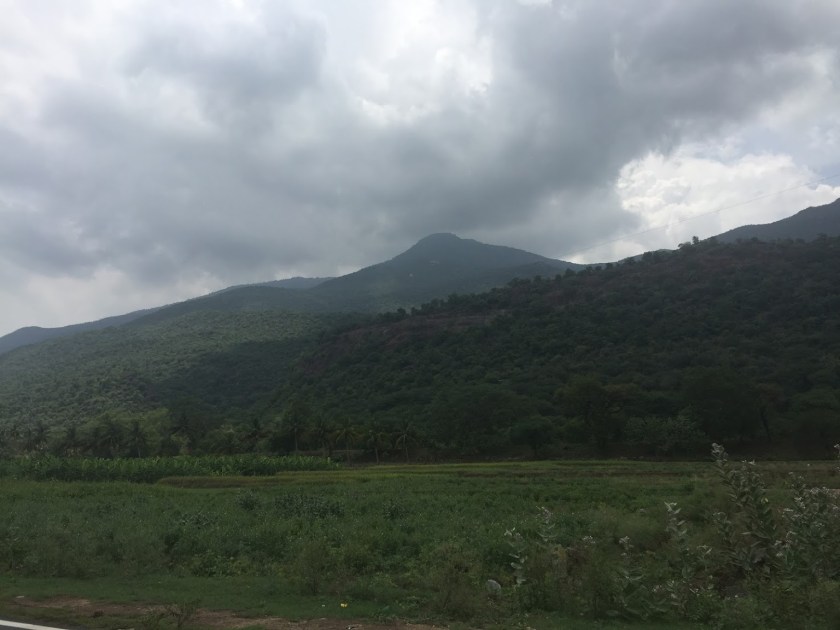
Driving through lush green hills, past wide rivers and huge boulders, the route was marvelous. We had been a-visiting India for a short trip. The roads were smooth, and the rain clouds brought on a blast of monsoon rains. The little car burst forth joyfully on the empty roads swerving like a little child to splash puddles along the way.

The driver may be a grown man who sports whiskers on his face, but the heart the body houses is a child’s when it rains.
“You know? Two years ago, I took this road and it was agonizing to drive. The road was full of potholes, and our backs were sore for days.” he said smiling before splashing a big puddle again. The brother was driving and we were on the way to the city where my parents lived.
“What changed then?” I asked puzzled, for the gray ribbon in front of us was smooth and clean.
“Politics happened. The interim chief minister’s constituency is somewhere on this road, so we got our lovely scenic route done up – no charge.”

mettur_route.JPG

We reached home and affectionate greetings exchanged between parents, grandparents and children alike. A little while later, I was sprawled on the couch listening to the pater rile himself up with the news. Blithering-idiots-the-lot-of-them-are, seemed to about the gist of it, and I watched him amused.

The next day was Indian Independence Day, and the politicians were scrambling to see whose speeches would get maximum coverage on television, while ensuring that important topics of daily living were tabled for later. One incensed statement from the host of the News network forced the father to mute the television, and launch into a full scale explanation of politics that is best explained with a bedtime story. If you would snuggle in and close your eyes. Good then..:

There was a diamond ring, and everyone wanted it. But one strong, majestic troll had it, and did not let anybody else touch it. One day, the troll died, and all the remaining trolls fought each other for the ring. The troll children were hungry and thirsty, but that bothered no one. They are still fighting for the ring.

The End.

I know what you are thinking. As far as bedtime stories go, that was pretty rotten! I agree, but the state in which the parents live had recently lost their chief minister, and the squabble around the position was enough to make reality show hosts blanch. The populace has learned to look at the ensuing drama as such, and take a philosophical view of enjoying the good roads while they lasted.

We chewed the fat about the latest situ. in the United States, and how divisive strains were making themselves heard, and how we must do all we can to fight it.

Like Mark Twain said, The truth is stranger than fiction, but that is because Fiction is obliged to stick to possibilities whereas the Truth isn’t.

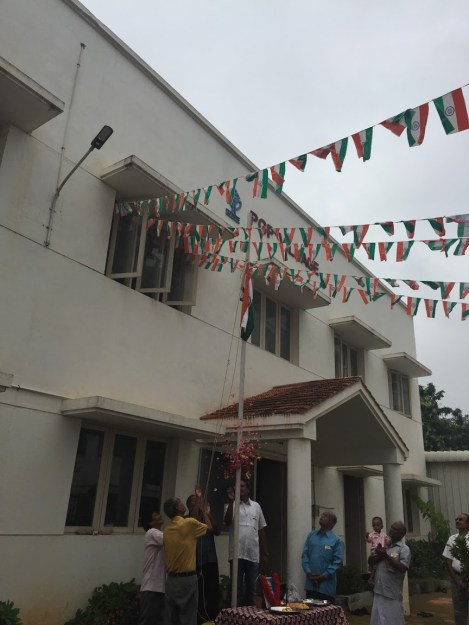
The next day was August 15th – Indian Independence Day, and we chirped with the birds, looked smart and went down for the flag hoisting in the community. I had with me my son and nephew – both five year olds who were eager for any activity involving the outdoors. As they stepped out, the boys were warned that they were not to take more than 1 sweet when offered the plate after the flag hoisting. If they were pups, I could have seen their ears drooping, but they bore the blow stoically enough and charged downstairs.

I stood there marveling at the fact that a month earlier we had celebrated Independence Day in the US. I looked around at the knot of people with whom I was celebrating Indian Independence Day. The stupendous privilege of celebrating Independence Day in the world’s largest democracies was not lost on me. To every one of us who looked at the flower petals fluttering down from the flag, freedom meant a different thing. To some of us, it meant living peaceful lives, to some, it meant having the right to dream, to some others, the ability to dissent. But we all agreed that it deserves celebration.

independence_day

Reading Lolita in Tehran, a book about the oppressive regime in Iran, was still in my mind, and as I was in the habit of reading particularly affecting passages to those near me ( a malady I inherited from the pater), I was doubly grateful to Democracy in spite of all its pitfalls. Fighting for diamond rings or no, taking a stand against divisive policies or not, we have something worth fighting for.

Afterward, we walked towards a small store. The path was an exciting one – past barking dogs, and motorcycles weaving their way through the streets. I smiled and asked for some chocolates for the lads. Their faces lit up with joy: Freedom is sweet.


The Butter Battle Course

When you look up the definition for religion, it states among other things that it is “a pursuit or interest to which someone ascribes supreme importance”

How many conflicts has the world endured, is enduring, and will continue to endure because of this belief to which one ascribes supreme importance? I had written about it here (religion).

Who was it who said that every good kind of learning  can be obtained from Childrens’ books?  I whole heartedly agree.

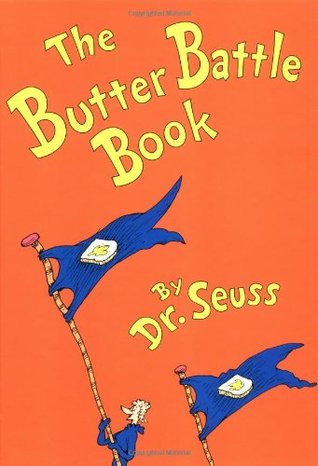
The latest book that I am babbling about is the Butter Battle book, by Dr Seuss.

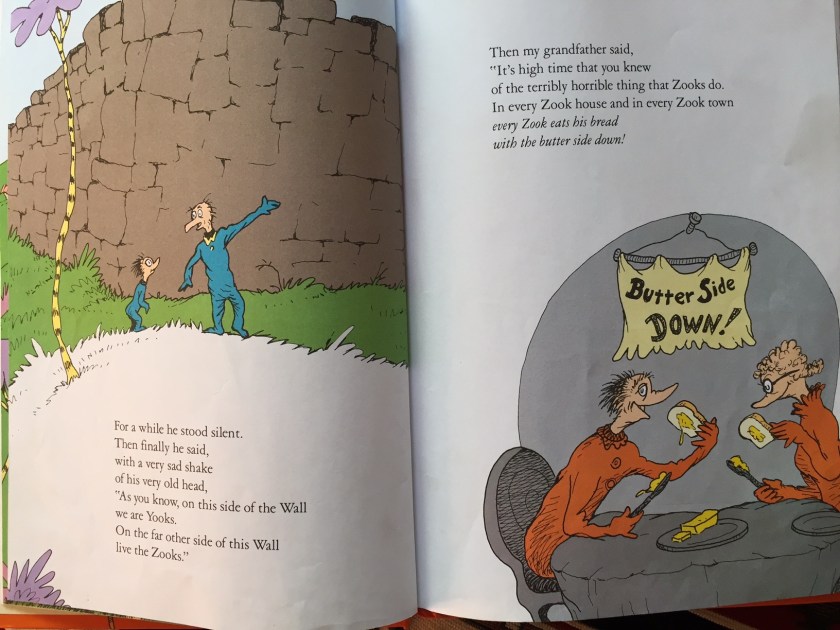
The Yooks and the Zooks live on either side of a long, meandering wall. The Yooks wear blue, the Zooks wear orange.
butter_battle

The Yooks think the Zooks silly for buttering their bread with the butter side down, while the Zooks think the Yooks are somewhat dim-witted for buttering their bread with the butter side facing up. The flags of the Yooks and Zooks represent the belief in buttering bread, and the animosity builds from this bread-butter-theory to which they attach supreme importance.

IMG_6227 (1).JPG

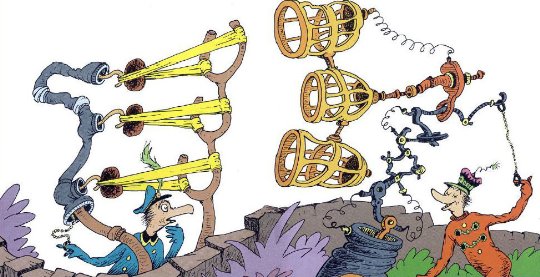
One day, the Yook patrolman is prowling the place with his Tough-Tufted Prickly Snick-Berry Switch, when a Zook pelts him with a slingshot. This sets in motion an escalating conflict, with both sides coming up with more and more exotic and dangerous arms with which to fight each other.

The Triple Sling Jigger, the Jigger Rock Snatchem, the Blue Goo-er, the Kick-a-poo kid operated by a cocker spaniel – Daniel, the Eight-Nozzled Elephant-Toted Boom Blitz.

butter_battle_2.jpg

The last page has the Yook patrolman sitting atop the wall with a Zook warrior. Both of them have in their hands a Bitsy Big-Boy Boomeroo – a small bomb that can annihilate life as we know it, signifying the nuclear threat.

I know we ask of no formal training as a politician: there are no politician licenses, no courses one has to complete to take up public office, but I really think there should be a set of children’s books that they all have to read and re-read as refreshers every year in order to stay in office. We could call it the Butter Battle Course.

The Butter Battle Book has of course given rise to great hilarity in the house. “Do you want to be a Yook or a Zook?”, we ask taking out the butter and the bread. We now butter our bread on both sides so we can be Yooky-Zooks, and sometimes Zooky-Yooks.

The next time any two nations start warring, I suggest thrusting bread buttered on both sides to both parties.

Complement with:
Kahlil Gibran on the Absurdity of Self righteousness
The Colander Religion
Bertrand Russell’s Teapot Religion

Essential or Eternal Communication?

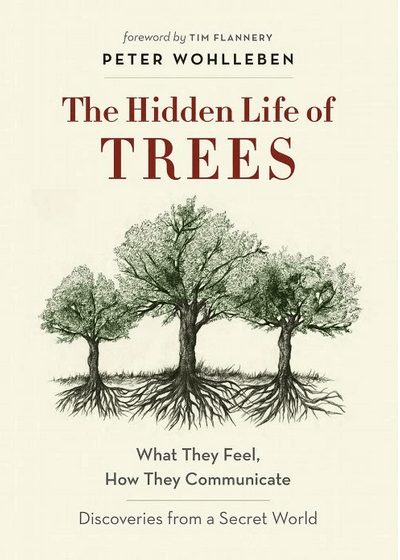
I recently read a book called The Hidden Life of Trees written by a forester, Peter Wohlleben.

Screen Shot 2017-03-14 at 8.59.19 AM

Trees have always fascinated me. I have tried becoming one with little success.

Their calm, stoic essence of being is reassuring. Trees are social beings, and they are capable of immense internal processes that not only sustain their lives, but also those of others around them.

Reading the book is like dipping into a life that we as a race can barely contemplate for as the author reminds us in the book, trees live life in the slow lane, and that is what made the reading experience refreshing. It is largely based on observations and of the forester’s study on the forests he helps to manage. Throughout the book, he cites relevant research studies that have been carried by botanists.

Trees are social beings and know that they can thrive if they look out for one another. Many interesting anecdotes dot the book such as the one with the giraffes chomping down the leaves of the acacia trees in the Savannah.

The giraffes there were feeding on umbrella thorn acacias, and the trees didn’t like this one bit. It took the acacias mere minutes to start pumping toxic substances into their leaves to rid themselves of the large herbivores.

The acacia trees that were being eaten gave off a warning gas (specifically, ethylene) that signaled to neighboring trees of the same species that a crisis was at hand. Right away, all the forewarned trees also pumped toxins into their leaves to prepare themselves. The giraffes were wise to this game and therefore moved farther away to a part of the savannah where they could find trees that were oblivious to what was going on. Or else they moved upwind.

How beautifully nature equipped the trees and giraffes for survival.

After reading about how effectively and essentially Trees communicate, I could not help comparing and contrasting our lives with those of our stoic friends. This frenzied communication lifestyle we have adapted as our own, often leads to amusing outcomes, but sometimes to questionable ones.

One morning, I set out to enjoy a leisurely week-end breakfast with the children. When the menu card says ‘Noodles’, the beaming sous chef in the home is more active than is called for. I doubt restaurant kitchens have sous chefs standing on chairs next to the chef gabbling instructions for all to hear, but our kitchen does.

AF1QipPGhzxZ4rpk1xkI0U0emQ8aWQ9bWbIm6mGj3v3r=I.jpg

Minutes later, we clattered down with our bowls of steaming instant noodles – there is something deeply satisfying about slurping the long noodle strings noisily, and reveling in the liberating feeling of not being governed by the ticking minutes of the clock for a change.

I was doing my best to ignore the incessant modes of communication that is our bane today, but I was still interrupted with the International Phone Call.  On the call, I was given the shocking news that Facebook, Twitter, and WhatsApp had been vying to give me, and told to check it all immediately. Apparently, the noodles I was eating that very day had 17% lead content. 17% lead. Funny because I did not feel like I had a metal tube lodged in my intestines after eating it, nor did I feel like an old ceiling waiting to be torn down. What it meant to say of course is that there were supposedly 17 parts per million of lead in the offending food item, a claim that in itself proved to be baseless later on.

lead

Quote from link: http://nextdraft.com/archives/n20170310/leaky-gut-reaction/

The wrongness of the initial stories is the result of a perfect storm of three factors: Technical subject matter, a master of disinformation, and always on race to publish stories quickly. It’s yet another reminder of the Internet’s five least common words: Let me think about that.

Should we learn the art of essential communication, and develop the ability to chaff it from the demands of eternal communication? Maybe learn a lesson or two from our stoic friends.

For a quick read: https://www.brainpickings.org/2016/09/26/the-hidden-life-of-trees-peter-wohlleben/

How To Become Dandelions?

I have wracked my mind to find what it is I would like to share about Women’s Day. Surely, I have something to say. Everyone had something to say: We celebrate women, we demand equality and abhor the crimes committed against womenkind. Yet, there I was on the sidelines still twiddling my thumbs and looking lost. Some said ‘Happy Something’. The day passed, and I must say critics would call the tripe I had written ‘pedantic and whiny’, and what is more, I would have to agree with them wholeheartedly and shake their hands for the right choice of words.

I mostly like being female.

Except when I am told not to laugh too much because I am a girl #Direnkahkaha anyone?

Or when I am told not to apologize. I am sorry, did I step on your toes? Tough Luck Buddy! Hee Her Haw Haw….

NY Times: When an apology is anything but

Or being told to be a man to be a woman. Huh?!

Medium: Leveling both sides of….

I mostly like being female. I say mostly because there are times when I feel being a dandelion would be better. You know a gust of wind would take care of reproduction, and one does not have to worry so much about being a female dandelion or a male dandelion, and policy makers do not have to concern themselves about dandelion population. We don’t yet know how to interpret dandelion communication, but when I see a circle of dandelions, I see a beautifully androgynous group reveling in each other’s company – till a deer comes along and chomps them down of course. (We recently read this sunny little children’s book.)

Screen Shot 2017-03-08 at 9.35.01 AM.png

So, what is with reproduction? Human beings are obsessed with reproduction though it is established beyond doubt that the human race is in no jeopardy. We are always in danger of nuking ourselves of course, but that is idiocy not procreation – quite different.

I remember clearly one hot summer afternoon several years ago.  I had just had the son, and his doting older sister was casting adoring glances at her infant brother. She told me that her first grade classroom had sang congratulations for her that day when she told them she had a baby brother. ‘Though, it is a lot of work Amma.’ she said looking solicitous. I was touched by her observation and told her about imagining a lifetime of hot summers with a new baby every other year. She whooped and said golly and giggled like elementary school children do, and I went on to tell her about my stellar grandmother who had nine children, all bawling, healthy and hungry.

Why didn’t she stop with two or even three? Nine seems like so much. she said in a matter-of-fact tone, and I told her in terms as best as I could about how the concept of planning one’s family size itself was a luxury only afforded to the past two or three generations. How many children to have and when to have them was not things women controlled then, I said.

grandma

I am saddened indeed that on International Women’s Day (about a century after this day was officially set up), this news item pops up.

Planned Parenthood rejects Trump proposal to stop abortion services – CNNPolitics.com

What will it take for reproductive choices for Women to become a civil liberty?

Back to the Dandelion theory, wouldn’t it be nice to just have have a storm knock the wind out of us, scatter and reproduce thus – all of us men and women. I’d like to see whether men will control the wind intensity and direction of the wind then.

I can barely state things better than Melinda Gates though:

https://www.gatesnotes.com/2017-Annual-Letter

Towards becoming Dandelions then!

Beauty in Diversity & Unity in Adversity

This article was published in India Currents & San Francisco Chronicle.

I am one of the thousands of people who ride BART regularly. One particularly cold morning, as two train loads of people tried to stuff ourselves into 1 train, I took to my favorite pastime on the train when not being able to read or write: people-watching. It was packed and constricted given the crowd. I mused on the different experiences that Bart has given me.

I look around me to see that people from different backgrounds, different religions, different ideologies, different skin tones, different economic levels are all there rubbing shoulders together. We all say our sorry’s and our don’t worry’s good-humoredly when the train pulls an unexpected stop and we all bump into each other.

Over time, the trains have provided opportunities for conversations with people traveling elsewhere. As they clamber on with suitcases and strollers, it is hard to not share their enthusiasm. When they get off, you give them a quiet smile and wish them a happy vacation, and they all smile back happily and go on their way. The experience of travel had already started as far as they are concerned. They already got to smile at strangers, already got to ask directions from people very different than themselves.

bart

If you truly want to experience life, the public transit is a good place for it. Take for example, the con-man who asks for precise and exact amounts of money every few weeks. “Good morning all. I need 89$ and 27 cents to save my son – I would appreciate anything you can help with. Thank you, thank you, God bless you.”

“Didn’t you ask for $137 and 25 cents last time”, asks an exasperated regular, and the con-man does a bunk, trying his luck in the next compartment.

Then, there is the prattler who takes care of his business on the phone, the I-am-right-ler ensconced in his seat comfortably in the middle issuing moral dictums, the scornful-lookers who think the train is beneath them, the relentless hair combers who brush the shines away from their hair, the make-up doers, the readers, the coders, the writers all shake down together in a tiny space for that aspect of the day.

https://nourishncherish.wordpress.com/2015/06/11/the-trees-spiritual-path/

On these trains and platforms, I have been transported to small villages in Africa, felt sorry for people living in war-torn regions, listened to the lilting tones of foreign languages, seen and heard people share stories about Egyptian mummies, been wary of con-men, talked to erudite people who have shared a drop of their wisdom on the way.  I have also edged away discreetly from people who are stone drunk at 8 o’clock in the morning rearing for a fight, and seen people injecting themselves with drugs. I have seen policemen and policewomen go about their grim duties of ensuring a safe transit with a smile on their faces.

https://nourishncherish.wordpress.com/2010/10/09/yogic-alcoholics/

I have talked to people who are wondering whether they will be able to afford health care , laughed with pregnant mothers, and then congratulated them months later and be shown the baby’s pictures.

As a woman I have no country. As a woman my country is the whole world: Virginia Woolf

I have listened to loud music that I otherwise might not have listened to because some quirky character decided that what the world wanted that day was some music. I like the street musicians on the underground stations singing to a seemingly uninterested audience. But I have noticed a little spring in peoples’ steps as they near the musicians, and a slight smile even as they move away.

Anyone who doubts the advantages of diversity should get on public transit and immerse themselves in the experience. There is beauty in diversity.  

I may not know people’s names, I definitely do not remember every interaction, but as I started writing, I realize that there is so much that I have absorbed about life just by riding the public transit. Therefore, I was doubly pleased to see Bart tweet out in response to Donald Trump’s ban on immigration that everyone is welcome on Bart.

Screen Shot 2017-02-02 at 8.30.45 AM.png

Beauty in Diversity & Unity in Adversity, seems like a good slogan in these times.

Thank you Bart.

The Salons of Bodie

During our trip to the Inyo Canyon area, we got truly lucky.  Not just because of the weather (which I need to write about in a later post), but because we got to see many places that are usually closed this time of the year due to heavy snow conditions. Bodie State Park is one such. I have only visited the Inyo canyons twice so far and both times, they woke the spiritual in me. Maybe it was the sheer magnificence of nature in the area, I don’t know. Spiritual Mysticism or Spiritual Naturalism

Bodie State Park is a ghost town. A bustling, mining town a century ago, there are no more than a few hundred shacks left in a dilapidated condition in the town now. If ever one needs a humbling lesson in the ephemeral nature of our existence, the bristlecone pine forest and Bodie ghost town have it covered between themselves.

As I peered into the dust covered windows of the various buildings, a dozen observations flitted through my mind.

The apothecary seems to have catered to similar problems judging by the bottles still on display there. There was a house with dusty furnishings – a rattled bath-tub, an old kitchen. A picture on the wall said, ‘Nothing endures but change’. The school house with a steeple on its roof looked remarkably like schools do today: with wooden chairs and desks all facing the teacher up in the front. Some things don’t change even in a century, I mused.

As we meandered up and down the ghost town, we stopped to listen to the park ranger. He was giving details of life in the town at the height of its glory, and we stood there enthralled, each of us contorting a story and an image of life in those times in our head.

Bodie was a town of maybe 8,000 or 10,000 people, and they seemed to have had quite a good life. Traveling caravans had theatrical performances here, fresh octopus and seafood supplies arrived regularly from San Francisco on iced wagons. People from nearby hills trudged up to this town for a day out or for market supplies. It certainly sounded like a bustling, happening place and looking at the town in the present age was a disconcerting sensation. Hundred or two hundred years from now, would people be taking a cruise out to where we live, and saying that this used to be a bustling place too? Given the current rate of global warming, it is a very plausible scenario.

http://ocean.nationalgeographic.com/ocean/critical-issues-sea-level-rise/

http://environment.nationalgeographic.com/environment/global-warming/gw-impacts-interactive/

Standing there in the town with the vastness of the Sierra Nevadas engulfing us on all sides, it seemed surreal to imagine that this very place was witness to human drama, tragedy, hope, love affairs and scandals. There was family life, culture, entertainment, education, sickness and health here. One could imagine the barber’s son eloping with the mine owners daughter or some such thing. As if the ranger had read my thoughts he said pointing down the hill to the right – this part of town had 50-60 salons too.

My mind buzzed and I asked him – “Really for a town of 10,000 people, they needed 50-60 salons? They must have been a pretty well groomed lot. And everyone had to trudge down to one part of town too.“

The ranger gave me a quizzical look, and thought of saying something but decided to let it go. “Beyond that, were the jails – you know so that area was not very respectable back in the day.”

My! I thought, not only did people have to cut across town to get a haircut, but also scout near the jails? Assuming 50% of the population were males, that is approximately 1 salon for every 100 males, and considering they probably needed a haircut once a month …. I could imagine the mothers giving out the money to the little fellows with dire warnings as to what happens if they strayed near the jails, and how they were to get a hair cut and head straight back home.

I don’t know whether pedicures and manicures were popular during the day for the women or whether their hair styles were demanding ones or simple ones.

inyo_salon

What about pet grooming salons? Did folks a century ago groom their pets as dearly as they do today?

It struck me how keenly these authors of historical fiction have to think. For instance, were there razors and portable blades 100 years ago, or did people have to go to the salon for everything?

I mentioned these profound revelations to the husband and he gave me a look similar to the one the ranger had given and said with a smile playing at the tip of lips, “You realize that by salon, he did not mean hair cutting salons like today, right?”

“What do you mean? Oh! “ I said my eyes widening and the husband laughed.

“Oh! You are naive!”, he said laughing, “Why else would they be clustered together like that?”

Looking around at the ghost town around me, suddenly made me realize that half the world’s cares, worries and problems were just as man-made a century ago as they are today. Some things at least don’t change.

The Boy Who Harnessed The Wind

Every now and then, there arrives a book that is designed to knock the sails out of your windpipe. William Kamkwamba’s journey to build a windmill and uplift his community is one such. It is the true story of a poor boy in Malawi.

boy

I bought the book a while ago, and it lay languishing on my tsundoku pile. Maybe, there was a purpose to the book. The book needed to be read at a time when I most wanted to reassure myself on human potential if only we choose to apply it for good.

The only son, among eight children, of a poor Malawian farmer in Wimbe near Kasungu, Malawi, this is a true story of William Kamkwamba.

The book started off slowly talking about tales of magic, witchcraft and sorcery in Africa. As you read about William and his journey, you cannot help getting absorbed into the life around him with good natured understanding. You like his dog, Khambe, and his friends, Geoffrey and Gilbert, who show themselves to be the kind of stalwart friends you wish your children will grow up to be. Kind hearted, supportive, fun and ready to lend a hand, always.

When, famine hits Malawi, William Kamkwamba is forced to drop out of school, it is crushing to read how his father felt and I wish no parent should have to face that in their life.He writes about how his family struggled for months with nothing but a few nsima cakes between them to eat everyday. Everything we tell our children about starving children in Africa is true.

During those long hours of working in the fields to do their best to see if they can fortify themselves against another famine, it is William’s dream to build a windmill that keeps him going. William had seen pictures of a windmill, and given that his little village is always blessed with wind, he wants to build one, so that water and electricity can mitigate another famine. He is called misala (crazy) for haunting the trash piles to find something reusable to build his windmill.

After months, of scouring trash piles and junkyards, using tools that would not pass any safety standards laid out in the West, it is a proud moment indeed when finally he connects his rickety windmill to a tiny light bulb.

img_4243

The windmill is noticed by a school official who notifies a professor and a blogger. From there to TED Fellow in 2007 is a remarkable journey for a boy who had never set foot outside his little village in Wimbe.

When William is finally called upon to talk at the TED conference, he is justifiably nervous. His English is poor among other things, and to make it easier for him, his host on stage, Chris, prefers to ask him a few questions that he can answer instead:

My heart beat fast like a mganga drum as I climbed the steps to face the audience, which totaled 450: inventors, scientists and doctors who’d stood on that stage in the previous days.

Five years ago, you had an idea”, Chris said, “What was that?”
“I want to made a windmill”. Wrong again. Chris smiled.
“So what did you, how did you realize that?”
I took a deep breath and gave it my best. “After I drop out of school, I went to library…and I get information about windmill…”
Keep going, keep going…”And I try and, I made it.”

The problem with reading a book like The Boy Who Harnessed The Wind on public transport is that it is takes phenomenal effort to keep from tearing up. You can manage a silent tear that just needs to come out, and one that you can unobtrusively wipe away as if some dirt got in there. But if the book goes on to make you want to weep not out of despair or sadness, but out of pride, joy and the eternal good-ness of mankind despite everything, that is hard to do.

Some pictures from the book: The image of his prototypes, his big windmill and one of his parents after he was able to harness the energy generated from the windmill to provide clean drinking water and electricity in his village.

Unfortunately, for every William who is outstanding in perseverance, grit and intelligence, there are thousands of williams who flounder in the stormy tempests of life. Every time I am caressed by the wind during this Thanksgiving break, I will know what to give thanks for. Thanks to William Kamkwamba.

I try, and I made it.

Please watch the TED talks, even if you are unable to get to the book:

TED Fellow William Kamkwamba