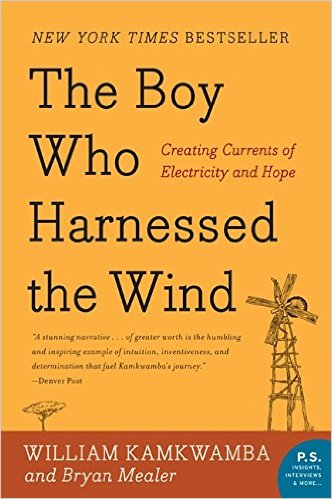
The Boy Who Harnessed The Wind

Every now and then, there arrives a book that is designed to knock the sails out of your windpipe. William Kamkwamba’s journey to build a windmill and uplift his community is one such. It is the true story of a poor boy in Malawi.
boy

I bought the book a while ago, and it lay languishing on my tsundoku pile. Maybe, there was a purpose to the book. The book needed to be read at a time when I most wanted to reassure myself on human potential if only we choose to apply it for good.

The only son, among eight children, of a poor Malawian farmer in Wimbe near Kasungu, Malawi, this is a true story of William Kamkwamba.

The book started off slowly talking about tales of magic, witchcraft and sorcery in Africa. As you read about William and his journey, you cannot help getting absorbed into the life around him with good natured understanding. You like his dog, Khambe, and his friends, Geoffrey and Gilbert, who show themselves to be the kind of stalwart friends you wish your children will grow up to be. Kind hearted, supportive, fun and ready to lend a hand, always.

When, famine hits Malawi, William Kamkwamba is forced to drop out of school, it is crushing to read how his father felt and I wish no parent should have to face that in their life.He writes about how his family struggled for months with nothing but a few nsima cakes between them to eat everyday. Everything we tell our children about starving children in Africa is true.

During those long hours of working in the fields to do their best to see if they can fortify themselves against another famine, it is William’s dream to build a windmill that keeps him going. William had seen pictures of a windmill, and given that his little village is always blessed with wind, he wants to build one, so that water and electricity can mitigate another famine. He is called misala (crazy) for haunting the trash piles to find something reusable to build his windmill.

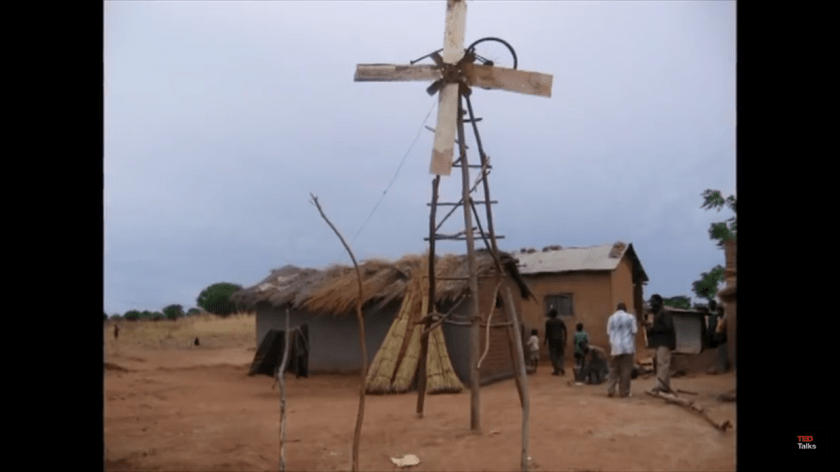
After months, of scouring trash piles and junkyards, using tools that would not pass any safety standards laid out in the West, it is a proud moment indeed when finally he connects his rickety windmill to a tiny light bulb.
img_4243

The windmill is noticed by a school official who notifies a professor and a blogger. From there to TED Fellow in 2007 is a remarkable journey for a boy who had never set foot outside his little village in Wimbe.

When William is finally called upon to talk at the TED conference, he is justifiably nervous. His English is poor among other things, and to make it easier for him, his host on stage, Chris, prefers to ask him a few questions that he can answer instead:

My heart beat fast like a mganga drum as I climbed the steps to face the audience, which totaled 450: inventors, scientists and doctors who’d stood on that stage in the previous days.

Five years ago, you had an idea”, Chris said, “What was that?”
“I want to made a windmill”. Wrong again. Chris smiled.
“So what did you, how did you realize that?”
I took a deep breath and gave it my best. “After I drop out of school, I went to library…and I get information about windmill…”
Keep going, keep going…”And I try and, I made it.”

The problem with reading a book like The Boy Who Harnessed The Wind on public transport is that it is takes phenomenal effort to keep from tearing up. You can manage a silent tear that just needs to come out, and one that you can unobtrusively wipe away as if some dirt got in there. But if the book goes on to make you want to weep not out of despair or sadness, but out of pride, joy and the eternal good-ness of mankind despite everything, that is hard to do.

Some pictures from the book: The image of his prototypes, his big windmill and one of his parents after he was able to harness the energy generated from the windmill to provide clean drinking water and electricity in his village.

Unfortunately, for every William who is outstanding in perseverance, grit and intelligence, there are thousands of williams who flounder in the stormy tempests of life. Every time I am caressed by the wind during this Thanksgiving break, I will know what to give thanks for. Thanks to William Kamkwamba.

I try, and I made it.

Please watch the TED talks, even if you are unable to get to the book:

TED Fellow William Kamkwamba

Oh Snap!

I attended a conference last week, a vast sprawling area brimming with people having an analytical bent of mind, or at least that is what they do for a living.

It was wonderful, for many reasons: It not only provided a good change of pace for me, but it also helped me cope with the post election disbelief by observing vast numbers of people from different parts of the country.

Before one of our trainings, our instructor put up a hashtag on the screen and requested everybody to tweet with that hash tag, so we could analyze the data coming in for that hashtag for the exercise.

For our convenience, he was also streaming the tweets as his code picked them up. For a hall containing at least 200 people, the tweets were trickling in. 5 and then 10 and then a plateau. After some time, another few.

The instructor then showed us how he was going to analyze this data and when he tried to pull up the dashboard he had created for the purpose of the training, the server went down. As it turns out, the instructor was embarrassed, obviously, that his carefully prepared presentation ran into a glitch in this uncharacteristic manner, but he had a Plan B, and going by the way he conducted his training, probably had Plan C, and D. Competence and Determination. He took a derogatory stab at himself, got a laugh, and moved on. He chose instead to recreate the dashboard from scratch, so we all get to see how it is done, instead of showing us the finished product.

The person right next to me, pulled out his phone though, and tweeted the hashtag almost instantly saying “#Hashtag Demo not working. Not Cool.” I was sitting right next to him , so I could see his tweet. I also remembered that he had not tweeted when the instructor asked us all to tweet so that he could get a dataset, but when it came to calling someone’s failures out, he was more than willing to do so.

That is human nature. We all suffer from it. So, I am not blaming this person by any chance, but rather hoping to use this as a call to introspection. Are we so quick to judge that we are losing our ability to empathize just because we now have the power to quickly voice our opinions? That could have been us fumbling when the server went down unexpectedly, couldn’t it?

I was reading an article in which President Obama warned us in a similar manner about snap judgments that social media enables us to make:

Obama, without directly naming Trump, appeared critical of the political discourse in the United States, saying social media has made it easier “to make negative attacks and simplistic slogans than it is to communicate complex policies.”

Obama-Merkel issue joint rebuttal to the coming era of Donald Trump

Every tool has its place, but if we attempt to mow the lawn with a kitchen knife, it will not work. I cannot help thinking of our gardeners, who in my mind have magical abilities, get things done quickly and efficiently, while I blubber and fly rudderless because I do not use the right tools for the job. (Divine Intervention of the Gardening Gods)

mow_the_lawn

Now is the time for all of us to tap the critical thinkers in us, to read extensively, to seek the truth and take up the job of providing a voice of reason. All of us know how distorted our consumption of information can be. Sites like Snopes.com have their work cut out for them in the age of social media.

Snopes.com Check Facts!

P.S: I loved Angela Merkel’s measured response to Trump’s victory:

Angela Merkel in her note to Trump offered cooperation reiterating that cooperation should be based on “a common platform of democracy, freedom, advocacy for human rights all over the world and championing the open and liberal world order.”

After all, we all may have to pack up and go to different planet soon (in which case we are all in the same boat regardless of race, creed or gender.)
Stephen Hawking’s prediction that humans have at best 1000 years in which to find another planet to inhibit

If

We had been to the East coast to gulp in the beauty of the fall colors before the trees were stripped bare for the Winter. I marveled at the beautiful tapestry that nature had laid out for us. The greens, golds, yellows, rusts, oranges, reds and browns blended together beautifully to please the eye. The same patch of forest looked beautiful in the different lights of day. The color of the skies above, the intensity of the sunlight, the shadows of the scudding clouds above, all painted marvelous pictures and nature soothed in a way that it has always done.

A forest is beautiful to look at. A forest in fall colors is brilliant to look at. The diversity in colors is mind boggling, and it all pieces together beautifully in a marvelous tapestry. It is the differences in color that make it glorious.

An artist’s palette is made more vibrant with different shades.

As much as we all like everyone to be like us, it is the fact that we are different that makes the world a beautiful place. It is the disappointments that should propel us forward.

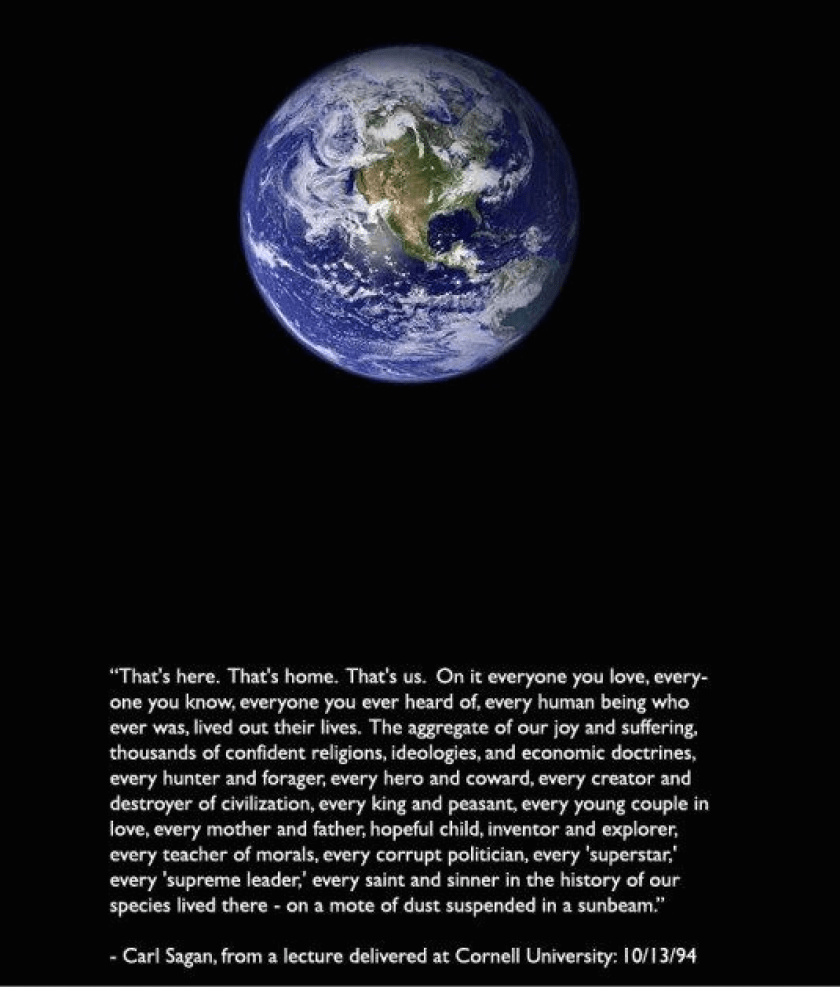
I am distraught at the person America has chosen as its President elect. I am trying to find solace in the words of Carl Sagan on Earth:

Look again at that dot. That’s here. That’s home. That’s us. On it everyone you love, everyone you know, everyone you ever heard of, every human being who ever was, lived out their lives. The aggregate of our joy and suffering, thousands of confident religions, ideologies, and economic doctrines, every hunter and forager, every hero and coward, every creator and destroyer of civilization, every king and peasant, every young couple in love, every mother and father, hopeful child, inventor and explorer, every teacher of morals, every corrupt politician, every “superstar,” every “supreme leader,” every saint and sinner in the history of our species lived there-on a mote of dust suspended in a sunbeam.

screen-shot-2016-11-14-at-1-56-32-pm

Now, more than ever before, is the time for all of us to come together and become heroes in our own ways. I felt this was the right time to read Rudyard Kipling’s poem ‘If’ to the children.

If you can keep your head when all about you   
    Are losing theirs and blaming it on you,   
If you can trust yourself when all men doubt you,
    But make allowance for their doubting too;   
If you can wait and not be tired by waiting,
    Or being lied about, don’t deal in lies,
Or being hated, don’t give way to hating,
    And yet don’t look too good, nor talk too wise:
If you can dream—and not make dreams your master;   
    If you can think—and not make thoughts your aim;   
If you can meet with Triumph and Disaster
    And treat those two impostors just the same;   
If you can bear to hear the truth you’ve spoken
    Twisted by knaves to make a trap for fools,
Or watch the things you gave your life to, broken,
    And stoop and build ’em up with worn-out tools:
If you can make one heap of all your winnings
    And risk it on one turn of pitch-and-toss,
And lose, and start again at your beginnings
    And never breathe a word about your loss;
If you can force your heart and nerve and sinew
    To serve your turn long after they are gone,   
And so hold on when there is nothing in you
    Except the Will which says to them: ‘Hold on!’
If you can talk with crowds and keep your virtue,   
    Or walk with Kings—nor lose the common touch,
If neither foes nor loving friends can hurt you,
    If all men count with you, but none too much;
If you can fill the unforgiving minute
    With sixty seconds’ worth of distance run,   
Yours is the Earth and everything that’s in it,   
    And—which is more—you’ll be a Man, my son!


When the materialistic society around us automatically glorifies money, we can use the moment to say that money does not equal dignity, money does not beget culture, money may earn you servitude, but not loyalty.

And point to the example in The White House.

The Yin & Yang of Diwali & Halloween

This post was also published in India Currents magazine dated 3rd Nov 2016

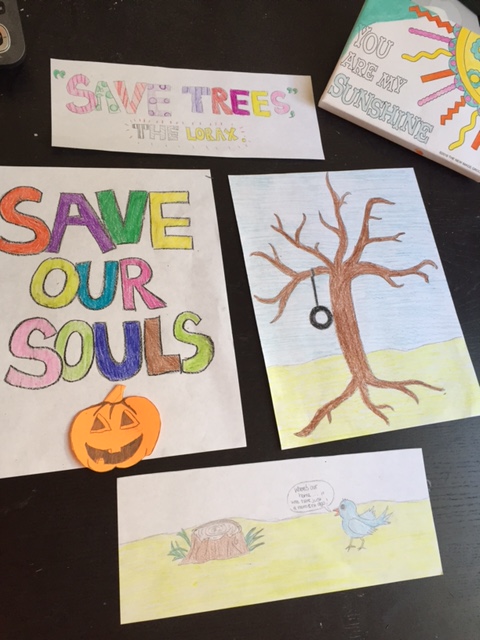
Wrinkled brows, scorching cuts and decisive strokes greeted me as I went upstairs a few days before Diwali. We have to get started on our Halloween decorations, said the daughter cutting out a spider. The toddler son was lying on his stomach on the floor, helping his sister by coloring the ghost she had cut out from white paper, white. A cozy, merry scene with the sunlight streaming in from the windows.

When bees create their colonies, I am sure they don’t care about a little mess. Neither did my bee-lings. I navigated the crayons strewn on the floor and walked past the strands of paper littering my path to peek at the objects of art.

A morose sort of skeleton was being drawn and I shuddered at the image. I hated to take a pail of cold water and swamp their enthusiasm with it, but then I did. Sorry guys. That weekend is Diwali and I won’t have skeletons and cobwebs hanging off the front door on Diwali. (This year, Diwali fell on a week-end and Halloween the day after, on a Monday.)

A mutinous roar went up. Amma – Diwali is the opposite of Halloween. It is the festival of lights. You’ll put up those little diyas everywhere and light everything up and then you’ll make everyone dress up beautifully – it is the complete opposite of Halloween.

I disagreed. They may be celebrated differently, but they are both meant to fight evil. Ward off evil – whatever. The concept is to banish your demons. Even the inner demons. So, Diwali and Halloween are like that Yin-Yang thing. Black and white together. Both are there in us and in the world around us.

yin-yang

I felt like a teapot spouting philosophy from my long snout to a couple of trouts in the stream. I sometimes think children must feel we played tag with Confucius and hide-and-seek with Buddha. I tried desperately to gain ground again.

You can always find light in the darkest of places if only you remember to turn on the lights. Remember who said that?

Albus Dumbledore in Harry Potter And The Prisoner of Azkaban

Albus Dumbledore! sighed the daughter. Dementors – yes! Maybe we will do dementors also this time.

Also Voldemort – we can draw Voldemort and hang him outside, piped the toddler son. He has no fear of He-who-must-not-be-named, and his sister beamed with pride at her little Gryffindor brother.

Guys! Guys! I won’t have Voldemort hanging on my front porch on Diwali either. Does Halloween have to be gory? Think of some themes and see if you can come up with decor that does not drip blood. Something positive, a call to action and also save our souls. How about that? I said.

When the daughter said, Fine!, I left them to their own devices and pottered around the house.

I must say that I was mighty impressed with the resulting effort.

keena_halloween_nature

We picked your favorite theme, Nature, amma. So, you can put up some of this stuff for Diwali too. Then after Diwali, the next day, we can quickly put up bats and pumpkins all around and we are set, she said.

I agreed.

img_3701

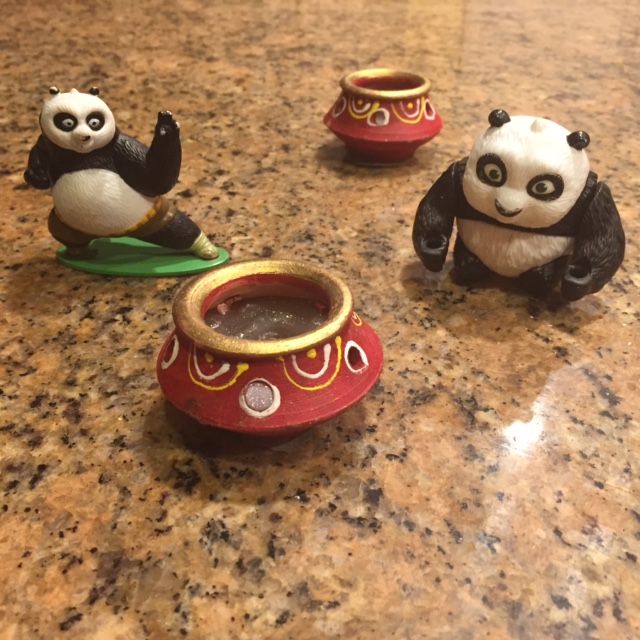
On the Diwali rangoli, we placed a large pumpkin surrounded by little lamps. The rain helpfully washed away the rangoli that very night leaving a damp, morose spot for the Pumpkin the next day. All very satisfying.

Happy Diwali and Happy Halloween. May we learn to take care of our World, the living beings we share it with, and balance our yin and yang for a beautiful whole.

img_3874

The Cry of Natural Symphonies

Regular readers of this blog know what a pesky cricket I can be when it comes to babbling about nature. If I see one of those news articles about hippos dwindling in number, I grieve.  The day I saw a ninety foot tree logged in our neighborhood, I grieved. I had seen the number of birds that roosted in the tree every evening as dusk fell, and I felt that we lost out on all that natural chitter for no good reason.

I moon about hills and flop around pictures of beautiful Mother Earth and all that in spite of negligible botanical and zoological knowledge. Ducks and Canadian Geese I will bucket as one, hippos and rhinos I draw about the same (one with a horn and one without).

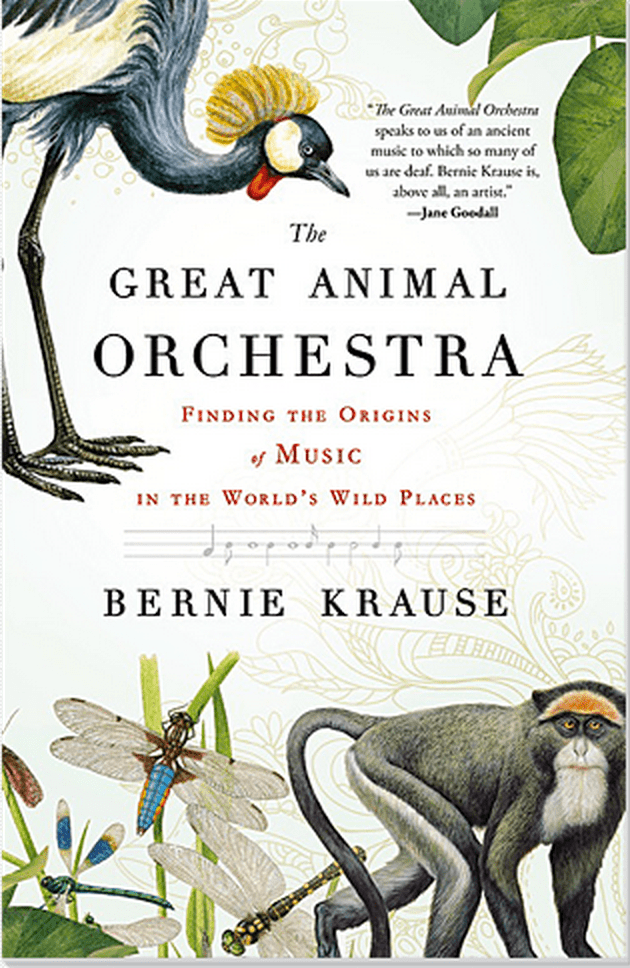
I am also one for natural sounds – I like to listen to the cascading brook or the patter of the rain. I like to be able to say, “Coo! Did you hear that blue kingfisher? Easily distinguishable by that rich guttural sonic burst.” So, one can readily imagine why I picked up a book called ‘The Animal Orchestra’ by Bernie Krause. I must say the book was a revelation of sorts.

screen-shot-2016-10-06-at-8-48-46-am

Most of us have an idea about the damage we are wreaking on Earth. We are aware of over population, we are aware of shocking deforestation and we are aware of global warming. What this book gives us is another perspective to the problems that face Earth.

Bernie Krause is a musician who has since turned to recording the natural sounds around him. He has recorded the forest areas before and after selective logging operations, he has dipped his receivers into a coral reef to hear the natural sounds, he has recorded in the depths of the rain forest, and the great barren deserts and the frozen tundra.

I have written about Biophony before with a link to Bernie Krause’s recording on NPR before: https://nourishncherish.wordpress.com/2015/01/14/cacophony-for-biophony-socialization-for/

Recording:listen-as-a-california-forest-grows-quiet-over-time/

Birds
Birds

What Bernie Krause finds with his recordings is that the human touch affects biophony in unimaginable ways. You can hear some of his recordings at thegreatanimalorchestra.com. Even if unable to read the book, please try to listen to some of the sound tracks on the site. It makes for an enriching experience.

There are a number of passages in the book that I can go back to re-read any number of times. One such passage is the one where he refers to a beaver recording. In a remote lake in Minnesota, some wardens of the preserve, blew up a beaver dam killing most of the beaver young and females. The recording was taken later that evening, and describes the sounds of the grieving beaver male. He says that to date it is the most heart-rending sound he has ever heard made. A poignant sadness to it that the most heart-rending human music cannot even come close to.

Or of the time he describes the sonic variances between the sounds of orcas in captivity and the sounds of the pod from which the orcas were captured in the wild. The ones in the wild were always “filled with energy and vitality”. While the captive vocalizations were “palpably lethargic and slow”.

He talks off a recording he took where a logging company resorted to selective logging i.e. deliberately taking a few trees here and there so as to not disturb the ecosystem much. However, the sounds recorded before the logging operation and after have perceptibly changed. The pictures taken later show a fairly decent rebound of the wilderness, but the biophonic recordings  give us a different perspective – the more disturbing and truthful perspective. Though the area looked wild enough, the great natural symphony never bounced back.

From a BBC program titled ‘A Small Slice of Tranquillity‘: There were certain sounds such as breathing, footsteps, a heartbeat, birdsong, crickets, lapping waves, and flowing streams that people described as tranquil. Researchers demonstrated that such sounds stimulate the limbic system in the brain, resulting in the release of endorphins and a feeling of serenity. The program says that tranquillity is an elemental acoustic foundation upon which we can rest our mental processes.

By definition a tranquil area is one that is this many miles from the nearest road, away from the sonic boom of aircraft etc. In the 1960s UK had more than 40 tranquil areas, now there are less than 5.

Bernie Krause concluded that  the book on a note that I cannot help agreeing with. He says that he is asked almost at the end of every lecture what we can do to help preserve our remaining natural environments. He says: “It’s easy: leave them alone and stop the inveterate consumption of useless products that none of us need.”