The Yin & Yang of Diwali & Halloween

This post was also published in India Currents magazine dated 3rd Nov 2016

Wrinkled brows, scorching cuts and decisive strokes greeted me as I went upstairs a few days before Diwali. We have to get started on our Halloween decorations, said the daughter cutting out a spider. The toddler son was lying on his stomach on the floor, helping his sister by coloring the ghost she had cut out from white paper, white. A cozy, merry scene with the sunlight streaming in from the windows.

When bees create their colonies, I am sure they don’t care about a little mess. Neither did my bee-lings. I navigated the crayons strewn on the floor and walked past the strands of paper littering my path to peek at the objects of art.

A morose sort of skeleton was being drawn and I shuddered at the image. I hated to take a pail of cold water and swamp their enthusiasm with it, but then I did. Sorry guys. That weekend is Diwali and I won’t have skeletons and cobwebs hanging off the front door on Diwali. (This year, Diwali fell on a week-end and Halloween the day after, on a Monday.)

A mutinous roar went up. Amma – Diwali is the opposite of Halloween. It is the festival of lights. You’ll put up those little diyas everywhere and light everything up and then you’ll make everyone dress up beautifully – it is the complete opposite of Halloween.

I disagreed. They may be celebrated differently, but they are both meant to fight evil. Ward off evil – whatever. The concept is to banish your demons. Even the inner demons. So, Diwali and Halloween are like that Yin-Yang thing. Black and white together. Both are there in us and in the world around us.

yin-yang

I felt like a teapot spouting philosophy from my long snout to a couple of trouts in the stream. I sometimes think children must feel we played tag with Confucius and hide-and-seek with Buddha. I tried desperately to gain ground again.

You can always find light in the darkest of places if only you remember to turn on the lights. Remember who said that?

Albus Dumbledore in Harry Potter And The Prisoner of Azkaban

Albus Dumbledore! sighed the daughter. Dementors – yes! Maybe we will do dementors also this time.

Also Voldemort – we can draw Voldemort and hang him outside, piped the toddler son. He has no fear of He-who-must-not-be-named, and his sister beamed with pride at her little Gryffindor brother.

Guys! Guys! I won’t have Voldemort hanging on my front porch on Diwali either. Does Halloween have to be gory? Think of some themes and see if you can come up with decor that does not drip blood. Something positive, a call to action and also save our souls. How about that? I said.

When the daughter said, Fine!, I left them to their own devices and pottered around the house.

I must say that I was mighty impressed with the resulting effort.

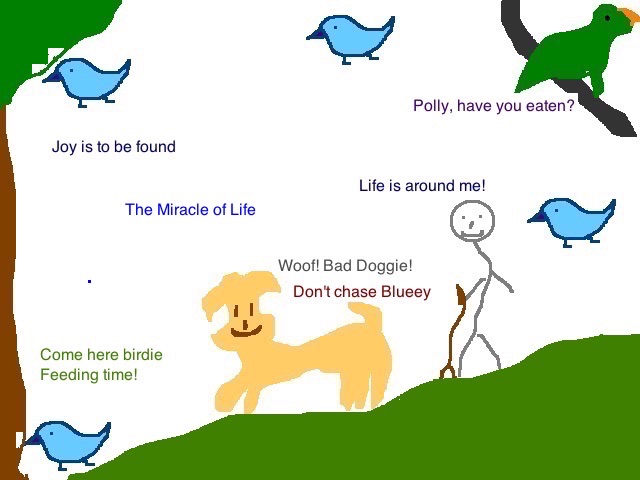
keena_halloween_nature

We picked your favorite theme, Nature, amma. So, you can put up some of this stuff for Diwali too. Then after Diwali, the next day, we can quickly put up bats and pumpkins all around and we are set, she said.

I agreed.

img_3701

On the Diwali rangoli, we placed a large pumpkin surrounded by little lamps. The rain helpfully washed away the rangoli that very night leaving a damp, morose spot for the Pumpkin the next day. All very satisfying.

Happy Diwali and Happy Halloween. May we learn to take care of our World, the living beings we share it with, and balance our yin and yang for a beautiful whole.

img_3874

The Cry of Natural Symphonies

Regular readers of this blog know what a pesky cricket I can be when it comes to babbling about nature. If I see one of those news articles about hippos dwindling in number, I grieve.  The day I saw a ninety foot tree logged in our neighborhood, I grieved. I had seen the number of birds that roosted in the tree every evening as dusk fell, and I felt that we lost out on all that natural chitter for no good reason.

I moon about hills and flop around pictures of beautiful Mother Earth and all that in spite of negligible botanical and zoological knowledge. Ducks and Canadian Geese I will bucket as one, hippos and rhinos I draw about the same (one with a horn and one without).

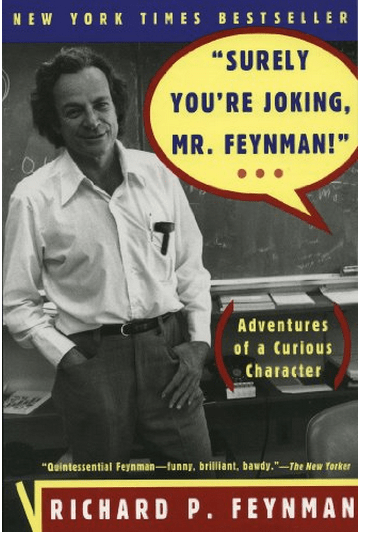
I am also one for natural sounds – I like to listen to the cascading brook or the patter of the rain. I like to be able to say, “Coo! Did you hear that blue kingfisher? Easily distinguishable by that rich guttural sonic burst.” So, one can readily imagine why I picked up a book called ‘The Animal Orchestra’ by Bernie Krause. I must say the book was a revelation of sorts.

screen-shot-2016-10-06-at-8-48-46-am

Most of us have an idea about the damage we are wreaking on Earth. We are aware of over population, we are aware of shocking deforestation and we are aware of global warming. What this book gives us is another perspective to the problems that face Earth.

Bernie Krause is a musician who has since turned to recording the natural sounds around him. He has recorded the forest areas before and after selective logging operations, he has dipped his receivers into a coral reef to hear the natural sounds, he has recorded in the depths of the rain forest, and the great barren deserts and the frozen tundra.

I have written about Biophony before with a link to Bernie Krause’s recording on NPR before: https://nourishncherish.wordpress.com/2015/01/14/cacophony-for-biophony-socialization-for/

Recording:listen-as-a-california-forest-grows-quiet-over-time/

Birds
Birds

What Bernie Krause finds with his recordings is that the human touch affects biophony in unimaginable ways. You can hear some of his recordings at thegreatanimalorchestra.com. Even if unable to read the book, please try to listen to some of the sound tracks on the site. It makes for an enriching experience.

There are a number of passages in the book that I can go back to re-read any number of times. One such passage is the one where he refers to a beaver recording. In a remote lake in Minnesota, some wardens of the preserve, blew up a beaver dam killing most of the beaver young and females. The recording was taken later that evening, and describes the sounds of the grieving beaver male. He says that to date it is the most heart-rending sound he has ever heard made. A poignant sadness to it that the most heart-rending human music cannot even come close to.

Or of the time he describes the sonic variances between the sounds of orcas in captivity and the sounds of the pod from which the orcas were captured in the wild. The ones in the wild were always “filled with energy and vitality”. While the captive vocalizations were “palpably lethargic and slow”.

He talks off a recording he took where a logging company resorted to selective logging i.e. deliberately taking a few trees here and there so as to not disturb the ecosystem much. However, the sounds recorded before the logging operation and after have perceptibly changed. The pictures taken later show a fairly decent rebound of the wilderness, but the biophonic recordings  give us a different perspective – the more disturbing and truthful perspective. Though the area looked wild enough, the great natural symphony never bounced back.

From a BBC program titled ‘A Small Slice of Tranquillity‘: There were certain sounds such as breathing, footsteps, a heartbeat, birdsong, crickets, lapping waves, and flowing streams that people described as tranquil. Researchers demonstrated that such sounds stimulate the limbic system in the brain, resulting in the release of endorphins and a feeling of serenity. The program says that tranquillity is an elemental acoustic foundation upon which we can rest our mental processes.

By definition a tranquil area is one that is this many miles from the nearest road, away from the sonic boom of aircraft etc. In the 1960s UK had more than 40 tranquil areas, now there are less than 5.

Bernie Krause concluded that  the book on a note that I cannot help agreeing with. He says that he is asked almost at the end of every lecture what we can do to help preserve our remaining natural environments. He says: “It’s easy: leave them alone and stop the inveterate consumption of useless products that none of us need.”