Skip Your Way There

The school year was coming to a close, and I had promised the elementary school going son and his friend that I would show them a marvel on the way to school. Off we went then looking for this mystical being living in our midst. The excitement had built up in them. With the ready enthusiasm for serendipitous adventure that childhood blesses them with, they were chatting along to see this wondrous three-headed beauty, while I soaked in their infectious enthusiasm like a pup on a spring saunter.

We approached the marvel with hushed tones, and there it was, standing erect and tall, urging us to believe that there is magic and possibilities out of the ordinary: A tree in which the trunk grew for several feet , and then sprouted off in 3 different directions, like three siblings, or a three headed being, each with its own whims, but living together as one.

As I saw the tree, I could not help thinking of Anne Shirley in Anne of Green Gables:

I couldn’t live in a world where there were no trees; something vital in me would starve. – Anne of Green Gables – L. Montgomery

It is a beautiful tree, but what was more beautiful was the rapturous attention the children paid to it. They marveled, and the magical in them, so easily accessible under the surface bubbled up as they befriended and clambered on the tree. Off they went with their heart full of tales of the little adventure they had had that day. I could see it in the way they skipped to school that morning. 

One dressed like a princess in bubbling swirls of excitement, the other clad in a princely cloak of incredulity and wonder. An urge to skip gurgled in me. I definitely had a spring in my step as I watched them that morning. When is it that we stop skipping along? I don’t remember the time adults stopped skipping, but it should be a day we rap ourselves on our knuckles. What can be more enjoyable than skipping along to wherever we are headed? Why are our steps laden with the weight of the world?

The tree which moves some to tears of joy is in the eyes of others only a green thing that stands in the way. 

Some see nature all ridicule and deformity. 

And some scarce see nature at all. 

But to the eyes of the man of imagination, nature is imagination itself 

– William Blake.

cropped-curvy_bristlecone.jpg

Why can’t we imagine ourselves as princesses and princes out for a royal journey with adventures along our path everyday? In fact, once we do imagine this, the world has a way of giving us the very adventures we don’t even dare to dream about.

For us it came about in the Land of Fire & Ice, and in a world where there weren’t as many trees as I’d like, but a place that captured my heart and soul to willingly belong elementally, fundamentally, intellectually to it.

Next Stop: The Land of Fire & Ice 

Also read: About Ombu Trees in The Mockery Bird

The Corner Case

T’was the last day of May. The day started with the revelation that the car we had parked outside overnight was gone. It had been towed away overnight because a parking permit was not visible. I need to take this moment to assure you about the permit. You see, the pater accompanied us to place the permit in the car. 

How can I be so sure? For one, when we leave the house, the pater locks the door. By that simple statement what I mean is that he hangs on the doorknob and pushes and thumps the door till I can hear it howl in anguish, and confirms that the door is indeed locked.

Checking_the_door

So, when the pater checks the permit in the car, the permit is in the car. And can be seen from every angle. With torch light or without.

Of course we were flummoxed to find the car missing the next morning. A few minutes later, there we were in the towing company’s yard. We went in, and the fellow behind the counter, from now on referred to as Tow-man, started off professionally enough.  He showed me some hazy pictures and I must admit I could not find the parking permit in the pictures he showed me.

He then walked with me to an impressive lot surrounded by a 8-9 ft tall fence topped with barbed wires on top. I wondered then why a towing company’s impound lot needed that kind of prison security. I was soon to find out.

I went in with him, and right enough, the parking permit gleamed. It is a shiny red one, and the morning rays of the sun made it glint cheerfully. I showed Tow-man the permit, and he was flabbergasted. I saw shock flit through his face. He had been so sure he had not seen the parking permit in the pictures. 

I asked him if I could take a picture of the car with the permit, and he agreed. Immediately, he realized that a picture could mean no money. I could almost see these thoughts run through his head, for he immediately clamped down his stance. He insisted that I get out from there, his company had a no-picture policy, and that he needed to investigate this. That was when anger became his companion.

Ursula Le Guin in her excellent set of essays, No Time To Spare, dedicates a few pieces to Anger. In one essay, she says, Anger usually stems from fear. 

Screen Shot 2018-06-04 at 4.57.22 PM

In this case, that made sense. Tow-man feared his bosses would not be happy with him if he did not get the money for the towed car. But there was no doubt that the permit was there. This is something that felt like a mystery to me too, and one I hoped to solve amicably. But his anger bubbled up, and stopped all possibility of a dialogue. He made ridiculous claims such as: You must have scaled the fence and jumped inside overnight to put the permit inside the car.

tow_man

The impound lot, as I have mentioned earlier, was double my height, and topped with barbed wire on top. I asked him a bit incredulously whether he really believed I could jump over something like that. I have my merits, but pole-vaulting over 9 ft high fences with barbed wire on top is not of them. Ask the rose bushes I walk by. I love them to bits and stop to sniff at them rapturously every now and then, but I still keep clear from the thorns. Getting scratched does not appeal to me. 

IMG_2326-EFFECTS

There was no talking to Tow-man about rosebushes however. With anger as his weapon, things got ugly soon. 

“We have a no-picture policy, and you have been taking pictures.”

I felt the no-picture arbitrary rule a bit unfair, but there was nothing to be done.

Things started heating up, and we went out of the premises. 

Quote from No Time To Spare by Ursula K Le Guin:

Anger continued past its usefulness becomes unjust and then dangerous. 

It is very hard to find the right response to anger in a situation where both parties are technically right: His pictures showed no permit; I know the permit was placed before midnight and the car in the lot held the proof. 

It is a gripping tale, but in the interest of length, shall cut to the place where Tow-man shook his head obstinately, and said no, I won’t give you the car even if you pay.

The police had to come now. Professional as ever, they listened calmly to both sides of the story. Jobs dealing with people in general are hard, but jobs dealing with people in duress, peppered with high strung emotions and actions has got to be toughest of them all.  

It reminded me sadly of the piece on Anger again:

Quote:

Anger continued past its usefulness becomes unjust and then dangerous. Nursed for its own sake, valued as an end in itself, it loses its goal. It fuels not positive activism but regression, obsession, vengeance, self-righteousness. Corrosive, it feeds off itself, destroying its host in the process.

The mystery was solved within minutes of his printing the towing papers:

The towing company indicated that they had taken the pictures at 11:26 p.m.

We had put in the parking permit at 11:30.

The vehicle was towed away at midnight.

The permit is only enforced between midnight and 6 a.m., but before towing the vehicle, they did not verify again. The Classic Corner Case.

How can we all be right and still live harmoniously together? (Link to Buddha In a Lotus article)

Quote:

What is the way to use anger to fuel something other than hurt, to direct it away from hatred, vengefulness, self-righteousness, and make it serve creation and compassion?

Swimming Across The Media River

One week-end evening, the devices in the house were barking mad. Twing, twang, tring. Video calls, phone calls, instant messaging systems were all driving themselves to a tizzy. Far away, far, far away, 5000 miles away a temple bell was clanging.

I yearned for some quiet and asked if anyone cared on joining me for a walk in the cool Spring evening. Everyone sprang out of my sight like a cat let loose in a party of rats. The husband was trying to yelp his way out of a walk when the first free WhatsApp call came. He ran to pick up the phone with a sense of urgency, and secret relief that he did not have to go a-walking with me, but narrowly missed the call. I made for the open skies while he dialed back. 

The walk was a beautiful one. I admired squirrels chittering, birds twittering, even the raucous cackle of the geese seemed musical. I have, in my chronicles expressed an interest in finding out about animal communication. Misguided. It is better if we don’t know. This way, I could let the noise wash over me, and assume best intentions on their part. The breeze gently tousled my hair, and the setting sun threw brilliant hues across the scattered clouds.

img_7558.jpg

I stepped in to the home after some time, and saw the husband looking drawn and crumpled, like wet cloth tumbled about in a dryer.

Is everything alright? I asked him a little worried.

Yes! Yes! he said, and proceeded to tell me the thrilling tale of the past 1/2 hour. The saga clanged its way across temple towers, cell phone towers, underground cable networks, and busy human ones. Leaping from a small rural temple town in South India, a couple of metropolitan cities, and continents, with data bits coursing through half the earth, it read like the glossy blurb of these bestselling novels steeped in drama and suspense. 

I was intrigued, and gave the sympathetic ear at once.

The first phone call had been from his mother in India. She lives in Madras. WhatsApp calls are free, and people are free, so I will just give the gist. 

Mother in Madras: Can you call your cousin in New Jersey, and ask him for his sister’s number in India?

Husband in California: Why? 

M in M: His sister is here in India visiting no? 

Wait! I see even gists could take a while, alright let’s try this then:

Premise: Husband’s cousin visiting India for a few weeks.

Plot: Said cousin and her mother, viz, husband’s aunt, went to a small temple town in South India.  There, they planned to meet up with husband’s uncle, and go into the temple together.  

Plot Twist: Uncle tried to call Aunt, but she had put the phone in her handbag and did not hear it ring because someone was twanging the infernal temple bell with great righteousness.

Cliff hanger: Will they ever meet? The temple town had all of 3 streets culminating at the temple after all.

That is it. The entire plot. 

temple.jpg

How does that leap across metrops, continents and coasts, you ask? Fair question. 

As I see it, the itch to go temples stems from mankind’s search for spirituality. Learn to calm the inner anxieties and voices and so on. On this spiritual quest, when one does not meet the intended person in the first 32.5 seconds, the mind flutters and they place an immediate call to their sister in Madras. She then calms her brother saying there is no need to worry, and immediately places a phone call to the husband in California. 

Why husband in California? 

Repeat after me: Aunt visiting temple with d. Plot thickens when Aunt does not pick her phone. But the visiting cousin has a phone for use in India. Stroke of brilliance indicates that her brother preparing for bed in New Jersey will have his sister’s number. Call husband in CA *Tring* to call girl’s brother *Tring* to find out temp cell phone number in India. 

Husband misses call narrowly *Tring*. 

Husband calls mother again *Tring* as soon as possible, but mother’s phone is busy for she has called *Tring* her second son in New Delhi to call his cousin *Tring* in New Jersey and get the phone number. 

After several nerve wracking minutes, both folks call the poor fellow in New Jersey *Tring Tring*. The fellow moans sleepily that he has already fielded five free calls from various parts of the globe asking the same thing and there is no need for any of this, since they seem to have found each other. 

tring-tring

Then a next set of phone calls were completed for the express purpose of letting everyone know that the concerned parties had met each other, and all was well. In all, I guess about 23 different calls were made. If one party had stood still for 5 minutes, the other party would have simply fluttered into them in the breeze. 

Though tactless, I laughed heartily. The husband looked like a spent force after dealing with this hurricane of calls. He eyed me, and said somewhat icily, “Let’s talk about something else, shan’t we?”

“Do you know how trees, and wild boars communicate to each other?” I asked the husband grinning. 

“Tell me”, he said, and we spent the rest of the walk discussing acacia trees, giraffes, wild boars and hunting laws in Geneva. (Inner Life of Animals, The Hidden Life of Trees – Peter Wohlleben)

“Did you know the wild boars are so smart, they have figured out that the Geneva side of the river has a hunting ban, and the France side doesn’t? So when the first gunshot rings out in France, all the boars scramble, splash into the river and swim to the other side of the river. I suppose they poke their tongues out at the hunters on the other side!” I said.

“Is there someplace that has a free-calling ban, so we can swim across the media river when the first phone calls start?” moaned the fellow, and I patted his hand in commiseration, wisely refraining from telling him that all of this could have been avoided if he had just come out on the walk with me leaving all modes of communication behind. 

The Lake of Lousy Metaphors

This post was published in the Nature Writing online magazine dated 11th August

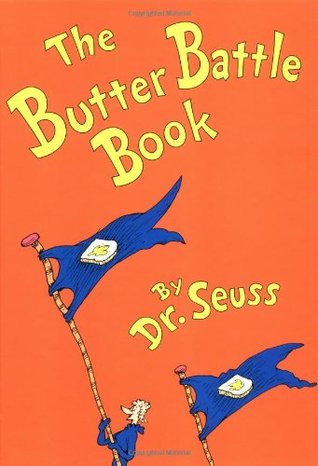
The past few months in the nourish-n-cherish household have been a whirling vortex of activity. I enjoyed most of it, but one night I felt exhausted. A sense of being spread too thin washed over me. I tried chuckling at Bilbo Baggins’ famous quote in The Lord of the Rings,  ‘like butter scraped over too much bread’, but what came out was a whimper. 

I walked over to the window, and gazed outside. The view of a spring night with its flowering plants and trees bursting with young leaves is beautiful. The faint moonlight breaking through the clouds above, makes for a serene scene, and made me reach longingly for Thoreau at Walden Pond, though it was well past midnight.


Screen Shot 2018-05-01 at 5.02.48 PM.png

Henry David Thoreau built himself a cabin in the woods near Walden Pond, and lived there for 2 years 2 months and 2 days. What emerged from this minimalist living of Thoreau’s was the great writings, that to this day offers us wisdom. (In case you run away with this notion of my acquiring wisdom, I  assure you, that I am in no such danger. I am still firmly rooted in the hustle and bustle of the human village.). The book I read was a graphic book meant to introduce Walden Pond to those who draw like me (stick or easy sketches – the actual sketches were of course better than any I produce). The words and captions belonged to Thoreau, and I enjoyed the drawings – minimalist sketches to match a minimalist lifestyle. 

In the book, Thoreau refers to the calming influence of observing nature, and how if you stay still in the woods, you will notice things that are otherwise not revealed. I let the book flop on my tired torso, and threw my mind back to the day the husband & I managed to get a day to ourselves in the wilderness. We went on a strenuous hike up to Upper Yosemite Falls. It was a beautiful day to hike. Several cascades trickled across our paths, and we jumped joyously across them. The water trickles are the highlight of that hike, and we thoroughly enjoyed splashing ourselves with the fresh water from the snow melt. It was steep going, and we huffed and puffed our way upwards. 

IMG_8277.jpg

The trailhead helpfully said, that one must not under-estimate the hike, and that it would take 5-6 hours for average hikers. The husband, in his typical fashion, said it would only take 4 hours. I haha-ed somewhat helplessly at this optimism that has been my bait and mate, and said 6 hours it is. It took us 5 and 1/2. So there.

I was keeping my eyes out for some wildlife, and I was disappointed to find that apart from some squirrels, there really wasn’t any other wildlife of note. Of course, animals have learnt to keep away from wild humans. I remember reading somewhere that the only large animals to survive the Anthropocene stampede are those that are domesticated.  All others, we have managed to slowly wipe out. 

On the hike, it was a perfect day, the skies were a brilliant blue, the weather neither hot nor cold, anywhere you pointed the phone, you got a pretty enough picture ( I paid for this by spending an hour deleting 98% of these photos). The steps and switchbacks were exacting a toll on the calf muscles that I paid for the next day. Then we turned a bend, and there in front of us was the spectacular Yosemite falls crashing and thundering its way down to the Merced river. Loud crashes probably meant large shelves of ice chipping and crashing into the depths below. The mists created rainbows. It was marvelous. One could stand there for hours watching the waterfall. 

IMG_8338-EFFECTS.jpg

It was mighty lucky for us to enjoy Yosemite like that. For just a few days later, a storm engulfed the region, and Yosemite valley was evacuated, several rivers ran swollen and we heard of tragic mishaps and washed away roads. I thought also about how on our recent trip to the mountains, we had narrowly missed a snow storm.  There is something eerie about knowing how close one was to mishap. I was yanked back to the present by the goose-bumps on my skin, and I held the Walden at Thoreau in my hands as if looking at it for the first time. Maybe that is what the wise mean when they say ‘Enjoy the present’, and ‘Savor the moment’ and so on. I opened Thoreau slowly, mentally leaving the human village behind, and entered a sanctuary of peace and calm. I  retreated into the book for several blissful minutes, like a deer in the meadow at a rare moment.  

Thoreau had written about Walden Pond itself: 

“A lake is the landscape’s most beautiful feature. It is Earth’s eye, looking into which the beholder measures the depths of his own nature. “ 

I dipped my feet into the lake of sleep, thought of what a lousy metaphor that was, and drifted off.

IMG_8309.jpg

The Epic of Whalayana

The mother has been reading The Ramayana. She is especially fond of the Sundarakandam. For a few months, any good is attributed to the Sundarakandam readings. Anything bad is soothed away with the assurance that her Sundarakandam chantings will make it better. It takes her several weeks to make it through a complete reading. The Ramayana is a long epic, and lilts rhythmically. Reading this epic soothes her, and every now and then with touching belief, she has a go at it.

I like the Ramayana too for its main storyline, and its myriad side stories. I do think Sita could have been a pluckier heroine, but then I remember that these tales were passed down from one generation to the next, each one, quite probably, embellishing the epics a little to make sure their ideal version of the woman is subtly inserted in there. (Another post for another day)

It is interesting to think of how our epics and ballads have helped shape human history. Artifacts and natural phenomena shaped our myths, and particularly gifted story-tellers were always a treasured people. We truly believed that story-telling was the single distinguishing feature of our species. After all, imagination is a task much higher on the cognitive scale than living & feeling. 

‘Did you know? We used to have a Professor who could chant every verse and explain it so beautifully? From memory! In those days, our professors used to remember Shakespeare, entire Sanskrit texts, and eloquently recite from memory. ‘ said the father, and waxed as eloquently about the good old days; his fervor growing as he spoke of the stellar nature of his professors, about how they learnt and memorized Shakespeare and the Sanskrit texts from their forefathers. 

I smiled at the pride in his voice when he thought of his long-dead professors. For millennia we thought we were the only ones capable of passing on this kind of generational wisdom and knowledge. But that is not the case. Take the enormously intelligent whales and dolphins for instance. Carl Sagan, the physicist, writes about these intelligent creatures often. In his essay on dolphin sounds, he writes of Elvar the Dolphin who knows up to 50 English sounds and can use them in context. 

IMG_7634.jpg

Quote from Cosmos by Carl Sagan:

Some whale sounds are called songs, but we are still ignorant of their true nature and meaning. They range over a broad band of frequencies, down to well below the lowest sound the human ear can detect. A typical whale song lasts for perhaps 15 minutes; the longest about an hour. Often it is repeated, identically beat for beat, measure for measure, note for note. 

Very often, the members of the group will sing the same song together. By some mutual consensus, some collaborative song-writing, the piece changes month by month, slowly and predictably. These vocalizations are complex. If the songs of the humpback whale are enunciated as a tonal language, the total information content, the number of bits of information in such songs, is some 10 to the power of 6 bits, about the same as the information content of the Iliad or the Odyssey.

I would love to hear and understand the generational wisdom that these large benevolent creatures have for living in the oceans. The ever changing oceans must be a rich source of material. Do they have heroes vs villains, good vs evil, or things much more complex and intriguing than simple story lines like that? 

wind-in-the-reef

Quote:

They have no manipulative organs, they make no engineering constructs, but they are social creatures. They hunt, swim, fish, browse, frolic, mate, play, run from predators. There may be a great deal to talk about.

If human beings have a fault, it is assuming our anthropomorphic abilities are the pinnacle of what is possible. I must remember that until recently, we did not know whale songs existed. 

The sea is as near as we come to another world. – Ann Stevenson

Coming up next: The Inner Life of Animals

The World of Pure Imagination

The daughter pranced into the home one evening a few months ago, her eyes agog with excitement. She had auditioned and been cast as Willy Wonka, the eccentric chocolate factory owner in Willy Wonka Jr (the musical based on Charlie and the Chocolate Factory). They say Art is Transformative, and it is true. Every time I see the children pull off something spectacular, my heart soars. 

Come with me and you’ll be 

In a world of pure imagination

We’ll begin with a spin 

Traveling the world of my creation

What you’ll see will defy explanation

IMG_8469.jpg

As she sang her songs from Willy Wonka around the house, there was a pleasant hum in my brain too. I remember reading the little book with her when she was in elementary school. The years in between have smudged into a blur in which I remember doing a lot of things, cherishing a few memories, and before I knew it, my little girl towered over me in height and ability. 

In a world of pure imagination: how would that world be? It must be a world in which all things vile are wished away, and only pleasant striving has a place. A canvas on which the best is to be painted and awaits the strokes of our creation. Maybe that is how we must view life. Every aspect of ours a stroke on our canvas – the true nature of the painting ever changing to be revealed to us as we go along, giving us a subtle choice here and there on whether to put in that jarring, wrong stroke or a mellow, right one.

There are many marvelous things that I can attribute to imagination (and immigration). One that ranks highest is the fact that I get to read American Children’s literature as an adult. As a child, in the lovely hills of South India, I loved curling up with Enid Blyton’s books, and often escaped into fairy lands on wishing chairs and ran into magical forests. It was easy imagining an adventure, while swinging on tree trunks that had fallen in the last storm. We had plenty of time, and had no one but ourselves to rely on for entertainment. State television made its entry a few years later, but it was agreed fact that our own flavor of entertainment was far superior to what we saw on Television. I sometimes played alone, but not once did I feel lonely. There were always imaginary friends who’d drop in for a cup of tea and we’d bake some scrunchy scones and whip up some tea cake, though I had never seen the inside of an oven. 

The Indian comic books, Amar Chitra Katha, Chandamama added flavor and beans to the curry pot of imagination. It was a wonderful time in the head. The pressures of wanting to make something of oneself had not yet begun to exert itself, the only lures were those of nature as it enclosed us. The trees were friends and frequently doubled up as props in our adventures. Many a scraped knee was soothed away with scratches from brambles. 

I entered my teenage years, and my imagination left some of its whimsy behind. The teen years and the early twenties were dedicated to much serious reading, and I spent a good portion of my time striving and wondering what to make of myself.

“That’s the worst of growing up, and I’m beginning to realize it. The things you wanted so much when you were a child don’t seem half so wonderful to you when you get them.”

L.M. Montgomery, Anne of Green Gables

Then, I realized that all those years that I had spent wondering what to make of myself had actually made me. Just like that, I could embrace all that happened to me. It was liberating, and then the more whimsical side of my imagination swooped in once more. I took tentative steps into Wonderland when I became a mother in the United States, and indulged the child in me with my growing children. 


Dr Seuss graced our tongues and teased the brain (What if I had duck feet? Did the elephant hatch the egg finally, will Zooks and Yooks ever become friends?), we sang poems by Robert Louis Stevenson set to the tunes of the old hymns in our school hymn book (To be written), we giggled with Bernstein Bears, hoo-hoo-haa-haa-ed with Curious George, and marveled at the friendship between Frog & Toad. The children and I read Charlotte’s Web when I was in my thirties, but I enjoyed it even more than I would have as a child.  

dr seuss

For a long time, I had meant to read Anne of Green Gables, but for some reason, did not. The daughter had not shown inclination towards this series, and there was no one to tell me how I absolutely must read it. Then, one day I read a quote from Anne of Windy Poplars, and I was intrigued. I have always loved that style of uplifting writing weaving the tendrils of imagination with subtle humor: the gentle breeze of the soothing powers of nature to nurture our soul wafting through every page. It is why I like Miss Read’s writing so much.

I identified keenly with how much Anne prized the gift of imagination. Somehow, we lose that streak of imagining as we grow older, much like we forget to skip while walking.  I now have that pleasurable thrill of reading all the remaining books by Lucy Maud Montgomery. It is a sustaining thought.  

Margarita Engle’s poem:

No giant or dragon

Is bigger or stronger

Than the human imagination

P.S: If you have not already listened to J K Rowling’s commencement speech, it is definitely worth listening to: The Importance of Failure and Imagination


The Lord of the Trees

I gazed out of the window feasting my eyes on The Lord of the Trees working hard so early in the morning. The trees went past their blooming-flowers phase to the sprouting-young-leaves phase in the past few weeks.

“How can anyone who has spent any time observing life like this, feel like not preserving it?” I asked. Us not looking after Earth well enough for future generations is a pet peeve that regular readers of this blog know.

“Because I don’t think people stand and gaze at squirrels like you do when one is already late for school in the morning”, came the crisp reply and I nodded sadly hastening to bustle about for the morning tasks.

IMG_7860

The squirrels have resumed lording about the trees like they own them, which I suppose they do, since they are in them so much. I see them lovingly scraping bark, and checking out the fruits . I fight a losing battle every year trying to save the fruits from them. Friends have suggested fruit nets, but I haven’t the heart. They are the ones that live there, and sometimes I like to think of them sunning themselves on the branches while I am in a drab looking conference room surrounded by tonnes of concrete to pay for the land that these trees rest on. I only wish they would eat the whole fruit before tossing them to the ground, or hiding them away somewhere for the Winter months.

IMG_8683.jpg

I cannot deny that it is nice to see the little creatures busy again. The winter months are a little slow for them: though they do not hibernate much (apparently, they do not have enough body fat to sustain them through long cycles of hibernation), they sleep a lot. I wonder how their burrows are, and whether they feel the difference between night and day when they emerge from their deep burrows into the spring time bursting with flowers, fresh leaves and the promise of fruit. 

A few days later, the son and I picked out a book in the library called Morris Mole by Dan Yaccarino that dealt with a similar subject. The book was about a mole who was a wee bit different from his brothers and sisters.

IMG_8550.jpg
Morris Mole – By Dan Yaccarino

One day when the moles ran out of food in the deep deep burrows, the eldest moles wanted to dig deeper down, but Morris had an idea that nobody listened to. So, he “dug deep down in himself and found courage”, to dig upwards.

IMG_8553.jpg
Morris Mole – By Dan Yaccarino

When he emerged into the spring time, he is enamoured and baffled by the big wide world up there. 

This world also offers him the rare gift of friendship with creatures unlike himself such as a fox. 

IMG_8554.jpg
Morris Mole – Dan Yaccarino

The book made me think of how some seemingly little occurrences and thoughts have the power of transformation in them. Would Morris Mole have discovered this wondrous world overhead if he had not paid heed to that little crazy idea and acted upon it?

A few days later, I stopped to observe a squirrel again. This time, it was sitting by the roadside, and sniffing a mustard yellow flowery plant with a contented look on its face. The photographers up at the National Geographic magazine would have been able to get a picture of just such a thing. As it turned out, by the time I fumbled in my pockets, and took out the phone, dropping the keys in the process and finding some tissue marring the phone screen, the squirrel scampered probably laughing to its burrow. But I have the image in my mental eye: I hope it will remind me to enjoy the present when plans shadow life, or life overwhelms reflection. 

All good things are wild and free – Henry David Thoreau

I wish we could all dig deep down inside us to find the determination to set aside some time to spend with living, growing things that are very different from ourselves – observe a bird sing, marvel at a squirrel on a tree, look at ants carrying food, watch a spider spinning a web, or feel the wind against our faces knowing that it just rustled that beautiful tree top nearby. Maybe that will open up a way of living that is much more rewarding and satisfying like the world Morris Mole found overground.


The Big, Little and Half Domes at Yosemite

The grandparents arrived, and the grandchildren are reveling in the attention, food and companionship that grandparents bring in their wake. The pater is the Self Appointed Head Counsel for Advice in the household. When you take out a slice of bread, and don’t know how to bite it, he is the authority to seek out: Bread is best eaten when toasted with ghee on both sides in a frying pan, not toaster, and then you must liberally spread jam or even condensed milk. This new fangled chocolate on everything is not good for health, and one must keep away from large doses on chocolate on everything, he says to the children who have perfected the Art of Pacifying Thaatha (Thaatha – Grandpa) with a smile, and fleeing with the chocolates. The teenaged daughter is particularly adept at this. One time, he was advising her on how to leave the house for School without causing mayhem in the morning. “Remember, I went to School for 60 years!” said the old man. (He was a school teacher.) 

“Clearly, it wasn’t enough!” said the tongue-in-cheek grand-daughter to much mirth on Grandpa’s side. I don’t quite understand the rhythms of relationships between grandchildren and grandparents.

Bread_secret

Anyway, point is: Thaatha can give life advice on anything. Grandchildren can ignore life advice on everything. So, an easy truce prevails with each doing exactly what they want to do, with affection and love. It is a sight to behold.  

In other news, April rolled along, bringing Spring break in its wake, and off we went to Yosemite National Park for a few days. Gazing over the rain washed Yosemite valley, makes one think yearningly of the phrase: Where every prospect pleases and only man is vile. 

IMG_8356.jpg

Yosemite is a poet’s heaven, an artist’s dream, a hiker’s paradise, a parking headache, and a last minute accommodation seeker’s nightmare all rolled into one.

Luckily for us, we found a beautiful house about an hour away from the park’s valley. The second day of the trip,  the grand (children and parents) opted to stay in the house enjoying the environs nearby. This gave the husband and I an opportunity to sneak off on a hike, and we enjoyed the day and the views it gave us.

That day, the former school-going grandfather and current elementary-school-going grandson also set out on a hike of their own near the house.  

They were asked to take a phone along, and this suggestion was advised away saying the younger generation relies too much on technology, and that good common sense will always lead you in the right direction. “Especially on a walk, just note down the important roads and junctions, and you will increase your memory, …

“Okay okay Thaatha – you come back and teach me how to take a walk okay? I am only going to lie down and read today. Sure, you don’t want the phone? Okay! Bye! “ said the teenager and plonked herself on a couch that looked like it was made by fairies, and stuffed with dandelion twinkles.  She ruled the heavens of her imaginations with queenly delight and grace the whole morning.

Out in the streets, the walk started out sweetly enough. Grandpa advising his grandson on how to notice all the road signs, and distinguishing features, so they don’t get lost. About 2 hours later, the pair of them rolled up to the home in a police escort vehicle to much agitation in the household. The grandfather got himself out, somberly shook hands with the young officer, and his stentorian voice could be heard “ Thank you very much Officer. May God bless you. I am very sorry for the inconvenience caused to you, and we very much appreciate you bringing us home. ”

The son was seen shyly high-fiving the officer. 

“What happened?”, went the collective pry, and after a weary sigh, the duo set out to explain their walk.

The grandfather had started off by advising the little fellow about how not to lose his way. “Take note of the road name, and you can always find your way back.”, said Big Dome to the Little Dome. The Little Dome said, “Oak Dr, Oak Road, Oak Trail, Oak Grove, Fountain Road, Fountain Circle. “

“Don’t remember them all, that would confuse you.”

“But you said …”,  and off they went giving and imbibing life lessons for all of us.

About a mile afterward when they decided to come back was when the fun started. It was a confusing place to get to, and several times the same road names looped one over the other. Was it Fountain Circle, or Fountain Drive that they had passed last. What about Lion Cove? Was Lion Cove parallel to Fountain Drive or perpendicular to Fountain Circle? The poor things went round and round in circles, till Officer Dave had driven by. The Little Dome helpfully rattled all the street names he remembered, and Big Dome apologized for having forgotten the route, though he remembered the name of the street the house was on. The police officer was most gracious and helpful to the grateful duo, and gave them a ride to the house on the prairie.

Roads

Thereafter, for the rest of the trip, Big Dome was teased about remembering the names of the streets, and landmarks. “Thaatha – this is Half Dome. Always remember that rock, and you will not get lost in the valley. If you get lost, keep walking towards Half Dome. From up there, you can see everything clearly, and can find your way.”

Never a dull moment, and that is just as life should be.

Henry David Thoreau At Walden Pond:

I am convinced, both by faith and experience, that to maintain one’s self on this Earth is not a hardship but a pastime, if we live life simply and wisely.

Also read:

Slay The Dragon, Not The Parrot

On The Ribbons of Wonder

The ‘Scenic Highway’ sign brings about an overwhelming goodness of heart; a promise of something worthwhile; a yearning for the treat ahead.

Nuts? (Absolutely – especially near the symmetrically placed Almond plantations on Californian highways.)

Cuckoo? (Of course! Who wouldn’t be to the musical trilling of the birds?)

California_State_Route_1_All_American_Road_sign
https://en.wikipedia.org/wiki/State_Scenic_Highway_System_(California)
The image was created by Mario Salje from Greifswald, Germany. (Wikipedia)

I poke my head out to inhale the scent of fir, pine or eucalyptus, only to be chided by the children. Amma – stop that! It is cold, or it is hot or it is windy. I try to look repentant, but the joy in my face is a give-away. I become a child collecting wildflowers for the vases that spot every side table in every room in my childhood abode again. The same vases that the father used to roll his eyes at before gingerly moving them out of the way, for they had a tendency to fall and spill onto his ubiquitous newspapers. These tastefully collected possums of wildflowers, interspersed with pine or fir with a sprig of Eucalyptus is joy in a vase. I never learnt the art of Ikebana but my grasp and plonk technique gave me as much joy. 

Even on days when childhood woes and worries weighed heavy on the mind, a saunter in the hillsides with a wildflower bouquet in my hands was enough to get me looking at the world benevolently again.

Adulthood has cured me of this eternal optimism and benevolence, but it has had no luck when it comes to the joy nature can give me. I still potter about the neighborhood sniffing at primroses, admiring cow-slips, and reveling in the wild grass as it pokes its shoots out of the cracks in the pavement. I don’t know the names of the wildflowers, but when I see a squirrel sniff at one, it doesn’t seem to matter whether one knows the name of the flower or not. On road trips, I relish the beauty of the highways, the trees and flowers beside the highways, and thank Earth for its natural bounty. 

Little did I know that I really needed to thank Lady Bird Johnson for this bounty in USA. Having grown up in a small town in Texas, she enjoyed nature and its calming influences first hand. When her husband, Lyndon B Johnson, became President, one of the things she did as First Lady, was to get the Highway Beautification Act underway.

IMG_8394
Miss Lady Bird’s Wildflowers – By Kathi Appelt, Illustrated by Joy Fisher Hein

The nation was still pained at John F Kennedy’s assassination, and she wanted to cure the nation with the remedy she knew best. Natural beauty.


I am grateful to Lady Bird Johnson for this foresight. I belong to the class of people who derive spirituality from Nature, and wholly agree with the feisty Anne Shirley (Anne of Green Gables by Lucy Maud Montgomery.)

“Why must people kneel down to pray? If I really wanted to pray I’ll tell you what I’d do. I’d go out into a great big field all alone or in the deep, deep woods and I’d look up into the sky—up—up—up—into that lovely blue sky that looks as if there was no end to its blueness. And then I’d just feel a prayer.” 

― L.M. MontgomeryAnne of Green Gables

The next time you see a scenic highway stretch out like a wondrous ribbon unravelling itself from its spiel, send a wave of gratitude out to the thriving beauty of life out there, and the person(s) responsible for it. 

Beautiful highways are not a quintessential American feature either. There are accounts of beautiful tree lined roads, hugging mountainous roads with marvelous vistas, roads by rivers and through deserts, built as early as 300 BC. The most famous ones I can think off are the Silk Road(https://en.wikipedia.org/wiki/Silk_Road), and sections of the Grand Trunk Road (https://en.wikipedia.org/wiki/Grand_Trunk_Road) 

“The world calls them its singers and poets and artists and storytellers; but they are just people who have never forgotten the way to fairyland.” 

― L.M. MontgomeryAnne of Green Gables

How Windmills Became Giants

No giant or dragon

Is bigger or stronger

Than the human imagination

– Margarita Engle

That was the first poem in the children’s book, ‘Miguel’s Brave Knight – Young Cervantes and his Dream of Don Quixote‘. It acted like a magnet on me – not that iron had entered my soul, far from it, but you get the gist. Silly thing to say that magnets work on people, what I mean is that the book appealed to me. 

Screen Shot 2018-04-12 at 5.13.22 PM

The son and I read it together a few days later, and he cackled, “My goodness! This boy thinks of Knights on every page. “

“Yes. Doesn’t he?” I said, bemused that one who introduced car and ninja motives into everyday speech should find it amusing that another young boy was fixated with knights. I told him so, and he laugh good naturedly. “Yeah – but how come he sees knights everyday? I have never seen a knight.” said the little fellow.  We then had an illuminating discussion on the lure of the knight in the olden days. How ubiquitous he seemed, and what enamored thousands of boys to sign up as knights. Could it have only been a means of livelihood or a quixotic quest for glory? 

Back in the book, the story of Miguel Cervantes flowed along poetically.

The book is artfully written, and tastefully illustrated (Pen,ink and watercolor – sample below) . In short poems, titled Hunger, Imagination, Comfort, Daydreams; the story takes one through the life of Miguel Cervantes, the poor boy with an indifferent education, who made the world a richer place by imagining the modern day novel into existence. His flawed, grandiose, knight, Don Quixote lingers on in human imagination centuries later. 

IMG_8390

Miguel’s Brave Knight – Young Cervantes and his Dream of Don Quixote

The poems really talk of the life of Miguel Cervantes, but are lucid enough to be relished on their own. Miguel Cervantes lived during the sixteenth century, and had a far from easy life. Born to a barber cum surgeon, his early life was in constant turmoil as his father was frequently in debt, and was arrested for it several times. They had to move often, went to school if he could, but throughout all his travails, his imagination was his best friend. At a time when books were rare, and imagination frowned upon, the young Cervantes managed to learn to read and write, and carefully hone his imagination: a gallant knight on a magnificent horse was ever ready to rescue him and the world.

Daydreams  

My daydreamed knight

protects farmers and maidens

from ogres, goblins and trolls

The Ingenious Nobleman Sir Don Quixote of La Mancha was the original title of the book that was eventually published in Spanish. 

He sees windmills as giants 

with enormous, spinning arms

The first time I saw a windmill, I stood transfixed, even as an adult. It is no wonder that it appealed to the imagination of a young boy.

Beautiful poetry, mellow illustrations and the story behind Don Quixote is truly irresistible, and I have read the book several times already with joy.

Also read: The Boy Who Harnessed The Wind