Let’s care a whole lot!

T’was family movie night. An evening fraught with decisions, and everyone’s voice and opinion clanged over the dishes and sizzled over the noise from the stove.
Suggestions rose, opinions swelled and movies quelled.

“Uggghhh! No way!”
“That again?”
“What are you? A kid? Oh wait! Yes you are a kid! Okay never mind!”
“Nope! Too much for Amma! “
“What do you mean? It isn’t too much for me?!”
“You bawled last time for a movie that wasn’t even a tear-jerker, nope! How about this?”
“Star Wars!”

A collective moan went up. Finally, it was revealed that the youngest member of the family had no recollection of the Dr Seuss movie Lorax. He has read the book multiple times, and so we all settled in to watch Lorax.

The_Lorax

Dr Seuss is an inspiration, of course; but just how insightful his take on humanity is uncanny. From fresh air as a commodity, to a land without trees, to surveillance at every pore, his far sighted vision has so much to nod your heads at.

The Thneeds, created by the Once-ler, in his story are made from Truffle trees. Thneeds were fashion statements – doubling up from head scarves to sweater vests and shawls. (“But even he, it seems, could not envision a future where ripped jeans were fashion trends!”,  I said and drew a grudging chuckle from the teen with the ripped jeans. ) Eventually, of course, the Once-ler’s greed led to decimation of trees, habitat loss and a devastated landscape is all that is left.

“Wow – that was such a good movie Amma – though the movie had scenes that the book didn’t have.” was the verdict of the youngest.

“Really! Humans are impossible!” said the teenager, and discussion turned to conservation, Greta Thunberg and some you-tuber who talks about going green.

“Did you know the Lorax was banned in some schools in California because loggers felt it was not friendly to the ‘foresting industry’. ” I said.

I looked at their agonized faces with awe – how is it children get these things, and adults don’t; and I felt a surge of hope.

lorax

We were walking a familiar route through our neighborhood a few days later, stopping to see some of the felled trees as we do every so often. The rings in the pine trees show they must have been at least 80 years old, and to see the forlorn stumps reminded of the beautiful book, The Giving Tree.

img_7820

The book starts with friendships between a young boy and an apple tree. The boy plays and swings on the tree’s branches, but as he grows older demands more and more from the tree. He needs her apples to make money, cuts her down to build himself a house and a boat, and finally comes back tired and spent with life, when all the poor tree can offer is the stump to rest.

The Giving Tree, can be interpreted and discussed in many different ways. Givers & Takers, Need & Greed, Selfish & Selfless, but the most beautiful one is the simple one, the one where your children make a sad face at the end, and say, “Why doesn’t this boy/man/grandpa ever feel sorry for what he’s done?”

giving_tree

The boy reminds us of human’s relationship with nature. The human species can be broadly classified as takers: from the planet, & from our co-habitants on this planet. You might have seen this video clip of Man’s greed By Steve Cutts:

The Giving Tree too was banned interestingly for sending sexist messages – the tree was female and the little boy continued to take from her without ever giving back.

I just finished a book called Losing Earth – by Nathaniel Rich. The book, deals with the science, politics and action of climate change.

losing_earth

Despite humanity having the science locked down more than 50 years ago, little action has resulted. The closest we came to getting everyone to agree on unified action was the Paris Agreement where all countries agreed to work towards keeping emissions such that we not go above the 2 degree increase of temperatures world-wide. The largest emission offender for decades, United States, pulled out of the agreement when Donald Trump became President.

I was shocked to find that Climate Change as a topic has been banned in certain schools, skirted around in others and given a miss altogether elsewhere. The science behind Climate Change and the effect of our industries were long proved – as far back as 1970.

This April 22nd is the 50th anniversary of Earth Day with a special onus on Climate Action. Maybe this Earth Day, we can renew our commitment to the only pale blue dot that will harbor us. Let’s care a whole lot about our planet before all we are left with is the word ‘Unless‘ like in the Lorax story, or the tree stump in The Giving Tree.


no_garagepale_blue_dot

Read also: Are we to become Lab Rats?


The Rings of Life

We were walking a familiar route through our neighborhood, stopping to see some of the felled trees as we do every so often. The rings in the pine trees show they must have been at least 80 years old.

img_7820
For an impatient flitter such as myself, trees are truly sentient beings. Beings that teach me about holding still, of being sentient beings for the small time we spend on this beautiful planet. Like a butterfly flitting through the Earth for a day. You can replace tree for a star in the quote below and it would still hold when one sees redwood trees, sequoia trees and old banyan trees.

“From the point of view of a mayfly, human beings are stolid, boring, almost entirely immovable, offering hardly a hint that they ever do anything. From the point of view of a star, a human being is a tiny flash, one of billions of brief lives flickering tenuously on the surface of a strangely cold, anomalously solid, exotically remote sphere of silicate and iron.”

― Carl Sagan

As I was reading Life in the Garden by Penelope Lively, I stopped to relish the section on trees. Though the book is largely about gardens, she does make a foray into trees briefly:
“Tree rings are wonderfully eloquent; here is time stated, time recorded, time made manifest. Dendrochronology- the scientific method of dating based on the analysis of tree rings-can determine past climates, or the age of a building, it can be used to calibrate radiocarbon dating, or by art historians to determine the date of a panel painting. And all because a tree grows slowly, systematically, but laying down each year a memory of what that year was likes – usually wet, dry cold, hot-whether the tree flourished and grew, or held back, and how many years have passed. And the more I think about it, the more I have come to the conclusion that this is why trees invite anthropomorphism. They are sentient in a way that a building cannot be.”

octopus_tree

When I read this piece in Life in the Garden by Penelope Lively, I thought to myself, that Covid-19 would not register in the life of trees, would it? Droughts, wildfires, these may, but Covid-19 would not. The human suffering is acute – there is no doubt about it. The true heroes are the front-line workers, such as doctors, nurses, water and essential service providers, cleaners, mailmen, supply chain workers for groceries and medication who are braving the outbreak to keep society functioning as best as it can, while the virus takes it toll. The human toll is one thing, Covid-19’s economic ramifications is quite another, reminding us of the tottering pile we have built our societies upon: Stock markets indices, economies, international boundaries, – everything that a virus can thwart on a whim.

3D_medical_animation_coronavirus_structure

What would Covid-19 imprint in our psyches? It can be a time of transformation. A time of reflection. A time to prune the unnecessary, a time to nurture the necessary, a time to get to know ourselves and our loved ones better. A time to think of needs vs wants.  A time of quiet.

We may never have taken pandemic preparedness seriously. Covid-19 is teaching us about the importance of these things. What would we need to do for far more severe outbreaks, with water-borne or air-borne diseases in the future? I am sure these will never be treated with the same levity ever again.

“Nature is always more subtle, more intricate, more elegant than what we are able to imagine.”
― Carl Sagan, The Demon-Haunted World: Science as a Candle in the Dark

The more I think about it, the more I want to believe that we shall embrace Science as a Candle in the Dark. Many children will take up research in microbes. I hope we shall, from now on, invest in our infrastructure, in our research, in our general preparedness, and appreciate the fragility of life and our social ecosystems itself. Our rings in time will bear out the wisdom in the coming years if only we learn from it. One dark circle reverberating it’s learnings outward, and spreading light in the subsequent rings afterward.

“In its encounter with Nature, science invariably elicits a sense of reverence and awe. The very act of understanding is a celebration of joining, merging, even if on a very modest scale, with the magnificence of the Cosmos. And the cumulative worldwide build-up of knowledge over time converts science into something only a little short of a trans-national, trans-generational meta-mind.”
― Carl Sagan, The Demon-Haunted World: Science as a Candle in the Dark

References:

  • Life in the Garden – By Penelope Lively
  • The Demon-Haunted World: Science as a Candle in the Dark – Carl Sagan

Time in the Garden

Regular readers know how much I enjoy nature and gardens. It is one of life’s ironies that my plants only thrive despite my loving care, and  many is the time I have made bloomers in the little patch I tend to. However, never one to shy away from blooming from the bloomers, I picked up this book, Life in the Garden, By Penelope Lively. 

life_garden

Lively begins by examining the gardens in Literature starting with the Garden of Eden, and working  her way through other fantastical gardens in the books, The Secret Garden, Alice in Wonderland and the beloved gardens of dear, absent-minded Lord Emsworth’s at Blandings castle. 

She examines the writing and finds out which of the writers are gardeners themselves and which of them have merely picked up the scenery from a gardening catalog. She teases the co-ordination of colors, the seasonality of the plants themselves in the landscapes and has given me an entirely different appreciation of gardens. 

Some passages are especially endearing and made me want to read them again. Especially her meditations on time, the gardener and the garden itself. 

I quote from her book: 

“To garden is to elide past, present and future; it is a defiance of time. You garden today for tomorrow; the garden mutates from season to season, always the same, but always different. … In autumn, I plant up a pot of “Tete-a-Tete” daffodils, seeing in the minds eye what they will look like in February. We are always gardening for a future we are supposing, assuming, a future. I am doing that at eighty-three; the hydrangea paniculata “Limelight” I have just put in will outlast me, in all probability, but I am requiring it to perform while I can still enjoy it.”

“The great defiance of time is our capacity to remember – the power of memory. Time streams away behind us, and beyond, but individual memory shapes for each of us, a known place. We own a particular piece of time; I was there then, I did this, saw tear, felt thus.”

She goes on to say, 

“A garden is never just now; it suggests yesterday, and tomorrow; it does not allow time its steady progress. “

Certainly, for me, part of the appeal of gardening is this ambivalent relationship with time; the garden performs in cycles, it reflects the seasons, but it also remembers and anticipates, and in so doing takes the gardener with it.”

As I look out the window at my clover-filled backyard with some foxgloves looking happy amidst the narcissi blossoms and the newly sprouted cherry leaves after their spectacular show of cherry blossoms, and the rose buds ready to burst forth in a few weeks,I cannot help feel the lessons nature is teaching us. Be forward looking – always, nurture what is important, and enjoy the passage of time. One moment at a time. Every flower has its chance to bloom and fade.

do-nothing-garden_1

Gardens are enduring lessons in hope. I cannot tell you the number of times, I have planted something in October and been surprised when they bloom in April, or the number of times, I have been pleasantly surprised that something  thrived  at all. 

“Hope” is the thing with feathers –

That perches in the soul –

And sings the tune without the words –

And never stops – at all – 

Emily Dickinson – Hope

I am lackadaisical at best with my gardening and it shows. I have a minuscule patch that seriously  has more air-time on the blog than the square feet it occupies. Yet, it gives me immense pleasure, peace and calm. Spurred on by the book, I went outside to take a more active role in the tending of my plants. I have been admiring the sweet peas plants that have sprouted in the garden. Some time ago, I got a packet of sweet  pea seeds from our local library. Thrilled at finding them, I scattered them by the apricot tree and forgot about them. The plants are thriving now, quite tall, and seem to be sagging. So, I went – “Coming dears! Here I am to take care  of you!”, I said, in my best nurturing voice and tried to prop up the plants as best as I could, in the process, breaking off one of the plants’ main stems.

If the plants in my patch could talk, they would’ve chorused – “Go inside – we know you  love us, just let us thrive! Breaking off our stems indeed!”

A Rose is a Rose

We were out hiking one day in mid February. The son and I eagerly packed our snacks, water bottles and headed off as the sun rose. It was a golden day in which we stood under trees listening to the blackbirds trilling overhead. Squirrels scuttled past with their duties, while woodpeckers drilled in the trees above. New born calves stood demurely by their mothers. We stopped to sniff at the flowers every now and then, looking indulgently at the buds waiting for the spring bloom. A thousand smells rent the air, and I said “How marvelous it must be to be a flower in spring time?”

He laughed – the sort of tumbling laughter that children have, and we adults can do with from time to time. His words tumbled out between his giggles, and he said, “Did you know? That a flower 🌹 comes up when its ovaries burst open?” 

I gasped dramatically and the little botanist went on to explain what his teachers must have told him in school. I listened enamored, wondering not for the first time why we ever grow out of schooling, and the shoshin of childhood.

Anyway, there we stood with the beauty of spring all around us. The rains had made the hills green, and in this verdure, it was hard to imagine anything but positivity and beauty. It was hard to imagine that in less than 2 weeks, the world would be reeling under the influence of a virus.

Talking to my colleagues & friends over virtual calls, and phone, reading what people have to say over Social Media, I feel a general sense of overwhelm, gloom and what-next overpowering some. Some seem to have taken to the new normal, doing the best they can with the new set of circumstances, others not so much. The relentless news cycles have been pounding us with streams of news that reminds me of Oogway. 

Oogway, the wise turtle: “There is no good news or bad news, there is only news!”

Master Shifu: “But Tai Lung has escaped” (But Corona has escaped!)

Oogway, the w turtle: “Oh, That is Bad News!”

Oogway & Shifu

As human-beings, we are always forward looking. We want to set forecasts for corporations, we want to predict & measure, and when all of these things are fluid, it is understandable to feel unmoored. 

We want to know we are in control of things, only rarely do we realize that Control is an Illusion. 

Walking past rose bushes one evening during this time, we stopped to admire the buds ready to bloom. I thought about the beautiful poem by Mary Oliver. A poem I often think of when the human calls of productivity and being busy beckon. 

Roses, 🌹🥀  Late Summer – Blue Iris 

 – By Mary Oliver

I would be a fox, or a tree

full of wing branches

I wouldn’t mind being a rose

in a field full of roses.


Fear has not yet occurred to them, nor ambition.

Reasons they have not yet thought of.

Neither do they ask  how long they must be roses, and then what?

Or any other foolish question

rose


The Dream Within The Dream

It was Saturday morning. I got up, convinced I had come back to the real world. The world outside looked beautiful. The dew drops on the cherry blossoms glinted in the morning sunshine . A Californian blue jay was sitting on one branch and pecking at the flowers – such a beautiful sight is to be seen to be believed.

cherry_blossom

Was that a really vivid dream or what? Covid-19 did feel surreal – what a dream?!

I sat on my bed the previous Friday evening exhausted. It was the first week of large scale disruptions – schools, offices, and malls had closed; crazy grocery shopping was behind us; and while I was grateful for being to work from home during all of this, I also realized that I was enervated.

That was how, you found me on Friday evening, determined to not think of the Corona Virus anymore at least for the night. I put it resolutely from my mind. I eyed the stack of books near my bed. I retreated to simpler times in an English village with Miss Read, I read about gardening, and I read about the life and times of Jane Austen in the 1800s.

The daughter was happy to not Coronaspeak anymore, and magnanimously offered to sit and watch Little Women with me. By the time, I went to bed, I had restored the mind to a semblance of normal.

Maybe the preceding Coronaweek was in my version of The Lathe of Heaven after all.

The Lathe of Heaven is a marvelous book written by Ursula K Le Guin. The book examines a scenario where a young man is gifted with the ability to make his dreams come – his psychiatrist realizes this, and uses his condition to his advantage. He attempts to change the world by offering to guide the young man. While under hypnosis, he makes suggestions and leads his mind into conjuring up dreams. One such dream reminds me of this scenario the most.

lathe_of_heaven
He dreams for World Peace and for all of humanity to be united.

When he gets up, his dreams are realized. Humanity is united. United against the face of an alien attack. The aliens are already positioned on the Moon and are poised to strike Earth soon. Suddenly, Earthly borders and barriers melt away. All of humanity is united against the threat of green-belted aliens on the Moon

The psychiatrist tries making amends from them on, but the patient realizes what is happening and tries to distance himself. He is scared, vulnerable and refuses to fall asleep.

Could Covid-19 be a version of a dream playing out? It certainly feels like that at some times.

But if this were a dream, how would we know? I went and stood outside below the Cherry tree, and the cherry blossoms flitted down and landed gently all around me. The California blue jay was still there having a blissful breakfast as it let the petals float to the ground below. One petal settled on my hair, and I felt it. It was solid and soft. It was real. That settled it – the preceding week of Covid-19 must have been a dream.

Slightly shivering with the morning cold, I traipsed into the kitchen and opened the refrigerator. It was full: stacked with extra cans of milk, vegatables and 2 cans of soup – so, we were in the Covid-19 reality. That wasn’t a dream.
The blue jay was confirming what with me exactly? That this too was a reality?
That our realities have a tendency to get warped?

I related this the daughter and son as they walked into the kitchen looking sleepy and exuberant respectively. The husband said, it did feel very much like a scenario in the movie Inception. The Dream within a Dream. That is how we always depicted it in our dumb-charades games.

The day wore on. As Saturday ticked into Sunday, I saw the digital clock in the microwave glow 11:59 – a moment in time that the young son loves to see. Maybe this was a reality within a reality too.

I am going to bed. After all, this version of reality does have some aspects that I dreamt about too:

  • I did hope to get a month to spend with the children at home.
  • I did hope to be able to spend at least time together without external demands on our time, to hear the clock tick in the quiet of the home.

I can understand why the whole thing seems so surreal. While some problems certainly unite humanity like Climate Change and our effect on the Planet, none seems to be as urgent and visceral as the Covid-19 reaction. It is happening, it is real, it is what it is.

This week seems less surreal than the week before. We have settled in to new realities of life. The life in which the simple, bare necessities of life will come to you. They’ll come to you!


Fascinating Hidden Worlds

The son sat next to me one evening as I was typing out this article and looking up the picture of the Corona Virus.

3D_medical_animation_coronavirus_structure

Image By https://www.scientificanimations.comhttps://www.scientificanimations.com/wiki-images/, CC BY-SA 4.0, https://commons.wikimedia.org/w/index.php?curid=86436446

We both sat looking at the image that showed up and he said, “Wow! Is this really the virus? It looks so lovely, doesn’t it?” I had to agree.

The unimaginable beauty of the microscopic world is so rarely stopped and admired. Who knew a blade of grass could be this spell-binding?

img_7653

This particular virus has caused such unimaginable disruption world over, it is humbling to see the world buckle on its knees against the onslaught of this virus. While, viruses and bacteria often come to the spotlight in scenarios such as these, the truth is that we need a multitude of them to survive on a daily basis. There are studies linking gut bacteria  to mental well-being for instance.

Theodor Rosebury, a microbiologist, wrote in 1928, during his research that:

“The knowledge that micro organisms can be helpful to man has never had much popular appeal, for men as a rule are more preoccupied with the danger that threatens their life than in the biological forces on which they depend. The history of warfare always proves more glamorous than accounts of co-operation.”

The Corona Virus has brought the rich world of microbes to the forefront for the world. To give us an appreciation of how many microbes we regularly thrive on for our living, consider these figures: There are an estimated 100 Trillion microbes in our bodies. The estimated number of stars in our galaxy is around 100 billion.

Many children growing up in these times may well be awed by the power microbes, bacteria and viruses exert on us, and go on to study Microbiology and change our understanding of the worlds within us in unimaginable ways.

The microscopic world is a marvelous one. Revealed to us 350 years ago by the talented man often hailed as the Father of Microbiology, Antony von LLeuwenhoek, his letter about animalcules was published by the Royal Society in London. As Ed Yong says in his book, I Contain Multitudes, his letters were published by the Royal Society in “an extraordinary monument to the open-minded skepticism of science“. LLeuwenhoek had no background as a scientist, yet he applied the scientific method to sampling and studying the world around him. In 1680, the draper cum businessman, whose curious mind and hobby led to the revelation of Microbiology was elected a Fellow of the Royal Society.

I Contain Multitudes – Ed Yong – Article from Brain Pickings

For those of you wanting a quick, fascinating glimpse into a Universe within our Universe, please check out the book, Hidden Worlds by Stephen Kramer with photographs by Dennis Kunkel.

hidden_worlds
Hidden Worlds

While Lleuwekhoeks early microscopes could only magnify upto 260 times, the images revealed in the book, Hidden Worlds magnify images by upto 1000,000 times. The resulting images are breath-taking.

The images revealed are only black-and-white by the microscopes. Scientists then use computer modeling to color in the images and the stunning pictures are better than works of Art. For instance, the picture below shows some common allergens and pollens that cause so many to sneeze all Spring.

The book briefly explains about SEM and TEM microscopes, the work that scientists typically do to prepare their specimens.

  • Transmission Electron Microscopes: TEM can magnify images by 1000,000 times
  • Scanning Electron Microscopes : SEM can magnify images by 10 – 300,000 times

Looking through the pictures in the book, we realize how marvelous life is, and what a fragile ecosystem we have to thrive in.

Covid-19 has also made us realize the importance of our normal lives. The gratitude to be alive and healthy, to be able to do the work that interests and moves the world forward, to be able to revel in the beautiful companionship of our friends and family.

“As the years pass, I am coming more and more to understand that it is the common, everyday blessings of our common everyday lives for which we should be particularly grateful. They are the things that fill our lives with comfort and our hearts with gladness — just the pure air to breathe and the strength to breath it; just warmth and shelter and home folks; just plain food that gives us strength; the bright sunshine on a cold day; and a cool breeze when the day is warm.” 
― Laura Ingalls Wilder, Writings On Wisdom and Virtues

References:

Is It Only Tuesday?!

I don’t like to go on about First World problems when the world is grappling with the stifling effects of the Covid-19 lockdown, but as a chronicler of the Nourish-N-Cherish household, my job is a tough one. There is much to write – my list of unwritten posts grows by the day.

In the latest news, I had to shoo out protestors before my meeting started. The protestors were noisy, marched with placards and while their motion held merit, I could not allow protests of this nature to carry on into my meeting slot, plus they did not have the critical mass of individuals required to ban the protest altogether.

img_7534

The morning had started with the son asking “Is it only Tuesday?” and we laughed.

“Yes it is only Tuesday my child – only the second day since school closed! I hear you!” I said. The daughter was singing the Disney song “When will my life begin?!” and looking forlorn before her day started. Covid-19 has us all in Shelter-in-place mode, and that has thrown all of us in a loop.

While we are grateful for the ability to be able to work from home during these times, it also makes for an interesting dynamic in the home. Do we wear gloves and arm wrestle for the office space? The daughter has online classes and is therefore quite happy to be holed up in her own room.

In what is a low move, the Television in the house has decided to go into social distancing and is sheltering-in-place. When asked to glow and sing, and generally make merry, the television has decided to go mute and shut down with a satisfying click.

The daughter, when she heard of it, moaned and said
“What?! Oh my goodness! Do you really think we can spend all that time together without TV and not drive each other nuts?” I laughed and said that I was touched she thought that way of her kind family. She rolled her eyes. “You know what I mean!”

The son rallied as best as he could and said it would be lovely since he has never spent a summer with parents with all of us at home through the day. I was touched, and also glad to see the silver lining. He, too, did not take the TV blow stoically, however.

That is how I found the pair of them crouching and writing up protest slogans on a piece of cardboard, which in happier times would have been used for making traps for St Patricks Day. patricks_day_ij-v1

Screen Shot 2020-03-17 at 11.57.17 PM

They came marching noisily protesting for the TV and I found myself laughing.

I was reminded of the New York Times article that a friend shared with me a while ago, “Let Children Be Bored”. One thought in that article particularly spoke to my heart, As children, we rarely complained of boredom, because we knew where that would get us. It would get us the task of cleaning our room, or cleaning up our clothes cupboard, or worse yet, the haunted, “Why don’t you study?” refrain. It was vastly better to draw five hundred versions of a snowflake than to concede your boredom to an adult.

Thich Nhat Hanh said, We have more possibilities available in each moment than we realize.

Life is boring and the sooner we learn to keep ourselves occupied, the better for us. We learnt that lesson quickly did we not? So, why do we feel the obligation to whip out a form of entertainment for the children or feel the need to engage them in anyway? By doing so, are we not starving the creative self in some way? The eternal self , as Mary Oliver calls our creative self, needs solitude, it needs boredom to whip up an imaginary world, a novel game or a piece of Art.

Three days of no television, shelter-in-place mandates, no school, and continuing work will quickly have me begging for the Television, but for now, I have a list of chores ready.

“Come children – let’s start dinner! While you put away the dishwasher, why don’t you help me with the vegetables?” I said in my best head-chef voice humming loudly – “When will my life begin!?”

I heard the daughter say, “Is it only Tuesday?!”

Read also:


Thoughts Gained & Lost

I looked at this note written a few days ago: both amused and exasperated at it.

**** The children said something – what? As I was walking around by myself, it came to me loud and clear, and now cannot seem to remember it! But remember, and remember to WRite about it!!

It had obviously been something marvelous that I felt the need write myself this note. I have tried and tried to jog my memory though. I don’t have a clue. It could have been anything.  Sports, tea, school, politics, travels, books or social media?

I remember the walk though.

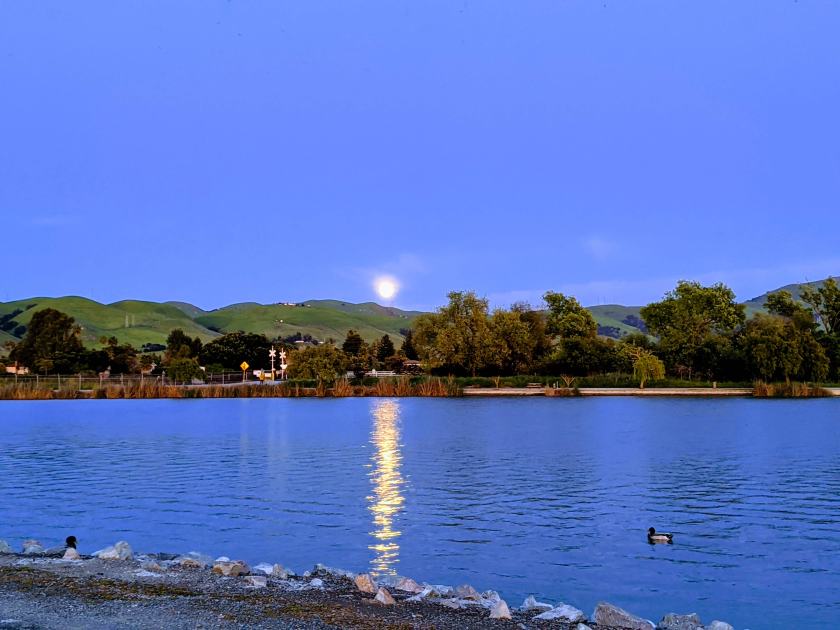
The full moon was beaming – there was no other word for it. It looked larger than usual, felt much closer to earth and glowed a golden yellow in the early evening skies. I am a confirmed selenophile (a lover of the moon) there isn’t a doubt. The pinkish hues of the sunset was just giving rise to the purplish hues and slowly but surely the inky blues of the night would creep in, as though slowly covering the blanket gently over the world.

img_7345

The family had all called or texted me to look up at the skies from wherever they were, and I glowed in the beaming moonlight, fading sunlight and the glorious inner light born of happiness that the children in particular had thought of me when they had seen something beautiful.

I was enjoying the quiet of a moon that rises on an early evening over a week-end. Things seemed surreal in this light and time. This, I felt, was the truest way to bring oneself down to our marvelous Earth.

The birds don’t fly any faster just because the world around them pants and coughs up smoke in automobiles charging from one place to another. The buds are still furled in the tree boughs or the plants below – they don’t rush to unfurl their petals just because February sped past, and beautiful March roared its way in. The grass sways to the speed of the winds whipping them – the winds react to the atmospheric pressures, no one can change their pace.

The world moves on measurably, one moment at a time. The full moon grew predictably over the past fortnight, and there it beamed at me, and my little family, wherever we were at that point in time.  I thought of different posts to write up, beautiful phrases flitted in, and then by the looks of it, evaporated just as quickly. If only I could shore up the energy and determination to write up all the lovely things that occur to me as I walk on!

Later when I read this Brain Pickings post on Walking as Creative Fuel, I nodded along at the wise words of Kenneth Grahame.

Kenneth Grahame – the author of Wind in the Willows wrote:
“Not a fiftieth part of all your happy imaginings will you ever, later, recapture, note down, reduce to dull inadequate words; but meantime the mind has stretched itself and had its holiday.”

Out on the walk that day, what he says seems to have been true. I relished the enthusiasm and the energy in the note to myself – the asterisks, exclamation points and the half-capitalized words written out in haste. It definitely wasn’t the first such note to myself.

img_20200208_193142

Well, the universe alone knows how many great works of literature have been lost, and gained by writers enjoying themselves on their walks. I am glad for the simple act of walking and musing. The meandering of the soul is special because of them.


The Lover of Dusks

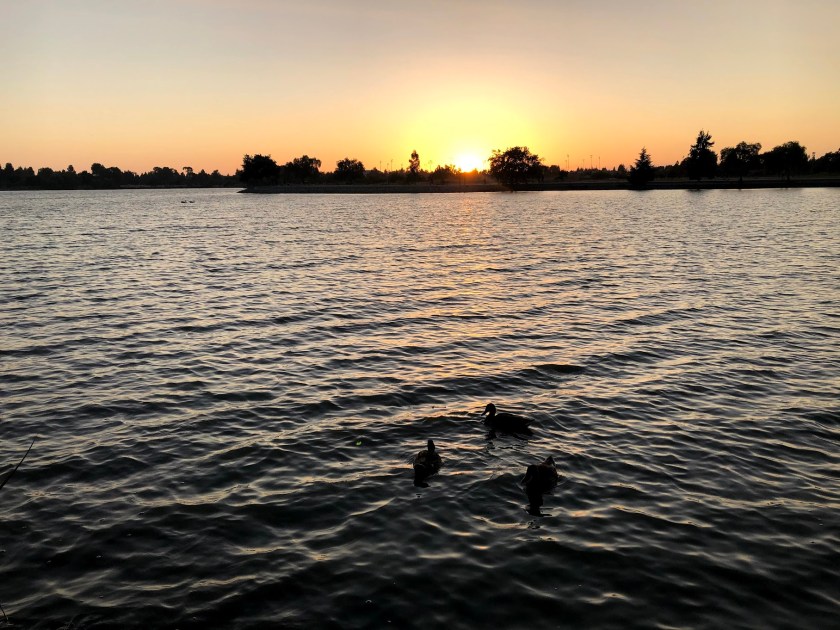
The sun was setting in the West as the train pulled up from a tunnel. That day, the clouds were weaving patterns of sand dunes in the skies – wispy ones strewn across the skies in no particular concentration. Definitely not corporeal in shape. Do clouds blush? These ones certainly were – they were blushing in the rosy hues of the sun, in the admiring glances given by every living being that took a moment to notice. A truly astounding sunset was in the making. The kind of sunset I would have liked to watch sitting atop a mountain, or by the seaside, watching the waters join the evening show with its myriad possibilities for reflection.

img_6659

But, like I said earlier, I was on a crowded train standing, and glad, really very glad, I was standing facing the window showcasing the sunset instead of having to face the other way. One does not always get the choice. My old heart swelled – I was never one to turn its back on Nature’s beauty. That evening, it burst forth in song. The red planet, Venus, peeped out from behind the rose-tinted clouds. However conditions are on Venus, from here on Earth, she looks marvelous in the early evening skies.

IMG_6753

I turned smiling to my fellow passengers to be greeted with: Nothing. If I wasn’t that euphoric, I might have despaired. Nobody looked up from their cellphones not even a glimpse into the beauties outside. I now realize how Artists feel when their best work is ignored. There the star was, shoring up extra hydrogen and fusion-ing the stores like no planet has before, to helium. The clouds, as already established, were blushing and putting on their best show, and no one looked up from their scrolling! T’was enough to make the poet in me curl up and wail. Instead, I hitched myself up and pointed the sunset out helpfully to the ones standing near me. Every one of them, when they saw the sunset, had a moment in which their pupils dilated, and they stood awestruck.

It felt like a fitting tribute to one who was reading The Little Prince by Antoine Saint Exupery at that very moment. Translated by Richard Howard, himself a poet, this rendition of The Little Prince matched the spirits of the sunset outside. The Little Prince enjoyed seeing sunsets so much – one time he actually shifted his chair multiple times around his little planet to catch the sunset 44 times.

Little_Prince

Excerpt from The Little Prince:

“One day,” you said to me, “I saw the sunset forty-four times!”

And a little later you added:
“You know– one loves the sunset, when one is so sad…”

“Were you so sad, then?” I asked, “on the day of the forty-four sunsets?”

But the little prince made no reply.”

I understood The Little Prince’s yearning for the sunset. I can be seen drooling over the sunset when the world is watching Super Bowl matches, or busy accomplishing something. I tell myself that watching the sunset is an accomplishment.

img_5532-effects

Sunrise and sunset are times of transformations, and probably the reason we enjoy them so much. They are beautiful, do not last forever, and set the pace for the next few hours of one’s life. The beautiful transformations are always the gradual, fluid ones – the ones that can assure us of our capabilities to adjust to the coming states – good or bad. A lesson in life’s rhythms.

I came home that evening and gabbled on about the folks on the train who missed the sunset. “Just imagine! What they could have enjoyed, and instead they all looked into their devices!” I said incensed.

The daughter gave me a look of exasperation as if to say  “Did you make a pest of  yourself and point it out to others?”, and went on to enact a scene with her little brother.

Child: “Do you really want to go out today? It is so so cold! And windy!”  

Mother: “Yes! I want to catch the sunset – why don’t you come with me?” 

Child: “Nope! You are nuts – I will look at the sunset from here, are you at least going to wear a jacket or no?” says she.

Mother (shrugs): “Jackets – phsih tosh bigosh! Jackets are for weak people!””

Child: “Amma!  No. You know what, that’s it. Either layer up properly – cap, jacket, shoes etc and then head out, or you are not going to see the sunset!” she says, her lips firm, and a smile twitching at this nature-kook of a mother of hers. 

“You know? You really do become a child with sunsets and fiddle-dee-dumps!”

I laughed heartily at this compliment. Like the author says in The Little Prince: the more he sees of adults, the less he thinks of them.

“I have lived a great deal among grown-ups. I have seen them intimately, close at hand. And that hasn’t much improved my opinion of them.”
Antoine de Saint-Exupéry, The Little Prince

I was doubling up and cackling with the children after their marvelous performance, and said smartly “Yes my dear children! Sunsets, like life, do not last forever! You want a sense of purpose? Catch the  Sunset!”

They rolled their eyes.

IMG_3013-EFFECTS

Annus Confusionis

His voice  quivered with excitement as he read the page out to us. 

Never mind that it was early in the morning, and he did not yet know that the  morning tea was working its way slowly through the cells waking them up. The cells were hitting snooze like the body they reside in usually does with the alarm clock. Yes, things  were getting off to a slow start in the old body. The son, in sharp contradistinction, woke up like a light bulb switched on to full power with the opening of the eyelids. He shone brightly, and his vocal chords took on the  timbre of the morning bugle as he trumpeted the queer finding on Time. 

“Can you imagine a year with 445 days?”

“uhhhhnnnhhhuuujn” 

To this legible response, he prattled on reading aloud to us from his Encyclopedia of Queer Facts.

“Yeah! It was in the year 46 B C, King  Julius Ceaser corrected the lunar  calendar.  This year became known as the annus confusionis or the year of confusion, since the year  had 445 days! Imagine how our  school must have felt!” he said looking up from the thrilling page. 

Time has always excited him – what  it is, how do we measure it, why does it always flow forward and never backwards? 

Time

I poked my cells up into waking up – it seemed the decent things to do in the presence of such excitement.  

“Exciting huh?! Would they have increased the number of school holidays  (a 5 month summer vacation) or the number of school days?”

It must have been enthralling.  Only, school as we know it today was not in session then – schooling as we know it today only came into existence about   200 years ago to equip people with the ability to sit in one place and learn to get used to it.

So they probably continued with their statue making and war-ring even though the seasons were completely out of whack with what was happening around them. What did they name the months? It must  have been an exciting time to be on the committee determining such things! I wish I could go back in time and be a fly on the  wall for those meetings, instead of the ones I  usually go to. 

“Isn’t it amazing the  kinds of things human beings  have figured out?” I said, “And, then we used this knowledge to build on it, and build some more. I suppose it will only truly get boring when we  have nothing to keep us curious. Thinker & Tinkers!”

This was probably the conversation that inspired me to read about Nicholas Copernicus.

I have often marveled at how Thinking Mankind figured out our place in the Cosmos, the fact that Earth  is round, rotates on its axis, and so much more. After all, there were no spacecraft beaming pictures back to us then. The irony was not lost on me, that had we not figured out these things, the spacecraft could not have been built at  all. How  would we  know escape velocities and  thermodynamic thrusts and gravitational pulls in the first place?

This year is a leap year, and a reminder that we can figure out when we need years  of confusion, and when we need to just  look upon  the years of confusion benignly  to  stir ourselves towards better things. Like Jane Goodall said:

“Only when our clever brain and our human heart work together in harmony can we achieve our true potential.”  – Jane Goodall

Posts referenced in this post:

Books: