koi sonder

One day during a particularly windy bike ride, I stopped to catch my breath. Riding against the wind even if the terrain is flat can be hard. I watched the windy skies blowing the fluffy cirrus clouds away, and said aloud that it would be nice for some rain. The husband gave me that look he reserves for my references to eucalyptus, rain and all things Nilgiris. “You and your rain!”

But the universe has a strange way of granting wishes sometimes. A day or two later, the temperatures dipped, a cold spell gripped the area, and I sat up around midnight watching the rain pelt the windows. It was beautiful to watch in the warmth of our homes. I felt a blast of warm air from the air purifier in the room and sent a little note of gratitude for warmth and security when it must’ve been cold and wet outside. 

A few days ago, we had visited a quiet spot tucked away from the hustle and bustle of Bay Area freeways, and turned in past the almond farms into a quaint garden and farm. There, in the corner was a small koi pond with koi fish whose size looked magnified several times given the size of the pond itself. The fish swam towards where we were standing peering into the waters.

The curiosity of these creatures 🙂 If I knew Koi-polese, I could’ve translated. But I think they wanted to know more us: Who were these people who are peering at us? Would they be kind enough to feed us? 

I thought of Dr Dolittle:

These fish languages, they really only work underwater. It’s fascinating! The basic system is mouth movements and bubbles signals.

Dr Dolittle

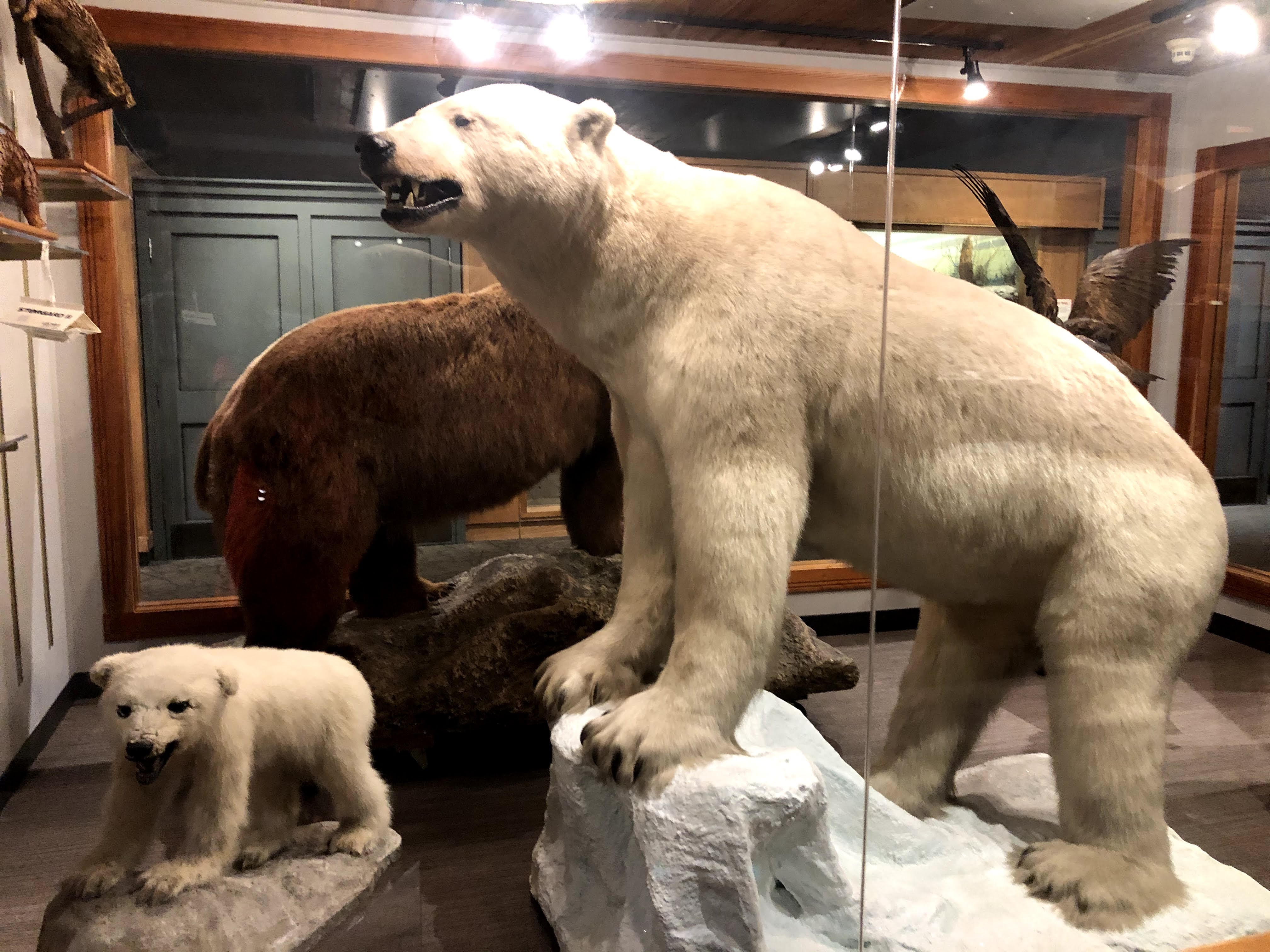
For some reason, that night looking at the rain against our the windows, I thought of the koi fish peering out of the waters and contemplating the gathering clouds. How they would react to the gentle rains falling from the skies? Would their sea brethren feel the same way when they navigated the oceans? I remembered reading an article in the New York Times about how the fish used stars and starlight to navigate the oceans. Polar bears and many creatures do so too. How do they fare when the cloudy skies 🌌 obscure their vision?

“Did you know that an ant has more intelligence than a hippopotamus? And that a grasshopper, in relation to his size, has more power in his hind legs than a kangaroo. Absolutely, fascinating! There’s no doubt about it, animals are much more interesting than people.”

Dr Dolittle

There is a word that captured my fancy when I read it, for I have often felt that especially when traveling. (Grocery shopping in Afghanistan post) . 

sonder (the realization that each random passerby is living a life as vivid and complex as your own).

That night I felt that word with respect to all our fellow creatures. We have no Dr Dolittles among us to know the extent of our fellow creatures feelings. But we do know we have many creatures around us show feelings of warmth, love, clannishness and so forth. 

Almond Blossoms to Cake

“Hmm….is that badam cake?”. (Badam is the Tamil name for Almond) The son’s nose whiffed and sniffed rapturously as he came home from school. I laughed at his reaction. The heavenly scents of ghee, almonds, milk, cardamom, and sugar have felled many a strong heart. No wonder celestial offerings have this combination of aromas the world over. I nodded and the little fellow ran inside. His grandmother handed him a warm piece of badam cake, and his eyes shone. His mouth watering, he gave her a hug, and knowing how his grandfather must’ve been the one who stirred the mixture for hours to get it to this consistency gave him a hug too.

Then he bit into it slowly: relishing, licking, savoring the cake in his hands, he danced a little jig. 

Relishing badam cakes is a family tradition I think. Across the length and breadth of the family tree, you will find people who melt in anticipation of badam cake. The nephews, nieces, son, daughter, their parents and grandparents all smack their lips when the very name is mentioned. The grandmothers treasure the almonds more than diamonds.

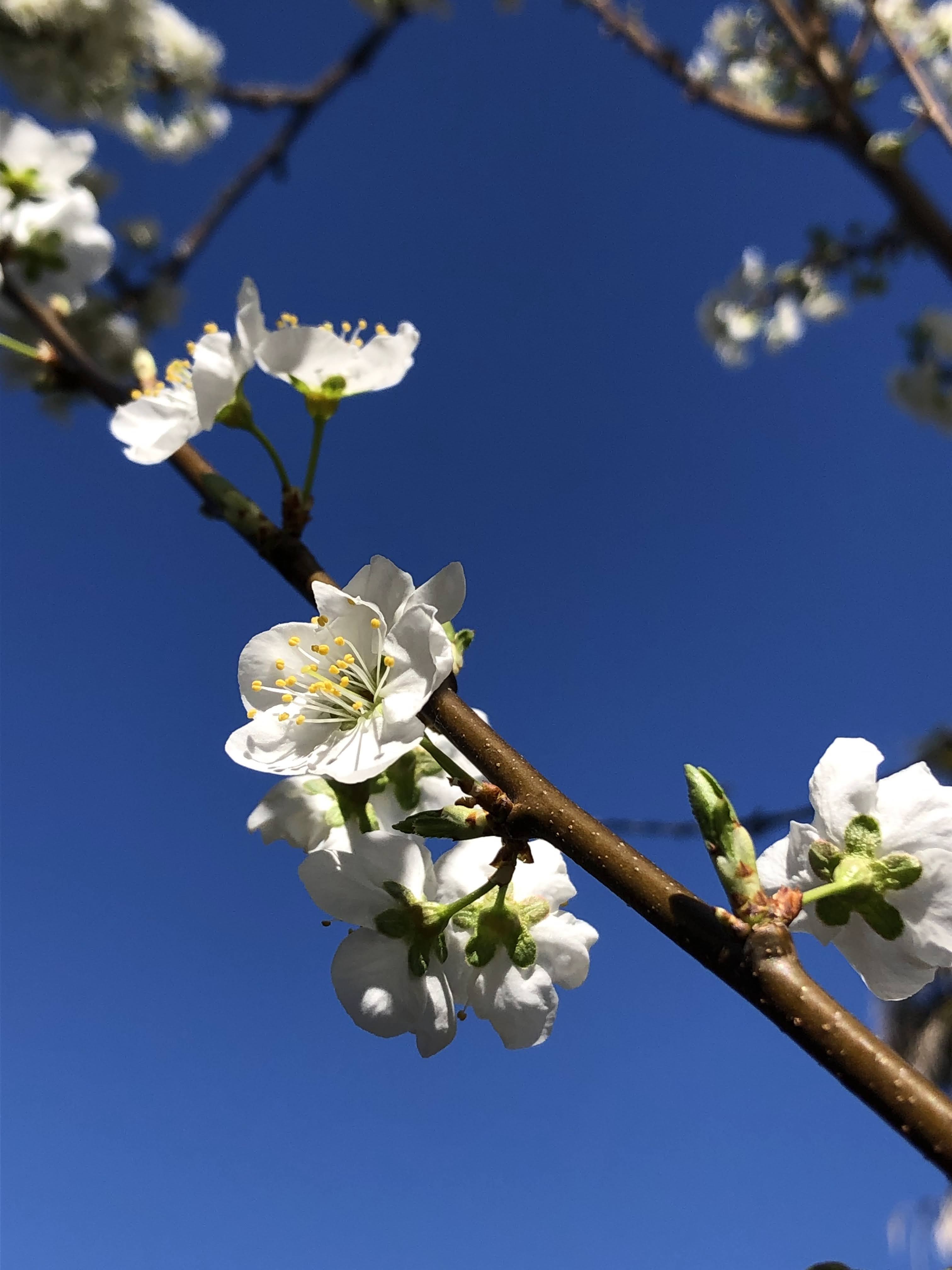
A couple of days later we went on a short drive. The drive through the green hills of California was enough to raise the spirits of everyone in the car. The view of the rolling hills of the Bay Area is best in late winter and early spring. All around us is resplendent green tugging at the heart strings of poets to take up that muse of the alluring verdure. But, there are bounties waiting the moment you reach the plains too: fields of almond trees in rows and rows spread over acres like one of those 3-d models that mesmerize you in their symmetry and movement. In early spring, the almond trees are in full bloom. Watching the brilliance of their white snowy blossoms even non-poets feel their heart strings tug.

It is no wonder that Van Gogh and thousands of artists on this beautiful planet looked to almond blossoms as inspirations in their work. It is stunning. Vincent Van Gogh wrote in a letter to his brother as he worked on his famous Almond Blossoms painting:

I am up to my ears in work for the trees are in blossom, and I want to paint a Provençal orchard of astonishing gaiety.

Van Gogh
Almond Blossoms by Vincent van Gogh – Image from Wikipedia – using Wikimedia Commons

Grown in France, Spain, Iran and California, almonds occupied prime real estate in the nourish-n-cherish childhood home. We had sturdy Godrej cupboards of yore for valuables. Other families stashed gold, silver, diamonds etc: ours had almonds and cashews.

Soaked, peeled with glee ( you could pop the almonds out of their skin after soaking, and several of them would escape and flee across the tables), ground, and then stirred with ghee, sugar and cardamom, this is a delicacy alright.

The son and I watched the trees in quiet symmetry zoom past our windows. Beautiful fields full of trees, quietly standing in the Californian soil doing all the hard work of blooming, sprouting and growing. How I wish we could learn from trees. How they go about the business of living and enabling living for creatures such as we: sans fanfare, yet with complete grace and majesty. A stoic patience underlying their vibrance; their steady creation the backbone of life on this planet. 

almond fields California

I thought of the happy faces of the nourish-n-cherish household when we see the badam cakes each time. That godly moment of sliding the cake into the mouth – all starting with the astounding wondrous work of the almond flowers in bloom outside the window. It makes us pause and appreciate all that is takes to satisfy the human palette, doesn’t it? 

Mingling Starlight in our Lives

Humanity has been in that strange place of being where our sentience allows us to contemplate the mysteries of the universe, while still being stumped and awed by the chaos and complexities of nature.

A week ago, I said bye to my family and boarded the plane. Airports must always bear the brunt of human emotions. I sat on the plane, and the tears came coursing down. I was so desperate for my dear friend’s life. I had been in denial – there was no doubt. I knew she had cancer and she was stoically, bravely fighting the Emperor of Maladies for over two years now. But I hadn’t realized how far it had gotten. I could not reconcile my friends’ vibrant, energetic, intelligent image in my mind with the one I saw a few days earlier. This girl, without whom I cannot imagine my childhood(the one who would brave anything for you), was fighting for her life. 

Almost every important memory had her in it. A shining presence with her light of being – science lab, sports fields, classes, our home, the lanes of Lovedale. Boarding school bonds are unique. I had not kept in touch with most folks in my class after moving to the US, but I managed to reconnect with her after a few years. My children teased me every time I got off the phone with her (You have *that* look – they’d say, like you’d been talking to your Lovedale pals) It was true. I could not bring that smile any other time – I’ve tried. It is like the precious memories of childhood are saved in a special location in your brain that is accessible only by certain people, events, experiences, places, tastes, aromas (and odors!). 

It has been a long few days since that flight back to the US. During this time, humanity has once again revealed its marvelous nature of being to us. Human beings as a species are redeemed only by their giving hearts, empathy and love. My dear friend now has a fighting chance and it all came through because of the generosity of many who knew her, and many who didn’t. Most of us had not seen each other or spoken to one another in years. Yet.

It was a privilege to see our collective love for each other surface through time and space and help out one of our own.

A shiver passed through me as I stepped out on a walk, and I inadvertently looked up at the stars. Plaedis cluster, and Orion the big hunter looked unusually bright on that cold, clear night. 

“Mingle the starlight with your lives!”

Maria Mitchell, Astronomer & Professor

I smiled up at the universe thinking of that quote. I had been in the skies (among the stars) when I had sent fervent prayers up for this girl, and the starlight had mingled in with our lives giving us hope again. 

Now, we pray that her body accepts the treatment and she becomes healthy again. 

light shining through the clouds

The Journey Not The Destination

There is a saying in Tamil that the old pater evokes every time he hears me rave about my little brother. (Little meaning younger – he ceased to be a little fellow about quarter a century ago, though my friends still ask after ‘my little brother’ much to his amusement.) “Thambiyudaiyan padaikku anjaan” In short it means, one who is blessed with a brother, is blessed with the might of an army. I’ve always felt my brother was more like wings.

When he came, we were ready to take flight and soar. When he was home, home was a place one returned to from our little flights of adventure and fancy. His love of vehicles, not withstanding, he has always been the  one ready to take you out on a ride, whether on his bicycle as a boy, or on his scooter and bike as a young adult, or in his car as an adult. As I moved to the United States, I slowly lost touch with driving in India, and increasingly found myself restricted in movement on my trips to India. He truly became my wings. When he was there, I could take on anything / anywhere.

Road trips with the brother have acquired a legendary status over the years, because he, like the father, has acquired the knack of peppering the trip with snacks – the right delicacies at the right time.

This time, the trip was not a pleasure one. I had flown down to help the old parents. As my trip was nearing an end, the brother came home (having recovered from Covid himself in the past few weeks) as a surprise.

He said we’d go out one evening, and I felt the stirring of the spirits once again. The roaring of adventure in the ears. A few miles from our urban home, he spun his wheels in what he calls off-roading. I had only vaguely heard the term. His eyes rove for unbeaten paths, muddy side roads and often roads that no one prefers. The first time, he did this, I was not prepared, since he somewhat abruptly swung off the road and bumped off most unceremoniously into a muddy path by the roadside. I clutched whatever I could, and rattled off a prayer cum expletive that had the brother and nephew laughing. What was this? Before I knew it, he had the car in a ditch, and it did not look possible to get it out of there. As much confidence as I had in the spirit of adventure with the fellow, this time, it seemed, we were done for. 

The nephew, all of a decade old, said ‘Athai! ‘ using a tone meant to soothe and calm irrational patients. “Don’t worry – this car can do….” He went on to rattle some statistics on torques, elevation gains and things that sent my head reeling. I looked at the little fellow, and felt a gurgle of laughter slip through the panic: I heeded it and laughed.  This apple fell right next to the tree alright. This was exactly what his father as a little fellow did. I remember the old pater trooping home from bookstores in far flung corners of whichever city he had visited, and we all made a beeline to see what he picked up for us. The little brother’s eyes always lit up with the old Auto magazines he had picked up from used book stores for him. He would spend rainy afternoons reading about the cars, their makes, their engine powers, their capacity. The joke in the household was that we could set him up with a Cycle Mart or an Auto Mart, and his life would be fine.

The bucolic scenes that reveal themselves in these off-roading experiences are amazing. One time, we positioned our phones to click a number of goat kids bleating atop a knoll when this lady came out of  her hut. The smile she gave us afterwards was priceless. 

Clucking hens, and goat kids seem almost magical in the early evening.

Evening scenes of women making their way home with firewood on their heads, or goats and cows ambling back home against the rural landscape set the pace differently from the rushing automobiles, and folks honking homewards in urban scapes just a few miles away.

Off-roading in poramboke lands means you get to see arid stones and rocks, or patches thriving in vegetation, and not really knowing what you would see.

He stopped to watch the sunset, and there in the distance was a peacock.  

It was pure coincidence that we caught this peacock take flight into the sunset and that I managed to capture the picture. Mostly, by the time I fumble for the phone, and click, the birds have not only gone, in the art of fumbling, I miss both the photograph and the wonderful sight of the bird taking flight as well. This time, I caught both. Life shows you moments of joy and luck, every so often to remind us of the magic of serendipity.

“Serendipity will take you beyond the currents of what is familiar. Invite it. Watch for it. Allow it.” 

 Jeanne McElvaney

When we trooped back into the home, the parents asked us where we’d been, and we had no destination to name. Sometimes, it is just the journey.

Traveling with the Moon

I traveled with the moon on my trip to India. The full moon rose along side my flight taking off.  There was something poetic about traveling with the moon halfway around the Earth. 

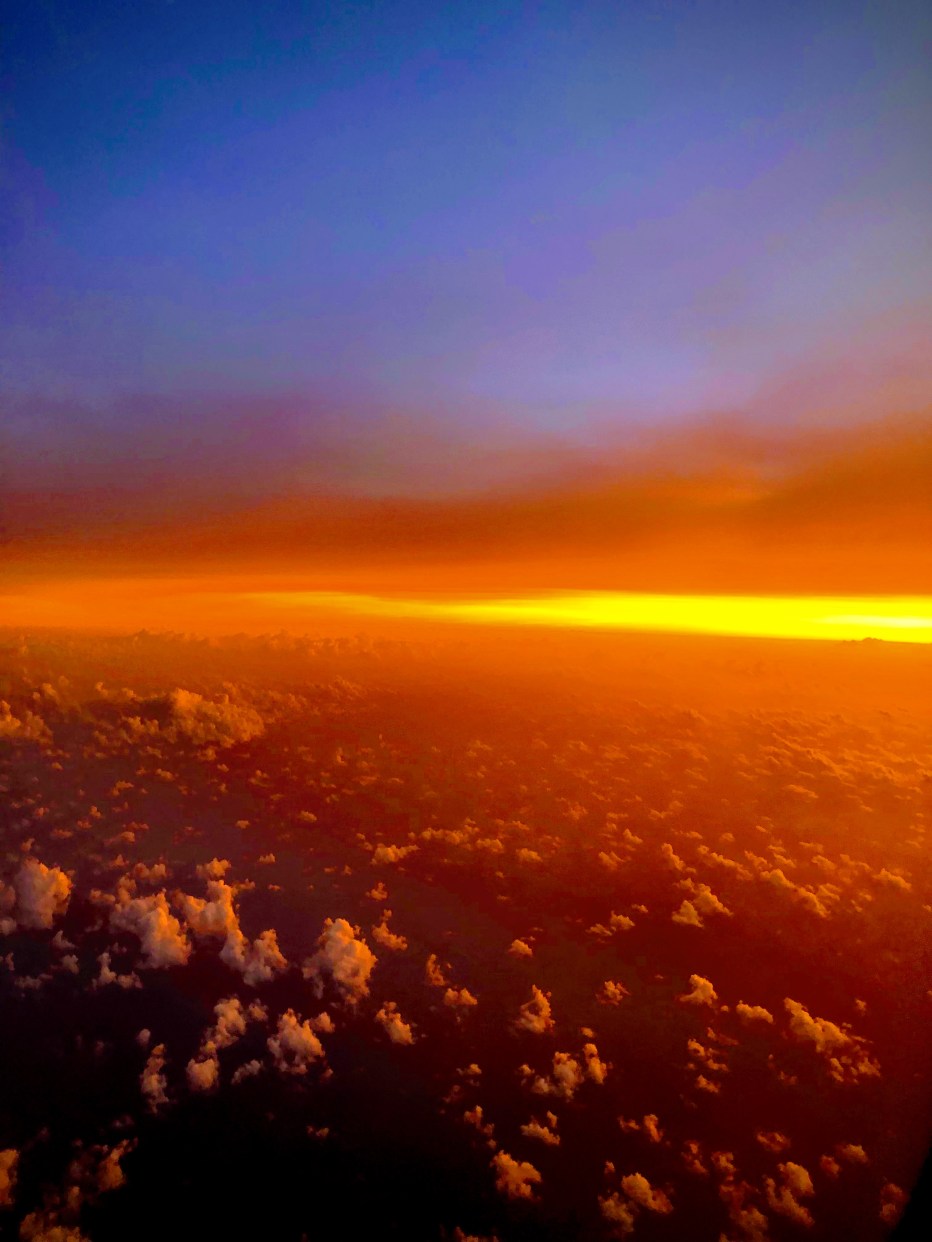
The golden moon elegantly shone and sailed through the inky skies. Slowly, the golden orb turned silver, while the skies around it turned pitch black. Far above the Earth, the hues of the night sky seem richer somehow. Finally, during the last leg of my flight, it was a pale white against the rosy pinks of the early morning clouds and azure skies.

Amuse me while I chant like an enchanted kindergartener:

The Earth rotates on its axis every 24 hours.

The Earth revolves around the sun every year.

The Moon rotates on its axis every 27.322 days.

It also takes that amount of time for it to revolve around the Earth.

So, we only see the same face of the moon, yet the trick of light and its reflection gives us a different show every night.

I see you shaking your head and wondering whether all is well. It is. But, I felt the beauty of it all wash over me anew every time I peeked out at the moon from the aircraft window.

Moon high above the clouds

The only difference between the moon and self was that while my sights may have soared skyward at take-off, it was a pretty poor dance companion to the smooth gliding of the moon. The flight shuddered and blinked its way through the long night, while the moon gracefully accompanied – serene, shining, and sans fuss: Gravitational forces holding it in bay. Thousands of feet below, the ocean waves rose and fell, also dancing to the gravitational tugs and pulls of the beautiful mistress of the skies. Man made designs are cumbersome at best compared to those polished and tuned by eons of nature. Nevertheless, I was grateful for the marvel of flight – we took off in the darkness, and flew always across the world where it was dark when we reached it. I felt like the penguins in winter – huddling and peeping to the skies over a long, dark night. 

At my transit airport, I asked for a cup of coffee to keep awake through the night for my connection flight. The moon needed nothing. The cosmos, is, was, will be.  

Humankind’s movements seem jerky and and oddly designed in comparison. Interspersed with the human sounds and interruptions for food, restroom breaks, flights landing and taking off, the human trip around the earth, was lacking the moon’s elan. 

While thousands undertake journeys like this all the time, I felt a vastness and a soaring that felt un-earthly. In sharp contrast to just 24 hours later, when the world felt constricted, restricted and very much moored to Earth. With instructions to ‘Self Quarantine’, I stepped inside the home, and was not to see the moon make its journey around the planet for the next few days.

Human doings do not affect moons. At least not yet.

The Little Red Fox

I have written about the little red fox in the riverbed before. This little creature never ceases to fascinate me. Living amidst the geese, herons, grebes , ducks, deer and numerous cats, I am unable to determine where this creature came from. I have never seen another fox in the vicinity. His fox parents are missing, fox kin seem absent too. This fox is a mystery alright. Yet he is full of verve and sprightly leaps across the stream-like river, or takes a fast run without missing a step along its grassy banks. 

One day, when the rains had lashed down particularly hard, I stood there scouring the river to see where the little fox may have gone. I do not see him or her regularly, but when I do, it is always worth it. That day, as I walked up the levee to the raised river bank, I saw the little red fox sunning itself on a rock. Anthropomorphizing humans that we are, I craved to catch its mood as it lay there – was it satisfied, scheming, satiated? 

As if in answer, the fox raised its head, looked towards me and then nonchalantly curled up to sun bathe again. I am doing none of the things you think I am doing, I am thinking none of the thinks you think I am thinking. I am simply being.

Watching the fox

The little red fox is a crafty muse:

The little red fox is a crafty muse

She doesn’t appear when you need her

She grants a glimpse 

When she does, you better be prepared for poetry never announces its arrival:

It simply Is.

One day I saw the fox sprinting

Running faster than I had seen any living creature in recent times run

Not in fear, not in pursuit, 

For exercise maybe – it turned its head mid stride, and said with its eyes,

Just simply running.

Another day, I saw him lying on a rock

Sunning himself.

Was he brooding, contemplating or scheming?

As if in answer he raised his head and said

I am just being.

Foxes have fascinated mankind for ages. Fantastic Mr Fox – By Roald Dahl, 🦊 Fox and Eight – by George Saunders, so many animal tales on their ingenuity and resourcefulness, and yet they continue to enchant. The latest I read was a poem on a goodbye to a fox by Mary Oliver, that made me attempt this feeble one.

Solarium Magic

The son came and tugged me to the newly opened section in our local library. His eyes were shining as he said, “Come on! I found something that you’re going to love!” I cannot deny that I love it when something like this happens, and smiled. Off we went, climbing two stairs at a time. Christened ‘The Solarium’, it nestles in a sunlit section of the building – like a mini glass house, it basks there in the warmth of the Californian sun, and doing the good quiet work that is hardest of them all- converting sunlight to food. The area is dedicated to making gardeners of us all – there are seedling packets with instructions on how to sow and grow the seeds given to us. There are books on gardening nearby.  Feeble attempts to capture the glory and wonder of the real work.

I admit it, it has since become one of my favorite places in the library. I am in awe of gardeners – true magicians of the Earth I call them. My own feeble attempts at coaxing life to take root and thrive, only reiterate the power of the simple garden. I was talking to the son as to how we must all learn to grow our own food, make our own food, learn to sew and stitch out clothes etc. More and more, we live in a world where these simple things are becoming separated by layers of machinations and supply chain mechanics. 

When we were in Epcot (Disney World, Florida) a few years ago, I remember the children seeing the plants from which their beloved tomatoes and eggplants grew with awe. City children typically do not see these marvels of nature slowly doing their work, conscientiously and relentlessly.

Epcot green house

It was probably propitious that I should have found the book, The Blue Book of Nebo by Manon Steffan Ros, just then in the new fiction shelf. The book is set in a time after a nuclear war, and how very very few people have survived the disaster. The mother-son duo manage to grow food for themselves in a glass house, and learn to thrive on their own. It is a fascinating read. It is by no means unique, but the narrative style is appealing and slowly draws you in. It is also something that I am sure everyone thinks of occasionally – the sad aftermath of an apocalypse. What would we do? Who would survive and how will they live? So many of our solutions depend on power. 

Mulling over these things early one morning, is when I heard about the ProtoVillage from one of my friends. 

Protovillage.org

  • Grow your own food, 
  • Make your own food
  • Weave your own clothes
  • Build your own home 

Inspired, I emptied the seeds from the Solarium, into a moist patch of mud in the backyard and watched as slowly, a few weeks later, little shoots and leaves sprouted from the Earth. I may have danced a jig.

“Nature never hurries, yet accomplishes everything.”

Lao Tzu

When Musings Are Amusing

It haș only been about a hundred years since humankind gained the knowledge that the atom is made up of protons, neutrons and electrons. In the intervening century, what all we have done with this knowledge – slowly building upon the cumulative knowledge of mankind? It is astounding, and I shivered a little – partly due to the cold, and partly due to awe.

It took humankind 200,000 years, or at least about six millennia of civilization to discover subatomic particles, and somehow in the intervening century since, the pace of technology and the possibilities of the future seem to have raced forward. Every generation has had to live with phenomenal changes. Barring huge setbacks, where would humanity be in another 100-200 years? 

The stars spun around in its merry dance around the universe ,while I had the same sensation in my head trying to make sense of the world we have built for ourselves. The simple observation on the atom’s makeup led us on a merry dance of our own – that of financial markets, world economies and much more.

The husband was explaining the concept of NFTs, VR worlds that is already beginning to manifest in the world.  Our great grandfathers would not have understood. We are not going to understand things of perceived importance in our grandchildren’s lives, forget great grandchildren’s. The mind boggled. 

It all started with my fretting about the Economics of the world getting increasingly complex – how did stock market indices, per capita incomes came to be built one upon the other? Currency fluctuations, led to the discussions on crypto currencies, and we went on to how people claimed ownership to stars. Apparently, one could pick a star and name it after yourself for a fee. ( Star registry )You essentially ‘owned’ the star from then on. The only problem was that there were multiple star registries, and so multiple people could pick the same star to ‘own’. Also, there is the real problem of the star not knowing it is ‘owned’ by a human on a faraway planet.

I looked up and laughed out loud – the stars seemed to understand and winked back.

I could not help thinking of the parody of The Little Prince by Antoine Saint de Exupery. In The Little Prince, the Prince visits different ‘planets’ each hosting one human being – a geographer, a banker, a king, a drunkard and so on. The banker never seems to spend any time enjoying the stars around him, but spends his time counting them all, as he claims that the moment he counts a star, he owns it. (Carl Sagan’s Quote on Astronomy being a humbling profession is completely lost on the poor, rich banker!)

It has been said that astronomy is a humbling and character-building experience

Carl Sagan, Physicist and Astronomer

Really, human beings are the most remarkable beings if you stop to think about it. We want to own the first digital signatures, the most coveted things on earth (Napoleon prided himself on his Aluminum vessels, and it was considered a luxury till someone found how to produce it enmasse: https://en.wikipedia.org/wiki/History_of_aluminium), the best paintings that cost millions, and so on. We want our egos fed and nourished all the time by a universe that largely does not seem to care whether we exist or not. 

But, simple things that mattered before the composition of the atom was discovered still remains important. We still value our loved ones, yearn for contentment and peace, and want to live on a bountiful planet that allows us to thrive.

There is no doubt about it: The musings of our importance on a cold, starlit night is highly amusing.

This Beautiful Earth

2022 started off with a marvelous opportunity to read poetry at the Coimbatore Festival of the Arts. The theme was to choose a poem that immortalizes a place you love just as T S Elliot immortalized London in his writings. I wracked my brain, and tried to find one place – but found myself dithering. I had a book of 150 poems open on my lap as we made our way to one of my favorite places on Earth – a peek under the ocean waters (Monterey Bay Aquarium).  But there was no poem on the oceans in the book. 

“How about this one? “, I asked and read out one sparkling piece after another.

The trick with poetry reading is to get the whole family shut inside a car, snag the front seat so the car’s audio controls are with you, and then to start reading poetry out aloud. It is a good strategy as long as one knows to gauge moods and cheese it at the right time. I had a thoughtful audience, an audience that gave me suggestions, and even recited some of their favorite ones for consideration. What more could one ask for?

The more I thought about it, the less I was able to zone in one place. Many places seem to hold something special – places we’d lived in, places we’d made memories in, and places we’d visited and fallen in love with. 

The more I tried to narrow down, the more I found myself drawn to the planet Earth. After all, I love almost every river I see, wish upon every stream and fountain – man-made or natural, love every tree, admire every flower as is wafts its scents through my senses, and adore the play of the evening light amidst the clouds. How could one place be selected? I did wonder about Mary Oliver’s poem on the unknown pond. The one in which she just refers to a nameless pond, since it could work for any pond, and I agreed with the sentiment. How many ponds have I since pondered over with that beautiful poem in mind. In fact, I have my own version of Walden’s pond, which is nothing close to Walden’s Pond that so inspired Thoreau in size or stature. But it is reachable from my home, and every time I glance upon its water, a new delight unfolds. Whether it is the pelicans, geese or ducks swimming there, or the play of the reeds movements upon its surface, every glimpse offers something lovely for the soul.

So finally, I settled on Planet Earth as my favorite. We Belong on Earth, is after all, a popular theme on the blog. Therefore, the poem chosen was A Grain of Sand – By Robert W Service

A GRAIN OF SAND

If starry space no limit knows 

And sun succeeds to sun, 

There is no reason to suppose 

Our earth the only one. 

by Robert W. Service

Followed by Carl Sagan’s ode to the Pale Blue Dot (written almost 45 years after A Grain of Sand – this ode is one for the ages) and then finally with by my own humble ode to our beautiful Earth.

As we walk upon this Earth, there is much to be grateful for, and much work to be done to fix our footprints on the sand.

The Human Earth

I was reading frantically the other night. I wanted to finish the book before the New Year. Earth’s History – 4.5 billion years in 8 short chapters by Andrew Knoll. I had galloped my way to the last chapter: Human Earth, when the eyelids lodged a formal protest, and refused to stay open.

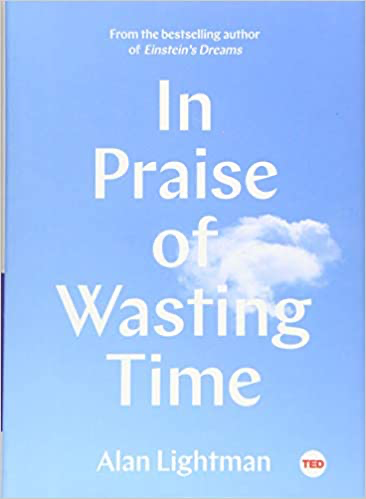
A Brief History of Earth: Four Billion Years in Eight Chapters by [Andrew H. Knoll]

So, I did the next best thing. First thing in the morning, I came downstairs reading. There wasn’t much chance of reading in the mornings with the general comings and goings of life in the nourish-n-cherish household. But I live in hope. I sipped my coffee for all of three sips reading about Human Earth when I detected a faint fracas among the humans in the household. Cautious pricking of the ears is no use in the house. The father-in-law is steadily losing his hearing, and the mother-in-law was yelling at him for something and wanted him to know it. All the fathers-in-law in the street heard it, and so did I. 

I tried to read on, but before I knew it, I was called upon to act as referee. If one can shy away and gallop back to bed while sitting in the chair, that was me. Past performance seems to mean nothing. I mean if I were a batsman who has shown time and again that I didn’t know how to bat, would benign fortune keep giving me batting opportunities? Why then was I being called to referee a fight between them yet again? I had been given scathing reviews in the refereeing-department by both sides on every occasion in the past few weeks.

You see? Diplomacy doesn’t help. I find myself agreeing with both their points of view, much to their disgust, and annoy them both equally. Neither feels supported once I agree with the other, and I am given up as a bad job. They do seem to be united in this assessment of me, and I take that as a small victory in the peacekeeping operations. But beyond that, there is nothing I can claim to help with.

This was another day in the life of humans, and it seemed everyone was intent on huffing and puffing and blowing the house down. 

Though, I am not directly involved in all of this (thank goodness!), I tried to look mildly interested. It turned out to be nothing (quite literally nothing as is mostly the case) I clutched the coffee cup and sipped like the gods downing ambrosia, till the well of coffee ran dry. 

After some time, I declared I needed some fresh air and took myself off on a walk. 

As I walked on beautiful Earth on that cold winter’s day, I felt a fresh appreciation for the planet. The book talks of Earth’s geological clues that helped us resurrect the planet’s early history. Theories as to when the planet was really formed, half lives determining the age of species and their evolution etc. Beautiful timelines explaining the australopithicus and when homo sapiens came aboard.

Illustration from A Brief History of Earth by Andrew Knoll

In 8 chapters, it explains many things that we know in different contexts, and ties them up to Earth’s history. Oxygen Earth, Biological Earth, Geological Earth, and finishes with the chapter on The Human Earth – which is to say our influence on the planet. The most recent impacts of the last two centuries, accelerating climate change, and so much more.

As I sat there on a rock, looking at the river waters flowing, and the ducks and geese gliding on the waters, eating when they wished, I cast the mind back to The History of the Earth. In 4.5 billion years, so much has happened. One can only make educated guesstimates of the lives of all the creatures that preceded us. 

In the book, Forgotten Beasts by Matt Sewell, he uses his imagination and creativity based on the fossilized shapes of the bones found and tries to give us an image to work with.  How were their eating habits, their social constructs? We don’t know.

In the book, Life in the Garden, by Penelope Lively, she makes interesting observations based on tree rings, to figure out the years in which the trees had to endure drought, and the years they had an abundance of rain. 

But the human life? Short as it is on the timeline of some trees, it is minuscule on the timeline of the Earth. 

Would future generations of neonids or whatever-name-they-give-themselves try to look back at 2020 and 2021 as Covid years? Would they reconstruct the social dilemmas, and habits of homosapiens? We seem to be leaving an outsize impact on the planet now, but how will it manifest hundreds of years from now?

I walked into the home, and found the parents-in-law diligently cutting the fruit of the banana tree. An arduous task, requiring immense patience, and concentration. The father-in-law was peeling the layers of the banana flower and extracting the seed within. The mother-in-law took these, and rubbed it against her palm to expose the edible pieces of the vegetable. 

Vazhapoo – the banana flower

I watched them amused – working harmoniously, their morning spat forgotten, united in the making of the banana flower dish (vazhapoo paruppu usili) that would’ve stumped any species on Earth thus far.