Autumn πŸ‚ 🍁 πŸƒ of Hope

T’was the week-end of gifts. I had no idea how much I yearned for the promise of hope, till I felt the nimble feeling in my heart again.

I stepped out into the autumn πŸ‚πŸπŸƒ day with the children after a bout of dancing in the kitchen. The day was beautiful. Overnight, the Earth seemed less harsher, with the summer heat replaced by a nippy feel in the air, and a blue, blue sky with wispy clouds lilting away their day. I bent every now and then picking up a autumnal bouquet of sorts. Yellow, maroon, red, greenish-yellow, yellowish brown, greenish-red, and everything in between.Β 

β€œDon’t you feel like dancing πŸ’ƒΒ  though?” I asked the daughter, and she said firmly. β€œNo! Not out here.”

β€œOh – its okay!” Said her little brother coming to my defense. β€œEveryone knows she is a bit of a nature kook, it should be alright!”, and I laughed. My reputation was intact with the children.

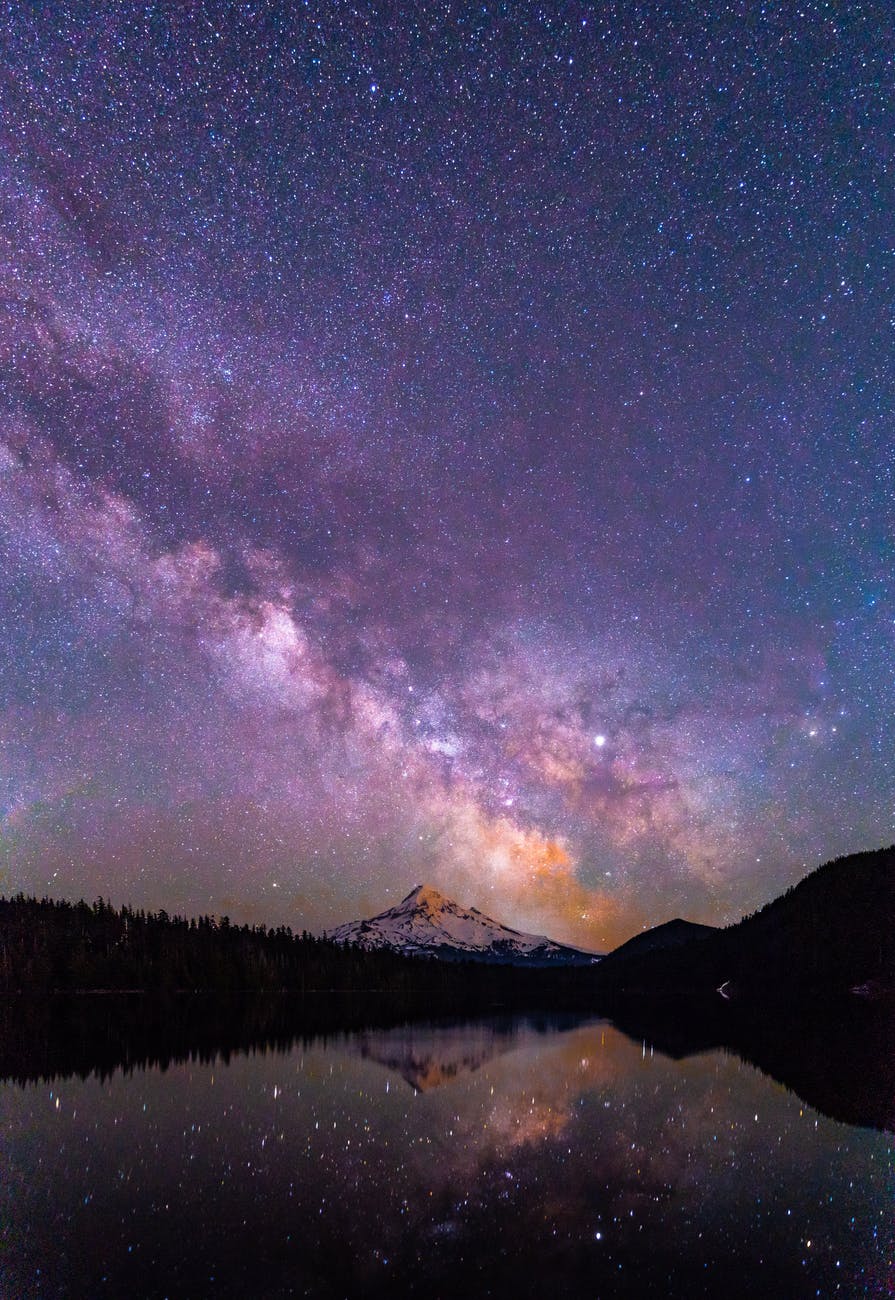
The gingko trees were waving their golden green flags in the air – proudly proclaiming the daily joy of living to those who would stop and take a moment to take it all in. I stood there thinking, that the day is a wonderful one indeed if we have within us the power to pause and wonder,Β savor the simple act of Shoshin, andΒ marvel at the sheer audacity of life. Every night reminds us of the cosmic wonder that is our life. It affords us a peek into the darkness in which we float, the bleakness of it all, if there were no light. Yet, there is light, and more importantly, there is life!

β€œRemember the gingko tree my dears?!” 

img_0002

β€œYes! We do – we missed it last year, but if all the leaves don’t fall at one shot, you’re in for a rough time!” Said the daughter, her voice ripe with indulgence.

I stuck my nose down the yellow lilliums on the path, came up with a nose of powdered pollen, and promptly wanted to sneeze.Β 

The children gave me pitying looks and the daughter said, β€œLook at you! Like a little dog sniffing at flowers and raising that long beak of yours into the air!”

I had no idea dogs had beaks, but setting that aside, I said, “Behaving like a puppy?! What greater accolade could a mother get? I am a very happy puppy 🐢 indeed!” Β As soon as we came home, read out to the family in one rapturous gasp a poem written by Mary Oliver in the book, Dog Songs:

dog_song

Luke

I had a dog
who loved flowers.
Briskly she went
through the fields,

yet paused
for the honeysuckle
or the rose,
her dark head

and her wet nose
touching
the face
of every one

with its petals
of silk
with its fragrance
rising

into the air
where the bees,
their bodies
heavy with pollen

hoveredβ€”
and easily
she adored
every blossom

not in the serious
careful way
that we choose
this blossom or that blossomβ€”

the way we praise or don’t praiseβ€”
the way we love
or don’t loveβ€”
but the way

we long to beβ€”
that happy
in the heaven of earthβ€”
that wild, that loving.

Shortly afterward, I headed out on another walk. This time, because the day promised rain, and as the first droplets pattered down, I listened to the music of the heavens. How parched our dear Earth was, how bereft our souls without hope?

On the way back from another gorgeous walk, a rainbow 🌈 peeked out. Hesitantly at first, and then with pride, with conviction, the universe’s assurance of not just light, but light with wavelengths between 380 and 700 nanometers on the visible light spectrum.

That is Hope. Hope is Joy. Joy is Peace. Peace is Love.

img_0031

Eye of the Pumpkin

β€œWhat?! Dancing in the kitchen?!”, said the son smiling his dignified smile of indulgence. β€œI haven’t seen you this happy for a long, long time!”
 
 
β€œYes! I am dancing πŸ’ƒ young man! You dance πŸ’ƒ in the kitchen when you have a dignified President! You dance πŸ’ƒ when a woman’s ambition is finally rewarded. You dance πŸ’ƒ in the kitchen, you dance πŸ’ƒ in the streets, you dance πŸ’ƒ in the woods, you just dance πŸ’ƒ!” I said kicking my feet up in the air.
 
 
The men smiled at each other exchanging significant glances.
 
 
β€œWe are going to throw the drishti pumpkin πŸŽƒ out! Oooh yeah! ”
 
 
β€œWhat?!”
 
 
β€œWell!” I said, catching my breath after the danceπŸ’ƒ routine and proceeded to talk about pumpkins, evil eyes and the evil eyes of the pumpkin.
 
 
It isn’t uncommon to see a pumpkin out on the street: During Halloween, πŸŽƒπŸ‘», in the United States, but anytime on the streets in India.
 
 
I remember being shocked the first time I saw a pumpkin being flung out on the streets as a young girl. I was less than a decade old, and had wrestled my little brother, and then out-debated him in a secret language to get to the window seat as we travelled from the Nilgiris to my grandmother’s village near Trichy. The entire 8 hour journey is a picturesque one. As the bus winds its way down the Nilgiris, and then slowly descends into the plains, the air gets warmer and warmer, and the scenery changes from misty hillsides to lush green plains with the final stretch of road between Karur & Trichy by the river Cauvery. For several hours, the trees on either side of the road tip their branches together and whisper little messages to each other across the road as the buses, trucks, jeeps, cars, motorcycles and cycles rustle by underneath trying to get a wisp of the whispers above. The river flows on murmuring at places, serenely flowing along at others, but always providing a pleasing backdrop to life in these South Indian plains. The little villages along the way, could be Malgudi, and just peeking out is enough to provide a R K Narayan-ish story.
TH10_Nilgiris-COLLAGE
 
I was daydreaming in the bus looking out and imagining a myriad things when I saw a sizable pumpkin lying squashed outside a house. Coming from a family that frowned upon wasting food of any form, I wondered what they would say about this great waste of a large pumpkin?
 
 
It turns out, that certain pumpkins are meant to be thrown out. That particular pumpkin, I was surprised to learn, was there to ward off the evil eye, and needed to be thrown out. The β€˜evil eye’ or drishti is one of those things of folklore in India. There are many rules, laws, workarounds and theories at work here – it is dubious, but entertaining nevertheless:


  • When something bad happens, it may be a good thing, for it offsets the evil eye.
  • When something good happens, then one must remember to throw out a pumpkin to ward off the evil eye. (#Prevention better than #1?!)
  • When nothing happens, you squash a lemon or a smaller pumpkin to ward off the evil eye that slowly accumulates – like dental plaque I suppose.
  • When lots of things happen at once, and one cannot figure out whether it is good or bad, you trash a pumpkin just in case.


Now, many times in the past few years, I have referenced the pumpkin used to ward off the evil eye. If the United States has spent so much time being the world leader, championing climate change, leading scientific research and helping democracy thrive in different parts of the world, it must’ve accumulated oodles of drishti mustn’t it? When the 45th President, Donald Trump won in 2016, I cried. I cried not because I am particularly close to any policies or any such thing. But because such a great country would elect a boorish bumpkin like Donald Trump: a man hellbent on thwarting democracy.


This must be our drishti, I thought. Well, how does one know that? Refer to rule #1.
 
β€œThe gods grow jealous of too much contentment anywhere, and they show their displeasure all of a sudden.”
― R.K. Narayan, Malgudi Days
 
 
Today, it is time to throw the drishti pumpkins, carved with those evil eyes, out.
 
 
Today, it is time to dance πŸ’ƒ like no one is watching for the whole world is watching us reclaim our dignity.
 
halloween_ij_fm_page
Continue reading “Eye of the Pumpkin”

Once in a Blue Orange Moon

Halloween is one of my favorite times of year. In sunny California it is the time fall weather finally starts to settle in. I pick out pumpkins to set by the door. Most years, my carving takes a back seat, and I settle for painting or sticking outsize eyes and a mouth on it instead.

But we decorate the house – bats and owls stickers fly around avoiding the fake spider webs. Hasty orange construction paper is stuck around the outside light, and all things orange are ready to be displayed for one whole evening.

I remember a few years ago on an evening walk after a vigorous trick-or-treating, I felt a thrill and stood there mesmerized for a moment as an owl flew against the moonlight. I know Zen and Buddhist teachers tell us to enjoy the significance of every moment. I am not sure about every moment but a few moments doΒ  lodge themselves in a magical spot. The owl flying across the moon was one such.Β I remember standing there bathed in the magic of it all. The owl of course is a visceral being, and was after its prey – nothing more nothing less. Halloween was an affair that was of no consequence to it.Β 

The blue moon will shine its benign light on us on Halloween. The trick-or-treaters will be thin on the ground, of course, because of the ongoing Coronavirus pandemic, and I should think bats will not be getting that warm a reception with humanity this year!Β 

The son got himself a costume that has a mask with an air filter on it keeping with the grim theme the world is cloaked in. β€œHint!” I said holding up my hand in a V with two fingers on either side to those who tried to guess what it was on the video camera. The son shook his head disappointed and said, β€œYour hint is from Star Trek! My costume is from Star Wars!” Ahh well.

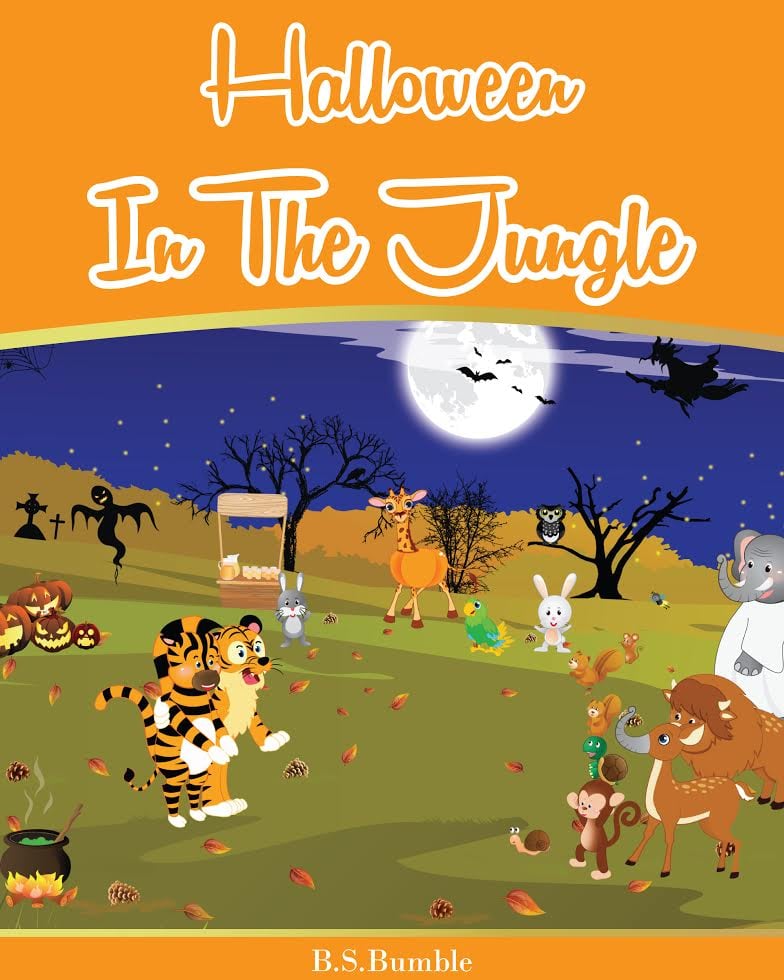
The son wore his Halloween costume to class today. This would have to be the poor substitute for the marvelous parade they usually get to attend on Halloween, but he dressed up with gusto . I was excited to see his classmates dressed up too: their tiny passport sized icons on the screen showing me the heads of princesses and pirates would have to do.Β  Their teacher was kind enough to let me read my book, Halloween in the Jungle, to them. Reading the books to the children is by far one of the best experiences I have had. Their reception to the story, their thoughtful questions thereafter, and their wholehearted enjoyment of the simple story is more than enough for me. Why? Oh why do we lose that marvelous feeling of youth as we grow older?

halloween_ij_fm

Tango Tiger, Janny Rat, Boy Elephant, Biso Bison, Spotty Rat and all their delightful pals are heading into their 7th year celebrating Halloween in the Jungle. The Halloween in the Jungle book has since given me immense joy.Β 

But this time, I feel a special bond to the little tykes as they revel in the clearing by Luda Lake, eating pumpkin pies, drinking orange and persimmon juice, and dancing to the lovely sounds of the musical orchestra with Nighty Nightingale, Owl, Bat and Frog. You see this time, just like the illustrations show, there will be a marvelous full moon night to light up Halloween.Β 

halloween_ij_fm_page

Blue moons are not as rare as we think, for they come around every 2-3 years. But apparently, this is the first time since World War II that a full moon visible from everywhere in the US coincided with Halloween. I am not one to set much store by signs, but if after the 1944 Halloween full moon, we were able to set the world to rights, surely a Halloween full moon and a blue moon at that should work miracles.

Happy Halloween!

The Fabled Life of Aesop

When we think of literary bodies of work that have endured over Millenia, we think of epics such as the Mahabharatha, Ramayana, Iliad and Odyssey, or the Bible. But there are so many endearing little tales that have endured just as long, and have passed down morals, lessons and fun along the way.Β  I am referring to stories such as Aesop’s Fables & Panchatantra tales.

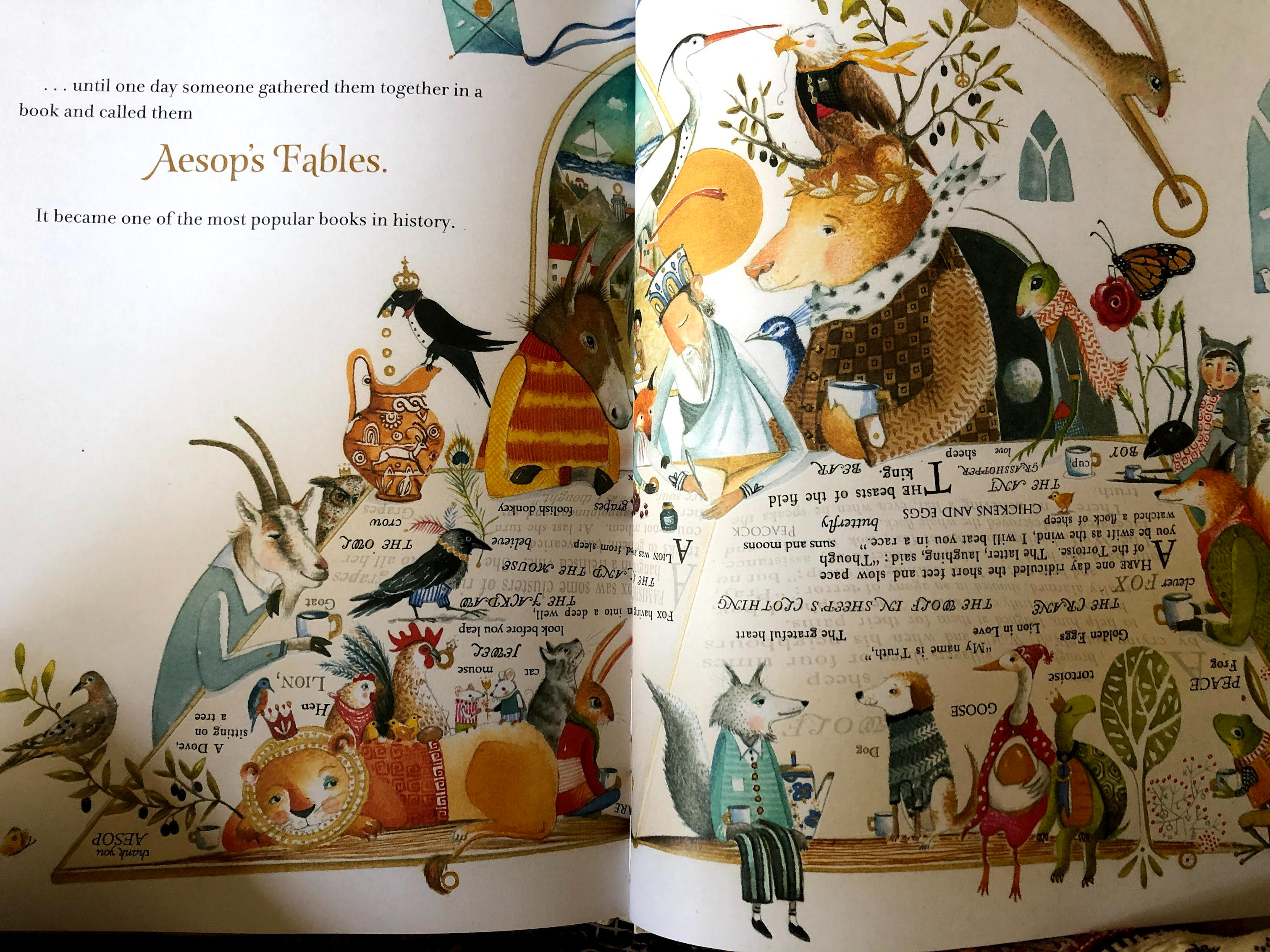
The library had a wonderful picture book on The Fabled Life of Aesop: the book was not just a collection of his most fables, but the life of the slave we think was Aesop.Β 

Β 

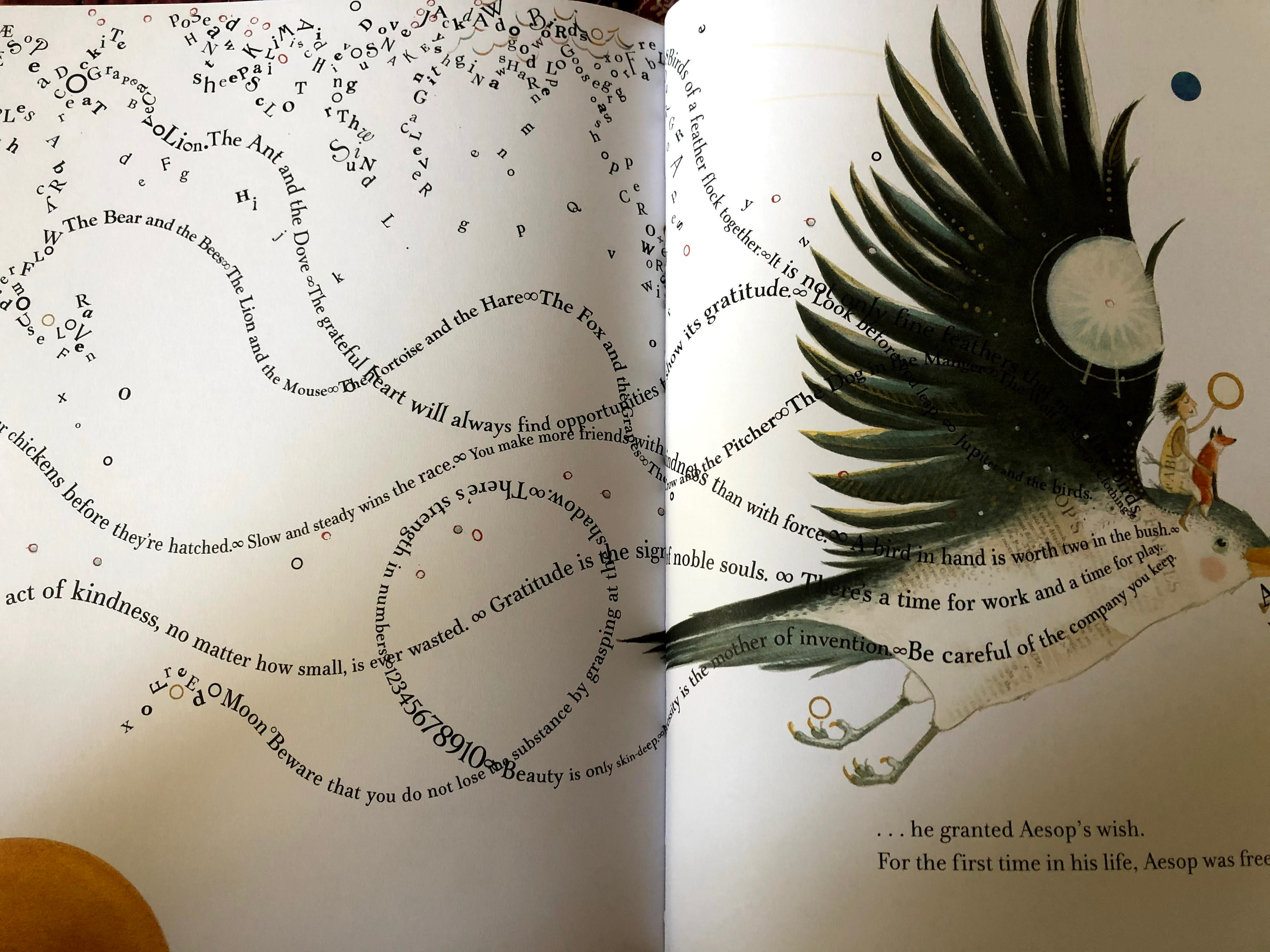
Written by Ian Lendler, and illustrated by Caldecott winner, Pamela Zagarenski, it is a book with marvelous reading material, and highly imaginative pictures.

2500 years ago, a baby boy named Aesop was born to slave parents in Greece. Aesop, as a child born to slaves, was taken from his parents and sent to work in the hot grape fields of Samos. As a slave, Aesop learnt to speak carefully. One of his friends who talked about their master’s smelly feet was taken away and was never seen or heard of again. So, the slaves learnt to speak in code.

Β β€œDid you hear about the lion? He stepped on a thorn and his paw got infected.”

β€œOh!” said Aesop. β€œSo that’s why his paw smells!”

Aesop learned to speak in code.

I could not help remembering this snippet from a poem by Margarita Engle in the book, Enchanted Air :

Tyrants always

try to control communication.

They always

fail.

The human spirit is not meant to be caged, and tyranny somehow tries to do just that every time.Β 

Aesop’s talent in spinning stories with morals using the animals around him was soon noticed by his master Xanthus, and he was tasked with more challenging tasks in helping his master’s life. One time when his master had a falling out with his friend, Aesop was called to mediate. Aesop was but a young boy and he was scared. If either his master or his friend felt offended, they had the power to put him to death. So, he came up with a story about the lion and a boar who fought over who should drink first at the watering hole. It was only when they noticed vultures circling overhead that they realized it was better to share the water rather than have the vultures eat the loser.

The master, Xanthus, and his friend, Jadon, were so impressed with Aesop, they sought an amicable resolution. As a peace offering, Aesop was sold to Jadon who continued to seek Aesop’s help in his business and personal affairs.

Aesop’s stories helped his masters live their lives with honesty, humility, and kindness. His stories warned against greed and deceit.Β 

β€œMany of them taught another hidden lesson as well. It was something no master would pick up, but every slave or powerless person would understand. β€œ

img_9889

Eventually, Aesop was set free, and his stories have been handed down from generation to generation helping millions of us glean the wisdom and morality handed down by these endearing tales.

img_9890
Freedom

I have often wondered about what it means to be human. Is it opposable thumbs, or imagination, or tool use, or brain to body ratio, or empathy? Maybe the complex combination of all these things, and the collective will to make things better in spite of all our failures is what sets us apart.

We have heard of scalded cats staying away from milk. Maybe our power is in ensuring that we do notΒ  make the same mistake again and again,but learn from it.Β Β 

The world around us always has lessons for us: Octopii, whales, monkeys, dogs, crows, geese, herons, squirrels, rabbits, trees, and to that I am grateful.

Β 

Imaginating on unbirthdays

There’s a little something that we have been treasuring in our home. It isn’t so much a secret as a quirk really. But it is something that our hearts have grown fond over, an idea that we share with close friends with a stab of joy, pride and a laugh that acknowledges the un-normal-ness of it all. But by doing so, we have invited you into our little circle of joy and keeping our spirits up.Β 

So, why do I share this now, here on the blog. My answer to it is, “I feel it will help us all cope in these times of uncertainty. ” Practiced over small doses, it can be comfortable or not depending on how much you have used this part of your personality before. But it is possible. I know it. For on the sternest of days, when life seems to be boxed into a little screen, and the slings and arrows of fortune come by taking straight swings at us, and the mind struggles for an outlet, this tiny act of will works its way into a part of the brain that senses wonder and magic. It seeps in.

I will need to take you back into our world for a bit. So, please come on over.

I was trying not to fall asleep one afternoon. Β The leaves were rustling outside in the soft afternoon breeze, our stomachs were full with a week-end meal, and I had retired for a space to read a book. I had only just managed to let the book slide out of my hands as a wave of sleep crashed over me, when I heard Β sounds of battle from within the home.

β€œBwoooshhh! Swoosh…aahh…guhgh, brwooosh!”

This sizzling sound effect was followed by dull thumps, and a moan. A moan not of defeat, but of acknowledging a hard task that needs to beΒ  done. If ever a moan was cloaked in determination and strategy, this was it.

β€œWhat are you doing?” I hollered.Β 

β€œJust imaginating!”, the reply came from the young son, and the samurai, dragon, ninja, or jedi warrior went about his business of setting his world to rights. Sometimes, electrons and quarks swoop in to change the nature of the opponent.

I smiled sleepily trying to figure out the latest battle he was fighting.

The dragons were slowly gaining ground and judging from the throaty cries, and the swift roll-ups being performed by the other side, lightsabers were running out of energy and quickly needed recharging, if anything were to be done about the dragon menace. They were taking over the mountainsides , gaining speed and traction even worse than theΒ  wildfires that raged in the area just a few days ago. Weather monsters are only one kind of monster.

Imaginating

In our home, the act of pure imagination has been given a verb-form all on its own. Imaginating, we call it, and go about our business of imagination without batting an eyelid.Β 

When the son came up with the word as a toddler, I was amused. Here is a word that documents insist on underlining in squiggly red as unrecognized, and yet, this word feels right. It feels like a word that belongs.Β 

Imaginating evokes the act of imagination sure, but it is an imagination with power and force. Imaginating in the face of tyranny, imaginating in the throes of uncertainty, and imaginating in the relentless negativity of news cycles, seems to be just the panacea to set our world to rights. It is an act of our will, and to quote L M Montgomery from Anne of Green Gables,

β€œBecause when you are imagining, you might as well imagine something worthwhile.” 

― Lucy Maud Montgomery, Anne of Green Gables

Our song could be:
We shall imaginate.
When tyranny comes my way, I shall imaginate.
When hopelessness clouds my day, I shall imaginate,
Just like the tree that imaginates itself to be a bird. I shall imaginate!
Β 

Lewis Carroll, a man known for inventing words, would love to hear the word from the son, were he alive. So, here is the secret of imaginating and I am sure it is a necessary one in a world in which we are all mad.(Β To quote the Cheshire Cat in Alice by way of explaining Wonderland to her, β€œWe are all mad here.”)

So why not have fun imaginating with it, and reserve them for special occasions such as our unbirthdays. (Lewis Carroll’s word for every special day that isn’t a birthday, which means we all get to have 364 of them every year).

IMG_8187

P.S: The story has been put to rights by the hero of the imaginating sequence. That afternoon, it was pirates he was fighting off, and not dragons. So, they weren’t gaining ground, but they were gaining water.Β  What else did I think those squishes and swooshes were? It was obviously the sounds of water splashing against the stern of the ships as he bravely fought off them pirates. Moreover, he wasn’t on an intergalactic space adventure to use his lightsaber, he was simply using his dark matter sword. Duh!Β 

Β 

Our Attention, Our Imagination, Our Opinion

Poetry has seeped into our lives yet again. At times I wonder whether poetry, music and art are all luxuries that only dare to raise their heads when the busyness of our pointless existence relinquish their clutch, or whether poetry, music and art enable us to go about our busyness with joy and acceptance.

Either way, I am simply grateful to experience the effect of these soothers to our lives.

The news can be a whirlpool, not just pulling those who happen to float nearby into its swirl, but also sending a whirlwind to attract those on land. Of late, every week seems to be packed with a year’s worth of news. All of this of course results in an enervating tug of emotions.Β 

We do not know whether the farm worker in the 17th century had this many opinions he needed to have, or whether the soldier in the Dark Ages had a semblance of control in his fates. All we have experience of, is this time, and this age, when we are being called upon to not just have an opinion, but also to voice them and defend them almost relentlessly.Β 

How the world clamors for opinions and stands? Having a world leader who takes pride in swirling the world around for his endless rollercoaster is exhausting. This is Gaslighting we are told, that is Egotism. Here we are, endlessly naming, categorizing, instead of just appealing to an inner sense – Yes? Or No? Which is it?

It is also deeply instructive for us as individuals.Β A lesson on ourselves. How much do we want to dragged into the endless show put on for us; how much do we want to rectify things, solve problems with creativity and resilience; and how much do we want to be pulled here and there, like specks in a whirlwind?

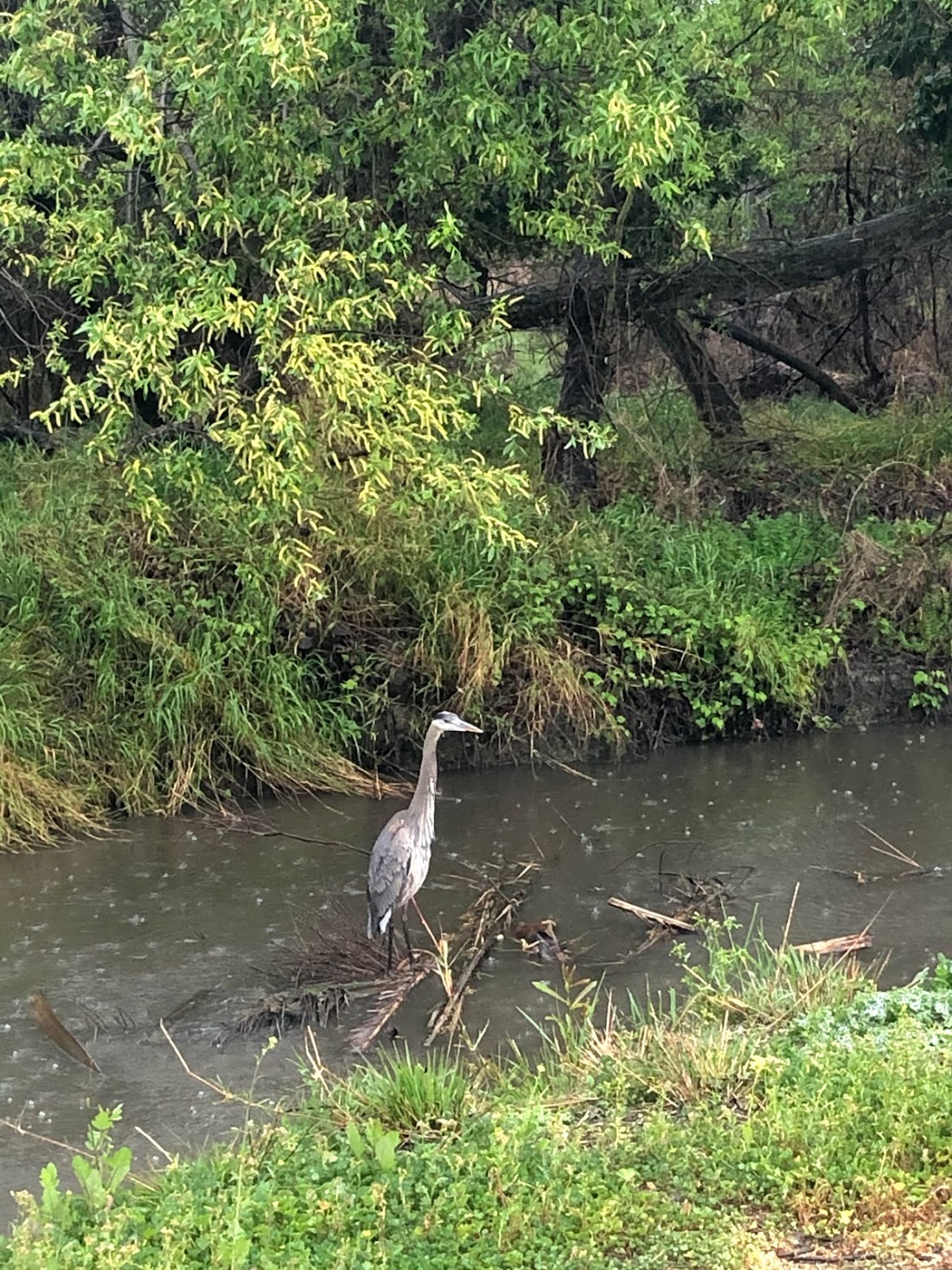
The other day, I saw a heron standing patiently in the shallow waters of a river, waiting patiently. I was out for my evening walk, and I had to stop and admire the heron. The heron was going about its business of living, observing quietly, waiting patiently, and if in the process of being, a wandering soul got a lesson or two out of it, that was good, but that wasn’t its purpose.

I chuckled to myself thinking of what the heron would say to me if I asked it about any of the world’s problems. Would it laugh at me or with me at the problems humans have created for ourselves?

The heron in that moment taught me the simple act of keeping still and untangling the strains of thought. That this isn’t a luxury, but a necessity.

Sometimes, sitting and reading a piece of poetry evokes the same feeling. Take the poem, Yes! No! By Mary Oliver for instance.Β 

How necessary it is to have opinions!

I think the spotted trout lilies are satisfied, standing a few inches above the earth. I think serenity is not something you just find in the world, like a plum tree, holding up its white petals.

The violets, along the river, are opening their blue faces, like small dark lanterns.

The green mosses, being so many, are as good as brawny.

How important it is to walk along, not in haste but slowly, looking at everything and calling out Yes! No!

The swan, for all his pomp, his robes of grass and petals, wants only to be allowed to live on the nameless pond. The catbrier is without fault. The water thrushes, down among the sloppyrocks, are going crazy with happiness. Imagination is better than a sharp instrument. To pay attention, this is our endless and proper work.

How often I have stopped to look at the heron taking a short flight from the river nearby and wondered whether its opinions were sought, and whether it mattered. They should, for our opinions and actions have definitely resulted in less than ideal living conditions for them.Β 

Mary Oliver in one short sweep of her pen was able to capture all this and more in the poem, Yes! No!

P.S: I love how the swan in her poem wants to live in a nameless pond. Our planet is just that isn’t it? A nameless, priceless habitat that we have bestowed a name upon.

Heron flying

Enchanted Air

I read Enchanted Air by Margarita Engle, expecting to read a good memoir about two cultures and two wings one grows as a result of hailing from mixed origins. What instead happened is difficult to describe in words for it was not a reading, it was a feeling. A transformative one.Β 

It is a children’s book. Each chapter is a small poem that stands in and of itself, but also ties into the whole narrative. There were so many places in the book when I found myself stopping to savor a poem, reading it again, and swirling the feelings it evoked in my mind. Later, I found myself passionately explaining it in far less elegant terms to the husband and children, scurrying to get the book, and fumbling through the pages to find the right poem.

For instance when she writes of β€˜The Dancing Plants of Cuba’, she captures the essence of an island:Β 

In California, all the trees and shrubs

standstill, but on the island, coconut palms

and angel’s trumpet flowers,

love to move around,

dancing.

..

Maybe I will be a scientist someday

studying the dancing plants of Cuba.

Dancing Plants

How can one not love the child then who is later to task by her teacher for inventing dancing plants, as plants are supposed to stay still aren’t they?

Her father’s family escaped from Ukraine, from a communist regime, not knowing whether those left behind survived or not. Her mother immigrated from Cuba.

Two countries

Two families

Two sets of words.

Her paternal grandparents’ recollections are therefore muted, brief and vague. How starkly, concisely, she sums up the human condition for survival? When she asks her Ukrainian-Jewish-American grandma about her childhood, she gets nothing more than ice-skating on a frozen pond.Β 

Her maternal grandmother, on the other hand, regales her with richly detailed family stories, of many island ancestors, living their lives out on tropical farms.

In the poem, Kinship, she sums it up:

Apparently, the lengthΒ 

of a grown-up’s

growing up story

is determined

by the difference

between immigrationΒ 

and escape.

This memoir is rich with details of her family, and her own dreamy self. 

She takes us along with her on her journey of growing up, and how her personality rows with β€˜The Geography of Libraries’.

Spoken stories are no longer enough

To fill my hunger

I crave a constant supplyΒ 

Of written ones too.

As she grows, the mistrust between USA and Cuba, grows too. Their family is suspect simply for holding a Cuban passport, a part of her heritage cut off by souring diplomatic relations and the Bay of Pigs invasion. She first writes about the state of reality in the poem, Communications.

Abuelita writes letters in code,

inventing poetic metaphors,

to prevent the island’s censors

from understanding her words.

When she says Tio DarioΒ 

is working hard in the garden,

Mom somehow knows that it meansΒ 

he’s been arrested and sent to a prison or forced labor camp.

In Secret Languages we learn

Right wing or left wing tyrants always

try to control communication

They always

fail.

The books ends with the poem, Hope.

It is no wonder that the book has won a string of awards. Looking at the history of the world, its themes are timeless too.

The Fine Art of Baloney Detection

I feel like a separate dedicated post to Baloney Detection Kits are useful right about now. It has been a disturbing 6 – 7 years – ever since the presidential election started heating up for the 2016 cycle, we have been living in a state of dubiety (The state or quality of being doubtful; uncertainty).

We have grown used to being lied to, we are more divided than ever before, and the versions of the truth fluctuate wildly depending on which network or newspaper reports it, it is increasingly hard to determine what the truth is. 

Just a simple search for ‘Media Bias Charts 2020’ is enough to drive home the point:

media bias chart 2020

These problems have always been there. 2000 years ago, the world’s greatest democracy of the times, modern day Italy, then the Roman Empire, witnessed turmoil and breaking of the largest democracy. But with accelerated advances in technology linking us faster than ever to β€˜breaking news’ and social media amplifiers for everyone, the waters have become noisier and murkier.

The book, Science as a Candle in the Dark by Carl Sagan, has an essay on the Fine Art of Baloney Detection.

Read also: Candles in the Dark

The essay starts off empathising with the human condition. Why are we, as humans, willing to believe in things whether or not β€˜there is any sober evidence for it.’? 

It isn’t unheard of to believe in things supernatural, or falling for false advertising campaigns with exaggerated claims, or believing models wearing Doctor’s coats, or blindly believing religious zealots who spout hypotheses with confidence. As human beings we have been doing this for centuries, and in most probability will continue to fall for some sort of questionable practices. 

As long as there are those who are willing to take advantage of the vulnerable with little or no consequence, these will persist.

For those who wish to read the whole essay, it is here. Or it can be found in the book, Science as a Candle in the Dark – By Carl Sagan

While we enjoy the occasional myth or fib, it is important to know the difference. For an adult to attack Harry Potter for instilling witchcraft is worrisome for this very reason. As part of growing up, we want children to outgrow the myth of Santa Claus. Knowing to distinguish fantasies from reality is a necessary tool for survival. 

Which brings us to why we must have a version of Carl Sagan’s Baloney Detection Kit for us to use. 

The complete essay can be found here:

It has been a saddening realization to find that Science has not been embraced when it is needed the most. I was reading a book on the Greatest inventions of mankind in the past 2000 years. It is a book collating the answers from philosophers, researchers, and professors from various fields. One of the answers given was the framework of Science. I could not agree more. The ability to think, weigh, design experiments with control and test groups, and sift empirical evidence has resulted in the very least at :

  • Saving millions of lives, that in previous generations, succumbed to disease
  • Figuring out how to feed a planet that grew from 1 billion to over 7 billion within a generation

For those who would prefer a straight jump to the Baloney Detection Kit, here it is:

  • Wherever possible there must be independent confirmation of the β€œfacts.”
  • Encourage substantive debate on the evidence by knowledgeable proponents of all points of view.
  • Arguments from authority carry little weightβ€”β€œauthorities” have made mistakes in the past. They will do so again in the future. Perhaps a better way to say it is that in science there are no authorities; at most, there are experts.
  • Spin more than one hypothesis. If there’s something to be explained, think of all the different ways in which it could be explained. Then think of tests by which you might systematically disprove each of the alternatives. What survives, the hypothesis that resists disproof in this Darwinian selection among β€œmultiple working hypotheses,” has a much better chance of being the right answer than if you had simply run with the first idea that caught your fancy.*
  • Try not to get overly attached to a hypothesis just because it’s yours. It’s only a way station in the pursuit of knowledge. Ask yourself why you like the idea. Compare it fairly with the alternatives. See if you can find reasons for rejecting it. If you don’t, others will.
  • Quantify. If whatever it is you’re explaining has some measure, some numerical quantity attached to it, you’ll be much better able to discriminate among competing hypotheses. What is vague and qualitative is open to many explanations. Of course there are truths to be sought in the many qualitative issues we are obliged to confront, but finding them is more challenging.
  • If there’s a chain of argument, every link in the chain must work (including the premise)β€”not just most of them.
  • Occam’s Razor. This convenient rule-of-thumb urges us when faced with two hypotheses that explain the data equally well to choose the simpler.
  • Always ask whether the hypothesis can be, at least in principle, falsified. Propositions that are untestable, unfalsifiable, are not worth much. Consider the grand idea that our Universe and everything in it is just an elementary particleβ€”an electron, sayβ€”in a much bigger Cosmos. But if we can never acquire information from outside our Universe, is not the idea incapable of disproof? You must be able to check assertions out. Inveterate skeptics must be given the chance to follow your reasoning, to duplicate your experiments and see if they get the same result.

In Pursuit of the Truth

β€œHave you seen this video? β€œ, said the husband for the n-th time. He definitely sounded like a child in Disneyland glimpsing Tinker Bell, and I looked up indulgently. His face was glowing as though he was discovering Calculus for the first time.

I could understand his enthusiasm – the 3Blue1Brown videos are well explained, beautifully animated and make you appreciate Calculus in a wholly new way. The journey as well as the philosophy behind it.

I have to confess that the 3Blue1Brown videos sparked my interest, and I peeked into the childhood brain enjoying Maths classes, as I picked up a book, called A Strange Wilderness – The Lives of the Great MathematiciansBy Amir D Aczel to read about the journey of Mathematics through the ages. How did we arrive at the basic tenets of the truth that held the universe together?

A Strange Wilderness: The Lives of the Great Mathematicians – By Amir D Aczel

The book starts with examining the Greeks and their approach to understanding the world over 2500 years ago. Starting with Thales of Miletus(624 BCE) , who was often called the first philosopher (He is known for the famous saying , β€œKnow Thyself”), it examines Mathematics as a pursuit of the truth.

I was lured in, and though I did feel the writing could have been far more intriguing, it was a well-collated narrative of mathematicians and their lives through the ages.

The next great mathematician is the renowned Pythagoras of Samos (580-500 BCE) who continued the philosophy of:

β€œChanging Mathematics from a computational discipline into a beautiful, abstract philosophy.”

For those in Academia or are students still, the philosophical bent of the pursuit of truth is probably there. But for most others, in our day-to-day lives, Mathematics has taken on a more computational role than a philosophical one.

The arc of Calculus itself is an interesting story. How close we came as a species to discovering Calculus multiple times? Progress happens in fits and starts, and for every piece of the puzzle that we decipher, world events, or simply fate intervenes and sets us back a few steps. So many mathematicians came close to the concept of Calculus including the philosopher Zeno, in Zeno’s Paradox, over two millennia ago.

The History of Calculus

Finally, it wasn’t till the late 17th century when Leibnitz and Newton arrived at Calculus independently. Mired in controversy as it was as to who discovered it first, it is still a fascinating journey.

I remembered one cold Winter evening waiting for the fireworks at Disneyland and wondering whether the Imagineers at Disney had calculated Tinker Bell’s rope coverage using Calculus, to ensure that the area under the rope display was visible from most areas in the park. They must have done – this was Disney after all.

When we dedicate some of our Calculating Mind’s time to enable the Thinking Mind, the resulting moments are truly magical.

Photo by Mohan Reddy Atalu on Pexels.com

Taking the journey with Mathematicians through the ages was also strangely comforting. After all, in spite of wars, disease, revolutions and all the horrifying things in the world, the pursuit of truth did hold its slender string through time. Ravaged, and knotted up at times, maybe, but always resurfacing with the single minded purpose of the pursuit of the truth. The pursuit of the truth is one of our basic tenets, after all.

When Autumn Feels Like Spring

The first day of fall was here, and it felt like the first day of spring.

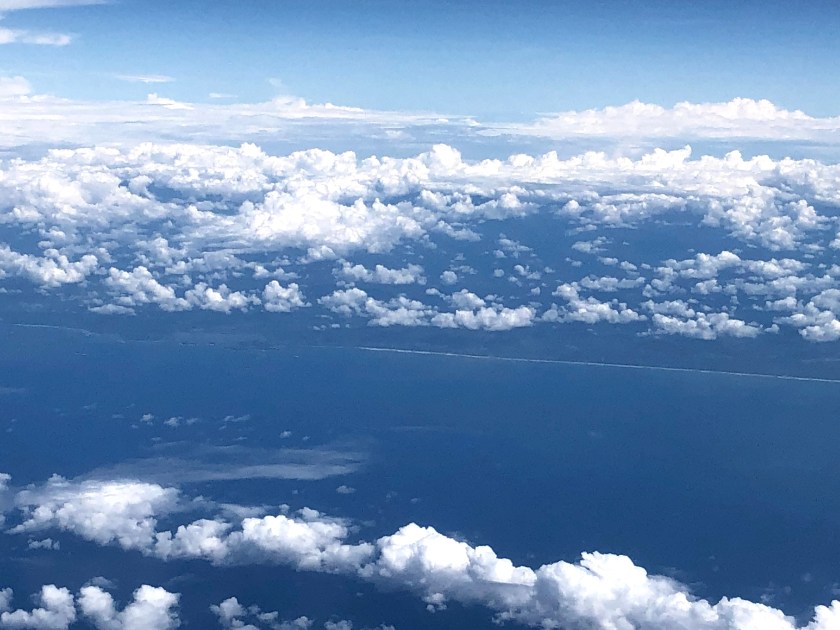
I stepped out to see a blue, blue sky with some cumulus clouds flecking the ocean above with froth. My heart soared like the eagle above. High and higher still. The air felt fresh like it does after the Earth has had a good rain. Even though it hadn’t rained, the Earth sparkled. The effect the clear blues, mellow temperatures and cumulus clouds have on our temperaments is remarkable. The Californian blue jay chirped, the squirrels tittered, the hummingbirds frisked and the hawks soared. Even I burst into song, and poured my joyous nonsensical lyrics into the world. 

But duty beckoned. I had a string of meetings awaiting me, and though my heart soared and flew with the eagles, clouds and all that, I headed inside musing all the while on how marvelous a blue sky is.

I read somewhere that the smog in some polluted cities is so bad that children growing up there think a ‘blue sky’ is a poetic liberty, for the skies are never blue. I could empathize with the poor children so far away. It was similar to that in California over the past few weeks. Wildfires burning over millions of acres hundreds of miles away drew a smoggy veil across the skies, and cast a pallid gloom at times, made for brilliant sunsets at others, but through it all, there was an air of impending doom.

That feeling fell away on the first day of autumn. Fall in California are not as drastic and spectacular as autumn in north-east or north-west parts of the United States, but it is beautiful nevertheless. The gingko leaves have started turning from their brilliant green to a golden yellow, and the maple leaves are turning colors slowly. The air is not nippy yet – in fact, we are bracing for another hot spell.

Meanwhile, inside the house, I was feeling a trifle boxed-up after a continuous string of meetings, in which people had showed up with varying amounts of enthusiasm and optimism. Some of them had managed to retain that cumulus cloud effect, others matched the brilliant blue skies outside – uplifting and promising, and some others retained the pallid gloom of the smoggy fire-ridden days. I glanced outside the window and could identify with the young pupils of Miss Read, who taught her on a beautiful Spring day that words and pictures are but imitations of the real thing. I reached out for the essay in Tales from a Village School from my newly acquired bookshelf (a gift from the dear husband for he could not stand the piles of books everywhere in the house).

Tales from a Village School – By Miss Read

Titled β€˜The Real Thing’, the short essay evoked the essence of Spring in one breathtaking stroke of a page. She writes of a Spring morning she started to read The Wind in the Willows to her class.

β€œI had planned to start ‘The Wind in the Willows’ next term, but what more fitting occasion than this could be found for beginning such a spring song?”

The Mole had been working very hard all the morning spring cleaning his little home…” but after a page or two, I am conscious that Henry’s restlessness is infectious, 

β€˜Say’, he urges loudly, β€˜lets go out!’

There is a shocked silence. What madness is this? Will it make me fly right off the handle?

The essay lilts on with ease and ends on the sagacious note:

It was he, the babe among us, who led us befuddled elders to reality when he cut straight to the heart of the matter with those three words, β€˜Let’s go out!’

I heeded the clarion call of the essay, and briskly stepped out. Standing outside on that glorious day in September made me doubly grateful for things as normal as a blue sky and a breath of fresh air. May we continue to be blessed with these normalities! May we never complain about what a delight an ordinary day is!

β€œAutumn is a second spring when every leaf is a flower.” β€• Albert Camus