2-d Meditations in our 3-d world

T’was a week-end that I was looking forward to. Which meant I looked forward to sleeping in. The son, however, has an internal alarm that seems to work contrary to social expectations.
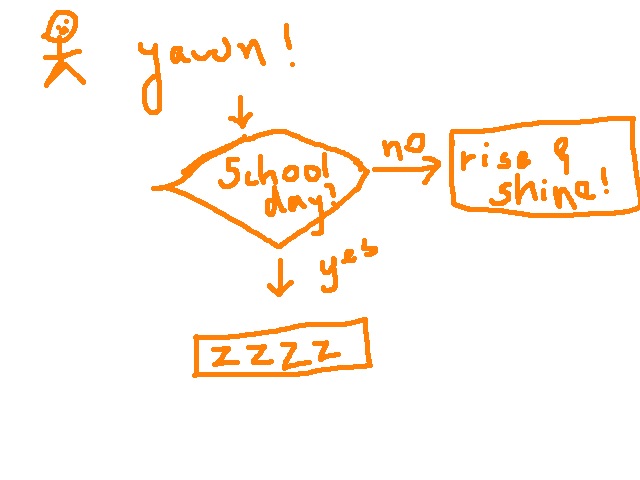
yawn

Anyway, the point is, the son came up bright and shining. I lifted my tub from the covers and moaned from under the covers at his exuberant greeting. Hmmm….Hmmm…..AAAyyynnsnjsjfhsjfh!

He bustled into the room carrying a suspicious looking questionnaire. Just as I thought, the blasted thing turned out to be a Physics quiz that started with the question:

“What holds the quarks together in the nucleus of an atom?”

Luckily I knew the answer to that one (gluons), but it went downhill from there.

By the time we had arrived at the last question, my weak force was battling with the gravitational forces holding me down on the bed, and I sprang out in one gravity defying leap showing a strong force I did not think I was capable of, and hustled the little fellow and the husband out on a hike. If I was going to survive any more Physics quizzes on quarks, I needed to get my spark. 

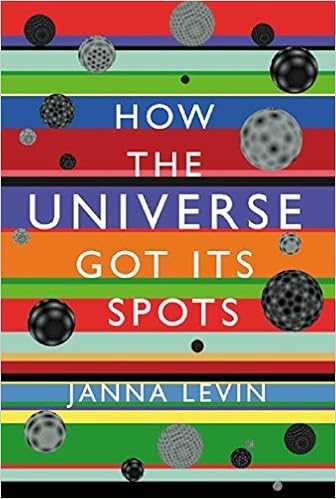
The discussion on his favorite topics led us to the fascinating topics of dimensionality, and I told him about a particularly fetching piece on Flatland geometry in the book, How The Universe Got Its Spots – By Janna Levin.
Flatland is a fascinating piece of work written by Edwin Abbott Abbott in 1884. He imagines a two-dimensional world in which all occupants are lines, flat shapes or circles, and also examines a social construct with this premise.  (People with more number of sides occupy a higher social position, with priests being circles. In Victorian times, women had no ways and means to careers, and therefore were represented as lines in that universe.)

https://www.youtube.com/watch?v=-wv0vxVRGMY (Carl Sagan explains flatland)

https://en.wikipedia.org/wiki/Flatland

That day on the hike, we went up and down the hills in the beautiful three dimensional world we live in, discussing what it would be like in Flatland.

In our everyday lives, rarely do we stop to think of flatland fantasies, and when we do, it is all the more magical. I mean how would a sunset look in Flatland? What would a sunset look like if we were in 4 dimensional worlds? Is our entire existence just us passing through this 3 dimensional world?

The gluon quiz master was, in the meanwhile, practicing his martial arts as he spurred himself through the hills, chipping in here and there, while listening fascinated to the Flatland theories. “Umm…Wonder whether that happened to Ant-man when he went into the quantum world.”

Wandering along by the waterside, watching the wind rippling the waters, and rustling the leaves in the trees nearby, it was beautiful indeed to occupy oneself with thoughts of how a wind would be in Flatland: maybe it would be like an earthquake to 3-dimensional creatures such as us. Maybe our cosmic upheavals are the breezes of the 4th and 5th dimensions. Who knows?

“Imagine, if you were an orange, trying to pass through the two-dimensional world.”

You could only see a dot as it touches the surface, and then a circle as it passes through flatland, a circle that gets bigger and bigger, and then recedes in size. Smaller and smaller till it becomes a point again and then disappears altogether.

Just as an orange cannot ‘get up’ from the 2-d world,   we cannot flit in and out of our 3-d worlds. But imagine if we could. If we could give ourselves the gift of perspective (that is another perspective –nature and our vast cosmos give us a fair sense of perspective already, if only we care to look and reflect of course)

Flatland

I am sure scientists who are spending their entire careers contemplating questions such as these are far more qualified to answer, but the very act of thinking seems to be a marvelously magical act. We admired our fellow creatures on our 3-dimensional walk in the hills: The geese, pelicans, seagulls and hawks.

Does a laugh in Flatland cause ripples? Do our laughs cause the butterflies to flit?

“Here is a joke for you”, I said on  the topic of laughs in inter-dimensional space. “What do you call a seagull that flies over a bay?”

“A Bagel – get it?” (a colleague’s joke!)

The joke was met with moans and laughs alike.

By that same extension, are all our lives just us passing through this 3-dimensional world? Where does Kung Fu Panda meet  interdimensional Physics and the Tao of Being?

I shrugged my 3-d shoulders. How quickly the contemplation of the physical world morphs into the philosophy of being? How easily our thoughts can become magical?  
Walking in to Utopia

I had been ruminating about all the problems that had beset the world – pre and post elections in the USA for sure, but also the interconnected economies of the world, the problems that a once-in-a-century virus mutation showed us all too clearly.

A spectre is haunting our world!

The perfect cure seemed to call for a long walk. I could not help admiring the physician who prescribed the slightly hypochondriacally inclined Jerome K Jerome in Three Men in a Boat the following that could not be filled at the pharmacy.

“1 lb. beefsteak, with 1 pt. bitter beer every 6 hours.”

I had substituted the steak with (white rice, avial, and rasam), and the bitter beer with (tea – Earl Grey & Lipton with milk and sugar ), and was now ready for the middle portion of the prescription.

“1 ten-mile walk every morning.

1 bed at 11 sharp every night.”

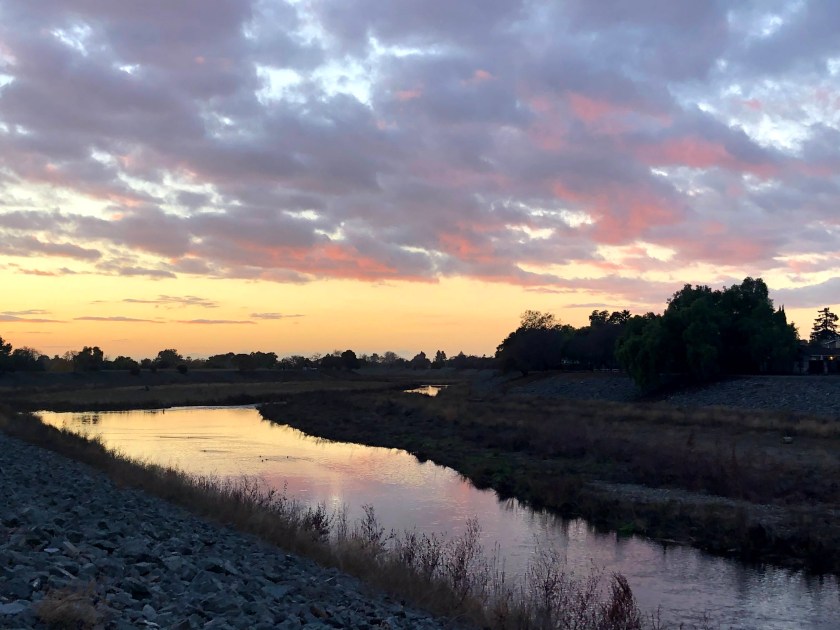
So, I set off. The beanie cap lopsided on my head, hands tied behind my back, pace at about 5 duck waddles per quack, and at spots of true inspiration speeding up to 15 duck waddles per quack. There is something so invigorating about an evening walk in solitude: admiring the setting sun, and the birds lending their musical accompaniment to the dazzling show put out by the sun and the clouds is truly magical.

img_0715

By the time the sun had set and Jupiter and Saturn had come peeking in the early evening skies (so close that only those in Galileo Galilei’s time had seen it this close before), I had formulated sections of all-that-is-wrong and how-to-fix-it. I don’t know whether Karl Marx took any long walks when he was writing his little manifesto. All I can say is, I am sure it would have been a lot better if he had.

You see? By the time I had hit the ‘Walk’ button with my elbow at the signal near the house, I was happy, fueled on by my own thoughts in my little utopian world. All that was needed was to document this in a letter to President Obama. President O, on seeing the letter dripping with wisdom, and great ideas then clasps the letter, and says, “Bring forth the author!”. He even  goes on to offer the daughter a leadership position in his institute.

You see? I had solved several sections

  • Job pipeline
    • By skill and
    • Education levels
  • A new model of Capitalism
    • This model rewards not growth but sustainability
    • Stock markets pander for reusability, energy conservation, and factories pride themselves on N-I-W models (Never in Waste duh!)
  • Manufacturing pipelines by sector
    • Ensuring there is know-how and skills within the country
    • Capacity to sustain internally in case a despot ruins relations with the rest of the world (Case in point Corona virus medications)
  • Changes required to the US constitution
    • Electoral College done away with, and the popular vote to count instead
    • Having more than 2 parties to be major players in the elections
  • Environmental Responsibility
    • Clean Fuels
    • Energy Consumption
    • World leaders promoting sustainability as a model
    • Expanding protected lands and waters
    • Climate Change
  • Research & Funding
    • Funding for scientists is skewed and too reliant on industry
    • Bold bets – personalized medicine, geo thermal cooling, space explorations
  • Military Spending & Gun Control
  • Healthcare
    • Women’s health care
    • Geriatric care

I walked into the home looking flushed and happy. I regaled the children about how accomplished I felt. The daughter happily chimed in. “Doesn’t it feel awesome? Mostly by the time I come back, I have given some very powerful messages to the antagonists on my story! My speech to the world has changed the lives of folks everywhere, and all is well. I love it when that happens Amma!”

“Yeah! My villains are destroyed by the awesomeness of the imaginating sequence!” said the son kicking his feet into the air and swirling in the middle of the room closely missing a jar of cereal precariously perched nearby, and the pair of them burst out giggling once again.

the_world_playground

The next day, the husband joined me on my walk, and I told him all about it. He looked thoughtful after every section, and said, “Yes..hmm. But didn’t India already try that in the 1970s? I don’t think that was a success.”

“Hmm…you are right. Burma does try that, but can a happiness index be as effective as a stock market index for world economies?”

“That is a socialistic thought right there … so it may not work out so well here.”

I gave out a big sigh – maybe there was no point after all. It is better to muddle along just as we are, and let one politician after the other try things out, so long as it is not badly botched.

“And what did Obama invite our kids for?” said the husband, looking amused. The idea squasher! I gave him a peeved look and said, “Don’t ask me why? Inconvenient Questions – pish tosh bigosh!”, and haughtily pressed the walk signal to head on home.

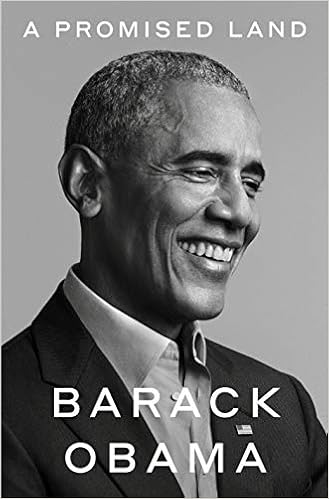
As a Secret Santa Christmas present, I received ‘A Promised Land’ by Barack Obama. I plan to read it, and see if he still needs my letters and thoughts.

I suppose it is time for me to get to the last line of the prescription:

 “And don’t stuff up your head with things you don’t understand.”

The End

“We have a world to win. Workingmen of all countries, unite.”

The Covid Vaccine!

One blissful afternoon a few months ago, when the summer heat was beating down upon us, I was curled up on the couch overlooking the Umpqua river. The river was flowing gently in the valley below.  A deer and her fawn were grazing nearby, music was playing on the laptop, a book on the History of Medicine lay open in front of me, and every now and then, I read a piece out from the book to the family nestled nearby in various forms of ease. The unease surrounding Covid was there everywhere. (Grapes of Wrath).

History of Medicine is a somewhat misleading title for the book. Jane Goodall documented apes healing themselves by going to a cave miles away when they had stomach upsets, to find a herb to cure themselves.  So, I am pretty sure healing ourselves has an evolutionary angle.

We must’ve all seen the viral quote by anthropologist Margaret Mead, who supposedly said that the first evidence of civilization was a healed femur bone, since usually breaking this bone in the animal kingdom means death by starvation or predators. 

(I am not sure of the veracity of the quotation itself, but here it is)

In any case, I think the book addresses the last 200 years of practiced medicine.  

“What are you reading about now?”, was a frequent query as I made my way through the ailments listed in the book.

I told the children the hilarious tale of Jerome K Jerome, the author of Three Men in a Boat feeling off and searching up his ailments much like many of us first do with WebMD.

“I came to typhoid fever – read the symptoms – discovered that I had typhoid fever, must have had it for months without knowing it – wondered what else I had got; turned up St. Vitus’s Dance – found, as I expected, that I had that too, – began to get interested in my case, and determined to sift it to the bottom, and so started alphabetically – read up ague, and learnt that I was sickening for it, and that the acute stage would commence in about another fortnight. Bright’s disease, I was relieved to find, I had only in a modified form, and, so far as that was concerned, I might live for years. Cholera I had, with severe complications; and diphtheria I seemed to have been born with. I plodded conscientiously through the twenty-six letters, and the only malady I could conclude I had not got was housemaid’s knee.”

“I had walked into that reading-room a happy, healthy man. I crawled out a decrepit wreck.”

― Jerome K. Jerome, Three Men in a Boat

The history of medicine is a fascinating one. The book contained some black and white pictures too. There was a few pages dedicated to the sad tale of James Garfield’s assassination. Apparently, hand-washing was not a prevalent practice in 1881. Though the shooting itself was not immediately fatal to Garfield, infection set in to the wound in the days following the shooting essentially killing him. His shooter infamously said, “I didn’t kill the President! I only shot at him. The doctors took care of the rest.”

Given how often we wash our hands during these Covid-times, it seems like something elementary, but was such a problem even 100 years ago. 

“I am so glad that human understanding of the microbial world has come such a long way in the past century!” I said after reading this piece out to the children. “Just think of this, within days of the genetic sequence of the coronavirus being shared, scientists had finalized the sequence of the antibody required to combat the virus. mRNA-1273

The author wrote about the time his mentor told him to document the symptoms of polio for posterity: this, at a time when the polio vaccine was not yet available. To quizzical glances, he apparently said with confidence that Polio will be cured within a few years. This was the sort of conviction and hope that is at once admirable and remarkable about the human race.

News of the corona virus vaccine is a welcome one indeed, and a true testament to Science. The first vaccines were distributed to 50 states in USA from Pfizer’s facility in Michigan today.

3D_medical_animation_coronavirus_structure

What is mRNA, and how do they work? Link from CDC

Like Bill Gates said in his 2015 TED talk, it isn’t missiles that we need to fear (since we now are invested in peace, knowing how we can annihilate ourselves many times over), but epidemics such as the Spanish flu. The coronavirus really did take the world by surprise, and showed us how we are all more interconnected than we realize – we are just a small pale blue dot floating in the cosmos – united in our destinies and apparently as weak as our vilest virus.  

Good Morning Bilbo-Style

Why I was unable to sleep early last night, and got up like an excited cat this morning is beyond me. Usually, I sleep like a sloth that had an extra helping of eucalyptus for dessert: just leap into bed at the end of the day, read for a bit, and pop off. That extra helping of eucalyptus probably contributes to the birds having to tweet very loudly to rouse the sleeper from sweet slumber (The birds have since taken to partnering with poetic alarms).

Poetic alarms and the secret to blooming like a flower.

I can’t say I leapt out of bed, that would be too much, but I did get up smiling. The promise of holiday cheer is definitely a factor.  I smiled sleepily to myself with the lovely realization that child-like enthusiasm only takes the promise of fun to be up and about. 

Also, it has to be a good thing if the first thing I thought of was Gandalf and his good-morning sequence with old Bilbo Baggins. There has to be a word for that sort of magic. 

“Good Morning!” said Bilbo, and he meant it. The sun was shining, and the grass was very green. But Gandalf looked at him from under long bushy eyebrows that stuck out further than the brim of his shady hat.

“What do you mean?” he said. “Do you wish me a good morning, or mean that it is a good morning whether I want it or not; or that you feel good this morning; or that it is a morning to be good on?”

“All of them at once,” said Bilbo. “And a very fine morning for a pipe of tobacco out of doors, into the bargain.

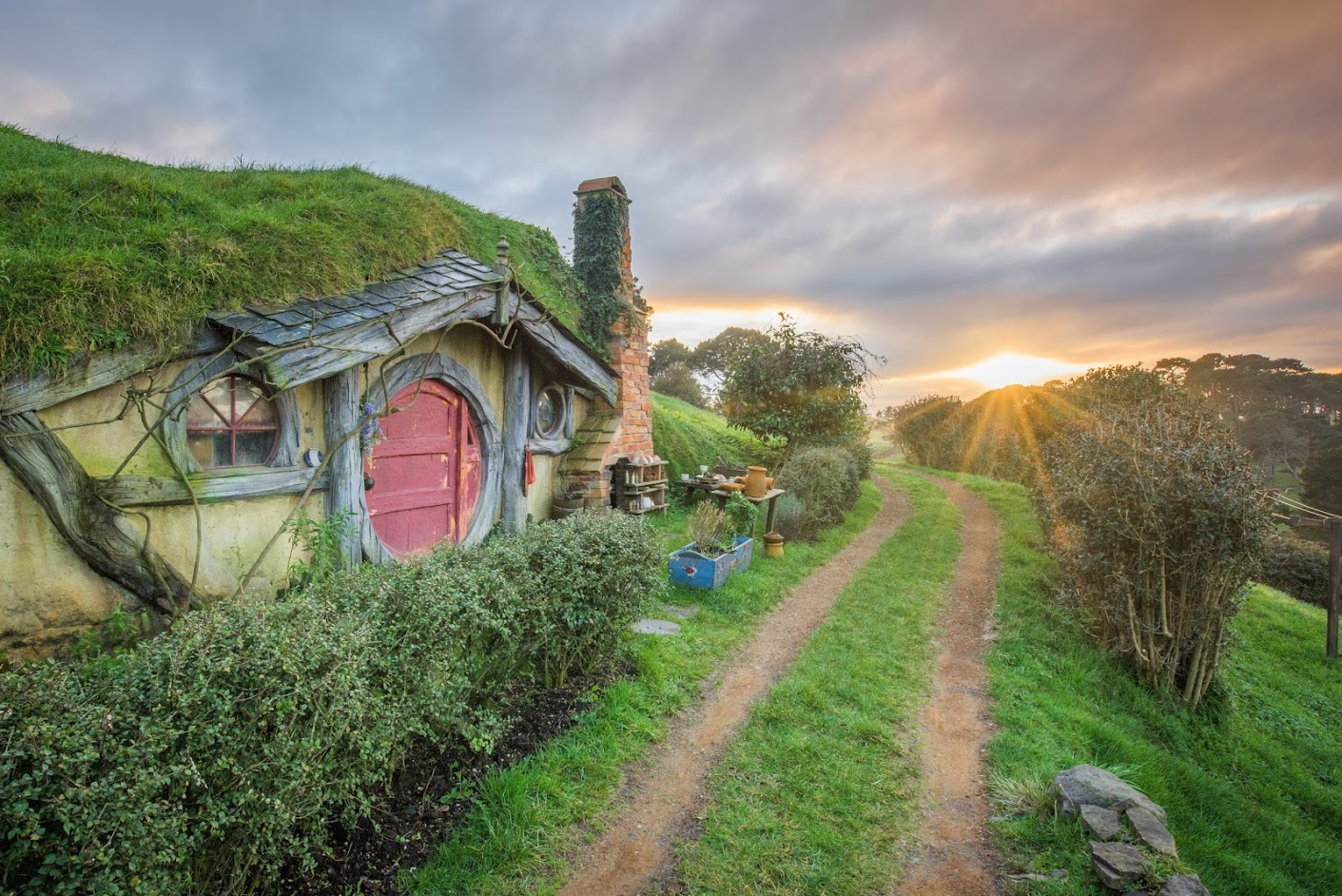
hobbiton

I stepped out for a little garden stroll Shire-style, thinking and noticing the fine things nature had to offer that beautiful morning. I nodded appreciatively at  the brave show the snow peas were making again. Not for the first time did I admire these hardy low maintenance plants that give out so much joy. I have planted ferns, potatoes and lord knows what else, but they elude me. The fruit trees in my little strip of garden all require some expert care seeing that they bear no fruit. The occasional gardener who comes along to help has little to offer by way of advice, and I feel for the sorry trees in my care. 

I read books that said we have the knowledge of natural things in our very being, and nobody has yet planted a sapling wrong and all that sort of thing. Yet the plants in my care don’t seem to know that. Maybe I should read out some of these books to them. Like Frog & Toad reading to their little seeds to make them grow fast.

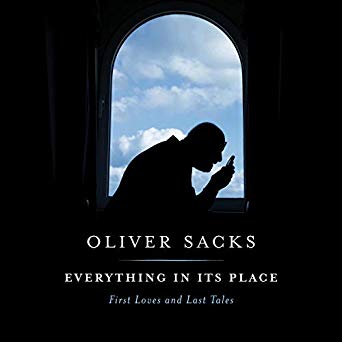
Everything in its Place – By Oliver Sacks

everything_place

I noticed the perfect structure of the budding chyrsanthemums, the beautiful symmetry of pinecones, and wondered why we humans have moved away from the beautiful aesthetics that nature has created for us. It is time we embraced Biomimicry in our design patterns.

img_0606

This modern tendency to create monstrous piles of rubble and call them buildings is tedious. Modern plumbing and electric lighting aside, what was the problem with medieval castles? And a little variety of structure?

I was trying to get a good picture of these beautiful little things when I noticed a neighbor who had come walking their dog give me a quizzical look as if to say “Do I not have better things to do?”

I felt this was the perfect time for the final “Good Morning!” Bilbo-style.

“Good morning!” he said at last. “We don’t want any adventures here, thank you! You might try over The Hill or across The Water.” By this he meant that the conversation was at an end.

“What a lot of things you do use Good morning for!” said Gandalf. “Now you mean that you want to get rid of me, and that it won’t be good till I move off.”

― J.R.R. Tolkien, The Hobbit, or There and Back Again

References:

  • The Hobbit – By J R R Tolkien
  • Everything in its place – By Oliver Sacks
  • Frog & Toad – By Arnold Lobel
  • Biomimicry – By Janine Benyus

Is Earthly Music Universal?

“What is this? Australian music? I thought we were in Africa! “, said the little fellow peering into the dashboard up by the driver’s seat.

“Yes- my young man! We have moved on from the plains of the Masai Mara to the deserts of Australia. Traveling the world during lockdown. Feel adventure in your veins!”

He rolled his eyes. His teenage sister has taught him well. 

“Remarkable isn’t it? How we are able to traverse the world in an instant these days? In the years of Ibn Batuta or Marco Polo, I suppose you had to wait to shimmy your way into the audiences of the explorers to get a glimpse of a world other than your own. “

marcopolo

We had taken a drive to catch the fall colors in the nearby mountains, and I was seated in the front-seat clasping the task of deejay dearly. I am usually entrusted with this important task only after several rules have been put in place.

🎼 You are allowed one Carnatic music not more than 7 minutes long (I do have a bone to pick with Carnatic musicians who take up my allotted 7 minute slot with one line)

🎵 Instrumental – cannot be slow, slow music. (Drivers got to stay awake.)

🥁 Everyone’s got to get a chance at their music

🎻 No weird music

“Yet…just look at us swiping away and traveling the world 🌍 with YouTube music? Lockdown or no lockdown. How remarkable music is no? Transports you straight out of this world into another world altogether!” I said. The husband and children gave me looks of amused tolerance that they seem to reserve for holidays and trips. Indulgence, sure, but also a joy in seeing my whimsy rise to the surface. 

The brilliant Youtube recommendations engine stood on the side panting and scratching its head trying to figure out what to recommend next based on my list of songs. Ahh! That happy feeling you get when you stump an AI algorithm is truly priceless. Scottish bagpipers marched down the dales of Scottish highlands with their music; middle eastern belly dancers flexed their tummies with grace and agility; shepherds tended to their livestock with Bulgarian folk dance music; and royal court musicians of Turkish sultans from the past bravely set forth their music to the unwittingly pulled in audience in the car. 

“Ummm – what music is this?”, said the son when I played the Bulgarian folk song, Izlel e delyo haydutin, By Valya Balkanska.

This, my dear, is what the universe would hear if ever anyone intercepts Voyager on its space voyages, and finds a way to extract the music within. It is part of the Golden Record. It is now hurtling through space making  our earthly music universal. ”

Laniakea

“Please! Appa – what is this? I am happy to see Amma this happy I suppose, but this is too much. Can we have some, like, normal, music? “ asked the teenaged daughter. 

“What?! If I may remind everyone in this car, this coming from one who is constantly the one asking me to try new types of music. Who is forever berating me for listening to toiyan-toiyan music (instrumental music)? Amma jazz it up a bit! Shall I create a playlist for you with my favorites so you can listen to it? – huh?! “

She gave into a high pitched laugh, and said, “Yes I meant different genres as in rock, jazz, country, pop, not bagpipes, bongo drums, and what is this now?! Doesn’t sound like an instrument at all!”

“That’s because it isn’t”, I said happily. “We are listening to whale songs now.”

“Okay…that’s it! All deejay rights revoked for some time now. Whale songs! Pass me that phone!”

“Nope!”

And to this musical, lyrical bickering, was added the sounds of harmony, resulting in an orchestra of noises. The trees, that night, as they passed their messages to one another, rustled in excitement. How long since they had heard natural sounds of whales?

img_2576

Eudaimonia – Human Flourishing

Somewhere in the forest of my rough notes nestled this little piece. I had evidently written it with a view to tying the pursuit of happiness to the happiness of pursuit and all that. 

A couple of the son’s friends had come over and without wasting a moment, they started a vigorous game of I-honestly-don’t-know-what. I could hear loud giggling by the couch as they jumped from the sofa to somewhere else and back on. After an hour of this, I asked them the point of the game. They exchanged quizzical shrugs. 

* Was there a point in the jumping game? 

* Was there a point in jumping? 

* Was there a point in a sofa or the cushions below? 

I laughed at their loss of words, and let them go back to their game. They were kind enough to ask if I wanted to join. Detecting a distinct take-pity-on-me vibe from the frazzled, frayed sofa, I gallantly told the children to proceed without me. They looked relieved and continued happily.

I looked at their flushed faces and saw that the point of the whole thing was that they were happy. Happiness as a concept has the philosophers stumped. Philosophers who deal with heavy themes such as meaning of life and so on, spend a considerable amount of time pondering the meaning of happiness, the importance of the pursuit of it all, among other things. 

I am listening to a lecture series on the Meaning of Life.  Professor Drone (lookup the name later) talks about pursuit of happiness among other things when he is explaining Aristotelian Ethics. Honor, Wealth, Excellence are all worthy pursuits in our lives, but it can all be towards something else: Happiness. Underlying our quest for Honor, W & E is a desire to be happy, he says. 

Unfortunately, as we grow, the little drops of sunshine that so easily caused mirth and joy tend to fade.

But as I read the little note above, I also felt a little pang – for it showed me what the children were missing now. The camaraderie of classroom replaced with the tiny tiles of an online meeting, the wholehearted enjoyment of jumping replaced by online games.  I had spent the whole day in one meeting after another. Meeting fatigued days such as this one tended to blend into one another, especially when the daylight faded out so quickly that only darkness remained, with a cold wind to keep one company. Wondering what my son was upto, I rose – my joints creaking like the wooden floor below to see if he needed company. 

Just as I was feeling dangerously sentimental about social distancing, its long term effects on the young minds, and all that sort of thing, I heard peals of laughter and the familiar sounds of jumping up and down. There was a FaceTime call in session, and the little fellows were re-enacting a scene from an online game they were playing together. The brawlers, as they called themselves, were making themselves real-life Brawl Stars. The video call was propped up on the globe in the middle of the table, and the swinging adventurers flew in and out of view of the camera. Judging by the sounds of it, the children had adapted with their customary cheer. 

the_world_playground

“The measure of intelligence is the ability to change.” Albert Einstein

“Hi ma! Want to join us? We are just ummm just umm brawling!”  

I looked at the little fellows’ pals squealing and leaping off the sofas in their screens, and I declined the kind offer much to their relief.  I headed into the kitchen with a smile on my lips, a tune in my heart, and hope in my being.

Eudaimonia, also spelled eudaemonia, in Aristotelian ethics, is the condition of human flourishing or of living well. Ask Professor Drone to play with children and learn a lesson or two. Happiness lectures indeed!

The Secret of the Wings

So many days in the past few weeks, I have tried desperately to snatch a moment here, and a moment there, in the midst of hectic, crowding days of meetings, expectations and deadlines. Sometimes, I peek out of the window in the precious moments between ‘Leave meeting’ and ‘Join meeting’ to catch a glimpse of the beautiful November days with its soft sunshine through the yellowing leaves, each leaf 🍁🍃🍂 taking its chance to show its beauty to the world in a grand flourish before it lets go. The evenings are dark by the time the little tiles on my meetings are gone, and I clutch my coat about me as I stare at the tiny ✨ dots lighting up the night sky instead. 

So, we went:  before the crowds hit the mountain resort for the Thanksgiving holidays, the husband worked his magic and found us a little house that was free for a couple of days only. 

All of the Californian plains that we traversed for the 100 odd miles was bursting forth with fall colors. The reds were particularly fetching against the browning hills. Traffic was very light, and as we started climbing the Sierra Nevada mountains, a nippiness crept into the air. It is the lunar waxing phase, and the moon was out early in the afternoon keeping us company as we climbed the mountains. The fall colors gave way to the snowy reaches, and soon, it was apparent that here, it was no longer Fall. Here it was Winter.

tink_periwinkle

The journey reminded me of the scene in the Tinker Bell movie where the warm fairies peek into the winter lands. The orange, yellow and the brilliant reds slowly gave way to evergreens and a world blanketed in snow. There is nothing half as marvelous as a sunny day with wispy clouds against the azure skies and a snowy backdrop. This was winter wonderland alright. 

Mulish as I was, I took off on a walk as soon as we reached our destination. I huffed and puffed up the steep hills, my lack of exercise clearly showing in the panting under the mask. I was grateful for the mask for it held the warmth of my breath in as I walked on towards the snowy reaches affording a view of the vast Lake Tahoe from up above. The moon twinkled its milky light on the snowy  reaches below, and I stopped here and there to take a picture. I remembered reading in The Sea Around Us that some of our ancestors thought the moon was made up of ice (it was a much older notion of course). It was an appealing theory – standing there in the light of the moon, with the thin glint of the snow light all about me, I could imagine how our ancestors came up with that one. 

I like to see how we made leaps in understanding, and I feel the joy of every discovery almost anew as I gain even a little understanding deeper than before. One of the things that still astounds me is the spatial intelligence required to figure out our position in the cosmos. I watch the constellations change their positions in the sky every night, I notice the moon at a different place and time, and yet, every time, I marvel at the leap of understanding for mankind. 

Read: The Man Who Deciphered the Heavens – a post on Nicholas Copernicus

That evening, the movie of choice was Tinker Bell’s Secret of the Wings. The daughter and the son overruled all the action packed thrillers suggested by the hardworking man who found us the cabin in the first place, and we settled in to watch the feisty fairy instead. Tinker Bell, the impulsive little thing that she is, is curious to see what the winter wonderland is like. Since the fairies of the warm lands are banned from going over to the winter side, of course she wants to go. It only seemed fitting to sit and watch the little movie together. 

Closeted in what looked like an adventurer’s cabin, with the soft light of the snow reflecting against the moonlight outside, a fun movie, and the warmth of food and beverage created the magic that Tinker Bell and her friends were creating up in Pixie Hollow. The pixie dust swirled and poured out in to the world, and we did the same with our comments. 

img_0398

We sought peace in the less popular trails. It was a trip meant to process the year, and say thanks to the world in spite of all that has happened during the year, or because of all that has happened during the year. I feel most like Anne of Green Gables when she says she does not know how to pray, but when out in the woods, looking up at the great gifts of nature, she can just feel a prayer and let it out into the universe. 

Isn’t it magical when our most positive thoughts take on wings and soar?

img_0318

“I’d go out into a great big field all alone or into the deep, deep, woods, and I’d look up into the sky–up–up–up–into that lovely blue sky that looks as if there was no end to its blueness. And then I’d just feel a prayer. …” Anne of Green Gables, By L M Montgomery

A Medley of Hope

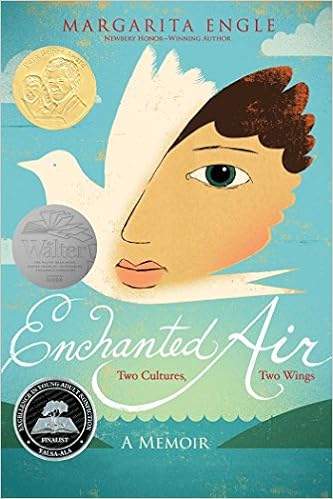
When I started reading to the children in my son’s elementary school classroom, I was a little worried. I could see the little tiles in the zoom classroom when I explained the theme I had planned out for that morning. I had planned Poetry and paired a fiction book by Dr Seuss with a non-fiction memoir by Margarita Engle.

My brain was doing a quick ‘Maybe’ check in the background: Maybe this was too much for them. Maybe I should have gone with a simpler theme. Maybe I should keep it simple and just switch to a sweet little book that everyone would feel comfortable and cosy with. I could’ve switched, but then I remembered the words of wisdom by E.B.White

Never write down to children – E.B. White 

Anyone who writes down to children is simply wasting his time. You have to write up, not down. Children are demanding. They are the most attentive, curious, eager, observant, sensitive, quick, and generally congenial readers on earth. They accept, almost without question, anything you present them with, as long as it is presented honestly, fearlessly, and clearly. I handed them, against the advice of experts, a mouse-boy, and they accepted it without a quiver. In Charlotte’s Web, I gave them a literate spider, and they took that.

More sound advice I have never heard in my life, for the children settled into the themes even if it was a little heavy going before the Thanksgiving holidays for them. 

I had chosen a book by Dr Seuss, The Butter Battle Book. The book is a brilliant satire of nuclear weapons during the cold war. Dr Seuss’ brilliance was in full display. The book is about Yooks and Zooks: The Yooks eat their bread with the butter side up, while the Zooks eat their bread with the butter side down. This leads to escalating differences and a long curvy wall is built between the two lands.

butter_battle

Soon, both sides start fighting by using weapons of increasing grandeur and magnitude starting from the Tough Tufted Prickly Snickle Berry Snitch to the Eight Nozzled Elephant Toted Boom Blitz. The book finishes with the Yooks and Zooks sitting on either side of a wall threatening to drop the Bitsy Big-Boy Boomeroo, signifying the nuclear threat.

We discussed the long years of Cold War and how it was a true lesson in diplomacy that the two countries managed to keep from blowing us all up together. From there, we moved on to  the Bay of Pigs invasion, and then switched to the memoir, Enchanted Air, by Margarita Engle.

The author’s maternal side hails from Cuba, while her paternal side fled from the Ukraine – then a part of the USSR.

Dancing Plants of Cuba

In California, all the trees and shrubs

standstill, but on the island, coconut palms

and angel’s trumpet flowers,

love to move around,

dancing.

..

Maybe I will be a scientist someday

studying the dancing plants of Cuba

Her father’s family escaped from Ukraine, from a communist regime, not knowing whether those left behind survived or not. Her mother immigrated from Cuba.

Two countries

Two families

Two sets of words.

Her paternal grandparents’ recollections are therefore muted, brief and vague. How starkly, concisely, she sums up the human condition for survival? When she asks her Ukrainian-Jewish-American grandma about her childhood, she gets nothing more than ice-skating on a frozen pond.

Her maternal grandmother, on the other hand, regales her with richly detailed family stories, of many island ancestors, living their lives out on tropical farms.

In the poem, Kinship, she sums it up:

Apparently, the length 

of a grown-up’s

growing up story

is determined

by the difference

between immigration 

and escape.

In the poem October 1962, she writes about the standstill known as the Bay of Pigs Invasion.

Grim news

Chilling news

Terrifying

Horrifying

Deadly.

US spy planes have photographed

Soviet Russian nuclear weapons

In Cuba.

Hate talk.

War talk.

Sorrow.

Rage.

The children looked sober and serious at the quiet tone of the poem. You could have heard a pin drop in the room. When asked for their opinions, they shared prescient observations, and looked stricken. I moved on quickly to the poem, Hope, that is the last poem in the book.

Hope

An almost war 

can’t last forever.

Someday, surely, I’ll be free

To return to the island of all childhood 

dreams.

Magical travel, back and forth.

It will happen.

When?

“By Jan 2015, independently announced by both countries, Cuba & USA restored  relations . ” I said to the class.

There was a palpable air of relief in the room. The children cheered while their proud teacher beamed at them. The questions that followed left no doubt in my mind about how well the children had perceived the stories. The more I heard them discussing how important it was to patch up between human-beings, the more I felt comfortable in future diplomacy. 

If only children could help counsel us, we would be far wiser.

November Gifts

When the colder regions of the United States start rejoicing in the beautiful colors of Fall in October, California is still reeling with hot summers’ last gasp. Wildfires, and heat waves sound alarms of summer fading out. We are almost there, we pant to each other, as the withered flowers cling to their stems, and dust settles adamantly on cars and rooftops. Parched rivers, dried up lakes and dusty trails with wildfire warnings are the norm. Then suddenly, as though, there is a secret message that Halloweens cannot be during a hot spree, the days become nippier in the evening.

Elsewhere in the colder regions of the United States, it is the Octobers that are splendid, but for us here in the Bay area in California, November is the month of brilliant fall colors. A splendid sight that I had not fully seen in my initial years – in the unseeing way in which I rushed from one spot to another, in the unending rush to and from my job. Post the autumnal equinox, the sunsets became a rarity as it would be dark by the time I left the office and got out of the train. But over the years, I have noticed the colors with more appreciation every passing year. 

This year,  as I set out on walks on clear November days, I feel the gratitude for a less rushed commute and I sometimes get the feeling that all of this wells up within me to burst forth into the myriad colors in the universe I see around me. As I stood last week, first under an oak tree, then a sycamore tree, and then a large maple tree, a gingko tree and a willow tree (it’s hard to stop once you start!), I felt a sense of liberation in the air. The leaves were maturing, and some of them were letting go of their own volition.  (A lesson the occupant of the highest office in the nation can learn from if only he took the time to stand under a tree.) 

I stood there for a few minutes without rushing about my walk, and quietly reluctantly, when I moved away, I reflected on the gifts:

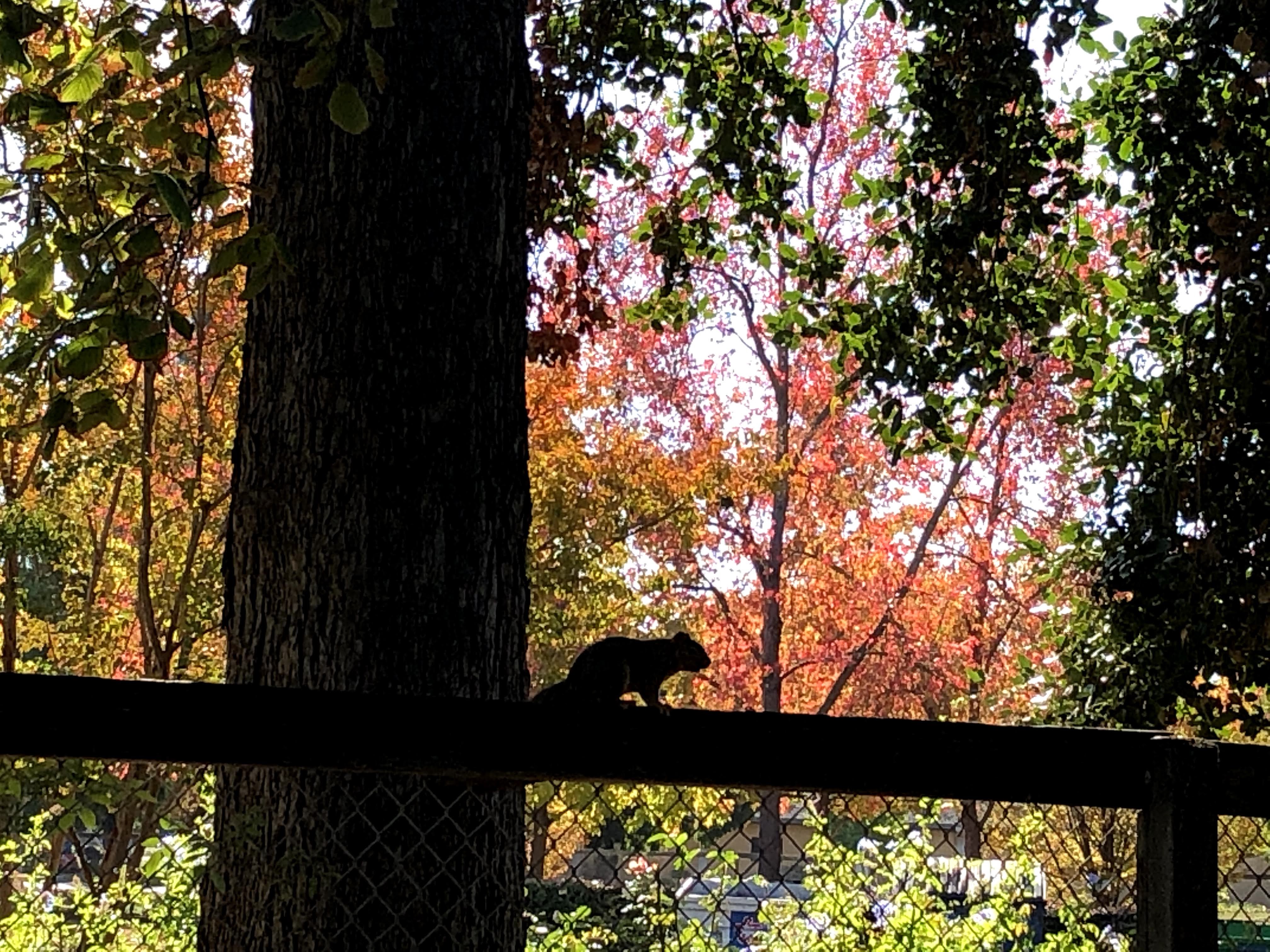
🍁 The music 🎶 🎵 🎼 of the wind rustling through the trees, to the accompaniment of chirping birds, and tittering squirrels, is music enough, and a soft lesson of symphony.

🍁 Watching a yellow, orange and red world bathed in the November light with the leaves fluttering down at their own pace is an unhurried lesson in pace.

🍁 Every now and then, a blue jay flies down from its perch, a couple of little yellow thrushes swoop in joy, while the melodious blackbirds and the nimble hummingbird go about their day. I can rejoice in the glorious feeling of the heart soaring with the birds. A lesson of hope and joy.

🍁  I see the younger gingko trees in our neighborhood already brilliantly yellow, but gingko trees apparently wait and coordinate among themselves to shed their leaves in unison. The older gingko tree isn’t quite there yet. It is working its way through the green leaves and slowly turning to yellow. The splendid yellow young ones are waiting patiently. A lesson in gracious patience.

🍁 How could I forget the squirrels with their final nut collection drive? A lesson of work while stopping to enjoy the fruits of one’s labor.

img_0090

November is also the month of celebrations. Hot on the heels of Halloween when the adults find the child in themselves, comes Deepavali, the beautiful festival of lights indicating the victory of light over darkness, good over evil etc, and then just before pulling gracefully into the zone of gratitude and thanksgiving, I get to celebrate my birthday.

What isn’t to love about November? It is a time for hot tea, butter toasts, fall colors, the sounds of pattering rain, the warmth of a sweater, and all the wonderful things of Hygge.

Happy Thanksgiving!

Science as an Art

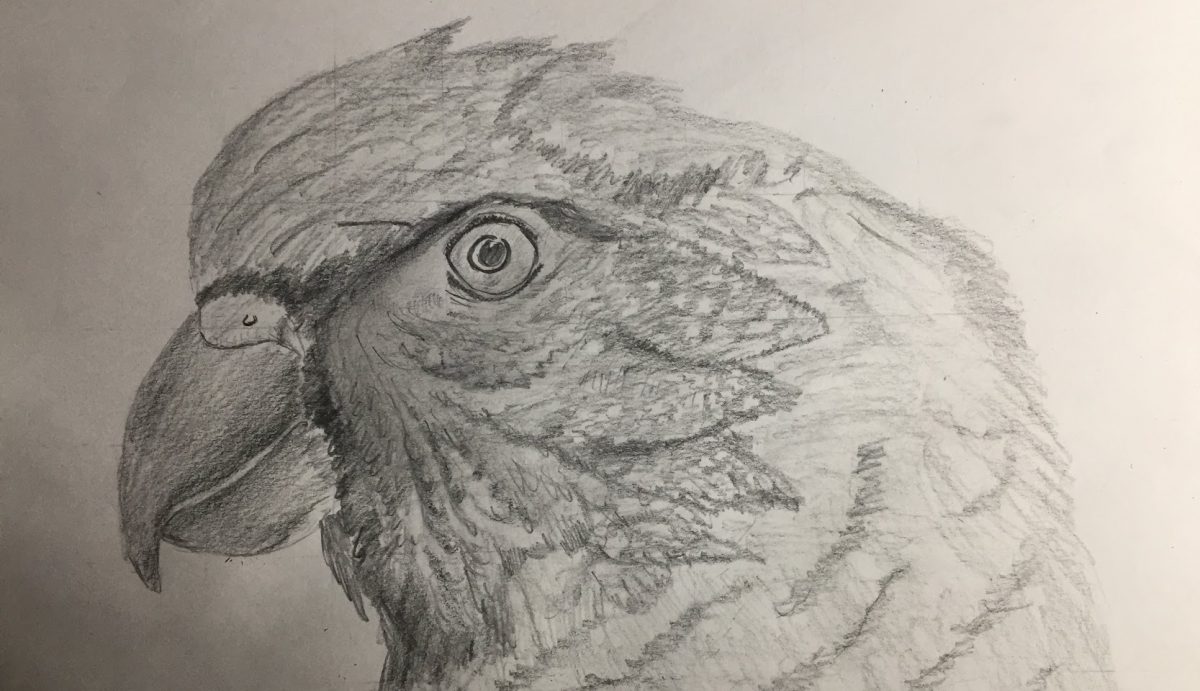
I caught sight of an artist one day, sitting in the garden and painting the profusion of life around her.  I stood there drinking the contentment of the scene in. Here was beauty, poetry, art and the science behind it all in one grand stroke. How marvelous it is to stop and observe someone paying attention to the world around them?

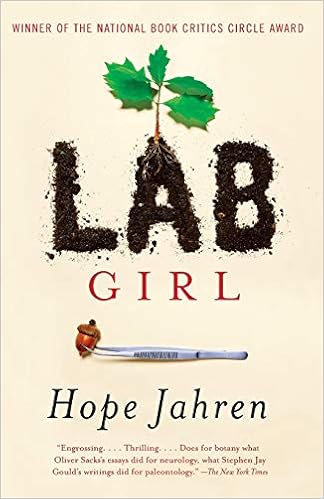
I remembered the piece in a book recommended to me by a writer friend, Lab Girl, by Hope Jahren. The book is an example to show how each one of our stories is different in its own way. This memoir is written by a dedicated scientist, and covers among other things a rare friendship, her bipolar disorder, and her journey of a life with trees. 

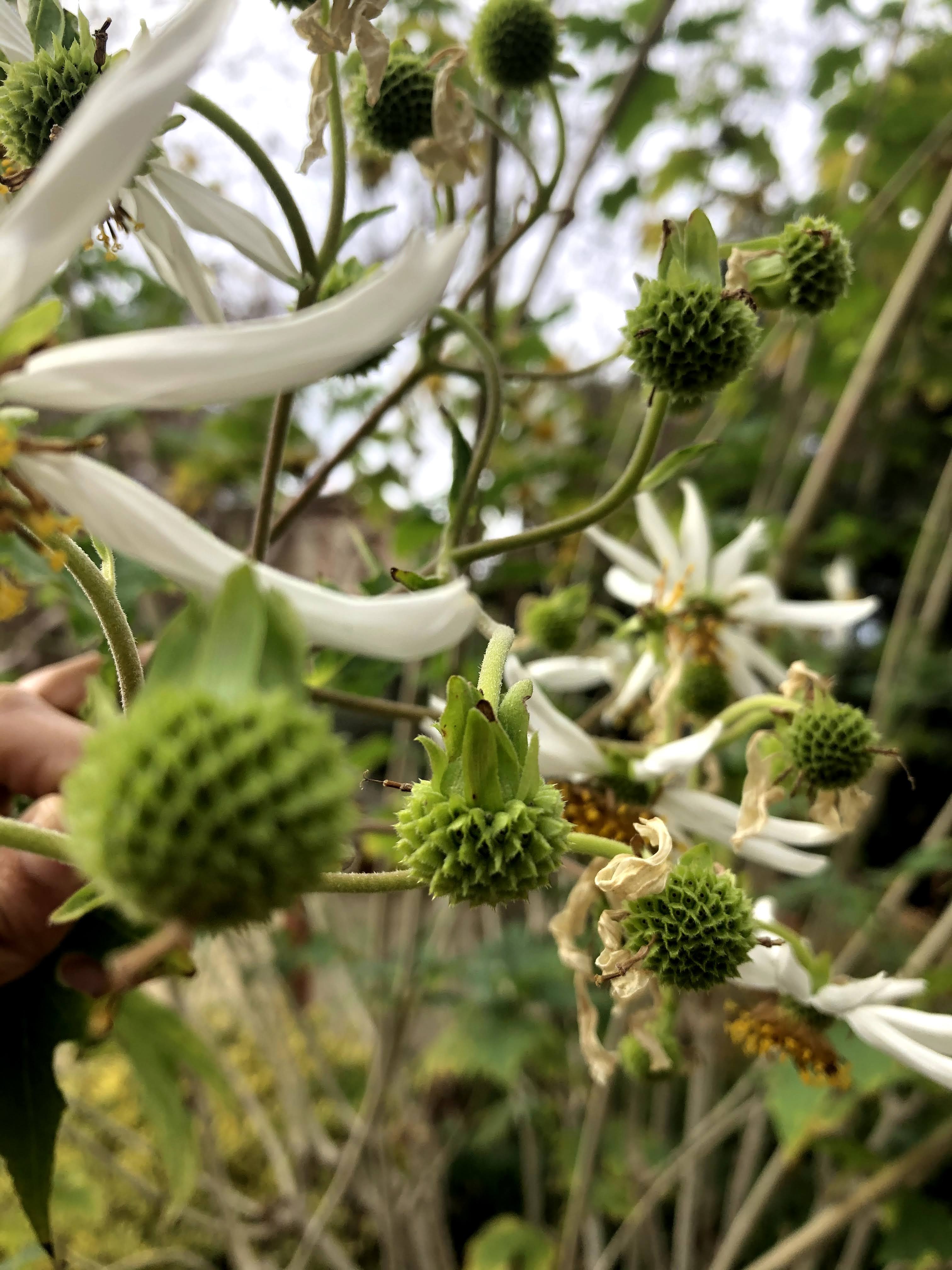
In the book, Dr Jahren writes about the science and its demands on its lovers. Her writing is lyrical, and when she writes of her research and her little moments of leap, it is nothing short of poetic. For instance, she writes of studying the structure of the seeds of  hackberry trees. It is the kind of research that is, as she says, ‘curiosity-driven research’.  Dr Hope Jahren is a paleobotanist, and she goes on to say that her research is the kind of work that “will never result in a marketable product, a useful machine, a prescribable pill, a formidable weapon, or any direct material gain – or if it does indirectly lead to one of those things, this would be figured out at some much later date by someone who is not me. “ 

I have always admired the tenacity and perseverance of endeavors such as these. In the world of instant gratification, working on fields where the gratification may not arrive in your lifetime is nothing short of phenomenal. It is the work of an artist: working on something solely for their interest, because they have the aptitude to understand life around them, and to persevere in the face of odds.

In the book, she captures some moments along the path of a scientist’s life that are magical. For instance, she writes of the time she was studying the structural makeup of the seeds of hackberry trees, and she unmistakably finds traces of Opal in the seeds:

“It was opal and this was something I could draw a circle around and testify to as being true. While looking at the graph, I thought about how I now knew something for certain that only an hour ago had been an absolute unknown, and I slowly began to appreciate how my life had just changed.

I was the only person in an infinite exploding universe who knew that this powder was made of opal. In a wide, wide world full of unimaginable numbers of people, I was – in addition to being small and insufficient—special. I was not only a quirky bundle of genes, but I was also unique existentially because of the tiny detail that I knew about Creation,…Until I phoned someone, the concrete knowledge that opal was the mineral that fortified each seed on each hackberry tree was mine alone.”

How could one not smile at this? How beautifully she marvels at understanding the ecstasy of life. Walking along a forest path, I’ve often wondered how, that of the millions of seeds dropped in there, a few decide to take the leap and sprout into sapling, clawing their way up towards the light, while digging deep and finding their roots. It turns out there may be no definitive answer to that. If you were a seed, what are the parameters you would use to sprout your wings and decide where to put down your roots, knowing fully well that from then on, movement is out of the question?

There is more to the miracle of our ecosystems than we can imagine. The ones who study this profundity – astrophysicists, anthropologists, scientists, ecologists, geologists – and then, go on to share their journey with us is marvelous. #Shoshin.

Who was it who said that – when you read a book you live a thousand lives, but if you don’t read, you only live once, yours?! 

“A reader lives a thousand lives before he dies. The man who never reads lives only one.” – George R R Martin in A Dance with Dragons

What would we do without the internet to give the answer right away?!

Complement with:

How to Master the Ancient Art of Walking Meditation in Modern Life: A Field Guide from the Pioneering Buddhist Teacher Sylvia Boorstein