The Music of Rose-Scented Winds

Roses are blooming everywhere. The white, saffron, yellow, pink, corals and red roses are a real treat to behold. Watching the breeze gently take the rose essences and waft off into the neighborhood reminded me of an old Tamil song. “Rojavai thalaattum thendral…” a few weeks ago, and I hummed it as I went about my day. Loosely translated, it means a breeze that caressed the roses. 

“Dei! One more time, you sing that song……” said the husband. 

His tone of voice reminded me of my elementary school friend all those decades ago, when I sang something continuously, wrongly and unknowingly at times. 

Particularly prone to these brain-itches or ear-worms, I am not particularly fond of them either. I thought life was full of them, till I noticed my friends seemed to be able to enjoy a song, hum it a bit and then move on with their lives, without the annoying thing being stuck in their heads for weeks at a time. 

The curious case of not being very good at picking the lyrics out in a song also means that I am singing garbled nonsense, and often just snippets of them as I go about the house. 

I don’t know how folks live with me, for I want to box my ears every time  ‘rojavai thaalattum thendral ‘loops on in the old brain. Apparently, the song itself has a good enough lyrical quality, but I would not know anything about it for I have never been great at catching the words in a song. I sing

Rojavai thalaatum thendral, poon thendral, yen mandral (No meaning). 

Un nenjil porattangal hohoho (Santa Claus>!), rojavai thalaatum thendral…”

I am sick of the song, but luckily not of the roses. 

For one prone to brain-itches such as these, the modern world can be quite the problem. There are catchy songs on television, in cars, radio stations, not to mention gas stations, almost everywhere. It is only recently that I found listening to instrumental music helps since it allows me to listen to music without having garbled phrases stuck in my head on an endless loop.

“Many people are set off by the theme music of a film or television show or an advertisement, This is not unusual for they are catchy tunes” says Dr Oliver Sacks, in his book, Musicophilia (Read the essay titled “Brainworms, Sticky Music and Catchy Tunes”)

He writes of his friend,Nick, who had fixated on the song, “Love and Marriage”and was ‘trapped inside the tempo of the song’. 

I nodded along fervently as he wrote of his affliction:

“With incessant repetition, it soon lost its charm, its lilt, its musicality and its meaning. It interfered with his schoolwork, his thinking, his peace of mind, his sleep.”

Originating from the literal translation of the German term Ohrwurm, an earworm can go on for weeks, or in some cases months.

When I read about this phenomenon in Oliver Sacks’, Musicophilia, I hummed the broken piece. I wish I could’ve written to the wise doctor and asked him whether he had come across any cases where the patient was stuck in a song with lousy garbled words in the correct tune, and how their marriage with a man who could not hold a tune but could ace the words would function. (Read: The Noetic Touch to the Poetic Muse

Alas! Dr Oliver Sacks is no longer alive to share his insights with us.
The Covid Vaccine

We rolled into the expansive grounds to receive the Covid vaccine. Everything shone with efficiency starting from the way our appointments were scheduled. It always astounds me when I see undertakings as large as this. Any public health initiatives are amazing in their scope and ability, and I was in awe. Like a child at the fairgrounds, I soaked in the sign boards, the appointment process, the courteous health workers all working on Saturday mornings to ensure the world can be a safer place. 

There were no questions unrelated to one’s health. No checks other than ensuring one was eligible age-wise and health-wise and had no known allergic reactions. 

As we waited for our turn and watched the registered nurses, volunteers and traffic attendants go about their duties, I thought once again of all the great things human beings are capable of as a species. Within a year of the coronavirus bringing the world to a stand-still, a vaccine was not just found, but mass produced and administered to millions of people. That is nothing short of a miracle. Even as the virus continues to spread its tentacles in waves, the vaccine outreach program was offering hope.

Extensive testing, mass production, and a dizzying level of community outreach and logistics had gone into place for this to work. But how did the mRNA vaccines work?

We live in the Information Age, and know first-hand how it can quickly be turned on its head to a Misinformation Age. A Quote from the Demon Haunted World came to mind.

“We’ve arranged a global civilization in which most crucial elements—transportation, communications, and all other industries; agriculture, medicine, education, entertainment, protecting the environment; and even the key democratic institution of voting—profoundly depend on science and technology. We have also arranged things so that almost no one understands science and technology. This is a prescription for disaster. We might get away with it for a while, but sooner or later this combustible mixture of ignorance and power is going to blow up in our faces.”

Carl Sagan, The Demon-Haunted World: Science as a Candle in the Dark

The nurse came up to the car with a thin needle and I closed my eyes instinctively. She smiled and said, “It’s done. You feeling okay?”

Just like that, the tiny ant-like pinch of the needle that delivered a tiny dose of messenger RNA gave rise to something else.

I felt a surge for love for America

A touch of pride in its efficacy and its courtesy

A ripple of gratitude for Science

A shiver while thinking how it might have been had the 46th President not been elected.

And finally a sense of gratitude that we did have a President who valued these things.


Sleeping Angel

The son’s room got a new lick of paint. It is a calming, soothing color called Sleeping Angel. Paint color namers have to be the most creative bunch. I have never actually met a person who held that particular job, but I would be thrilled to do so. The names they come up with have to be from fertile imaginations. If ever one is stuck for ideas, heading out to the paint alley in your local hardware store is inspiration enough. 

Here is a random sampling of the paint colors:

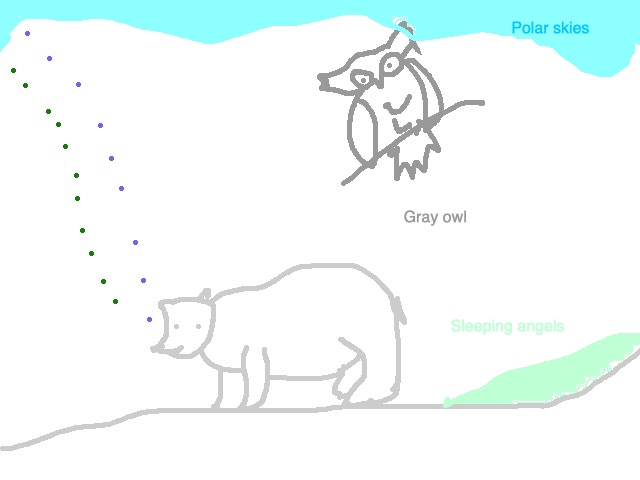
Polar sky, Sleeping Angel, Balboa Mist, Gray Owl, Soft Fern, Saybrook Sage, Lavender Mist, Sunlit Coral

I mean, look at this combination of words and tell me that it does not want you to sit up and think of beautiful polar bears looking down at their little cubs and telling them stories of a time when their habitats extended so far out, they could venture to the edge where they were able to get glimpses of sunlit corals, sometimes see the patches of soft fern and hear the gray owls hooting into the night. The misty skies used to bring them whiffs of smells quite different from what their cubs were getting now. Their grandmothers spoke of the mists of lavender, redwood and balboa. Visiting whales told them of giant redwoods and seafoam over corals.

owls_polar_bears

Painting is meditative work. The pain before and after the walls are painted notwithstanding, the art of painting itself is therapeutic. Imagining a small space transform into a warm inviting haven is a gift enough, but actually doing it, is even better. 

I had written about the mute painter who came to regularly paint our childhood home every couple of years. I had no idea of the virtues, or lack thereof,  of the distemper paint. I only knew it was superior to what was routinely done, since the father went through some extra effort for that type of paint. All I knew was that small stains washed off this type of paint. Given he lived in a school and had 3 children of his own, who were very happy to have their friends over, I suppose this was a brand of realism. 

The father would spend extra to go for a lick of distemper paint, and that pleased the passionate painter. The artist in him gave an approving nod, and he set about setting up his ladders and transforming the space with a twinkle in his eye. The love for this job shone through in the results. Every room seemed to have a dollop of his spirit after the painting was done. The rooms sparkled and twinkled with peace and joy. I would then spruce up the place with vases containing bunches of fresh pine, ferns, and wildflowers to settle the slightly overbearing smell of fresh distemper, while the mother would sneeze her way through the house (allergies). 

Decades later, the circle of life seemed to repeat itself. Sleeping Angel had transformed the room, while the paint smell kick started my allergies (made worse by smelling flowers I admit), and the drops of sunshine came in the form of fresh yellow tulips in a vase with pine and fern. I took a dose of antihistamines and drifted off to sleep in the little room. The paint was aptly named. 

I slept like an angel.

Read also:

Within our 4 walls

The Flying Zoos of Babylon

Antheia’s Gifts

April has the whiff of spring about it. Fresh green leaves, and flowers bursting forth everywhere. 

I could not help thinking of William Blake’s ‘heaven in a wild flower’ as we made our way through the trails. Really! I am in awe of poets – how do they think up these things? 

“Who was the Greek god of flowers? Persephone?”

“Nope! Persephone was agriculture, you know when she comes out of the underworld, she brings Spring with her and the world blooms again. She was the one who was abducted by Hades.”

“Ah yes. There should be one for flowers though. Or is it just nymphs?”

She shrugged – “There is a minor goddess. I forget.”

I looked it up as I sat down this morning after sniffing a couple of roses in the garden. Antheia is the greek goddess of flowers.

I was out walking with the daughter on a trail. She was telling me about a fascinating piece of fan fiction she read about the lives of Remus Lupin and Sirius Black in the Harry Potter series. Told from the perspective of Remus Lupin, it was truly amazing. A deer grazed in the river bed now overgrown with shrubbery, while the stream-like river played host to herons and geese. It was fitting setting for the story of The Marauders who first made their appearance in The Prisoner of Azkaban.

I stooped to sneeze. “You know? I think you deserve this!” she said, looking severe. That child has the heart of Minerva McGonagall. Her lips looked thin and her eyes had just a hint of a smile that could not be displayed for wanting to look stern.

“Do you really have to sniff every flower when you know you have allergies?”

“But I do! Just see this my dear. A spider has patiently woven its web within the petals of a narcissi bloom. What is that story of the Ariadne challenging that Greek goddess?”

“You mean Arachne challenging Athena.”

“Yes…really how perfect these spider webs are! As an engineer, I admire the tensile strength, as a artist, I love the clean nature of their work, as a minor creepy crawlie phobe, I want to squeal, and as a clean freak,  I know I clean out cobwebs, but it makes me wonder every time about the nature of work. The constant doing and undoing of it all. It all seems so haphazard, but nature is so intensely productive in its being, no.” I said and then told her about the book I was reading just then.

Titled The Tree, it is part meditation on nature, part autobiographical detailing the relationship with the author and his father, and their differing views of nature. His father was quite the productive fruit producer in his narrow strip of land in the city, while the author’s love for trees bloomed away from the structured fruit producing expectations – in the wilder countryside.

On the walk, in the meanwhile, I pointed out the resourcefulness of the vine that can jump fences and leap between trees, the flowers that think nothing of scenting the world as they go about blooming, the humming bees, and the humming birds darting about all of this with a purpose of their own. “I suppose one could spend all day thinking about these things without any sort of cogency huh?”

“Yep! Like you are doing now? You know this is where some folks really surprise me. I mean, they regularly write and put out a chapter of fan fiction every week, to this brilliant story of Lupin and Sirius I was telling you about. ”

“Yes and look at humankind’s imagination through the ages. All those myths and stories of nymphs turning into rivers, and running through worlds and sprouting off into geysers. ” We walked back in admiration of writers and poets. Oscar Wilde, the daughter’s favorite poet and his life, William Blake, Greek myths, her re-reading of The Song of Achilles, Harry Potter characters all contributed to a magical spring-time saunter.

Imagination and Creativity are always enthralling themes to engage in. How do you cultivate it – are we born with a natural gift that we then need to prune and cultivate like the trees the author’s father looked after or does it thrive and bloom like Antheia’s flowers in the wild?

No fruit for those who do not prune; no fruit for those who question knowledge; no fruit for those who hide in trees untouched by man; no fruit for traitors to the human cause. – John Fowles, The Tree

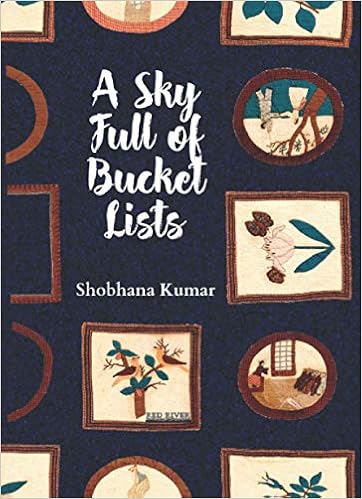
A Sky Full of Bucket Lists

April is Poetry Month apparently. It is also the month that hosts Earth Day, the one day we dedicate to saving the only home we know, Earth. As far as I am concerned, they are all excellent themes for the month bursting with the prospects of Spring. It has been an unusually hot spring, but that does not detract from the beauty of the season.

This is the season for life’s stirring: Poetry and Earth are both what lend credence to our human experience, and possibly dolphin experience. (As regular readers of the blog know, the dolphins have poetry whose tonal vocal content is equal in size to the Illiad or the Odyssey.) 

Read also:

Carl Sagan’s Essay on his interactions with Elvar The Dolphin
Epic of Whalayana – Carl Sagan

What better time than to write about a book that has been in my thoughts so often since the first reading? A small book of Haibun poetry steeped in the experience of living on Earth.

My review on Amazon:

A Sky Full of Bucket Lists is one of those books that has found a place on my bedside table. Every time, I need a glimpse of life, the slim volume is there to allow me a peek into the life of a fellow human-being in a very different situation. Written by a poet whose empathetic life experiences with social work shape the words on the page, this book is worth reading and re-reading. Shobhana Kumar reminds us that being humane is what makes us human. Charming, heart-rending, profound and simple.

A Sky Full of Bucket Lists seeps into your day as you go about the busyness of living. 

The incorrect font, the cross dresser, the neighbor in hospital, , the alcoholic, the abusive or the the true friends who give more than one deserves. It seems Shobhana Kumar has a haibun for a wide range of human living. The poignant note to her father is an especially special one. (Dear Mr Raaga) 

Sometimes, at night when I am too bushed to read anything long or heavy, I instinctively reach out to A Sky Full of Bucket Lists. The humanity manages to seep through the pages and into your consciousness. They say reading makes one more empathetic. Reading the experiences of someone who has seen so much, suffered through so much, and yet, has the time to not just care for a fellow being, but care deeply and share it with the world, is a gift indeed.

Whether the first cave painters realized the art form could encompass human living, I don’t know. Every time I look into the book, something attracts: why this picture for this Haibun? How did she know my yearning for a library and how I sniff the books to get the children to love them as well? How did she detect the ‘poetry that settles into corners’ and give it words? Is there a thread that runs between every different piece, or is it just the shared experience of being human on a planet that hosts millions of lifeforms?

The Great Indian Kitchen

The movie, The Great Indian Kitchen currently streaming on Amazon Prime, has set off some sparks in the old household as it should. The movie is required watching for every man and woman especially of Indian origin. Indian cooking has been hailed as amazing, tasty, and a host of other adjectives that are all throughly deserving no doubt, but the adj I use are: pesky, demanding, grueling and painful. 

Read: The Art & Science of Idli Making

On several occasions, I have been heard to make the passionate plea for communal cooking wherein a household is only in charge of cooking for a few meals a week in a communal kitchen, and all meals are served there for the whole community. If ever you want to build a community, there is your chance, and it takes the burden away from the shoulders away from the women of the house, and every person learns the value of shared work, whether they like to do so or not.

The Great Indian Kitchen does an amazing job of capturing the loneliness of the housewife as she goes about her duties. The family unit can be an isolating one for the housewife. Even when men are present, there is an inherent assumption that the men have their own lives separate from those of their counterparts, and the interactions when they do occur, rarely have that intellectual spark that one wants to see in people in love. 

The story is of a typical patriarchal household where the men are polite enough in conversation, but do not care to know about the lives of people they live with. The new bride arrives into the home with a wish to fit in, and gets along well enough with her mother-in-law. When her mother-in-law leaves to tend to her daughters pregnancy, the situation rapidly unravels. The increasing workload, the callous expectations of the men, and the regressive customs drive the bride to take life in her own hands.

If anything, the movie looks at a best-case scenario where things unravel pretty quickly – possibly within 6 months. The husband in question makes no attempt to endear himself to his new wife, and communication between them is hardly there. So, she is at liberty to take stock of her life. Unfortunately that is not how it happens for the most part Is it? There is usually just enough Chemistry between the couple for the thing to sustain and before we know it, a few children are in the mix, by which time the girl has lost all marketable skills if any, and life is a drudge from one day to the next. 

The movie sparkles with some scenes such as the husband teaching a Sociology class. The class in which he actually has the ability to self-reflect and assess the impact of lives in society, he instead devotes to blindly parroting useless things from the textbook. “The family is a universal unit. ” 

We all know those uncles who love a certain type of dish paired with a certain other type of dish, without pausing to think about the effort that is behind the scenes. In Indian households, the kitchens are tucked away from the main scene unlike the kitchens in the US. Even when the kitchen and family room are joined, and the center of the family life, there is a certain disconnect between the food prep, and consumption. Now imagine, tucking away the factory and presenting hot piping meals at every meal. It is hardly surprising that the men are kept well away from the work spaces.

Read also:

Go Women Ninjas!

Which brings me back to the question of communal kitchens. There are many places in which we pay a fee to belong. In the same way, you pay a fee to belong to a kitchen, and help out with that kitchen’s duties. Procurement, reorder, stock taking, inventory, cleaning all need to be shared by all members of the kitchen. You can pick the slots in which you would like to contribute, with the caveat only being that every eating member over the age of 5 and under the age of 70 has to help for at least 3 meals a week – and you cannot pick and choose the tasks you like. For before you know it, the men would have snagged the budgetary aspects, and give the cleaning, cutting part bunk. No Sir! 

It would do the old enablers some good, to actually see what goes into making a good meal instead of sitting around and making jokes about the quality of the food in front of them. 

Studies show the disparity in time spent on average household chores by gender.

  • Indian women are high on that list spending a good 5 hr & 51 m Vs Men who only spend 1 hr 19 minutes of unpaid work.

Quote:

In every country, men have more leisure time each day while women spend more time doing unpaid housework. 

I am not sure whether Robert Frost was thinking of social iniquities when he wrote the poem , Stopping by Woods on a Snowy Evening.

The woods are lovely, dark and deep,   
But I have promises to keep,   
And miles to go before I sleep,   
And miles to go before I sleep.

Robert Frost

We do have miles to go before we sleep. We have the universe to traverse in the simple act of knowing the lives of one another.

Worries & Worm Moons

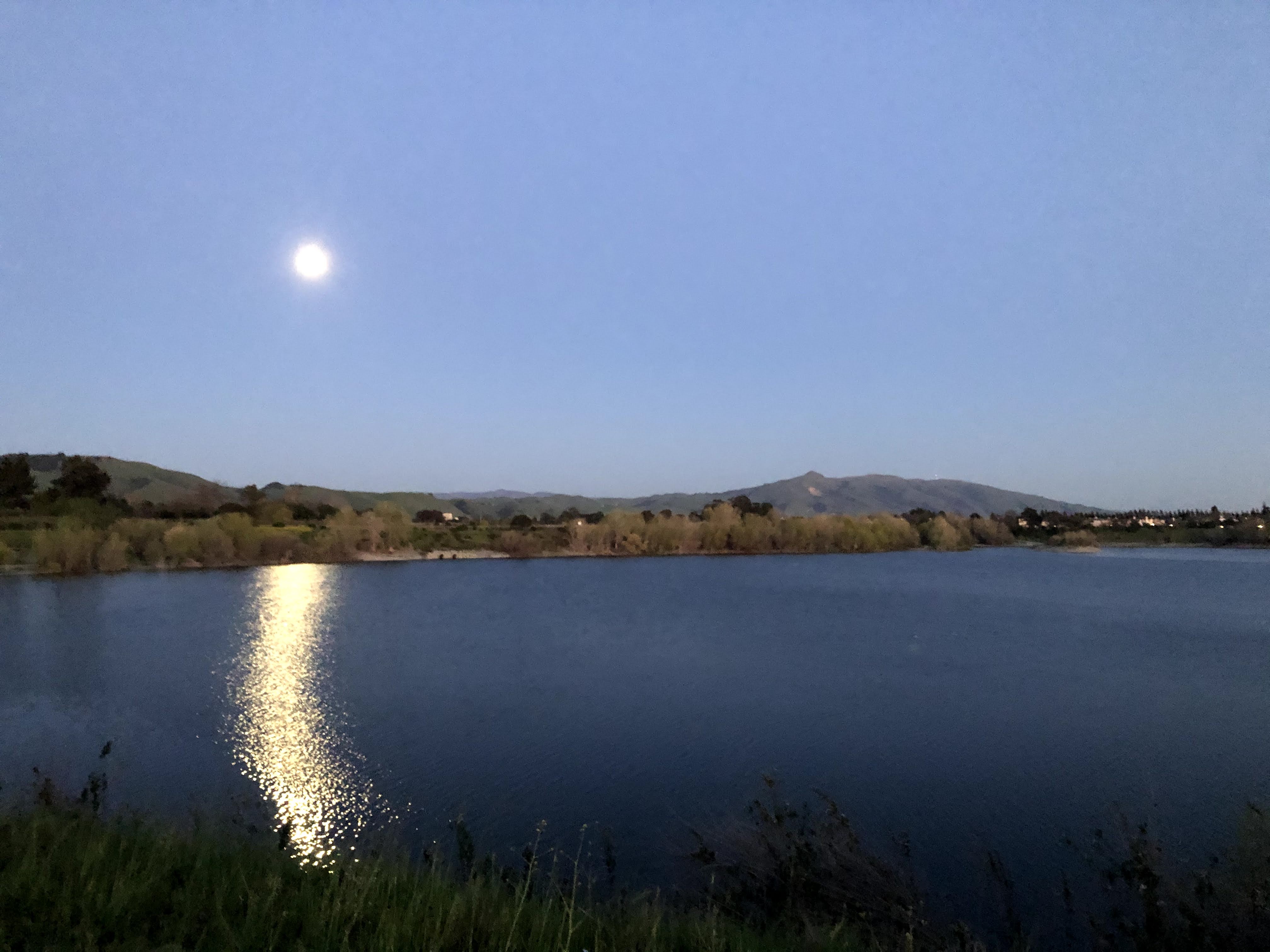
The evening was a gentle spring one. My friends and I walked on into the evening, as the full moon rose in splendor on one side, while the sun set with elegance on the opposite side. The Worm Moon, as the full moon in March is called, was exceedingly beautiful against the spring evening as we walked on.

Though this time of year seems to signal that all is well with the world, there are spots in the trying world as we make our way through it. Life is full and with a full life comes a good helping of worries. We walked on swapping tales and confiding the worries of life that seem ubiquitous.

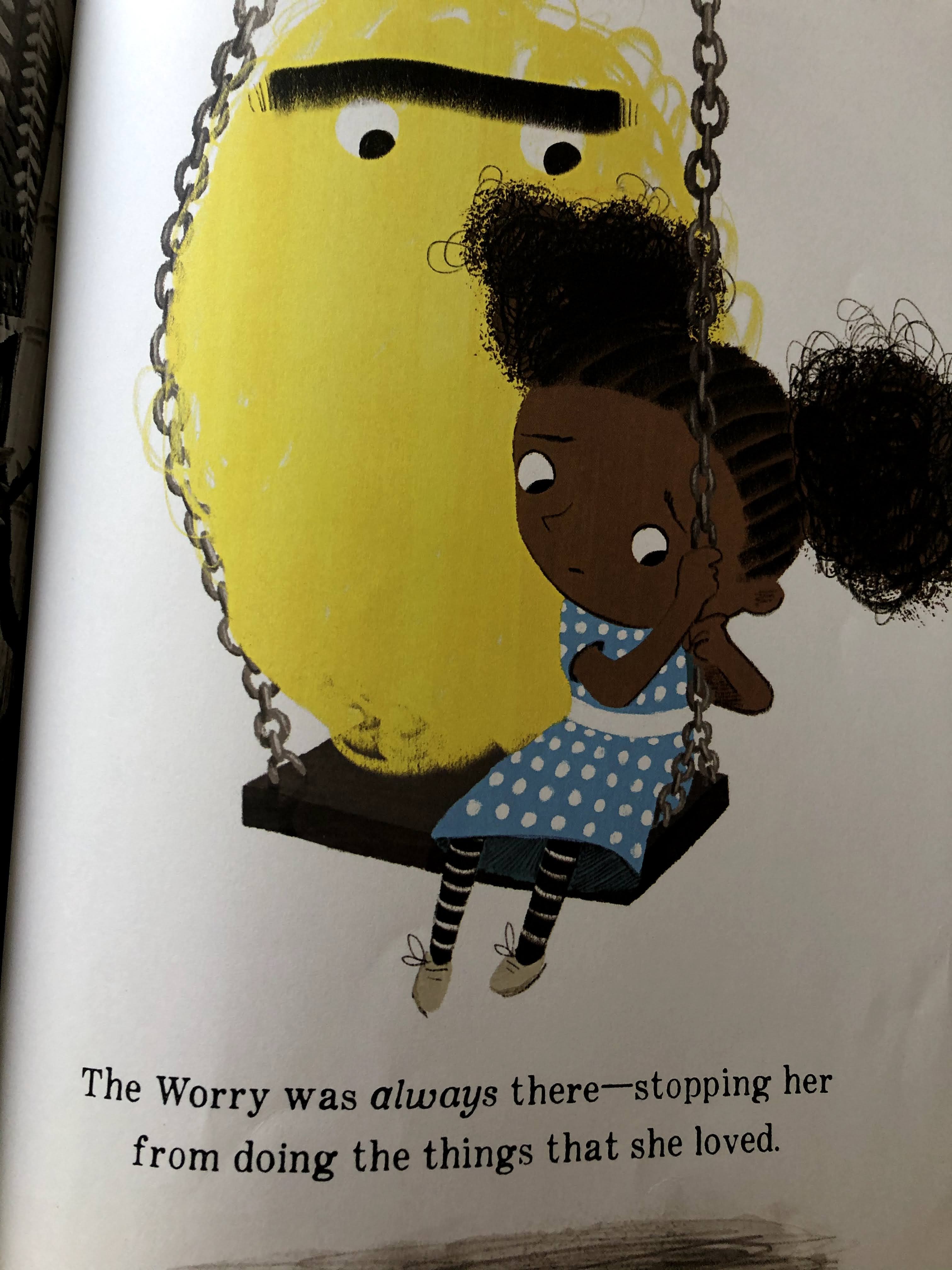
Somehow, the worries seem to reduce in size in the shared experience of it all. Just in the acknowledgement of it. It reminded me of the marvelous children’s book, Ruby Finds a Worry by Tom Percival.

In the book, Ruby is a happy child who loved to explore and be herself. 

Until one day when she finds a worry. 

img_1727

The book talks beautifully about the concept. How the worry stays with her, and seems to grow in presence and size though no one was able to see it. It was there with her in the classroom, on the swing, and even occupied half the school bus. 

img_1728

It is a beautifully pictured concept with the worry inching in everywhere till poor Ruby is unable to be happy at all.

Then, one evening at the park, she finds a boy sitting alone and a worry looming over him. She goes over and they share their worries and talk about it.

“As the words tumbled out, Ruby’s Worry began to shrink until it was barely there at all.

Soon, both of their Worries were gone!”

It is a simple tale of friendship and worries shared, and yet the book captures it all in so beautiful a manner. You wonder and marvel yet again at the profundity of childrens’ books. 

img_1730

That evening as the worm moon rose and sprinkled its silvery little sparkles over the lakeside, the same thing seemed to be happening to us in real life too. To nature, peace and friendship whispered the evening.

P.S: March Moon is also known by various names: Eagle Moon, Sugar Moon, Wind Strong Moon or even the Lenten Moon.

Article here: Full Moon in March

img_1711

Mothers and Calves

During the few months of spring and early summer, the bay area resembles fairy land itself. The mustards are blooming alongside the lupines and golden poppies forming a profusion of yellows, violets and oranges against the lush green backdrop of the grassy hills.

img_1677

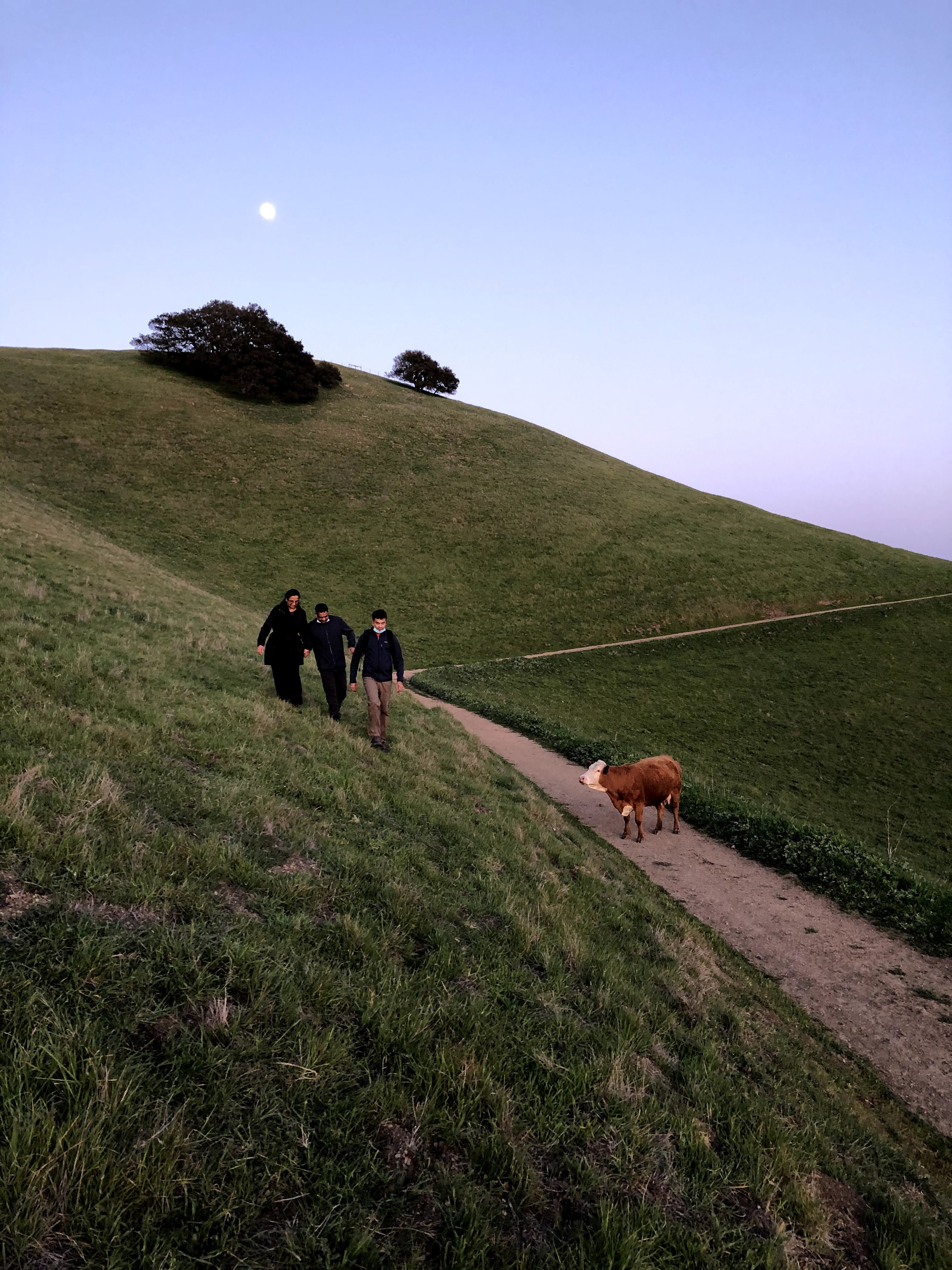
As I made my way through the green hills with my friends, who unwittingly agreed to a walk on a Friday evening, I chirped on happily. A few minutes in, there we were stalled in our tracks, faced with a herd of happy cows who didn’t seem too happy to see us. Right across our path they stood clustered around holding a conference of sorts, while one calf decided that the best place to drink mother’s milk was the pathway. This was one of the few places on the trail where a steep ravine drops on one side, and a rather incline presents itself on the other.

So, we stood, patiently awaiting the calf to finish drinking milk. Looking at my friends’ faces – not to mention the cows’ faces, I realized that this may not be the best time to tell them heartwarming stories of the elephant calf drinking milk on the Bandipur highway. (Galactic Plumes) So, I cheesed it, but here it is:

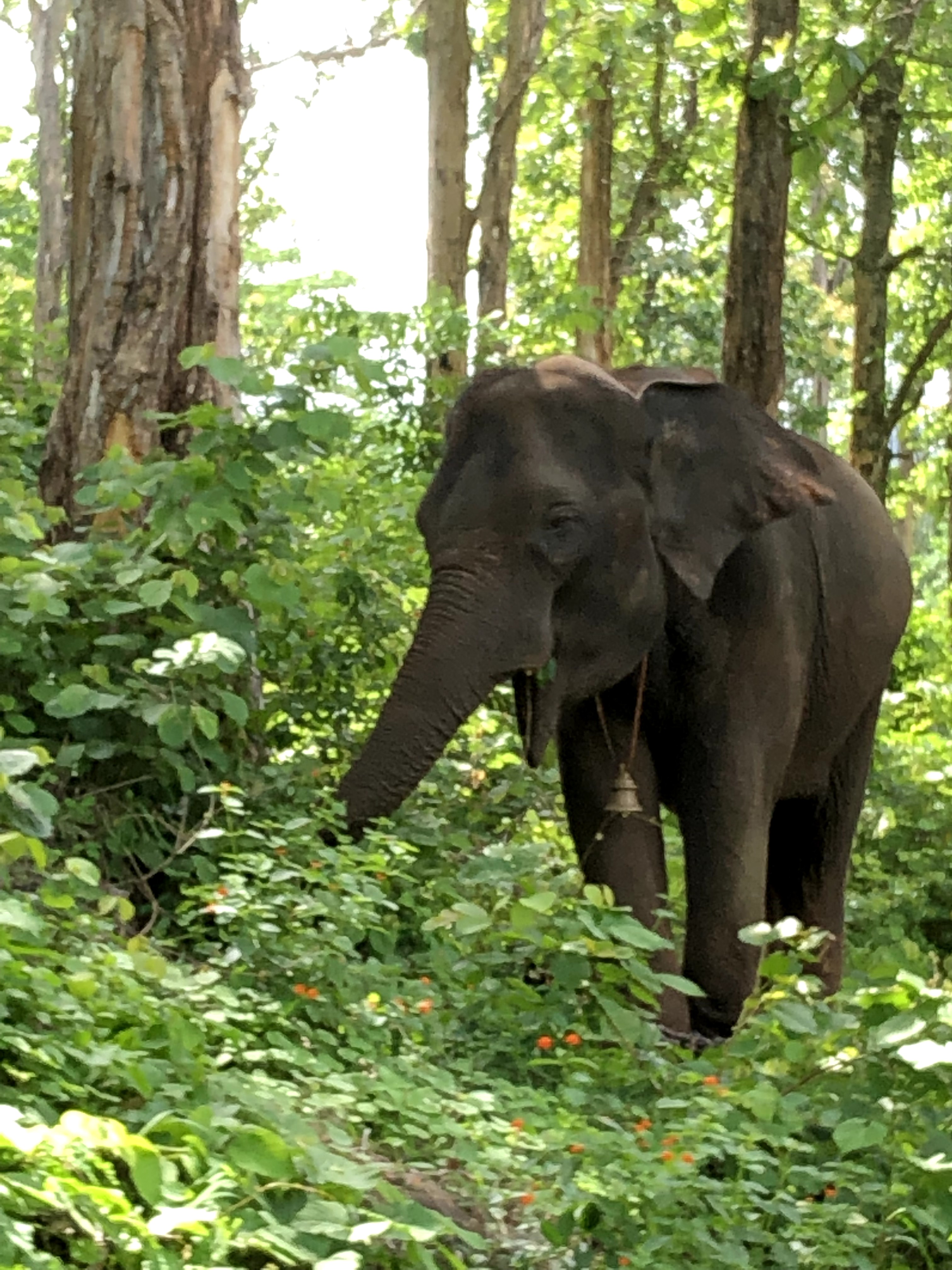
Along the roads from Karnataka towards the Nilgiri Hills are thick forests on either side. The Bandipur and Mudumalai national forests lie on this path. A drive through these roads is picturesque and can grant many marvelous views. Bison, spotted deer, and elephants are only a few of the marvels along this road. One such time when I had taken the night bus home, the bus stopped with its headlights off, and did not budge. The whole bus was awake within minutes and all of us were starting to get excited in those loud tones when the bus driver and conductor shushed everyone vehemently and told us to quieten down. It was apparent from their faces that there was potential trouble. Peering out into the road, we realized, they were indeed correct. There, in the middle of the road – on a national highway no less, stood an elephant mother, and her calf, who had decided to drink milk at 2 a.m. 

img_3588

While this may seem a trifle dramatic, the one thing elephant mothers do not tolerate is being disturbed when their infants are feeding. There have been several instances of a mother elephant losing it, and sending vehicles tumbling down ravines if disturbed. So, we waited. The waiting vehicles snaked for miles on each side, while the calf drank peacefully in the glow of the moonlight, and the headlights dimmed out of courtesy. How no one honked is beyond me, for Indian traffic is not known for its patience. Maybe, the road only attracted regulars, and they knew the ways of the forest creatures well. In perfect silence, the hundreds of vehicles waited on either side, quietly, patiently. Finally after 45 minutes, the calf had had its share, and the mother sagely moved to the forest. The drivers let out a perceptible sigh and slowly revved their engines on again, before proceeding. 

Where am I going with this? Well, replace the elephant with a cow, and add a herd of them in the middle of the road, and that was the situation facing us. We stood there, carefully waiting for the calf to finish its evening snack. Whoever termed the phrase ‘Mama bear’ got it right. Mamas aren’t to be messed with especially when they are in Mothering mode. It was a fitting lesson for Mothering day. (In the UK, Mothering day, different from Mother’s Day, is celebrated close to Easter.) 

I don’t know if you have ever walked through a herd of cows and calves before. If you haven’t let me assure you, it isn’t easy. It isn’t that the cows are going to do anything. Like the son said fairly during the wait, “We are in its home. So, it is better we wait!”, but the weight of even a calf is enough to send us tumbling down, and no one wants a stampede of cows. 

Anyway, we stood there feeling braver and looking dafter every passing minute. Funny how the braver we felt, the farther we seemed to be inching away from the cows. The cows seemed to be enjoying every minute of the predicament too. There were amused glances and tittering amongst them, I swear! Pretty soon, a cyclist came buzzing down and just parted the herd as he made his way past them. This seemed to give us courage, and we made our way too, though I must say I almost wet myself when the calf and mother gave me a warning as we passed. 

In ‘The Road To Little Dribbling‘, Bill Bryson writes of encountering cows in his walks. I couldn’t help thinking of the book at several points in the walk.

You know how we anthropologize our fellow creatures? I think this particular cow was messing with us. Probably make for a hilarious retelling at the water hole later on. You see, there she was, grazing on the hillsides, and just as she saw us coming, she turned a quiet eye towards us mocking us, and shuffled onto the road. There was simply nothing for us to do, but for us to scramble on to the hillsides ourselves while she looked on amused. The setting sun on one side, and a bright full-ish moon on the other, this picture is truly priceless. If only I could share it with the cow, so it lends her tale credence at the water hole! 

img_1691

People sometimes ask me what it is I find so enthralling in nature that I rave about it so much. Well: This is just it.

“I like being in a country where when cows attack, word of it gets around. That’s what I mean when I say Britain is cozy.”
Bill Bryson, The Road to Little Dribbling: More Notes from a Small Island

The Joy-o-meter

“I read the book like Appa watches a movie! Done in 15 minutes, but got the gist. “ I said to general laughter. When the Spring cleaning bug bites, the family scuttles, and shy away from me like a horse that choked on plastic flowers once, and whinnies at the fresh wildflowers in the fields. 

“Really Amma! You too?” said the children

I admit I usually do not resort to the skimming technique. But this time, I read the Marie Kondo book on The Magic of Tidying Up.  “Well …. You know how some books have all they need to say in an article, but make books and songs out of them? That was this book. In essence, the table of contents should suffice, but if you want the nub of the thing, it is: If something doesn’t spark joy discard it!” 

“So, why are you still here?” Came the answer pat. Really! The speed of the repartee, I will never learn I tell you. I just walk into traps, and then goggle like a famished gargoyle, with these smart-alecks in the home. 

I sniffed a haughty sniff, and continued. “Anyway, I am going to apply the concept to the whole house. So, if something sparks joy in you, keep it, else junk it. Spring cleaning starts tomorrow!” I said in my best energetic cleaner voice. Dark looks were exchanged, some mutterings were heard, and talk was ripe of hoping that I would head out into those long walks that have me famished by the end of it all, so I spare the lot the anguish of losing things. The problem is of course that the things the children are passionate about and the things I am passionate about, are not an intersecting set. Consequently, the last time, I threw away a cardboard box, I spent a trying afternoon with the son who behaved like a gladiator losing his arena. I have since learnt my lesson, and they are given a warning. 

cardboard_box

I started the morning with my closet feeling like Mole spring cleaning his home in The Wind in the Willows.

The Mole had been working hard all morning spring cleaning his little home.

I must tell you. How do you mean ‘spark joy’? Some clothes you see are out of fashion, have some problems, faded etc. But mostly I seem to have clothes that I liked. So, how to deploy the joy-o-meter by them? 

Almost all my ethnic clothes evoked memories – does that count as sparking joy? For instance, I picked up the pink skirt bought in a bazaar in Jaipur. The blue hand-drawn elephants were not exactly life-like, but I could not stop the memories from marching in. The sister-in-law and I had had a tete-a-tete with the skirt vendor, and we landed up enjoying tea, pakoras, and a long chat on local artisans and design techniques, while the husband stood nearby sounding like a cooker letting out impatient steam.

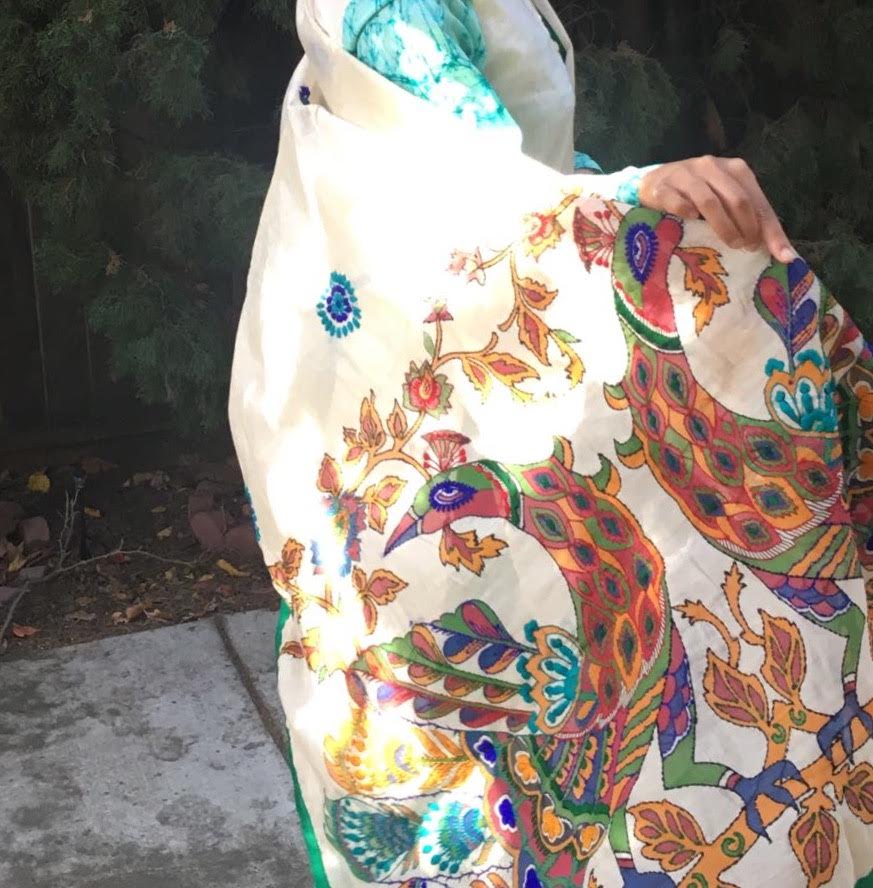
Or the carefully hand woven and fabric painted dupatta that I had decided was too much to buy in Delhi’s Chandni Chowk bazaar, and settled for more utilitarian lunch boxes.  Imagine my glee then, only to find that the lovely dupatta was bought for me by the loving family on a subsequent shopping trip seeing how much I liked it. If that isn’t love, I don’t know what is.

peacock_dupatta

Or the dancing saree that captured my spirit? The one with ballet dancers and Bharatnatyam dancers printed on them in unison – East-West collaboration at its saree best. 

The only ones I could apply the rule to, seemed to be the mass produced mall clothes bought in ‘Sale’ sections, which wasn’t much.

If there was a usage ratio to apply, almost all of the ethnic clothes can be set aside. If there was a cost to the environment ratio to be applied, one must keep these clothes till we use them at least a few times before discarding them. Over this, one must apply the cultural umbrella of using new clothes for every occasion, and the result is a sorry state of affairs.

I wonder if joy-o-meter designs can use all these variables. 

I looked pityingly at the disappointing results of the morning scourge. Feeling a bit of a hypocrite, I told the children to save anything they liked, and almost instantly regretted it, for the son ran for the largest cardboard box set for the recycling bin and said – “Dibs! I want this in my room!” 

No wonder the Mole preferred to scurry outside into the beautiful spring rather than finish spring cleaning his home.

“The joy of living and the delight of spring made him jump into the air, and he raced across the meadow ….” – The Wind in the Willows

The Joy-O-Meter swung to the right, and all was well with the world.

Spring Fever

“Why do goats looks so stern? I thought they are happy especially now in spring-time. Like lambs in spring-time could also mean like goat-kids in spring-time, no?”

The children exchanged looks. They knew to diagnose my bout of Spring Fever. I am seen scuttling off to sniff the air and marvel at life sitting up and stirring from its sleepy winter state. I head into the house looking flushed and happy. By evening, I am tired, but refuse to reduce the dose of spring bounding. But still this talk of stern looking goats had them worried.

“Ma?! You okay? Why are we talking of goats now?” said the daughter a mock-solicitous look in her eye, and I laughed out loud, and told them the context of the goat-ish tale.

“Well, it all started like this. Do you remember last Friday evening being  particularly beautiful? So, I shut the laptop with a whim, and headed out into the sunset. The hills were alive with the magic of spring. I told myself poetically that I could not bear to be a cell in a spreadsheet anymore. I wanted to be a newly sprouted leaf on a tree, a whimsical flower fluttering away in the mild breeze, or a Finnish fainting goat chewing thoughtfully at that latest blade of grass.

“Not for me the confines of mankind! Get rid of the shackles, and head out! “ I said.

” Uh-hm – someone would think you have a mission you are fighting for. How many times will you take pictures of the cherry blossoms and the clouds, and the sunset, hmm?” said the children but I waved these things away. Days like this are not meant to be wasted indoors arguing about the wisdom or lack thereof of going outdoors.

For a few months of the year, our neck of the woods resembles fairy lands, or the lands of the gods, or maybe heaven itself. The occasional rains, the burst of wildflowers, and the sunsets are all glorious. So much so that I find myself wandering around the countryside apparently lost, but really just finding the inner self. At least it is what I tell myself when that pile of laundry needs washing or that closet needs cleaning. Marie Kondo urges me to better myself, but Early Spring is more inviting. 

The fox squirrels atop the plum blossoms look naughty, while the fainting goat looks stern, the horse in the pastures peaceful, and the sunset glorious.

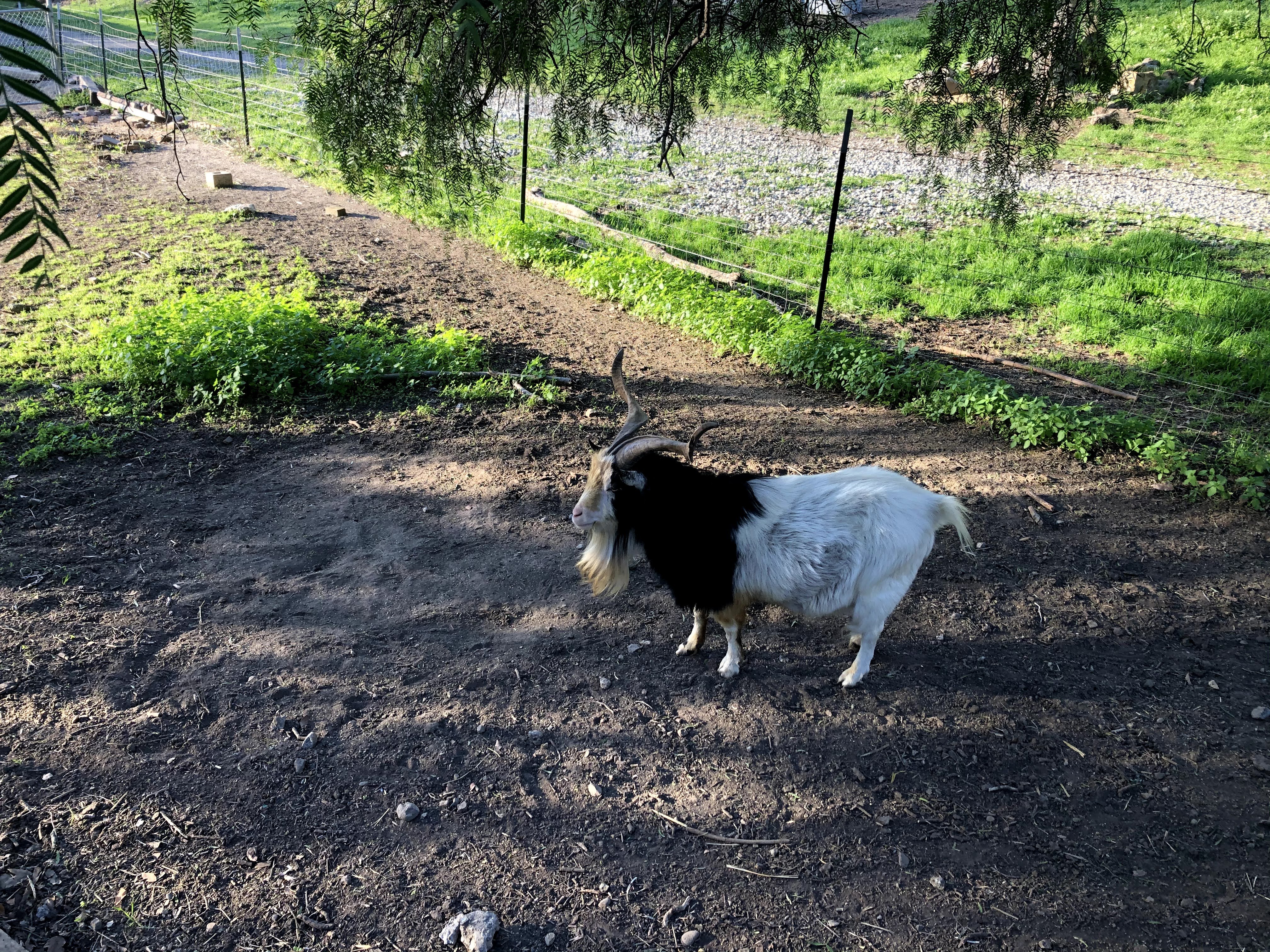
Where was I? Yes, on the stern looks of Finnish fainting goats. I had often wondered while reading the Three Billy Goats Gruff why the author went in for Gruff, but I see the choice of the word as I stood there admiring the serene setting against which the Finnish Fainting goat stood in its patch of farmland.

“Anyway, ” I said getting back to the point of stern goats, “I suppose if I had foul folks like me boggling at their spot of residence in that manner just because it is Spring, I would be gruff too! But the goat has a manner that is at once endearing, sober and majestic. The clump of fur on its chin growing away like a goatee (Get it? Get it? Goats have goatees!) made it look wise, and the green grass it chomped on made the world look a sweeter place.”

The children moaned not unlike the goat, and said, “Why not just call it a goat, why this fancy Finnish Fainting Goat?”

img_1352

“That is easy my dears. Google assures me that the picture I took of the goat is a Finnish Fainting Goat. And in any case, I doubt you would have listened patiently if I said I would tell you a story about a goat. No you would not have. But a Finnish Fainting Goat got your attention, did it not?” I said feeling clever.

“Ma?!” said the daughter, clenching her teeth. “You haven’t told us the story of the goat. You told us about the goat…you know what?! Never mind!”

“Yes…Never mind.” I said using that conciliatory spring-time tone, and said, “I will take you hiking there to see the old fellow. I am sure you all will like him. Looks like a satyr of your Greek myths. There is your story! Percy Jackson stuff on our next hike! ”

I ignored the ensuing groans. The fainting goat satyr and narcissus blooms will help.