๐Ÿ˜๐Ÿ˜๐Ÿ˜๐Ÿ˜๐Ÿ˜ The Tusks of Extinction ๐Ÿ˜๐Ÿ˜๐Ÿ˜๐Ÿ˜๐Ÿ˜

The Mammoth Tale

Few passages capture the bane of consumerism like this one does. It is from the novella, The Tusks of Extinction by Ray Nayler.

The premise of the book is an intriguing one.ย 

  • It is set in a future when mankind has figured out how to upload oneโ€™s consciousness into the cloud. A manner of immortality. This is very much in the realm of possibility.
  • It is also set in a time where the Siberian mammoths have been resurrected. This has already transcended realms of possibility into reality.ย 

The wooly mammoth is being resurrected – being cross bred from the genetic remains frozen in the Siberian Tundra withย  the Asian elephants (because they are gentler than African elephants).ย 

Thus, begins the tale of a doctor whose life was hacked from him moments after he uploaded his thoughts and knowledge to the web. This man, Dr Damira, was a passionate naturalist, a man who studied the African elephants and their ways. He fought for their conservation but failed. This is set in a future where the last of the elephants no longer roam the Earth.ย 

tusks_extinction

The resurrected mammoths in Siberia are facing difficulty thriving in the wild. They have all been bred in captivity, and do not understand how to survive the demands of living by themselves, caring for each other, and forging paths so they can forage and live through the cruel winters. They are thus being killed by poachers in a cry that reminds scientists of how the elephants were all killed off one by one.ย 

In an attempt to give them a chance at life, the doctorโ€™s consciousness is uploaded to a mammoth – a matriarch by the name of Damira.ย 

Bane of Consumerism

There are several aspects of this novella that can appeal to us, but one in particular stood out to me, and that was how our consumerist culture alienates us from the natural world. For we buy things, we want things, we accumulate, we hoard – who is it hurting? I am earning and I am buying. It is all helping the economy is it not?

Extract:

In offices-a tusk in a case, beautifully carved, transformed into a world of its own, worked by human hands into a chain of elephants walking trunk to tail. Beautiful, lifeless elephants carved from the destruction of an elephant, hacked into what had once been a part of a body, a tooth, a tool. A part of a life.

“Among the skyscrapers, there were also older places-little streets of cramped shops, survivors from another Hong Kong. Marginalia that had been missed by the eraser of progress. And there, in the shop windows, so crammed with clever things, there it was. My eyes found it over and over again. Ivory. Ivory jewelry, ivory stamps used to sign decrees that were meaningless now, ivory game pieces of every kind. Ivory turned into useless gewgaws, dripping with the blood in my home. It could be carved into any lovely shape they wished, but all of it began in killing. No-more than that all of it began in killing that took place far away. That took place somewhere the people who thought of ivory as a material could not see. Killing that took place in an extraction zone.

I remember the horror I felt when I first learnt that certain types of leather were obtained from the skin of crocodiles and were thus priced higher.ย 

Cities like Hong Kong and New York and London at the center, vortexes into which the currents of trade accelerated, into which goods from all over the world were pulled. Places where things became materials. Where things became commodities.

Many of us rarely stop to think of the source of all the things we use as part of our daily lives. In all honesty it is overwhelming to do so. How does the kidney bean come to be in its packet in the grocery store? Once we start down that road though, what about the almond flour, the diamond ring, the leather handbag, the silk scarf, the perfume, the spice, the watch, the gold ring, the ceramic jug? Everything has its tale, its journey, its place in the human chain of wants and needs.ย 

What Can We Do?

In reality, we cannot give in to an almost paralyzing analysis of source-to-table for everything we consume. Is there economic exploitation along the way, unscrupulous practices, inhumane treatments? Would we be happy to know it all and make informed decisions – yes, (I am hoping that humans have enough humanity to make the right choices if we do), but can we do so? Not always.ย 

I spent a pleasurable few hours at the mall the other day, and found my fellow human beings doing the same. Glancing around at the happy faces of those of my fellow humans that morning, I did not see malice or greed – I simply saw folks at a mall on a rainy week-end.ย 

I like that mass production has made life easier, the jobs it has created, alleviating entire nations from poverty. I like that poor children can have new clothes, and that horizons have expanded thanks to the general prosperity of nations. I do not, however, like the ever-increasing pressure to produce and consume more.ย 

Is the economy to be weighed against the Earthโ€™s resources at every step in the mall? Or just more more meaningful consumption? I do not know.

The Fascinating Behavior of Songbirds: A Morning’s Musings

It was one of those mornings in May – clear skies, the sun’s rays dancing through windows, and replacing moans quickly with sharpness and dedication.

I stood there wondering how it was so thoroughly that we transition from a supine, sleepy form to an alert, going-about-the-day form. The demands of the clock are relentless indeed.ย 

For an instant, I stopped to hear the beautiful voice of the songbird on our garden fence. It was trilling and beautiful, and I could have sworn just a little inspired – that last note a little higher than a human would have envisioned for that piece.ย 

It was as I was musing thus, that I noticed the son charging down the driveway to get to school on time – a sock hanging in one hand, a school project in another, and off we went. The songbird flew from my mind as we navigated the traffic, spoke of this-and-that, and chose music for the ride there.ย 

When I came back, the songbird was still flitting about here and there. I stood mesmerized by the little flashes of movements that my phone camera would not be able to capture anyway, and listened as it chirped, and went about gathering its breakfast.

I remembered a book that I had from the library – patiently waiting its turn.

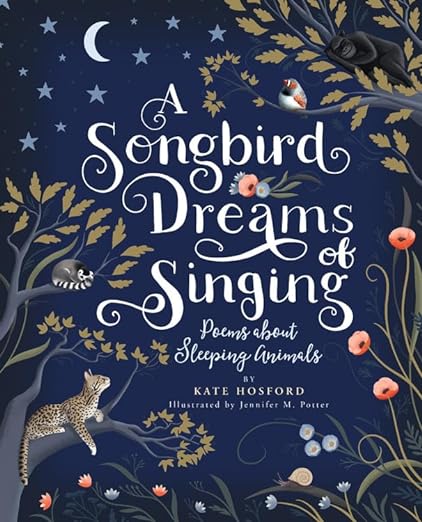
A Songbird Dreams of Singing – By Kate Hosford, Illustrated by Jennifer M Pottersongbird

I flicked open the book. The poem about the songbird was there:

Other birds may dream of wormsย 

Or flower beds or thunderstormsย 

But every night this bird performsย 

A concert in his mind.

How marvelous to imagine a songbird rehearsing and getting better at its craft subconsciously – every night.

The book goes on to talk about research made about sngbirds:

In the case of songbirds, scientists at the University of Chicago have done studies on zebra finches demonstrating that the males practice and refine their songs while dreaming, adding little flourishes to make their version of the song unique. Zebra finches are diurnal birds who rest in the afternoon and sleep for about ten hours a night. Like many other songbirds, when they awake in the morning, they sing with particular enthusiasm in what is known as the dawn chorus.

Childrenโ€™s book illustrators are so wonderful at their craft. This book too has beautiful illustrations, color schemes, and an overall look and feel of a book that is all set to send us to our worlds of dreams too.

So, what should we dream about, and subconsciously try to get better at?

Suma’s A Bindi Can Be

Suma Subramanian

I have been waiting for Asian Heritage Month to review the brilliant books of Suma Subramaniam. I yearn for books that hold a nod for us. I know what it is like to be the only child wearing a bindi in a classroom full of non-bindi wearing children – and so does my daughter I am afraid.ย 

Despite this, whenever I could, I looked for bindi patterns. Beautiful patterns – so elegantly thought out and shaped. Tiny little spots of art that you could stick on, to transform a face. I have a special kinship to bindis that probably deserve a separate post. I didn’t realize how much bindi related material there is in my head till I started writing this post. I have at least 3 posts worth just with reading one book!

Pottu, my doll

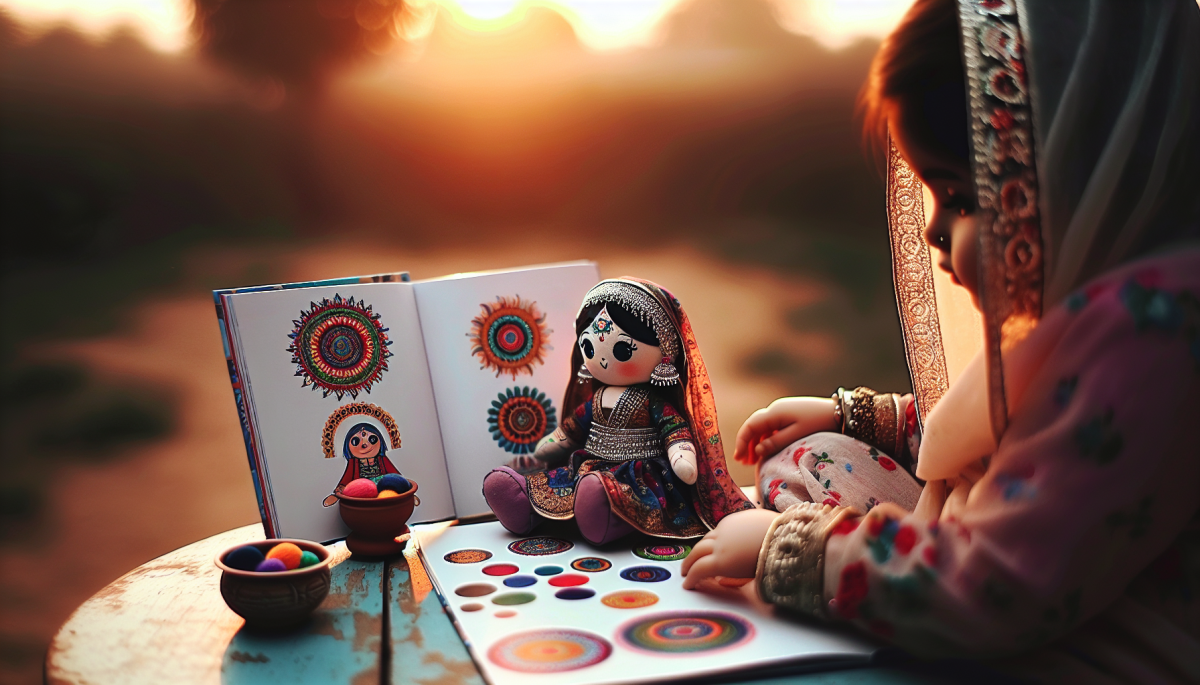
For instance, I had a marvelous doll named โ€˜Pottuโ€™ – actually the doll was marvelous, it was made to look quite horrendous with all the bindis I gave her. I drew magnificent bindis on her everyday – one day, the sun, another day a palm tree, one day – Iโ€™d fill her forehead, face and forearms with bindis. But Pottu was my doll, and there she resides in my long-term childhood memory – a small part of our identity that only those who knew about bindis could understand.ย 

pixar elephant

Here was an aspect of ourself that I finally saw in a book. When my daughter showed her baby pictures to her friends, theyโ€™d ask about the drishti pottu, or the pottu on her forehead. Finally, children can show their friends what a bindi is – in a book, in an American library. I am proud of that. Like the book coming out gave us bindi-lovers a tiny nod of belonging. You can wear a sari, and a bindi, and you can just Be.ย 

IMG_1254

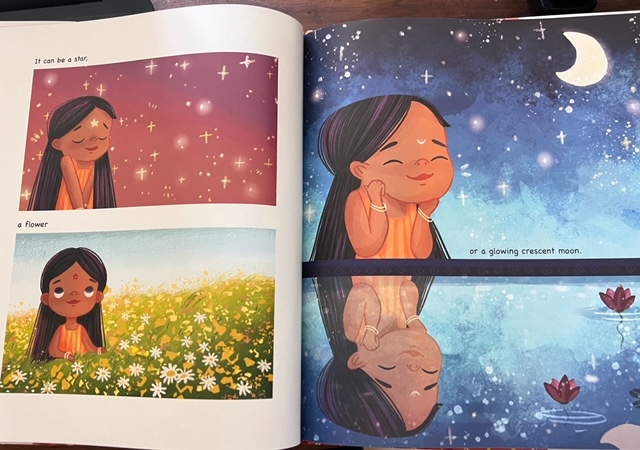
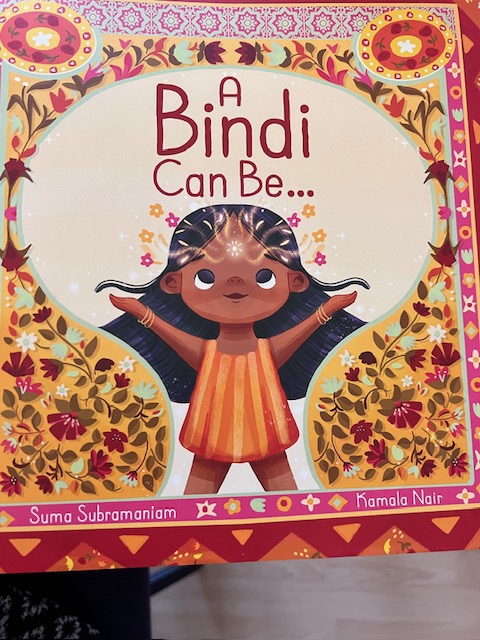
Picture from: A Bindi Can Be – By Suma Subramaniam, Illustrated by Kamala Nair

Thank you Suma!ย 

A Bindi Can Be โ€“ Written by Suma Subramaniam, Illustrated by Kamala Nair i

Now on to the book itself, A Bindi Can Be โ€“ Written by Suma Subramaniam, Illustrated by Kamala Nair it is a marvelous read. The pictures are vibrant. The joy of bindis is evident. The essence of the small dot transforming you is brilliantly done.ย 

67273848-1671-40B0-992C-E3C82AFDF5D4

Thank you Suma – for all those children who have had the joy of drawing their beautiful bindis, or having a marvelous bindi collection, or felt curious about a friendโ€™s bindi, this book satisfies them all.

Sarees for Mothers

A Sari for Ammi

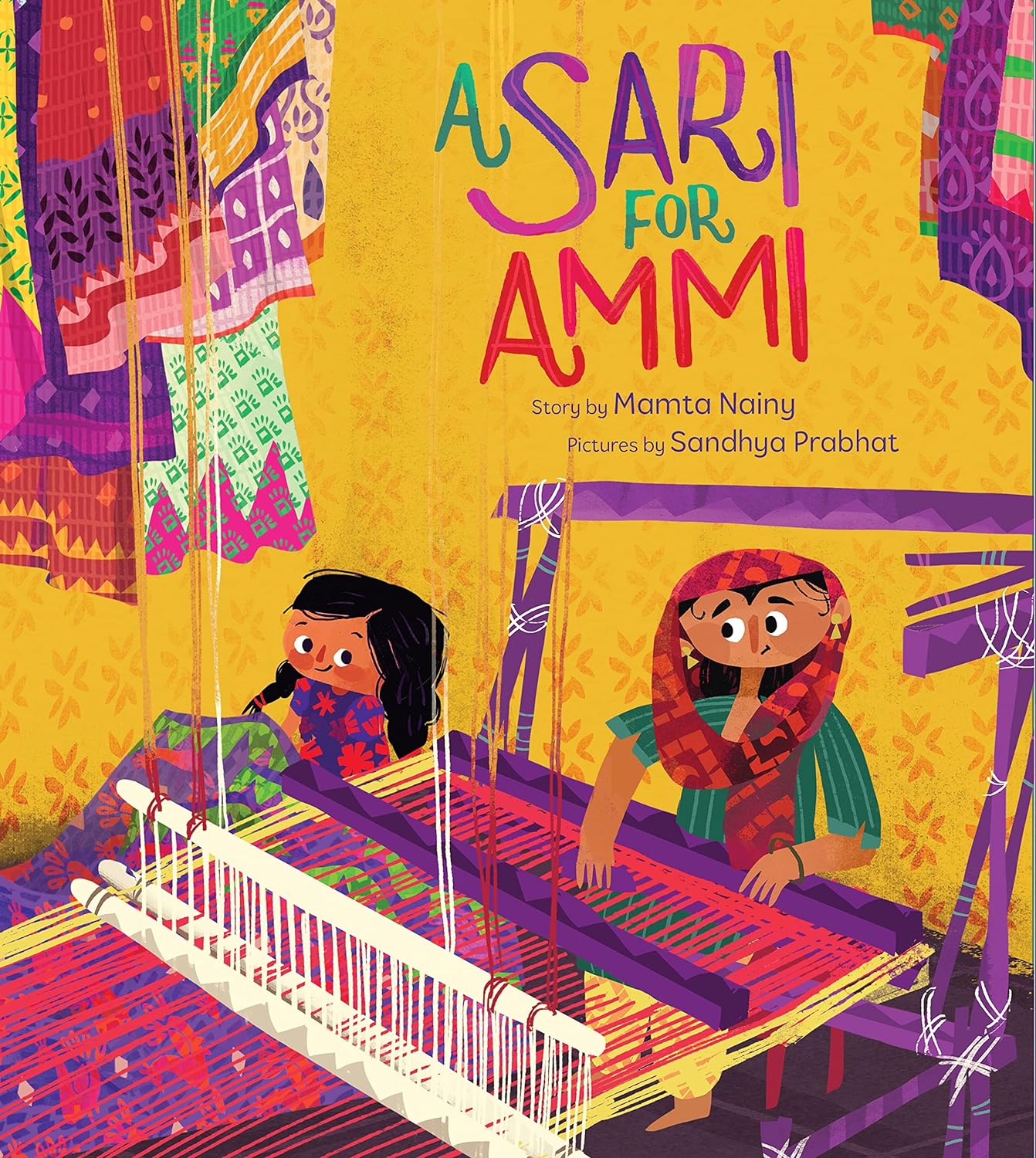
It is Asian Heritage Month, and the library is vibrant. I saw this book, A Sari for Ammi – Story by Mamta Nainy illustrated by Sandhya Prabhat.ย 

I thought Iโ€™d write about this for Motherโ€™s Day, for it is a heartwarming tale.ย 

The young children of sari weavers watch in awe as their parents work on their arts of creation every day. Dyeing the threads, working the looms, selling their brilliant creations at the local market. Their beautiful mother, who creates magical saris can seldom wear a sari -she usually wears the practical and old salwar kameezes she owns – for she can neither afford the sairs she weaves, nor can anyone buy these for her. They are Kota Doria fabric weavers, and many generations ago moved to the Rajasthan area from Mysuru in South India at Rao Kishore Singh – the then ruler in Rajasthan.

Sari_ammi

The children decide to buy a sari for their mother: One she particularly liked, and one of her own creations. Of course, they realize that they do not have enough to buy a sari, and the heartwarming tale pushes on.ย 

Buying a sari for a mother is a special joy – one that Indians know and appreciate. For many years, I felt sorry that I could not indulge in this simple pleasure when my mother or mother-in-law came to stay with us in the USA. Luckily, now we have a few stores, and online options, but that was not always the case.ย 

A simple book that taps into the simple joys of buying your mother figures a saree.

Happy Mothers’ Day to all the wonderful mothers and mother-figures in your life.

We Belong: A Heartwarming Experience at the San Jose Public Library

As we stepped into the San Jose Public Library with the brood, I could feel a sense of contentment. It was pouring rain outside, and typically one of those days that the world, including Yours Truly, would have preferred to stay indoors, reading a book, drinking cups of tea and maybe dancing in the rain for a bit. However, we decided to hit the library and then the Art Fair afterwards instead.ย 

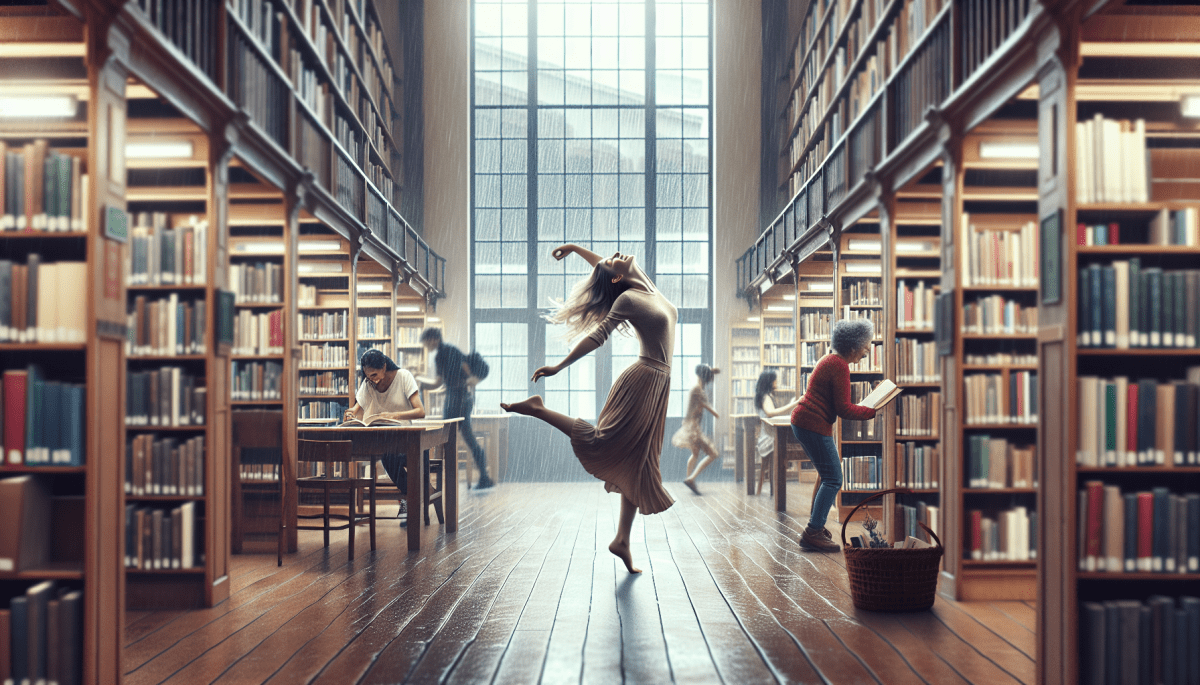
It was a good decision. It was also supposed to be a surprise – my portrait had been put up in the library as part of a We Belong series run by The India Currents magazine, and I felt doubly blessed. To have a picture of my dancing in a library – what more could the Universe give – both my loves of reading and dancing together!ย 

The husband, children and parents were all suitably impressed, and we took turns looking at all the portraits put up by the talented artist and photographer, Sree Sripathy from the India Currents Magazine.ย 

Seeing that the pouring rains would not be conducive to an outdoor Art Fair, we lounged around in the library instead. It was perfectย Gluggavedurย weather. (Gluggavedurย is a delightful Icelandic word that signifies, โ€˜Window weatherโ€™ โ€“ beautiful from theย inside, but too cold to go outside.)

Book:ย What a Wonderful Word โ€“ By Nicola Edwards & Luisa Uribe

All young, old and those in between were in their respective sections, while Yours Truly flitted about everywhere, dancing my way into everything from Seaweeds to Chinese Poetry and blurbs off novels. I didnโ€™t link the fact that there was maybe an extra splattering of Star Wars content about till I realized it was May 4th – May the Force Be With You day.ย 

The rest of the afternoon was spent in a glorious haze of the sun peeking through the clouds, and raucous laughter with friends. It was after all World Laughter Day the next day.

World Laughter Day

May the Force Be With You!

The Powerful Epiphanies

The Power of Spring

As epiphanies often go, it was unexpected, and oh so satisfying. This spring season has been particularly fantastic – there are bumblebees, butterflies, dandelions, ducklings – all tripping over themselves to give you epiphanies of life, miracles, hope and so on.

One such day, we sat watching lazy waves rippling through a large pine tree. The previous day had been a cold, and windy day, we had scuttled inside for warmth. The next day was warm, pleasant and entirely suited to lounging around watching wind waving through pines, firs, and gingkos.ย 

The house was filled with noises of spring – young children exclaiming at blueberries, standing on tiptoes and peering up at the oranges on the tree, running through the house in a mad scramble looking for juice packets and snacks while playing freeze tag or mock-cricket.ย 

When the next stampede grew closer, I wondered whether to move aside from the herd of stampeding rhinos, or sit my ground and continue gazing at the roses in bud, and the pine in the wind. I continued to sit, and luckily, the fellows stopped, and one-by-one they all flapped around, and flopped on the grasses.ย 

โ€œWhat are you thinking about?โ€

The Ginkgo’s Wisdom

I told them, and they sat pondering for a moment, sipping their juice. I couldnโ€™t resist the pull of a quiet moment, and an uncharacteristically pliant audience. โ€œDid you know about the ginkgo trees?โ€ I asked my young fellow admirers of wind and trees.

ginkgo-COLLAGE

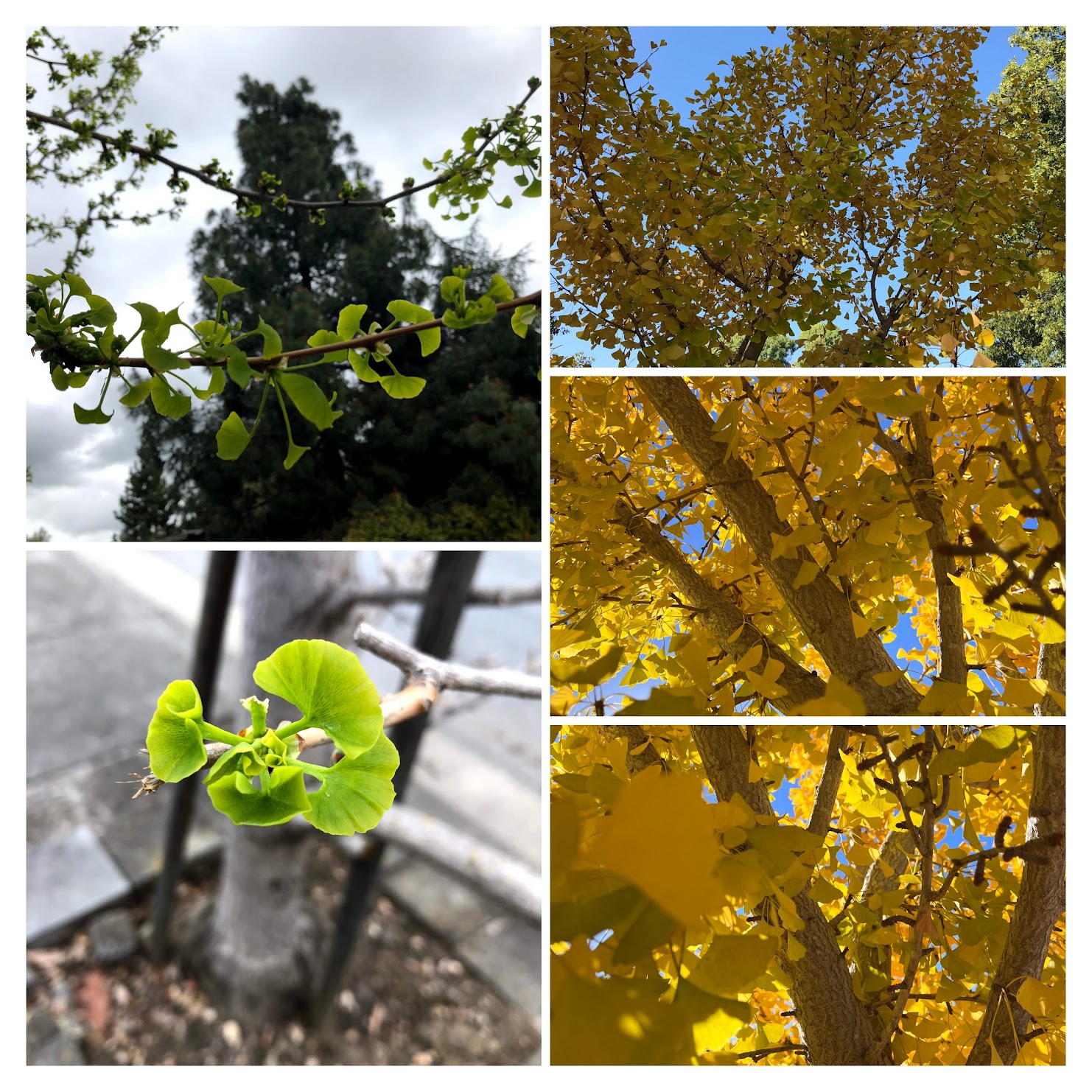
Thrilled that they didnโ€™t all know, I launched on the ginkgo train – telling them about how they were around from the days of the dinosaur, and how they all communicated to each other, and decided when to shed their leaves. The son said that one of the trees will slow down if it is going too fast in the color changing race, waiting for its fellow ginkgos to catch up.

โ€œLike friends are supposed to be!โ€ piped up another.ย 

I beamed appreciatively. โ€œYes – exactly like friends – all helping each other get there. Together.โ€

Read also:ย The night of the Gingko : By Oliver Sacks in the New Yorker magazine.

The dayโ€™s epiphany done, the playgrounds beckoned, and I let them all run off their sugar highs before expecting them to quieten down for the night. I wonder how the birds manage to quiet their brood when theyโ€™ve had a little too much nectar. That epiphany can’t wait for another day.

“A real artist is the one who has learned to recognize and to renderย the ‘radiance’ of all things as an epiphany or showing forth of the truth.” ~ Joseph Campbell

The Problem of Perspective

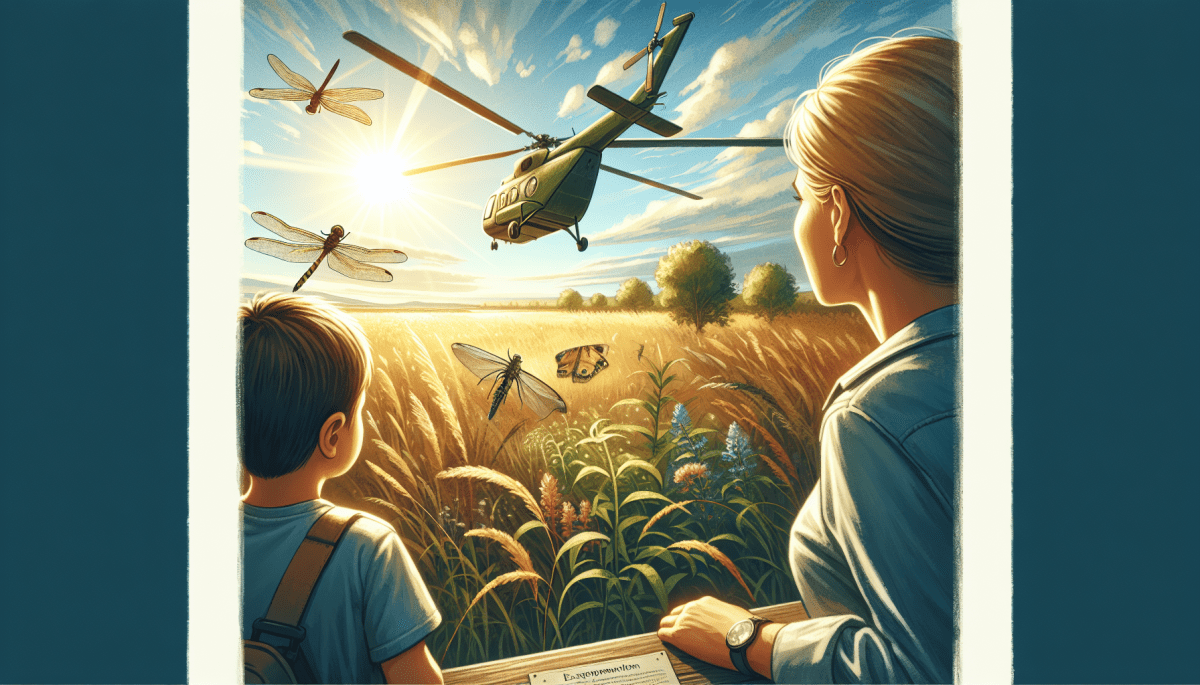
It was one of those clear, cloudless days. The temperature was just right, when we stepped out of the house. A lazy dragonfly and a helicopter flying overhead got young minds and old talking about the similarities between them, and of course biomimicry-based inspiration between them.

Even as ubiquitous as air travel has become, that sense of aerial adventure still kindles something special and adventurous in us. I remember telling my friends the other while reading When Women Were Dragons book by Kelly Barnhill that I hoped to become a dragon – if not for anything, but for the soaring power of flight, and the perspective such an act affords us.

Seeing the world around us in different perspectives is an endless fascination is it not? It is why the artist painstakingly sketches that wart on the nose, or that dimpled chin, or that shadow of the leaf with so much love and attention. Perspective.

Perspectives in Art

So what is it about our day-to-day lives that we can apply the same principle to? We have been trained or naturally possess the ability to view a problem from another person’s perspective, in order to see their perspective. It all helps of course -it is what makes us human.

That morning as we watched the dragonfly flit and the helicopter fly lazily overhead – probably on a routine patrol, I felt the urge to see things from both their perspectives. What would they see? A young boy and a lady out on a walk, certainly, but what else? The helicopter certainly would not have seen the dragonfly, but could the dragonfly have seen or sensed the helicopter? I think so.

Watching the skies is endless fascinating especially if you live near fairly busy airport zones. A few hours later, I sat on the porch with a toddler, and peered up again – the child had spotted an aircraft and wanted to know whether it was a plane. “It is a 747!” piped a voice – older and wiser than the toddler, and he looked with awe at the plane overhead.

With my neck craned at the sky above, I felt a rush of gratitude for being able to relish these everyday joys with young minds. How often we don’t notice the planes, helicopters, and dragonflies overhead? How often we miss the perspective from above when solving the problems of our lives? If only, we could take our minds for a whirl of perspective, how marvelous that would be?

What is April to you?

April is many things to the poetic brain, to the romantic at heart. It even somehow manages to give a tinge of optimism to the incorrigible pessimists amongst us.

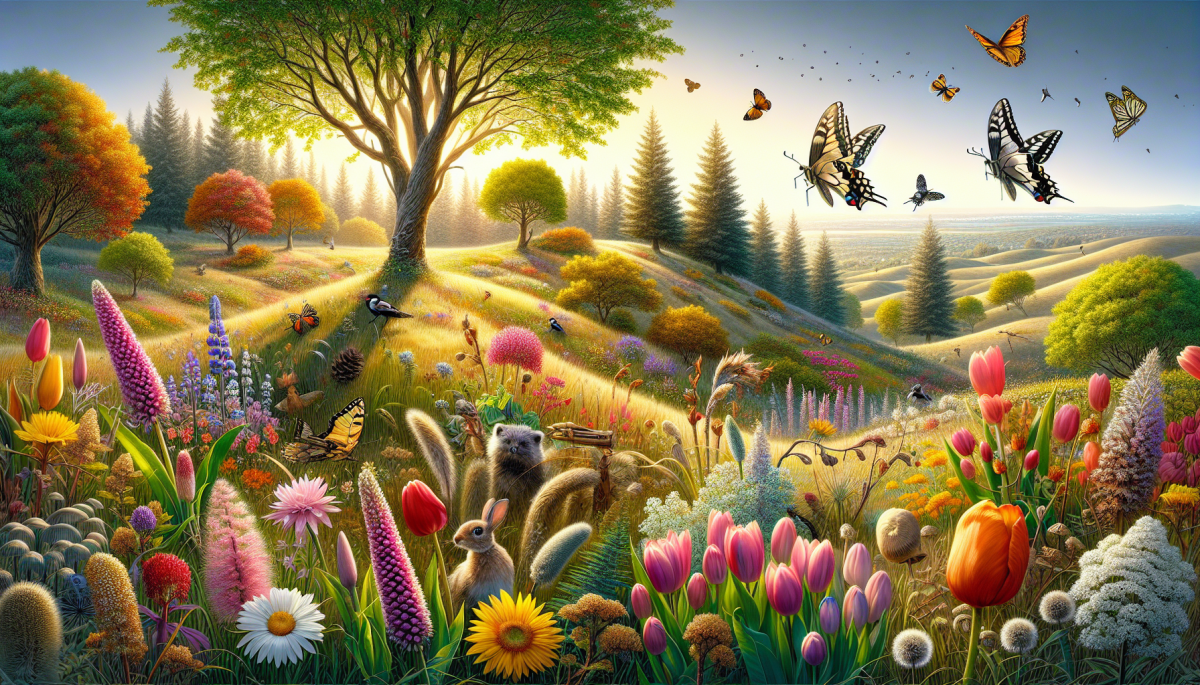
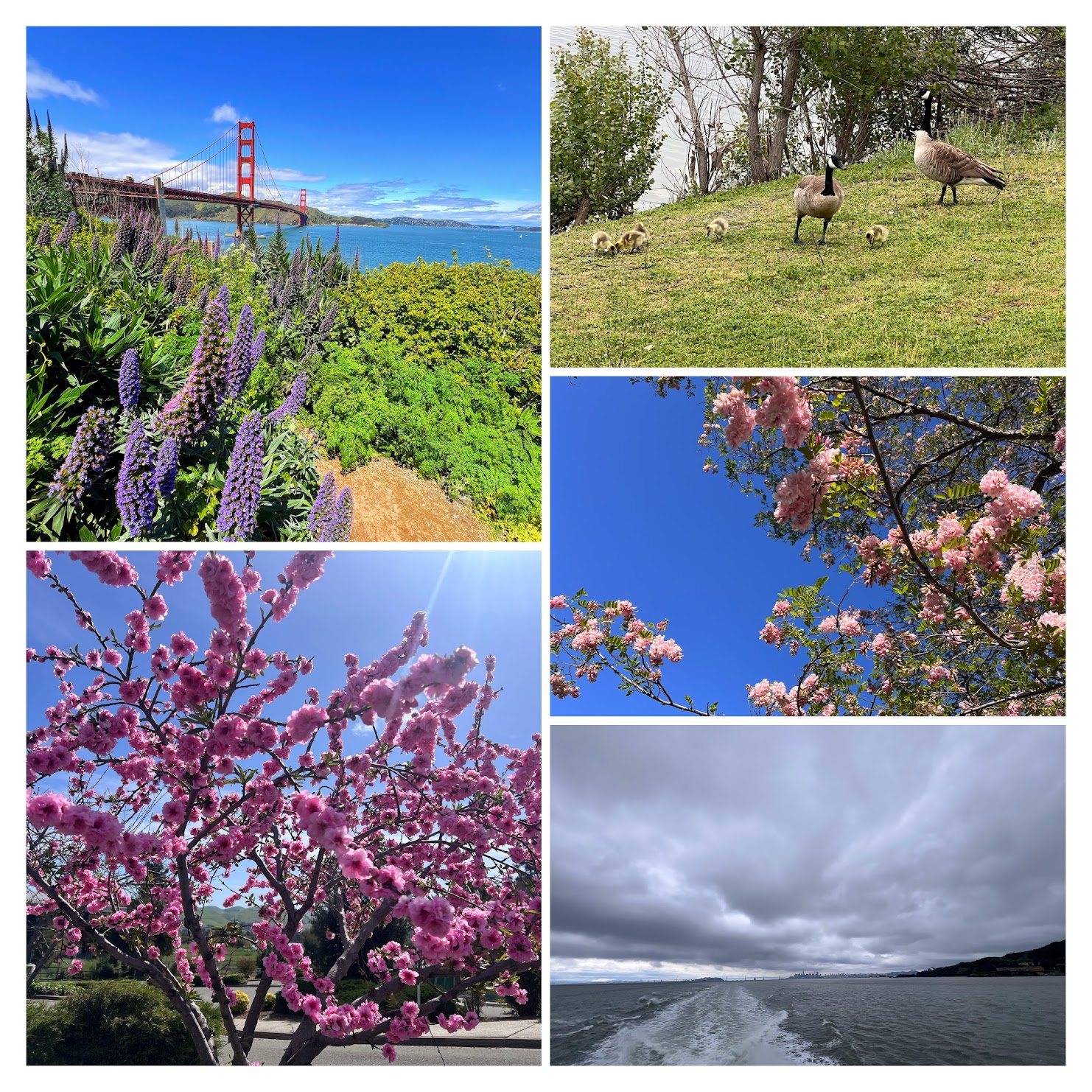
It is the month of gorgeous signs of spring in the bay area. Hillsides filled with green grasses and wildflowers in hues of yellows, pinks, purples & oranges everywhere. It is difficult to not be buoyed up in spirits when spring gets going like this around us. The butterflies flit, bees buzz, woodpeckers peck (drill?), tulips push up through the soil, flowers burst forth from buds, barren trees cloak themselves in new leaves.ย 

april_collage

Life, it seems, wants to be up and about.

April is not just when Spring is in its glory:

๐Ÿ“œ It is the month of poetry – I picked up a bunch of poetry books from the library the other day, and have yet to get to them. It is the thought that counts.

๐ŸŒŽIt is the month for our dear planet Earth – well Earth Day, but I really think we should dedicate a month in which we consume more conscientiously, make choices that help our only home and all that.

๐Ÿ“šIt is the month that has a day dedicated to Books – World Book Day. I found my pace of reading especially slow this month given everything, but I still clutched them inhaling the scent of my dearly beloveds that night – too tired to read, but too stubborn to put it away and fall asleep. Someone mustโ€™ve rescued them, for I saw them in a tottering pile on my bedside table in the morning, and smiled.

๐ŸงฌApril 25 is also World DNA day.

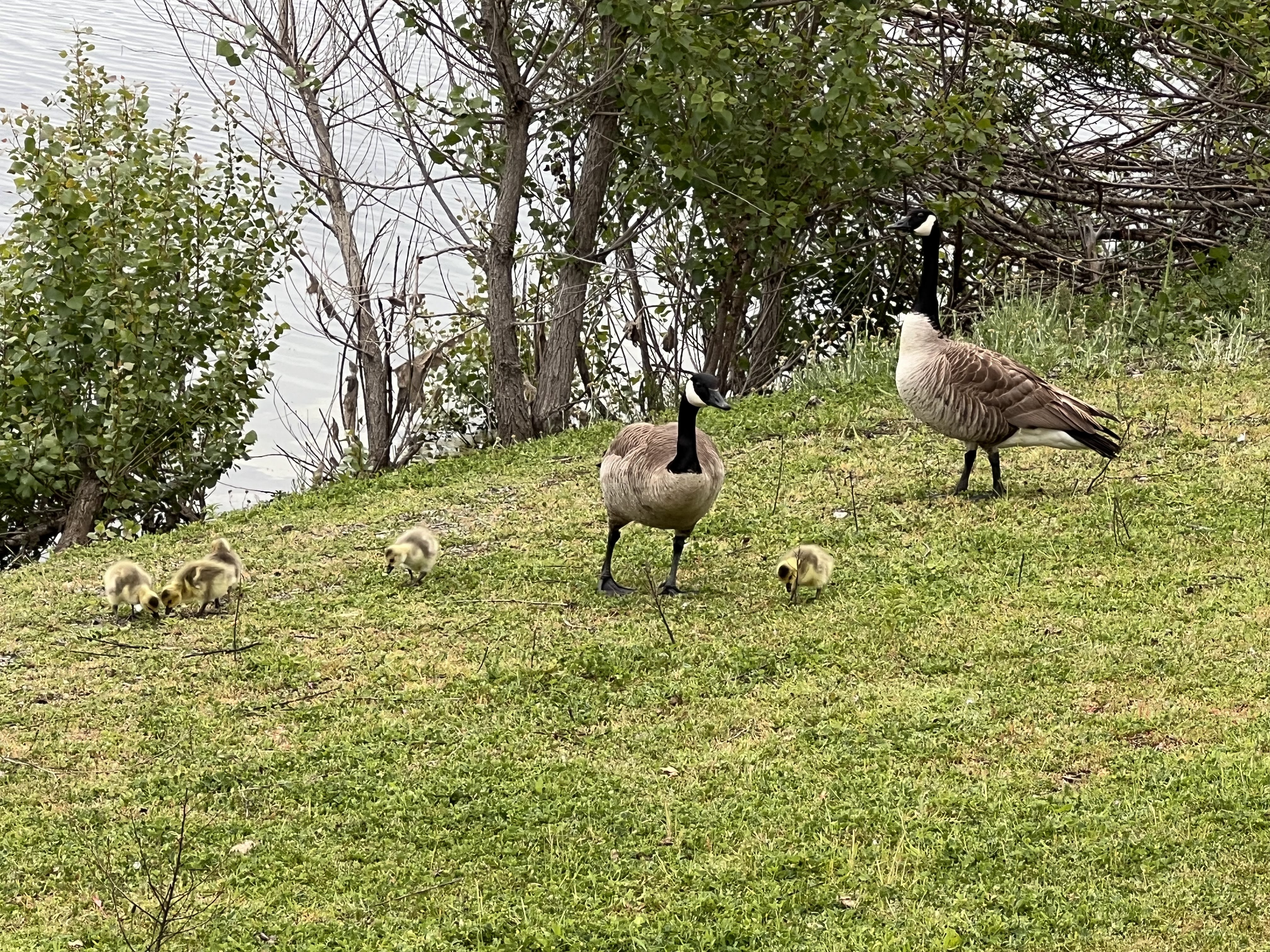
This month, I found myself wandering the planet, wondering where the time went, and watching in awe as the goslings hatched, and the bird parents showed us good parenting. I found myself being inspired by humans achieving remarkable things, finding time to do the things they love, pondering on what is inherent via DNA and what can be changed via nurture, being taken aback by what we are capable of doing to one and another, and so much more.ย 

I did not even feel my usual sense of helplessness as my to-do list remained stubbornly long. It is a list and has a right to exist, I told myself. Spring cleaning can wait, to-do lists can wait (maybe it is why we have World Workers Day on May 1st – to remind us to get back to that list)ย 

What is April to you?

๐Ÿ˜‡ Even AI Knows ๐Ÿ˜ˆ

A Guild of Authors

A friend and I were returning from a meeting in which authors from different genres were presenting their works. We fell to discussing the books that appealed to us, and what worked in the format, and what didnโ€™t. I, for one, felt that giving folks a platform to present their books, while noteworthy, could just as well have been done via a YouTube short, but what would have been harder to achieve would have been moderating a discussion about the overlapping topics between the authors. That was something I would have loved to see.

A Company of Authors – Stanford Guild

The sections were grouped together by genre, and topic, so it would have been a good panel to have discussions around.ย 

Even AI Knows!

As conversations usually go, we meandered, and I said something to the effect of the housework and the truth of an Indian woman having its effect on writerly ambitions etc, to which he mentioned a joke heโ€™d chanced upon, and I guffawed at the truth of it.

โ€œWith AI, I thought, it would take over monotonous tasks such as dishwashing and house cleaning, so I could take up Poetry & Art. Instead AI has taken up what little I had of Poetry and Art and left me to do the dishwashing and cleaning!โ€

Even AI knows to steer clear of household tasks, while humans (women still bear the brunt of the housework) are in charge of these mundane tasks. Who says the universe doesnโ€™t have a sense of humor?

“Really! Of all the things I wanted help with – it was Art that was the least. Give us one tough thing to spend our lives mastering and perfecting!” I said. “Help me with robots – one for the chores, one for help to care for the aged, another with companionship for the lonely etc. Why art, literature and poetry?”

“I do think there are startups for every one of these in the off-ing somewhere.” said he – sanguine as ever and optimistic in the ways of the world’s future.

He was right of course.

Intuition & Instinct?

It did help us loop back to a book that was discussed in which the author spoke about intuition/instinct being a precursor to our conscious thinking, and whether AI would be able to simulate that level of prescience. Which made me wonder, whether that was what made us human, but plenty of us have learnt to ignore these things over time (after all, we donโ€™t need to know when a tiger is lying in the bushes). But would it help us identify dangers in our life?

https://open.substack.com/pub/managingeditor/p/surfin-mia?r=2e6vr0&utm_campaign=post&utm_medium=email

More importantly, if that too can be modeled, what does that leave us with to claim our humanity? Messy emotions and imperfect decisions maybe?

Which brings me to the most important question: What would you like AI to help with, and what would you prefer AI kept is nose out of?

Analyzing Love

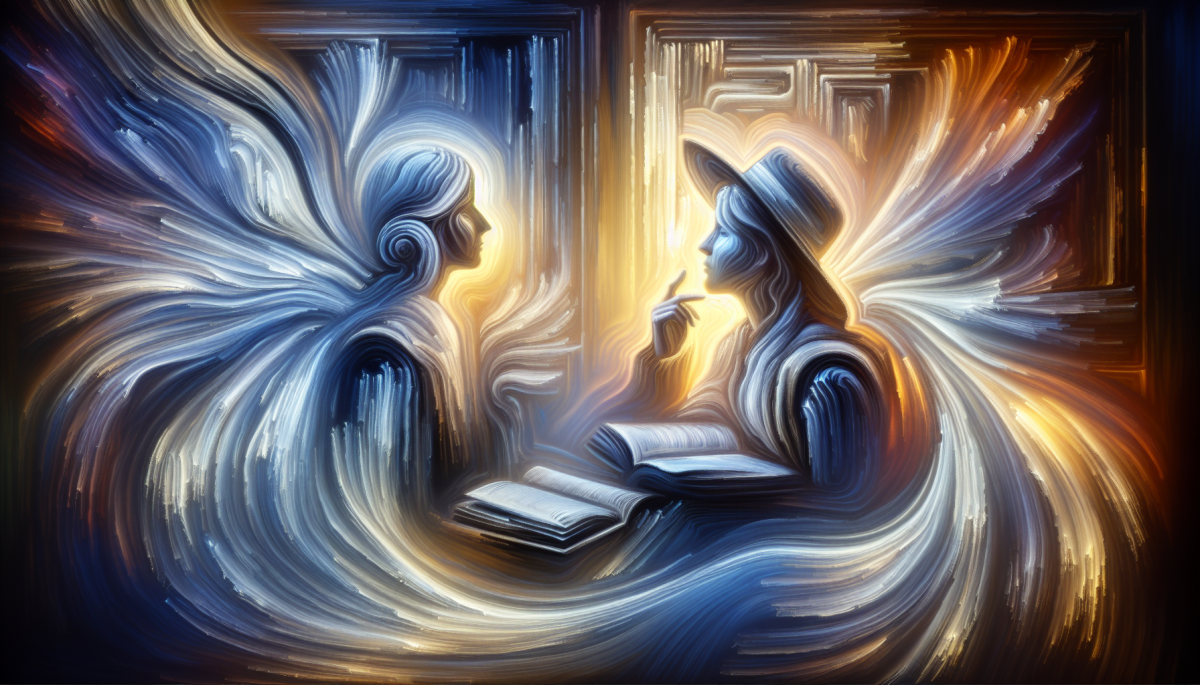
The niece & I were discussing the what-ifs, what-abouts, and why-nots of life. A vibrant character, she is also blossoming into a lovely young lady, and I told her so. She laughed.

โ€œSo do you believe in soul-mates?โ€ she asked reminding me intensely of the sort of things the daughter would throw my way in terms of conversation.

โ€œYes!โ€ I said without hesitation. I hope all of us have had that tug of friendship or love where we do not know why exactly we love a person, but we do. People name it different things: wavelength match, soul mates etc.

She tried narrowing it down though, to whether there is a soul-mate, whether destiny plays a role in determining our love lives and so on.

After a chatty session in which I got to enjoy the perspectives of the younger generation , I finally threw up my hands and said, โ€œI donโ€™t think we should analyze love too much. Just be glad that we can give and receive love.โ€ย 

She was kind enough to not roll her eyes at that, but I knew what it mustโ€™ve cost her to do so. โ€œThat is love!โ€, I said, and this time she did roll her eyes.ย 

All the talk about love and destinies and soul-mates and what not got me thinking on what a messy business life and love is.ย 

img_0494

Love in Literature

In the book, Forest of Enchantments, Chitra Banerjee Divakaruni talks about all the different things love makes us do. This is a retelling of the epic saga, Ramayana, from Lord Rama’s wife and consort, Sita’s point of view.ย ย 

โ€œMy first lesson on nature of love was that in a moment it could fulfill the cravings of a lifetime, like a light that someone might shine into a cavern that has been dark for a million years.โ€
โ€•ย Chitra Banerjee Divakaruni,ย The Forest of Enchantments

It is true:

Love anchors us, and unhinges us at the same time

It refines, and sometimes defines us

Love is predictableย 

It also makes us do unimaginable things

Love keeps us rational

It also makes us behave irrationally

As quixotic and frustrating as it all is

Love is our only hope

I thought of all the heartbreak and hurt feelings that Love leaves in its wake,ย  of all the great stories of love that play out in our lives. Every single person around us has been affected by love or the lack thereof. We only need ask, and they only need tell.

It is my fervent hope that we all feel the positive and nourishing powers of love – whether from a friend, parent, uncle, aunt, teacher, guide, maid –ย  at some point or the other. Every loving interaction has contributed to who we are, and why we are the way we are.ย 

As Jane Austen says,

โ€œThere are as many forms of love as there are moments in time.โ€

-Jane Austen, Mansfield Park

Even the love we feel for each person is defined by moments in time.ย  So how can we rationalize, predict, counteract, and otherwise analyze this marvelous force? There is only one thing for it – be grateful.

It is why most of our literature, songs, ballads, and poems all need either love or war to make it enduring, as the daughter so eloquently put it, a few weeks ago.

War & Peace, Love & Power