The Curious Curvy Trees

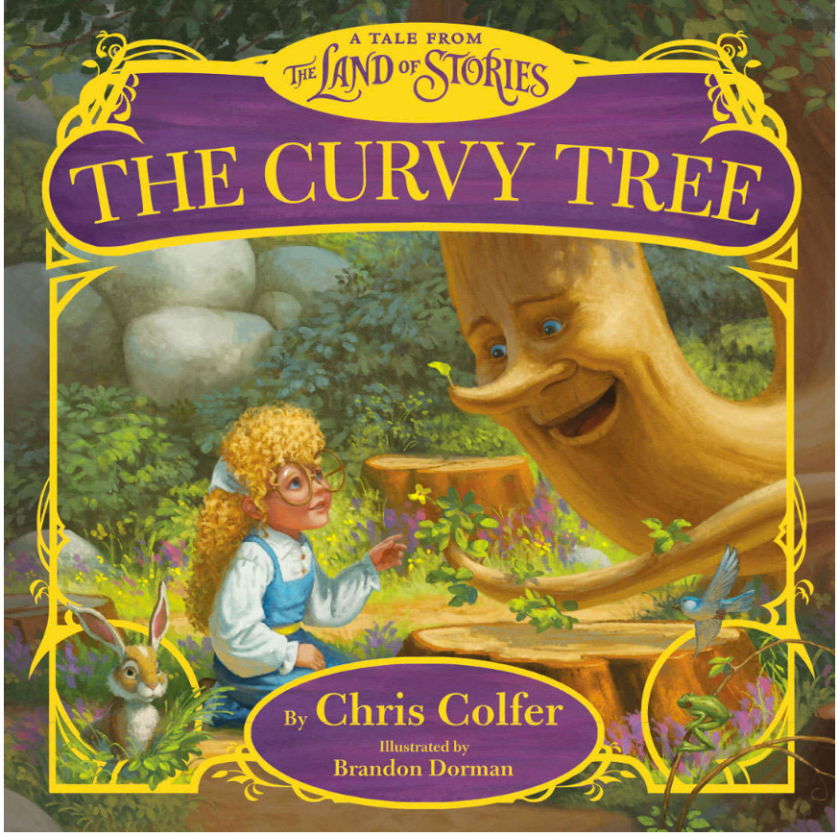
Regular readers know that I enjoy reading children’s books. Recently, I read one called, A Curvy Tree, that examines the problems of being different and lonely. In the book, a curvy tree soothes the feeling of a lonely child being teased for being different by taking its own example, and how being different saved its life, for loggers could not find a use for twisted wood, and therefore left it alone. When the girl asked whether the tree felt lonely, the curvy tree lifted her up high on its branches to show her other curvy trees in the distance all left alone by loggers, and on top of these trees were other children probably equally lonely who only need to find each other for company.

Screen Shot 2016-12-06 at 1.49.20 PM.png

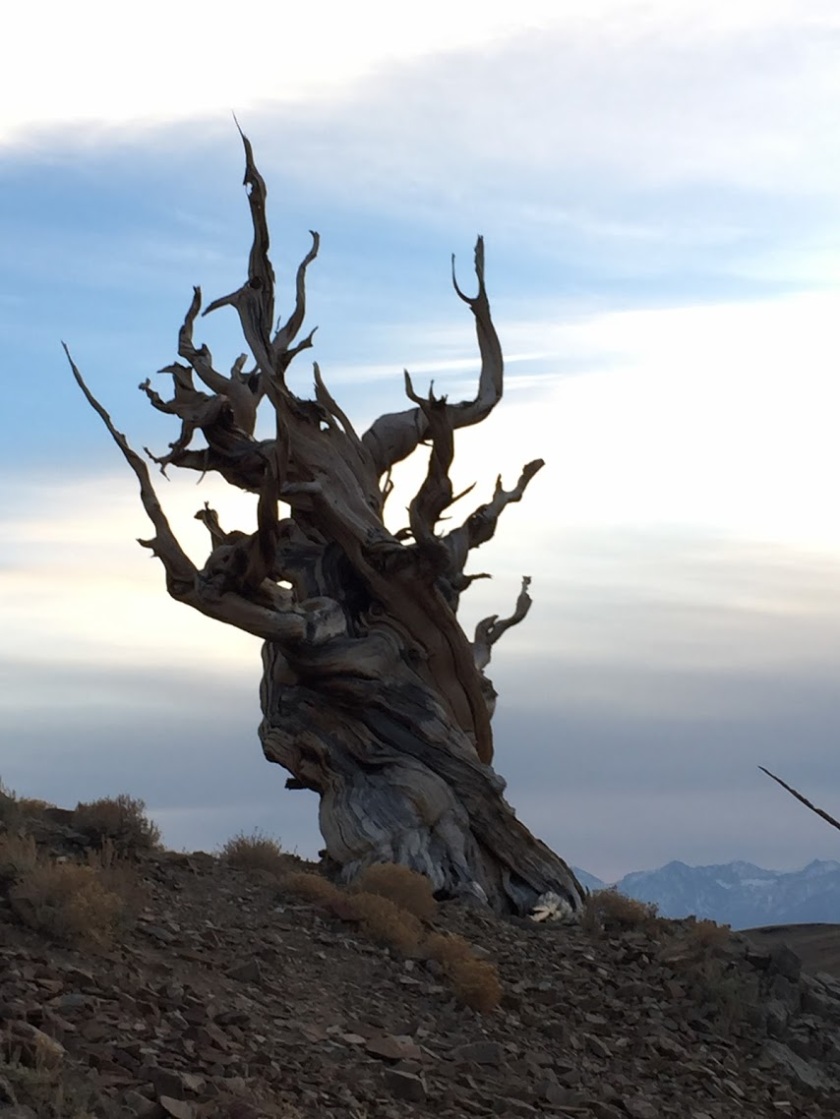
Looking at the bristlecone forest, it seems that the Bristlecone trees, followed a similar path for survival. Hardy beings that only thrive in harsh climatic conditions, there is yet another lesson from nature in these forests: It is okay to be different.

https://en.wikipedia.org/wiki/Bristlecone_pine

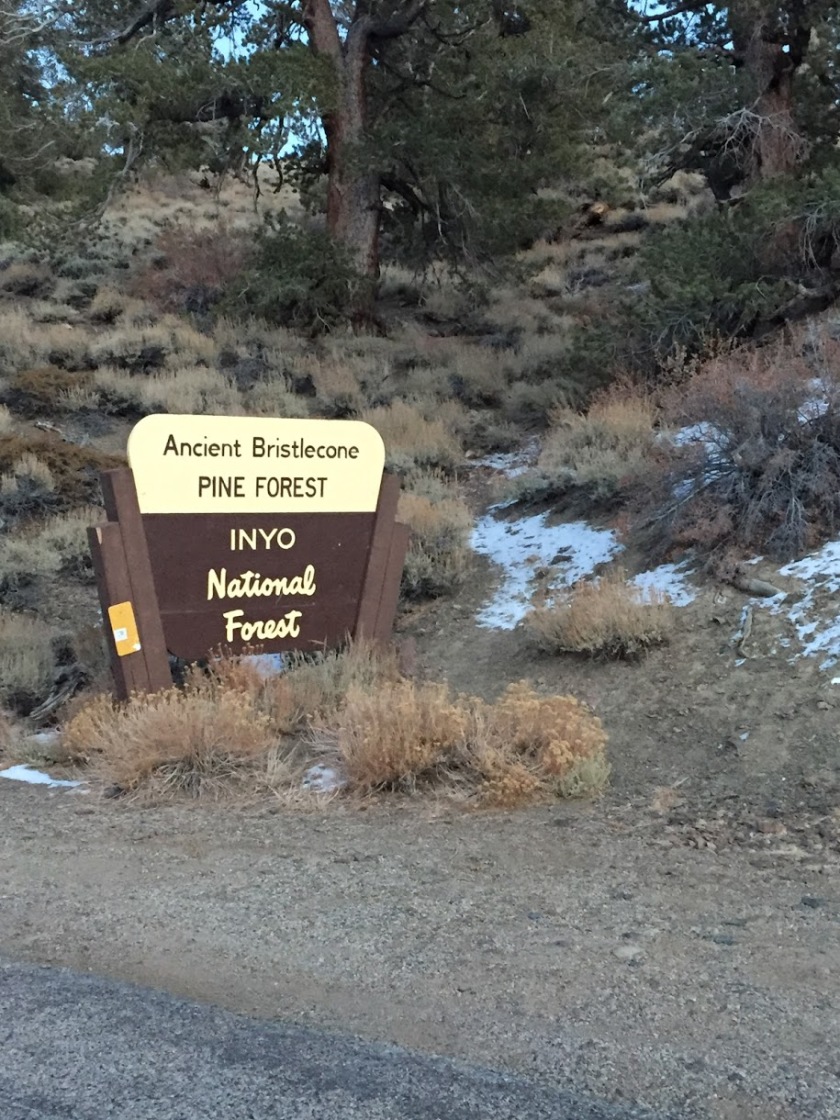
As the car nosed its way up to the Bristlecone National Forest, I was peeking into a copy of ‘Into Thin Air’. It was snug inside the car, though the temperatures outside were steadily climbing down as the car climbed up. Reading about the Himalayan expedition to climb the Mount Everest that went awry was humbling and an apt read at high altitude.

inyo_bristlecone.JPG

No amount of pictures or descriptive writing can do justice to the feeling of being among the oldest known living beings in the World.  Looking at the shapes of each of these trees, it was easy to let our imaginations run in wild directions. Each tree was shaped like a fantastic creature and one could well imagine them lending support to each other and sustaining their lives through the fury of nature and the upheavals of time. Each one probably gets themselves up every now and then and transforms their shapes, and each has a spirit of their own that lends a character to their surroundings. Maybe these are the hieroglyphics of the universe that hold answers to the questions deeper than mankind can ever think off, and we don’t yet know. Even in our wildest imaginations, we are constrained by our limited intelligence and the expanses of our problems, including those we manage to create for ourselves.

curvy_bristlecone.JPG

The walk amidst the ancient bristlecone forest was our first high altitude hike as a family – The toddler son was wearing his new snow boots, and was behaving like John Muir in them. He thumped up and down exploring the hauntingly beautiful bristlecone trees, looking curious and wondering how they could be older than his grandfather. “Not just your grandfather little Dobucles, “, said his older sister in a tone of voice she uses to enlighten her lil brother of the ways of the world, “but your grandfather’s grandfather’s grandfather’s grandfather’s grandfather’s grandfather’s….”

I let him wander on looking amused, till some gusts of wind buffeted us.  On a high mountainside, a gush of wind is enough to topple toddlers as I well know from experience. I was not even a toddler when I was blown off by the wind, I was in a respectable third grade when that happened. I injected a note of caution into the proceedings by reigning the toddler in only to have the daughter scoff that adults are paranoid. This is where ‘Into Thin Air’ helped me. I told her about how many people have gone within 300 m of the great Himalayan peak only to return because the elements would not allow them to proceed. I tried my best to describe how nature can be awe-inspiring but how in one moment we can be reduced from arrogant, competent, self sufficient humans to ones thrown about at the behest of nature. I don’t think I succeeded very much, and so nature decided on showing us herself the very next day.

Somehow, with the sun throwing brilliant purple, orange and pink patterns into the sky, the wind gently rustling the hair peeking out from under our caps, and the bristlecone trees lending an almost immutable background, the scenario of a snow storm seemed far-fetched, almost ludicrous. If this is high altitude, how bad can Everest be? seemed to be the general consensus.  That night, we bravely attempted hikes at 21,000 feet, safe in the comforts of modern housing while eating hot biriyani.

The Salons of Bodie

During our trip to the Inyo Canyon area, we got truly lucky.  Not just because of the weather (which I need to write about in a later post), but because we got to see many places that are usually closed this time of the year due to heavy snow conditions. Bodie State Park is one such. I have only visited the Inyo canyons twice so far and both times, they woke the spiritual in me. Maybe it was the sheer magnificence of nature in the area, I don’t know. Spiritual Mysticism or Spiritual Naturalism

Bodie State Park is a ghost town. A bustling, mining town a century ago, there are no more than a few hundred shacks left in a dilapidated condition in the town now. If ever one needs a humbling lesson in the ephemeral nature of our existence, the bristlecone pine forest and Bodie ghost town have it covered between themselves.

As I peered into the dust covered windows of the various buildings, a dozen observations flitted through my mind.

The apothecary seems to have catered to similar problems judging by the bottles still on display there. There was a house with dusty furnishings – a rattled bath-tub, an old kitchen. A picture on the wall said, ‘Nothing endures but change’. The school house with a steeple on its roof looked remarkably like schools do today: with wooden chairs and desks all facing the teacher up in the front. Some things don’t change even in a century, I mused.

As we meandered up and down the ghost town, we stopped to listen to the park ranger. He was giving details of life in the town at the height of its glory, and we stood there enthralled, each of us contorting a story and an image of life in those times in our head.

Bodie was a town of maybe 8,000 or 10,000 people, and they seemed to have had quite a good life. Traveling caravans had theatrical performances here, fresh octopus and seafood supplies arrived regularly from San Francisco on iced wagons. People from nearby hills trudged up to this town for a day out or for market supplies. It certainly sounded like a bustling, happening place and looking at the town in the present age was a disconcerting sensation. Hundred or two hundred years from now, would people be taking a cruise out to where we live, and saying that this used to be a bustling place too? Given the current rate of global warming, it is a very plausible scenario.

http://ocean.nationalgeographic.com/ocean/critical-issues-sea-level-rise/

http://environment.nationalgeographic.com/environment/global-warming/gw-impacts-interactive/

Standing there in the town with the vastness of the Sierra Nevadas engulfing us on all sides, it seemed surreal to imagine that this very place was witness to human drama, tragedy, hope, love affairs and scandals. There was family life, culture, entertainment, education, sickness and health here. One could imagine the barber’s son eloping with the mine owners daughter or some such thing. As if the ranger had read my thoughts he said pointing down the hill to the right – this part of town had 50-60 salons too.

My mind buzzed and I asked him – “Really for a town of 10,000 people, they needed 50-60 salons? They must have been a pretty well groomed lot. And everyone had to trudge down to one part of town too.“

The ranger gave me a quizzical look, and thought of saying something but decided to let it go. “Beyond that, were the jails – you know so that area was not very respectable back in the day.”

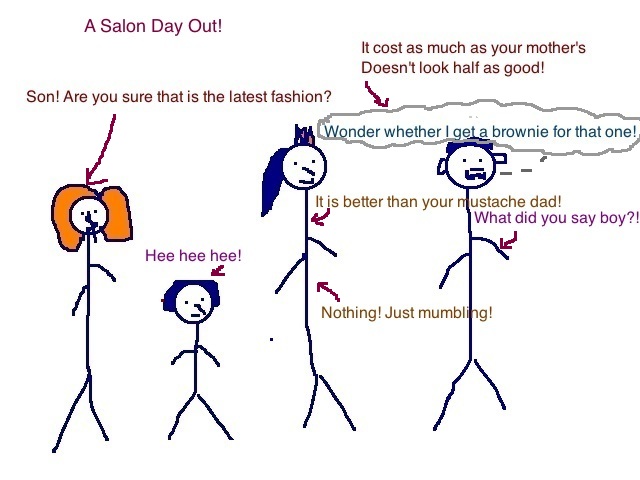
My! I thought, not only did people have to cut across town to get a haircut, but also scout near the jails? Assuming 50% of the population were males, that is approximately 1 salon for every 100 males, and considering they probably needed a haircut once a month …. I could imagine the mothers giving out the money to the little fellows with dire warnings as to what happens if they strayed near the jails, and how they were to get a hair cut and head straight back home.

I don’t know whether pedicures and manicures were popular during the day for the women or whether their hair styles were demanding ones or simple ones.

inyo_salon

What about pet grooming salons? Did folks a century ago groom their pets as dearly as they do today?

It struck me how keenly these authors of historical fiction have to think. For instance, were there razors and portable blades 100 years ago, or did people have to go to the salon for everything?

I mentioned these profound revelations to the husband and he gave me a look similar to the one the ranger had given and said with a smile playing at the tip of lips, “You realize that by salon, he did not mean hair cutting salons like today, right?”

“What do you mean? Oh! “ I said my eyes widening and the husband laughed.

“Oh! You are naive!”, he said laughing, “Why else would they be clustered together like that?”

Looking around at the ghost town around me, suddenly made me realize that half the world’s cares, worries and problems were just as man-made a century ago as they are today. Some things at least don’t change.

Dodo, Dragon, Dinosaur Dis-apparitions

We just got back from the Inyo Forests nestled in the Sierra Nevada mountains. This time, the mountains were explored by the children with a friend who was just the right companion for both of them. He is aged smack in between the daughter’s age and the toddler’s age, and is an amiable, interesting fellow, thereby providing ample company to both of them. The toddler son thought him a hero and the daughter found in him another quirky little brother. He was obviously pleased with this state of things, and settled down to the hero-slash-honorary-little-brother role with aplomb.

It was quiet, and the darkness in the mountains was unreal. We could see Venus glowing brightly like a torch up in the sky. Inside the car,  it was toasty and warm, and the game of Twenty Questions was thriving: it is a sophisticated game in which you think of an animal and everyone can ask questions to guess the animal you thought of.  Animals were chosen and guessed at with hilarity.

“Amma! This little bobbicles knows nothing about his animal and expects us to guess it. How can you not know whether it is a carnivore or not?” The toddler said something like, maybe it likes to eat meat, but maybe it doesn’t, I don’t know. He then laughed raucously at his sister’s disbelief. He seemed to think that these trivial things should not stop a zoo-linguist-to-be from guessing the animal. (That reminds me that I have to get down to writing a blog on how the toddler plays games.)

Inyo_20Q.jpg

His friend-slash-hero agreed and took the car for a spin with mythical creatures from shows we had never seen. As the going got tough, the rules got tougher – “Hey! Mythical creatures only restricted to Greek mythology or Harry Potter or till level 10 of Pokemon Go!”. The hero-slash-lil-bro was something of a Pokemon expert and went on about zilletoes and monekchoes or things that sounded like them, with glee.

“How about Hanuman?” asked the toddler in a matter-of-fact tone.

Before Spiderman and Batman were added to the mix, the husband and I swooped in with some impressive peacekeeping efforts that folks in the United Nations could learn from.

After several minutes of quiet, the conversation started up again with the daughter asking a question: If you could bring one animal back from extinction, which one would it be and why?

As the conversation gathered fervor, the surrounding Inyo Forests resounded with the spirits of animals long gone. Sabre tooth tigers romped along side mammoths, T-rexes chased Brontosauruses. A short pause later, dragons and phoenixes joined them too. If the conversation were being animated real-time, I’d have liked to see the reactions of the various spirits as they made their mystical apparitions from the dead.

“You do know that phoenixes and dragons are mythical creatures right? They aren’t exactly extinct because we don’t know whether they really existed, “, said the daughter laughing to split.

“Okay – then Pidgeot”

“No! pidgies and pidgeottos! Before you ask, chargats don’t count either. Pokemon Go is not the real world you know?”

I could hear the gears spinning in the boys’ brains. This was one tough game, they thought.

After an intense argument that examined the merit of mythical creatures in the extinct category, and the virtual creatures in the ethereal category, the conversation slowed down again and landed softly near the dawdling dodo birds. We waddled by them, and the daughter explained that she felt the dodo birds deserved to be back because those poor creatures were extinct purely because of man’s greed.  The children smiled as though her goodwill towards the dodo could truly summon it back from the extinct category.

inyo_canyon

“Anyway, which animal would you bring back?”, asked the daughter.

“I want to bring back the Titanis bird.”  said the hero-slash-hon-b.

We exchanged glances. It was difficult to figure out whether there really was a bird  called Titanis which was extinct, or one that appeared in the fellow’s video games.

“Really, there is a bird called Titanis. They are so beautiful. I want to bring them back. “ He sounded so sincere that the daughter’s heart melted. It often happens this way. The daughter is a softie underneath the bossy exterior and coo-ed.

“Oh! That is so sweet. Why do you want them back?”

“So, I can take a gun and shoot them! “, said the h-s-h-b.

I wonder whether you have played ping-pong. Just when you think the ball went, back it comes to you again. Right at your face. It was a bit like that. Just when you got the sweet daughter version, an outraged cry left her lips. The sweet dodo apparitions were gone. The dragons poof-ed themselves out, and titanis was gone too.

“Oh! How could you? “ she cried, the animal activist in her flaring up.

“Why? They have beautiful feathers. “

“Exactly! So admire the birds with their feathers!”

“But if we shoot them, we can collect their feathers.”

“Why bring them back if you want to shoot them?”

“How else will we get those beautiful feathers?”

The three of them played in our car till the toddler son fell asleep in the gathering darkness as we drove up to our destination.

I am not sure whether the dodo or the titanis will want to come back if it means holding a conversation with the specimens in our car.  Maybe we should give them a choice, what do you think?

The Yin & Yang of Diwali & Halloween

This post was also published in India Currents magazine dated 3rd Nov 2016

Wrinkled brows, scorching cuts and decisive strokes greeted me as I went upstairs a few days before Diwali. We have to get started on our Halloween decorations, said the daughter cutting out a spider. The toddler son was lying on his stomach on the floor, helping his sister by coloring the ghost she had cut out from white paper, white. A cozy, merry scene with the sunlight streaming in from the windows.

When bees create their colonies, I am sure they don’t care about a little mess. Neither did my bee-lings. I navigated the crayons strewn on the floor and walked past the strands of paper littering my path to peek at the objects of art.

A morose sort of skeleton was being drawn and I shuddered at the image. I hated to take a pail of cold water and swamp their enthusiasm with it, but then I did. Sorry guys. That weekend is Diwali and I won’t have skeletons and cobwebs hanging off the front door on Diwali. (This year, Diwali fell on a week-end and Halloween the day after, on a Monday.)

A mutinous roar went up. Amma – Diwali is the opposite of Halloween. It is the festival of lights. You’ll put up those little diyas everywhere and light everything up and then you’ll make everyone dress up beautifully – it is the complete opposite of Halloween.

I disagreed. They may be celebrated differently, but they are both meant to fight evil. Ward off evil – whatever. The concept is to banish your demons. Even the inner demons. So, Diwali and Halloween are like that Yin-Yang thing. Black and white together. Both are there in us and in the world around us.

yin-yang

I felt like a teapot spouting philosophy from my long snout to a couple of trouts in the stream. I sometimes think children must feel we played tag with Confucius and hide-and-seek with Buddha. I tried desperately to gain ground again.

You can always find light in the darkest of places if only you remember to turn on the lights. Remember who said that?

Albus Dumbledore in Harry Potter And The Prisoner of Azkaban

Albus Dumbledore! sighed the daughter. Dementors – yes! Maybe we will do dementors also this time.

Also Voldemort – we can draw Voldemort and hang him outside, piped the toddler son. He has no fear of He-who-must-not-be-named, and his sister beamed with pride at her little Gryffindor brother.

Guys! Guys! I won’t have Voldemort hanging on my front porch on Diwali either. Does Halloween have to be gory? Think of some themes and see if you can come up with decor that does not drip blood. Something positive, a call to action and also save our souls. How about that? I said.

When the daughter said, Fine!, I left them to their own devices and pottered around the house.

I must say that I was mighty impressed with the resulting effort.

keena_halloween_nature

We picked your favorite theme, Nature, amma. So, you can put up some of this stuff for Diwali too. Then after Diwali, the next day, we can quickly put up bats and pumpkins all around and we are set, she said.

I agreed.

img_3701

On the Diwali rangoli, we placed a large pumpkin surrounded by little lamps. The rain helpfully washed away the rangoli that very night leaving a damp, morose spot for the Pumpkin the next day. All very satisfying.

Happy Diwali and Happy Halloween. May we learn to take care of our World, the living beings we share it with, and balance our yin and yang for a beautiful whole.

img_3874

More (मोर) on Sherbat Gula

This post was also published on May 30th 2017 in India Currents Magazine.

Let’s take it easy and go eat at some place nice for a change, I said one lazy Saturday morning. You know, just spend a relaxed, agenda-less morning. Some place I can wear this to. I was fondly looking at my new dupatta, carefully embroidered with dancing peacocks.

The kerfuffle just to spending a relaxed morning doing nothing I tell you! There was hectic activity everywhere: feverishly looking for things, toddler shoes worn on wrong feet, missing cell phones, cell phones without charge all needing urgent handling in a 10 minute interval.

I ignored the daughter as she took charge while throwing me a disdainful look . The little fellow was bossed around, the big fellow was bossed around, the bosser and bossees felt the charges of love and tension squirt back and forth.

Appa! What are you doing? That’s it!

Time for me to take charge around here, she said. Amma, stop dancing! Why are you wearing this fancy dupatta-thing-y now anyway?

Because I can! Dance! Dance! More! I said in a smart repartee and chuckled. Completely lost on them of course. (For the Hindi challenged ones: ‘More’ (मोर )means Peacock in Hindi)

peacock_dupatta

The husband meekly looked up from his game of chess and sighed yet again.  I heard him murmur something about Men’s Freedom as we headed out.

Pretty soon, we found ourselves in an Afghani restaurant sitting quietly. I turned the menu card over and the back of the menu had a picture of the girl taken by National Geographic magazine and became famously one of the pictures that defined the turmoil of war world over. It was the cover picture of National Geographic magazine in 1985

http://www.nationalgeographic.com/magazine/2002/04/afghan-girl-revealed/

the-afghan-girl-730x410

Sharbat Gula (meaning sweetwater flower girl in Pashtun)

That was enough. The husband and I got a professorial gleam in our eyes and we tripped over ourselves trying to open the daughter’s eyes to the plight of women the world over.

Not everywhere can women boss men around like it happens in our home, said the husband. The daughter and I chuckled.

We had not even started on the political turmoil with the Russian occupation of Afghanistan when the pesky waiter came and took the menu cards away. I tchaa-ed with feeling at this tendency of waiters to hoard the menus. The restaurant is empty – what do they want to do with the menus? I am sure they don’t have to read it!

’You finished ordering and what are you doing reading the mutton and chicken section anyway? You are a vegetarian!’, the daughter said in what she thought was a scorching debate point. She thought I would fumble and drop my eyes in repentance, like a puppy told to snuff it while trying to oil the moth eaten rag doll through the door. But she under-estimated my power of repartee: She was talking to the author of the (why-are-you-dancing-now? Because I can! ) response (scroll up).

I caught her eye and took her on a wild ride through the streets of Kabul selling spices and the perils of grocery shopping in times of turmoil, past the beautiful poppy fields and the orchards of apricot, gasping through the crevices of  the Tora Bora mountains and finished with a comparison of Indian, Pakistani and Afghani cuisines.

I got to admit, I like to traipse through the menu even after I’ve ordered. Especially after I’ve ordered. I enjoy reading all the entrees and getting a feel of the cuisine, the culture, the spices and a dip into life in the normal households in the area. I like to imagine their grocery lists, their dinner tables, their lunch boxes and so much more.

The daughter rolled her eyes. I rolled mine.

By the time the food had arrived, we had sent a prayer for World Peace and a goodwill message to Sherbat Gula and hoped her daughters would have a chance at peace and happiness in a strife ridden world.

I read yesterday that Sherbat Gula is now married with three living daughters and is facing deportation from Pakistan back to Afghanistan:

https://www.hrw.org/news/2016/10/26/national-geographics-afghan-girl-faces-deportation-pakistan

That evening, I casually left a copy of the book : Because I Am a Girl: I can change the world, in her room. A book that tells the story of girls from different parts of the world, and how we as women can and should play a part in changing lives for the better.

screen-shot-2016-10-27-at-10-32-30-am

Subtle as a peacock.

Who Am I Revisited

I have been featured in The Times of Amma.
The editor , Shweta Ganesh Kumar, an author and a former CNN correspondent, sent me a questionnaire in interview format to fill out – all very official and intimidating it was, till I applied my usual tactics.
Parts of this ‘Who Am I’ answer is also there in my Who Am I ? post which was easily accessible before I changed the blog format in a stroke of brilliance.
The Times of Amma says: Today we feature Saumya Balasubramanian who blogs on Life, Humour, Books, Nature, Children, Adventures and Travel.
She also sent me one of the most interesting bios, I have read when I asked her for one. I usually edit bios when they come in the first person, but this was written so engagingly that I am publishing it here, as is.

Isn’t life a quest in finding who you really are?
Sometimes, I am a nefelibata and a pluviophile and a bibliophile and a logophile. There are dreams, passions and words floating up there in my mushroom shaped head. I love my family and friends, so when someone asks me who I am, I can barely stop myself from having this conversation:So what do you do?

Self: I think, I write, I play, I dance in the kitchen/fields/lawns/woods, I enjoy nature, I exercise, I plan, I am not scared of using my imagination, I analyze data, I code and design in the ever-changing software world, I teach, I experiment, I cook, I enjoy the company of family and friends, I sometimes talk to myself, I laugh and smile a lot.

I mean what do you do for living?

Self: I breathe. Try it. It is very good. One deep breath, fill your lungs and exhale and empty your stomach. Now try again.

I mean what do you do for A living? One thing please.
Me beaten: Fine. I am a Software Engineer and a Writer and a * Person loses interest and walks away *

I smile again.

There is always a state of flux and a number of articles, novellas, novels, children’s books in progress. It is what keeps me going, and if you are interested in reading anything of more length, please get in touch with me.I hope my readers enjoy my writing as much as I enjoy the process of writing them.

Please visit http://www.timesofamma.com/single-post/2016/10/14/Moms-Who-Blog-Featuring-Saumya-Balasubramanian for the complete interview.

Interview with Times of Amma posted here: 

1. What was it that prompted you to become a blogger?
Ans: I have always liked writing. I loved writing letters, essays, and when blogging came along, it gave me a platform and I joyfully went along. 
 
2. Which has been your most memorable post to date and why?
Ans: That is a very difficult question as I genuinely enjoy writing my posts. Some I could think of:
 
3. What has the most memorable comment on your blog been so far?
Ans: It was one of the emails one of the readers sent me after reading The Little Blue Train. The post was about the Nilgiri Mountain Railways and how we sometimes yearn for a tranquil life. In it, I mention that the train driver used to wave to my mother as she rushed down the slope to catch her train. This reader actually helped me track down the kind train driver who might have been the person who waved to my mother all those years ago. That truly touched my heart. 
 
4. Have you ever been trolled? How did you handle it?
Ans: I have been lucky enough to have a very supportive set of people and e-people around me. I will want to follow Michelle Obama’s advice though if I happen to be trolled “When they go low, you go high!”
 
5. Have you ever started to write a post and then abandoned it? Why?
Ans: More than half the time. I have a bulky document with half written posts, posts with potential and sometimes just links that I think can be used in a post.
 
6. Do you stick to a regular posting schedule or do you post whenever inspiration strikes? Do you have a writing routine?
Ans: I try to post approximately once a week, though there are some productive weeks in which the posts tumble out more often. 
 
7. Do you find it hard to get your voice heard in the crowded blogosphere? 
Ans: Yes I do. But to be honest, I have not really tried very much to have my blog publicized. I write for the joy of writing and writing has become the mode of Art I turn to to make sense of the world around me. 
 
8. Many say that blogging is dead thanks to other micro-blogging avenues like Twitter, Snapchat and others. As the owner of a traditional blog, how would you respond to that?
Ans: I would like to say that though there are more demands on people’s attention, long form reading is still relished and will continue to have its place. The human brain is remarkable and can adapt to multiple ways in which to keep it challenged and occupied. As long as the world has voracious readers, and diligent writers, the blogosphere will thrive is my hope.
 
9. Do you see your blog as a stepping stone to something else? Do you see yourself wearing the tag of ‘blogger’ five years down the line?
Ans: There are moments when I wish that the gems from my keyboard will find a magical outlet – who doesn’t? But I also know that it is a small, crazy thought. 
 
The true magical moments happen when I am swirling an idea in my head, reading about different things, connecting the dots and drawing up my little illustrations to go with the narrative. Those are the special moments that make me come back to this art form over and over again. Since I write a lot of humor based blogs, I find myself developing a muscle for it – when things are less than ideal, I think: I am going to get a funny story out of it. I find myself laughing wholeheartedly at my own foibles and troubles and if that isn’t a gift, I don’t know what is. 
 
So, to answer your question, I sincerely hope to continue writing for as long as I can.
 
10. What tips do you have for other Indian Mom bloggers? 
Ans: I hardly feel the sort of person to be doling out advice to others, let alone competent mothers. Well, if I absolutely must, then: Enjoy the journey, stay interested in life, and things will fall in place.
 
I also need a 200 word bio about you. An individual picture of you, a picture of you with your kid(s) and a screenshot of the blog. 
 
Isn’t life a quest in finding who you really are?
 
Sometimes, I am a nefelibata and a pluviophile and a bibliophile and a logophile. There are dreams, passions and words floating up there in my mushroom shaped head. I love my family and friends, so when someone asks me who I am, I can barely stop myself from having this conversation:
 
So what do you do?
 
Self: I think, I write, I play, I dance in the kitchen/fields/lawns/woods, I enjoy nature, I exercise, I plan, I am not scared of using my imagination, I analyze data, I code and design in the ever-changing software world, I teach, I experiment, I cook, I enjoy the company of family and friends, I sometimes talk to myself, I laugh and smile a lot.
 
I mean what do you do for living?
 
Self: I breathe. Try it. It is very good. One deep breath, fill your lungs and exhale and empty your stomach. Now try again.
 
I mean what do you do for A living? One thing please.
 
Me beaten: Fine. I am a Software Engineer and a Writer and a * Person loses interest and walks away *
 
I smile again🙂
 
Some of my writings have become children’s books:
 
 
Some have made their way to leading publications as articles:
 
 
There is always a state of flux and a number of articles, novellas, novels, children’s books in progress. It is what keeps me going, and if you are interested in reading anything of more length, please get in touch with me.
 
I hope my readers enjoy my writing as much as I enjoy the process of writing them.

What The Mango Seller Can Teach Us About Voting

This US election season has been a wearying one. I don’t think any other election has been discussed this feverishly and with this much passion for so long by so many people. I have watched as the media fanned people’s guilty pleasures by trumping up Trump – he has given them lots of material and far from ignoring him, the media and the audience have helped boost his megalomania.

Now this is when people look to me like I am going to let drip my own electoral analysis and stump you all with my keen insights and well reasoned theories. The Economist, The Political Strategist, The Clairvoyant you think and look at me with your ears hanging onto my every word. I feel like I am back as a girl in history class in sixth grade again when I could not for the life of me answer why the Mughals had an interest in India, though the teacher held me with an expectant eye. My elder sister had blazed on ahead of me, and consequently many teachers spent their time giving me expectant looks to see if their polite gleam would nudge my hereditary brilliance, but every time I gave them an answer like the blog post below, and had them head to a corner cradling their head in their arms and moaning gently that my poor sister could have been blessed with someone brighter for a sibling.

Anyway, here goes:

The journeys across Tamil Nadu in South India to visit my grandmother in Trichy were affairs filled with anticipation and joy. There were a number of different routes one could take, and a number of different methods in which to travel. Some routes passed through the poorest sections of Tamil Nadu, where female infanticide was rife, education was trying to make its dent, but making no headway etc. Daily life in these belts was and is a struggle.

Frequently, we were on local buses with folks piling in from the local villages and getting off at the nearest town to sell their wares. One journey stands out in my mind in the light of this long drawn election drama between Hillary Clinton and Donald Trump.

The bus stopped at a local stop and several folks clambered on. One was selling fish and the other mangoes. The one selling jasmine was sitting two seats ahead of us and the smell of fresh jasmines was wafting welcomingly with the breeze that a moving bus with open windows entails. The fish and the mangoes would soon be added to this and one wondered what the experience would be like.

My father and I were sitting stretching somewhat luxuriously on a three seater, when the mango-lady eyed us. She had on her broad forehead a large bindi, her ear lobes sagged with the weight of her earrings and her hands were liberally tattooed. She gingerly balanced on her head a large wicker basket of mangoes. She was accompanied by her ten year old grand daughter and the pair of them squeezed themselves, the wicker basket and a bag on a three seater where two of us were already sitting. One she had squashed everyone and everything but the mangoes, she turned and gave us a radiant smile. We smiled back, knowing that mangoes were better than dead fish as neighbors. Life teaches you to look for the silver lining in many ways.

As the bus bumped its ways along the tree lined roads, the mango seller started talking. She was not one to hold back her opinions, a trait that must have stood her well in the realm of mango sales no doubt, but one somewhat constricting on a three seater with 3 adults, 2 children, a bag and a comfortably seated basket of mangoes. She roundly abused the Chief Minister of the day, Jayalalitha, and had several things to say about the policy regarding Farmers Markets, raise in bus fares etc.

mango_seller

My father was listening to her rant on how politicians were out to drown the daily lives of honest hardworking folks like her. He then asked her if she voted. “Of course!” she said.

Would you vote for Jayalalitha? he asked.

She looked shocked. I would not sully my lips with that, she sputtered ominously stewing her betel leaves juice. She then leaned her bulk over us and crushed several co-passengers bones before she spat the betel juice out of the bus window. She settled back in and went on about the various ways in which she thought Jayalalitha was a bad choice for her.

So which symbol will you vote for then? asked the father.

“Why the errata elai (இரட்டை எலை – two leaves) of course!” she said. I gasped. My father then said to her as gently as he could, that by voting erattai elai (the symbol for two leaves), she was in fact voting for Jayalalitha. She looked confused.

I don’t know how much she got of the explanations the father was giving her about symbols, party nominations and such, for as the bus stopped at the town and she heaved herself out, she said doubtfully, “But we have always voted for erattai elai”.

Once the mangoes, fish and jasmine ladies left the bus, we fell to discussing the recent bizarre turn of events. It is the lack of education in these belts that is the problem, said the father sadly. They realize that electing Jayalalitha is bad for them, but they will go on voting for her symbol. Unless education spreads, there is no hope. That ten year old grand daughter of hers stands a chance, if she is sent to school, but look at what she is doing? She is helping her grandmother sell mangoes and listens to her say that erattai elai is the way to go. I wish formal schooling can be extended to everyone, he said and I agreed sadly.

Watching the long drawn election drama between Hillary Clinton and Donald Trump makes me realize that formal schooling may not be the solution after all. I watch people head into rallies saying things like ‘Even if we don’t like Trump very much, we will still vote Republican.’

If we continue to vote based on what we have always done, we are no better than that poor, uneducated, old lady selling mangoes and hoping her lot will improve, are we? In the words of Maria Popova: Allow yourselves the uncomfortable luxury of changing your mind.

https://www.brainpickings.org/2016/10/23/10-years-of-brain-pickings/

P.S: Given that the Tamil Nadu electorate has flip-flopped between electing the rising-sun or the two-leaves many times since that conversation, I am sure a good many mango sellers did change their mind over the course of time.

brain_pickings_change_your_mind

The 7E Diagnosis

But Amma you are not a lady! yelped the toddler son.

The conversation regarding who is a lady and who is not was an amusing one that lilted with the gentle evening breeze rustling over the early October trees still in bloom and blew all over the place before finishing on the note that I am no lady.

Paati (Grandma) is a lady. You will be a lady when you become a grandma. Now, you are a mom, just a mom, he says firmly.

All these mind altering conversations happen the evening prior to the sixth visit for repairing the despairing spirits who own the dishwasher. The dishwasher itself is beyond repair.

I know what you are thinking. Has the girl (or lady) lost her marbles completely? I thought she filled every available nook and cranny of the blogging space available to her years ago with this dishwashing lark of hers. As if her tales weren’t enough, we also endured those horrendous diagrams.

Dishwasher Chronicles: Do Birds Roar Like Lions?

The Dishwasher Chronicles Part 1

The Dishwasher Chronicles Part 2

The Dishwasher Chronicles Part 3

Not again, you moan. I understand you, and as much as I would like to say that I travelled down a time warp tunnel, it is not so. The pesky d.washer gave up a few months ago. The husband and I tried avoiding eye contact with it for a couple of months to see if rest would jog things along, but we had to finally agree that it was gone. 7E was something even the great wide internet space threw their hands up with. Picture the doctor in the Indian movies taking their glasses off and nodding sadly. I am doing that now. I have my glasses in my hand and I am nodding sadly. But 7E it is and shall be.

The dishes have been flopped and propped about all over the counter every time they are washed for months now. When folks accuse me of slacking off making idlies or critical grandmothers  look the children up and down and say, “Oh how thin they look. Do you feed them enough?” I’d like to invite them over to the sink. Barring the slightly bizarre notion that I revel in washing clean dishes again, how can this many vessels be dirty if I was not feeding them enough?

Anyway, the next day, the technician is downstairs on the call with Samsung technical support.  A mellow fellow whose name I am unable to sing no matter how many times he says it. Each time it sounds different. Tsung or Tshawng. There have been days when I have walked into the kitchen to see the husband crouching next to this fellow and peering into the depths of the dishwasher looking like microbiologists looking for life on Mars.

Twang looked miserable at the thought of picking up that phone to get on with his technical customer support buddies and took a long gulp of water before calling. Every time he sees 7E, he looks like lightning struck again. The husband and I exchange a look that says (Gandhi-died-in-1948. 7E-started-months-ago. Deal with it.)

dishwasher_7e I heard the static from the phone line, the clipped tone in which the customer service rep recognized him, and I heard the faint groans from Tsung and the dishwasher. After what seemed like an hour, I went downstairs to give him (the repair guy not the dishwasher) some moral support. Tsung had the customer service rep on speaker. At long last, I asked him if I can talk to him instead. He nodded and asked him, “Customer wants to talk to you.”

“No. No! I don’t want to.” responds this technician on the other side quite unaware that he is on the speaker.

What a useful device the phone must be in these situations. If the fellow was fumbling along with instructions in Isting’s ear in person, he would have found it a dash sight harder to avoid my piercing eye and my necessity to ask him man to man, I mean lady to gentleman, I mean mom to man (for I don’t know whether the guy on the other end is a dad.)

Ysung ties himself  in knots and is deeply embarrassed by his colleague and tells me that he will have the service desk call me again.

As promised, the day after Tsung mopped himself out of the house, I got another call from the Samsung Service Desk. I crackled and bristled a bit. I told the voice on the other end of the call that we are very busy folk who have important places to be with important things to do. I asked them what it would take for them to just replace the unit since nothing but the outer casing is the version of what we bought two years ago.

This is where I have got to admire the gall of the person on the other side. The sheer cheek. She said, “Can you hold”, and before I could answer, smartly switched on the hold-music designed to extract ear worms through your nostrils. Just like that she had un-bristled me and un-crackled me with one brilliant stroke.  When she came back on, I felt like telling her off and asking her a crisp question or two  on what she meant by putting this infernal music on when she was the one who called me, but I used her tactic on her. Brusque. And I asked her to call back when it is convenient for me and hung up.

The son is right: I suppose I am not a lady yet.

The Cry of Natural Symphonies

Regular readers of this blog know what a pesky cricket I can be when it comes to babbling about nature. If I see one of those news articles about hippos dwindling in number, I grieve.  The day I saw a ninety foot tree logged in our neighborhood, I grieved. I had seen the number of birds that roosted in the tree every evening as dusk fell, and I felt that we lost out on all that natural chitter for no good reason.

I moon about hills and flop around pictures of beautiful Mother Earth and all that in spite of negligible botanical and zoological knowledge. Ducks and Canadian Geese I will bucket as one, hippos and rhinos I draw about the same (one with a horn and one without).

I am also one for natural sounds – I like to listen to the cascading brook or the patter of the rain. I like to be able to say, “Coo! Did you hear that blue kingfisher? Easily distinguishable by that rich guttural sonic burst.” So, one can readily imagine why I picked up a book called ‘The Animal Orchestra’ by Bernie Krause. I must say the book was a revelation of sorts.

screen-shot-2016-10-06-at-8-48-46-am

Most of us have an idea about the damage we are wreaking on Earth. We are aware of over population, we are aware of shocking deforestation and we are aware of global warming. What this book gives us is another perspective to the problems that face Earth.

Bernie Krause is a musician who has since turned to recording the natural sounds around him. He has recorded the forest areas before and after selective logging operations, he has dipped his receivers into a coral reef to hear the natural sounds, he has recorded in the depths of the rain forest, and the great barren deserts and the frozen tundra.

I have written about Biophony before with a link to Bernie Krause’s recording on NPR before: https://nourishncherish.wordpress.com/2015/01/14/cacophony-for-biophony-socialization-for/

Recording:listen-as-a-california-forest-grows-quiet-over-time/

Birds
Birds

What Bernie Krause finds with his recordings is that the human touch affects biophony in unimaginable ways. You can hear some of his recordings at thegreatanimalorchestra.com. Even if unable to read the book, please try to listen to some of the sound tracks on the site. It makes for an enriching experience.

There are a number of passages in the book that I can go back to re-read any number of times. One such passage is the one where he refers to a beaver recording. In a remote lake in Minnesota, some wardens of the preserve, blew up a beaver dam killing most of the beaver young and females. The recording was taken later that evening, and describes the sounds of the grieving beaver male. He says that to date it is the most heart-rending sound he has ever heard made. A poignant sadness to it that the most heart-rending human music cannot even come close to.

Or of the time he describes the sonic variances between the sounds of orcas in captivity and the sounds of the pod from which the orcas were captured in the wild. The ones in the wild were always “filled with energy and vitality”. While the captive vocalizations were “palpably lethargic and slow”.

He talks off a recording he took where a logging company resorted to selective logging i.e. deliberately taking a few trees here and there so as to not disturb the ecosystem much. However, the sounds recorded before the logging operation and after have perceptibly changed. The pictures taken later show a fairly decent rebound of the wilderness, but the biophonic recordings  give us a different perspective – the more disturbing and truthful perspective. Though the area looked wild enough, the great natural symphony never bounced back.

From a BBC program titled ‘A Small Slice of Tranquillity‘: There were certain sounds such as breathing, footsteps, a heartbeat, birdsong, crickets, lapping waves, and flowing streams that people described as tranquil. Researchers demonstrated that such sounds stimulate the limbic system in the brain, resulting in the release of endorphins and a feeling of serenity. The program says that tranquillity is an elemental acoustic foundation upon which we can rest our mental processes.

By definition a tranquil area is one that is this many miles from the nearest road, away from the sonic boom of aircraft etc. In the 1960s UK had more than 40 tranquil areas, now there are less than 5.

Bernie Krause concluded that  the book on a note that I cannot help agreeing with. He says that he is asked almost at the end of every lecture what we can do to help preserve our remaining natural environments. He says: “It’s easy: leave them alone and stop the inveterate consumption of useless products that none of us need.”

The Noetic Touch to the Poetic Muse

A Version of this article appeared in India Currents Mar 2017 issue titled ‘Muse, Tweens & Teens’

The husband may not be able to carry a tune to get the car parked, but you can’t fault him with lyrics. In fact, he once won a singing competition.  The judges pleaded with him to not sing, but to simply recite the beautiful words in the song, and their team sailed home with the cup (or whatever it is these college competitions have the budget to give).  He won it solely on the strength of his lyrics. For being able to appreciate the beauty of the poetry in the lyrics. The husband’s Antakshiri prize is rather like Bertie Wooster’s Scripture prize, and is much bandied about in our home.

It is also the husband who stops a song from lilting and mesmerizing and repeats the words – his eyes shining with the hidden meaning in the rhythmic poetic delights of the verse. I must admit some of the songs have such a beautiful lyrical quality about them, that had he not stopped and replayed them, I would have been completely lost in the melody of the piece. When your breath produces a rainbow or the mists clear to reveal your innermost thoughts or whatever it is, it makes you smile a little at the metaphor. Things you would not ordinarily stop to think and appreciate.


முன் அந்திச் சாரல் நீ
முன் ஜென்மத் தேடல் நீ
நான் தூங்கும் நேரத்தில்
தொலைதூரத்தில் வரும் பாடல் நீ
பூ பூத்த சாலை நீ
புலராத காலை நீ
விடிந்தாலும் தூக்கத்தில்
விழி ஓரத்தில்
வரும் கனவு நீ..

Incidentally, the guy who waxes lyrical at hidden meanings in poetic songs is also the guy who listens to ‘Why this kolaveri kolaveri dee?’ and introduced me to what is known as ‘Gaana’ songs. Viz. stuff that makes you want to sit down and pull out each strand of hair one at a time.

One day the daughter set out to make me listen to some of the songs that their generation listens to. You know the cool stuff?  So, we did, and I was wondering when the husband who usually listens with her, will stop the song to appreciate and discern inner meanings and things, but he did not find the need to:

Won’t you have a cup of coffee with me? We used to drink coffee together, but don’t anymore. I miss you when I drink coffee these days.

There was no hidden meaning – could the coffee refer to life? But still there was no building on the coffee theme. Hardly the kind of stuff that needs the brain cells to stir.

“Are there any other songs that we can listen to – you know where it is not a guy yearning for a girl, or vice-versa”, I asked. “Or with those wonderful hidden meanings like in poems?”

The daughter shook the head. “Well, teenagers mostly listen to stuff about love”, she said rolling her eyes. “Especially famous songs ma – it is like you are just talking with a guitar strumming in the background.”, said the daughter scornfully.

poetic_lyrics

I am not a teenager anymore, so I can’t say whether the teens today are happy with the fare laid out in front of them, but I would have liked some variety. Sure, it is the time for the stirrings of the teenage hormones and what-not, but that is not the only awakening one finds in the teenage body and mind is it?

It is also the time for confusion about life and career choices, the time when it truly feels like you can tap into your reserves and see how well you can perform in that game, or how competitive you can get on that track. It is the time the mind is grappling trigonometry and unraveling the beautiful complexity of organic chemistry, the time you are surprised at the lucidity with which artists can tap into their inner stamina and creativity and unleash things on canvas or on stage. It is the time for broadening of our intellectual horizons, and the time to goof off and make questionable choices with friends. It is the time you freak out after lighting candles on the Ouija board.

https://nourishncherish.wordpress.com/2010/08/13/friggatriskaidekaphobia/

It is the time you read Dostoevsky and ponder upon life. It is the time you make fun of soppy love stories, but secretly hope for your own Prince Charming one day. It is a time of intense moral learnings and the time when crushes are a part of life.

You know how we see these caricatures in cartoons, with an abnormal potato sized head tottering on pea sized bodies? It seems the song industry is like that when it comes to love. Sure love is a potent force, but is all love of the sexual kind? Surely not. Why not write a beautiful song about friendship, why not write about abrasive teachers and the camaraderie that goes on with the children while dealing with it? Or a funny song about goofing off PE.

Teenage angst is a whole package, it does not just mean broken hearts and tears when people fall apart. If song lyrics are stuck in teen brains all day long, why not give it some work and smile inwardly when you get that hard metaphor?

Here is a call to all you smart teenagers, pre-teens out there. Dazzle us with your breadth and depth of your making sense of the world. For as adults, we still don’t know, but most of us have given in to the familiarity of routine and the rigmarole of paying bills. What we need is the thirst and energy of youth, and that you can gift to us with your poetic lyrics, your songs and your view of the troubled world.

How do you solve a problem like Maria?
 How do you catch a cloud and pin it down?
 How do you find a word that means Maria?
 A flibbertigibbet! A will-o'-the wisp! A clown!

Many a thing you know you'd like to tell her
 Many a thing she ought to understand
 But how do you make her stay
 And listen to all you say
 How do you keep a wave upon the sand?