The Joys of Walking

There are places where walking is no longer allowed. Especially in densely populated areas where the coronavirus is raging and ravaging the population. Talking to my parents the other day, the father sounded strangely dull. A little prodding revealed that the evening walk was cut from his list of allowed activities for a few days, and I felt keenly for him. I, like him, enjoy nothing more than tying my hands behind my back (unladylike as my mother often said when I was growing up), and taking in the sights, smells and sounds of the air around me. Often, I don’t remember where all my mind has wandered during these walks, but I always come back strangely uplifted, the day’s conundrums a little clearer, and life’s perspectives a wee bit sharper.

I sympathized with the father and told him that all we could do was to make the best of the situation. For instance, I told him,  I had not enjoyed tea in my backyard for all this time. My work spot is a good 50 miles away from where I live, and I spent many an hour getting to and from work. Silently sipping my tea in the backyard before the day at work began the other day, I felt strangely grateful for this time – the time that I would ordinarily have been rattling to work on a crowded train. But that morning as I sat under the cypress trees, watching the sycamore sway in the breeze outside, I slowly raised my head upwards and was dazzled at the most beautiful blue that greeted the eyes.

The father lightened up at this little piece of my day that I shared with him, for he enjoys our backyard too when he visits, and spoke fondly of the squirrels. The squirrels really are admirable as a means of entertainment. They titter, run and make merry all day long in the fruit trees, and before you know it, a pleasurable time has been had by the entertainers and entertained alike. 

Walking makes philosophers of us. How many times have I admired the mallard ducks and the geese for their spirit? All these little creatures that we share the Earth with have to be the most engaging lesson-givers in the world. Squirrels, cats, butterflies, dogs, geese, ducks, and blackbirds – they are all marvelous teachers to the philosopher willing to take in lessons.

We fell into discussing the joys of walking, and he spoke of Thoreau and a number of writers who were known for their musing during their daily walks. We laughed at how some of our best ideas after hours of walking were nothing short of ordinary, while these authors of whom he spoke so highly had truly world-changing ideas at the end of theirs. One day at the end of a long walk, I came back with an epiphany about ducks, I said, and I wasn’t joking. 
ducks

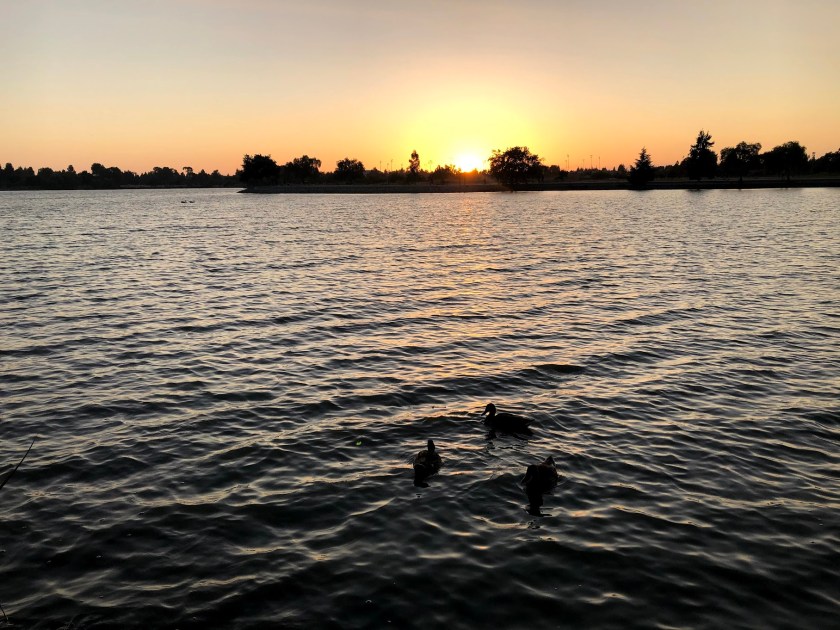
T’was one evening after a nice long walk, I sat by a lake. The waters were clearly more than 20-30 feet in depth, and I remember wondering whether ducks felt any qualms about plunging into waters that deep. Do they examine their toes studying the webbing and decide to swim? Do they stretch their legs knowing it is waddle-worthy? I have watched the ducks hatch their little ducklings countless times in the spring, and watched them teach their young to take to the waters. But how do they know their capabilities? Do they stretch their wings knowing it is intended for flight?  Ducks have to be the most admirable creatures for they adapt to any medium with ease, and seem to enjoy  it. They waddle, swim and fly with ease. 

How about that? 

“Anyway, why don’t you watch what you eat since your daily walks are also cut?” I said taking a large dollop of ice-water and pouring it over his igloo.

The mother came hissing into the phone like a queen bee in-charge of delivering the daily news updates to the BBC at this, and said, “As if! Now, because he is bored, he eats almost continuously from 4-8 p.m!” . We all landed up laughing at this. 

“Must see how these ducks control their diet Appa. But now that I got the chance to observe squirrels, I don’t think they control their diets very much. Munching on fruits all day long, and talking bites out of them and flinging them to the ground without even properly polishing them off!” I said.

And on this note, we said toodle-oo to each other. I continued on a walk grateful that I could indulge in this activity though my mask made me feel sweaty and hot. He went to make himself some coffee to go with his mid-morning snack. We both pondered on life.

A Philosophy of Walking

Star 🌟 Stuff?!

I don’t know if you have tried comet chasing every night for a week. A week in which photographers from the world over posted photographs that suggested a flaming, brilliant torch tearing past our heavens with an urgency that made you realize life was short, our journeys spectacular, and a whole lot of poetic asides.

The husband, the bright matter energy source in the household, if anything, shored up even more bright matter to counteract all the dark matter in the universe. His resolve only wiggled a bit when he saw these brilliant flaming pictures of the comet as though it was an olympic torch blazing through the heavens, when in reality, the comet looked like a Pluto after a good cry. (After the astronomer’s good cry, not Pluto’s!)

The son, kept his running commentary on photons, light years, superclusters, cosmic addresses, and the pair of us dreamt on.

The daughter, pragmatic as ever, squashed The Poetic Outlook like a bug under a hippo’s knee. Some teenagers may find it cool to tag along with their parents on adventures chasing 💫 comets: ours rolled her eyes, and the drag of the eye roll did resemble a comet’s tail.

I’d like to think that I was the calm influence that steered the boat into the cosmic oceans. The husband turned to give me an amused look, the son’s laughing rattled the comet to go back into hiding, and the daughter pulled her coolest teenage look of scorn and said the all-encompassing word, “kook!”.

“You know? I don’t see why people are wasting so much  time with the skies. I mean, if you  do see  the comet, I suppose it is nice and all, but  what’s the point of sitting there for hours on end and trying to find something hurtling through space. Huh-hmm!” she said, her lips thinning just the way her grandmother’s would.  I love it when the mannerisms of her grandmothers slip into her speech in unguarded moments like these, and couldn’t help smiling.

“I  mean – what sort of career is that? And what use is it?!” she cried, clearly asking for it.

The son & I, inferior debate  companions as we are to her sharp tongue, rose up to the occasion.

“Hey  hey hey! Going at the rate we are, scanning the skies may give us an opportunity to find another habitable planet to expand into. The same can be said of all kinds of research – the actual research does not immediately yield results, but every little bit of understanding advances us  a little bit further.”

“Yeah – also we need to know where we are in the universe! Are we in Milky  Way, Virgo Supercluster, Observable Universe:  what is our address?” said the son.

Location_of_Earth

Andrew Z. Colvin / CC BY-SA (https://creativecommons.org/licenses/by-sa/4.0)

The daughter’s tongue could have  sliced an apple in an instant as she rattled off our home address and said, “Why do we need to know huh? I mean, here we are. This is it. Live here, what is all this knowing where-we-are stuff? Waste of time. What is it going to do for us?”

The son & I blanched. You see: the pair of us are dreamers, standing beneath the stars, and endlessly wondering whether we belong to the Lainakea supercluster (is it the same as the Virgo supercluster?)  After the observable universe, then what? What if all the observable universe in inside a massive black hole, and time is only  something in this space? 

“But we are made of star stuff – isn’t that magical? Star stuff!” said the son wistfully.

“Yeah – duck poop is is also star stuff – deal with it!” said the daughter. The son wilted under this argument. The daughter caught sight of my eye looking like an angry comet, and mollified the little poetic fellow. “But duck poop is good star stuff! Heh??!!”

I cannot say the debate went anywhere. It was a disappointing bunch of evenings after all, and the teenager felt it keenly. I mean, when one has posted  to one’s friends that they are going comet gazing, and then come back after hours, having  grazed on half a luna-bar, there is bound to be a dearth of the poetic. 

“You know young lady, I have just the book to cure you of this disappointment.” I said and gave her the book, The Stuff of Stars by Marion Dane Bauer Illustrated by Ekua Holmes

The illustrations in this book make it an absolute treasure. In the past few days, after a clearly disappointing  comet gazing experience, I found myself gazing at the marvelous pictures in the book instead. 

stuff_of_stars

The 💫 Comet 💫 Life

The past few days have been a flurry of activity with tiny little bursts of stardust and magic spun into the day.

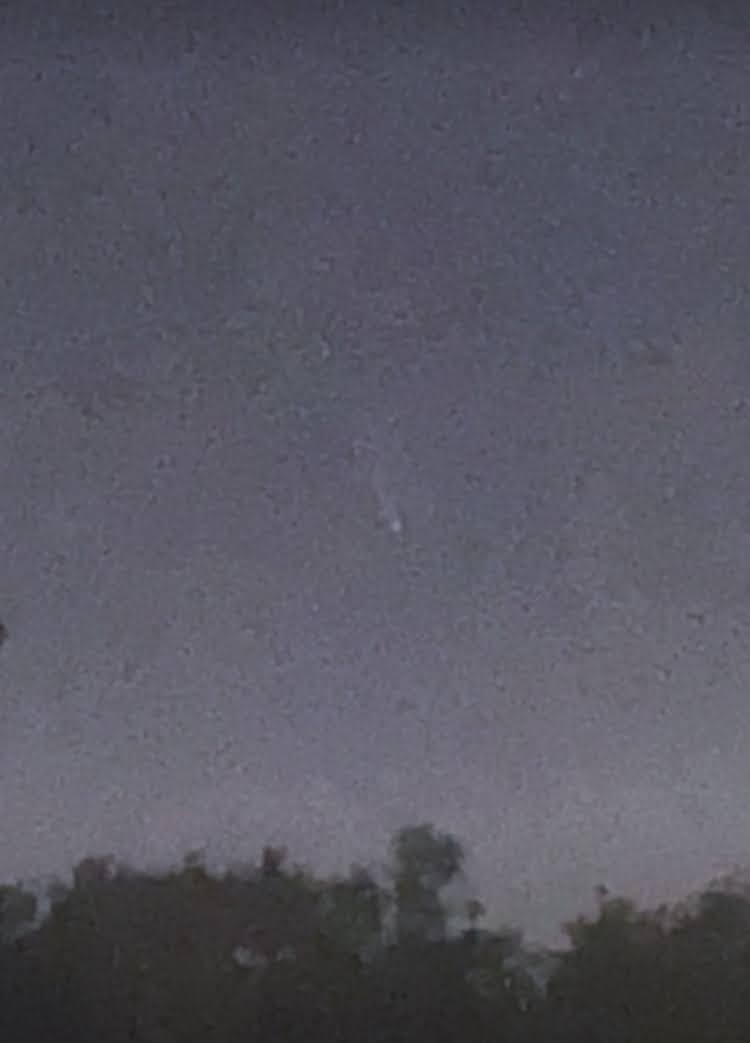
We traipsed home tired, sleepy but triumphant. This was a Sunday morning well spent: we had finally sighted the elusive comet, 💫  Neowise. The previous morning, we had run outside at a similar time, and stood pinching our eyes, squinting at a resplendent Venus and thinking that if you cocked your head to one angle, and yawned loudly enough to get tears in your eyes, you could spot the tail. This technique made for some hilarious moments, but comets don’t seem to care much for sentient beings on some transient planet trying to catch sight of them in the wee hours of their morning, and we had to accept defeat and head home.

The next morning, however, we had managed a grainy sighting of the comet and we were jubilant. When the chocolate drink was gulped, and the little fellow was tucked into bed again, I lay in bed thinking of the comet 💫 . I could not shake the beautiful image from my mind’s eye.

img_8934

To the naked eye, it looked nothing like the images taken by setting one’s camera to a long exposure, but it was there alright. The burning star with a yearning, a lone star shining its torch as it scorched its way by numerous stars treading a path it had set for itself. An unconventional celestial object. Compared to the systemic order of the rest of the universe, there was a object that was definitely unconventional , a trail blazer (get it, get it?) Why an elliptical shape, and why 6800 years?

I went about the days after the comet sighting with a faint gasp in my demeanor. Imagine, as we are holding all these important meetings, combating pandemics, and trying to protest against all things unjust, here was an icy blob just spinning away on its own elliptical. 6800 years before it can peek at us again. Often as I went about my day, I wondered whether there was a possibility of sentient life evolving on comets. Comets and asteroids have been known to be microbe transporters, seeding the possibilities of life as they hurtle through the vast dark emptiness.

Do extremophiles have what it takes to feel?

I mean, if we were to have evolved on a comet rather than a planet, would we have had such success in determining the nature of physics and the laws that holds the cosmos and the universe within which we thrive? How would time be measured on a comet? If rhythms helped us discern music, what would music have been in a comet-ic life? Our own days on Earth are neatly sliced into hours, minutes, and these days blend into weeks, months and years. Before we know it, we have made one full circle around the sun, and the seasons have changed along the way in predictable ways.

But none of that would be true if sentient life such as ours had evolved on a comet instead. There would be no days, no seasons, no predictable cyclical rhythm to our days. The sense of adventure as we drew near other stars and planets would probably fill the time. But time itself may have no more meaning, or much more meaning depending on how one perceived it.

These musings were sources of mild amusement, while life itself marched on with a comforting rhythm down here on Earth – dawns, days, dusks, nights, weeks.

Did the seagulls, deer and ducks think of such things?

Ahh! Comet life!

Comet Chasing * Chocolate Charms

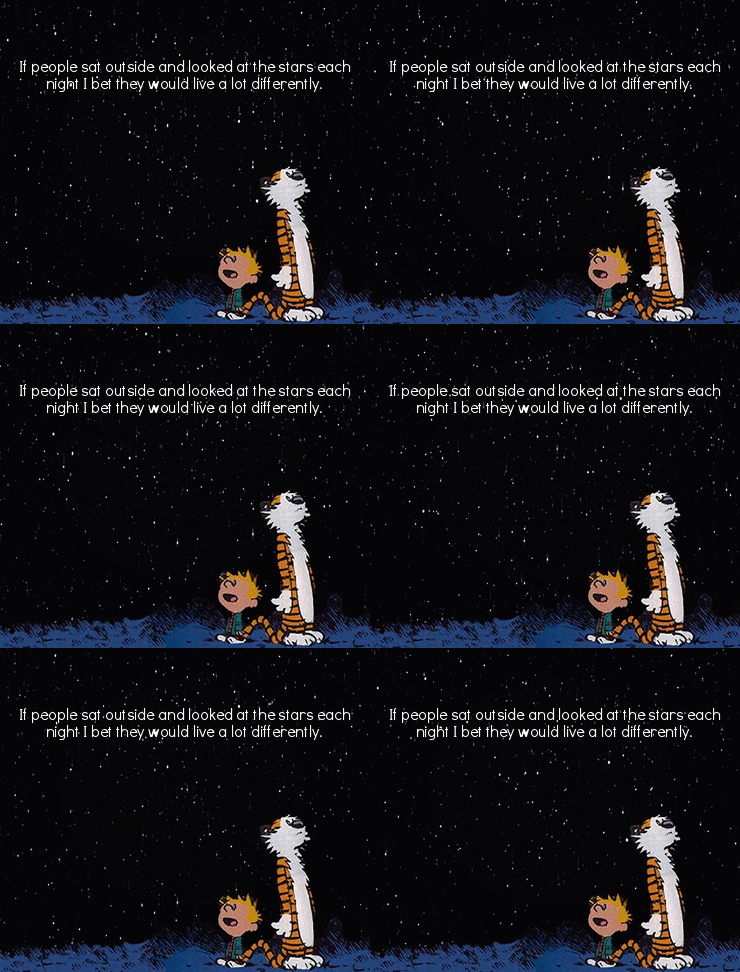
The children have a shared liking for Calvin  & Hobbes. The adorable pair have been the source of many hysterical giggles between the siblings in our home. In the son’s room, there is a cartoon clip of Calvin & Hobbes that seems to tickle both his whimsy and his innate rapture and curiosity of the universe we live in.

calvin-gif

If people sat outside and looked at the stars each night, I bet they would live a lot differently  ✨- Calvin & Hobbes

A few weeks ago, I was typing out an email with the ounces of concentration I could muster at the end of a 12 meeting day, and I wasn’t exactly thinking  about 💫 comets, stars, pulsars, neutron stars, black holes, and parallel universes, when the little fellow shot into the room bursting about comets. I turned around , and my face probably looked like some of the spreadsheets I was looking at, for the son gave me a pitying look that seemed to indicate, “What good is a day when you haven’t thought of these important things?”

I laughed at the incredulity on his face: Stars, superclusters, muons traveling the speed of light, quirky  quarks are all thriving right beside his world of super-powers for super-heroes, who are incidentally gifted with important sounding superpowers such as gamma-rays and electromagneto-muon-transporters and what-not. 

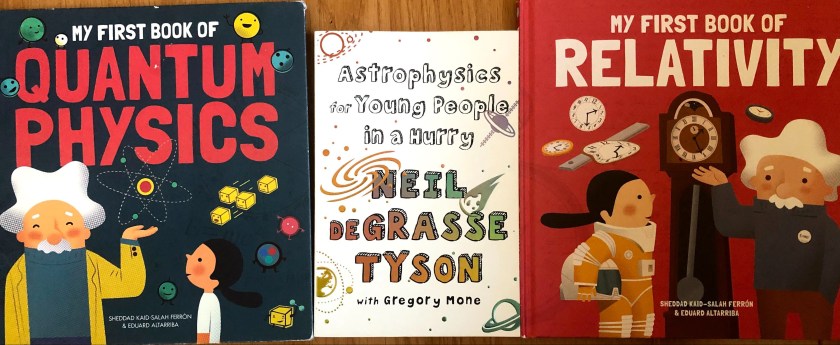
“Did you  know Halley’s comet is going to come again in 40 years?” said the son still bouncing and glowing from the stash of chocolate chips he has been chipping into while reading his little books on Physics.

img_8953

“Yep! Sounds about right. I was around your age when I saw Halley’s Comet. So once in 76 years means …” and I trailed off.

“What?! You’ve seen Halley’s comet? Aww…..so lucky!” said he, and I had to laugh at his yearning. I did remember the cold nights awaiting the turn at the telescope to catch a grainy sight of the Halley’s comet. I must say that the whole experience felt worth a lot more given the rapture with which he listened to the comet sighting. I seem to remember the hot chocolate provided to the young astronomers more than the telescope and the grainy image itself.

Maybe the universe really did hear his yearnings that day, for within a few weeks, another comet came our way: the Neowise 360 comet sighting was supposedly possible from where we lived. I was so happy for the little fellow. He could barely contain the excitement in his system when his father said at the lunch table that the comet would be visible at 4:30 a.m. He got up and ran upstairs to his room. We were exchanging quizzical glances at this when he tumbled downstairs and said, “Yes! I set the alarm for 4:30 – I cannot wait to see it!”

I had to admit; the young astronomer’s enthusiasm put us to shame. So, for the next few nights, we bundled up and comedically traipsed from location to location in the wee hours of the morning looking for a comet sighting. The clouds were there in one place, some low mountains in another, and then, finally, we managed to find a plain spot in which we caught a grainy sighting.

img_8934

Knowing that we caught a fleeting glimpse of something that is not going to come by to see us for another 6800 years is strangely moving. I have to tell you though, that similar to the Halley’s comet sighting, the hot chocolate after coming back, and the the long tail of wishes accompanying the comet sighting, definitely made the hustle worthwhile. 

That morning, the rest of the comet chasers had no problem falling back to sleep, but I did – the comet had kindled dreams of long ago: dreams born of comet chasing and chocolate charms; dreams woven with the magic of stardust 💫 and comet trails – bright, shiny, sparkling, path-breaking and aspirational.

Bill Watterson was absolutely right: People who spend time looking up at the night sky do live life differently!


Shoshin Seeking & Science Writing

Shoshin is a concept dear to me as regular readers know. Shoshin is the Zen Buddhist word for ‘beginner’s mind’, denoting the capacity to bring wonder and open-mindedness to learning anything.

To continue the quest in Shoshin seeking,  I volunteered to take an online writing class with a focus on Science for elementary school children. 

img_1763

The idea for the class was inspired by multiple factors:

(1) A sense of wanting to be useful while doing the socially responsible thing of staying home during the Corona-virus shelter-in-place. 

(2) My brain after years of running around from Place A to Place B found a method to calm down from the frenzied lifestyle that modern man prides himself on (The Virus is a reminder of something lost long ago – an essay by Alan Lightman – a writer and physicist at MIT) 

(3) Combining the marvels of Science and keeping the wonder of Shoshin alive is pretty much what my writing has been about (at least in the past 1/2 a decade). An area of passion that I was happy to share with the children, from whom I learn Shoshin in spades.

(4) A love for children and young minds has me yearning to be like them on multiple levels. I live precariously through this yearning by reading children’s books, squabbling childishly with my own children, and much more.

The result of this was a marvelous month in which I went about reading topics that had long since been pushed to the back of the brain. I wondered as I prepared for the classes, how we wasted those marvelous moments of youth with all these fascinating subjects. I understood as the class went on:  sometimes the children were enthusiastic and wanted to write all about the topic under discussion. Other times, they liked the sound of music-like science lilting in their ears, and they nodded along sagely. The rays of the afternoon sun filtering in through the window made for warm, cozy sessions in which one saw one’s friends on the zoom call, and answered when one felt like being a part of the discussion. This was nothing close to the normal they knew, but they adapted with ease and their customary good sense. All in all, it made for a marvelous time, and with the children happy, so was I, their teacher. 

If post-Covid, some children recall sunny afternoons with thrilling science to a background of their classmates trilling in the background, while taking a leap of imagination, it is time well spent, in my opinion. 

I remember distinct moments when something piqued the children’s attention. The time I told them about giraffes in the savannah, or when we played the little game of hearing frequencies, or when we spun off pretending to be whales using sonographic techniques to unearth something really unexpected.

I am going to sign up for another 4 week session in which I hope to have as much fun, learn as much and enjoy the companionship of younger authors, who are by  virtue of their youth also leaps ahead in imagination and spirits.  Wish me luck!

Becoming – What a Title!

One would think that a book written by the former First  Lady  of the United States would not be relatable to a middle class couple living all the way in California. Not to mention that the husband and I hail from India from very middle-class  backgrounds. And  yet, that is the beauty  of the human condition I suppose, for I felt many places in the book where I could nod along and think, “Lord! How often I have felt that way!” 

becoming

The need to question whether one is good enough, and wanting  to over-achieve believing that to be the only antidote to counter that feeling of not belonging for instance. The keen angst of youth as you overcome every  small and large bump along the way is so beautifully written.

Or the very real struggles of raising children while holding down a full-time job and constantly feeling a bandwidth issue; tugged at by the veneer of the formerly ambitious career-oriented young woman who is now slightly at odds wondering why the career years, child-bearing and rearing years, all coincide in one large tug and pull. To read that sentiment written by a former first lady is both marvelous and what makes our country great.

Or the place where she writes about her young husband and his eternal optimism. I can so readily identify with that. While it is the wind of the husband’s optimism that sets our boat to sail, it is the cause of many veering off-courses as well. For instance, I laughed out loud and read out the following paragraph to the children who chuckled and said, “Appa!”

Becoming – By  Michelle Obama

“On my way, I was learning, was he product of Barack’s eternal optimism, and indication of his eagerness to be home that did nothing to signify when he would actually arrive. Almost home was not a geo-locator but rather a state of mind. Sometimes he was on his way but needed to stop in to have one last forty-five minute conversation with a colleague before he got into the car.”

The children all laughed out loud at this, and the husband grinned sheepishly for there have been countless times when the good man has been so caught  up in whatever  he is doing, or talking to one colleague who caught him on the way out, that he lost track of time. It is now a well worn thread in our household. The good natured ribbing has taken multiple paths- “We know you are almost here Appa, and we believe  you, but when does Google say you will get here?”

Michelle Obama’s keen intellect, solid grounding, and sturdy family values shine through in her writing. 

There are passages that bring across the feeling of being African American in Chicago’s Southside that made me want to read these places again. I am sure there are plenty of good books dealing with these aspects of life in the United States. She writes about her husband – portraying him in a pragmatic human light (but again, after the 45th President, the 44th President  with his middle class upbringing, scholarly attitude, and high sense of integrity seems like a dream.) 

The book makes us realize that greatness while destined for some, the need to be motivated, live the best possible lives we can, while holding true to our intellectual and moral integrity, is something we can all choose for ourselves. 

Of course, the identify-with portions of the book ended with Becoming Me, and Becoming Us sections of the book. The final section of the Becoming More is something that only 45 families can relate to: Life in one of the world’s most famous addresses, The White House. Where life has parts of fairy-tale, power, ambition, noble intentions, inspirations, horror story, emotional wringing, the ugly and beautiful humanity of it all.

What a marvelous title : Becoming.

It captures the time-space continuum, and life’s journeys in one word. 

Unrelated, but also a good read: Ta Nehisi Coates essay: here

💦 🌳 Earth 🌏 Magicians 💥❄️

Magic was in the air. The afternoon sun was shining with an intensity that surprises us every summer. The high temperatures should really not surprise us anymore, but we still scuttle inside in the afternoon sun and wonder how it got to be so hot so soon. Inside the home, we were grateful for the cool atmosphere – the suns rays were filtering in through the large sycamore tree in the backyard, bathing us in Komorebi.

Komorebi (木漏れ日): Sunshine filtering through the trees.

trees_komerabi

Komerabi is beautiful and especially marvelous to experience on a week-end afternoon after a hearty lunch.

I was sprawled out on the sofa beside the son with a heavy book, a light heart, an empty page, and a full stomach. I was reading Harry Potter, A History of Magic. It is an impressive book that has on the cover apart from a magnificent rendition of a Phoenix, the words- The Official Companion to the British Library Exhibition at the New-York Historical Society Museum & Library.

Leaving the title aside, it is a comprehensive compilation of some of the magic and folklore in the Harry Potter world. I was happily frisking through the magical journey of our species through the ages stopping to savor the beautiful images in the book, and marveling for the n-th time about the brilliant mind of J K Rowling and her rich repertoire of knowledge that led to the marvelous wizarding world.

Some of the tidbits in the book were truly mind-boggling. Like the plethora of plants the myths have grown from and some superb paintings of the flora through the ages.Reading about the book, A Curious Herbal, for instance, made me realize how lucky we are to be living in this era of human history where high quality renditions of art, photography etc are available for reading and sharing digitally.

A Curious Herbal seems to have been a labor of love by Elizabeth Blackwell. Written between 1737 and 1739, the book had pictures of over 500 plants used “in the practice of physick”. Written, illustrated, hand-graved and hand colored by Elizabeth Blackwell, it was used to free her husband from debtor’s prison. He repaid her by leaving the country and being executed for treason in Sweden.

history_magic

The son was sitting next to me and making cards for the game he was designing. The looks of intense concentration were matched only by the splash of colors – clashing, brilliantly hued, and sparkling. The sound effects were not captured on the document itself, but if it could, it promised to be quite the party.

We sat each wrapped in our own imaginary worlds of thought in companionable silence for a space, when I asked him how his game was coming along. A sneak peak into the document revealed a marvelous world. There were a lot of pictures, points for this and that, and what-not. It looked like the end game would be a fascinating one, if somewhat high on the dishoom-flashoom-bazinga factor. Muons, quarks and photons made their brave show alongside tornado-crushers, wave-ripplers and what-nots in the game cards (a reflection to all that he enjoys reading and watching really.)

“Okay – I’ll tell you!” , he said the magic of Creating bubbling over as he explained his cards to me. After some time, his exuberant tones came to a hush and he said with flair. “This is for Earth Magicians! You have to get 15000 healing points to become an Earth Magician.”

“And how do you get 15000 points”, I asked, for who doesn’t want to be an Earth Magician? What a lovely title to be bestowed with?

As he explained, I scratched the old chin, and stumped him by asking what special powers Earth Magicians have.

The little fellow hemm-ed and umm-ed a fair bit as he thought through his answer. When finally he gave his answer, it went on for about two minutes, and I gathered that he had envisioned earth magicians as having the powers to create something amazing from the ordinary.

“You know? I like it – I should fight trolls and dragons and what-not to become an earth magicians. This time I will choose gardening as a earth magician superpower!”” I said.

He looked puzzled and I said with a serious expression on my face “Well…Gardeners, singers, dancers, writers, artists, aren’t they all Earth Magicians?”

I pointed to our little patch in the garden outside, where I have tried to grow many plants and flowers. Elizabeth Blackwell would have a bit of a challenge drawing a plant of rare repute from my backyard, much as I love it. I’ve even had instances of ordinary flowers which seem to thrive in the wild simply limp along and give it up as a bad job when I set to it.

“See? I try with all the best intentions and little business results. Yet, there are so many talented gardeners among us who use the same potting soil and are able to raise not just trees, but get the flowers to bloom – a new set for every season, in them! If that isn’t magic, I don’t know what is!” I said, and he guffawed.

“Well…I suppose that is true!” he said

“Want some more magic powers from Earth magicians? ” I said.

He rolled his eyes, a habit he has picked up from his teenaged sister. I told him I am going for some ice-cream, and he eagerly joined in – if Earth Magicians can make ice-cream, is there a bigger super-power?


A Hopeful Future

There is nothing quite as special as walking in nature after a long day or week. Every step seems to take one tiny bit of stress away, and replace them with happy endorphins  dancing to a beat in the body. As the eyes lift their gaze towards the skies, the clouds, trees, and birds seem to join in on one harmonious orchestra together welcoming the soul to relax and rejoice in the moment of being, and participate in the steady march of time. Hummingbirds, bluebirds and the occasional butterflies flit overhead, while the ravens and geese noisily make their way home.

Summer is creeping in, the jacaranda trees are in bloom in the neighborhood, the gingko leaves have come in fully, and though the world around us is in shambles, confused, anxious and worried, Mother Nature seems to have no such problems. She brought on Summer just in time.

The park near where we live has a steady smattering of high school students social distancing as best as they can and taking graduation pictures. In little knots of 2s & 3s, they cluster around giggling and looking hopeful. I stop at a distance admiring the high schoolers celebrating their graduation day with pictures in gowns. The smiles of confident youth look just as marvelous as the summer blooms they stand amidst, and their perfumes amidst the heady scent of the flowers is heaven itself. There is no doubt about it: The summer evenings seem doubly enjoyable and bright because of the young talent making their way out into the world.

These children did not get the graduation party like their seniors did, or their juniors will, but they seem to be coping with grace. A few photographs with their best friends would have to do. I hear loud peals of laughter puncture the evenings as they decide on how to take their pictures. I hope every child in these uncertain times has good friends. The laughter rings in the obvious: everything seems to be manageable with the right set of friends.

“Hope” is the thing with feathers –
That perches in the soul –
And sings the tune without the words –
And never stops – at all –

Emily Dickinson

In other news,
Trump Rally Registered Million Attendees but Actual Count 6000!

Thousands of teens registered for Trump’s rally , after his initial Juneteeth rally was moved to Sunday, and then didn’t show up. What’s more? They deleted their tik-toks soon after!

Standing there that evening with the world on pause from the Corona virus, and the city’s curfew just ended due to the Black Lives Matter movement, I felt hope stir again. The angst and idealism of youth was intact. These young adults saw us flounder at a critical moment in their lives, and the exuberance with which they are eager to take the torch makes me hopeful.

“For life goes not backward nor tarries with yesterday.” Kahlil Gibran

How do we exist?

It had been another long day, and as the clock ticked towards midnight, the body yearned for sleep, but the mind looked longingly at the tsundoku pile, and craved for some quiet moments of solitude. I peeked out of the window, and the moon sailing high through the skies tugged at my heart. There is something so intensely beautiful about catching sight of our  lovely cosmic neighbor sending its mellow moonbeams through the leaves at night.

I looked for a word that captures the phenomenon, but there isn’t one.

There are two words in Japanese that come close (the Japanese language has such amazing words for admiring wondrous nature around us.)

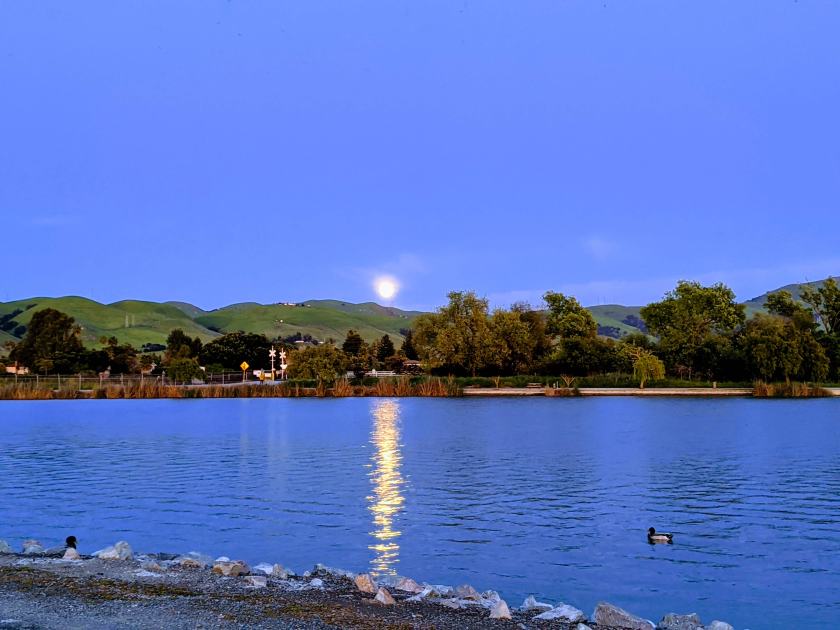
Kawaakari ( 川明かり – a word depicting the evening reflection of light on water, or in some cases can refer to the reflection of the moonlight off flowing water.

img_20200407_195324-effects

Komorebi (木漏れ日): Sunshine filtering through the trees.

trees_komerabi

I had just started reading The Sea Around Us by Rachel Carson. In the first chapter, Rachel Carson takes us with her steady voice into a time on Earth before the seas were created. When the planet was still heaving and churning its metallic ores, hot searing waves of liquid settling into a semi-liquid state in its outer cores. She wonders then about the question, how were the oceans formed?
“So if I tell here the story of how the young planet Earth acquired an ocean, it must be a story pieced together from many sources and containing whole chapters the details of which we can only imagine.
For although no man was there to witness this cosmic birth, the stars and moon and the rocks were there, and indeed, had much to do with the fact that there is an ocean.”

Then, she leads us from this fiery place in the cosmos with the sun heaving its solar flares, the earth itself arranging itself into concentric spheres with hot, molten iron at its core, and an intermediate sphere of semiplastic basalt , the outer layers of granite and basalt. And then gently she lures us into the possibility of the moon and the ocean being related to each other.

The next time you stand on a beach at night, watching the moon’s bright path across the water, and conscious of the moon drawn tides, remember that the moon itself may have been born of a great tidal wave of earthly substance, torn off into space.

How can one not be mesmerized by the creation of the moon? Was it truly hewn from the surface of the earth (The moon’s density does match the density of the outer crust). The hypothesis that the moon was hewn away after massive solar tides exerting a pull on semi-molten Earth is based on the theory that the large portion thus hewn away left such a large scar on the surface of the Earth. A scar that would continue to shape Earth and its lifeforms for millions of years afterward: The Pacific Ocean.

Later, as the Earth cooled and clouds formed from the steam rising, the rains started. Pouring onto the hot earth for years – initially almost immediately evaporating into steam, but eventually collecting as water – forming the first oceans.

It is, of course, fascinating that we still do not know for sure how the moon was created. There are several theories – theories of violent impacts, random objects being attracted by gravity, and young earth managing to keep one satellite, while heftier ones like Jupiter acquiring 67 etc. This is a topic still under discussion.

https://www.space.com/19275-moon-formation.html

Nevertheless, the very first chapter had me wowed. I would never be able to look at our closest cosmic neighbor with the same eyes ever again. How often I have stood marveling at the moon? Out on walks, my heart always skips a beat when I catch sight of the beautiful, faithful satellite accompanying Earth as she tears through space. To think that there is a possibility that the very creation of our cosmic neighbor was crucial to our oceans is awe inspiring. I live on the Pacific Coast, and never can I see the bays, the ocean or the moon without reminding me of this book.

The Sea Around Us by Rachel Carson

sea_around_us

The skies hold the answers to our most philosophical stirrings. Why do we exist?

The seas, it seems, holds the answers to our most existential stirrings. How do we exist?

Missing Chemistry Lab?!

“How are you managing to do Science experiments during these Covid times?” I asked the daughter as she munched on a cookie while on a diatribe about her latest Chemistry assignment.

“Oh we do it online. You can tip stuff into test tubes with your mouse, and it shows you what happens.” she said with a shrug, and I must tell you, I paled.

Wasn’t the whole fun of Chemistry lab the hissing noises as two unlikely elements reacted? Or the joy of seeing the colors change inside the test tube as you held it up to be seen by the light? The bright copper sulphate blue, the lilac, the pinks and turning neutrally to white letting out fumes? What about the olfactory? The hydrogen sulphide that sent us gagging towards the windows with the rotten egg smells. (The fact that we made it straight to lunch after a Chemistry lab with H2and tucked in with an enormous appetite speaks volumes to the marvelous feeling of youth.)

Chem_lab

I said as much to the daughter, and she gave me the pitying look she reserves for me when she senses that I miss my school days. “It’s just Chem Lab, it will be fine! Don’t worry!”

“Should I just forget about those eggs I bought a while back, so you can experience the rotten egg smells to your heart’s content?!” I asked solicitous.

She roared with laughter at this and said, “Your cooking is Chemistry enough Mother!”

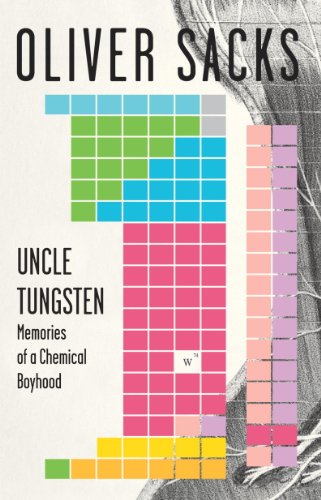
It was in part conversations like this that peppered my read of Oliver Sacks’ Uncle Tungsten, A Chemical Boyhood.

uncle_tungsten

His journey with the Sciences and his joyous epiphanies as he realized the neat order of things, and his poetic joy  as he traversed the Periodic table, gave me a new appreciation for the Periodic table too. In his words,

“Chemical exploration, chemical discovery , was all the more romantic for its dangers. I felt a certain boyish glee in playing with these dangerous substances, and I was struck in my reading, of the range of accidents that had befallen the pioneers. Few naturalists had been devoured by wild animals or stung to death by noxious plants or insects; few physicists had lost their eyesight gazing at the heavens , or broken a leg on an inclined plane; but many chemists had lost their eyes, limbs and even their lives, usually through producing inadvertent toxins or explosions.”

Chemistry, is tucked so far away in my consciousness, that I reveled in the beauty of it all almost anew. Glimpses of my committed Chemistry teachers in my youth came to me. I remember the feeling where their passion for the subject came through as they explained how the electrons revolved around the nucleus, the atomic weights, the inert gases and all the rest of it. I can vaguely begin to recognize how it must’ve felt to wax eloquent about the structural wonders in the world around us, to a bunch of mildly interested, if not completely indifferent, teenagers.

If ever there was a profession that was steeped in delayed gratification, teaching must be it. Why does it takes us decades to realize the stalwarts who did their best by us?! I tried putting all of this into words as I discussed the book with the daughter, and she said, “Yeah age makes you kooky I suppose. Must find the chemical reactions for that!” She laughed at her own wit while I  scowled. Slowly, she donned a far-off look, and said, “You know? Chem is just fine if he doesn’t keep having us go back and write out our mistakes for him so we show him why we made the mistake! Really! He is a grumpy old man and he is only twenty!”

I guffawed out loud at this – I must remember to ask about this Chemistry teacher of hers a few decades from now.