Once in a Blue Orange Moon

Halloween is one of my favorite times of year. In sunny California it is the time fall weather finally starts to settle in. I pick out pumpkins to set by the door. Most years, my carving takes a back seat, and I settle for painting or sticking outsize eyes and a mouth on it instead.

But we decorate the house – bats and owls stickers fly around avoiding the fake spider webs. Hasty orange construction paper is stuck around the outside light, and all things orange are ready to be displayed for one whole evening.

I remember a few years ago on an evening walk after a vigorous trick-or-treating, I felt a thrill and stood there mesmerized for a moment as an owl flew against the moonlight. I know Zen and Buddhist teachers tell us to enjoy the significance of every moment. I am not sure about every moment but a few moments do  lodge themselves in a magical spot. The owl flying across the moon was one such. I remember standing there bathed in the magic of it all. The owl of course is a visceral being, and was after its prey – nothing more nothing less. Halloween was an affair that was of no consequence to it. 

The blue moon will shine its benign light on us on Halloween. The trick-or-treaters will be thin on the ground, of course, because of the ongoing Coronavirus pandemic, and I should think bats will not be getting that warm a reception with humanity this year! 

The son got himself a costume that has a mask with an air filter on it keeping with the grim theme the world is cloaked in. “Hint!” I said holding up my hand in a V with two fingers on either side to those who tried to guess what it was on the video camera. The son shook his head disappointed and said, “Your hint is from Star Trek! My costume is from Star Wars!” Ahh well.

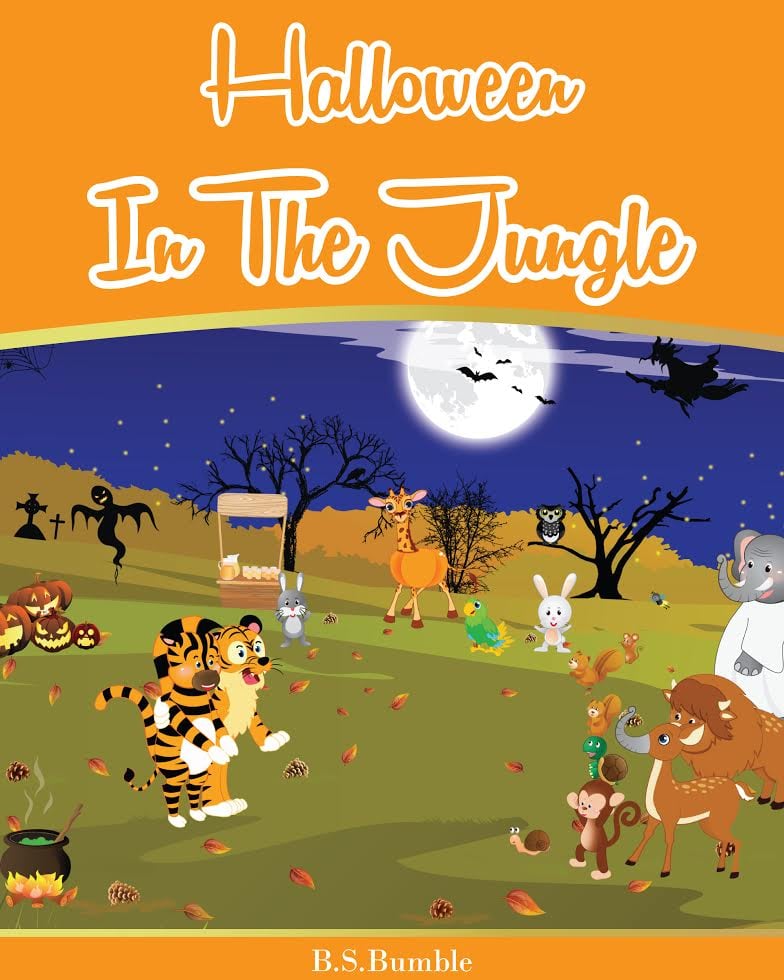
The son wore his Halloween costume to class today. This would have to be the poor substitute for the marvelous parade they usually get to attend on Halloween, but he dressed up with gusto . I was excited to see his classmates dressed up too: their tiny passport sized icons on the screen showing me the heads of princesses and pirates would have to do.  Their teacher was kind enough to let me read my book, Halloween in the Jungle, to them. Reading the books to the children is by far one of the best experiences I have had. Their reception to the story, their thoughtful questions thereafter, and their wholehearted enjoyment of the simple story is more than enough for me. Why? Oh why do we lose that marvelous feeling of youth as we grow older?

halloween_ij_fm

Tango Tiger, Janny Rat, Boy Elephant, Biso Bison, Spotty Rat and all their delightful pals are heading into their 7th year celebrating Halloween in the Jungle. The Halloween in the Jungle book has since given me immense joy. 

But this time, I feel a special bond to the little tykes as they revel in the clearing by Luda Lake, eating pumpkin pies, drinking orange and persimmon juice, and dancing to the lovely sounds of the musical orchestra with Nighty Nightingale, Owl, Bat and Frog. You see this time, just like the illustrations show, there will be a marvelous full moon night to light up Halloween. 

halloween_ij_fm_page

Blue moons are not as rare as we think, for they come around every 2-3 years. But apparently, this is the first time since World War II that a full moon visible from everywhere in the US coincided with Halloween. I am not one to set much store by signs, but if after the 1944 Halloween full moon, we were able to set the world to rights, surely a Halloween full moon and a blue moon at that should work miracles.

Happy Halloween!

The Fabled Life of Aesop

When we think of literary bodies of work that have endured over Millenia, we think of epics such as the Mahabharatha, Ramayana, Iliad and Odyssey, or the Bible. But there are so many endearing little tales that have endured just as long, and have passed down morals, lessons and fun along the way.  I am referring to stories such as Aesop’s Fables & Panchatantra tales.

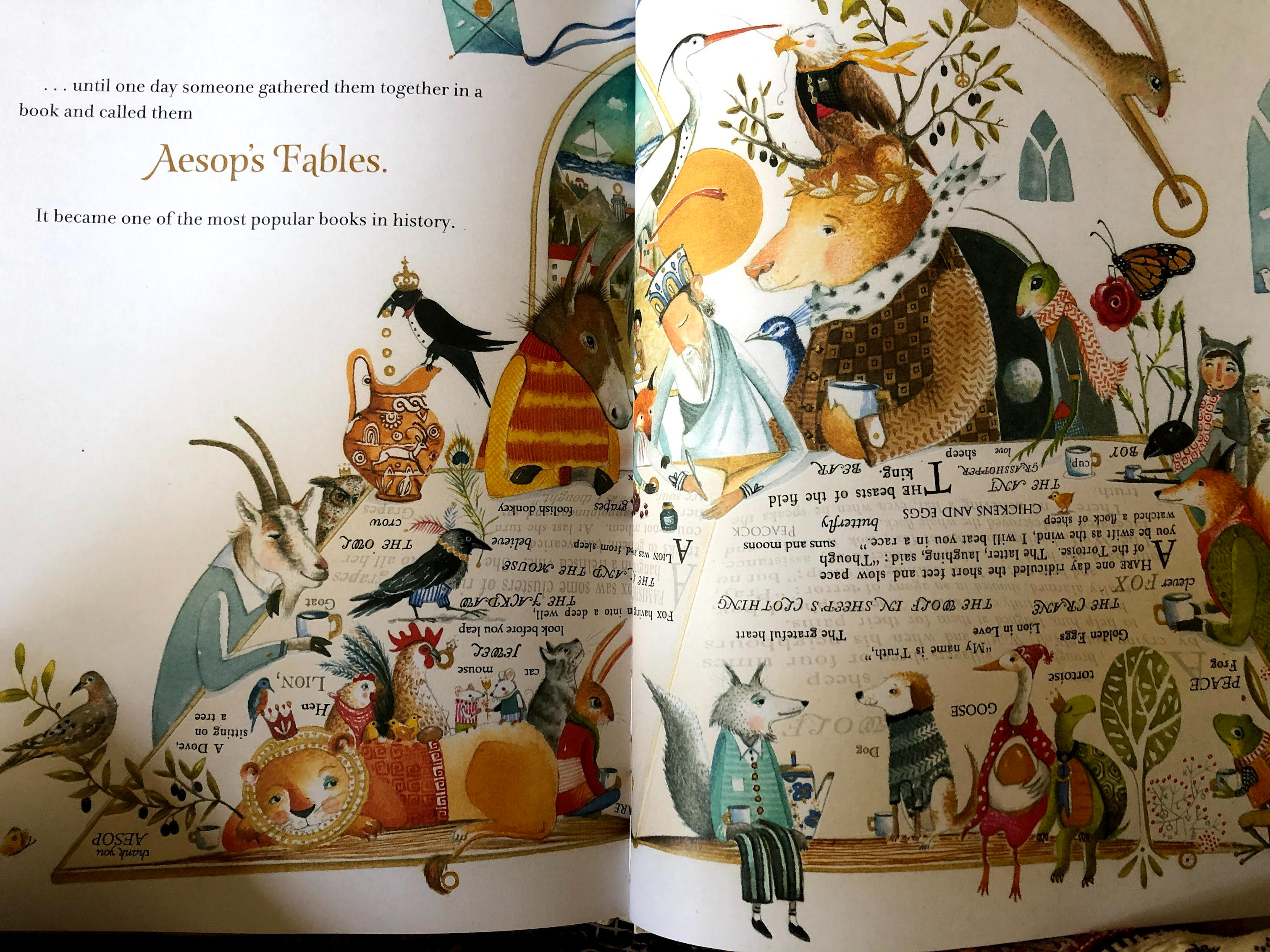
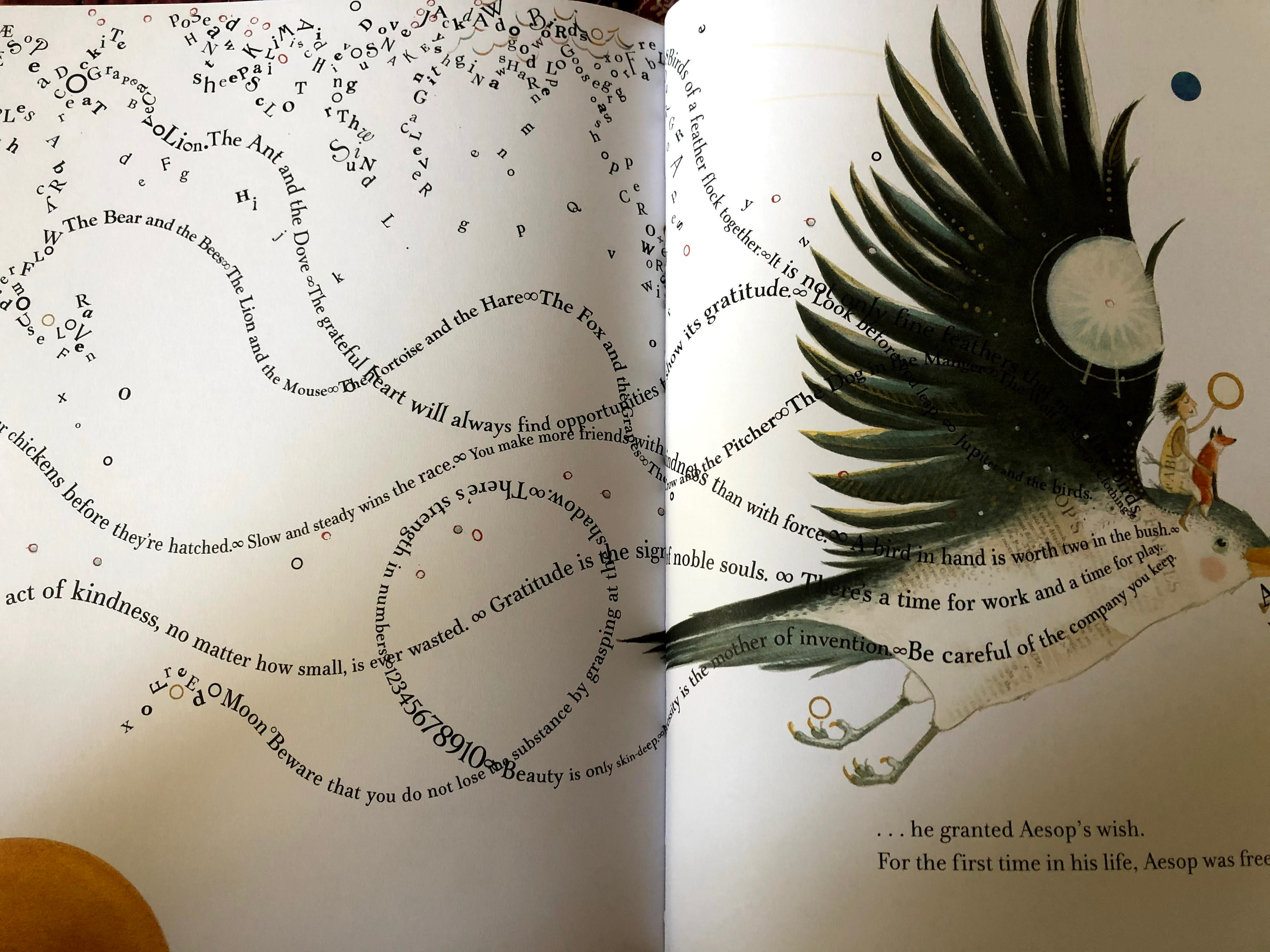
The library had a wonderful picture book on The Fabled Life of Aesop: the book was not just a collection of his most fables, but the life of the slave we think was Aesop. 


Written by Ian Lendler, and illustrated by Caldecott winner, Pamela Zagarenski, it is a book with marvelous reading material, and highly imaginative pictures.

2500 years ago, a baby boy named Aesop was born to slave parents in Greece. Aesop, as a child born to slaves, was taken from his parents and sent to work in the hot grape fields of Samos. As a slave, Aesop learnt to speak carefully. One of his friends who talked about their master’s smelly feet was taken away and was never seen or heard of again. So, the slaves learnt to speak in code.

 “Did you hear about the lion? He stepped on a thorn and his paw got infected.”

“Oh!” said Aesop. “So that’s why his paw smells!”

Aesop learned to speak in code.

I could not help remembering this snippet from a poem by Margarita Engle in the book, Enchanted Air :

Tyrants always

try to control communication.

They always

fail.

The human spirit is not meant to be caged, and tyranny somehow tries to do just that every time. 

Aesop’s talent in spinning stories with morals using the animals around him was soon noticed by his master Xanthus, and he was tasked with more challenging tasks in helping his master’s life. One time when his master had a falling out with his friend, Aesop was called to mediate. Aesop was but a young boy and he was scared. If either his master or his friend felt offended, they had the power to put him to death. So, he came up with a story about the lion and a boar who fought over who should drink first at the watering hole. It was only when they noticed vultures circling overhead that they realized it was better to share the water rather than have the vultures eat the loser.

The master, Xanthus, and his friend, Jadon, were so impressed with Aesop, they sought an amicable resolution. As a peace offering, Aesop was sold to Jadon who continued to seek Aesop’s help in his business and personal affairs.

Aesop’s stories helped his masters live their lives with honesty, humility, and kindness. His stories warned against greed and deceit. 

Many of them taught another hidden lesson as well. It was something no master would pick up, but every slave or powerless person would understand. “

img_9889

Eventually, Aesop was set free, and his stories have been handed down from generation to generation helping millions of us glean the wisdom and morality handed down by these endearing tales.

img_9890
Freedom

I have often wondered about what it means to be human. Is it opposable thumbs, or imagination, or tool use, or brain to body ratio, or empathy? Maybe the complex combination of all these things, and the collective will to make things better in spite of all our failures is what sets us apart.

We have heard of scalded cats staying away from milk. Maybe our power is in ensuring that we do not  make the same mistake again and again,but learn from it.  

The world around us always has lessons for us: Octopii, whales, monkeys, dogs, crows, geese, herons, squirrels, rabbits, trees, and to that I am grateful.


Imaginating on unbirthdays

There’s a little something that we have been treasuring in our home. It isn’t so much a secret as a quirk really. But it is something that our hearts have grown fond over, an idea that we share with close friends with a stab of joy, pride and a laugh that acknowledges the un-normal-ness of it all. But by doing so, we have invited you into our little circle of joy and keeping our spirits up. 

So, why do I share this now, here on the blog. My answer to it is, “I feel it will help us all cope in these times of uncertainty. ” Practiced over small doses, it can be comfortable or not depending on how much you have used this part of your personality before. But it is possible. I know it. For on the sternest of days, when life seems to be boxed into a little screen, and the slings and arrows of fortune come by taking straight swings at us, and the mind struggles for an outlet, this tiny act of will works its way into a part of the brain that senses wonder and magic. It seeps in.

I will need to take you back into our world for a bit. So, please come on over.

I was trying not to fall asleep one afternoon.  The leaves were rustling outside in the soft afternoon breeze, our stomachs were full with a week-end meal, and I had retired for a space to read a book. I had only just managed to let the book slide out of my hands as a wave of sleep crashed over me, when I heard  sounds of battle from within the home.

Bwoooshhh! Swoosh…aahh…guhgh, brwooosh!

This sizzling sound effect was followed by dull thumps, and a moan. A moan not of defeat, but of acknowledging a hard task that needs to be  done. If ever a moan was cloaked in determination and strategy, this was it.

“What are you doing?” I hollered. 

“Just imaginating!”, the reply came from the young son, and the samurai, dragon, ninja, or jedi warrior went about his business of setting his world to rights. Sometimes, electrons and quarks swoop in to change the nature of the opponent.

I smiled sleepily trying to figure out the latest battle he was fighting.

The dragons were slowly gaining ground and judging from the throaty cries, and the swift roll-ups being performed by the other side, lightsabers were running out of energy and quickly needed recharging, if anything were to be done about the dragon menace. They were taking over the mountainsides , gaining speed and traction even worse than the  wildfires that raged in the area just a few days ago. Weather monsters are only one kind of monster.

Imaginating

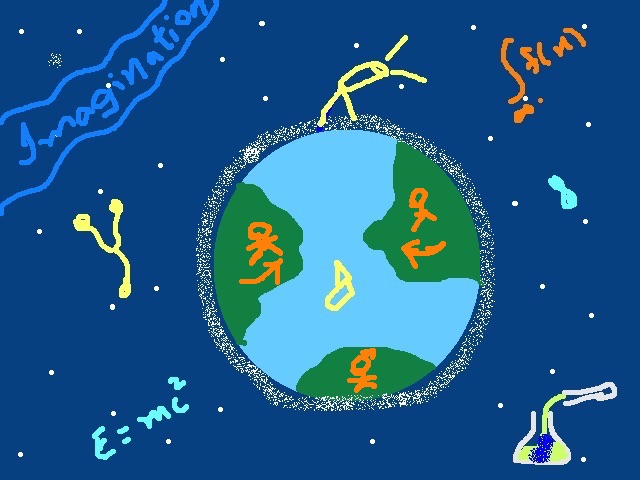
In our home, the act of pure imagination has been given a verb-form all on its own. Imaginating, we call it, and go about our business of imagination without batting an eyelid. 

When the son came up with the word as a toddler, I was amused. Here is a word that documents insist on underlining in squiggly red as unrecognized, and yet, this word feels right. It feels like a word that belongs. 

Imaginating evokes the act of imagination sure, but it is an imagination with power and force. Imaginating in the face of tyranny, imaginating in the throes of uncertainty, and imaginating in the relentless negativity of news cycles, seems to be just the panacea to set our world to rights. It is an act of our will, and to quote L M Montgomery from Anne of Green Gables,

“Because when you are imagining, you might as well imagine something worthwhile.” 

Lucy Maud Montgomery, Anne of Green Gables

Our song could be:
We shall imaginate.
When tyranny comes my way, I shall imaginate.
When hopelessness clouds my day, I shall imaginate,
Just like the tree that imaginates itself to be a bird. I shall imaginate!
 

Lewis Carroll, a man known for inventing words, would love to hear the word from the son, were he alive. So, here is the secret of imaginating and I am sure it is a necessary one in a world in which we are all mad.( To quote the Cheshire Cat in Alice by way of explaining Wonderland to her, “We are all mad here.”)

So why not have fun imaginating with it, and reserve them for special occasions such as our unbirthdays. (Lewis Carroll’s word for every special day that isn’t a birthday, which means we all get to have 364 of them every year).

IMG_8187

P.S: The story has been put to rights by the hero of the imaginating sequence. That afternoon, it was pirates he was fighting off, and not dragons. So, they weren’t gaining ground, but they were gaining water.  What else did I think those squishes and swooshes were? It was obviously the sounds of water splashing against the stern of the ships as he bravely fought off them pirates. Moreover, he wasn’t on an intergalactic space adventure to use his lightsaber, he was simply using his dark matter sword. Duh! 


Our Attention, Our Imagination, Our Opinion

Poetry has seeped into our lives yet again. At times I wonder whether poetry, music and art are all luxuries that only dare to raise their heads when the busyness of our pointless existence relinquish their clutch, or whether poetry, music and art enable us to go about our busyness with joy and acceptance.

Either way, I am simply grateful to experience the effect of these soothers to our lives.

The news can be a whirlpool, not just pulling those who happen to float nearby into its swirl, but also sending a whirlwind to attract those on land. Of late, every week seems to be packed with a year’s worth of news. All of this of course results in an enervating tug of emotions. 

We do not know whether the farm worker in the 17th century had this many opinions he needed to have, or whether the soldier in the Dark Ages had a semblance of control in his fates. All we have experience of, is this time, and this age, when we are being called upon to not just have an opinion, but also to voice them and defend them almost relentlessly. 

How the world clamors for opinions and stands? Having a world leader who takes pride in swirling the world around for his endless rollercoaster is exhausting. This is Gaslighting we are told, that is Egotism. Here we are, endlessly naming, categorizing, instead of just appealing to an inner sense – Yes? Or No? Which is it?

It is also deeply instructive for us as individuals. A lesson on ourselves. How much do we want to dragged into the endless show put on for us; how much do we want to rectify things, solve problems with creativity and resilience; and how much do we want to be pulled here and there, like specks in a whirlwind?

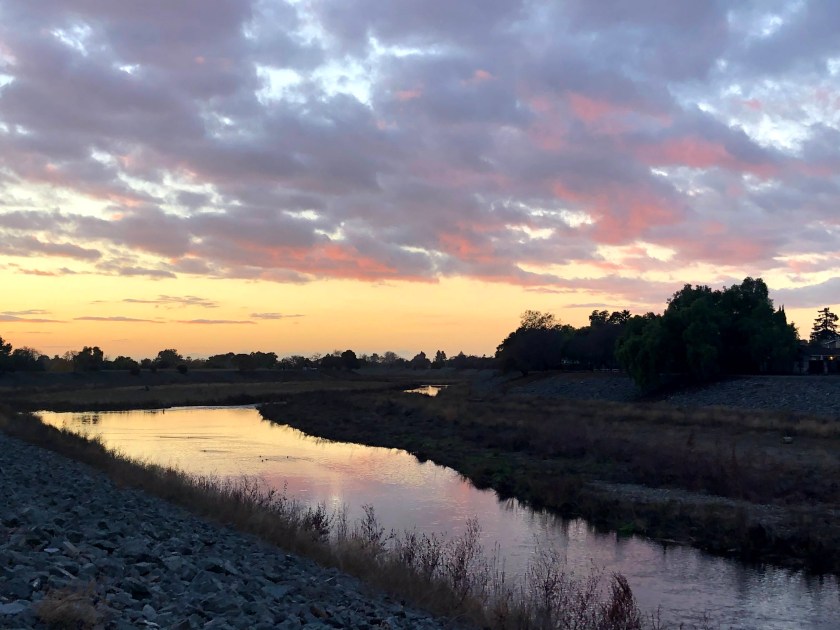
The other day, I saw a heron standing patiently in the shallow waters of a river, waiting patiently. I was out for my evening walk, and I had to stop and admire the heron. The heron was going about its business of living, observing quietly, waiting patiently, and if in the process of being, a wandering soul got a lesson or two out of it, that was good, but that wasn’t its purpose.

I chuckled to myself thinking of what the heron would say to me if I asked it about any of the world’s problems. Would it laugh at me or with me at the problems humans have created for ourselves?

The heron in that moment taught me the simple act of keeping still and untangling the strains of thought. That this isn’t a luxury, but a necessity.

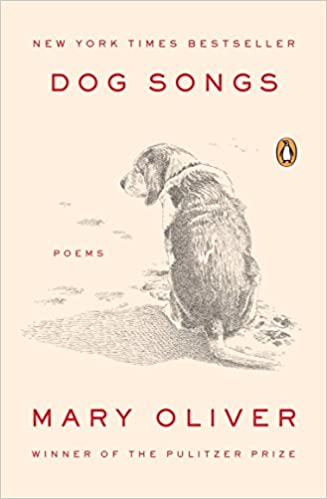
Sometimes, sitting and reading a piece of poetry evokes the same feeling. Take the poem, Yes! No! By Mary Oliver for instance. 

How necessary it is to have opinions!

I think the spotted trout lilies are satisfied, standing a few inches above the earth. I think serenity is not something you just find in the world, like a plum tree, holding up its white petals.

The violets, along the river, are opening their blue faces, like small dark lanterns.

The green mosses, being so many, are as good as brawny.

How important it is to walk along, not in haste but slowly, looking at everything and calling out Yes! No!

The swan, for all his pomp, his robes of grass and petals, wants only to be allowed to live on the nameless pond. The catbrier is without fault. The water thrushes, down among the sloppyrocks, are going crazy with happiness. Imagination is better than a sharp instrument. To pay attention, this is our endless and proper work.

How often I have stopped to look at the heron taking a short flight from the river nearby and wondered whether its opinions were sought, and whether it mattered. They should, for our opinions and actions have definitely resulted in less than ideal living conditions for them. 

Mary Oliver in one short sweep of her pen was able to capture all this and more in the poem, Yes! No!

P.S: I love how the swan in her poem wants to live in a nameless pond. Our planet is just that isn’t it? A nameless, priceless habitat that we have bestowed a name upon.

Heron flying

Books for the King

The son’s brisk questions were being met with sluggish answers and were wrong to boot. He looked at me with concern and said, “Ma! Are you okay?” 

“I feel like I need to read 3 fiction books back-to-back to start feeling myself again!” I moaned. The cuppa coffee wasn’t doing its job. I knew I had a long day of meetings, planning, production issues, and more news trickles along the way before that happy dream could be realized. 

What happened next should not have surprised me in the least, for that child has a knack for soothing frayed souls. He ran away at top speed and I went about lapping my coffee like a cat licking its milk out of the saucer on a cloudy morning.

After a few moments he tumbled into the room carrying three Dr Seuss books. “Don’t worry, I can read it to you for 2 minutes.” he said and proceeded to read from Yertle The Turtle and Other Stories.

He could not have selected a more apt book for the times  if he had thought about current world trends towards dictatorship and decline of large democracies, cross-referenced  it with philosophies on power and ambition etc. 

Yertle the Turtle was the king of the Sala-ma-Sond pond, but as often happens with power, he wanted more, and then some more. Maybe a really high throne would help him thought Yertle. So, he summoned some turtles on which he could perch himself . Yertle thought that the higher his throne, the greater he was. Everything in his eyesight could be his, couldn’t it?

Soon, a cow, a farmhouse and a blueberry bush wasn’t enough for the great Yertle the Turtle. More and more turtles scrambled, while Mack – the poor turtle at the bottom of the pile struggled. Mack’s complaints meant nothing. Yertle could see butterflies and birds, but what he really wanted was to get up there with the moon. 

In a fitting end to the story, the dictatorial Yertle meets his nemesis with Mack’s inadvertent burping. The pile of turtles totter and collapse sending Yertle crashing into the muddy swamps below. Yertle the Turtle learns his lesson. 

I know we ask of no formal training for politicians: there are no politician licenses, no courses one has to complete to take up public office, but I really think there should be a set of children’s books that they all have to read and re-read as refreshers every year in order to stay in office. We could call it the Butter Battle Course.

I’d definitely add these three titles to the course.

  • Yertle the Turtle and other stories – By Dr Seuss. (It even has a story about unbearable braggarts meeting their match in a humble worm who is trying to just till the soil underneath without the incessant brag-fests disrupting him)
  • Louis XIV – the King of Sheep – By Oliver Tallec ( A beautiful tale illustrating how Louis I the sheep became a king – the wind rolled a crown to him, and the same wind blew the crown away from his head)
  • The Fate of Fausto – By Oliver Jeffers ( This tale takes a megalomaniac’s obsession with ruling everything he sees including mountains, rivers, and sheep until he meets his match in the great ocean.

When Autumn Feels Like Spring

The first day of fall was here, and it felt like the first day of spring.

I stepped out to see a blue, blue sky with some cumulus clouds flecking the ocean above with froth. My heart soared like the eagle above. High and higher still. The air felt fresh like it does after the Earth has had a good rain. Even though it hadn’t rained, the Earth sparkled. The effect the clear blues, mellow temperatures and cumulus clouds have on our temperaments is remarkable. The Californian blue jay chirped, the squirrels tittered, the hummingbirds frisked and the hawks soared. Even I burst into song, and poured my joyous nonsensical lyrics into the world. 

But duty beckoned. I had a string of meetings awaiting me, and though my heart soared and flew with the eagles, clouds and all that, I headed inside musing all the while on how marvelous a blue sky is.

I read somewhere that the smog in some polluted cities is so bad that children growing up there think a ‘blue sky’ is a poetic liberty, for the skies are never blue. I could empathize with the poor children so far away. It was similar to that in California over the past few weeks. Wildfires burning over millions of acres hundreds of miles away drew a smoggy veil across the skies, and cast a pallid gloom at times, made for brilliant sunsets at others, but through it all, there was an air of impending doom.

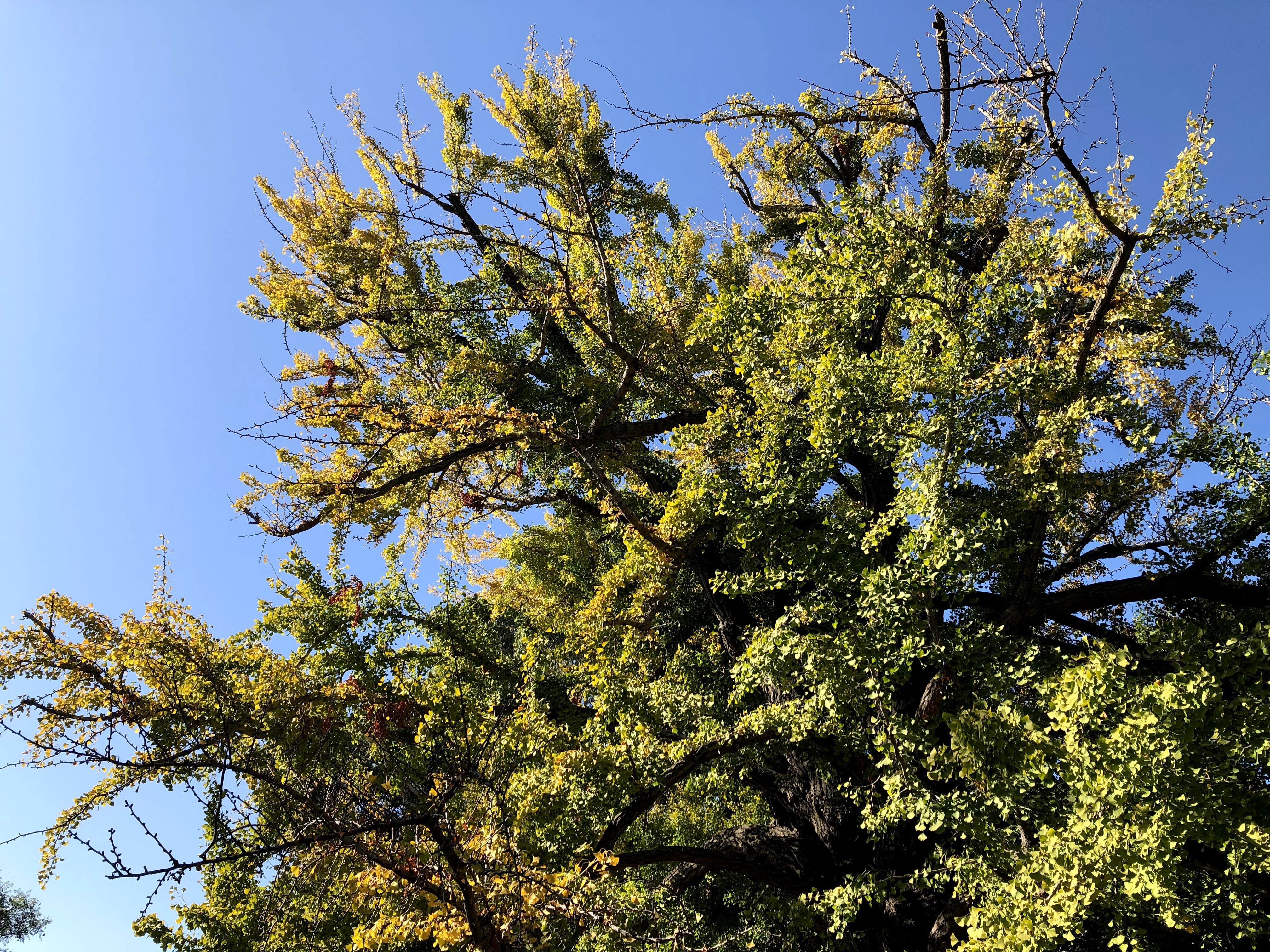
That feeling fell away on the first day of autumn. Fall in California are not as drastic and spectacular as autumn in north-east or north-west parts of the United States, but it is beautiful nevertheless. The gingko leaves have started turning from their brilliant green to a golden yellow, and the maple leaves are turning colors slowly. The air is not nippy yet – in fact, we are bracing for another hot spell.

Meanwhile, inside the house, I was feeling a trifle boxed-up after a continuous string of meetings, in which people had showed up with varying amounts of enthusiasm and optimism. Some of them had managed to retain that cumulus cloud effect, others matched the brilliant blue skies outside – uplifting and promising, and some others retained the pallid gloom of the smoggy fire-ridden days. I glanced outside the window and could identify with the young pupils of Miss Read, who taught her on a beautiful Spring day that words and pictures are but imitations of the real thing. I reached out for the essay in Tales from a Village School from my newly acquired bookshelf (a gift from the dear husband for he could not stand the piles of books everywhere in the house).

Tales from a Village School – By Miss Read

Titled ‘The Real Thing’, the short essay evoked the essence of Spring in one breathtaking stroke of a page. She writes of a Spring morning she started to read The Wind in the Willows to her class.

“I had planned to start ‘The Wind in the Willows’ next term, but what more fitting occasion than this could be found for beginning such a spring song?”

The Mole had been working very hard all the morning spring cleaning his little home…” but after a page or two, I am conscious that Henry’s restlessness is infectious, 

‘Say’, he urges loudly, ‘lets go out!’

There is a shocked silence. What madness is this? Will it make me fly right off the handle?

The essay lilts on with ease and ends on the sagacious note:

It was he, the babe among us, who led us befuddled elders to reality when he cut straight to the heart of the matter with those three words, ‘Let’s go out!’

I heeded the clarion call of the essay, and briskly stepped out. Standing outside on that glorious day in September made me doubly grateful for things as normal as a blue sky and a breath of fresh air. May we continue to be blessed with these normalities! May we never complain about what a delight an ordinary day is!

“Autumn is a second spring when every leaf is a flower.” ― Albert Camus

Soonish

“How do you think the water on Titan is? “

I must’ve responded with a quizzical look, for the son responded with a “Saturn’s moon!” 

http://Public Domain, https://commons.wikimedia.org/w/index.php?curid=610237

“Oh!” 

His interest in all things Space-Cosmos has me unnerved sometimes. He catches me when I am zap in the middle of the myriad things that keep me busy and unproductive, and like a zing of fresh air, sends a question like this to remind me that life does not always have to be stern.

As I thought up a response to another ping at work, I found myself wondering what ammonia-esque water must be like. The temperatures must be more frigid – sure, but beyond that the imagination sort of teeters. Would there be  fish in the seas on Titan? Would their eyesight have evolved so differently because of the low amounts of sunlight, and all this, only if we assume life has evolved on Titan. 

We did not evolve into cyclops like one-eyed creatures. Two eyes lends perspective to our vision and construct the world around us differently than a person with only 1 eye would. What if we had evolved with one eye on top of our head – always upward looking? And another set under our feet? I wonder how we would have shaped our world if we had managed to evolve like octopii with neurons everywhere not just in our brains. 

Over lunch today, discussion moved to contact lenses. With changes in contact lens technology, the disposable ones are in use now. Calculations were being made as to how many days of lenses were left, and I picked up the thread of the third eye and the octopus-like eyes-and -brains-in-limbs theory.

The son immediately calculated the number of the contact lenses we would have required for 3, 4 & 5 eye scenarios, while the daughter moved to the more practical problems

“Yes – imagine – looking upwards all the time, and see bird poop flying towards your upper eye and not having time to close it. Aaah!” That child can take the magic of star dust and turn it into duck-poop!

Another time, there I was thinking along simple lines such as ‘These flowers have faded so much in the summer heat”, or “These poor little squirrels in the heat wave – should we leave some water outside for them?” when the son in his attempt to make conversation pulled me straight out of this solar system altogether with “Did you know Proxima Centauri can pull comets towards it from the original Kuiper belt?”

https://solarsystem.nasa.gov/news/792/10-things-to-know-about-the-kuiper-belt/

Keeping up with a child’s curiosity is difficult enough as an adult. Yet, I look forward to these little chats with the budding futurologist, for they make me think outside of the what-needs-to-be-done to the more creatively beckoning what-can-be-done mode of thinking.

One evening, on a little stroll by the waters, the fellow asked me what I thought would be the 5 most interesting things in the future. I love it when I have to think through his questions like this. I had him go first so I could get my thoughts into some sort of order.

He started off with the space elevator, and then a sky hook, moved on to some solid asteroid mining, and then conservation of energy. He is increasingly fond of the channel Kurzgesagt 

Their you-tube channel has a number of philosophical, scientific concepts. The videos are only a few minutes long and are done in a highly simplistic style, yet enough to give one the overall picture. 

Luckily, for me, I had picked up this book, Soonish by Kelly & Zach Weinersmith

Thanks to the book, I could hold up my end of the conversation. The book is written in a funny and engaging manner. Starting with space technologies and asteroid mining; the book moves on to robotics, augmented realities; and the future of personalized medicine and synthetic biology.

People who have the joy of gaining fresh perspectives from the forward looking spirit of youth are lucky indeed.

May we always retain the inner child in us – The wonder of Shoshin.

Soothe The Dragon and Make a Cat

“How come this year has so many festivals? It wasn’t like this last year! Or any of the other years!”, said the daughter looking painfully at the feast laid out on her plate. “This is like those stories of feasts thaatha used to tell us about!”

I thought I had written about those feasts before, but it looks like I have not yet published them on the blog. Will do so soon.

“Well..the festivals were there. I just wasn’t bothered to celebrate them all. Too much work you know. Plus when your grandmothers were here, they took care of most of these things on the day the festival actually fell, so you probably did not see them huffin and puffin in the kitchen. Some of these things you would only see the special things to eat in the evenings.”

With Covid days here, life seems to have slowed down enough for me to take the pains to cook a decent feast every now and then. Though my cooking is not facebook-worthy, by my standards, it is much more than usual, and it has the daughter worried. 

Not cooking for the daughter is truly rewarding. Tell her to make do with a slice of bread that day, and she beams happily, saying she loves special days like this. Every time the husband was out on his travels, we would plan these special days and revel in clean kitchens and munch through biscuits and buttered toasts to our hearts’ content. The husband belongs to the unfortunate clan that thinks bread-and-butter dinners are meals for those convalescing in bed. Thanks to this attitude towards bread, simple buttered toasts have come to acquire an altogether special place in our hearts over the years.

Anyway, our stomachs are not accustomed to platefuls and after this meal, I set out on a small walk. The heat waves had subsided somewhat that day before they angrily rose again this week-end. Several of the areas cats were resting I noticed. I passed a fat cat napping on the roof, and it deigned to open half an eyelid to see if I was worth its notice. Considering I was not, it stretched a little and rolled over looking happy and content. I could not blame it. In fact, if actions could inspire, that cat certainly was inspiring.  No speeches like Martin LutherKing for yours truly, a cat napping was enough, I thought wryly to myself. Maybe all we need to spread world peace is to have peaceful looking folks meditating happily under trees.

Buddha's disciples
Buddha’s disciples

I walked on and noticed scurrying everywhere. The squirrels seemed to be extra active at this time of day. Seeing the cats all enjoying a nap and resting, this seemed like a highly prudent approach, and I sat on a tree stump admiring the activity around me. A gentle breeze stirred and my own platefuls nudged me into aspiring for greater things like the napping cat had shown me.

I came home, and headed up for what my father’s side of the family called , “Shhrama Pariharam” (translated loosely to mean a rest after tough experiences with a touch of a sacrificial air to it) . They would tuck into their feasts that our aunts had whipped up, and retire to snooze it off in the cool thinnai (a breezy verandah) outside.

When last we cousins met up, we doubled up laughing about this, but I found that this was the only thing to do after a meal of ½ * (Onam Sadya ) standards.

I must say the nap proved to be every bit as satisfying as I had imagined. The cool breeze of the fan was there in the room, and the carbohydrates were sedating like nobody’s business. The cells tried to wake up, and then gave it up as a bad job. I had a marvelous nap, followed by a crisp cup of tea and was reminded once more of the simple pleasures of life as it should be.

I think feastly meals are ghastly beasts and after every meal like that a nap makes us sharper and better human beings. It soothes the dragon inside and makes a cat out of you.

“It is very strange, this domination of our intellect by our digestive organs. We cannot work, we cannot think, unless our stomach wills so. It dictates to us our emotions, our passions. After eggs and bacon it says, “Work!” After beefsteak and porter, it says, “Sleep!” After a cup of tea (two spoonfuls for each cup, and don’t let it stand for more than three minutes), it says to the brain, “Now rise, and show your strength. Be eloquent, and deep, and tender; see, with a clear eye, into Nature, and into life: spread your white wings of quivering thought, and soar, a god-like spirit, over the whirling world beneath you, up through long lanes of flaming stars to the gates of eternity!” 
― Jerome K. Jerome, Three Men in a Boat

School in Covid Times

The week has been a blur. The son bounced into lunch the other day, and said, “Do you have a meeting at 12:30?”

Seeing us shake our heads, he said, “Yes! Finally I have a zoom meeting at 12:30! Gosh – it is so good to have something to do again, right? I mean, I was always the vetti one.” (vetti in this context means jobless one)

I love it when Tamil words and phrases creep into their conversations like this, and I said so. The children scoffed. “Oh stop already with this know-more-than-English thing. Indian people are so annoying!” 

“Well, I know my Chinese friends speak Mandarin at home, and go to Mandarin classes. My friends and colleagues from Russia have their kids learn a smattering of Russian. So …” I said shrugging my shoulders. 

The children exchanged glances that said “Parents will be parents! Let it go!”, and I smiled.

School has reopened in completely virtual mode, and the children have been thrilled. I feel bad that the usual back-to-school euphoria is muted with zoom calls, and not the raucous meeting of friends after a long summer ritual. The children felt it too. 

“I would have liked to meet my friends and the classroom amma. I mean, now, it is like looking at our pictures instead of us – you know the people?”

I laughed at the description, for it was true. The e-world has managed to make two dimensional beings out of us. Entire personalities squashed into a grid on the screen. 

On the second day of school, he spent the minutes prior to the zoom call getting things ready for the day: A Dr Seuss book, one of his comic book creations (with illustrations of superheroes fighting valiant battles with super magnetic force-fields against a turbulent tornado crusher etc), an Avengers action figure, his microscope and binoculars.

I looked amused at this collection of objects laid out by his computer. He saw me looking at these and said, “Oh! The teacher said she wants us to know each other better. So, I am looking for things that best describe what I like to do.”

I gave him a huge smile and thumbs up and awaited the news at lunch time. Say what you will about the Covid-situation, I am grateful to be home when school is done. It is a luxury I have seldom had, and the outpouring of chatter when they let out has been marvelous for me. My own batteries are not drained by a meaningless commute eating into my day, and I am more receptive to what they have to say.

“You know how we were supposed to get to know each other and bring stuff that represents us?! One fellow brings a football, because he likes football, and then he brings a basketball because he likes basketball, and then points to his shirt – a baseball shirt since he likes baseball. Really – you like Sports, we get it!” he said and looking at the smile on his face as he said it, I could see he already liked this fellow.

“I heard what you told your teacher! Really kid?! Sour patch candies and Pirates Booty?!” said the teenage older and supposedly-wiser daughter.

There was a train of giggles at this and the fellow gurgled on about how his teacher asked him if he knew more than 1 language and told him to practice speaking Tamil at home, so he doesn’t forget it. The words of wisdom coming from a teacher’s mouth meant that he took it to heart, and I could see him sprinkling in a couple of words here and there. 

I spoke to my school teacher-parents later that day and told them how their teacher had tried different things to get to know them, and my father said, “Poor  teachers and students ma! Most dedicated teachers come to the profession because of the joy of being surrounded by young people: their energy and personalities are truly a joy to be with. To have that replaced by a series of zoom meetings seems so sad! It will be okay soon. Don’t worry da kanna – you will get to see your school mates soon okay?” the grandfather’s voice boomed over the oceans like a foghorn of wisdom to his grandson, and he smiled and said, “Thanks Thaatha! So, when are you coming here?”

Well, in the words of Miss Read:

“Life went on. No matter what happened, life went on … But somehow, in this continuity, there were the seeds of comfort.” 
― Miss Read, Emily Davis

While I sincerely hope the children’s social aspects are not unduly affected by social distancing, I am grateful for what interactions they do get. While I have my gripes about technology, I am also grateful for it.

Life is full of paradoxes and that is as it should be.

Turmeric Magic

I felt a surge of amusement when I made cauliflower last time. The grocery lists needed love, and the results were showing.

“Yay Cauliflower!” yipped the young son, beaming like the early rising golden moon at this wonderful treat. Moments later, the moon face drifted under the clouds and his face looked disappointed as he looked at the pale muck of a curry that had been ladled onto this plate. “This isn’t Cauliflower curry! Isn’t it usually golden?” he said.

“Yeah ma – this one looks so pale. Like it needs some Vit D or something – should I take it for a walk in the sun?” said the daughter.  

I laughed at their reaction. Running a home can be tricky business in the best of times. My grocery lists are not things one writes home about even then (newspaper articles maybe but not to one’s mothers). In Covid times, I beam when we get by with everyone fed at reasonable times. Of course, this means I had to throw 2 tantrums since nicely asking did not seem to work. (I know!)

  1. Tantrum#1: 
    1. Venue:  work
    2. Subject: No meetings between 12:30 & 1:15! 
    3. Result: Sheesh kebabs reactions but people finding ways to accommodate this unreasonable ask
  2. Tantrum #2:
    1. Venue: home
    2. Subject: All people requiring daily sustenance will come to eat between 12:30 & 1:15!
    3. Result: Jeez-whats-with-her flavored eye rolls, followed by expressions as if indulging the local idiot 

Anyway, what happened was that we had run out of turmeric powder. As any decent south-indian cook will tell you, this simplest of spices is a must in almost everything that makes its way to a stove-top. It was only when one does not have the little sprinkling does one realize the joy and gaiety in the dishes thanks to it. It is like a drop of sunshine in the blobs of goo, and the children picked up on that. 

For the next few days, I quietly turned up more discolored dishes. The jokes became more raucous. Even the taste seemed altered. It is curious how tuned our sensory systems worked: taste seemed better if we liked how they looked, they even smelled more appetizing when they looked that scintillating yellow. Seeing that the world seemed a less vibrant place sans turmeric, the husband quietly made a special grocery run after the third day of discolored dishes. 

That day, I felt like a particularly gifted potion maker working her magic with the spices:

“…The beauty of the softly simmering cauldron with its shimmering fumes, the delicate power of liquids that creep through human veins, bewitching the mind, ensnaring the senses…” – Professor Severus Snape – Harry Potter and the Sorceror’s Stone.

I am glad to say that the folks seated around the table glowed from the rays of the yellow mellow sun at this meal.

“Wow! Everything is golden and sunny again!”

“Yep! Appa got turmeric at the grocery store!” I said, and the children cackled.

“Who’d have thought we would miss turmeric?” said the daughter. 

“Well Marco Polo certainly did!” I said. “The world was altered thanks to turmeric, pepper and ginger! So, I suppose it is okay to miss it.” I could see the little titbit had their interests piqued, and they listened in spite of themselves. 

The Travels of Marco Polo

“Many explorers started out in the medieval ages trying to find newer and better routes to the Indian subcontinent for spices. Marco Polo attempted an exploration that lasted almost 24 years . He made his way from Venice in Italy through the Mediterranean seas, past the harsh climates of the deserts in the middle east and the Himalayas in the north and north-east, as he went on past modern-day Tibet all the way to the Gobi Desert in China. His travels along the silk road were published in 1298 and are still sought after – The Travels of Marco Polo! “

“I did not write half of what I saw, for I knew I would not be believed”
― Marco Polo, on his deathbed

“So, you see – It is probable that this brave explorer in search of turmeric, pepper and other spices, altered world history and our grocery lists forever!” I said. 

The discussion then turned to European explorers setting out to find new routes to the Indian subcontinent, silk roads and trade routes. The history of the world, and how we have always been more interconnected on this planet than we realize, is fascinating.

The golden dishes took on an extra flavor with the story of the spices, and I sat back contented and grateful for a good meal in these times of the pandemic.