“How was your morning Amma?” said the son looking solicitous. He has taken to asking me this question every now and then knowing that I have been missing the companionship of the past few months. (The daughter went to college, the parents left for home, the niece left for her college, and what was a swirling whirlwind of wonderful social interactions suddenly quietened down to a buzz. I do enjoy solitude, but the suddenness of it took me by surprise )
That week-end morning, I answered with zest.
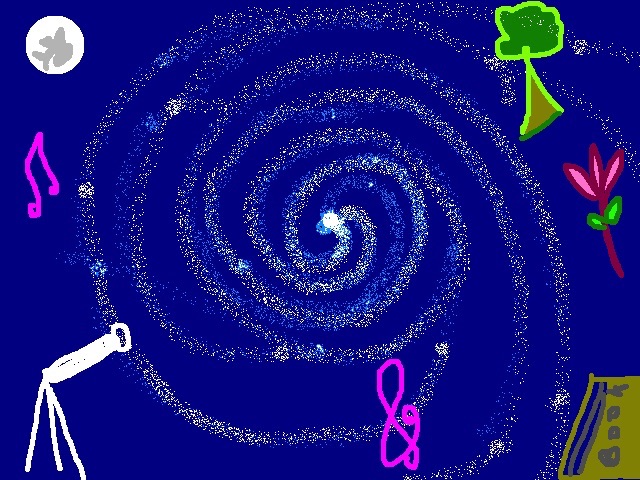
“Good kanna. I listened to galaxies, and then went rock climbing to solve a few problems. Then, I closed my eyes and went to some wild, wild places to hobnob with some wild, wild things. “
“Right!”, he said rolling his eyes just like his teenaged sister taught him. “So you read a couple of children’s books!”
“Yep! Which ones did you like best?”
I looked at the cosmophile and gave him my truthful answer.
“Listening to the Stars – the life and story of Jocelyn Bell Burner who was credited with discovering the first 3 neutron stars, but denied the Nobel Prize for the discovery. They gave it to her male colleagues instead.Ugh!”
“Yes..I read that book too. It was awesome! I wish she won the Nobel Prize too.”
We then shared a moment or two about the unfairness of it all. Then to lighten things up, I said, “But I also realized that the fragile tendrils of love tethering us to Earthly existence are very strong!”
“Ugh! Cheesy! Which book is that?”
“Forgotten poems of Pablo Neruda.” I said grinning.
He chuckled as he walked away. “Poems by Pablo Neruda!”
“You can’t just be an astronaut – you also have to have poetry in your heart so you can share it with the cosmos my man! Remember how folks would’ve liked that from Neil Armstrong & Buzz Aldrin?”
“And music too. Remember you might to have to interpret whale song for other lifeforms! Our life as a kaleidoscope!” I said with a grand gesture of the world with my hands.
“Yes..yes! Well – good to hear you all chirpy. Have fun ma!”
“Hey ma – will call you back later okay? Just talking to my friends rn.”
I stayed up till midnight doing this-and-that so I could wish the daughter a happy birthday. This also happens to be the first time she is away from the home for her birthday.
I had with me a Dr Seuss book “Happy Birthday To You!” And read out the “You are you-er than you today” line for her, to which she gave me a teen-new-college-going eye-roll, which is rather like the Ferrari of eye-rolls.
“Today you are You, that is truer than true. There is no one alive who is Youer than You.”
I chuckled and let it slide. After all, eye-rolls take the place of approval sometimes.
As the day progressed, she called to tell us how her day was going. As annoyed as I was with my parents for asking me what I ate when I called, I did the same thing. The cupcakes, Mac-and-cheese, and coffees seem to have filled her day. I noticed that healthy eating had taken a backseat with their college diets and I gingerly pointed it out.
She said she was thinking of eating a salad and that ought to do.
“But did you really eat the salad?”, I said
“Well…no! But I thought of it, and she is eating a salad – see!” she said pointing the video cam towards her more nutritionally balanced friend. Honestly!
This letting-go is a funny business. I don’t suppose Dr Seuss wrote any books for adults on how to do that. But if he did, I should like to have a copy.
The past week has been an interesting one in many ways. Emotions aside, what this meant in practical terms was that the nourish-n-cherish household ran on a clock.
The map says it takes 45 minutes at peak traffic, but surprise of surprises, it took 62 minutes, neatly shaving off the buffer we had baked in for grabbing a snack.
At 10:45, we would have to be there at Y parking garage so that we could get to X buildingat 11:00.
At 4:45, the flight leaves from Airport Here. That means, the time at Airport There would be x-12.5, but there is x+7.5 stop-over in between.
It made for an interesting read on how we managed to get time down to a science. Dava Sobel creates an excellent narrative around the problem of Time and Maritime navigation.
“Time is to clock as mind is to brain. The clock or watch somehow contains the time. And yet time refuses to be bottled up like a genie stuffed in a lamp. Whether it flows as sand or turns on wheels within wheels, time escapes irretrievably, while we watch. Even when the bulbs of the hourglass shatter, when darkness withholds the shadow from the sundial, when the mainspring winds down so far that the clock hands hold still as death, time itself keeps on.”
Longitude by Dave Sobel
While many astronomers tried to solve the mystery of keeping time using the astronomical events in the sky such as mapping Jupiter’s moons and their eclipses etc, one man, John Harrison set about solving the problem mechanically with a superior clock design. Clocks of the fifteenth and sixteenth century lost time because their pendulums lost their swing with the swaying of the ships, the internal mechanics rusted with the moisture at sea, and numerous other problems.
Reading about Time and how difficult it must have been to measure, has always fascinated the son & myself.
I was reading Mrs Pringle of Fairacre by Miss Read – every time when life demands a slowing down and it is physically hard to do so, a dip into the lovely village green of Thrush Green or Fairacre does the trick. In the Fairacre books, Mrs Pringle is the competent school cleaner who is also a bit of a virago. Her scatter-brained niece Minnie Pringle is often featured – incompetent and maddening as she is, she helps(or hinders) Miss Read out now and then. In this snippet, Miss Read learns that Minnie Pringle, a mother of 3 and stepmother to 5 young children, never really learnt to look at the clock and read the time.
Mrs Pringle of Fairacre: About Minnie Pringle
I had not really taken in the fact that she could not tell the time
‘Well, I never sort of mastered the clock”, she said vaguely, implying that were a great many other things which she had mastered in her time.
‘But how do you manage?’ I enquired, genuinely interested.
“I looks out for the Caxley’, she replied. ‘It gets to the church about the hour.’ (The Caxley is the local bus)
‘But not every hour.” I pointed out.
‘Yes…but there is also the church bell.’
‘It still seems rather hit and miss,’ I said.
Mrs Pringle – By Miss Read
When I read the above snippet, I threw my head back and laughed. Almost subconsciously, I glanced at the various apps on my smartphone to remind me about the day : there were calendars synced with my meeting schedules, alarms to remind me of certain events and classes for the children, timers to help the rice cooker turn itself off, the world clock app to let me know when it is okay to call my friends in the different corners of the globe.
Maybe John Harrison (The man who came up with the design of a clock that could hold time during maritime vagaries such as storms and tidal waves without rusting or losing momentum in the sixteenth century) did not quite anticipate the extent to which the world would adhere to Time, but it is refreshing to think of a few people who are not ruled by the ticking of the clock.
Maybe we should have Do-Nothing Days in which neither the phones, nor the passing of time intrude. It will be a refreshing change for sure.
Note: The obsession with Time is called Chronomania and those who live in perpetual fear of time ticking, time passing have Chronophobia.
There is a general hum of excitement when an Amazon package arrives outside the home. Is it some exciting thing required for the college-bound daughter, or something that would make the husband excited for his myriad hobbies, or another household item that would make yours truly beam?
Usually, the honors of opening the packages are done by the daughter with her adoring brother watching on. Hope I set the stage sufficiently:
Amazon package on porch
Children of house all expecting something for themselves open it
Oh The Places You’ll Go – By Dr Seuss
“Oh The Places You’ll Go” by Dr Seuss. I held the book out to her and gave it to her as a college-going gift.
“Why would I take a children’s book to College Mother?” She said rolling her eyes and wishing her mother would have more sense.
Her grandparents, on the other hand, were truly thrilled by the book.
“What an excellent book ma? It was written the year before his death and has a lifetime of wisdom in it. Excellent book!” said the grandfather.
“Written in such simple terms for children to understand too. ” said the grandmother.
The grandmother and grandfather united in praise of a book shook her a little bit, but how could she? A near-18 year old, always sharing her ripe wisdom with her adoring brother, accept things that easily!
I saw her steal a glance at the book.
You have brains in your head.
You have feet in your shoes
You can steer yourself
Any direction you choose.
Dr Seuss – Oh! The Places You’ll Go
I, for my part, was an amused spectator. This book was one of Dr Seuss’s that I read multiple times over – every time I face a bleak stop at the waiting station, or an exciting time where I hope to soar.
Waiting in Life
Dr Seuss’s book is an energetic reminder that life throws many curveballs, and somehow in this shared sense of struggle and being, a human camaraderie emerges.
Every time, I talk to my friends and colleagues who in the course of their careers have inspired and taught me, I think how incredibly lucky I am to have had the ability to work with people like them.
And how, without our knowledge, we all lifted each other up.
You’ll be on your way up!
You’ll be seeing great sights!
You’ll join the high fliers
Who soar to high heights.
Oh! The Places You’ll Go – By Dr Seuss
And then, in particularly stressful periods, when you are in the waiting station, and have to learn to un-slump yourself, I read that too, as a reminder that life is never a smooth ride and everyone goes through phases of the not-so-happening, not-so-good.
Yet, at the very end, when the book assures you that all will be well. You do develop an optimism and hope that everything will turn out well in the end.
“And will you succeed?
Yes! You will, indeed!
98 and 3/4 percent guaranteed)
KID-YOU’LL MOVE MOUNTAINS!
Oh! The Places You’ll Go – By Dr Seuss
It is no wonder that this book is popular as a gift for anyone starting out a new phase in life.
Or not. It is a gift for all the times you need a reassurance of all that life takes.
Blue – In Search of Nature’s Rarest Color – By Kai Kupferschmidt
There are blues that are particularly attractive in clothing. For instance there was a deep sea blue nickname M S Blue, for the famed singer, M S Subbulakshmi first stylishly wore saris win that rich blue to concerts. Then there was the copper sulphate blue, turquoise blue, peacock blue, sky blue and navy blue.
Nevertheless, the book has many interesting aspects to the color blue. Starting from ceramics to precious stones and textile colors, the color blue has always enamored artists and patrons alike.
I found myself gleefully reading about the color, YinMn (pronounced yin-min) blue created by Dr Mas Subramanian that was later honored by having a color of its own created by Crayola the Crayon company. Made from Yttrium, Indium and Manganese, the color created a blue wave in the world of colors.
The chemical formula of YInMn Blue is YIn1-xMnxO3.
As I sat watching the son in his swim class, I felt a forced sense of ease settle upon me when I opened the book to read. The swimming pool was tiled with light blue tiles, the white lighting overhead made it a calm enough locale even though there were about a hundred people in the pool area. Waters do have a calming influence if you let it. This summer, we have been swimming a little so we could appreciate the wonders of the underwater 🗺 world 🌎 in the Pacific Ocean. Closing my eyes, I can still visualize the vibrant school of fish and the large turtle in the blue waters.
The Sea Turtle near Kauai, Hawaii
I always imagined the creatures of the ocean having an even higher frequency range of light perception than humans. So I envisioned them swimming and living in a brilliant world of coral reefs and kelp forests with the myriad shades of blue contributing to its beauty. Imagine my disappointment then that the book while explaining the cones that are present in our eyes to detect color indicate that whales, seals and many denizens of our blue seas cannot perceive the color blue and may well see the teeming coral reefs as grey on grey.
Image from the book as given on the Amazon page
That made me feel blue – I am not going to deny that. (Though I must admit the color blue has never made me feel blue, so I wonder where the expression comes from.)
Art work by Daughter
This book has re-awakened a dream of two science-based books that I have been meaning to write for children. One on colors and another on how different creatures perceive our world.
When can I become a mermaid?
To explore the forests of kelp
Or a butterfly
Or a blue jay or a hummingbird
So I can see the gardens of life abound through their wondrous roving eyes.
I am enormously grateful that I am moved by the beauty and strength of a tree. I have spent many (but not quite enough) tranquil moments watching and admiring trees. Trees provide an unassuming, grounding presence for restless spirits such as mine.
I remember one day not too long ago when spring had turned to summer, and I stopped short and quite abruptly in front of a gingko tree. The tree was now fully covered in green leaves – when did the bare winter transform to full grown summer? I don’t remember the quiet miracle of life marching on though I passed the tree almost everyday: The efficient leaves photosynthesizing and nourishing the tree.
I am reminded of William Blake’s quotes on trees:
“To some people a tree is something so incredibly beautiful that it brings tears to the eyes. To others, it is just a green thing that stands in the way.”
William Blake
How sagely they bear the scurrying squirrels, the boisterous monkeys, the birds who make their homes in them including birds like woodpeckers who must be a noisy presence, the army of insects, and so much more? Even in my most whimsical moments, I cannot envision an angry tree or even an annoyed one. A tree is always what it is: steady, useful, beautiful.
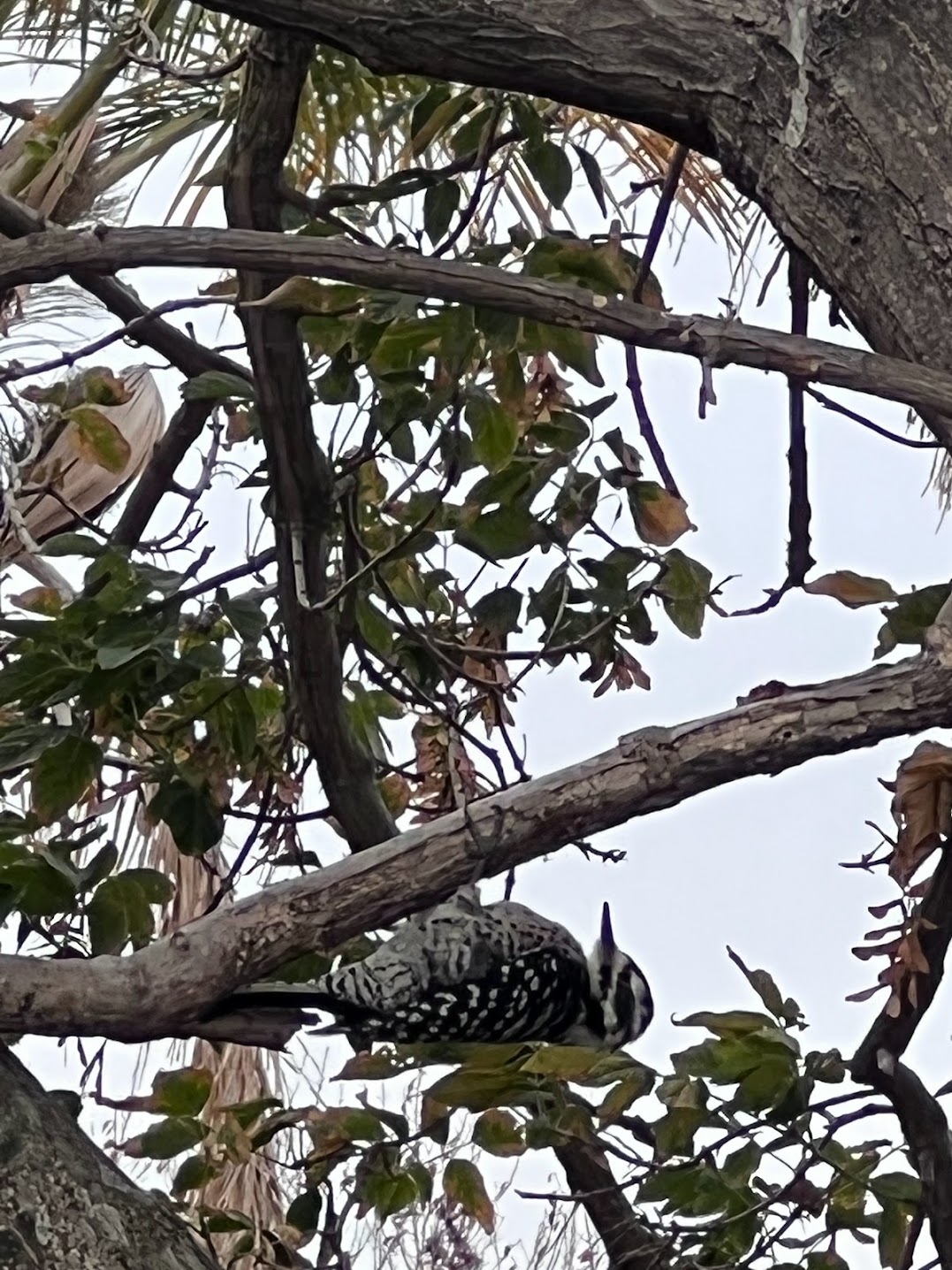
I was watching a woodpecker peck steadily at a tree branch one day.
Tok-tok-tok-tok-tok-tok-tok
I stood there taking in the beauty of the suns rays, the straight angle at which the woodpecker was perched on the tree (really – how was it holding on like that without ropes, and banging its head against the tree all day long?), the beautiful red of its feathers glinting against the rays of the sun, contrasting with the light green of the trees leaves.
Tok-tok-tok-tok-tok-tok-tok
I remember wondering why the tree didn’t just shudder a bit to shake the bird off. But it didn’t. The woodpecker for its part seemed to be so happy at yammering at the tree like that it shocked me. For such a small bird to absorb the waves created must be quite high even if it was self inflicted.
Musings like these are music to the soul. For I came back and the internet gave me plenty to read up on woodpeckers. Coming from the human world, I assumed a design structure such as shock absorbers for the woodpeckers to endure the yammering. But nature surprised me yet again. Biomimicry as a discipline continues to hold me in awe. Woodpeckers really do not have shock absorbers. Instead their skulls are designed to endure the impact much like a hammer takes the impact of a bang. Given their size, the impacts they make are just enough for them to absorb throughout the day.
When pecks arrive through the day, I think of the tree, and the happy woodpecker. Even though all those who knock and peck at my attention are not exactly happy to do so, I assume they are happy like the woodpecker, and I try, poorly, to act the part of the sagacious, gracious tree and all is well.
Previously, when we’ve dipped our senses into another world, it was while being firmly rooted in our own. Peeking into the aquariums and viewing areas so painstakingly built for us by the ecologists and marine scientists, I always sent a wave of gratitude to those who enabled these magical moments.
It was with excitement and trepidation that we stood there listening to the instructions from our guide. Contrary to most snorkelers in the region, we were not experienced swimmers. As we slipped our feet into the paddles, a gurgle of hilarity hiccuped its way up and the children & I exchanged glances and started laughing. We did look ridiculous.
Getting a peek into the world of the ocean has always been a dream. Reading essays such as the Enchanted World by Gerald Durrell made the desire stronger.
Any naturalist who is lucky enough to travel, at certain moments has experienced a feeling of overwhelming exultation at the beauty and complexity of life
But there is one experience, perhaps above all others, that a naturalist should try to have before he dies and that is the astonishing and humbling experience of exploring a tropical reef. You become a fish, hear and see and feel as much like one as a human being can; yet at the same time you are like a bird, hovering, swooping and gliding across the marine pastures and forests
Gerald Durrell – Golden Bats and Pink Pigeons
While it had been so easy to slip our flippers on and off on land, the moment we had gentle waves lapping against us, simple tasks became a comedic trial of incompetence. I was glad to see that experienced swimmers struggled just as much as we did with this task. I may have smirked, and if I did, who could blame me.
As we moved on looking into the waters and observing the fish, there were moments when the flippers propelled us forward, and moments when the lungs rebelled with the excessive sea water that we were drinking in with each breath.(It takes some time to find the right degree, adjust the valves etc).
Whether we were watching the fish, or they were watching us was a philosophical question for I felt the fish swim by in delight and make several loops and gags around us. Schools of them – probably curious, and laughing at our inefficiency with the waters.
The fish frolicked, the humans shuddered; the schools of fish glided and gurgled happily while we sputtered and choked; the fish changed direction seamlessly while we struggled. If we entertained our piscine friends, I am happy.
Several minutes into our dip and frankly embarrassing foray into the ocean, our guide came gliding up like a fish himself and signaled us towards a large turtle (she-turtle he said), and we nodded. “It is illegal to touch a turtle these days, but you can see it from afar.”
We changed course (which is to say we all spat out some sea water, gulped some air and water, sputtered some more and set out in the approximate direction) flipping those comical looking flippers hard. And there, right in front of us was a large turtle with elegant fins swimming graciously in the waters. For those brief moments, we weren’t bumbling sea-water drinking sputterers lost in the ocean, but mesmerized and equally graceful spectators to one of the most elegant creatures on the planet.
This was magic. Days afterward, I can flash back in my mind to that clear image of the turtle with its large fins swimming on by us. A face structure that enables it to look like it is smiling and amused with life, the turtles smooth motion as it cut through the choppy waters of the Pacific Ocean was amazing.
How do bone structures, ligaments, tendons, and all the things that hold an organism together evolve by design to function thus? What marvelous creatures sentient beings are? Nerves, neurons, cells, tissue, blood, ligaments, flesh and bone- but all of this coming together to become thinking beings with intent.
I obviously have been looking for pictures of all that satisfies this marine curiosity ever since. My curiosity was rewarded by this book :
The pages indicate the anatomy of many marvelous creatures.
The Anatomy of a Sea Turtle isn’t in this book, but the pictures of jellyfish, cuttlefish, herring fish, starfish, whales and numerous other fascinating creatures makes it a marvelous book to peruse.
What an enormous wonder it is to be a sentient, logical, and functioning being in this complex world? For that one marvelous dip into the world of the sea creatures, I am grateful beyond words can describe.
The week at Kauai in Hawaii was beautiful. During the days afterward, the little island images would flit in and out like waves on a beach. Sometimes the imagery so powerful that they would refresh and restore from afar. The turtles would swirl in the ocean waves, the turquoise waters would gently lap the golden sands, or splash against the rocky beaches, the birds would chirp merrily, and every now and then the school of fish or that large turtle- would flash up an image from the reefs below.
The flowers of the island, Leilani pua would gently sway in the ocean breeze, the sounds of the rains that were difficult to predict and never long to endure would patter into one’s consciousness.
The general light of the island would be suffused into the surroundings.
As life settles into its usual routines, there is a rose-tinted tinge to the world that is slowly but steadily fading. I now have to recall the turtles, as opposed to them showing up unannounced. I cling on though.
Looking back at the pictures from the vacation, I realize that tropical island vacations have a timbre and light that is wholly separate from the rest of the world. Who was that who said that No man was an island? Imagine a world where each of us is an island.
(Words from the book, Imagine A Place – Words By Sarah L Thomson, Images by Rob Gonsalves)
Imagine a Place – by Rob Gonsalves, words by Sarah Thomson
I stop to admire the roses, and compare and contrast their multi-layered rose-scented beauty with the elegant and highly simple-structured plumerias in the Hawaiian islands.
How complicated and simple life can be – and how beauty to be found in both aspects of life.
The island doesn’t leave you, and it seems to remind me of the importance of the solitude and refreshing nature of this little island in oneself, to be pulled up at will when life tugs you in every which way.
In the book, a child leaves the environs of the city to go and live with his grandparents in the countryside. The lake and forest nearby look inviting and the child starts exploring on his own.
Usually, when I take a color photograph of a luscious green forest or a beautiful waterbody, I prefer the picture in all its glory. Even if it does seem over-saturated at times. But in this book, the muted colors do nothing to diminish the relaxing feel of the book.
Image from Height of the sky & Depth of a Lake – Kim Jihyun
The author says that she wrote the book after a week back from a relaxing sojourn with nature and the moment I came back from a vacation in Hawaii I picked up the book. In the book, it is the lake the boy dives into. We dipped into the ocean, and the height of the skies we explored with a helicopter ride.
In one glorious day we soared to the skies and took in an aerial view of the beautiful island of Kauai – soaring over the cliffs of the Na Pali coast and diving into the rocky coral reefs for an afternoon of snorkeling.
Na Pali Coast – Kauai
Not all of us in our group were good swimmers. So, in order to experience the joys of the oceanic creatures, we learnt swimming everyday in the past month.
Was it worthwhile? Resounding yes! We swam in the sublime beaches of Hanalei Bay and during snorkeling were able to see schools of fish and a large sea turtle swim right by us, along with marvelous creatures such as parrotfish, sea cucumbers etc.
We could not take our phones while snorkeling, so this is a pic of a turtle while I sat on the rocks above.
The height of the sky and the depth of the oceans are both within us.
Almost as soon as one lands win the quaint island of Kauai, the unmistakable feeling of rural bliss welcomes you with the rooster crowing. As one fellow traveler put it, the roosters of Hawaii are like squirrels everywhere else. They are everywhere, and probably contribute to the seeding and flowering of the habitats near them in myriad ways.
They ducked and weaved through the airport traffic, just as surely as they waddled into the fragrant plumeria flowers flitting down from the trees above.
The roosters there sure have a comical element to them. Moana’s Hei-Hei could have been a real life characterization of any of these birds.
Hei-Hei of Moana Fame
The children sat inside the car cackling and laughing as I ran out into the parking lot ahead of me to shoo the birds away as the languid car trundled into its spot in the parking lots. Sound effects included: baaackk—buck-buck-buck….shoo-shoo-duck-duck-goose, nene-nene-nene with an inspiring arm flailing and running after the birds.
“Just one video of this ma! “ said the teenage daughter and niece to many enthusiastic nods from their little brother. I joined them in the laughter but refused to star in a video like this. One has one limits – even if it is to entertain our fellow human beings.
“I love birds too much and these birds seem to be so – I don’t know, bird-brained! Huh! Is that where the term comes from? Makes sense. These birds seem to think the roads belong to them and they sit there – pecking at whatever it is on the roads!” I said.
Just as engaging as the roosters are the red breasted cardinals, the nene (geese), cattle egrets, starlings, mockingbirds, plovers, sandpipers near the beaches , and the marvelously inspiring long-tailed tropicbirds.
Standing atop the viewpoints of the Waimea Canyon in Hawaii, the long tailed tropic birds gained our attention and admiration. Gracefully traversing the yawning canyon below them in swift smooth flights, these birds seem to fly in and out of rainbows 🌈 . If that isn’t magical I don’t know what is.
It is no wonder that Hawaiian folktales are so rich with their imagery of birds and ocean animals.
Every morning, as the sunlight crept in through the clouds, and ushered in another surreal day in the magical islands, The Hawaiian state birds, Nene as the geese there are called, did their bit and squawked their way into our consciousness as well.
Some nights I would wander outside to stand under the stars when I’d notice groups of nene sleeping under the stars. ✨ Seeing them under the stars like that made me slightly envious I must admit.
Whether it was the beautiful darting and elusive ‘i’iwi (hummingbird -like creatures that are endangered) or the common roosters, starlings, egrets, cardinals, and nene, the birds (Manu) of Kauai have a divinity (a certain Akua) about them that make you want to soar in spirits with them.
One morning I caught the daughter sounding very much like me and chastising her little brother who was watching Marvel on the television. “You come to Kauai and watch these super-hero fellows again – no! Nuh-uh! Out!”
“But there is nothing now – just eating breakfast and watching TV!” came the wounded reply from the budding naturalist. But his sister was firm and switched off the television.
The fellow came into the kitchen, and I shushed him, for out on the verandah was a small, and elegantly regal-looking red-breasted cardinal. We watched the bird in awe for several minutes before our spell was broken, and we sighed contentedly and went about the day.
If naturalists go to heaven (about which there is considerable ecclesiastical doubt), I hope that I will be furnished with a troop of kakapo to amuse me in the evening instead of television.