🤕 Boo-Boos 🤕

Do you know when you start to feel your age? 

An innocuous question popped up on my browsing sites. Really, sometimes I wish these systems weren’t omniscient. I might’ve searched up the best way to dress a flesh wound, but did that mean you use my demographics, cross-reference it with my potentially weak hips thanks to my age, and wrangle up half-baked questions and answers on when you actually start to feel your age?!

Preposterous.

If only someone would sue the internet for this nonsense. 

I feel fine. 

So what if I am slightly wobbly while descending the stairs after a fall two days afterward? It is perfectly normal isn’t it? I mean I am not a teenager anymore or in my twenties or in the decade after that for that matter. But so what?

A children’s book I’d picked up a few days ago from the library beamed up at me. Books: Ever the saviors I tell you.

The Boo-Boos That Changed the World: A True Story About an Accidental Invention (Really!) by Barry Wittenstein and Chris Hsu 
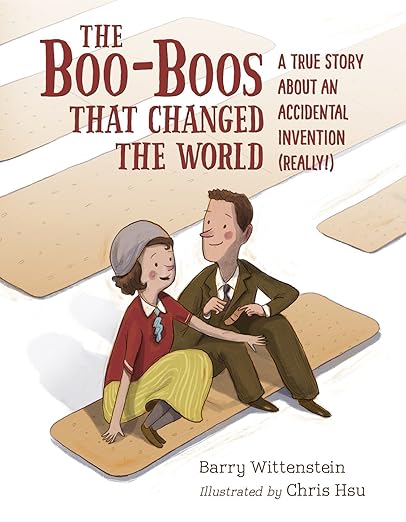
boo-boos

The book is about a man, Earle Dickson, whose wife gets a lot of boo-boos. While a competent enough person with dressing of wounds and such, she is also aware of how hard it is to take care of wrapping the bandages and cutting the reels of cotton etc by herself, especially if one of the hands are injured. 

Thus was born the handy Band-Aid. Husband and wife worked on the design together and pitched the idea.

Luckily Dickson also works for Johnson & Johnson – the business that could take up an idea for boo-boo betterment. 

Despite the brilliance of the idea, it did not take off as easily. People still seemed to prefer the old-fashioned way of tending to their injuries. That’s when they hit upon the idea of Boy Scouts of America – a place where folks regularly hurt themselves, and wanted to get back to having a marvelous time as quickly as they could. (Children! The best boo-boo handlers in the whole world. I remember glorious years in which scraped knees and elbows meant nothing, other than a dusting off before running that next race to the eucalyptus tree down by the road. )

That did it. As Boy Scouts embraced Band-Aid, so did the rest of the nation. I beamed up at the son, who is a proud Boy Scout and had helped me with immediate first-aid with the boo-boo.

He then ordered some first-aid supplies off Amazon, and the site flashed that it would be available at my doorstep in a couple of hours time. We looked at each other, and said, “Wow! We are spoiled brats huh?! We just wait for it at home and peel-and-stick.”

https://www.penguinrandomhouse.com/books/557760/the-boo-boos-that-changed-the-world-by-barry-wittenstein-author-chris-hsu-illustrator/

I stared back at the browsing link being recommended to me: So, when do you start to feel your age?

👻 Maybe when you realize that getting a boo-boo and taking off soon after is harder. 

🤕 Maybe it is when you groan your way downstairs from a simple boo-boo from days earlier. 

😈 Maybe it is when you yearn for that beautiful moment just before the boo-boo.
Successful Transitions

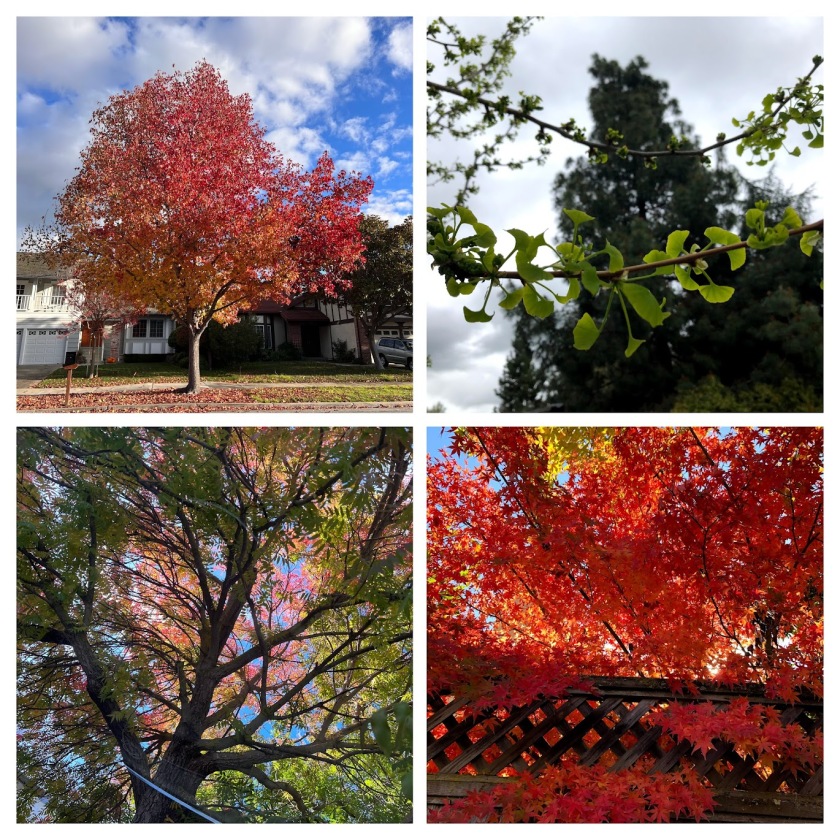
Reminders of time passing are all around us. It is there in the first drizzle of October nights, in the nippy mists of November mornings, and the frigid temperatures of the freezing winter months, as much as it is in the growth of hope and new leaves in spring.

IMG_7697-COLLAGEYet, even after a few years of these cycles, we still do not comprehend the effects of time as effectively as when we see those around us age, or loved ones lose their vigor. It has been a hard lesson and one everyone goes through in life. But the past few trips to India have really brought this to us with increasing clarity and sadness. Sadness, not for the coming of the inevitable, but for our own reluctance in accepting it.
It is hard seeing once vibrant aunts and uncle lose their vigor and charm. Precious few hold on to their good graces as they age. Many lapse into complaining about their lot. Still others, refuse to accept their diminishing physical prowess, and insist on being in-charge even in situations where they are clearly past it.

What will our folly be?

The more I saw of the aging and the elderly, the more I wonder whether there is an easy way for us to move towards acceptance. I understand first-hand the shock of it. I remember thinking with shock when my daughter’s friends called me ‘Aunty’ for the first time all those years ago. When had I become an ‘aunty’? But now, I love it when the friends of my children call me ‘Aunty’ – it is a word that fills me with joy.

This is also a reason I find myself attracted to books by authors like Miss Read. (Jacqueline Winspear was recommended to me recently and I like the style and wisdom in her writings as well). Fictional and functional characters such as Miss Clare and Mma Ramotswe of the No 1 Detective Agency come to mind. They bring to life the kind of people we admired through our childhoods: normal people living life with grace, common sense and love for those around them. It is comforting to read that practicing these apparently simple tenets lead to a good life.

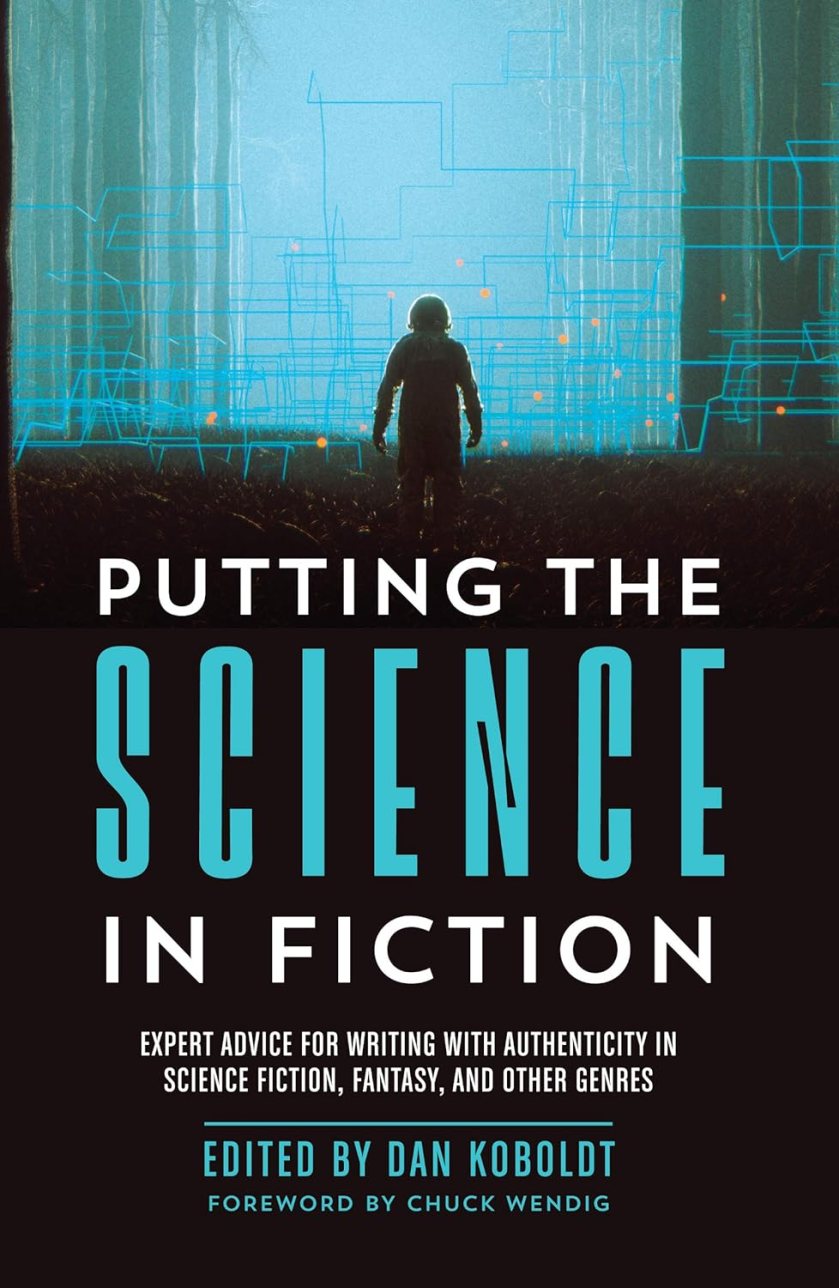
As I read the essay on psychosocial intelligence in the book: Putting the Science in Fiction – Collated by Dan Koboldt , I could not help nodding along at the bits of writing related to our lifespans as outlined by the essayist Maria Grace. Maria Grace is a psychologist and a curious observer of the human condition. In it, she says that

🍀”Psychosocial development encompasses the changes in an individual as they manage various societal expectations across the lifespan.”

While there are many books that guide us through adolescence (now more than before) , I am constantly looking for good books that guide us through the middle and later stages of our lives. There are always philosophical works – the wisdom of humankind through the ages distilled in our myths, fairy-tales, vedas, religious texts, fables and epics. Philosophers such as Seneca, Aristotle and Buddha who have given us a peek. 

When we are children, we rarely understand what adults mean when they say childhood is far easier. I don’t think I ascribe to that theory. Those of us lucky enough to have people looking after us certainly have things to be grateful for, but adolescence is also a period of great uncertainty and angst.

However, I understand now what teachers and parental figures meant when  they said childhood was easier, for adulthood brings with it a whole host of different challenges. The expectations of our roles in society, the ability to care for different generations – older parents, our siblings, colleagues and peers, and younger children ( our own, niblings, friends children, those in our care).

🍀”In addition to the tasks of preparing older progeny for launch into the world and managing the increasing needs of older parents, individuals at this stage of the lifespan are also expected to step into social leadership roles. A commitment to lifelong learning and growth marks a positive resolution to this stage, whereas Ebenezer Scrooge-like preoccupation with self and comfort mark an unsuccessful one.”

As I read on to the late adulthood sections of the essay, specifically, navigating the travails of old age and its associated ailments. She goes onto say:

🍀“Those who manage this transition (late adulthood) successfully do so by recognizing the worth of their previous and continued contributions to their society and future generations. Depression, despair and giving up mark unsuccessful transitions.”

I have yet to read any books by Maria Grace, but her essay on psychosocial development in the Putting Science in Fiction book is an excellent one. (Essay: Character Development Beyond Personality Quirks)

science_in_fiction

Raindrops on Roses

The tasks of the day done, I plonked myself on the window ledge, hoping to catch a glimpse of the waning moon before heading to bed. The nights in a waning moon cycle seem to hold a twinge of disappointment – the moon rises later and later. It is like the beautiful moon  is teasing us to forget its luminous glow before it starts up again, gaining in hope and luminosity as the waxing cycle kicks off.

I peered out of the window into the dark driveway outside and let out a gasp. It had been raining, or drizzling, and I was completely unaware. Oh!

Earlier that evening, the son and I had gone out for a stroll, hopefully clutching our umbrellas, and peering at the clouds overhead, but nothing happened. By the time we headed back the clouds had started parting, and we didn’t think anymore of it.

But now, sitting on the wooden ledge, I felt a pang. I have mentioned californian summers before – bursting with wildflowers, brown hills, aside, they also tend to linger on. By the time October rolls around, there is a distinct shabbiness to the summer looks – the flowers have dried out or faded on their stems, the hills have gone from a golden hue to a dull brown. All in all, there is a yearning for cooler days. 

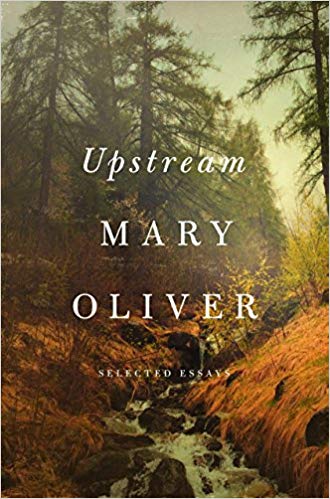
I sat and watched the quiet wet scene for a few minutes longer. It felt good to do nothing for a few moments after a long day of doing. Sometimes, I feel Mary Oliver’s three selves (The child, the doer and the dreamer) are constantly being overshadowed by the doer.

upstream

The child only peeks out occasionally, and when it does, it is always joyful, hopeful and wondrous. The promise of a new day, the beauty of a flower, the cool air after the rain and so on. The dreamer and the child self seem to get along quite well – one encouraging the other, teasing and prodding along the way. 

https://www.themarginalian.org/2016/10/12/mary-oliver-upstream-creativity-power-time/

This quiet contemplation at midnight was so refreshing, I had no desire to head to bed even though the adult self knew I must. The doer beckoned the next day.

The next morning as we stepped out into the fresh rain-covered morning, the son and I sniffed the cold air. We stopped to peer into a rose still wet from the rains of the previous day. A moment of peace nudged its way into the usually harried rush to school, and we looked up together smiling at the same time.

raindrops_on_roses

‘Tell me, what is it you plan to do with your one wild and precious life?’

  • Mary Oliver

The Storms of Vincent

Regular readers know that I am a pluviophile (one who loves the rain). On my recent visit to India, I was out walking around the apartment complex our family lived in one night, and found myself caught in the most brilliant and relentless rain they’d had in months apparently. 

I was delighted. 

rain

I was on a late night phone call to the family back in the US, and I rushed to the building in the center taking refuge there and looking stupendously happy for someone who had no idea how to get back home in the rain, or if the door would be open for me when I did get back. None of that mattered just then. Living in the present and all that. I poked my tongue out to catch a few raindrops.

“Hello!” said a neighbor, and I gulped feeling foolish. She smiled and I smiled back sheepishly, hoping she hadn’t seen. 

“I don’t think this is going to stop just yet. I am just going to run for it. “ she said and gave me one of her dazzling smiles, and plopped off through the rain. 

I stood transfixed by the pouring sheets of rain. It would have definitely been classified as ‘a storm’ in California.  Lightning lit up the skies, and thunder rumbled. It was beautiful.

I don’t know how long I stood there gawking like that, but soon I realized that the downpour was not stopping any time soon, And it was close to midnight. Unless I wanted to spend the whole night outside, I would have to run through the rain. So I did. I splashed into the house – luckily the daughter was still awake, chatting with her friends on the phone and she opened the door. She gave me a disapproving cluck and said “Oh my gosh – let me get you a towel.”

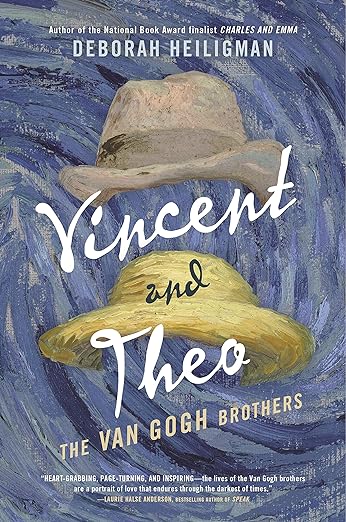
As I watched the rain pour itself out, the little rivulets of water sliding down the building walls, and the flashes of lightning illuminating the cityscape every now and then, I found I could not sleep and picked up the Vincent and Theo book by my bedside, and flipped to the part where Vincent likes painting storms.

vincent_theo

Excerpt:

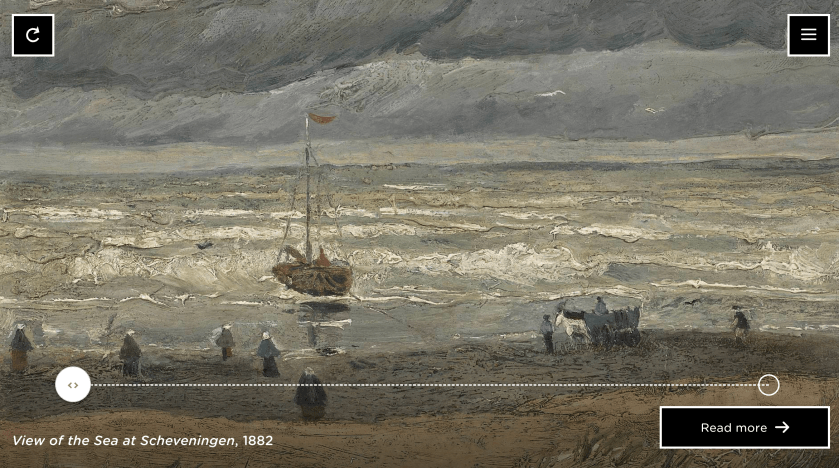
It’s been stormy and stormily beautiful to Vincent in Scheveningen lately, and into the squalls he goes. He is just starting to paint with oil and is not used to them yet, but he takes oil paints into the storm to paint the beach, the waves crashing one after the other, the wind blowing, the sea the color of dirty dishwater. He makes one of his first oil paintings, View of the Sea at Scheveningen, with a fishing boat and several figures on the beach. The wind is fierce, kicking up the sand. Sand sticks to the thick, wet paint.

Vincent loves capturing the turbulence of a storm. “There’s something infinite about painting”, he tells his brother. “I can’t quite explain – but especially for expressing a mood, it’s a joy.”

A few days later, on a quieter day, he sketches the beach. Sending the sketch to Theo, he describes a “Blond, soft effect and in the woods a more somber, serious mood. I’m glad that both of these exist in life.”

Wild and somber. Room for both. Room for all.

https://ontrafel.vangogh.nl/en/story/167/traces-of-a-nasty-little-storm

Please check out the View of the Sea painting and further details here

Screenshot 2023-09-25 at 2.35.11 PM

Vincent’s life was a stormy one too. He was not an easy person to live with and this caused many rows with his family, though he was intensely dedicated to all of them: his parents, siblings (especially Theo), uncles etc.

I looked out of the window again. We all live through the storms in our lives. But, the good thing is that no storm lasts forever. Not all living beings would have the luxury of drifting off to sleep like that, and that made me very grateful for a warm bed and dry clothes.

“There is peace even in the storm”

― Vincent van Gogh, The Letters of Vincent van Gogh

raindrops

Rainbow Colored

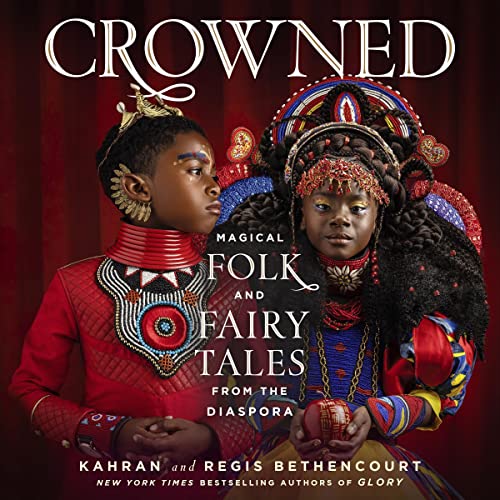
I picked up two books on separate trips to the library and enjoyed reading them. The first was a book of fairy tales retold in the African diaspora: Crowned. A book of fairy tales is always enjoyable, and one that has a good smattering of classic fairy tales combined with some myths from the African heartlands are a joy. 

The children shown as the princesses and princes are the best. The costume designs and makeup are exemplary, as are the re-imaginings of their origins. Most books illustrate Cinderella and Snow White as fair-skinned princesses, and it is refreshing to see these pictures.

The second book was: The Dark Fantastic – By Ebony Elizabeth Thomas

Race and the Imagination from Harry Potter to the Hunger Games

The Dark Fantastic is a book of essays exploring the absence of color in fantasy. The author starts off the book with Vernon Dursley’s famous saying in Harry Potter and the Philosopher’s Stone: “There is no magic.”.

She then goes on to explain her upbringing in working-class Detroit in the 1970s. 

“The existential concerns of our family, neighbors, and city left little room for Neverlands, Middle-Earths, or Fantasias. In order to survive, I had to face reality. “

A few sentences on, though the author states:

“In the realm of the fantastic, I found meaning, safety, catharsis - and hope, Though it eluded me, I needed magic.”

I identified with this statement of needing magic. Humanity’s need for magic is evident in our myths and epics from thousands of years ago. 

  • Was there a flying carpet? A pushpak vimana?
  • Are there heavens and hells?

Yet, for thousands of years, we have told ourselves increasingly fantastical stories to keep our spirits alive, and our imaginations intact.

“I like nonsense. It wakes up the brain cells. Fantasy is a necessary ingredient in living.” Dr Seuss. 

A common thread emerging from lack of diversity in books, is that children don’t see enough of themselves in the books. I lay the books down musing on this. I, like many in my generation, grew up surrounded by the fairy tales of snowy white princesses, and the fantasy worlds of Enid Blyton. Yet, I don’t think I ever wondered whether I would be able to climb up the Magic Faraway Tree to have adventures, or swish away on the Wishing Chair to magical places.  The protagonists were all British children, but it did not seem to make the slightest difference to a middle class brown skinned Indian child. Maybe I was just lucky that it never occurred to me. But did it occur to my friends? If it did, I am not sure we discussed it. 

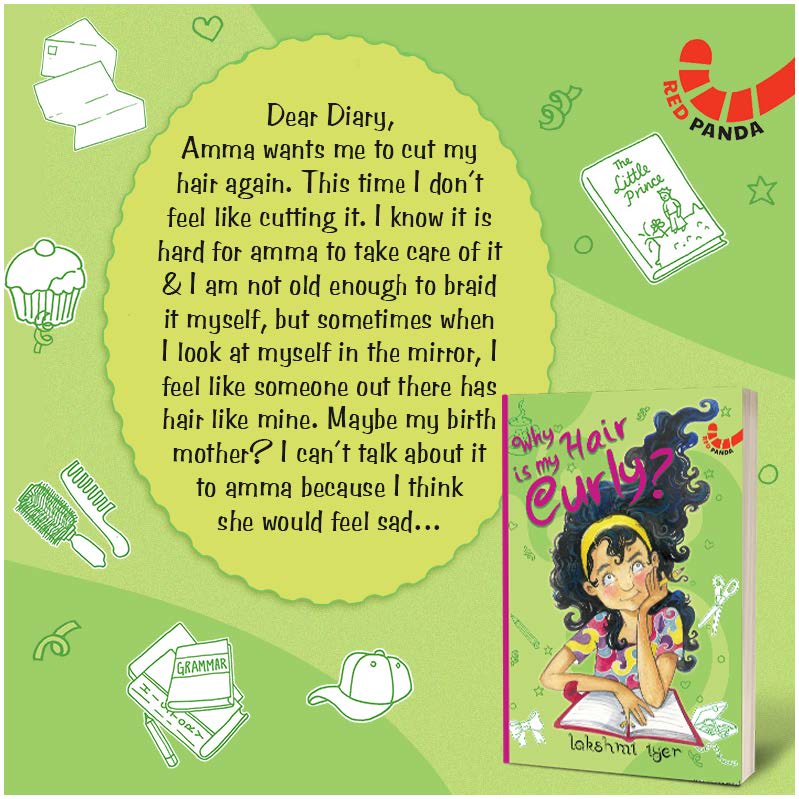
That sort of limitation in thinking only came as we grew up and saw for ourselves the inequity of opportunities. I am grateful, of course, to see a book in which a child refers to their mother as ‘Amma’ as we do at home. (Why is my Hair Curly – by Lakshmi Iyer)

Or see that picnics can involve rotis and potato curry, and not just sandwiches. But I am more grateful for the reach of fairy tales. They provided a much-needed element of magic and hope. 

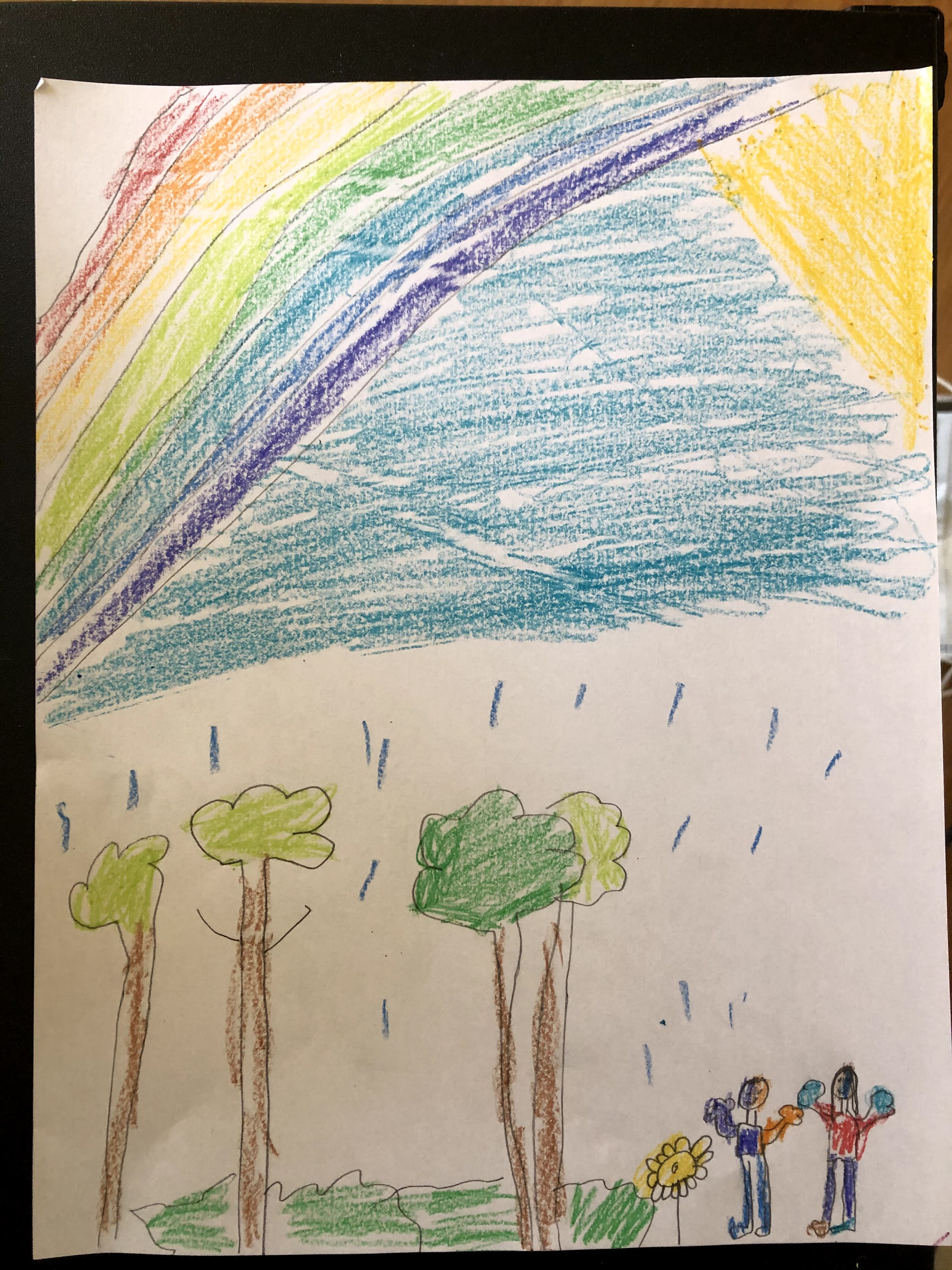
As children, the inhibitions of things like race, creed and color are not there. I fondly remember the picture drawn by the son in kindergarten when his teacher had told all children to have more colored people in their illustrations. He had drawn all their faces rainbow-colored 🙂 

The Egg That Got Back Up!

Every now and then, a children’s book arrives that makes one sit up and relish the simple genius of it. 

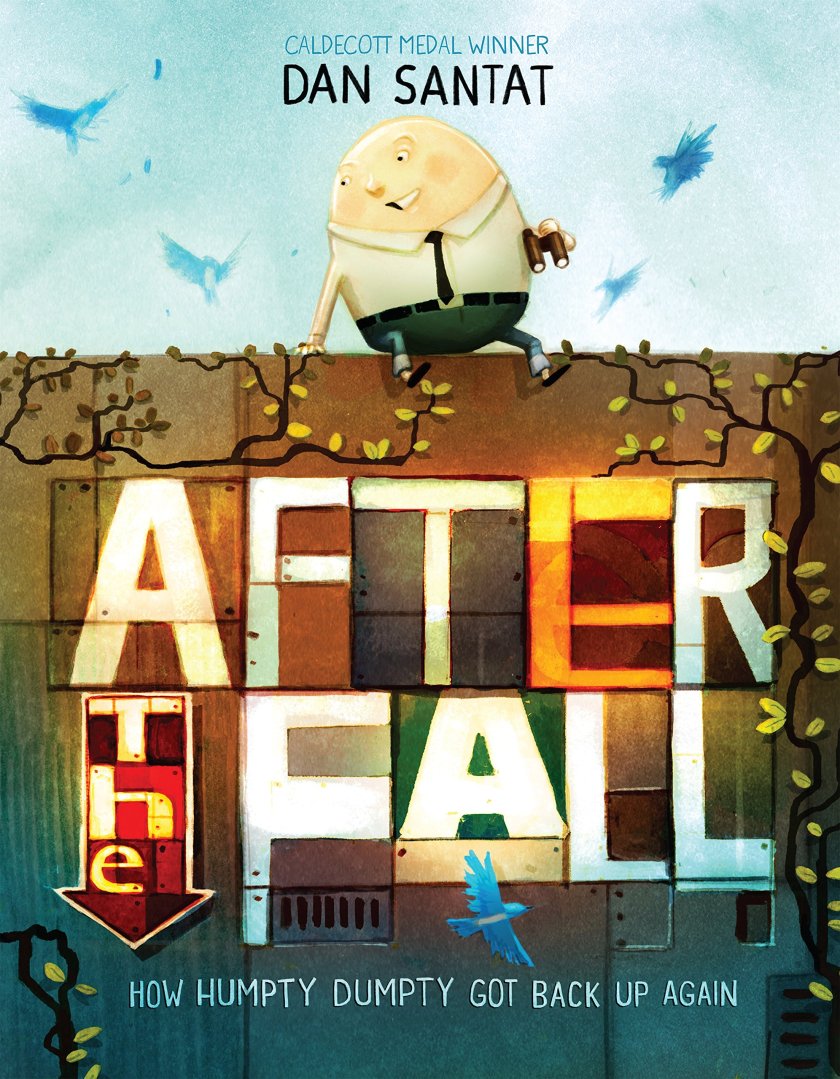
“After the Fall : how Humpty Dumpty got back up again” is one such. Written by Dan Santat, it went on to win the Booklegger Award.

humpty_dumpty

We all know Humpty Dumpty sat on a wall

We all know Humpty Dumpty had a great fall

But ….

Do We all know that all the king’s horses and all the king’s men 

Did put Humpty Dumpty together again?

The book starts off with the ‘Great Fall’ that poor Humpty Dumpty is famous for.

But something happened to the Humpty Dumpty who was put together again. He developed acrophobia (a fear of heights)

The illustration accompanying this is brilliant. Notice the cereal boxes in the bottom shelf? Bo-rings, Cardboard, Grown-Up Food, Bland 

humpty_dumpty_1

Compared to the all-so smile inducing Choco Duck, Rainbow Bites and Pirate Crunch occupying the higher shelves.

But one day, Humpty Dumpty is inspired – if not to fly himself, at least to design a paper plane that can fly like his dreams.

But accidents happen as Humpty Dumpty knows, and how Humpty Dumpty overcomes his fear of heights to morph into The Egg Who Got Back Up and realized far more than he had ever expected is a story that will leave you inspired and smiling.

humpty_dumpty_2

A sublime change, and a very relatable tale of living:  living with fear, and living with hope, and living with the faint possibility of overcoming our fears is what the book is all about. And isn’t that enough?

Isn’t that all we all yearn for in our lives?

That hope that we can overcome our own selves and go on to inspire ourselves beyond our wildest dreams?

humpty_dumpty_3

Navigating by the Starlight

Navigating by the Starlight – Listen on Spotify

Rest, nature , books, music, such is my idea of happiness.

– Leo Tolstoy

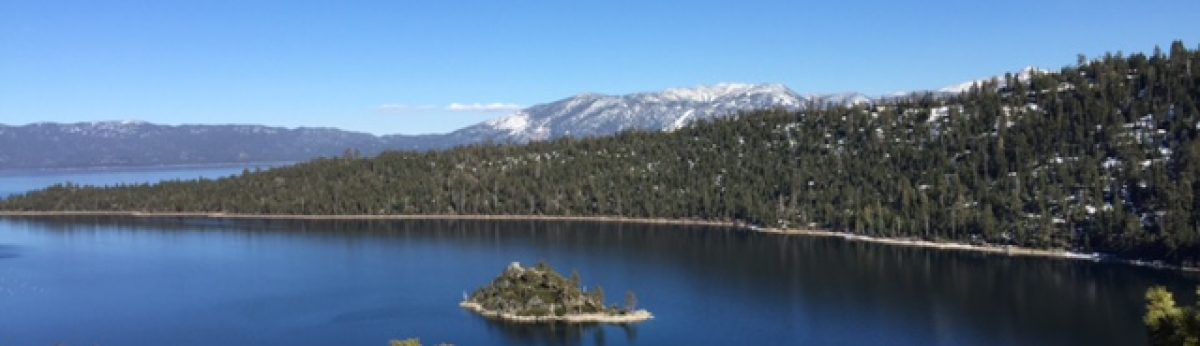
I sat looking out at the lake, with a book on life in the Oceans by Sylvia Earle in my hand. I was not exactly reading. That in itself was worth musing about: with a book in a quiet spot, but not reading. Usually I can zone into a book within seconds. It is a source of being teased in the home. But that day, I found thoughts fleeting, the mind elsewhere: it’s this pace of life, I told myself sagely. Not much time for nourish-ing and cherish-ing. I chuckled at that (I know! )

I had been on a brisk walk at the campsite a few hours from where we lived. The drive up there was relaxing in itself.  The long, solitary drive gave me the space to make a few phone calls, listen to some music and an audiobook. It was perfect. This kind of solitude is rarely available and I was determined to enjoy it.  

Where was I? Yes – sitting and doing nothing but taking deep breaths and looking lazily out at the lake in front of me. 

img_7039

The Eye of the Earth quote playing on my mind. Looking across the lake, I saw a bush of greenery that reflected so beautifully in the lake as so resemble a human eye. Some boys were skipping stones lazily across the lake, and faint music was heard elsewhere. 

Later that night, the skies opened up. At first the faint light did not reveal the nightly glory – the cosmic dance that plays out every night. But by 11 p.m., there was no escaping the stage of the heavens. In our heavily populated urban areas we rarely see this skies like that:  The Milky Way in all its glory. There was the international space station circling the Earth, and thousands and thousands of stars, with familiar shapes of the constellations that our ancestors mapped over the ages.

At one point, I had to walk from point A to point B, and found that I had lost my way amidst a thicket of trees. I felt a strange sense of unease – How did birds migrate by the starlight? I looked up, enthralled, my breath stolen from me in a gasp of wonder, but also acutely aware navigating by the stars is tougher than it looks.

I read a while ago, that birds align with the electromagnetic patterns of Earth and then use that to orient and navigate against the stars. From the magical birds who sense the Earth’s magnetic field for their migration journeys to the fish who are able to navigate by the position of the stars from deep under the ocean, we each have our own unique way of living. Of Life.

In Dr Oliver Sack’s book, Musicophilia, he says:

“Every act of perception, is to some degree an act of creation, and every act of memory is to some degree an act of imagination.”

Oliver Sacks, Musicophilia: La musique, le cerveau et nous

https://www.nytimes.com/1958/10/17/archives/study-finds-birds-guided-by-stars-migrating-flocks-are-led-by.html 

All this may be fine. But how was I to get back? My electromagnetism wasn’t helping, and the stars seemed to be twinkling and having their little joke up high in the skies. It is then I caught glimmer of the starlight reflected in the lake down below, and like a thirsty wildebeest pushes towards the water, did the same, urging the body to orient itself with the lake and the paths around it like I had done earlier during the day.

One day, I shall have to take lessons from the birds and learn to navigate by the stars instead. “Stop using the GPS while driving first!” said a little voice of truth, and I chuckled. Yes – baby steps. Driving first, and then flying. 

Earth’s Eyes

Canadian summers are generous. 

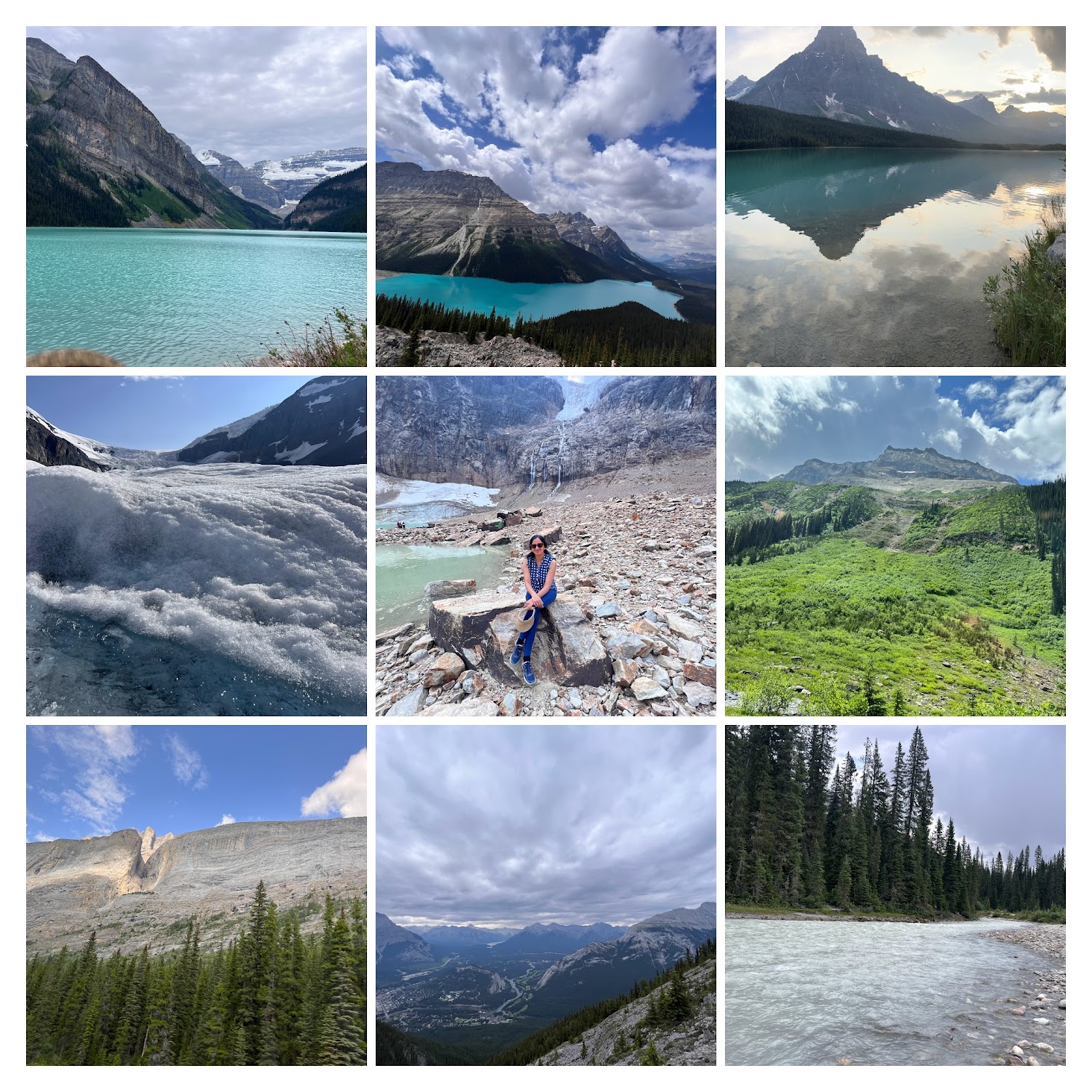
The week we were there, we were blessed with ample sunshine, full rivers gushing waterfalls, millions of evergreen trees, tiny pinecones, open skies, harsh rock faces, long days and every hue of blue in the waters of the land. 

IMG_6497-COLLAGE

When we told anyone that we were planning to visit Banff, Canada, we heard about the Blues. In gushing tones, awed expressions, faraway looks as if transplanting themselves momentarily to a place with blue waters, and peace. I liked that. It must have been something if everyone had the same things to say, shouldn’t it? I have been to several lakes, and am always in awe of them. I remember somebody saying something to the effect of a lake being a planet’s eye, or something like that. Awfully poetic I thought then. Must find the quote.

Ah – here it is. It is our reliable ol’ Henry David Thoreau on Walden Pond. 

“A lake is a landscape’s most beautiful and expressive feature. It is Earth’s eye; looking into which the beholder measures the depth of his own nature.” 

Henry David Thoreau, Walden

Anyway, so off we went expecting to see blue lakes. Emerald green waters, turquoise waters, and all the hues in between. Pictures do not prepare you for the surreality of it all, we knew that. We were hiking around the famous Lake Louise when the daughter piped up with her usual candor. “It looks pretty and all, but I don’t want to swim in it. It doesn’t feel right. Do you think it has some kind of algae, in it?”

lake_louise

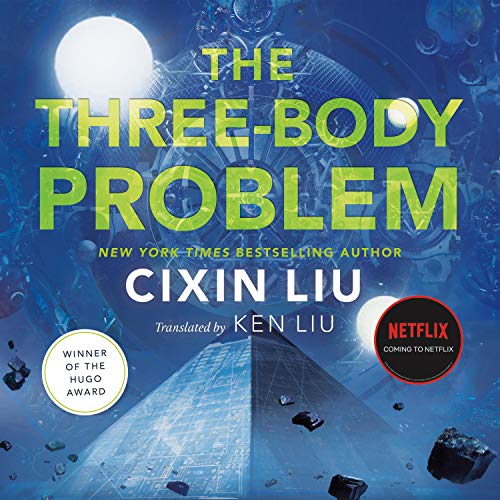
I looked at her and then nodded. I understood that feeling. I had not been able to express quite that way yet, but there it was. It didn’t help that I was reading The Three Body Problem by Cixin Liu, Translated by Ken Liu, and somewhat agitated by the other worlds mentioned in the book. 

51pHYR3yHaL

But when we stopped to take breath a few meters on, I sucked in a deep breath. It was beautiful especially from our current vantage point. We were at least a thousand feet above and hiking around it in an elaborate trail that allowed us glimpses of the turquoise blue waters in between. So, what did make these waters this unnatural shade of blue? Why didn’t lakes in Iceland, Switzerland, Philippines, New Zealand, or the United States have the same color? 

Professor Google says it is because of the particular kinds of glacial silt that is deposited in the waters with glacial melt, and not algae. Up close, the waters looks transparent near the shores, and the canoes seem to enjoy the peace and quiet of it all. 

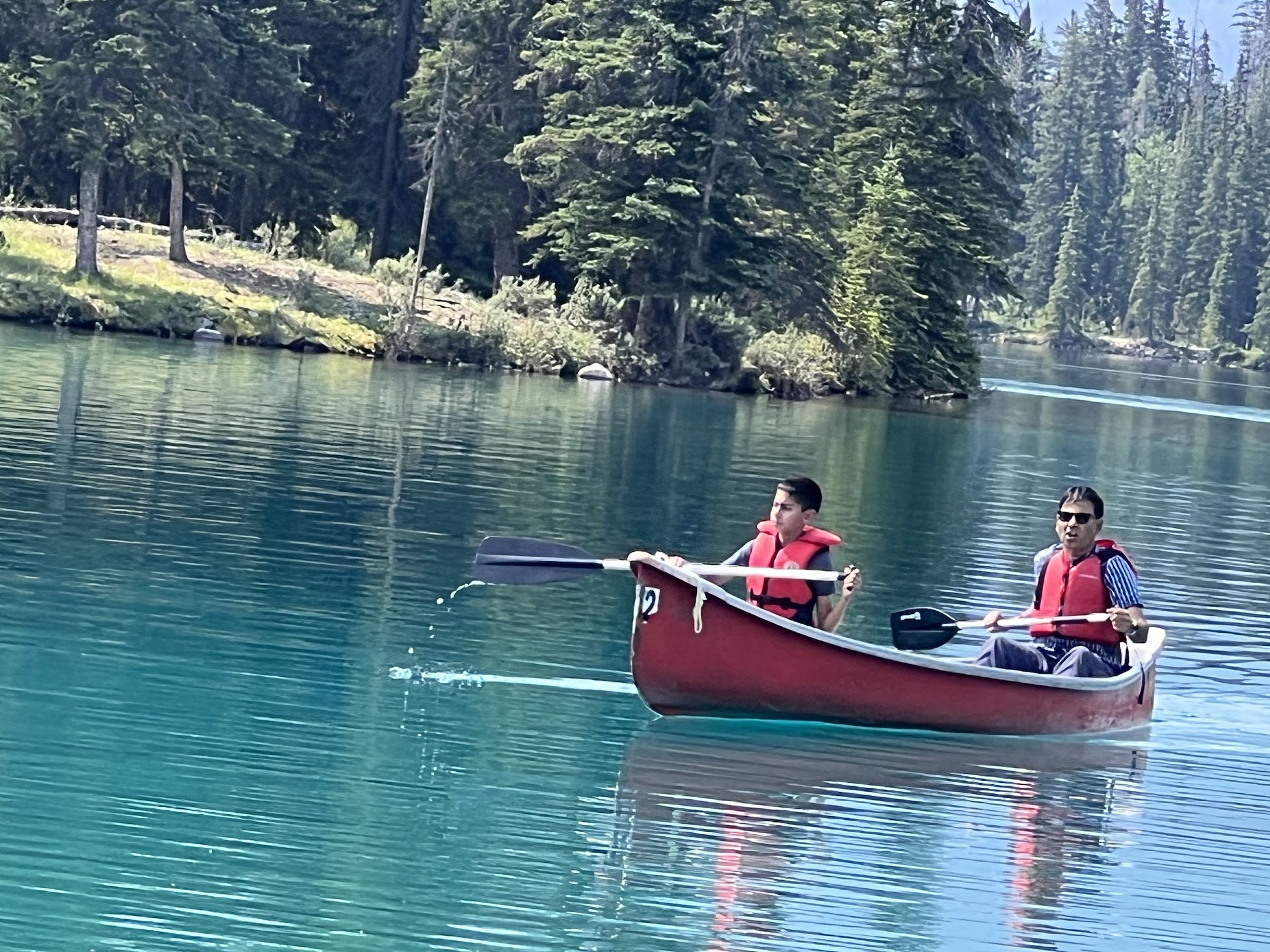
We canoed in ‘a lake that looks like more like an earthly lake’ as we delicately put it. But this lake too had spots of emerald green waters turquoise spots and the transparent blues. I took photos that I thought would wow the world. Of course, they looked like I shook my hands and poured tea into the lens instead.

IMG_6722

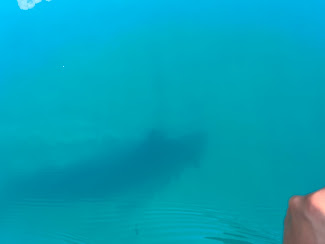
I was nervous about the canoeing. I was nervous about the hues of the waters. But as the daughter and I shared a canoe, I was somewhat heartened. She is calm, reliable and more capable than Yours Truly at steering canoes towards shores as she demonstrated to me that day. We stopped mid lake, peering into the depths below. The calm beautiful waters holding the promise of the winter snow in its depths.

IMG_6727

Earth’s eye that day assured me that to imagine yourself in a different world, if only a moment, is fascinating and necessary. We couldn’t really see the Loch Ness monster, or the myriad fishes in the beautiful waters even as sunlight pierced through to the bottom maybe a hundred feet deep. But I am sure these lakes were home to plenty of lifeforms – how could they not be?

Sometimes, humans are so caught up in our own trivialities in this universe, I wonder whether our fellow habitants are the same. Maybe. Maybe not. We would never know. 

The Biochemistry of Attraction

“What are you reading?”, asked the daughter. 

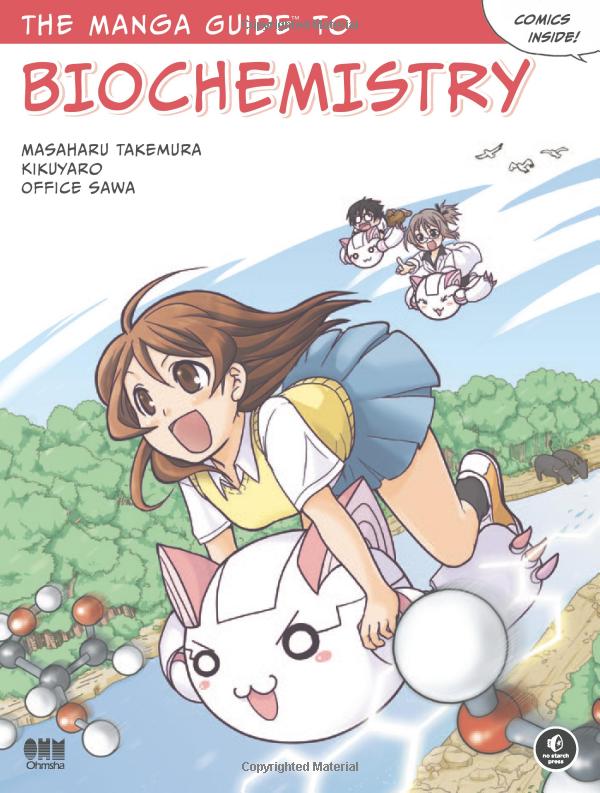
The pair of us found ourselves enjoying a quiet Saturday morning and we were determined to make the best of it. I had been reading the Manga’s Guide to Biochemistry with little luck. Try as I might the fascinating area remains a mystery. Cellular structures and how they interact, how they power our bodies. The concepts are explained well enough. But it still did not seem to answer the fundamental questions of energy disparities among people. How is it some of us are bursting with energy and others not? How do healthy doses of sleep and diet help with these biochemical processes and our own system?

 I am sure many eighth graders know it all well enough, and they’d roll their eyes at my interest in these matters. 

The Manga Guide to Biochemistry by Masaharu Takemura , Kikuyaro, et al.

1593272766.01.S001.LXXXXXXX

‘The Manga Guide to Biochemistry’ , I said lifting the book helpfully to show her. 

She swirled her eyes – not just rolled them. 

“Who spends their Saturday mornings reading about Biochemistry?”, she said.

“Those who didn’t spend enough time in school reading about Biochemistry!” 

“Ah ha! So you accept you weren’t a saint in school!” I laughed. I admit I may have written myself out to be a Mary Sue when I wanted to talk myself up to the children. A Mary Sue, I learned recently, is a form of wish fulfillment by authors when they write idealized versions of themselves as characters in the story. 

Quote from wikipedia:

A Mary Sue is a character archetype in fiction, usually a young woman, who is often portrayed as inexplicably competent across all domains, gifted with unique talents or powers,…, unrealistically free of weaknesses, …, innately virtuous, and/or generally lacking meaningful character flaws.

“Guilty as charged. But really though: I like this book. I am not even sure I understand half of it, but it is still nice to try!” I said. 

She gave me an indulgent look and said, “Fine! But no doing that thing you do and reading out interesting bits of it out to me, understand?” I nodded. 

“And may I ask the same of you my dear? I am not sure I want to know how the count’s first kiss felt on her cold cheeks or whatever it is you are reading now.”

She snorted, but had the decency to look abashed at the evident enjoyment of her little rom-com : It’s in His Kiss by Julia Quinn. “It is now a TV series – Bridgerton. Actually, you may like it. “ she said, and I perked up. I had heard the series was very good. 

“Oh amma! How quickly you go from disdain to curiosity?!” 

“Maybe I will understand the biochemical processes associated with attraction first huh?” I said laughing.

Love, Actually: The science behind lust, attraction, and companionship

Hemlock Hitch

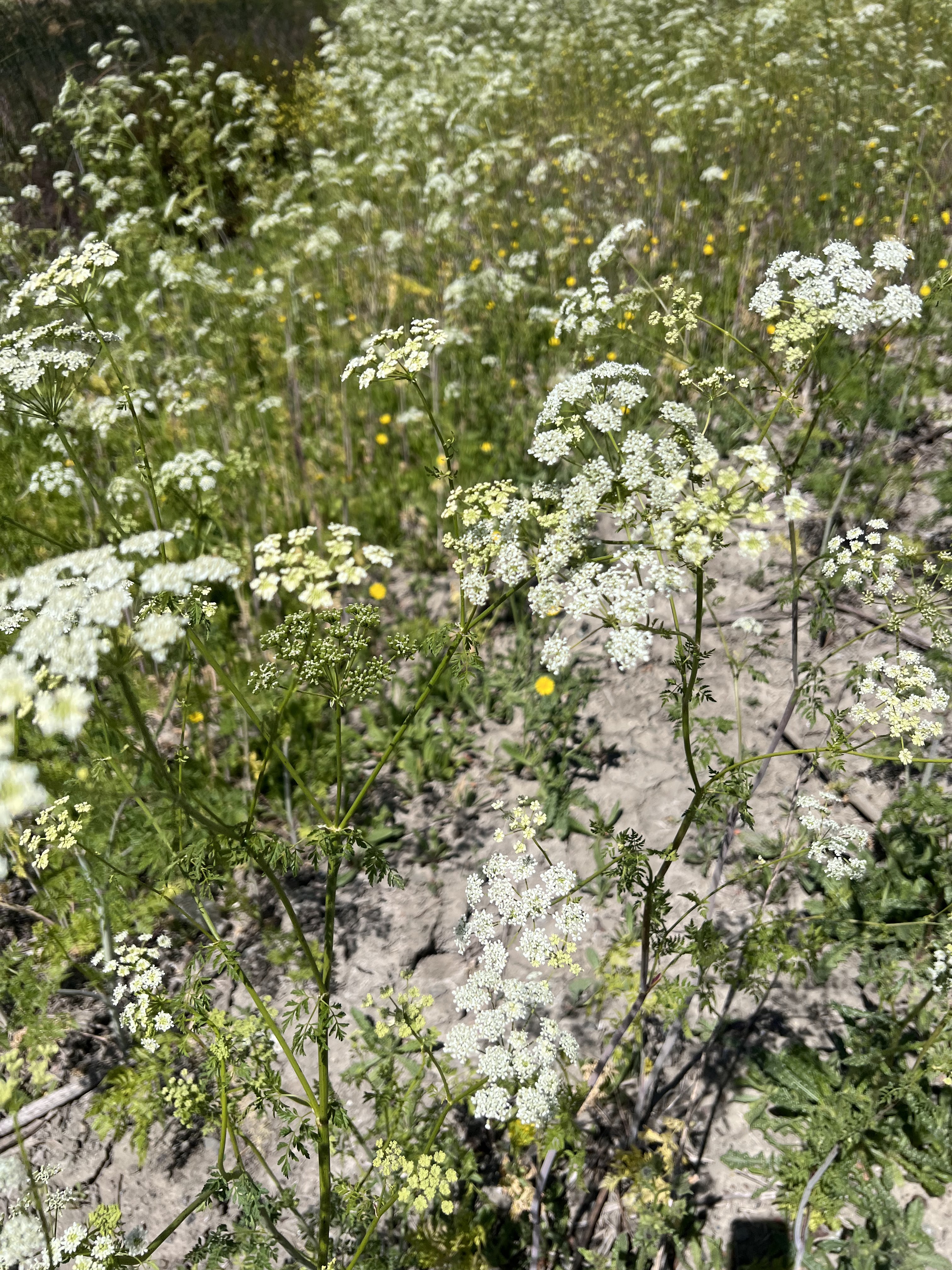
I squinted as I walked through the summer grasses – browning in places, laced against the relentless green of the hemlock. I did not know it was hemlock of course. I just admired the beautiful shapes of its flowers and the structure of its leaves. 

img_6114

“What plant is this?”, asked the husband and I found out. It was the hemlock. They must be a favorite of the bunny rabbits in the vicinity – since I see them hopping in and out looking very pleased with themselves as they do so. 

“Did you know Hemlock was what was used to poison Socrates?”, asked the husband and I was curious to hear that. Obviously, my horticultural knowledge is nothing to bet a chocolate on, but still to see that the innocuous, gentle and beautiful looking hemlock was capable of such treachery to the human system was shocking. 

It was true. It was one of the oldest secrets of humankind by the looks of it. Only they seem to have forgotten to whisper it in my ears when I grew up. I may have eaten those leaves – I said shocked, earning me a stern glance from the husband. “That is why, you do not eat wild plants. Go to a store, and buy what you need.” 

“The tried-and-vetted”, I sighed. Yes – but where was the sense of adventure in having a beautiful tale to tell? “Are you sure though? The hemlock?”

So, I rushed home and saw that Elizebeth Blackwell in her extremely well researched book on Botany lists out Hemlock too. 

https://en.wikipedia.org/wiki/Conium_maculatum

“Imagine! The rabbits may eat them!”, I said still a bit shocked at how ubiquitous the plants were. But then I stopped and wondered – I had never seen the little ones eat them. They would hop in and out of the bushes, but never have I seen them munching their leaves or nibbling at the carrot like roots.

Curious.