Dodo, Dragon, Dinosaur Dis-apparitions

We just got back from the Inyo Forests nestled in the Sierra Nevada mountains. This time, the mountains were explored by the children with a friend who was just the right companion for both of them. He is aged smack in between the daughter’s age and the toddler’s age, and is an amiable, interesting fellow, thereby providing ample company to both of them. The toddler son thought him a hero and the daughter found in him another quirky little brother. He was obviously pleased with this state of things, and settled down to the hero-slash-honorary-little-brother role with aplomb.

It was quiet, and the darkness in the mountains was unreal. We could see Venus glowing brightly like a torch up in the sky. Inside the car,  it was toasty and warm, and the game of Twenty Questions was thriving: it is a sophisticated game in which you think of an animal and everyone can ask questions to guess the animal you thought of.  Animals were chosen and guessed at with hilarity.

“Amma! This little bobbicles knows nothing about his animal and expects us to guess it. How can you not know whether it is a carnivore or not?” The toddler said something like, maybe it likes to eat meat, but maybe it doesn’t, I don’t know. He then laughed raucously at his sister’s disbelief. He seemed to think that these trivial things should not stop a zoo-linguist-to-be from guessing the animal. (That reminds me that I have to get down to writing a blog on how the toddler plays games.)

Inyo_20Q.jpg

His friend-slash-hero agreed and took the car for a spin with mythical creatures from shows we had never seen. As the going got tough, the rules got tougher – “Hey! Mythical creatures only restricted to Greek mythology or Harry Potter or till level 10 of Pokemon Go!”. The hero-slash-lil-bro was something of a Pokemon expert and went on about zilletoes and monekchoes or things that sounded like them, with glee.

“How about Hanuman?” asked the toddler in a matter-of-fact tone.

Before Spiderman and Batman were added to the mix, the husband and I swooped in with some impressive peacekeeping efforts that folks in the United Nations could learn from.

After several minutes of quiet, the conversation started up again with the daughter asking a question: If you could bring one animal back from extinction, which one would it be and why?

As the conversation gathered fervor, the surrounding Inyo Forests resounded with the spirits of animals long gone. Sabre tooth tigers romped along side mammoths, T-rexes chased Brontosauruses. A short pause later, dragons and phoenixes joined them too. If the conversation were being animated real-time, I’d have liked to see the reactions of the various spirits as they made their mystical apparitions from the dead.

“You do know that phoenixes and dragons are mythical creatures right? They aren’t exactly extinct because we don’t know whether they really existed, “, said the daughter laughing to split.

“Okay – then Pidgeot”

“No! pidgies and pidgeottos! Before you ask, chargats don’t count either. Pokemon Go is not the real world you know?”

I could hear the gears spinning in the boys’ brains. This was one tough game, they thought.

After an intense argument that examined the merit of mythical creatures in the extinct category, and the virtual creatures in the ethereal category, the conversation slowed down again and landed softly near the dawdling dodo birds. We waddled by them, and the daughter explained that she felt the dodo birds deserved to be back because those poor creatures were extinct purely because of man’s greed.  The children smiled as though her goodwill towards the dodo could truly summon it back from the extinct category.

inyo_canyon

“Anyway, which animal would you bring back?”, asked the daughter.

“I want to bring back the Titanis bird.”  said the hero-slash-hon-b.

We exchanged glances. It was difficult to figure out whether there really was a bird  called Titanis which was extinct, or one that appeared in the fellow’s video games.

“Really, there is a bird called Titanis. They are so beautiful. I want to bring them back. “ He sounded so sincere that the daughter’s heart melted. It often happens this way. The daughter is a softie underneath the bossy exterior and coo-ed.

“Oh! That is so sweet. Why do you want them back?”

“So, I can take a gun and shoot them! “, said the h-s-h-b.

I wonder whether you have played ping-pong. Just when you think the ball went, back it comes to you again. Right at your face. It was a bit like that. Just when you got the sweet daughter version, an outraged cry left her lips. The sweet dodo apparitions were gone. The dragons poof-ed themselves out, and titanis was gone too.

“Oh! How could you? “ she cried, the animal activist in her flaring up.

“Why? They have beautiful feathers. “

“Exactly! So admire the birds with their feathers!”

“But if we shoot them, we can collect their feathers.”

“Why bring them back if you want to shoot them?”

“How else will we get those beautiful feathers?”

The three of them played in our car till the toddler son fell asleep in the gathering darkness as we drove up to our destination.

I am not sure whether the dodo or the titanis will want to come back if it means holding a conversation with the specimens in our car.  Maybe we should give them a choice, what do you think?
The Boy Who Harnessed The Wind

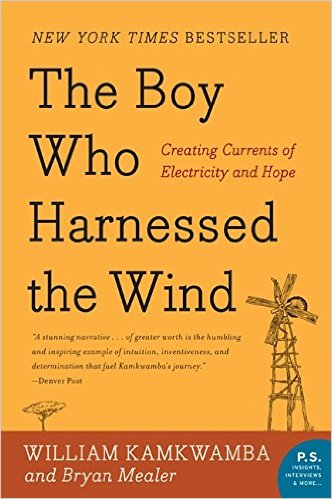
Every now and then, there arrives a book that is designed to knock the sails out of your windpipe. William Kamkwamba’s journey to build a windmill and uplift his community is one such. It is the true story of a poor boy in Malawi.

boy

I bought the book a while ago, and it lay languishing on my tsundoku pile. Maybe, there was a purpose to the book. The book needed to be read at a time when I most wanted to reassure myself on human potential if only we choose to apply it for good.

The only son, among eight children, of a poor Malawian farmer in Wimbe near Kasungu, Malawi, this is a true story of William Kamkwamba.

The book started off slowly talking about tales of magic, witchcraft and sorcery in Africa. As you read about William and his journey, you cannot help getting absorbed into the life around him with good natured understanding. You like his dog, Khambe, and his friends, Geoffrey and Gilbert, who show themselves to be the kind of stalwart friends you wish your children will grow up to be. Kind hearted, supportive, fun and ready to lend a hand, always.

When, famine hits Malawi, William Kamkwamba is forced to drop out of school, it is crushing to read how his father felt and I wish no parent should have to face that in their life.He writes about how his family struggled for months with nothing but a few nsima cakes between them to eat everyday. Everything we tell our children about starving children in Africa is true.

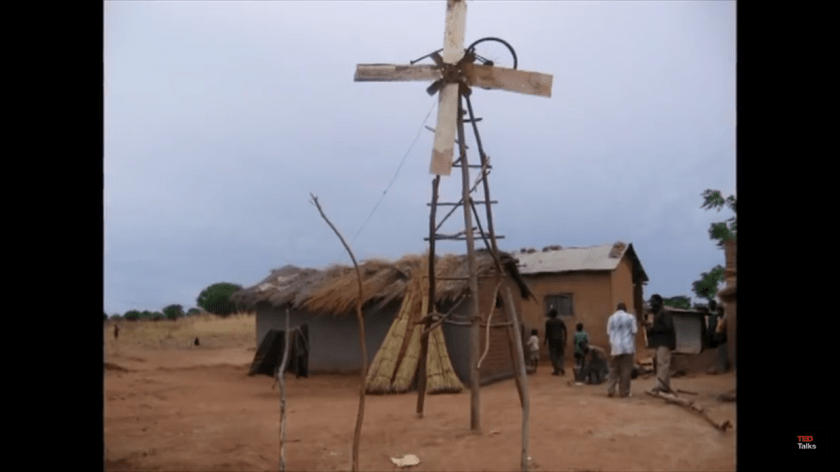
During those long hours of working in the fields to do their best to see if they can fortify themselves against another famine, it is William’s dream to build a windmill that keeps him going. William had seen pictures of a windmill, and given that his little village is always blessed with wind, he wants to build one, so that water and electricity can mitigate another famine. He is called misala (crazy) for haunting the trash piles to find something reusable to build his windmill.

After months, of scouring trash piles and junkyards, using tools that would not pass any safety standards laid out in the West, it is a proud moment indeed when finally he connects his rickety windmill to a tiny light bulb.

img_4243

The windmill is noticed by a school official who notifies a professor and a blogger. From there to TED Fellow in 2007 is a remarkable journey for a boy who had never set foot outside his little village in Wimbe.

When William is finally called upon to talk at the TED conference, he is justifiably nervous. His English is poor among other things, and to make it easier for him, his host on stage, Chris, prefers to ask him a few questions that he can answer instead:

My heart beat fast like a mganga drum as I climbed the steps to face the audience, which totaled 450: inventors, scientists and doctors who’d stood on that stage in the previous days.

Five years ago, you had an idea”, Chris said, “What was that?”
“I want to made a windmill”. Wrong again. Chris smiled.
“So what did you, how did you realize that?”
I took a deep breath and gave it my best. “After I drop out of school, I went to library…and I get information about windmill…”
Keep going, keep going…”And I try and, I made it.”

The problem with reading a book like The Boy Who Harnessed The Wind on public transport is that it is takes phenomenal effort to keep from tearing up. You can manage a silent tear that just needs to come out, and one that you can unobtrusively wipe away as if some dirt got in there. But if the book goes on to make you want to weep not out of despair or sadness, but out of pride, joy and the eternal good-ness of mankind despite everything, that is hard to do.

Some pictures from the book: The image of his prototypes, his big windmill and one of his parents after he was able to harness the energy generated from the windmill to provide clean drinking water and electricity in his village.

Unfortunately, for every William who is outstanding in perseverance, grit and intelligence, there are thousands of williams who flounder in the stormy tempests of life. Every time I am caressed by the wind during this Thanksgiving break, I will know what to give thanks for. Thanks to William Kamkwamba.

I try, and I made it.

Please watch the TED talks, even if you are unable to get to the book:

TED Fellow William Kamkwamba

If

We had been to the East coast to gulp in the beauty of the fall colors before the trees were stripped bare for the Winter. I marveled at the beautiful tapestry that nature had laid out for us. The greens, golds, yellows, rusts, oranges, reds and browns blended together beautifully to please the eye. The same patch of forest looked beautiful in the different lights of day. The color of the skies above, the intensity of the sunlight, the shadows of the scudding clouds above, all painted marvelous pictures and nature soothed in a way that it has always done.

A forest is beautiful to look at. A forest in fall colors is brilliant to look at. The diversity in colors is mind boggling, and it all pieces together beautifully in a marvelous tapestry. It is the differences in color that make it glorious.

An artist’s palette is made more vibrant with different shades.

As much as we all like everyone to be like us, it is the fact that we are different that makes the world a beautiful place. It is the disappointments that should propel us forward.

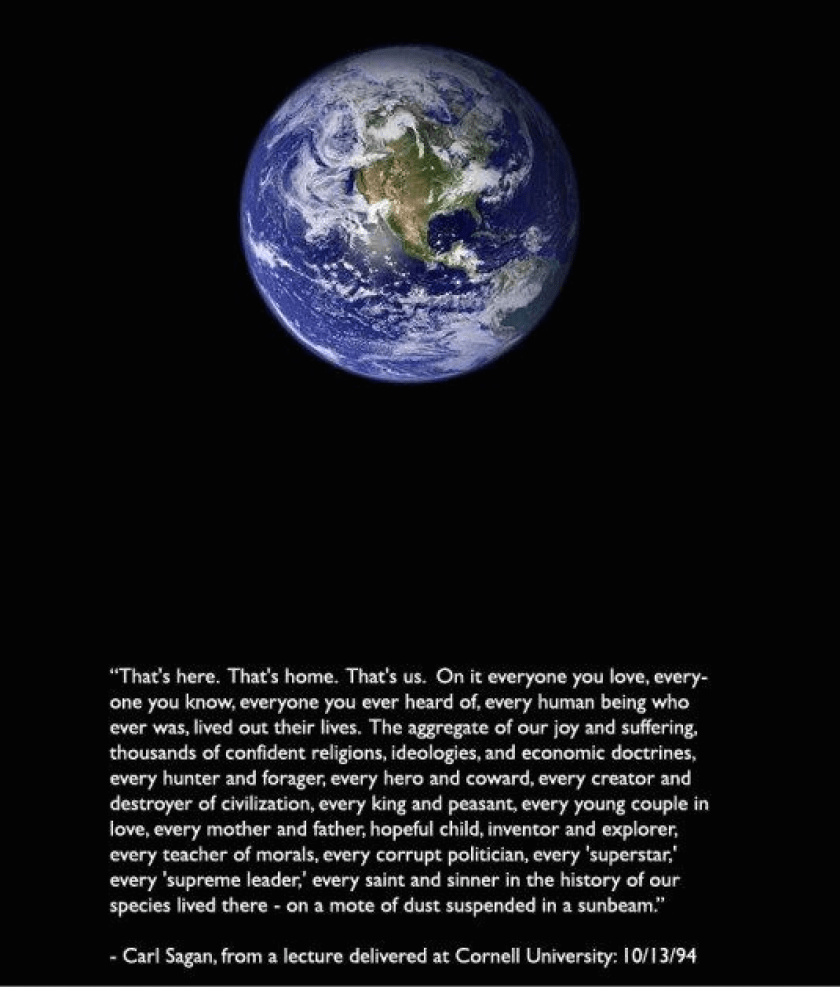
I am distraught at the person America has chosen as its President elect. I am trying to find solace in the words of Carl Sagan on Earth:

Look again at that dot. That’s here. That’s home. That’s us. On it everyone you love, everyone you know, everyone you ever heard of, every human being who ever was, lived out their lives. The aggregate of our joy and suffering, thousands of confident religions, ideologies, and economic doctrines, every hunter and forager, every hero and coward, every creator and destroyer of civilization, every king and peasant, every young couple in love, every mother and father, hopeful child, inventor and explorer, every teacher of morals, every corrupt politician, every “superstar,” every “supreme leader,” every saint and sinner in the history of our species lived there-on a mote of dust suspended in a sunbeam.

screen-shot-2016-11-14-at-1-56-32-pm

Now, more than ever before, is the time for all of us to come together and become heroes in our own ways. I felt this was the right time to read Rudyard Kipling’s poem ‘If’ to the children.

If you can keep your head when all about you   
    Are losing theirs and blaming it on you,   
If you can trust yourself when all men doubt you,
    But make allowance for their doubting too;   
If you can wait and not be tired by waiting,
    Or being lied about, don’t deal in lies,
Or being hated, don’t give way to hating,
    And yet don’t look too good, nor talk too wise:
If you can dream—and not make dreams your master;   
    If you can think—and not make thoughts your aim;   
If you can meet with Triumph and Disaster
    And treat those two impostors just the same;   
If you can bear to hear the truth you’ve spoken
    Twisted by knaves to make a trap for fools,
Or watch the things you gave your life to, broken,
    And stoop and build ’em up with worn-out tools:
If you can make one heap of all your winnings
    And risk it on one turn of pitch-and-toss,
And lose, and start again at your beginnings
    And never breathe a word about your loss;
If you can force your heart and nerve and sinew
    To serve your turn long after they are gone,   
And so hold on when there is nothing in you
    Except the Will which says to them: ‘Hold on!’
If you can talk with crowds and keep your virtue,   
    Or walk with Kings—nor lose the common touch,
If neither foes nor loving friends can hurt you,
    If all men count with you, but none too much;
If you can fill the unforgiving minute
    With sixty seconds’ worth of distance run,   
Yours is the Earth and everything that’s in it,   
    And—which is more—you’ll be a Man, my son!


When the materialistic society around us automatically glorifies money, we can use the moment to say that money does not equal dignity, money does not beget culture, money may earn you servitude, but not loyalty.

And point to the example in The White House.

The Noetic Touch to the Poetic Muse

A Version of this article appeared in India Currents Mar 2017 issue titled ‘Muse, Tweens & Teens’

The husband may not be able to carry a tune to get the car parked, but you can’t fault him with lyrics. In fact, he once won a singing competition.  The judges pleaded with him to not sing, but to simply recite the beautiful words in the song, and their team sailed home with the cup (or whatever it is these college competitions have the budget to give).  He won it solely on the strength of his lyrics. For being able to appreciate the beauty of the poetry in the lyrics. The husband’s Antakshiri prize is rather like Bertie Wooster’s Scripture prize, and is much bandied about in our home.

It is also the husband who stops a song from lilting and mesmerizing and repeats the words – his eyes shining with the hidden meaning in the rhythmic poetic delights of the verse. I must admit some of the songs have such a beautiful lyrical quality about them, that had he not stopped and replayed them, I would have been completely lost in the melody of the piece. When your breath produces a rainbow or the mists clear to reveal your innermost thoughts or whatever it is, it makes you smile a little at the metaphor. Things you would not ordinarily stop to think and appreciate.


முன் அந்திச் சாரல் நீ
முன் ஜென்மத் தேடல் நீ
நான் தூங்கும் நேரத்தில்
தொலைதூரத்தில் வரும் பாடல் நீ
பூ பூத்த சாலை நீ
புலராத காலை நீ
விடிந்தாலும் தூக்கத்தில்
விழி ஓரத்தில்
வரும் கனவு நீ..

Incidentally, the guy who waxes lyrical at hidden meanings in poetic songs is also the guy who listens to ‘Why this kolaveri kolaveri dee?’ and introduced me to what is known as ‘Gaana’ songs. Viz. stuff that makes you want to sit down and pull out each strand of hair one at a time.

One day the daughter set out to make me listen to some of the songs that their generation listens to. You know the cool stuff?  So, we did, and I was wondering when the husband who usually listens with her, will stop the song to appreciate and discern inner meanings and things, but he did not find the need to:

Won’t you have a cup of coffee with me? We used to drink coffee together, but don’t anymore. I miss you when I drink coffee these days.

There was no hidden meaning – could the coffee refer to life? But still there was no building on the coffee theme. Hardly the kind of stuff that needs the brain cells to stir.

“Are there any other songs that we can listen to – you know where it is not a guy yearning for a girl, or vice-versa”, I asked. “Or with those wonderful hidden meanings like in poems?”

The daughter shook the head. “Well, teenagers mostly listen to stuff about love”, she said rolling her eyes. “Especially famous songs ma – it is like you are just talking with a guitar strumming in the background.”, said the daughter scornfully.

poetic_lyrics

I am not a teenager anymore, so I can’t say whether the teens today are happy with the fare laid out in front of them, but I would have liked some variety. Sure, it is the time for the stirrings of the teenage hormones and what-not, but that is not the only awakening one finds in the teenage body and mind is it?

It is also the time for confusion about life and career choices, the time when it truly feels like you can tap into your reserves and see how well you can perform in that game, or how competitive you can get on that track. It is the time the mind is grappling trigonometry and unraveling the beautiful complexity of organic chemistry, the time you are surprised at the lucidity with which artists can tap into their inner stamina and creativity and unleash things on canvas or on stage. It is the time for broadening of our intellectual horizons, and the time to goof off and make questionable choices with friends. It is the time you freak out after lighting candles on the Ouija board.

https://nourishncherish.wordpress.com/2010/08/13/friggatriskaidekaphobia/

It is the time you read Dostoevsky and ponder upon life. It is the time you make fun of soppy love stories, but secretly hope for your own Prince Charming one day. It is a time of intense moral learnings and the time when crushes are a part of life.

You know how we see these caricatures in cartoons, with an abnormal potato sized head tottering on pea sized bodies? It seems the song industry is like that when it comes to love. Sure love is a potent force, but is all love of the sexual kind? Surely not. Why not write a beautiful song about friendship, why not write about abrasive teachers and the camaraderie that goes on with the children while dealing with it? Or a funny song about goofing off PE.

Teenage angst is a whole package, it does not just mean broken hearts and tears when people fall apart. If song lyrics are stuck in teen brains all day long, why not give it some work and smile inwardly when you get that hard metaphor?

Here is a call to all you smart teenagers, pre-teens out there. Dazzle us with your breadth and depth of your making sense of the world. For as adults, we still don’t know, but most of us have given in to the familiarity of routine and the rigmarole of paying bills. What we need is the thirst and energy of youth, and that you can gift to us with your poetic lyrics, your songs and your view of the troubled world.

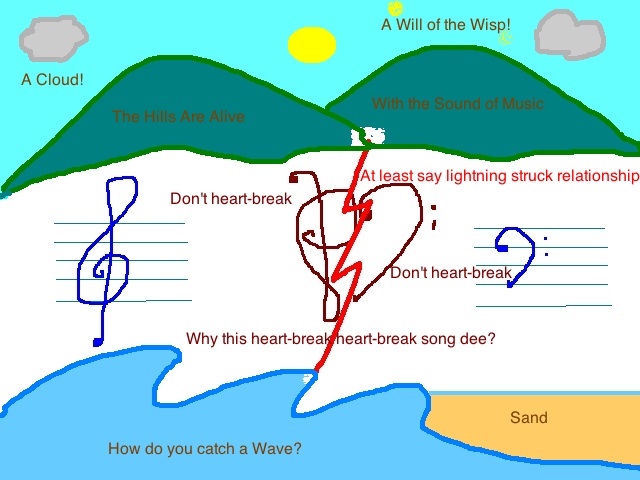
How do you solve a problem like Maria?
 How do you catch a cloud and pin it down?
 How do you find a word that means Maria?
 A flibbertigibbet! A will-o'-the wisp! A clown!

Many a thing you know you'd like to tell her
 Many a thing she ought to understand
 But how do you make her stay
 And listen to all you say
 How do you keep a wave upon the sand?

Nature’s Adventures

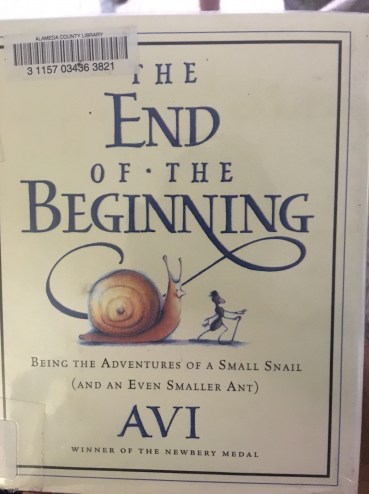
The son and I read a chapter book together. Hitherto, we watered gardens with Liam in The Curious Garden, or ate cookies out of a tin with Frog and Toad. This time we decided to spend several days with Edward and Avon in ‘The End of the Beginning‘. Avon, the snail wants an adventure and he seeks it with the help of his friend, the ant Edward. Over the next twenty odd chapters, the pair of them meet salamanders and have perilous snail crossings on narrow bridges. The beauty of the whole thing is that they had never really left their tree branch. At the end of their long and arduous journey, the pair of them find themselves facing the end of the branch and turn back. The Beginning of the End. Or does the end signal a new beginning?

The book had many philosophical sayings, and the next time the son and I observe a snail, we shall wonder what goes on in that animal’s brain.  Adventures do not need exotic settings or the need to traverse large oceans. It is all right there on the tree branch.

a447d33d-4ce1-48e8-b5f9-e437cc08e6de

It also brought back some of the best adventures I had had as a child in the Nilgiri Hills growing up in those wonderful surroundings cradled by Mother Nature. Everyday from our Elementary school a few kilometers away, we took a different route walking home. One day we stuck to the narrow roads laid out by the municipality as an occasional vehicle passed us. Another day, we slid down the hills, picked some berries at the bottom of the hill and found another narrow footpath leading home. There were days when the walk took us twenty minutes, and days when it took us an hour. The whole place was tiny enough to not merit a marking on the map of the state, but it held adventures enough for a lifetime for us.

sultan's life

The toddler son and I enjoy taking a walk in our neighborhood and finding little by lanes within our neighborhood. For us, it is a revelation of sorts. One path leads you to the shaded path with oleander trees sagging with the weight of the summer flowers.

img_3410

Another path in the neighborhood has an plum tree that shows you how squirrels thrive near that tree. We see clusters of plums flung to the ground with nothing but a bite taken off of them. Every time I see those little eaten plums, I think back to one glorious summer afternoon spent in a friend’s garden. We had a blue quilted comforter laid out on the lawn and were watching the breeze gently ruffle the grass and skim the trees  as the children played. The son was then a baby and sat up in that adorable fashion that made him look and sway like a bowling pin used to prop open a door. Pretty soon, the topic turned to squirrels and fruit trees. Our host then set about plucking plums from his tree before the squirrels got them. We sauntered over to inspect, suggest and generally hinder the fruit picking process when I heard a slurp. Turning around we saw we’d saved the plums from the squirrels, but the baby human squirrel in our midst was looking triumphant: red-lipped, red-cheeked and red-chinned having bitten into the plums himself. Talk about being caught red-handed .

Night Life

There are wonders galore in our own little branch, if only we set out to find them.

The O-Fish-Al Hats

School has reopened after a blissfully long and action packed summer holidays for the children. Some children went to summer camps, some others enjoyed the true gift of leisure lolling around, some others managed exotic vacations. All in all, they seemed to agree that it was about time they headed back into the rigors of school.

The week leading up to the school reopening was one fraught with excitement, nostalgia at the summer, and some anxiety as to who they would draw as their teachers this year. The neighborhood is abuzz with talks of teachers and their personalities. The blameless, innocent children wonder why there are so many rules not just in the classroom but the play area as well. After all, the play structures are there for the children to play in. Sometimes adults can be baffling.

The teachers, I have to admit, are remarkably upbeat and optimistic about having to handle this many children in the school.  The kindergartener in the house is talking non-stop about all the things happening in a big school. Finally, he gets to understand what his older and wiser sister was saying about Elementary school, and it makes him feel important.

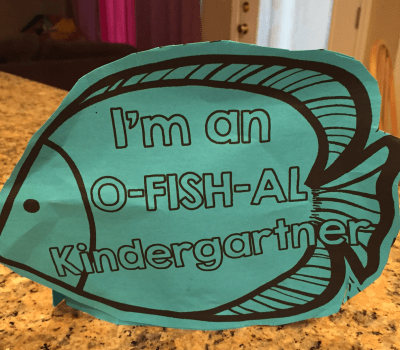
The first week brought back glowing hats and art work that would put a craftsman to shame. I must say I was truly baffled to see a line of fish bobbing out on two feet in a squiggly line after the first day of school. The teacher, bless her enthusiasm, made them all spend time cutting and pasting their own hat, and decked them up in it before sending them out into the late summer sunshine.  This hat apparently made them o-fish-al kindergarteners, and silly as it might seem, the children seemed to be very proud of their work.

o-fish-al

Here is wishing all parents, teachers, children, after-school program teachers, school drivers, and administrators a wonderful year ahead.

An Asian Reading Fest

Regular readers of the blog know that we recently returned from an Asian vacation. Every time I take a vacation with the sister in the Middle East, she has a set of books ready for me to read. The books she had laid out for me this time included books written by Jean Sasson, who happens to be one of her favorite authors. Jean Sasson  was a nurse by profession and spent a little more than a decade working and living in Saudi Arabia. One of the princesses of the Al Saud family solicited Jean’s help in telling the inside story of a Saudi princess’s life. She has since written eleven books dealing with various problems faced by middle eastern women.

This time, the book I chose from her pile was ‘Growing Up Bin Laden’. It is a book about Osama Bin Laden as told to Jean Sasson by Osama Bin Laden’s fourth son, Omar Bin Laden and his first wife, Najwa Bin Laden. She uses their alternating voices in the book to tell the story of his life. It is the first book of the kind and is an interesting read.

I am following up this book with two books that I hope to write about soon in conjunction with Growing Up Bin Laden:
Al Qaeda, The Islamist State And The Jihadist War by Daniel Beaman &
The Audacity of Hope by Barack Obama

I suppose I expect to get a glimpse of the view from within Bin Laden’s family, from a professor on Middle Eastern Affairs and a President who finally caught Bin Laden, but is abetted by a world that is still host to a variety of terrorist organizations.

Serious fare thus far you will agree, so I followed it up with delightful fare.

What better mode to release those endorphins than by paying a visit to Malgudi?

IMG_3150

I fell in love again with R.K.Narayan and his writings. Every time I read one of his books, I am amazed at how simply, how nonchalantly he takes you on a stroll along the Sarayu river after passing through the tantalizing wares on Market Street or on quieter days muse and saunter along Vinayak Mudali Street, passing Albert Mission College on the way. The charm of Malgudi never stales. I have come back and scoured the local library for books on R.K.Narayan and find very few.

Note to self: Buy some books by this great writer and donate to the library the next time I visit.

IMG_3304

While I visited the hills of Dehradun with Ruskin Bond, or Malgudi with R.K.Narayan, the husband took off on his own into the Tamil world of Sujata.

Blissful are the days when one is visiting another world while sipping tea in a cool room.

The Spirit in the Photograph

The family got together and tried to take a photograph together:

Challenges here: The Saga of the Family Photos

Precursor here: The Family Photo Saga Part 2

How do you dress for a family photograph?

Motive matters.

  • If you are going for the preserve-family-as-we-are aspect of things, then I suppose we lounge around in daily clothes, crack jokes and laugh at them in a manner that will make Vogue photographers cringe. #BeCool
  • If you are going for the best-behavior-photographs, then I suppose you resort to the prim look, and smile at the photographer like you are meeting him for a job interview. #JobInterview
  • If you are looking for the social propriety angle, then of course you observe and deduce based on women dressed in Tamil TV Serials before their daily evening coffee at home. #TamilTVSerials
  • If you are looking for the co-ordinated angle, what are the colors to pick out? Should we all wear blue and look like Smurfs? #Smurfs smurf_dino

The problem happens when each one is aiming for a different objective.

  • The sister-in-law in a bid to impress her mother-in-law (viz. my mother) shed the slacks and tights and swooped in looking beautiful in a saree (#TamilTVSerials look). The mother said, “See how beautiful your sister-in-law looks in a saree?” This did not bode well for me. Luckily a blouse emergency shot this option down.
  • The sister went in for the #Smurfs angle and said, “A bright color looks the best”. She paraded the sunflower-with-stalks look.
  • The t-shirt wearing men were hustled out of their t-shirts by smart men in pressed shirts and pants. (#JobInterview look)
  • Bearded Blokes refused to shave and went for the #BeCool look.

So it went. For every member of the family not playing with toy cars under sofas.

In all the melee, we forgot to soak the toddler boys, for whose sake the picture was being taken, in Dettol and scrub them with coconut-bristled-brushes. They continued playing till the last minute and looked delightfully dirty. It was in the car on the way to the studio that these boys were made look presentable.

The highlight of the family picture was the fact that as the photographer’s assistant tried to arrange folks one after the other in a way that will make us look good in spite of the clothes and the colors, the grand head of the family took a roll-call in true school teacher style only to find the youngest member of the family missing.

If one were to read through the chronicles – Part 1, Part 2 and Part 3, you will notice the photograph was being taken to update the presence of the recently-added-to-family toddler boys. It turns out that the youngest one decided to play with his toy car under the studio chair beyond the range of the lens, and refused to budge. Chocolates did not help, future domestic world war threats did not work. Carrying him with the studio chair did not help. It looked like the picture was going to be taken without him after all.

Every picture has a story. I called the father a social dinosaur who might have called the photographer’s assistant to join in if you remember. True to the father’s nature, this family photograph did have the photographer’s assistant in it. His spirit can be spotted lingering in the photo. A chirpy young man, who showed absolute promise by cajoling the little fellow, hiding his toy car and flashing it out of his pocket at the right moment, making the boy look up in glee.

wildflower_dino

The boy who looked up at the last minute after all this drama looks best, and as far as we are concerned, it does not matter if the rest of us had our eyes open, or were picking our nose, or were about to sneeze.

That is probably why we looked like a dysfunctional bouquet of sorts. I have always liked the impromptu wildflower bouquets with their riot of color, wild grasses and ferns. Captures the beauty of the wilderness.

Newton’s Sixth Law of Motion

A trip to visit the relatives in Asia is always one fraught with culinary splendors and calorific disasters. Indians are a breed that show their love in myriad ways from throwing approving glances at the foreign-returned daughter wearing a bindi to making aloo parathas for breakfast.

Image Courtesy: Google – Idlis, Dosas, Sambhar, Chutney

Screen Shot 2016-02-03 at 3.46.10 PM

Unfortunately for me, my reputation in the cooking department hit an all-time low with the aunts. One morning as the toddler son sat down to a breakfast of idlies, he announced in horror that idlies are not breakfast items, but items that make an occasional appearance in his lunch-box or sometimes at dinner, never for breakfast. (South Indians are a sturdy breed that can wolf down a half dozen idlies for breakfast followed by a  lunch with three – five servings of rice, and a dinner of dosas. ) Therefore, this simple statement had a variety of responses, all of which psychologists will be delighted to note, were dramatic in the extreme. To make things worse for me, the toddler then sat down and polished off the idlies on his plate in rapid succession.

The aunts rounded on me:

Poor child loves idlies.

How long does it take to make one plate of idlies for breakfast everyday?

The poor dear says he eats just cereal.

The mother pushed her oar in with glee and the lot of them roasted my reputation over a slow grill, while the emaciated toddler bounded off to play. It was, therefore, a sobered me who made her way through the streets of India. The one you saw eating pooris, dosas and white toast with marmalade before the gong hit nine, was one who had been told off for not giving the children nutritious breakfasts.

It was during one of these breakfasts that I moaned about packing the daily calorie count by 9 AM. The brother-in-law, assured us that he would help us stay on track and henceforth appointed himself the Calorie counter for us. The brother-in-law is a confirmed case of being a gourmet, and has been declared incurable by the best of cooks. He can detect a repaired sambhar with a single glance. With one taste, he can tell you the archival date of said sambhar, and the best by date of the repaired version. For one that fond of the right tastes, I was dubious with his self appointed role as Calorie Master.

I need not have worried.

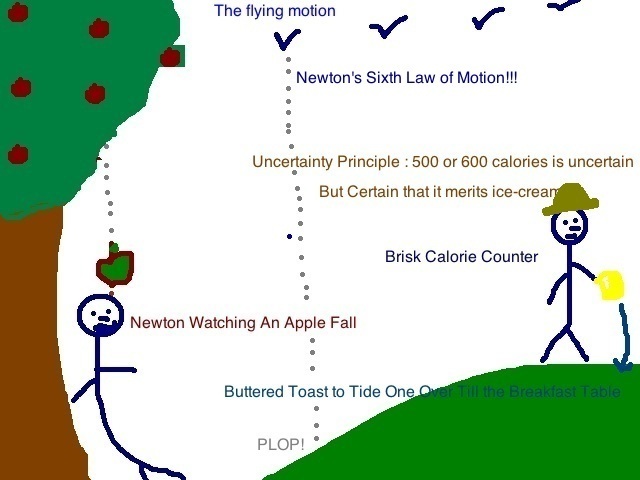
The next morning, as we set off on an early morning walk, the Calorie Master started counting. Every few steps, he upped the calories expended. A small hillock counted for 500 calories, and every few steps the calorie counter charged up ahead like an auto given a hot boost at the rear end with a rhino’s horn in 108 degree heat. By the time we settled in for  breakfast, the Calorie Master announced that we had expended 2000 calories and we were therefore deemed fit to consume a sumptuous breakfast of 500 calories (pooris + masala dosa + slices of white bread with butter and jam + tea + fresh fruit). I must admit, I liked this version of the Calorie Counter better than the slow one that the bulky contraptions in gyms boast of.

Everybody questioned the Calorie Master, but nobody went unanswered. Unconvinced maybe, but unanswered, never. Pretty soon, scientists were called upon to lend their laws and principles to the cause.

Calorie Master

The uncertainty principle said that: While it may be uncertain whether a 500 meter amble is 500 calories or 600 calories, there is no uncertainty in the fact that it merits a serving of ice-cream after lunch.

When Newton saw an apple fall, he knew that falling involves energy. Food falls into the stomach, therefore we are expending energy while eating food.

Einstein’s Theory of Relativity also states that food prepared by relatives do not have as many calories as food prepared by non-relatives. Therefore, it is safe to up the idli count.

My favorite was the Newton’s Sixth Law of Motion: When you eat, you motion.

Heisenberg, Newton and Einstein may have turned in their graves, but armed with these principles, I am proud to say, that we defied all natural laws of calorie consumption. We also laughed heartily the whole time the calorie calculations were afoot, that should have expended another 1000 calories a day at least.

To Live Like Sultan

It has been fifteen years since I saw Bangalore. 15 years in which I heard stories about the beautiful city bursting to its brims and enduring horrendous traffic snarls. I had spent some very pleasurable years early in my career in Bangalore, and some of the friends I made there still warm my heart, so I was obviously interested to see how it fared a decade and a half later.

I was dismayed at the way the city had exploded. Every place has to fall prey to urbanization. There is no way around it, but in Bangalore, once known as the Garden City, it was particularly brutal to see matchbox like apartments all over the city. The roads were struggling with cars from every one of those apartments, and the infrastructure was barely holding up. As I looked up into all those apartments, I wondered how many fellow residents each one knew, and the answer was what saddened me even more. In every apartment block of maybe 100 homes, residents hardly knew another 5 families. It seemed to me that more the people clustered together, the less we knew of one another.  

I stayed in Bangalore for just a day before we made our way to our childhood home, the dear old Nilgiri Hills.

sultan's life

It has been about a decade since I visited Nilgiri Hills – the home of my childhood days. This time, I was determined to go and visit. When mia familia heard  of my wish to do so, everybody joined in, and pretty soon, there we were bumping up the hills in a van loaded to the brim with luggage, children and people. Traveling light is a concept we often hear about, but we have absolutely no idea as to how it works. Maybe an experiment would help one day.

As the van made off with 11 people and 14 pieces of baggage, not including the toy cars and planes that had to ply within the van to ensure sanity and peace, I noticed that the pace of life steadily slowed down as we got farther and farther away from Bangalore city. Like an aircraft slowing down from 500 miles an hour to zero as it comes to rest. It was marvelous to see how it all culminated in one grand stroke to life with sultan.

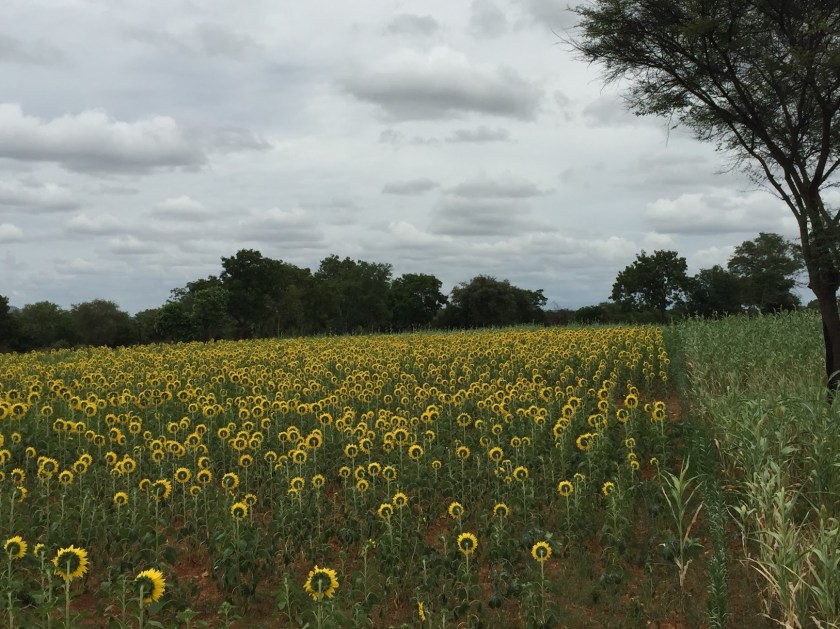
I was looking forward to hop off at the sunflower fields en-route to the Nilgiris from Mysore. The sunflower fields were marvelous after the never ending concrete jungle that Bangalore has transformed into.

sunflower_fields

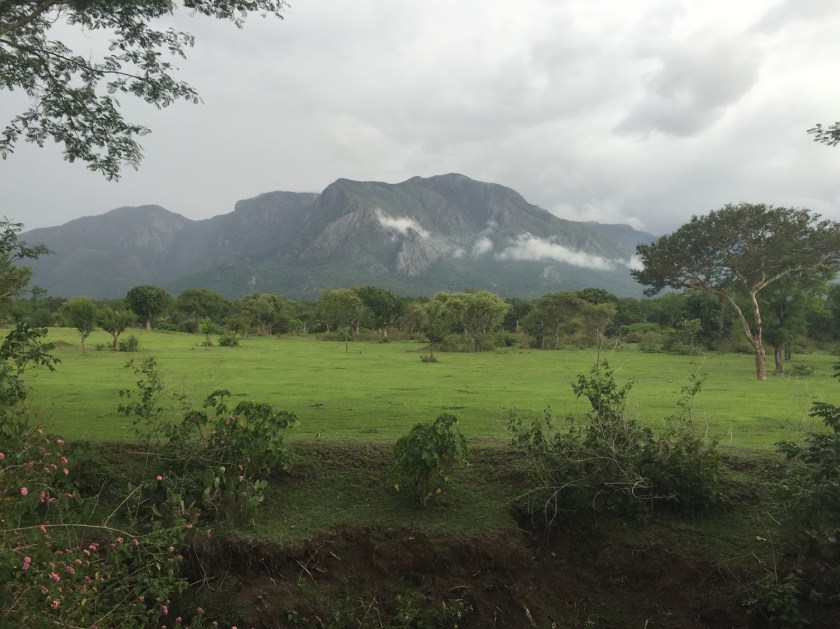
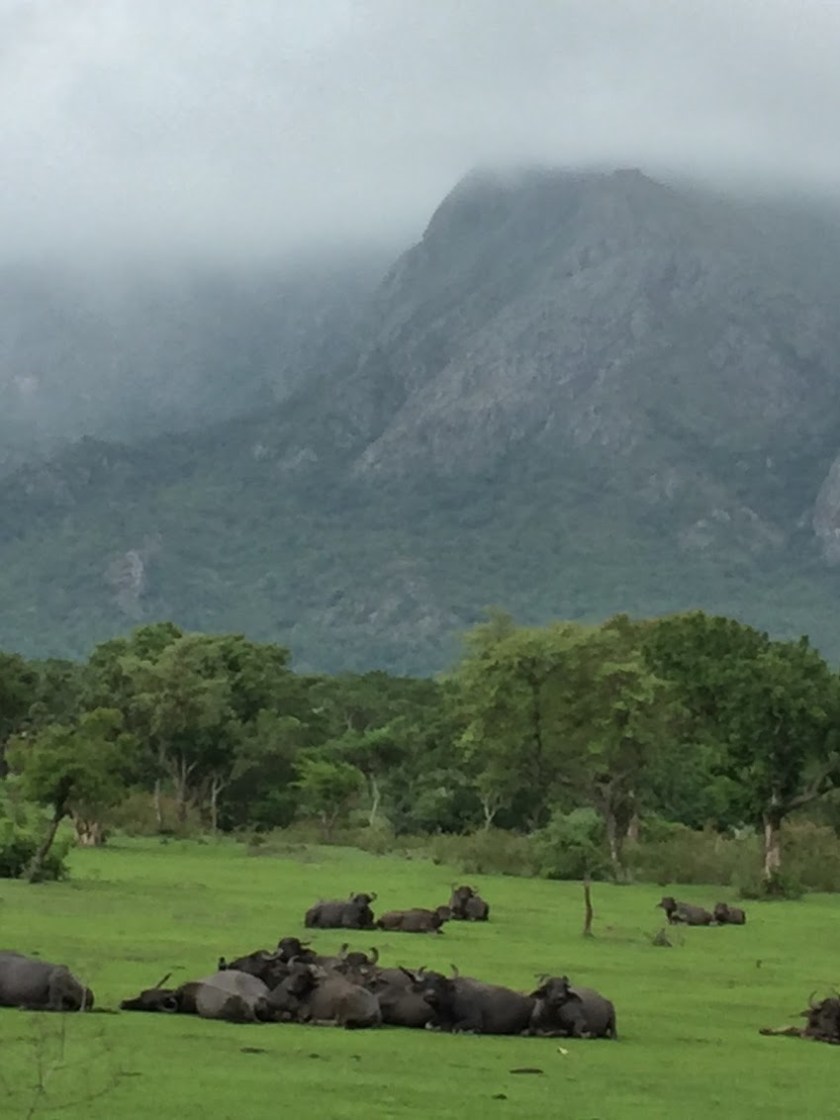
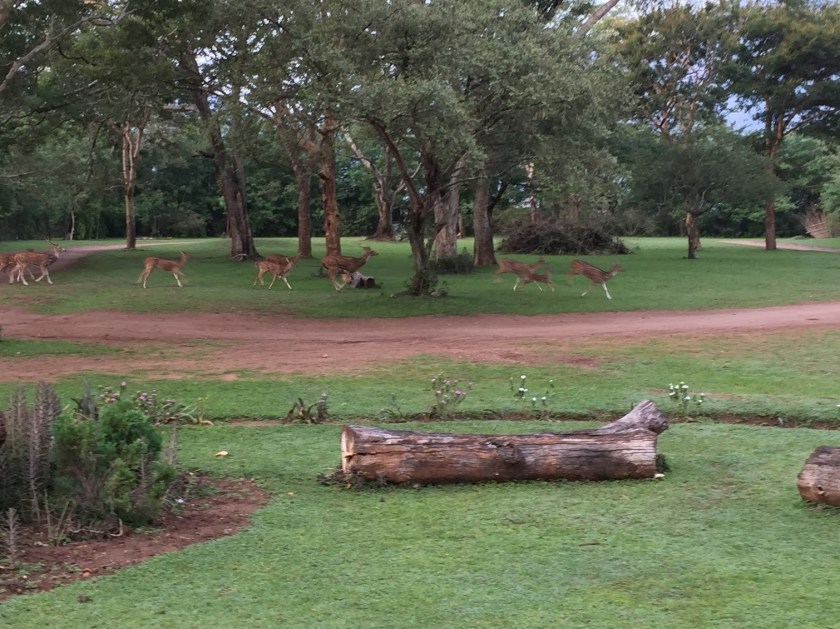
Likewise, once the van started bumping up the hills, I was happy and contented to take in the scent of the Nilgiri Hills and found myself taking in large gulps of the pristine air. Every now and then, we spotted elephants, bisons and deer freely roaming the forests.

bisons
Bisons in Mudumalai
deer_resort
Deer in Mudumalai
elephants
Elephants in Bandipur and Mudumalai

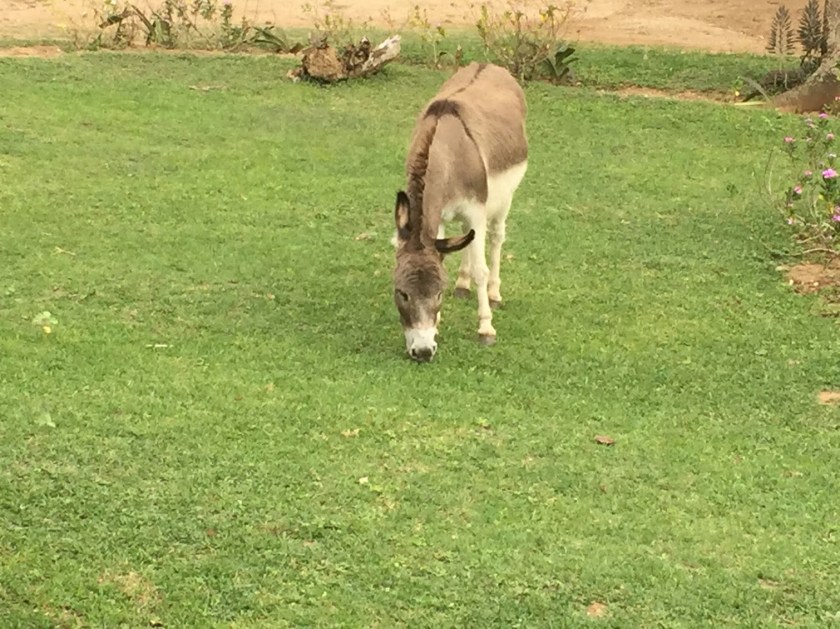
We stayed for a couple of days in a resort in Masinagudi. The beautiful resort was nestled in the hills with only 7 cottages, plenty of rolling hills, deer, bison, horses and a donkey. The children spent a good half day marveling at touch-me-nots as they folded and unfolded.

It was here we met Sultan. Sultan is a donkey and he was found by the resort owner in the streets of Chennai, where he was being teased and not given his due. She took pity on him and had him transported to this resort.  Sultan’s mates at the resort were two horses who occasionally gave the children a ride on their backs. Sultan had no such obligations as no one seemed interested in taking a picture riding a donkey, so he just grazed, all the while thinking he was a horse. He was a great favorite among the guests and was often called upon for a loving pat on the nose or a rub on the chin. Sultan knew all the residents of the resort.

sultan

It has since become a motto of sorts within our family to Live Like Sultan. A life of love, commendable self worth, fresh air, a contented mind and a slow pace of life to relish the many gifts that Earth has to offer.