A Planet of Wizards & Prophets

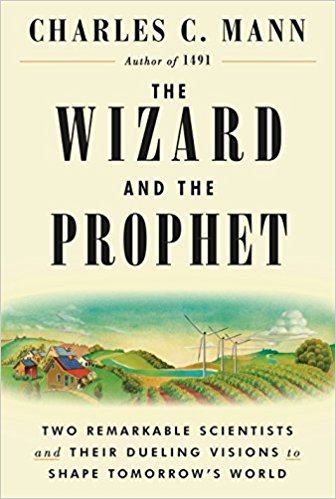
I was reading The Wizard & The Prophet by Charles E Mann on a crowded train one evening, and a pair of young girls shared the seat with me. The name of the book is a highly appealing one especially to little girls, and it piqued their interest too.

One of them was probably in the 1st or 2nd grade, and showed a precocious interest in my reading material. Her curly hair was made into numerous tiny plaits, and her eyes shone with a curiosity that would make her teacher’s heart sing. Her mother’s heart though, quailed. She said, “Now…now don’t bother the nice lady there, let her get on with it. “ I looked up at the mother, and told her that I love reading to children, and though this particular book sounds pedantic when read to children, I did it anyway. It taught me never to under-estimate children – the child soaked in everything, and asked the most engaging questions.
wiz_prop

I saw a certain amount of editing would need to be done if I were to sustain the interest of a 6 year old. The book is a non-fiction tome going strong at 678 pages – pages richly adorned with facts and figures, and life histories of all the people involved. I had already been through about 300 pages, so I knew the interesting bits, I knew the bits where a child’s wonder can be kindled. For the rest of the hour, I told her about wheat strains, water tables, and climate change.

The Wizard & The Prophet is a marvelous title because it encapsulates the polarity of our thinking so beautifully, and in this sense, they are both required for us to thrive. The Wizard in the book is Norman Borlaug, who is credited with leading the way for GMO strains of wheat production that along with stalwarts in the field such as Dr M.S. Swaminathan saved billions of people from hunger and starvation. 

William Vogt is the Prophet, who during his study in the Mexican coastal areas observed how we are stretching our natural resources and the effects it has on things as far-flung as bird migratory patterns and climate. In many ways, he is the one who set up the first bells of Global warming and Climate Change. He is the Prophet.

Do you believe in Climate Change? asked the girl wide-eyed.

I told her I did not need to believe Climate Change at all, and the experiments were here to show me how we are changing the air around us, and I showed her the pages outlining the experiment where humanity managed to pin down Carbon Dioxide as the problem-maker in the first place. 

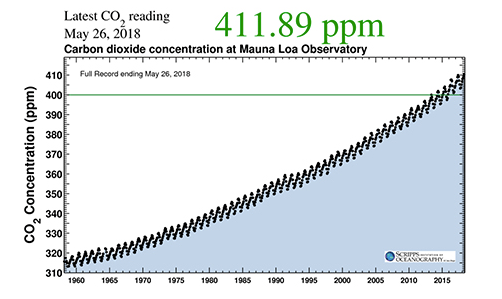
I cannot deny that global warming and climate change has always intrigued me. Carbon Dioxide only accounts for 0.03 % of the atmospheric gases, a remarkably small proportion for it to be causing global warming on such a scale as to change weather patters and cause severe climatic catastrophes, is it not? 

In The Wizard & The Prophet, the author outlines the experiments used in determining that it is indeed carbon dioxide that is the culprit and how our industries are directly contributing to its increase. The correlation between carbon-dioxide levels increasing and global warming followed. I found it a fascinating experiment and one that school laboratories can demonstrate I hope. 
Keeling_Curve
By Scrippsnews [CC BY-SA 4.0  (https://creativecommons.org/licenses/by-sa/4.0)%5D, from Wikimedia Commons
https://en.wikipedia.org/wiki/Keeling_Curve

(During the spring, there are dips because the Arctic tundra sprouts plant life and plants absorb Carbon Dioxide from the atmosphere. )

Looking at the worried expression in the child’s face, I asked her, Did she know what we can do to reduce the carbon dioxide?

Trees? she said, and I nodded yes.

I went on to tell her about the excellent example set forth for us by the Kenyans in The Green Belt movement, and how a person called Dr Wangari Maathai helped the Kenyans plant millions of trees over the past 30 years.

Planting the Trees of Kenya, by Claire A Nivola, The Story of Wangari Maathai

Planting the trees of Kenya - Wangari Maathai
Planting the trees of Kenya – Wangari Maathai

She glowed at the simple solution thought of by Dr Wangari Maathai, but her stop had come, and she stepped off the train with her mother who was now listening to her daughter talk to her about The Wizard & The Prophet.

As I reflected on the chat with her, I realized that the narrative around Climate change and Global warming is quite confusing.  It is no wonder that the child framed her question as – “Do you believe in Climate Change?” The prophets in this case are doing their job, but the question of : “How does one realize when an extreme storm or flood is part of a natural occurrence and when it is a direct result of our tampering with the delicate balance of the climate?” is a vexing one.  

The Prophets have sounded the alarm bell often enough, and the Wizards have yet to think of a sustainable solution to it. But there is hope: I am glad to read that China proposes to plant and nurture a forest the size of Ireland to reduce carbon emissions and improve air quality. 

China to create new forests covering area size of Ireland

cropped-shasta_forest.jpg

A Life Well Lived

One of my earliest memories were of sitting next to the grand old man and pressing the mole on his hand. It was a button, he said, that made him laugh. Every time I pressed it, he sent a shiver down his body and laughed. That is the kind of game that cannot ever tire a 4 or 5 year old child. I’d press the button at random times hoping to catch him off-guard. But the button always worked. It even worked last year when I showed the button to my little son as an adult. The great grand old man laughed.
He was known as Pattu-Mani, a loving nickname given to the bluish—gray-eyed handsome boy with a twinkling smile and pleasant personality.

He was the closest my mother had to a father. (How I Mother Saw Her Father)

Pattu-mani maama
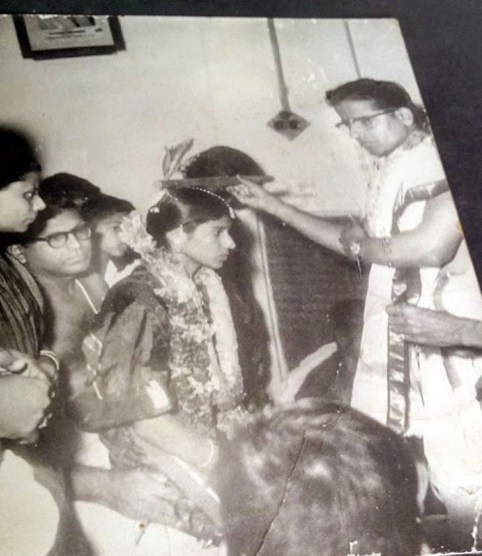
My Mother Being Given in Marriage By Pattu-Mani Maama(Kanya Daanam – usually given away by the girl’s father)

I remember listening wide-eyed to the stories of my maamas (Pattu-mani and Ambi as they were popularly known) and how they raised and educated my mother, their little sister. (My mother was the last born in a family of seven. When she was 3 years old, her father passed away. A shock that left the family bereft, and sent their mother into a decline from which she never recovered. )

The one who regaled the story was often my father. He was the story-teller in the household. In his stentorian voice, he would go on to narrate how they educated their sisters making them the first graduates in their village, in a time and age that girls were married off before completing high school.

These people were the true heroes of the #HeForShe movement.

The same loving, doting aunts and uncles who bathed us in the warm glow of their smiles were heroes?

As a young girl, I cannot quite describe the impression it made on me.

Clad modestly in cotton dhotis with no fancy degrees or awards, living lives of modest means in normal houses with dignity and self-uplifted from poverty; the ideas of personality, achievement and greatness conflicted with the world’s idea of greatness. Was it not always associated with wealth and fame?

Confusing as it all was as a child, it helped me understand that greatness comes in so many shapes and forms. It helped me understand that life is unfair, but we have to fight fairly anyway. That there is no correlation between (wealth, fame), and (wisdom, greatness). Sometimes, the wealthy and famous are also wise and great, but not all wise and great people are wealthy and famous.

So, what constitutes a worthy life?

pattumani_maama3

Is it in the fact that every one of us nieces, nephews, and grandchildren felt they were special to him?

Is it in the fact that the entire town showed up to say farewell to him when he died last week? The very town to which he came barefoot and penniless, looking for work as a teenager after his father’s sudden death.

Or is it in the sparkling affection behind the smiles he bestowed on those around him every time?

All the world’s a stage, and all the men and women merely players: they have their exits and their entrances; and one man in his time plays many parts. William Shakespeare

Here is to a man who played every role well, who made the show enjoyable for all those who had the privilege of sharing the stage with him.

My heart aches, my eyes tear up as I hear things like ‘end of an era’, ‘great soul’ etc. Maybe his parting gift is the meditation on what constitutes a good life, and working towards the very qualities he embodied.

TED Talk on a Worthy Life: here

The past few days have been a glorious recollection of a life well-lived.

A life that shouldered responsibility with élan
A life that never questioned sacrifice and duty
A life that gave and accepted love
A life whose inner light lit the world around him
A life that showed us how extraordinary an ordinary life can be
A Life Well Lived.

I have a small birth-mark where he had a mole, I propose to make that my laugh button. My way to remember Maama and to remind me to laugh when life gets me down.

pattumani_maama2

I love and miss you dear Maama. Thank you for your influence, your love and your beautiful presence in our lives.


The Chance To Catch A Deep Breath

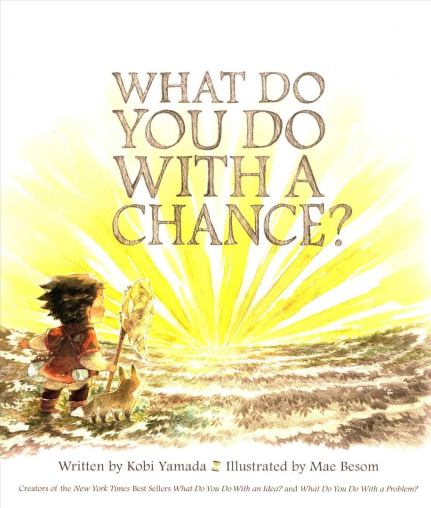
What Do You Do With A Chance? Written by Kobi Yamada and Illustrated by Mae Besom, is a insightful read on a young boy who sees a chance, and decides not to take it. The chance flutters by him, and he misses it. 

images

What Do You Do With A Chance – By Kobi Yamada, Illustrated by Mae Besom

The next time, he decides that he will not let a chance pass by him again, and he reaches for it as it flutters tantalizingly by him, but this time, he falls flat on his face, and is laughed at by the other children.

So, he refuses to entertain chances again. They flutter by him multiple times, but he turns his back on them. Slowly, they stop fluttering by.  Time goes on, and he starts to yearn for a chance, This time, he thinks, come what may, he will grab on and go wherever the chance takes him. 

The chance does arrive eventually, and it is a huge one. A bright shining illuminance that lights up everything nearby, and he jumps on, and soars watching the monochrome world around him explode in technicolor.  

Like all good children’s books, this one made me wonder too. 

How often have we missed chances? It is one thing for a book to beautifully illustrate a chance, but quite often the chances we miss are not always that beautifully illuminated in the landscape of our life, except perhaps in hindsight.  Sometimes chances come in the guise of problems, and they transform into opportunities. Sometimes chances are so common-place you barely recognize them at all. Sometimes, a chance comes in the form of slowing down, catching a deep breath and taking a glimpse of the world around us.

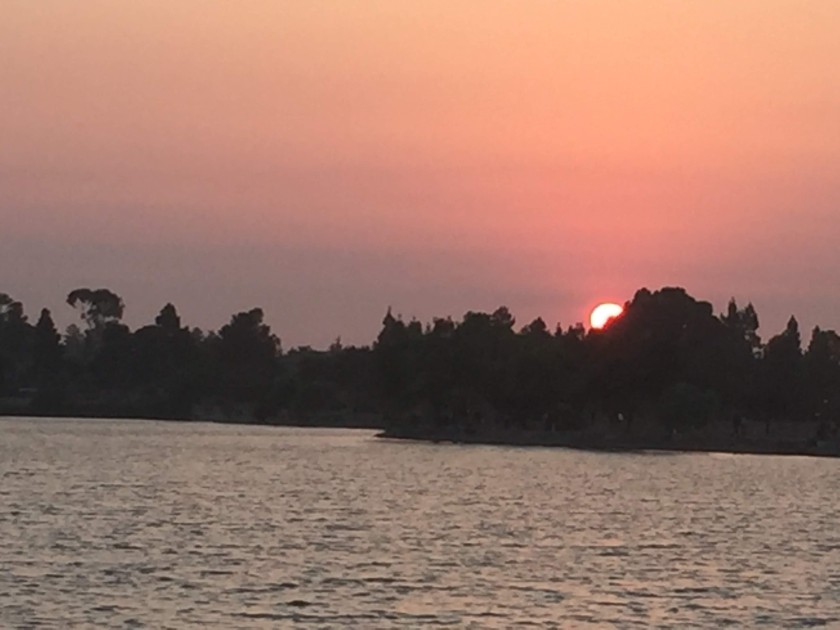
Take for instance the time I was running around a lake, watching the sunset throw its myriad patterns on the lake waters. It was beautiful and fleeting. My pounding heart was pouting at this sudden enthusiasm for fitness. I myself was quite miserable. Running can be quite the mental exercise: the mind jabbers on:

Why does it have to be so hard? Really, after all this time, has it only been a mile? So slow, I could have beat myself if I had been 5!

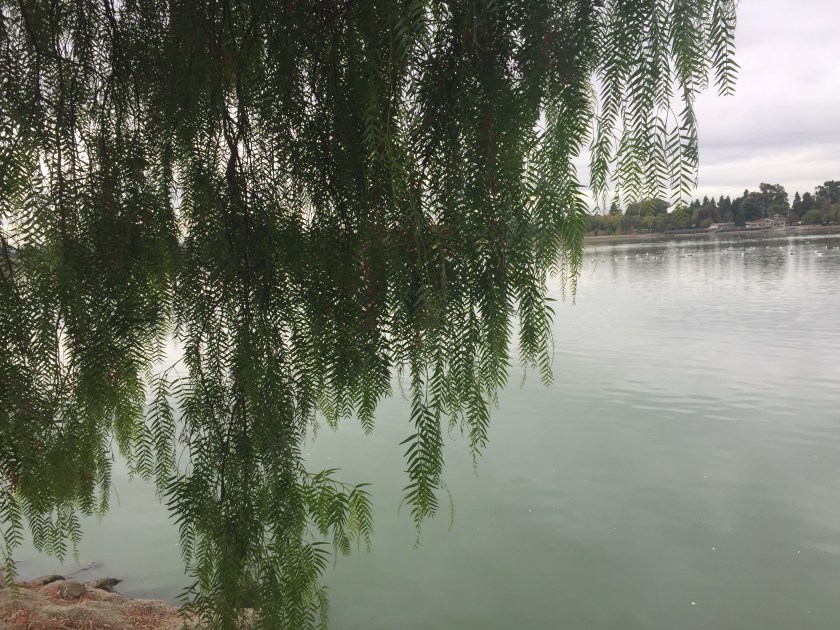
Then, I looked at the shining lake waters and chided my brain for being such a wet sod, took a deep gulp and pushed on. But after a few miles, I stopped by my favorite pepper willow trees. I had been running around the same spot, and yet, I had not noticed so many things. It was as though my senses suddenly woke up when I stood still. I could feel the evening breezes lift off the stray tendrils of my hair, the sun’s rays seemed magical: sunset orange is a lovely color, and the way it transformed the clouds in the sky was beautiful. Breath-taking as it was, its true beauty lay in its very essence of being ephemeral. 

img_0111

Dandelion Wine: A Sunset is only beautiful because it doesn’t last forever. – Ray Bradbury in his book, Dandelion Wine, when discussing the Happiness Machine.

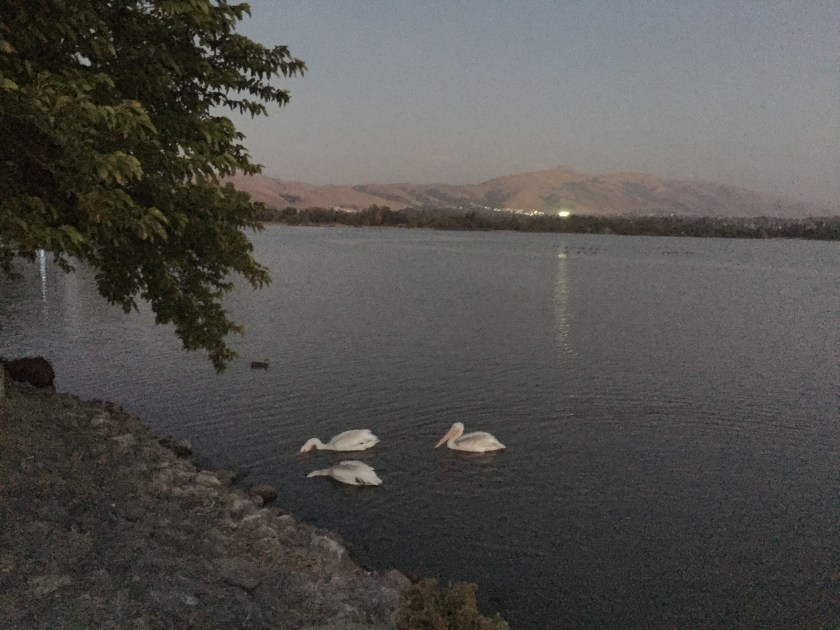
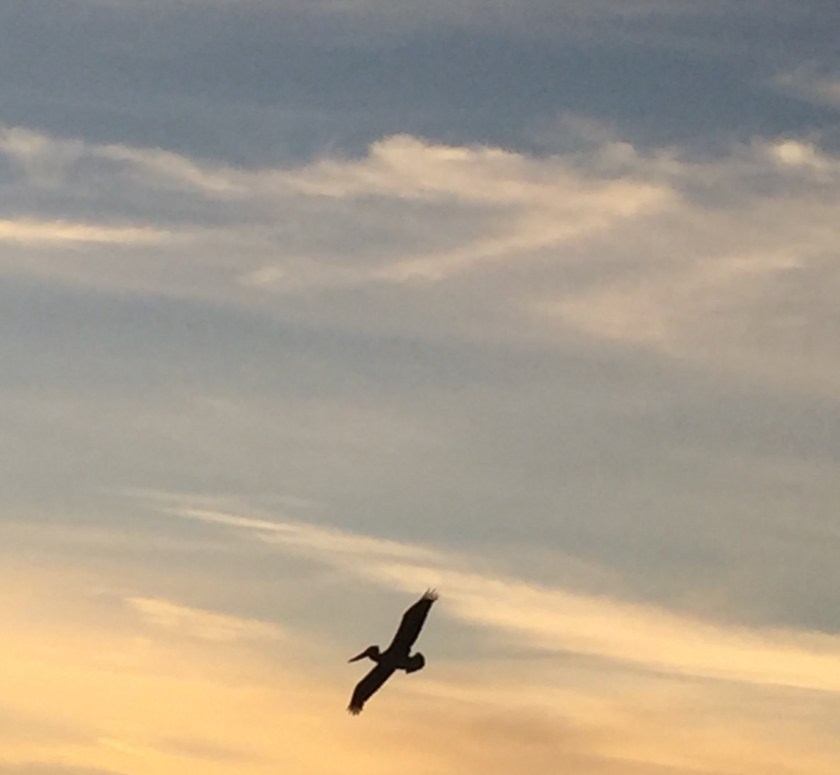
I watched the pelicans go about their evening business of co-ordinated fishing, small groups of geese were making their way back to the lake, landing together smoothly with the most melodious sounding splashes, and a fluidity of movement that would have made any pilot look on with awe.

We are lucky indeed to be able to stop and enjoy nature. As humanity huddles more and more closely in densely populated urban areas, we seem to have squeezed out these natural pleasures. For decades now, people have flocked to cities in search of livelihood. What option is there otherwise? Cities get larger, people cluster closer together physically and yet farther apart emotionally. How many city dwellers know all their neighbors?

img_0118

I looked at the pelicans and geese spotting the lake as they settled down to roost for the day. There was companionship there. The pelicans were steadily drifting towards me – together, gracefully, and I could not resist going to a vantage point by the willow tree. I have always loved how these trees look like princesses, letting their tresses down in the stream – looking joyful, and serene to let the flowing water tickle the hair-tips, even as the breeze caresses their locks. 

Nature, the soother, had worked her magic again, and my heart bloomed and expanded with joy. Sometimes a chance flutters by and you need to stop and take a breath to catch it.

IMG_7145.jpg


Crocodiles in your bath? No Problem!

It was well past midnight on a Saturday night, and I opened up my favorite essay in the book, Fruit Bats and Golden Pigeons by Gerald Durrell. Titled, The Enchanted World, the essay is a lyrical and moving piece of work, and begs multiple readings. I wish I had the sort of eidetic memory that could allow me to tuck the whole essay into a recess of my brain, to be retrieved and nurtured whenever I want to. 

Quote:

Any naturalist who is lucky enough to travel, at certain moments has experienced a feeling of overwhelming exultation at the beauty and complexity of life <….> You get it when, for the first time, you see the beauty, variety and exuberance of a tropical rain forest, with its cathedral maze of a thousand different trees <…> You get it when you see for the first time a great concourse of mammals living together or a vast, restless conglomeration of birds. You get it when you see a butterfly emerge from a chrysalis <…> You get it when you see a gigantic school of dolphins stretching as far as the eye can see, rocking and leaping exuberantly though their blue world <…. >

But there is one experience, perhaps above all others, that a naturalist should try to have before he dies and that is the astonishing and humbling experience of exploring a tropical reef. You become a fish, hear and see and feel as much like one as a human being can; yet at the same time you are like a bird, hovering, swooping and gliding across the marine pastures and forests.

He starts the essay with a starfish that turned bellyside up. With startling detail, he describes how the starfish righted itself gracefully and calmly. Gerald Durrell compared the whole thing to a ballerina’s movements, and I smiled. How marvelous nature is? It never fails to astound me or humble me. 

I marked the book and left the cosy confines of my bed to visit the restroom before going to bed. I may not be a naturalist per se, but when moved thus by a powerful piece of writing, the urge to become one is almost overwhelming. Oh how marvelous it must be to float and fly over the marine wonderlands and see a flourishing coral reef? How marvelous to see fishes and octopuses in abundance?

Maybe I do retain a certain amount of Shoshin after all I said to myself. (The ability of being able to see things with Wonder) I hummed a little tune and pirouetted like a ballerina would in her worst nightmares and was very happy with myself.

As I approached the restroom, I smoothly kicked open the door with one swiveling turn of movement that drove my pinkie toe to hysteria, and hopped inelegantly into the bathroom.

I then let out a huge yelp and came charging out again. Gerald Durrell could have compared my move to a rampaging rhino yelping like a pup that soiled itself in bed. “AAAhh!!! There … there …. there  is a …. “

For an aspiring naturalist, I really should show more forbearance towards finding crocodiles in my bath-tub. 

I do not live in the swamps of Florida. I do not live in the rain forests of the Amazon. I do not live near a river delta with those crocodile-nourishing swamps. I live in a vastly populated suburban area replete with parking signs, unlocked trash cans and wide boulevards bearing more traffic than they’d like to. The wildest wildlife we have encountered is a possum and the little fellow who had the presence of mind to drop a wicket basket over it was hailed a hero for 3 days

I hadn’t finished sputtering yet, the pinkie-toe let out an alarming signal at having the attention taken off it so quickly and I winced tongue-tied and pinkie-toe-tied together.”A…oh dear! There is this…this ..gulp…”

The husband, always my hero, put personal peril aside and dashed into the restroom with a paper and brush in hand. He is my shining knight;  his battles with centipedes, spiders and silverfish are the kind of legends I like to read. The kind of battle where no one is killed, everyone is happy at the end, and hearts start beating normally with an excess of love afterward.

He went in and laughed heartily: “Could you take that out of there? “ he hollered to the daughter, who then gave the sort of laugh that made my smarting pinkie toe want to do a number again. “This is a sponge crocodile. The gift from that party, remember?” he said.

img_0127

I did remember. The children had been babbling excitedly about the gift they received at a birthday party:  something about sponges, but I had not expected this monstrosity. The thing was over 2 feet long and looked very much like a crocodile. The children had put it into the water to let it grow and we had gone about our week-end business. In a few hours, it had ‘grown’ and was still growing. Its orange feet were a giveaway when one stopped to see the crocodile, but sleepy folks, even sleepy naturalists, would not do that.

“Naturalist as a profession not looking so good is it?” said the daughter’s voice richly timbered with laughter. With the dignity of a cat caught on a prowl, I turned and headed to bed.


The Lentil Chips Shine Down

The excitement in the bunch of children gathered was palpable. They were united by a sense of wonder and pleasant anticipation. Were they really going to be able to touch the telescope, and see something remarkable? A bar stool had been borrowed from a kindly neighbor and the little telescope was perched on it. An earthworm like line was formed with the children waiting to get a turn at the telescope. It was as wiggly and restless as an earthworm, and just as fascinating to watch from a safe distance.

mars_watching

Mars in the distance shone with the iridescence of a star. Mars has been exceptionally bright in the evening skies, and the Mars viewing party was happening on the week it was closest to the Earth.

Mars has fascinated mankind for centuries. It started with hoaxes of finding extra terrestrial life on Mars: maybe those rigged lines on the planet were canals? said a 19th century astronomer, and from that hypothesis, sprang a vibrant story of alien life. In our enthusiasm to find extra terrestrial neighbors, the populace went along. That kind of hope is refreshing even if misguided. 

https://en.wikipedia.org/wiki/Life_on_Mars

Tonight the telescope we had with us was only as big as a professional camera, and I hoped it would not disappoint the children gathered.

While the telescope was being deftly handled by the husband, I diverted the attention of the children skyward. Their questions about progress were distracting the misguided astronomer who was pointing the lens towards the stile on our neighbor’s roof, and wondering how he could see things fluttering there (I pointed to the sycamore tree nearby that had shed a few of its leaves on the stile, and crushed the poor fish’s soul about finding extra terrestrial life on Mars. Andy Weir might have imagined potato cultivation on Mars, but even by his standards, a sycamore tree was a leap, I told him kindly. He guffawed loudly at this and fiddled on.)

https://en.wikipedia.org/wiki/The_Martian_(Weir_novel)

In the meanwhile, I pointed out the familiar constellations to the hopeful looking children. The budding astronomers were skeptical. 

‘How do you know it is Big Dipper?’ 

‘It could be anything or nothing’, said another, and quickly the pendulum swung from hope to disillusionment. I managed a quick save by not letting it swing too far, and told them about the excellent app, Skyview, using which they could confirm the stars for themselves. The older teenagers who had smartphones for themselves were suddenly beset upon to share the marvels of the night sky. 


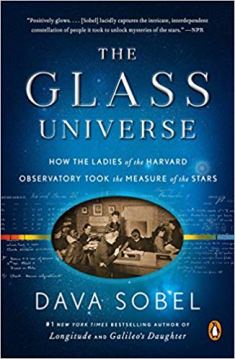
Cecilia Payne would have been proud indeed of the motley group of astronomers gathered in our driveway. It is marvelous to see how the work of early astronomers & physicists set the base for us to be able to map the skies and predict the movements of stars and planets.

glass_universe

The Glass Universe

Book recommendation: The Glass Universe by Dava Sobel

“Oh look!”, said the Big-Dipper-doubter, pointing the phone wildly at the sky, “the moon, the moon!”. 

An experienced hand said he had seen the moon before and there was nothing remarkable about it.

“But it is so beautiful!” said another sounding reproachful at the dismissal of the beautiful moon, and I agreed. The moon has exerted her pull over mankind almost since the beginning of time. Even if we do see it everyday, the moon has a poetic beauty all of its own. That night it was looking achingly beautiful. 

Maybe it was the effect of the scintillating talk I had the privilege of attending earlier that week.

I have never had the opportunity to listen live to a TED Talk. But that week, I had listened to a very TED-esque talk by Jon Carmichael the cosmic photographer. He shared the beautiful story of how he photographed the full lunar eclipse a year ago with the help of a Southwest crew. 

jon_carmichael_speech

Please listen to the talk on the site if you can.

I was telling the children about the talk, when the husband let out an involuntary yelp and said this time he was fairly sure it was Mars. 

One child gazed into the telescope and said, “It looks like a Papad in the sky.”, and we all laughed. (Papad  – is a sort of flat, round lentil chip!)

The cosmos has a way of uniting us in the darkest of times. Even during the most inane days, there is always a cosmic show that is ready to enthrall us and fill our souls with enchantment. It is why I was so happy to be standing among the children gazing up at the stars, and soaking in the wonders of the cosmic show above me that day. Even if the children did see a lentil chip in the sky, I hope for some of them at least the magic seed was sown. A seed nurtured by the hopeful innocence of youth, tempered by the wisdom of years, with the potential to mature into a star of their own.

When Love is Theratti Paal Sweet

This article was published in The India Currents Magazine for Krishna Jayanthi. Link here: When Love is Theratti Paal Sweet

“Do you remember?”, started an aunt, “how he stuck his hand in the theratti paal * container when the lights went out during Krishna Jayanthi?”

*Theratti paal refers to a heady Indian sweet made of condensed milk, ghee and cardamom

*Krishna Jayanthi – Lord Krishna’s birthday

The story was being related to peals of laughter. The hero of the tale beamed and laughed heartily at his boyhood escapades – it had all happened about 70 years ago after all. We knew the story, but it did nothing to diminish the retelling of it. I already knew my father was the naughtiest of the 9 children borne by Visalam Paati and Kalyanam Thaatha. (Paati – Grandma; Thaatha – Grandpa)

I sat watching the glow on the faces around the table, like an eternal torch lit by the essence of shared times and space of childhood. There was genuine affection, laughter and love there, and it enveloped all those around in its warm embrace. We had been to visit our aunts in Atlanta. The septuagenarian father has two septua sisters who live there, and I went with him to enjoy the siblings get together. I watched indulgently as their laugh lines etched over the years crinkled with every anecdote. 

His sisters and nieces had lovingly charted out the menus for a whole week. A week that included all of the father’s favorite dishes. Dishes remembered from childhood, dishes acquired in far off lands, and dishes that made my paternal grandmother, Visalam paati, come alive in the retelling of the process. The delectable snacks and the satisfying compliments such as, “You have your mother’s gift with the art of cooking.” flowed graciously.  The brood of Visalam and Kalyanam were known for their sweet tongues, and every meal had a different dessert to go with it. 

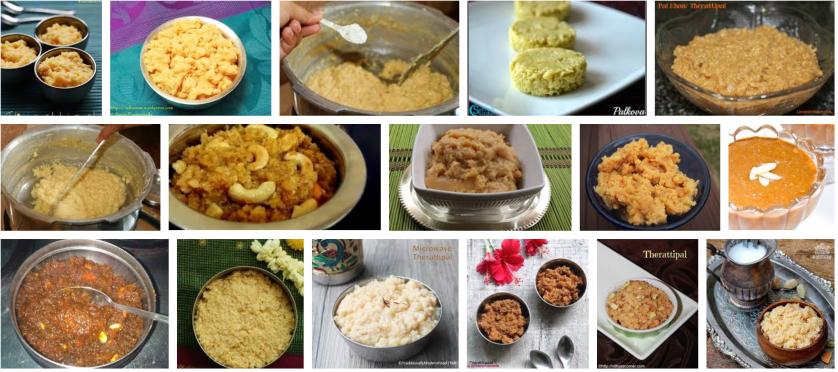
The sweet of this meal was theratti paal. It’s commercial cousins are called Milk Peda, but it is an unpoetic name and as a sweet is a poor substitute for the Theratti Paal. Theratti paal, when made on the stove with fresh milk takes hours to come to the right consistency. I can imagine how Hinduism came to have the myth of churning the milk ocean. There are so many milk based sweets in the land, and it is quite possible that that particular myth was the gift of the dreamy subconscious thoughts of some person making theratti paal hours at a time. One can go into a sort of meditative trance as the milk gathers its cream, and then folds and bubbles again, and then again and again, till the color changes, the consistency changes, and the sweet smell of condensed milk wafts through the air. In slow measures, one adds the sugar, butter or ghee and the cardamom to send those in the vicinity to realms of ecstatic waiting. 

Screen Shot 2018-08-17 at 10.32.21 AM

Today the same marvel can be obtained from a can of condensed milk, a stick of unsalted butter, and a microwave in under 10 minutes, and I felt the tongue dance and explode in joy as the microwave theratti paal melted on the tongue. The ghee, condensed milk, and cardamom all tickled the nostrils. 

I remember listening to stories about her children from my grandmother, Visalam Paati. (Visalam means vast, and the name suited her. She was generous with her time, attention and her servings, and when one wanted to play with the jiggling oodles of arm fat, there was plenty of that too and she never once got irritated when we teased her about her bulk. ) Feeding and taking care of a brood like that makes me shudder, but Visalam paati seemed to have done it with love, competence and skill. 

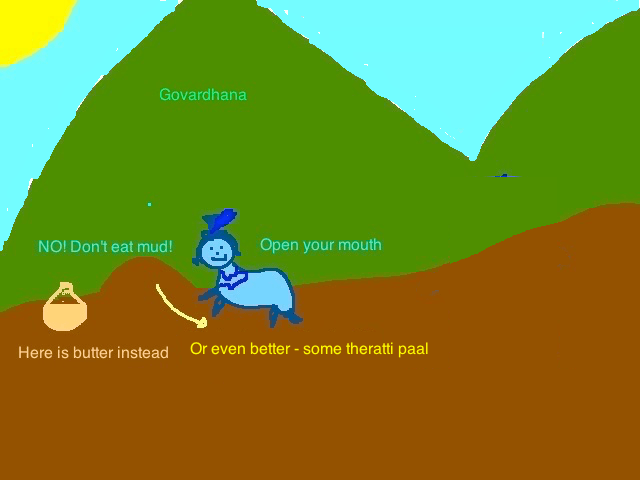
The tale being narrated was the one on Krishna Jayanthi. Krishna, Lord Vishnu’s avatar, is said to have loved theratti paal. 

krishna_therattipaal.jpeg

Apparently, the evening pooja was ready to start. Bowls of snacks: (mysore pak, payasam, thattai, seedai, murukku, theratti paal), butter and ghee were all placed in front of the Gods, and just before the offering to the God was complete, the electricity went out plunging the little village house in South India in the 1940’s, into a darkness lit just by the flame of the small wicker lamp near Lord Krishna’s deity. Visalam Paati having the kind of prescience that comes from raising nine children immediately placed her hand covering the theratti paal container. True enough, within seconds, a small hand struck at the theratti paal container – Visalam paati caught the hand, and waited for the lights to come on again. Just as she thought, the malefactor was none but the naughtiest of her brood, my father. 

“I knew you will reach for the theratti paal. Little rascal! “ she said. 

We all laughed heartily while spooning in some more excellent microwave theratti paal ourselves. 

The smells and scents of ghee, condensed milk and cardamom cut across decades and the siblings sat there giggling like school children again. 

Isn’t it marvelous how regaling our pleasant memories often transforms the bleak horizons of time to become as brilliant as the Milky Way studded with the shining moments of our memories?

Next week is Krishna Jayanthi, and I will go about the joyous task of drawing tiny Krishna feet from the doorstep to the kitchen. I shall make the microwave theratti paal, and think of the children in the 1940’s who shared the adventure of theratti paal, and waited the whole afternoon for the exotic taste of it in the evening. I shall regale the children in the twenty-first century with the story again, and smile indulgently at the fact that his sisters remember their naughty brother every time they eat theratti paal.

Love takes various shapes. Ours is sweet. Theratti paal sweet.

Zephyr Tales

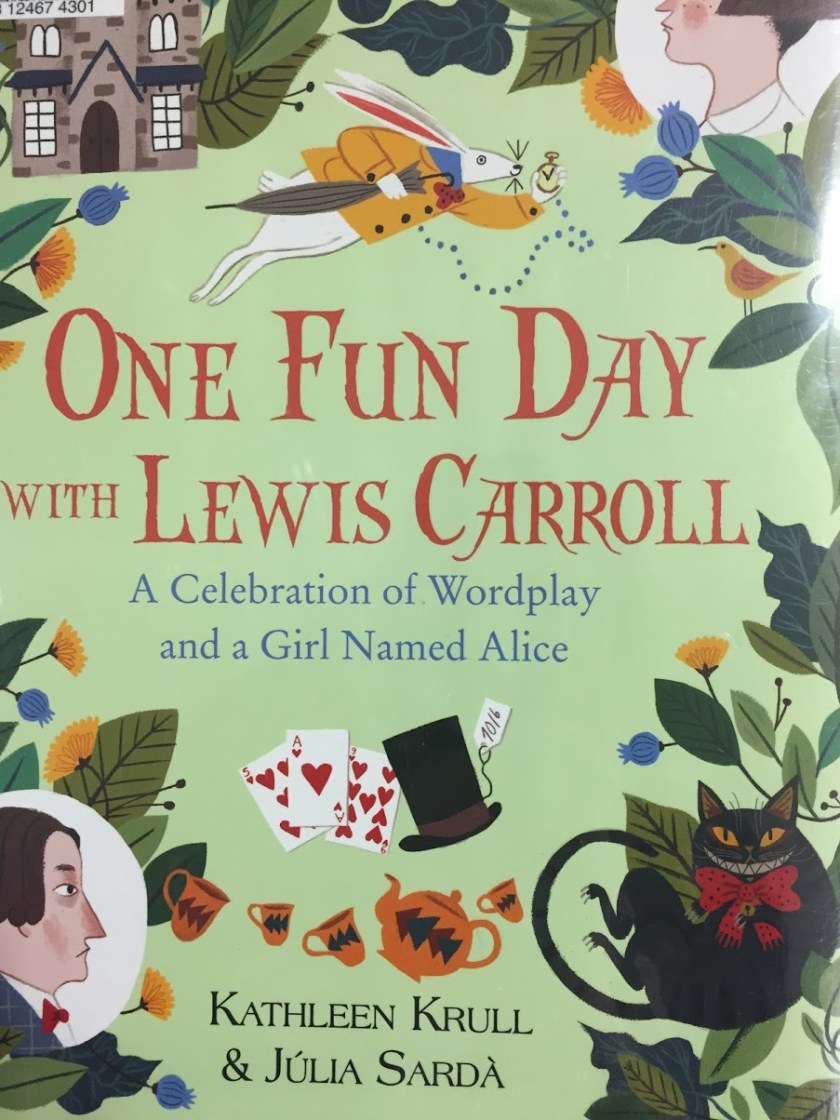
A few days before our trip to Iceland, I was reading a beautiful book on Lewis Carroll, One Fun Day with Lewis Carroll – A celebration of wordplay and a girl called Alice, and how the world was gifted with Alice’s Adventures in Wonderland. The book had exceptional illustrations and I found myself looking longingly at the pages multiple times over. Written and illustrated by Kathleen Krull & Julia Sarda, the book lets us peek into the journey of Lewis Caroll, and his particular penchant for finding words when the English language fell short.

IMG_8187

What was fabulous and joyous at the same time? Why ‘Frabjous’ of course.

I thought of this book while running down a mountain in Iceland. I was in a magical place and everything around me felt surreal. I was also reveling in the spurts of fresh air, reminding me every now and then that I was not in a dream. So, I suppose I could not really be Alice scuttling after a rabbit, though….I was running behind a friend whose physical fitness is legend in our little circle, and before I could say “Ho!”, he had loped easily ahead of me like a rabbit in a waistcoat. I was lost in the beauty and strangeness of the world around me, and kept on.

IMG_8730
Just as a sample of the brilliant art work in the book, please check it out.

Uphill, it was torture. I was wearing multiple layers of clothing, and huffing and puffing like puffins in a marathon. I plucked at my scarf, petulantly tugged at my jacket, and tied it around my stomach, and kept running. The marvelous scenery around me was ever so slightly befuddled by the mambo drums in the heart.

Downhill however, it was marvelous. I could feel the cool breeze on my face. Knowing that I had a gushing waterfall on the right, and a huge glacier to the left helped. The weather had become cooler, and the clouds that ordinarily I would have found beautiful were now stunningly beautiful.


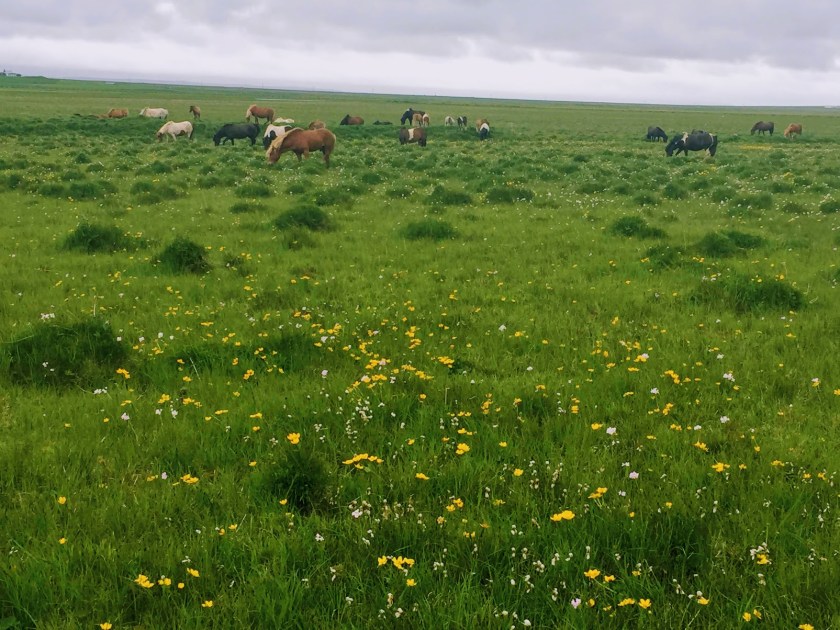
Isn’t there a beautiful word that describes the heady feeling of feeling the cool air against your face as you run downhill? Zephyr was the closest word I could think of.  Could horses have something that captures this particular joy? Maybe in the timber of their neighs.

horse

Exultant, I kept running. There is nothing in the world that can take that feeling from you, I thought, and smoothly tripped on a pebble, and did a routine that could be incorporated in to the next vaudeville act.

In a place where the winds are ubiquitous, there must be many words for describing the wind. I looked up words for wind in Icelandic and I was not disappointed to see 56 distinct words. (Counting Icelandic Words for Wind (JóB))

The search for this particular word led me to other beautiful ones though. Psithurism, for instance. Describing the sound of the wind rustling through the trees, I often stop and listen for this marvel during walks. Some others here:

A Nemophilist’s Orchestra

In the cathedral of the trees,
The bells of the wind
Like perfect music sounds
Accompany our montivagant joys.

Maybe we do need to follow Lewis Carroll’s wisdom and come up with a new word for the wind beneath your wings or the wind on your face.

P.S:
Nemophilist – a haunter of woods, one who loves the forest for its beauty and solitude
Psithurism – describing the sound of the wind rustling through the trees.
Montivagant – wandering over hills and mountains

Our Rainbow Colored Hearts Can Sing

The elementary school going son and his friends were proudly showing off their art work at the open house. It always makes my heart sing when I see the beauty of effort. Tables that looked like flattened zebras, zebras that looked like striped platypuses, and platypuses that looked like duck bills were all being open to interpretation. I was admiring everything and the artists around me were very proud of themselves. They puffed their chests out and competed with each other to show off one another’s work. 

img_8684.jpg

The teenaged daughter tugged my hand to show me a particularly fetching piece of art done by her brother. “Oh beautiful!” I coo-ed, though I could not really make out what it was. But to paraphrase Ursula Le Guin, a potter’s job is not to explain a pot, but to make the pot. It is upto us to use that pot as we will. In her fascinating collection of essays or blog posts, No Time To Spare, she deplores this tendency in Modern Art museums for the artist to explain their work.

Screen Shot 2018-06-04 at 4.57.22 PM

An artists work, she says, is open to interpretation and mean different things to different people at different points in time. It is a sentiment that I agree with, and I relished her way of putting it into words. Something that I have always admired in Ursula Le Guin’s work. Of course, she put it far more elegantly than I have attempted to here. 

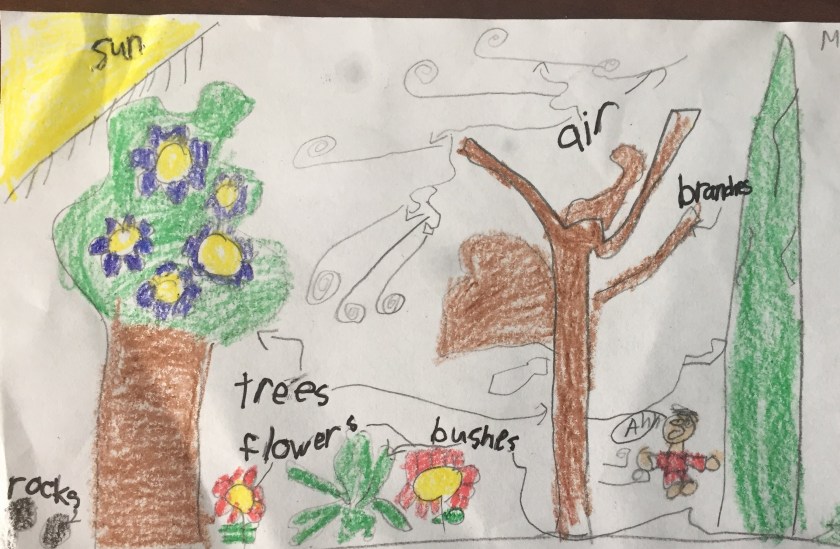
Please read this earlier post on the daughter’s drawings as a child.

Anyway, I admired the son’s work, and then the daughter pointed to the bunch of people in the picture. Peering closely, I noticed they had rainbow colored faces. I asked the son why the folks in his drawing looked like rainbow trout in the sunshine.

He said, “Oh my teacher said to the class, to put in some colored people.”

I turned to the teacher, and she said she did say that for Diversity and Inclusion. I smiled at her, and thanked our stars for all the lovely things teachers teach the children.  Half the adults seem to have difficulty remembering these simple lessons in these sad times. All the more reason why we should all attend a year of Kindergarten every decade.

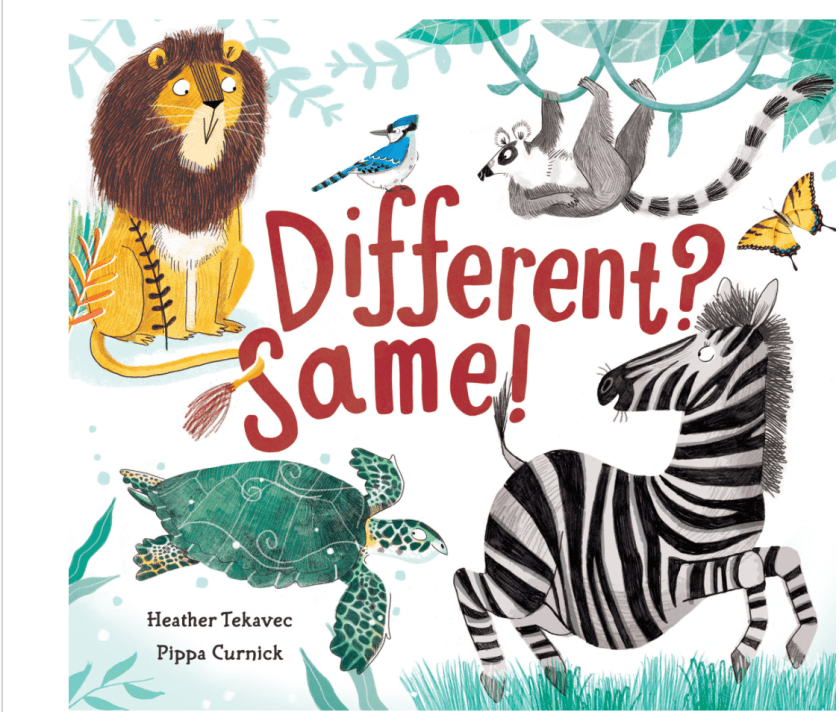
I looked again at the rainbow colored people and thought how beautifully untainted and open minded we are before we learn our little prejudices along the way. To think how much we obsess on skin color makes my rainbow colored heart very sad. It was, therefore, with utter joy that I picked up the book, “Different? Same!” Written By Heather Tekavec and Illustrated by Pippa Curnick.

Screen Shot 2018-06-04 at 5.22.25 PM
Different?Same! By Heather Tekavec, Illustrated by Pippa Curnick

In this beautiful book, we are reminded of how each of us are so different and yet similar. How is a Zebra similar to a bumblebee? Or an Elephant and a Narwhal? 

The book finishes on a beautiful note that can make our rainbow colored hearts sing: If you look closely enough, it soon becomes clear … we’re not as different as we first appear.

Swimming Across The Media River

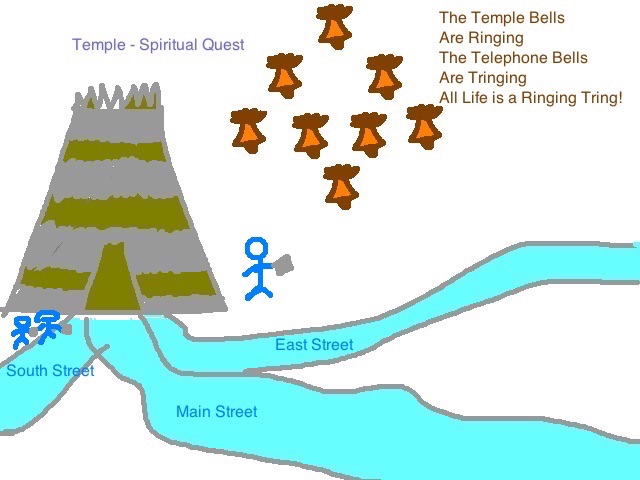
One week-end evening, the devices in the house were barking mad. Twing, twang, tring. Video calls, phone calls, instant messaging systems were all driving themselves to a tizzy. Far away, far, far away, 5000 miles away a temple bell was clanging.

I yearned for some quiet and asked if anyone cared on joining me for a walk in the cool Spring evening. Everyone sprang out of my sight like a cat let loose in a party of rats. The husband was trying to yelp his way out of a walk when the first free WhatsApp call came. He ran to pick up the phone with a sense of urgency, and secret relief that he did not have to go a-walking with me, but narrowly missed the call. I made for the open skies while he dialed back. 

The walk was a beautiful one. I admired squirrels chittering, birds twittering, even the raucous cackle of the geese seemed musical. I have, in my chronicles expressed an interest in finding out about animal communication. Misguided. It is better if we don’t know. This way, I could let the noise wash over me, and assume best intentions on their part. The breeze gently tousled my hair, and the setting sun threw brilliant hues across the scattered clouds.

img_7558.jpg

I stepped in to the home after some time, and saw the husband looking drawn and crumpled, like wet cloth tumbled about in a dryer.

Is everything alright? I asked him a little worried.

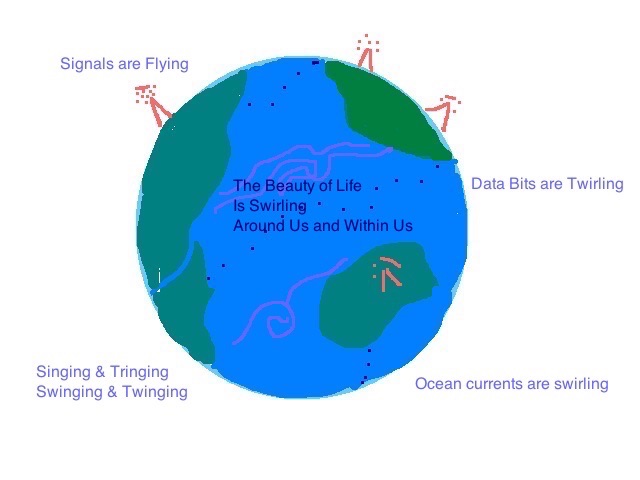
Yes! Yes! he said, and proceeded to tell me the thrilling tale of the past 1/2 hour. The saga clanged its way across temple towers, cell phone towers, underground cable networks, and busy human ones. Leaping from a small rural temple town in South India, a couple of metropolitan cities, and continents, with data bits coursing through half the earth, it read like the glossy blurb of these bestselling novels steeped in drama and suspense. 

I was intrigued, and gave the sympathetic ear at once.

The first phone call had been from his mother in India. She lives in Madras. WhatsApp calls are free, and people are free, so I will just give the gist. 

Mother in Madras: Can you call your cousin in New Jersey, and ask him for his sister’s number in India?

Husband in California: Why? 

M in M: His sister is here in India visiting no? 

Wait! I see even gists could take a while, alright let’s try this then:

Premise: Husband’s cousin visiting India for a few weeks.

Plot: Said cousin and her mother, viz, husband’s aunt, went to a small temple town in South India.  There, they planned to meet up with husband’s uncle, and go into the temple together.  

Plot Twist: Uncle tried to call Aunt, but she had put the phone in her handbag and did not hear it ring because someone was twanging the infernal temple bell with great righteousness.

Cliff hanger: Will they ever meet? The temple town had all of 3 streets culminating at the temple after all.

That is it. The entire plot. 

temple.jpg

How does that leap across metrops, continents and coasts, you ask? Fair question. 

As I see it, the itch to go temples stems from mankind’s search for spirituality. Learn to calm the inner anxieties and voices and so on. On this spiritual quest, when one does not meet the intended person in the first 32.5 seconds, the mind flutters and they place an immediate call to their sister in Madras. She then calms her brother saying there is no need to worry, and immediately places a phone call to the husband in California. 

Why husband in California? 

Repeat after me: Aunt visiting temple with d. Plot thickens when Aunt does not pick her phone. But the visiting cousin has a phone for use in India. Stroke of brilliance indicates that her brother preparing for bed in New Jersey will have his sister’s number. Call husband in CA *Tring* to call girl’s brother *Tring* to find out temp cell phone number in India. 

Husband misses call narrowly *Tring*. 

Husband calls mother again *Tring* as soon as possible, but mother’s phone is busy for she has called *Tring* her second son in New Delhi to call his cousin *Tring* in New Jersey and get the phone number. 

After several nerve wracking minutes, both folks call the poor fellow in New Jersey *Tring Tring*. The fellow moans sleepily that he has already fielded five free calls from various parts of the globe asking the same thing and there is no need for any of this, since they seem to have found each other. 

tring-tring

Then a next set of phone calls were completed for the express purpose of letting everyone know that the concerned parties had met each other, and all was well. In all, I guess about 23 different calls were made. If one party had stood still for 5 minutes, the other party would have simply fluttered into them in the breeze. 

Though tactless, I laughed heartily. The husband looked like a spent force after dealing with this hurricane of calls. He eyed me, and said somewhat icily, “Let’s talk about something else, shan’t we?”

“Do you know how trees, and wild boars communicate to each other?” I asked the husband grinning. 

“Tell me”, he said, and we spent the rest of the walk discussing acacia trees, giraffes, wild boars and hunting laws in Geneva. (Inner Life of Animals, The Hidden Life of Trees – Peter Wohlleben)

“Did you know the wild boars are so smart, they have figured out that the Geneva side of the river has a hunting ban, and the France side doesn’t? So when the first gunshot rings out in France, all the boars scramble, splash into the river and swim to the other side of the river. I suppose they poke their tongues out at the hunters on the other side!” I said.

“Is there someplace that has a free-calling ban, so we can swim across the media river when the first phone calls start?” moaned the fellow, and I patted his hand in commiseration, wisely refraining from telling him that all of this could have been avoided if he had just come out on the walk with me leaving all modes of communication behind. 

The Lake of Lousy Metaphors

This post was published in the Nature Writing online magazine dated 11th August

The past few months in the nourish-n-cherish household have been a whirling vortex of activity. I enjoyed most of it, but one night I felt exhausted. A sense of being spread too thin washed over me. I tried chuckling at Bilbo Baggins’ famous quote in The Lord of the Rings,  ‘like butter scraped over too much bread’, but what came out was a whimper. 

I walked over to the window, and gazed outside. The view of a spring night with its flowering plants and trees bursting with young leaves is beautiful. The faint moonlight breaking through the clouds above, makes for a serene scene, and made me reach longingly for Thoreau at Walden Pond, though it was well past midnight.


Screen Shot 2018-05-01 at 5.02.48 PM.png

Henry David Thoreau built himself a cabin in the woods near Walden Pond, and lived there for 2 years 2 months and 2 days. What emerged from this minimalist living of Thoreau’s was the great writings, that to this day offers us wisdom. (In case you run away with this notion of my acquiring wisdom, I  assure you, that I am in no such danger. I am still firmly rooted in the hustle and bustle of the human village.). The book I read was a graphic book meant to introduce Walden Pond to those who draw like me (stick or easy sketches – the actual sketches were of course better than any I produce). The words and captions belonged to Thoreau, and I enjoyed the drawings – minimalist sketches to match a minimalist lifestyle. 

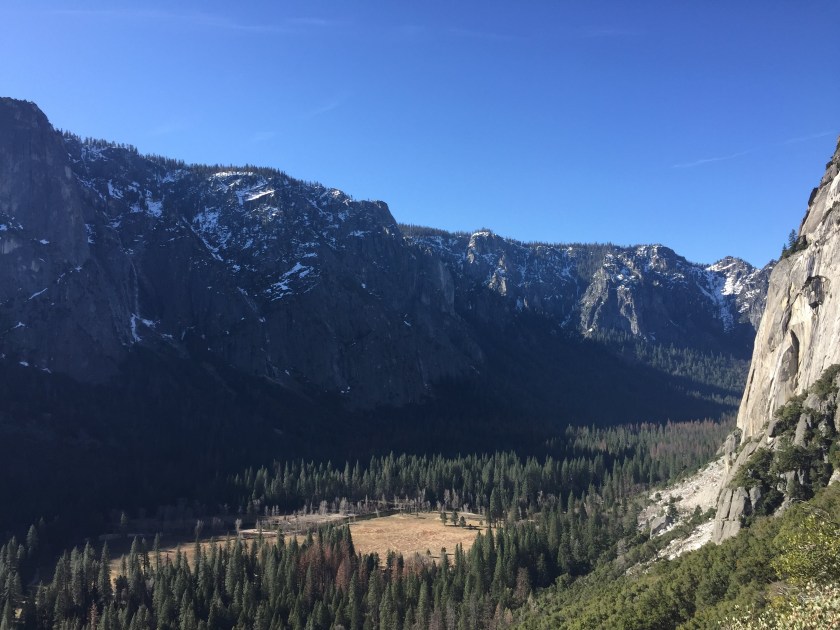
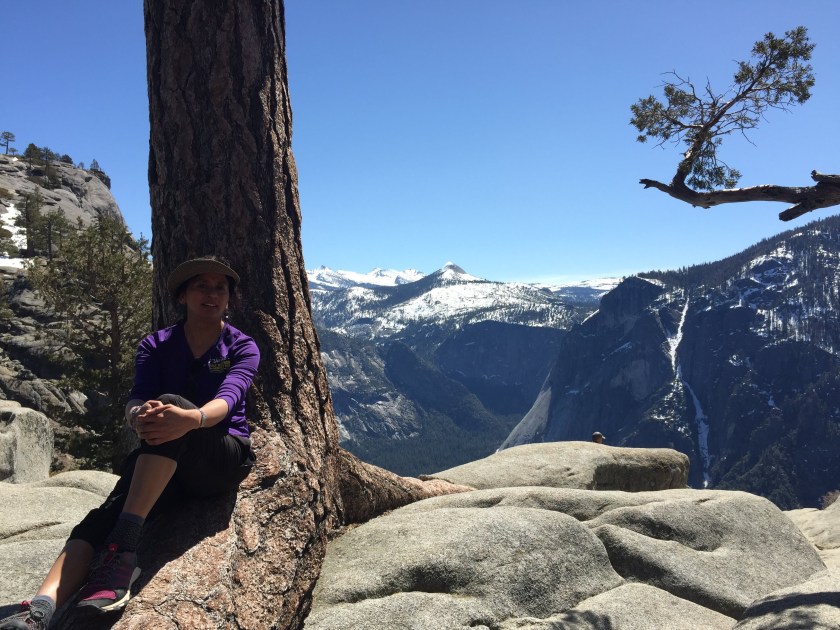
In the book, Thoreau refers to the calming influence of observing nature, and how if you stay still in the woods, you will notice things that are otherwise not revealed. I let the book flop on my tired torso, and threw my mind back to the day the husband & I managed to get a day to ourselves in the wilderness. We went on a strenuous hike up to Upper Yosemite Falls. It was a beautiful day to hike. Several cascades trickled across our paths, and we jumped joyously across them. The water trickles are the highlight of that hike, and we thoroughly enjoyed splashing ourselves with the fresh water from the snow melt. It was steep going, and we huffed and puffed our way upwards. 

IMG_8277.jpg

The trailhead helpfully said, that one must not under-estimate the hike, and that it would take 5-6 hours for average hikers. The husband, in his typical fashion, said it would only take 4 hours. I haha-ed somewhat helplessly at this optimism that has been my bait and mate, and said 6 hours it is. It took us 5 and 1/2. So there.

I was keeping my eyes out for some wildlife, and I was disappointed to find that apart from some squirrels, there really wasn’t any other wildlife of note. Of course, animals have learnt to keep away from wild humans. I remember reading somewhere that the only large animals to survive the Anthropocene stampede are those that are domesticated.  All others, we have managed to slowly wipe out. 

On the hike, it was a perfect day, the skies were a brilliant blue, the weather neither hot nor cold, anywhere you pointed the phone, you got a pretty enough picture ( I paid for this by spending an hour deleting 98% of these photos). The steps and switchbacks were exacting a toll on the calf muscles that I paid for the next day. Then we turned a bend, and there in front of us was the spectacular Yosemite falls crashing and thundering its way down to the Merced river. Loud crashes probably meant large shelves of ice chipping and crashing into the depths below. The mists created rainbows. It was marvelous. One could stand there for hours watching the waterfall. 

IMG_8338-EFFECTS.jpg

It was mighty lucky for us to enjoy Yosemite like that. For just a few days later, a storm engulfed the region, and Yosemite valley was evacuated, several rivers ran swollen and we heard of tragic mishaps and washed away roads. I thought also about how on our recent trip to the mountains, we had narrowly missed a snow storm.  There is something eerie about knowing how close one was to mishap. I was yanked back to the present by the goose-bumps on my skin, and I held the Walden at Thoreau in my hands as if looking at it for the first time. Maybe that is what the wise mean when they say ‘Enjoy the present’, and ‘Savor the moment’ and so on. I opened Thoreau slowly, mentally leaving the human village behind, and entered a sanctuary of peace and calm. I  retreated into the book for several blissful minutes, like a deer in the meadow at a rare moment.  

Thoreau had written about Walden Pond itself: 

“A lake is the landscape’s most beautiful feature. It is Earth’s eye, looking into which the beholder measures the depths of his own nature. “ 

I dipped my feet into the lake of sleep, thought of what a lousy metaphor that was, and drifted off.

IMG_8309.jpg