How Much is Too Much?

The husband gave me a significant look, and shook his head disapprovingly. I understood his sentiment. He was reading Bad Blood: Secrets and Lies in a Silicon Valley Startup by John Carreyrou.

I spent the whole time shaking my head disapprovingly, and wondering how one could have started out so nobly and have gone astray so quickly when caught in the web of her own lies, myths, and ambitions.

While being driven is often seen as a good thing in our Society, it generally needs a heathy helping of morals and ethics and all the rest of it. Take the visible case of Elizabeth Holmes.

I had heard of the story of Theranos, the medical blood-testing company that promised to revolutionize the medical industry by doing all blood tests on a single drop of blood instead of the vials and vials that were currently drawn. “That.Is.Amazing!” I thought to myself. Like millions of others, I don’t particularly like having vials of blood drawn, and this was a development waiting to happen.

No wonder the company was valued at billions and more importantly had the potential to save thousands of people. Elizabeth Holmes seemed to be the visionary that everyone yearned for – dropped out of Stanford, after inventing ground-breaking technology in her sophomore year, and it was nice that she was a Woman. The press likes that.

Then, a few years later, a friend sent me an article on the company after an investigative reporter found the whole premise a fabricated one. I was a little dubious at first. How can one be touted as a visionary for this long by this many people have fabricated a premise like that? I mean she was on the cover of Time, Fortune magazine and Business Insider’s darling. Could she have done all that on what we in the software industry refer to as a ‘manual workaround’.

“By positioning Theranos as a tech company in the heart of the Valley, Holmes channeled this fake-it-until-you-make-it culture, and she went to extreme lengths to hide the fakery.” 
― John Carreyrou, Bad Blood: Secrets and Lies in a Silicon Valley Startup

How one manages to fool this many people for so long astounds me, but it also explains our fervent, if pathetic need, for super-heroes. We need someone to adulate, someone to fawn over, someone whose story can inspire the young, and we latch on greedily to anyone the media deems worthy.

“Like her idol Steve Jobs, she emitted a reality distortion field that forced people to momentarily suspend disbelief.” 
― John Carreyrou, Bad Blood: Secrets and Lies in a Silicon Valley Startup

I recommend reading Bad Blood: Lies and Deception in a Silicon Valley Startup by John Carreyrou.

bad_blood

It is a chilling tale cautioning us about the importance of grounding oneself in reality, the importance of listening, and the underlying question of morals and ethics. Essentially, Elizabeth Holmes seemed to have used her considerable charisma and influence to get top names on her Board, while running a tight ship. Not having any real breakthroughs in terms of technology was a minor problem. Instead, they seem to have come up with less than efficient techniques to dilute blood samples, and test them on standard Seimens equipment.

Why none of her Professors, Board of Governors, Journalists ever stopped to understand the true technology claims of Theranos is beyond me. Or is it that she played into the sweet spot of attention spans to give people what seemed like important information, while not revealing anything?

Whatever, it was. it begs the question of ethics and ambition.
“Her ambition was voracious and it brooked no interference. If there was collateral damage on her way to riches and fame, so be it.” 

― John Carreyrou, Bad Blood: Secrets and Lies in a Silicon Valley Startup

Ultimately, how much is too much?

“Great ambition is the passion of a great character. Those endowed with it may perform very good or very bad acts. All depends on the principals which direct them.”
Napoleon Bonaparte

P.S: In that gloomy account of ambition gone awry, there are two rays of sunshine. The young interns, Tyler Schultz & Erica Cheung.  In their early twenties, their inner light never wavered. Not when they knew it was time to resign, nor when it was time to reveal the real goings-on in the company. This was not some website that did not deliver a feature after all, it was blood test results that affected people in real ways.

Aren’t those the type of heroes we need to look for in our Society? When we talk about drive and  ambition for ourselves or our children, these are the people we should be referring to.
A Pluviophile’s Song

The night lamp was on, and I had a harried, desultory look on my face. It had been one of those days in which a lot had happened, but nothing had really happened. Days sent to try stout persons souls. The husband came and told me that I should probably try meditating for a bit, but I shook my head stubbornly. What if I fell asleep? 

He looked at me amused. His eyes danced with the unspoken words: Who are you and where is my wife?

I laughed, and understood the look. A Lover Of Her Sleep if ever there was one. I  told him I wanted to read a little, since I have been falling behind in my reading, and he shook his head indulgently. I really do think you should sleep though – you look so tired!, he said, a line creasing his forehead as he looked at me. I swatted at the idea like a pesky fly, and surveyed the bedside table. 

I don’t know how to use the word Tsundoku correctly in a sentence, but I had Tsundoku-ed the local championship leagues. Piles of books were stacked – children’s books, fiction books, non-fiction books, and all looking enticing and inviting. 

Tsundoku is a beautiful word denoting the piles of unread books by one’s bedside.

Tsundoku (Japanese: 積ん読) is acquiring reading materials but letting them pile up in one’s home without reading them.[1][2][3]

The term originated in the Meiji era (1868–1912) as Japanese slang.[4] It combines elements of tsunde-oku (積んでおく, to pile things up ready for later and leave) and dokusho (読書, reading books). It is also used to refer to books ready for reading later when they are on a bookshelf. As currently written, the word combines the characters for “pile up” () and the character for “read” ().[4]

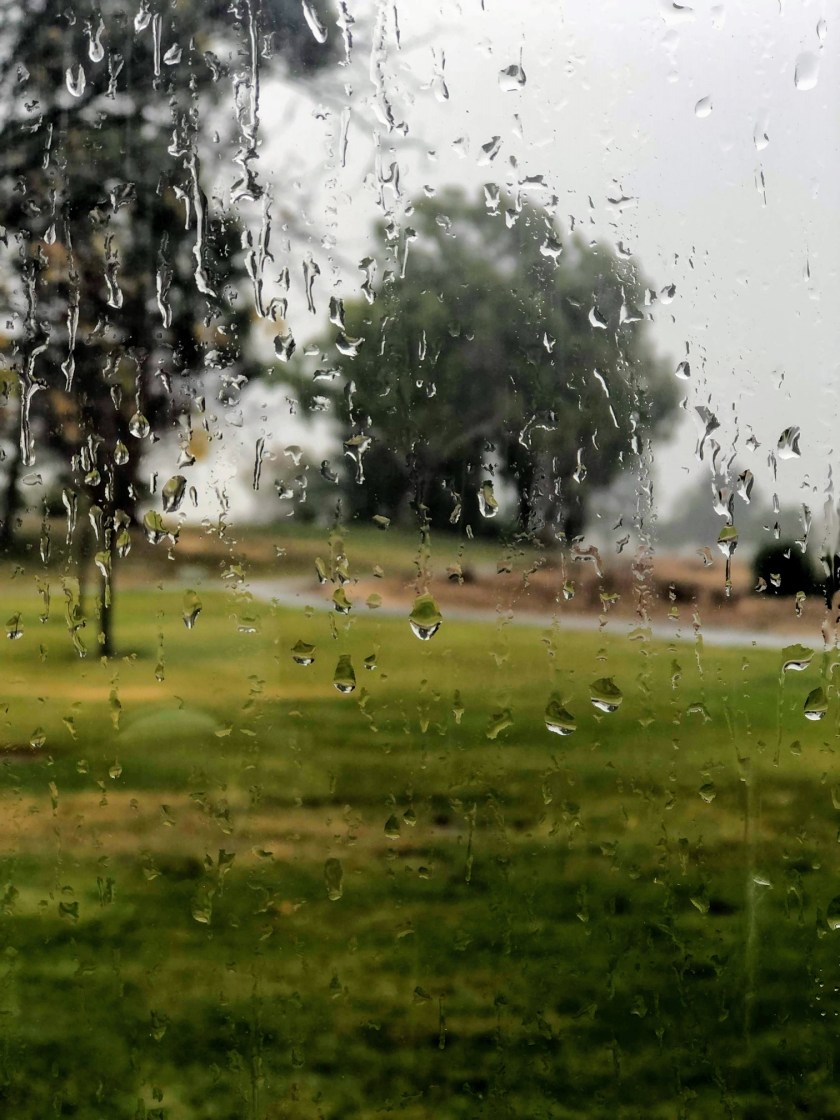
I picked up a serious tome, and settled in. I had no idea I had been scowling till I started smiling a few minutes later. It was the musical patter of the rain. The beautiful rain was coming down in bucketfuls. I opened the curtains, and reveled in the beauty of the rain lashing down against the windows, soaking the tree tops, and flattening the flower beds. There is nothing prettier than the night skies sending torrents of rain. 

I loved the word Pluviophile. Meaning a lover of the rain, it seemed to have a nice ring to it, a word meant to bring a smile to one’s face.

IMG_0726

I opened the door, and watched the rain. I felt the cool breeze caress my face, and felt a surge of gratitude. I had said to my friends only a few days earlier that it will be lovely to have another bout of rain before the summer months set in and the neighboring hills turned brown. The Earth had already started emanating a slightly thirsty aura, and I yearned for the smell of rain against the hot Earth. 

I have been looking for the word that captures that welcome scent, and found one recently. 

Petrichor (/ˈpɛtrɪkɔːr/) is the earthy scent produced when rain falls on dry soil. The word is constructed from Greek petra (πέτρα), meaning “stone”, and īchōr (ἰχώρ), the fluid that flows in the veins of the gods in Greek mythology.

The Pluviophile in me smiled at the word and tucked it away for future use. 

The weather forecast had predicted a Storm. In the US, it is never Rains but Storms. The rain I had watched was not a Storm. A Storm is when the rain huffs and puff and stomps its weight around. But this was no Storm. The street lights cast a lovely light on the clouds overhead and the raindrops pouring down. The world looked mellow and in that moment of watching the rain, a calm descended upon me.

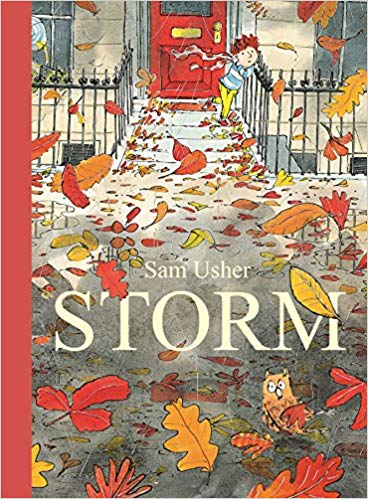
After a few moments, I traipsed back to bed. I lovingly surveyed my Tsundoku pile again, and set my tome aside. It was time to read a Children’s book. Storm by Sam Usher beamed up at me, and I snuggled in with the lovely book.

storm_sam_usher

A beautiful book that captured the joy of playing outside after the rains and storms. I have never flown a kite successfully, and the book made me want to. The illustrations are mellow works of Art, and after admiring all the pictures in the book, I slept the sleep of the tired but happy.

A Mother’s Day Gift

I walked into the classroom to read my story on Mothers Day to the children. I was a little nervous. Would the tough audience respond well to the story? It is always the surest test. If their attention dithers, you have lost, if they are enthralled, nothing else matters.

The teacher told me that they will be settling down soon. I watched amazed as she quietly got all the children, who were, less than a minute ago, tumbling and hanging upside down in the playgrounds outside to sit on the rug in the middle of the class, and settle down to Reading Time.

Now..Now..Ian, what did we say about sitting quietly facing me?
Ardvash, sit with your bottoms on the floor please.
All of you, sit with your bottoms on the floor and look ahead. We have a very special thing happening today. Can anybody tell me what it is?

A flurry of hands shot up into the air, and several people started talking at the same time. A minute later, they sat chastened by the fact that they had talked over each other without waiting their turns. There is no greater joy than seeing children respond sweetly to their teachers. A mellow voice bursting with pride at being picked said, “We are getting story-time”
“Yes!” Said their teacher. “And we are lucky have an author, a real author, come to read us her book.”

I took a deep breath, had the children do the same, and launched into the story. I read to them how the animals had planned to celebrate Mothers Day in the Jungle. When Potini Elephant was in tears because she could not find her dear child, Trumpy Elephant, there was a hush. The story built on, and every now and then I stole a glance at the faces of the children. The sweet sincerity with which they bestowed their attention made my heart sing.

Screen Shot 2019-05-10 at 10.11.29 AM.png

Mothers Day In The Jungle – By B S Bumble

When the book was over, the children clapped and their teacher gently asked them if they were forgetting something. “Thank you!” they all chorused.

It is Teacher Appreciation Week, and the importance of a loving, firm but gentle influence on the children day in and day out is not lost on me.

We do not need to be told to sit on our bottoms when we get to work, or go to a restaurant. But I wish somebody would tell us to sit on our bottoms and listen to the wind rustling through the trees or the geese quacking their way home every night, and we listened with the heart-warming sincerity of children.

When you get the opportunity to read your Mother’s Day story to a class of children sitting “with their bottoms on the floor”, and they listen with rapt attention, there is no better gift for Mother’s Day, is there?

#HappyMothersDay to all you wonderful mothers and mother-like figures.

Screen Shot 2019-05-10 at 10.12.30 AM.png

The Sandpiper’s Wisdom

I had finished my lecture on the unnecessary stress being online gives after the daughter told me about streaks. She had taken a picture of her left nostril for a streak, and I was appalled. “IF you are going to send a picture, at least take one worth remembering.”

“Relax! It is just for a streak.” Streaks are apparently how many days in a row you have sent pictures to each other. The pictures themselves are deleted, so it doesn’t really matter is what I was told. I was having trouble stomaching something like this. Pictures were important were they not? They were little bubbles of memory. You took some bubbles and relished them again and again. I appreciate my left nostril but do not revere it with a picture! I said somewhat indignantly.

When we take family pictures, we write sagas about them.

Challenges here: The Saga of the Family Photos

Precursor here: The Family Photo Saga Part 2

Motive Matters here: The Spirit in the Photograph

The daughter told me that times had changed, and asked me if I wanted a picture of my left nostril too. “This little thing has changed a lot of stuff mama” she said waving her precious phone, and gave me that look that makes me feel like a T-Rex fumbling on an aeronautical console. I blew my nose in disgust, and went about preparing for the picnic by the beach.

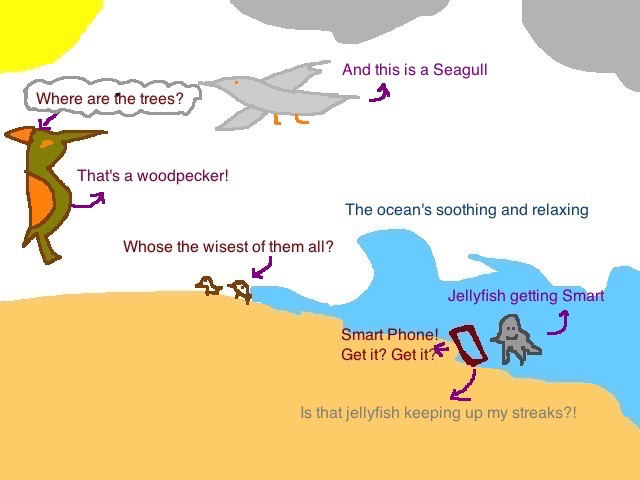
“Can you take a pic of me like this?”, said the teenaged daughter, handing me her smart phone, the matter of the left nostril forgotten for greater things in life, such as the tranquillity of a beach. She looked happy and contented. Just the right kind of picture that will satisfy social media gargoyles, her expression seemed to indicate.
I took the picture, and showed it to her.
“Ugh! Lousy picture! Gosh! Okay….okay…let me show you. See…just have me look out into the ocean and take it from this side.”
“Makes you look like a silly woodpecker wondering where the trees have gone while looking into the ocean.”, I said.
She laughed raucously, and said “Just take the pic!”

the_edge_of_the_sea

After a few pictures and videos of the waves lapping the shores, she sniffed the air like a horse raring for a race. “Interested in a race little dobucles?” she said, and tousled her little brother’s hair. I looked at the promising noses twitching with competitiveness, and I offered to referee as I set the pair off on their race.

It was on the way back that it happened.

A wave with a little extra force knocked the pair off their feet. While the gangly teenager managed to regain her balance, the little fellow a few feet behind her in the race was wrapped around snugly by the wave and fell sliding with the waters into the wave. I ran to lift the fellow. He had managed to sit upright, but was sputtering sand and spouting saltwater like a little dolphin. It was several minutes before he started laughing. I herded him back to drier patches, changed his clothes, rinsed out his mouth etc.

dolphin

It was then we noticed the daughter’s cellphone was missing. It had probably popped out of my pant pockets and washed into the ocean, while I was running towards them.

I don’t know how many teenagers will take lightly to having their cellphones dropped into the ocean. Mine took it stoically. All those pictures at various angles for her instagram feed, pictures of her left nostril for streaks, sound tracks of the waves, videos of the edge of the sea- all gone. Had we been anywhere else, the disappointment would probably have been keener. But we were surrounded by a sunny day at the beach. Nature calmed and soothed, and it seemed to the daughter as if the dear ocean need not have tried that hard at all. She was stoic enough.

“I called the number at night again, and there was a glug-glug sound in response. “ I said the next day.
“Too soon Amma! Too soon!”, she said giving me a wan smile, but brightening at the thought of her quip. “But the jellyfish is a smart one huh?!”

Days later, I patted my pockets looking for my cellphone. I hollered to the children to get my phone as I headed out.“You know? The ocean has taught me that we don’t really need cellphones. Life is just fine without it! I can remember the sound of the waves, and the beautiful images of the day by the beach if I just close my eyes.” said she donning an expression of experienced wisdom.

We then burst out laughing. “Running by the beach is always a wise thing to do, that is probably why the sandpipers are the wisest of them all.” I said, and she agreed. Those little birds running up and down with the waves were a sight worth remembering.

img_2465-effects

The human race is challenged more than ever before to demonstrate our mastery, not over nature but of ourselves. _ Rachel Carson.

The Edge of the Sea

The Edge of the Sea beckoned with increasing urgency. 

We can technically reach the sea shores within a couple of hours drive, but the routines of life mean that we rarely do so. I looked at the pleading look in the daughter’s eyes as she pumped for a day at the beach, and consented. And so, it was with considerable energy that the children and I packed our picnics for the day. The entertainment bag with books, snacks and sandwiches were ready, soul filled up to the brim with good hearted spirits, and we set off to the cold shores of the Pacific Ocean on the Californian coastline. 

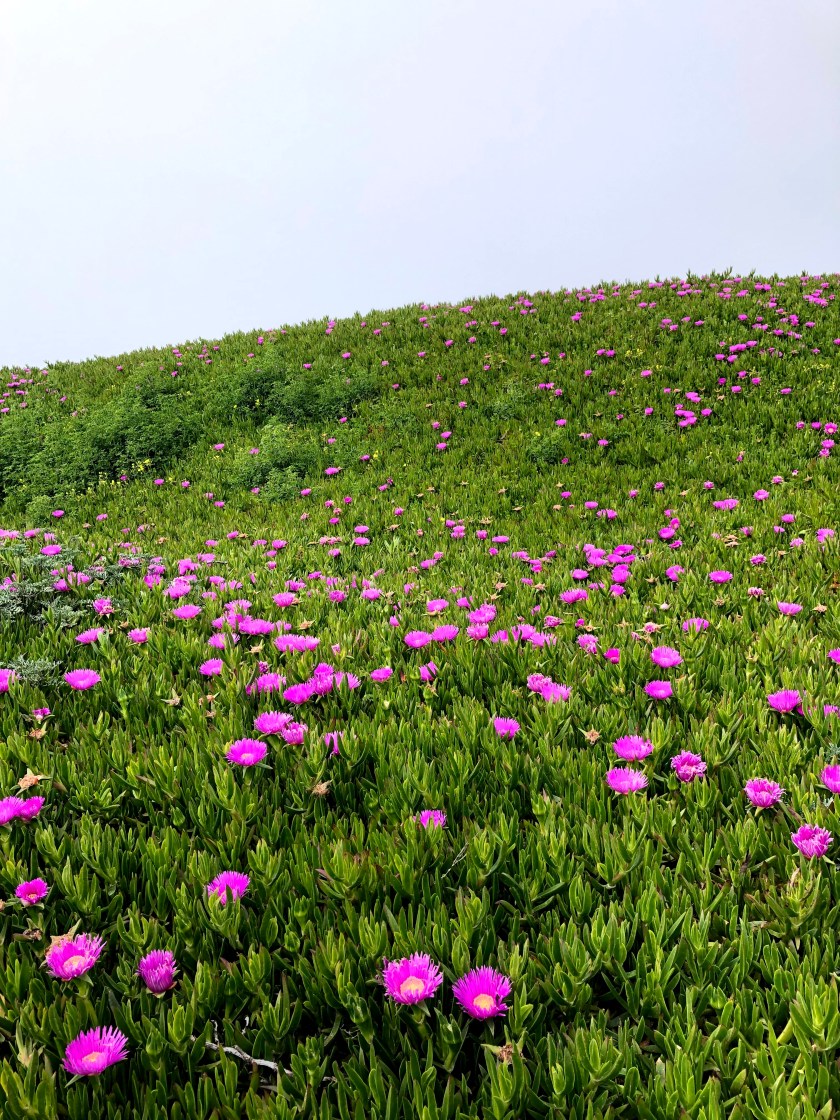
I must admit it is a beautiful thing to do. It is especially sweet when one has taken the day off. One can imagine the rest of the world working in drab offices, spouting theories, pouting about the myriad tasks that occupy one’s day, while we gaze contentedly at the ocean, listening to the sound of the waves lapping the shore. Wildflowers bloomed creating a kaleidoscope of color a short distance away. Birds and butterflies flitted around them gaily.


img_2484

Out on the beach, there were a couple of families who were also enjoying a small Spring break, and there was harmony between land and ocean dwellers alike.

Kites were being flown by some, and the little dragon and butterfly shaped kites took off with an ease that is hard to get in landlocked parks. The sea gulls were making pests of themselves over an upturned packet of someone’s carefully packed picnic. Every time someone came to shoo them, off, they lifted themselves with a grace that the man-made kites could never quite get.

img_2465-effects

A little farther away from us were a couple of small birds, who I have since learned are called sandpipers. And what a fitting, poetic name for the little marvels?! They darted in and out with the waves looking for whatever it is they eat from the foam that washes up. They inspired us to play the same game of keeping as close to the lapping waves as possible but not getting wet. We did, but we were nowhere as elegant and nimble as those little busy sandpipers.

Days later as I bustled about the day, a quick darting image of these little birds would flash before my mind’s eye, and I would indulge in a small smile. A smile that reminded me of the bigger gift of life that surrounds us, a life and planet so marvelous that our daily tensions can in an instant be gone just by stopping to think of them.

The edge of the sea is a strange and beautiful place – Rachel Carson

Regular readers know that the teenaged daughter should have been born a mermaid. Since she is a human being, she makes up for the shortcoming by thriving on all things ocean related. Her reading is generously sprinkled with mermaids; her drawings of coral reefs, fish and dolphins reached a point where her teacher said she had to choose a land based theme to draw so she learns the techniques for drawing different scapes; her favorite myths involved the Greek God of the Oceans, Poseidon. And it all started early. She watched Finding Nemo & The Little Mermaid 666 times.


Every time, I crave for the forest, she craves for the beach. “A quiet day at the beach is a wonderful thing. Most importantly, you don’t have to do anything. No hikes, no walks, no did-you-see lists Amma!” she said, and as I watched her loll on the beach with a book in her hands, I must admit that the appeal is infectious.

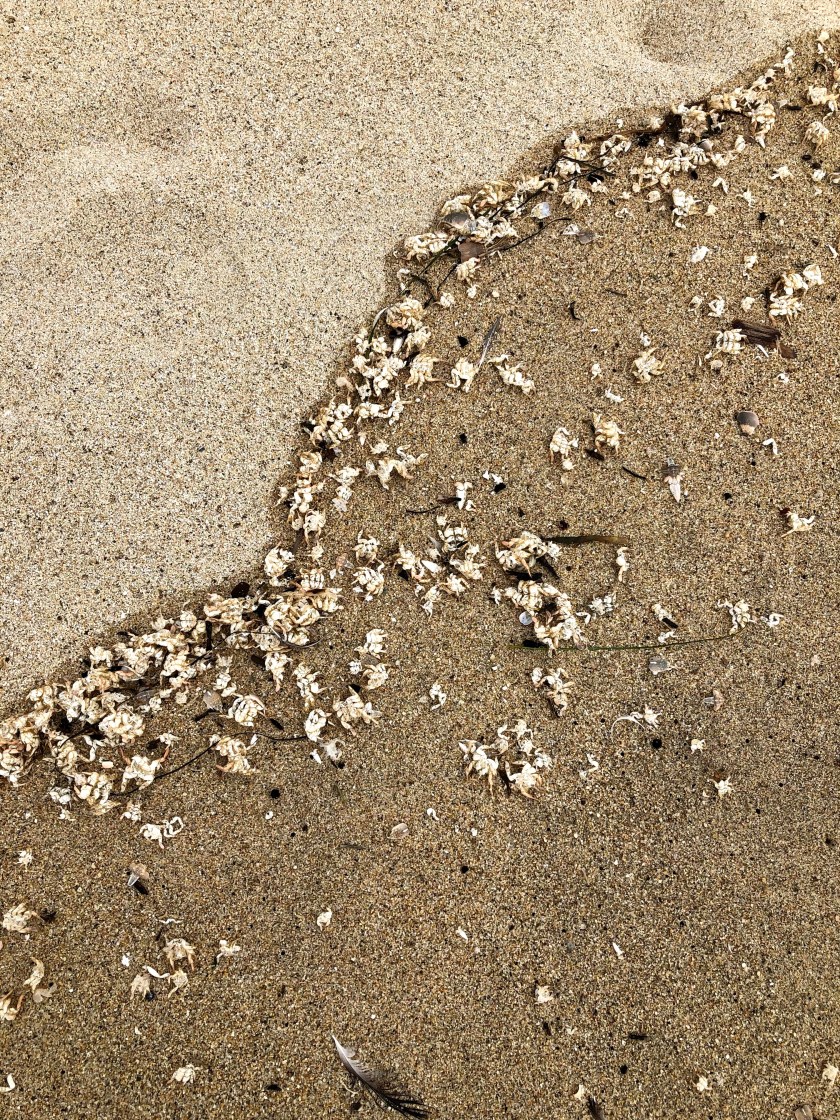
The edge of the sea is fascinating. Watching the shoreline move in accordance with the tides and waves is engaging. The sandpipers and seagulls can entertain you all day. Who needs phones by the beach? (Coming up next)

img_2480

Books: The Edge of the Sea – By Rachel Carson

Duck, Duckling, Dolphin

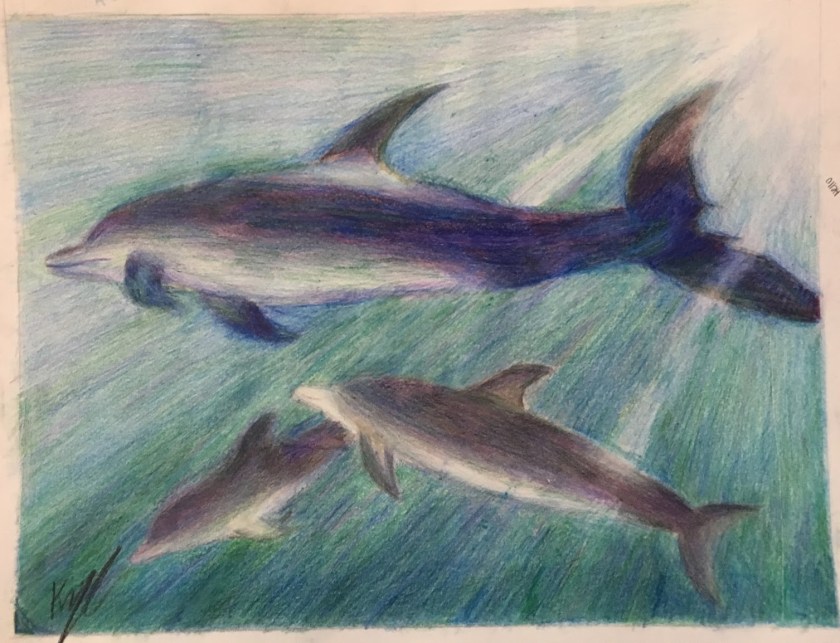
I recently read a book titled Dolphin Parenting by Dr Kimi Shang. It was an antidote to the Tiger Parenting by Amy Chua book. Dolphins are intelligent, social and playful creatures, and therefore, we must model our behaviors after them is the gist of the book.

Keena_drawing
Art work by Daughter

Nature provides us with amazing parenting models every now and then.  Spring time is especially wonderful as this is the time for new life, a transformation of sorts. The butterflies are out and about, snail-lings venture forth, squirrels come out of their hibernation, eggs hatch and, in general all of life is abuzz with beauty and purpose. One day on a walk near our local lake park, I noticed Mrs Duck go to her nest, and Mr Duck gave her a nod as if to say, “Go on dear, I’ll ensure no one disturbs you.” Mr Duck then went on to aggressively protective their little nesting area by quacking loudly and doing sentry duty.

img_2341

Just in time for Earth Day, the ducklings have hatched, and they look beautiful. There is something in the innocent, puzzled looks on their little fuzzy bodies that tugs your heart. Of course, it is amazing to see Mr & Mrs Duck take care of them. I can watch them for hours. How they slowly introduce their young to the big, bad world; how they watch their little ones play for hours; and how they only intervene when important,  is a lesson in parenting for us.

They take them gingerly out into the shallow waters first, then as their little bodies grow stronger, take them for longer fishing trips. They teach them how to cross the road – the ducklings are protectively looked after by Papa & Mama Ducks. The parents in front and the rear, the line is a marvel. The noisy bunch then head on towards wherever they are going. I don’t know how disciplined the ducklings are when they grow up, but when babies, it is an adorable sight to see them toeing the line obediently and happily. 

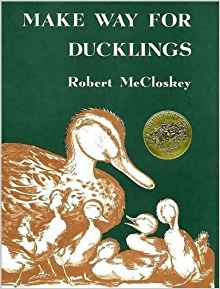
It is that time of year to read Robert McCloskey’s adorable book, Make Way For Ducklings.

make_way_ducklings

The books starts off with Mr & Mrs Duck looking for a place to live and raise their babies. They fly great distances before they arrive at a little island that looks just right.

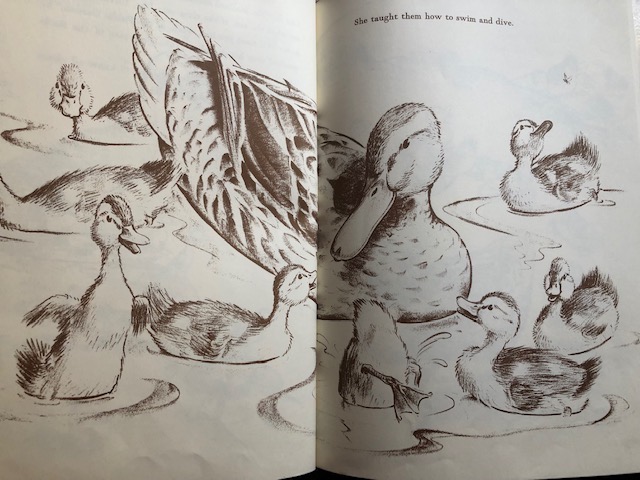
There, the ducklings hatch and the conscientious parents are busy in providing for the young, teaching them to survive in a tough world, and learn to be independent. 

ducklings_3

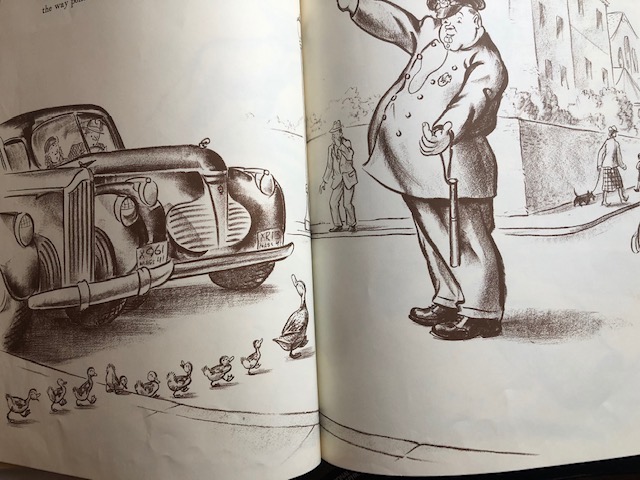
Once they are strong enough to swim longer distances, it is time to move to a bigger island, that involves a few perilous road crossings. Who should come to their rescue but the local policemen?

ducklings_4

A heart-warming tale that I can read any time for a quick dose of sunshine. Illustrated in a simple brown ink, it is a wonderful book for Parent Ducks and Ducklings alike.

I remember being amused and amazed when I first came to the United States on seeing Duck-Xing signs. Coming from India, where traffic flows on, and people cross on and share the road with dogs, cows and goats (nobody particularly stopping or giving precedence to another); it was wonderful to see that the traffic did not only stop for pedestrians crossings, but for ducks as well.

The Appalam Pounder’s Daughter

This article has been published in Open Page of  The Hindu.

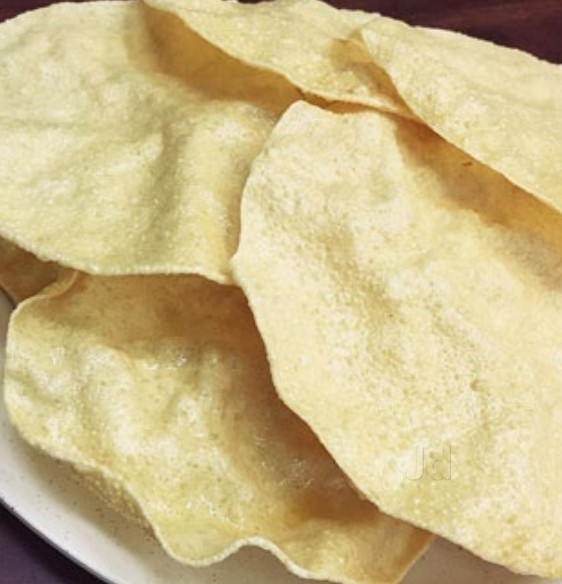
An Aunt was visiting, and her nieces had all gathered around. Lunch was in progress, and though some of the dishes had not turned out quite as expected, they were well appreciated by the folks at the table. Crisp, creamy white lentil snacks called appalams or papads, were passed around with aplomb, and I got approving nods for frying them. 

appalam

The husband had been jesting around the aunt that he had last eaten fried appalams about a year ago.  The aunt gave me a distinctly doleful look.  How could the niece she loved so much have denied her loving son-in-law appalam for this long?

We sat around a distinctly large meal with the fried appalams being passed around, and I looked on amused at the satisfied smiles on the faces of all around. “Any meal becomes special with fried appalams!” my father used to say whenever he spotted them gracing the table.  He truly became a child beaming happily while breaking them off with a joy that is quite disproportionate to the humble appalams.

I said as much to my aunt, the pater’s sister,  and she chuckled happily. “Yes, appalams were your father’s favorite. Three days every month was dedicated to making appalams“, said she, and I sat back to enjoy the nostalgic look that lit her eyes.

We sat enthralled as she narrated the story of how her mother, Visalam Paati, would roast the dhals and set them out to dry. My grandmother’s life has always fascinated me, A mother to 9 children, that generation was responsible for the burgeoning population we have on Earth today thanks to rising health and lack of birth control. 

Feeding and raising such a large family must have been a herculean task, but Visalam paati seemed to have been a competent taskmaster, planner, forecaster, chef and mother. As the appalam making tale unfolded, it was evident that those three days were filled with important buzz. Everyone had work to do, and everyone’s task was equally important:

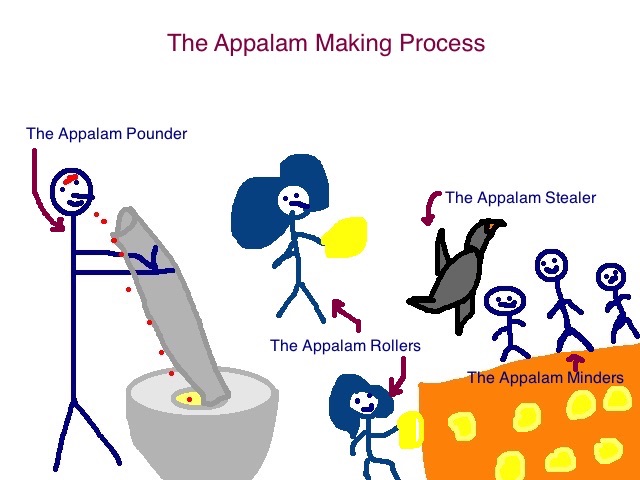
  • The younger ones had to shoo away the birds while the lentils dried in the sun. #AppalamMinders
  • The older boys would have to pummel and cudgel the dried lentils with an iron cudgel. “No grinders, and mixies or any machines in those days, remember?”, my aunt said. #AppalamPounders
  • The older girls would then have to take the powdered lentils, mix them to cookie dough consistency and roll them out into neat little circles before setting them out to dry again. #AppalamRollers
  • The younger ones took up their sentry watch to shoo away the birds while the appalams dried in the sun again. #AppalamMinders

appalam

“One time, my mother was alarmed to see the appalam dough below spotted with blood and looked up to see that while pummeling, your father had accidentally hit himself on the forehead with the pummel a few times and his forehead had started to bleed. Poor fellow. That month, we had a little less appalam stock because we had to throw out that batch, but your father got his full share because he liked appalam so much, and of course he played the sympathy factor the whole month!” she said and giggled.

Three days a month set aside for appalam making, so that the children may enjoy fried snacks every once in a while seemed to be a lot of planning and processing, Obviously, fried appalams held a special appeal in the hearts of the children. Each one felt they had contributed to the process, and the satisfying crunch must have had a special meaning.

Going to the supermarket and picking up a packet of papads or appalams has become so blasé a task, that I rarely stopped to think about how it was prior to mechanization and automation. 

“Automation has changed so many things hasn’t it?” said one voice, and we all piped in.  The topic of automation took us for a bumpy ride down the river of time. While automation has helped feed and clothe the billions of us, it has not really helped the global climate very much. Mass production and capitalism have also blurred the lines between needs and wants. 

It was a lot to process. Sometimes, in our rush to simplify things, we do rather complicate them don’t we? I loved the mental image of appalam making in a small village house in South India. When was the last time, the whole family pitched in on one activity together that contributed towards something meaningful? Maybe when we painted the rooms a couple of years ago.

Probably that is why the Little House in the Prairie by Laura Ingalls Wilder remains a much loved American classic. It talks of a time when every body helped each other in order to live. 

little_house_priarie

I read the book recently, and found myself ardently wishing I could sit with the deer in the prairie even if certain wolf-heavy nights were scary. A simple tale of building a log cabin in the middle of the priarie is a marvelous read, and I am grateful for the fact that I read it as an adult. 

“I am beginning to learn that it is the sweet, simple things of life which are the real ones after all.” – Laura Ingalls Wilder

Fox 🦊  & Pan 🐐 ⛰

“You know? Most of my morality comes from Percy Jackson and Harry Potter?” said the teenage daughter one day. 

“Gee! Thanks for that speech on wonderful parenting my dear, No clasping mother and father to heart and tears of joys on helping you navigate a messy world and all that?!”

She had the grace to laugh. 

She had been holed up in her room all morning, and I had hollered to her to come and help me with the chores. She stumped downstairs, unable as a teenager, to let on that she was probably enjoying the interlude of putting away the dishes with music in the background. 

As the dishes clattered, the kitchen was enveloped yet again in a mythological whirl. The daughter was always fond of Rick Riordan’s Greek and Roman mythological tales. The son, who has now started to read the series with gusto is thrilled at being included in the club of discussing these important works of literature with his sister. The warring factions of the Gods Vs the Titans has been analyzed from teenage, pre-teenage and elementary child angles. Myths have an alluring charm and when you find the similarity between Cerberus and Fluffy the three-headed dogs in Percy Jackson and Harry Potter series, it is always worth doing a little dance jig, and discussing with the teenaged sister. 

3-head-dog

The husband and I have been made to read the books too, and I must say they make for entertaining reading. I still prefer the Harry Potter series, but I see the lure of Rick Riordan’s work. He has perfected the rhythm of adventure with the right mix of modernity set against Greek gods in our world. 

“Which God would you be if you had an option?” the daughter asked, and the answers flowed forth. When it came to me, I paused for a moment and said, “Probably a nature god. Who was she? Hera?”

“Nah…You are thinking of Persephone. She is the Goddess of spring – you’ll like her too”, looking like a doctor arriving at a tricky diagnosis, “but I think Pan is more suited to you,” said she.

img_1993

“Fine then. I will be Pan. Pan is the strongest God if he is the Nature God right?” I said knowing fully well that my answer would be met with an uproar: 

Zeus is the most powerful. 

The top three are Zeus, Poseidon and Hades. 

“Well you know what happened to Pan?”, and then the pair stopped mid-sentence and exchanged meaningful glances. 

“We must not spoil the suspense for you, Amma, but it is very sad what happened to Pan.” said she.

“What happened?”

“NO! Don’t – let Amma read it!” said the most recent reader of the books.

“Just tell me!”, I said, deftly catching a cup from cracking as I caught it from the dishwasher.

A dramatic sigh followed, and the sad prognosis was delivered.  “Pan is fading Amma. He is no longer a force that he was on Gaia now. It is up to us now to save Earth!”

I looked at their faces and felt a surge of pride, alongside a wave of gratitude to writers like Rick Riordan who so beautifully captured the essence of conservation in a manner that so many young children can relate to. Where would we be without the gifts of imagination and creativity?

I read another short story, Fox 8 , by George Saunders, who captured my attention, in a similar manner. Written from the viewpoint of a fox, Fox 8, it outlines the sad outcome of a mall being developed in Fox View Commons ( an area that was home to many animals, forests and trees). Fox 8 learns how to “speek yuman”, at the window of children being read to by their parents at bedtime. Fox 8 loves the stories, their morals and their imagination. Even though, the stories get things wrong about animals all the time, he is fascinated. Fox 8 is a huge fan of yumans and their ingenuity even when the mall development essentially drives their pack to hunger and death. The story ends on a sad note, with Fox 8 wondering how yumans can be cruel and unfeeling towards fellow beings with life, when their stories promise to teach differently.

I have said this once and I say it again – if only we could learn to live like the stories we weave for our children – with wonder, empathy, bravery and curiosity, wouldn’t our lives be more whole-hearted and content? Maybe our greed could be in check and Pan would not have to fade away so much.

Snow Snuffles & Snuggles

The alarm went off at 5:50 in the morning. That moment of transition between sleep and wakefulness is a short, sharp one on certain days, and a dull, lingering one on others. That day, it was a swift rising.

The alarm tinkled with a naughty smile – “Snow snuffles and snuggles”, it said with a snowman and a snowflake thrown in for good measure.

img_2216

The husband was not awake yet. Would he have liked this alarm? I wondered as I hit a snooze, and gathered the flowing blankets around me for a quick snuggle in the warmth before padding out into the cold to start the day.

The alarm that day was meant to set the mood and it sure did. We had gone over for a quick ski trip in the mountains nearby, and while we all looked forward to a day in the snow, it was also a day that the weather app forecasted as having heavy snow in the upper reaches and rain in the lower reaches of the mountains.

Driving in the snow is not for everyone. The last time we were stuck in the middle of a snow storm , we found ourselves, car and all, whistling and gliding through the snow looking like reindeer chasing after blackberries and magic mushrooms. (Read here: In Boysenberry Jelly & Mistletoe Jam)

Obviously, I was worried.

Which meant, I sat straight backed, with my woodpecker nose lengthening in the rear view mirror as I drew agitated gasps. I was also doing an impressive amount of passenger-seat driving and botching up directions thoroughly ( we found ourselves losing our way at least twice and doing a u-turn with the snowflakes hurling at us with light-hearted gaiety). My frowning only seemed to make the snowflakes more frivolous and they seemed to dance and jig their way from the skies looking joyous and relaxed, while I twitched and tutted inside, restless for us to reach our destination.

inyo_snowstorm
Snow

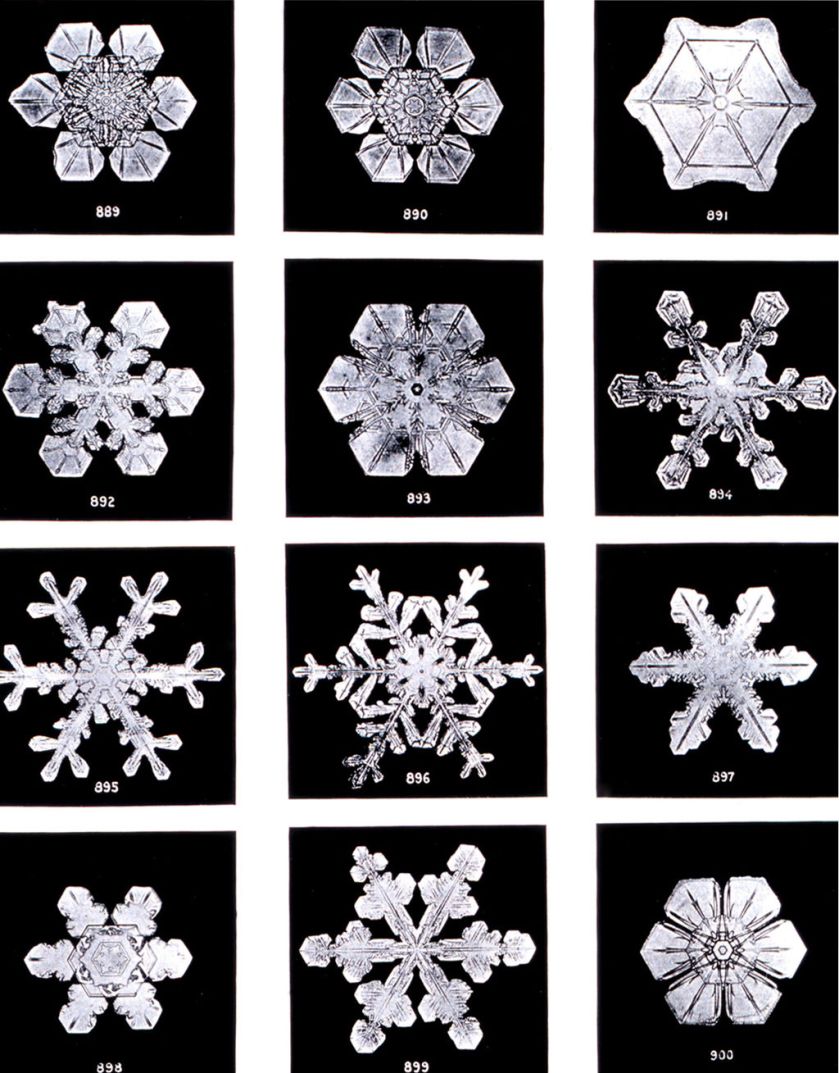
All of that worry evaporated the moment the car was parked and we found ourselves out on the slopes however. My face split into a slow wide smile, and I raised my face to welcome the little flakes on my skin. I was wearing a black scarf, and the snowflakes against the scarf made for a wonderful sight. Never had I see them this closely, and I was mesmerized. Each of them had a beautiful symmetry and a unique shape. Some of them clung together giving them the shape of pinecones. Others landed gently on my scarf giving me the gift of observing their individual shapes.

I have heard it said that no two snowflakes are the same. Every time in the snow I wonder how they possibly could have studied that. When millions are hurling down, what is the sample size that can make us reasonably assume that no two snowflakes are the same? It turns out the myth of the snowflake probably originated in 1885 in a remote farm in Virginia. A farmer, William Bentley, spent his winters photographing the snowflakes placed under a microscope. He spent years trying to photograph over 5000 flakes ( an extremely hard task given how quickly the snowflakes sublime.)

Wilson Bentley – The Farmer Who Gave Us Snowflake Images For The First Time (Wikipedia link)

Wilson Bentley's Snowflake Images
Wilson Bentley’s Snowflake Images

I had no idea I could enjoy seeing the snowflakes so much: Tiny versions of perfection, and joy. And I had with me perfect companions on this adventurous day – Children. Children, who had not yet lost their sense of wondrous joy, and they helped me enjoy these little models of perception and perfection almost with as much joy as their own, and to that I am grateful.

I recently read Rachel Carson’s, A Sense of Wonder, in which she says:
“If a child is to keep alive his inborn sense of wonder … he needs the companionship of at least one adult who can share it, rediscovering with him the joy, excitement, and mystery of the world we live in.”
—Rachel Carson

I hope I was that adult to these children, but the truth is that they were the ones who led to my inner child so surely and unerringly with their enthusiasm and joy. I learnt from them not to mind the discomforts of a blue nose or a shivering hand when I had at my disposal the enormous present of appreciating a snowflake’s beauty.

What is your Friend?

The din from the kitchen area was appalling. One of our favorite aunts was a-visiting and the nieces had gathered around for a day of fun, and laughter which she invariably ensured was there around her. 

“What is your day like Athai (Aunt) ? How do you pass time?” we asked.

This is one of the questions that I pose to those of the older generation often. I know boredom and loneliness can be a big problem for some people. However, there are a few in the older generation who somehow manage to retain their vibrant joie-de-vivre as they age, so that they are not just occupied but keep themselves happily occupied and stimulated. 

“I am occupied enough, “ she began. After she told us in loving detail of time spent with her family, particularly grandsons, she said with a smile. “I practice what I want to teach later in the day to my students, and I find the time flies past. Music is really a friend.“

It was true. I remember visiting this Aunt a few months ago, and heard her humming and practicing a particularly tricky song that she wanted to teach her student later that day. She was trying it as she cooked & cleaned and it made for a comforting background while we went about our day. 

Many I know find it heavy-going after retiring from their busy lives. Some find solace in the demands of religion, others find themselves watching a lot of television. A few, though, find ways in which to keep themselves intellectually stimulated and happy.  These people seem to me the kind of people who are not only in touch with their Eternal Selves, but also nourished and sustained it. They are the ones who quite unwittingly spread joy and happiness around them by virtue of being happy with their own state of being.

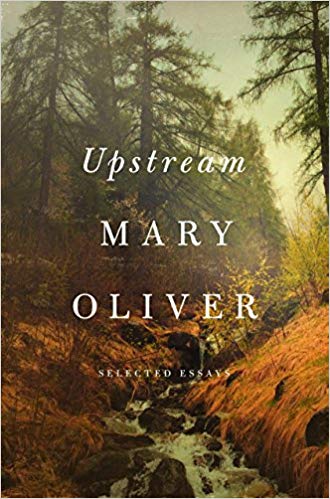
Mary Oliver’s, Upstream, is a book of many marvelous essays.  The essay, Of Power and Time, talks about the three selves in many of us:

  • The Child Self
  • The Social Self &
  • The Eternal Self.

Though in the essay, Mary Oliver, refers to the Eternal Self as the artistic self, I like to interpret it as the Creative self. 

  • The Child Self is in us always, it never really leaves us. 
  • The second self is the social self. This is the do-er, the list maker, the planner, the executer. 
  • Then, there is the third self: the creative self, the dreamer, the wanderer. 

upstream

Talking to people around me, I hear many who say that they would do this or that after retirement: I would take up gardening after retiring, I will take up reading after retiring. I am guilty of postponing  some of my desires to a golden time in my mind that is post-retirement ( I will learn to play an instrument after I retire).

But how would you know whether you like one activity over the other? The problem is finding that ‘something’ becomes more elusive the longer you deny it. 

Finding something that makes us want to do something without rewards is at once the least monetarily tangible and the most gratifying thing in the world. Not all of us can lead the life of an artist, but we each can devote small amounts of time consistently to find an artistic pursuit that sustains us. It may be in the creative process in things as varied as tinkering with wood, or analyzing the ebb and flow of economic market conditions. 

The essay ended on this note:

“The most regretful people on Earth are those who felt their own creative power restive and uprising, and gave to it neither time nor power.” – Mary Oliver

The Aunt who said “Music is a friend!” gave to her creative spirit time and power.

What is your friend?

Note: A version of the essay by Mary Oliver is found here: 

Mary Oliver: The Artist’s Task 

Brain Pickings – The Third Self