The Glimmer of Hope

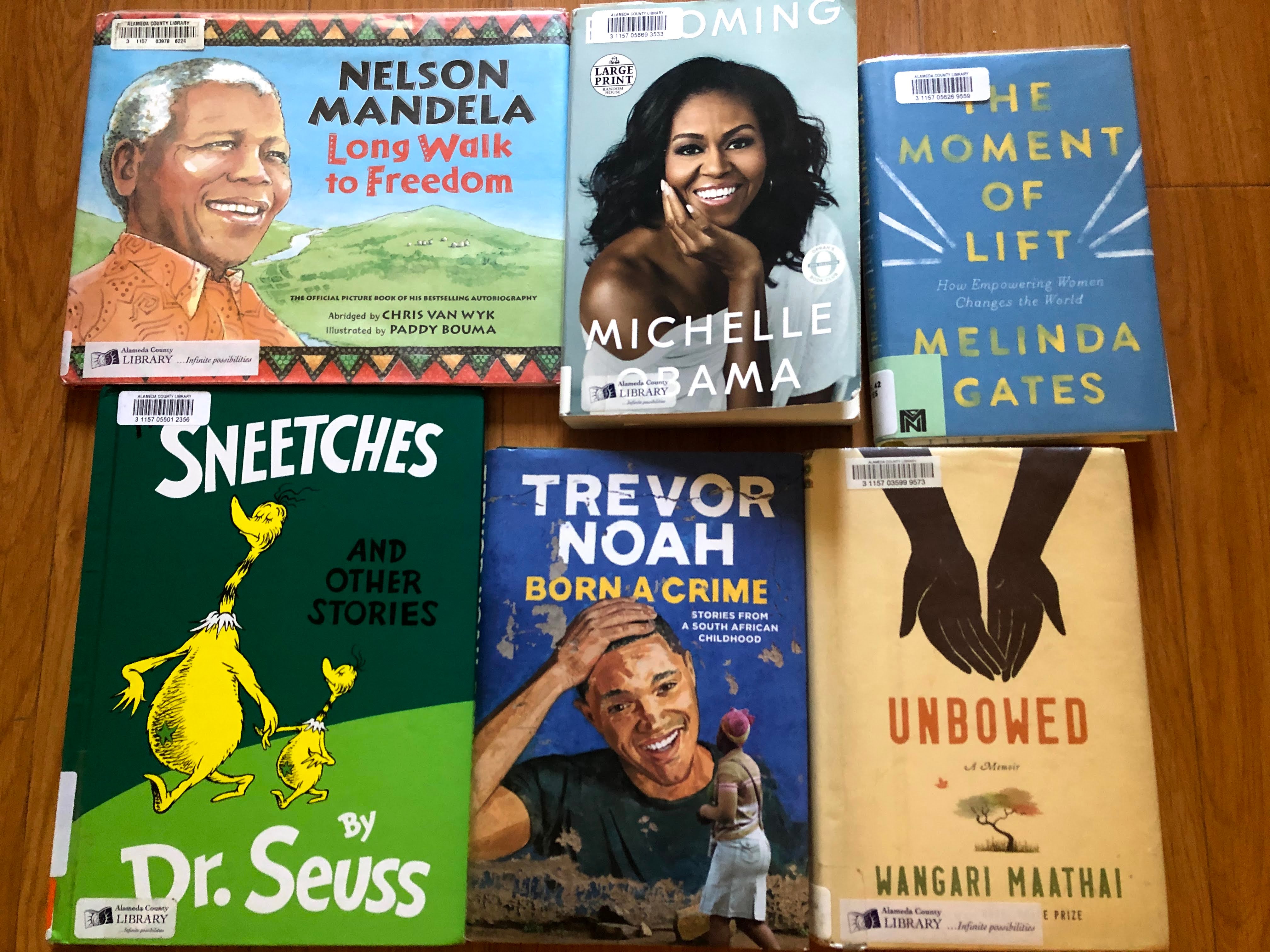
I sat in my backyard reading on a hot Saturday afternoon. It was the 4th of July week-end, and I had pages to go before I slept. During the peak of the Black Lives Matter movement, I resolved to read more about the life of minorities, racism, civil disobedience and much more. The son & I had painstakingly collated a list after reading several lists online, suggestions from friends, teachers, colleagues, and the companies we worked for. If there are any other recommendations, please let me know in the comments section. (Thank you 😊 )

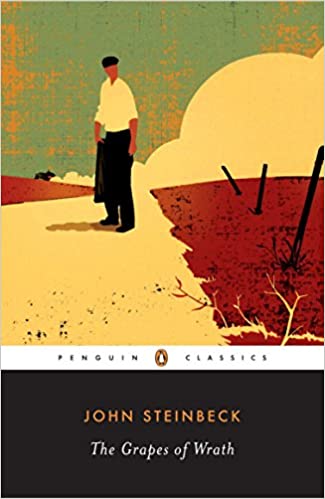
  • Becoming – by  Michelle Obama
  • Civil Disobedience – by Henry  David Thoreau
  • Sneetches and other Stories – By  Dr Seuss
  • A Long Walk to Freedom – Nelson Mandela – Abridged by Chris Van Wyk
  • Black Panther – by Ta-Nehisi Coates
  • XVIII – 13th Netflix Documentary
  • Hidden Figures movie

img_8883

While I sat reading, there was a faint niggling guilt to the apparent normalcy of it all. Was it alright to be sitting calmly and reading in one’s backyard while the world around us was still reeling?  

I read as the sun overhead appeared to move towards the west, and finally got up to take a long walk. If anything, I had several things to think about in the book. There was a section in the book where she writes about failure being a feeling that sets in long before failure itself does. She writes about this in the context of the South Side in Chicago, and how the ghetto label slowly portended its decline long before it did. Families fled the place in search of upwardly mobile suburbs, the neighborhood changed in small, but perceptible ways at first, and then at an accelerated pace. Doubt is a potent potion, and when fed in small portions can quickly shadow everything.

The limitations of dreams are seeds planted in our sub-conscious slowly and surely so that we may fulfill what society thinks we ought to do, no more and no less. Minorities the world over know the feeling well enough.

Trevor Noah, in his book, Born a Crime, writes about the ability to dream being limited to what a person knows. If all people know is the ghetto, they can truly not think beyond that.

“We tell people to follow their dreams, but you can only dream of what you can imagine, and, depending on where you come from, your imagination can be quite limited.” – Trevor Noah – Born a Crime

The largest section of population to know these limitations must be women.

In the Moment of Lift, Melinda Gates writes in her very first introductory chapter, “All we need to uplift women is to stop pulling them down.” 

It was, therefore, in sombre mood that I set out for the walk, little knowing that Serendipity, that most mysterious of forces will work its magic by the end of the night. 

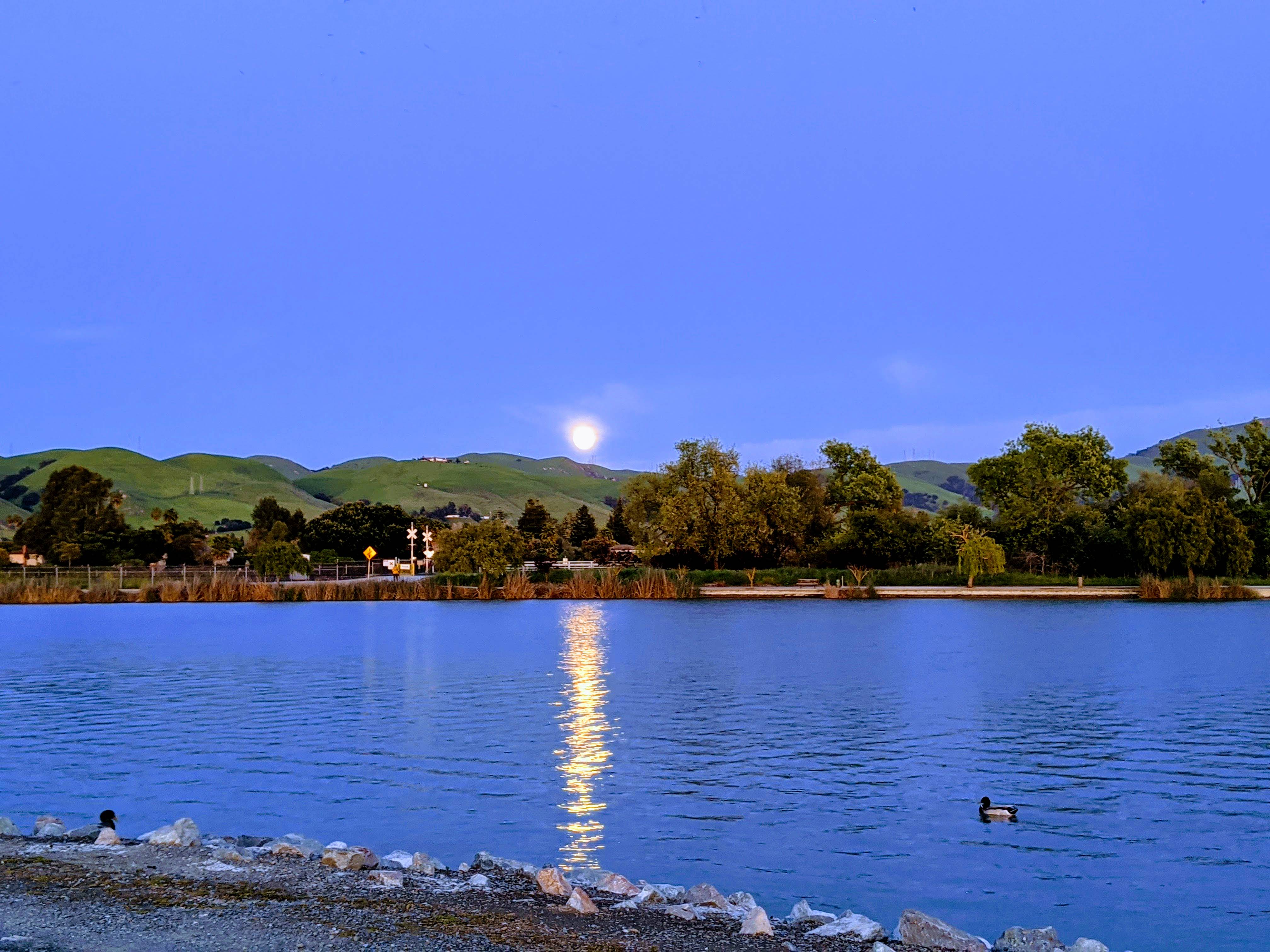
I walked on taking in the setting sun at a fast pace. My mask hoisted on the face was sweaty, and every now and then on the trail when there weren’t people nearby, I slipped it down to take a deep breath of the summer air. I was walking by the waterside, and slowly  feeling the calm strength of the waters. My thoughts were slowly lifting as the sun was setting, and the full moon rose in the opposite direction. Out in the distance, the sound of Fourth of July fireworks was providing an orchestra of sorts to the accompanying bird sounds, and the sound of water sloshing gently against the shores of the lake. 

img_20200407_195324-effects

“Bring the kids – sunset and moonrise marvelous and fireworks everywhere!” I texted the husband, and off we went in the approximate direction of the fireworks. We parked on a side road to take in the revels of the night. To stand there with the full moon behind us, and an array  of fireworks going off in front of us in a largely residential neighborhood was marvelous. 

Later, as we drove on, we listened to songs chosen with a special regard to the 4th of July. The children had aced the  list, and we drove on through the moonlight, lilting and dancing to the tunes.

“Behind the Clouds, the sun is shi—ii—ning. “ – What has to be one of our favorite Disney songs rent the car as we pulled into the garage. 

As I read the final section of Michelle Obama’s Becoming later that night, I found the audacity of hope (pun intended) stirring and this too felt different; worth examining. Politics is a dirty game, but Barack &  Michelle Obama had shown us what was possible. Dare we hope?  

P.S: I was blissfully unaware of (yet another) divisive speech by Donald Trump, and the announcement of Kanye West to run for President that night. I like to hold on to that glimmer of hope that permeated my heart as 4th of July ticked on steadily into the 5th of July.

Maybe hopes can translate to positive outcomes long  before they  happen.


Becoming – What a Title!

One would think that a book written by the former First  Lady  of the United States would not be relatable to a middle class couple living all the way in California. Not to mention that the husband and I hail from India from very middle-class  backgrounds. And  yet, that is the beauty  of the human condition I suppose, for I felt many places in the book where I could nod along and think, “Lord! How often I have felt that way!” 

becoming

The need to question whether one is good enough, and wanting  to over-achieve believing that to be the only antidote to counter that feeling of not belonging for instance. The keen angst of youth as you overcome every  small and large bump along the way is so beautifully written.

Or the very real struggles of raising children while holding down a full-time job and constantly feeling a bandwidth issue; tugged at by the veneer of the formerly ambitious career-oriented young woman who is now slightly at odds wondering why the career years, child-bearing and rearing years, all coincide in one large tug and pull. To read that sentiment written by a former first lady is both marvelous and what makes our country great.

Or the place where she writes about her young husband and his eternal optimism. I can so readily identify with that. While it is the wind of the husband’s optimism that sets our boat to sail, it is the cause of many veering off-courses as well. For instance, I laughed out loud and read out the following paragraph to the children who chuckled and said, “Appa!”

Becoming – By  Michelle Obama

“On my way, I was learning, was he product of Barack’s eternal optimism, and indication of his eagerness to be home that did nothing to signify when he would actually arrive. Almost home was not a geo-locator but rather a state of mind. Sometimes he was on his way but needed to stop in to have one last forty-five minute conversation with a colleague before he got into the car.”

The children all laughed out loud at this, and the husband grinned sheepishly for there have been countless times when the good man has been so caught  up in whatever  he is doing, or talking to one colleague who caught him on the way out, that he lost track of time. It is now a well worn thread in our household. The good natured ribbing has taken multiple paths- “We know you are almost here Appa, and we believe  you, but when does Google say you will get here?”

Michelle Obama’s keen intellect, solid grounding, and sturdy family values shine through in her writing. 

There are passages that bring across the feeling of being African American in Chicago’s Southside that made me want to read these places again. I am sure there are plenty of good books dealing with these aspects of life in the United States. She writes about her husband – portraying him in a pragmatic human light (but again, after the 45th President, the 44th President  with his middle class upbringing, scholarly attitude, and high sense of integrity seems like a dream.) 

The book makes us realize that greatness while destined for some, the need to be motivated, live the best possible lives we can, while holding true to our intellectual and moral integrity, is something we can all choose for ourselves. 

Of course, the identify-with portions of the book ended with Becoming Me, and Becoming Us sections of the book. The final section of the Becoming More is something that only 45 families can relate to: Life in one of the world’s most famous addresses, The White House. Where life has parts of fairy-tale, power, ambition, noble intentions, inspirations, horror story, emotional wringing, the ugly and beautiful humanity of it all.

What a marvelous title : Becoming.

It captures the time-space continuum, and life’s journeys in one word. 

Unrelated, but also a good read: Ta Nehisi Coates essay: here

Qi to the Yin & Yang

Fact and Fiction were swirling and creating waves and patterns inside the old eggshell. Harry Potter – A History of Magic was entertaining in ways I did not quite expect. Regular readers and friends know how much I love the Harry Potter series. The sheer brilliance and richness of the world, and the marvelous ways in which J K Rowling examines our world has been written about in far greater depth and width and by far greater minds than my own. (Leaky Cauldron site for instance)

I know I enjoyed reading  this in The Prisoner of Azkaban

“Witch Burning in the Fourteenth Century Was Completely Pointless — discuss” – Holiday homework set to Harry Potter and his classmates in the Prisoner of Azkaban.

“Non-magic people (more commonly known as Muggles) were particularly afraid of magic in medieval times, but not very good at recognizing it. On the rare occasion that they did catch a real witch or wizard, burning had no effect whatsoever. The witch or wizard would perform a basic Flame Freezing Charm and then pretend to shriek with pain while enjoying a gentle, tickling sensation. Indeed, Wendelin the Weird enjoyed being burned so much that she allowed herself to be caught no less than forty-seven times in various disguises.”
—Bathilda Bagshot, A History of Magic

Harry Potter – A History of Magic book was amazing – Firstly, it contained little tidbits of deleted sections, some planning sketches etc. Secondly, it was organized by subject area: Herbology, Charms, Astronomy, Divination, Care of Magical Creatures, & Transfiguration. In each section were glimpses into humankind’s long fascination with magic. It is astounding to see the vast repertoire of knowledge that the author herself had to be able to synthesize all this and to create another world based on anthropological details, myths from various cultures and her own dose of fantastic imagination.

history_magic

The mind was reveling in the fact and admiring the fiction therein. Our cosmic dance of fact and fiction as a species is almost necessary to examine and understand the world around us. We are story tellers, and we are curious to understand and infer. The Qi to the Yin and Yang of understanding the world around us.

The Astronomy section of the book contained a drawing of the Rudolphine Tables, which helped the reader locate the planets amidst the stars. Containing the locations of 1000+ stars, this was probably the most comprehensive study at the time.

Beside the picture of the Rudophine Tables was a note by Alexander Lock, the Curator
“In 1617, Kepler’s mother was suspected of witchcraft, a crime punishable by death. The accused spent over a year in prison but was eventually released when her son intervened. Kepler was an official astronomer to the Holy Roman Emperor – this family intrigue must have been very difficult for him.”

489px-Johannes-kepler-tabulae-rudolphinae-google-arts-culture

I could not help linking this with some of the things I read in Carl Sagan’s Science as a Candle in the Dark, especially a chapter titled the Demon Haunted World, in which he talks about the grotesque practice of witch hunts and how it became an increasingly profit driven model as well.

Pope Innocent VIII (if ever there was a name that was totally out of sorts with the meaning, this must be it). Pope Innocent was singularly responsible for starting and popularizing the witch hunts in the 15th and 16th centuries leading to millions of people losing their lives and millions more living in a state of constant fear.

There are demon-haunted worlds, regions of utter darkness. – The Isa Upanishad (India ca 600 BC).

With a single proclamation in 1484, Pope Innocent VIII “initiated the systematic accusation, torture and execution of countless “witches” all over Europe.

While we know of the barbaric practices, little did I realize how pervasive the evil was – The Demon Haunted World -By  Carl Sagan:
It quickly became an expense account scam. All costs of investigation, trial, and execution were borne by the accused or her relatives down to per diems for the private detectives hired to spy on her, wine for her guards, banquets for her judges the travel expenses of a messenger set to fetch a more experienced torturer from another city, and faggots, tar and hangman’s rope. Then there was a bonus to the members of the tribunal for each witch burned. The convicted witch ‘s remaining property, if any, was divided between Church and State.

While I am enormously glad to see that we have evolved past this especially cruel phase of mankind’s history it does make me feel terrible about the state of things in the world today. Conspiracy theories, choosing which version of the truth to believe in etc have been problems for a long time, but now it seems these problems have occupied center stage because the leader of the free world seems to spend enormous amounts of time ingesting and spewing conspiracy theories himself.

Maybe it is time for all of us to equip ourselves with Carl Sagan’s famous Baloney Detection Kits.

But there is hope, we have moved past the atrocities of witch-burning to the point that we are now not only able to have witches and wizards in our stories, but also have a clear distinction between fact and fiction.

The yin and yang are sturdily holding their own, and I hope our qi (understanding) will remain unclouded and clear.


💦 🌳 Earth 🌏 Magicians 💥❄️

Magic was in the air. The afternoon sun was shining with an intensity that surprises us every summer. The high temperatures should really not surprise us anymore, but we still scuttle inside in the afternoon sun and wonder how it got to be so hot so soon. Inside the home, we were grateful for the cool atmosphere – the suns rays were filtering in through the large sycamore tree in the backyard, bathing us in Komorebi.

Komorebi (木漏れ日): Sunshine filtering through the trees.

trees_komerabi

Komerabi is beautiful and especially marvelous to experience on a week-end afternoon after a hearty lunch.

I was sprawled out on the sofa beside the son with a heavy book, a light heart, an empty page, and a full stomach. I was reading Harry Potter, A History of Magic. It is an impressive book that has on the cover apart from a magnificent rendition of a Phoenix, the words- The Official Companion to the British Library Exhibition at the New-York Historical Society Museum & Library.

Leaving the title aside, it is a comprehensive compilation of some of the magic and folklore in the Harry Potter world. I was happily frisking through the magical journey of our species through the ages stopping to savor the beautiful images in the book, and marveling for the n-th time about the brilliant mind of J K Rowling and her rich repertoire of knowledge that led to the marvelous wizarding world.

Some of the tidbits in the book were truly mind-boggling. Like the plethora of plants the myths have grown from and some superb paintings of the flora through the ages.Reading about the book, A Curious Herbal, for instance, made me realize how lucky we are to be living in this era of human history where high quality renditions of art, photography etc are available for reading and sharing digitally.

A Curious Herbal seems to have been a labor of love by Elizabeth Blackwell. Written between 1737 and 1739, the book had pictures of over 500 plants used “in the practice of physick”. Written, illustrated, hand-graved and hand colored by Elizabeth Blackwell, it was used to free her husband from debtor’s prison. He repaid her by leaving the country and being executed for treason in Sweden.

history_magic

The son was sitting next to me and making cards for the game he was designing. The looks of intense concentration were matched only by the splash of colors – clashing, brilliantly hued, and sparkling. The sound effects were not captured on the document itself, but if it could, it promised to be quite the party.

We sat each wrapped in our own imaginary worlds of thought in companionable silence for a space, when I asked him how his game was coming along. A sneak peak into the document revealed a marvelous world. There were a lot of pictures, points for this and that, and what-not. It looked like the end game would be a fascinating one, if somewhat high on the dishoom-flashoom-bazinga factor. Muons, quarks and photons made their brave show alongside tornado-crushers, wave-ripplers and what-nots in the game cards (a reflection to all that he enjoys reading and watching really.)

“Okay – I’ll tell you!” , he said the magic of Creating bubbling over as he explained his cards to me. After some time, his exuberant tones came to a hush and he said with flair. “This is for Earth Magicians! You have to get 15000 healing points to become an Earth Magician.”

“And how do you get 15000 points”, I asked, for who doesn’t want to be an Earth Magician? What a lovely title to be bestowed with?

As he explained, I scratched the old chin, and stumped him by asking what special powers Earth Magicians have.

The little fellow hemm-ed and umm-ed a fair bit as he thought through his answer. When finally he gave his answer, it went on for about two minutes, and I gathered that he had envisioned earth magicians as having the powers to create something amazing from the ordinary.

“You know? I like it – I should fight trolls and dragons and what-not to become an earth magicians. This time I will choose gardening as a earth magician superpower!”” I said.

He looked puzzled and I said with a serious expression on my face “Well…Gardeners, singers, dancers, writers, artists, aren’t they all Earth Magicians?”

I pointed to our little patch in the garden outside, where I have tried to grow many plants and flowers. Elizabeth Blackwell would have a bit of a challenge drawing a plant of rare repute from my backyard, much as I love it. I’ve even had instances of ordinary flowers which seem to thrive in the wild simply limp along and give it up as a bad job when I set to it.

“See? I try with all the best intentions and little business results. Yet, there are so many talented gardeners among us who use the same potting soil and are able to raise not just trees, but get the flowers to bloom – a new set for every season, in them! If that isn’t magic, I don’t know what is!” I said, and he guffawed.

“Well…I suppose that is true!” he said

“Want some more magic powers from Earth magicians? ” I said.

He rolled his eyes, a habit he has picked up from his teenaged sister. I told him I am going for some ice-cream, and he eagerly joined in – if Earth Magicians can make ice-cream, is there a bigger super-power?


Rainbow 🌈 Conscience

A few years ago when the son was in kindergarten, I attended a class room show-and-tell in which their works of art were displayed. Endearing pictures of zebras, horses and assorted flora and fauna painstakingly done, were being showed off brilliantly by the children. When I drew up close to the son’s painting, I paused. There in the corner of his painting were several people with rainbow colored faces. I loved the idea, and asked him why they had rainbow colored faces, to which he said, “Our teacher said to put colored people in our drawings.”

I turned to his teacher, and she nodded smiling, “Yes, I did for diversity, but I didn’t expect this!” My heart warmed at his interpretation.

I loved it! How beautiful and void of prejudice we are as children.

“No one is born hating another person because of the color of his skin, or his background, or his religion. People must learn to hate, and if they can learn to hate, they can be taught to love, for love comes more naturally to the human heart than its opposite.”

― Nelson Mandela, Long Walk to Freedom

I started reading Henry Thoreau’s book, Civil Disobedience, last week, and I must say the first chapter itself has me drawn in.  “The mass of men live lives of quiet desperation. What is called resignation is confirmed desperation.

A few sentences later he says again, “It is never too late to give up our prejudices. No way of thinking or doing however ancient can be trusted without proof.”

Savoring the sentences and thinking of the rainbow colored faces in the son’s drawing made me think. What would it take for us to learn what it is to be human? It seems to me like to understand deeper, we need to rely on Science: Science as a Candle in the Dark. Any phenomenon not readily understood suffers from the same problems. Could there be a better way to gauge our human-ness?

Structurally, we are containers for cells, possess neurons for consciousness, and use language for communication between one another. But this puts us in no different a category than octopus, dogs, elephants, whales or dolphins. Most marvelous creatures on Earth have evolved from the same set of conditions the planet has been subjected to, and are hence remarkably similar in these aspects. In fact, we are limited in so many abilities than our far-more abled canine friends or bird friends when it comes to smell, colors and noise frequencies.

Here is a fun game to be played by all age groups:
The High Frequency Hearing Game

Quoted from The Soul of an Octopus by Sy Montgomery:

Cambridge Declaration on Consciousness asserts that “humans are not unique in possessing the neurological substrates that generate consciousness”, and that “nonhuman animals, including all birds and mammals and many other creatures, including octopuses also possess these neurological substrates.”

Chemically speaking, I suppose we can attribute Oxygen, Nitrogen, Carbon etc as major components of the human body. But this too, is not unique to us on Earth. Many lifeforms use the same structural elements for life.
Composition of the Human Body

600px-201_Elements_of_the_Human_Body.02.svg
Image from WikiLink: OpenStax College / CC BY (https://creativecommons.org/licenses/by/3.0)

Culturally, we have ideologies so different, yet so similar. Most religions have stories of a big flood (starting from the epic of Gilgamesh, to the Matsya avatar in Hinduism, to Noah’s Ark), our mythologies have similar creatures (how then could we have dragons in Chinese mythology and Norse mythology?) The fossils found in each region seem to have contributed to the myths (Sankhu / Chakra myths originate from nautilus fossils found in the Himalayas). Is myth-making then the only human identifying factor (I don’t think so, for whales songs have tonal informational bits having the same length of an Iliad or Odyssey – some whale songs have been known to be taught from generation to generation and last over an hour long).

wind-in-the-reef

The differences in skin colors too, are no more than an evolutionary necessity – the UV light in different areas of the earth, and ability of the skin to absorb Vitamin D in areas of high or low sunlight is primarily the factors that determine these.

The Biology of Skin Color (The link between human evolution over time; the ability to adapt to different levels of UV  radiation in the tropics vs the poles; and its correlation with absorption of Vitamin D is explained in this video)

I come back to the question of what does it mean to be human? What is our unifying factor? On this globally unified Earth, can we all just find a way to get rainbow colored skin?

How Kindness Became Our Pleasure – By Maria Popova on Brain Pickings

P.S: The son touchingly drew this drawing again when he saw me writing this post:

img_8613

How do we exist?

It had been another long day, and as the clock ticked towards midnight, the body yearned for sleep, but the mind looked longingly at the tsundoku pile, and craved for some quiet moments of solitude. I peeked out of the window, and the moon sailing high through the skies tugged at my heart. There is something so intensely beautiful about catching sight of our  lovely cosmic neighbor sending its mellow moonbeams through the leaves at night.

I looked for a word that captures the phenomenon, but there isn’t one.

There are two words in Japanese that come close (the Japanese language has such amazing words for admiring wondrous nature around us.)

Kawaakari ( 川明かり – a word depicting the evening reflection of light on water, or in some cases can refer to the reflection of the moonlight off flowing water.

img_20200407_195324-effects

Komorebi (木漏れ日): Sunshine filtering through the trees.

trees_komerabi

I had just started reading The Sea Around Us by Rachel Carson. In the first chapter, Rachel Carson takes us with her steady voice into a time on Earth before the seas were created. When the planet was still heaving and churning its metallic ores, hot searing waves of liquid settling into a semi-liquid state in its outer cores. She wonders then about the question, how were the oceans formed?
“So if I tell here the story of how the young planet Earth acquired an ocean, it must be a story pieced together from many sources and containing whole chapters the details of which we can only imagine.
For although no man was there to witness this cosmic birth, the stars and moon and the rocks were there, and indeed, had much to do with the fact that there is an ocean.”

Then, she leads us from this fiery place in the cosmos with the sun heaving its solar flares, the earth itself arranging itself into concentric spheres with hot, molten iron at its core, and an intermediate sphere of semiplastic basalt , the outer layers of granite and basalt. And then gently she lures us into the possibility of the moon and the ocean being related to each other.

The next time you stand on a beach at night, watching the moon’s bright path across the water, and conscious of the moon drawn tides, remember that the moon itself may have been born of a great tidal wave of earthly substance, torn off into space.

How can one not be mesmerized by the creation of the moon? Was it truly hewn from the surface of the earth (The moon’s density does match the density of the outer crust). The hypothesis that the moon was hewn away after massive solar tides exerting a pull on semi-molten Earth is based on the theory that the large portion thus hewn away left such a large scar on the surface of the Earth. A scar that would continue to shape Earth and its lifeforms for millions of years afterward: The Pacific Ocean.

Later, as the Earth cooled and clouds formed from the steam rising, the rains started. Pouring onto the hot earth for years – initially almost immediately evaporating into steam, but eventually collecting as water – forming the first oceans.

It is, of course, fascinating that we still do not know for sure how the moon was created. There are several theories – theories of violent impacts, random objects being attracted by gravity, and young earth managing to keep one satellite, while heftier ones like Jupiter acquiring 67 etc. This is a topic still under discussion.

https://www.space.com/19275-moon-formation.html

Nevertheless, the very first chapter had me wowed. I would never be able to look at our closest cosmic neighbor with the same eyes ever again. How often I have stood marveling at the moon? Out on walks, my heart always skips a beat when I catch sight of the beautiful, faithful satellite accompanying Earth as she tears through space. To think that there is a possibility that the very creation of our cosmic neighbor was crucial to our oceans is awe inspiring. I live on the Pacific Coast, and never can I see the bays, the ocean or the moon without reminding me of this book.

The Sea Around Us by Rachel Carson

sea_around_us

The skies hold the answers to our most philosophical stirrings. Why do we exist?

The seas, it seems, holds the answers to our most existential stirrings. How do we exist?

Missing Chemistry Lab?!

“How are you managing to do Science experiments during these Covid times?” I asked the daughter as she munched on a cookie while on a diatribe about her latest Chemistry assignment.

“Oh we do it online. You can tip stuff into test tubes with your mouse, and it shows you what happens.” she said with a shrug, and I must tell you, I paled.

Wasn’t the whole fun of Chemistry lab the hissing noises as two unlikely elements reacted? Or the joy of seeing the colors change inside the test tube as you held it up to be seen by the light? The bright copper sulphate blue, the lilac, the pinks and turning neutrally to white letting out fumes? What about the olfactory? The hydrogen sulphide that sent us gagging towards the windows with the rotten egg smells. (The fact that we made it straight to lunch after a Chemistry lab with H2and tucked in with an enormous appetite speaks volumes to the marvelous feeling of youth.)

Chem_lab

I said as much to the daughter, and she gave me the pitying look she reserves for me when she senses that I miss my school days. “It’s just Chem Lab, it will be fine! Don’t worry!”

“Should I just forget about those eggs I bought a while back, so you can experience the rotten egg smells to your heart’s content?!” I asked solicitous.

She roared with laughter at this and said, “Your cooking is Chemistry enough Mother!”

It was in part conversations like this that peppered my read of Oliver Sacks’ Uncle Tungsten, A Chemical Boyhood.

uncle_tungsten

His journey with the Sciences and his joyous epiphanies as he realized the neat order of things, and his poetic joy  as he traversed the Periodic table, gave me a new appreciation for the Periodic table too. In his words,

“Chemical exploration, chemical discovery , was all the more romantic for its dangers. I felt a certain boyish glee in playing with these dangerous substances, and I was struck in my reading, of the range of accidents that had befallen the pioneers. Few naturalists had been devoured by wild animals or stung to death by noxious plants or insects; few physicists had lost their eyesight gazing at the heavens , or broken a leg on an inclined plane; but many chemists had lost their eyes, limbs and even their lives, usually through producing inadvertent toxins or explosions.”

Chemistry, is tucked so far away in my consciousness, that I reveled in the beauty of it all almost anew. Glimpses of my committed Chemistry teachers in my youth came to me. I remember the feeling where their passion for the subject came through as they explained how the electrons revolved around the nucleus, the atomic weights, the inert gases and all the rest of it. I can vaguely begin to recognize how it must’ve felt to wax eloquent about the structural wonders in the world around us, to a bunch of mildly interested, if not completely indifferent, teenagers.

If ever there was a profession that was steeped in delayed gratification, teaching must be it. Why does it takes us decades to realize the stalwarts who did their best by us?! I tried putting all of this into words as I discussed the book with the daughter, and she said, “Yeah age makes you kooky I suppose. Must find the chemical reactions for that!” She laughed at her own wit while I  scowled. Slowly, she donned a far-off look, and said, “You know? Chem is just fine if he doesn’t keep having us go back and write out our mistakes for him so we show him why we made the mistake! Really! He is a grumpy old man and he is only twenty!”

I guffawed out loud at this – I must remember to ask about this Chemistry teacher of hers a few decades from now.

Bee Blossoms

Out on a evening walk one day, my heart rose. The corona virus may be taking the world for a spin of its own. Days seem to be blending into weeks, and weeks into months. There are times, I sit up and notice the weekend is here. Some other times, I sit up and wonder where the week-end went. All of life seems to be one long news cycles of confusion & anxiety. What is a good time to reopen, should we reopen?

Human-beings may be in a state of confusion and anxiety.  But Nature around us has no such doubts. She brought on Spring just in time. The leaves sprouted in one marvelous unified stage opening. I stood mesmerized under the fresh, new leaves, sometimes glinting with dewdrops, and other times, filtering the rays of the sun beautifully around. Early tulips bloomed, spring snowflakes made their hearty show.

Then slowly, and just as surely, the temperatures rose, and the hills near where we live browned in the suns. But that meant, it was time for the summer flowers to take the stage. The jacaranda trees took their cues from the receding spring snowflakes, and assured them that the show must go on. On the evening walk, I noticed the beautiful purple flowers blooming against the green leaves, the early oleander flowers are revealing their pinks and whites, and roses everywhere are out on their annual romps warming hearts and lifting spirits with greater sincerity this year.

The son and I stood watching bees buzz from one flower to another taking with them the memories of a thousand blossoms with them, slowly but surely nurturing the circle of life. I was reminded of Ray Bradbury’s saying:

“Bees do have a smell, you know, and if they don’t they should, for their feet are dusted with spices from a million flowers.”
― Ray Bradbury, Dandelion Wine

rose-bee

When I watch the dew drops glisten on the spring snowflakes,
When I watch the rainbow makes up its mind and throw itself like a garland across the skies
When I watch the eight-legged marvels creations catch in the sunset
When I watch the waves lap and play with the sandpipers

I feel hope stir in the spirits
I feel decisive and conviction in Being
I feel solitude’s gift can be tangible and needs to be nurtured for its fragile state
I feel engaged with the planet and all its gifts

There is beauty in knowledge of the changing seasons, and wonder in anticipation.

Mother Earth is preparing for the Summer!

To Nourish & To Cherish

This May marks 15 years of nourish-ing &  cherish-ing. I started the blog out as a sort of a personal journal with embarrassingly personal posts. But over time, the journal took on a life of its own. It has helped me find my voice, helped me resoundingly answer the question, “What is your friend?“, and has definitely played an outsize role in the family joke circles.

My family and friends have been marvelously sportive about starring in the posts, reading them and encouraging me. Over time, the nourisher became the cherisher, and vice-versa. Fiascos were looked on with amusement knowing it will take on a life of its own and pave  the way for amusement. Travelogues are interwoven with family  drama, and it makes it all the more memorable.

When I am out in nature stopping to admire the butterflies flit between flowers, 🌺 🌸 , I think of how I would capture these beautiful images in the one place I nourish and cherish. I have a phone filled with images of family, friends, travel destinations jostling along side the everyday wonders of sunsets, lakes, rivers, butterflies, mountainsides, grasses, flowers and trees, and still the photographs seem to lack a narrative. A narrative that words round out.

“To walk on Earth and fall in love with it. “, as Mary Olivers would say.

When I am reading books, I stop and wonder about particularly  well written passages. Books take us on incredible journeys and some of them, I manage to write down to nourish later on. Some books open my mind in ways I did not imagine possible, some others reiterate what I had nebulously known, while some others do the most marvelous job of soothing and calming the mind. For every article I do write related to books, there are probably 15 others that I didn’t get to finish writing.

cropped-reading_wordpress

A friend of mine once asked me how I stumbled upon writing as a passion, and I found to my surprise that I had no clear answer. I remember a marvelous childhood filled to the brim with absolutely stunning and inspirational personalities, joyous friends, beautiful nature, dance, music, reading and writing complete with toppings of marvelous reveries and journeys into the make believe worlds. But somewhere in my early twenties I lost touch with it all. I meandered in the corporate world spending almost all my waking hours pursuing work and my part-time post graduate degree simultaneously. What time I had for reading was dedicated to academic work, and all other times were dedicated to learning and unlearning technologies to continue work.

Shoshin was in short supply.

Life in the meanwhile had brought me to the shores of the United States, opening a whole new world of possibilities. When I became a mother, something beautiful happened. I came in contact with the marvelous feeling of youth. Being an immigrant, the children’s books were all new to me, and with the children, I read and devoured books alongside them, reminding me of Kenneth Grahame’s note on the Wind in the Willows.

“A book of youth, and so perhaps chiefly for youth and those who still keep the spirit of youth alive in them; of life, sunshine, running water, woodlands, dusty roads, winter firesides, free of problems, clear of the clash of the sex, of life as it might fairly be supposed to be regarded by some of the wise, small things that ‘glide in grasses and rubble of woody wreck’.”

With all the supposed ‘achievement’ of being in the big world, there was a niggling dissatisfaction though. I didn’t realize it at the time, but I was missing my link to Art. When eventually, I stumbled back to Art forms, albeit in a much reduced fashion, I started feeling whole again.

“The most regretful people on Earth are those who felt their own creative power restive and uprising, and gave to it neither time nor power.” – Mary Oliver

My hope and wish is for everyone to nourish and cherish their own creative powers to the extent possible.


The Noble Accolades

The sun was up briskly rousing all of nature’s non-nocturnal creatures to rise and shine. I opened my eyes – the sun had nudged me half heartedly wondering whether I was to be classified as nocturnal or non-nocturnal that beautiful Sunday morning. I had after all spent a good part of the night reading several books late into the night. Covid-19 has wrought a strange change in reading habits and I found myself yearning for some uninterrupted time in which to get my reading done. I devoured two short stories by P.G.Wodehouse, read some tidbits of 3 other books and finally settled in for a long-ish snuggle with Uncle Tungsten by Oliver Sacks.

Bookworm_ReadingCorner

I felt strangely alive – with that beautiful feeling of youth-ish rebellion stealing over me as I read on. How long had it been since I had defied reasonable bed-times and gone on reading late  into the night? Moreover, I was reveling in the boyhood of the great Oliver Sacks – a boyhood steeped in Chemistry and his experiments with them.

But, there is a reason for such pesky things as sleep times. As a teen, the body shrugged off a night like that with a spot of tea, but I found the intervening decades did not take so kindly to this sort of treatment, and I was being given by the stink eye by the neurons in the brain that refused to wake up.

I dragged myself from bed the next morning and set some dish-pots on the stove for the afternoon meal. I don’t know what I plopped in there it terms of ingredients. I moped and moaned, “Oh with Covid, all these folks are posting these amazing pictures of their culinary adventures in Facebook, and I don’t even know what I am making!”

“Aww! Don’t worry ma! You always manage to make it palatable except when you get creative and experiment and stuff!” said the daughter eyeing me drooping over the kitchen counter. She shuddered and said, “Remember that bread pudding?!”

I maintained a dignified silence for post-bread-pudding, most people had to do the same as the pudding seem to get their jaws stuck. While the pot bubbled, I flopped over to the Uncle Tungsten book again, and started  reading. The chapter was about Eve Curie’s biography of Madame Curie. The book was given to Oliver Sacks when he was a ten year old boy by his mother and he had savored the copy over the years. 

uncle_tungsten

 I seemed to finally awaken as I read the passage below aloud to the children:

Eve Curie’s biography  of her mother – which my own mother gave me when I was ten –   was the first portrait if a scientist I ever read, and one that deeply  impressed me. It was no dry recital of a life’s achievements, but full of evocative, poignant images- Marie Curie plunging her hands into the sacks of pitchblende residue, still mixed with pine needles from the Joachimsthal mine inhaling acid fumes as she stood amid vast steaming  vats and crucibles, stirring then with an iron rod almost as big  as herself; transforming the huge, tarry masses to tall vessels of colorless  solutions, more and  more radioactive, and steadily concentrating these, in turn, in her drafty shed, with dust and grid continually getting into the solutions and undoing  the endless work.”

The book is full of footnotes, and annoying as this can be sometimes, this particular footnote was fun. 

Footnote:

In 1998 I spoke at a meeting for the centennial of the discovery of polonium and radium. I said that I  had been given this book when I was ten, and that it was my favorite biography. As I  was talking I became conscious of a very  old lady in the audience, with high Slavic cheekbones and a smile  going from one ear to the other. I thought, “It can’t  be!” But it was – it was Eve Curie, and she signed her  book for me sixty years after it was published, fifty-five years after I got it. 

The pot I had set on the stove sizzled over, and I charged to take control. When the dish was salvaged, I said, “See what all can happen when Eve & Madame Curie worked together dear? Madame Curie won the Nobel prize, and her daughter chronicled her! Imagine all that is possible if we were work together more sweetly in the kitchen together? I plop, you stir, I salt, you pepper. Maybe we could have our picture posted on Facebook as two smiling chefs who were never happier than when cooking together, and you can post the dishes-finale in your Insta account!” I said. 

The child did not even have to think before she shook her head. “Mom and daughter working together with chemicals and stuff! Oh they must’ve fought plenty. Besides! Think Mother! Is a Facebook photo worth all that?”

“You think!” I retorted. I have always been quick with dumb repartees.

She laughed and tousled my hair – she is now fully a head taller than my head and these days when I need to give her ‘the look’, I get the feeling of a meerkat peering at a giraffe. I suppose my noble culinary marvels will just have to wait for the Facebook accolades.