Our Attention, Our Imagination, Our Opinion

Poetry has seeped into our lives yet again. At times I wonder whether poetry, music and art are all luxuries that only dare to raise their heads when the busyness of our pointless existence relinquish their clutch, or whether poetry, music and art enable us to go about our busyness with joy and acceptance.

Either way, I am simply grateful to experience the effect of these soothers to our lives.

The news can be a whirlpool, not just pulling those who happen to float nearby into its swirl, but also sending a whirlwind to attract those on land. Of late, every week seems to be packed with a year’s worth of news. All of this of course results in an enervating tug of emotions. 

We do not know whether the farm worker in the 17th century had this many opinions he needed to have, or whether the soldier in the Dark Ages had a semblance of control in his fates. All we have experience of, is this time, and this age, when we are being called upon to not just have an opinion, but also to voice them and defend them almost relentlessly. 

How the world clamors for opinions and stands? Having a world leader who takes pride in swirling the world around for his endless rollercoaster is exhausting. This is Gaslighting we are told, that is Egotism. Here we are, endlessly naming, categorizing, instead of just appealing to an inner sense – Yes? Or No? Which is it?

It is also deeply instructive for us as individuals. A lesson on ourselves. How much do we want to dragged into the endless show put on for us; how much do we want to rectify things, solve problems with creativity and resilience; and how much do we want to be pulled here and there, like specks in a whirlwind?

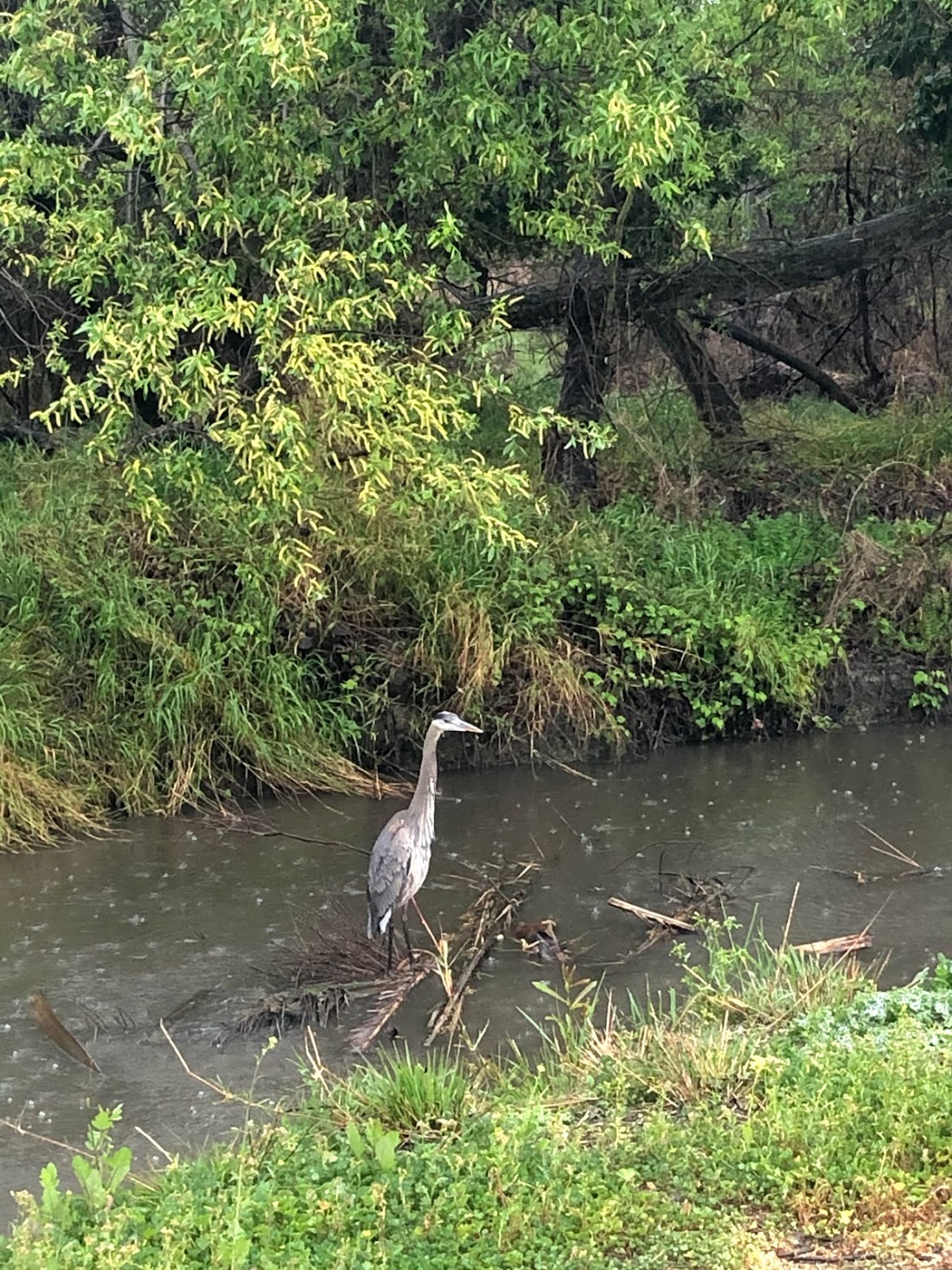
The other day, I saw a heron standing patiently in the shallow waters of a river, waiting patiently. I was out for my evening walk, and I had to stop and admire the heron. The heron was going about its business of living, observing quietly, waiting patiently, and if in the process of being, a wandering soul got a lesson or two out of it, that was good, but that wasn’t its purpose.

I chuckled to myself thinking of what the heron would say to me if I asked it about any of the world’s problems. Would it laugh at me or with me at the problems humans have created for ourselves?

The heron in that moment taught me the simple act of keeping still and untangling the strains of thought. That this isn’t a luxury, but a necessity.

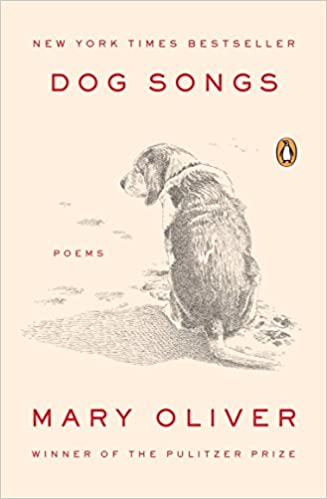
Sometimes, sitting and reading a piece of poetry evokes the same feeling. Take the poem, Yes! No! By Mary Oliver for instance. 

How necessary it is to have opinions!

I think the spotted trout lilies are satisfied, standing a few inches above the earth. I think serenity is not something you just find in the world, like a plum tree, holding up its white petals.

The violets, along the river, are opening their blue faces, like small dark lanterns.

The green mosses, being so many, are as good as brawny.

How important it is to walk along, not in haste but slowly, looking at everything and calling out Yes! No!

The swan, for all his pomp, his robes of grass and petals, wants only to be allowed to live on the nameless pond. The catbrier is without fault. The water thrushes, down among the sloppyrocks, are going crazy with happiness. Imagination is better than a sharp instrument. To pay attention, this is our endless and proper work.

How often I have stopped to look at the heron taking a short flight from the river nearby and wondered whether its opinions were sought, and whether it mattered. They should, for our opinions and actions have definitely resulted in less than ideal living conditions for them. 

Mary Oliver in one short sweep of her pen was able to capture all this and more in the poem, Yes! No!

P.S: I love how the swan in her poem wants to live in a nameless pond. Our planet is just that isn’t it? A nameless, priceless habitat that we have bestowed a name upon.

Heron flying

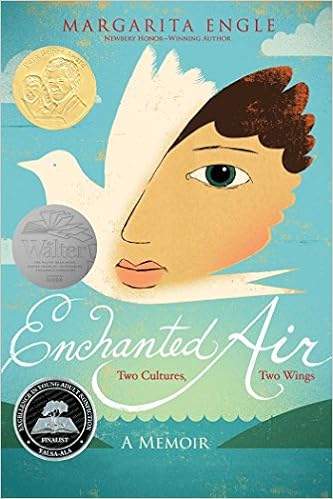
Enchanted Air

I read Enchanted Air by Margarita Engle, expecting to read a good memoir about two cultures and two wings one grows as a result of hailing from mixed origins. What instead happened is difficult to describe in words for it was not a reading, it was a feeling. A transformative one. 

It is a children’s book. Each chapter is a small poem that stands in and of itself, but also ties into the whole narrative. There were so many places in the book when I found myself stopping to savor a poem, reading it again, and swirling the feelings it evoked in my mind. Later, I found myself passionately explaining it in far less elegant terms to the husband and children, scurrying to get the book, and fumbling through the pages to find the right poem.

For instance when she writes of ‘The Dancing Plants of Cuba’, she captures the essence of an island: 

In California, all the trees and shrubs

standstill, but on the island, coconut palms

and angel’s trumpet flowers,

love to move around,

dancing.

..

Maybe I will be a scientist someday

studying the dancing plants of Cuba.

Dancing Plants

How can one not love the child then who is later to task by her teacher for inventing dancing plants, as plants are supposed to stay still aren’t they?

Her father’s family escaped from Ukraine, from a communist regime, not knowing whether those left behind survived or not. Her mother immigrated from Cuba.

Two countries

Two families

Two sets of words.

Her paternal grandparents’ recollections are therefore muted, brief and vague. How starkly, concisely, she sums up the human condition for survival? When she asks her Ukrainian-Jewish-American grandma about her childhood, she gets nothing more than ice-skating on a frozen pond. 

Her maternal grandmother, on the other hand, regales her with richly detailed family stories, of many island ancestors, living their lives out on tropical farms.

In the poem, Kinship, she sums it up:

Apparently, the length 

of a grown-up’s

growing up story

is determined

by the difference

between immigration 

and escape.

This memoir is rich with details of her family, and her own dreamy self. 

She takes us along with her on her journey of growing up, and how her personality rows with ‘The Geography of Libraries’.

Spoken stories are no longer enough

To fill my hunger

I crave a constant supply 

Of written ones too.

As she grows, the mistrust between USA and Cuba, grows too. Their family is suspect simply for holding a Cuban passport, a part of her heritage cut off by souring diplomatic relations and the Bay of Pigs invasion. She first writes about the state of reality in the poem, Communications.

Abuelita writes letters in code,

inventing poetic metaphors,

to prevent the island’s censors

from understanding her words.

When she says Tio Dario 

is working hard in the garden,

Mom somehow knows that it means 

he’s been arrested and sent to a prison or forced labor camp.

In Secret Languages we learn

Right wing or left wing tyrants always

try to control communication

They always

fail.

The books ends with the poem, Hope.

It is no wonder that the book has won a string of awards. Looking at the history of the world, its themes are timeless too.

The Fine Art of Baloney Detection

I feel like a separate dedicated post to Baloney Detection Kits are useful right about now. It has been a disturbing 6 – 7 years – ever since the presidential election started heating up for the 2016 cycle, we have been living in a state of dubiety (The state or quality of being doubtful; uncertainty).

We have grown used to being lied to, we are more divided than ever before, and the versions of the truth fluctuate wildly depending on which network or newspaper reports it, it is increasingly hard to determine what the truth is. 

Just a simple search for ‘Media Bias Charts 2020’ is enough to drive home the point:

media bias chart 2020

These problems have always been there. 2000 years ago, the world’s greatest democracy of the times, modern day Italy, then the Roman Empire, witnessed turmoil and breaking of the largest democracy. But with accelerated advances in technology linking us faster than ever to ‘breaking news’ and social media amplifiers for everyone, the waters have become noisier and murkier.

The book, Science as a Candle in the Dark by Carl Sagan, has an essay on the Fine Art of Baloney Detection.

Read also: Candles in the Dark

The essay starts off empathising with the human condition. Why are we, as humans, willing to believe in things whether or not ‘there is any sober evidence for it.’? 

It isn’t unheard of to believe in things supernatural, or falling for false advertising campaigns with exaggerated claims, or believing models wearing Doctor’s coats, or blindly believing religious zealots who spout hypotheses with confidence. As human beings we have been doing this for centuries, and in most probability will continue to fall for some sort of questionable practices. 

As long as there are those who are willing to take advantage of the vulnerable with little or no consequence, these will persist.

For those who wish to read the whole essay, it is here. Or it can be found in the book, Science as a Candle in the Dark – By Carl Sagan

While we enjoy the occasional myth or fib, it is important to know the difference. For an adult to attack Harry Potter for instilling witchcraft is worrisome for this very reason. As part of growing up, we want children to outgrow the myth of Santa Claus. Knowing to distinguish fantasies from reality is a necessary tool for survival. 

Which brings us to why we must have a version of Carl Sagan’s Baloney Detection Kit for us to use. 

The complete essay can be found here:

It has been a saddening realization to find that Science has not been embraced when it is needed the most. I was reading a book on the Greatest inventions of mankind in the past 2000 years. It is a book collating the answers from philosophers, researchers, and professors from various fields. One of the answers given was the framework of Science. I could not agree more. The ability to think, weigh, design experiments with control and test groups, and sift empirical evidence has resulted in the very least at :

  • Saving millions of lives, that in previous generations, succumbed to disease
  • Figuring out how to feed a planet that grew from 1 billion to over 7 billion within a generation

For those who would prefer a straight jump to the Baloney Detection Kit, here it is:

  • Wherever possible there must be independent confirmation of the “facts.
  • Encourage substantive debate on the evidence by knowledgeable proponents of all points of view.
  • Arguments from authority carry little weight—“authorities” have made mistakes in the past. They will do so again in the future. Perhaps a better way to say it is that in science there are no authorities; at most, there are experts.
  • Spin more than one hypothesis. If there’s something to be explained, think of all the different ways in which it could be explained. Then think of tests by which you might systematically disprove each of the alternatives. What survives, the hypothesis that resists disproof in this Darwinian selection among “multiple working hypotheses,” has a much better chance of being the right answer than if you had simply run with the first idea that caught your fancy.*
  • Try not to get overly attached to a hypothesis just because it’s yours. It’s only a way station in the pursuit of knowledge. Ask yourself why you like the idea. Compare it fairly with the alternatives. See if you can find reasons for rejecting it. If you don’t, others will.
  • Quantify. If whatever it is you’re explaining has some measure, some numerical quantity attached to it, you’ll be much better able to discriminate among competing hypotheses. What is vague and qualitative is open to many explanations. Of course there are truths to be sought in the many qualitative issues we are obliged to confront, but finding them is more challenging.
  • If there’s a chain of argument, every link in the chain must work (including the premise)—not just most of them.
  • Occam’s Razor. This convenient rule-of-thumb urges us when faced with two hypotheses that explain the data equally well to choose the simpler.
  • Always ask whether the hypothesis can be, at least in principle, falsified. Propositions that are untestable, unfalsifiable, are not worth much. Consider the grand idea that our Universe and everything in it is just an elementary particle—an electron, say—in a much bigger Cosmos. But if we can never acquire information from outside our Universe, is not the idea incapable of disproof? You must be able to check assertions out. Inveterate skeptics must be given the chance to follow your reasoning, to duplicate your experiments and see if they get the same result.

Books for the King

The son’s brisk questions were being met with sluggish answers and were wrong to boot. He looked at me with concern and said, “Ma! Are you okay?” 

“I feel like I need to read 3 fiction books back-to-back to start feeling myself again!” I moaned. The cuppa coffee wasn’t doing its job. I knew I had a long day of meetings, planning, production issues, and more news trickles along the way before that happy dream could be realized. 

What happened next should not have surprised me in the least, for that child has a knack for soothing frayed souls. He ran away at top speed and I went about lapping my coffee like a cat licking its milk out of the saucer on a cloudy morning.

After a few moments he tumbled into the room carrying three Dr Seuss books. “Don’t worry, I can read it to you for 2 minutes.” he said and proceeded to read from Yertle The Turtle and Other Stories.

He could not have selected a more apt book for the times  if he had thought about current world trends towards dictatorship and decline of large democracies, cross-referenced  it with philosophies on power and ambition etc. 

Yertle the Turtle was the king of the Sala-ma-Sond pond, but as often happens with power, he wanted more, and then some more. Maybe a really high throne would help him thought Yertle. So, he summoned some turtles on which he could perch himself . Yertle thought that the higher his throne, the greater he was. Everything in his eyesight could be his, couldn’t it?

Soon, a cow, a farmhouse and a blueberry bush wasn’t enough for the great Yertle the Turtle. More and more turtles scrambled, while Mack – the poor turtle at the bottom of the pile struggled. Mack’s complaints meant nothing. Yertle could see butterflies and birds, but what he really wanted was to get up there with the moon. 

In a fitting end to the story, the dictatorial Yertle meets his nemesis with Mack’s inadvertent burping. The pile of turtles totter and collapse sending Yertle crashing into the muddy swamps below. Yertle the Turtle learns his lesson. 

I know we ask of no formal training for politicians: there are no politician licenses, no courses one has to complete to take up public office, but I really think there should be a set of children’s books that they all have to read and re-read as refreshers every year in order to stay in office. We could call it the Butter Battle Course.

I’d definitely add these three titles to the course.

  • Yertle the Turtle and other stories – By Dr Seuss. (It even has a story about unbearable braggarts meeting their match in a humble worm who is trying to just till the soil underneath without the incessant brag-fests disrupting him)
  • Louis XIV – the King of Sheep – By Oliver Tallec ( A beautiful tale illustrating how Louis I the sheep became a king – the wind rolled a crown to him, and the same wind blew the crown away from his head)
  • The Fate of Fausto – By Oliver Jeffers ( This tale takes a megalomaniac’s obsession with ruling everything he sees including mountains, rivers, and sheep until he meets his match in the great ocean.

In Pursuit of the Truth

“Have you seen this video? “, said the husband for the n-th time. He definitely sounded like a child in Disneyland glimpsing Tinker Bell, and I looked up indulgently. His face was glowing as though he was discovering Calculus for the first time.

I could understand his enthusiasm – the 3Blue1Brown videos are well explained, beautifully animated and make you appreciate Calculus in a wholly new way. The journey as well as the philosophy behind it.

I have to confess that the 3Blue1Brown videos sparked my interest, and I peeked into the childhood brain enjoying Maths classes, as I picked up a book, called A Strange Wilderness – The Lives of the Great MathematiciansBy Amir D Aczel to read about the journey of Mathematics through the ages. How did we arrive at the basic tenets of the truth that held the universe together?

A Strange Wilderness: The Lives of the Great Mathematicians – By Amir D Aczel

The book starts with examining the Greeks and their approach to understanding the world over 2500 years ago. Starting with Thales of Miletus(624 BCE) , who was often called the first philosopher (He is known for the famous saying , “Know Thyself”), it examines Mathematics as a pursuit of the truth.

I was lured in, and though I did feel the writing could have been far more intriguing, it was a well-collated narrative of mathematicians and their lives through the ages.

The next great mathematician is the renowned Pythagoras of Samos (580-500 BCE) who continued the philosophy of:

Changing Mathematics from a computational discipline into a beautiful, abstract philosophy.

For those in Academia or are students still, the philosophical bent of the pursuit of truth is probably there. But for most others, in our day-to-day lives, Mathematics has taken on a more computational role than a philosophical one.

The arc of Calculus itself is an interesting story. How close we came as a species to discovering Calculus multiple times? Progress happens in fits and starts, and for every piece of the puzzle that we decipher, world events, or simply fate intervenes and sets us back a few steps. So many mathematicians came close to the concept of Calculus including the philosopher Zeno, in Zeno’s Paradox, over two millennia ago.

The History of Calculus

Finally, it wasn’t till the late 17th century when Leibnitz and Newton arrived at Calculus independently. Mired in controversy as it was as to who discovered it first, it is still a fascinating journey.

I remembered one cold Winter evening waiting for the fireworks at Disneyland and wondering whether the Imagineers at Disney had calculated Tinker Bell’s rope coverage using Calculus, to ensure that the area under the rope display was visible from most areas in the park. They must have done – this was Disney after all.

When we dedicate some of our Calculating Mind’s time to enable the Thinking Mind, the resulting moments are truly magical.

Photo by Mohan Reddy Atalu on Pexels.com

Taking the journey with Mathematicians through the ages was also strangely comforting. After all, in spite of wars, disease, revolutions and all the horrifying things in the world, the pursuit of truth did hold its slender string through time. Ravaged, and knotted up at times, maybe, but always resurfacing with the single minded purpose of the pursuit of the truth. The pursuit of the truth is one of our basic tenets, after all.

When Autumn Feels Like Spring

The first day of fall was here, and it felt like the first day of spring.

I stepped out to see a blue, blue sky with some cumulus clouds flecking the ocean above with froth. My heart soared like the eagle above. High and higher still. The air felt fresh like it does after the Earth has had a good rain. Even though it hadn’t rained, the Earth sparkled. The effect the clear blues, mellow temperatures and cumulus clouds have on our temperaments is remarkable. The Californian blue jay chirped, the squirrels tittered, the hummingbirds frisked and the hawks soared. Even I burst into song, and poured my joyous nonsensical lyrics into the world. 

But duty beckoned. I had a string of meetings awaiting me, and though my heart soared and flew with the eagles, clouds and all that, I headed inside musing all the while on how marvelous a blue sky is.

I read somewhere that the smog in some polluted cities is so bad that children growing up there think a ‘blue sky’ is a poetic liberty, for the skies are never blue. I could empathize with the poor children so far away. It was similar to that in California over the past few weeks. Wildfires burning over millions of acres hundreds of miles away drew a smoggy veil across the skies, and cast a pallid gloom at times, made for brilliant sunsets at others, but through it all, there was an air of impending doom.

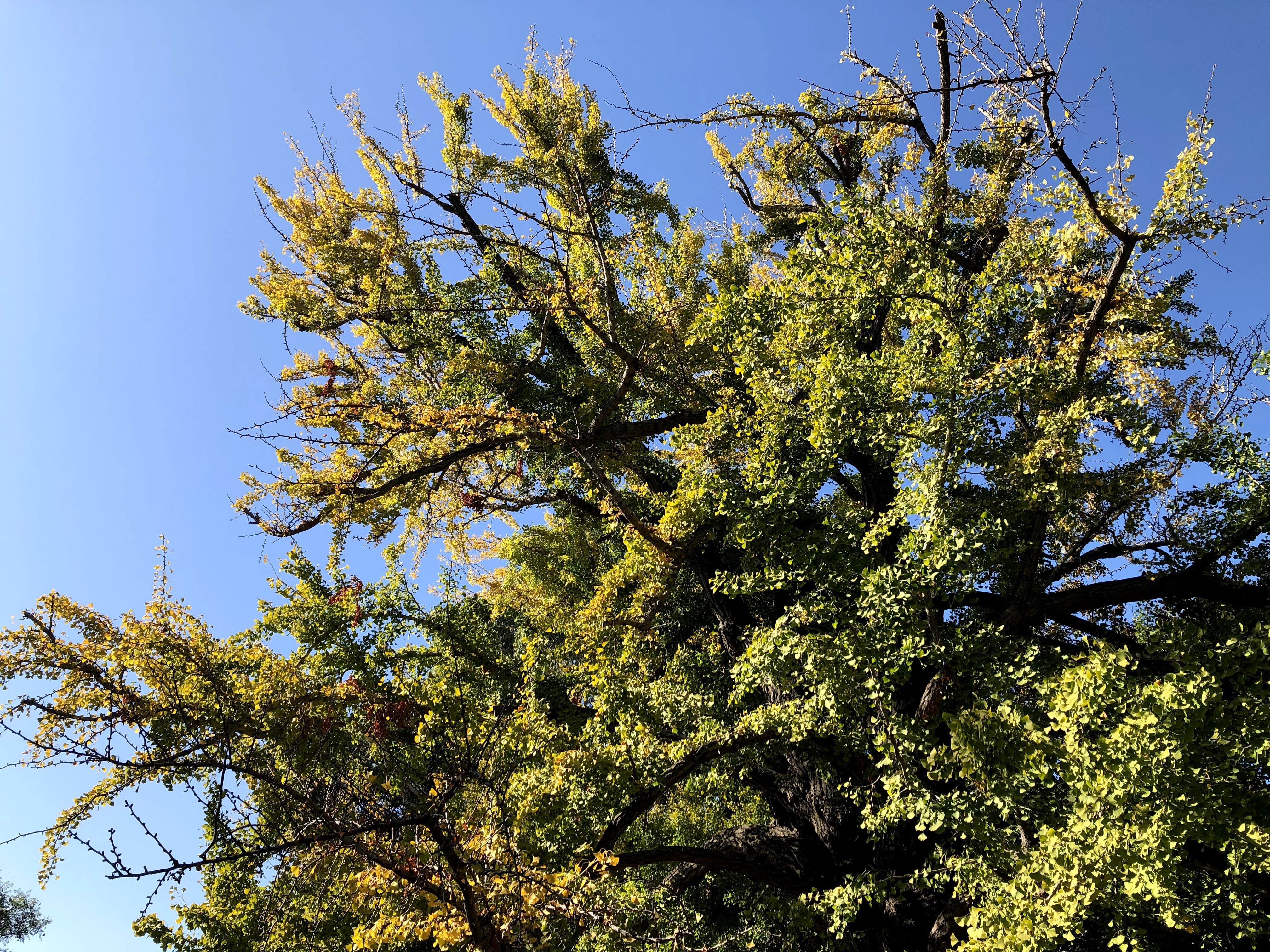
That feeling fell away on the first day of autumn. Fall in California are not as drastic and spectacular as autumn in north-east or north-west parts of the United States, but it is beautiful nevertheless. The gingko leaves have started turning from their brilliant green to a golden yellow, and the maple leaves are turning colors slowly. The air is not nippy yet – in fact, we are bracing for another hot spell.

Meanwhile, inside the house, I was feeling a trifle boxed-up after a continuous string of meetings, in which people had showed up with varying amounts of enthusiasm and optimism. Some of them had managed to retain that cumulus cloud effect, others matched the brilliant blue skies outside – uplifting and promising, and some others retained the pallid gloom of the smoggy fire-ridden days. I glanced outside the window and could identify with the young pupils of Miss Read, who taught her on a beautiful Spring day that words and pictures are but imitations of the real thing. I reached out for the essay in Tales from a Village School from my newly acquired bookshelf (a gift from the dear husband for he could not stand the piles of books everywhere in the house).

Tales from a Village School – By Miss Read

Titled ‘The Real Thing’, the short essay evoked the essence of Spring in one breathtaking stroke of a page. She writes of a Spring morning she started to read The Wind in the Willows to her class.

“I had planned to start ‘The Wind in the Willows’ next term, but what more fitting occasion than this could be found for beginning such a spring song?”

The Mole had been working very hard all the morning spring cleaning his little home…” but after a page or two, I am conscious that Henry’s restlessness is infectious, 

‘Say’, he urges loudly, ‘lets go out!’

There is a shocked silence. What madness is this? Will it make me fly right off the handle?

The essay lilts on with ease and ends on the sagacious note:

It was he, the babe among us, who led us befuddled elders to reality when he cut straight to the heart of the matter with those three words, ‘Let’s go out!’

I heeded the clarion call of the essay, and briskly stepped out. Standing outside on that glorious day in September made me doubly grateful for things as normal as a blue sky and a breath of fresh air. May we continue to be blessed with these normalities! May we never complain about what a delight an ordinary day is!

“Autumn is a second spring when every leaf is a flower.” ― Albert Camus

Soonish

“How do you think the water on Titan is? “

I must’ve responded with a quizzical look, for the son responded with a “Saturn’s moon!” 

http://Public Domain, https://commons.wikimedia.org/w/index.php?curid=610237

“Oh!” 

His interest in all things Space-Cosmos has me unnerved sometimes. He catches me when I am zap in the middle of the myriad things that keep me busy and unproductive, and like a zing of fresh air, sends a question like this to remind me that life does not always have to be stern.

As I thought up a response to another ping at work, I found myself wondering what ammonia-esque water must be like. The temperatures must be more frigid – sure, but beyond that the imagination sort of teeters. Would there be  fish in the seas on Titan? Would their eyesight have evolved so differently because of the low amounts of sunlight, and all this, only if we assume life has evolved on Titan. 

We did not evolve into cyclops like one-eyed creatures. Two eyes lends perspective to our vision and construct the world around us differently than a person with only 1 eye would. What if we had evolved with one eye on top of our head – always upward looking? And another set under our feet? I wonder how we would have shaped our world if we had managed to evolve like octopii with neurons everywhere not just in our brains. 

Over lunch today, discussion moved to contact lenses. With changes in contact lens technology, the disposable ones are in use now. Calculations were being made as to how many days of lenses were left, and I picked up the thread of the third eye and the octopus-like eyes-and -brains-in-limbs theory.

The son immediately calculated the number of the contact lenses we would have required for 3, 4 & 5 eye scenarios, while the daughter moved to the more practical problems

“Yes – imagine – looking upwards all the time, and see bird poop flying towards your upper eye and not having time to close it. Aaah!” That child can take the magic of star dust and turn it into duck-poop!

Another time, there I was thinking along simple lines such as ‘These flowers have faded so much in the summer heat”, or “These poor little squirrels in the heat wave – should we leave some water outside for them?” when the son in his attempt to make conversation pulled me straight out of this solar system altogether with “Did you know Proxima Centauri can pull comets towards it from the original Kuiper belt?”

https://solarsystem.nasa.gov/news/792/10-things-to-know-about-the-kuiper-belt/

Keeping up with a child’s curiosity is difficult enough as an adult. Yet, I look forward to these little chats with the budding futurologist, for they make me think outside of the what-needs-to-be-done to the more creatively beckoning what-can-be-done mode of thinking.

One evening, on a little stroll by the waters, the fellow asked me what I thought would be the 5 most interesting things in the future. I love it when I have to think through his questions like this. I had him go first so I could get my thoughts into some sort of order.

He started off with the space elevator, and then a sky hook, moved on to some solid asteroid mining, and then conservation of energy. He is increasingly fond of the channel Kurzgesagt 

Their you-tube channel has a number of philosophical, scientific concepts. The videos are only a few minutes long and are done in a highly simplistic style, yet enough to give one the overall picture. 

Luckily, for me, I had picked up this book, Soonish by Kelly & Zach Weinersmith

Thanks to the book, I could hold up my end of the conversation. The book is written in a funny and engaging manner. Starting with space technologies and asteroid mining; the book moves on to robotics, augmented realities; and the future of personalized medicine and synthetic biology.

People who have the joy of gaining fresh perspectives from the forward looking spirit of youth are lucky indeed.

May we always retain the inner child in us – The wonder of Shoshin.

Love, Acceptance & Gumption

Rarely do the skies reflect our inner turmoils so accurately. The past few days have been a strange time in that respect. The wildfires in California have been giving us days of poor air & light quality.

The first day dawned with the daughter waking us up looking excited. “Oh look how beautiful the light is outside. Everything is so pretty!” I peered outside and indeed it was. The world was bathed in a mellow yellow light, radiating a divine light. “It looks like a day when you feel you must count your blessings!” I said and rolled out of bed looking for the colors of the sunrise.

It turned out be a day to be doing exactly that – counting your blessings. A day to be celebrating a truly marvelous life, and thankful for the opportunity of having his presence in our lives. 

When I checked my phone, I saw that our dear Maama (Mother’s brother) – the younger one, had passed away. My mother confirmed that he passed away while on a video call with his daughter in the USA. Till the end, he was not in pain, and in these times of Covid troubles, he passed away peacefully at home. In death he had been blessed. Though if you had asked him, he would have said he had been blessed in birth as well.

For the past few months, he had been re-living his early years with his siblings at times. His conversations flitted to the village of his youth often, and he spoke of his life as a little boy, and he asked after his little siblings. In moments of clarity, he gave his caregivers careful instructions on how to reach the village where his dear siblings were: “Turn right from the road, and go straight for 6 miles, and you will see a small temple on the side of the road. “

His caregivers, like everyone who had the privilege of loving and being loved by him, indulged him. He truly was a man of many gifts – loving pragmatism was just one of them. 

Dear maama’s life was full of verve, energy, fun, love, and was tragic at the same time.

Yet, he never dwelled on the tragic. He was always a man of action. His nimble mind moved quickly with any tragic event to acceptance, and then looked for the actionable. He never considered any other course that a lesser human being might have resorted to. He was going to be helpful however he could, and he would do whatever was in his power to do. That was his responsibility. 

Talking to some of the lives he had touched after the dear man passed away, I found myself crying at times, laughing at some loving and funny thing that was so characteristic of him at others. The skies went from a count-your-blessings light to a gloomy ash-spewing state as the fires continued to spread through acres of land. 

Gloomy skies spewing ash

I have often wondered how the young children moved past self-pity. After all, the universe had played a low trick on them. He must have been a 11 or 12 year old boy when his father died, and his mother went into a decline from which she never recovered. The youngest sibling of his was my mother, all of 2 and a half years old, and he took her under his protective wing from when she could remember. 

Every time I think of the mammoth responsibilities the brothers shouldered, I shuddered. In an unforgiving world, the 7 siblings formed a bond like none others. 

No story about my mother is ever complete without Jayaram Maama and Pattumani Maama. Corporate environments would have made one write the vision statement and the other the mission statement. The younger of the two brothers, Ambi, as he was affectionately known, was the visionary one. He was also the effervescent one. The brothers made it their mission to educate their sisters at a time when most girls were married off at a tender age with an elementary school education – #HeForShe before it became a thing. They were curious combinations of the ritualistic and progressive. (My mother and her sister were the first women graduates from their village and went on to teach High School Maths, Physics and Chemistry)

Always forward looking, always willing to take action for what needs to happen next; his life is a lesson in acceptance, gumption, and constant self improvement. 

Today the skies have cleared up sufficiently for the sun to shine through again. It doesn’t feel apocalyptic anymore. 

Maybe the grand man is ready for the next great adventure. After all, he joined Pattumani on his second death anniversary.

To the well-organized mind, death is but the next great adventure.” Albus Dumbledore in Harry Potter 

Bestiary Tales in Covid Times

“Summer will be done in just two weeks!” trilled the children. The son was excited, as expected, by the fact that it was time for the autumnal solstice. (Earth’s tilt, cosmos, time are all fair game for him)

I stopped bustling about and nodded. It was true! That’s two whole seasons of Covid living.

Summer has been a blur. Sometimes, it was a happy blur of forests, rivers, beaches, craters, lakes, browning meadows, bundles of hay, wildflowers, towering trees, stars at night, comets zipping in the Earth’s vicinity, angry and mellow sunsets, pelicans and 🎼 “wild geese that fly with the moon on their wings” 🎶, hummingbirds flittering in the pale light of the rising moon, asters and star lilies in the shade of their massive neighborly trees. All of this with the sweet companionship of the family, and close friends – zooming in at times.

Other times, it was exhausting – heat waves, massive wildfires, poor air quality indexes, Covid numbers continuing to rise and showing no signs of abetting, protest marches, racism, bomb blasts, all on top of a news cycle that seems to think it has to deliver the heaviest punch into every day. It is like watching the world’s worst wrestling match. 🤼‍♂️ Really, someone should coach the world that not everything needs to be shocking and bigger and worse than ever before. It might be okay to watch a match in which the players seldom land a punch and are merely playing the game warily sizing each other up once in a while. 

Yet, life must go on, and it often goes along much better when we stop and look for promising moments in the gloom. There are moments that stand out clearly in this pandemic, when I felt a wave of gratitude overwhelm me, and I am also grateful for the sheer timing of these moments.

The time I stood on a windy, lonely strip of beach wrapping a towel about me for warmth and watching the sandpipers fly against the wind without wavering one bit, while I had a tough time just standing erect was one such. It was but a fleeting instant in which the little nippy sandpipers taught me about keeping one’s spirits up when the world is attempting to veer us off course every which way.

Or the moment, when on a road trip to a solitary house by the Umpqua river, the road wove on, the heat rose in waves around us, and the shimmering waters of the Lake Shasta looked like a green beast taking it easy in the summer, and laying low for what lay ahead. A few weeks later, the Sierra Nevada mountains were to be threatened by wildfires on a magnitude that sent the state of California reeling. Looking at the dry lands about us for a couple of hours, I felt a moment of dread, when the road turned, and a beautiful gushing river accompanied the road, and there on a rock in the middle of the river was a great big bear, looking contented and trying to fish or just cool off. 

As we took our summer walks in the evenings, I stopped so many times to admire the geese splashing into the waters after their great squawking, while the pelicans achieved this feat with none of the noise, but all of the grace.

I remember the time we looked up on a stroll to come eye to eye with a great turkey vulture. The elementary school going son was with me, and he thrilled at it. “Amma – I know you take pictures of the flowers  everyday because they only last for sometime, but this…oh…this is so special. It is so .. umm.. “ He struggled for the right word, but I think I knew what he was going for. I felt it too. There was a majesty about the bird that was hard to describe. There was a divinity and a razor sharp quality to its gaze that falconers love. I have tried to experience this when I read the book H is for Hawk by Helen Macdonald. But all I needed was that encounter lasting all of two minutes. 

“The hawk was everything I wanted to be: solitary, self-possessed, free from grief, and numb to the hurts of human life.”

― Helen Macdonald, H Is for Hawk

Really! How much our fellow creatures have to teach us?! 

I think of what wild animals are in our imaginations. And how they are disappearing — not just from the wild, but from people’s everyday lives, replaced by images of themselves in print and on screen. The rarer they get, the fewer meanings animals can have. Eventually rarity is all they are made of.” H is for Hawk – Helen Macdonald

Just like that, Autumn comes in all its glory to teach us what it does best. Preparing for Winter.

Soothe The Dragon and Make a Cat

“How come this year has so many festivals? It wasn’t like this last year! Or any of the other years!”, said the daughter looking painfully at the feast laid out on her plate. “This is like those stories of feasts thaatha used to tell us about!”

I thought I had written about those feasts before, but it looks like I have not yet published them on the blog. Will do so soon.

“Well..the festivals were there. I just wasn’t bothered to celebrate them all. Too much work you know. Plus when your grandmothers were here, they took care of most of these things on the day the festival actually fell, so you probably did not see them huffin and puffin in the kitchen. Some of these things you would only see the special things to eat in the evenings.”

With Covid days here, life seems to have slowed down enough for me to take the pains to cook a decent feast every now and then. Though my cooking is not facebook-worthy, by my standards, it is much more than usual, and it has the daughter worried. 

Not cooking for the daughter is truly rewarding. Tell her to make do with a slice of bread that day, and she beams happily, saying she loves special days like this. Every time the husband was out on his travels, we would plan these special days and revel in clean kitchens and munch through biscuits and buttered toasts to our hearts’ content. The husband belongs to the unfortunate clan that thinks bread-and-butter dinners are meals for those convalescing in bed. Thanks to this attitude towards bread, simple buttered toasts have come to acquire an altogether special place in our hearts over the years.

Anyway, our stomachs are not accustomed to platefuls and after this meal, I set out on a small walk. The heat waves had subsided somewhat that day before they angrily rose again this week-end. Several of the areas cats were resting I noticed. I passed a fat cat napping on the roof, and it deigned to open half an eyelid to see if I was worth its notice. Considering I was not, it stretched a little and rolled over looking happy and content. I could not blame it. In fact, if actions could inspire, that cat certainly was inspiring.  No speeches like Martin LutherKing for yours truly, a cat napping was enough, I thought wryly to myself. Maybe all we need to spread world peace is to have peaceful looking folks meditating happily under trees.

Buddha's disciples
Buddha’s disciples

I walked on and noticed scurrying everywhere. The squirrels seemed to be extra active at this time of day. Seeing the cats all enjoying a nap and resting, this seemed like a highly prudent approach, and I sat on a tree stump admiring the activity around me. A gentle breeze stirred and my own platefuls nudged me into aspiring for greater things like the napping cat had shown me.

I came home, and headed up for what my father’s side of the family called , “Shhrama Pariharam” (translated loosely to mean a rest after tough experiences with a touch of a sacrificial air to it) . They would tuck into their feasts that our aunts had whipped up, and retire to snooze it off in the cool thinnai (a breezy verandah) outside.

When last we cousins met up, we doubled up laughing about this, but I found that this was the only thing to do after a meal of ½ * (Onam Sadya ) standards.

I must say the nap proved to be every bit as satisfying as I had imagined. The cool breeze of the fan was there in the room, and the carbohydrates were sedating like nobody’s business. The cells tried to wake up, and then gave it up as a bad job. I had a marvelous nap, followed by a crisp cup of tea and was reminded once more of the simple pleasures of life as it should be.

I think feastly meals are ghastly beasts and after every meal like that a nap makes us sharper and better human beings. It soothes the dragon inside and makes a cat out of you.

“It is very strange, this domination of our intellect by our digestive organs. We cannot work, we cannot think, unless our stomach wills so. It dictates to us our emotions, our passions. After eggs and bacon it says, “Work!” After beefsteak and porter, it says, “Sleep!” After a cup of tea (two spoonfuls for each cup, and don’t let it stand for more than three minutes), it says to the brain, “Now rise, and show your strength. Be eloquent, and deep, and tender; see, with a clear eye, into Nature, and into life: spread your white wings of quivering thought, and soar, a god-like spirit, over the whirling world beneath you, up through long lanes of flaming stars to the gates of eternity!” 
― Jerome K. Jerome, Three Men in a Boat