Birdwatching & Biomimicry

The bike ride was a long one on a hot summer’s day. The sun was rising steadily and though it hadn’t reached its blazing glory across the Californian coasts, it was promising in its ascent. Even within the first 5 miles, we could feel the temperatures rise enough for us to be grateful for the mild breezes continuing to fan the body as we pumped through the trail. 

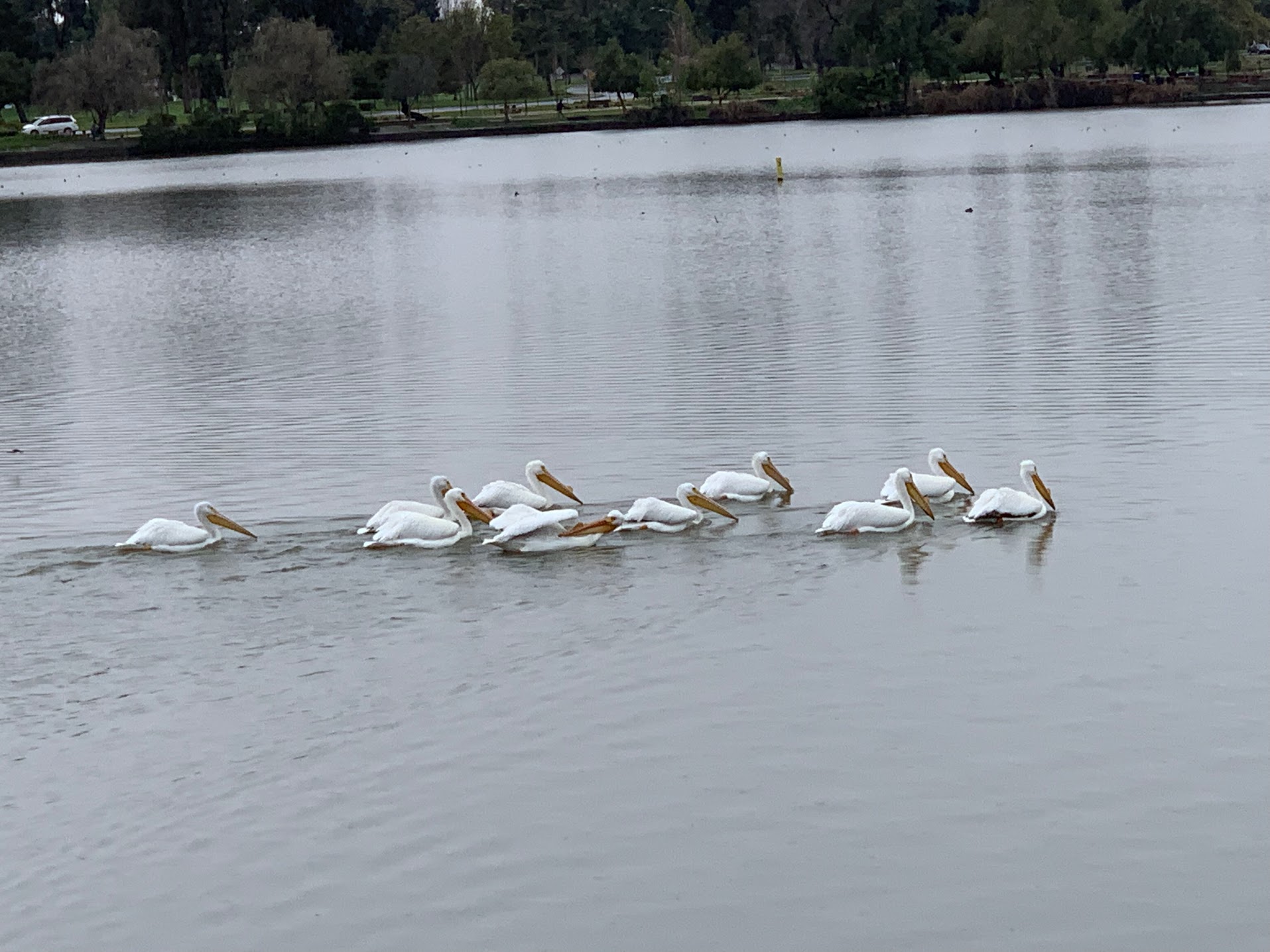
A little while later, we stopped for a quick peek at the pelicans lazing in the waters nearby. As the hot day wore on, our spirits only grew. All around us were the spritely images of life – birds swooped and flew in the mild breeze. As we stopped to see the pelicans lazing about in a patch of freshwater, a fellow biker and nature enthusiast stopped to share the calm of the pelicans with us. He asked the son whether he’d seen them fishing together like ballerinas. The son flashed a smile at me – a fellow nature lover using the same words to describe the pelicans?

The man told us how to identify harriers, hawks and bald eagles, and we biked on looking for the regulars as well for the new species he had told us about.

Right enough, in just a few miles, we spotted a harrier taking rest on a rock before scouring the fields for prey. There is something joyous in being to able to identify a newly learnt about species even if the species has existed far longer than we may have.

Harrier resting

But the ones that truly mesmerized us were the avocets. The avocets are a joy to behold on a hot day. They fly to a reasonable height, take a second to stabilize and then swoop down into the water below for a quick dip and fly out again. The smoothness of the breaking of the surface tension between the mediums is so flawlessly done. Their sharp beaks assisting them and reminding me of the little tidbit I had read in the book, Biomimicry by Jane Benyus. 

TED Talks by Janine Benyus on Biomimicry

Apparently, sonic boom was a big problem for the fast trains in Japan. The sonic booms were felt as far as a few hundred meters away as the trains emerged from the tunnels, and obviously this was a genuine problem that risked the success of the entire operation.

One of the engineers on the team, on his vacation, sat by the waterside watching a kingfisher swoop into the water and swoop out again with a smoothness of movement that inspired the engineer. How come the little bird was able to transition between mediums as different as water and air so sleekly? That is when the design of the sharp beak stood out. Eons of evolution may have shaped the beak in that particular long shape for a reason. The engineer went on to shape the train’s beak, and solved the problem for the fastest train of the day. 

The more our world functions like the natural world, the more likely we are to endure on this home that is ours, but not ours alone.

Janine Benyus

As the son & I stood there on the bay watching the avocets dive in and out, I told him that the collective noun for these lovely birds is an orchestra, and he beamed, and approved of the name. Their trilling, swooping, and pirouetting were apt.

Watching the little avocets on a hot day was a lovely little reminder of the designs of nature and its many wondrous ways. Not every saunter into nature is bound to solve a problem wracking humankind, but they very well might. 

Is this Pearl a Gem?

The daughter was looking for pearls to go with her dress. I moaned. Jewelry was not my specialty. Pearl jewelry even less so.  I remember, decades ago, going to one of those famed pearl stores in San Francisco and being completely bewildered by the array that met me. I told the husband quite honestly that I had no idea what I had bought and whether they were worth it, but I liked how they looked and that ought to do. Things had not changed much on the pearl front in the intervening decades.

So, off I went looking for pearls in the best place I knew. Not the oceans to hobnob with oysters and occasional mollusks to see how they were doing with the irritants of the sand against their skin and all that, but to that one place you go to check to buy anything from ‘bear goggles for toddler swimmers’ to ‘jellyfish tees for teens’: Amazon.

It was while deciding between a $20 piece and a $50 piece that I threw my hands up in the air. The pictures looked amazing. My keen, discerning eye that had helped me spot a heron in the riverbed before anyone else could, could make out no difference between the $20 ones and the $50 pearls. Scratch any of those observations you have seen me make on the birds nearby. With pearls, I was an oyster chasing a duck.

A little rabbit hole related reading later, I emerged with this tidbit: freshwater pearls require our oyster friends to make the pearls after they are injected with an irritant, while artificial ones could be coated with oil-pearl like substances to get the sheen you need. 

With that, I was content and bought something that she wore gleefully. It was $20 well spent. I asked her if her friends thought they were $2000, and she gave me a throaty gargle. “No ma! They know me, and they know you and jewelry too! But they said it looked nice!”

The Smithsonian on how pearls are made – in case you are interested

Imagine my surprise then when I decided to get a spot of light reading in and picked up the book, Jeeves and the Feudal Spirit by P G Wodehouse, I learnt more about these gems. Jeeves, the narrator Bertie’s valet, that trusted man whose intellect shaped his head, taught me about endoscopes and how to determine real pearls from the ones I’d bought on Amazon a few days ago.

Usually, it is risky business to hinge a whole novel on one concept viz knowing how to tell a real pearl from a dud. But P G Wodehouse, that master of the sublime, pirouetted a whole novel around this knowledge. Starting slowly like an oyster does when it’s making its pearls, the novel meanders and swishes with the ocean water, slowly grating and building the pearl.

‘The genuine pearl has no core.’ says Jeeves and then goes on to enlighten his master, Bertie Wooster.

“Core sir. In its interior, the cultured pearl has a core….Nature’s own irritant is invariably so small as to be invisible, but the core in the cultured imitation can be discerned as a simple rule by holding the object before a strong light. This is what I did with Mrs Travers necklace. I had no need for an endoscope.”

The endoscope, is also something doctors (not just endocrinologists) use to plumb your systems and to get a good view. An endoscope is an instrument that can also be used to “peer into the cultured pearl’s interior to discern the core.”

Jeeves, being Jeeves, never leaves us with just this information, but goes on to give us something about the Moh’s scale of hardness that can be used to determine a true diamond. 

After reading that piece, I chuckled to myself. When next I wear my pearls, I intend to keep away from bright lights and endoscopes and all should be well. 

Life’s Determinants

“It’s Summer! It’s Summer!” Olaf and Anna were singing and prancing downstairs. I mock-scowled at the duo having summer fun while I dialed into my meetings dutifully. But I was happy to see them finally get some down time after school and grateful that some of their summer euphoria could rub off on me.

I peered outside wearing my owlish glasses and was treated to a beautiful painted lady spreading joy. Flitting here and flitting there.

Painted Lady

A mild breeze rippled through the tree, and I decided enough was enough. A walk would be what the doctor ordered. So, I hollered to the Olaf in the house to come with me on a little stroll. I reached for my sunglasses and instantly, the sun dappled streets of our little suburb took on a magical hue.

Off we went: me trying to look at flitting butterflies and rippling trees; Olaf – fighting imaginary wars and swishing every now and then. 

After a while, I asked him whether he had stopped to think of the stripes on the striped lady butterfly and he gave me a quizzical look – “What? I am fighting some intergalactic wars Amma! Don’t have time to look at butterflies!”

Every now and then, he stopped to explain the action sequence in his head (you know to make me feel included!) So my walk was now accompanied by the strangest commentary:

“I am now imagining the fight but how the electrons would be affected in the atoms inside the fight. The energy transfer and everything else.” and so on.

He went back to his musings and I to mine. If his musings were at the atomic level, mine were at the cellular scale of life. I remember reading about Alan Turing’s work on the mathematical models used to determine patterns in living creatures such as spots on leopards, stripes on butterflies and the like in the book, What is Life – by Paul Nurse

So, that is what we spoke about as we swished our way back home. I asked him if he knew Alan Turing. He mentioned a video in which he had been mentioned. So, there were talking of Alan Turing and his inspired work in the fields of Math and Computing.

Life as Information – What is Life – By Paul Nurse

“This was a set of problems that Alan Turing – he of Enigma code-cracking fame and one of the founders of modern computing- turned to during the early 1950s. He came up with an alternative, and imaginative, suggestion for how embryos generate spatial information from within.  He devised a set of mathematical equations that predicted the behavior of chemical substances interacting with each other, and so undergoing specific chemical reactions as they diffuse through a structure. Unexpectedly, his equations, which he called reaction-diffusion models, could arrange chemical substances into elaborate and often rather beautiful spatial patterns,.By tweaking the parameters of his equations, the two substances could organize themselves into evenly spaced spots, stripes or blotches, for example. …Turing died before his theoretical ideas could be tested in real embryos, but developmental biologists now believe that this could be the mechanism that puts spots on cheetahs backs and stripes on many fish; distributes the hair follicles on your head; and even divides each of the developing human baby hands into 5 distinct fingers.”

What is Life, By Paul Nurse

By the time we flitted back into the house, we had a proper awe of stripes and patterns that hitherto would have been less than wondrous but beautiful all the same.

I was reminded of Richard Feynman’s Ode to the Flower, and the renewed wonder in knowing the intricacies of nature. Every dot and stripe will now be a source of wonder and awe at the brain that sought to model and predict it.

Ode to a Flower – By Richard Feynman. This brain pickings article links to the beautiful animated video made by Fraser Davidson based on his ode to a flower.

The Oceans As Soul Refreshers

Explorers arriving at the nourishncherish home would have found the chronicler walking around with one book more often than others, Chasing Science at Sea – Racing Hurricanes, Stalking Sharks, and Living Undersea with Ocean Experts by Ellen Prager.

You see, I wanted to finish reading the book before World Environment Day World Oceans Day on June 5th. Then, I thought I will somehow make it to World Oceans Day on June 8th. Now both days have come and gone, many marvelous meals have been tucked into, many laughs shared with friends and family, many meetings sat through, many hikes and bikes to appreciate the world around us, but the book is still in my hand.

The book is engaging at a fundamental level – a subject and set of anecdotes so absorbing and amusing that despite all the demands on my time, I do not want to set it down unfinished. Every time I have gone to the edge of the land overlooking the waters, the lure of understanding the world is beyond me. How would it be if we had evolved under water instead of on land. How would our technologies have taken shape? Then, there is a gratitude that we are land dwellers and 3/4ths of the Earth is uninhabitable by us.

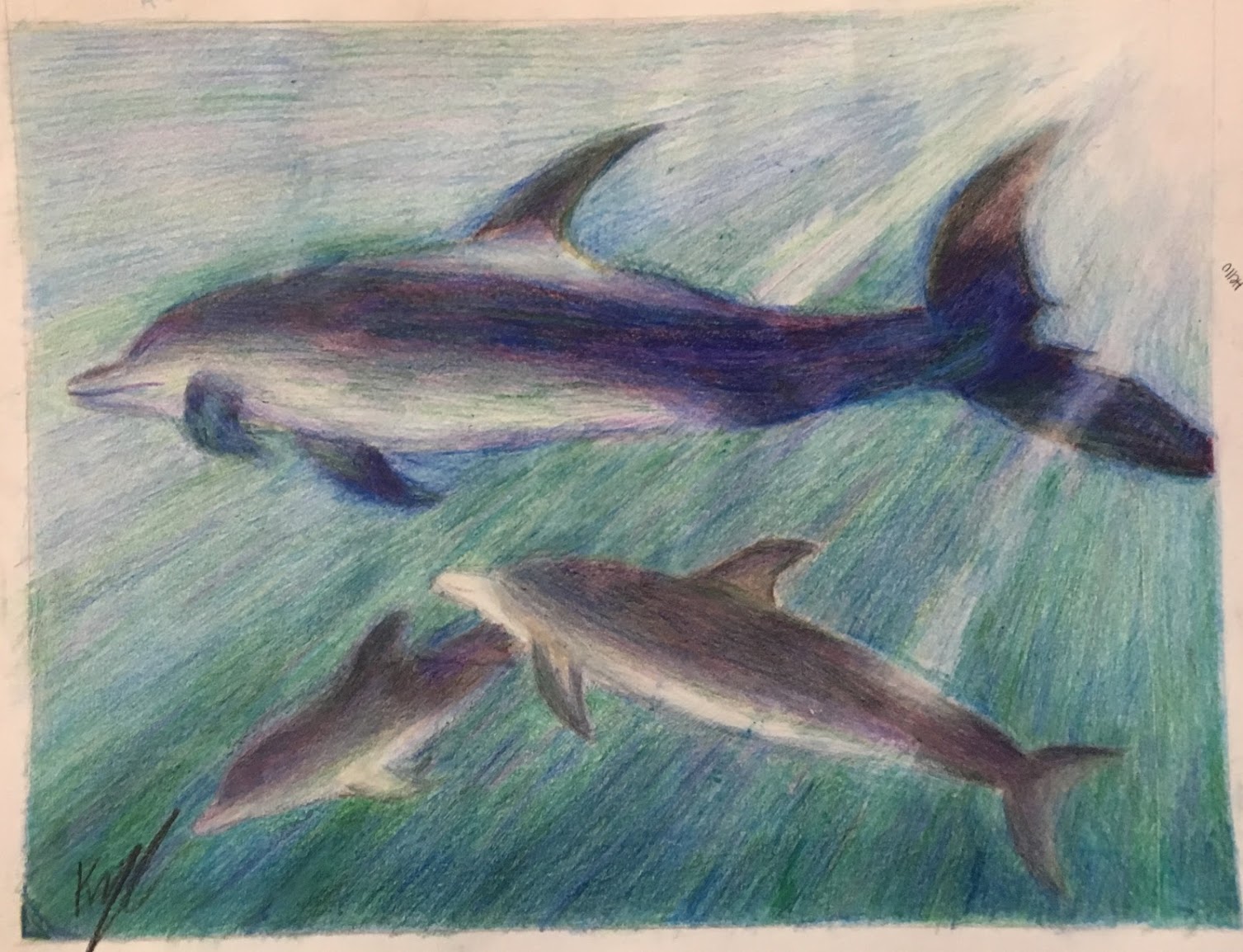
The pressure of living under the sea must be enormous and I wonder about how the various creatures of the sea manage. A friend of mine had taken a picture of a chips bag at high altitude. Imagine that bag 10,000 feet under the ocean. Apparently, every 33 feet the pressure increases by another atmosphere. With what ease these dolphins and whales navigate the pressure differences as they come up to gulp air and go back into the depths of the oceans?

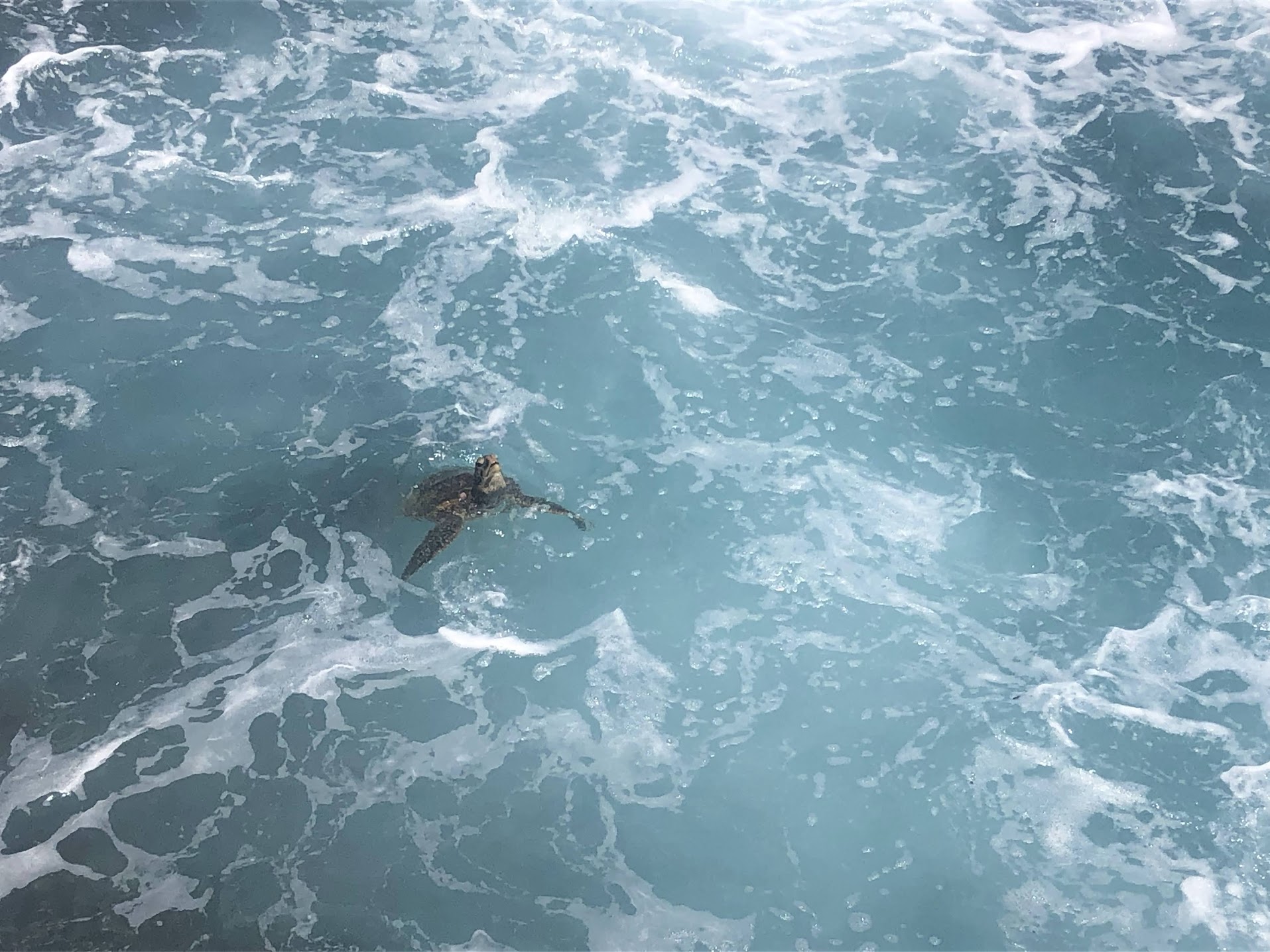
One evening I stood watching the magnificent waxing gibbous moon over the bay waters one one side, and the setting sun on the opposite side. I remember reading that the creatures of the ocean have their own lunar cycles to follow. The little turtles that come ashore on full moon nights to lay their eggs, the fish orienting themselves by the direction of the stars, the birds using their innate gifts of navigation to traverse the Earth on there impressive migratory journeys – everything ebbed and flowed into the mind’s eye much as the gentle waves lapping nearby.

“To stand at the edge of the sea, to sense the ebb and flow of the tides, to feel the breath of a mist, is to have knowledge of things that are as nearly eternal as any earthly life can be.” –

Rachel Carson

There were pelicans bobbing elegantly in a uniform motion a distance away, seagulls, avocets and blackbirds flying energetically, while the herons stood stoic as ever apparently gazing at the moon and waiting for the fish in the waters below.

The edge of the sea

How must it be to live under the sea? How I wished to be a little mermaid just then to glimpse into the ocean worlds? Imagine my surprise when I sat with the Chasing Science at Sea book that evening to read about Aquarius – the under sea research station that allows marine biologists and oceanographers to research the oceans. They spend hours at these deep pressure stations after which they need to be carefully acclimatized to the surface atmosphere before returning to the surface. While inside Aquarius, they can stay for as long as their mission takes, but:

At the end of a mission, aquanauts undergo a 17-hour decompression that is conducted within Aquarius itself, while on the bottom. At the end of decompression, aquanauts exit Aquarius and scuba-dive back to the surface.

NASA site on Aquarius

The truth is that the oceans are still an enigma. Despite underwater diving equipment, the ability to scuba dive, submarines, and remote access vehicles, the oceans are vast, and full of an alluring mystery. 

A few years ago, I read a book on marine farming and was enthralled at the possibilities of seaweed farming and kelp forests, but not a little afraid as we start taming the seas. We have not shown ourselves to be good custodians of the lands and the atmosphere.

Kelp Forest – Monterey Bay Aquarium

As I determinedly read about the adventures or the scientists, a strange calm engulfed the soul. Water and water-related imagery often does this. I slipped into bed with beautiful thoughts of the oceans and how little we really think of them in our day-to-day problems. What amazing soul refreshers the waters are?

It Takes a Village

It was going to be a busy weekend. 

“I’ll try my best to make it and may just stop over with my father – even if I am a little late. Hope that is okay.” I said to my friends. They had kindly invited us for my school alumni dinner – the pater taught at the school for around 30 years and I could see it was going to be a lovely occasion. 

I walked into the daughter’s room. She was getting ready for her high school graduation the next day. She was decorating her graduation cap: she had drawn the picture of waves on which she intended to write the college name. I admired the waves so beautifully done and was pumping for that one to be used. 

The daughter’s drawing

“I don’t want to cut through the center of the ocean right there and spoil it.”

“You don’t need to Moses. You can paste over that so you don’t spoil the picture.” I said.

“Ha! Very funny! “

“Don’t worry, I will do something else!”, said the girl and settled down happily to some music and picked out her glue and art supplies. A few hours later, a beautiful hat with blue satin roses and other things tastefully aligned and decorated emerged. I gasped at the simple artistic beauty she had managed to achieve on a small hat.

As I sat there at the daughter’s high school graduation ceremony the next day, I hadn’t quite expected such a grand affair. There were proud parents, siblings, teachers, and of course, the high school children themselves. The hilarious stories of high school were swishing and swirling in the throngs as the names of the children were called. 

It seems only yesterday that we were all shoo-ed out of the pre-school classroom after dropping the 3 year old daughter. I still remember that lump in my throat as I forced a smile on my face. My eyes were beginning to smart. Blinking rapidly, I moved out so she would not see my acute feelings – in a room full of new children, new teachers, how would this child settle down? Well, she did settle down, and went on to enjoy her schooling.

Looking at the faculty who gathered there, I could see the joy and satisfaction with the set of children in the class of 2022. I thought of all the people in her life who had genuinely cheered and believed in her.

  • All her teachers, coaches, parents of friends, after school teachers, administrative staff.
  • The love of arts, dance and music being instilled by teachers who showed her the larger life and the elements to being happy and fulfilled despite academic and other life pressures.
  • All the volunteers and parents, who over the years, had set aside time to foster an environment for growth, learning and encouragement.

All the science fairs, debate tournaments, plays, dance and music performances, Ted Talks, sporting events : everything flashed before me in that beautiful instant when the children threw their grad caps up together in one harmonious, energetic motion. It truly does take a village to raise a child. I am so grateful to each of you who believe in our children and genuinely root for their happiness and success. Thank you!

Looking back at that first day of the daughter’s school through to the high school graduation, the days felt long at times, but the years incredibly short. 

The next day, the father & I attended the dinner with my high school alumni. We sat around the table, and as the stories and reminiscences tumbled over one another, a warmth filled the room. Like fine wine, the stories had textured beautifully with the passing years. Tales of haunted houses, maypole dances, plays with many children starring as actors, escapades of school mischief etc flew around the room. Teachers were remembered fondly, and the tales from the heartlands of the Nilgiris somehow managed to capture the misty rapture. Time and distance did not seem to matter much. 

It was apparent in that conversation that night, that the teachers had passed on to the children in their care, values and a way of life that we appreciate more in retrospect than in the throes of youth. It reminded me of this quote of Miss Read with regards to her old and esteemed friend and colleague who taught through 4 decades. 

Book:  Miss Clare Remembers

“She could only pass on to them the philosophy which sustained her throughout her life. She could teach them to face whatever came with calmness and courage, to love their families and their friends with unswerving loyalty, and to relish the lovely face of the countryside in which they lived. It might seem a humdrum, day-to-day set of values, but Dolly Clare knew from long experience that they could carry a man bravely through a lifetime’s vicissitudes.”

Miss Read, Miss Clare Remembers

On the way back after that dinner where we had relived the beautiful experience of school, I wished the same for the high school daughter, and the wishing-to-attend-Hogwarts son. The joys of friendships, shared spaces, tales of teachers, escapades and laughter.

The Happy Cluckers Are Named

I pinned the Volunteer badge proudly to my chest and walked into the son’s classroom. There, on the board, was a list. The teacher was busy adding to the list and I was flummoxed. There was no categorization. I mean this was not a grocery list, not an author list, not a mailing list, it didn’t look like ice cream flavors either. This list had no theme. 

A sample:

  • Caramel
  • King Cluck III
  • Nathan Drake
  • Westerpoolch
  • McFlurry
  • Lee

I must’ve looked quizzical, for the moment the teacher saw me, she said somewhat sheepishly. “Well, we are coming with a list of names for the chicks in Science class. Say what you will about my job, it is never dull!”

I laughed agreeing heartily. The son had told me about the chicks they were raising in Science class. I just hadn’t realized all the background work that went into raising them.

I have the greatest admiration for teachers as regular readers know: their job is the hardest (but also the most gratifying as the father likes to remind me. He was a teacher for 40 years and is still happy to teach when he can.)

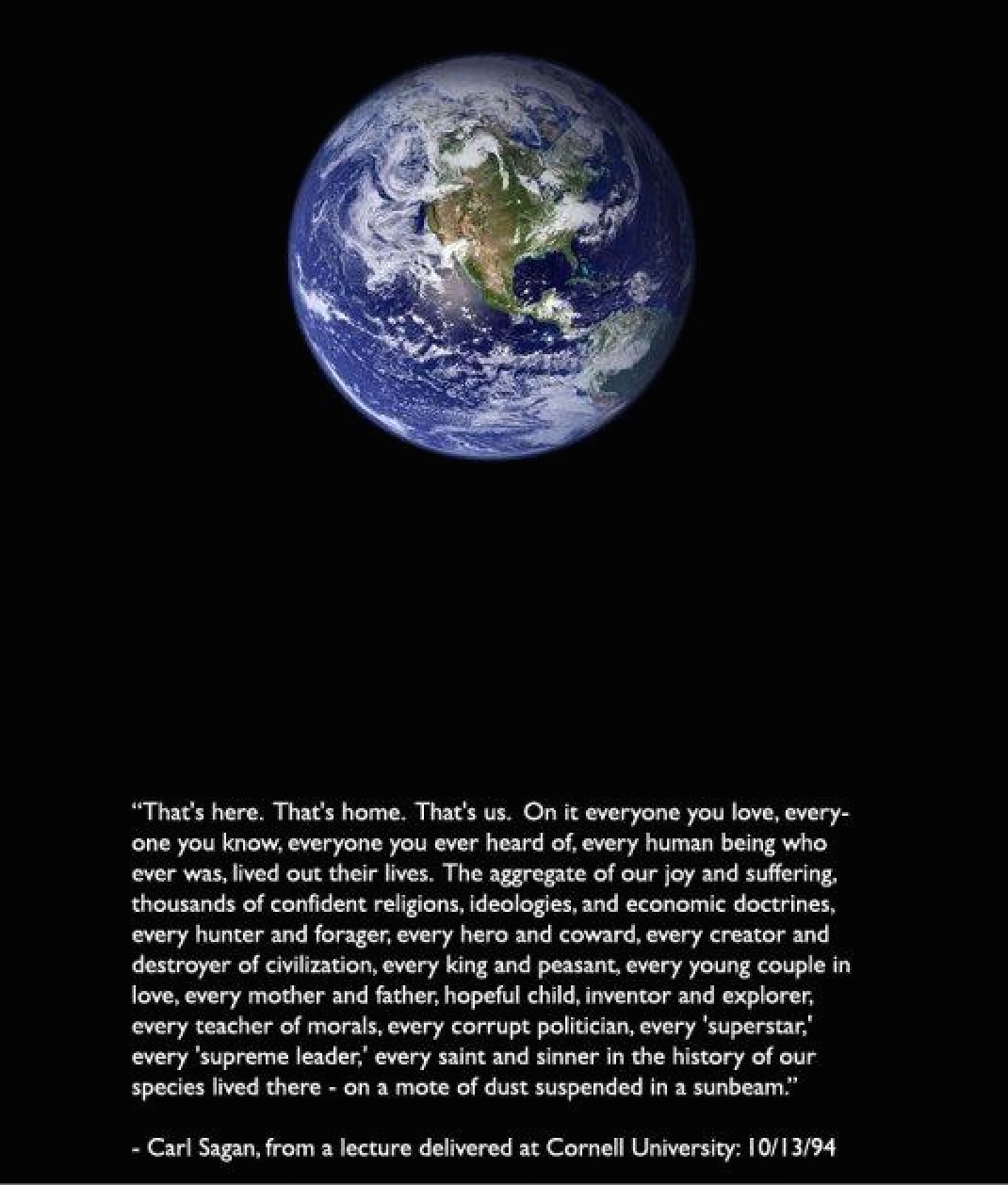
Once the class had settled down, I set about reading a story I had written : Father’s Day in the Jungle, followed by an article published in The Hindu newspaper: Space Racers – Together the Fun Begins, and the saying on the Pale Blue Dot by Carl Sagan.

The picture of Earth Rising

The children were a marvelous audience as usual. They were curious, wanted to know about how we got the images of our planet, and how it came to be called the Pale Blue Dot. There is always a moment of awe as I imagine the Voyager II spacecraft turning around just before exiting the solar system to take that picture of Earth – the picture immortalized in Carl Sagan’s words as the Pale Blue Dot. I hope a little of that awe was captured by the children in class that day.  

Pale Blue Dot – Carl Sagan

The innocence, intelligence and joy in an elementary school classroom was more keenly acute this time so close on the heels of another meaningless gun shooting incident in America. 

I am always grateful to the children’s teachers who allow me to come and read to the children, for the experience is extremely satisfying, and the energy of the young children is like a tonic of sorts.

That evening, I asked the son whether the chicks had names yet, and he said happily. “Yeah! The voting was intense. But Caramel and Westerpoolch are happy cluck-ers ma!”

I was reminded of Miss Read’s sayings: Miss Read was a country school teacher who wrote prolific books about life in the English countryside with generous measures of common sense, nature, and gentle humor.

“Life went on. No matter what happened, life went on, inexorably, callously, it might seem, to those in grief. But somehow, in this continuity, there were the seeds of comfort.” 

Miss Read, Emily Davis

Maybe science needs to lighten up!

We were chatting of this and that. I don’t know how many people relish nothing-to-do days: we love them in the nourish-n-cherish household. The son & I were goofing around: chitting, chatting, and all that.

Chasing Science at Sea – By Ellen Prager

We were discussing Chasing Science at SeaRacing Hurricanes, Stalking Sharks, and Living Undersea with Ocean Experts  – the book I was reading. It is a lovely feeling to dip into the wonders of the ocean and experience the day to day life of a marine scientist (Something so different from American corporate life). How do you line up ocean vessels for your research expedition, how marvelous to experience bioluminescence on a full moon night in the middle of the ocean, and one instance where a flying fish hit a research scientist on the face as they leaned out to sea!

We both laughed.

“Maybe science needs to lighten up!” he said, and we went through the dialogue.

He was referring to the TV show we had watched the previous night: Corner Gas (Episode: Key to the Future) in which one of the characters is taken for a ride for being psychic.

From Corner Gas (Episode: Key to the Future):  

Wanda: Do you know what the odds are of Hank having a dream about my hair and a clock moving forward and then me having to move my hair appointment forward?
Brent: Ten to one?
Wanda: Unfathomable. Science hates it when things can’t be fathomed. The scientific mind demands to fathom things completely.
Brent: I understand, or fathom.
Wanda: There’s got to be a rational explanation for this.
Brent: Sure. It’s probably just a coincidence.
Wanda: Science hates a coincidence.
Brent: Maybe science should lighten up.

A few minutes later, that thoughtful crease flitted across his forehead and he asked me,  “So, Amma, tell me. What do you think is Impossible?”

I knew the fellow loved the quotes that his elementary school and after-school environments had drilled into him. How many times had I heard the children tell me: “Impossible is nothing but I aM Possible! Get it? Get it?”

“Hmm…let me think about it. You mean just impossible to do for humans?” 

He nodded

“Hmm…I think it would be hard to teleport to another star cluster system on the opposite side of the galaxy where life has thrived. Not just that, but survive and admire all the different forms in which life has evolved there, and then make it back here to describe the beauty and wonder of it all to our Earthlings.” 

“Well…it would be possible if you create a wormhole and find it back here I suppose.”

Then, he leaped off in answer and came back bounding in a moment later, “Huh! Funny you should say that.” I just read about that in this book by Jon Sciezka!” He held out the book, Frank Einstein and the Space-time Zipper by Jon Sciezka.

Frank Einstein and the Space time Zipper – By Jon Sciezka

“Huh! What a coincidence? You didn’t tell me about this before did you?” I asked the fellow. 

“Nope!”

You sure you hadn’t been saying something to me on a walk when I was half wrapped in searching for rabbits in the bushes, and egrets in the air?”

Still nope.

“Well Science sure hates a coincidence!”, said I and we guffawed.

I think I shall read this book to see how to get to experience a system of life so far removed from us as possible. The coincidence of it is worth exploring. What do you think?

An Orchestra of Avocets

A few black and white birds, most probably avocets, if I remember correctly were flying calmly around me in great circles. They seem to have their beaks open, and relishing whatever they were eating as they flew. They were completely at peace around me, and a great sense of serenity swept through me watching them. My vantage point was perfect. I was on a hill overlooking a lake and the avocets darted in and out at times, but glided seamlessly at others. I had just decided to not reach out my hands and touch the beautiful birds  so I could have them comfortably flit above me for a while longer, when the alarm went off. 

It was one of those nights that melt into morns – seamlessly, and far too quickly. It is a blessing indeed to be able to get up when in the midst of a beautiful dream, so surreal, calm, peaceful and oh so vivid, and I felt a great sense of possibility and serendipity as I bustled through the morning and hustled the children to school. 

The son & I hummed and listened to our favorite Disney songs on the way to school. Before starting what promised to be a full day I wondered what a group of avocets are called. Then, my meetings called and I forgot all about them.

Before piling into bed sixteen hours later, I said to the daughter, that I wished to be a hedgehog. You know just curl up under a cosy tree and forget about everything and sleep. I don’t know if hedgehogs really do so, but they definitely look like it.

I have often wondered while standing and admiring birds and other fauna in suburbia whether they ever feel the same way. Do we give them peace the way they give us peace? Do they decide to stop and look at us so they can feel peaceful as they go about their days? I think not. But what a lofty goal that would be. I suppose we are curious creatures to many of our fauna friends.

That night, I opened the book, Sweet Dreamers – by Isabelle Simler, and was I in for a surprise?

This is a children’s book that shows the many denizens of the planet settling into sleep. A bat hangs upside down, while whales float with one eye closed amidst jellyfish floats, and koalas hug eucalyptus trees. There is a page for hedgehogs curling up to sleep.

The hedgehog in the book, Sweet Dreamers

It is a sweet lyrical book, but the illustrations are what seals the book. On every page are stunning revelations. Scratch that – they are beyond stunning. Every page looks like the artist got up after seeing themselves in this joyous avatar in their dreams and just captured the sensations. 

Children’s book illustrations are always a joy to behold – this one tugs ones attention. 

Before flitting to sleep, I checked what a group of avocets is called. They are referred to as an orchestra of avocets. What a fitting collective noun for the birds of joy?

A Special Post to Celebrate Syzygy

“You’d better make it a special post!”, said the son. He is the one who is ardently fanning me in on, and keeping tabs on whether I am writing enough these days. His natural state of calculating kicks in, and he says “So, if you write another post in the next 36 hours then…”, and I have to remind him that it is not like that. One does not have to follow a punishing rigorous schedule for a hobby. That I will write and when I do, it feels joyous and good. Not laborious and like finishing up an arduous task for the sake of doing so.

There must have been a natural syzygy (aligning of the stars) when I started my blog seventeen years ago. The time it takes for a wizard to come of age in the magical world. I must say, the blog has given me an excellent magical education. I may not have graduated from Hogwarts in this time, but I certainly have learnt a thing or two on the magic of persistence, the seer of light in a dark universe, or any number of things.

Herbology: My specimens may still not be thriving, but as a chronicler of the natural world, I think Professor Sprout would gladly have me in her graduating class.

“Science has taught me that everything is more complicated than we first assume, and that being able to derive happiness from discovery is a recipe for a beautiful life. It has also convinced me that carefully writing everything down is the only real defense we have against forgetting something important that once was and is no more,” 

Hope Jahren, Lab Girl

Read: A Celebration of 🌎

The Joy of the Natural World

Astronomy: Professors Carl Sagan and his many many friends have been amazing companions in the starship of the night. Comets, moon cycles and changing constellations not withstanding, there have also been the amazing journeys through space on light ships designed and envisioned by Johannes Kepler.

Ancient Runes: Professor Vector has opened thine eyes to many wonders of the Mathematical world and how they help us find a structure to our days. A way to find the incontrovertible truth if you will.

Changing Mathematics from a computational discipline into a beautiful, abstract philosophy.

Pythagoras of Samos (580-500 BCE) who continued the philosophy of: 

Transfiguration: How else does a serious minded member of the software engineering firms of the world transform into a magic seeking writer who will arduously work out a sentence structure sometimes tens of times to get that laugh?

Potions: Professor Snape, Dr Oliver Sacks, Paul Nurse, Siddhartha Mukherjee, Ed Yong, and so many more professors have taken me under their wing and spent many enjoyable hours explaining the joy behind reactions.

Care of Magical Creatures: Hagrid, Gerald Durrell, Sy Montgomery and numerous other writers of the natural world have introduced and opened my experiences to the world of creatures around us. Snail tales, pelican and duck friends, and so many instances of the world around us.

Writing & reading have sustained and enthralled me every step of the way, and it has proved to me how remarkable life’s moments are – even in a seemingly unremarkable life such as mine.

Like Sy Montgomery says in her book, How to be a good creature: 

Thurber taught me this: “You never know even when life looks hopeless, what might happen next. It could be something wonderful is right around the corner.”

Sy Montgomery – How to be a good creature

It usually is in the form of a new book, or a new idea that magically transforms an ordinary day into an extraordinary one. The power of fleeting thoughts that can take flame, grow and sustain in a wholly positive way, weaving magical moments and learnings. What can be better than that?

“A reader lives a thousand lives before he dies. The man who never reads lives only one.”

George R R Martin in A Dance with Dragons

Here is to more years of fruitful occupation, magical meanderings and posts that entertain and hopefully enlighten. This is my 1000th post.

Thank you, my readers, for being with me on this magical journey. Of course, the blog owes its very existence To My Family & Other Animals – who are frequent and oft quoted celebrities on this blog.

What is Life?

Even as stock markets plunged, and corporate kingdoms were made and unmade, it was heartening to read about the grander scale of Life. When I read Paul Nurse’s essays, after a day in which we spent our days more than usually examining choices, news, reactions etc, I must say it makes all the difference in perspective.

For instance, when one lives in the pulsating center of changing corporate fortunes, one cannot but help muse over the seemingly innocuous line by Paul Nurse:

“Over the long term, the most successful species will be those that can maintain the right balance between constancy and change.”

Paul Nurse – What is Life?

There is a certain philosophical musing to it all.

When one is fighting a cold in the head, it does help to think of Louis Pasteur looking at all the different chemical reactions in the microorganisms he was studying and saying:

Chemical reactions are an expression of the life of the cell.’

Louis Pasteur

It would be better if the expression happened without the head cold. But there it was – the cold was proving the expression of life. 

Or reading about Vitalism – the one thing that has fascinated philosophers for ages. For Vitalism comes down to one thing: What is Life? 

“Living organisms stand out because they are things of action; they behave with purpose, reacting to their surroundings and reproducing themselves.”

Paul Nurse

In 5 essays, Paul Nurse’s book on Life is a light read. It is just the sort of book that is easy for a non biologist to understand. It was also a good book to accompany the rather heavy going The Emperor of all Maladies – by Siddhartha Mukherjee.

A week-end spent reading till mid-day in bed can’t be a bad one can it? It would have been nicer to read about lighter subjects but such as it was, I was determined to finish reading a book that had been with me for weeks now. And if it took falling ill to tide one over a book like that, so be it.

 Starting with the times of the earliest recorded instance of Cancer, the book walks through humanity’s struggle and Science’s understanding of the disease.

I am clamoring for a light read after this one though.