Successful Transitions

Reminders of time passing are all around us. It is there in the first drizzle of October nights, in the nippy mists of November mornings, and the frigid temperatures of the freezing winter months, as much as it is in the growth of hope and new leaves in spring.
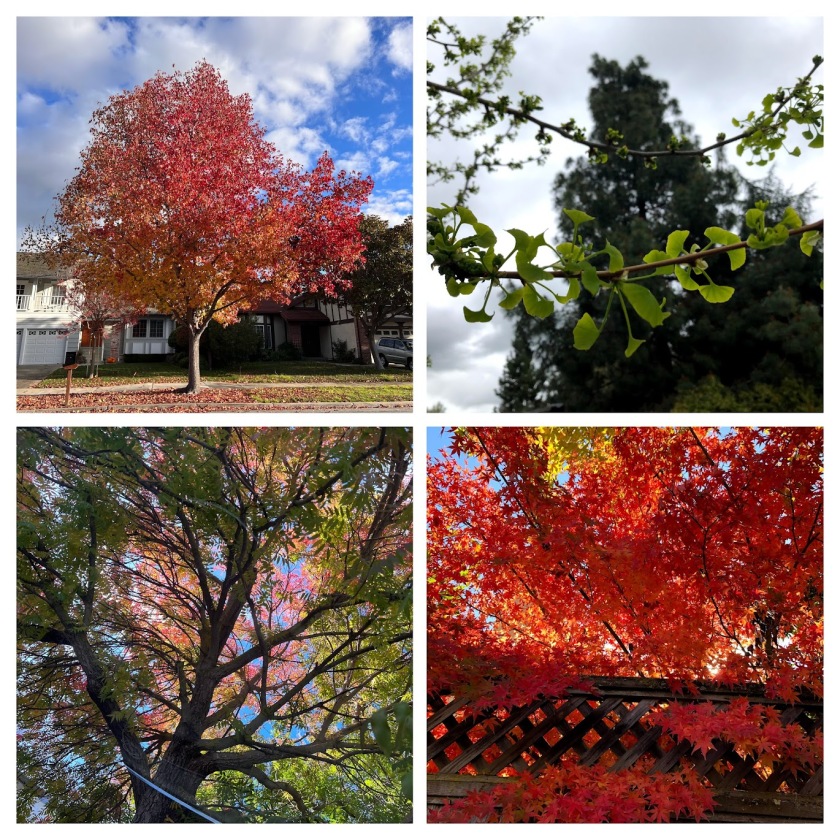
IMG_7697-COLLAGEYet, even after a few years of these cycles, we still do not comprehend the effects of time as effectively as when we see those around us age, or loved ones lose their vigor. It has been a hard lesson and one everyone goes through in life. But the past few trips to India have really brought this to us with increasing clarity and sadness. Sadness, not for the coming of the inevitable, but for our own reluctance in accepting it.

It is hard seeing once vibrant aunts and uncle lose their vigor and charm. Precious few hold on to their good graces as they age. Many lapse into complaining about their lot. Still others, refuse to accept their diminishing physical prowess, and insist on being in-charge even in situations where they are clearly past it.

What will our folly be?

The more I saw of the aging and the elderly, the more I wonder whether there is an easy way for us to move towards acceptance. I understand first-hand the shock of it. I remember thinking with shock when my daughter’s friends called me ‘Aunty’ for the first time all those years ago. When had I become an ‘aunty’? But now, I love it when the friends of my children call me ‘Aunty’ – it is a word that fills me with joy.

This is also a reason I find myself attracted to books by authors like Miss Read. (Jacqueline Winspear was recommended to me recently and I like the style and wisdom in her writings as well). Fictional and functional characters such as Miss Clare and Mma Ramotswe of the No 1 Detective Agency come to mind. They bring to life the kind of people we admired through our childhoods: normal people living life with grace, common sense and love for those around them. It is comforting to read that practicing these apparently simple tenets lead to a good life.

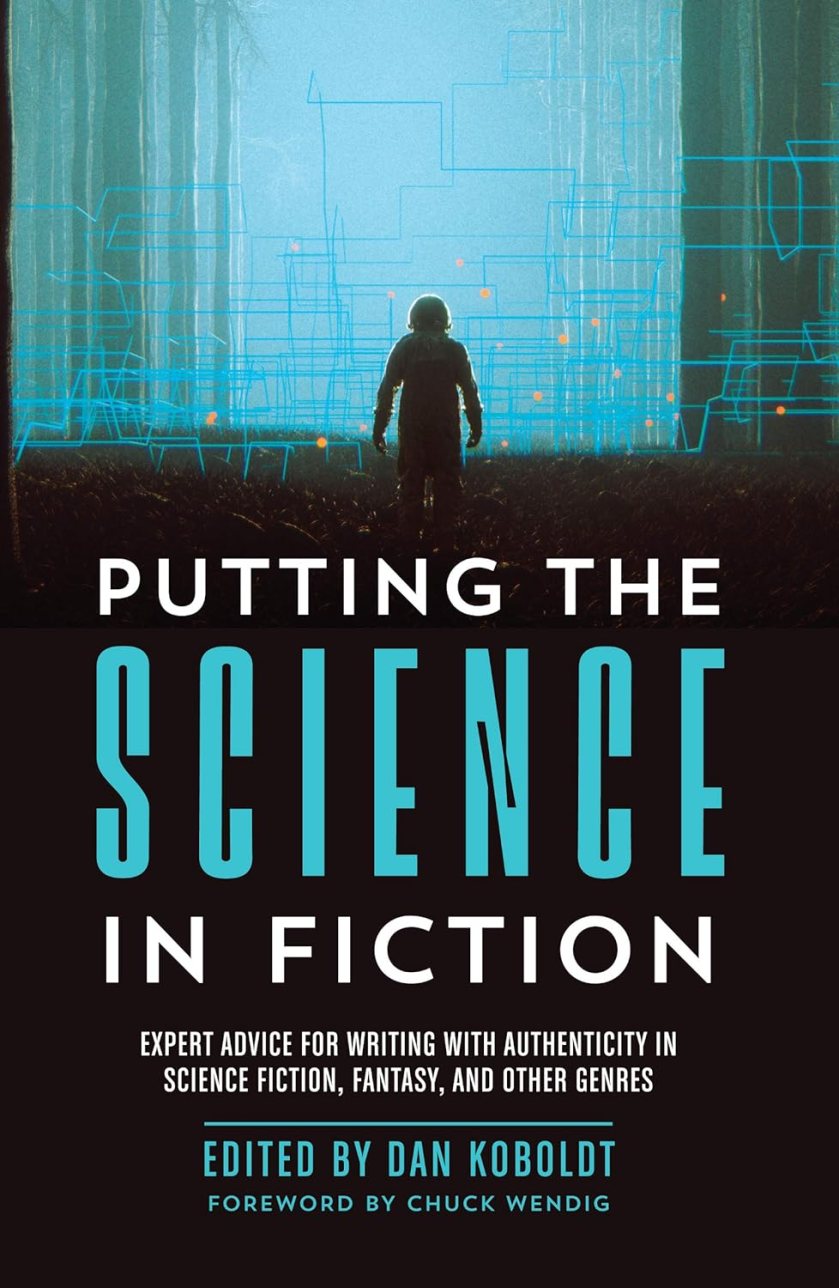
As I read the essay on psychosocial intelligence in the book: Putting the Science in Fiction – Collated by Dan Koboldt , I could not help nodding along at the bits of writing related to our lifespans as outlined by the essayist Maria Grace. Maria Grace is a psychologist and a curious observer of the human condition. In it, she says that

🍀”Psychosocial development encompasses the changes in an individual as they manage various societal expectations across the lifespan.”

While there are many books that guide us through adolescence (now more than before) , I am constantly looking for good books that guide us through the middle and later stages of our lives. There are always philosophical works – the wisdom of humankind through the ages distilled in our myths, fairy-tales, vedas, religious texts, fables and epics. Philosophers such as Seneca, Aristotle and Buddha who have given us a peek. 

When we are children, we rarely understand what adults mean when they say childhood is far easier. I don’t think I ascribe to that theory. Those of us lucky enough to have people looking after us certainly have things to be grateful for, but adolescence is also a period of great uncertainty and angst.

However, I understand now what teachers and parental figures meant when  they said childhood was easier, for adulthood brings with it a whole host of different challenges. The expectations of our roles in society, the ability to care for different generations – older parents, our siblings, colleagues and peers, and younger children ( our own, niblings, friends children, those in our care).

🍀”In addition to the tasks of preparing older progeny for launch into the world and managing the increasing needs of older parents, individuals at this stage of the lifespan are also expected to step into social leadership roles. A commitment to lifelong learning and growth marks a positive resolution to this stage, whereas Ebenezer Scrooge-like preoccupation with self and comfort mark an unsuccessful one.”

As I read on to the late adulthood sections of the essay, specifically, navigating the travails of old age and its associated ailments. She goes onto say:

🍀“Those who manage this transition (late adulthood) successfully do so by recognizing the worth of their previous and continued contributions to their society and future generations. Depression, despair and giving up mark unsuccessful transitions.”

I have yet to read any books by Maria Grace, but her essay on psychosocial development in the Putting Science in Fiction book is an excellent one. (Essay: Character Development Beyond Personality Quirks)
science_in_fiction

Raindrops on Roses

The tasks of the day done, I plonked myself on the window ledge, hoping to catch a glimpse of the waning moon before heading to bed. The nights in a waning moon cycle seem to hold a twinge of disappointment – the moon rises later and later. It is like the beautiful moon  is teasing us to forget its luminous glow before it starts up again, gaining in hope and luminosity as the waxing cycle kicks off.

I peered out of the window into the dark driveway outside and let out a gasp. It had been raining, or drizzling, and I was completely unaware. Oh!

Earlier that evening, the son and I had gone out for a stroll, hopefully clutching our umbrellas, and peering at the clouds overhead, but nothing happened. By the time we headed back the clouds had started parting, and we didn’t think anymore of it.

But now, sitting on the wooden ledge, I felt a pang. I have mentioned californian summers before – bursting with wildflowers, brown hills, aside, they also tend to linger on. By the time October rolls around, there is a distinct shabbiness to the summer looks – the flowers have dried out or faded on their stems, the hills have gone from a golden hue to a dull brown. All in all, there is a yearning for cooler days. 

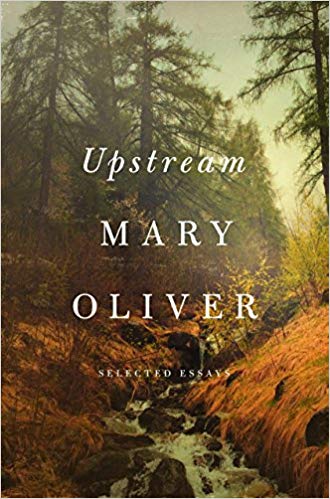
I sat and watched the quiet wet scene for a few minutes longer. It felt good to do nothing for a few moments after a long day of doing. Sometimes, I feel Mary Oliver’s three selves (The child, the doer and the dreamer) are constantly being overshadowed by the doer.

upstream

The child only peeks out occasionally, and when it does, it is always joyful, hopeful and wondrous. The promise of a new day, the beauty of a flower, the cool air after the rain and so on. The dreamer and the child self seem to get along quite well – one encouraging the other, teasing and prodding along the way. 

https://www.themarginalian.org/2016/10/12/mary-oliver-upstream-creativity-power-time/

This quiet contemplation at midnight was so refreshing, I had no desire to head to bed even though the adult self knew I must. The doer beckoned the next day.

The next morning as we stepped out into the fresh rain-covered morning, the son and I sniffed the cold air. We stopped to peer into a rose still wet from the rains of the previous day. A moment of peace nudged its way into the usually harried rush to school, and we looked up together smiling at the same time.

raindrops_on_roses

‘Tell me, what is it you plan to do with your one wild and precious life?’

  • Mary Oliver

Maps in Books

It was a lovely week-end afternoon. We lounged about – each in our own worlds, forgetting the pressures of the world and reading. Earlier that day, the children and I had piled into the car and headed out to the library. I was given reading lists to catch up on. 

“Been a while since you read your children’s books huh?” said the son, handing me a few he’d picked up from the children’s section. I accepted the lot with gratitude. “Yes! Spirit-savers they are!” I beamed and he seemed pleased with himself.

“You really need to get a good go on world building. Harry Potter is all very well, but you must read the Throne of Glass, amma.” said the daughter. I looked a bit skeptical, but the daughter assured me that I was going to immerse myself in this world and love it.

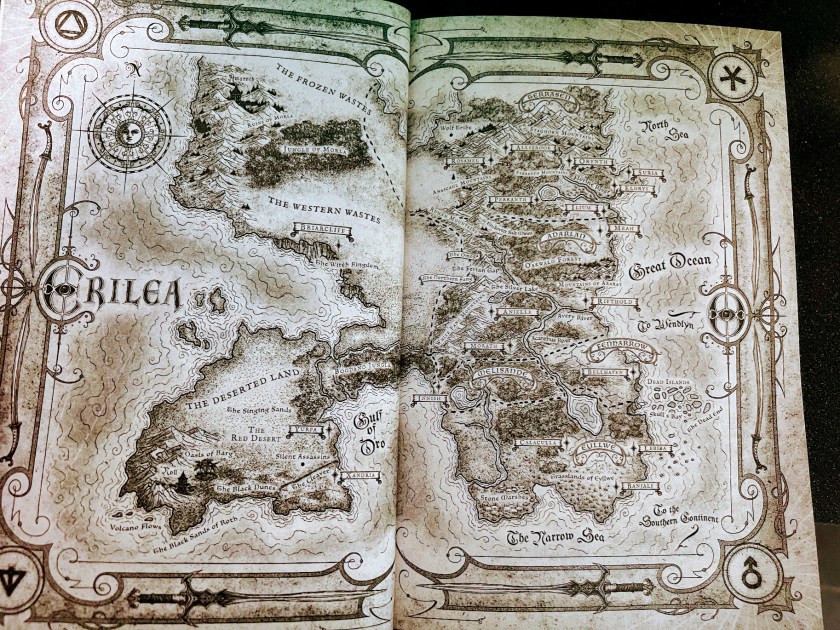
I gingerly opened the book like it was a cat with claws and would pounce when awoken from slumber. Teenagers (or at least the ones I interact with on a regular basis) really seem to like fantasy – most books I hear them gushing about are SF/ fantasy after all. The first page had a map of Eritrea, and I felt a small smile tug at my lips. She detected it, and quickly went in for the close, “Nice map isn’t it? Can you ever resist a book with a map? I know I can’t. Aww…look at this place – the mines, the capital, the desert. Hmm.”

“Over the course of the series, I feel like I’ve visited everywhere!” she said. I nodded absentmindedly. I did like books with maps. EarthSea, Lord of the Rings, Wizard of Oz, and so many more. Maybe it has to do with this fascination and awe for those with spatial skills. Maybe it has to do with the possibilities of imagining ourselves in another space altogether. Whatever it was, I opened the book, ready to enter teenage conversations again after the book was read. 

The daughter, I realized had ulterior motives for encouraging me thus. Apparently, she and a friend had had a bet that I wouldn’t finish reading the book – too ‘teenagy ‘ they’d thought. The daughter, of course, said nothing of this till I was well into the book . Celaena Sardothien had taught her well.

I had seen the books lining the shelves. Large tomes, and going up to 7 books. If I liked one, I did have a series ahead of me, and that was an intriguing thought. 

erilea

I did like the book. I loved the pluck of the women, the cluelessness of the crown prince, and the competence of his guard. Whether I would go on to read all 7 books, I don’t know, but the first book was a good one, I said to the daughter. 

She smiled and said she was not particularly fussed either way as she only wanted me to read the first one to win her bet. Oh well!

Our Invisible World Made Visible

I pulled Atlas of the Invisible from the library shelves looking pleased. Here was another book straight from the dream shelf. As I thumbed through the pages, I felt a familiar flutter of anticipation. I could already visualize the happy hours spent looking into the different maps and visualizations to help understand the world around us better. 

Many of us have heard of the map Dr John Snow drew up of the cholera epidemic in London as he went about his duties as a doctor. With the aid of his map, he was able to isolate and identify the contaminated water pump from which the water-borne disease was spreading. 127 people died in 3 days and over 600 people died within a month. Here was a groundbreaking example of multiple skill sets coming together to identify and problem solve. 

Of course, data and its importance has only increased in the intervening century and a half since. In Dr Hans Rosling, Anna Rosling & Ola Rosling’s book, Factfulness: Ten Reasons We’re Wrong About the World–and Why Things Are Better Than You Think , examples of data collection, sampling, analysis and visualizations help us think of the world in eye-opening ways. The progression of populations from under-developed to developing to developing is fascinating and gives hope for a future that has solved many of mankind’s problems. 

life-on-4-levels

<Infographic from Factfulness book mentioned above.>

Now, several leading newspapers such as the New York Times commission data analysts to present their findings and even have visualization teams to help with the most succinct presentation of data. 

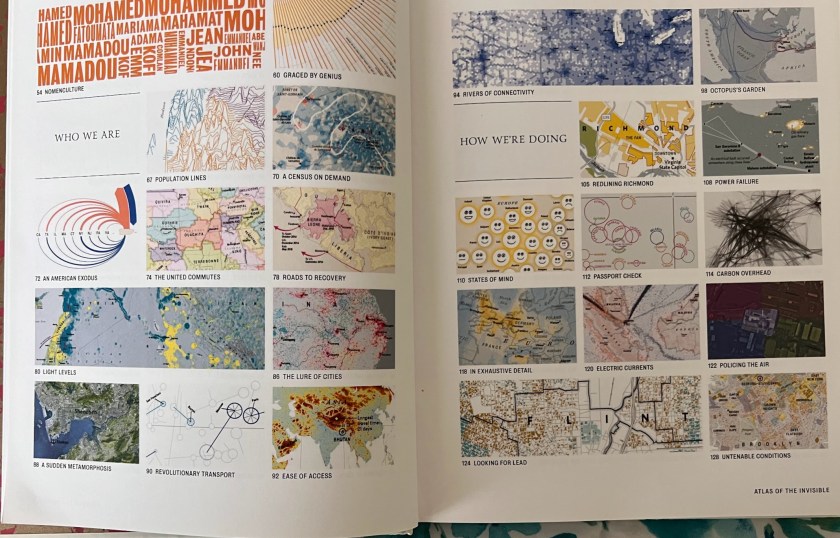
Atlas of the Invisible – By James Cheshire and Oliver Uberti is a treat for those who enjoy analytics. 

atlas_invisible

Example charts – to see if you like the book:

IMG_8034

We are all data points in this world. I chuckled as I read about the folks who revealed a high security defense location in the middle of the desert simply by turning on Strava to keep track of their daily activities. A good reminder that like many of our inventions, this penchant for data tracking and analysis too will bite us in unexpected ways.

I hope you enjoy the books as much as I did.

Recommended Reading on this subject:

The Storms of Vincent

Regular readers know that I am a pluviophile (one who loves the rain). On my recent visit to India, I was out walking around the apartment complex our family lived in one night, and found myself caught in the most brilliant and relentless rain they’d had in months apparently. 

I was delighted. 

rain

I was on a late night phone call to the family back in the US, and I rushed to the building in the center taking refuge there and looking stupendously happy for someone who had no idea how to get back home in the rain, or if the door would be open for me when I did get back. None of that mattered just then. Living in the present and all that. I poked my tongue out to catch a few raindrops.

“Hello!” said a neighbor, and I gulped feeling foolish. She smiled and I smiled back sheepishly, hoping she hadn’t seen. 

“I don’t think this is going to stop just yet. I am just going to run for it. “ she said and gave me one of her dazzling smiles, and plopped off through the rain. 

I stood transfixed by the pouring sheets of rain. It would have definitely been classified as ‘a storm’ in California.  Lightning lit up the skies, and thunder rumbled. It was beautiful.

I don’t know how long I stood there gawking like that, but soon I realized that the downpour was not stopping any time soon, And it was close to midnight. Unless I wanted to spend the whole night outside, I would have to run through the rain. So I did. I splashed into the house – luckily the daughter was still awake, chatting with her friends on the phone and she opened the door. She gave me a disapproving cluck and said “Oh my gosh – let me get you a towel.”

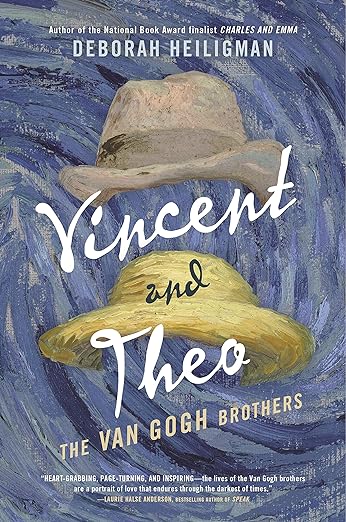
As I watched the rain pour itself out, the little rivulets of water sliding down the building walls, and the flashes of lightning illuminating the cityscape every now and then, I found I could not sleep and picked up the Vincent and Theo book by my bedside, and flipped to the part where Vincent likes painting storms.

vincent_theo

Excerpt:

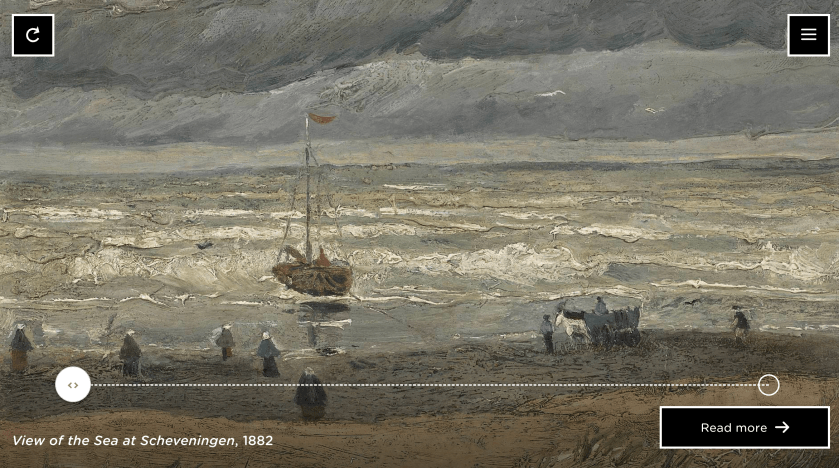
It’s been stormy and stormily beautiful to Vincent in Scheveningen lately, and into the squalls he goes. He is just starting to paint with oil and is not used to them yet, but he takes oil paints into the storm to paint the beach, the waves crashing one after the other, the wind blowing, the sea the color of dirty dishwater. He makes one of his first oil paintings, View of the Sea at Scheveningen, with a fishing boat and several figures on the beach. The wind is fierce, kicking up the sand. Sand sticks to the thick, wet paint.

Vincent loves capturing the turbulence of a storm. “There’s something infinite about painting”, he tells his brother. “I can’t quite explain – but especially for expressing a mood, it’s a joy.”

A few days later, on a quieter day, he sketches the beach. Sending the sketch to Theo, he describes a “Blond, soft effect and in the woods a more somber, serious mood. I’m glad that both of these exist in life.”

Wild and somber. Room for both. Room for all.

https://ontrafel.vangogh.nl/en/story/167/traces-of-a-nasty-little-storm

Please check out the View of the Sea painting and further details here

Screenshot 2023-09-25 at 2.35.11 PM

Vincent’s life was a stormy one too. He was not an easy person to live with and this caused many rows with his family, though he was intensely dedicated to all of them: his parents, siblings (especially Theo), uncles etc.

I looked out of the window again. We all live through the storms in our lives. But, the good thing is that no storm lasts forever. Not all living beings would have the luxury of drifting off to sleep like that, and that made me very grateful for a warm bed and dry clothes.

“There is peace even in the storm”

― Vincent van Gogh, The Letters of Vincent van Gogh

raindrops

The Joy of Effort – A Sense of the Infinite?

I was reading the book, Vincent and Theo – the Van Gogh Brothers by Deborah Heiligman. There are many aspects of the book that appeal to me. The narrative style, short chapters, clear language, not withstanding, it also touches upon difficult temperaments and the strain on relationships, Vincent van Gogh’s mental health, and his subsequent descent that led to the accident of cutting his ear off. 

vincent_theo

To Vincent van Gogh, portrait painting became an almost urgent need to master – just before his spiral towards insanity started. Uncle Cent, after whom he was named, was the closest uncle to him, though he was disappointed in Vincent, and left him with no legacy or inheritance. He left it all to his brother, Theo, instead. Still it moved Vincent at the time. He was in the process of prolific creation, and thoughts of mortality made him think of portrait painting with a sense of urgency.

This is a self portrait of Vincent van Gogh made in 1887. This portrait is on display in the Rijksmuseum in Amsterdam.

Screenshot 2023-09-18 at 10.43.48 PM

“Uncle Cents death makes him think more than ever about mortality – and immortality. Maybe there is an afterlife, maybe not. But if he paints someone well, that person is alive forever.

In the time he will spend in Arles – 444 days- he’ll make two hundred paintings and one hundred drawings, a huge number for an artist. He’ll paint landscapes, still lifes, scenes of cafes at night, furniture, rooms, flowering trees, flowers-he is about to begin painting his favorite again, sunflowers. But painting portraits is the thing that moves him most deeply, that gives him “a sense of the infinite”.”

I put the book down and thought about the meaning of effort in our existence. For many artists art gives a sense of meaning. To capture the infinite as Vincent van Gogh says. 

What has happened to portrait painting as a venue since photography came in? Maybe, photographers tend to capture the infinite. 

I thought of all the different mediums slowly replaced by a quicker technology. 

  • Writing  & Editing – ChatGPT, Grammarly and ProWritingaid are all quickly gaining traction for this hobby. 
  • Painting – there are tools available to take any picture and make it look like a painting. You can even choose the style you’d like your photograph transformed into
  • Knitting & Embroidery – almost lost to mechanization and mass production 

While newer and quicker mediums are welcome, I wonder about the appeal of the slow and steady. After all, half the joy is in the effort. I know I enjoy mulling and aching over my words – whether it is a short article, a children’s book, a novella, short story, or larger book. But I do also enjoy using my laptop – the ease and speed far enhanced from the days of penning my thoughts in notebooks as I used to do. 

I am sure all of our tools will lead to different hobbies and pursuits – after all, human imagination can rarely remain idle. I only hope the newer ones provide as much satisfaction in the effort.

The Magic of Malgudi

Maybe it was the fact that we visited the home of R K Narayan after the opulence of the Mysore Palace, or the fact that while all of rural Karnataka seemed to have decided on Mysore Palace, nobody had thought of R K Narayan’s abode, but the author’s bungalow on a quiet residential street was like a little cocoon of quiet and peace. A lovely setting in which to imagine the most magical tales of small-town Malgudi.

It isn’t a humble abode – it is a beautiful house set in an upper middle class neighborhood. White and two-storeyed, it is a lovely home and while inside, I couldn’t help remembering his own notes on how he had acquired the piece of land on which it was built. 

rknarayan

Book: The Grandmother’s Tale – By R K Narayan.

Far away from the town center as it was then, the realtor had promised him that it would be the bustling center of town one day. He left his noisy abode in Vinayak Street, and moved to this one – with the railway tracks to one side, the lilting hills and the then empty lands stretching between the home and the Mysore Palace.

img_7457

With his characteristic wit, he wrote of his gardener, Annamalai, who helped maintain the land around his house. Annamalai, like most men of the soil, intuitively knew how to clean and maintain lands.

I stooped to look at the plants for a brief moment before entering the home and remembered Annamalai’s classification: “This is a poon-chedi” (flowering plant) and chuckled to myself. 

“If he liked a plant, he called it poon-chedi and allowed it to flourish. The ones he did not like, he called “poondu” (weed), and threw over the fence.”

  • R K Narayan –  The Grandmother’s Tale (Story: Annamalai)

Annamalai was no horticulturist but seems to have taken care of the great man’s lands well enough.

Inside the house, it was largely quiet and the lady who stood at the entrance was happy enough to receive us. She was diminutive, and oddly neither welcoming nor dismissive. She surveyed us as if mildly annoyed with herself for being interested in us. She sometimes followed us as we entered the household and read the quotes off the walls. When it was obvious that we were in awe, and really happy to be in the place where R K Narayan wrote his gentle tales of Malgudi, she turned into a hesitant hostess and urged us to explore the rest of the house too. “Go upstairs and see the bedrooms. That’s where he slept.” she said, and I had to resist chuckling. 

I wondered what the master literary giant would have to say about her. It would be an insightful description no doubt and one tinged with the gentility and charm that he saw humanity with. That much was certain. 

The thing is: going to this quiet house tucked away in a residential locality in Mysore was comforting, and I thanked the brother profusely for showing me this gentle giant’s house. 

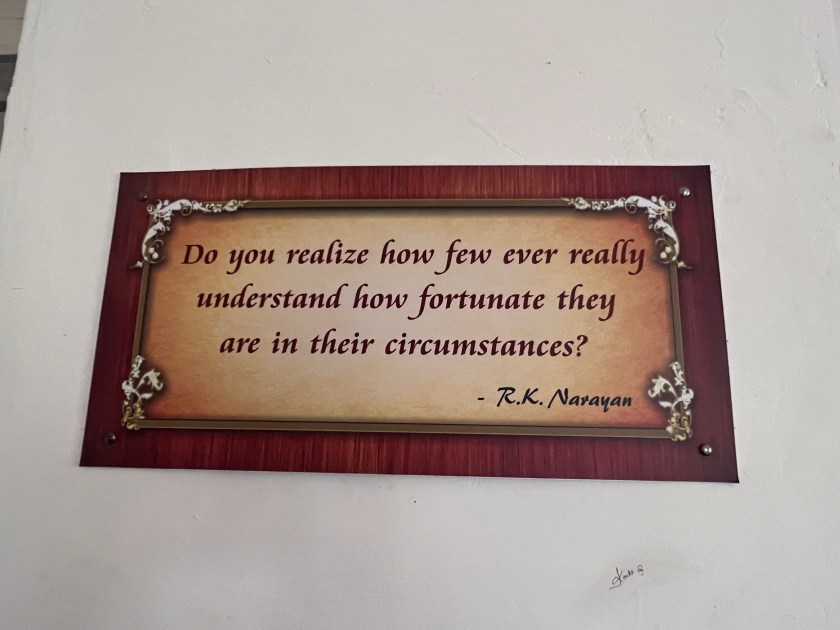
“Do you realise how few ever really understand how fortunate they are in their circumstances?”

– R K Narayan

img_7473

Rasipuram Krishnaswami Iyer Narayanaswami, the author and Rasipuram Krishnaswami Iyer Laxman, the cartoonist together enthralled the world with the spontaneity, humor and joy of Indian life. 

img_7468

Also read: 

Rainbow Colored

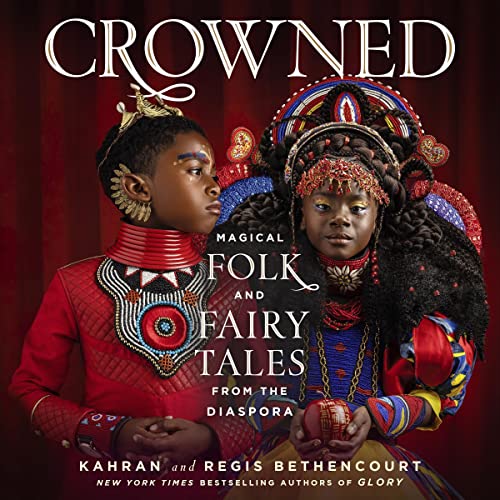
I picked up two books on separate trips to the library and enjoyed reading them. The first was a book of fairy tales retold in the African diaspora: Crowned. A book of fairy tales is always enjoyable, and one that has a good smattering of classic fairy tales combined with some myths from the African heartlands are a joy. 

The children shown as the princesses and princes are the best. The costume designs and makeup are exemplary, as are the re-imaginings of their origins. Most books illustrate Cinderella and Snow White as fair-skinned princesses, and it is refreshing to see these pictures.

The second book was: The Dark Fantastic – By Ebony Elizabeth Thomas

Race and the Imagination from Harry Potter to the Hunger Games

The Dark Fantastic is a book of essays exploring the absence of color in fantasy. The author starts off the book with Vernon Dursley’s famous saying in Harry Potter and the Philosopher’s Stone: “There is no magic.”.

She then goes on to explain her upbringing in working-class Detroit in the 1970s. 

“The existential concerns of our family, neighbors, and city left little room for Neverlands, Middle-Earths, or Fantasias. In order to survive, I had to face reality. “

A few sentences on, though the author states:

“In the realm of the fantastic, I found meaning, safety, catharsis - and hope, Though it eluded me, I needed magic.”

I identified with this statement of needing magic. Humanity’s need for magic is evident in our myths and epics from thousands of years ago. 

  • Was there a flying carpet? A pushpak vimana?
  • Are there heavens and hells?

Yet, for thousands of years, we have told ourselves increasingly fantastical stories to keep our spirits alive, and our imaginations intact.

“I like nonsense. It wakes up the brain cells. Fantasy is a necessary ingredient in living.” Dr Seuss. 

A common thread emerging from lack of diversity in books, is that children don’t see enough of themselves in the books. I lay the books down musing on this. I, like many in my generation, grew up surrounded by the fairy tales of snowy white princesses, and the fantasy worlds of Enid Blyton. Yet, I don’t think I ever wondered whether I would be able to climb up the Magic Faraway Tree to have adventures, or swish away on the Wishing Chair to magical places.  The protagonists were all British children, but it did not seem to make the slightest difference to a middle class brown skinned Indian child. Maybe I was just lucky that it never occurred to me. But did it occur to my friends? If it did, I am not sure we discussed it. 

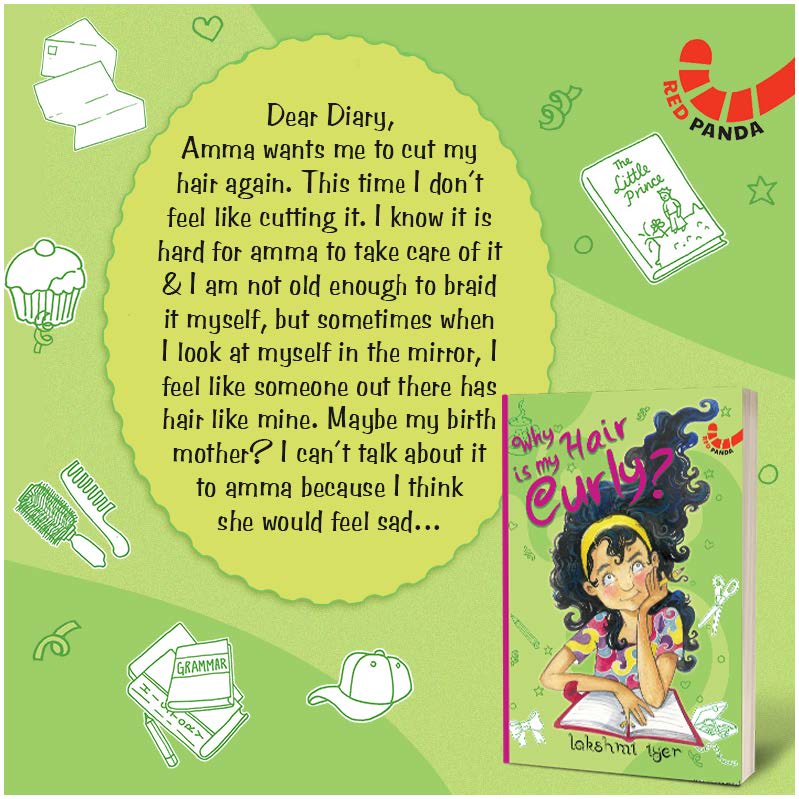
That sort of limitation in thinking only came as we grew up and saw for ourselves the inequity of opportunities. I am grateful, of course, to see a book in which a child refers to their mother as ‘Amma’ as we do at home. (Why is my Hair Curly – by Lakshmi Iyer)

Or see that picnics can involve rotis and potato curry, and not just sandwiches. But I am more grateful for the reach of fairy tales. They provided a much-needed element of magic and hope. 

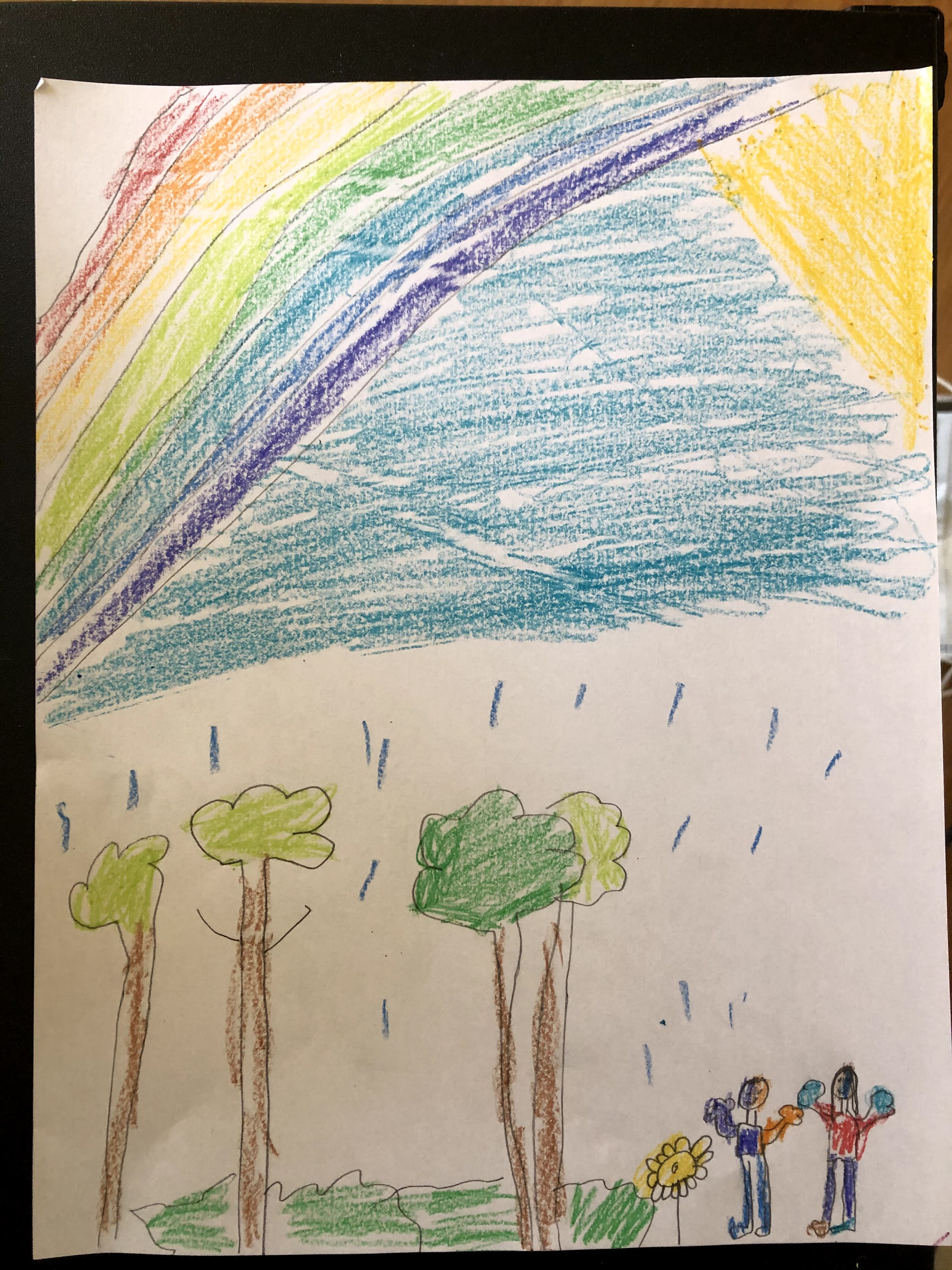
As children, the inhibitions of things like race, creed and color are not there. I fondly remember the picture drawn by the son in kindergarten when his teacher had told all children to have more colored people in their illustrations. He had drawn all their faces rainbow-colored 🙂 

Sword & Drumstick Warriors

As I watched the man-child and the child who yearns to be a man battle with their latest acquisition, I couldn’t help laughing. The pair of them had mysteriously disappeared at the Arts and Craft Fair and came back clutching a sword. A Sword! The son looked chuffed, and the father sheepish, but there was no denying that the sword would long play heroic roles in imaginating battles in the home

Some things just need to be. 

They were swishing themselves hoarse around the dinner table, when the daughter and I exchanged glances. Hers exasperated, mine indulgent.

“We should’ve bought two swords!” said the husband. He was brandishing a very seedy looking drumstick instead of a sword, while the son revelled in his sword. 

“I need shorts with belt buckles so I can stash the sword cover!”

“Scabbard.” I said.

“Huh?” he said with a nifty jump from the top of the sofa to the carpet beyond.

“That’s where you put the sword away – a scabbard.”

“What you need is a belt to hold up those pants – scrawny little fellow!” she turned towards me, “Why would you let this fellow buy a sword, as if he doesn’t jump and swish around enough!” she huffed.

sword-drumstick

I couldn’t help thinking of the book I’d read recently,  Bertie’s Guide to Life and Mothers – By Alexander McCall Smith.

It is a gentle book about some folks who live at 44 Scotland Street. Humorous and lilting – it makes for pleasant reading. I think the writing could’ve been crisper in parts and the book could’ve tied the plot-lines up a bit better. But I cannot deny that I enjoyed his portrayal of Bertie’s mother. Poor Bertie Pollock is gearing up for his 7th birthday, though he would like to gallop straight to his 18th, just so he could have his own life. What he wants more than anything else is a Swiss Army Knife, but Bertie’s mother is appalled at the violence inducing toys that boys these days play with, and instead gifts him with a UN Peacekeeping set & a figurine (not G.I.Joe, just Jo) instead. Poor Bertie is appalled.

Quote:

 "Will I get any presents?" he asked. Irene smiled. "Of course you will, Bertie."

"I'd like a Swiss Army penknife," he half- whispered. "Or a fishing rod."

Irene said nothing.

"Other boys have these things," Bertie pleaded. Irene pursed her lips. "Other boys? Do you mean Tofu?" 

Bertie nodded miserably.

"Well the less said about him the better," said Irene. She sighed. Why did men and little boys too-have to hanker after weapons when they already had their . . . She shook her head in exasperation. What was the point of all this effort if, after years of striving to protect Bertie from gender stereotypes, he came up with a request for a knife? It was a question of the number of chromosomes, she thought: therein lay the core of the problem.

Don’t we all know someone like that? Well intentioned, spouting psychological theories, and ensuring that their children’s choices are the most scientifically determined ones, only to find that they comically clash with the innate nature of the child in question.

I looked at the daughter who was obviously waiting for an answer. While I did agree with her, I told her, “Ah! Boys will be boys and a plastic sword does not a warrior make!”

“Yes! But it does a headache give!” said the smart-quipper.

Some people don’t need swords to slash.


Dinosaurian Thoughts

“You look excited!” said the children eyeing me suspiciously. I identified that wary look and chuckled. Usually it means an additional hike or a walk, or something done ‘together – as a family!’.

I could feel the eye-roll coming on.

As a teenager, the daughter has a reputation to maintain, and as her loyal side-kick, her brother is torn between wanting to humor his mother and learn how to become the cool teen. 

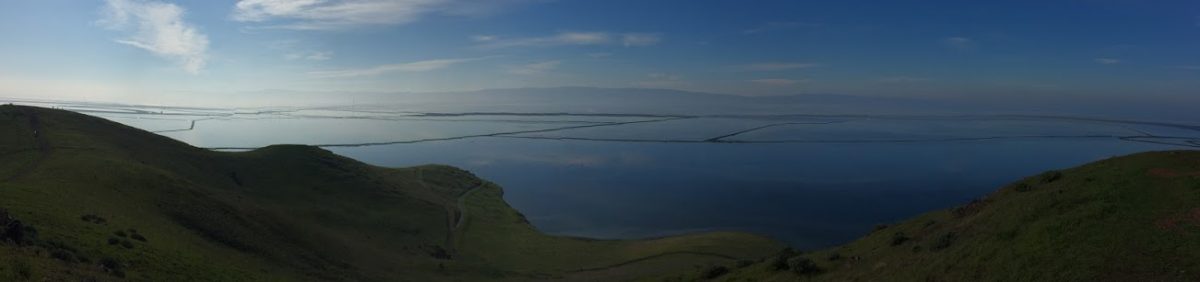
“Relax! I am just waiting to start a new book tonight. It is about the era of the dinosaurs!” I said with a grand sweep of my hands featuring the landscape that just a few million years ago could’ve been home to tyrannosauraus rexes or brontosauruses. 

“Looking at the animals here, my bet would be on the runts of the species!” said the husband.

“We do have the great descendants of the velociraptors here in plenty!” I said eyeing the birds in the riverbed.

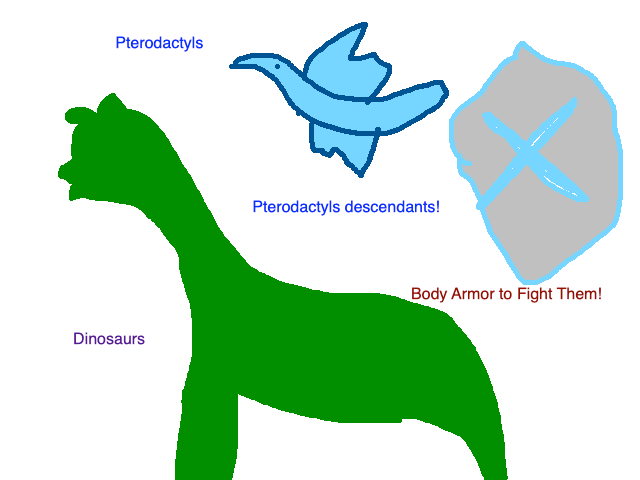
That led to an interesting discussion on dinosaurs, and how the dinosaur bones could probably have been the inspiration behind the legends of dragons. While paleontology as a discipline of study and research may be relatively recent, digging and unearthing relics of the past isn’t and neither is human imagination. From there, we somehow landed up discussing the best designs for helmets and body armors while fighting dragons and dinosaurs, and had a good time anyway. 

dinosaur

Later that night, glad to have a night free of late night meetings, I swished away to sit by the window sill taking in the full moon rising outside and pondering on the lives of dinosaurs of long ago perceiving the moonlight, and the millions of years in which mammals have been fascinated by the same. 

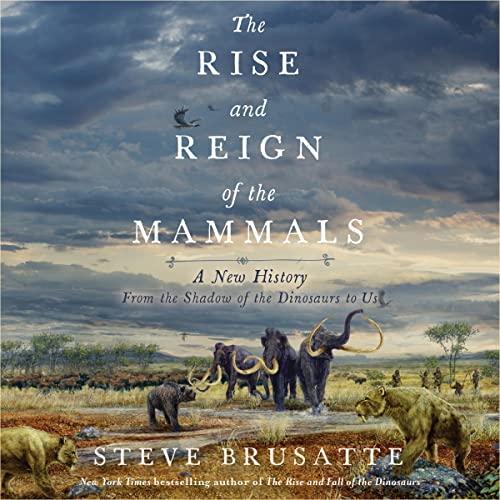
It turns out the book I had in my hand was not one on dinosaurs but on the history of mammalian life from the shadows of the dinosaurs. Oh well!

Book: The Rise and Reign of the Mammals – A New History – From the Shadown of the Dinosaurs to Us

By Steve Brusatte (Author of BestSelling The Rise and Fall of the Dinosaurs)  

51zcbWeULeL

Honestly, book covers these days are the most illuminating ( award-winning, best selling, top researching, nominated for best selling lists!) 

Nevertheless, I had a quiet few moments reading before a call interrupted the quiet of the night, and I had to set the book aside. 

The Dinosaurs seem to have gone millions of years without needing any of these to live their quiet lives on Earth. 

Does anyone miss snail post?