A disruption of ducks

There is a curious rhythm to the days after our India trip. The usual things still occupy our time – school, work, projects, commutes, the changing landscapes of nature, and all the rest of it. Maybe it is the throes of a winter season, or the fact that after the intense ceremonies of the beginning of the month, the quiet is disconcerting, but we felt on edge.

Like the hedgehog, we found ourselves peeking out of our hidey holes to see if life is normal, and finding that it is, were somewhat taken aback. Do you mean to say that we must plan to prune the roses? 

Oh well, all right. If you insist, I suppose.

One morning, the son and I finding ourselves at a loose end decided to take a bike ride to dissipate some of this energy. img_9439

“Amma! Look – I just saw a hedgehog peep out.”

“Oh nice! It is close to February, so it must be checking.”

“I didn’t see if it saw its shadow though – we were going too fast!” said the son.

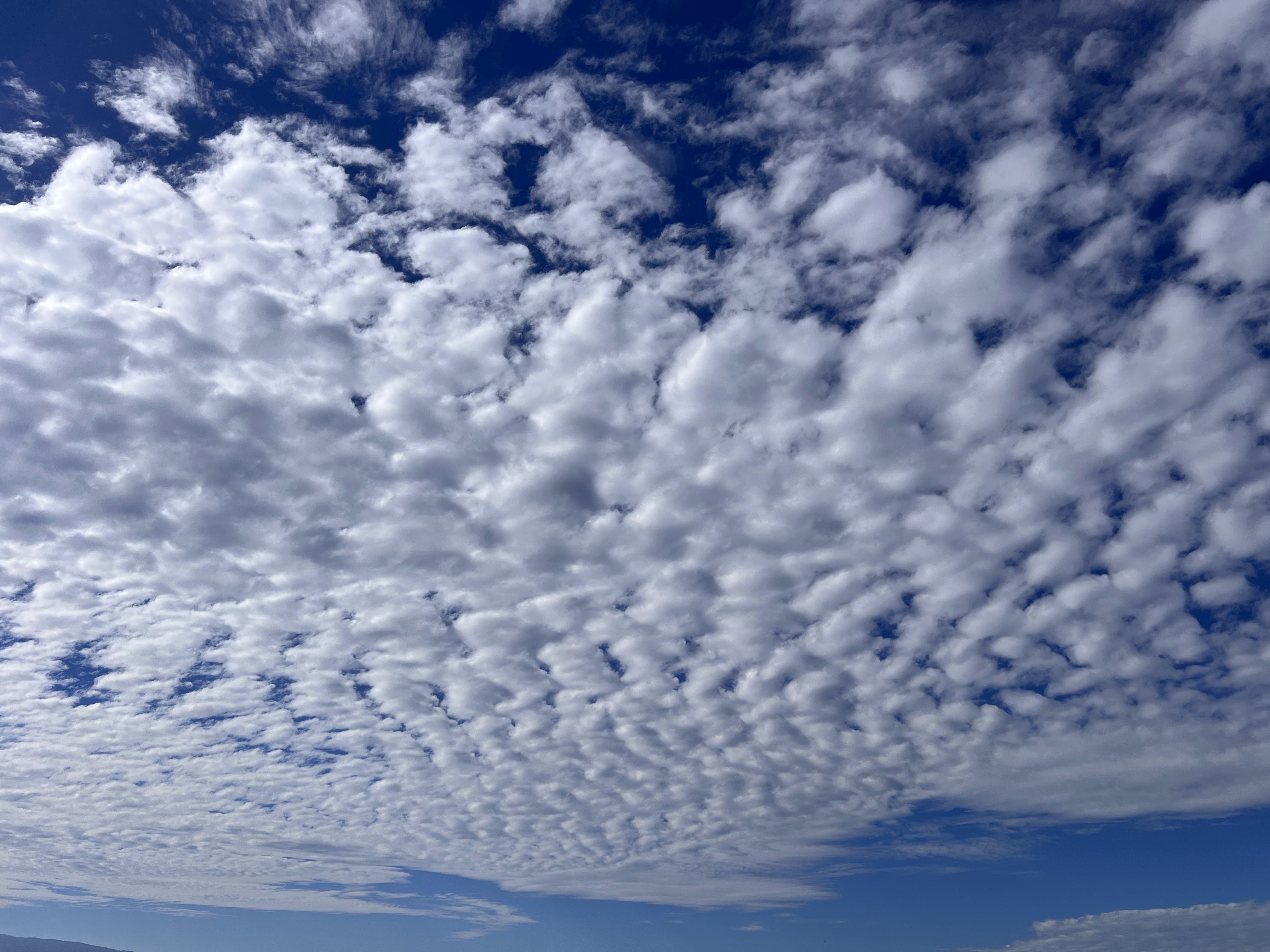
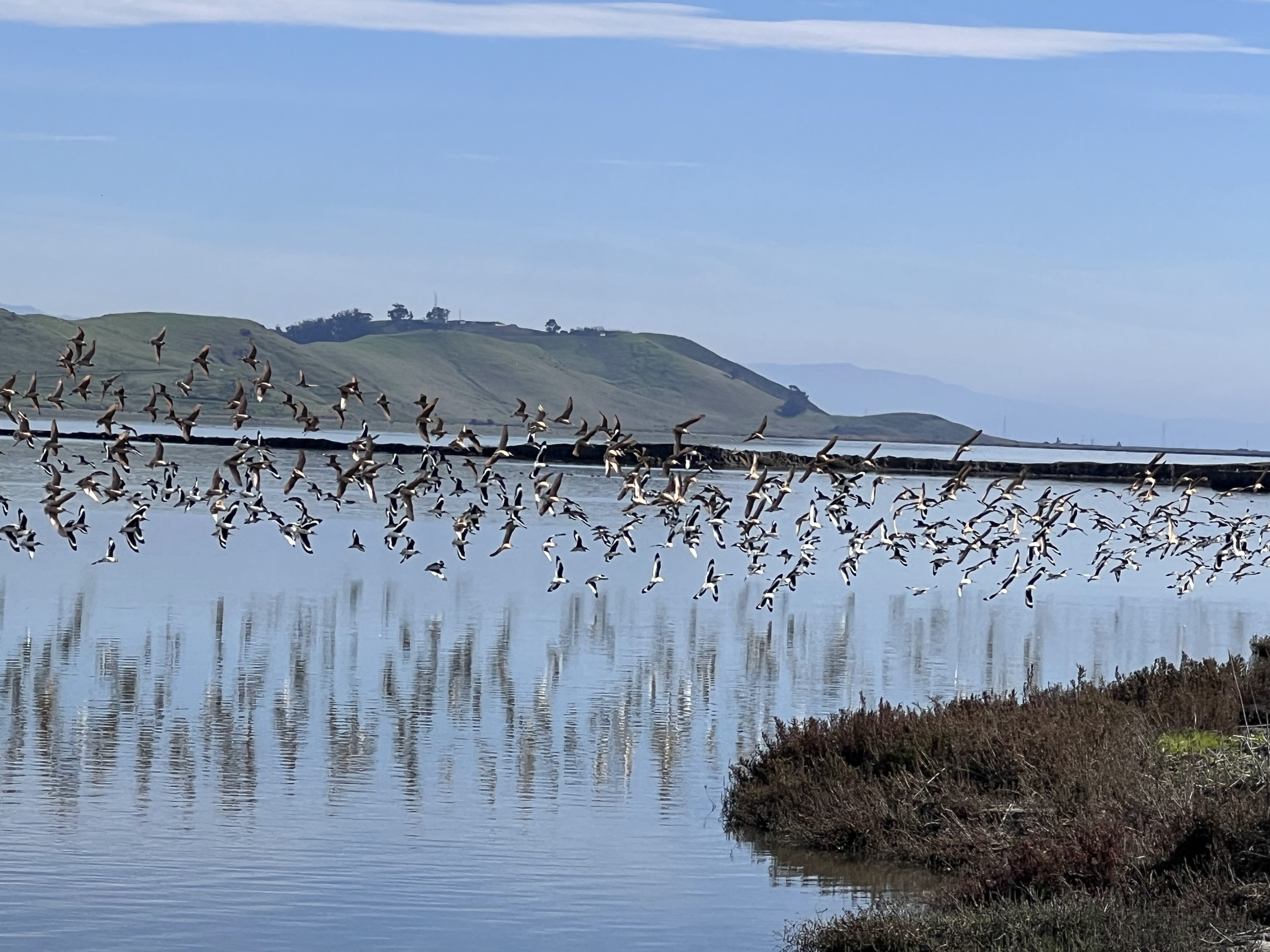
It was a lovely day – the feel of wind against our cheeks, the gentle cumulus clouds overhead, and the bay hosting a large variety of birds. We stood there taking in the beautiful sights when hundreds of birds took flight all at once, and then, as though nothing had happened, flocked back to their original place a few moments later. The son and I had a number of ideas as to what caused the disturbance, each more juvenile and silly than the next, but left us cackling all the same. 

No one could deny the beautiful shared experience of the disruption – the birds heaving in one smooth cacophony and the humans ashore fumbling quickly to capture the sudden movements and failing miserably. 

It reminded me of the book I was reading the previous day, On Duck Pond – By Jane Yolen Pictures by Bob Marstall.

on_duck_pond

As I walked by the old Duck Pond

Its stillness as the morning dawned

Was shattered by a raucous call:

A quack of ducks both large and small …
img_9453


An understanding quickly dawned:

We’d shared a shock, and now a bond

And I was feeling very fond,

Of everyone on old Duck Pond.

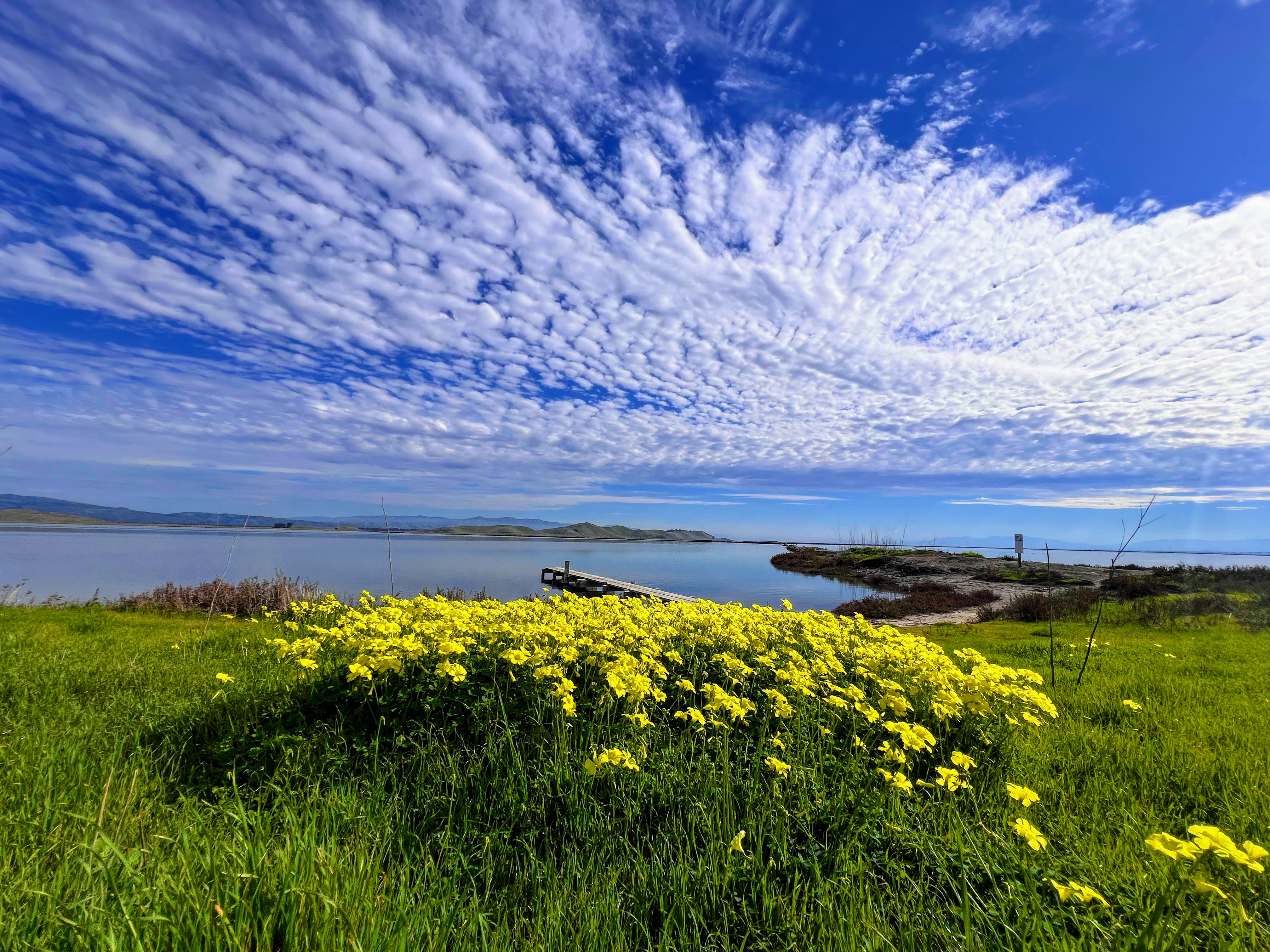
As always the day out in nature surrounded by the fabulous clouds, the sun’s rays, the beautiful lights of the ocean, the stories the son and I swapped on our ride, the birds, first signs of spring in the wildflowers by the bay, had weaved its magic, and we returned home refreshed in mind and spirits.

img_9442-effects

P.S: A group of ducks, as Jane Yolen mentions in her book, are known by a number of names:

A raft of ducks

A paddling of ducks

A badelynge of ducks

Also, bunch, grace, gang or team.

🐳 Whale Grandma or Toucan Grandma? 🦜

I showed the son a text message capturing a conversation between his cousin and his grandfather, Balu Thaatha. Balu Thaatha has the unique capacity to morph into a 5/10/20/60/80 year old depending on his audience’s mental acuities and potential for mischief making and taking.

“I found your Hero pen – therefore, I am a hero.”

“Thaatha! You are just a zero, not a hero!”

I felt for the old man.

“Serves Thaatha right!” said the son rolling his eyes. 

“Why?! Poor man is not a zero! Though without zero, civilization will be a zero.” I mused and the son laughed.

“True! True! I meant – serves him right to be at the receiving end of this. He thinks he is Dr Seuss amma. He told me the other day that if I eat jhangri, I will not be angry, as when you are hungry you get angry! What even is Jhangri?” said the fellow.

“Diabetes in squiggles!” I said and the pair of us guffawed. 

Later that day, we were going through the book, Grandude – by Paul McCartney. The Beatles star is quite obviously a fun and dedicated grand-father (grandude) and his book outlines the adventures he has with his grandchildren in their quest to find their grandmother, nan-dude.

We fell to discussing the son’s own wonderful grandfathers again: Raju Thaatha & Balu Thaatha. Both loving in their own ways, and exhibiting a pick-and-choose of characteristics between them: sincere, playful, caring, hearty, engaging, mischievous,  witty, booming, quiet, talkative, reserved, humourous, erudite, and so many more.

“You will be a wonderful grandma – like a pirate grandma or a nan-dude!”, the son assured me. 

I glowed – and said, “Really? Would I be a ninja grandma or a butterfly grandma?”

“Yes – and also a toucan grandma, and a whale grandma, and a tree grandma. You will be a fun grandma. Don’t worry – I have confidence in you. “ said the son. He was licking an ice cream with obvious relish, and no doubt the fact that he was allowed ice cream on a cold day by his indulgent mother colored his opinion of me. 

“Marvelous books, isn’t it? Really – I am glad there are books outlining the special grandparents-grandchildren bond. I wonder whether there are good songs, and dances showing that.”

“I am sure there are. Just need to look.” he said stoic as ever. 

We were discussing the books: 

Both books are such joys to thumb through. Light-hearted and joyous, they highlight the beautiful bonds between grandchildren and grandparents.

⌘ The Essence of Life ⌘

The Fabric of the Indian household

One of my half written posts from one of my earlier trips to India touches upon the heroines of the Indian upper middle-class  household – the cooks and maids. The fabric of the Indian household is maintained through a network of maids – 3 or 4 of them, who swish through the house at various points in time, professionally taking care of the household chores, and keeping a human touch to those who crave for it. I know the aged parents looked forward to a few words with them: a smile, a question, or a comment.

As much as I savored the solitude, and quiet of nature back home in the United States, I understood the tug and pull of humanity in the fast-paced life of the Indian subcontinent, as well. You were never truly alone, even for a few hours, in India. There were maids, delivery men, sweepers, cleaners, neighbors in close proximity, cooks, who were all as much part of one’s routine as the immediate family themselves. 

“Did Appa like the avial?” the cook would ask as she entered the house, to which the father-in-law would reply cheekily that it was nothing compared to his sister’s avial. We all know, there is no point talking when his sister’s avial is raised, and she does too. “Ask your sister to make it then – look at him!” she’ll say looking to the mother-in-law for support and she would jump in with glee.

Read also: The Simple Grocery List

MrKeshav- Open Page - Groceries

Picture Credit: Mr Keshav, The Hindu, Open Page, on the article, A Simple grocery list

The whole thing would last maybe a few minutes from start to finish but this sort of camaraderie punctuated the day at regular intervals, and it provided them with much needed human contact. 

A few days before he began losing consciousness, he pestered his wife to buy their maid (their maid from a few years ago)a cell-phone, as she had told him hers was broken, when she’d called to see how he was doing.  

The Essence of Life

He was not a perfect man, and yet he managed to get people to only remember his loving side, his gentle humor, and his willingness to help. I cannot find the exact quote now, but when asked how he produced such marvelous tales of Malgudi, the eminent writer, R K Narayan, said that he only needed to look out the window, or sit in his front-porch observing life, and they gave him all the material and inspiration he needed. 

As the cooks and maids cried uncontrollably at his funeral, and told us how much they would miss him I was reminded of that interview by R K Narayan on the nature of humanity, and their human foibles being the gentle essence of life itself.

After all, we are who we are, and never is that more apparent than in the small, everyday interactions.

Stimulus🧘🏼‍♀️ 🪷 Pause 🧘🏼‍♀️ 🪷Response

“Life in India is so fast and hectic, isn’t it? “ . We were discussing the fast and furious pace of India with friends. We were each reminiscing our respective trips to India – both made under difficult circumstances, and we were both glad to be back home in the United States.

I nodded fervently, and said wistfully, “Yes – at least during the time I was there, the concept of solitude was rarely acknowledged.”

“Solitude?” And we all laughed. It was true – the populace, and the ways of life make slowing down much harder than usual. It isn’t made any easier with the speed of communications and transportation in cities. The very essence of vibrance that is a huge advantage and a beauty to the civilization was also a disadvantage.

There are times when I have marveled at how the Indian way of life came up with practices such as meditation and yoga, but then I also realize that it was there that it could have developed, for it was required to build still pockets of serene moments into one’s life. in fact, the concepts are nothing short of brilliant. The pause between breaths is essential to be mindful of, when it may be all you can get in terms of mindfulness. The breath becomes the prana in very significant ways. The pause, when rarely taken, becomes harder to practice, and yet the pause becomes that tiny moment of choice in our agency of life.

There are so many aspects to the Philosophy of Being (I am amused it has such a strictly medical sounding name: Ontology)

Keeping ontological explanations aside, if The Nature of Being comes down to simple techniques of breath, fluidity and movement, it makes the simplicity behind it all brilliant.

Buddha in Lotus?
Buddha in Lotus?

For many years I had thought of this quote, attributed to Victor Frankl in Man’s Search for Meaning:

“Between stimulus and response, there is a space. In that space lies our freedom and our power to choose our response. In our response lies our growth and our happiness.”

-Quote widely attributed to Viktor Frankl, Author of Man’s Search for Meaning, but not sure: Between Stimulus & Response

Back home, I savored the morning air, as I stepped out for a brisk walk embracing the nippy air. I felt like I could finally hear myself think, and I had a beautiful walk weighing and thinking of such topics as courage, resilience, choices, decision-making etc in the context of our work and personal lives. How one helps us evolve in another sphere, and how we are as human-beings are nothing more than the function of life’s ebbs and flows.

img_8958

2023 – I am stuck in a book, be back soon!

One of the favorite parts of the year are here. The Christmas lights are twinkling. There is magic in the air. I get to go back and revel in the books that have made it so. Some books evoke a feeling, and trying to capture that is a joy in itself.

Hindsight is our finest instrument for discerning the patterns of our lives. To look back on a year of reading, a year of writing, is to discover a secret map of the mind, revealing the landscape of living — after all, how we spend our thoughts is how we spend our lives.

Maria Popova – TheMarginalian

This year, I get the strange sense of being in a floating Universe. I seem to have whizzed past centuries reading things in the past, zoomed and ducked out of alternate worlds with all the science fiction and fantasy adventures, while being thoroughly grounded in making sense of today’s world with its AI, and its technological advances.

I get the familiar sense of time slipping through the sieve with extra large holes once again, but then, will it always be like this? I hope so, for in its speed lies its charm.

Here are some of the notable ones – I find the neat classifications all being thrown out – every year, I seem to have a different classification system and therein lies the charm. Nothing is immutable and all that.

the_world_playground

I also see that I have dozens of unfinished posts for some of these books that have never made it to the blog. Oh well! I need to take inspiration from Robert Louis Stevenson I suppose.

“I kept always two books in my pocket, one to read, one to write in.” ― Robert Louis Stevenson

Peek back into time:

The World Around Us:

“The reading of all good books is like conversation with the finest (people) of the past centuries.” ― René Descartes

    Non-Fiction:

    Beautiful & Informative:

    • Nanoscale – visualising an invisible world – Kenneth  S Deffeyes, Stephen E Deffeyes
    • Atlas of the Invisible – James Cheshire & Oliver Uberti
    • A celebration of Beatrix Potter : art and letters by more than 30 of today’s favorite children’s book illustrators
    • In the woods / David Elliott ; illustrated by Rob Dunlavey

    Alternate Worlds/ Science Fiction/Magic:

    Tech Tech:

    Inspirations:

    Books that ought to be classified as warm cups of tea 🙂

    • News from Thrush Green – Miss Read
    • The White Lady – by Jacqueline Winspear
    • Much Obliged Jeeves – P G Wodehouse
    • A Song of Comfortable Chairs – Alexander McCall Smith
    • What would Maisie Do? – Jacqueline Winspear

    “Some books are so familiar that reading them is like being home again.” ― Louisa May Alcott

      Children’s Books – my favorite category (just mentioning a few since I don’t keep note of all the titles)

      I hope 2024 continues to be as varied and inspirational in its moments of magic and learning for all of us! I shall put in a comment the complete list of books. I only put in a few in the post here.

      “The more that you read, the more things you will know. The more that you learn, the more places you’ll go.”

      Dr. Seuss 

      Happy Reading!

      reading_in_a_tree

      On Writing

      It is always fascinating to understand the process behind the craft. To everyone, the process is different, the resulting work is different, and maybe that is why everyone’s voice and stories are different. Though some things seem to be common enough: curiosity and observing people.

      Haruki Murakami in his musings, Novelist as a Vocation, writes about his mental chest of drawers – a place in which he places relevant and irrelevant information to be extracted when he is writing a novel. Some of the remaining ideas are used in his essays he says but the rest are there for the taking.

      The truth is that none of us can imagine the beautiful fierce power of our own imagination. Where will it take us, or what it can do for us if we wrestle with it long enough? Few of us get to find out and fewer get it out into the world. How are some authors able to create the Harry Potter universe, others write books that evoke such deep rooted emotions such as The Crane Husband? 

      I was fascinated to read that  the idea struck the author of Crane Husband, Kelly Barnhill, when she saw a crane land on a rooftop while she was driving through the countryside from somewhere to somewhere. What an evocative inspiration? 

      I remember thinking of the book, every time I spotted a crane by the riverbank. The raw sadness of the tale stayed with me for days afterward.

      cd3693d5-3eaa-4d3b-ab97-d7c865de8707

      Such inspirations are not unheard of. A few days ago I read a folk tale about the Crane Wife, in the book,

      Beneath the Moon, Tales, Myths, and Divine Stories From Around the World by Yoshitani, Yoshi

      All of us have  a mental chest of drawers and some of us rely on it more than others, but those memories shape and define us in ways we do not realize. 

      Murakami writes about his journey and how he stumbled upon the conviction that he wanted more than anything else to be a novelist at the age of 29. His journey was not one of writing obsessively throughout his childhood, but of simply deciding one day to become a writer.

      He writes about how his formative years were fairly trauma free apart from a stint in college where there seems to have been unrest among the student community. He writes:

      “I have never been comfortable in groups or in any kind of collective action with others, so I didn’t become a member of any student groups, but I did support the movement in a general sort of way.”

      But as time went on, he realized that:

      “Something criminally wrong had wormed its way into the movement. The positive power of imagination had been lost. I felt this strongly. As a result when the storm passed, we were left with the bitter taste of disappointment. Uplifting slogans and beautiful messages might stir the soul, but if they weren’t accompanied by moral power they amounted to no more than a litany of empty words,

      Words have power.

      Yet that power must be rooted in truth and justice. Words must never stand apart from these principles.”

      It was perhaps this realization that led him to lose faith in the movement and turn towards writing as a career when the epiphany hit him one day while watching a baseball game that he might be a novelist yet. 

      I am sure a conviction as deep as that would find its way into his writing and if there are specific examples or suggestions of books regarding these, please let me know.

      I remember a discussion in which it was mentioned that ‘You need war or love if you need a complete series.’

      While that is true, the pursuit of truth, peace, justice, the power of words all seem to be good enough inspirations too.

      Books:

      • Novelist as a Vocation – By Haruki Murakami
      • The Crane Husband – By Kelly Barnhill
      • Beneath the Moon – Fairy Tales, Myths and Divine Stories from Around the World – By Yoshi Yoshitani

      🐙The 🐙🐙Kraken 🐙🐙Sleepeth🐙

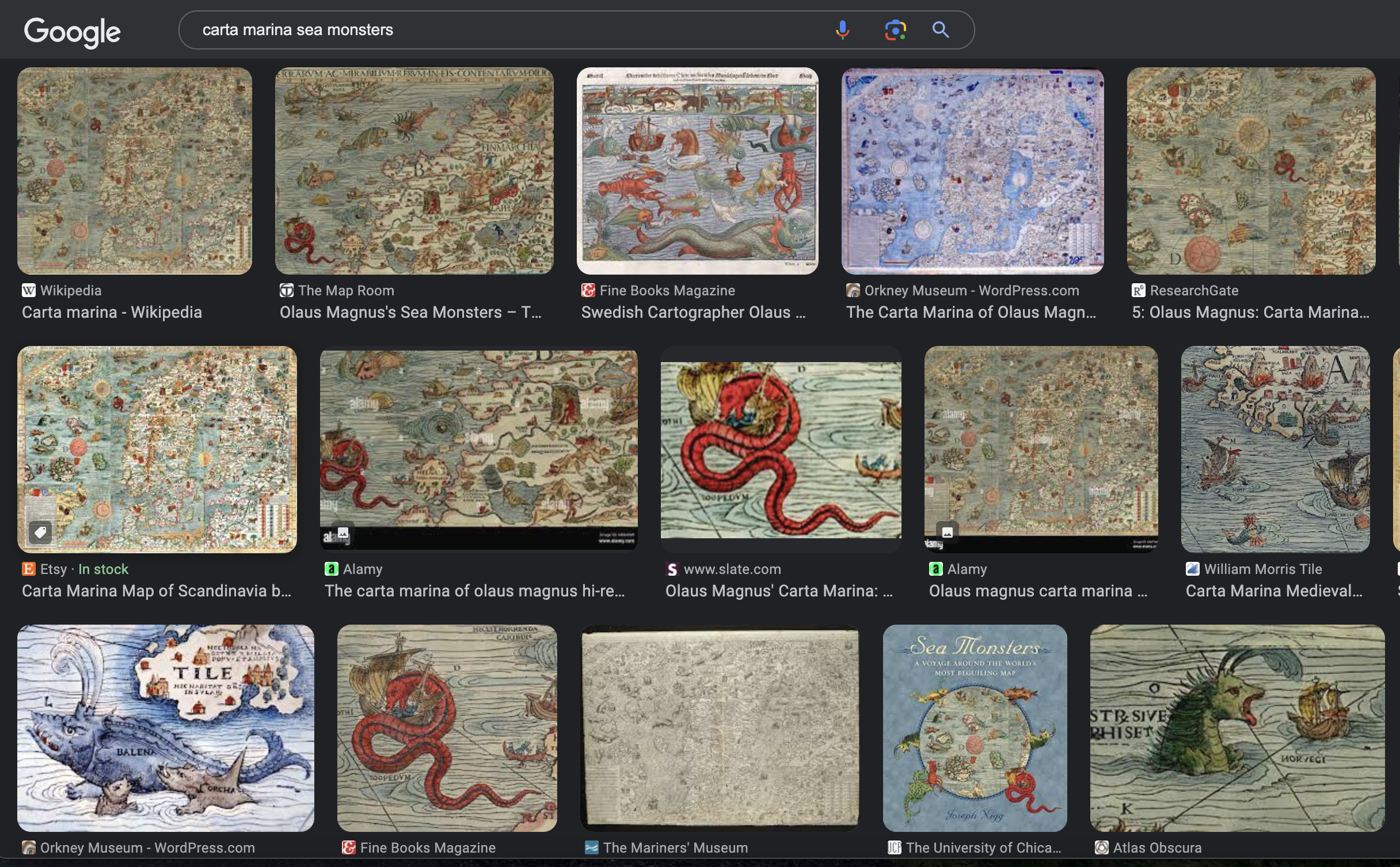
      I don’t know how many of you have heard of the Carta Marina: I hadn’t and was agog after reading about it. It is a fascinating geological map showing the mythical monsters in the oceans and where they are to be found. 

      Completed by Olaus Magnus in Italy in the mid sixteenth century, it attempts to outline all the monsters known at the time in the Nordic regions from various accounts. 

      In the book, The Underworld – Journeys to the Depths of the Ocean – By Susan Casey, she writes about the Carta Marina:

      “On land the action is orderly: tiny figures are farming, hunting, skiing, playing the violin, By contrast, the ocean is in chaos, awash in dangers and tragedies, livid with waves and currents flowing, swirling, pooling, seething. Aid the tumult, twenty-five monsters make their appearance.”

      • Susan Casey – The Underworld – Journeys to the Depths f the Ocean

      I may have mentioned several times in these archives that the daughter is a mermaid born to human parents. Which is to say the endless fascination with the oceans, and natant joys of reveling in the waters are things we all enjoy. 

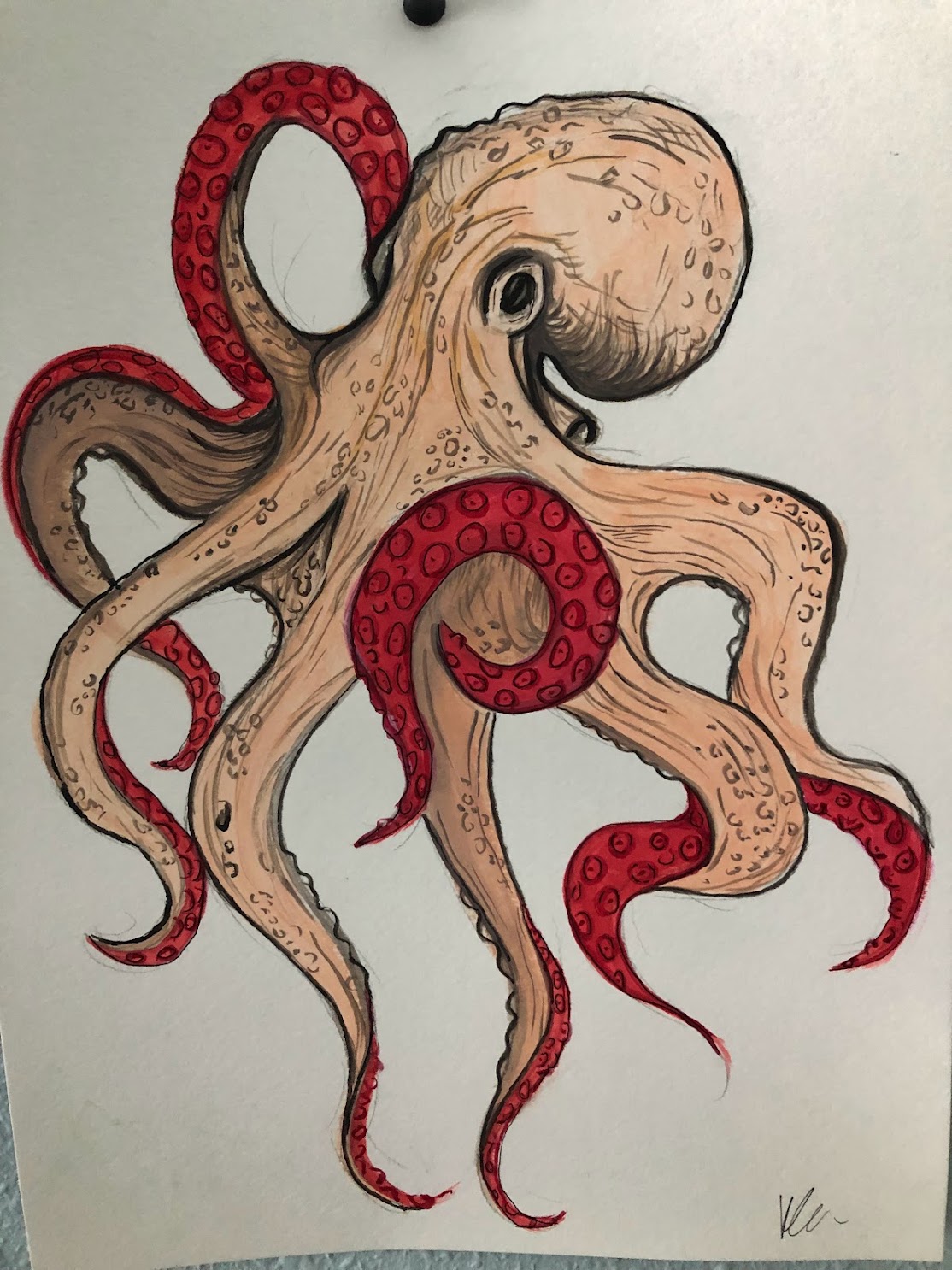
      After reading about the Carta Marina, I went looking for the Kraken picture. When you browse through the daughter’s artwork, there are quite a few aquatic themed paintings. This one – it is Kraken – the mythical creature that is spoken of with awe among the nautical elite. I must admit I am endlessly fascinated with octopii, squid and I suppose the kraken  as well.

      octopus

      Dictionary.com summarizes this perfectly: https://www.dictionary.com/e/squid-vs-octopus/

      In summary, if you see a sea creature with eight sucker-covered arms and a round shape, that’s an octopus. But if it’s got a long, thin, triangular shape and 10 limbs—eight arms and two tentacles—it’s a squid. If you see it swallowing a ship, it’s a kraken.

      Sea-faring must have been a difficult vocation as most vocations in humankinds’ past seems to have been, but it also provided the richest tales of adventure and mystique to those whose fortunes or destinies never allowed them to leave the small square footage they’d been born and raised in. 

      Screenshot 2023-11-13 at 6.48.32 PM

      Even now, as we set out sights on interplanetary travels, I find the deep allure of the deeps as fascinating as ever.  Would we see into the eyes of a greenland shark that is rumoured to live on for 350 years or be pulled into the clutches of the mythical Kraken? Or be dumbfounded in the noises of the monster that rises out of the depths of the ocean in the FogHorn – By Ray BradBury (I believe the book is out of print – but I can never truly forget that feeling of deep awe and fear as the monster rears towards the lighthouse thinking it’s being called by a mate. I felt a strange sense of loneliness for the last monster standing the night I read it as a teenager)

      As Sylvia Earle says, “Looking into the eyes of a wild dolphin – who is looking into mine-inspires me to learn everything I can about them and do everything I can to take care of them…You can’t care if you don’t know.”

      I looked at the picture, and remembered the poem by Lord Tennyson

      Below the thunders of the upper deep

      Far, far beneath in the abysmal sea,

      His ancient, dreamless, invaded sleep

      The Kraken sleepeth

      – Alfred, Lord Tennyson

      References:

      • Life in the Ocean – the Story of Oceanographer Sylvia Earle – by Claira A Nivola
      • The Underworld – Journeys to the Depths of the Ocean – By Susan Casey
      • The Carta Marina – The map of monsters 16th Century – By Magnus
      • The FogHorn – by Ray Bradbury

      The Past, Present and Future of Jobs

      “So, you work at a job that essentially takes away your own job?”, said the son.This is the kind of meta stuff that he finds exciting.

      The Thanksgiving week-end was rife with conversations about the corporate drama that in yester years could be equated to the coups of thrones. Would the CEO go? Would the Board of Governors go? Would they both go? Who would be their replacement?

      Last year the world popped their popcorns and watched the unfolding drama of an unraveling Twitter with Elon Musk and his hostile takeover of the company, now rechristened X, though the URL still points to twitter.com because the TFE team was probably let go.

      This year, it seems much of the dramatic action came from OpenAI CEO, Sam Altman. In modern day Wall Street wars, CEOs, (or C-Staff) and the Boards of companies provide for much of the action. Will the market hold? Will the Sensex drop?

      What happens to the interest rates?

      One of our friends was explaining to the children about their own roles – technical roles in which they enable AI to be utilized intelligently. One was working on images, another on code frameworks itself. A niece who was majoring in biology told me how they were already being encouraged to use ChatGPT to generate code for them. They only needed to see the results of the datasets fed into the model.

      age_of_ai

      Fascinating as it all was, I was left musing on the future of work. It seems a rather recurring theme of late. There are image generators to replace artists, code generators for software engineers, of course plenty of writing that can be replaced with intelligent prompting. So, why not the design and maintenance of these systems too?

      I picked up the book from my recent library pile:

      The Worst Children’s Job in History – Sir Tony Robinson

      worst_jobs

      The book was truly horrific and true. If anyone was wondering about the future of jobs and feeling glum, they could actually be grateful that the past nature of our jobs are well behind us.

      Every job not only held misery, but a generous helping of walloping, not enough food, abysmal conditions, no thought for safety etc. Compared to those jobs, the present day conditions of occupying ourselves and our children seems fantastic. I only hope this trend continues for, our current nature of jobs is about to upended again.

      It seems with the speed of technological challenges, the cycles with which our jobs are upended seems to be quicker and quicker.

      A couple of generations ago, seamstresses, tailors, knitters, bat makers, ball makers, farmers, equipment handlers all saw their jobs upended by mechanization.

      Then the next generation saw people’s fortunes needing more specialized skillsets such as coding, scientific knowledge etc.

      Recently, call center jobs, desk phones, phones that were in the family room all went away, to be replaced by cell phones. Those of us who remember having to take a friend’s call in the living room with three uncles, five aunts, three cousins of varying age and maturity levels, two grandparents and a maid, will forever envy the children of today who quietly buzz out of vicinity taking their phone calls mysteriously with them. 

      The next wave of AI seems to be disrupting industries that I’d hoped would not be. Creative industries that are already hard to make a living in: storytelling, image generation, writing, etc

      Will our grandchildren read books about us in this era and feel sorry for us that we had to slave in front of our computers all day long to accomplish certain things, spend days getting tests done in medical labs to determine what was the matter with us?

      What would the future of our jobs look like?

      More importantly, in this quest for bettering the use of our time, do we hope to become at peace with who we are without being defined by what occupies our time? If so, maybe we should start equipping ourselves towards that, shouldn’t we?

      Let me know your thoughts.

      Books:

      • The Worst Children’s Jobs in History – Sir Tony Robinson
      • The Age of AI – Henry Kissinger

      🍁Sauntering🍁,🍁Strolling🍁, 🍁Scrunchfesting 🍁

      The son and I pranced into the house with our bouquet of fall leaves. We went for a walk to feel the nippy November air on our faces. While out there, we ran after leaves fluttering down in the winds, and indulged in the inevitable scrunch party. 

      “No one saw us jump and scrunch in the leaves, Appa!” he said entering the house wind-blown and happy.

      “Are you sure?” said the husband, accepting the beautiful bouquet of fall leaves from us, and giving it right back to me with a flourish.

      “ I saw some neighbors scuttle inside looking dubious at the activity outside. You sure it wasn’t you two?” 

      The son guffawed loudly at that. I scrunched up my face – but was too happy to care. Who could when you’ve just been able to look at views like this?

      IMG_0506

      Seems only yesterday we were ushering in 2023 and now we are already looking at the final curtain calls of the splendid trees before the closing of the year. As usual, if I throw my mind back the year felt differently at different points in time. Bleak, dreary, joyous, hectic ,the travails of aging with parental figures, friends, events, work, school, volunteer work and so much more.

      There is a book called the Secrets of Infinity in my library – Edited by Anonio Lamua, it is a gorgeous book. It gets taken out and seen every now and then just for the sheer brilliance of the topics and the range of topics in them. But there is one thing the book doesn’t quite put the finger on: the feeling of infinity in the repeating seasons of the Earth, the different joys of each month. 

      The Tibetan Infinity Knot and the Ouroboros come close in their symbolism – but one of more to do with our actions and therefore Karma and the other a destruction/creation paradigm. 

      “So, how do the leaves turn color?”, I said with a flourish revealing the book Summer Green to Autumn Gold – By Mia Posada. The book’s illustrations managed to capture the natural beauties outside, and we settled in to read the book contentedly. 

      We flipped the pages comparing the leaves we had in our precious bouquet to the ones in the book. The final reveal of the pigment colors gave us the different colors.

      🍁Carotenids : the pigments for the orange and yellow colors

      🍁Anthocyanins: the pigments that are responsible for the purples and reds. 

      🍁Tannins: responsible for the brown color.

      “Trees must be beings of infinity!” , I said sighing happily and the son rolled his eyes.

      The Light of Being

      The evenings have been drawing in earlier and earlier. As if the natural tilt of the axis weren’t enough, there was a time change thrown in. The result is that my evening walk is in the company of the glittering stars, and I am grateful for these little reminders of light – as far away as they may be. 

      One evening I found myself thinking of this and that on my evening walk. The stars twinkled above, the leaves crunched below. Though I could not make out the colors just then, I could imagine them well enough in my mind’s eyes – bright reds, yellows, deep maroons. 

      Californian Novembers are magical indeed. 

      IMG_0506

      Where our northern or eastern counterparts would already be bracing for the winters, our autumn cloaks are just getting started. Our gingkos have only just donned their beautiful cloaks of buttery mellow yellow, the maples and oaks, their swirling cloaks of ruby reds, and thick velvety ones of deep maroon. I wondered when the cold would start and looked up at the stars instinctively. 

      Albus Dumbledore seemed to wink at me through the stars: 

      “Happiness can be found, even in the darkest of times, if one only remembers to turn on the light.”

      – Dumbledore in the Harry Potter and the Prisoner of Azkaban 

      I swished on for a bit pondering.

      Deep in the epipelagic layers of the ocean, there are creatures who have taken this to heart. In the twilight zone, the only light they have is their own. How must that feel to them? The deepest darkest nooks and crannies of an unforgiving ocean made accessible only through their own bioluminescence. 

      IMG_2457-COLLAGE

      In one fell arc bypassing lands and atmospheres, the stars and the bioluminescent life in the oceans seem to share a Light of Being. 

      What are our sources for finding the light in ourselves – the means of switching on the inner lights? Good friends, warm meals, bracing walks in nature, the finest ideas in literature, art and music. Hygge. A halo that reflects the warmth and light within, in the harshest of winters, and the coolest of springs? If only we could all cast our own little patronus.

      img_4883

      Books: