Hemlock Hitch

I squinted as I walked through the summer grasses – browning in places, laced against the relentless green of the hemlock. I did not know it was hemlock of course. I just admired the beautiful shapes of its flowers and the structure of its leaves. 

img_6114

“What plant is this?”, asked the husband and I found out. It was the hemlock. They must be a favorite of the bunny rabbits in the vicinity – since I see them hopping in and out looking very pleased with themselves as they do so. 

“Did you know Hemlock was what was used to poison Socrates?”, asked the husband and I was curious to hear that. Obviously, my horticultural knowledge is nothing to bet a chocolate on, but still to see that the innocuous, gentle and beautiful looking hemlock was capable of such treachery to the human system was shocking. 

It was true. It was one of the oldest secrets of humankind by the looks of it. Only they seem to have forgotten to whisper it in my ears when I grew up. I may have eaten those leaves – I said shocked, earning me a stern glance from the husband. “That is why, you do not eat wild plants. Go to a store, and buy what you need.” 

“The tried-and-vetted”, I sighed. Yes – but where was the sense of adventure in having a beautiful tale to tell? “Are you sure though? The hemlock?”

So, I rushed home and saw that Elizebeth Blackwell in her extremely well researched book on Botany lists out Hemlock too. 

https://en.wikipedia.org/wiki/Conium_maculatum

“Imagine! The rabbits may eat them!”, I said still a bit shocked at how ubiquitous the plants were. But then I stopped and wondered – I had never seen the little ones eat them. They would hop in and out of the bushes, but never have I seen them munching their leaves or nibbling at the carrot like roots.

Curious.

🐶🐾🐕 Spot Goes Splash! 🐶🐾🐕

“Don’t even think about it!” I said almost casually. I had the son in my peripheral vision as I took in the gorgeous sunset, played (s)word volley with the daughter, and screwed up my face at the husbands unnecessarily loud enjoyment at the latest the daughter had said. 

“Oh my gosh! Did you see that? She totally knew what he was going to do!” The daughter laughed half-admiring, half-worried.

“Like it’s a big surprise. Sprinklers going off and spraying cold water on the lawns, and your brother loping towards it as if without a conscious thought?! Right.” I drawled.

“I mean – look at him, I bet he’s still going to try.”, she said and I laughed. 

The subject in question, meanwhile, was wracked between playing the rebel and getting himself wet or making a joke and having a comfortable walk the rest of the way. It was a lovely summer evening – this close to the summer solstice, everything is a joy and the daughter agreeing on coming for a walk clinched the evening. So there we were.

“How’d you know he was going to try and run into the sprinklers?”, she pressed.

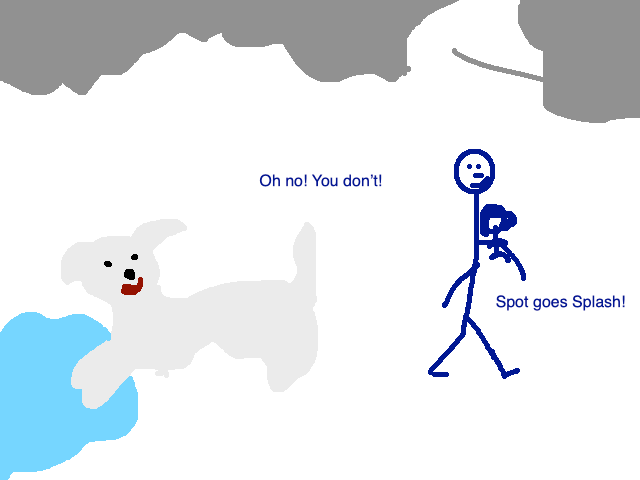
“Well – I raised you, remember? “ Then, looking at the husband, I shuddered a bit and said “Remember that New York trip? What was that book we’d read to her? Spotty loves the rain? Or Spot like to go Splashing? Spot Goes Splash! That’s the one.

spot

“A book about a little pup that loves to splash about in rain puddles. It rained for the entire duration we were in New York that visit and you were two years old! You thought you were too big to sit in a stroller, and we knew you were too heavy to carry around. Still – I had only 1 pair of shoes for you. Appa carried you on his shoulders almost the whole time to save us all the trouble. His shoulders have never been the same!” I said giving him a squeeze and a look that said, “My Hero!” 

spot_goes_splash

“Gosh! Now there are some parenting gaffes I’ll keep away from!” Said the daughter. She prides herself on being – well whatever teenagers who think they are better than their parents pride themselves on. 

The husband rolled his eyes and guffawed at this so loudly, that a pair of doves took flight squawking alarmingly. That got us all laughing, and he said, “Ha! Just for this – we’ll accompany you when you have your little ones and just stand around and laugh pointedly instead of helping.”

“I’ll write it all down so we remember to do that!” I said laughing helplessly as well.

Her brother, in the meanwhile, had opted for a compromise between running full-pelt into the water sprinklers and had splashed in the water puddles nearby instead and was trying to hide how uncomfortable wet sandals were. 

The summer solstice made for an elongated sunset and we took the time trying to see how a thread from the past could stretch into the present and be used in beautiful circle of life years later.

Spot Goes Splash!

🐘🐘🐘What Elephants Know 🐘🐘🐘

The book starts with the Zen teaching: 

Sooner or later we have to see that what we do and what happens to us are the same thing.

A curious saying that, I am sure, has a fair number of interpretations. I was not sure I liked the ones that came to my mind seeing that I was thinking about agency, free will, and opportunities from a few different angles over the past few days. 

Intrigued, I ploughed on, and read the first sentence:

“My mother is an elephant and my father is an old man with one arm. Strange, I know, but true.” 

– What Elephants Know – By Eric Dinerstein

For a few paragraphs, I could not help but wonder: was the protagonist an elephant or a human? Either would’ve made sense of course: it is a children’s book after all. 

elephants_know

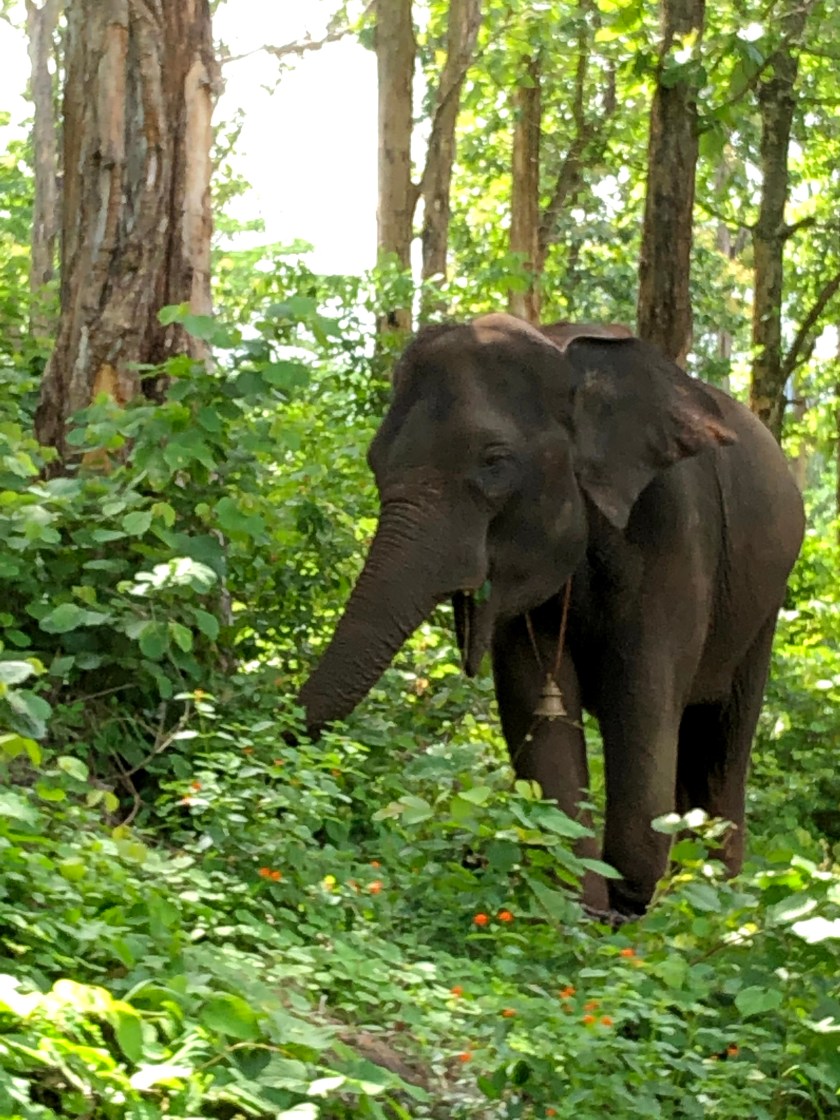
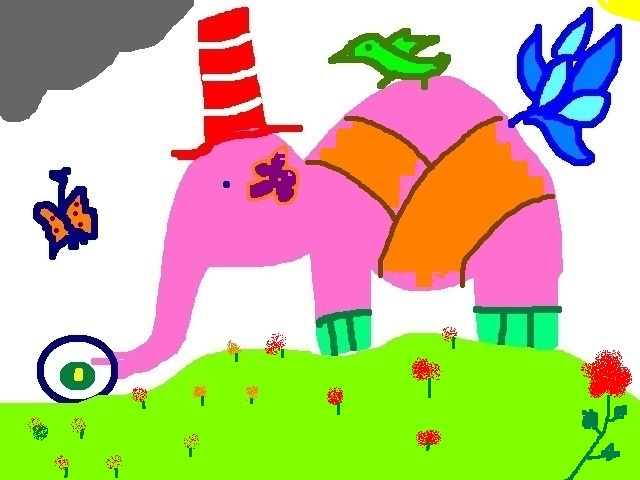
Elephants have always occupied a special kind of love among beings for me. The home is littered with tiny elephant figurines, and soft toys. Hailing from the Indian subcontinent, this is not peculiar or unheard of. It is, in fact, quite common. Intelligent, empathetic, wise, loving beings with a range of emotions, and wisdom, I feel lucky to share the planet with these gentle giants of the land. So obviously, when I saw the book What Elephants Know written by Eric Dinerstein, with glowing reviews from none other than Jane Goodall herself, I picked it up. 

I am so glad I did. 

Set in the beautiful borderlands of Nepal, this book is told from the first person POV of a young child, Nandu, whose mother is Devi Kali, the benevolent matriarch of the royal stables of the King of Nepal, and father is Subba Sahib, the head of the royal elephant stables. Devi Kali, is the elephant who found the child, Nandu, abandoned in the forests. Nandu was taken in, and raised by Subba Sahib. Thus, begins a gentle lilting story of a magical childhood. The child has his perspectives broadened by education, his keen natural senses honed by a naturalist who collects specimens and conducts research for the Smithsonian museum. 

It is a rare pleasure to be able to relate to a young boy, and feel his love for the nature surrounding him. How Nandu manages to save the elephant stables from closure forms the rest of the tale. 

img_3588

Most importantly though, this book evoked a sense of having spent time amidst nature ourselves. That is the biggest achievement of the book – for several times in the week following, I found myself sighing and bringing up the imagery of the thick forests of Nepal. Something that not even the best documentaries manage to do. Maybe it is something to do with the slow creation of the imagery in our minds as we conjure up the descriptions and a version of the forestlands, but it is a worthwhile read.

The creatures of the land, the many birds, and life of naturalists is gently shown to us.

How Daughters Protect Planets

The daughter is home, brimming with chatter and tales from college. I cannot deny that we have been counting down days to have her come home. The house feels different, quieter somehow without her, and I listened happily as she jabbered on a few miles a minute, and gushed and laughed with her little brother. I sat there letting all the flurry blanket me, and smiled. 

“What are you smiling about?”, she said.

I said ‘something soppy’ about being happy that she is home again. She looked at me appraisingly and said, “Oh Amma! Look at you. You’ve mellowed into this sad thing who is ‘just happy to have her her daughter home’! What happened to you? What happened to the fierce woman who flew about the place?” 

“I am still fierce!” I said. 

“Nah! These days – I think she is going to just say something sharp, and she takes a deep breath and shrugs! She really does miss you!”, said her little brother, and I gave him a reproachful look. 

A few hours later, she had convinced us to settle down to a week-end movie night of Our Planet II – a Netflix documentary on the state of the planet, narrated by David Attenborough. It is an excellent program of course, and this particular episode veered from the whale sharks in the Persian Gulf to the wildebeest and zebras in the Savannah to the bees in search of their home with equal ease. We sat there mesmerized by the images, occasionally commenting on how hard it must’ve been to capture some of these shots. It had apparently taken 4 years to film and we could well understand why. 

“But think about it! Most species are absorbed with staying alive – finding food, reproducing and life resets, for the next generation, right?” I yawned sleepily.

“Yes – Amma & I were talking about that. I mean, if you are a duck: have ducklings, feed yourselves and them, and make sure they are safe. That’s it. That’s their whole life.”

“Yeah!”, the daughter said, laughter ringing in her voice, “Low-key simple, but also every day is just survival! Dog-eats-dog-world. I mean look at us. Tucked into our blankets on reclining couches, watching this on TV, and popping chips into our mouths.”

“We are a spoilt species.  “ I agreed. “But I am also glad that we have sentience and energy enough to ponder on more than survival, don’t you think?” I yawned again, ready to head up to a comfortable bed, and thought about that. This extra brain power is probably a double-edged tool. If we hadn’t this extra bandwidth, would we have been happy with survival, and learned to shake down down with our cohabitants better, or can we use this extra bandwidth in ways other than what we have done thus far? Maybe there has to be another leap in our understanding and way of life to truly protect our home and those we share it with. 

IMG_5618

Documentaries, and books certainly help us along that path, I mused, but a true awakening and action? I yawned another jaw splitting yawn, and decided that my brain power just then had about enough to contemplate sleep and relish in the thought of getting up to no alarms the next day (a rare gift in our busy lives). 

As I drifted off to sleep, I thought of the likes of Jane Goodall, Sylvia Earle, Rachel Carson, Gerald Durrell et al, who are voices that help us see the importance of ecosystems. I thought of the question that Sylvia Earle brings up in her book on Oceans: She was asked by a journalist as she stood staring into the vast ocean on the Australian shores, “What would happen if the oceans were to just dry up?”

Flabbergasted, she attempts an answer of the all-encompassing need for the oceans for our survival. Wouldn’t we go the way of lifeless and barren Venus and Mars without the waters of our beloved oceans and its ability to nurture life?

But all of us cocooned in our daily lives of earning our living, and living our lives, and raising our children do not stop to wonder why the jellyfish, and whale sharks are important to us do we? 

That is why we need daughters to come home from college. To ponder on the beauty of life, and what we must do to sustain and protect our lovely home: Earth. 

Are Raravis Real 🕊?

Several times in the past few years, I have wondered whether we have magical and fantastical beasts amongst us. For instance, are there beasts that hide things from right under our noses just as we start to look for them? 

Or wrack spurts like Luna Lovegood says, things that get between your ears and make your brain go fuzzy?

Wrackspurts are invisible creatures that fly in through your ears and cause momentary confusion. As Luna Lovegood seems to be the only character who believes in their existence, we can guess that they spring from the fertile imagination of Xeno Lovegood.

You see for the past few days, every time I was not writing, my mind buzzed with possibilities surrounding mokeskin backpacks, and clever anecdotes involving car keys. Witty writing that I chuckled at myself while I was cutting the carrots, or cleaning the carpet. Yet, for the past couple of days, every time I sat to write a post, not one of these things came to mind. No mokes, no car keys, no fuzz. Nothing. 

Finally, in a moment of rare prescience, the next time the mind buzzed, I sent a note to myself : Remember! Car keys & mokeskin purse (which autocorrected itself to moleskin purse, and I found myself meandering to moles and badger and spring filled morning by the river) Honestly, how any writers get anything done at all is beyond my comprehension.   

Anyway, where was I? Yes : fantastical beasts that hide things from right under our noses just as we start to look for them. Yes. 

The most recent instance happened a few days ago, when I walked around the house looking for something. I kid you not when I say that I tripped over the thing every few days. Sometimes, several times a day. Then, one night, when we really needed it, the husband and I looked everywhere: the garage, closets, medical cabinets, drawers, and found nothing. Not even a whiff. It had simply vanished. So, we had to resort to a near midnight run to the medical store instead. But I guarantee you that next week we shall find the blasted thing everywhere again. 

Now, if a magi-zoologist told me that it is the work of the Raravis (biological name: Latebras Vertabrion), I might humor them. I mean, could there be bird that flies in and out with a surreal ability to foresee the future in the short term with a quirky sense of humor? I might even laugh with the bird, and pray for its mercy sometimes. (I just totally made up that being just now – so if there is a being like that in the fantasy world, I’d love to read about it. Please let me know.) 

raravis

Here is another raravis-style-adventure: this time involving our car keys.

The son & I also recently listened to Fantastic Beasts and Where to Find Them by Newt Scamander, narrated by Eddie Redmayne. Some creatures made an impression – we chuckled at a few, wondered at a few others, and loved them all. Who cannot smile at least a little while thinking of Mooncalves – the beautiful beings that J K Rowling claims like making crop circles?Or the moke. I am wondering now whether I put away the carkeys in a mokeskin purse (a purse that allows only its owner to retrieve its contents unless we have a mischievous moke that likes to take its owners on a dance. )

For it went missing so effectively, we had to order another one. 

We made do with one key, master procrastinators that we are, till things almost came to a head a few times. Of course, several months later, life went on, and we had still not ordered the spare keys yet. (If anyone is looking for lessons on procrastination, they will be offered next month. )

Anyway, chastising ourselves on this terrible nuisance of having one car key, we finally ordered another one and made an appointment to pick it up. We paid, we waited. Believe it or not, a few days before the spare key was to come, the husband pulled out a backpack we’d used for hiking in the mountains several months ago, and there: hidden inside an inner pocket, not visible to the naked eye, and only discernible by prodding the bag, was the key.

In any case, we now have a truly lovely story for the Tamil saying: 

வெச்சா குண்டுமி சரச்சா மொட்டை

Meaning: either a mop full of hair in a ponytail, or a bald head 🙄

P.S: This post just gave me a marvelous idea for a children’s book, and a desire to read the following books again:

  • Fantastic Beasts and Where to Find Them – by J K Rowling
  • Book of Imaginary Beings – by Jorge Luis Borges
In the oceans of wonder

T’was the time to plan one of our trips to another dimension, and we were excited. For this time, we also had the company of our family friends who came in from India, which meant that we had planned both a trip to the Monterey Bay Aquarium and the beach nearby afterward for a sumptuous picnic. 

At Monterey Bay Aquarium, we can be assured of being grateful to our marvel-filled planet for all its resplendent forms of life: the staggering variety of it, and the true meaning of diversity. For all our time in our daily lives, we seem to devote little of it to ponder the wonders of the world. So, taking a day in which we see nothing but life other than our own, so often so different than our own – with exactly the same conditions to develop is not just wondrous, but necessary.

IMG_5616-COLLAGE 

There were a few moments in that day that stood out:

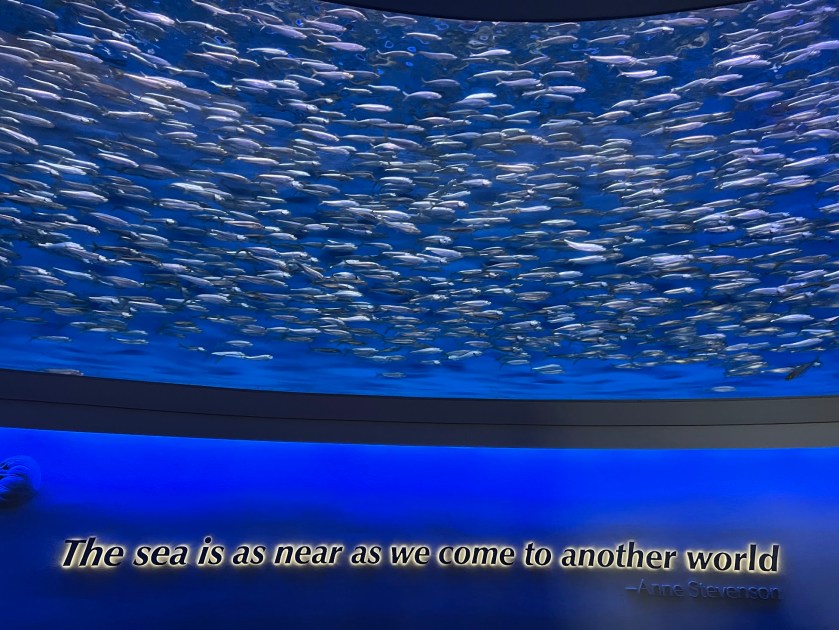
🐟 Standing in an entryway where thousands of sardines swam overhead, the son and I noticed that there were a few – very few maybe 5 in all, who were determined to swim in the opposite direction. It seemed to be by choice, since they were edged multiple times in the opposite direction by the other fish. They were packed like sardines after all.

IMG_5615

Maybe, every society does need those few who swim against the tide and make their own way – hard as it seems, I thought philosophically. Though, I am the first to admit that I have never studied sardine behavior to corroborate this. It simply seemed like a comforting anthropomorphizing thought at the time. I was feeling contrarian at the moment and these little fishes making their way against the rest of their crowd made it seem like those feelings were valid. 

🐟 I have almost identical pictures of the jellyfish exhibit from my multiple visits to the aquarium, but this one was different. The picture of a baby silhouetted against the glass and longingly touching the glass housing the jellyfish caught my attention. Had my more photographically inclined friends been there, I am sure they would have captured an award worthy photograph. What I got was this. I love this picture because it seems to capture that essence of wonder innate in all of us, that we forget to cultivate and nurture.

IMG_5618

🐟 Later that day at the picnic at the beach and on a walk by the waters looking at the profusion of wildflowers I could not help staring into the ocean waters. The home to all these grand creatures we had just seen. Their habitats and life in the waters had been beautiful, but so was ours. The tiny wildflowers on either side of the trail were reminders of that. Even if a tiny part of me resented the fact that my attempts at growing these wildflowers had come to naught for so many years and yet here there, able to thrive with no help from mankind. 

img_5716

There is something marvelous about being in the beach on a warm day at the end of May. It isn’t as crowded with the summer sunbathers yet, and the waters are neither warm nor cold: perfect for a game of guess-the-wave -lines (this game is a complicated game where we point to a wave and try to stand as close to the wave on the shore without it actually touching your feet. So the person closest to the wave before it starts receding wins) 

I have with me a book on the oceans titled: Sea Change: A Message of  the Oceans by Sylvia Earle and plan to wrap myself in the wonders of that world over the week-end. 

Life is Elementary

It is when I look back upon the past few years as an adult that I realize how much I have enjoyed the elementary school years of the children. The immigrant experience enriched this time in my childrens’ life for me. I am also extraordinarily grateful for the fact that the schools allowed us to volunteer in the PTA, classrooms and as chaperones during field trips. It gave me a glimpse of their lives with their friends. A chuckle, a phrase filled with colloquial nuance, or just jokes that don’t mean anything to anyone but themselves were all welcome windows into their lives. 

I have had a wonderful 12 years of elementary school to enjoy thanks to the age gap of the children. My younger one finished elementary school this year, and now, I feel bereft. There is a little part of me that wants to cling to the innocence and optimism of elementary school. I have always been a clinger – to good memories, to possibility, to energy. 

I am also constantly trying to reach for that infinite sense of possibility and curiosity of children. Even if it is hard. Especially since it is hard. Maturity is all very well – but I am not sure I like its jaded companions: caution and realism / pessimism, very much.

Even though the son’s elementary school years were fragmented and bizarre – thanks to the Covid years in  between, the children themselves adapted beautifully.  

It is in elementary school that the children were happy to see their parents volunteer in their classroom, come on fields trips with them etc, and I loved it. I took every opportunity to interact with young minds and always came far more refreshed than I expected. It is especially easy when the children’s teacher is around, for the children listen to their teachers and behave marvelously. All one has to do then is show up and take in the joys. 

image

I got to read stories, articles, and excerpts from books to the children, and these have been some of my happiest memories in the classroom. I shall be forever grateful to it. Even as a teenager who taught in school during my summer holidays, this story-telling aspect of it has been a joy. I pray that I continue to get these opportunities.

“You aren’t just given happiness, you have to pick it up here and there all through the day.” 

Miss Read, Fresh from the Country