School Days

It was the first day of school – back to school in-person after a year and a half of remote learning for the Elementary school goer in the home.

There we stood – the husband and I- masked, behind a line holding a throng of anxious parents at bay. The children were coming out to the school environs after such a prolonged time in front of their screens. The nervous energy, chatter and activity, muted through masks as it was, was enough to uplift the senses. 

As Miss Read says in her chronicles of life as a school teacher in a village school: The first day of school has a life and energy all its own. Even if the preceding days have been somewhat dreary, she says, the first day manages to be bright and sunny. We live in California, so our summers are not dreary. If anything, they are all too glorious with the sun beating down on us, wildflowers hanging fully on every bush and tree. Even so, the energy and bright first day of school was marvelous.

It was only as we standing there with the others that I realized how much I missed this particular experience. I used to enjoy those precious little moments in the morning looking at the children enjoying their play. (Read: Recess as the basis of culture)

The arrival of the pandemic was like an unexpected blizzard that enveloped the whole Earth in its swirl. While the swirl continues, lessening at times, picking up pace at other times, there are times when post-vaccination, we can hope to remember our normal. 

Great Red Spot - Wikipedia
Great Red Spot on Jupiter

I stood there taking in the morning energy from all the young scholars gathered in each other’s physical presence after a year and a half, and smiled to myself. The mask has its advantages. I could observe the teary young parents of kindergarteners as they embarked on this great adventure, the weary parents of the older children who were happy enough to see their children out in their school, interacting with other children again. 

I glanced at the son who’d finally found his classmates and was amused by what met my eyes. One fella had learnt how to tie his shoelaces a different way, and he stooped and showed the admiring knot of his friends not once but three times, while they watched patiently, a light shining in their eyes at this new learning. 

I couldn’t help smiling.

A few minutes later, I noticed another young fellow, good samaritan that he was, double out of line, and race towards the field, and throw a football that was slowly rolling away from them to the center of the field. He came running back and nicked back into line just as their teacher came out to summon them in, and he was met with huge roars of appreciation for his citizenship. 

Who said education only happens in the classroom?

As I walked slowly back to the car hearing the receding chatter of the young and the studious, I hoped that they would have a normal-enough year. The vaccination isn’t here yet for younger children, and we would have to keep an eye on things as they proceed. Look out for each other, help keep one another safe, and navigate this together.

Enjoy the present has taken on a new meaning in Pandemic times. Senior Sunrise

The Statues of Liberty

I have had the luxury of traveling and reading the past few days. I read and watched the following in one glorious spurt:

I preferred the books and movies with animals & the magic of our thriving universe in them over the ones with just humans in this lot though.

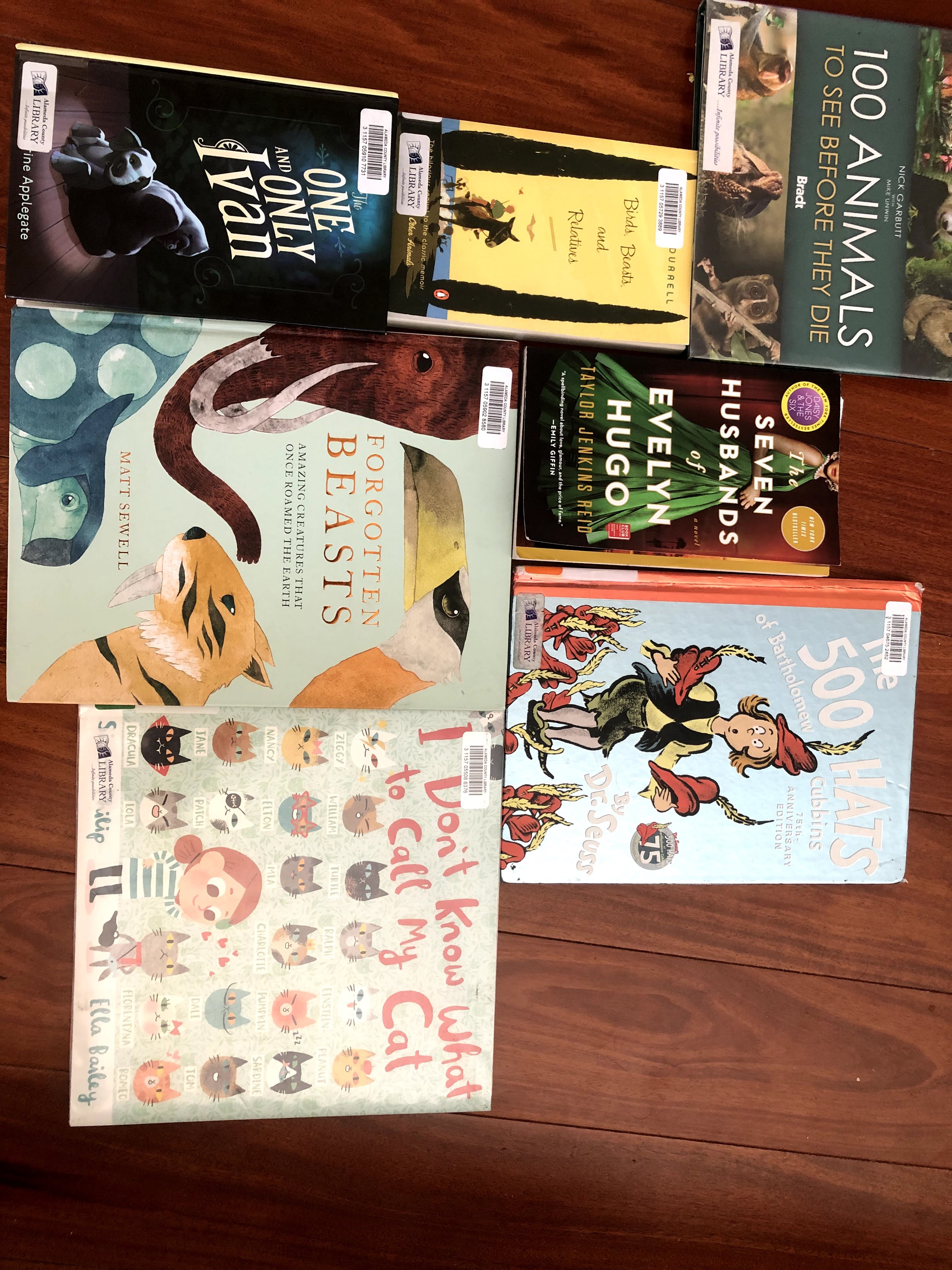
  • Forgotten Beasts  – by Matt Sewell 
  • 100 animals to see before they die
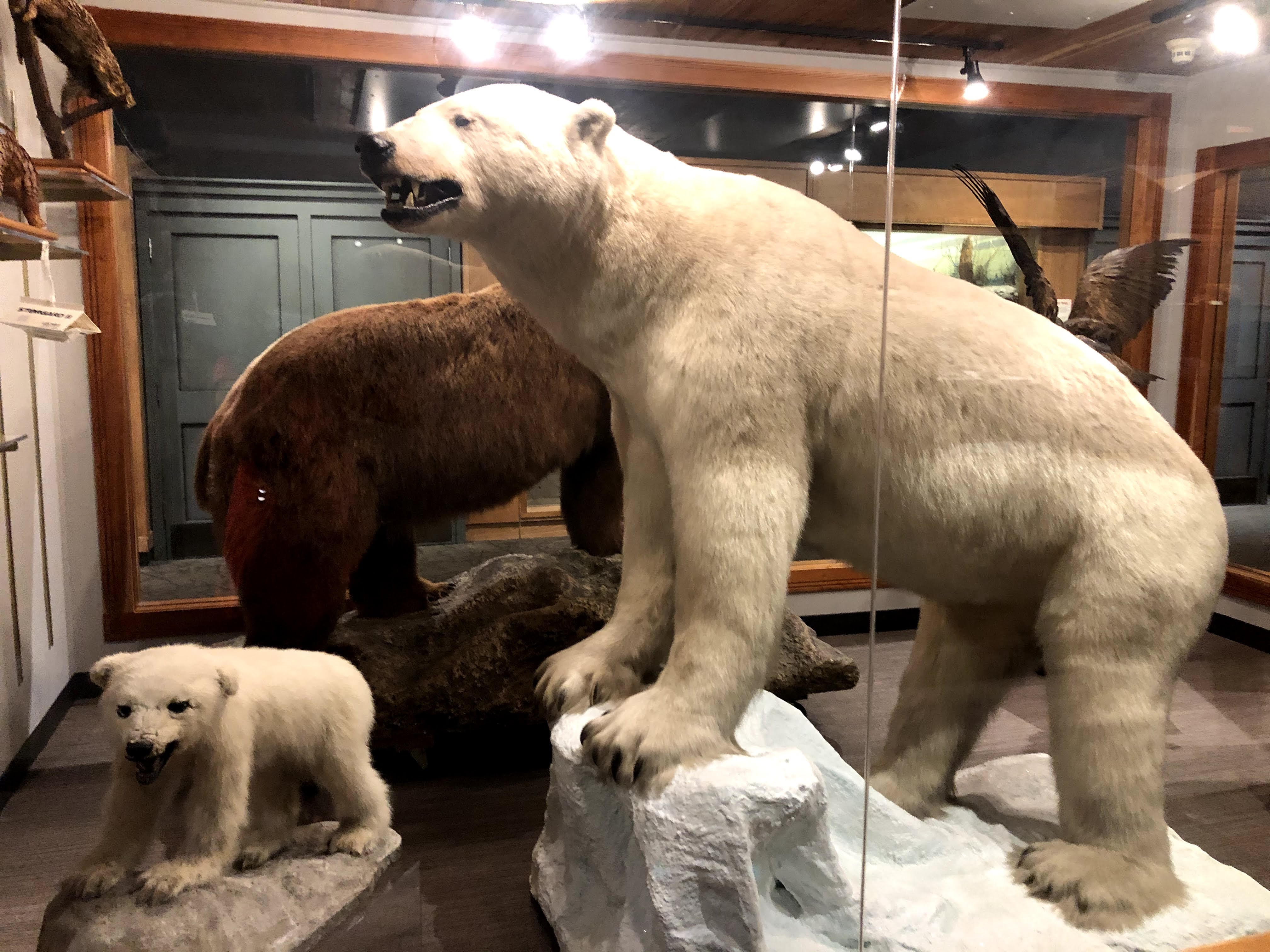
  • Ice Walker – A Polar Bear’s Journey through Fragile Arctic – James Raffan
  • Birds, Beasts & Relatives – by Gerald Durrell
  • The One & Only Ivan – by Katherine Applegate
  • The Seven Husbands of Evelyn Hugo – By Taylor Jenkins Reid
  • Back from the Brink – Documentary at the Boston Science Museum
  • Moons: Worlds of Mystery – Documentary at the Boston Science Museum
  • Kung Fu Panda – 2 – Dreamworks Animated Movie

Granted that the 7 Hs of Evelyn H was a fast read. The narrative style pulled us along with just a hint of intrigue keeping us going till the very end. The story itself appeals because it is a story of someone trapped in the endless trap of fame and glory, and the constant insecurity of ratings and popularity. It is, though, a reminder of the things valued by plenty of humankind, and the reminder of love in a tumultuous world. The interest in another’s life, is a never-ending case of human interest, and the story does justice to that indeed. There are several well-written lines in there on human nature. I must say I have never been enamored by the Kardashian-type of celebrity life shows, so my review is somewhat lukewarm for this one.

The heart-lifting tale of The One & Only Ivan was up next – the gorilla who saves his little elephant friend Ruby, after making a promise to an older elephant friend, Stella. Based on a true story, this is the kind of story that tugs at heart strings. Katherine Applegate’s writing is a class apart. I have been a fan ever since I read The Tale of Despereaux. 

I wonder, sometimes with a tinge of envy I admit, about how animals, birds, and marine creatures live without the trappings of economics and finances, and social influences and so on. They navigate by the cosmos as much as we do – In Ice Walker, the author, James Raffan follows the life of a polar bear, Nanu, as she grows, hunts, mates, and raises her young in the polar ice caps. How surely she knows the changing seasons, and the direction in which to lead her cubs for food and sustenance, is beautifully written and portrayed. The bright stars that we peek at, is so much more for these creatures. How far we have come as humans, and how much more left to go? Nanu is killed by humans, and her surviving cub is forlorn. 

On the way to view the Statue of Liberty, we stopped and watched plenty of statues of liberty along the way. Boston Public Gardens hosts the marvelously made statue of Make Way for the Ducklings by Robert McCluskey. 

New York’s Central Park hosts many statues : Alice in Wonderland & Hans Christiaan Andersen with a swan are marvelous reminders of life and the marvelous influences of imagination. I wonder how many people worried about the economics and finances of the economies, their lives, and their jobs stopped to take deep breaths and believe in magic once again as they make their way past these statues of liberty.

It seems only fitting to finish this marvelous post on the different things that sustain human minds and lives with a Seussism or two.

And Always Remember

And will you succeed?

Yes! You will, indeed!

(98  and 3/4 percent guaranteed) 

KID, YOU’LL MOVE MOUNTAINS 

Oh the Places You’ll Go – Dr Seuss

Or this one?

Expand Your Horizon

The more that you read, 

The more things you will know,

The more that you learn,

The more places you’ll go

– I Can Read With My Eyes Shut – Dr Seuss

Moons : Worlds of Mystery

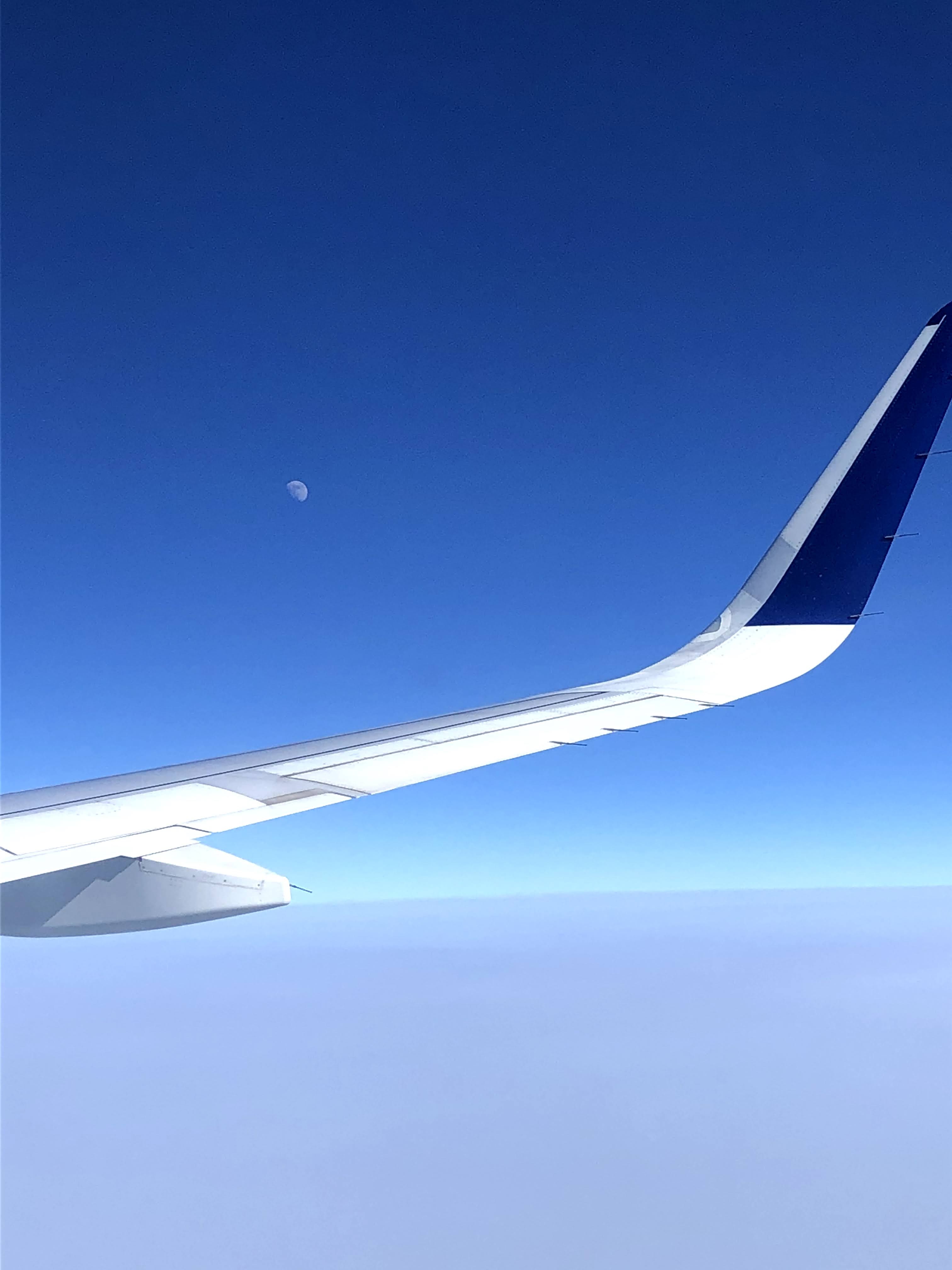
“Aah…..see…see the moon!” I said. The moon had risen alongside our flight wing on the way to Boston, and the son and I were enamored by it. We usually are. The daughter ensconced on a different row from us on the flight gave me a carefully controlled eye-roll. Love for her mother tussled against the desire to show that the crazy moon lady was her mother, and she went in for a I-may-know-her-vaguely-as-an-acquaintance stance. I beamed and smiled as only a mother could. Luckily, the mask hid the genuine full-moon nature of the smile for the time-being.

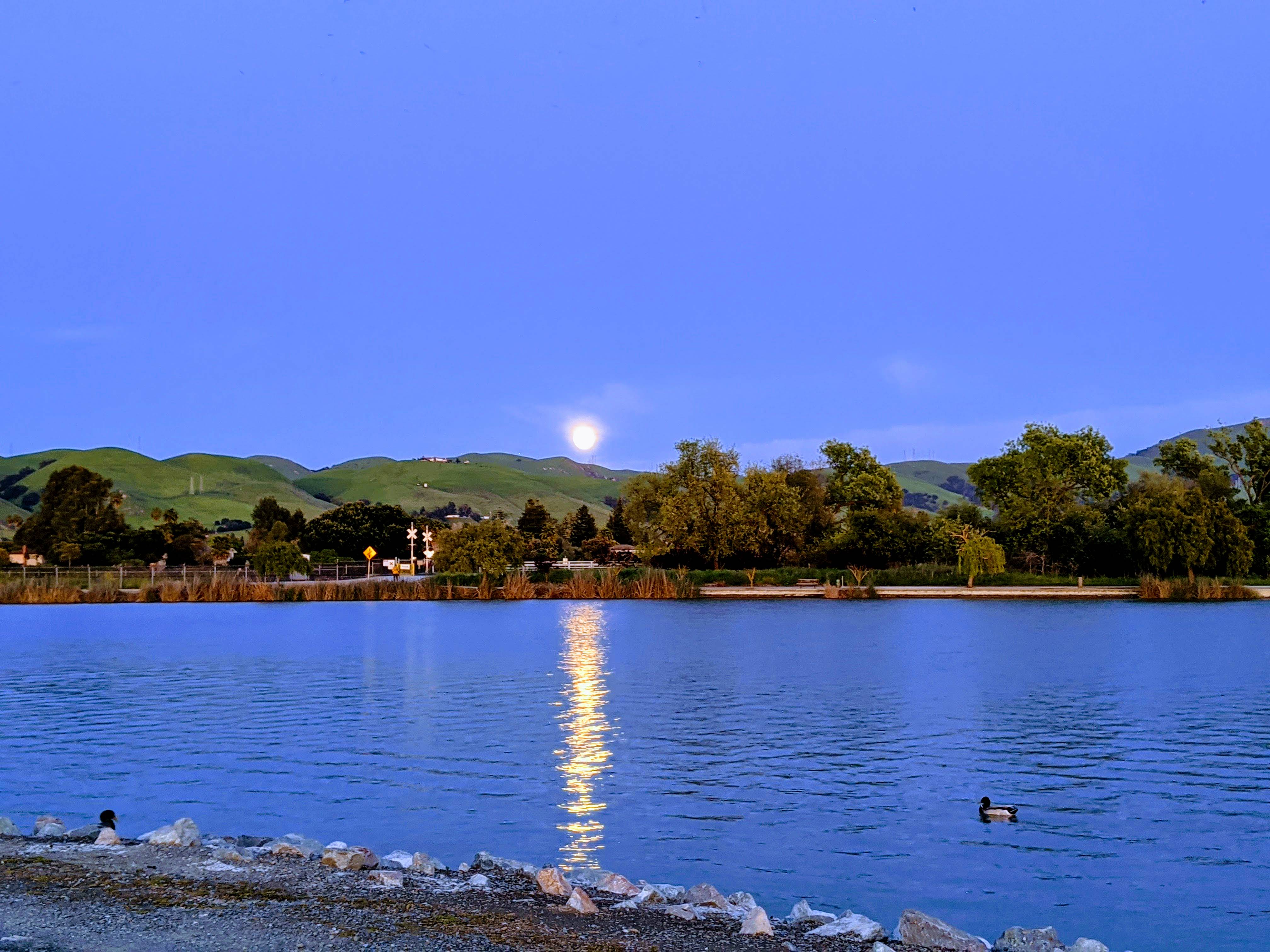
The moon has long fascinated all creatures I think. I take long walks by the river and lake in our hometown during the waxing moon season, and wonder about how the beautiful creatures of the land perceive it. The deer, coyotes, water-rats, pelicans, fish, manta-rays, octopi, geese, ravens and hawks. Do they notice and set their little rituals by it, or is it something human-beings rave over?

It wasn’t till the pandemic that I noticed the timing of the moon rising and setting. The waxing season giving us unexpectedly delightful glances of our lovely sole cosmic neighbor, while the waning cycle going for days without seeing our delightful companion. No wonder, songs have been written about, the magic of moon-drops milked by fantastical thinkers, and lovers for centuries gazing and strolling in the moonlight.

The next day, I was pointing to the pale gibbous moon that was visible between the towering buildings of Boston downtown. 

“Ma! Would you stop it with the moon? The moon comes everyday, and is the same!” Said the teenaged daughter, who despite (or may be because of) my nature-kookiness remains cautiously apathetic to it. Could have been Toni Morrison’s best pal the way she ignores the phenomenon. 

“How many ways can you describe the sky and the moon?” —Toni Morrison

The son, like me, though, raves and pulsates with the cosmos – the moon, stars and planets excite him to no end. The next day, the husband had a surprise in store for him. We had planned a day at the Boston Science Museum, but the crowning glory came with the planetarium show focusing on the Moons of the Solar System – Moons – Worlds of Mystery

The show was spectacular. Starting with our very own Moon, it goes on to explore the moons of Jupiter, Saturn, Mars and Pluto. How every planets close cosmic neighbors were formed to the exciting possibility that some of them could harbor life in its watery oceans, and icy surfaces, it was a show that appealed to his every being. If ever a being was made of stars, there he was! When the camera plunged into Enceladus and Titan, he quavered, and the seat shook.

The pair of us headed out after the show, subconsciously scanning the skies for the near full-moon over the Bostonian skies, while the daughter conceded the magic of the moon and its strange pull on us. If it was a tonic to us, then so be it.

Books:

  • The Girl Who Drank the Moon – By Kelly Barnhill
  • The Edge of the Sea – by Rachel Carson
  • Cosmos – shows by Neil DeGrasse Tyson & Carl Sagan

To See The World

I remember the first excitement at seeing the bubble maps of population vs GDP for countries around the world, and how they changed across a span of a century. If one could have their mind blown, that chart was it. Then, a few years on, I saw the TED Talk by Hans Rosling in which he explained Large Families/Low GDP Vs Small Families/High GDP, and this time the wonder grew.

In the intervening years, the power of big data and visualization grew by leaps and bounds, and there never was a dearth of graphs, or data analysis. Causal analysis, correlations, search engine optimizations, ad targeting, and numerous other concepts entered the lingo of the normal person. As early as 2012, Target could predict when a woman was expecting a baby even before her family knew.

Daniel Kahneman & Amos Tversky changed our perceptions by introducing the world to a whole new world of Behavioral Economics.

The Undoing Project: A Friendship That Changed Our Minds by [Michael Lewis]

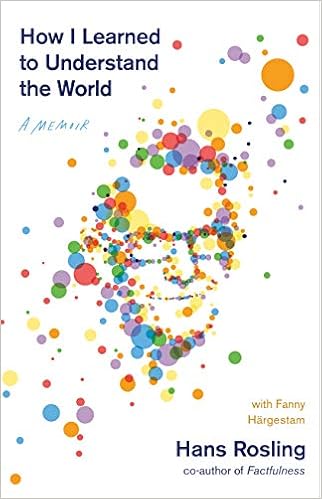
So, when I picked up the book, How I Learned to Understand the World, I thought I would find about more interesting statistics about the world, but I was in for a pleasant surprise.

In the book, How I Learned to Understand the World, written by Hans Rosling and his daughter-in-law, Anna Rosling, it is Dr Hans Rosling’s journey that is written. The book isn’t written in the style of can’t-put-it-down. Instead of a compelling narrative that is keeping one’s interest, it is the genuine interest in the human being who was instrumental in changing the way we think of global health and economies. His journey to help humankind starts off with being a doctor in a impoverished nation, but moves on to much more than that. This is an inspiring sketch of what is possible when we think outside the box. That varied interests and knowledge-seeking is never wasted: they truly do come together in myriad ways.

The book starts as most biographies do, with a character sketch of the good doctor’s parents, grandparents, and his modest upbringing in Uppsala in Sweden.

He goes on to study medicine, and then travels to lesser developed countries hoping to do good work. His perception of developing countries such as India undergoes a transformation as he studies and travels there. It is here that he gets an appreciation for public health. The Indian Government at the time was battling one of the largest public health initiatives of the time ( possibly polio vaccinations – I forget). It is a humbling experience for him. He realizes, for instance, that medical facilities were not as backward as he assumed, medical knowledge was quite on par, or better, where it was available. The true problems were scale, population and outreach. 

After his return to Uppsala in Sweden, he goes on to begin work as a doctor in Impala. Where is Impala? Nacala? The joy of studying a map for these places is half the joy.

Here, in the coastal region of Nacala, he settles into his work as a doctor with his wife and children. Faced with less than ideal facilities, low budgets, and even less trained people to work with, he slowly learns the areas in which he can make a difference. He learns the importance of cultural awareness, and his humility for people’s knowledge and way of living, helps him reach the people he is attempting to serve. Without this realization he might never have been able to understand the devastating Konzo (‘Konzo’ means tied leg referring to the paralytic symptoms) disease that was paralyzing children in rural areas.

His work in Nacala, and his researches around the paralytic disease, konzo, led him to a life in research after his medical practicing days. The cassava plant is a staple diet in these areas. The cassava root is treated to a long, and arduous process of preparation before being made fit for human consumption. For example, the cassava is dried in direct sunlight for more than 8 weeks, to remove bitterness coming from a cyanide like substance that causes partial paralysis in human-beings (The long process is usually sufficient to remove the amounts of cyanide, but during times of drought, the plant produces more of this chemical content). Dr Rosling was the person to identify this link between the food process and the paralysis in his patients, and it was because he made the effort to understand the way of life in these areas. In times of food crises, the cassava plants are the only source of nutrition, and the results are devastating for those affected: their disability spiraling them further into poverty.

His ability to reach dictators, elected officials, and private industry for the sake of public health is remarkable.

His book, Factfulness, is the next one on my list to be read. In this one, he outlines the state of the world in terms of actual numbers. Is our world as bad as we think it is, or are we progressing better than we give ourselves credit for? I am waiting to read this one.

Factfulness: Ten Reasons We're Wrong About the World--and Why Things Are Better Than You Think by [Hans Rosling, Anna Rosling Rönnlund, Ola Rosling]

A Dip into another Dimension

The July 4th long week-end is always a special one. It comes panting along after the first half of the year has whizzed past in a blur of life. The northern hemisphere goes on as it always has with winter transforming into glorious spring that gradually melts into summer haze.

School finishes with a flurry for the children and their long, luxurious summer holidays are there to stay, while those of who belong to the sterner corporate world have no such long, idle, ideal, vacations to look forward to. But the infectious joy of doing nothing is catching, and by the time this long week-end rolls around in the summer, there is an itch for the magical that is too strong to ignore.

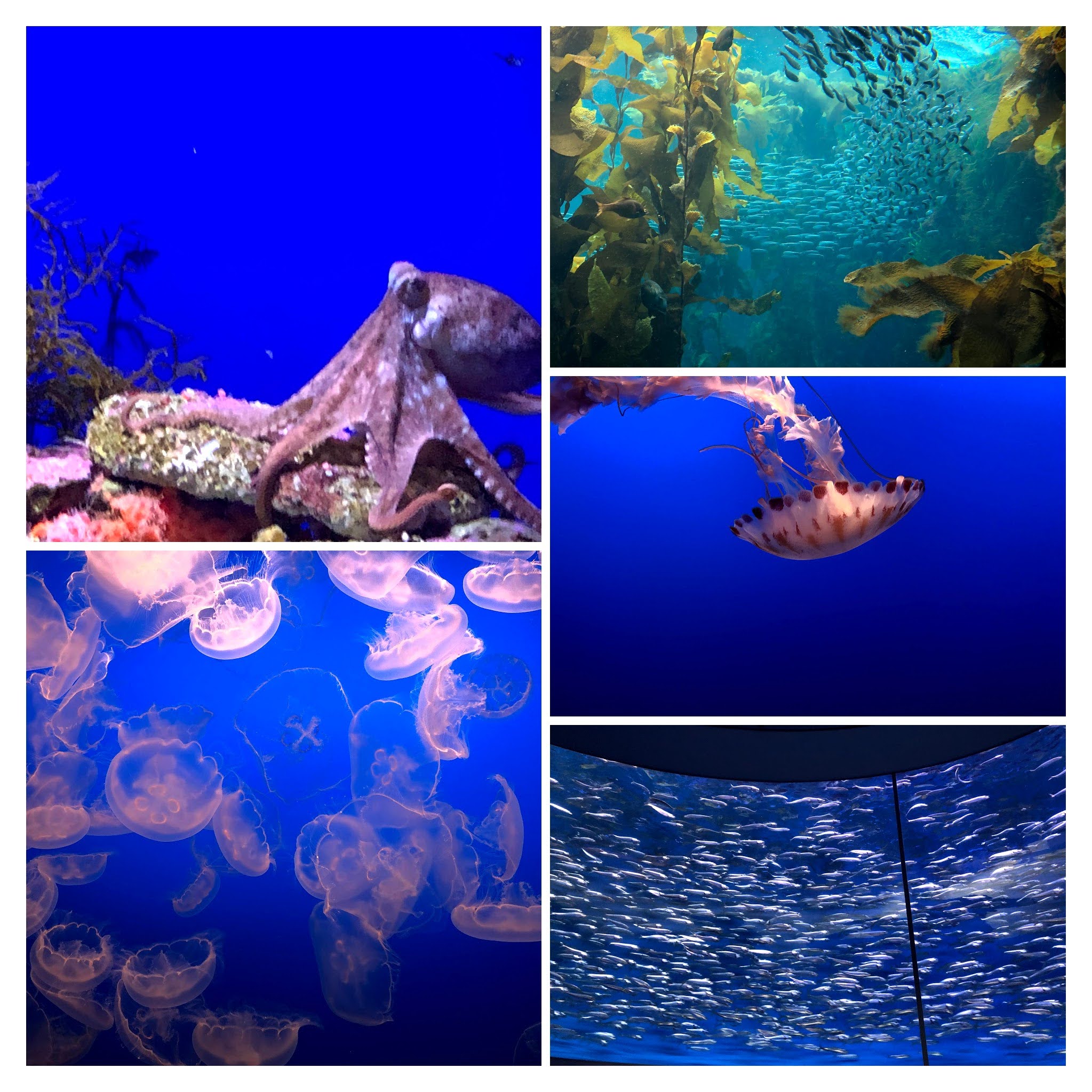
So, we gave in. Going in to the long week-end, I took a long resolute sigh to not work over the weekend, and what was more, I kept my word. I only worried about the deadlines, and the nagging problems  a few times. For instance, I firmly pushed away worries about work when I was trying to be an otter, when I was gazing marvelously at the anchovies swimming beautifully in the forests of kelp, and while taking a long deep sigh at the deer grazing by a pod of pelicans in a lake nearby. 

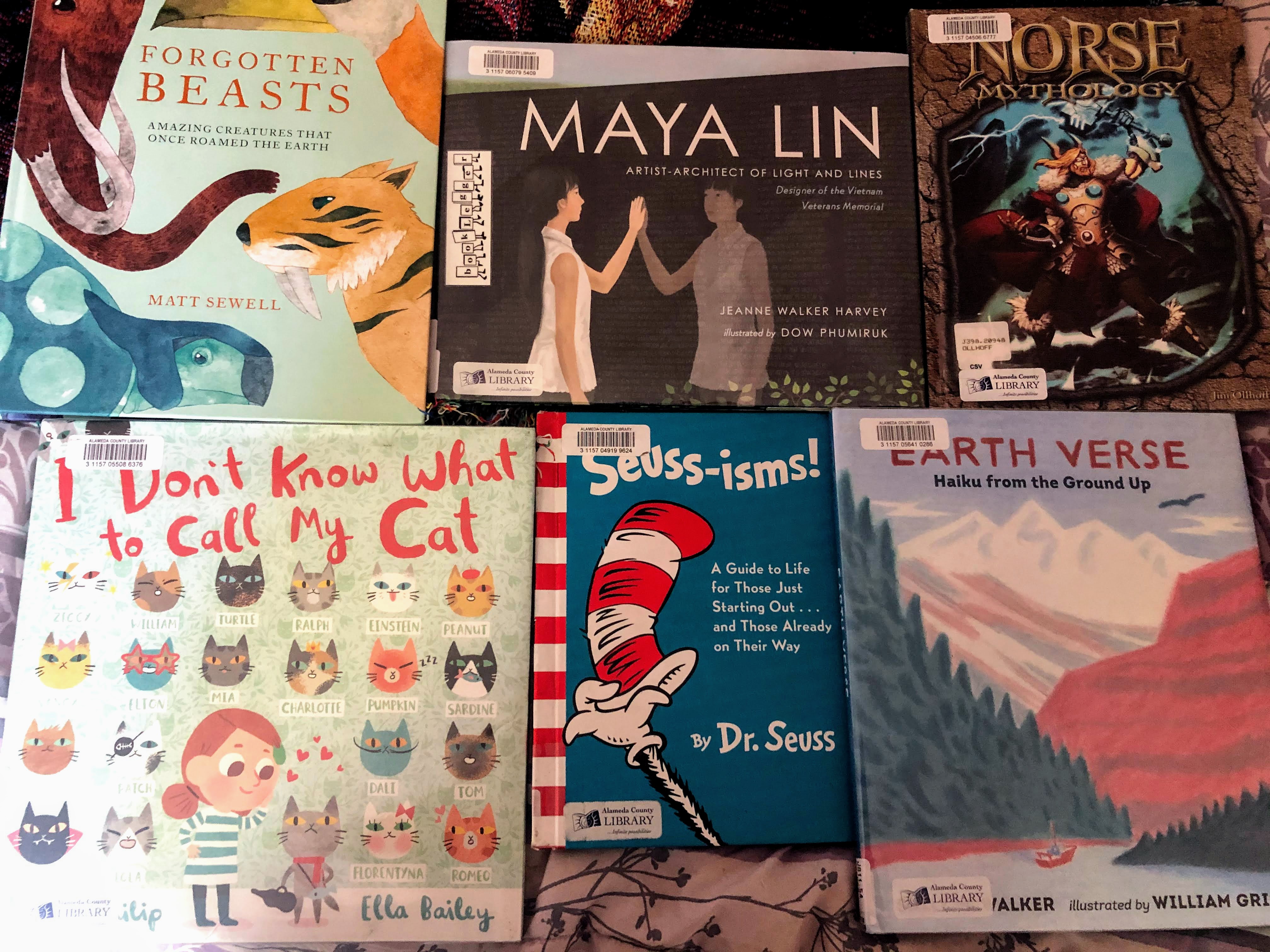
We started the week-end to a marvelous romp to the library in which I picked out books like a hungry child at the candy store. I sat that evening looking contented and happy after a long-ish bath and read one children’s book after another. I admired Maya Lin’s Vietnam War Memorial, I sat up and had a couple of mind-blowing life’s lessons from Seussisms by Dr Seuss, while admiring the grit and tenacity of Helen Keller and her marvelous life with her teacher, Anne Sullivan. 

Helen Keller’s writings about absorbing the life around her was truly fascinating.

The next day, we set off to peek into another dimension altogether. It has been almost 2 years since we visited the Monterey Bay Aquarium thanks to the pandemic. But this week-end, in our resolve to make it magical, we went over there. You do have to get an appointment slot now, but once inside, all of the old magic stirs in your heart, and you feel lost without fins and scales.

I remember harking back to the book, Flatland by Edwin Abbott. Technically, watching the sea creatures in an aquarium setting does not constitute traveling to another dimension, but it feels like it. Every time. The tentacles of the octopus, the slow mesmerizing motion of the jellyfish, the all-encompassing tales of the ocean whisper and roar with every peek.

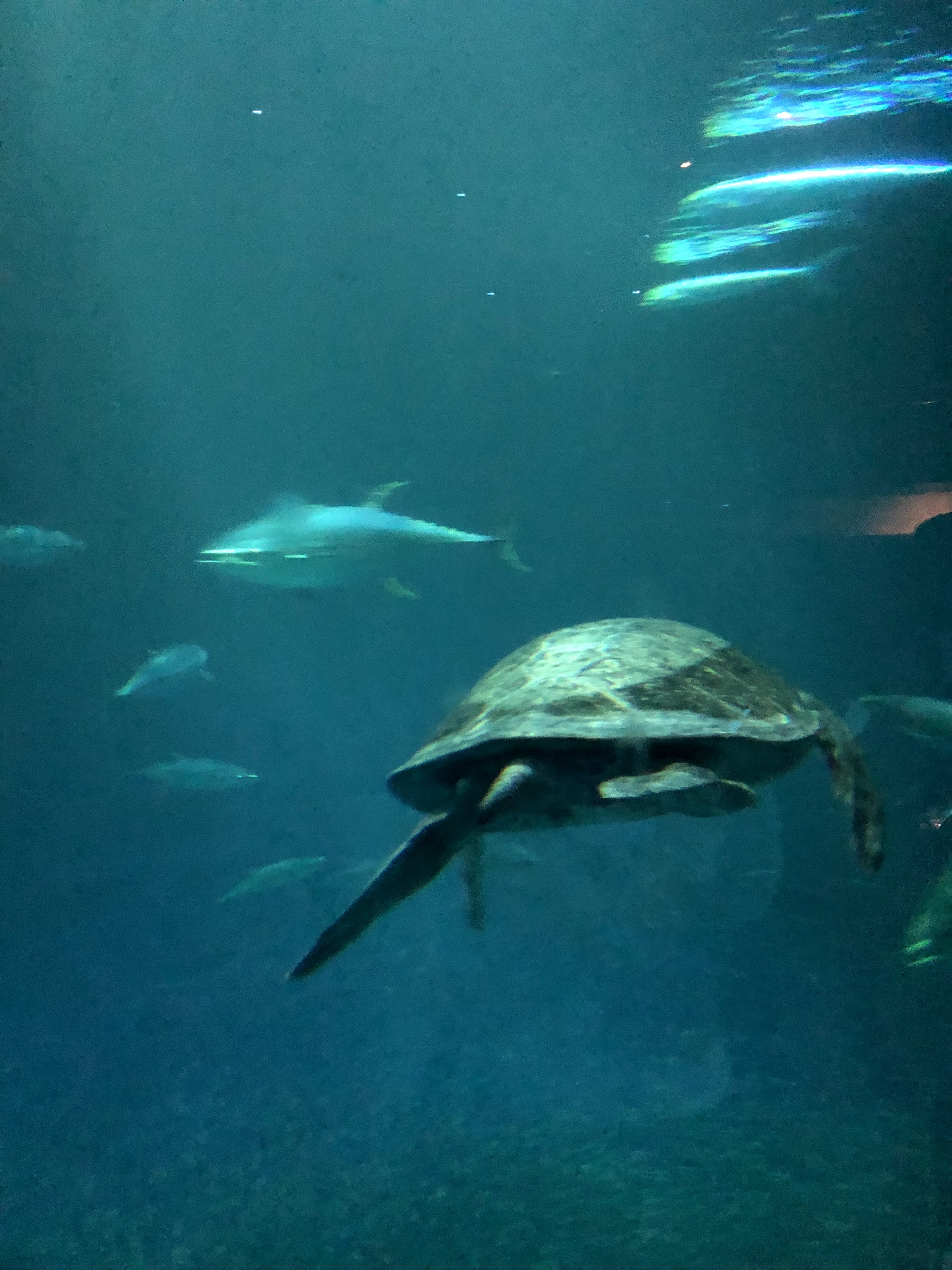
One instant, I remember looking at the manta-rays and the hammer-head sharks scattering the schools of fish as they lazed around their huge tank, and wondering where the turtles were, when a large one swept past me. Turtles aren’t particularly fast, but the wonder and excitement of seeing one swimming that close is enough to get your adventurous heart all a-swishing. 

Reading the assorted jumble of books this week-end, combined with the therapeutic effect of a peek into oceanic life, constitutes a dip into another dimension in my book, and I wish it with all my heart for all of you.

For as Helen Keller says:

The best and most beautiful things in the world cannot be seen or even touched – they must be felt with the heart.

Helen Keller

Books:

Moving Tales : Home Truths

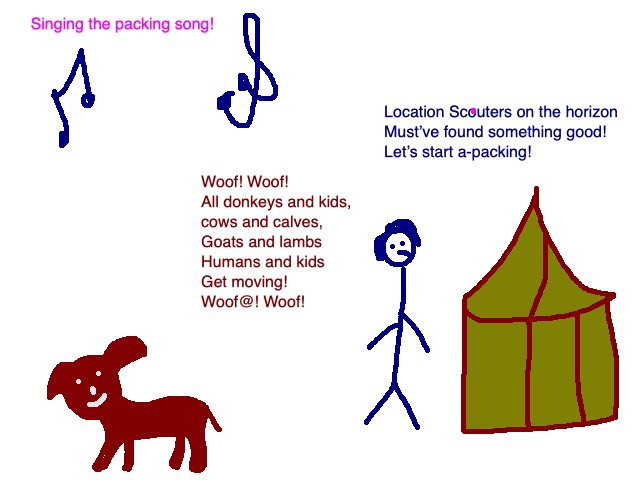
The past few months have been a blur. We moved into a new nest, shaking years of closet accumulation and shocking spiders into action. As I sat surveying empty spaces, I was left with a vague feeling of unease and harking back quite unnecessarily to the times of our distant forebears of hunter gatherer times. Imagine uprooting everything every few months to find greener pastures, food and water sources, not to mention the task of building and setting up homes each time.

The movers came in, and I remember thinking how 3 of them could move a whole house within the promised time, and do we really need such a large truck?! 

Trust providence to teach me humility.

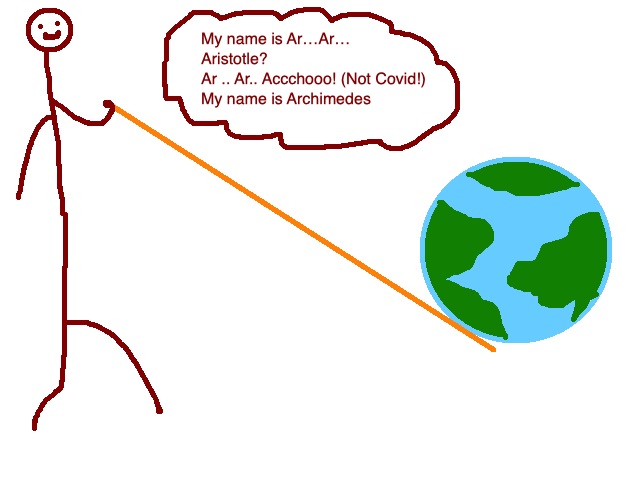
* The three men did a marvelous job. Boxes that I thought were difficult to budge, they inserted a lever like object under them and lifted them up and down the stairs in no time at all. What was it that Aristotle said? Give me a large enough lever and I can move the world, or something to that effect?

I just looked it up, it wasn’t Aristotle but Archimedes apparently. It all adds up now – taking baths and measuring displacement, using levers to move the earth. 

Give me a lever long enough and a fulcrum on which to place it, and I shall move the world.

Archimedes

Well, that seemed to be the motto for these 3 people. Had I passed them on the streets I certainly would not have estimated them capable of moving 100’s of pounds of books, clothes, utensils, furniture, knick-knacks etc this efficiently. The previous night, the husband and I had tried moving an old couch out of the way. By the time we were done, some bones seemed unhinged, we had fought prettily on how to align the direction of the offending item, placed the top of the couch on a toe while the husband’s grazed his fingers against the wall, and we had put on a free show for the neighbors who gathered outside to watch, and helpfully give us directions.

So, I prepared myself to be doing just that.You know? Standing around helpfully, and shouting out directions on how to move things efficiently. I felt I would do very well, on such things.  

The men arrived and I asked them if I can help with this and that. They looked at each other, shrugged as if to humor a child, and sent a silent plea to the English speaking member of their crew, who took charge admirably. He told me that they can manage, and if I could let them know which areas needed to be moved, and to specify the order of things, that would help. I beamed and showed him everything while the other two set to work. 

I must say, this strategy worked very well. For I had planned to tell them to start with the kitchen and work their way upwards. While I was showing the E.speaking man the kitchen, the men thumped upstairs, and came down bearing such a large consignment of boxes that I clutched the passing trolley for support. 

Well, a hint is a hint. I took mine, and took to watching the move with wonder rising.  I stood twiddling my thumbs feeling a child being given crayons to help pass the time. 

* Did we need such a large truck?

I remember playing one of those carnival games where you win a stuffed doll, or a box of marbles for estimating this and that. I once won a spongy duck at this, and that gave me a confidence not entirely rooted in ability. As it turned out, that truck was not just full, but I ended up making a baker’s dozen worth of trips in my minivan type of vehicle for days afterward to fetch the remaining things. This, in spite of the fact that we got rid of most of the old furniture. 

Now, our hunter gatherer forebears had neither trucks, nor fancy gear. Could you imagine moving every season? I shuddered at the thought, blessed the accumulated wisdom of mankind over the ages and blessed the generations that learned how to work the land, and converted our lifestyles. I did not so much bless the generation that figured out mass production, for it was clear I was reeling from the effects of that one. All in all, I think sapiens have come a long way.

I will always look on a lever with reverence from here on. That night when I soaked in a bath I smiled at the brilliance of the man who figured out how to calculate the displacement from such a simple act almost 2500 years ago. In the 10,000 years of homo-sapiens, how many simple acts, and flashes of brilliance are we benefiting from?

The Mystery of Human Potential

The Undoing Project, By Michael Lewis, started off with a baseball team’s challenges in picking the next star. I might’ve appreciated this chapter more had I known baseball ⚾️ I suppose. As things rest, I know it is a lot of activity, running, a bat with a ball and two teams. However, I appreciated the gist of it i.e the ability to spot human potential. Now, that, I can identify with. 

The Undoing Project: A Friendship That Changed Our Minds by [Michael Lewis]

As the book moves on to introduce us to Danny Kahneman and how as a single psychologist in the Israeli Army, he was tasked with the humongous task of trying to identify army recruits and figure out which positions they would be best suited for. Which ones would make good tank operators, which ones are better suited to quick guerilla warfare, which ones will fare better as aerial surveyors etc. 

The fact that this was not only attempted and done, but still stands in its rudimentary form is amazing. 

Unlocking and identifying human potential is one of the toughest problems in the world. There are indicators, yes, but no sure way of knowing who has the ability to self-motivate and stay in the game. As a technology leader, it is often a baffling experience for me. People who fared exceedingly well in well-thought out structured interviews come onboard and don’t sparkle in their roles at all. Some others who were doubtful in the screening process, come through as diligent, hard workers, willing to put in their all to learn and be happy about it. 

Recruiting sites, AI/ML models all have only limited success in the true test of human capabilities. The fact that there is a lot happening that just cannot be captured is a well-known fact. The field of psychology and mathematical models using statistics to better understand human mystique is fascinating. 

I am only halfway through the book, but the collaboration of the great minds of Daniel Kahneman and Amos Tversky is already a pleasure to read. 

Psychology – as is termed by Academia as a bin for all things unsorted is a great place to be. The combination of mathematical intuition with the brains functions, and how to design experiments for these are fascinating by themselves.

How come some of us are optimists, others pessimists and so many of us in all the areas of gray between these two extremes?

How come we make large decisions without as much agonizing as the smaller ones?

How come some of us embrace humor?

I am only about halfway through – I am fascinated, but not enamored by the book.

The Covid Vaccine

We rolled into the expansive grounds to receive the Covid vaccine. Everything shone with efficiency starting from the way our appointments were scheduled. It always astounds me when I see undertakings as large as this. Any public health initiatives are amazing in their scope and ability, and I was in awe. Like a child at the fairgrounds, I soaked in the sign boards, the appointment process, the courteous health workers all working on Saturday mornings to ensure the world can be a safer place. 

There were no questions unrelated to one’s health. No checks other than ensuring one was eligible age-wise and health-wise and had no known allergic reactions. 

As we waited for our turn and watched the registered nurses, volunteers and traffic attendants go about their duties, I thought once again of all the great things human beings are capable of as a species. Within a year of the coronavirus bringing the world to a stand-still, a vaccine was not just found, but mass produced and administered to millions of people. That is nothing short of a miracle. Even as the virus continues to spread its tentacles in waves, the vaccine outreach program was offering hope.

Extensive testing, mass production, and a dizzying level of community outreach and logistics had gone into place for this to work. But how did the mRNA vaccines work?

We live in the Information Age, and know first-hand how it can quickly be turned on its head to a Misinformation Age. A Quote from the Demon Haunted World came to mind.

“We’ve arranged a global civilization in which most crucial elements—transportation, communications, and all other industries; agriculture, medicine, education, entertainment, protecting the environment; and even the key democratic institution of voting—profoundly depend on science and technology. We have also arranged things so that almost no one understands science and technology. This is a prescription for disaster. We might get away with it for a while, but sooner or later this combustible mixture of ignorance and power is going to blow up in our faces.”

Carl Sagan, The Demon-Haunted World: Science as a Candle in the Dark

The nurse came up to the car with a thin needle and I closed my eyes instinctively. She smiled and said, “It’s done. You feeling okay?”

Just like that, the tiny ant-like pinch of the needle that delivered a tiny dose of messenger RNA gave rise to something else.

I felt a surge for love for America

A touch of pride in its efficacy and its courtesy

A ripple of gratitude for Science

A shiver while thinking how it might have been had the 46th President not been elected.

And finally a sense of gratitude that we did have a President who valued these things.


The Pandemic Year

“Why don’t you pick out a children’s book from the ones stacked there?” I said nodding at the pile from the library.

The son picked out Our Great Big Backyard for us to read together. Written by Laura Bush and Jenna Bush Hager, and illustrated by Jaqueline Rogers, the book extols the beauty of the natural world around us. It is about a girl, Jane whose family takes a wonderful road trip across the United States making several stops along the way at the magnificent national parks. Jane is very reluctant at first, and fights with her brother missing her friends back home initially. But as the family makes their way from Everglades National Park in Florida to Yosemite National Park in California, Jane’s appreciation of the natural world expands.  She cannot wait to share the wonders of the natural world with her friends back home in their own backyard.

“Can you imagine last year this time, we were traveling all over the world?” I said, expressing shock at how soon our world changed for the n-th time since Covid-19 started

It was true. I had made several trips back to back in December 2019, and early January 2020. I remember feeling unmoored from Earth, somewhat dizzy in my speed of movement around the globe, and had felt a strange sense of being connected to the earth when I saw the spider’s web glinting in the winter dewdrops after the hours of flying. (I call it Tao)

It is a whole year since the World Health Organization declared Covid-19 a pandemic. A year in which some people adjusted admirably to their changed circumstances, while many others found it much harder.  Life everywhere was shaken out of its steady state. 

The past year was the year in which we morbidly looked at the death rates on a daily basis, and adjusted to losses of family members, and friends to Covid-19. It was also the year in which humanity astounded us by developing a vaccine before the year was out

The vaccines are being rolled out to older populations and front-line workers, teachers etc. While there are variants of the virus, there is already talk of returning to work, normal functioning etc. Many schools have resumed in-person instructions. 

This past year, Covid-19 has made everyone take pause and tread slower. Travel plans are seldom made, and even then, hopefully, are made considering crowds, infection and exposure. Most folks I know have turned an appreciative eye to what lies close by though. How many years the trees near us have had the same flowering in spring and fall, only to be barely noticed by us? Yet these past few months, the enjoyment of it has been greater. 

I feel like a renewed appreciation for Thoreau as he observed the intricacies of nature in Walden Pond. For this long, I hadn’t noticed how the moon rises later and later during the waning period, and earlier and earlier during the waxing period. (Or just the changes in when we see the moon) 

Full Moon Rising – March 2020

The Spring equinox means the days are getting longer, the cherry blossoms are in full bloom, and the leaves are sprouting everywhere. I remember one night when I was wakened by the sound of the pelting rain. I watched the rain for sometime, but wascompletely awed the next day, for the rains had ushered in the leaves on the trees overnight. I swayed around the trees wondering how  it would have been to watch the leaves grow overnight. 

Like Jane, the protagonist in Our Great Big Backyard , many of us realized, maybe for the first time, the many wonders of the natural world around us. 

As the vaccines are rolled out, and life limps back to normal, I hope we put the trying period behind us, but also remember the good things of this phase. The CDC announced that those who have been vaccinated can now gather indoors safely.

Roving on Planets

Standing outside by the curbside of our home one night, my eyes were drawn to the beautifully illumined Sirius shining bright in the night sky. Sirius has been looking brighter than usual in the winter skies, and I have often stared at the blinking star wondering what was happening that far away in the Universe.  Every dot in the night sky suggesting a universe of possibilities. The space between dots showing the emptiness, the dots themselves, bright and important only because of the surrounding darkness

Almost subconsciously, my eyes moved over to the red spot Mars. For here, in our own solar neighborhood, we know that something is happening. Something of human interest, and intent. To think that on that distant reddish spot in the sky, 3 generations of rovers have spent the time taking photographs and trying to determine the existence of life on the planet, is surreal. Not to mention the fact that they have been able to transmit the pictures back to Earth for analysis. 

Screen Shot 2021-02-21 at 2.46.02 PM

The planet has long beckoned us with its allure. All those Science Fiction writers, who used the planet as the home for their fertile imagination, paved the way for these missions. 

Fiction on Mars isn’t new. In fact, the red planet invited writers as early as mid-1800’s to set their stories there. Long before knowing anything about the sounds on Mars, the temperatures, or the atmospheres; worlds were set in it. War of the Worlds had the strangest creatures that human imagination could think of (cephalopod like creatures), who could overpower humans. (This quest for dominance vs courteous co-existence is a pet peeve – why must we turn everything into a conquest? But then, do ants wonder the same about us?) 

martian-ray

Throughout the week, the little cosmologist in the house interspersed our Earthly life with Mars-ly anecdotes and clips. 

Do you know? If we want to live on Mars, we have to have high metal barrier suits. If you go out on an adventure without a suit, there is so much radiation that it could kill you. “ (He had read a novel set in Mars)

Wonder what happened to all water on Mars. The video said there really was water there.” (He has been watching the NASA  videos with interest)

One evening, we sat together huddled up, watching pictures stitched together from the 3 Mars rovers: Opportunity, Curiosity, Perseverance. Barren desert landscapes, not unlike those in the Sahara desert or the Arizonian deserts, are all the rovers could see. In some shots, the commentator says the NASA team stitched thousands of individual images together to gain a clearer view. In some pictures, a blue sky is visible  (the commentator says that NASA colored the skies blue, so as to be able to see the images better, and I thought about how pretty blue skies are and how blue is a very rare color in nature. )

Curiosity and Perseverance will help us find answers. Till then, we have the opportunity to ponder and puzzle about these things. More than any of these curious wanderings, the one thing that the Martian landscape reinforces to me, is that our Earth is a beautiful planet – so vast in its diversity, and lifeforms. The Martian pictures make me want to go out and sigh and fall in love, look after, and cherish the one planet we can thrive on. To admire the miracle that is every tree, every lake, every cloud, every blade of grass, and every flower. 

summer-collage

Not to mention the great miracle of life in the form of marine creatures, land based creatures and those that are able to aerially survey our beautiful planet. 

img_1168-collage

If Martian 4K resolution images have taught me anything, it is to buckle down and look after the one planet we do have. If I am to be roving on planets, why not this beautiful one that has so much to offer?

“I walk in the world to love it.” – Mary Oliver