This Beautiful Earth

2022 started off with a marvelous opportunity to read poetry at the Coimbatore Festival of the Arts. The theme was to choose a poem that immortalizes a place you love just as T S Elliot immortalized London in his writings. I wracked my brain, and tried to find one place – but found myself dithering. I had a book of 150 poems open on my lap as we made our way to one of my favorite places on Earth – a peek under the ocean waters (Monterey Bay Aquarium).  But there was no poem on the oceans in the book. 

“How about this one? “, I asked and read out one sparkling piece after another.

The trick with poetry reading is to get the whole family shut inside a car, snag the front seat so the car’s audio controls are with you, and then to start reading poetry out aloud. It is a good strategy as long as one knows to gauge moods and cheese it at the right time. I had a thoughtful audience, an audience that gave me suggestions, and even recited some of their favorite ones for consideration. What more could one ask for?

The more I thought about it, the less I was able to zone in one place. Many places seem to hold something special – places we’d lived in, places we’d made memories in, and places we’d visited and fallen in love with. 

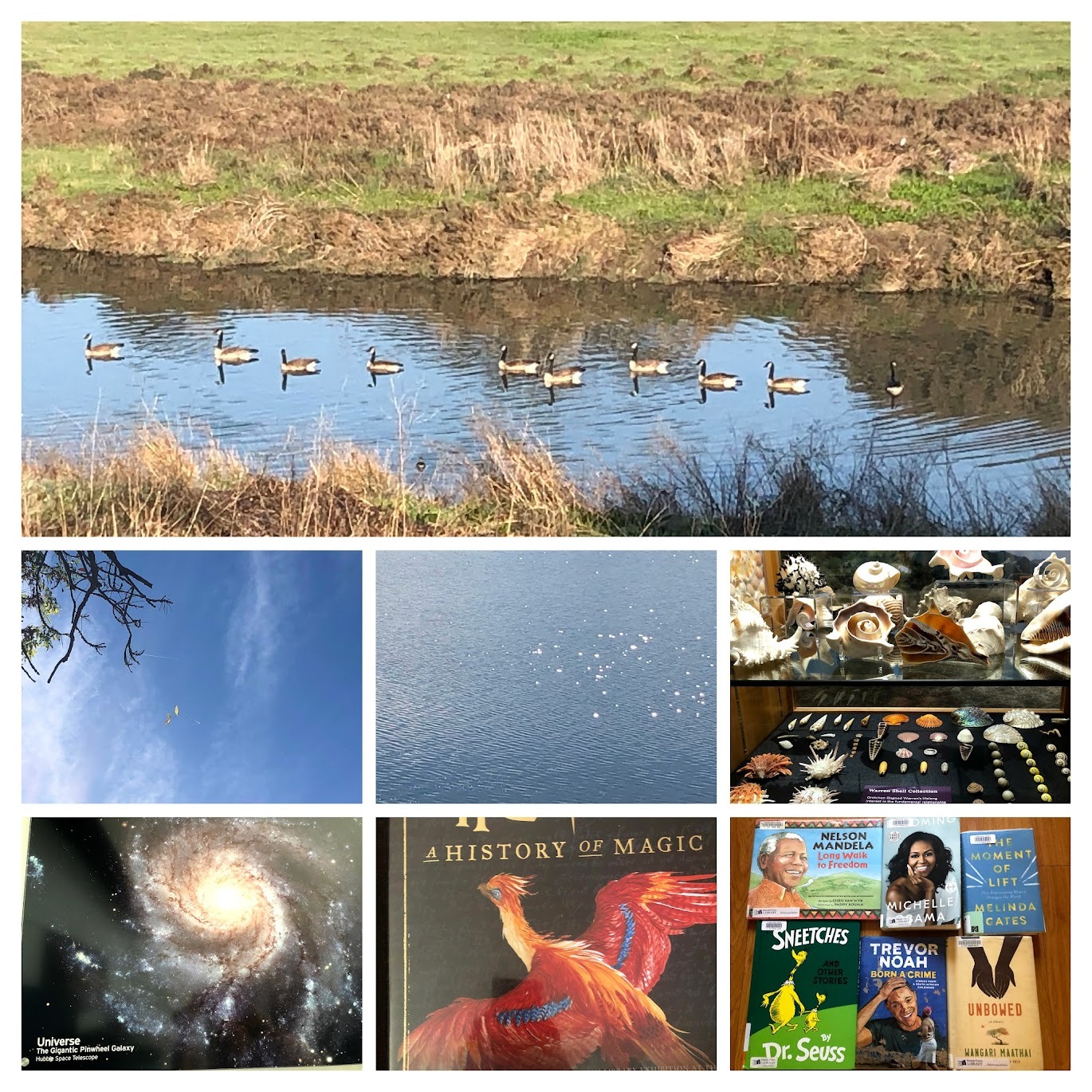
The more I tried to narrow down, the more I found myself drawn to the planet Earth. After all, I love almost every river I see, wish upon every stream and fountain – man-made or natural, love every tree, admire every flower as is wafts its scents through my senses, and adore the play of the evening light amidst the clouds. How could one place be selected? I did wonder about Mary Oliver’s poem on the unknown pond. The one in which she just refers to a nameless pond, since it could work for any pond, and I agreed with the sentiment. How many ponds have I since pondered over with that beautiful poem in mind. In fact, I have my own version of Walden’s pond, which is nothing close to Walden’s Pond that so inspired Thoreau in size or stature. But it is reachable from my home, and every time I glance upon its water, a new delight unfolds. Whether it is the pelicans, geese or ducks swimming there, or the play of the reeds movements upon its surface, every glimpse offers something lovely for the soul.

So finally, I settled on Planet Earth as my favorite. We Belong on Earth, is after all, a popular theme on the blog. Therefore, the poem chosen was A Grain of Sand – By Robert W Service

A GRAIN OF SAND

If starry space no limit knows 

And sun succeeds to sun, 

There is no reason to suppose 

Our earth the only one. 

by Robert W. Service

Followed by Carl Sagan’s ode to the Pale Blue Dot (written almost 45 years after A Grain of Sand – this ode is one for the ages) and then finally with by my own humble ode to our beautiful Earth.

As we walk upon this Earth, there is much to be grateful for, and much work to be done to fix our footprints on the sand.

The Human Earth

I was reading frantically the other night. I wanted to finish the book before the New Year. Earth’s History – 4.5 billion years in 8 short chapters by Andrew Knoll. I had galloped my way to the last chapter: Human Earth, when the eyelids lodged a formal protest, and refused to stay open.

A Brief History of Earth: Four Billion Years in Eight Chapters by [Andrew H. Knoll]

So, I did the next best thing. First thing in the morning, I came downstairs reading. There wasn’t much chance of reading in the mornings with the general comings and goings of life in the nourish-n-cherish household. But I live in hope. I sipped my coffee for all of three sips reading about Human Earth when I detected a faint fracas among the humans in the household. Cautious pricking of the ears is no use in the house. The father-in-law is steadily losing his hearing, and the mother-in-law was yelling at him for something and wanted him to know it. All the fathers-in-law in the street heard it, and so did I. 

I tried to read on, but before I knew it, I was called upon to act as referee. If one can shy away and gallop back to bed while sitting in the chair, that was me. Past performance seems to mean nothing. I mean if I were a batsman who has shown time and again that I didn’t know how to bat, would benign fortune keep giving me batting opportunities? Why then was I being called to referee a fight between them yet again? I had been given scathing reviews in the refereeing-department by both sides on every occasion in the past few weeks.

You see? Diplomacy doesn’t help. I find myself agreeing with both their points of view, much to their disgust, and annoy them both equally. Neither feels supported once I agree with the other, and I am given up as a bad job. They do seem to be united in this assessment of me, and I take that as a small victory in the peacekeeping operations. But beyond that, there is nothing I can claim to help with.

This was another day in the life of humans, and it seemed everyone was intent on huffing and puffing and blowing the house down. 

Though, I am not directly involved in all of this (thank goodness!), I tried to look mildly interested. It turned out to be nothing (quite literally nothing as is mostly the case) I clutched the coffee cup and sipped like the gods downing ambrosia, till the well of coffee ran dry. 

After some time, I declared I needed some fresh air and took myself off on a walk. 

As I walked on beautiful Earth on that cold winter’s day, I felt a fresh appreciation for the planet. The book talks of Earth’s geological clues that helped us resurrect the planet’s early history. Theories as to when the planet was really formed, half lives determining the age of species and their evolution etc. Beautiful timelines explaining the australopithicus and when homo sapiens came aboard.

Illustration from A Brief History of Earth by Andrew Knoll

In 8 chapters, it explains many things that we know in different contexts, and ties them up to Earth’s history. Oxygen Earth, Biological Earth, Geological Earth, and finishes with the chapter on The Human Earth – which is to say our influence on the planet. The most recent impacts of the last two centuries, accelerating climate change, and so much more.

As I sat there on a rock, looking at the river waters flowing, and the ducks and geese gliding on the waters, eating when they wished, I cast the mind back to The History of the Earth. In 4.5 billion years, so much has happened. One can only make educated guesstimates of the lives of all the creatures that preceded us. 

In the book, Forgotten Beasts by Matt Sewell, he uses his imagination and creativity based on the fossilized shapes of the bones found and tries to give us an image to work with.  How were their eating habits, their social constructs? We don’t know.

In the book, Life in the Garden, by Penelope Lively, she makes interesting observations based on tree rings, to figure out the years in which the trees had to endure drought, and the years they had an abundance of rain. 

But the human life? Short as it is on the timeline of some trees, it is minuscule on the timeline of the Earth. 

Would future generations of neonids or whatever-name-they-give-themselves try to look back at 2020 and 2021 as Covid years? Would they reconstruct the social dilemmas, and habits of homosapiens? We seem to be leaving an outsize impact on the planet now, but how will it manifest hundreds of years from now?

I walked into the home, and found the parents-in-law diligently cutting the fruit of the banana tree. An arduous task, requiring immense patience, and concentration. The father-in-law was peeling the layers of the banana flower and extracting the seed within. The mother-in-law took these, and rubbed it against her palm to expose the edible pieces of the vegetable. 

Vazhapoo – the banana flower

I watched them amused – working harmoniously, their morning spat forgotten, united in the making of the banana flower dish (vazhapoo paruppu usili) that would’ve stumped any species on Earth thus far. 

The Books That Lit Up 2021

There were times in the past year when I felt the old reading habit was flagging. There was simply too much going on to properly immerse in the beauty and peace of it all.

Yet, somehow, looking at the list, there is a good combination of old favorite authors, re-reads of a few books – like visiting old friends again, and a marvelous spattering of new idealogies, new authors etc. The good old books did manage to light up my existence throughout the year, and I am ever so grateful to have access to them.

The Magic of Reading

Magic

Notable ones in the magical section include

  • The Girl Who Drank the Moon – By Kelly Barnhill
  • Icefall – by Michael Kirby ( loved this one for the Norse myths and the voice of the bard)
  • The One and Only Ivan – by Katherine Applegate (prompting a desire to learn to use paints and explore visual arts) 🎭 .
  • The Starry Skies – Grace Lin

Writing:

The art and craft of writing is a universe unto itself. Notable works in this genre in 2021:

The Wondrous Universe

  • Questions Asked – Jostein Garder & Akin Duzakin
  • A Pale Blue Dot – Carl Sagan
  • Cosmos – Carl Sagan’s Audible Book (in the most scattered fashion possible during 15 min car pickups and drop-offs, but it still managed to seep its way in like a raindrop permeates a thick coat somehow )

Non-fiction (only mentioning notable ones that made an impression)

Poetry:

As Ursula K Le Guin said in her Conversations on Writing with David Naimon, fiction is from the imagination, while poetry stems from contemplation. I suppose I benefitted from the contemplative minds of many stalwarts. The favorite among them this year was The Sky Full of Bucket Lists – By Shobhana Kumar. The book makes an appearance on my bedside table often, and every dip into it leaves me marveling and admiring the empathy and contemplation of life that Shobhana’s beautiful mind brings to life. (Please read it if you haven’t already – Shobhana also happens to be a dear childhood friend.)

  • A Sky Full of Bucket Lists – Shobhana Kumar
  • Emily Writes – Emily Dickinson and her Poetic Beginnings – Jane Yolen, Christine Davanier
  • Dreams from many rivers – Margarita Engle
  • Dr Seuss books : The King’s Stilts, Horse Museum ( A post on this book is long simmering in my mind. One beautiful meditative evening with crepuscular glory is rattling inside to be written about – soon!) . Several re-reads such as Horton Hatches the Egg and many more.

Humor

This section has me revisiting all my old book friends most often. Any new suggestions in the Humor genre are most welcome.

  • An Anthology – P G Wodehouse 
  • A Walk in the Woods – Bill Bryson
  • The River Bank and other stories from the wind in the willows – Graham Greene
  • P G Wodehouse (old favorites such as Uncle Fred in the Springtime, Code of the Woosters, and some others that were short story collections that our local library has acquired)
  • Miss Read (A visit to the Cotswold area in the UK is always a pleasure – in Spring, Summer, Autumn or Winter)
  • Birds, Beasts & Relatives – Gerald Durrell
  • The Shooting Star – Herge

Children’s Books: (again – only the notable ones mentioned )

The Anne Section

We moved in to our new nest, so it seems only fitting that I read Anne’s House of Dreams by Lucy Maud Montgomery twice. Also, the children made me watch Anne with an E on Netflix by touchingly creating a profile called ‘Amma’ for me, and I have all but moved into Prince Edward Island in Canada for the past few months. I joyously re-read the entire series, and then some, and have had lots of fun comparing the contrasting Moira Beckett’s version with the original ones.

  • Anne of Green Gables – L M Montgomery
  • Anne of Avonlea – L M Montgomery
  • Anne of the Island – L M Montgomery
  • Anne’s House of Dreams  – L M Montgomery
  • Anne of Ingleside – L M Montgomery
  • Rainbow Valley – L M Montgomery
  • Rilla of Ingleside – L M Montgomery
  • Christmas Tales from Avonlea – L M Montgomery

Please do share your lists too, so we may add to our to-read lists for the coming years.

Pelican Pilgrimage

“Bike ride?”, said the husband. He had that smile twitching at the corner of his mouth and I clutched the line like a drowning sailor. Solitude is a luxury. Especially so, during Navarathri season.

I quoted Walt Whitman as I wheeled the bike out from the garage.

Afoot and light-hearted I take to the open road,

Healthy, free, the world before me,

The long brown path before me leading wherever I choose.

Song of the Open Road – Walt Whitman

Had we gone on a walk, we might have been tempted to talk. But as it was, the bike ride was perfect. We biked along companionably, grateful for the riverside along which we pedaled, taking in the sights of the setting sun. Birds flitted effortlessly. The wind against our beaks were making cycling hard going, and every now and then, I glanced up at the hawks, geese and smaller sparrows and warblers, apparently holding their own, but probably wisely using the wind to their advantage.

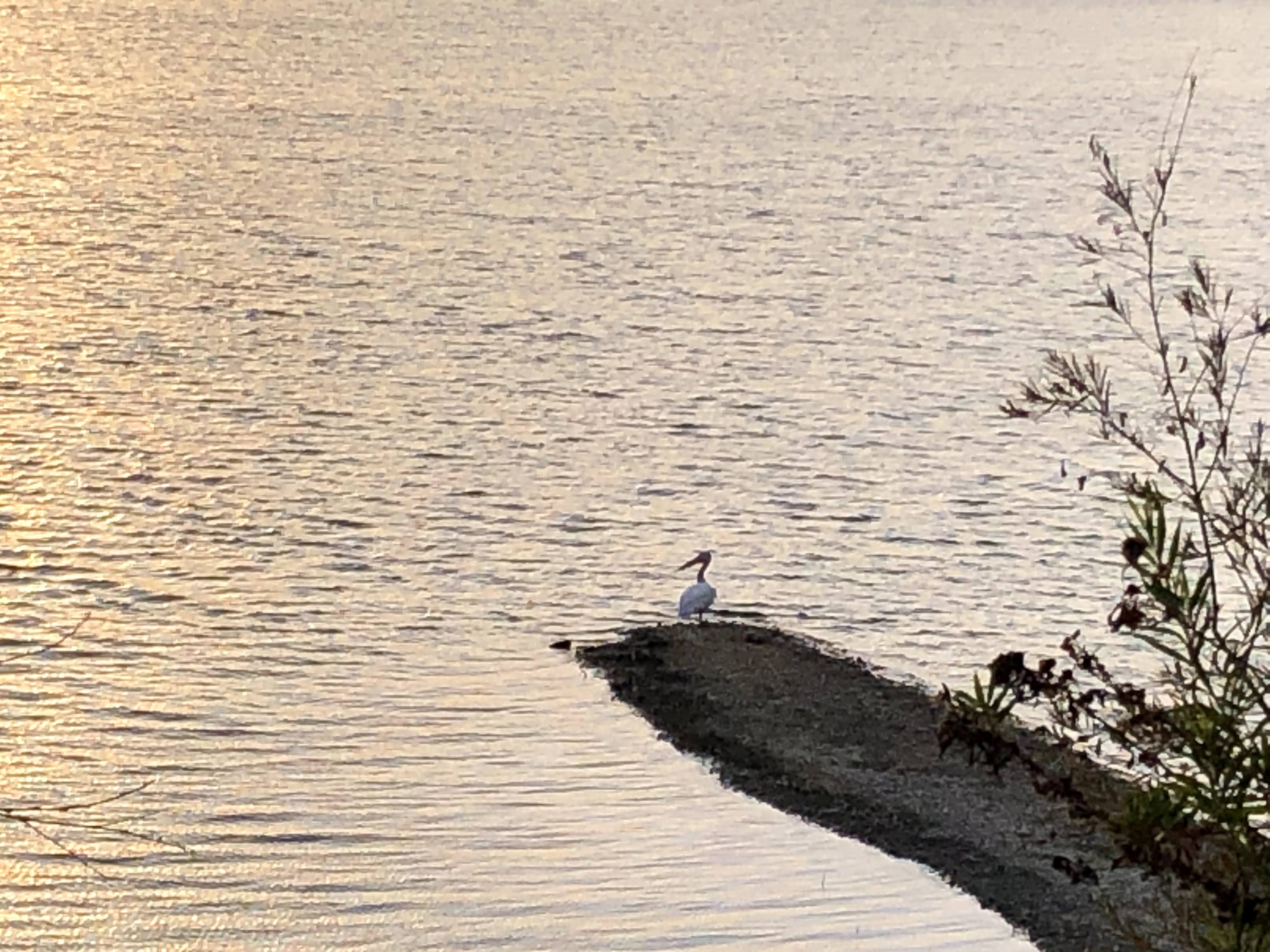
We stopped for a breather near the marshes nearby, and only then did I truly appreciate the scene before me. Dozens of pelicans took flight into the sunset heading towards the bay in the west. They rose courteously, together. With every scoop of pelicans that took flight, one of them flew out in a different direction from the others. It was curious at first, but they may have had a smart reason for doing so, seeing that their knowledge of aviation is certainly superior to our own.

A pelican’s muse

NPR All Things Considered – The Pelican Experiment

I don’t remember when I first saw a pelican. I have lamented this before. But this seems like the sort of thing I should remember. Marvelous creatures. Regal, graceful, social, elegant and peaceful beings. 

Countless times, I’ve stood admiring their coordinated fishing. If that isn’t dancing, I don’t know what is. Gracefully, beautifully, they duck in and out, in and out. Floating along seamlessly together, good naturedly taking in their fill. I especially love to see that little hump in their beaks. I thought it was a curiosity – something that reminds us that perfection lies in these little imperfections. But as it turns out, the hump only appears during breeding season and disappears thereafter.

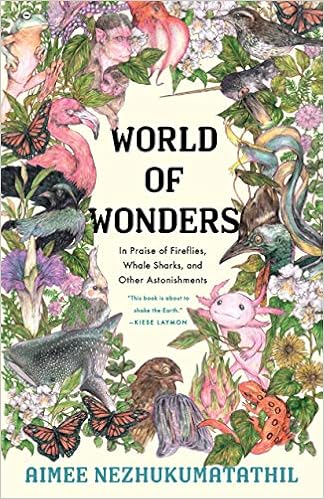
The pods of pelicans near the lakes and bays of California are a source of eternal joy, and though I feel I could never do justice to the marvelous creatures like Aimee Nezhukumatathil does in her book of essays, World of Wonders, my homage is nevertheless as heartfelt.

Where was I? Yes – cycling and watching the scoops of pelicans take flight into the sunset. Instinctively moving into formation so they conserve energy and stay together. There are very few experiences in life that compare to an evening like that.  I suppose spiritual seekers feel the same way after a pilgrimage. Satiated, renewed, and grateful for life on this beautiful planet among beings we love.

On the way back, we cycled in the same direction as the wind, and we found the going much easier. Slowly, companionably, we headed towards the social life of human-beings.

Barnard’s Star & Jupiter Dancing

Jupiter and Venus were both illuminating the evening skies. Dusk was creeping in. The sight of our familiar planetary companions is always a welcome one. The first ones to illumine the skies, and visible long before the stars can be seen, these wanderers are a delight. The red atmosphere of Venus, the thunderous black ones on Jupiter, and the beautiful bluish velvet earthly skies make for a magical time.

Later that night, after loads of laundry, dishwashing and cleaning were done, I sat on a park bench nearby and gazed up. Jupiter looked brighter than all the other stars, and I found my thoughts drifting. I read somewhere that the red spot on Jupiter depicting its great raging storm looks fiercer than ever. I could see none of that from my park bench millions of miles away of course. That night, the reflected light from the sun was just soothing, and in some ways alluring.  The great mighty giant with its storm raging for 3-4 centuries spinning, quietly keeping the solar system in balance, and dealing with its own destiny is strangely fascinating. Are there extremophiles on its surface? Any micro-organisms that only thrive in the storms? Maybe we would know one day.

https://www.nationalgeographic.org/activity/jupiter-s-great-red-spot/family/

As I went to say good night to the son, we fell to discussing the skies (one of our favorite topics as regular readers know). I told him that I read about Jupiter’s storms being stronger this year,

“Ha! Our global warming affecting the storms on Jupiter? “ he said and the pair of us chuckled at the joke. 

“Did you know if you put 90 Jupiters together, you still won’t have a star?”

“Yeah?! How many would you need?”

“ A hundred.”

“Let me guess – Kurzegesagt?” I said, and he nodded. 

That channel has some of the most amazing content, and the son gets excited when a new video is released.

“If 100 Jupiters came together, we could get a star like the Barnard’s star. We cannot see, but it will be a star. ” . I had not heard of Barnard’s star, but there it was capable of going on as a red dwarf star for the next 10 trillion years. He charmingly said 1-0-0-0-0-0-0-0-0-0-0-0-0-0 of course, and I was wondering what the number is – fogged after a hard days’ work, this child’s 1-0-0-…-0 can be a bit much. 

So, there was another close neighbor to the Earth – a star that was not as visible as Alpha Centauri, but there nevertheless, 6 light years away. This red dwarf has made its way into science fiction with the possibility of harboring life in the planets around it. The dwarf star is too cold, and though the planets orbit at an optimal distance, it is too cold for life as we know it. But human imagination, while marvelous, is also limited in some respects.

Imagination will often carry us to worlds that never were. But without it we go nowhere.

Carl Sagan

Apparently, the Barnard’s Star is known as one of the fastest moving stars – a little dancer in the skies, moving slowly regally among Jupiter & Venus in the evening skies. This one’s movements are not as visible in one lifetime, but is visible over a century. To marvel at this kind of generational wisdom being passed down always makes me grateful for the little part we all play in this mighty universe.

Life_On_Earth

As we sat in our pajamas talking about the stars and their planets, I thought about the beautiful marvelous gift of star-gazing.

I don’t know what the future holds for mankind, but I hope gazing at the stars is one that is always possible. A source of dreams, conjectures, possibilities, and solace. That is my wish for all sentient beings,

Back from the Brink – 2

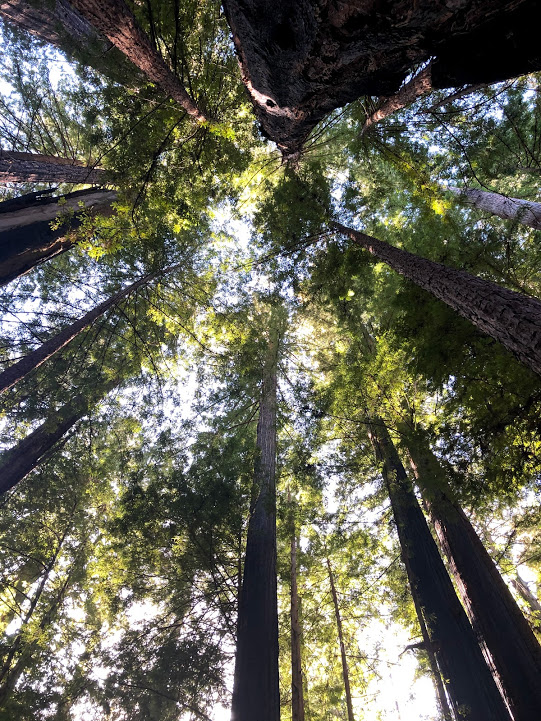
The first conscious thought that gray morning was that we would be amidst giants. The truest, wisest, most resilient of all. We had planned a hike in the coastal redwoods of California near Muir Woods for the husband’s birthday. As we entered Cathedral Grove (a better name I cannot think of, for spirituality shines through the branches of the tall old trees), I pointed to a sign that said , “Be seen not heard!”. 

“Yes….that is for you!” Said we all pointing to one another. 

“Quiet Coyote!” We agreed and off we went, quieter than our usual selves. There is a natural sanctity, a lasting feeling of peace, and a humbling of self in these groves. 

Many of the trees in Muir Woods are over half a millennia old. These trees had put down roots long before the Spanish conquistadors came to the United States, or the Gold Rush had started. California would not be the same after these events. Silicon Valley was centuries away, when these marvelous giants had started reaching up up and above towards the skies. But here, inside the redwood forests, none of that seems relevant. 

After several feet of hiking up, we were able to gasp for breath, inhaling the lovely scent of the woods, and conversation started up again. A few miles into the hike, there were fewer people, and the children opened up. Talk turned to Beautiful Earth, a popular classic in the nourish-n-cherish household. The son told us about the disappearing monarch butterflies. I remember visiting Butterfly Grove a few years ago. It was easy to mistake the butterflies for leaves. There were thousands of them plastered together on the branches, hanging everywhere, looking beautiful. Millions of them made the journey every year up and and down the coast, and they made a beautiful sight. Who doesn’t stop to admire a flitting butterfly? This year, less than 2000 monarch butterflies were counted. The species is dying. A world without butterflies sent a shiver down my spine.

What have we done to this planet if butterflies are no longer in our midst? 

The daughter piped in, “You know monarch butterflies are corner species – meaning they indicate the state of the ecosystem in general. For instance, if monarchs go away, then birds find out that painted ladies aren’t problematic either and soon we start losing species that look like them as well.” Apparently, the monarch butterflies are toxic to birds and they leave them alone. Seeing a little evolutionary wormhole there, other species like the painted lady butterflies evolved with the same color scheme, but they aren’t poisonous to birds. How long before birds figure this out?

“But how did this happen?” In the decade since we went to see the butterfly grove, how did 99% of the species manage to be destroyed

“Milkweed!” This ubiquitous plant that thrived along roadsides, freeways and everywhere is fast disappearing due to increased use of fertilizers. Toxic to other animals, the milkweed is apparently a major source of nectar for the monarch butterflies. Could we bring these butterflies back from the brink? It seemed like a miracle would be required.

A world without butterflies is not one I wish for our grandchildren. I shuddered in the grove, and sent a little prayer up towards the towering redwoods. What will these trees witness in another 500 years? They are already enduring more frequent wildfires, and though, redwoods generally hold up very well against wildfires, the frequency with which they have been occurring in the past few years is not comforting.  

Back home, my eyelids holding the short-term memory of the redwoods in them, I closed them, instantly transported to a world in their midst. Forest bathing. Those of us who still have the magic of trees in us are blessed indeed. Those of us who stop to see flitting butterflies need to pray that future generations have the magic of butterflies around them.

Wise Generous Trees

“Unless someone like you cares a whole awful lot,
Nothing is going to get better. It’s not.”

 Dr. Seuss, The Lorax

The Polar Bears Seem Fine Sans Alarm Clocks

There are days when one wishes the night went on for just a little longer. Would the sleep doctor approve of that spot of sleep? Did the seconds and minutes really tick off at the right pace?  (Or did they gallop through the night like restless fanciful ponies eager to catch the sunrise?) 

Sometimes the answer to all of the above is yes. The sun has risen, the birds are chirping, the grass is dewy,  and the world outside is brighter than it should be when the clouds of sleep are still gathering in this manner around one’s eyes. The Earth continues spinning its tale with the lives and destinies of all its living creatures. 

The previous evening, the son and I went on a bike ride around the time of sunset. We stopped here and there, and there again. The child has tried restricting me to 3 pictures of the sunset everyday, asking me to thumb through previous pictures of sunsets before gorging on some more pictures, all to no avail. The heart wants what it wants, even if the phone storage doesn’t. 

I moaned and thought of the crane flying overhead the previous day at sunset. I could not get a picture of the flying crane, but the mind’s eye had it captured well enough. He or she must be up looking for their morning spot of nourishment, the little spry red fox that I have spotted in the river marshes must be up and about too. The birds – do they ever sleep in?

After all our stops, the skies started darkening really quickly and we pedalled back home trying to play a game of Is-that-a-tree-or-a-person? September has started, and the closer we get to the autumnal equinox, the sooner the sun seems to set. The quality of rushed days seems to wrap up quickly with the fiery, hurried sunsets (Forest fires in California make for smog ridden skies but beautiful sunsets)

The earth continues on with its tilt, hurtling through the expanse, and our consciousness. Meanwhile, the alarm’s snooze went off again reminding me that another day was here, and meetings and invites wait for none. Would it help being a polar bear? Does a polar bear feel groggy after a winter’s sleep? With all this global warming, does it irk the polar bear that it cannot sleep as much as it would like to?

The nature of time will perplex, and one can only yearn for the days prior to alarm clocks, and reminders. I am sure the polar bears get along just fine sans alarm clocks, and yet here we are.

The alarm said : Rise and Shine

Rise and Shine indeed! YOU rise and shine! I want to flop and sleep. I am sure Nanu (the polar bear in the book, Ice Walker – A Polar Bear’s Journey Through the Fragile Arctic) would agree.

Books:

Ice Walker – By James Raffan

Ice Walker: A Polar Bear's Journey through the Fragile Arctic
Ice Walker – A Polar Bear’s Journey Through the Fragile Arctic – James Raffan

Snail Tales

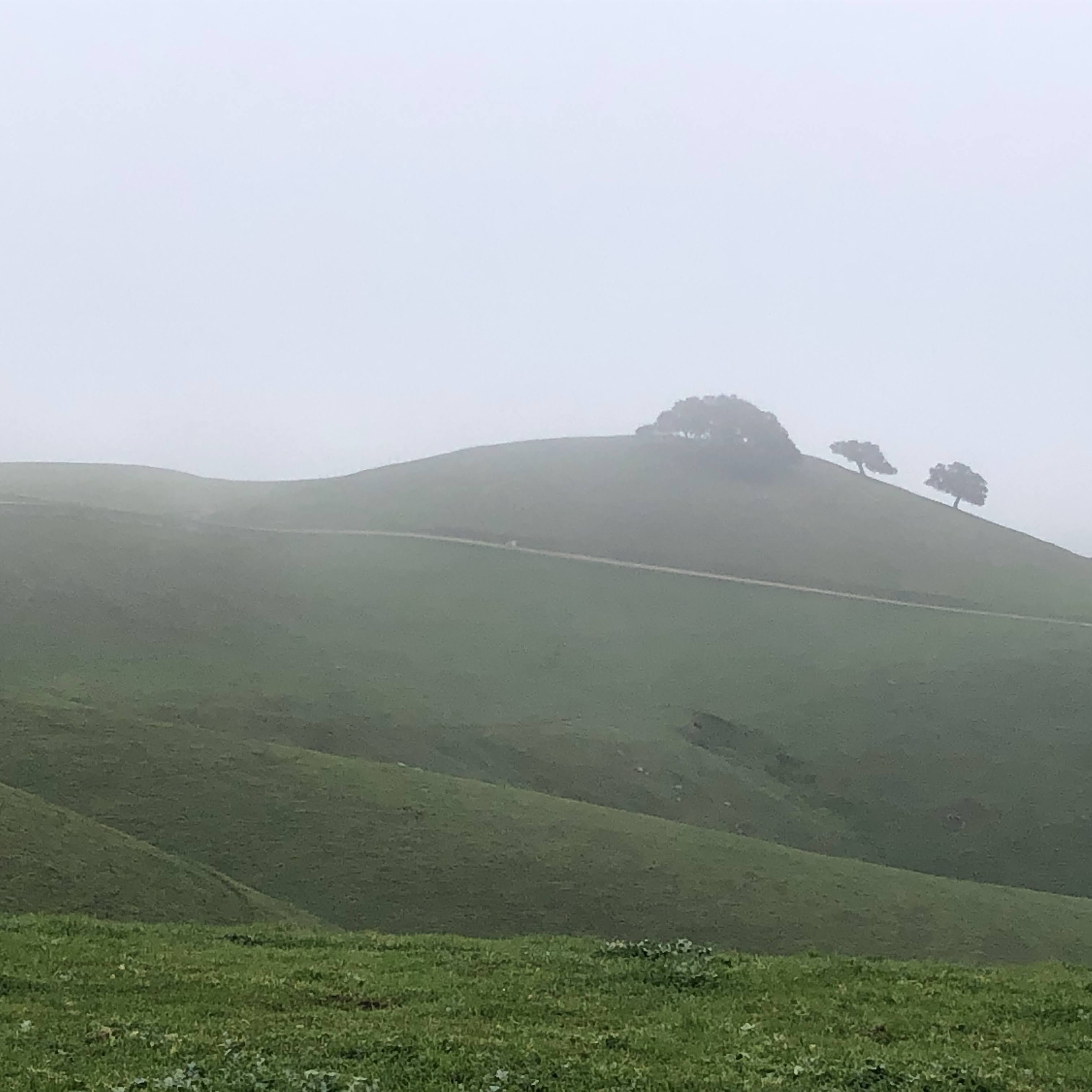
When R K Narayan said, writing is like a yoga, I suppose he didn’t quite envision the exact pose in which inspiration would strike. For me, it seems to be in the Shavasana(sleeping or corpse) pose. Take Saturday night for instance. I had mooned about the hills early in the am. Happy  cows, and cheeky turkeys hobnobbed with nervous cows and pesky humans to great delight in the misty dews of the morning. 

A morning out in nature is usually balm enough to get the old inspiration going. I spent the whole day with wisps of little sentences floating in and out of the brain. Sentences that would make amazing epiphanies, little witticisms that I yearn for when trying bite-size nuggets of wisdom, they all paid a visit.

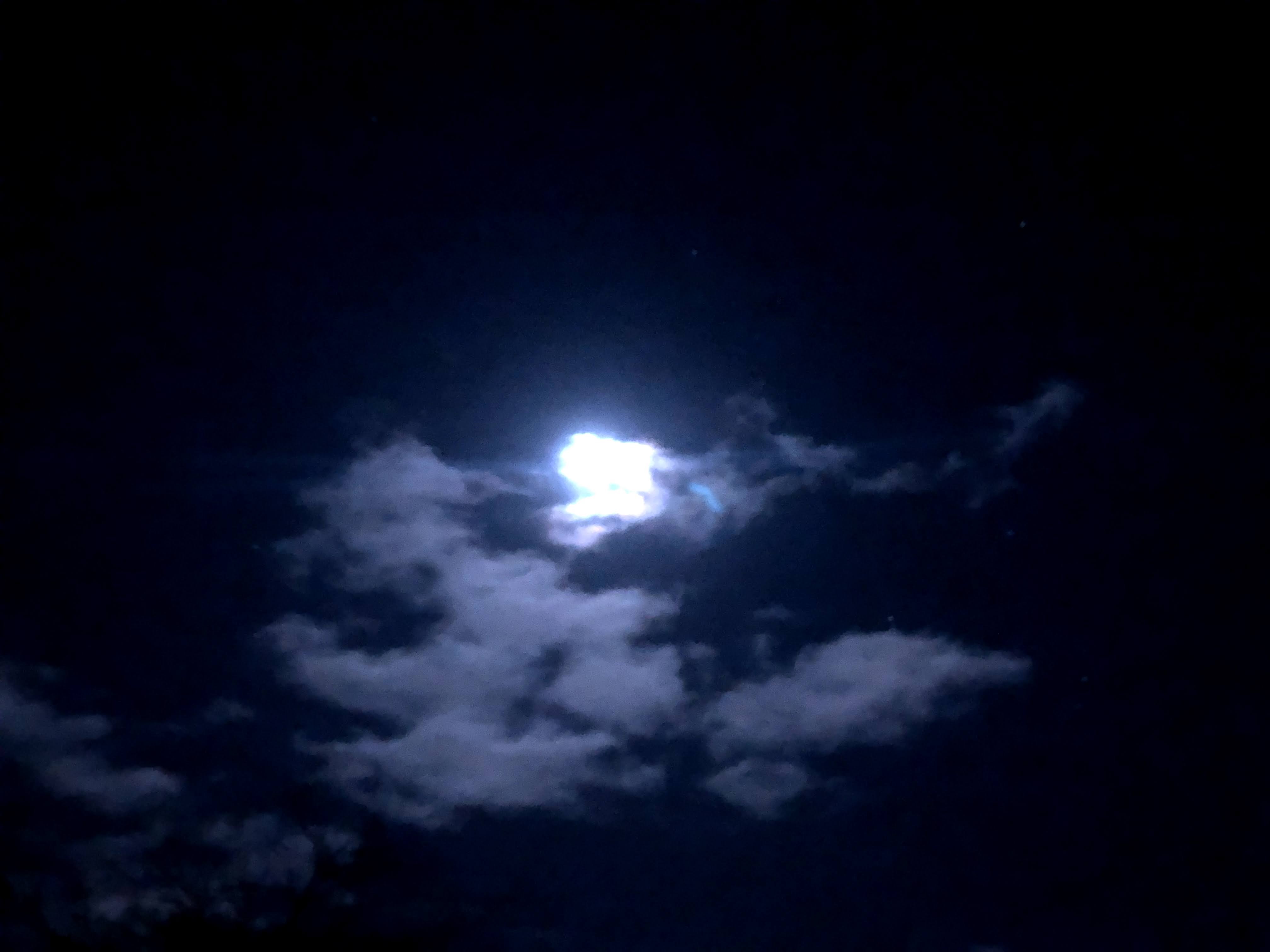
Throughout the day, inspiration seemed to come along just when I was slicing the onions, or grumbling about the crumbs with the old vacuum cleaner in hand. I had no access to put some of these words to paper. Then, early evening came, and I sat down to write, when the beautiful full moon rose – hanging like a large golden orb over the Earth. Poets swooned, artists swelled, and writers bloomed. I rushed in, opened my laptop, and had one of the dullest writing sessions possible. 

I teased and pleaded – trying to gather the wisps into a cotton ball of candy, but nothing happened. I wrote the dullest set of sentences conceivable and decided to not fight the muse anymore, and headed to bed. 

I opened , Over Seventy, by P G Wodehouse, (his autobiography) and there was a section written by P G Wodehouse on how he would hesitate to use snails as subjects.

“As a writer I have always rather kept off snails, feeling that they lacked sustained dramatic interest,. With a snail, nothing much ever happens, and of course, there is no sex angle. An informant I can rely says they are ‘sexless or at least ambivalent… Obviously, the snail-meets-snail, snail-loses-snail, snail-gets-snail formula will not help you and this discourages writers from the start.”

Over Seventy – P G Wodehouse – Essay on Bridges, Snails and Meteorites

Well, what do you think this innocuous paragraph did? It started the brain off on a most interesting snail trail. I harked back to the book, Birds, Beasts & Relatives, by Gerald Durrell, where he dedicates a good portion of his musings on myrtle forests to snails, and what an interesting love subject it proved to be.

He writes with such obvious rapture on the mating ritual of snails, that I wonder why entire sonnets aren’t dedicated to this marvelous endeavor. He had the good fortune of finding the slow blisters stirred into action after a freak thunderstorm got them going. 

Sure enough, on a myrtle branch there were two fat, honey- and amber-coloured snails gliding smoothly towards each other, their horns waving provocatively.

… This freak storm had obviously awakened them and made them feel gay and romantic. 

So, there they were, side by side attached to each other by the two little white cords. And there they sat like two curious sailing ships roped together. This was amazing enough, but stranger things were to follow. The cords gradually appeared to get shorter and shorter and drew the two snails together. They stayed rapturously side by side for some fifteen minutes and then, without so much as a nod or a thank you, they glided away in opposite directions, neither one displaying any signs of darts or ropes, or indeed any sign of enthusiasm at having culminated their love affair successfully.”

Birds, Beasts, and Relatives – By Gerald Durrell – Essay on Myrtle Forests

I closed the book, and an image from the early evening, with the skies pink in the setting sun arose. I had just watered the plants. The children and I had squealed at the moisture at the end of the hot day, and stood there enjoying the little rainbows created by the water sprays, when I spotted a snail clinging to the succulents, and making a slow but hard climb towards the lavender patch. The children gathered around to see the beautiful creature too. Was the snail’s sentience relishing the sunset skies too?

Sluggish thoughts indeed, but rather the best for a drift into sleep. Where old P.G.Wodehouse was stumped with the snail-as-dramatic-love-interest angle, old Gerald Durrell had spun a yarn with the very angle. I yawned one of those jaw-breaking ones, and resolved to write about snails instead. So, here we are.

School Days

It was the first day of school – back to school in-person after a year and a half of remote learning for the Elementary school goer in the home.

There we stood – the husband and I- masked, behind a line holding a throng of anxious parents at bay. The children were coming out to the school environs after such a prolonged time in front of their screens. The nervous energy, chatter and activity, muted through masks as it was, was enough to uplift the senses. 

As Miss Read says in her chronicles of life as a school teacher in a village school: The first day of school has a life and energy all its own. Even if the preceding days have been somewhat dreary, she says, the first day manages to be bright and sunny. We live in California, so our summers are not dreary. If anything, they are all too glorious with the sun beating down on us, wildflowers hanging fully on every bush and tree. Even so, the energy and bright first day of school was marvelous.

It was only as we standing there with the others that I realized how much I missed this particular experience. I used to enjoy those precious little moments in the morning looking at the children enjoying their play. (Read: Recess as the basis of culture)

The arrival of the pandemic was like an unexpected blizzard that enveloped the whole Earth in its swirl. While the swirl continues, lessening at times, picking up pace at other times, there are times when post-vaccination, we can hope to remember our normal. 

Great Red Spot - Wikipedia
Great Red Spot on Jupiter

I stood there taking in the morning energy from all the young scholars gathered in each other’s physical presence after a year and a half, and smiled to myself. The mask has its advantages. I could observe the teary young parents of kindergarteners as they embarked on this great adventure, the weary parents of the older children who were happy enough to see their children out in their school, interacting with other children again. 

I glanced at the son who’d finally found his classmates and was amused by what met my eyes. One fella had learnt how to tie his shoelaces a different way, and he stooped and showed the admiring knot of his friends not once but three times, while they watched patiently, a light shining in their eyes at this new learning. 

I couldn’t help smiling.

A few minutes later, I noticed another young fellow, good samaritan that he was, double out of line, and race towards the field, and throw a football that was slowly rolling away from them to the center of the field. He came running back and nicked back into line just as their teacher came out to summon them in, and he was met with huge roars of appreciation for his citizenship. 

Who said education only happens in the classroom?

As I walked slowly back to the car hearing the receding chatter of the young and the studious, I hoped that they would have a normal-enough year. The vaccination isn’t here yet for younger children, and we would have to keep an eye on things as they proceed. Look out for each other, help keep one another safe, and navigate this together.

Enjoy the present has taken on a new meaning in Pandemic times. Senior Sunrise

The Statues of Liberty

I have had the luxury of traveling and reading the past few days. I read and watched the following in one glorious spurt:

I preferred the books and movies with animals & the magic of our thriving universe in them over the ones with just humans in this lot though.

  • Forgotten Beasts  – by Matt Sewell 
  • 100 animals to see before they die
  • Ice Walker – A Polar Bear’s Journey through Fragile Arctic – James Raffan
  • Birds, Beasts & Relatives – by Gerald Durrell
  • The One & Only Ivan – by Katherine Applegate
  • The Seven Husbands of Evelyn Hugo – By Taylor Jenkins Reid
  • Back from the Brink – Documentary at the Boston Science Museum
  • Moons: Worlds of Mystery – Documentary at the Boston Science Museum
  • Kung Fu Panda – 2 – Dreamworks Animated Movie

Granted that the 7 Hs of Evelyn H was a fast read. The narrative style pulled us along with just a hint of intrigue keeping us going till the very end. The story itself appeals because it is a story of someone trapped in the endless trap of fame and glory, and the constant insecurity of ratings and popularity. It is, though, a reminder of the things valued by plenty of humankind, and the reminder of love in a tumultuous world. The interest in another’s life, is a never-ending case of human interest, and the story does justice to that indeed. There are several well-written lines in there on human nature. I must say I have never been enamored by the Kardashian-type of celebrity life shows, so my review is somewhat lukewarm for this one.

The heart-lifting tale of The One & Only Ivan was up next – the gorilla who saves his little elephant friend Ruby, after making a promise to an older elephant friend, Stella. Based on a true story, this is the kind of story that tugs at heart strings. Katherine Applegate’s writing is a class apart. I have been a fan ever since I read The Tale of Despereaux. 

I wonder, sometimes with a tinge of envy I admit, about how animals, birds, and marine creatures live without the trappings of economics and finances, and social influences and so on. They navigate by the cosmos as much as we do – In Ice Walker, the author, James Raffan follows the life of a polar bear, Nanu, as she grows, hunts, mates, and raises her young in the polar ice caps. How surely she knows the changing seasons, and the direction in which to lead her cubs for food and sustenance, is beautifully written and portrayed. The bright stars that we peek at, is so much more for these creatures. How far we have come as humans, and how much more left to go? Nanu is killed by humans, and her surviving cub is forlorn. 

On the way to view the Statue of Liberty, we stopped and watched plenty of statues of liberty along the way. Boston Public Gardens hosts the marvelously made statue of Make Way for the Ducklings by Robert McCluskey. 

New York’s Central Park hosts many statues : Alice in Wonderland & Hans Christiaan Andersen with a swan are marvelous reminders of life and the marvelous influences of imagination. I wonder how many people worried about the economics and finances of the economies, their lives, and their jobs stopped to take deep breaths and believe in magic once again as they make their way past these statues of liberty.

It seems only fitting to finish this marvelous post on the different things that sustain human minds and lives with a Seussism or two.

And Always Remember

And will you succeed?

Yes! You will, indeed!

(98  and 3/4 percent guaranteed) 

KID, YOU’LL MOVE MOUNTAINS 

Oh the Places You’ll Go – Dr Seuss

Or this one?

Expand Your Horizon

The more that you read, 

The more things you will know,

The more that you learn,

The more places you’ll go

– I Can Read With My Eyes Shut – Dr Seuss