The Role of Journalism in History

In his section on Opium in the book, This is Your Mind on Plants, the author Michael Pollan writes about how his first story that was to appear in the leading newspapers in the 1990s was redacted and cut after a legal review. (The entire essay is printed in the book that was published 20 years later). This essay seems to precede the opioid crises in America that was to surface just a decade later. But it was apparent that the undercurrent was already at play. The world just had no idea how it would pan out. 

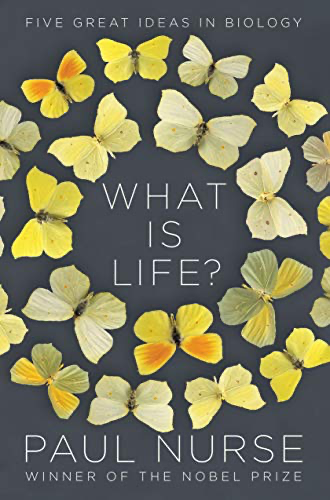
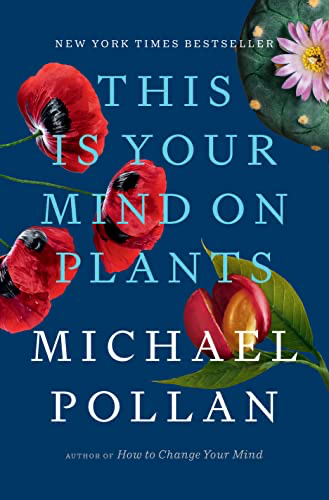
This is your mind on plants – Michael Pollan

His sentence on journalism and its bearing on History resonated on so many levels, that I noted it down then and there. 

“There’s a parable here somewhere, about the difference between journalism and history. What might appear to be “the story” in the present moment may actually be a distraction from it, a shiny object preventing us from seeing the truth of what is really going on beneath the surface of our attention, what will most deeply affect people’s lives in time.”

Michael Pollan – Our Mind on Plants

Later in the book, when he is talking about caffeine, he mentions this piece of Asian history that emerged from the tea-drinking habit of the British. By the 1800’s tea drinking had become a normal routine of English life. Jane Austen refers to tea in her books published in the early 1880s. In the book, Alice in Wonderland, published in 1865, tea parties are galore. 

“Yes, that’s it! “, said the Hatter

with a sigh, “it’s always tea time.”

Lewis Carroll – Alice in Wonderland
Alice in Wonderland

Here is the excerpt of the section on the British East India Company’s tea trade with China.

Since the company had to pay for tea in Sterling, and China had little interest in English goods, England began running a ruinous trade deficit with China. The East India Company came up with two clever strategies to improve its balance and payments position: it turned to India, a country it controlled that had no history of large-scale tea production, and transformed it into a leading producer of tea – and opium. The tea was exported to England and the opium, over the strenuous objections of the Chinese government, was smuggled into China, in what would quickly become a ruinous and unconscionable flood.

By 1828, the opium trade represented 16% of the company’s revenues, and within 5 years, the East India company was sending more than 5 million pounds of Indian opium to China per year. This helped close the trade deficit but millions of Chinese became addicted. After the Chinese emperor ordered the seizure of all stores of opium in 1839, Britain declared war to keep the opium flowing. Owing to the Royal Navy’s vastly superior firepower, the British quickly prevailed, forcing open 5 “treaty ports” and taking possession of Hong King in a crushing blow to China’s sovereignty and economy,.

So here was another moral cost of caffeine: in order for the English mind to be sharpened with tea, the Chinese mind had to be clouded with opium.”

Michael Pollan – This is your mind on Plants

The adage ‘History is written by the victor’ does ring true in most cases. How many perspectives of every narrative are there? How does one classify a good side or a bad side? The perspective of time lends a helpful lens. For instance, when Madeleine Albright, the first woman senator met Vladimir Putin in the 1990’s, she was asked of her opinion of him. She recognized him as a despot in the making, and one who was preternaturally occupied with the idea of a United Sovereign States of Russia (USSR before it disintegrated into Russia + all the other smaller countries). I suppose this is an example of a seed taking root in one’s mind and growing and festering with time. The war on Ukraine is but a step in that direction.

More importantly though, what is current journalism missing for the larger picture today? Whether it is in the reporting of Covid, the Ukraine crisis, or the larger commodity of people’s attention spans. Our future generations would point to this day and age of our shrinking attention spans in an attempt to capture our attentions, and see the arc from some place that humanity had reached. Would it be a virtual reality universe designed to give us more options to escape from life, or will life itself change? Nobody knows. But in order to see how it pans out, we need our critical faculties about us. 

‘But I don’t want to go among mad people,’ said Alice.

‘Oh, you can’t help that,’ said the cat. ‘We’re all mad here.’

Lewis Carroll

Plant Influences

March is a beautiful time where we live. The spring equinox is approaching, the moon is waxing and the beautiful luminous joy it brings every evening has to be seen to be believed. It is also the month of the great flowering. All around us, the Earth seems to be bursting into bloom. One evening after a particularly beautiful walk admiring hillsides with golden poppies, I came home and picked up the book, ‘This is Your Mind on Plants’ – By Michael Pollan.

This is your mind on plants – Michael Pollan

The book is split into 3 sections: The mind soothing, mind enhancing, and mind altering 

Morphine in the opium poppy; the caffeine in coffee and tea; and the mescaline produced by the peyote and San Pedro cacti. (In short, it deals with sedative, stimulant and hallucinogen classifications of plants) 

After reading the first introduction I could not get the image out of my mind. How could that beautiful flower innocuously growing on hillsides in the wild, the relatively common poppy be associated with the Drug Wars? How did human beings even pick up these things and figure out what the effects are. The simplest explanation points to humans observing the calming effect of poppy eating cattle and trying a bit for themselves. I was curious to read that poppy tea was served at funerals in the Middle East as they were known to help induce feelings of happiness and thus dull the grief of death. Could the beautiful, innocent loving flowers be responsible for the opioid crisis that have resulted in the death of thousands in America in the past decade alone?

California poppies

Finding the use of a sedative would have been one of the first things human beings checked off their evolutionary list. In fact, some of this knowledge may even have been handed down to us by our ape cousins. 

For instance, apes make trips of miles to procure certain herbs to cure themselves of stomach upsets. When I read it in one of Jane Goodall’s essays, I was astounded. Of course our animal cousins have a more intimate relationship with nature than we do. 

If sedatives could be obtained thus, hallucinogens couldn’t be far behind. I remember reading somewhere that the myth of flying reindeer has hallucinogenic origins too. Seeing the effect of the magic mushrooms on the reindeer, the humans near them experimented them as well, and lets say their hallucinogenic effects seem to have echoed down the centuries in endearing stories of Santa Claus and his red nosed reindeer. 

I put the book down meditatively, and went downstairs to make myself a cup of tea to start the day. Nothing wakes us up like a good cup of tea! Often teased about my fondness for tea, this is one of most oft taken for granted plant influence. The caffeine in tea and coffee has stimulated human kind for over two centuries.

After a particularly beautiful walk admiring the golden poppies in the light of the setting sun, I looked it up. It was a small relief to read that the California poppy though in the same family as the opium poppy is not classified as a narcotic. 

Quote: 

“It should be noted that although California poppy is in the same family as opium poppy (Papaver somniferum), it is not a narcotic and is much gentler and non-addictive.”

I am looking forward to finishing the book.

Precarious Egos

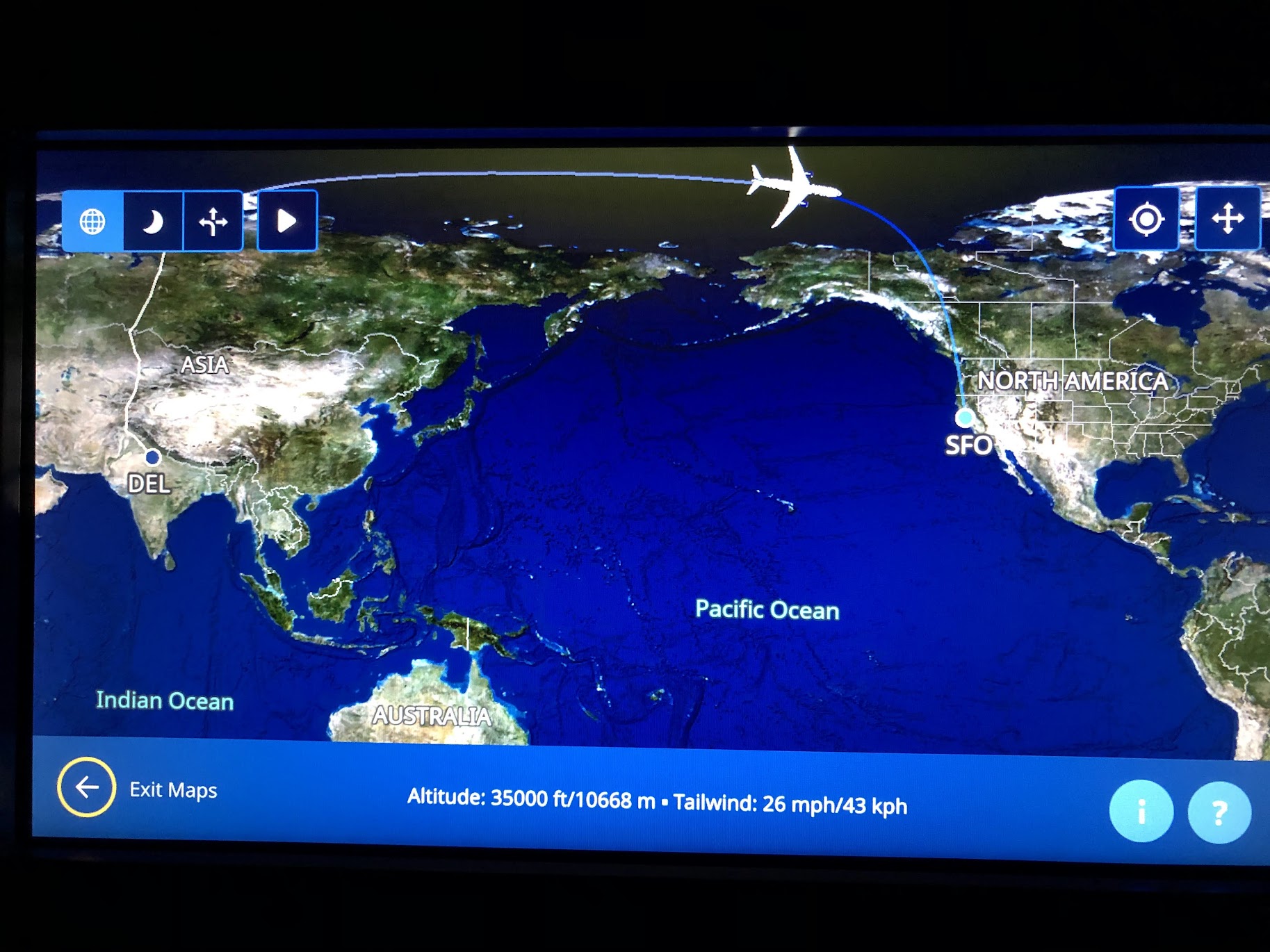
I was tired emotionally and physically, and slept the minute the flight took off. Why they have international flights taking off in the wee hours of the morning I don’t understand, but there we are. Groggily, mid way through the flight, I switched on the console to see where we were. Just a month ago, I was flying over Russian airspace on my way back from India. The situation in Ukraine was  already deteriorating. There was nothing for it. What was this mad rush for controlling more areas? Tanks were piling up near the borders then, and another crazed ploy for power, influence and space was in motion. Would we be able to defuse this situation without it escalating further and displacing thousands?

I took this picture of the console after we passed over Russia.

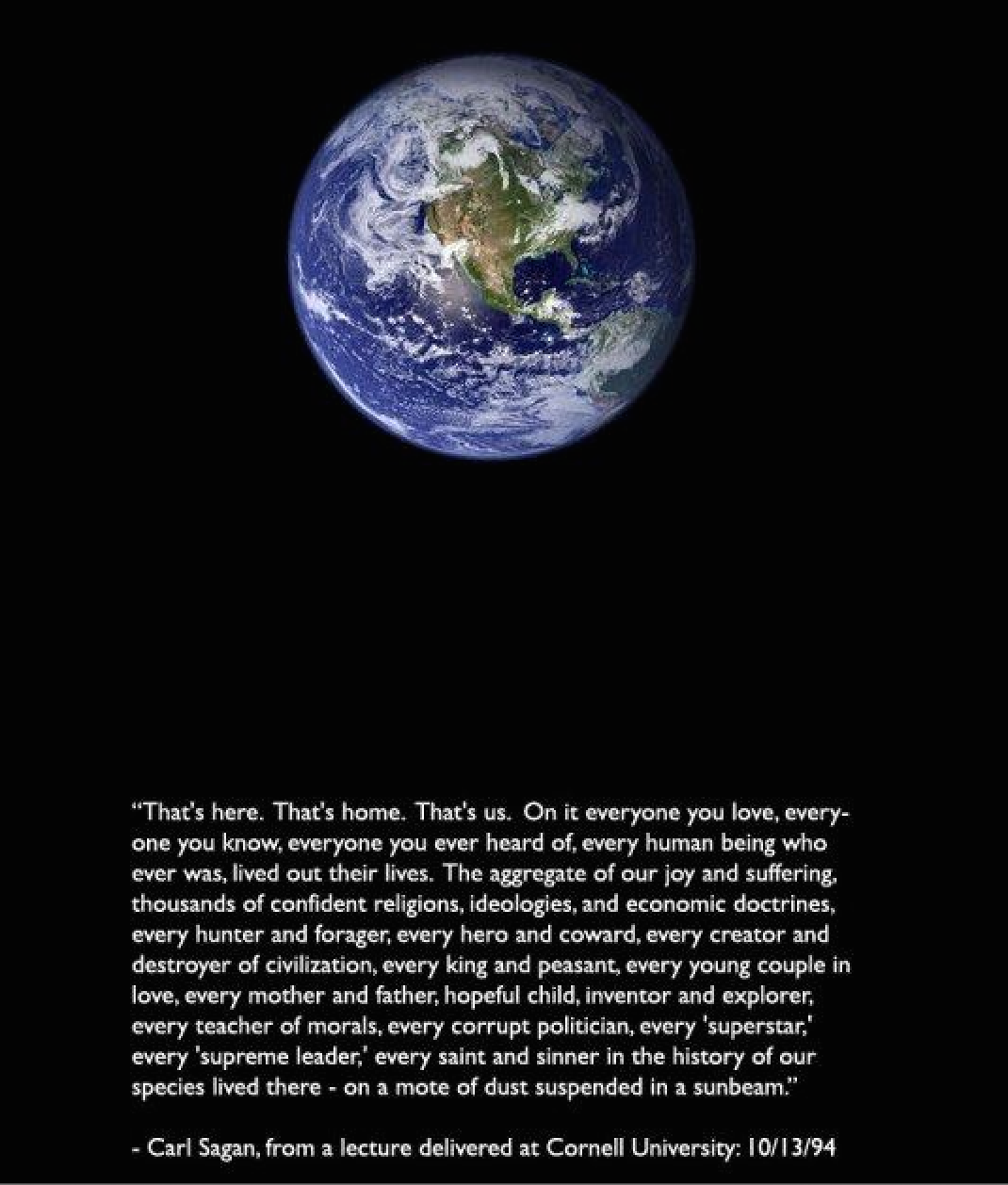
Involuntarily, I sighed and sent a little prayer, indulged in a little wishful thinking, and thought of Carl Sagan’s quote on the little blue dot. It was dark outside making our obscurity in this universe even more stark. The flight shuddered, and the seat belt signs came on. The pale blue dot and its trappings of our ego, power and greed never feel more real than when at the mercy of the headwinds around one. The cloak of gravity over the precarious egos on the planet.

Pale Blue Dot – Carl Sagan

In the month since, the situation has deteriorated multi-fold as we all know. Sanctions have been imposed. No flights over Russian airspace and through the Ukrainian region.

The threat of another World War looms high in the air. Syria remains in the throes of civil war. Even in moments of alarm, I belong to that category of people who believe in the balm of time and all that. Give it time, things will resolve. Give it time, reason will stagger back to its throne in the head etc. 

Will time be able to help the situation from escalating into a Third World War? I hope so. Fervently. After all, we are smart enough to have the technology and weapons to annihilate ourselves several times, and are dumb enough to do so.

Our posturings, our imagined self-importance, the delusion that we have some privileged position in the Universe, are challenged by this point of pale light. Our planet is a lonely speck in the great enveloping cosmic dark. In our obscurity, in all this vastness, there is no hint that help will come from elsewhere to save us from ourselves.

Carl Sagan in the book, Pale Blue Dot

The 🌏 Laughs in 🌸 🌺

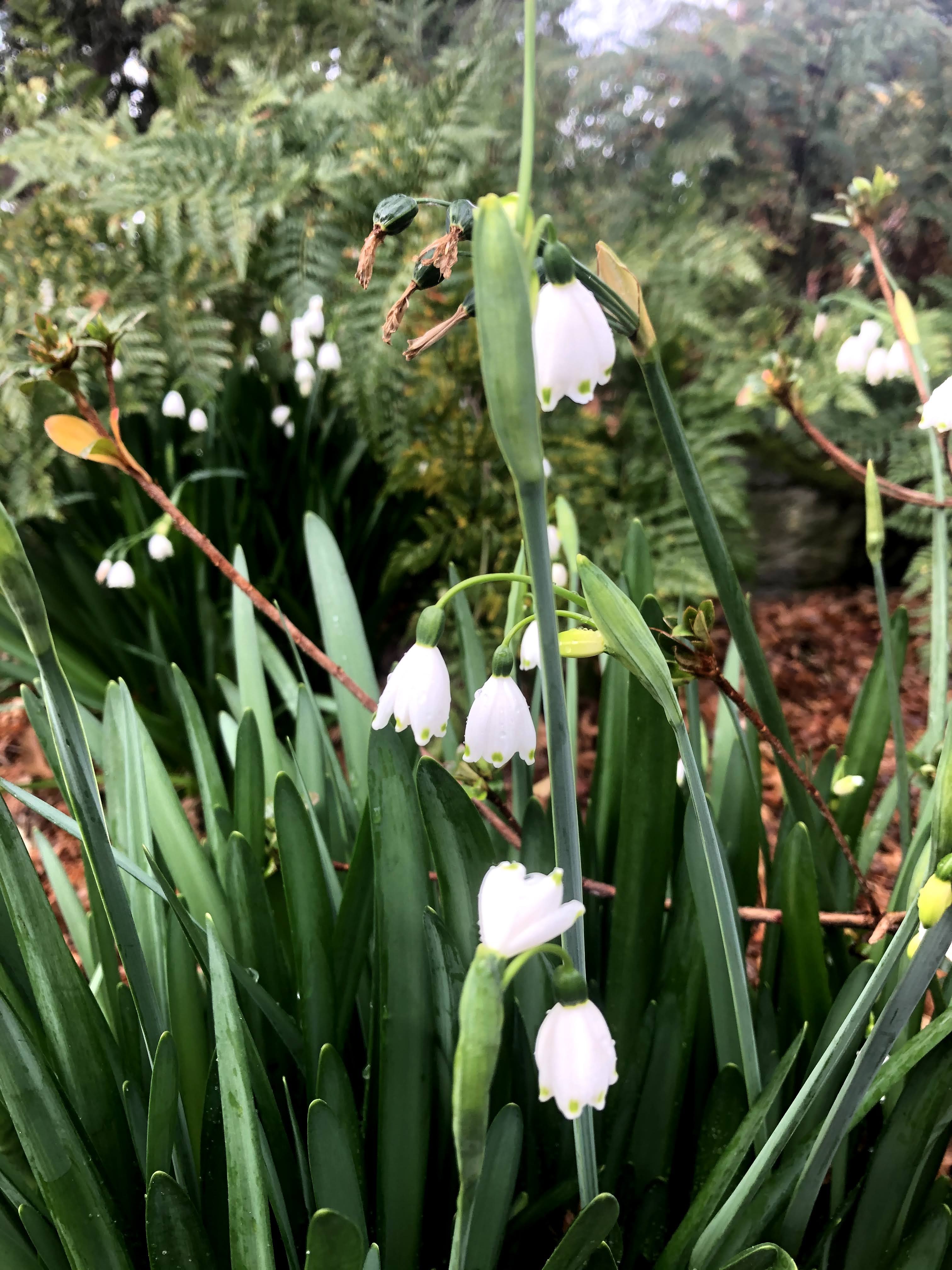
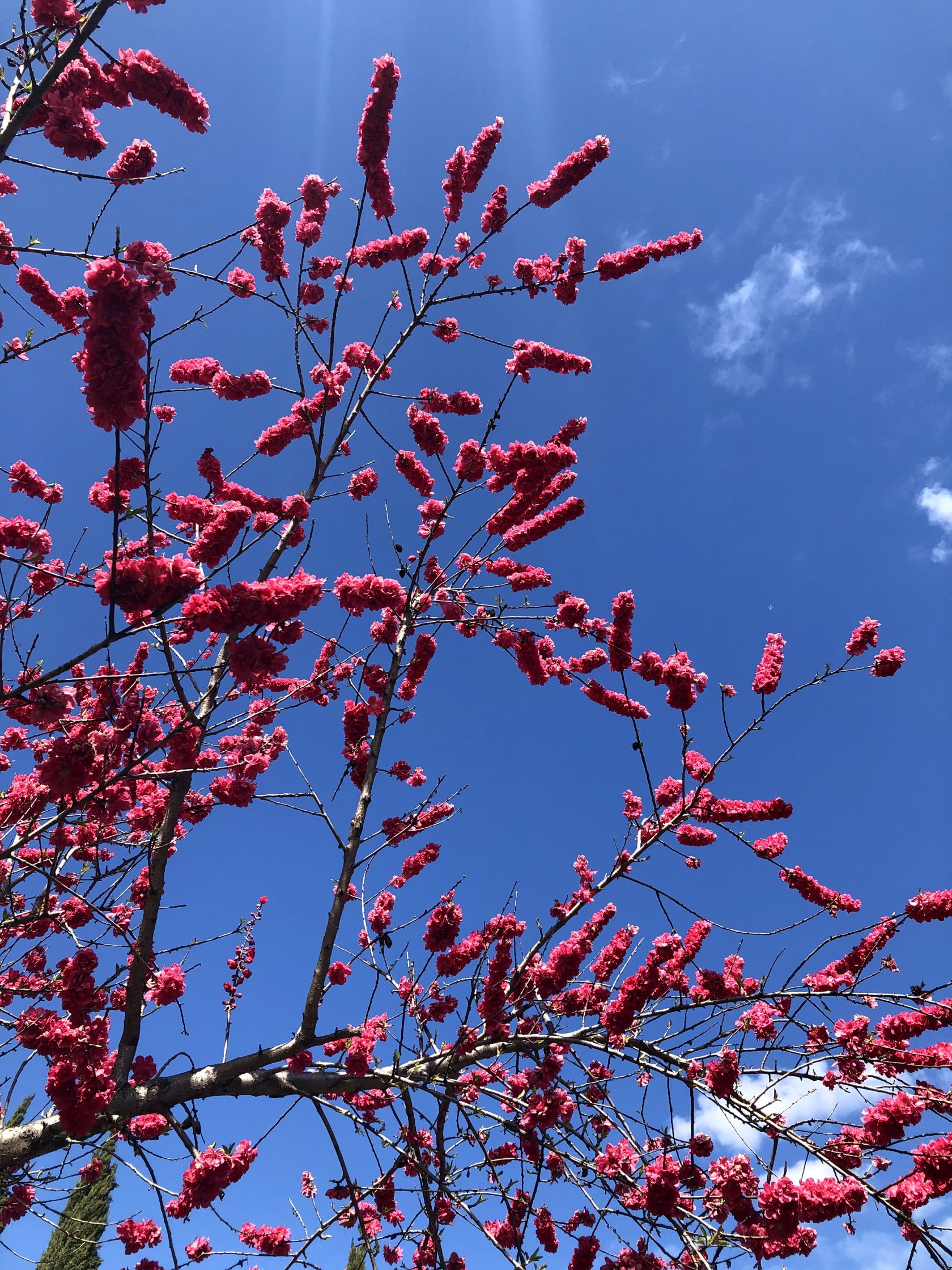
Most trees are still bare. Winters are milder in California than elsewhere. Even so, the bare branches of the brilliantly hued trees just a few months ago is stark against the skyline. But then, there are early spring heralders that enthrall and enchant. When I am out walking these days, they are often punctuated with rapture – little stops to admire a cherry blossom tree in full bloom, a tulip bulb poking its head out, or snowdrops working its way through the cold hard months and blooming just in time for the spring equinox.

Snowdrops

Spring is the best time for a saunter. Californian Springs have the best combination of rainy days, cloudy days, sunny days, warm days, cold days, and windy days. Through it all, there is the breathtaking beauty of the flowering trees. It is hard to imagine an Earth without flowers given how much they brighten our days on Earth. But it wasn’t that long ago that Earth was rampant with life and lifeforms without flowers. Makes us stop and think doesn’t it? What else evolution would have up its sleeve if allowed to go at its own pace. How many creations beautiful, mesmerizing, unknown and somewhat hampered by the limits of our own imagination?

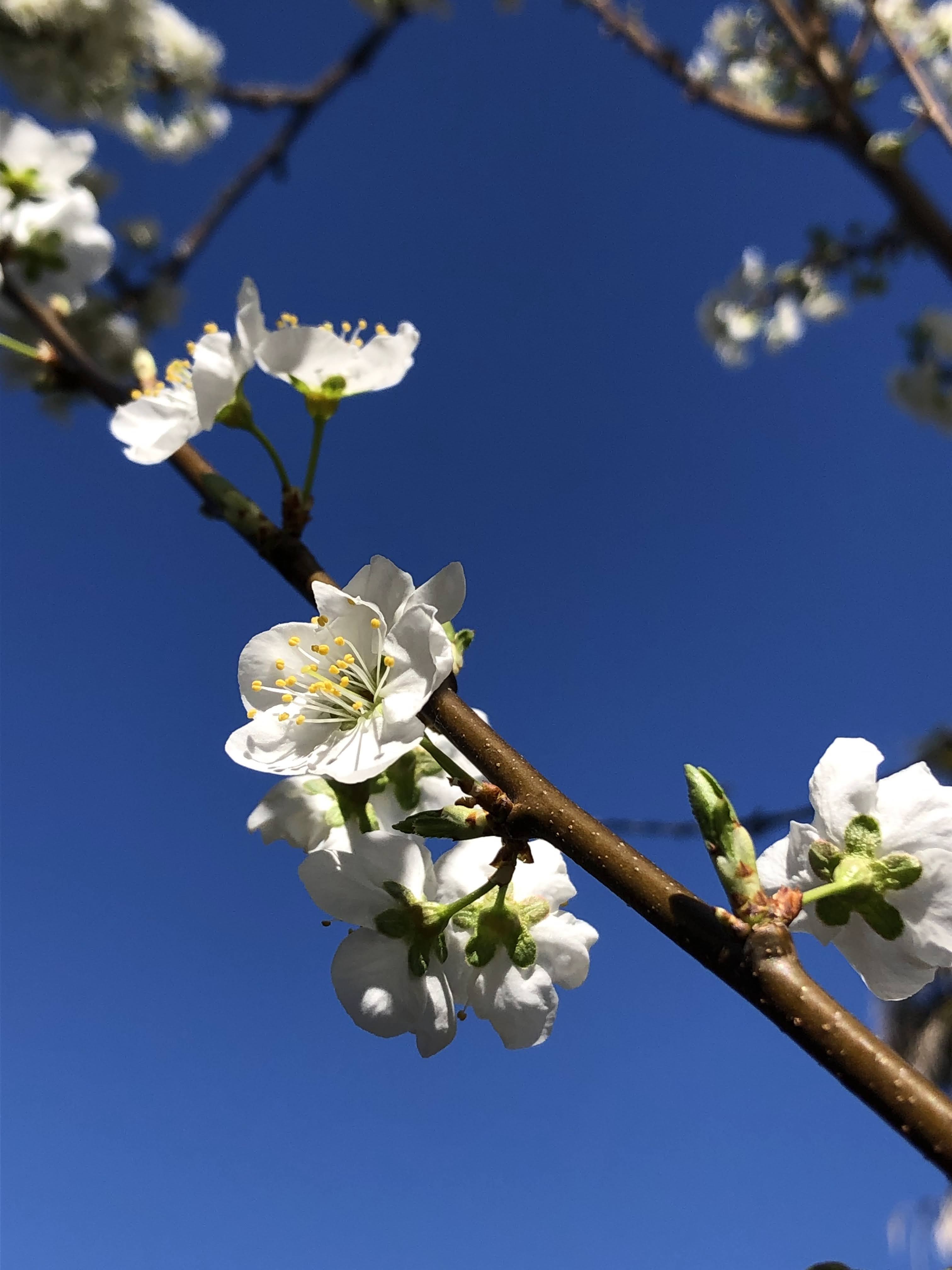
Sitting inside on a cold March day and watching the wind whipping the trees outside, and looking at the petals of the cherry blossom flit towards the earth below is fascinating. On sunny days, the birds pecking at the cherry blossom flowers and sending showers of little petals earthwards is showtime. 

I cannot help thinking of the distant lineage of the little birds. Did their dinosaur ancestors see flowers and interact with them? I thought beaks were a particular evolutionary step for nectar. But maybe not. I remember reading that flowering plants only appeared towards the tail-end of the dinosaur’s time on Earth, or maybe even later. I also remember walking along the Natural History Museum time line and thinking that the dinosaurs really missed the marvelous great flowering of planet Earth.

https://earthhow.com/earth-timeline-geological-history-events/

But then again, this recent article seems to think the dinosaurs may have seen flowers after all.

https://www.livescience.com/40088-flowers-existed-with-dinosaurs.html

Quote:

Newfound fossils hint that flowering plants arose 100 million years earlier than scientists previously thought, suggesting flowers may have existed when the first known dinosaurs roamed Earth, researchers say.

LiveScience Journal – article linked

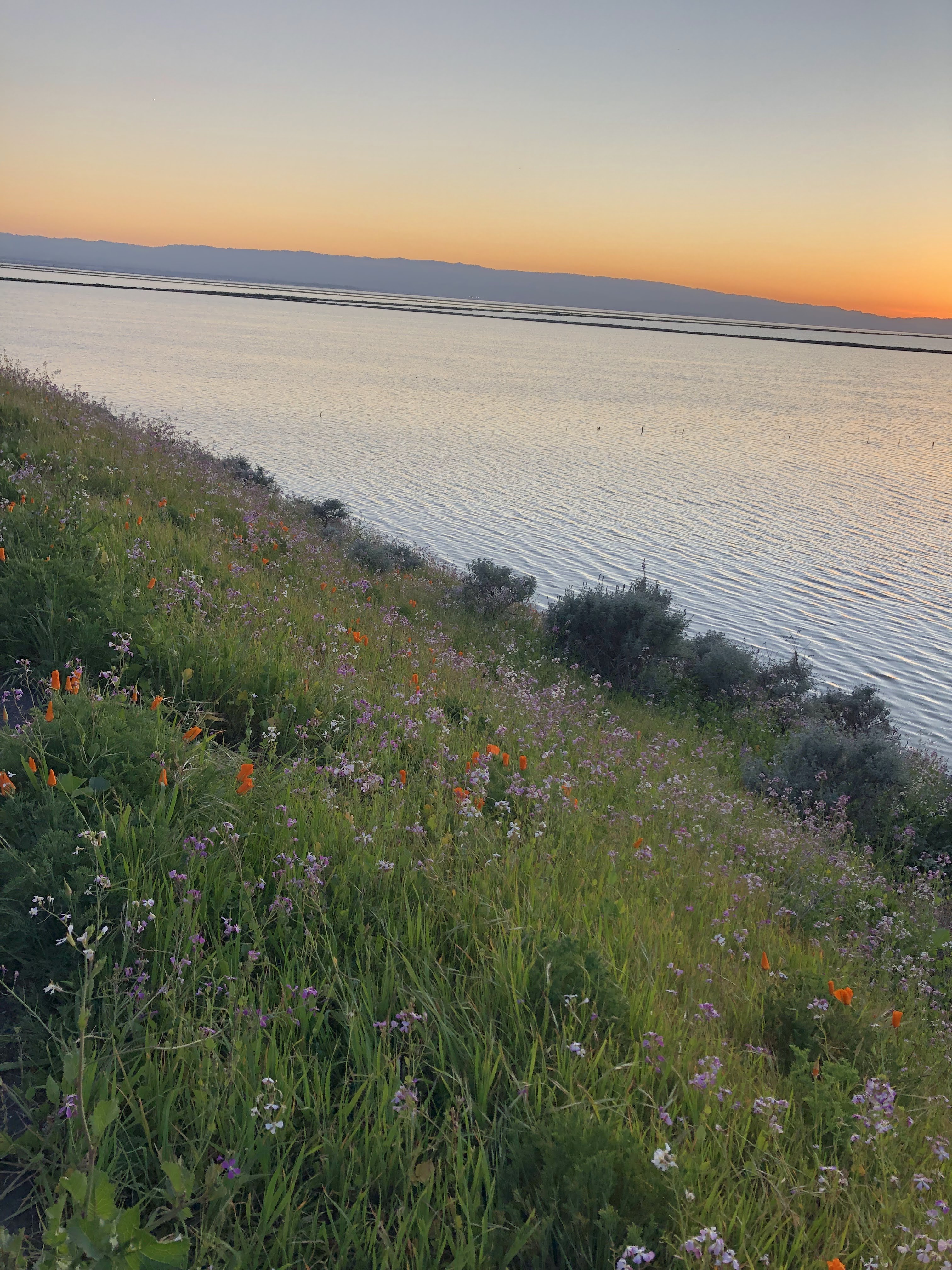
Whether or not the dinosaurs saw the flowers, I am grateful we live in an era when we can experience flowers. All the musings of the cosmic accident of life seems glorious in the flowering trees around us. Meadows are bursting with wildflowers. On a little hike near the coastline one day, we saw hillsides filled with golden orange poppies, lupines, and flowers of yellow, white and pink weaving and waving amidst the fresh green of Earth. Set against most trees that are still bare from the winter the flowers are a sharp reminder of all the stark contrasts of life.

We don’t know about all the forms of life possible in our universe, and probably never will find the enormity and possibilities. Yet in that very paradox lies the power of musing.

koi sonder

One day during a particularly windy bike ride, I stopped to catch my breath. Riding against the wind even if the terrain is flat can be hard. I watched the windy skies blowing the fluffy cirrus clouds away, and said aloud that it would be nice for some rain. The husband gave me that look he reserves for my references to eucalyptus, rain and all things Nilgiris. “You and your rain!”

But the universe has a strange way of granting wishes sometimes. A day or two later, the temperatures dipped, a cold spell gripped the area, and I sat up around midnight watching the rain pelt the windows. It was beautiful to watch in the warmth of our homes. I felt a blast of warm air from the air purifier in the room and sent a little note of gratitude for warmth and security when it must’ve been cold and wet outside. 

A few days ago, we had visited a quiet spot tucked away from the hustle and bustle of Bay Area freeways, and turned in past the almond farms into a quaint garden and farm. There, in the corner was a small koi pond with koi fish whose size looked magnified several times given the size of the pond itself. The fish swam towards where we were standing peering into the waters.

The curiosity of these creatures 🙂 If I knew Koi-polese, I could’ve translated. But I think they wanted to know more us: Who were these people who are peering at us? Would they be kind enough to feed us? 

I thought of Dr Dolittle:

These fish languages, they really only work underwater. It’s fascinating! The basic system is mouth movements and bubbles signals.

Dr Dolittle

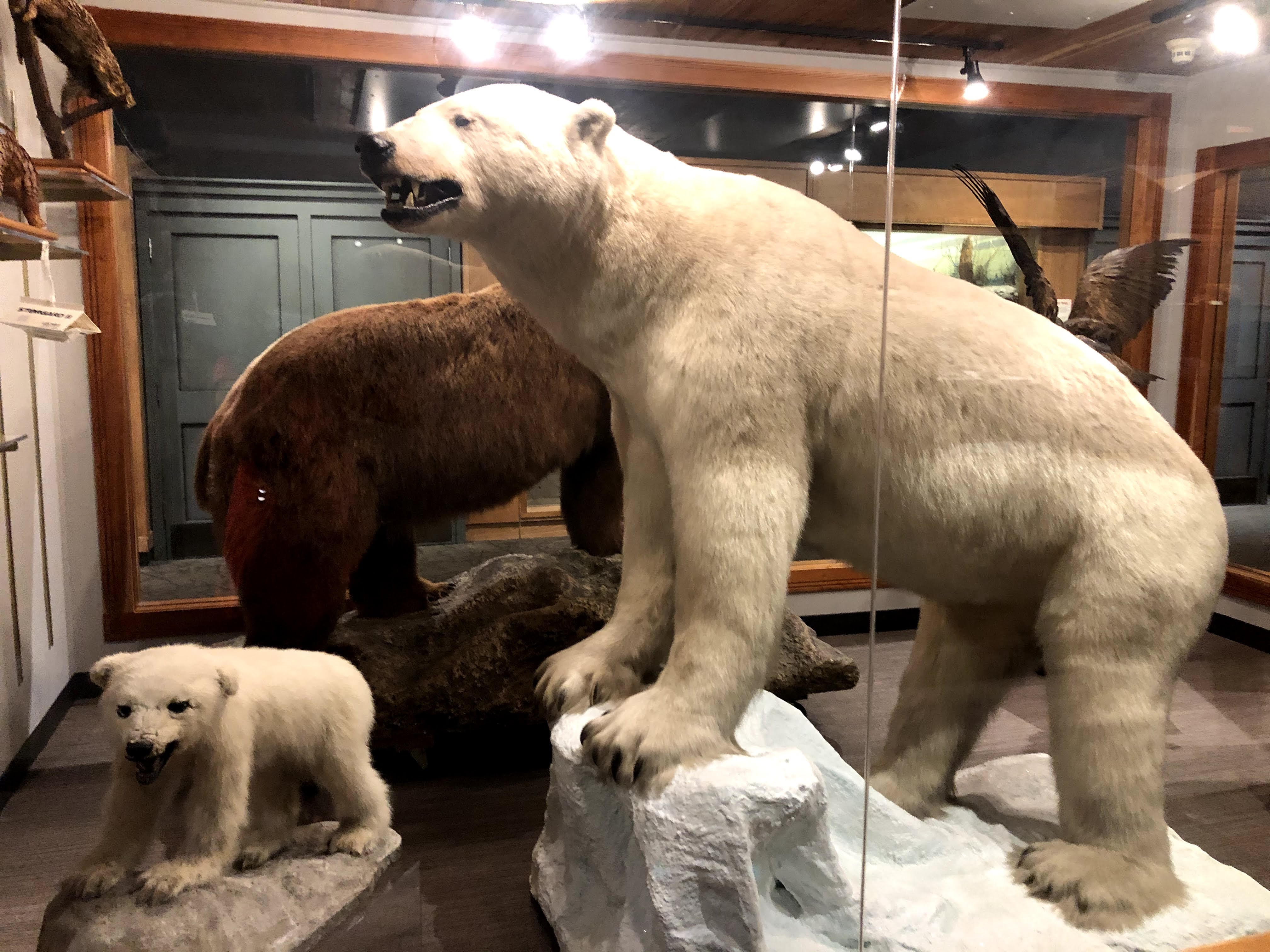
For some reason, that night looking at the rain against our the windows, I thought of the koi fish peering out of the waters and contemplating the gathering clouds. How they would react to the gentle rains falling from the skies? Would their sea brethren feel the same way when they navigated the oceans? I remembered reading an article in the New York Times about how the fish used stars and starlight to navigate the oceans. Polar bears and many creatures do so too. How do they fare when the cloudy skies 🌌 obscure their vision?

“Did you know that an ant has more intelligence than a hippopotamus? And that a grasshopper, in relation to his size, has more power in his hind legs than a kangaroo. Absolutely, fascinating! There’s no doubt about it, animals are much more interesting than people.”

Dr Dolittle

There is a word that captured my fancy when I read it, for I have often felt that especially when traveling. (Grocery shopping in Afghanistan post) . 

sonder (the realization that each random passerby is living a life as vivid and complex as your own).

That night I felt that word with respect to all our fellow creatures. We have no Dr Dolittles among us to know the extent of our fellow creatures feelings. But we do know we have many creatures around us show feelings of warmth, love, clannishness and so forth. 

Almond Blossoms to Cake

“Hmm….is that badam cake?”. (Badam is the Tamil name for Almond) The son’s nose whiffed and sniffed rapturously as he came home from school. I laughed at his reaction. The heavenly scents of ghee, almonds, milk, cardamom, and sugar have felled many a strong heart. No wonder celestial offerings have this combination of aromas the world over. I nodded and the little fellow ran inside. His grandmother handed him a warm piece of badam cake, and his eyes shone. His mouth watering, he gave her a hug, and knowing how his grandfather must’ve been the one who stirred the mixture for hours to get it to this consistency gave him a hug too.

Then he bit into it slowly: relishing, licking, savoring the cake in his hands, he danced a little jig. 

Relishing badam cakes is a family tradition I think. Across the length and breadth of the family tree, you will find people who melt in anticipation of badam cake. The nephews, nieces, son, daughter, their parents and grandparents all smack their lips when the very name is mentioned. The grandmothers treasure the almonds more than diamonds.

A couple of days later we went on a short drive. The drive through the green hills of California was enough to raise the spirits of everyone in the car. The view of the rolling hills of the Bay Area is best in late winter and early spring. All around us is resplendent green tugging at the heart strings of poets to take up that muse of the alluring verdure. But, there are bounties waiting the moment you reach the plains too: fields of almond trees in rows and rows spread over acres like one of those 3-d models that mesmerize you in their symmetry and movement. In early spring, the almond trees are in full bloom. Watching the brilliance of their white snowy blossoms even non-poets feel their heart strings tug.

It is no wonder that Van Gogh and thousands of artists on this beautiful planet looked to almond blossoms as inspirations in their work. It is stunning. Vincent Van Gogh wrote in a letter to his brother as he worked on his famous Almond Blossoms painting:

I am up to my ears in work for the trees are in blossom, and I want to paint a Provençal orchard of astonishing gaiety.

Van Gogh
Almond Blossoms by Vincent van Gogh – Image from Wikipedia – using Wikimedia Commons

Grown in France, Spain, Iran and California, almonds occupied prime real estate in the nourish-n-cherish childhood home. We had sturdy Godrej cupboards of yore for valuables. Other families stashed gold, silver, diamonds etc: ours had almonds and cashews.

Soaked, peeled with glee ( you could pop the almonds out of their skin after soaking, and several of them would escape and flee across the tables), ground, and then stirred with ghee, sugar and cardamom, this is a delicacy alright.

The son and I watched the trees in quiet symmetry zoom past our windows. Beautiful fields full of trees, quietly standing in the Californian soil doing all the hard work of blooming, sprouting and growing. How I wish we could learn from trees. How they go about the business of living and enabling living for creatures such as we: sans fanfare, yet with complete grace and majesty. A stoic patience underlying their vibrance; their steady creation the backbone of life on this planet. 

almond fields California

I thought of the happy faces of the nourish-n-cherish household when we see the badam cakes each time. That godly moment of sliding the cake into the mouth – all starting with the astounding wondrous work of the almond flowers in bloom outside the window. It makes us pause and appreciate all that is takes to satisfy the human palette, doesn’t it? 

Mingling Starlight in our Lives

Humanity has been in that strange place of being where our sentience allows us to contemplate the mysteries of the universe, while still being stumped and awed by the chaos and complexities of nature.

A week ago, I said bye to my family and boarded the plane. Airports must always bear the brunt of human emotions. I sat on the plane, and the tears came coursing down. I was so desperate for my dear friend’s life. I had been in denial – there was no doubt. I knew she had cancer and she was stoically, bravely fighting the Emperor of Maladies for over two years now. But I hadn’t realized how far it had gotten. I could not reconcile my friends’ vibrant, energetic, intelligent image in my mind with the one I saw a few days earlier. This girl, without whom I cannot imagine my childhood(the one who would brave anything for you), was fighting for her life. 

Almost every important memory had her in it. A shining presence with her light of being – science lab, sports fields, classes, our home, the lanes of Lovedale. Boarding school bonds are unique. I had not kept in touch with most folks in my class after moving to the US, but I managed to reconnect with her after a few years. My children teased me every time I got off the phone with her (You have *that* look – they’d say, like you’d been talking to your Lovedale pals) It was true. I could not bring that smile any other time – I’ve tried. It is like the precious memories of childhood are saved in a special location in your brain that is accessible only by certain people, events, experiences, places, tastes, aromas (and odors!). 

It has been a long few days since that flight back to the US. During this time, humanity has once again revealed its marvelous nature of being to us. Human beings as a species are redeemed only by their giving hearts, empathy and love. My dear friend now has a fighting chance and it all came through because of the generosity of many who knew her, and many who didn’t. Most of us had not seen each other or spoken to one another in years. Yet.

It was a privilege to see our collective love for each other surface through time and space and help out one of our own.

A shiver passed through me as I stepped out on a walk, and I inadvertently looked up at the stars. Plaedis cluster, and Orion the big hunter looked unusually bright on that cold, clear night. 

“Mingle the starlight with your lives!”

Maria Mitchell, Astronomer & Professor

I smiled up at the universe thinking of that quote. I had been in the skies (among the stars) when I had sent fervent prayers up for this girl, and the starlight had mingled in with our lives giving us hope again. 

Now, we pray that her body accepts the treatment and she becomes healthy again. 

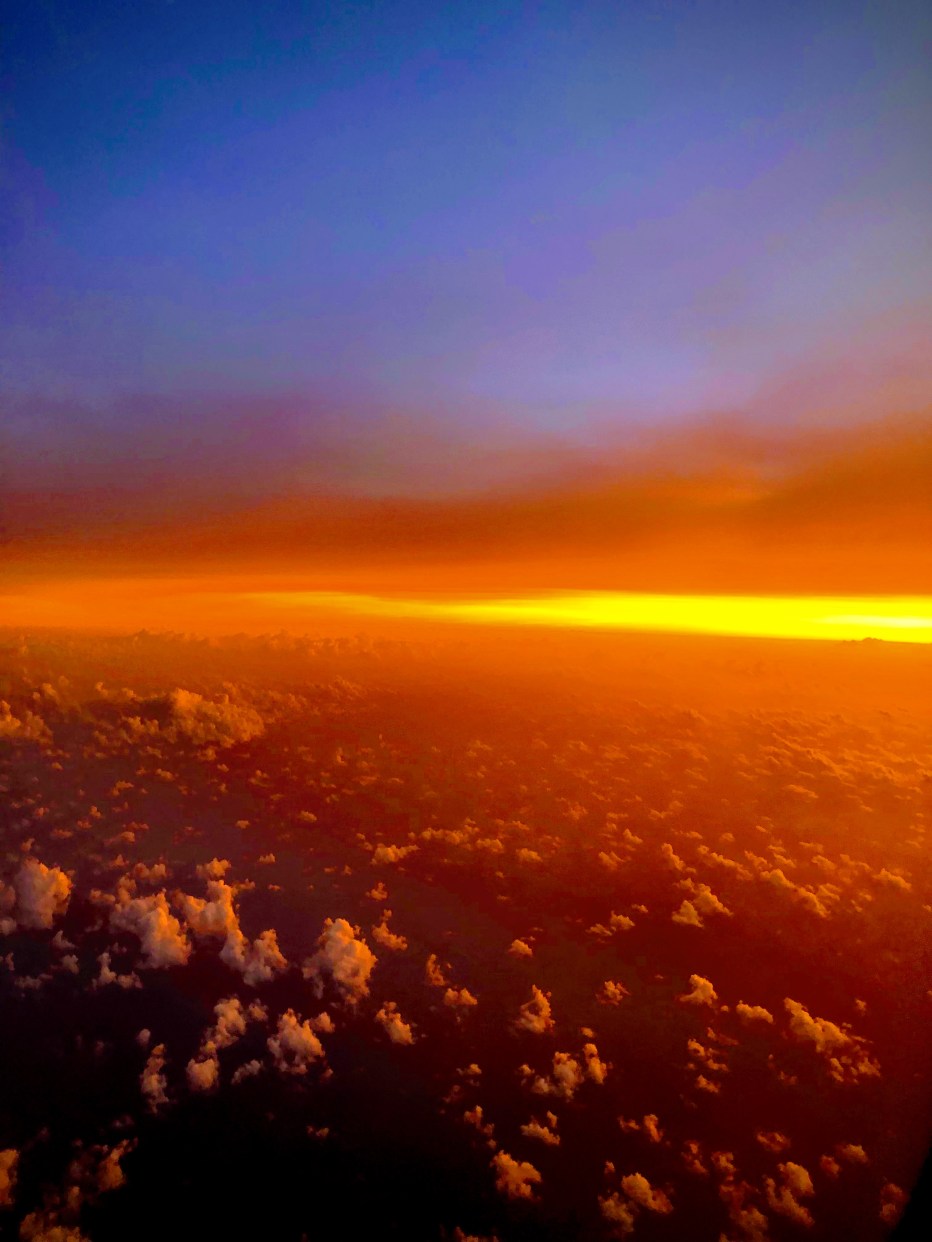
light shining through the clouds

Traveling with the Moon

I traveled with the moon on my trip to India. The full moon rose along side my flight taking off.  There was something poetic about traveling with the moon halfway around the Earth. 

The golden moon elegantly shone and sailed through the inky skies. Slowly, the golden orb turned silver, while the skies around it turned pitch black. Far above the Earth, the hues of the night sky seem richer somehow. Finally, during the last leg of my flight, it was a pale white against the rosy pinks of the early morning clouds and azure skies.

Amuse me while I chant like an enchanted kindergartener:

The Earth rotates on its axis every 24 hours.

The Earth revolves around the sun every year.

The Moon rotates on its axis every 27.322 days.

It also takes that amount of time for it to revolve around the Earth.

So, we only see the same face of the moon, yet the trick of light and its reflection gives us a different show every night.

I see you shaking your head and wondering whether all is well. It is. But, I felt the beauty of it all wash over me anew every time I peeked out at the moon from the aircraft window.

Moon high above the clouds

The only difference between the moon and self was that while my sights may have soared skyward at take-off, it was a pretty poor dance companion to the smooth gliding of the moon. The flight shuddered and blinked its way through the long night, while the moon gracefully accompanied – serene, shining, and sans fuss: Gravitational forces holding it in bay. Thousands of feet below, the ocean waves rose and fell, also dancing to the gravitational tugs and pulls of the beautiful mistress of the skies. Man made designs are cumbersome at best compared to those polished and tuned by eons of nature. Nevertheless, I was grateful for the marvel of flight – we took off in the darkness, and flew always across the world where it was dark when we reached it. I felt like the penguins in winter – huddling and peeping to the skies over a long, dark night. 

At my transit airport, I asked for a cup of coffee to keep awake through the night for my connection flight. The moon needed nothing. The cosmos, is, was, will be.  

Humankind’s movements seem jerky and and oddly designed in comparison. Interspersed with the human sounds and interruptions for food, restroom breaks, flights landing and taking off, the human trip around the earth, was lacking the moon’s elan. 

While thousands undertake journeys like this all the time, I felt a vastness and a soaring that felt un-earthly. In sharp contrast to just 24 hours later, when the world felt constricted, restricted and very much moored to Earth. With instructions to ‘Self Quarantine’, I stepped inside the home, and was not to see the moon make its journey around the planet for the next few days.

Human doings do not affect moons. At least not yet.

Solarium Magic

The son came and tugged me to the newly opened section in our local library. His eyes were shining as he said, “Come on! I found something that you’re going to love!” I cannot deny that I love it when something like this happens, and smiled. Off we went, climbing two stairs at a time. Christened ‘The Solarium’, it nestles in a sunlit section of the building – like a mini glass house, it basks there in the warmth of the Californian sun, and doing the good quiet work that is hardest of them all- converting sunlight to food. The area is dedicated to making gardeners of us all – there are seedling packets with instructions on how to sow and grow the seeds given to us. There are books on gardening nearby.  Feeble attempts to capture the glory and wonder of the real work.

I admit it, it has since become one of my favorite places in the library. I am in awe of gardeners – true magicians of the Earth I call them. My own feeble attempts at coaxing life to take root and thrive, only reiterate the power of the simple garden. I was talking to the son as to how we must all learn to grow our own food, make our own food, learn to sew and stitch out clothes etc. More and more, we live in a world where these simple things are becoming separated by layers of machinations and supply chain mechanics. 

When we were in Epcot (Disney World, Florida) a few years ago, I remember the children seeing the plants from which their beloved tomatoes and eggplants grew with awe. City children typically do not see these marvels of nature slowly doing their work, conscientiously and relentlessly.

Epcot green house

It was probably propitious that I should have found the book, The Blue Book of Nebo by Manon Steffan Ros, just then in the new fiction shelf. The book is set in a time after a nuclear war, and how very very few people have survived the disaster. The mother-son duo manage to grow food for themselves in a glass house, and learn to thrive on their own. It is a fascinating read. It is by no means unique, but the narrative style is appealing and slowly draws you in. It is also something that I am sure everyone thinks of occasionally – the sad aftermath of an apocalypse. What would we do? Who would survive and how will they live? So many of our solutions depend on power. 

Mulling over these things early one morning, is when I heard about the ProtoVillage from one of my friends. 

Protovillage.org

  • Grow your own food, 
  • Make your own food
  • Weave your own clothes
  • Build your own home 

Inspired, I emptied the seeds from the Solarium, into a moist patch of mud in the backyard and watched as slowly, a few weeks later, little shoots and leaves sprouted from the Earth. I may have danced a jig.

“Nature never hurries, yet accomplishes everything.”

Lao Tzu

When Musings Are Amusing

It haș only been about a hundred years since humankind gained the knowledge that the atom is made up of protons, neutrons and electrons. In the intervening century, what all we have done with this knowledge – slowly building upon the cumulative knowledge of mankind? It is astounding, and I shivered a little – partly due to the cold, and partly due to awe.

It took humankind 200,000 years, or at least about six millennia of civilization to discover subatomic particles, and somehow in the intervening century since, the pace of technology and the possibilities of the future seem to have raced forward. Every generation has had to live with phenomenal changes. Barring huge setbacks, where would humanity be in another 100-200 years? 

The stars spun around in its merry dance around the universe ,while I had the same sensation in my head trying to make sense of the world we have built for ourselves. The simple observation on the atom’s makeup led us on a merry dance of our own – that of financial markets, world economies and much more.

The husband was explaining the concept of NFTs, VR worlds that is already beginning to manifest in the world.  Our great grandfathers would not have understood. We are not going to understand things of perceived importance in our grandchildren’s lives, forget great grandchildren’s. The mind boggled. 

It all started with my fretting about the Economics of the world getting increasingly complex – how did stock market indices, per capita incomes came to be built one upon the other? Currency fluctuations, led to the discussions on crypto currencies, and we went on to how people claimed ownership to stars. Apparently, one could pick a star and name it after yourself for a fee. ( Star registry )You essentially ‘owned’ the star from then on. The only problem was that there were multiple star registries, and so multiple people could pick the same star to ‘own’. Also, there is the real problem of the star not knowing it is ‘owned’ by a human on a faraway planet.

I looked up and laughed out loud – the stars seemed to understand and winked back.

I could not help thinking of the parody of The Little Prince by Antoine Saint de Exupery. In The Little Prince, the Prince visits different ‘planets’ each hosting one human being – a geographer, a banker, a king, a drunkard and so on. The banker never seems to spend any time enjoying the stars around him, but spends his time counting them all, as he claims that the moment he counts a star, he owns it. (Carl Sagan’s Quote on Astronomy being a humbling profession is completely lost on the poor, rich banker!)

It has been said that astronomy is a humbling and character-building experience

Carl Sagan, Physicist and Astronomer

Really, human beings are the most remarkable beings if you stop to think about it. We want to own the first digital signatures, the most coveted things on earth (Napoleon prided himself on his Aluminum vessels, and it was considered a luxury till someone found how to produce it enmasse: https://en.wikipedia.org/wiki/History_of_aluminium), the best paintings that cost millions, and so on. We want our egos fed and nourished all the time by a universe that largely does not seem to care whether we exist or not. 

But, simple things that mattered before the composition of the atom was discovered still remains important. We still value our loved ones, yearn for contentment and peace, and want to live on a bountiful planet that allows us to thrive.

There is no doubt about it: The musings of our importance on a cold, starlit night is highly amusing.