Celebrate World Elephant Day: Protecting Our Gentle Giants

World Elephant Day

August 12th, is World Elephant Day. Seeing elephants (even the cute AI generated pictures) makes me smile. The huge, gentle, loving, empathetic, loyal, family and community oriented animals have always captured the human spirit. It is the reason one of the most popular gods of Hinduism features an elephant-headed god. His birthday is celebrated with so much pomp and splendor, I am sure the elephants wonder what the fuss is all about on those days. 

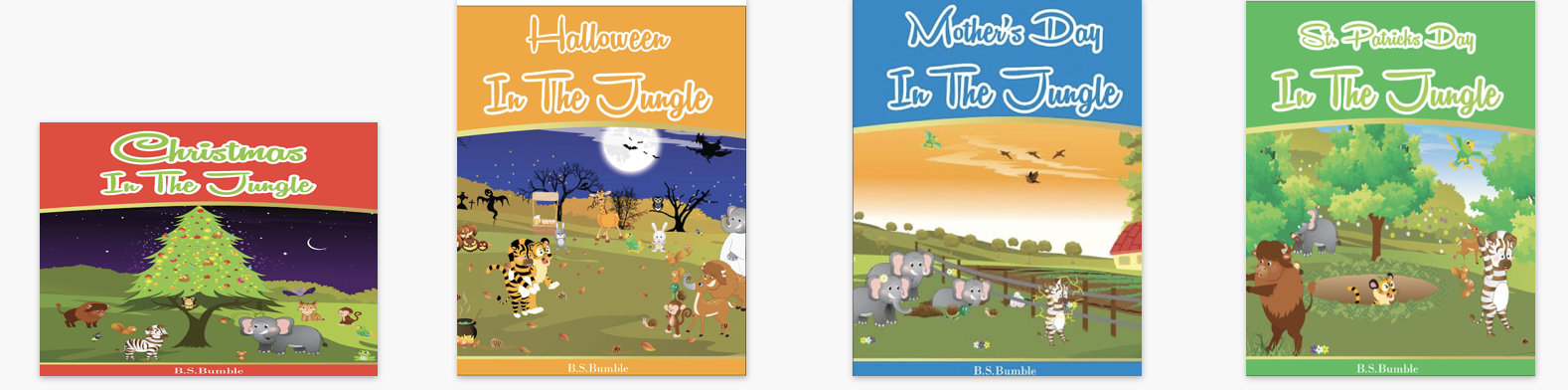
I am not sure if they’ve heard how much their stories resonate with human-beings – Water for Elephants or Rosy is my Relative for instance. Even my own modest attempt, Mother’s Day in the Jungle, was such a joy to write. Oby Elephant and his pals are all that we want our children to be. 

https://books.apple.com/us/book/mothers-day-in-the-jungle/id874603773
Mother’s Day in the Jungle

It is no wonder that elephant related documentaries are always a hit. We want to see them succeed, we want to know that peaceful living can take us far. 

The question is, are we happy to suppose that our grandchildren may never be able to see an elephant except in a picture book?

– – David Attenborough

Temporal Range of Elephants 

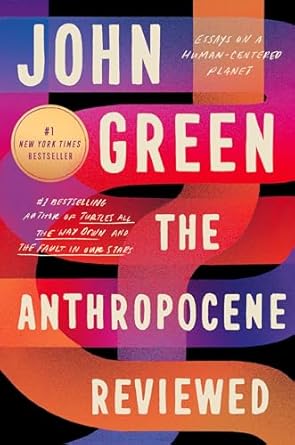
In the essay, Temporal Range, in the collection of essays by John Green, The Anthropocene, he talks about how long these majestic creatures have been a recognized species – 2.5 million years as opposed to humans who were only classified as such for the last 250,000 years. Yet in that short time, we have endangered almost every other notable species on the planet in small and big ways. 
Dolphins have been here for 10-11 million years – with their songs of wisdom, playful natures, and community based raising of their pods. Dolphin grandmas are delightful, and critical in the raising of their young. The same way the matriarch of the elephant herd is instrumental in passing on skills to the younger generation of pachyderms. Humans have somehow managed to emulate and disregard this ancient piece of wisdom by denying women freedom and basic rights, but also making them critical to the caring of the family unit. Sigh.

When we talk about accumulated wisdom,  most of the philosophy we have at our disposal caps out at 5000 years. But, elephants and dolphins? Please. They have figured out how to live out their lives cancer-free. 

Unpacking 🐘🐘🐘, 🐬🐬🐬 & 🐦🦚🐧🕊️

A friend of mine shared this article, Face it! You’re a crazy person, on unpacking the life of someone’s job. As I read what it meant (trying to visualize every Tuesday afternoon for the next few years, the day-in-the-life-of series), I found myself thinking that I would love to unpack being an elephant in the wild, a dolphin in the oceans, or a bird in the gardens before deciding whether to remain a human-being.

Wouldn’t that be wonderful?

What are some things related to elephants you’d like to share? Anything.

Happy World Elephant Day!

Why Do We Grow Up Really?!

The son and I were poring over the article to select. It was an important decision to make. I was being given the opportunity to read to the son’s classroom. He was proof reading the list of articles I had from approximately 1000 articles that I thought might interest an elementary school classroom.

“This one is nice Amma, but it has too many big words.”

“This one – ahem! No!”

“Oh come on! How about this one? That’ll appeal to the cat lover in your class!”

“Hmm….you are right there. But I already showed him that article you showed me last week on toxoplasma gondii Amma.”

“This one – maybe – maybe. But let’s look for something that will catch the attention from the beginning.”

So it went, till I showed him one that I knew would get his attention. 

Why is our sky not green?

The cosmologist in him sat up, the child in him shone. He beamed at this one. 

In this one, the astrophysicist, Carl Sagan, writes about how he could get up anywhere on the solar system and figure out which planet he would be on purely by looking at the skies. I could say the children marveled at that thought process. 

The essay, Sacred Black , in the book, Pale Blue Dot is well worth reading. He explains the reasoning behind the colors of the planets as we see them. He deduces the color of the sky based on the elements found in their atmospheres. 

  1. Venus, he says, probably has a red sky.
  2. Mars has a sky that is between ochre and pink much like the colors of the desert.
  3. Jupiter, Saturn – worlds with such giant atmospheres such that sunlight hardly penetrates it, have black skies interrupted here and there by strokes of lightning in the thick mop of clouds surrounding the planets.
  4. Uranus & Neptune – uncanny, austere blue color. The skies may be blue or green at a certain depth resulting in an aquamarine or an ‘unearthly blue’.

When we were through with the article, I asked the young cosmonauts what they visualized their best skies to look like. Of course, there was a magnificent range of answers including one that somehow involved cats!

“Oh! You must be the cat-lover!” I said laughing, and the ailurophile or felinophile (cat lover) grinned cattishly. 

ailurophile, aelurophile

a lover of cats. Also called felinophile, philofelist, philogalist.

I told the fellow about the post on toxoplasma gondii and their teacher laughed too. Her day involves moving attentions from cats to maths multiple times a day. 

So, it was that I read: Why the sky isn’t green – a science based article followed by a trip to a place of pure imagination and fantasy: St Patrick’s Day in the Jungle

By B.S.Bumble

Of course, the children switched tracks marvelously, and we finished the class reading by discussing the Irish music in St Patrick’s Day in the Jungle done by a good friend with a refined musical sense, and the talented artists from Holland who helped with the illustrations for the little book.

St. Patrick's Day In The Jungle
St. Patrick’s Day In The Jungle

The iBook is also available: https://itunes.apple.com/us/book/st.-patricks-day-in-the-jungle/id829152649?ls=1&mt=11 (Please go to iBooks on your iPad and then look for the book)

After the story, the c. lover was the only one who wanted to know whether the tiger did manage to escape the trap set by Oby Elephant after all in the St Patrick’s Day in the Jungle book.

I seldom fail to come away refreshed after a visit to the classroom, and this time was no different. An otherwise dull week sparkled with the memory, and shone on through the week-end.

Why do we grow up really?